We were heading for one of Namibia´s most picturesque mountains, Bloedkoppe (pronounced Blood-Cop-y) in the Namib Naukluft Park. We had secured a two-day permit into the park in Swakopmund along with a night camping at the foot of the mountain.
On the way we stopped off to see the Martin Luther Steam Train.
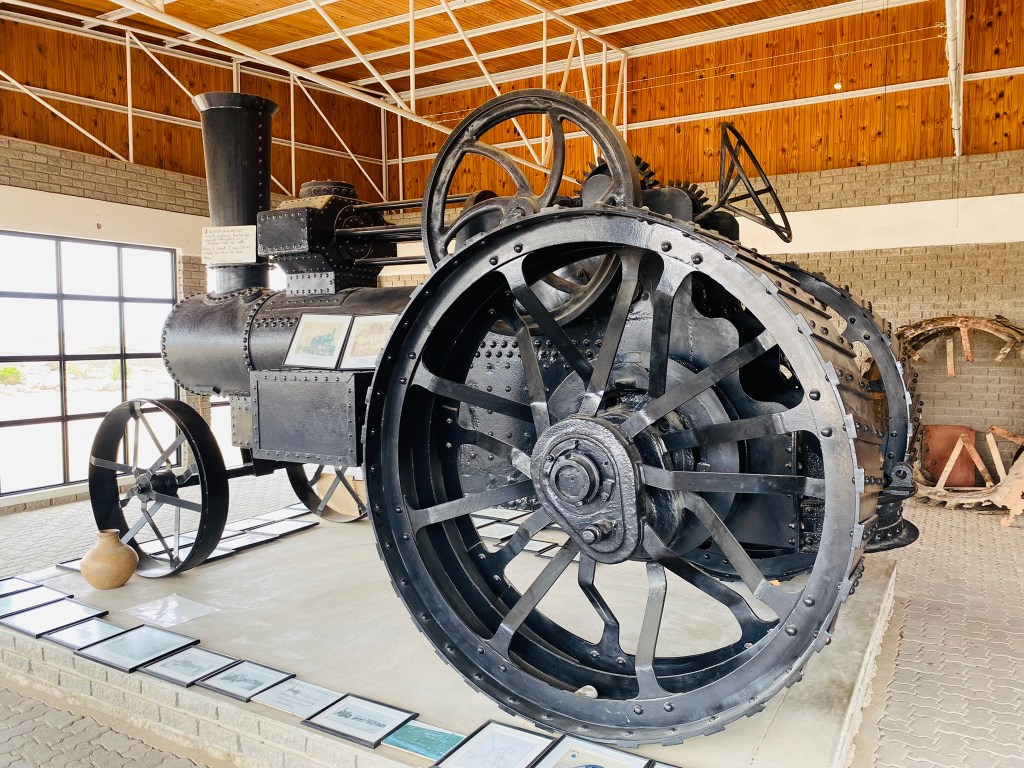
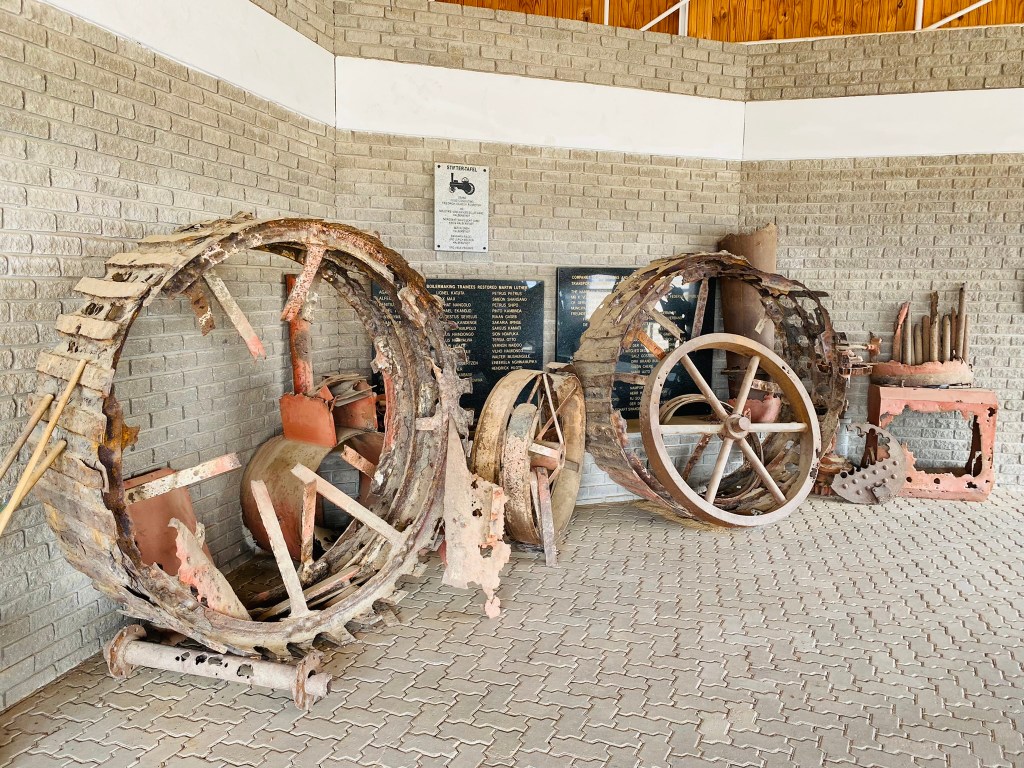
Famous for having sunk in the sand on its inaugural journey and been left there for a century or more until it was refurbished and put in a museum along with some of the old bits that had literally fallen off over time.
Next stop was an arts and crafts village supporting local artisans where I finally bought a new purse after searching for one for nearly a year. We popped into the little restaurant for hot chocolate and a sundae to celebrate.
And then we were on our way to the Namib Naukluft.

After a couple of hours of driving we stopped for a quick road-side lunch. The air was dry, the sun was shining and a warm breeze was blowing. After a week on the damp and cool coast it felt like bliss – everything was drying out and our mood was lifting.
Eventually we reached the Park and saw the mountain looming ahead of us.
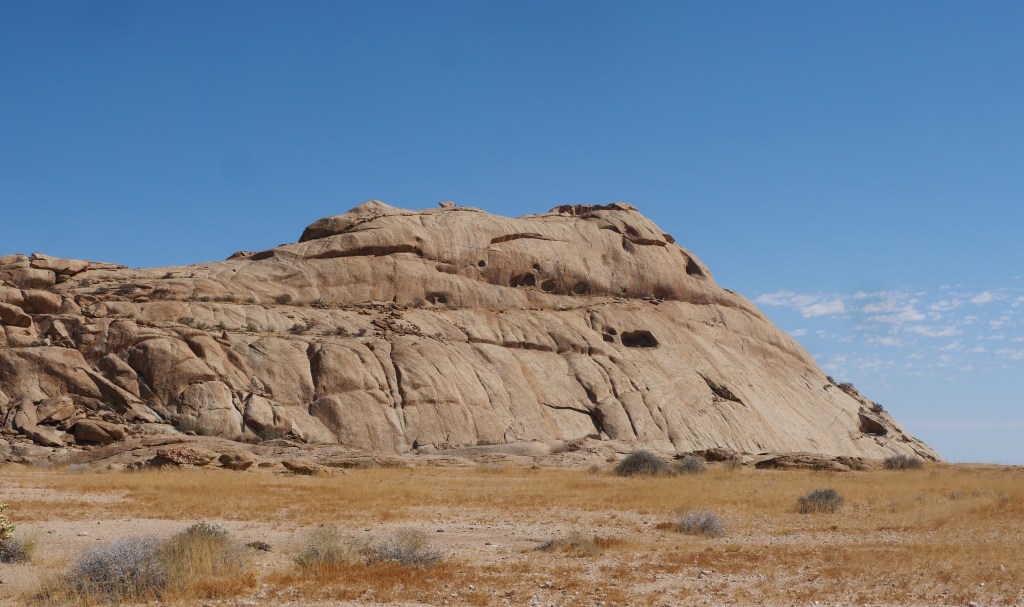
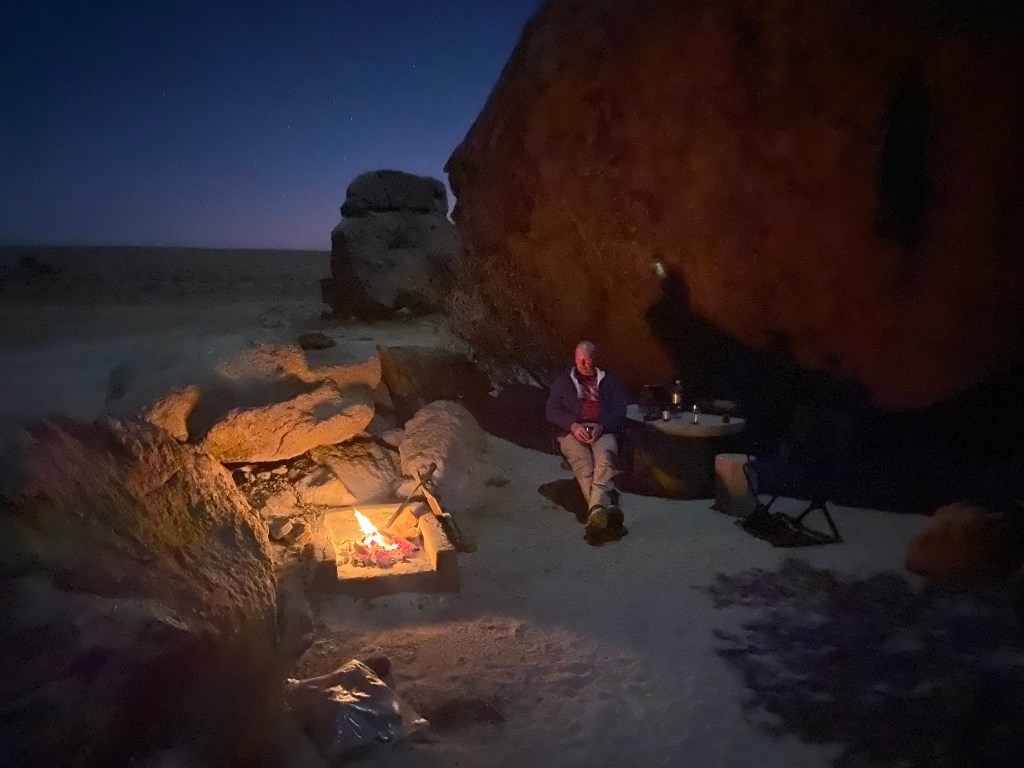
We hadn´t been sure what to expect except that the campsite was said to be very remote, very basic and with no water. All this was true and it was exactly what the doctor ordered.
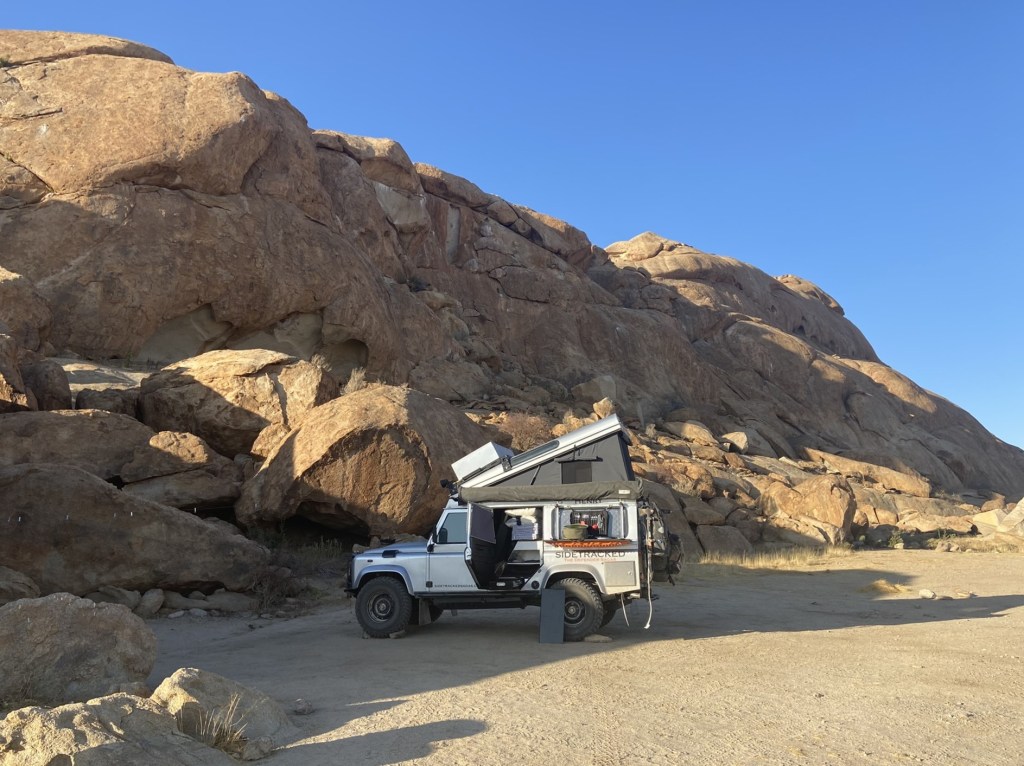
We were entirely on our own, not another soul anywhere in site.

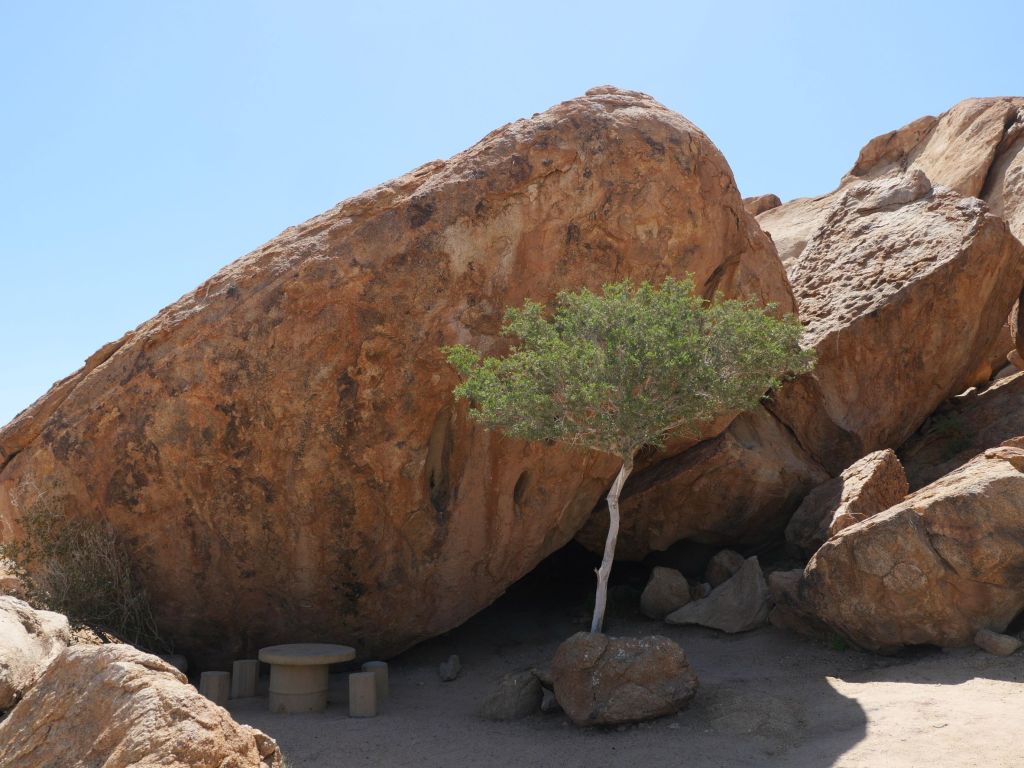
The only sounds we could hear were the warm breeze, the birds and the insects. Our shoulders lightened, our smiles broadened and we breathed a deep, contented sigh as we set up camp.
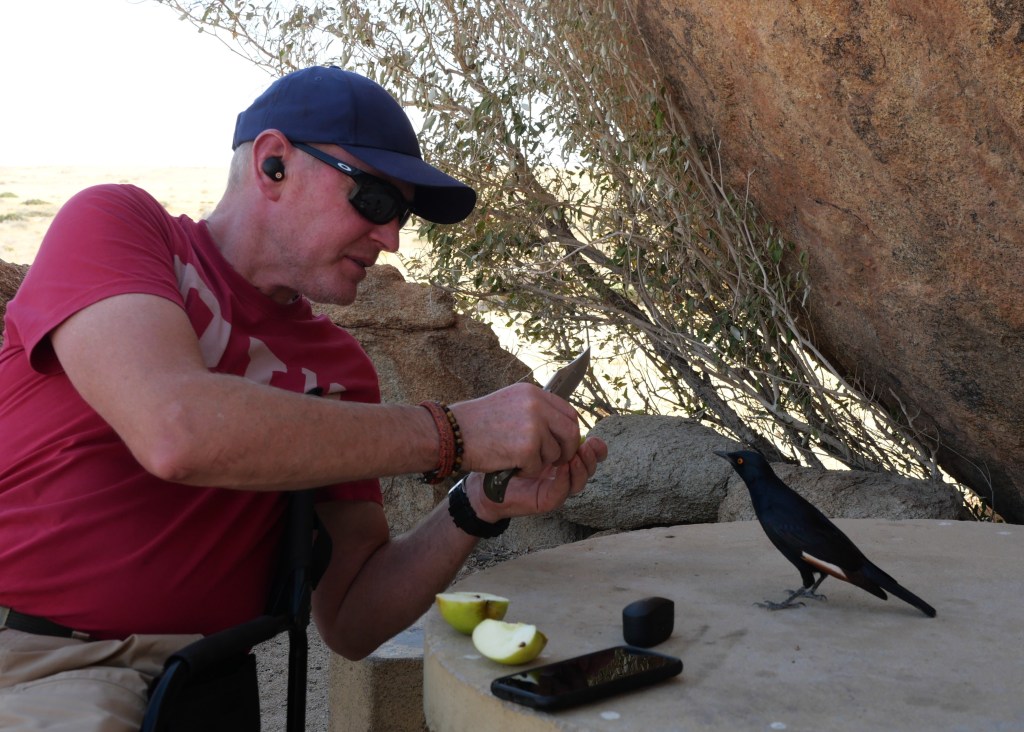
As we sat quietly admiring the view, three starlings approached, curious about their new visitors.
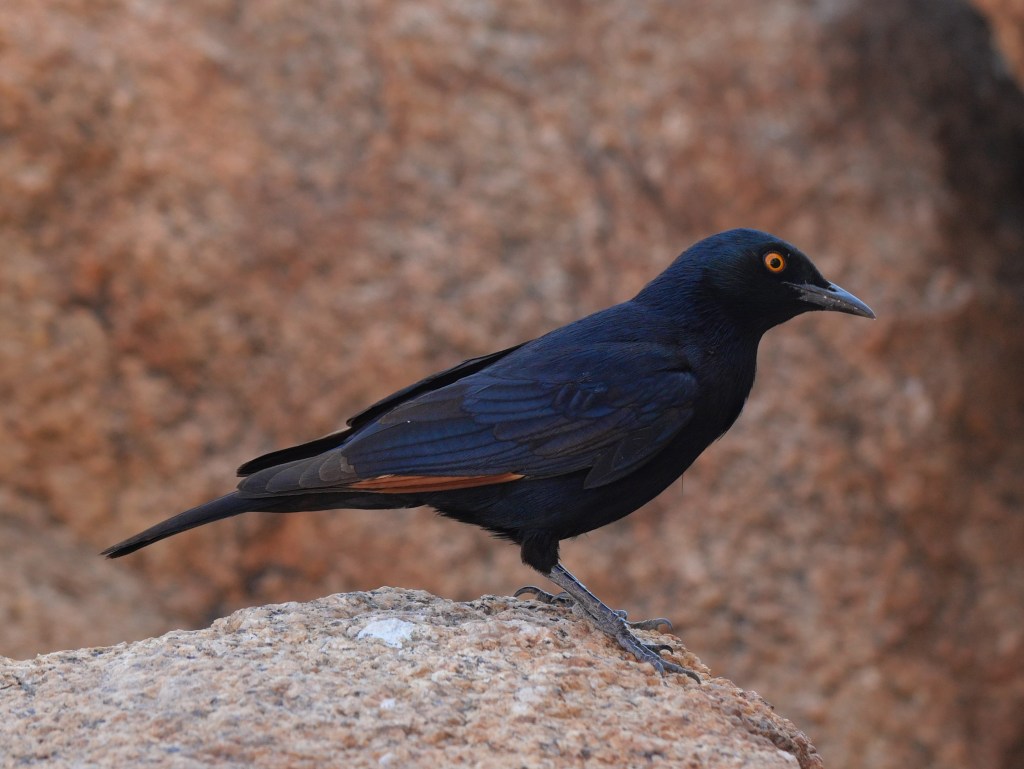
James was eating an apple and I had an avocado pear. Always keen to bond with the locals we were happy to share.
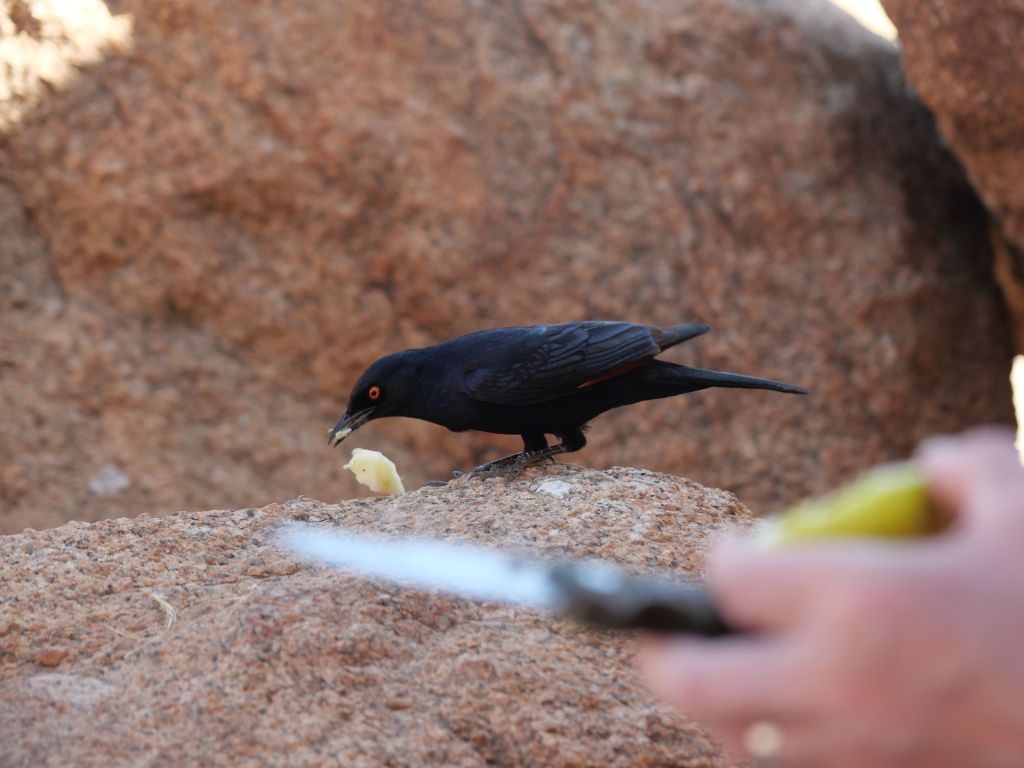

One of the birds seemed to take a real liking to James as he gently accepted the morsels of fruit
That night James cooked gourmet prawns and we slept soundly under the stars.
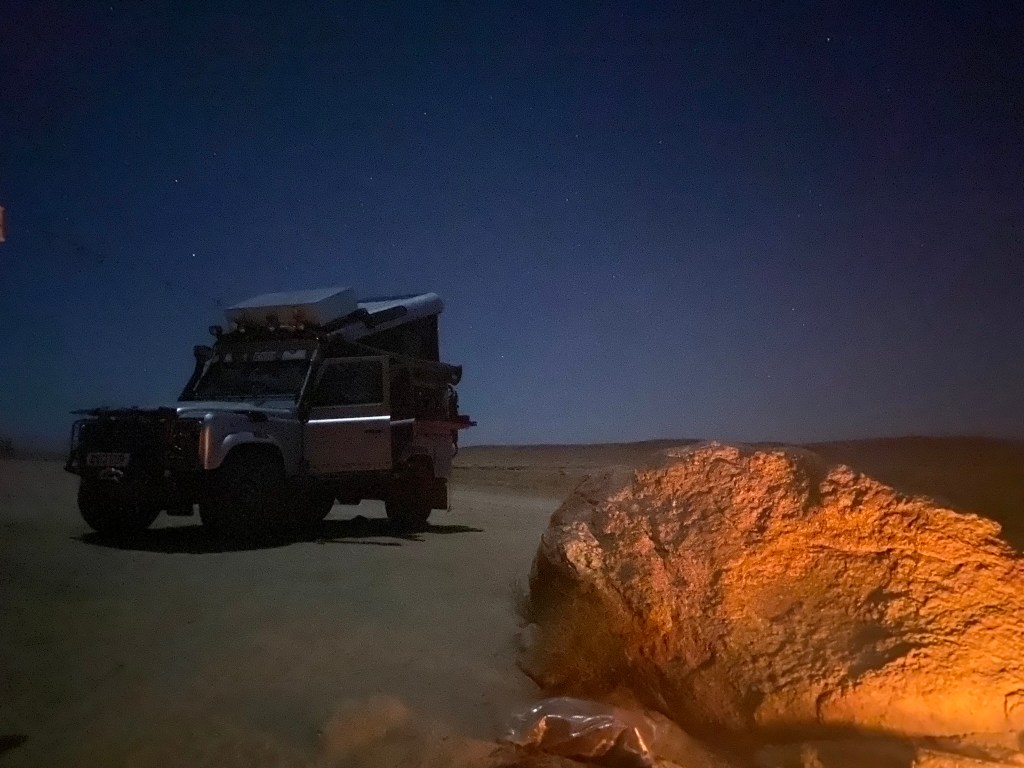
We were desperate to stay here for longer, we needed to unwind after our time in town, but sadly we only had permits for one night so had to drag ourselves reluctantly away.
We decided to take a look at the Welwitschia Plains and an area known as the Moonscape just on the edge of the National Park.
Welwitschia is the national plant of Namibia, seen on its National Coat of Arms. You would think, therefore, that it must be a beautiful thing. You would think wrong! It is the strangest plant you will ever see – sitting in a half-dead heap on the ground looking for all the world as though it has been run over by a string of Landrovers.
Its full name is Welwitschia Mirabilis – Miraculous (or Amazing) Welwitschia. They live only in the Namib Desert and soak up water from fog and dew. The oldest known individual is 5,000 years old, many are over 1,000 years old. They symbolise longevity and survival against all the odds.
We saw our first one pretty soon after turning off the main road.

Then another, and another.

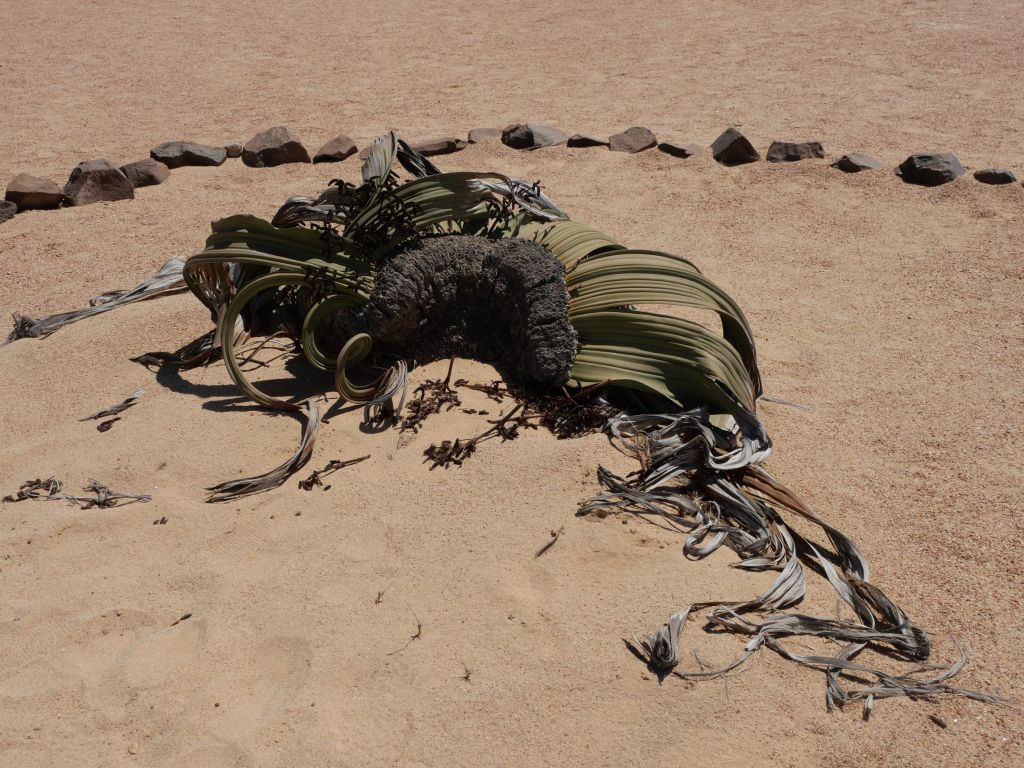
They are beautiful in their own way and somewhat otherworldly.
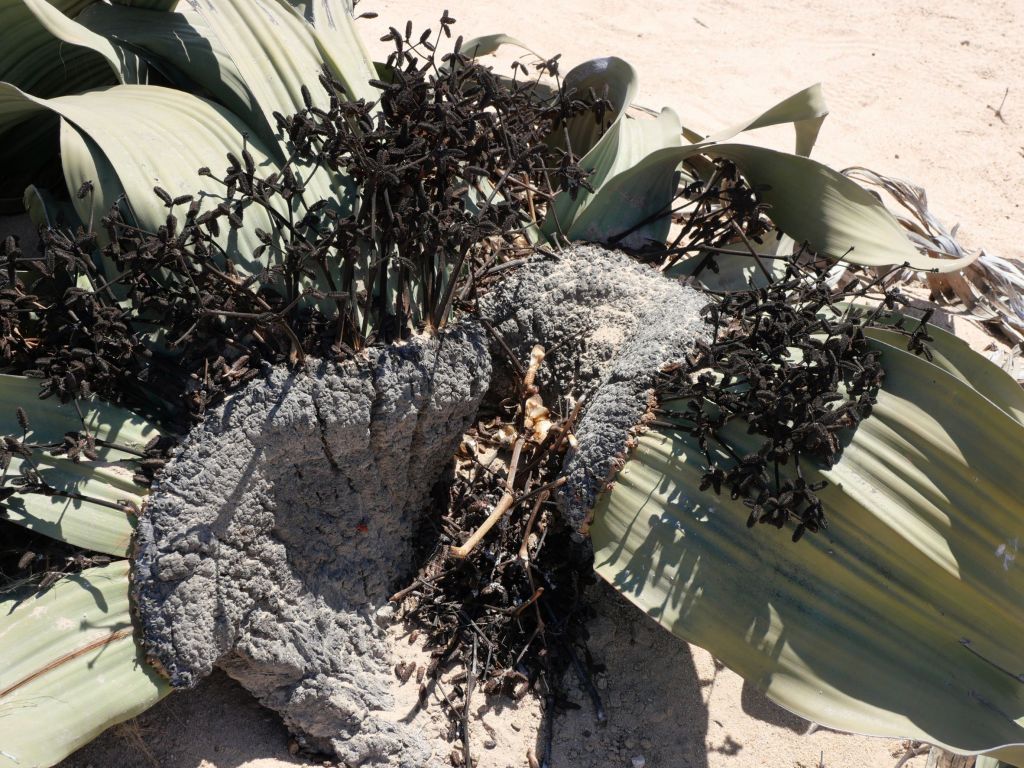
But looking out over the Welwitschia Plains, all you could really see was the odd clump of foliage dotted about here and there – unusual site for the desert but not exactly photogenic.


We drove around for most of the day without seeing another soul. We really were getting out into the middle of nowhere now, far off the tourist trail.
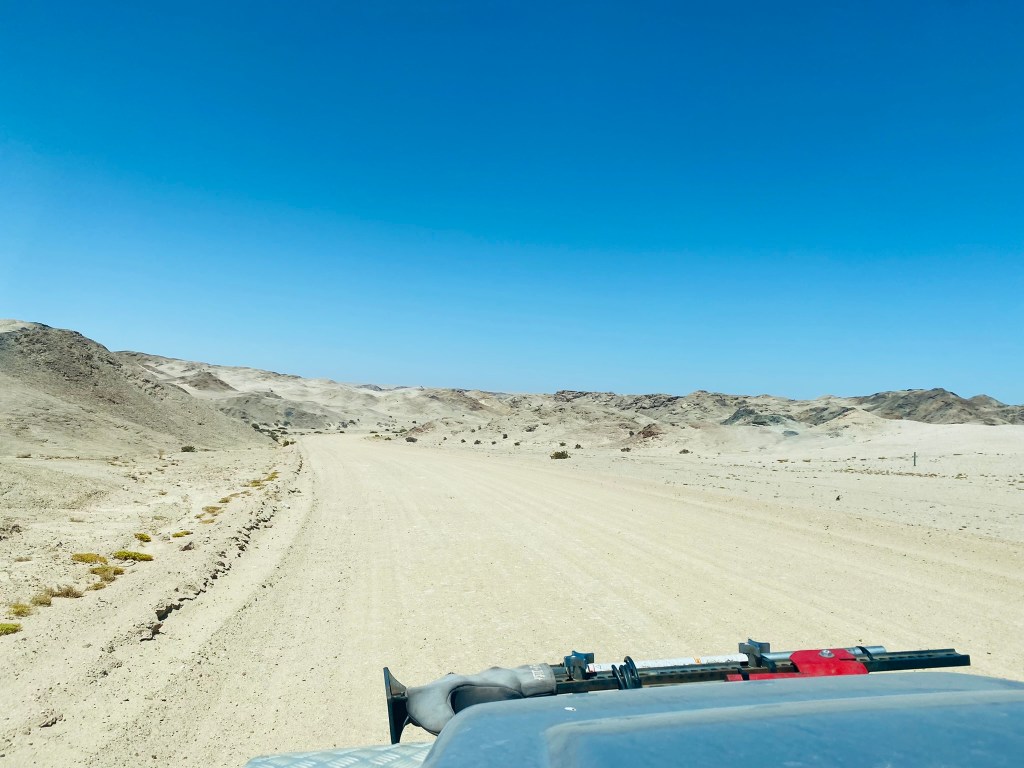
At one point we crossed the dry bed of the Swakop river which looked perfect for either lunch or a wild camp. Sadly we were too early for one and too late for the other.

We turned back after an hour or so and headed for the Moonscape. A maze of valleys of the Swakop river with mountains and furrows carved by erosion.
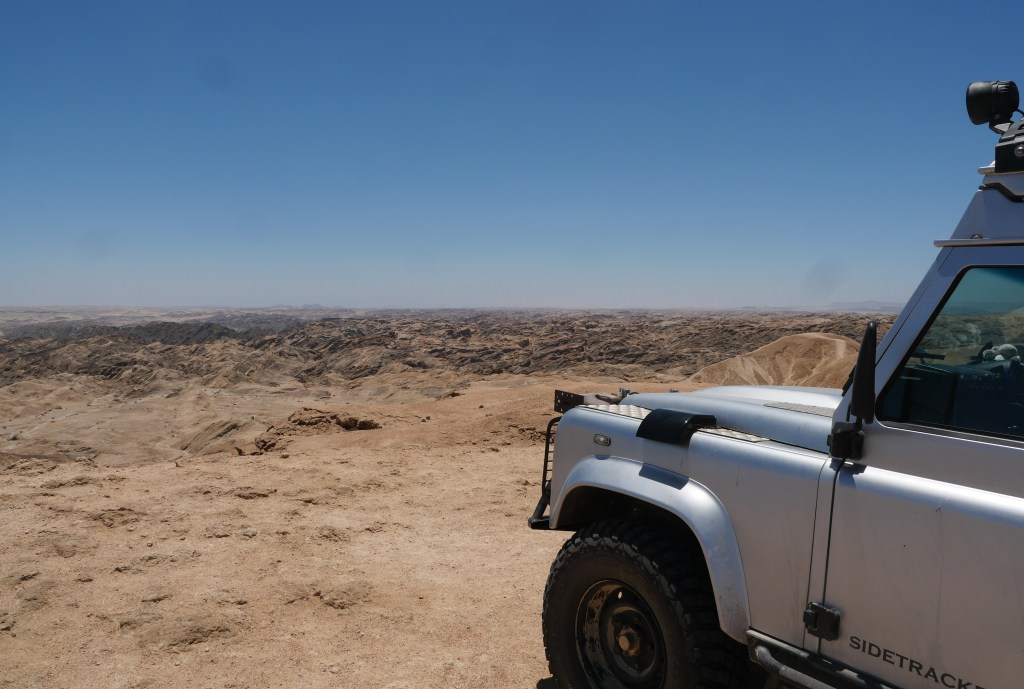
It didn´t look real, more like a painting of an idealised desert landscape.
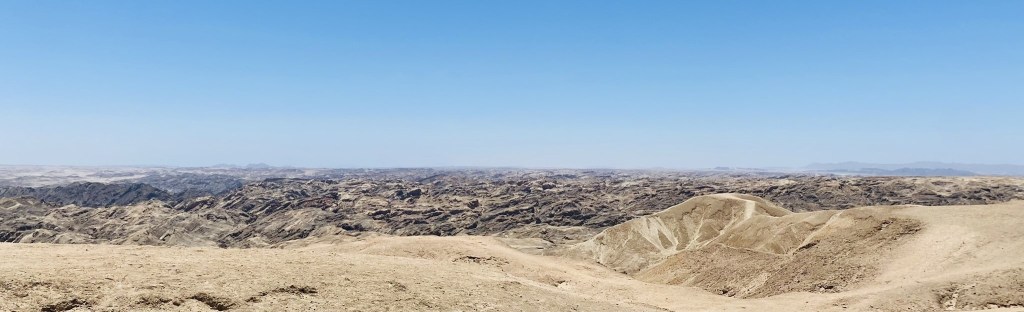
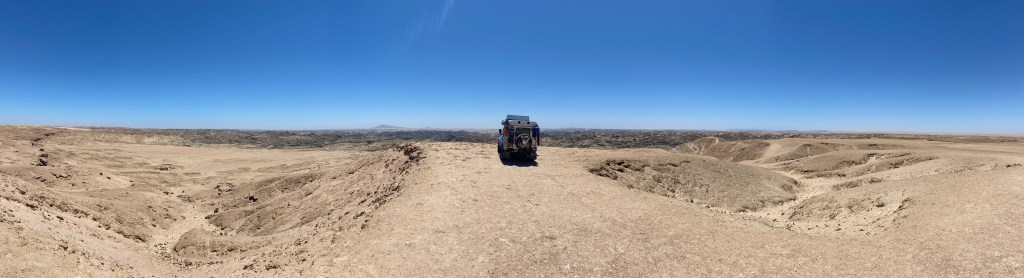
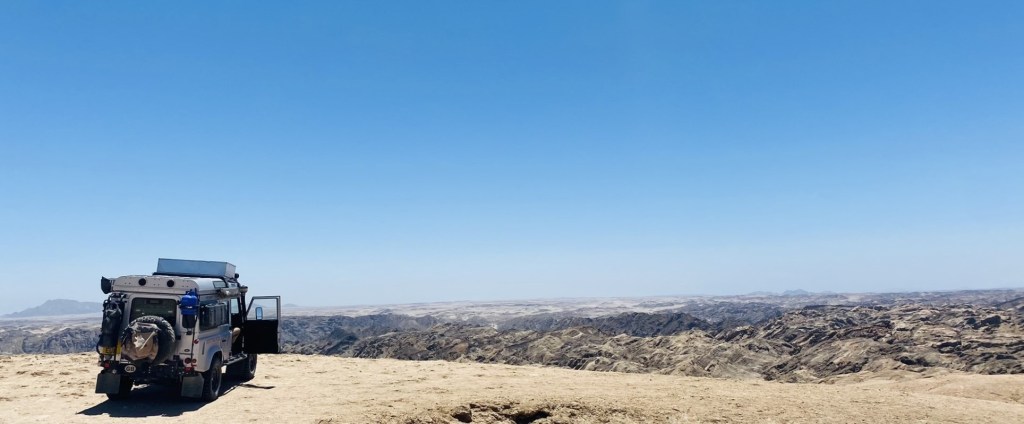
But we needed to get to a campsite before dusk fell, out here is really not where you want to be after dark. We had found a place on Google which looked nice and headed in that direction.
The dirt roads were getting bumpy, deep corrugations and ruts were shaking everything around in Henry so the going was slow. When we finally made it we were pleased to find it existed and was open but disappointed that it was rather more ´civilised´ than we had hoped.
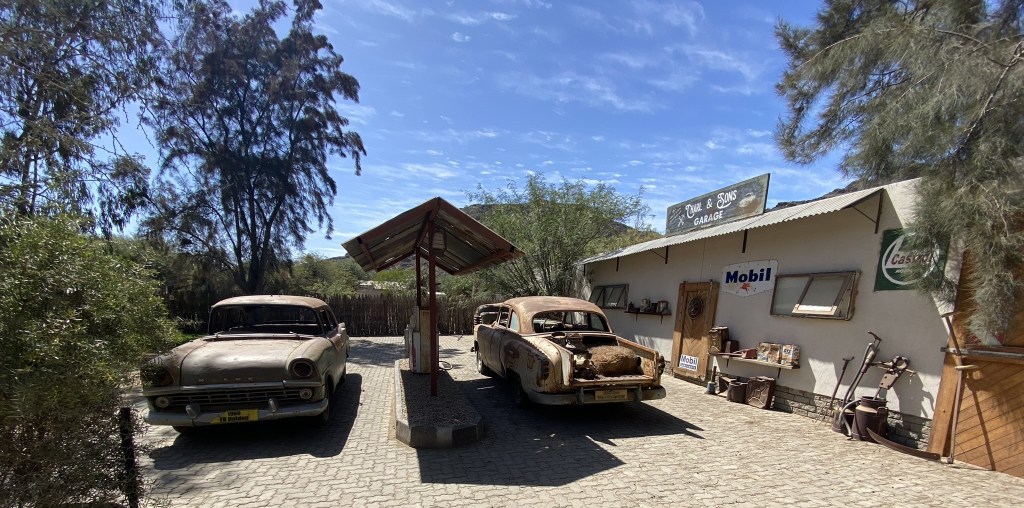
Rather than the remote isolation of Bloedkoppe, this campsite had staff, a reception, a bar and restaurant and even a small zoo with emu and alpacas. And lots and lots of rules!
But we settled in, made good use of the free wifi to catch up on internet-land and made friends with some of the wildlife….
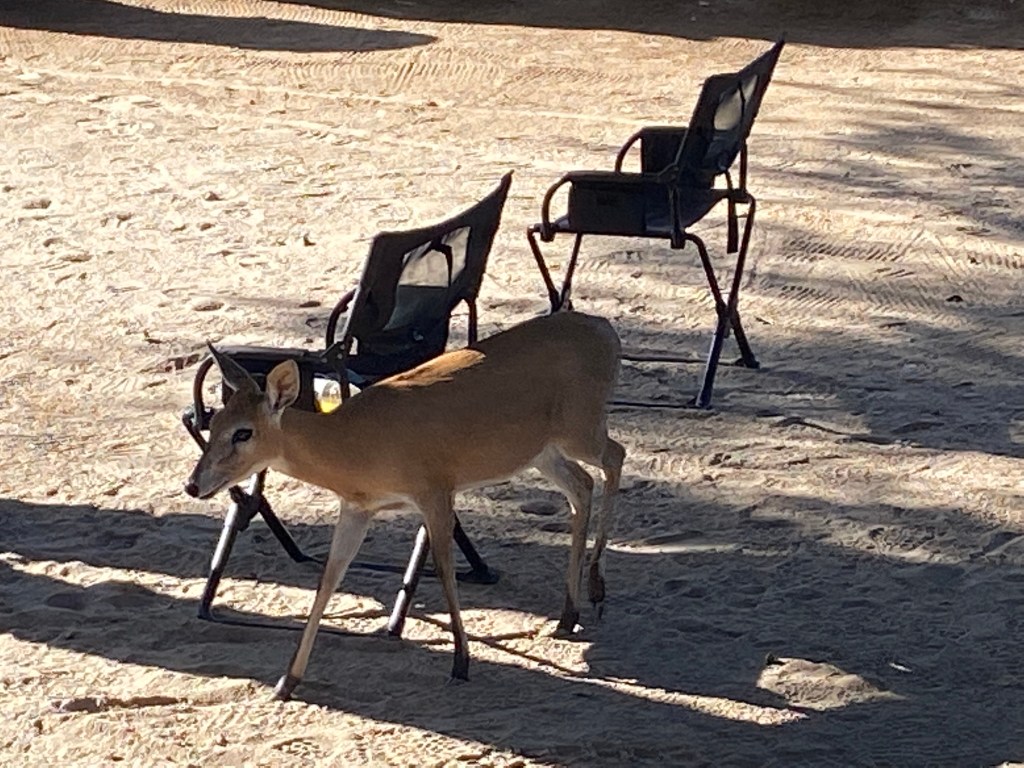
Who eventually allowed me to give her a head scratch, nuzzled my legs and gave me a quick lick on my knee!
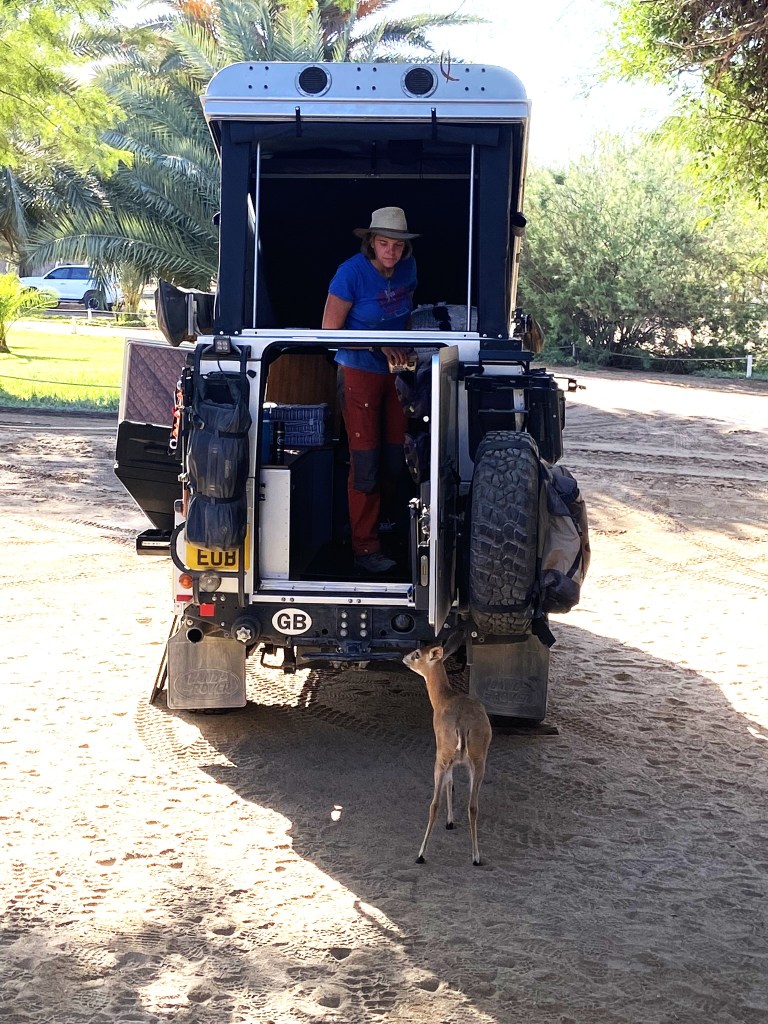
James got out some cornflakes to see whether the birds would like them. He placed a few on the ground just far enough away from us not to spook them and one by one they all came up to try. We watched, giggling as they sat there looking serene, making gentle crunching noises.
Our next destination was another mountain, this one known as the ´Matterhorn of Africa´.

Spitzkoppe.

We had decided to stay at the Community campsite within the national park. When we arrived it was dry, barren and vast.
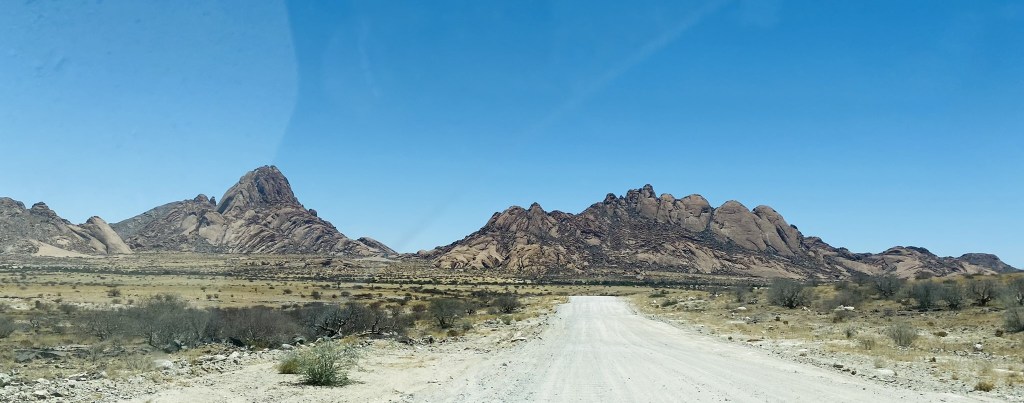
The occasional pitch dotted about amongst the mountains and rocks each with their own long drop toilet and braai. It took us over an hour driving around before we settled on one close to the Rock Arch.
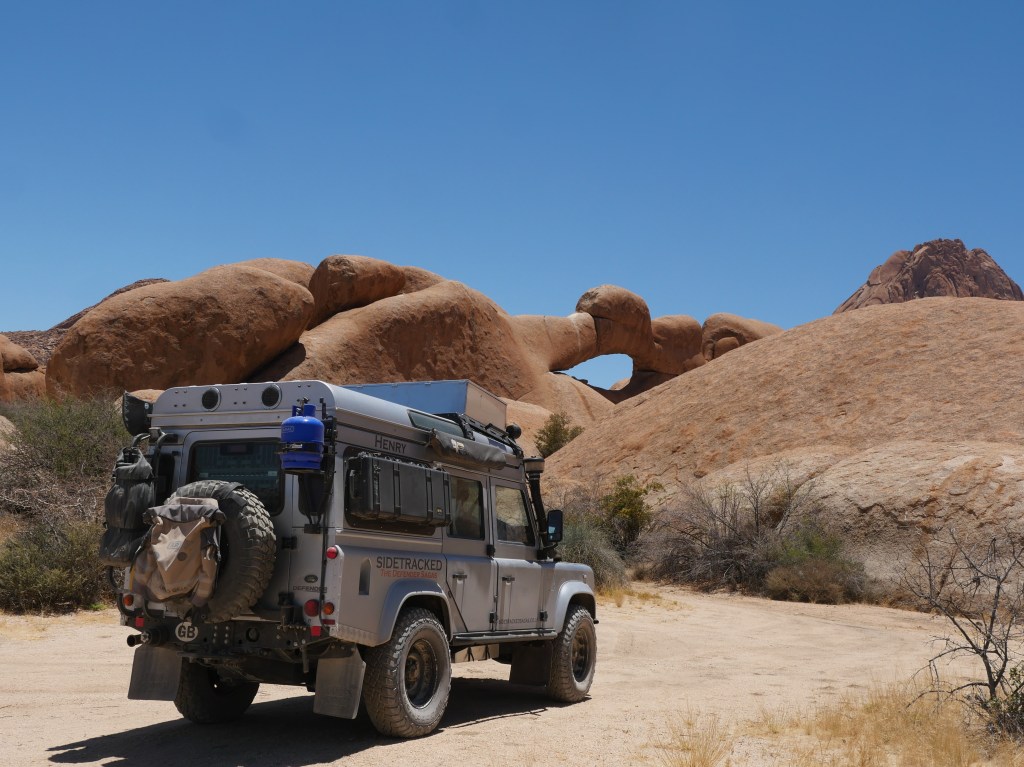
It was a beautiful location which appeared to be remote and peaceful

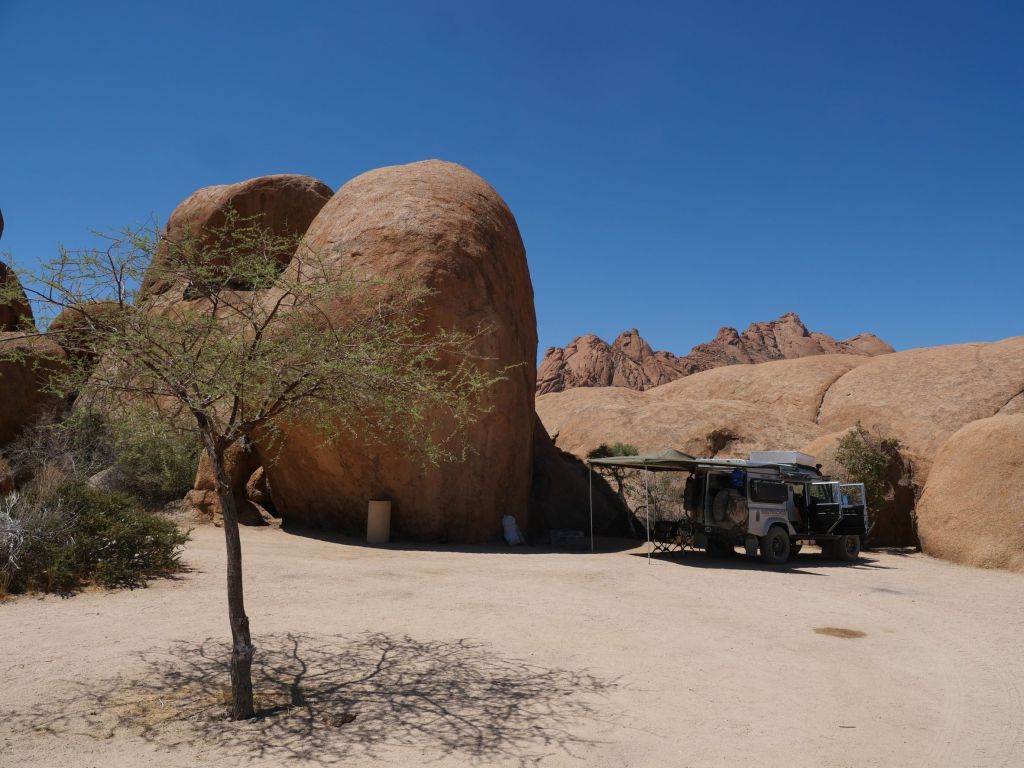
But appearances were deceptive!
We had only just set up camp and were settling in when two people appeared from the behind the rocks – apparently, we thought, having got lost on their way down from the Rock Arch. We graciously allowed them to walk through our campsite.
Then another group appeared, then another – then a couple from the other direction wanting to go up to the Rock Arch. One group passed through as we were cooking and asked for their steak to be medium rare and jokingly held out their hands for a beer. Everyone was friendly and apologetic for disturbing us but the magic was broken. And when I went to use the toilet only to find it was open to the rocks right where everyone was walking down, I suddenly felt very exposed!

We were staying at Spitzkoppe for two nights, but the next morning we packed Henry up and left our pitch – there must be quieter places to camp in this vast wilderness of a campsite!
Before we left, however, we had to go up to the Rock Arch ourselves.

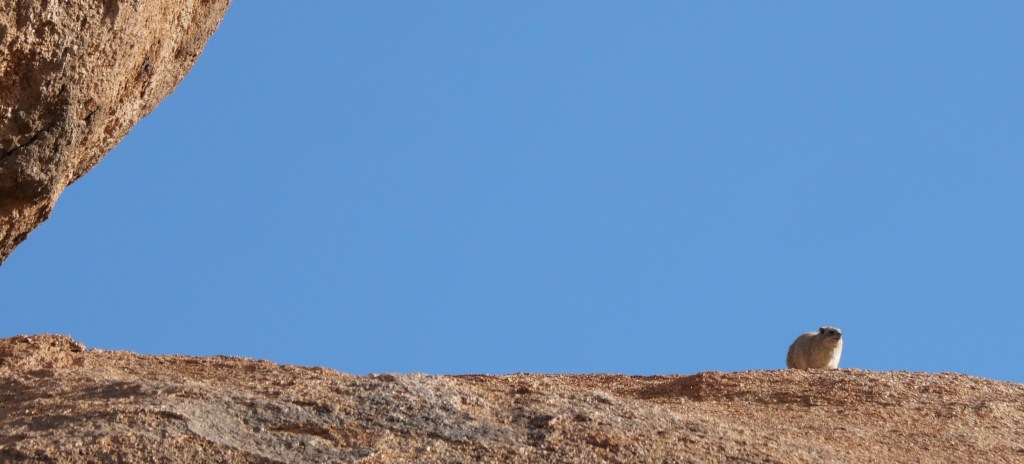
It was just after dawn and the sunlight was flickering off the mountains. There were lots of little furry faces looking down at us from the rocks – Dassies, warming themselves in the sun.
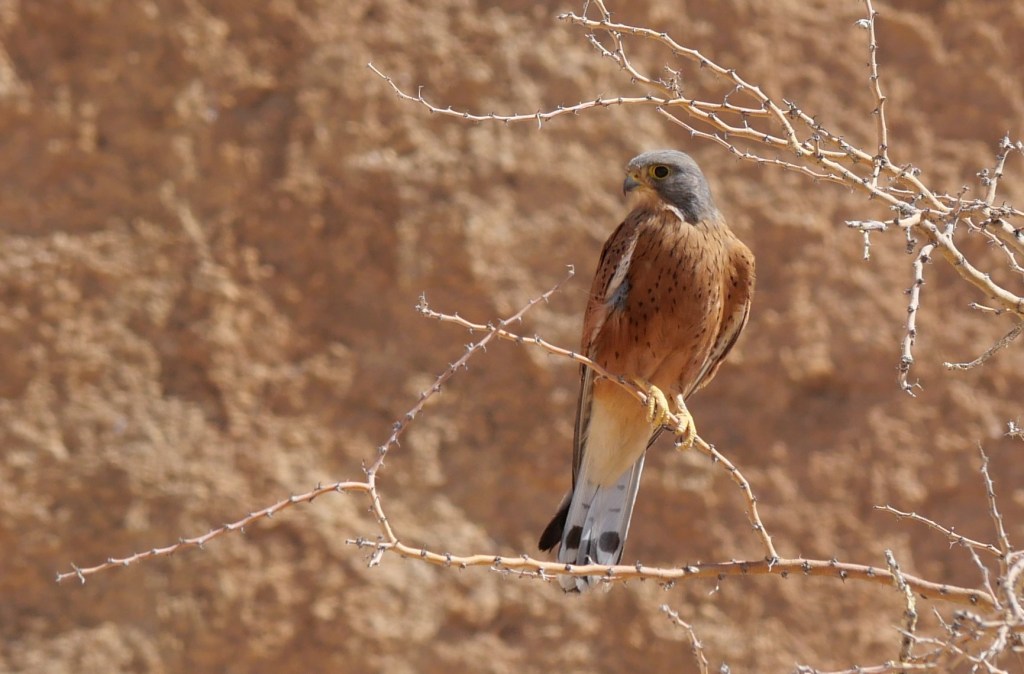
And an eagle watching them intently.
It was a short and easy climb to the foot of the arch and not a very difficult climb the rest of the way.
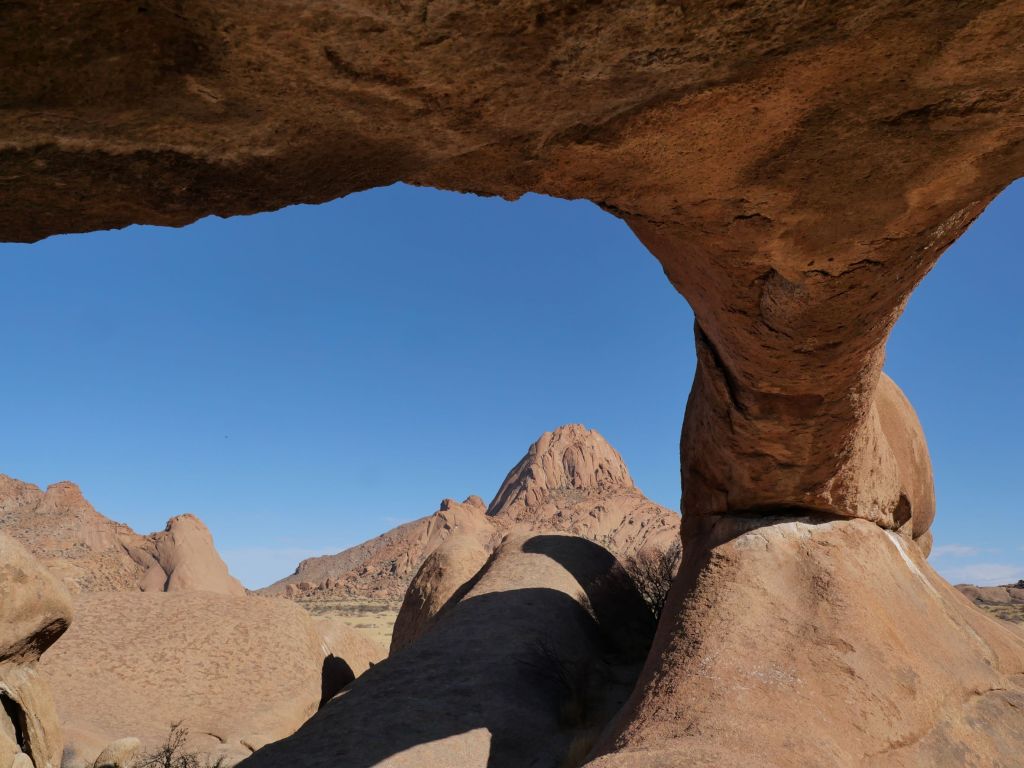
But my vertigo kicked in again and James had to physically pull me up the last section as I wobbled and closed my eyes. I can generally do uphill but downhill is my problem. So inevitably the way down turned into a disaster – I clutched onto his hand and practically fell back down the rocks, James all the time sure footed and calm, holding onto me and making sure I didn´t go head over heals off the edge.
Really, I made the whole thing look far more melodramatic than the short climb ever deserved!
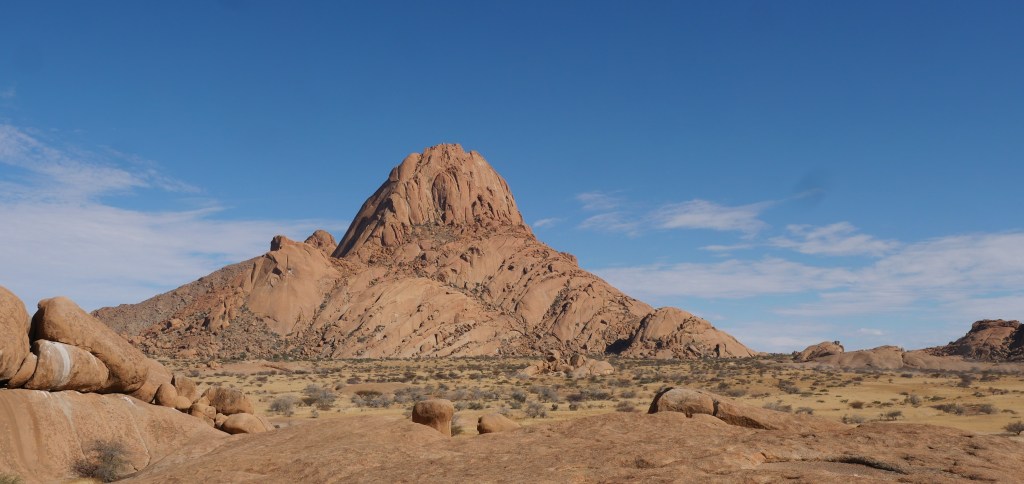
But the views from up there were worth the effort
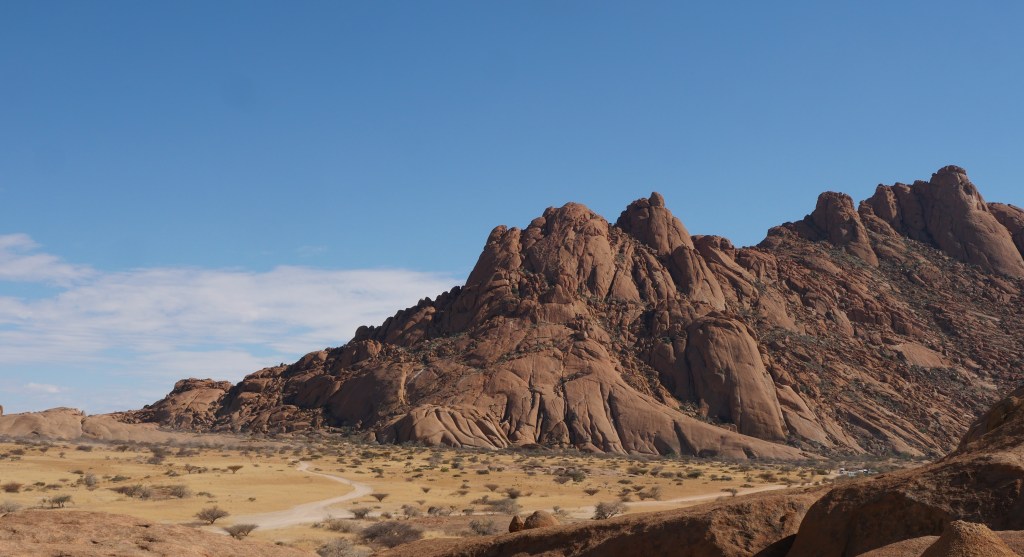
Back on safe ground, we headed towards the site of the famous Spitzkoppe rock paintings to see if we could find a guide to take us up. Eddie was waiting in his hut at the bottom of the mountain, an official guide and a very patient man. We looked up to the route we would need to take – it was a sheer climb up the mountain side infinitely higher than the Rock Arch with only a chain rope for assistance.
I rolled my eyes in despair and James just laughed. Two other people had come up to Eddie also wanting him to take them up. He said he was waiting for us to decide what we wanted to do and James said to everyone that it was a no-go. I´d probably get up there he said but not on your life would I ever get back down again other than in a rescue helicopter! The other guy, Nick, looked shocked that he would say such a thing about his own wife until James explained that I had got stuck on the Rock Arch earlier that morning. Nick inadvertently let out a guffaw, eyed me up and down and said maybe not then!
But I know my own strengths and weaknesses better than anyone and after careful consideration of the route I had already decided that with the help of the chain rope I could make it. I stood my ground, promising James that if I became unsure half way up I would do the right thing and give up. Everyone was in good humour and with only a small amount of teasing and ribbing we all set off.
I was the first to reach the top, I´d marched confidently up, pulling myself on the chain rope and was grinning from ear to ear. But as I stood at the top looking out at the view and then back down from where we had come, my legs wobbled and my grin faded. I leaned in to James and whispered ´I think I might have made a mistake…´ He smiled at me ruefully and pointed out it was a bit late now!

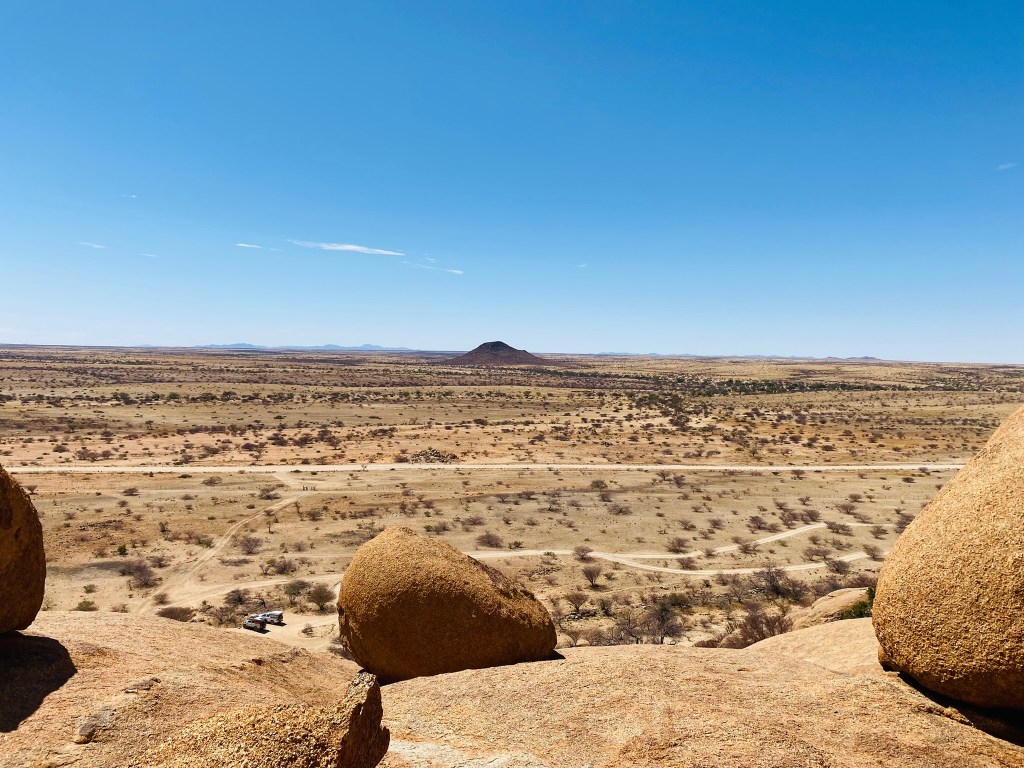
It was an interesting morning up in the mountain.
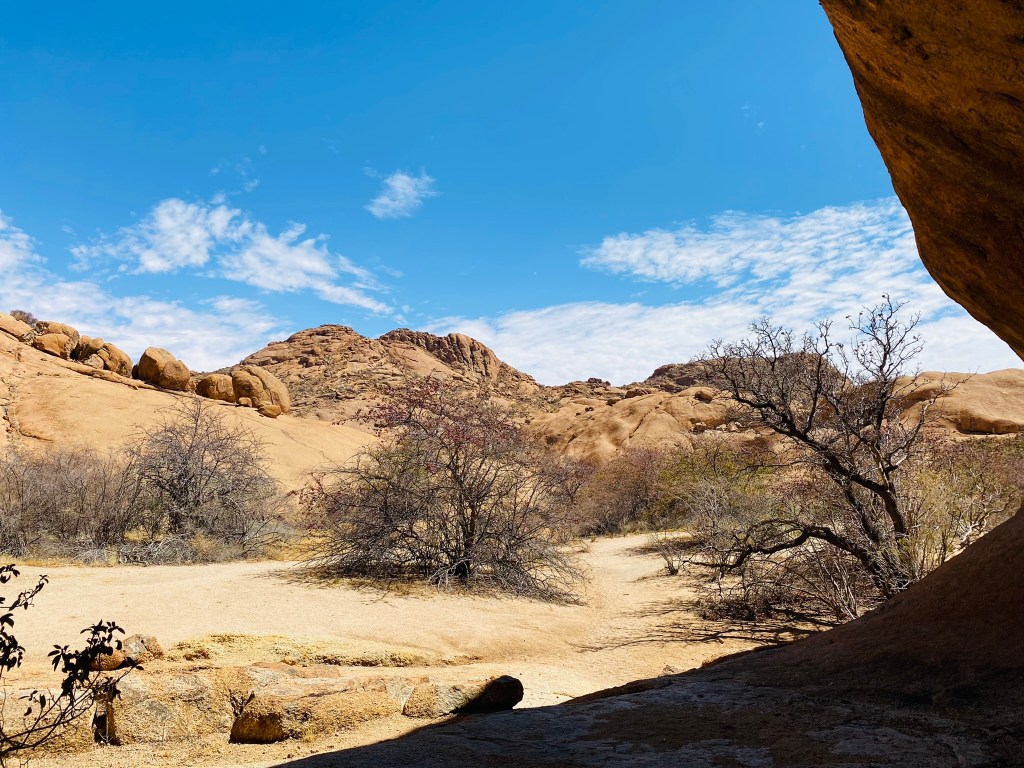
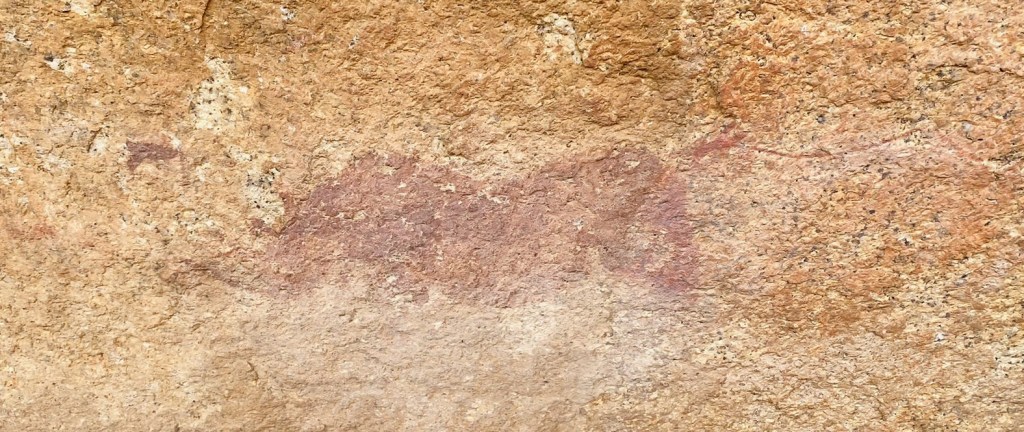
We learnt about the San people and their paintings from Eddie and we learnt from Nick, a Namibian from Swakopmund, that he had worked in both Leamington Spa and Rugby and lived in my home village of Dunchurch for 4 years. I´m not sure which was the more amazing!


Having set such low expectations of my ability to get back down off the mountain, I was under no pressure to look graceful, confident or happy! In fact everyone was rooting for me and offering various advice and instruction. I decided to go down backwards, gently lowering myself along the chain rope with my arms. Nick took my mind off things by talking to us about a farm that was for sale slightly further south and how to get round the difficult property laws in Namibia.
Before I knew it I was halfway down. There were a few tricky bits towards the end but James held my arm and encouraged me and finally, to great applause from everyone, I jumped down the last section with my arms in the air wooping as I landed.
I was on a roll and took advantage of Eddie´s good nature to ask him to take us to the local Himba village to meet the people. He made a quick call then jumped in the back of Henry to guide us there.
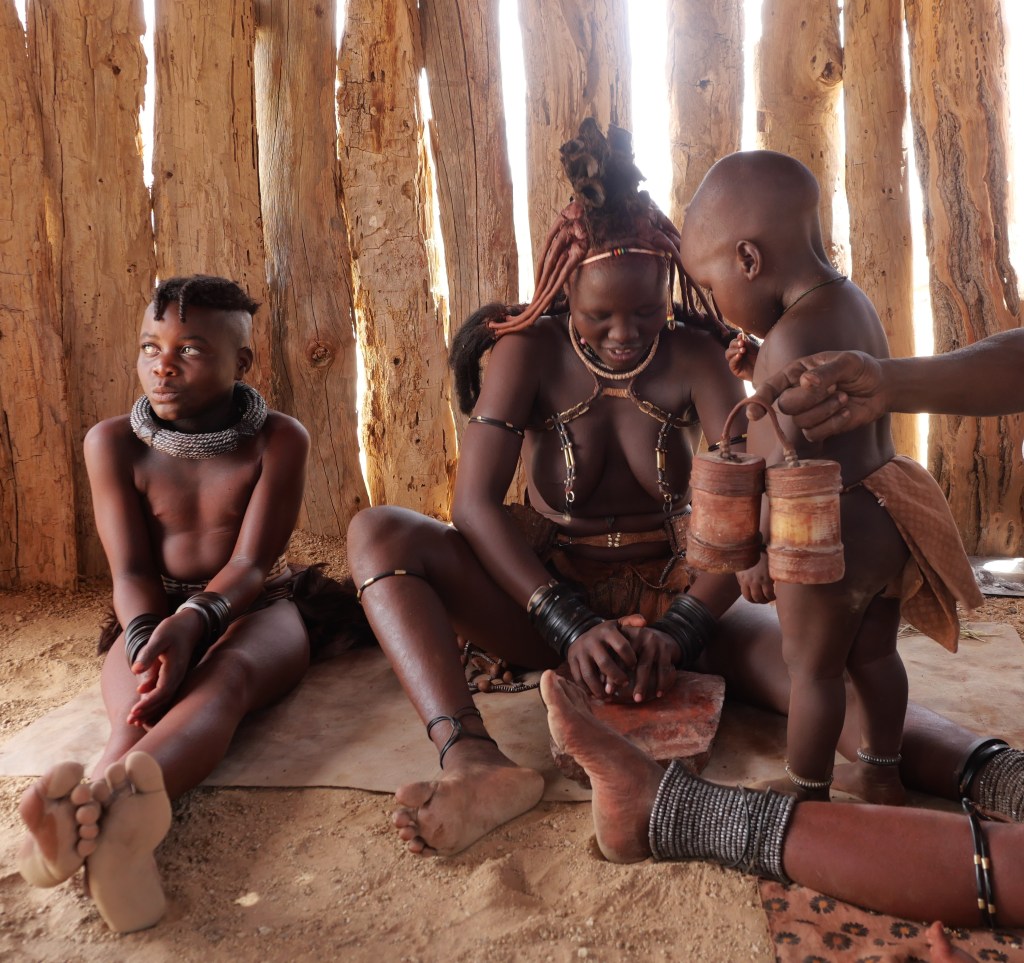
It was a small village – all Himba villages are, with only 10 or 12 adults – and many of the women were away gathering wood or water.
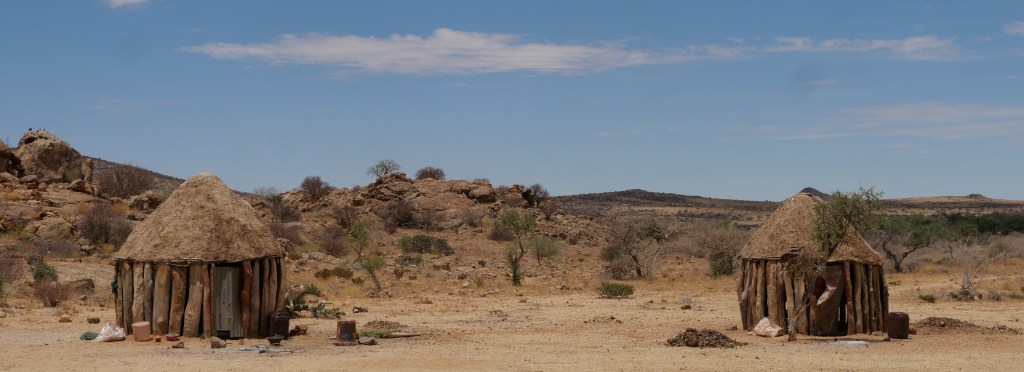
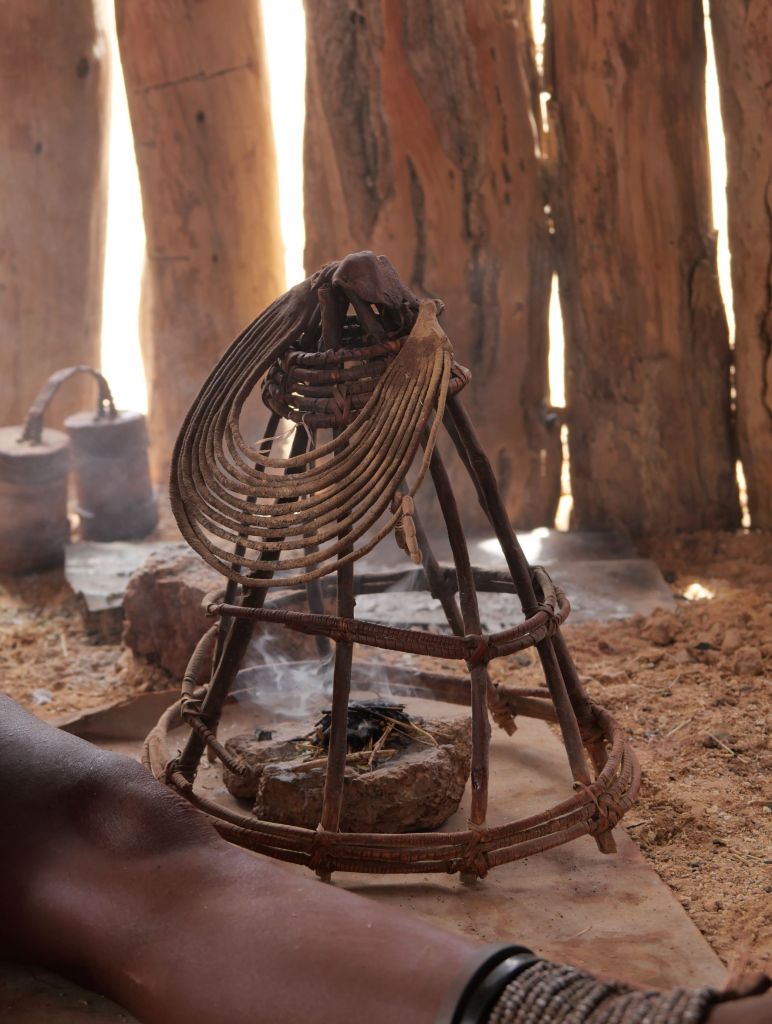
But the tribal queen and her family were home and showed us some of their secrets for keeping clean in the desert

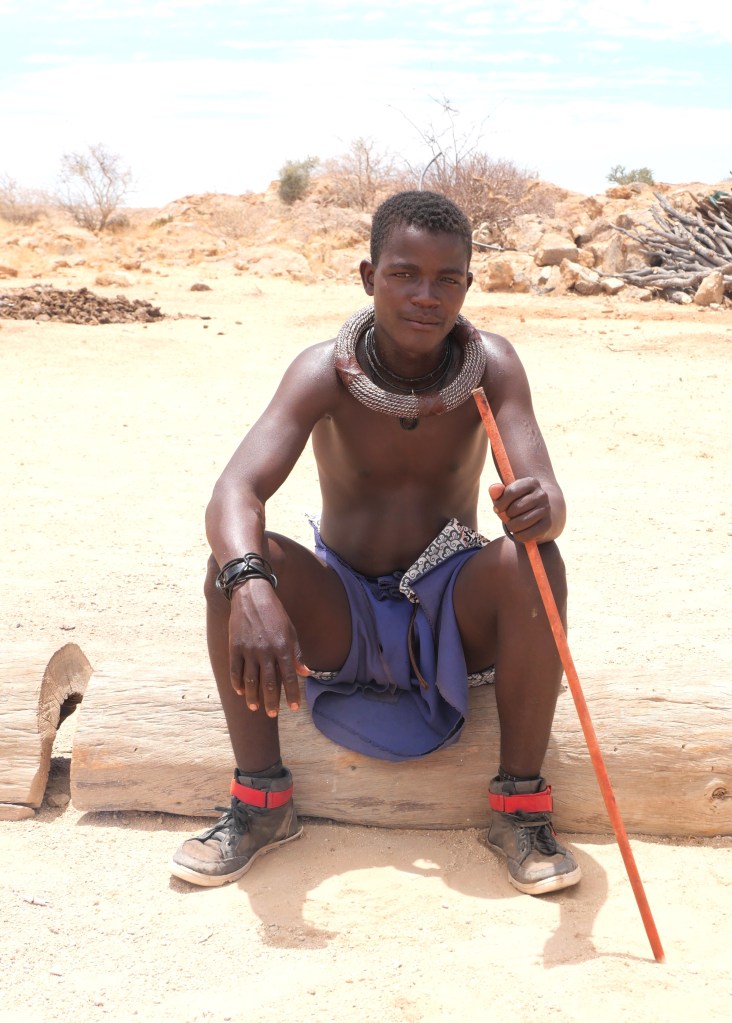
And the chief happily posed for photos before asking for payment for the tour!
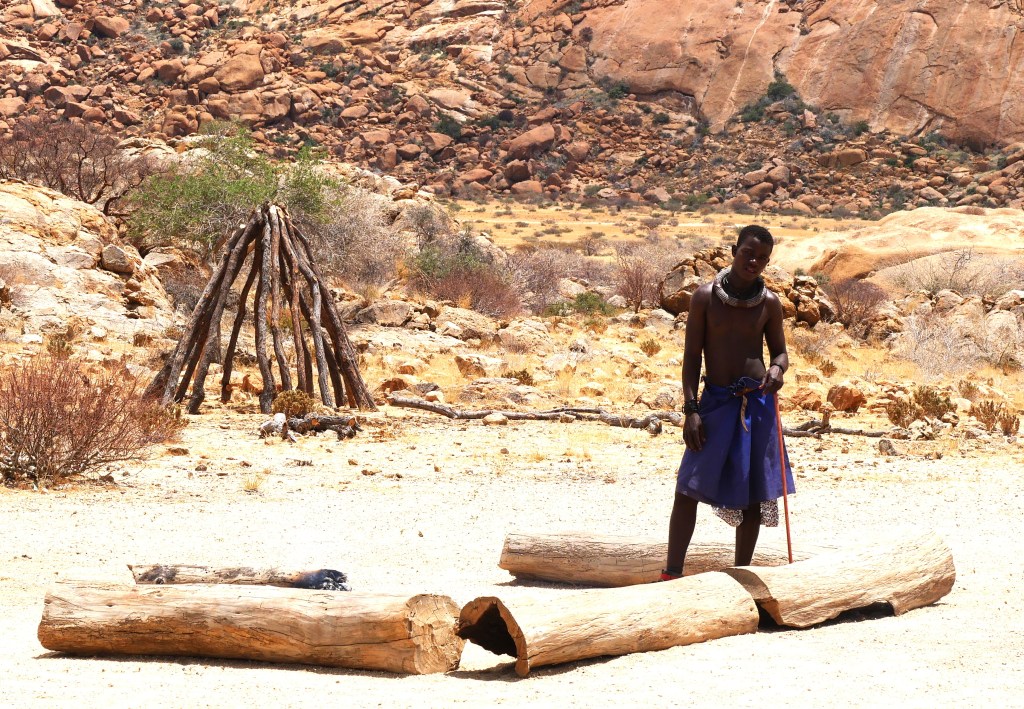
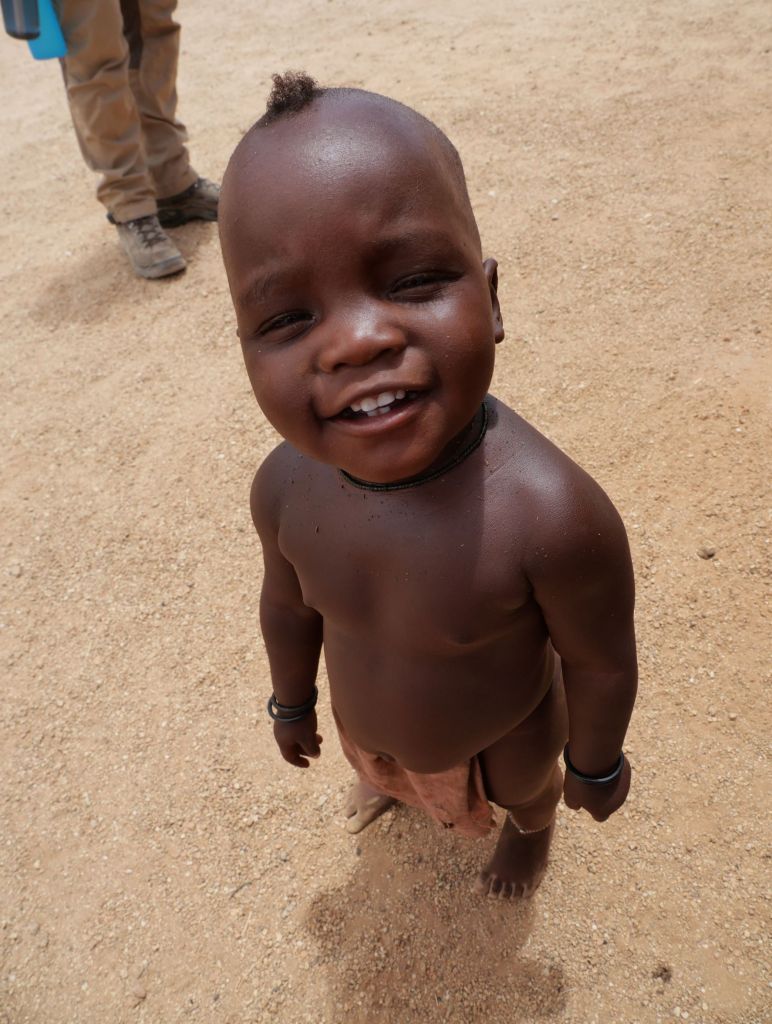
We had learnt more about the effects Covid had had on large sections of the Namibia population who live off tourist income. I heard our guide´s voice catch as he spoke of spending 2 years with no work and no income, it had clearly been a very hard time for everyone and they were only just getting back to some kind of normality now. He had been so kind, so patient and so interesting to talk to, my hand went back in my purse for twice the tip we had planned to give him but it still didn´t seem enough to help in any meaningful way.
That evening we ventured into the less popular part of the Spitzkoppe area to find a quieter pitch. We were successful, not a soul disturbed us all night. But we were woken at 2am by howling winds and pouring rain – out here it was remarkable, am I starting to live up to my Rain God reputation again??
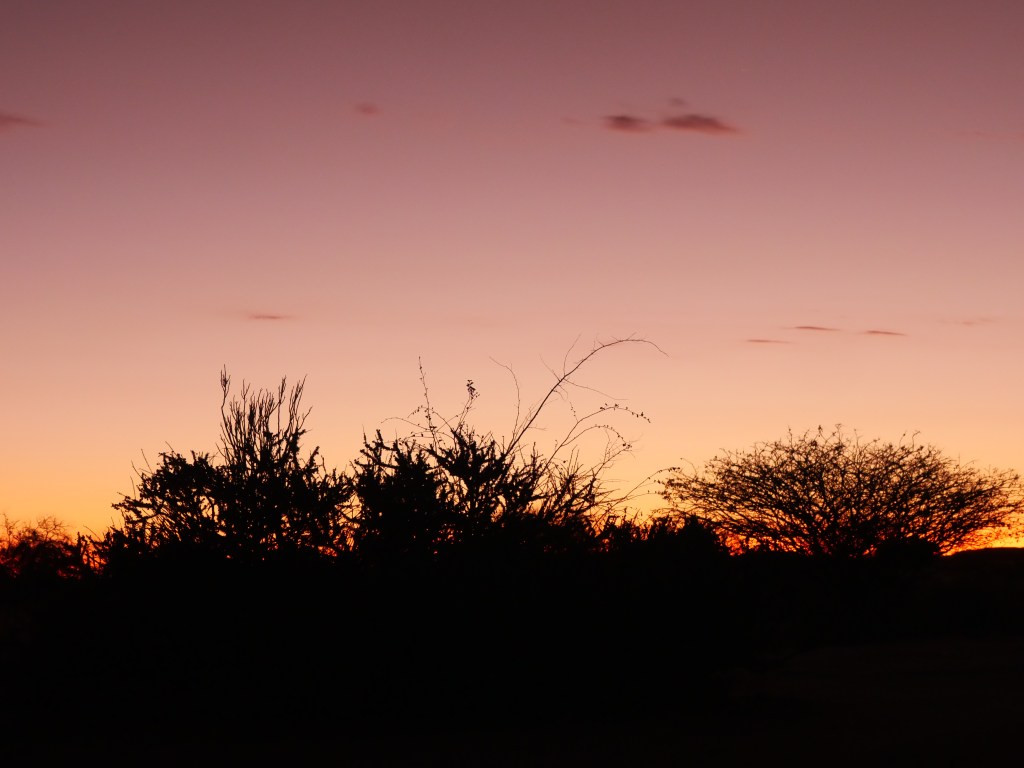
Our lives were starting to fall into some sort of routine – spend a couple of days in a town stocking up and diving back into internet land then head off for a week or so into the remotest parts we can find. We had been away from everything for nearly a week so it was time to head back into civilisation, catch up and stock up.
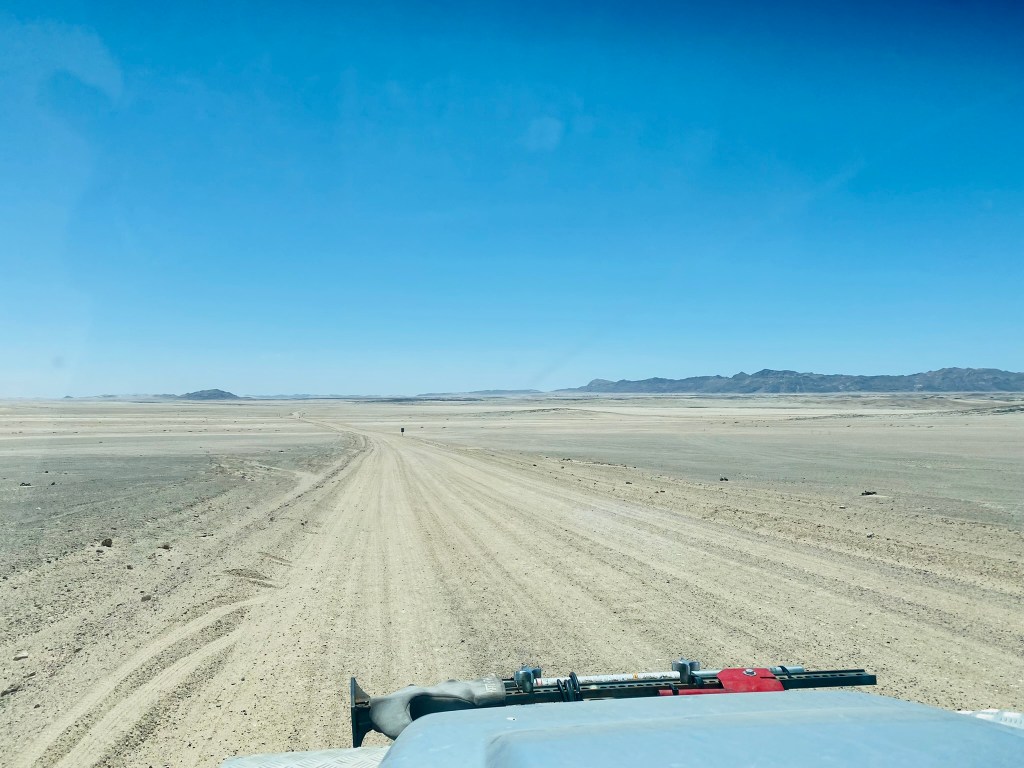
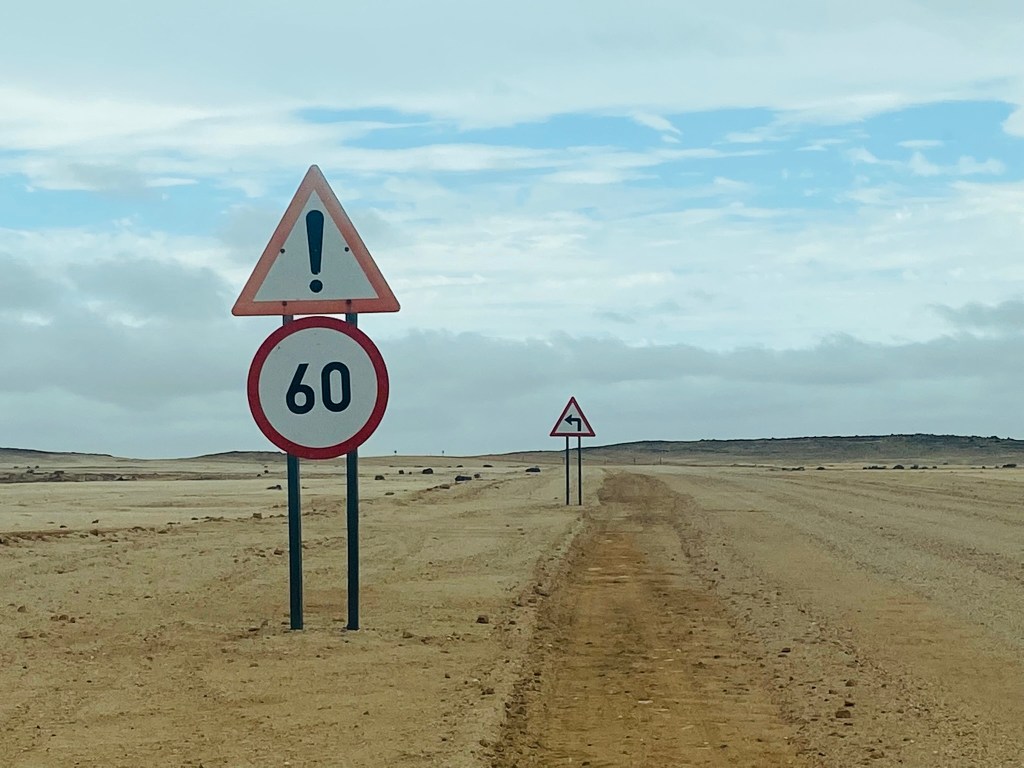
The distances in Namibia are vast, the roads long and bumpy, stretching endlessly towards the horizon. Accidents happen frequently with vehicles overturning or getting stuck in the deep sand. The authorities want to keep everyone safe but it says something about driving here when the most exciting thing to happen on the roads is a bend!
This time we were off to Henties Bay. A small fishing town which we had expected to be similar to Walvis Bay. We were quite wrong. Henties Bay was tiny and offered little beyond 4G network coverage (a miracle in Namibia!) and a lovely café called Misty Bar where we enjoyed a good lunch and a long-overdue internet chat with my Mum.
But there was little in the way of shops or fuel. We searched for hours for the Spar supermarket shown on all our different maps. Eventually I went to speak to an ATM security guard and was told it burnt down last year! This was our only chance at buying food for a while yet – what do we do now?
It´s a strange feeling when you don´t know your surroundings and have no local knowledge, relying solely on technology to find the essentials of life such as food, water, fuel and data. When something like this happens it throws a huge spanner in the works and reminds you just how quickly things can go sideways – out here the distance between towns is huge, the climate is unrelenting and you learn not to take anything for granted.
We asked around and eventually found a small, local grocery store where we found some frozen chicken, a couple of potatoes and peppers. But not much of anything else. We had enough to keep us going though so headed to the nearest campsite.
We were back on the coast so the world had become foggy, damp, cool again with plenty of low cloud giving everything a very desolate feel. This is also fishing land and somewhat out of season so there were not many people around and many campsites were not even open yet. The campsite we had chosen online looked bleak and grim in reality. James couldn´t reconcile himself to it so we moved on up the coast.
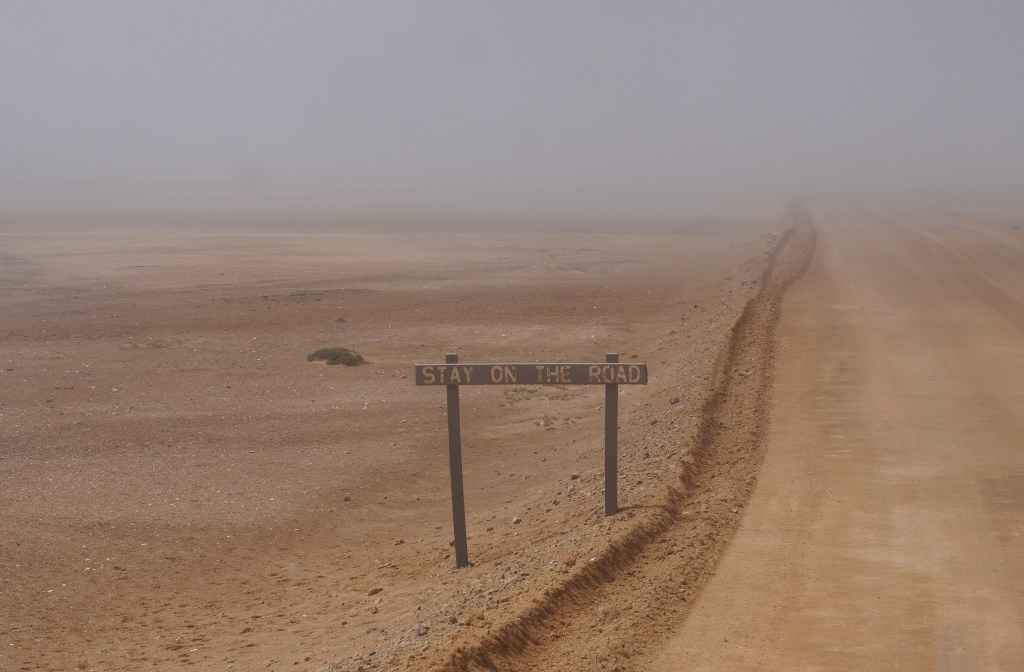
We tried another two campsites, getting increasingly further away from Henties Bay, but they were, if anything, worse than the first. Away from the town we had no internet coverage and so no Google. We pulled over and studied the sat nav. We could head 100km inland to Messum Crater but the campsite there appeared to be a wild camp in a National Park which is illegal. Not worth the risk. We looked further up the coast and finally found the Cape Cross Lodge and Campsite. 60km out of the town, it would mean giving up on finding out whether Henties Bay had any more to offer than we had found so far and heading straight to the Seal Colony and our northern sites. But it seemed we had no choice so we pressed on.
As soon as we arrived we realised we had stayed here before on our honeymoon. Last time we were in the lodge, this time the campsite – but it all looked very familiar. I remember this lodge feeling damp and windswept before, now we were spending more time in the country and getting to know it better I could put that in perspective and see why – everything around here is damp and windswept!
The campsite and lodge was clean, spacious, friendly and had a bar where we ate chips, drank beer and worked on the blog. The next day we were up early and walking the 3km to the seal colony.

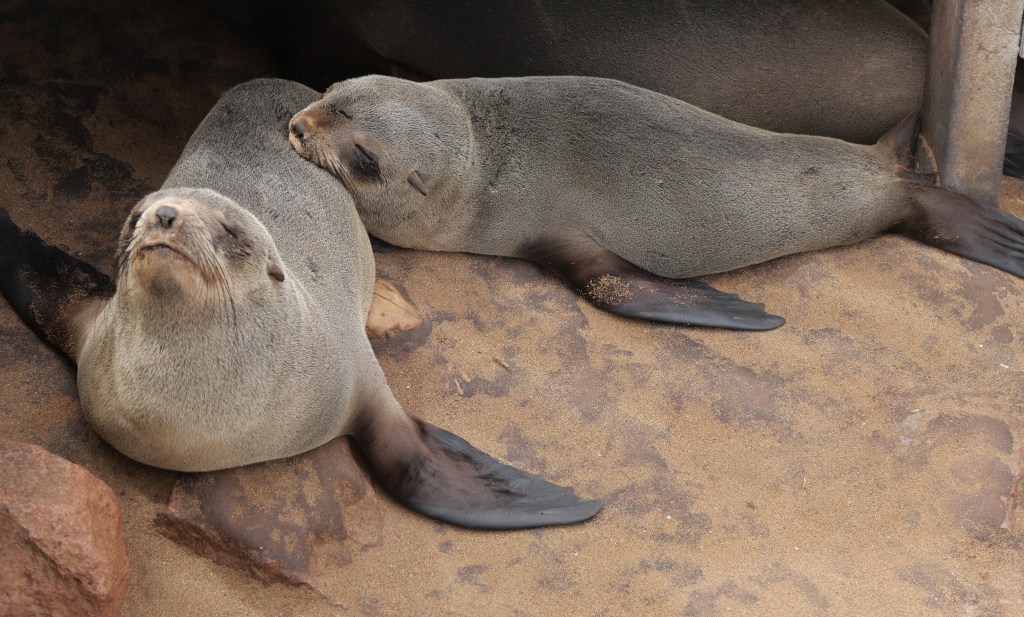
Fewer seals than 8 years ago but still noisy and smelly! We have seen a lot of seals since landing in Cape Town 8 months ago and it never ceases to amaze me that all they seem to do is sleep or fight!
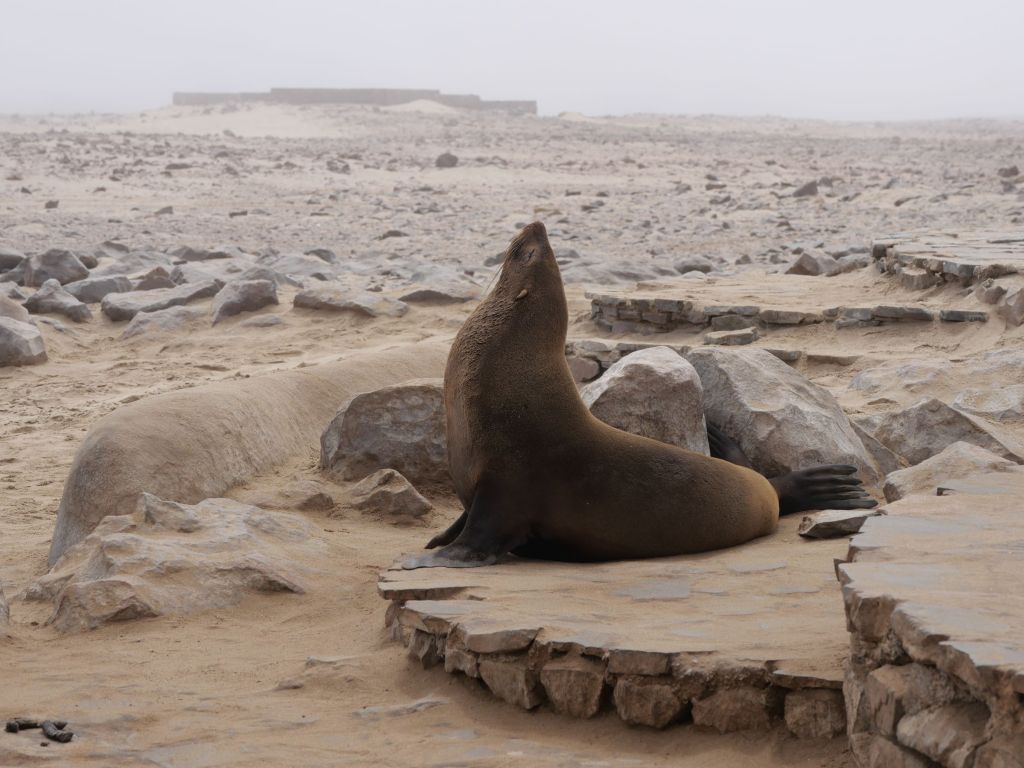

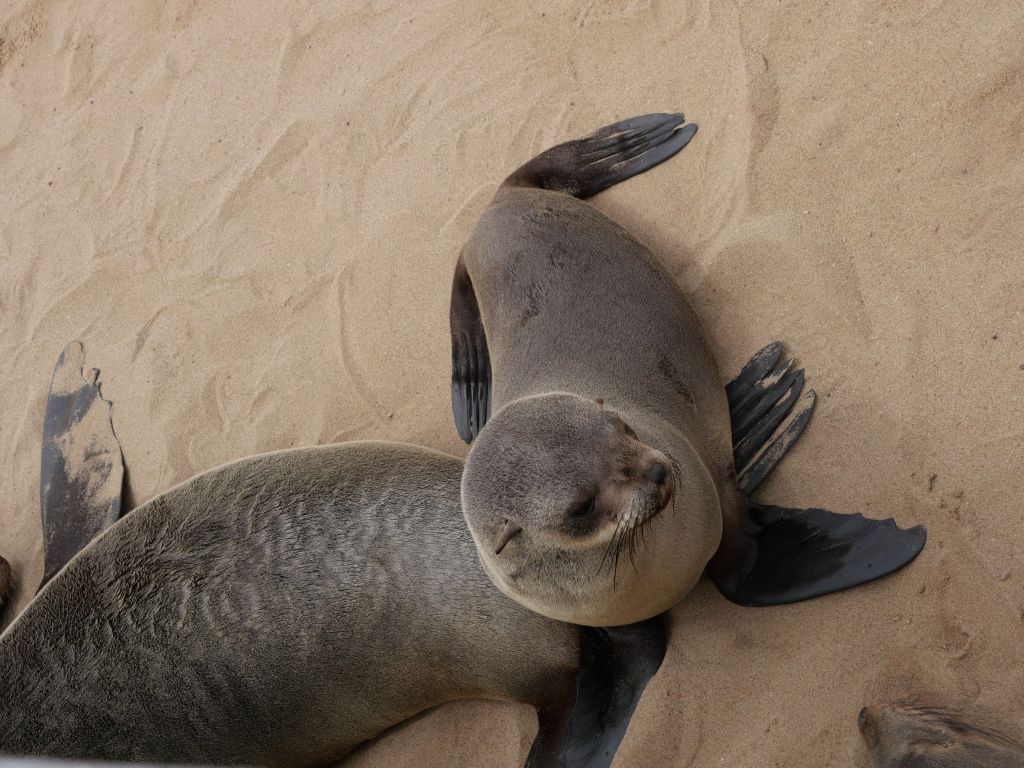
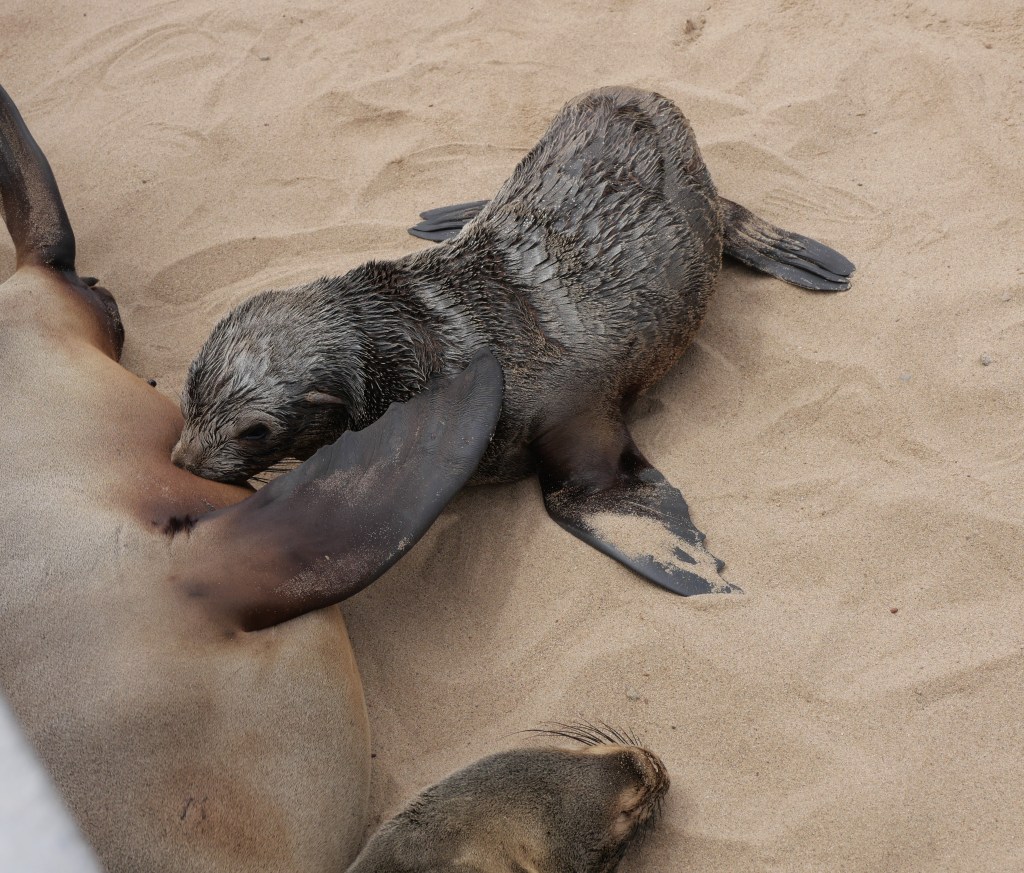
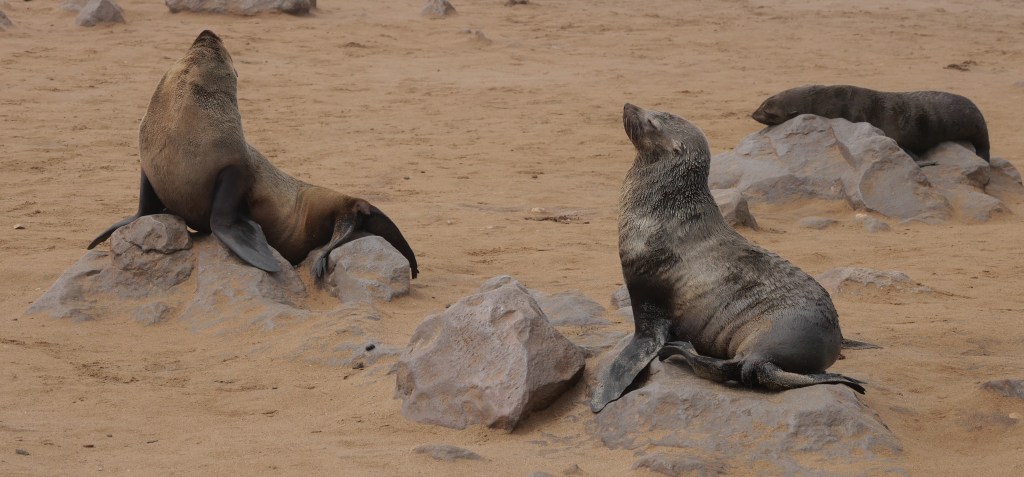
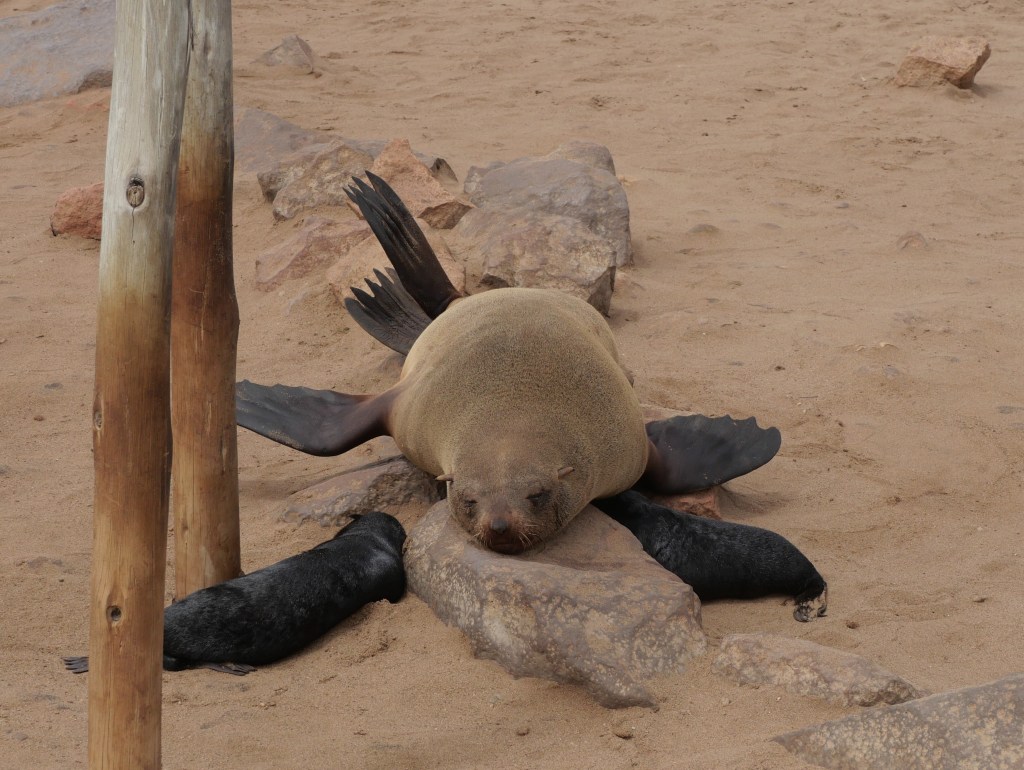
We found out later why there seemed to be fewer – apparently there are becoming too many for the environment to support so the authorities have been culling them. It seemed sad but I´m not a wildlife expert, I will leave the judgment calls to those who are.

We were at a cross roads in our Namibia trip. Swakopmund represents broadly the half way point in the country. We were moving from the barren, dry, sparsely populated south into the hotter, wetter north where both people and game are more numerous. Apparently the north is more ´authentic´ than the south but with much worse roads. I wasn´t sure how the south was inauthentic, maybe the reference is to places like Sossussvlei and other prime tourist sites rather than the farms and deserts we had been visiting. And as for the roads – god help us if the southern roads were the good ones!
We needed to plan our next steps and things were getting a bit confusing. We wanted to see more of the less-visited areas, get into the detail of this beautiful country rather than treating our stay as a tick-list of popular tourist spots. That would take a lot of planning and, as we found, much going round in circles. But we had plenty of time and no shortage of enthusiasm. This was truly turning into a wilderness adventure and we were looking forward to what Namibia had in store for us next…..
 The Sidetracked Sagas