We arrived in the large town of Opuwo relieved to find plenty of fuel but sad to see the obvious poverty in the area. The Spar supermarket had too many empty shelves, the fruit and veg was rotting and there were groups of children and Himba women begging outside. This is not something you see a lot of in Namibia, few people are wealthy but equally few go hungry.
We headed out of town towards our campsite wondering what was in store for us – campsites near towns are generally not our first choice but practicalities dictate that we have to be near civilisation sometimes.
When we arrived it was lovely – friendly, comfortable and pretty.
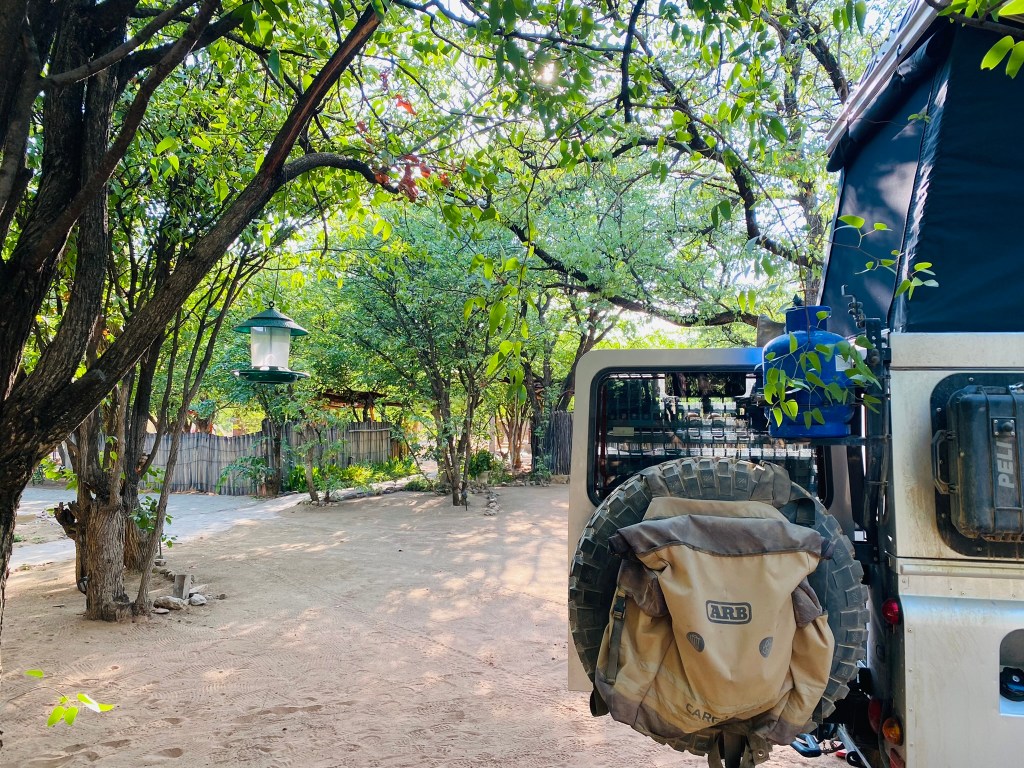

There was a bar area overlooking a dry river bed and we headed round for a beer that evening.
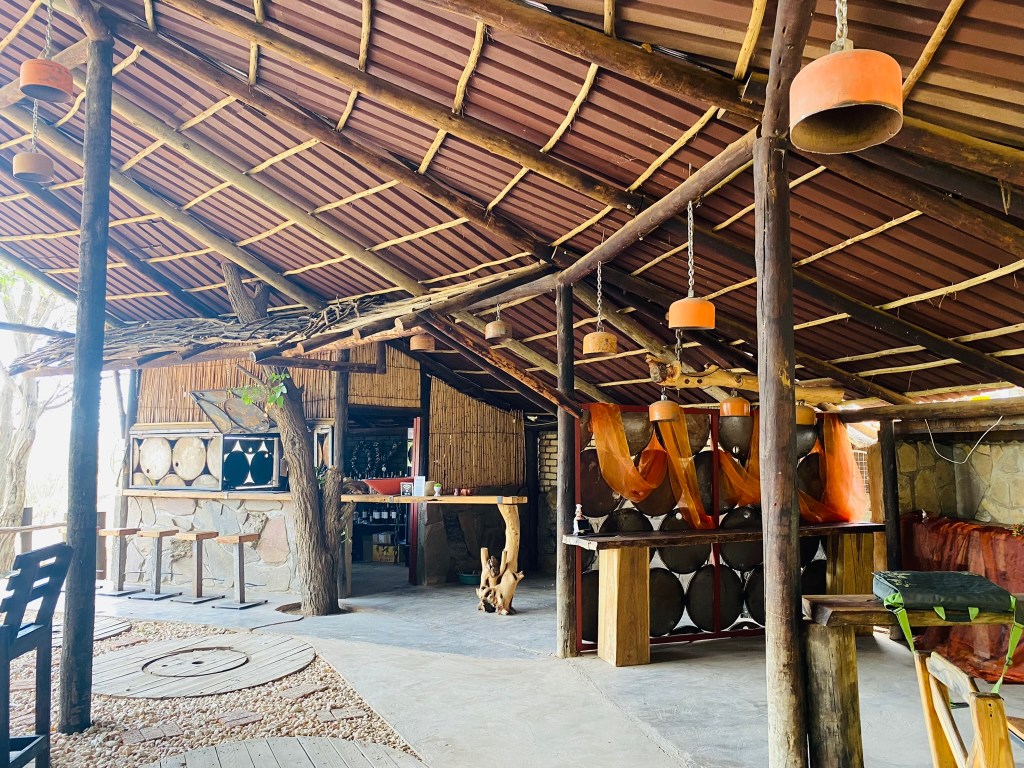
As we entered, the owner approached us with a broad smile. ´You have brought the most beautiful car into this campsite that I have seen for years´ he said and slapped James on the back. As we got chatting about our lifestyle and travels he became increasingly interested and suddenly the beers were going on his tab rather than ours and a wealth of local knowledge and advice was forthcoming – yet more tips on where to buy land, how to build and where to hire labour.
We also found out that his business partner owns the Spar supermarket and they said we had simply been unlucky when we went as the weekly delivery was the next day so the shelves would have been at their worst. Don’t mind the locals he said, they´re not really starving, they´re just cheeky! It´s tricky working out where the truth lies at times.
We had a great evening chatting and laughing but ended up going to bed with slightly fuzzy heads! Sadly everyone else in the bar stayed up until the early hours and the peace and tranquility of the last few days was most definitely gone for a while.
Early the next morning we heard from our friends Charlotte and David. We had met them on the campsite in Cape Town whilst waiting for Henry to arrive from his great shipping adventure. They too are travelling the world but were travelling much faster than us and three weeks ago had made it as far as Kenya. We hadn´t expected to meet up with them again for the foreseeable future but Ethiopia has recently closed its borders to foreign vehicles and they had been forced into a u-turn back into Europe via the west coast. They text to say they were heading to the Namibia-Angola border about 250km from where we were.
We had planned to leave Opuwo that morning and head 3 hours north to Epupa Falls before dropping back down to Etosha National Park and on to the Caprivi Strip in the north east. We were running out of time to do everything in the north before we flew to the UK for Christmas and I had been concerned about our itinerary for a couple of weeks. To meet up with Charlotte and David we would lose another 3 days and something would have to give.
Options were thrown around, pros and cons debated, times and distances calculated. Eventually we made an executive decision – we were not in the market for rushing anything in Namibia, this was a place to savour and enjoy. It was 1,000km from Etosha to the Caprivi Strip and another 1,200 km back from there to Windhoek for our flights. Long drives there and back which would be a mission if we were on a ticking clock. On the other hand, Charlotte and David are good friends whose company we enjoy and we weren´t going to give up the chance to see them. The Caprivi Strip could wait.
Our high levels plans for Namibia had been about as simple as they could get – enter from the south, move quickly to the wet and humid north and see everything we wanted to up there before the rains came then spend the wet season back down in the drier south. But Namibia had got under our skin and ´moving quickly´ through any part of the country had turned out to be an impossible ask. We had spent so long enjoying every part of the country that even though we´d had 3 months we had run out of time – and run out of dry season!
We could only smile about it – there is always another day, always another way. In fact, now we had made the decision not to go to the Caprivi Strip we felt much happier and more relaxed – we now had plenty of time to enjoy the things that were left.
By the time we left the Opuwo campsite, after two very noisy nights from the owner and guests at the bar, we were relieved to be leaving the town behind – and the mosquitoes! We drove 250km east to the large city of Oshakati and arrived at the Fantasia Guesthouse around mid-afternoon just as Charlotte and David were pulling up.
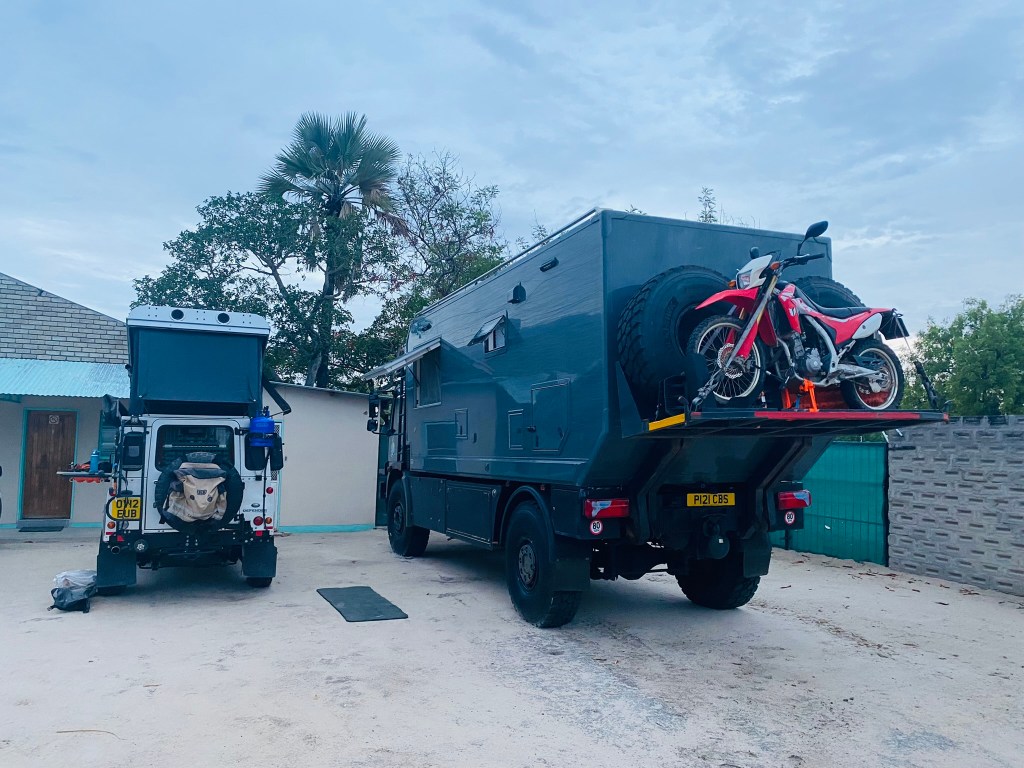
Henry looked very small sitting next to their truck – we were feeling like the little brother again.
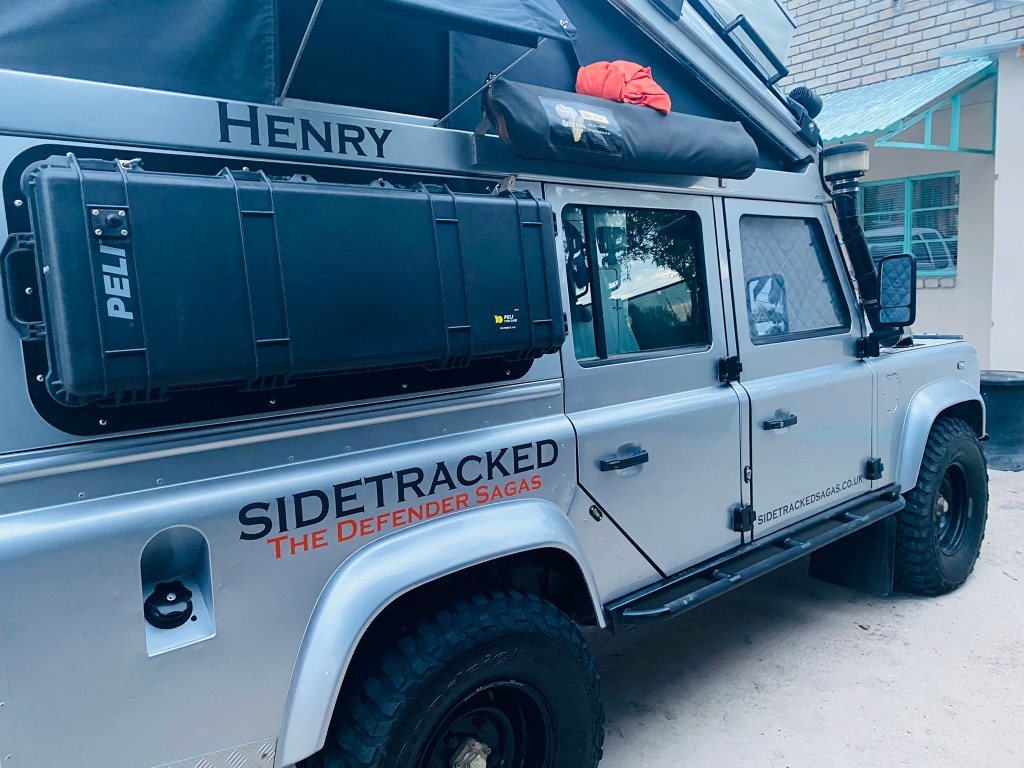
But James took him into town for his first clean since we arrived in Namibia and he was sparkling….we hardly recognised him!
We had a fabulous day with our friends, well worth a 540km round trip. Just like when we visit the UK, we value every minute of our time with the people we care about.
But all too soon they were gone and we were heading back to Opuwo. The roads between Oshakati and Opuwo were the first smooth, tarmac roads we had seen since we left South Africa but the rest of the way to Epupa Falls was going to be another bumpy drive. We stopped off at the end of the tarmac for a break and I noticed James looking at Henry rather concerned. He was crouching down looking along the passenger side, moving backwards and forwards with one eye closed. I cocked my head at him, ´what´s up?´. He positioned me at the back, looking down the line of Henry´s doors and asked if they looked straight. I´m not the person ask, I´m generally wonky myself, but even I could see he wasn’t looking very well aligned any more.
James shook his head, weary of the constant stream of Landrover-related problems and jumped back into the drivers seat. We headed off towards Epupa Falls, much further north than most visitors to Namibia will ever get and very much off the usual tourist trail.
The scenery had changed dramatically from what we had become used to. We slowly realised that trees, so rare in the deserts of the south, were becoming the norm
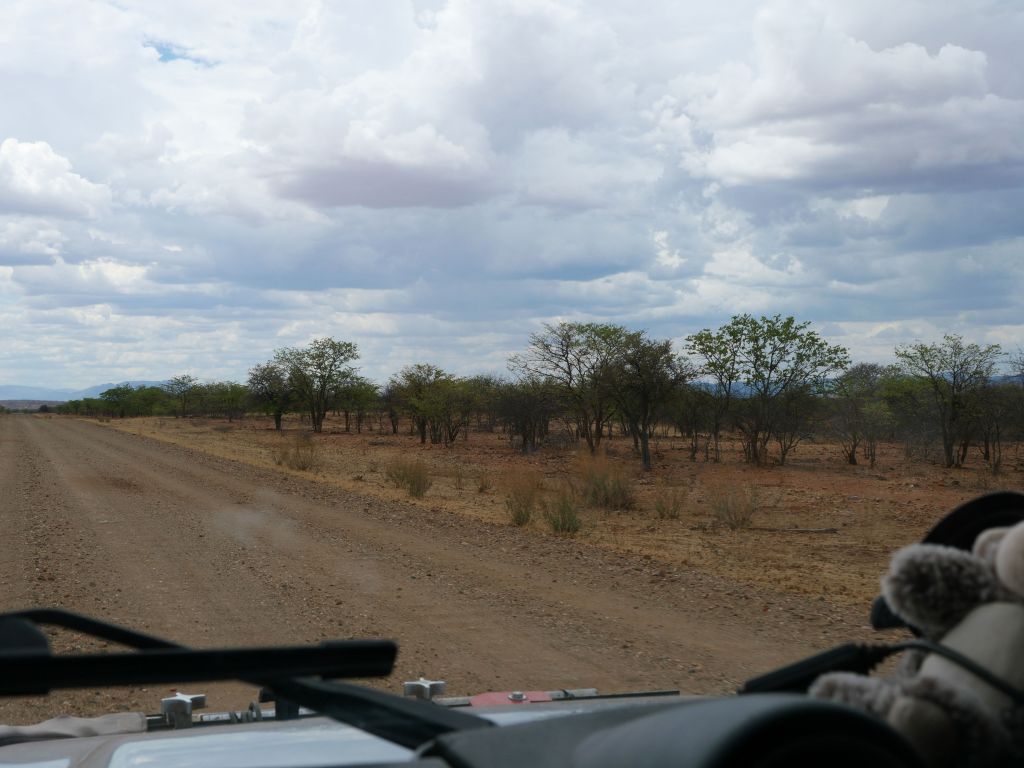
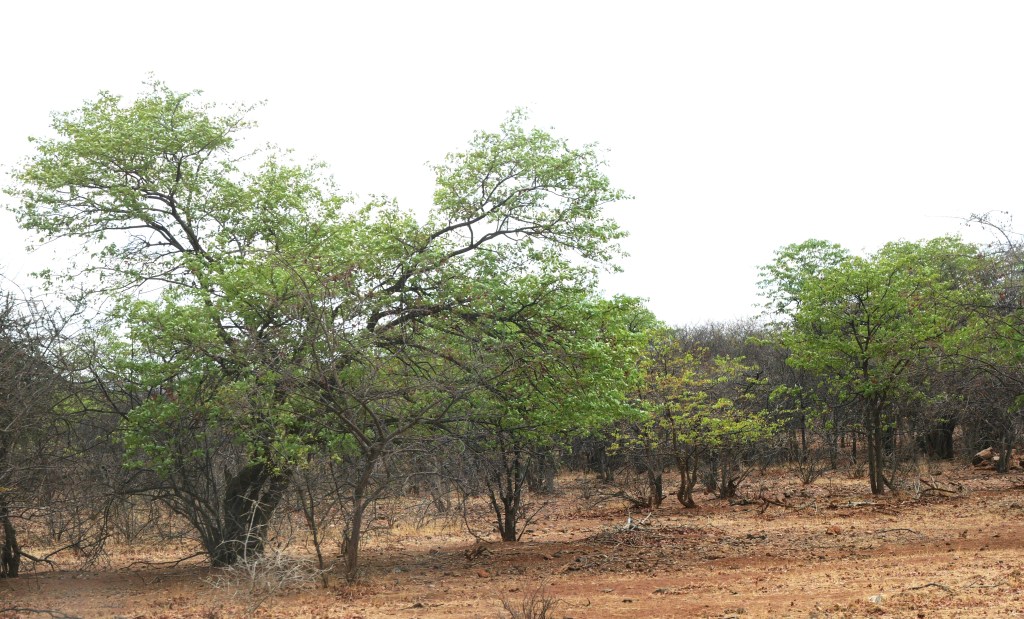
Right on the Angolan border, the whole area was off-limits until 20 years ago because of the Angolan civil war. Up here all the land is owned by the tribal chiefs and foreigners can only stay if invited. Water is plentiful, humidity is high and the scenery is awe-inspiring.
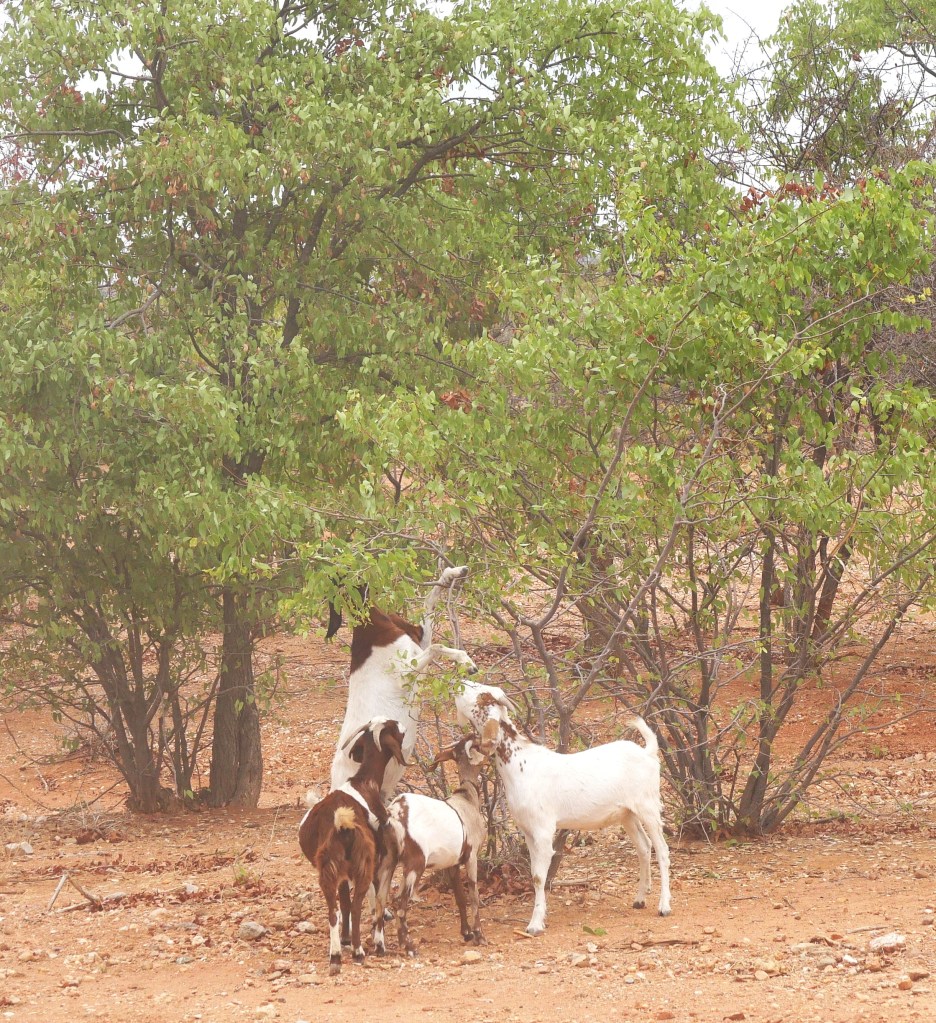
There was little on the roads apart from a few athletic goats
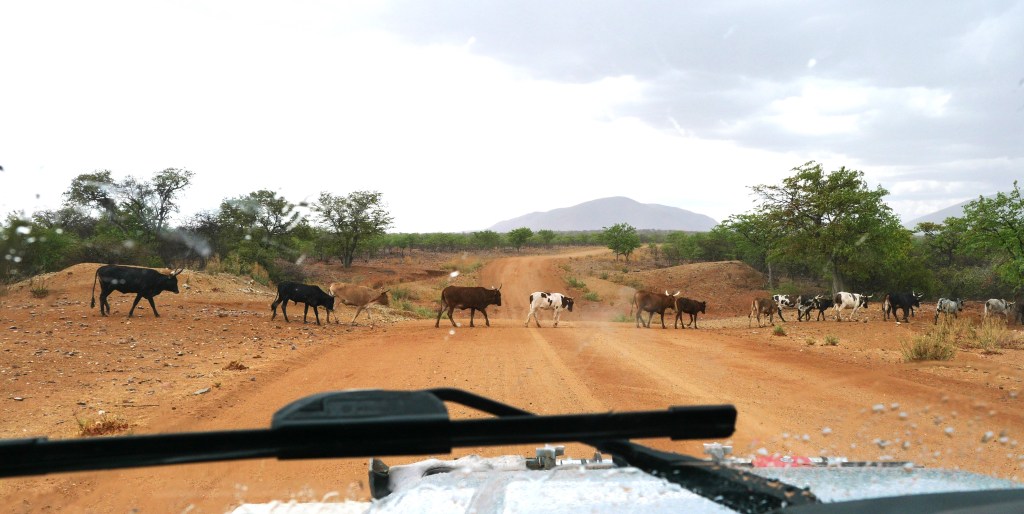
And the endless streams of cattle
At one point we saw a car on the side of the road with a sheep inside and its bonnet up. Next to it stood three Himba people peering into the engine. We pulled over and James leaned out of the window to ask whether we could help. They had left their lights on and flattened the battery. They shyly asked whether we could jump start them and looked rather disappointed when James reversed Henry away further than any jump leads were likely to reach. When he leapt out and grabbed our large battery charger from the tool drawer their disappointment turned to curiosity. When he connected the charger to their battery, waited a few seconds then told them to start the engine they look bemused. And when their car roared into life they broke into peels of laughter and declared it to be ´magic´!! James laughed with them, telling them he was a magician, and we wished them luck.
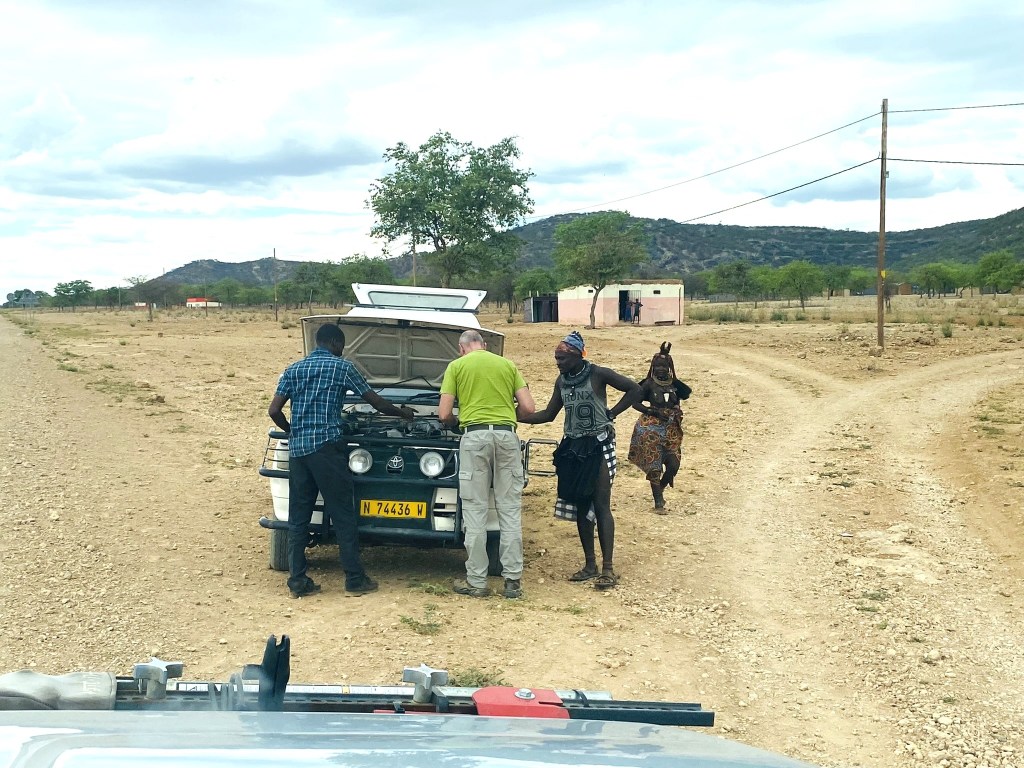
As we drove away it felt good to be able to give something, if only a little thing, back to these people who are giving us so much every day.
The roads were bumpy but surprisingly good, we had expected much worse. The weather, on the other hand, was becoming decidedly ominous.
Big, black, low clouds were gathering all around us. The air was thick and it was heating up. Rain was coming. And before long, it came in spades.
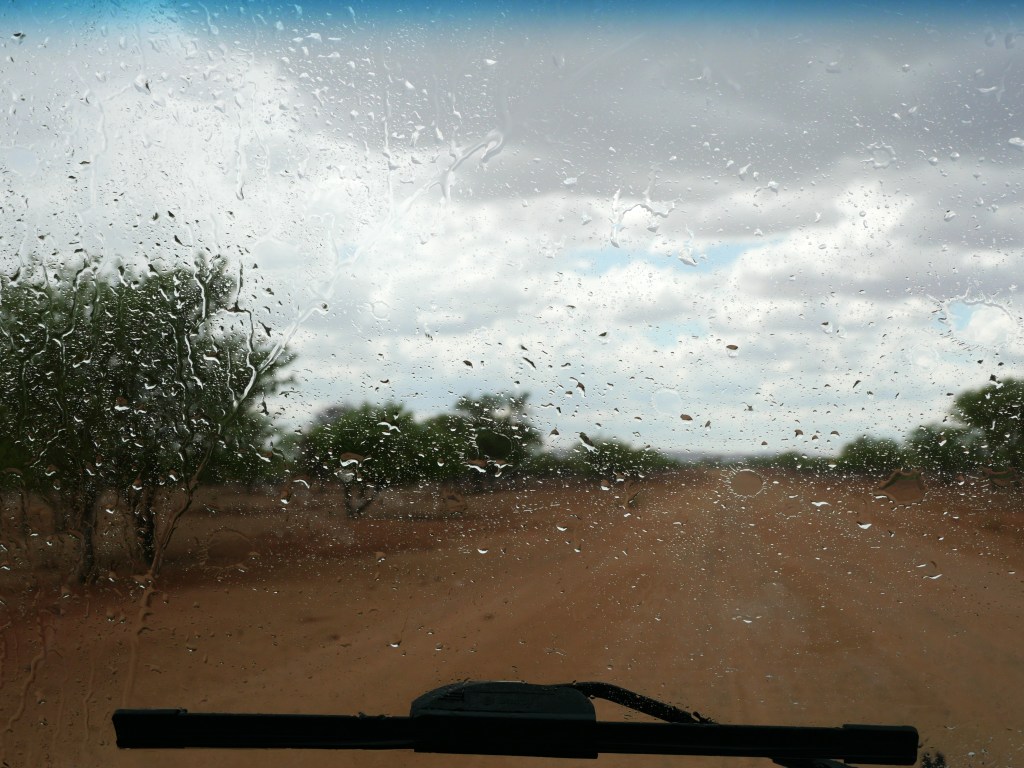
The heavens opened and biblical rain poured down onto us. Wonderful, life-giving water all around. Out here you very quickly learn to love and appreciate the rain as the locals do.
As we drove along, the road became a surging river, the gullies filled up and we could barely see a foot in front of us.
Lightening lit up the skies all round, it was exciting and nerve-wracking in equal measure. We were grateful that the road was wide and relatively flat so we had plenty of room to avoid the rapidly filling lakes appearing all over the surface.
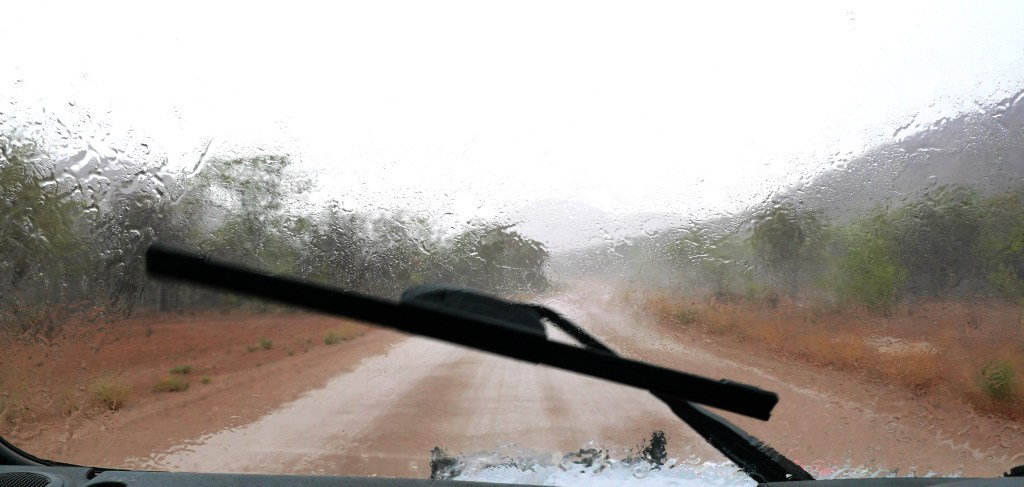
We drove on for about an hour, a sense of foreboding descending on us. Had we left it too late to come this far north? Were we heading into trouble with only washed-out roads and deep rivers ahead of us?
And then, just as suddenly as it started, the rain stopped. The skies cleared and you could be forgiven for thinking it had all been a dream. Welcome to a southern African summer!
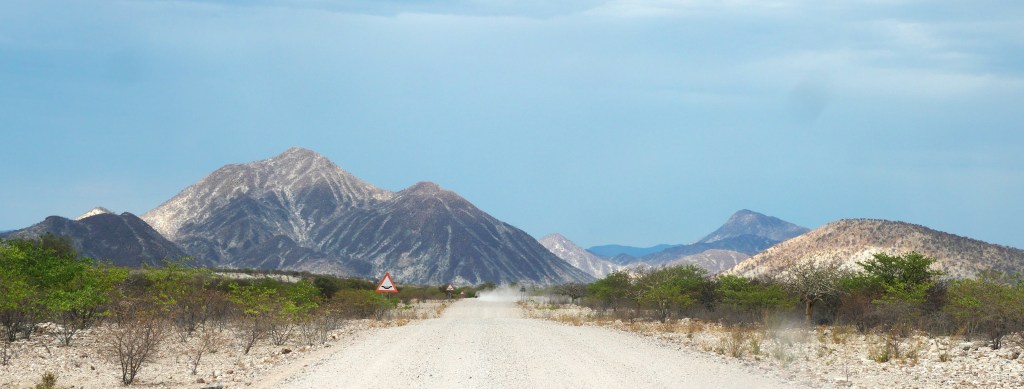
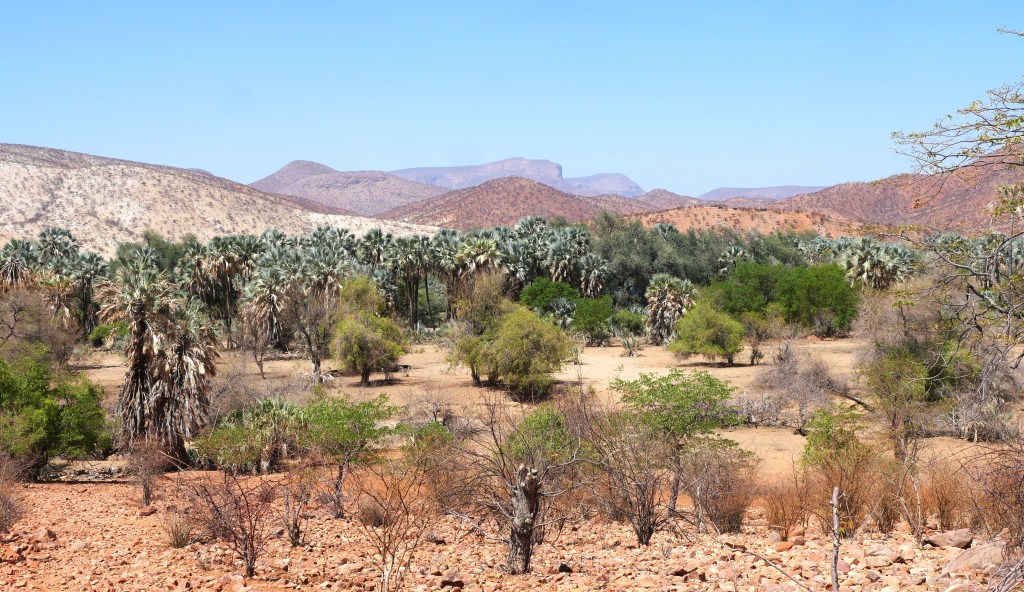
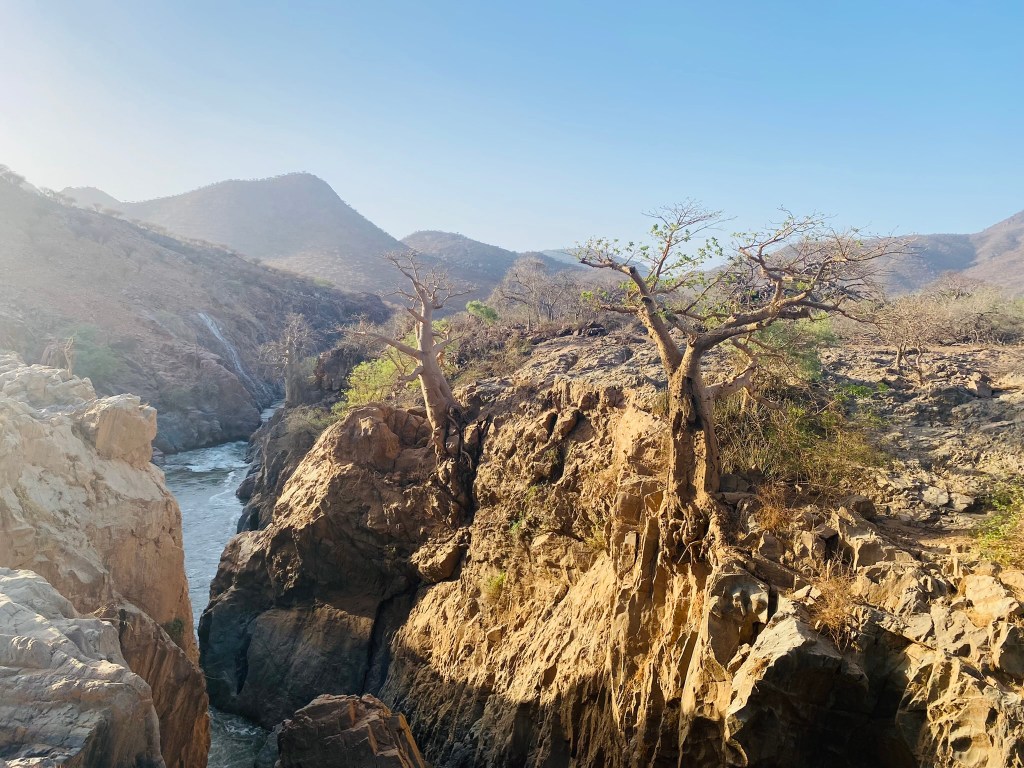
We finally arrived at Epupa Falls late afternoon and were not disappointed. The scenery was breathtaking
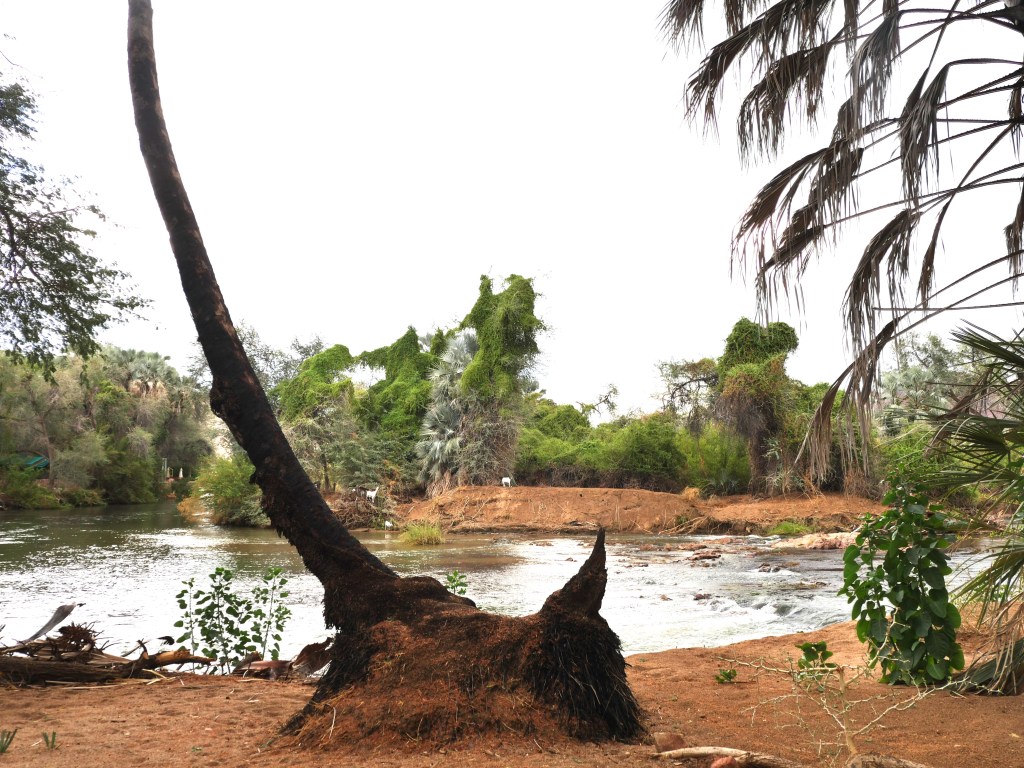
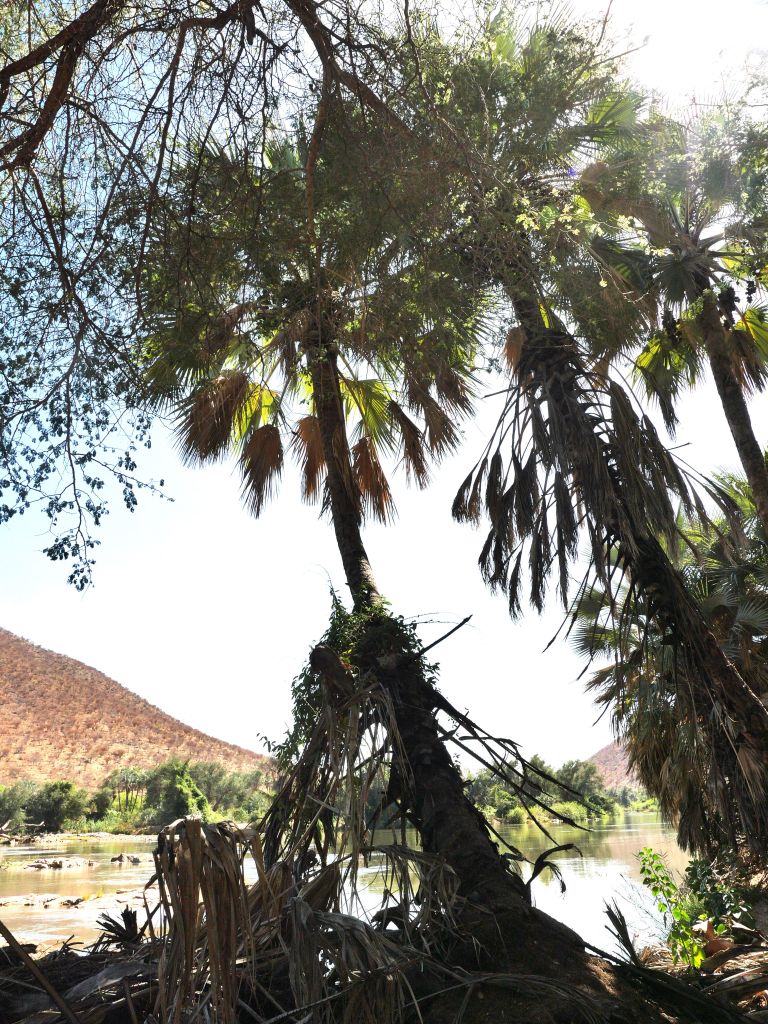
And entirely different from everything we had seen in Namibia up to now, almost like a tropical rainforest
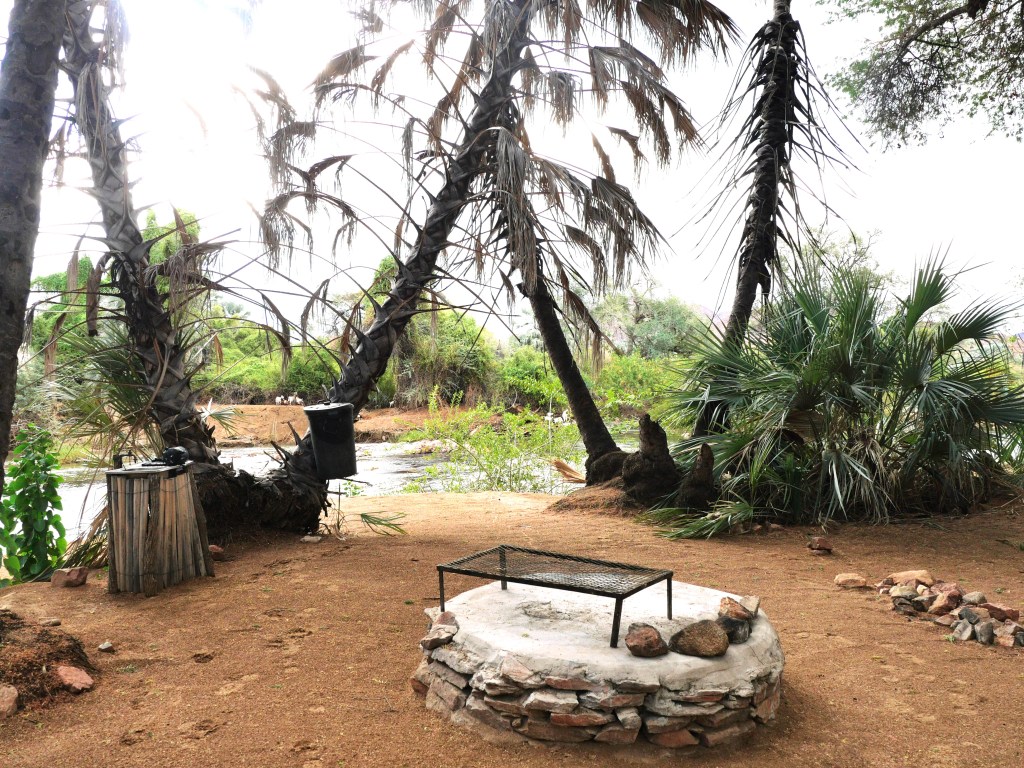
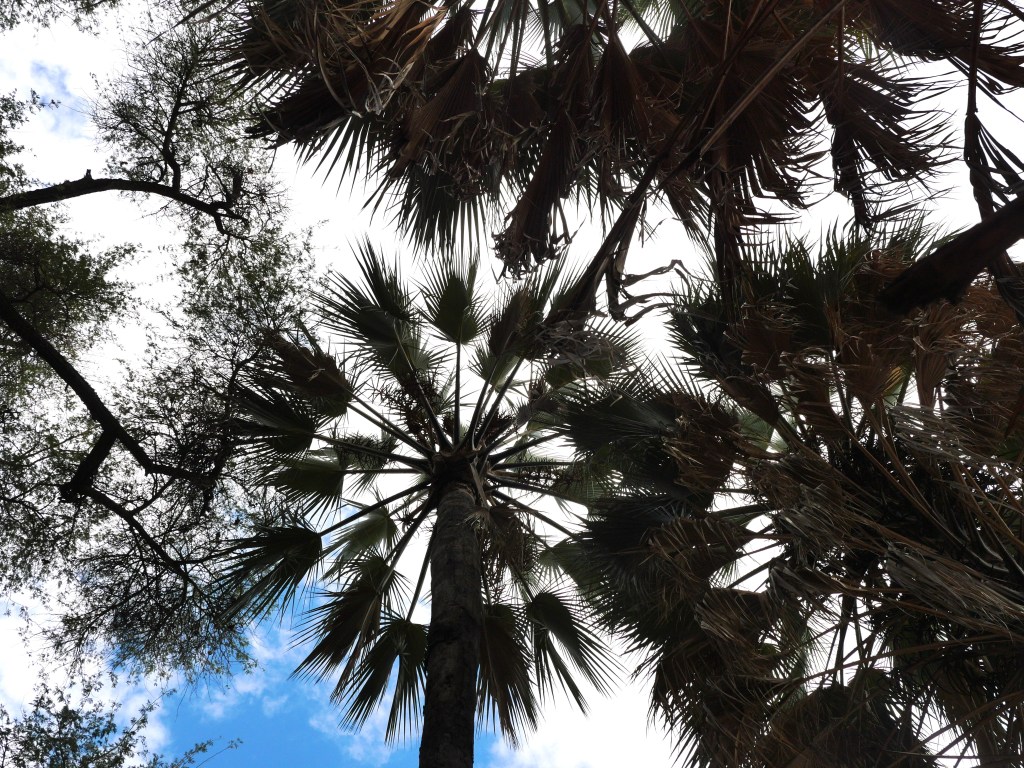
The campsite was hot and humid but with no mosquitoes!
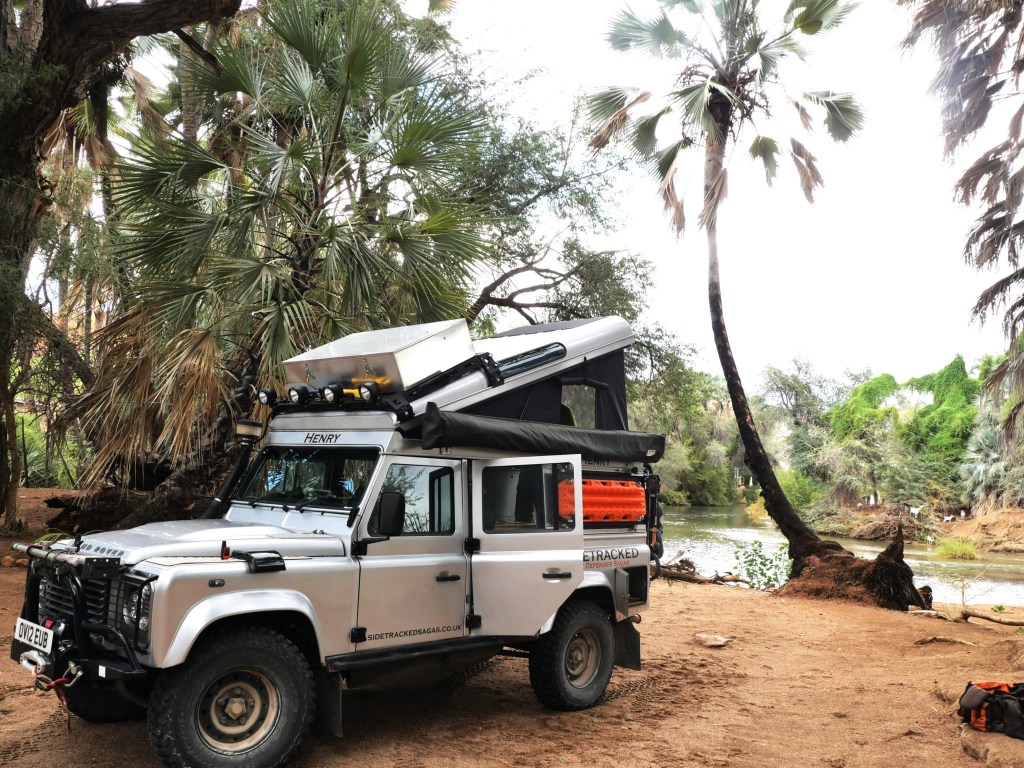
Although we did have a few other neighbours
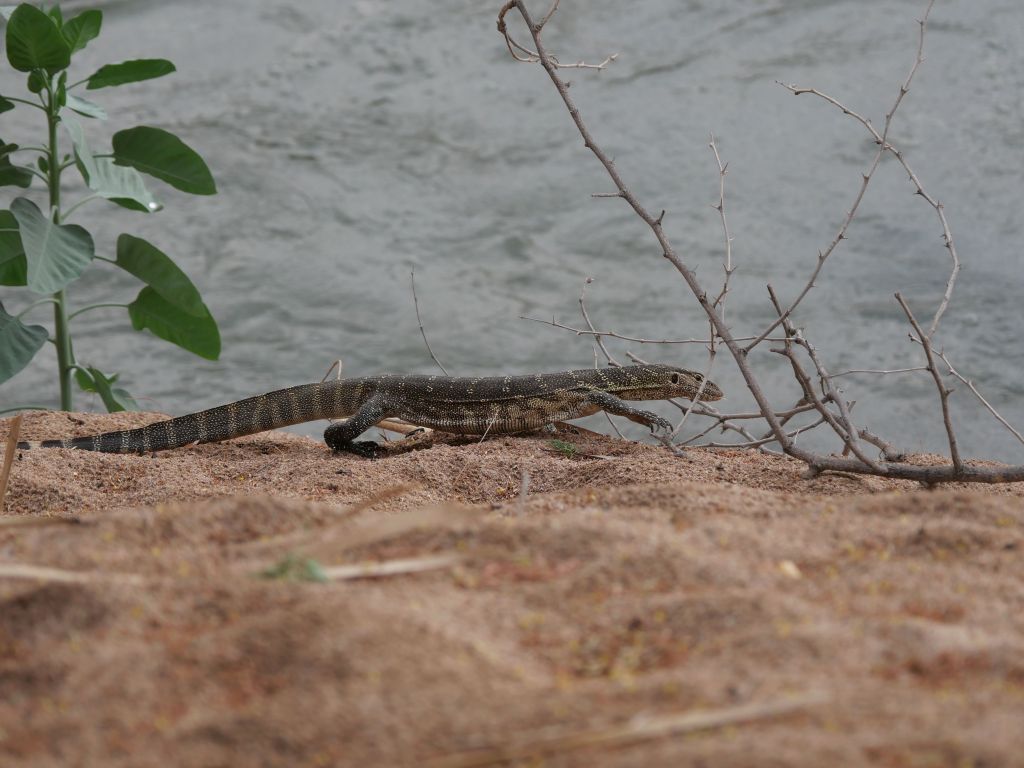


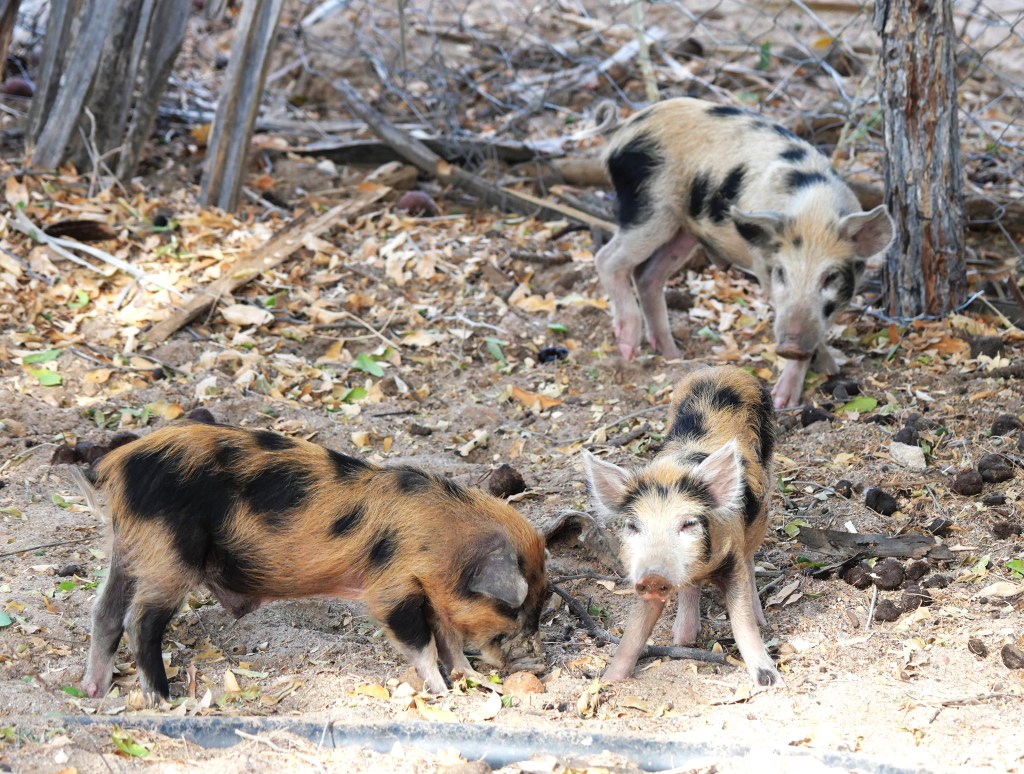
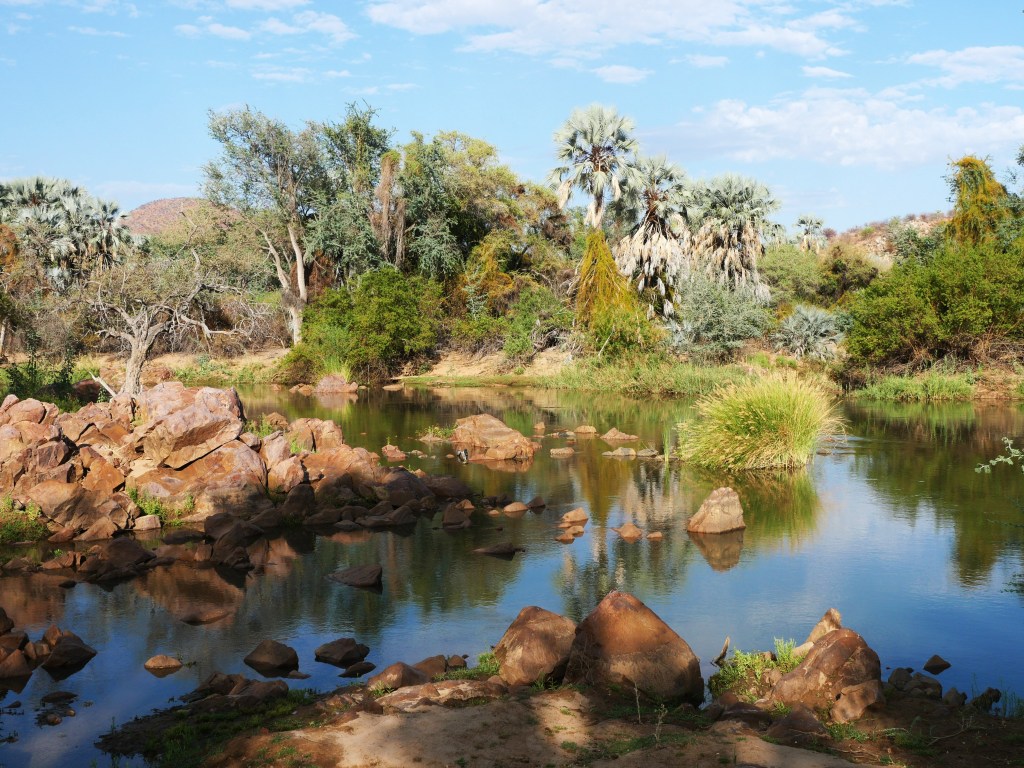
We were about a kilometer from the falls themselves but overlooking the beautiful, fast-flowing river.
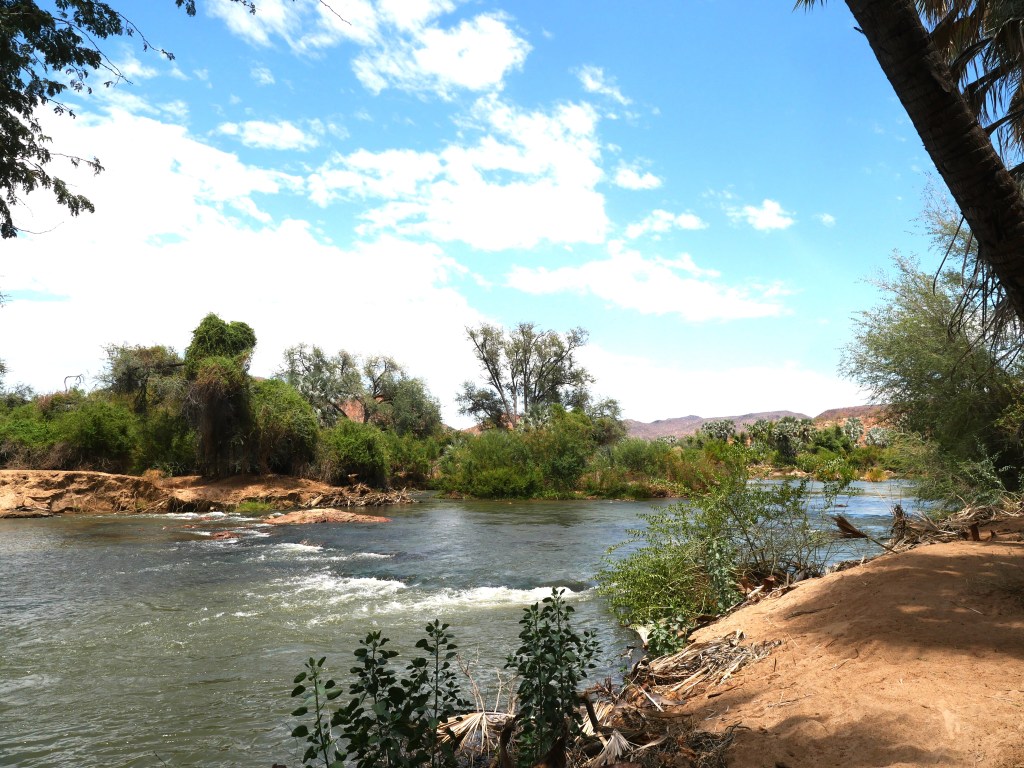
It could have been an idyllic spot for us to stay for a few days rafting, walking along the falls and generally enjoying ourselves, but life was not going allow that. The moment we parked up James leapt out and studied Henry´s passenger side again. After 3 hours of rough roads it was even worse than it had looked in Opuwo. He opened the back door and grabbed the side panels, pulling them in and out. To our horror the whole side was loose and appeared to be almost hanging off. With the kitchen units and trims fitted inside it was not going to be an easy task to investigate properly never mind tackling a repair all way out here in the blistering heat. But from the rapidity of his decline it appeared that Henry would not stay in one piece long enough to get him back to any town.
I made the camp fire – it may have been small but I was proud of it!
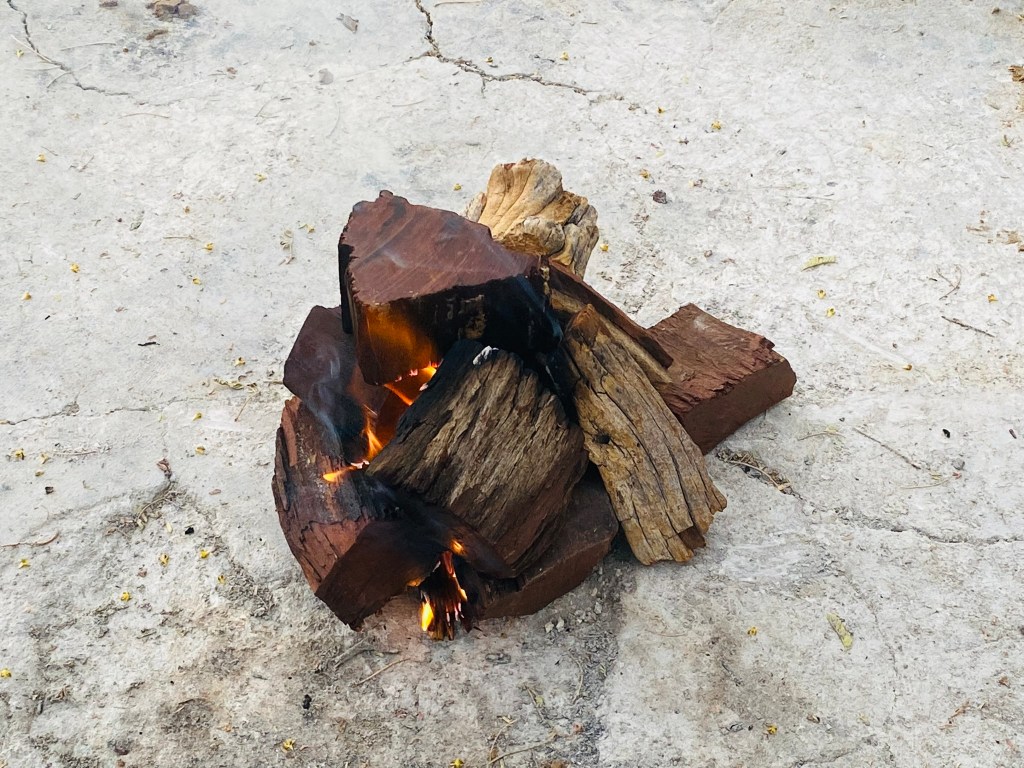
Whilst I was playing cave girl, James was looking into the problem with Henry. The more he investigated, the worse it seemed to be. In the end he decided that at 5pm in the evening the only solution was to forget about it for 12 hours and have a few beers instead. His opinion at that point was that it was going to be a grim job in the morning under the baking sun with no shade, he may as well add a hangover to his discomfort!
We sat staring at the fire for a couple of hours whilst it got dark, James so fed up he couldn´t bring himself to even think about dinner. He wondered out loud whether the best option would be to set light to Henry and start again with something that didn´t fall apart in a different way every day. When I pointed out Henry wasn´t insured in Africa he just grunted and rolled his eyes.
Cooking dinner in the dark once thousands of midges had appeared was grim, tripping over the cast iron braai grate I had forgotten was sitting on the floor caused a painful bone bruise on my shin and I started to wonder how much more was going to go wrong and whether our travelling days were doomed. That night a thick, low cloud of gloom hung over us which I just couldn´t shake.
James was up early to try and get as much done on Henry as he could before the heat of the day set in. His hangover seemed forgotten as he set to work dismantling the kitchen units and trying to assess the fixings that should have been holding Henry´s sides together. He worked all day, pouring with sweat and struggling with a very painful bout of tennis elbow. When he finally discovered that spring washers had been missed out in the rebuild and everything had worked itself loose over the last 6 weeks his mood sank further as the potential for more problems to unfold in the future became a distinct reality.
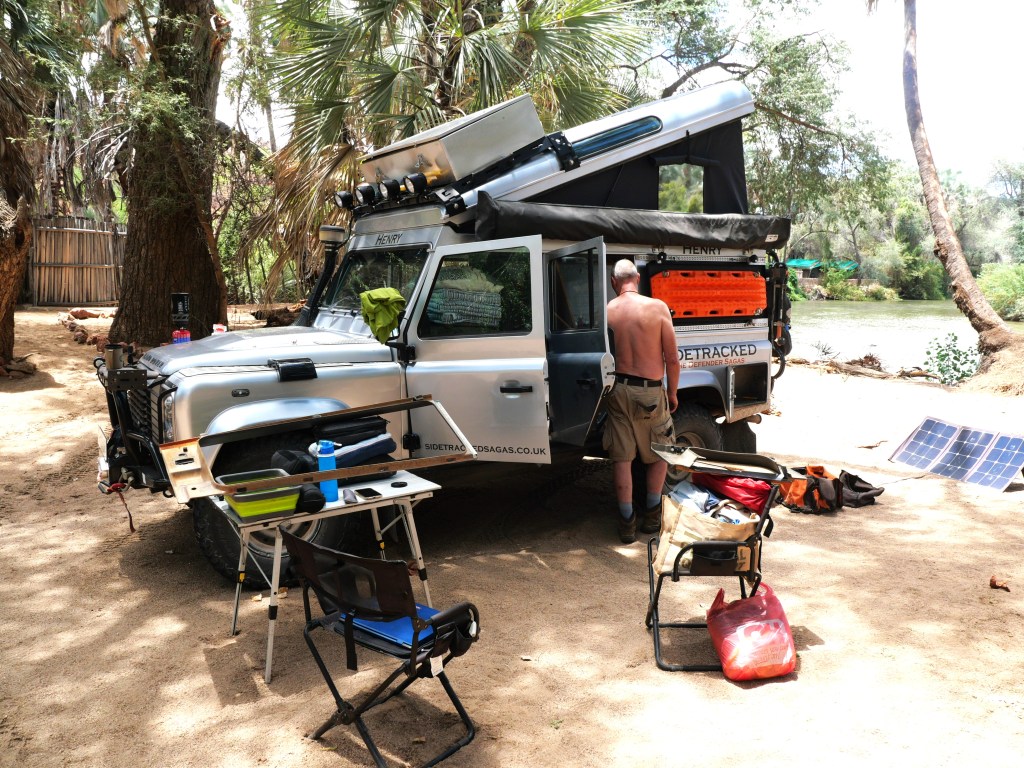
There was no possibility of getting hold of the right fixings until we went back to the UK for Christmas so instead he used all his ingenuity and skill to cobble a temporary fix together and by the end of the day all the body panels were, at least for now, solid again. James, on the other hand, looked anything but solid, he looked like a man who really needed a break from Landrovers.
During the day a guide from the village had come round to try and excite us with options for walks, rafting, cultural visits and the like. He didn´t understand the enormity of the problems we were facing nor could he work out why we were there if we weren´t interested in tourist activities. Communicating with local people in English about subjects they are familiar with is relatively straight forward, as soon as you start trying to explain situations which are out of their normal sphere of expected topics it strains their language skills to breaking point and he struggled to understand what was wrong. He returned to see whether we had changed our minds three times over the course of the day – at which point I said only when he sees us smiling should he assume things were ok and he could try again!
Later that evening I saw him loitering nervously behind some trees and turned to smile at him with a wave. He beamed at me and came over. With Henry´s sides now firmly attached to the rest of him, even if only temporarily, we were both a little more relaxed. We arranged with him to do a walk up river the following morning followed by an evening walk to see the Falls.
Darkness still hung around us both that night as fears about Henry´s health and our worsening financial situation filled the silences.
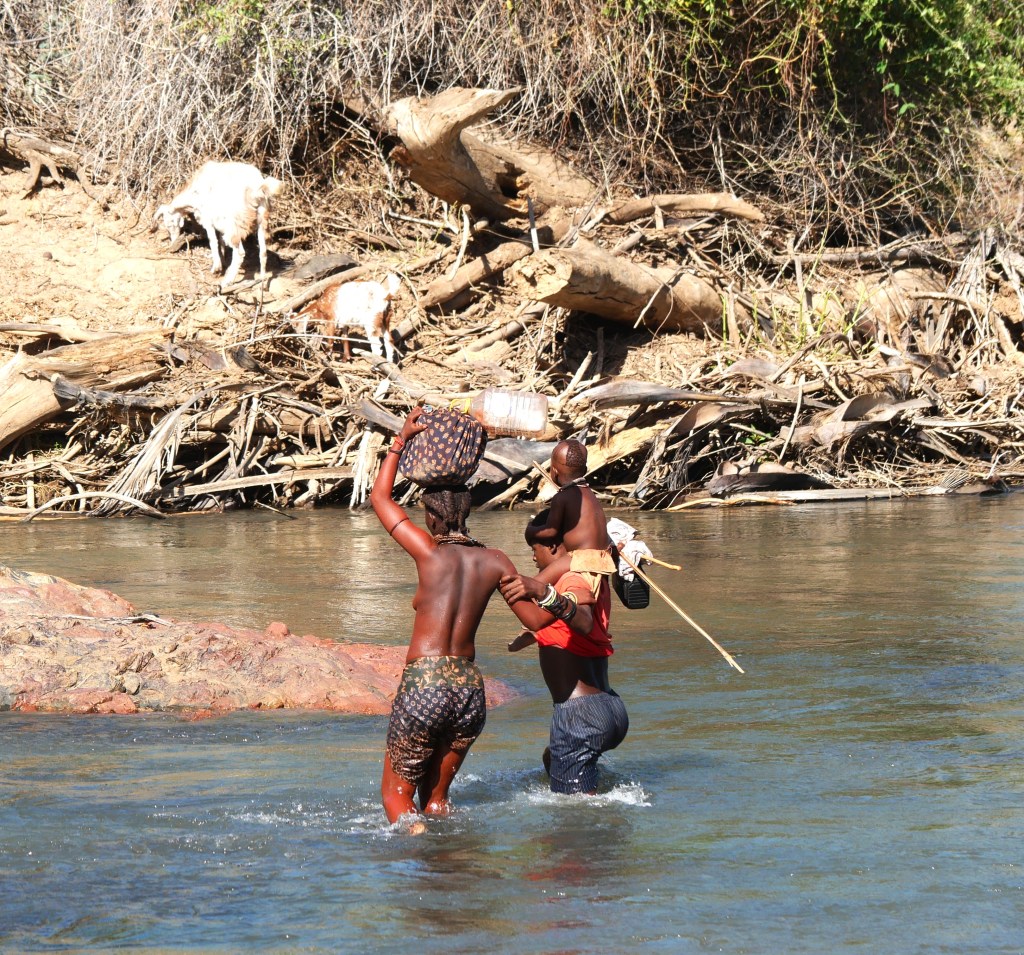
During our stay here a goat herder had waded back and forwards across the river from the Angolan side numerous times. We had waved each time and wondered at this strength and balance resisting the current. When we woke the next morning we saw him again but this time with his wife and baby
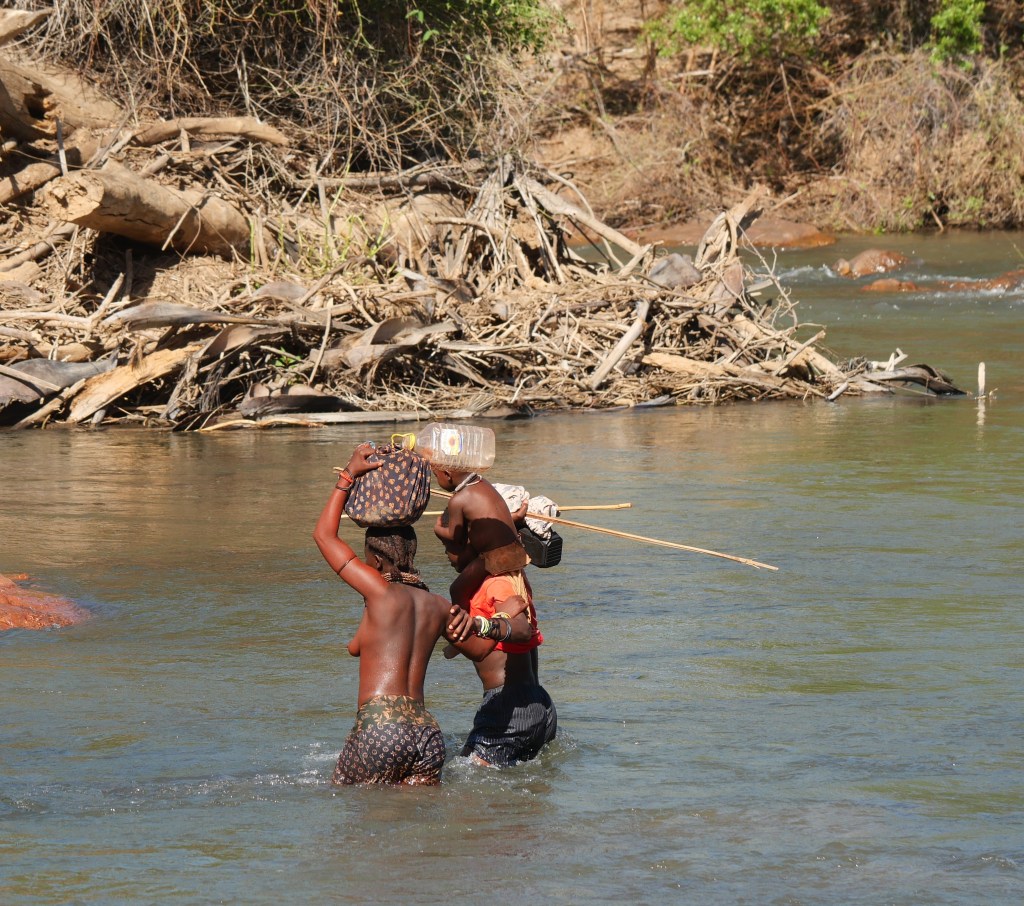
They supported each other across the deep waters, picking their way over the sharp rocks under foot and around the deep crevices.
Not to mention the more obvious risks
As they approached the other side and clambered safely up with all their belongings we couldn´t help but think how it put our own lives and our problems into context – we would never know the challenges that these people face every day of their lives and can only aspire to the strength of the partnerships that they forge with each other
The morning was warming up but it looked like it was going to be a lovely day. Our guide, Joao, returned to start our walk up the river.
The air was fresh and the views were stunning.
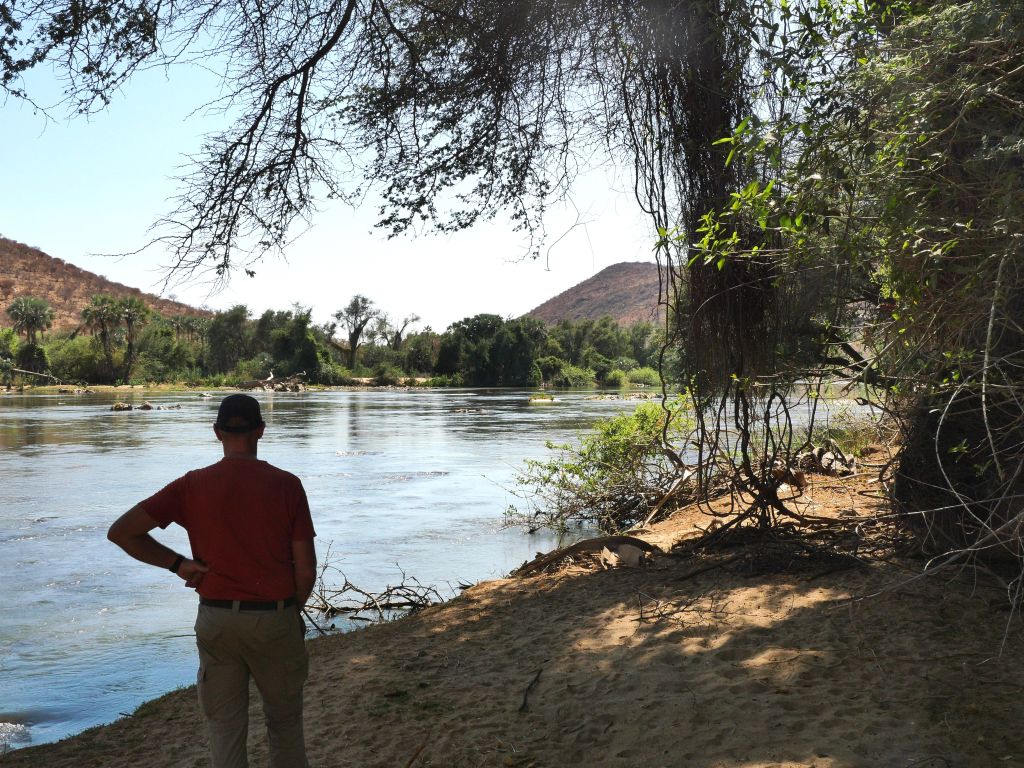
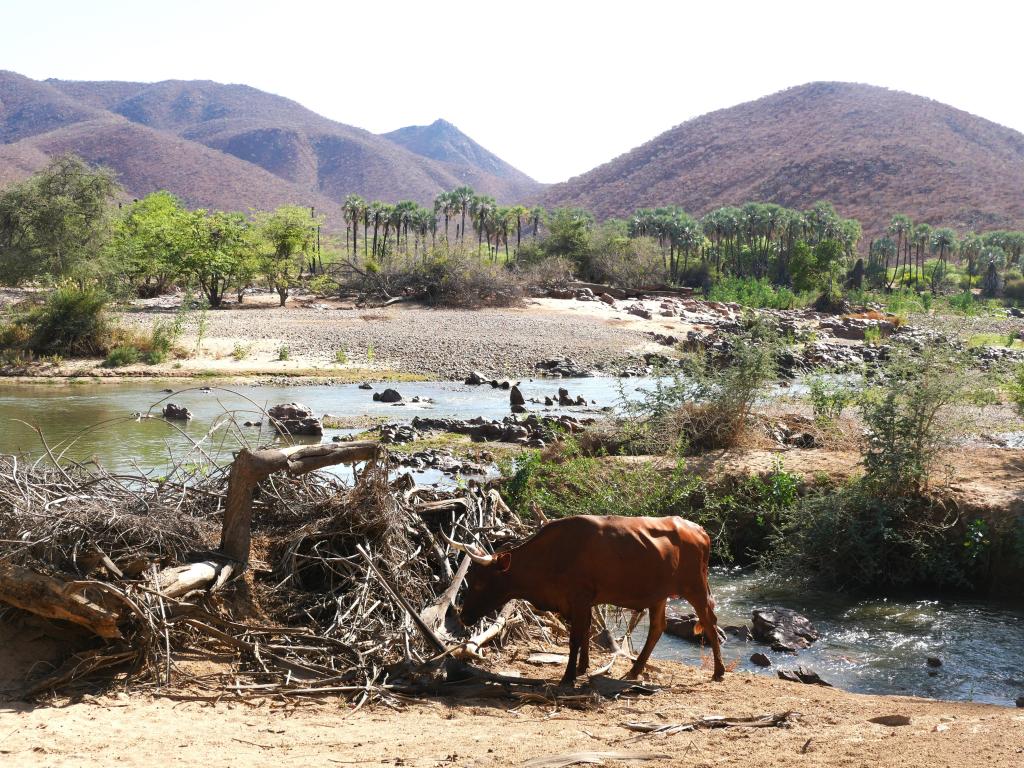
We walked along the river savouring the peace and quiet
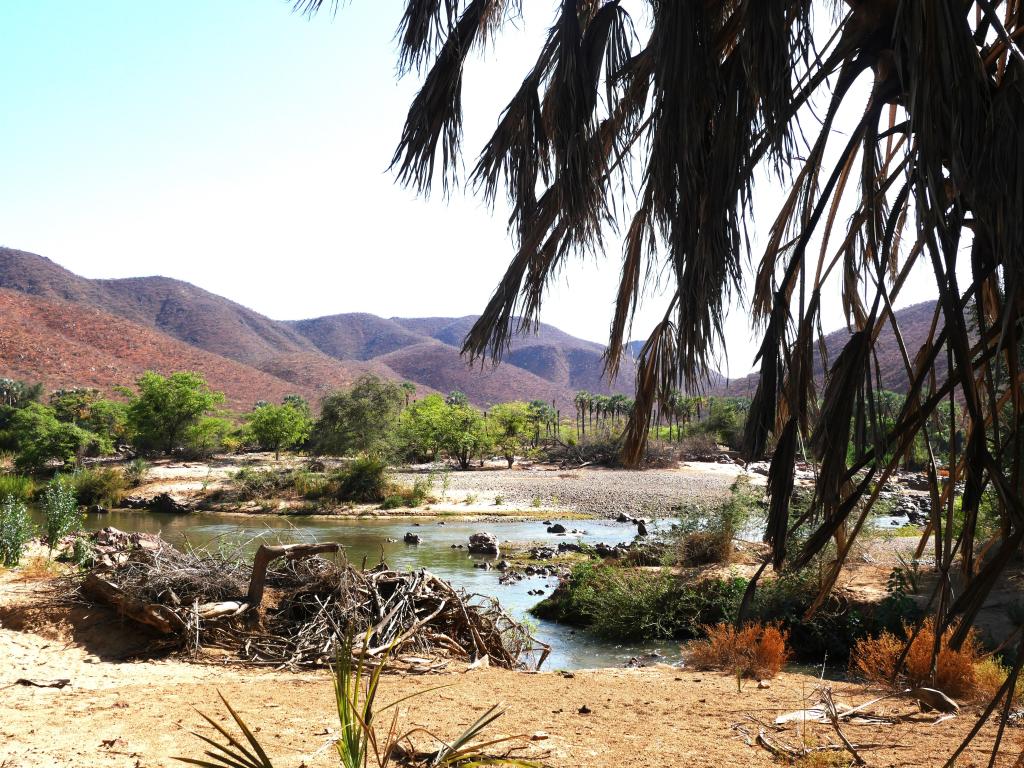
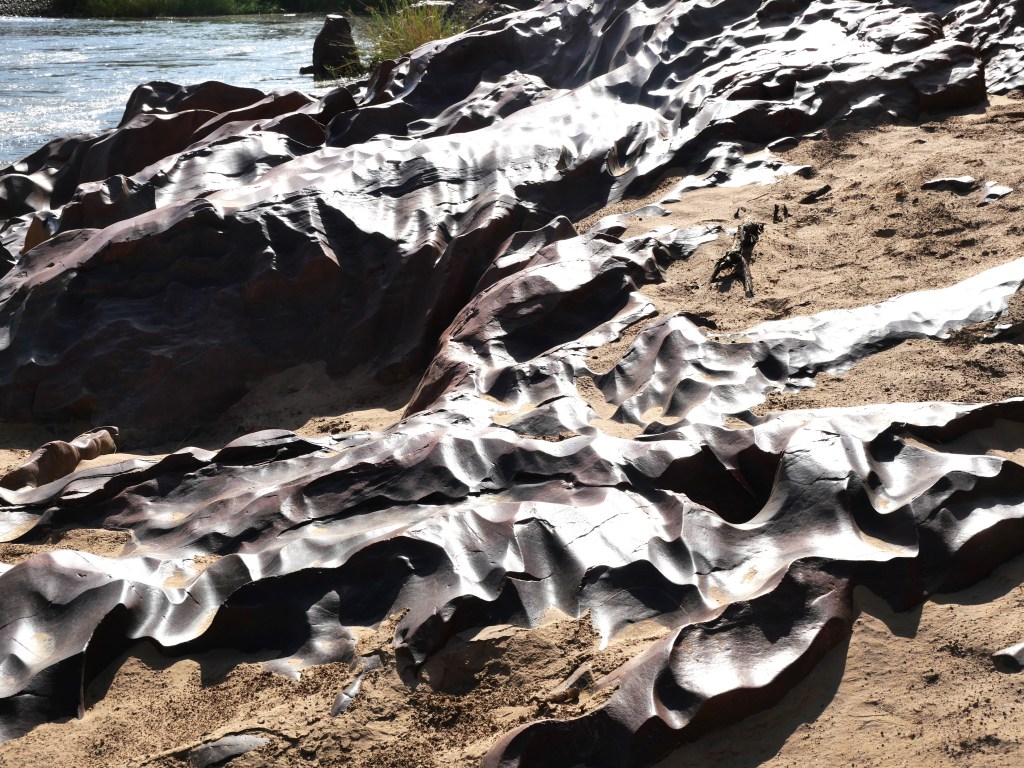
Curious at how smooth the river had worn the rocks
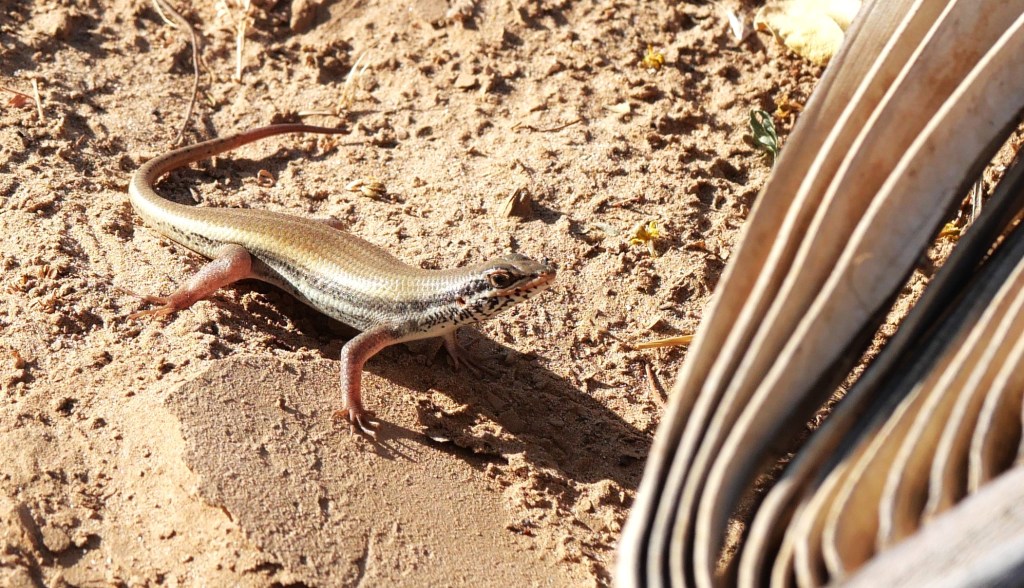
And meeting some of the locals
After an hour or so we saw palm trees with their tops cut off and a bucket hanging from the top.
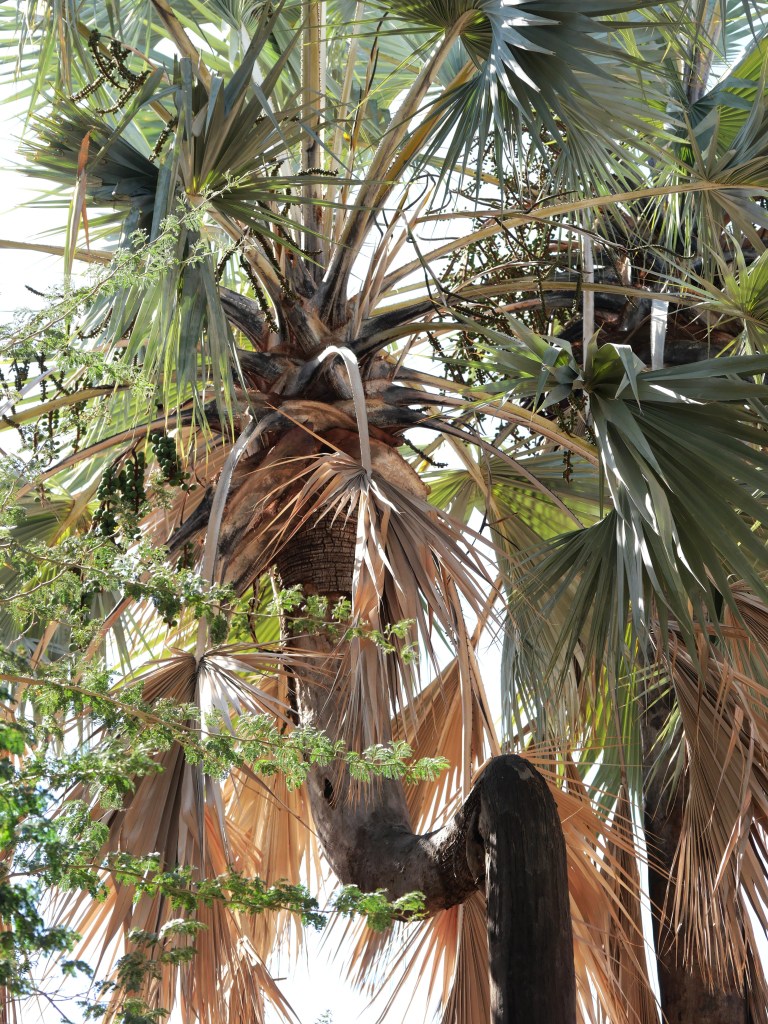
Joao explained that the local people were collecting palm wine – a heady drink a little like cloudy beer which needed no fermentation, it simply comes out of the tree ready to go. Sadly the collecting of the wine kills the palm tree – 100 years to grow, 2 weeks to die – so is not strictly legal, although it is very common.
A few minutes later we found a group of men sitting around who were responsible for much of the palm wine collecting in the area and who, at 9:30am, were already very wobbly on their feet having been sampling their wares for most of the morning!
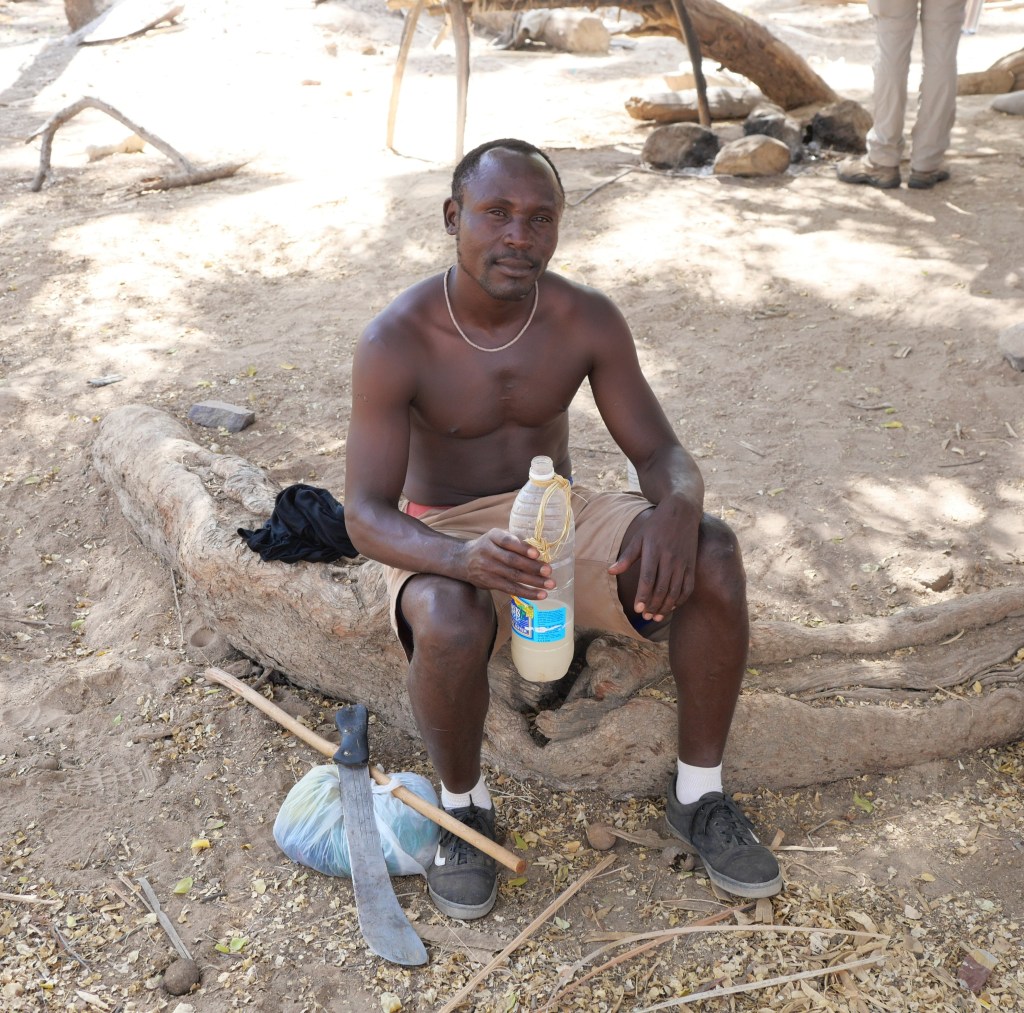
Whatever is left they will sell for N$20 per litre – that´s about €1 – and the income is all they have to live on – that and what the community grows or farms on the land. Like the campsite owner in Opuwo said – few people are rich here but very few go hungry (or thirsty apparently!).
Joao was excited to hear that we were considering buying land in Namibia and was very keen indeed that we chose the land around Epupa as our home. He gave us his mobile number and asked that we call him when we return in the new year, offering to make an introduction to the Chief so he could gift us some land. We would need to hire 10-20 of the local people to help us build our home, each to be paid the equivalent of €2.50 a day for their labour but, he said, the high cost of that would be off-set by the fact that most of the building materials would be free as they would simply be stones collected from the local area.
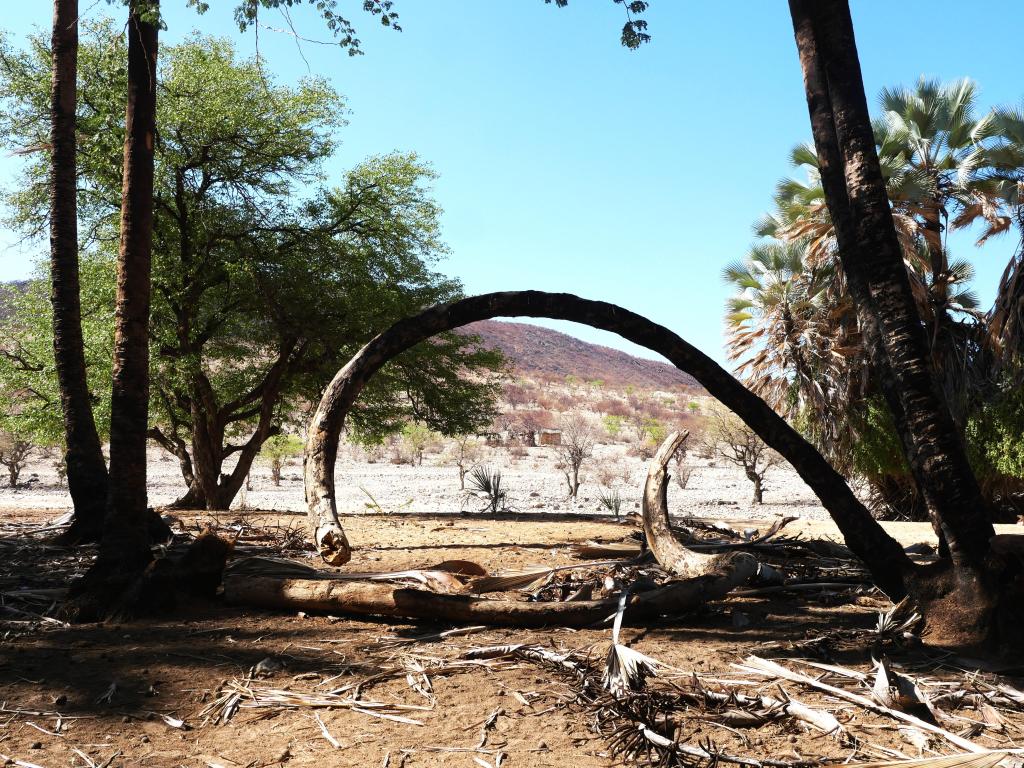
The idea of almost-free land, free materials and very cheap labour was attractive. A jaw-droppingly beautiful location with plentiful water and few mosquitoes was also very appealing.
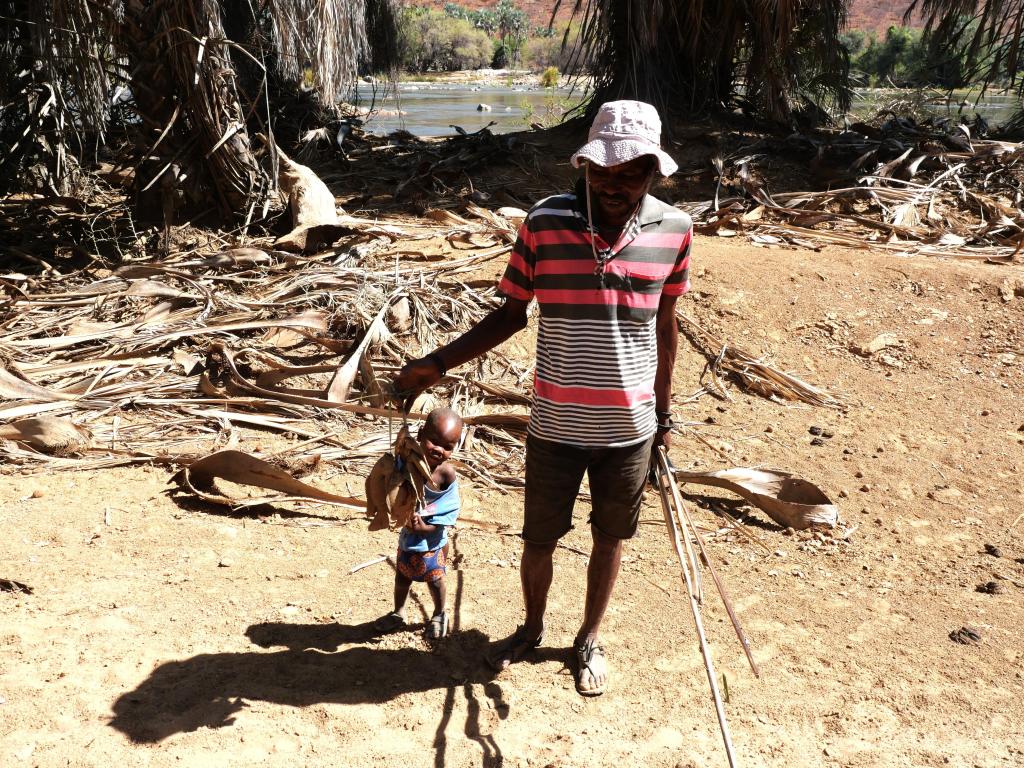
However, a life entirely isolated from pretty much everything else and neighbours who had drunk the majority of their profits before 9:30am was less compelling! Beautiful as this place was, the southern deserts were still clutching at my heart.
That afternoon I went up to the campsite reception area to try and work on the blog whilst James did a few more jobs on Henry and we were ready and waiting for Joao by early evening for our walk up to the Falls themselves.
We had heard they were beautiful but some people said they were only worth visiting if you happened to be passing. How anyone could happen to be passing this area was beyond me! So overall we weren´t sure what to expect.
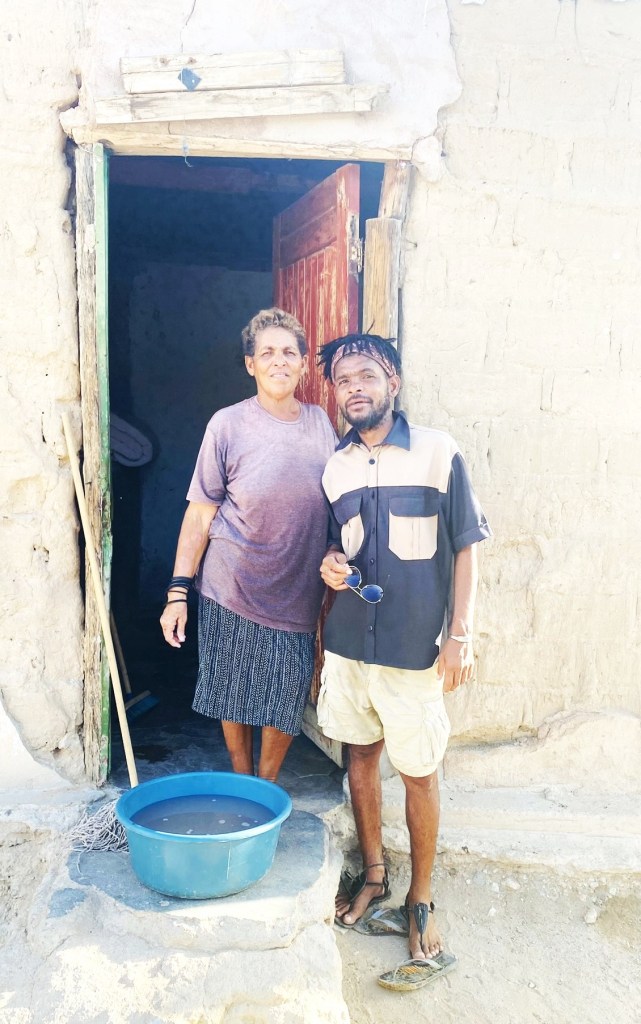
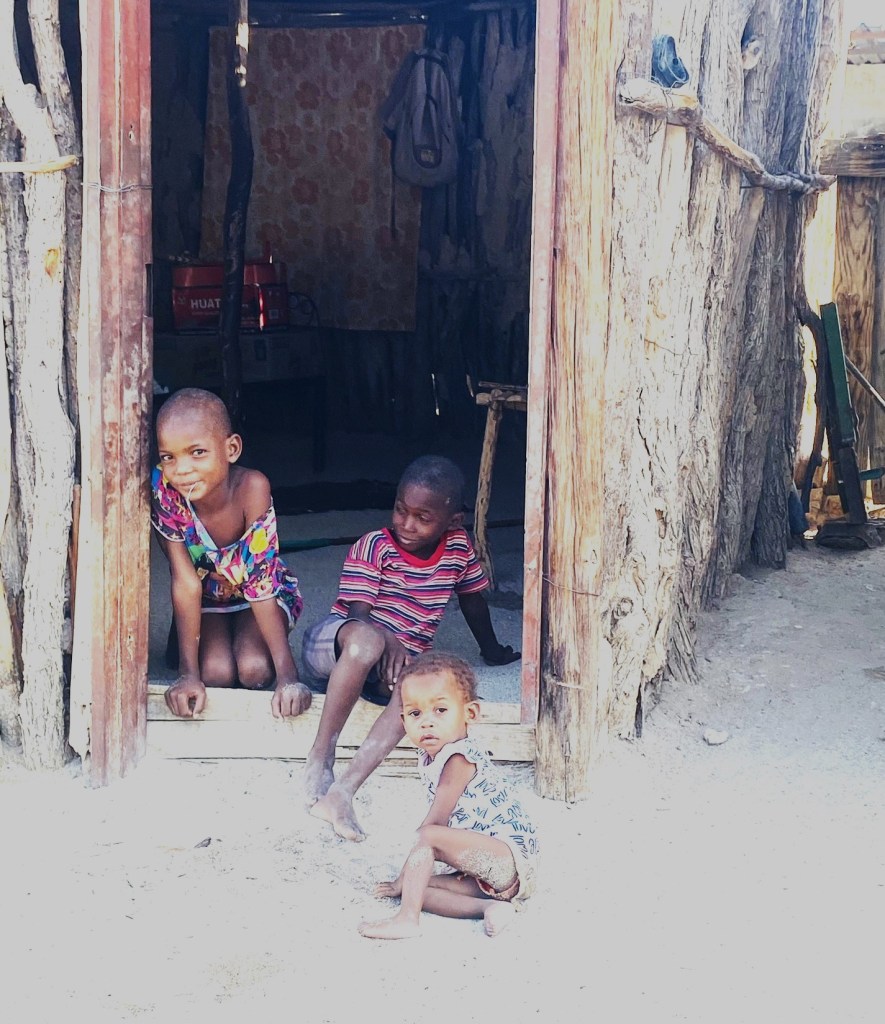
The walk was short but interesting, taking us through the village of Epupa itself. Joao was excited to take us to his Mum´s house and introduce us to his kids.
She was a proud Mum
And his kids were very sweet and curious
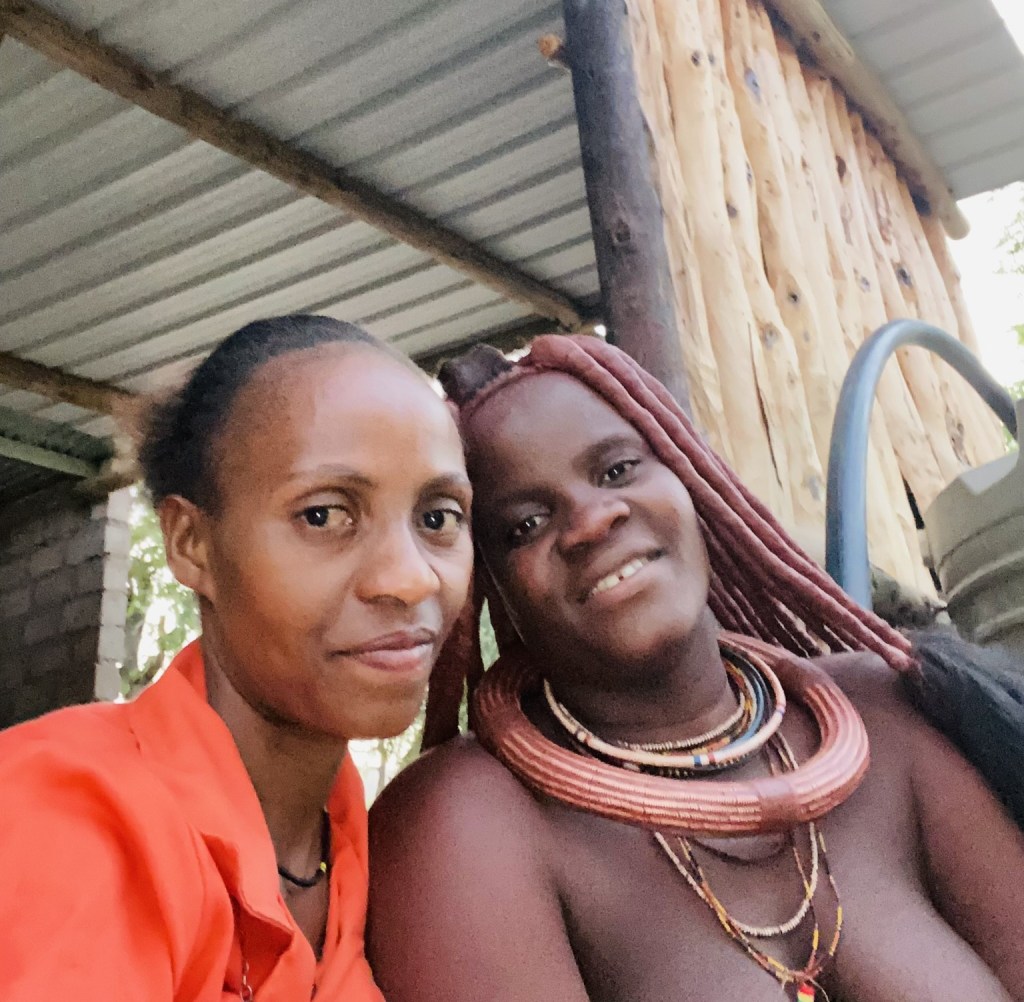
He pointed out his own house and advised us which of the two bars in town was the better one to frequent. We bought some water from one of them and chatted to the local women showing off their amazing hair
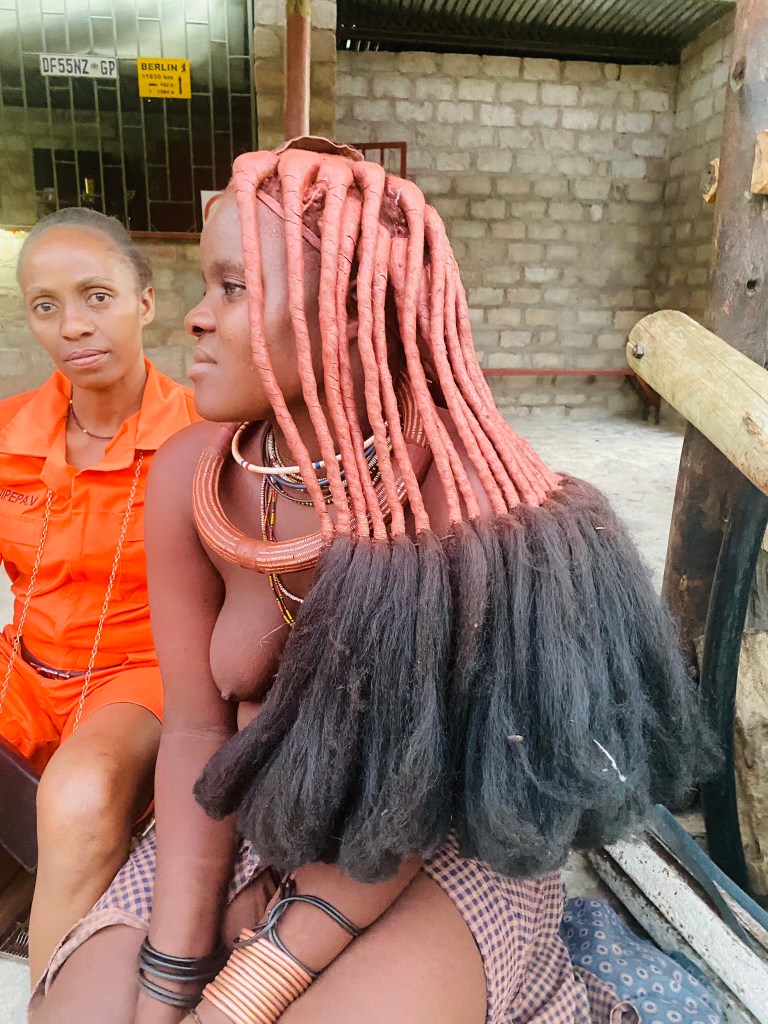
Who then grabbed my phone from me to take a couple of selfies!
And after about half an hour we were out of the town and the sound of rushing water was in our ears. We crossed over some slippery rocks and all of a sudden the Falls appeared.
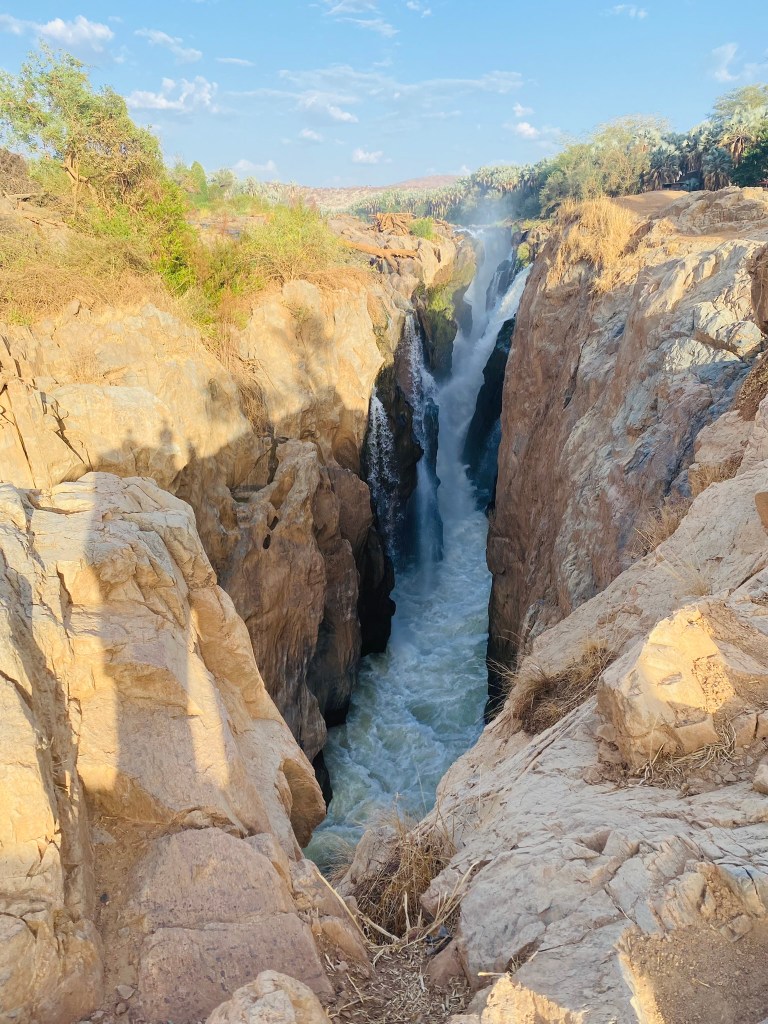
At this point we were pleased with the small and picturesque waterfall and took lots of photos.
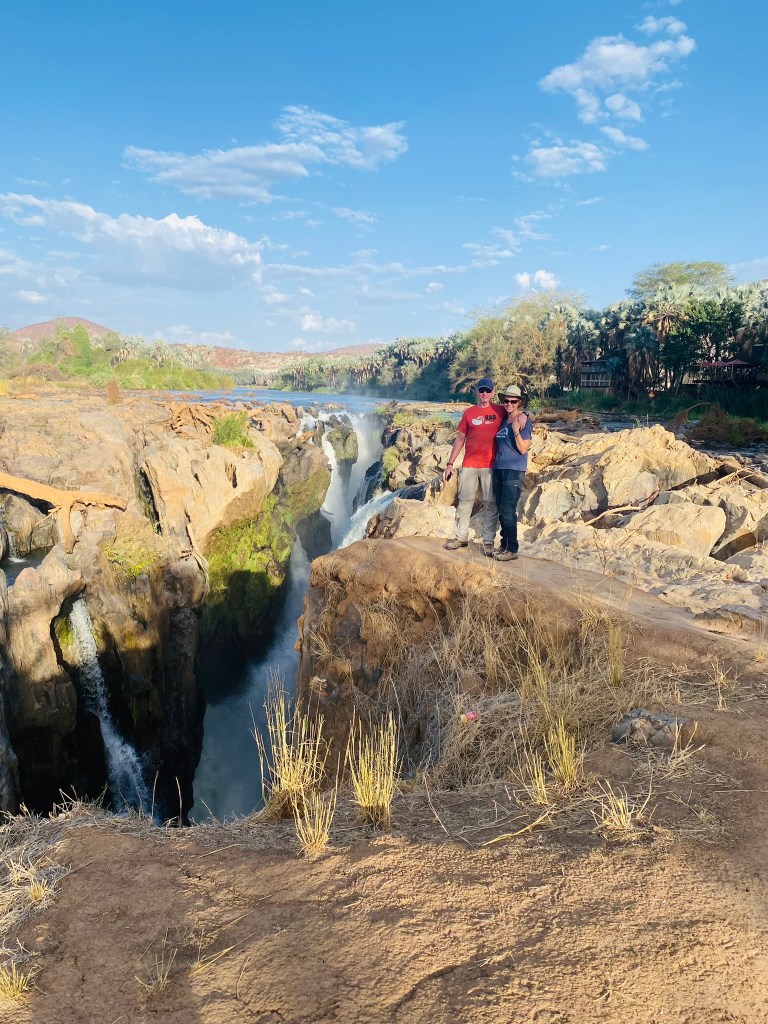
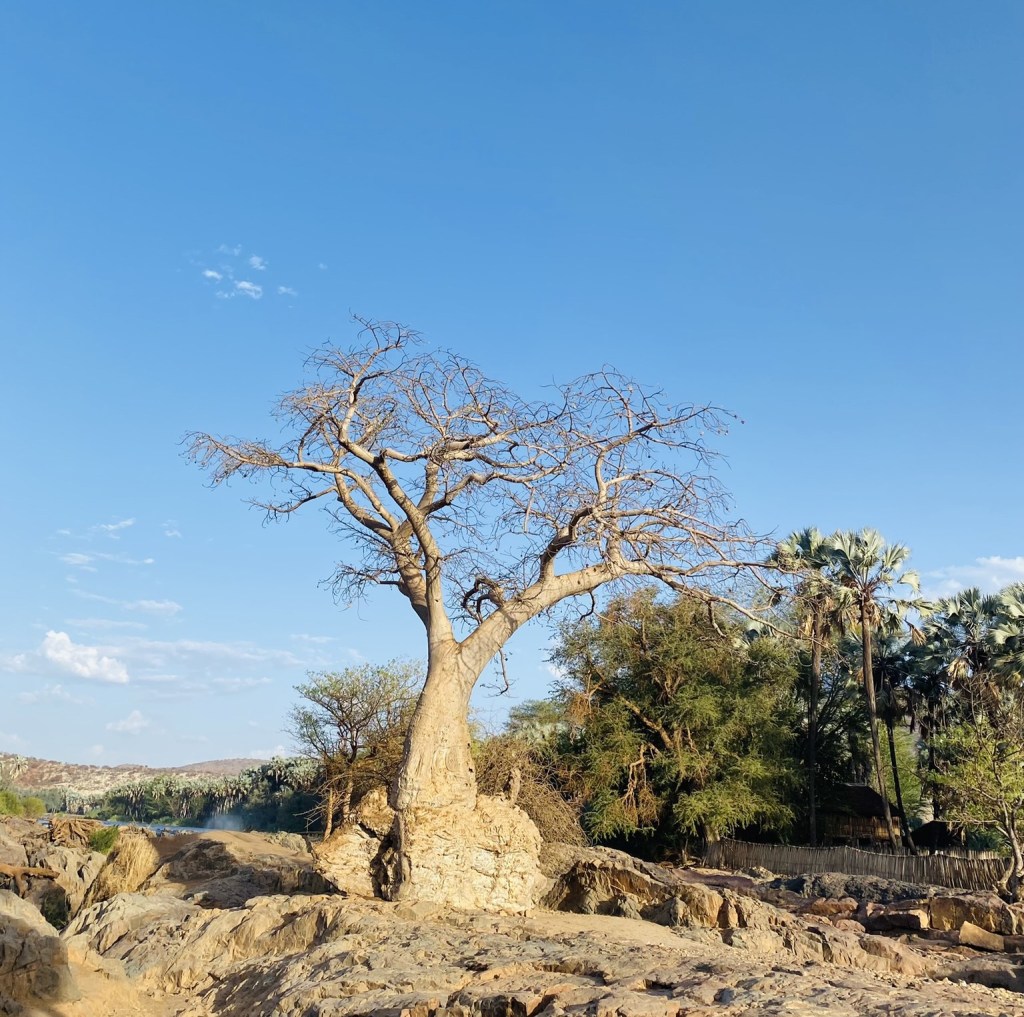
But I have to admit to being slightly disappointed, there didn´t seem to be a great deal to see. Joao, however, gestured for us to follow him further along the path and up the hill behind. I assumed we would be having a nice, gentle walk up the hill and back to the campsite.
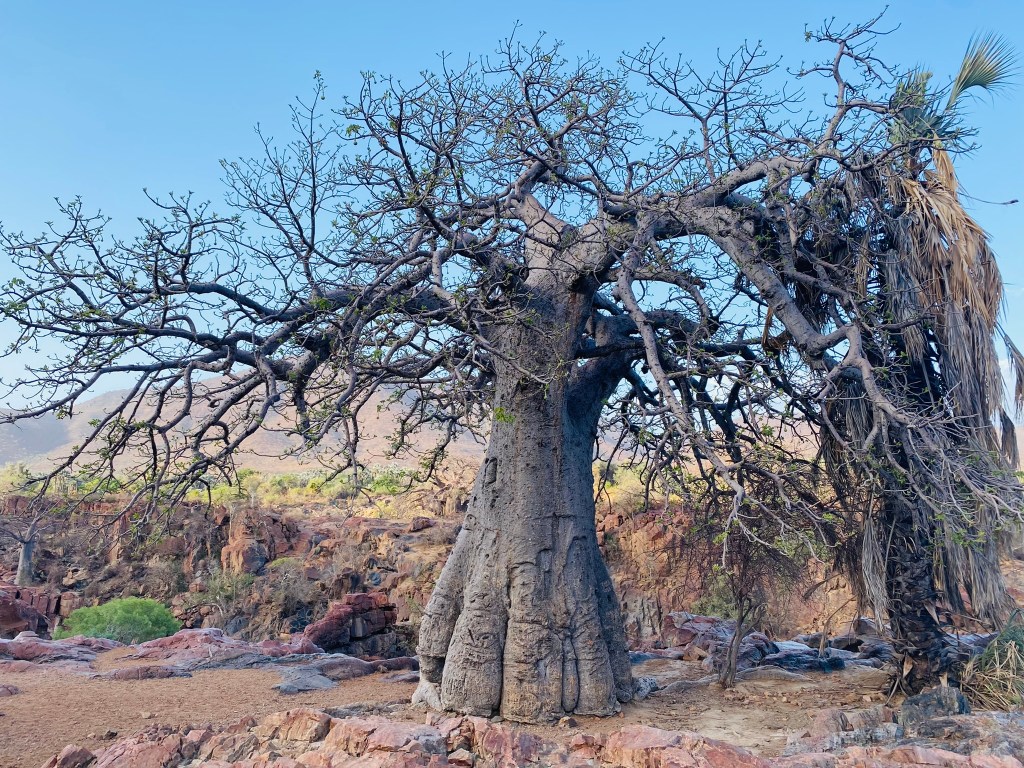
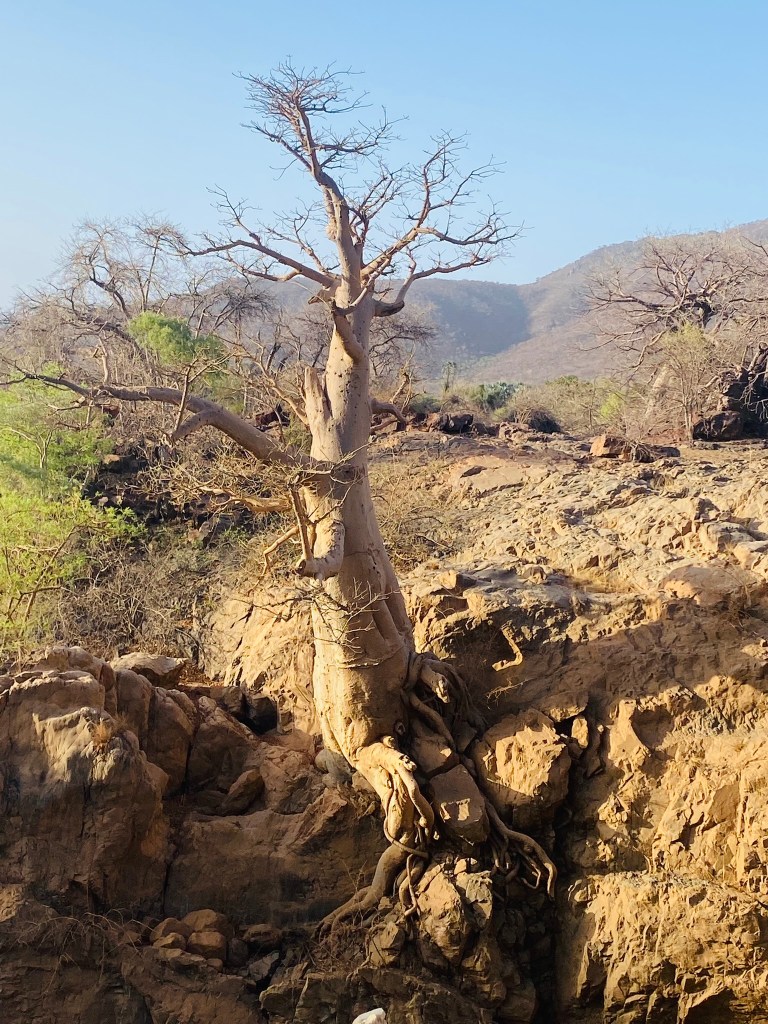
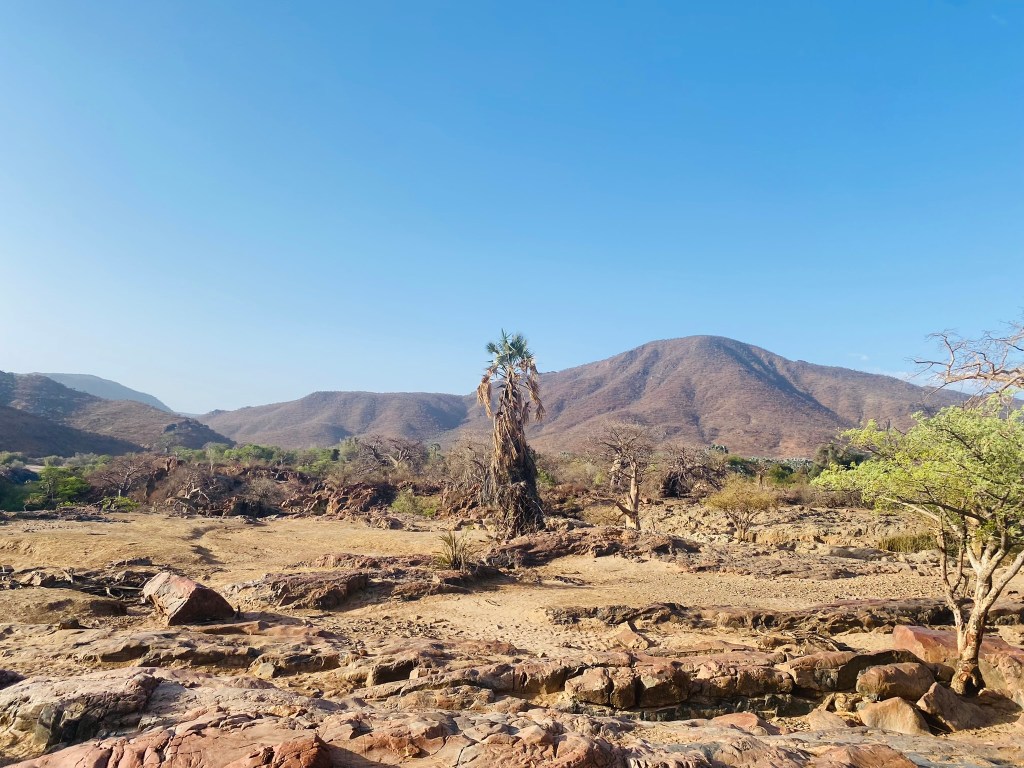
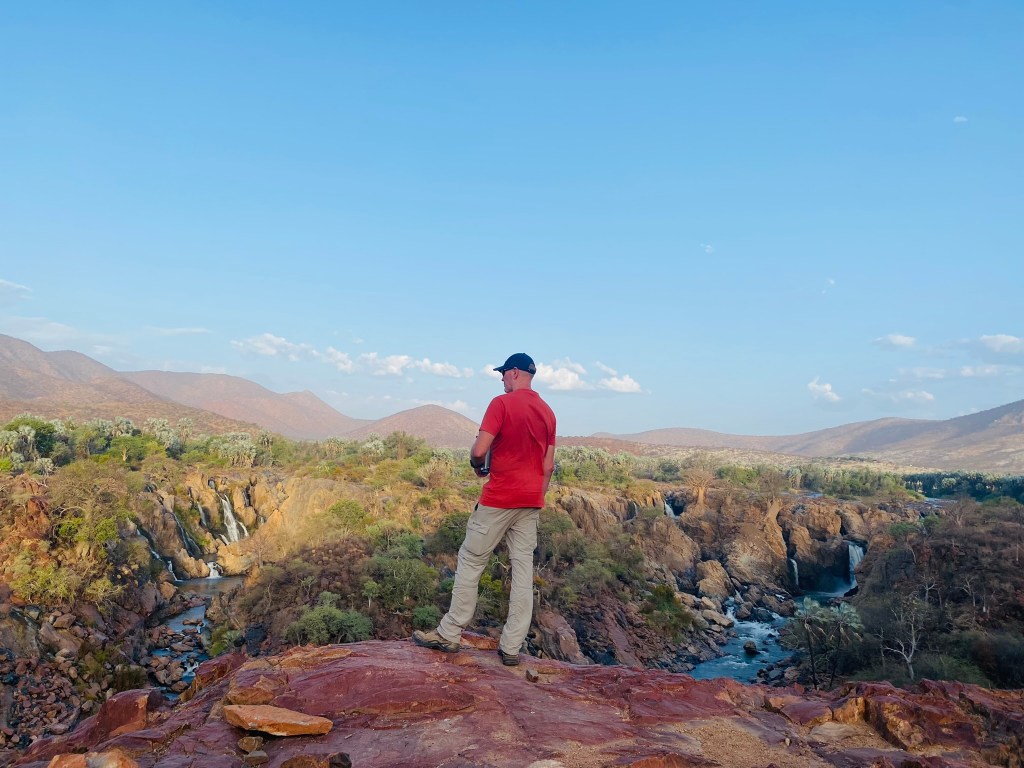
What I didn´t realise was that the waterfall we had seen was just one small part of the astonishingly beautiful Epupa Falls proper.
As we walked along and up the hill Joao was regaling us with his strongly political views on what is good and bad in Namibia – the corruption, the inter-tribal conflict and the fight against the proposed dam. We were absorbed in his conversation and looking only at where our feet were landing when suddenly he stopped, looked up and gestured broadly around us.
I lifted my head and my eyes focussed on the site in front of me.
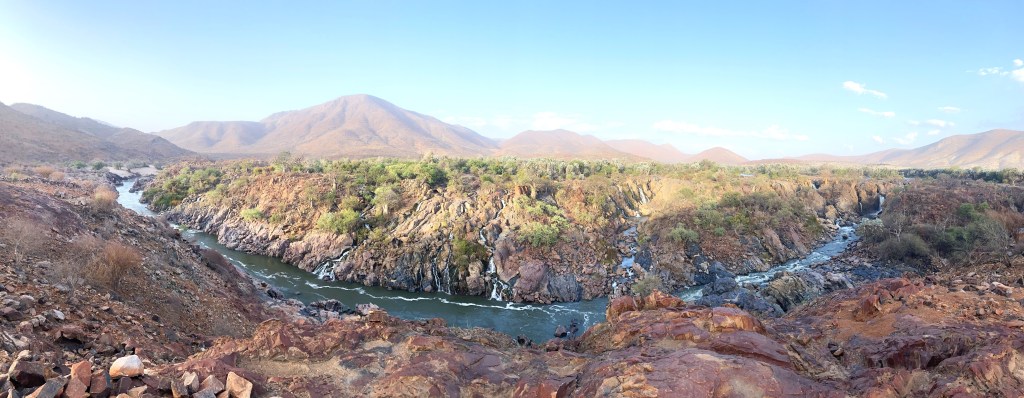
Simply breathtaking.

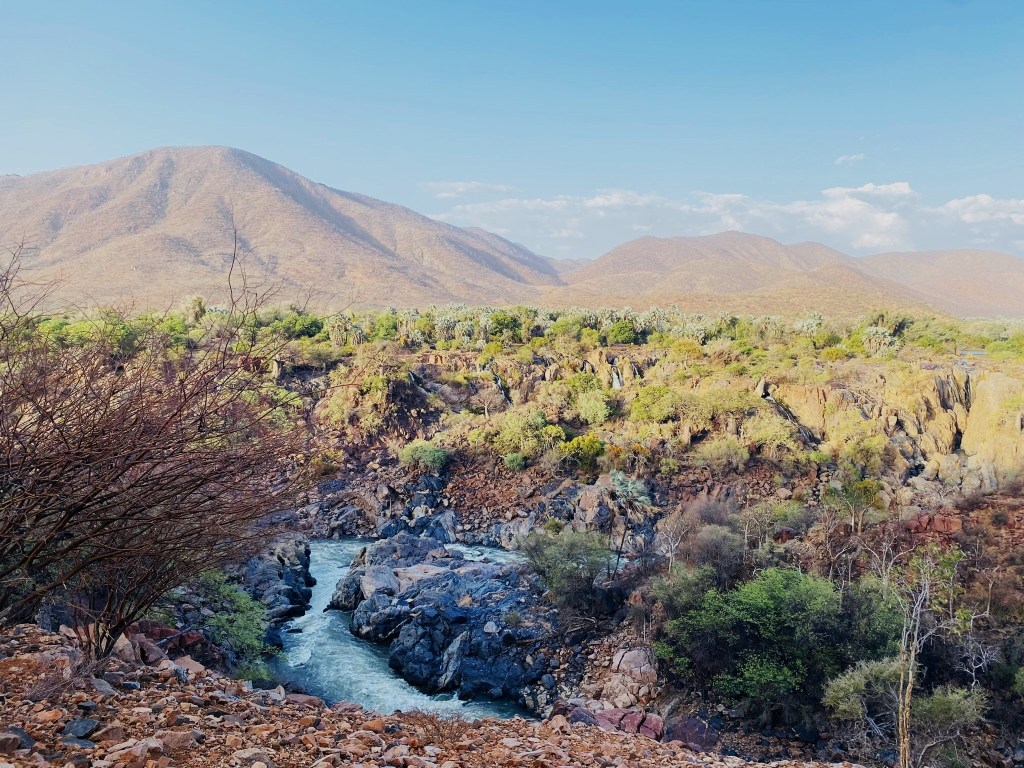
The Falls are actually in Angola, the Kunene river being the border between the two countries. But the best view is from right here in Namibia!
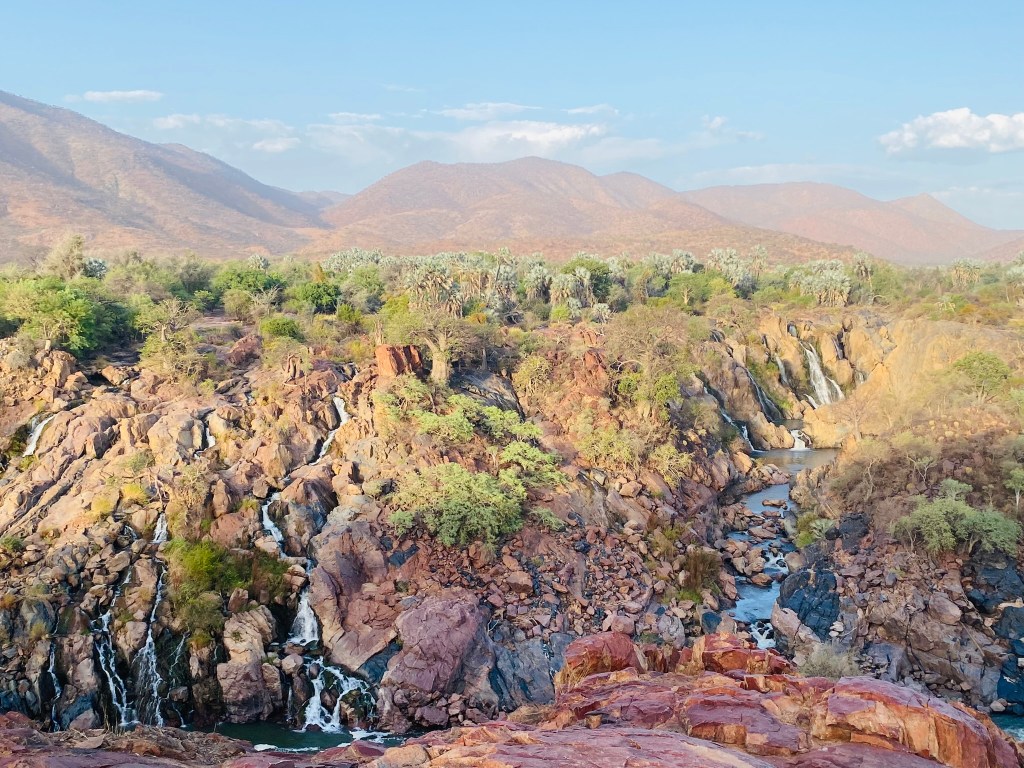
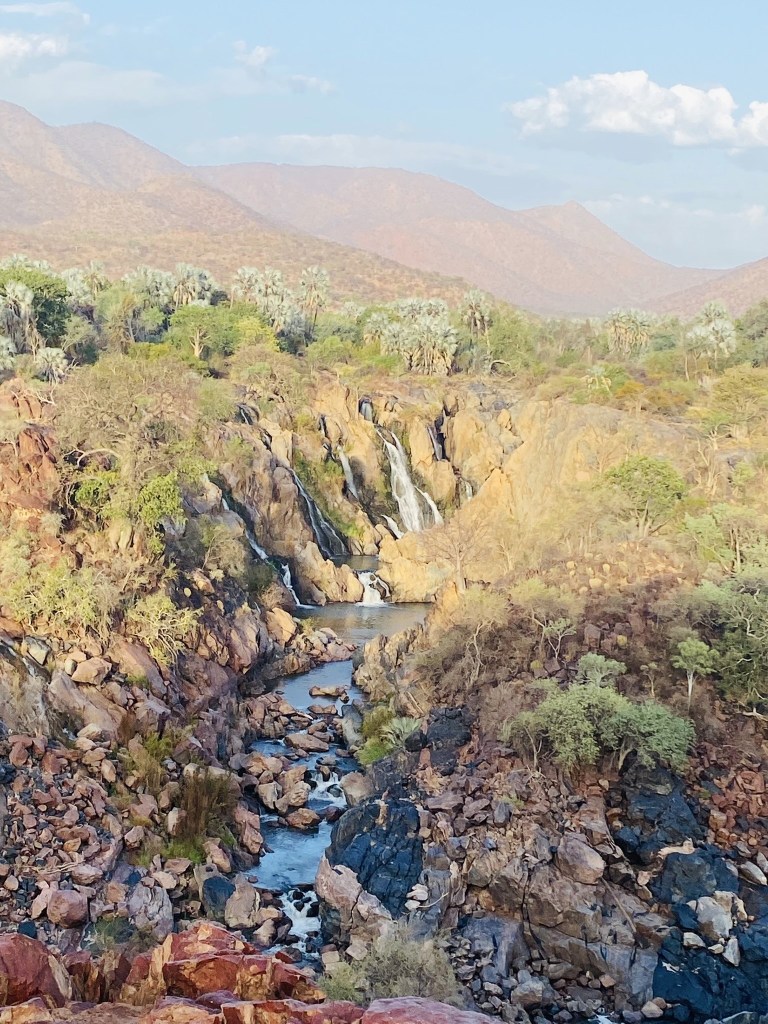
We had salvaged our time at Epupa Falls and actually ended up enjoying ourselves despite our concerns over Henry. Joao, his family and his neighbours had brought smiles to our faces and taught us, once again, that life is too short and the world is too beautiful to get weighed down with worries.
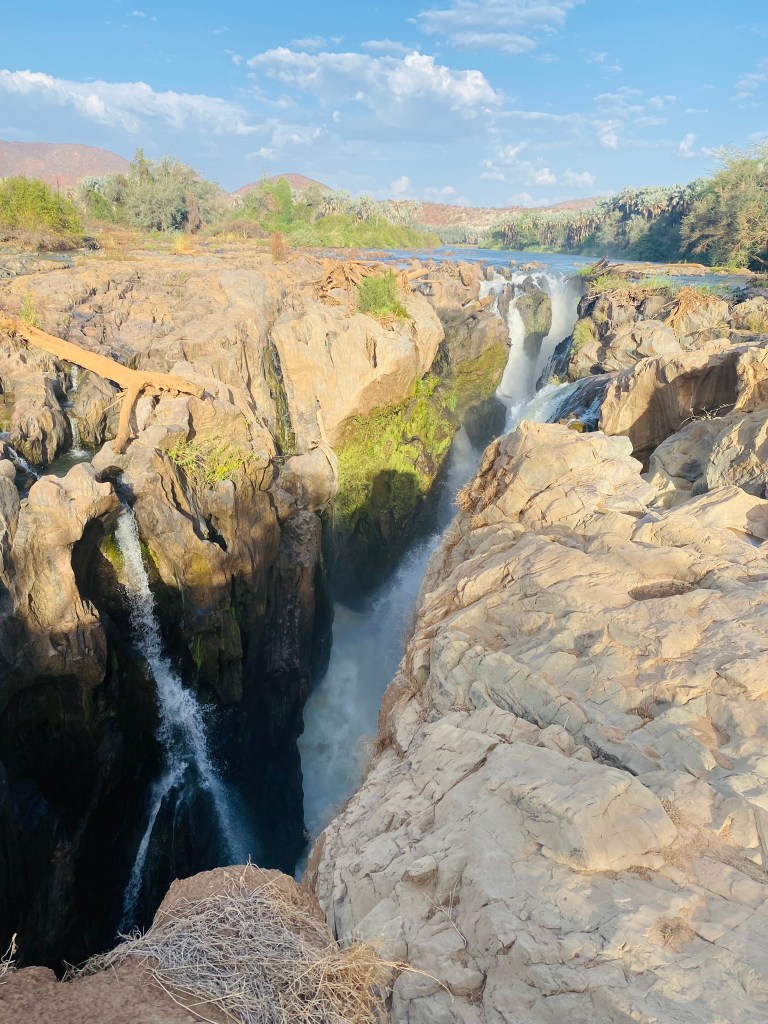
Next morning we left the campsite and headed back down the long, bumpy road towards Opuwo dodging children playing chicken with the Landrover and animals lumbering across the road. It´s amazing how quickly avoiding cattle, goats and donkeys becomes normal. We then turned onto the smooth, tarmac road and by early evening were driving back in through the gates of the Fantasia Guesthouse on the other side of Oshakati.
The owner remembered us and welcomed us in but as it was Sunday the restaurant was closed. She was playing a game of dice with her brother and some regulars who had become friends and at the end of each round the rules required everyone to drink a shot. It quickly became clear that they had been playing for some time!
A potje was on the stove and we were invited to join them for dinner. I was then invited to join the dice game and, having a bit of beginners luck, was bought a few shots by the losers. James struck up a conversation over a beer with one of the group about farming in Grootfontein. We were becoming locals, kicking back, settling into every day Namibian life and it was good.
I have never felt as though I belonged anywhere in particular before but I had begun to feel myself sliding into a sense of peace and calm here, a sense of security and comfort…a sense, maybe, of being home.
 The Sidetracked Sagas
One response to “A Sense of Belonging”
Well, a gift of land and a house built of stone for couple of grand… reading it in UK feels very surreal. Happy New Year, safe travels!
LikeLike