Despite a rough landing in Angola, after just one night our apprehensions had disappeared and we had already fallen in love with this amazing country. The plan was to travel north hugging the coast to the capital, Luanda, then head back south further inland chasing waterfalls and mountains. In all we had 30 days on our visas and were determined to make the most of the time we had.
We decided to leave our Giant Baobab tree and head towards Hungueira Falls south of the major city of Lubango.
Just as we left camp we came across a graveyard for old tanks from the war
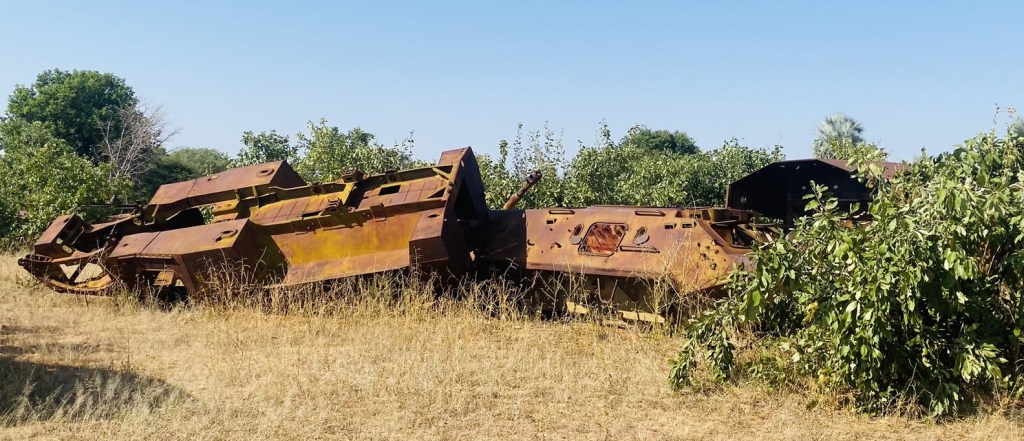
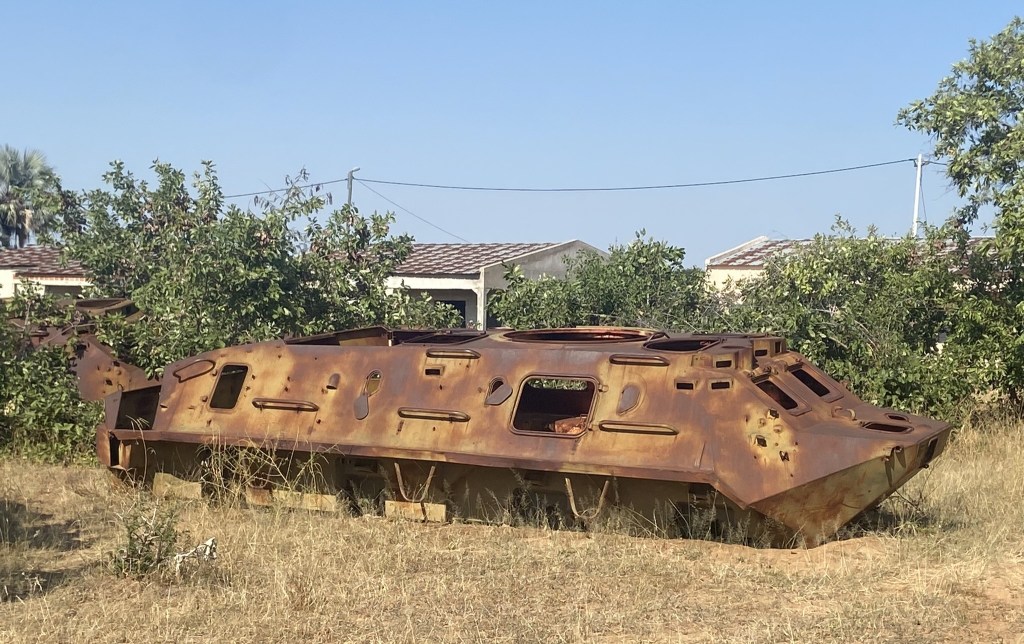
There were piles of them just lying around, it was a sobering thought to imagine what this area must have been like only 20 years ago.
As we drove on there were more just sitting by the roadside.
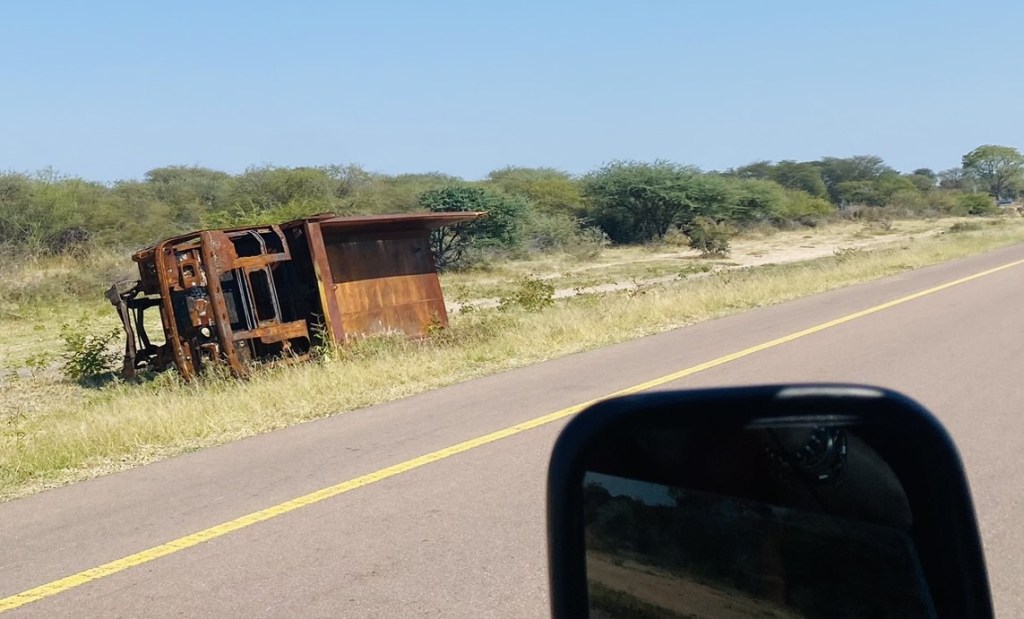
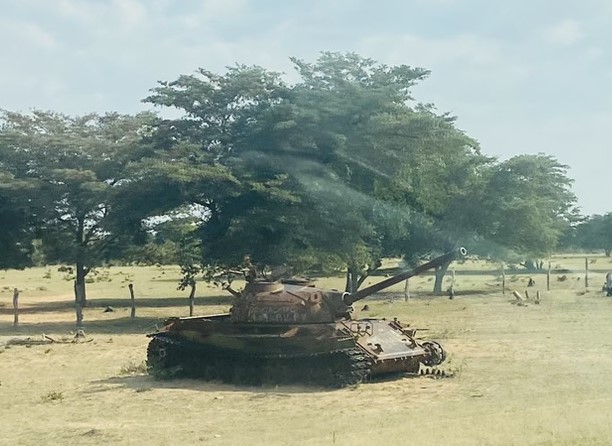
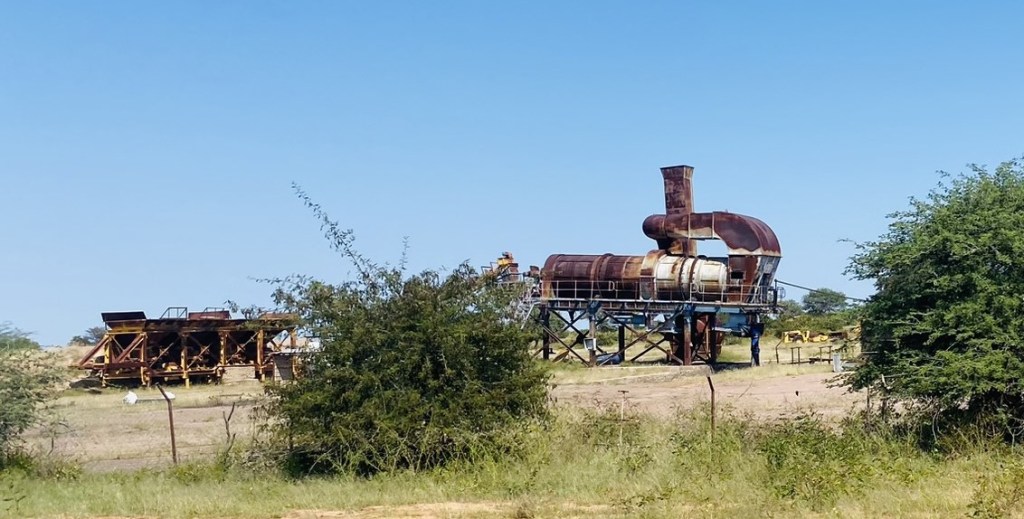
As well as some other interesting old industrial ghosts
Angola is also known for still being covered in land mines that even today claim the occasional victim. So whilst wild camping was going to be our only option most of the time we had to keep in mind the importance of staying on tracks and trails that had clearly been used in the recent past.
As we drove further into the country we were astonished to find ourselves on a perfect, straight tarmac road. But we were practically the only people on it!
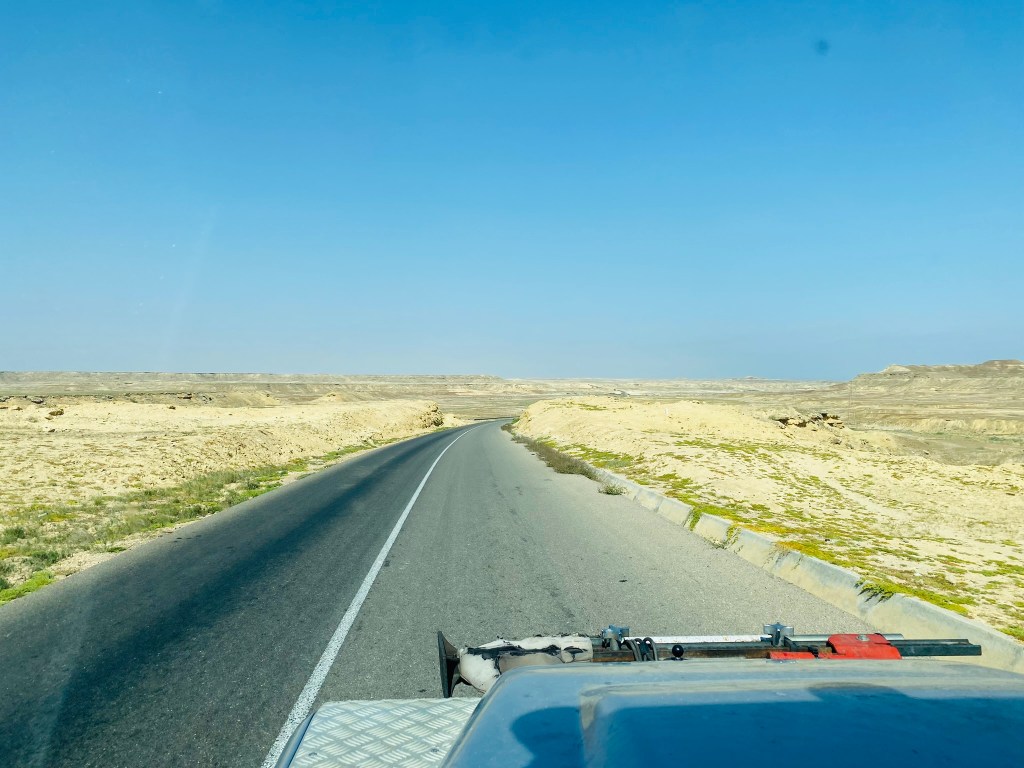
We noticed the birds flying past seemed to have trouble keeping out of our way, many times we very nearly hit one. I wondered whether the birds saw so few vehicles here they didn´t quite know what Henry was or how to avoid him.
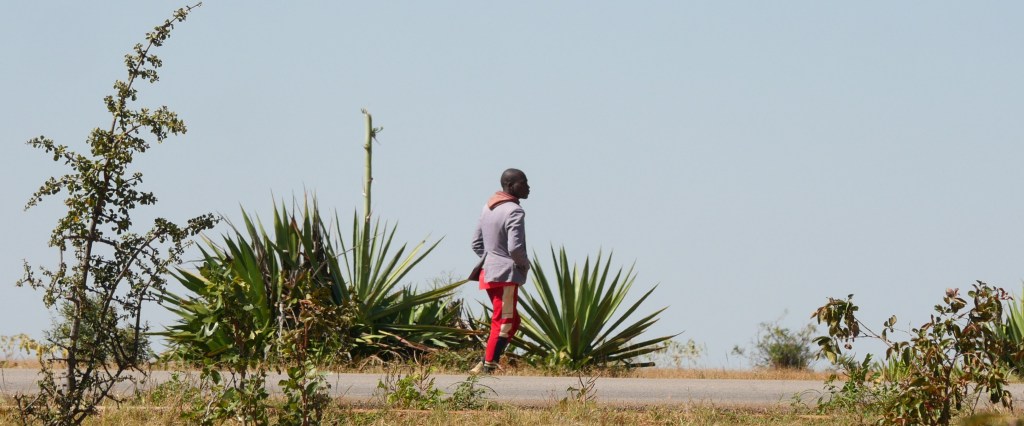
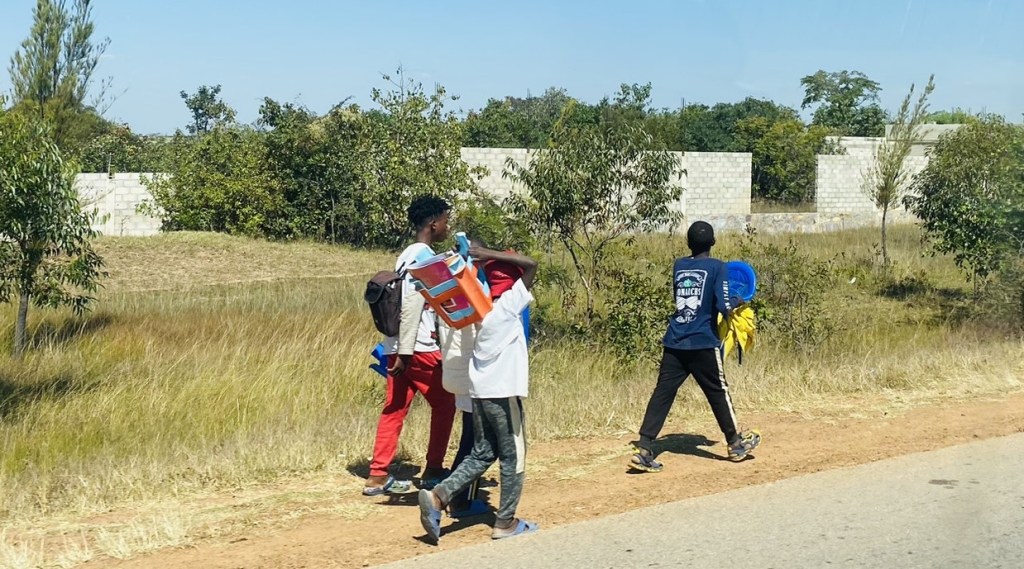
There were more people walking along the roads than there were cars on them – by far. This became a common thing during our time in Angola. People walked, all the time, usually carrying heavy loads on their heads, sometimes just walking. Children walked to school, the youngest carrying little plastic chairs or stools to sit on when they got there. And we noticed there were far fewer mobile phones here, in fact outside of the big towns and cities we saw practically none at all.
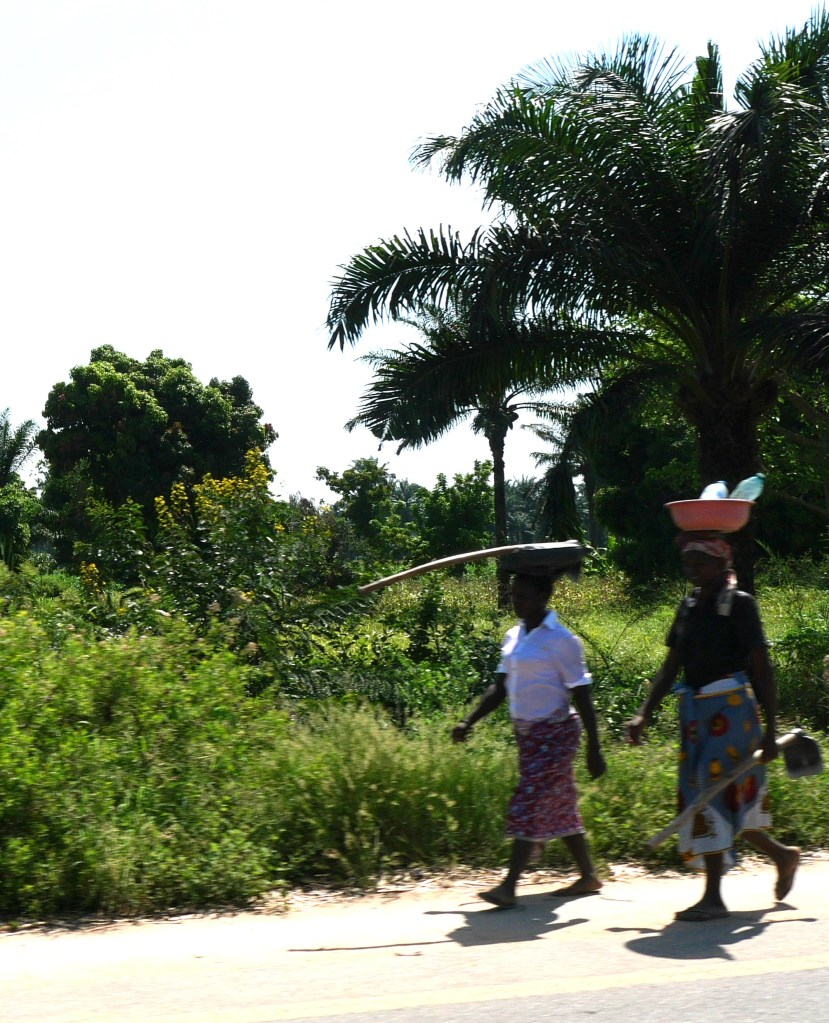
Eventually we turned off the main road onto the dirt road towards the Falls. We passed through villages with people everywhere. Most smiled and waved but some just stared.
As we pressed on, the road got more and more difficult. There were deep ruts and rocks to navigate. People started to look at us in amusement and some gestured that we should be going round the most difficult parts not through them!
We came to a junction over a small bridge with some shepherds sitting with their flocks of sheep. They smiled and waved but peered after us with looks of astonishment. A big, silver Landrover with grinning tourists waving inside was obviously not something they saw every day.
The tracks were starting to branch and wind, the sat nav kept trying to send us down the smallest and most impassable trails, some of which didn´t exist at all. We started to get that all-to-familiar sense of dread that has come to haunt us when we try and do things that start off seeming like a good idea but which quickly go south.
We took what looked like the most used trail but found ourselves rock crawling uphill with steep drops down one side. Images of Mlilwane and the accident flashed through my mind and I noticed my fingernails were digging hard into the seat beside me. Uphill then down, never more than 10km an hour, wheels bumping and bouncing over rocks, the suspension clunking and grinding.
James was getting increasingly frustrated, I just wanted to get out of there as soon as we could. We had planned to camp overnight at the Falls but I couldn´t imagine getting any sleep for worrying about whether we would actually get out alive the next day!
As usual, we had got ourselves into a situation we could not easily get out of. The trail was too narrow and steep to turn around and the way forward was just getting worse and worse. We were only 5km from the Falls according to the sat nav but we both agreed we needed to find a way out rather than going deeper in. But how?
Another half a kilometer and a small clearing appeared in front of us. James did a multi-point turn teetering on the rocks and eventually we were back on the track facing in the other direction. Slowly but surely, creeping inch by inch, we made our way back. At one point Henry bounced on a large rock and came down with a clunk that set our teeth on edge. I looked over at James but he was focussed on the road ahead with his teeth tightly clenched.
But then there were the shepherds and the small bridge. A few minutes later we met the villagers again watching us as we bumped along down the hill and finally, with our nerves in tatters yet again, we found the main road.
Relieved to be back on tarmac we sped north. I consulted IOverlander and found a camping spot close by that had good reviews and we headed towards it.
The spot was close to a village on a field shielded from the small dirt road by bushes and trees. It was convenient and felt safe and secluded, but the locals knew we were there and we were an exciting phenomenon. After dinner we sat behind Henry with a coconut, carving the flesh from its shell. I heard giggling and looked round to see a group of children peering at us from behind a bush.
I got up with some coconut in my hand as an offering but as soon as I took a step towards them the children ran shouting to each other.
I went and sat back down but a few minutes later they were back, a little closer this time. I put the coconut into a bowl and tried again. They ran back and hid behind the bush again but this time I persisted. I walked slowly towards them with the bowl outstretched and invited them to have some. To show good faith I took a piece and ate it in front of them, smiling. But they were too shy, they scattered in all directions and were gone.
The next morning, as we were sitting down for breakfast, a congregation came from the village. Two men came forward and we shook their hands. They welcomed us and we greeted them with our new found ´Bom Dia´. They smiled broadly and the rest of the group – the women and children – came closer.
They were fascinated by the Landrover. James gave them a quick tour and when he squirted the water out of the shower hose they jumped back and laughed in amazement.
I gave them fruit and breakfast bars and they happily shared it out between them and ate it there and then thanking us.
As James showed some of them photos from our trip I took a photo of the others which they were thrilled with. The younger children stood on tip toes to look at my screen and pointed to themselves in the picture grinning

But eventually it was time to go and we packed everything up and set off for Lubango.
We were surprised at how big a city it was, we had expected a small town but Lubango is huge. Like many other towns and cities in Angola it was a striking mix of beautiful colonial buildings and tree-lined streets
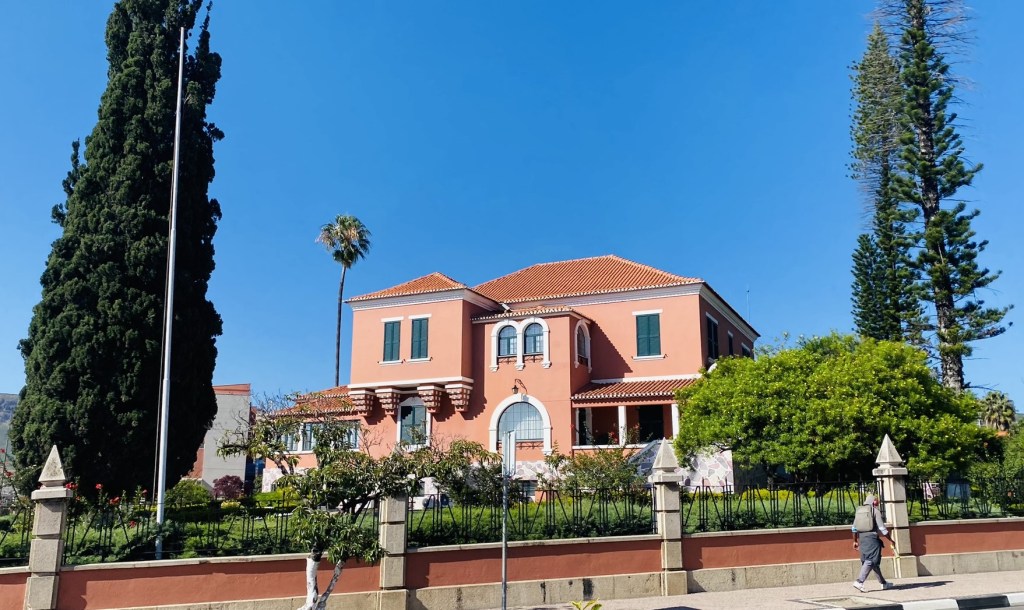
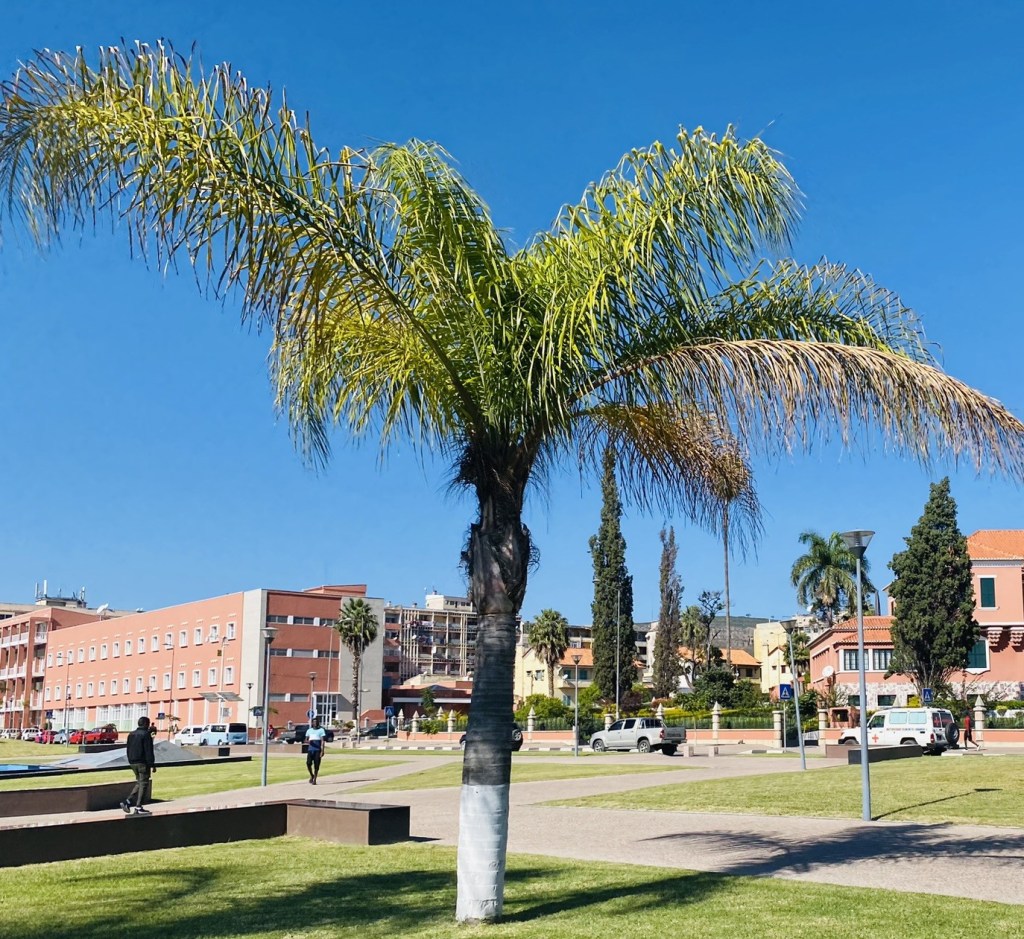
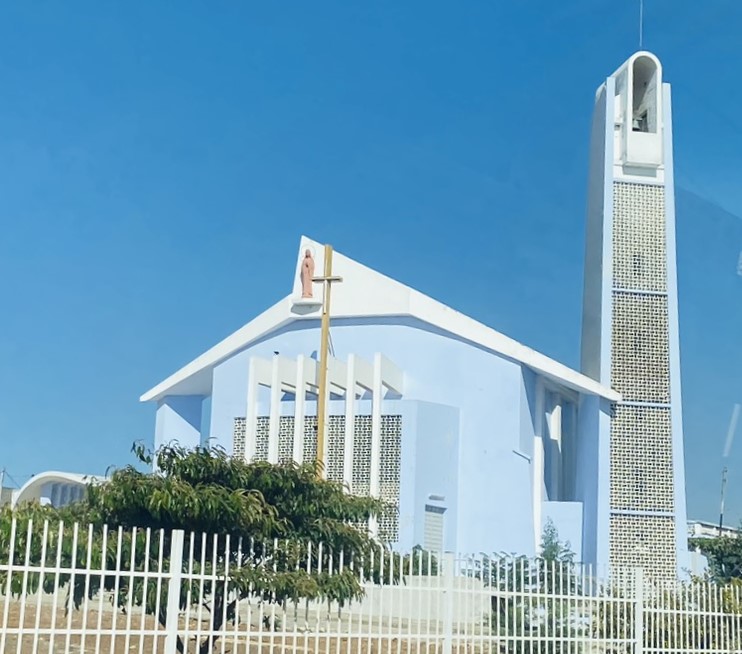
Sitting alongside dereliction, poverty and neglect
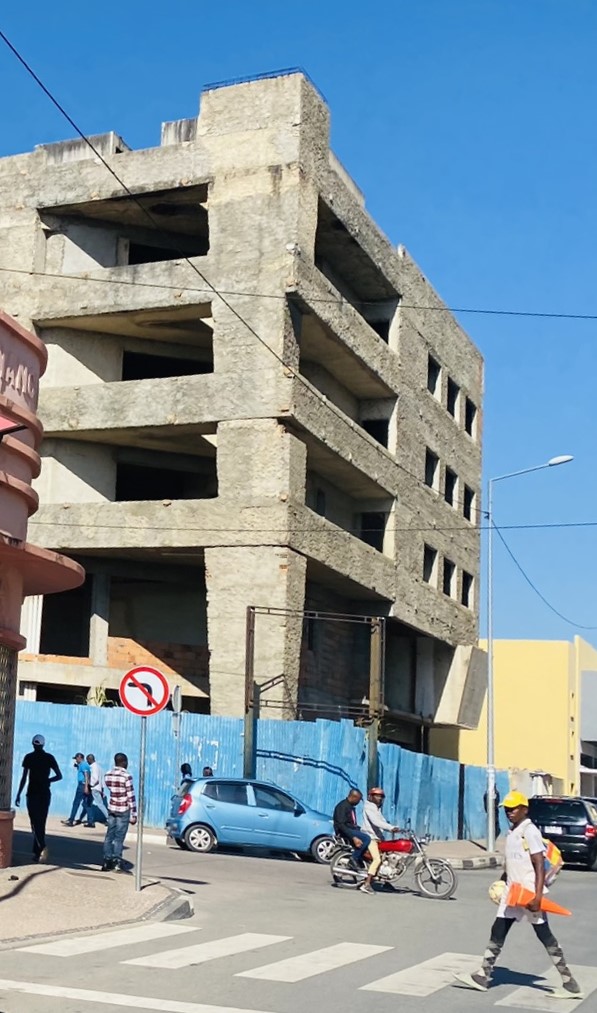
I saw this building on the roadside which seemed to reflect Angola quite accurately – on the one hand modern and clean, on the other falling into sad disrepair

The city gets its fuel from the coast and it turns out diesel is hard to come by. The first three fuel stations only had petrol but finally we found one with diesel stocks. We filled up with fuel and water and found a very well stocked supermarket where we got fresh meat, fruit and vegetables.
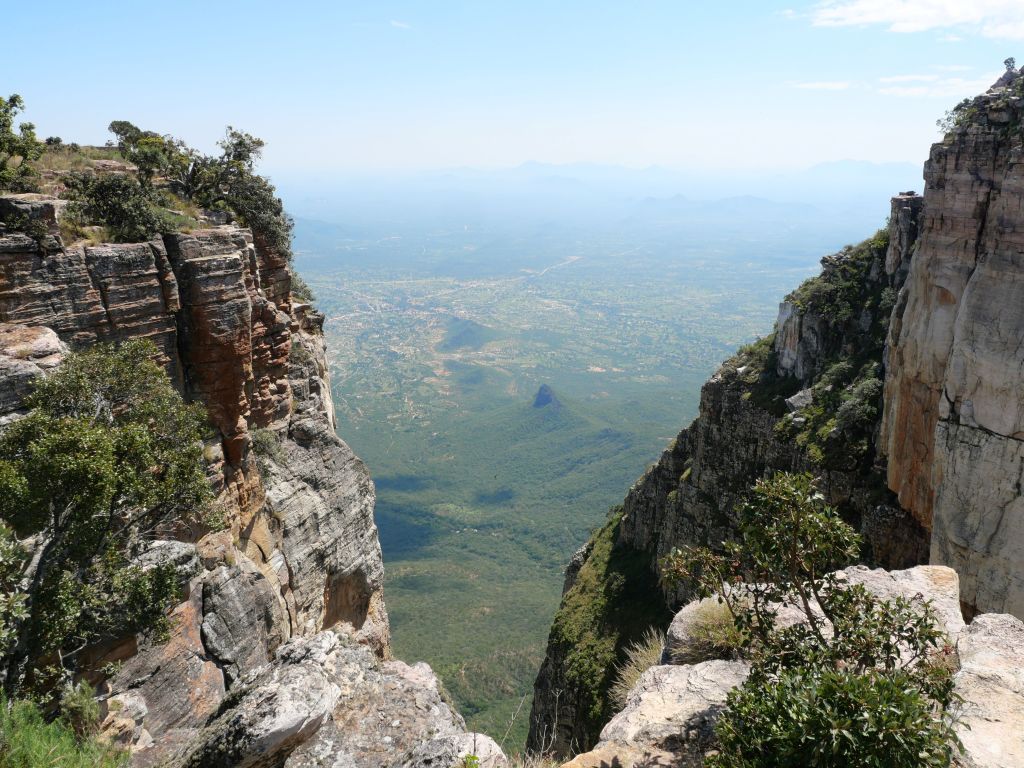
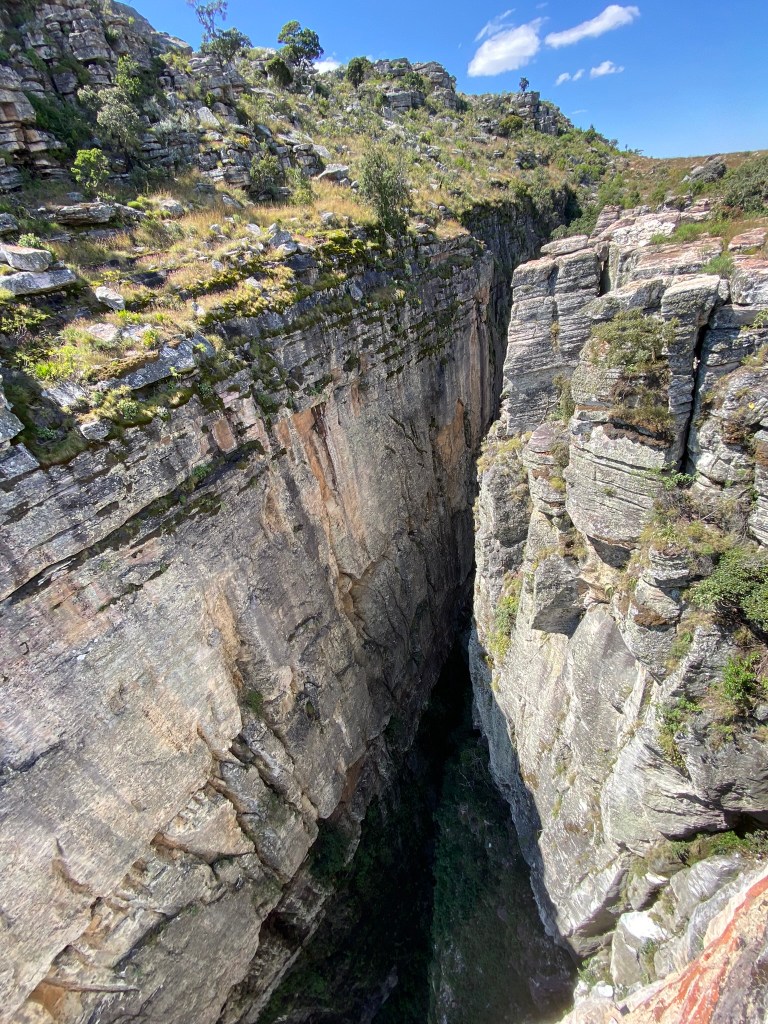
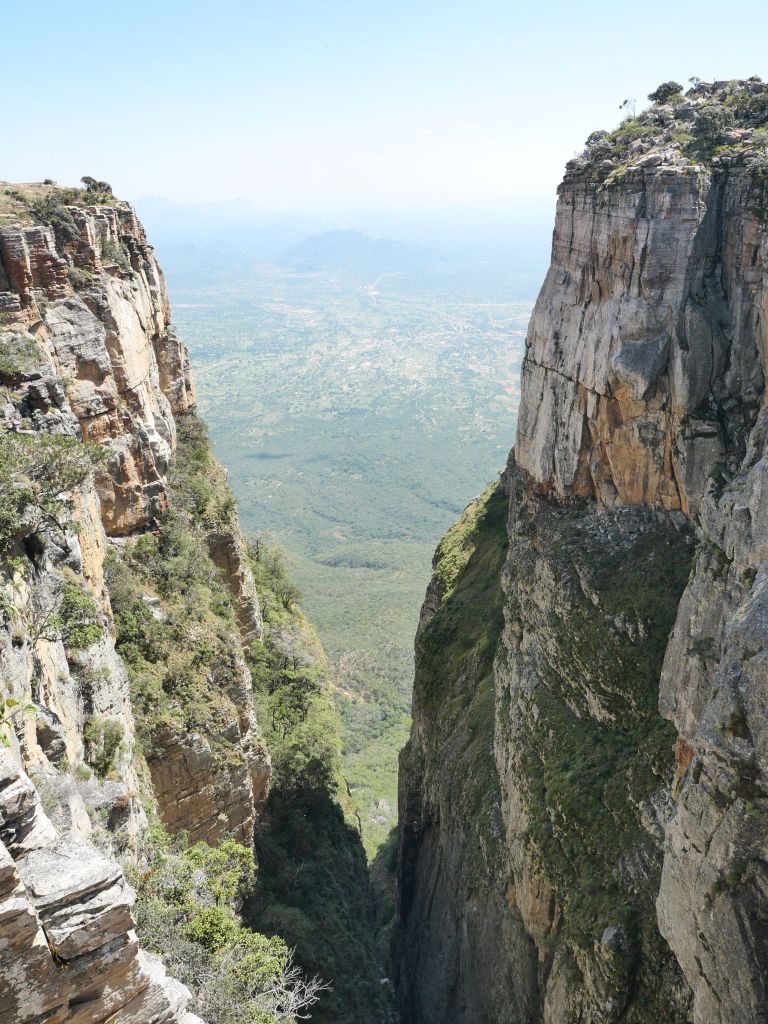
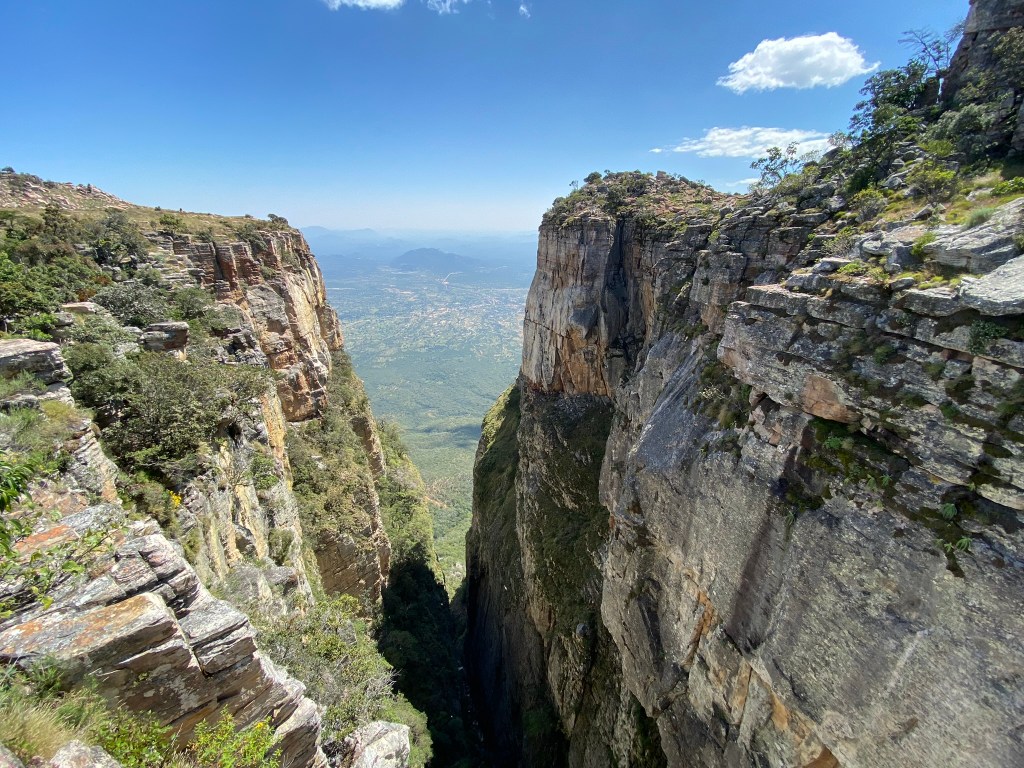
Our next destination was the Tundavela Gap, just north of Lubango. The view was breathtaking
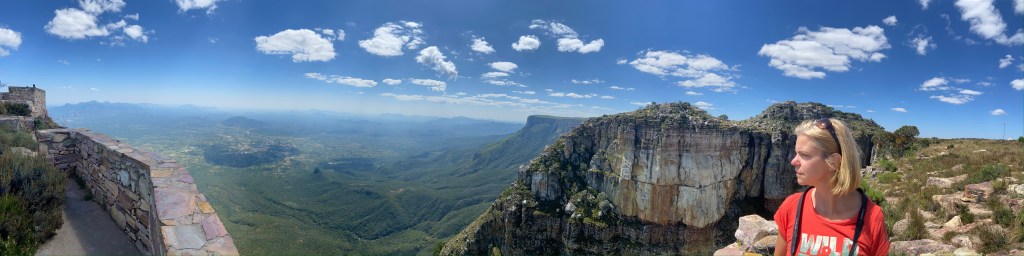
From every angle!

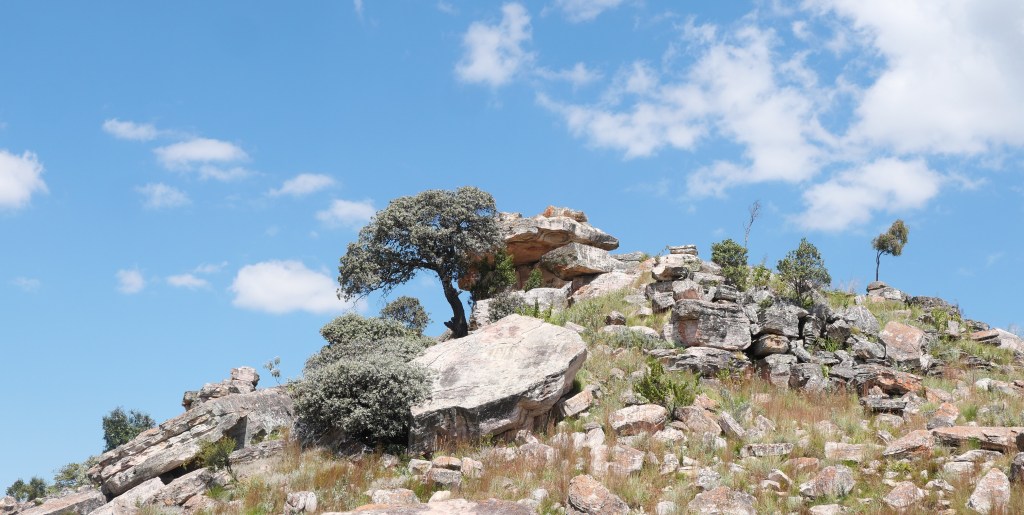
We wandered from viewing point to viewing point taking it all in.

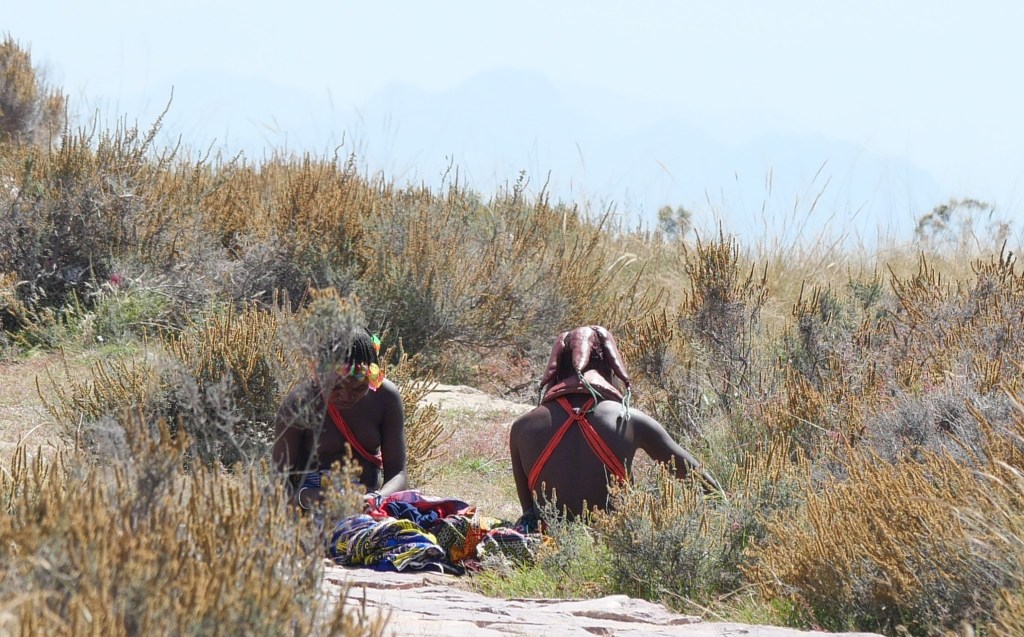
Two Angolan men were also visiting and taking photos and as we stood looking out over the scenery one of them called to us. We turned around to find him holding what looked like a colourful wind-up toy. But as we approached we saw it was actually a living creature.
He held it gently for a few moments and let me take a photo as it fluttered its wings.
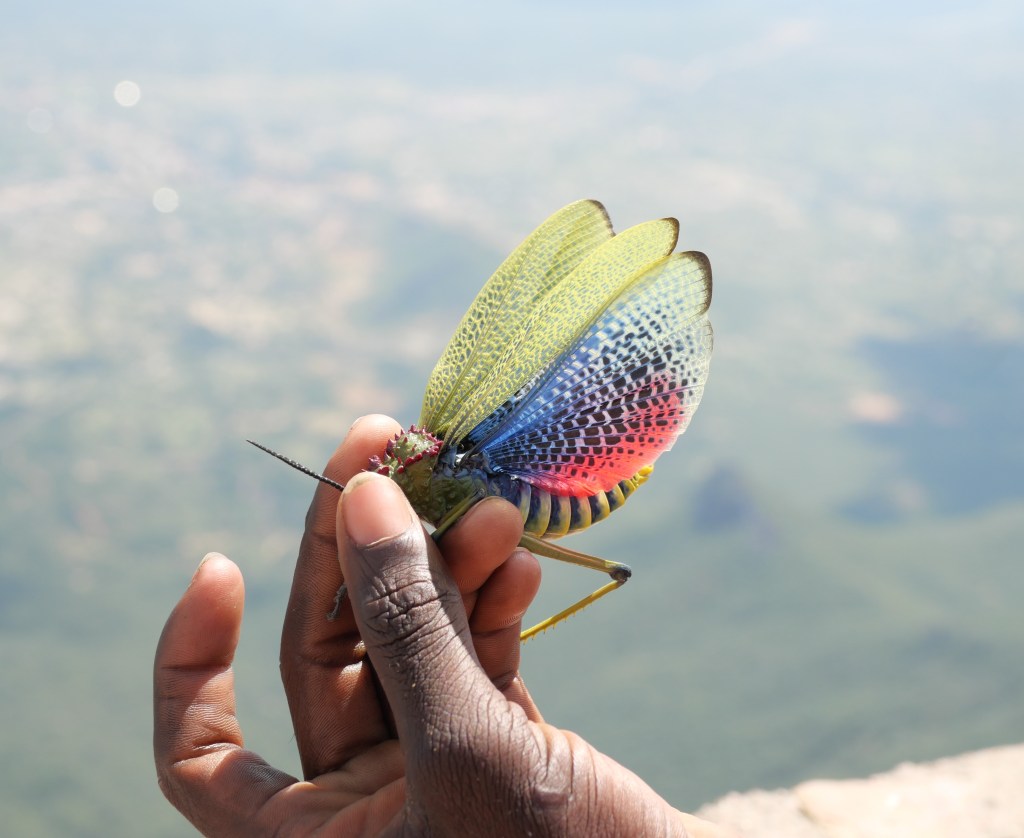
I still wasn´t convinced it was real so I gestured for him to release it and he did. To our amazement it flew up into the air, circled for a moment then disappeared. As it went James caught site of another one in the grass so our skepticism vanished entirely.
We have since learnt it was a type of locust and actually rather poisonous!
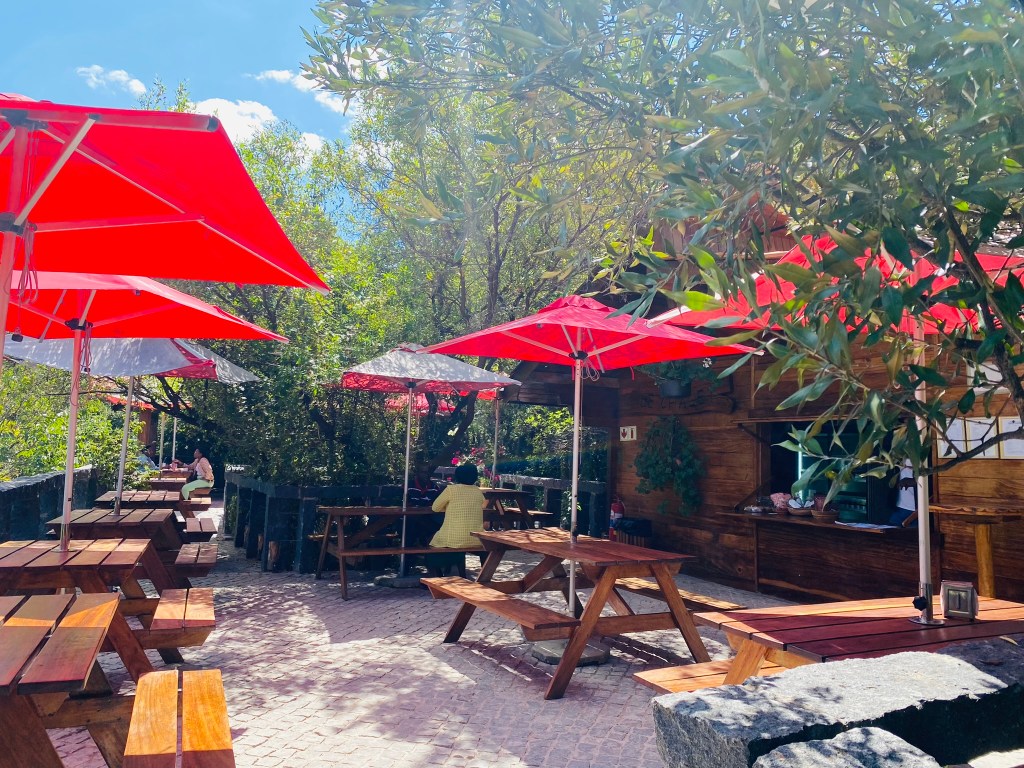
On the way back down the mountain we stopped at a Swiss cheese place for some lunch. It was another surprise to find something like this out here. It looked very nice but the food was sadly a little disappointing.
Undeterred we headed to the Serra de Leba, a mountain pass with 56 switchbacks which is supposed to be one of the highlights of Angola.
We had planned to stop at the view point at the top for some photos before driving down it but missed the turn and ended up careering towards the first bend before we knew what was happening!
The pass was spectacular and we were lucky enough not to get stuck behind any of the slow-moving lorries. But try as I might what the eye could behold the camera could not.
You will have to wait for a later post for photos but let me not spoil the story!
It was mid afternoon by this time and James was keen to camp up a little earlier today so he could grease Henry´s props and the back door hinges as well as try yet again to fix the wobbling wing mirror. We found a beautiful spot hidden amongst trees with few people around.
As we were travelling further north it was starting to get very, very hot. We were struggling to find any energy and James ended up with a thumping headache from being under the Landrover in the heat. Even overnight the temperature never dropped below 25 degrees so sleep was starting to become a problem again, just like in West Africa – stuck to the sheets with sweat!
But we were on the edge of the Namib desert so it was very dry and there were few insects, which was a welcome relief.
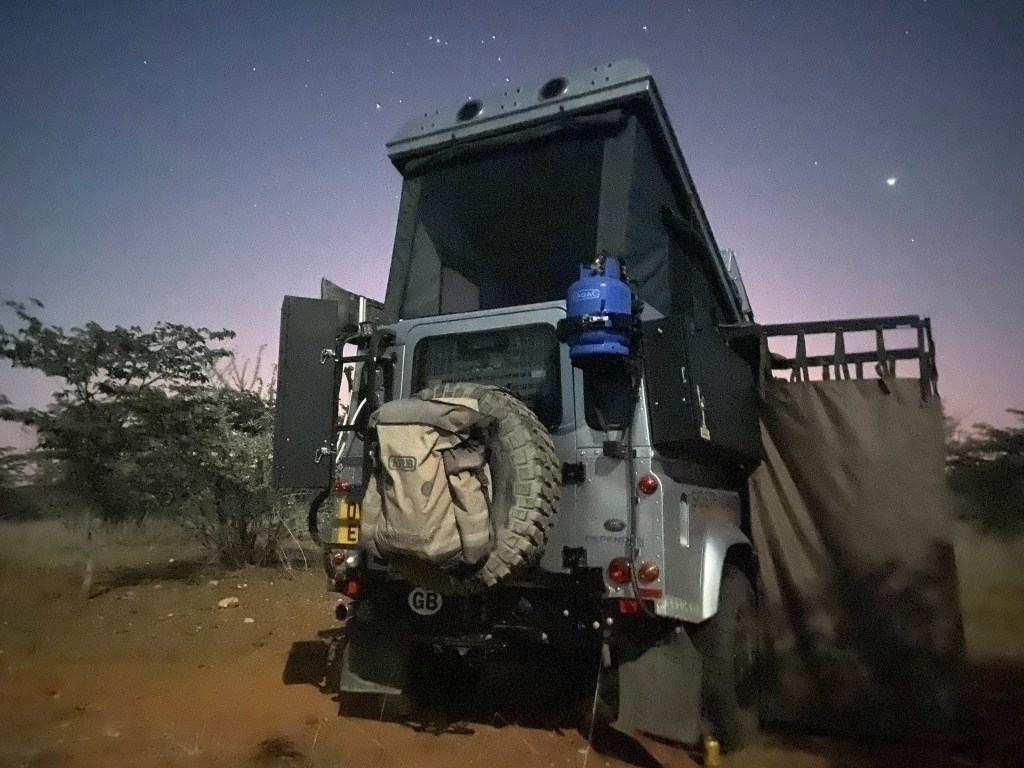
In the morning a local man rode past on his motorbike and stopped to come and see us. He was wearing a sarong wrapped round his waist and a warm jacket – the sarong made me wonder whether he was a chief. He was concerned for us and wanted to make sure we were ok and not having any trouble. We explained we were travelling from Lubango to the town of Namibe and had just stopped here enroute for the night. He was satisfied to know everything was good and went on his way.
We had a bush shower, something we hadn´t done since West Africa but something we would get used to very quickly here. The water was lovely and warm, even at 8am, heated only by the air temperature.
We pressed on west towards the coastal town of Namibe. The entire drive was stunning, we couldn´t stop pointing and gasping how beautiful it all was.
Namibe itself was a large but quiet port town.
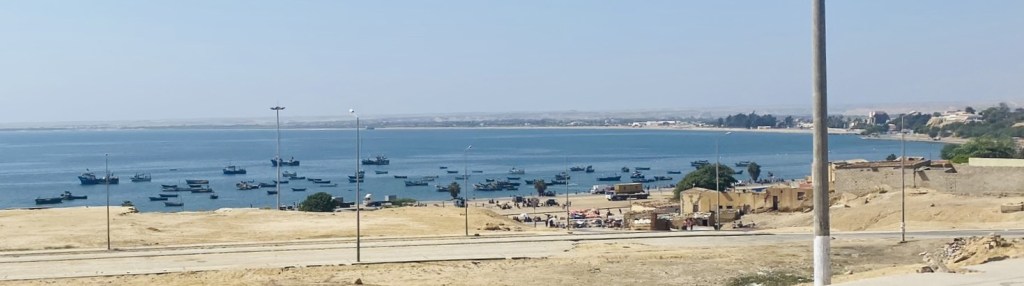
We watched the fishermen out on the sea

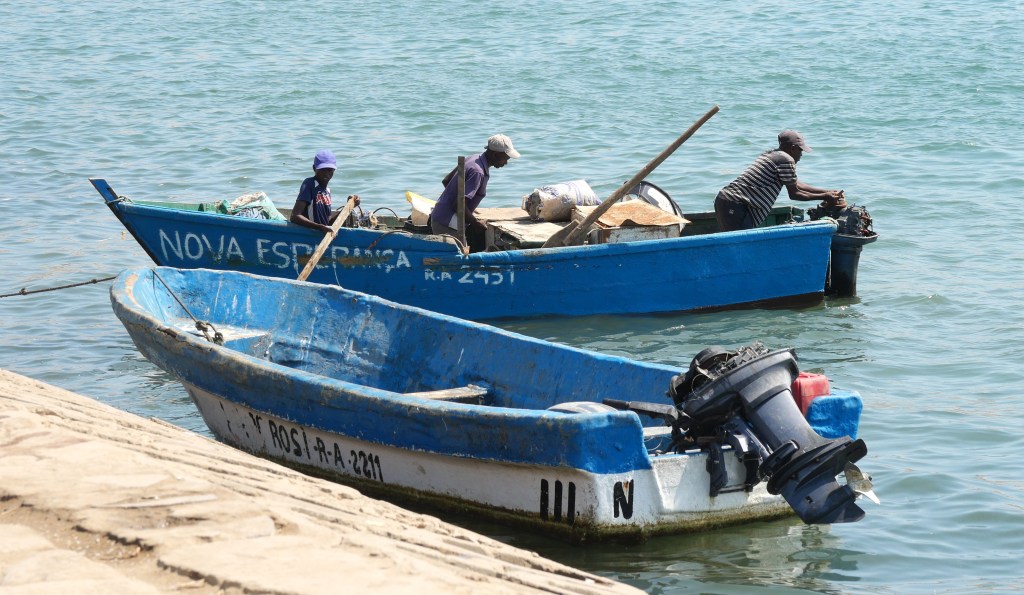
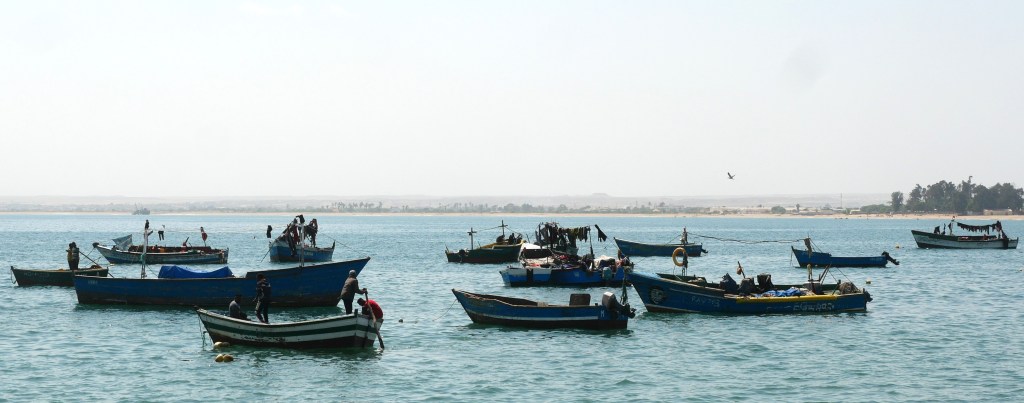
As I stood to take photos a lady came up to me offering to sell me fresh fish. I smiled and declined and she just smiled back, said ok and wandered away. It was so refreshing not to have any hassle or pressure to buy anything.
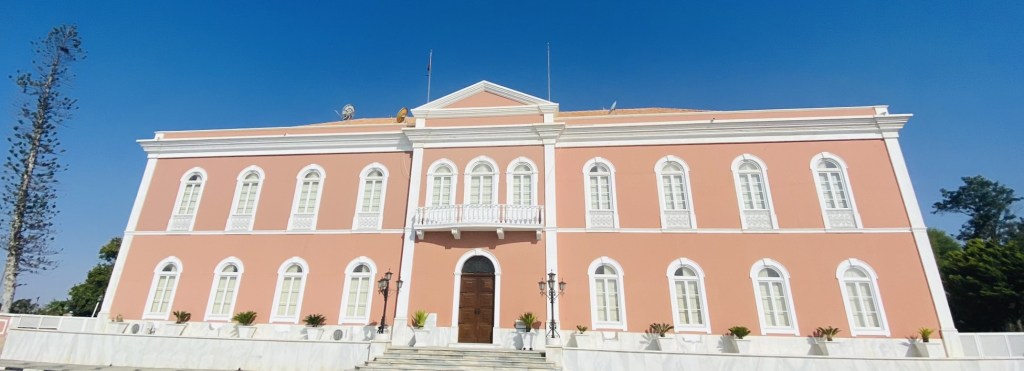
There was some lovely architecture, mostly left over from the Portuguese

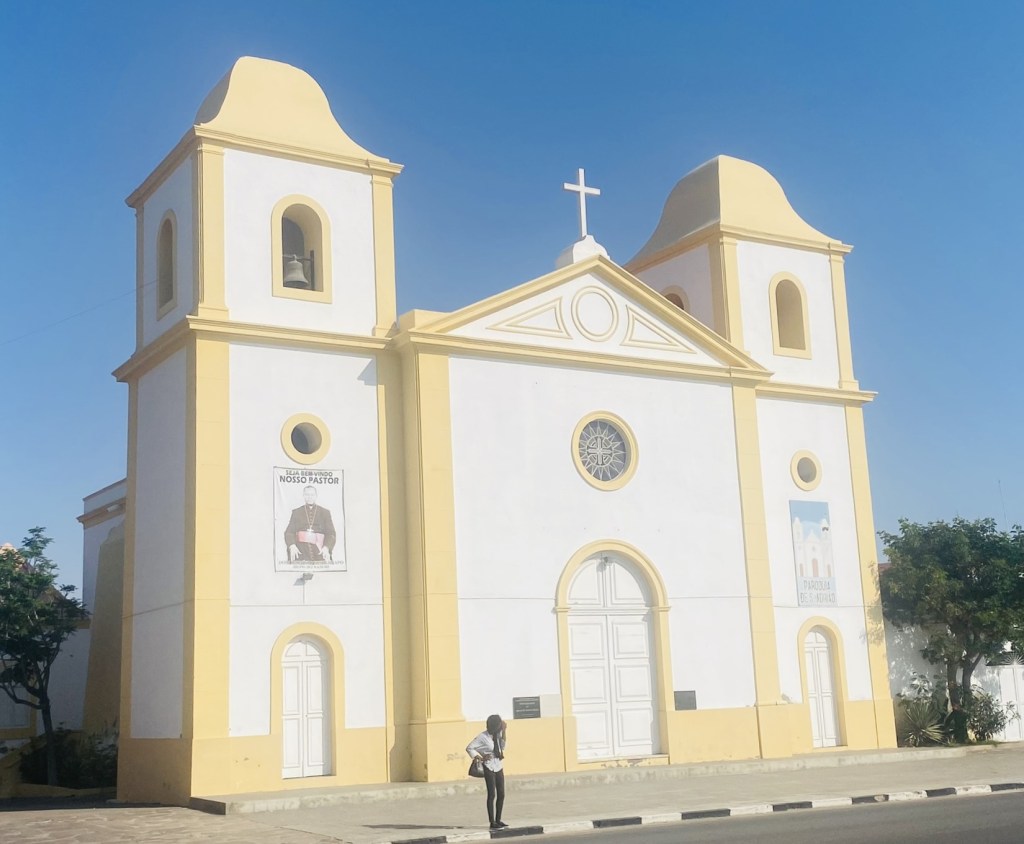
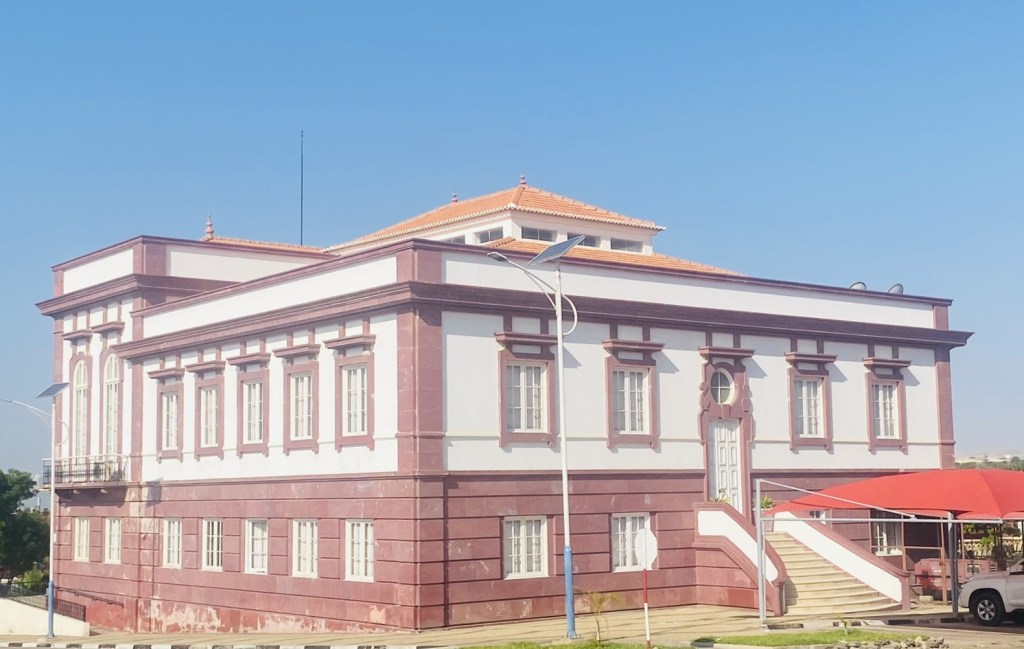
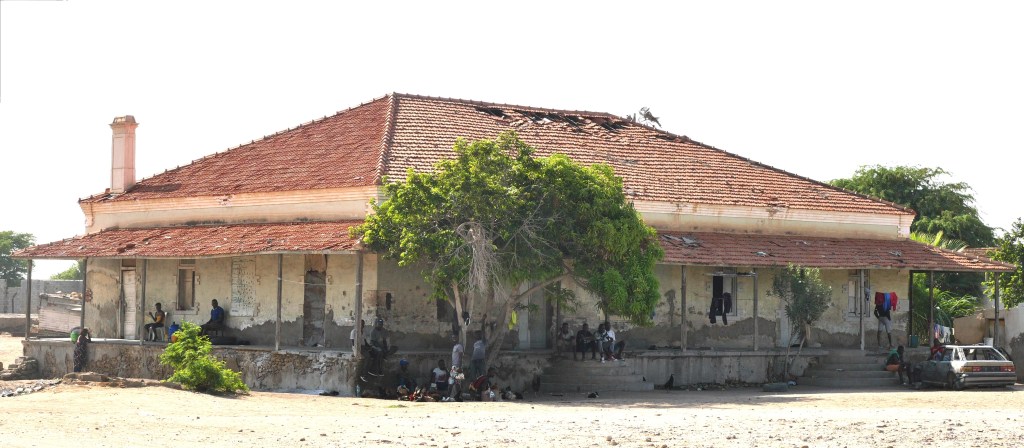
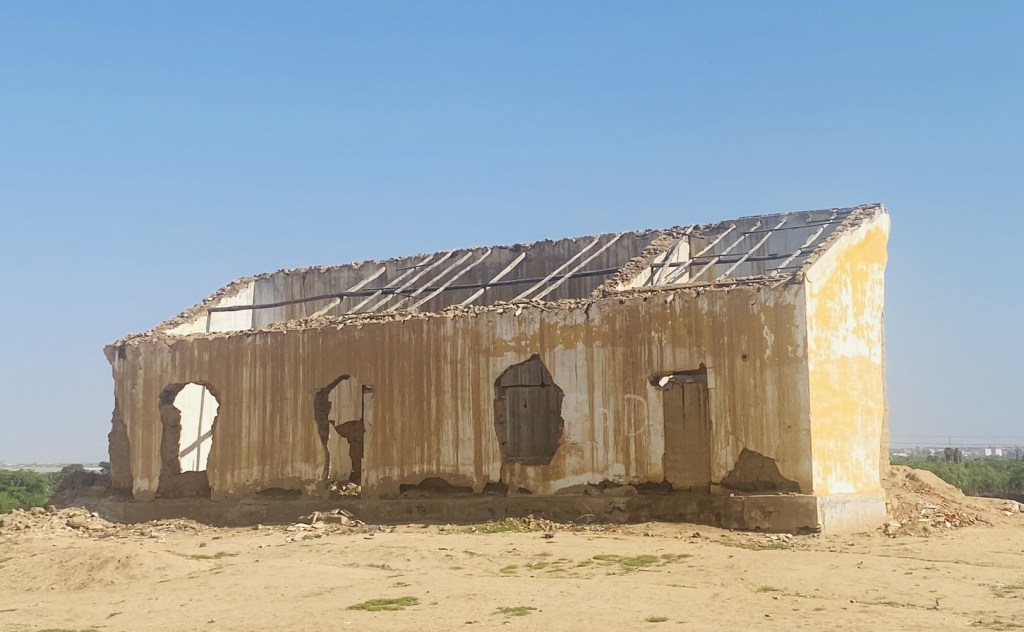
Although some had been left to disintegrate
One of the more interesting buildings here is the old cinema
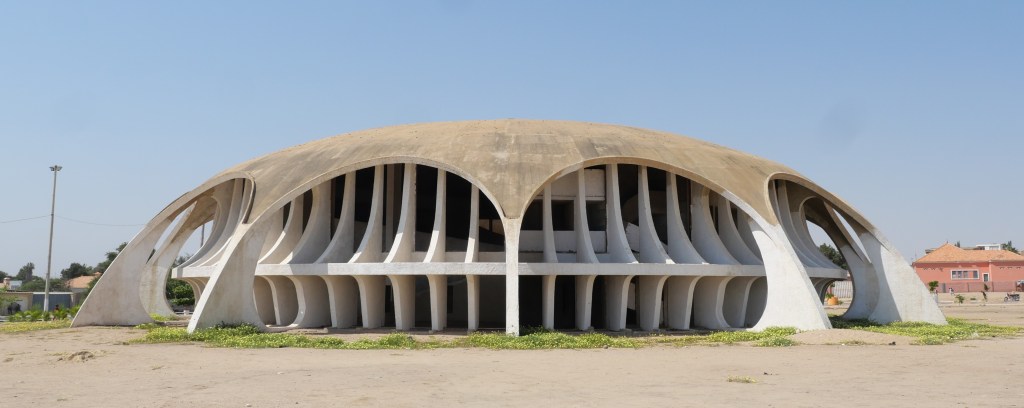
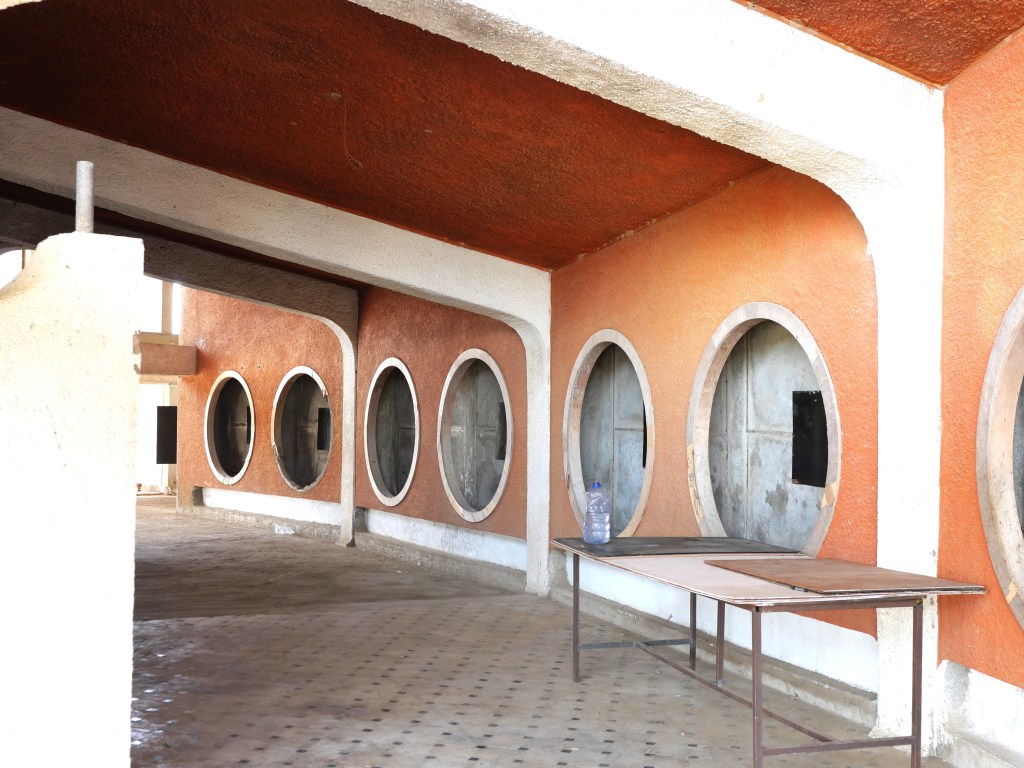
We wandered in and looked around at the sweeping stairs
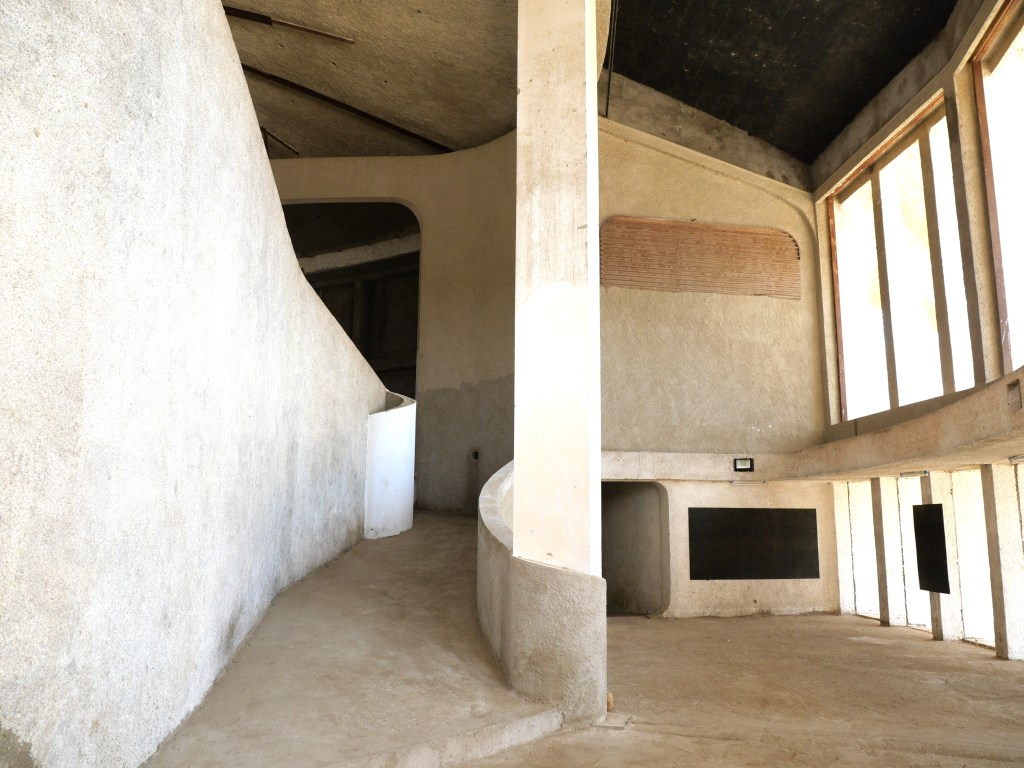
And the theatre
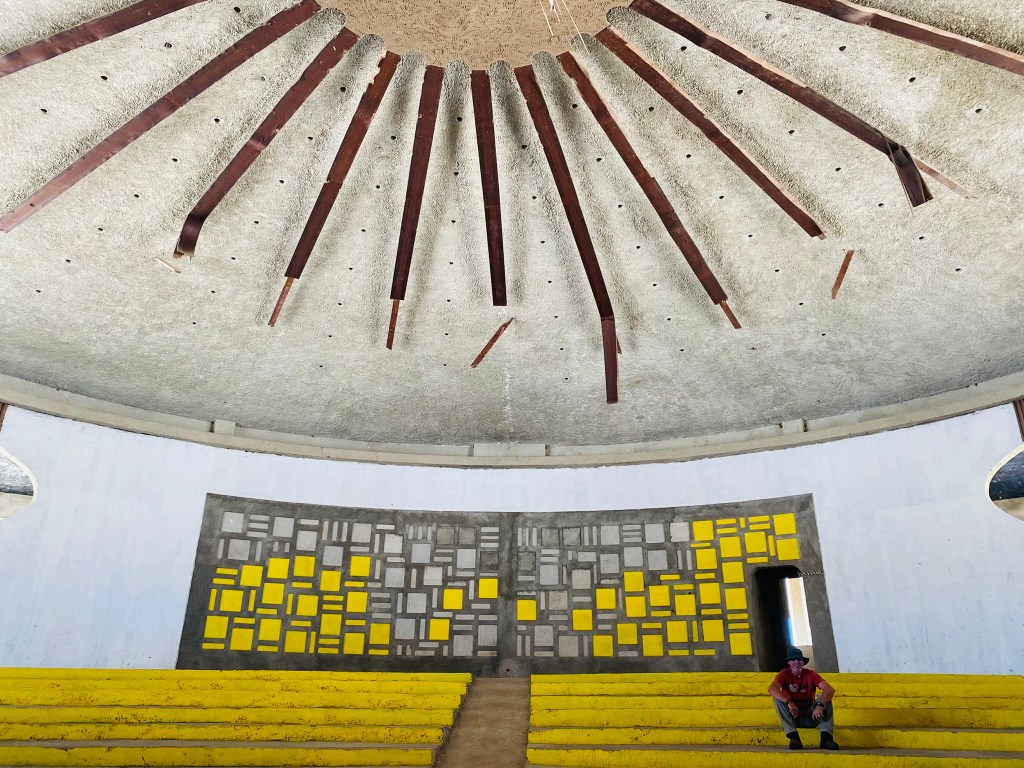

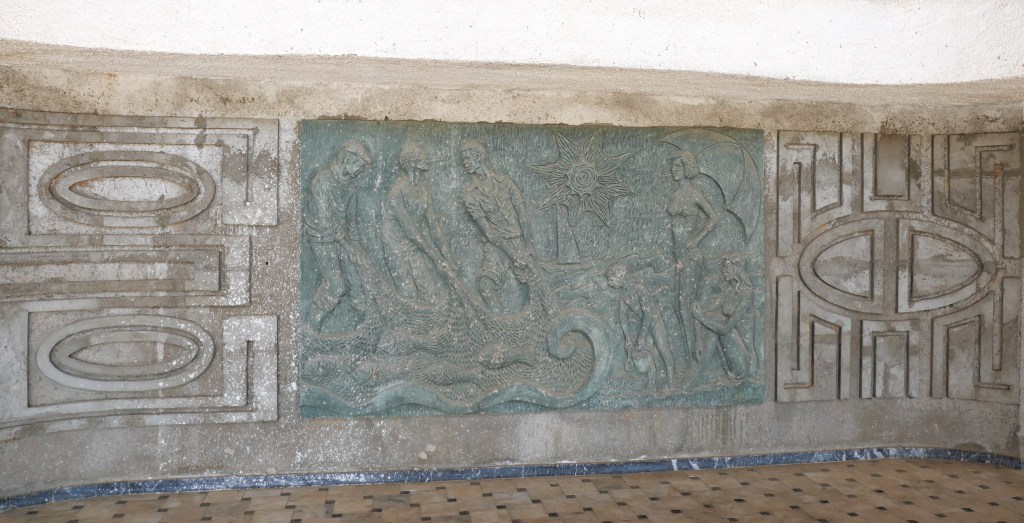
Something about the place reminded me of the old abandoned Ducor Hotel in Monrovia in Liberia – faded glory of a by-gone age.
After a few minutes we came across a guard who offered to take us on a tour for a small fee. But he didn´t speak a word of English so we politely declined and went on our way
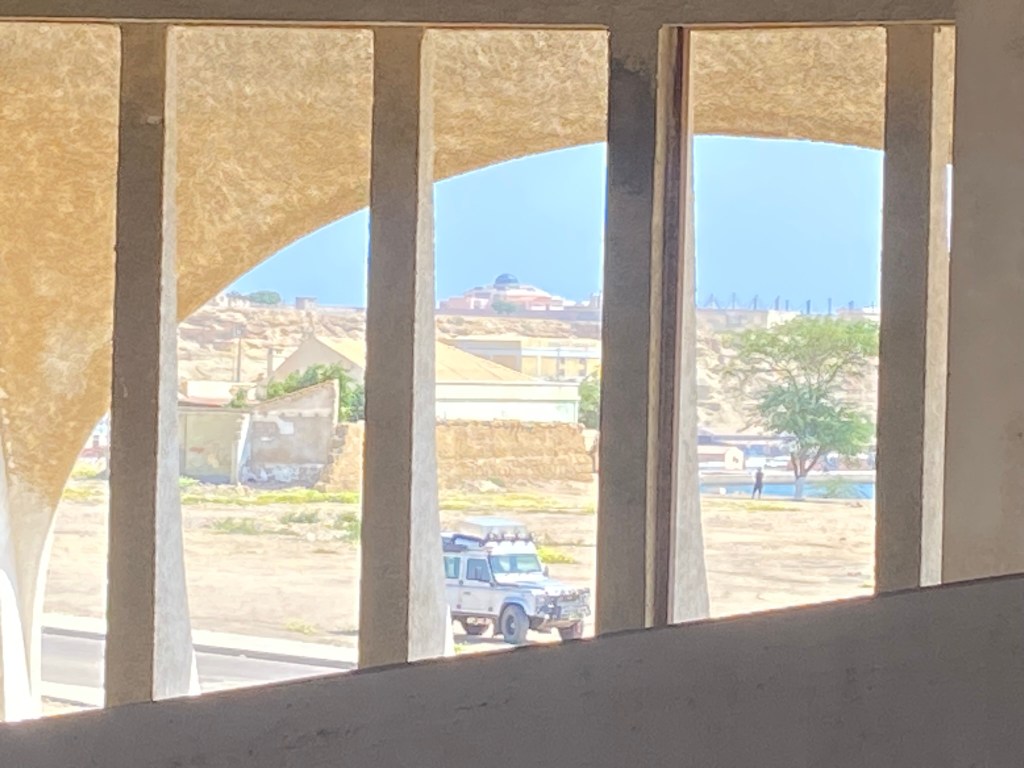
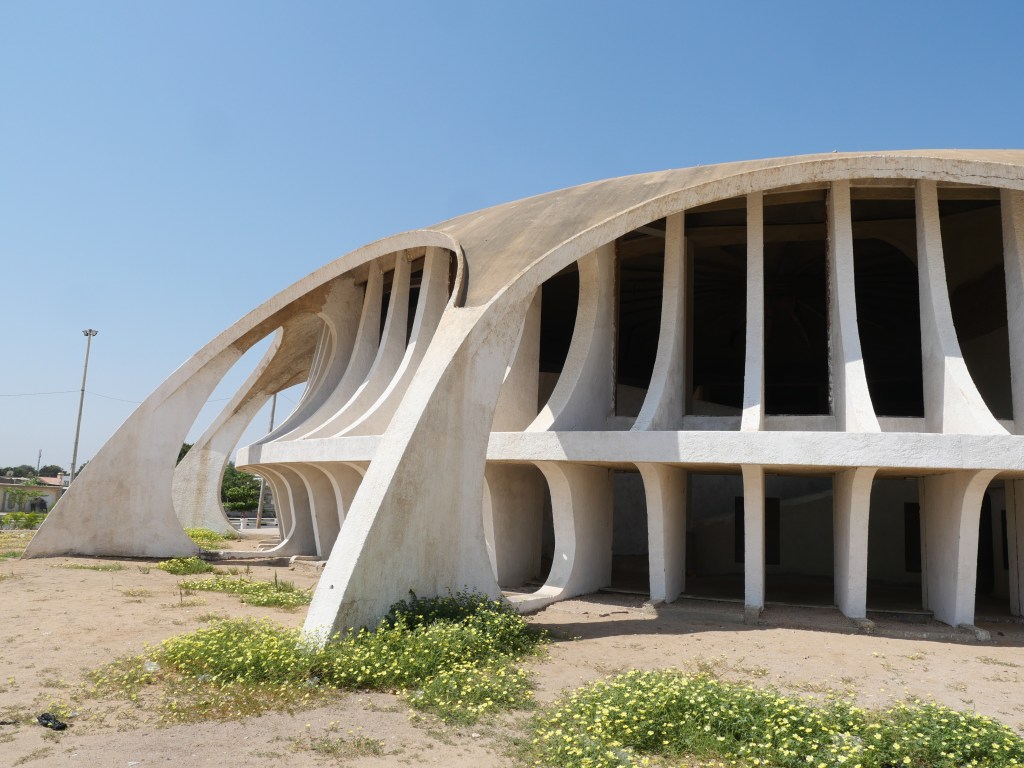
We drove along the beach towards the salt works
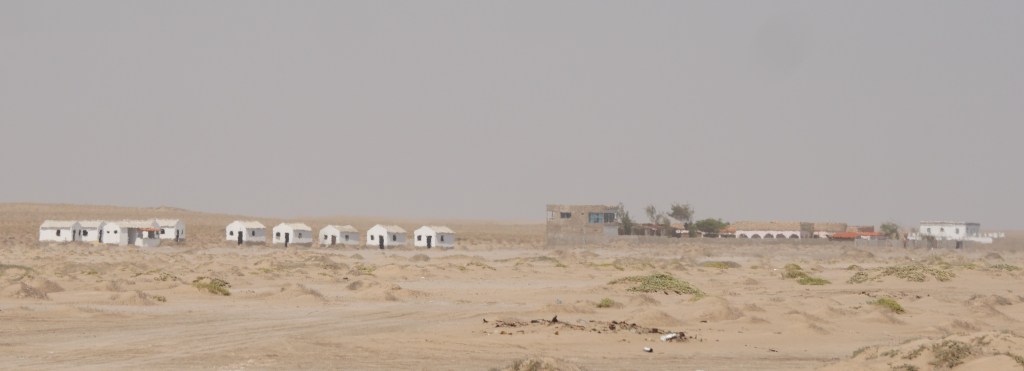
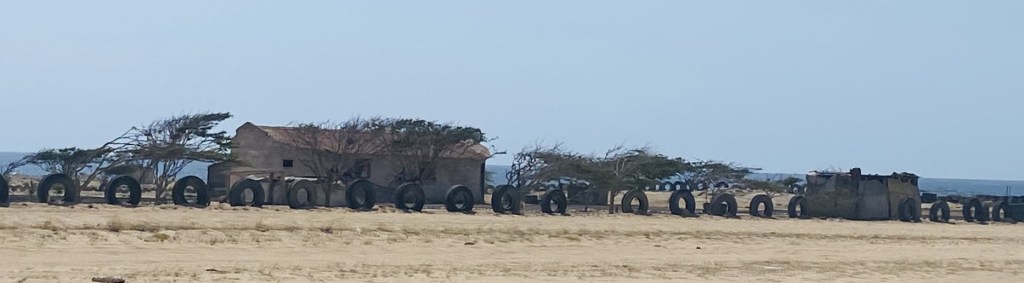
And tried unsuccessfully to find a shipwreck.
We pitched up for lunch feeling as though we were on the moon it was so remote.
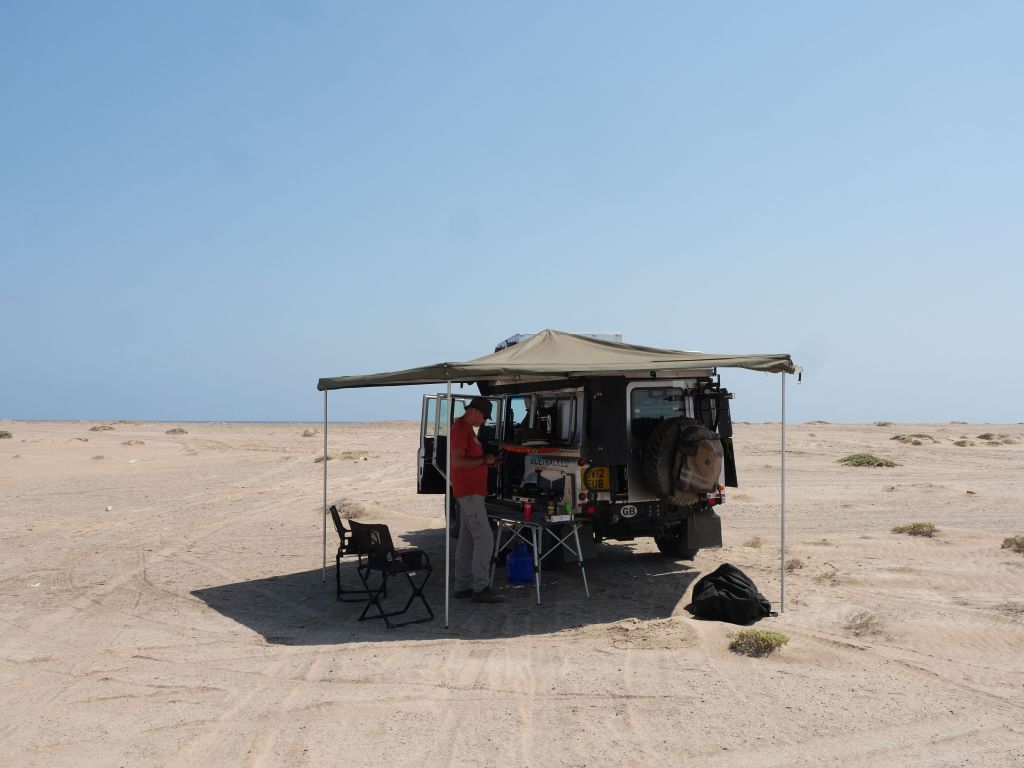
As we were eating three Land Cruisers drove past. We watched as they circled around the beach for a while. James raised an eyebrow and commented that they were getting a little close to the deep sand. As if on cue one of the vehicles ground to a halt. They were stuck fast.
We looked at each other in that knowing way, the vehicles were modern, shiny and full of people who didn´t look like experienced Overlanders! There was no sign of any winches, tow ropes or other recovery equipment – just cameras and lunch boxes. We stood finishing our cheese and biscuits for a while watching them uselessly trying to push themselves out until eventually James said ´Come on then, I suppose we´d better rescue them!´.
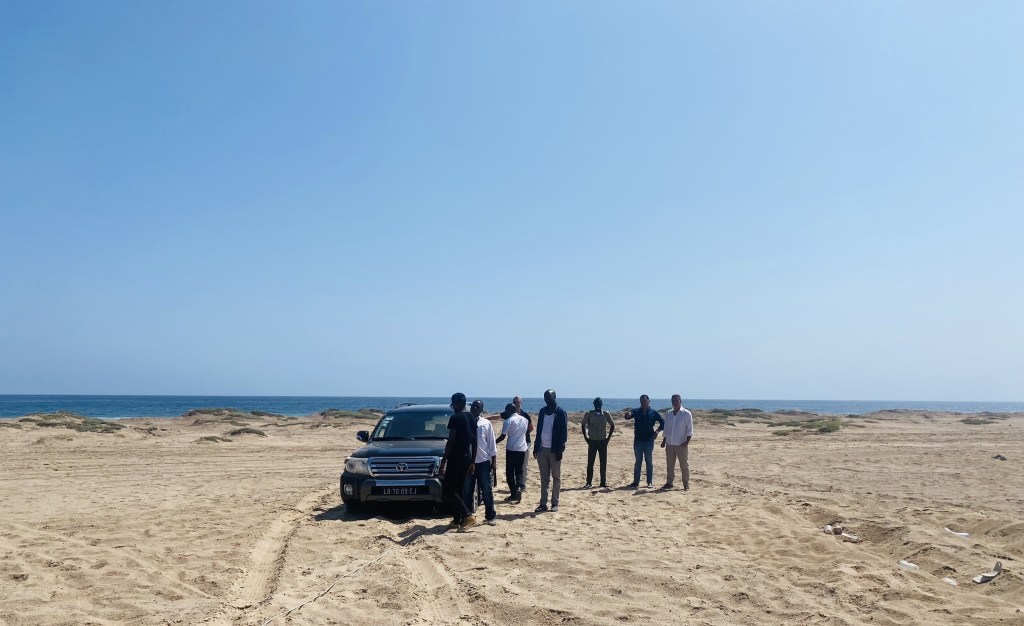
We jumped into Henry and drove towards them. I got out with a broad and friendly smile on my face and said ´Hi there, you look a little stuck. Would you like the Land Rover´…big flourish towards Henry….´to pull out your Land Cruiser?´…dismissive gesture towards their vehicle. The rivalry between Land Rovers and Land Cruisers never gets old!
They smiled in good humour and looked quite relieved. We quickly rigged up the winch but it was harder than expected to get them free. It didn´t help that the driver appeared not to know what to do and even when they were free he nearly got himself stuck again revving far too hard on soft sand.
But finally they were out. They thanked us profusely and the three Land Cruisers disappeared into the distance. James looked at Henry then at me – all well and good, but pulling a large Land Cruiser out of deep sand with an inexperienced driver behind the wheel had meant Henry had dug in and was now a little stuck himself!
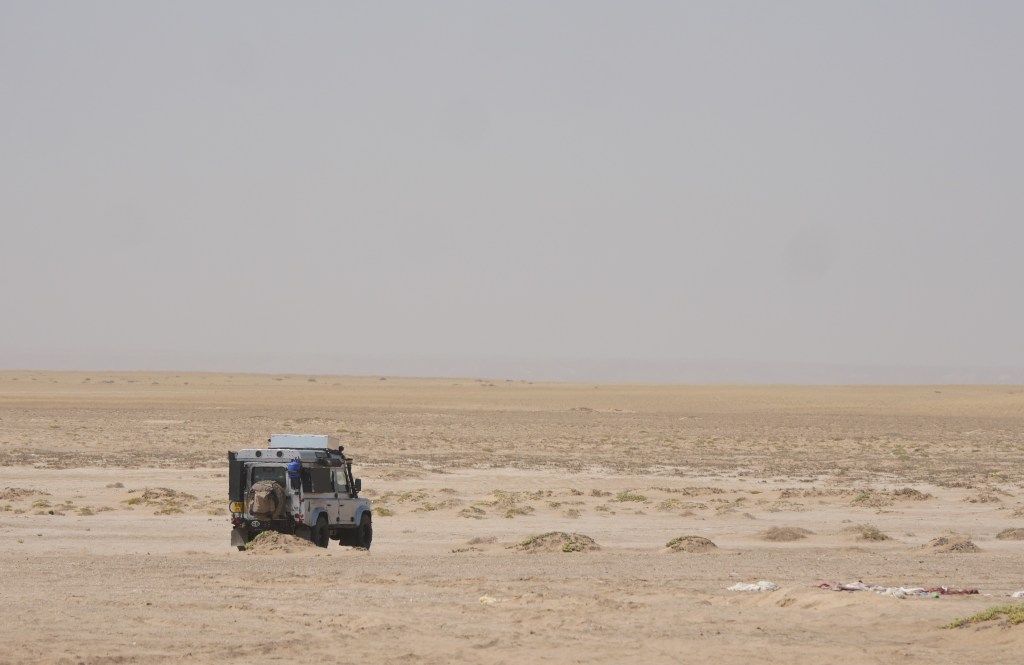
With a little delicate backwards and forwards-ing we weren´t stuck for long but it was with some relief that we headed out of the sand without having to unbolt the sand ladders!
There is a route south along the beach from Namibe to the Foz do Cunene which is called ´Death Acre´. So named because part of it is underwater at high tide and if you get your timing wrong there is no escape as huge sand dunes plunge into the ocean just as at Sandwich Harbour in Namibia. We had seen video footage of 4x4s being washed away by the sea, their owners able only to stand and watch from the top of the dune. Not even the hard-core South Africans attempt the journey without an experienced guide who knows the tides.
We had been given the name of a guide who was recommended and had contacted him earlier in the day to see whether he would take us. We arranged to meet him face to face in Namibe that afternoon.
When we arrived we were pleasantly surprised. He was very credible, an ex-marine who had lived in the area all his life and talked very knowledgeably about 4x4s, tides, recovery and everything else we tested him with. Finally we agreed to go on a two day trip with him, driving down the coast, sleeping in an open cave overnight then coming back through the Iona National Park.
We were both very excited and didn´t mind at all the early start – to hit the tides right we needed to be heading off at 5am meaning out of bed at 3:45am.
After the meeting we drove back to the beach to camp for the night

As we settled in to dinner he text to say that the National Park gates didn´t open until 7am so we couldn´t start at 5am. He suggested we met at 9am instead and did the trip backwards – starting in the Iona National Park and driving the coast road south to north the day after.
We agreed but were left with two concerns. Firstly, if he was so experienced why didn´t he think of this before? And secondly, the places he told us we would visit were hours apart from each other and we couldn´t see how we were going to fit it all in.
We were up early the next day ready for our trip, hoping our fears would not be realised. The previous evening had been wonderful with a cool, sea breeze and absolutely no mosquitoes, or indeed any other insects at all. But the morning started badly.
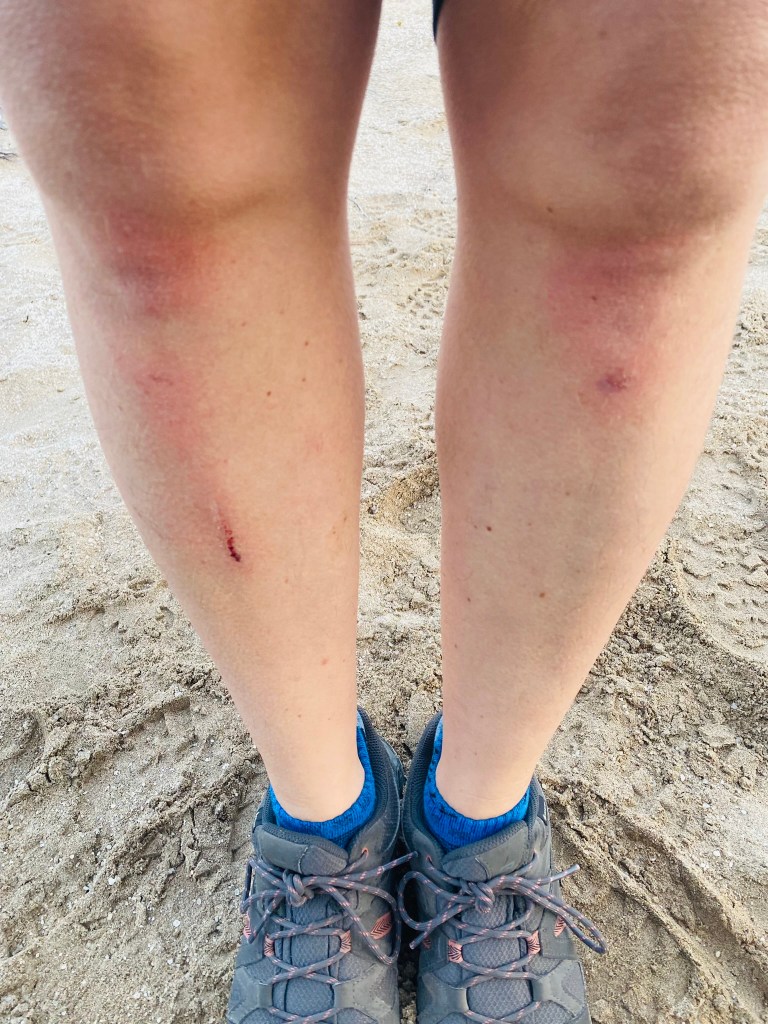
As part of my daily stretches before I start my exercises, I stretch my calf muscles by standing on Henry´s back step and pushing my heels down. Today there was so much sand on the step and on the bottom of my trainers that, without any warning, my feet slipped and I went crashing down. On the way down the front of my calf bones hit the step hard and scrapped all the way up to my knees. The pain washed over me like a wall of fire and my legs gave way under me. As I sank to the ground groaning James came rushing over with a worried look on his face.
It took half an hour before I could stand up again and my legs were looking very sorry for themselves! It must have been an omen….
We arrived to meet our guide, sore legs in tow, at the meeting place at 8:45am. He wasn´t there. Still not there by 9am and still not by 9:15am. Given that timing was the most important aspect of this trip we were not just annoyed at the lack of professionalism but also concerned about his competence. We were, after all, trusting our most precious possession to his knowledge, experience and good judgment.
I text him and eventually got a reply that he was buying bread and would be there in 10 minutes. Half an hour later there was still no sign of him and it was an hour past the time we had agreed to meet. James was furious and I had lost all faith in him. So I text to say we were leaving and would visit Iona on our own and give up on the coast road.
We did get a very genuine sounding apology from him and an offer to provide any help or assistance we needed whilst we were in Angola, but it cut no ice. We felt we had potentially dodged a very dangerous bullet and headed out of town towards the National Park on our own, disappointed to be missing the sand dunes on the coast but counting our blessings that the three of us were still in one piece with our feet firmly on solid ground!
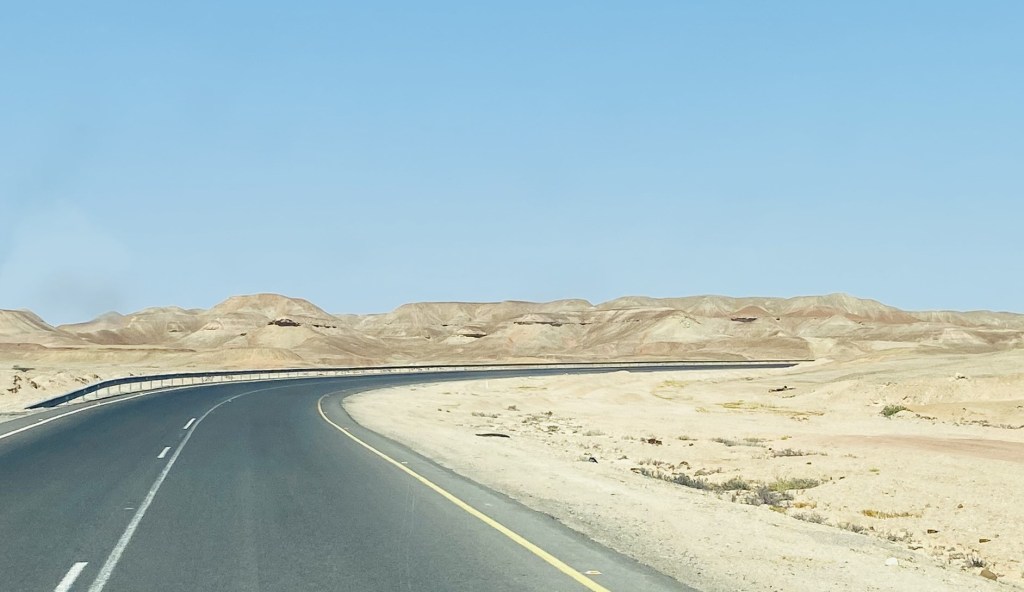
The route ahead stretched out towards the desert and we smiled to ourselves – Henry was packed full of water, food and fuel and we were settling into our new Angolan adventure. Where we ended up didn’t matter, we were finally enjoying the journey….
 The Sidetracked Sagas
2 responses to “A Spectacular Angolan Adventure”
Great to hear you like Angola, very special place. Enjoy your trip!!!
LikeLike
Very brave what your doing going into the unknown but sectackular photos, looks amazing & so do you both stay well & safe 🤗
LikeLike