Henry and I may have been feeling better physically but emotionally James and I were in turmoil. Our desire to live in Namibia and build a conservation reserve was extremely strong but so was our need to keep travelling – and everyone was telling us we couldn´t do both. Or maybe we could but it would require employing a very expensive farm manager which would mean working the farm even harder to earn enough money to cover the costs. We felt as though we would become slaves to money again – exactly the opposite of what we had wanted when we left the UK.
What were we doing? What were we thinking? Had we missed the boat and left it too late to try and realise this dream? We couldn´t bear the thought but the thought kept intruding loudly on our minds.
Nevertheless, despite mounting challenges, we were not prepared to give up. One of our agents had offered us the chance to rent a farm – taking away the problem of being stuck with it in our old age, unable to sell and get our money out.
We had also made contact with the owner of the campsite we had stayed at in Wilhelmstal only 1.5 hours from Windhoek. He had mentioned that he was interested in selling 1,000 hectares of his farm to reduce his workload and stress. Initially we had taken his contact details but dismissed the idea as 1,000 hectares was far too small. But now we wondered whether it might actually be a better idea – less cost, less responsibility, easier to leave whilst we travelled.
And finally there was a farm adjacent to Etosha National Park. Only 3,000 hectares but as it bordered Etosha maybe we didn´t need any more and maybe we could just become an extension of the Park for animals passing through without the need to game fence and be responsible for their welfare.
So, as before, we were testing various boundaries and seeing whether we could find a good fit.
As we left Windhoek yet again, our first stop was to visit Kobus and Marissa. I was still recuperating so it was lovely to be looked after for a couple of days by good friends.
As we sat around the living room, me lying back in a fabulous reclining armchair, a vicious storm started building outside. The rain got harder and harder and then the thunder and lightening started. Just as dusk was settling the power went out and we spent the rest of the evening in darkness, the room lit only by oil lamps

No-one minded too much, winter had been long and cold in Namibia this year and everyone was dying for the warmth and the rain of summer. We were all hopeful that this storm was a good sign.
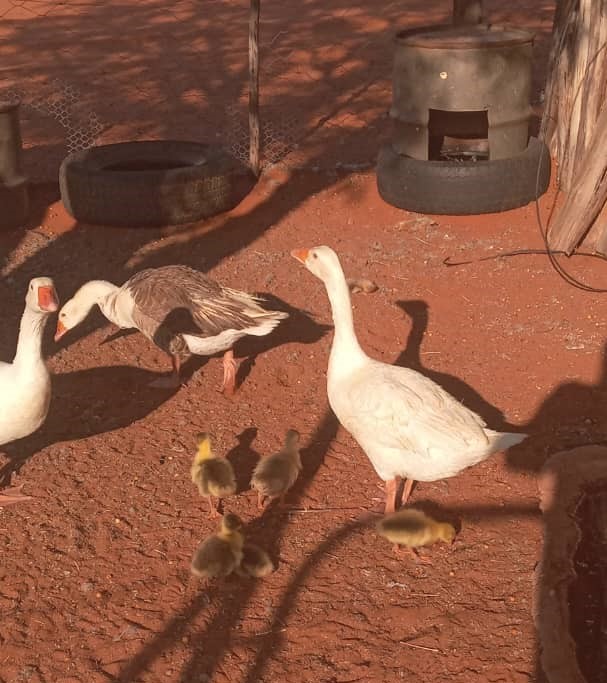
The next day James went out with Kobus to visit a part of the farm which they rent out to another farmer, they needed to check that everything was being managed properly. I would have loved to go but bouncing around in a Landrover all day was not at the top of my priority list right now! So Marissa and I spent the morning chatting and putting the world to rights as well as checking on some of the new arrivals at the farm
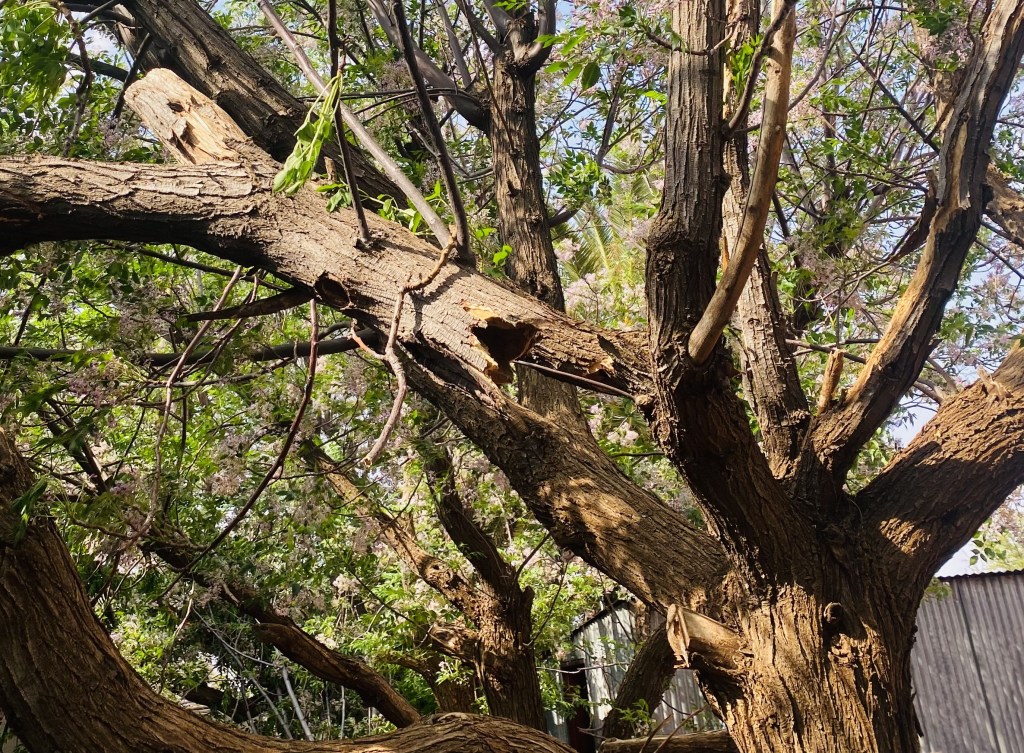
There was another huge storm that evening and we still had no power. I lay awake in the middle of the night listening to rain pounding down on the roof, thunder rolling endlessly around the skies and cracks and crashes of trees and branches all around being blown down. Namibia does storms very well, it’s always an exciting experience!
When we crawled out of bed that morning we found a scene of some devastation around the house

Henry had been covered in twigs, leaves and soil and needed a good wash but had luckily survived otherwise unscathed

After a wonderful breakfast of fruit and custard we said our goodbyes and started off northwards to go and see the first of our three farms – the one for rent. This one was around two hours from the large town of Okahandja and three hours from Windhoek, so very well connected.
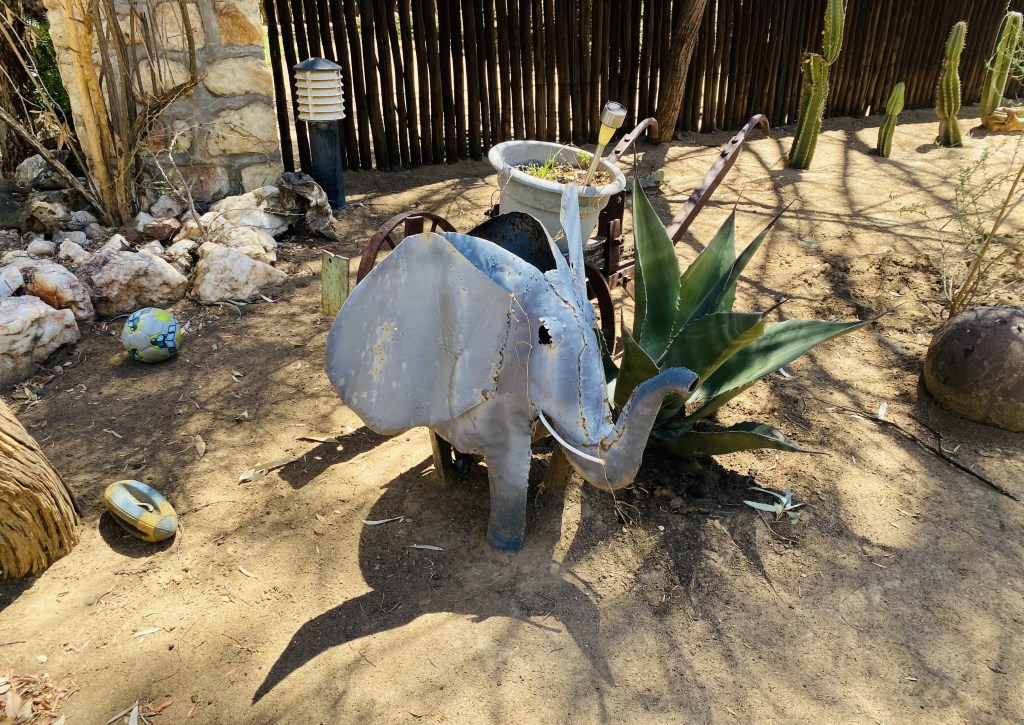
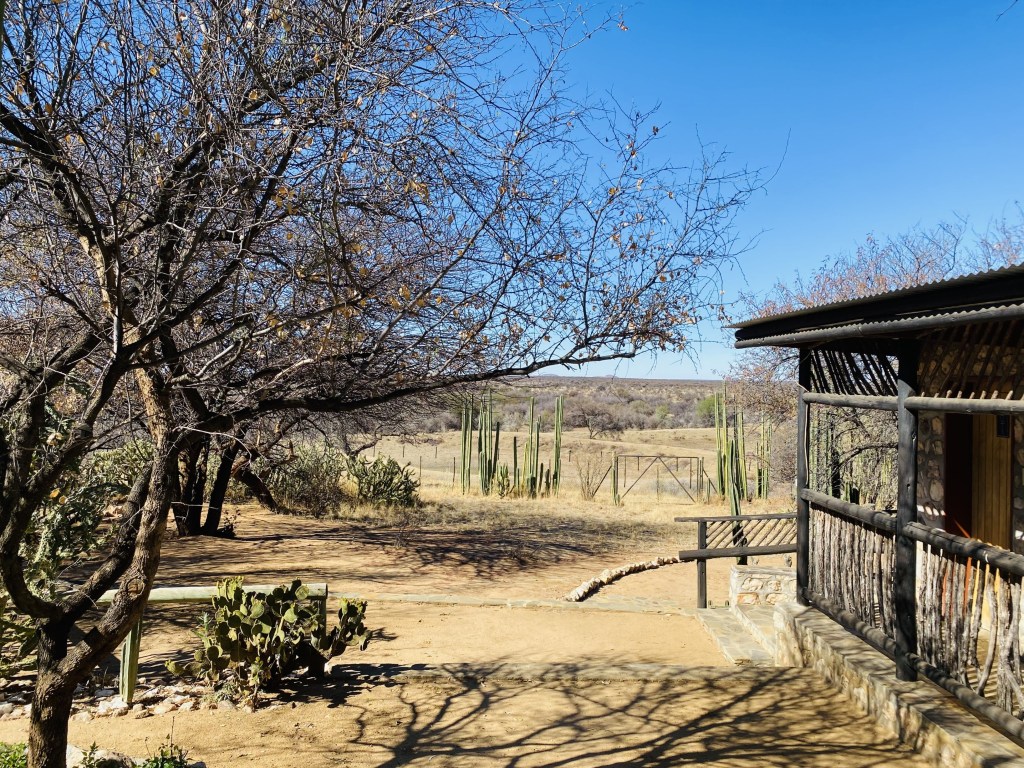
When we arrived we found that it was also by far the best maintained farm we had seen yet with all the infrastructure and buildings in a very good state of repair – it was like a breath of fresh air!

The agent, Heike, had brought a delicious cheesecake which we all piled into before heading out to see the land
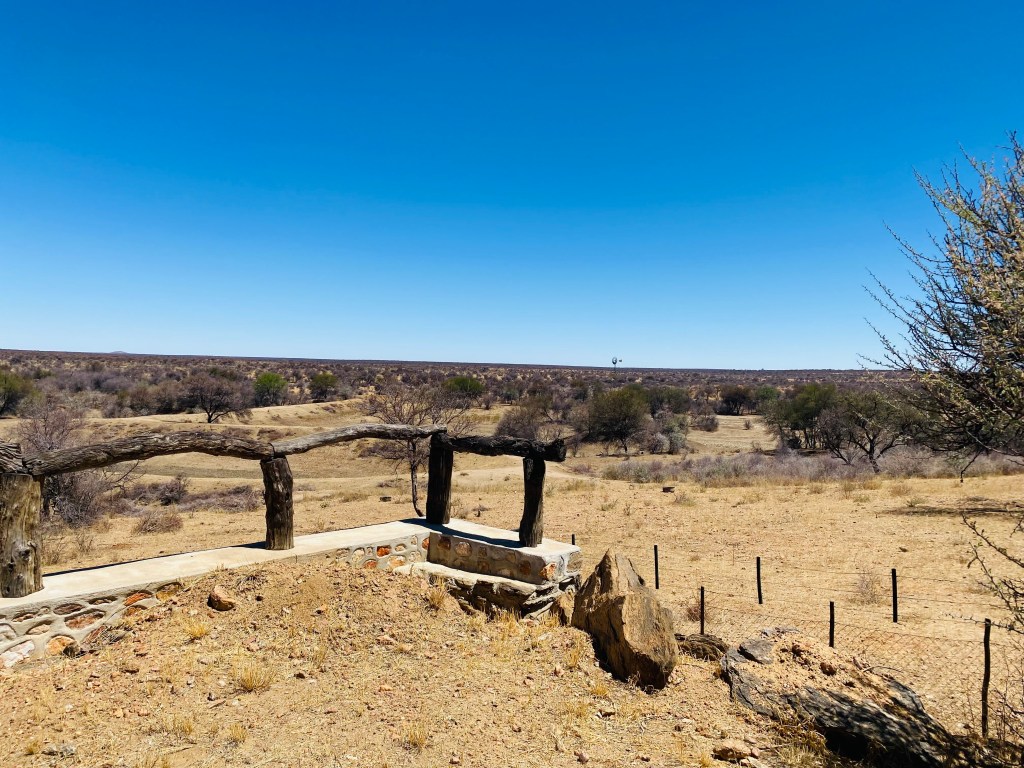
Sadly most of the area suffered with severe bush encroachment and as we were driving it was difficult to see very far through the dense thicket
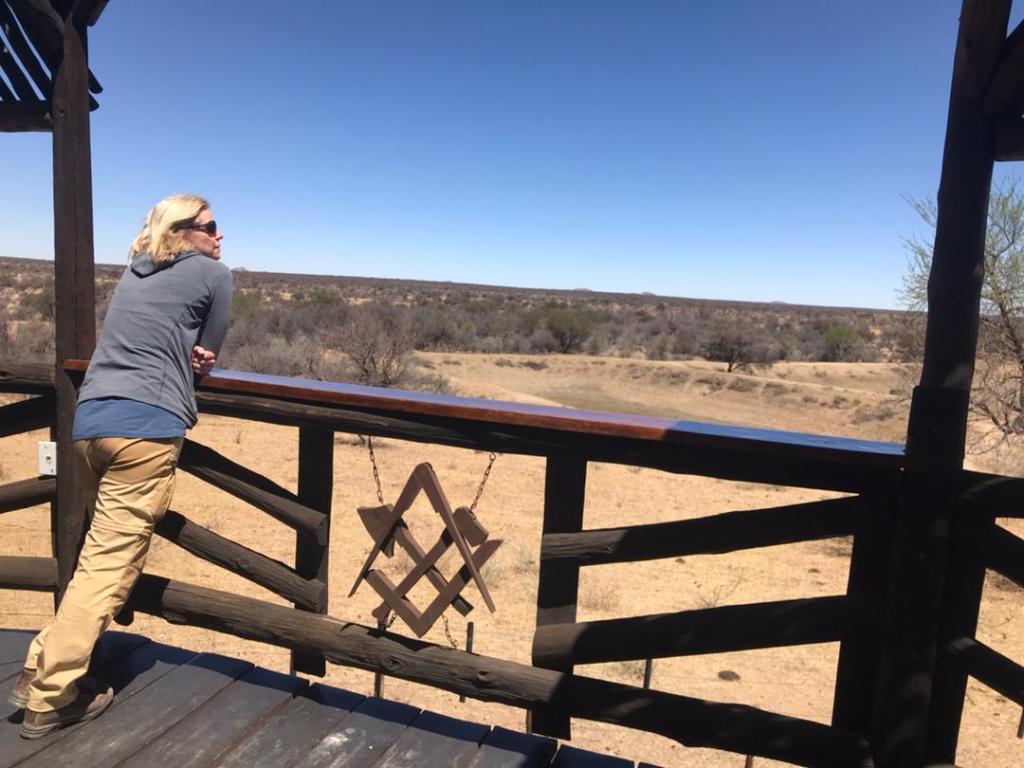
We stood at the top of a hill and looked out over the property which included mountains and river beds. There were also a large number of animals – kudus everywhere, oryx, eland, steenbok. The owner said there were leopard, cheetah and hyena. This was a very different proposition to the barren and remote south.
The farm was around 10,000 hectares in total, split into three portions – 1,800 hectares, 2,500 hectares and 5,300 hectares. Within it, the owners had set out a game reserve of 3,500 hectares which cut across two of the portions. There were a lot of possible options here and as we were only talking about renting and not buying all were open for discussion.
We studied a map to see how it all fitted together and where we might find our place.
The owners did not really know what they wanted. They had originally wanted to sell but were unable to for various reasons. But they were tired of the work and commitment of running a large farm and tourist lodge and wanted someone else to take over some or all of it whilst allowing them to remain living there.
We talked for a long time about the costs of running a farm. It was generally calculated across the table that the basic costs of maintaining a 10,000 hectare farm – including staff, water management, maintenance of the fences, boreholes and solar installation etc. – would be the equivalent of about £2,500 per month. On top of that you need medical insurance, property tax, car and buildings insurance. And then anything you wanted to do on the farm – keeping cattle, running a tourist operation or growing crops – would be additional to that. And of course the farm manager who would need to be paid anything from £1,800 – £3,500 a month.
The current owners kept livestock and ran a modest but successful tourist offer and they said they needed to bring in N$1,000,000 a year to break even – that´s about £50,000. On top of that we would need to pay them the rent. It was a heafty bill.
We were treated to probably the best lamb meal we had ever tasted that evening and stayed the night in one of their lovely tourist chalets
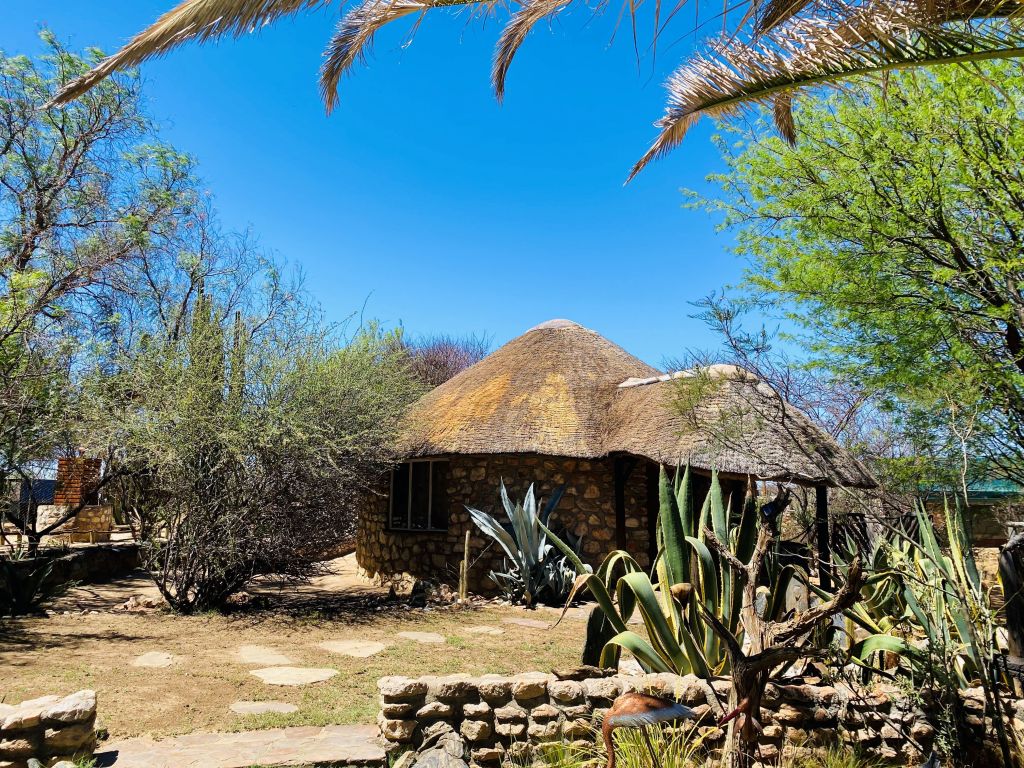

It was all very nice but we couldn´t reconcile our desire for a simple life with the need to cover these sorts of running costs. And this farm in particular was far too overgrown with scrubby bush – it was a very long way from the grassy plains and mountains we were looking for.
After another helping of the amazing cheesecake for lunch the next day we thanked the owners for their time and hospitality and headed towards the next farm in Wilhelmstal.
As we drove away we were both feeling very weary of farms and all the problems and responsibilities they brought with them. What was happening to the simple lives we had worked so hard to achieve?
The drive was about three hours and all that time I just kept thinking about Zimbabwe, Tanzania, Uganda – and beyond it to Italy, the Balkans and the Stans. Can we not just keep travelling I thought, can we please keep our lives simple and our financial situation stable? Why are we even thinking about doing this?
But the answer kept coming back time and time again – Namibia is home and I cannot imagine my life without the peace and tranquillity that comes from living on a large, remote farm here.
We arrived at the farm at Wilhelmstal at around 6pm that evening. The owner was very pleased to see us and welcomed us with open arms. He took us for a drive across his land to see a huge man-made lake he had created a few years back
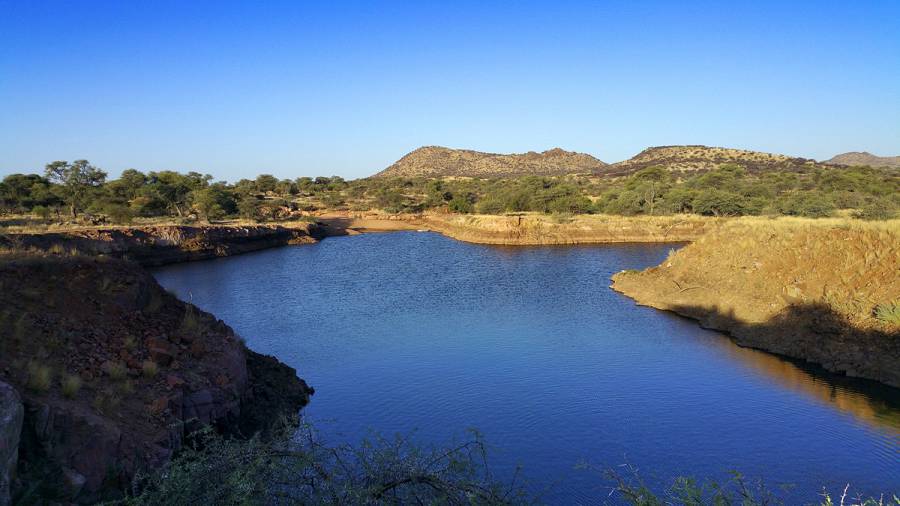
On the way we saw a large number of kudu as well as many other animals and he said they have every type of cat here apart from lion. The land was beautiful and it was just an hour and a half from Windhoek with the main tar road going past only 6km from the house.
After our drive he showed us the house and all the facilities around it – including the butchery, store rooms, kitchens. Everything he had built was immaculate and of an incredibly high quality. James had previously been impressed with the construction at the campsite, it seemed that everything this owner did was of the same quality. He was incredibly proud of his farm and rightly so, the condition of it all put even the rental farm in the shade.
The next morning the owner came round to the campsite to suggest that we went to see ‘our’ 1,000 hectares at 3pm that afternoon after he had finished his work. That suited us fine and we settled in to read and chat in the beautiful sunshine with our awning out. The owner´s dog slept at our feet, it was all a very domesticated and lovely scene
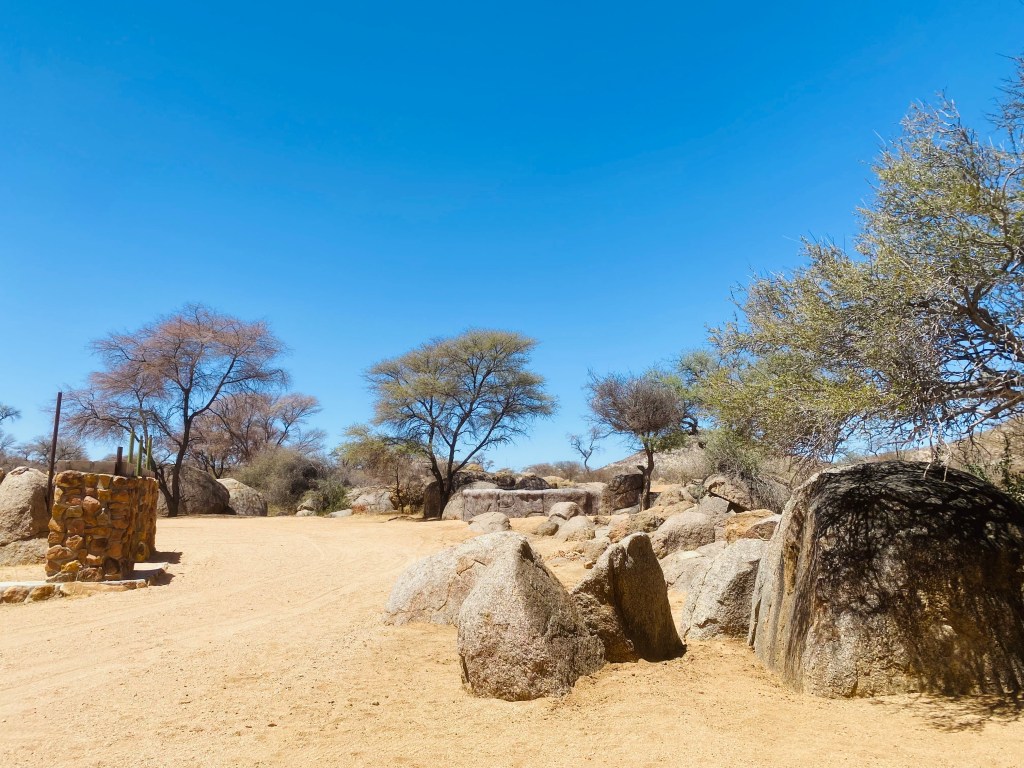
Suddenly, around 1pm, the dog jumped up, growled, barked and ran away. We hardly had time to look at each other in surprise when we saw a sand devil coming towards us from around the rocks.
Sand devils are like mini tornados where the wind whips up the sand from the ground into a long, high column. They are not particularly dangerous on the whole but you don´t want to be caught in one.
Today we had no choice, there was nothing we could do to get out of its way. A split second after the dog had run we were immersed in wild wind and spinning sand. It got stronger and stronger until the canvas of the awning was straining at the poles. James grabbed the open back door to stop it being ripped off its hinges and yelled at me to grab the front passenger door. So with both of us trying to keep Henry from being ripped apart there was no-one to look after the awning.
Before we knew what was happening the sand devil picked the awning up and tore it over the roof

One of the legs hit me in the face and ended up in a tree. The arms had been physically ripped from the back plate. It was a mess.

We stood looking at the carnage in a daze. By now the sand devil had disappeared and all was quiet and calm again. Nothing else in the campsite had been touched – it had appeared, driven straight into us and disappeared again, in the space of about 20 seconds. Could our luck get any worse?
Well, yes, we decided, it could have taken Henry´s roof which had been up and if we hadn´t grabbed the doors we could have lost those as well. Henry was still intact – we had sacrificed the awning for the Landrover.
James started the work of dismantling the awning and taking it down off Henry´s roof. He carefully removed the canvas, drilled out the rivets and took each arm down bit by bit

After about half an hour it was in pieces strewn over the campsite and the owner came over in astonishment at the amount of damage that had been done

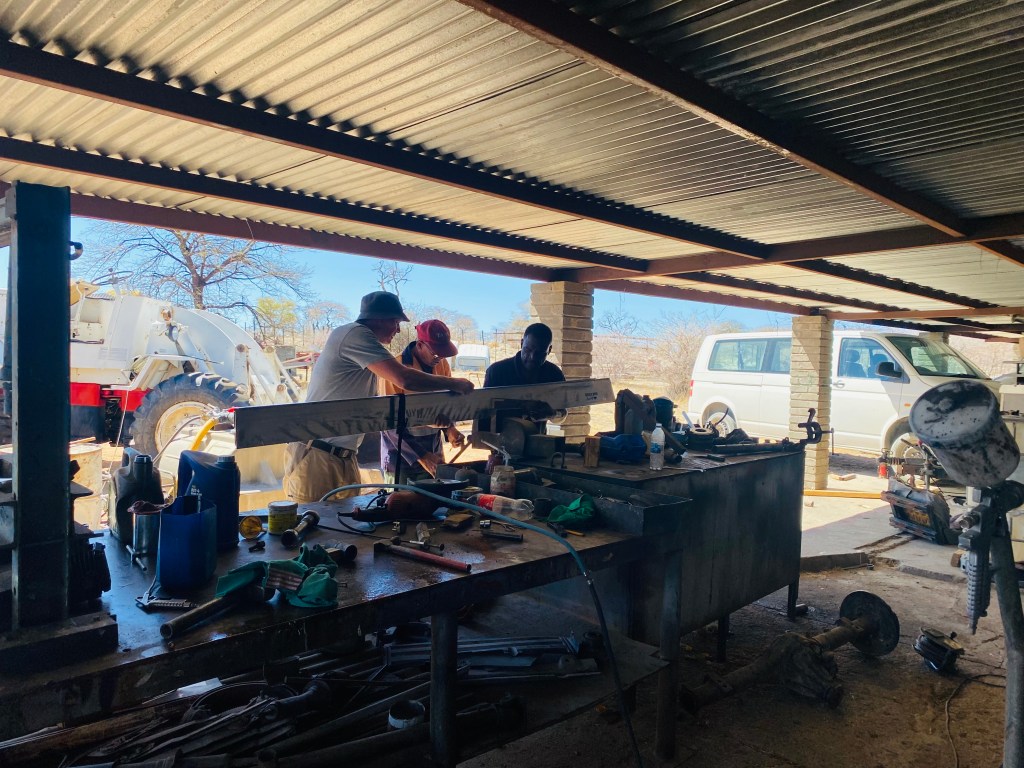
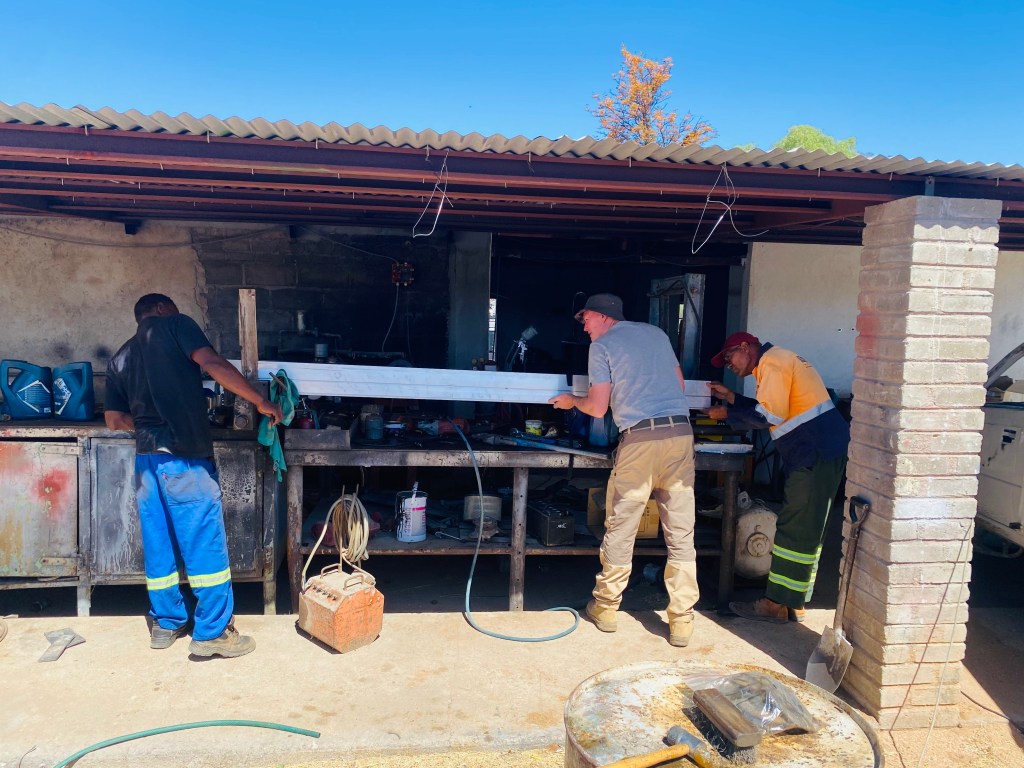
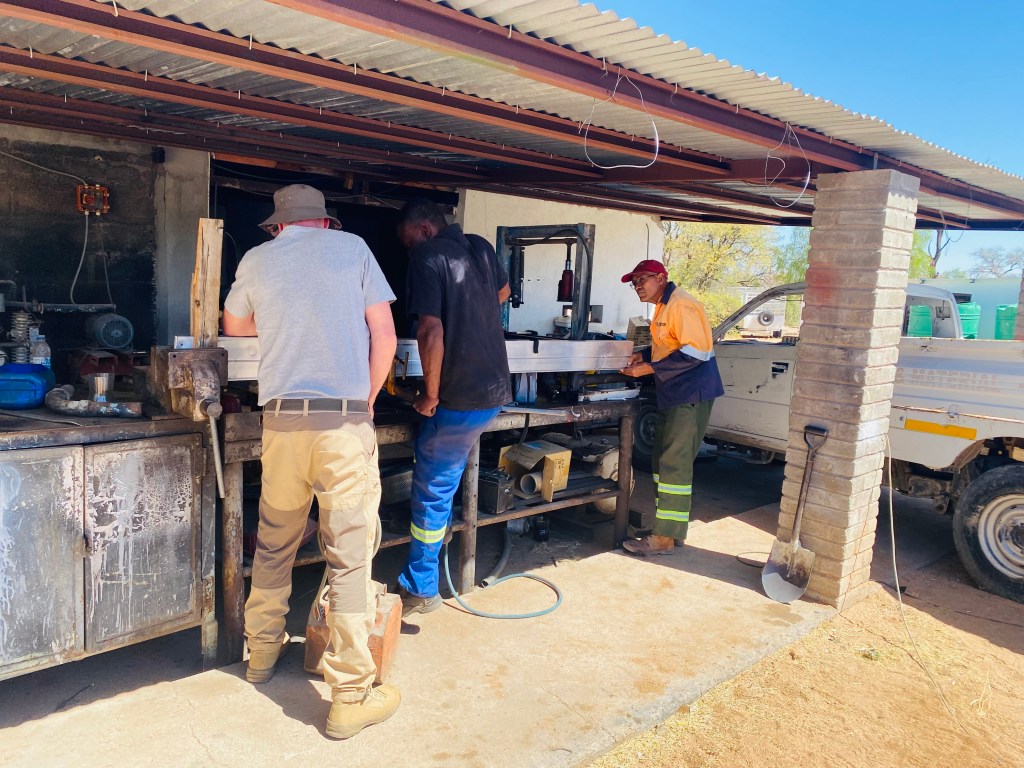
He kindly offered to let us use his workshop and borrow his mechanics to see whether it could be saved but it looked well beyond repair at this stage.
At the workshop, James and the mechanics twisted and bent the back plate back into as straight a line as they could and fitted it back onto the Landrover

We contacted our friend Gerhard in Omaruru to see whether he knew of any aluminium welders in town. He did, so we put all the arms of the awning in the bag, folded the canvas up in the back and decided not to think about it until we were ready to leave.
Later that afternoon we took a drive with the owner to the part of the farm he was offering to sell to us. It was a short drive but it took us over the only bad road on the property – not a bad thing, at least it meant we would be slightly separated from the rest. The owner had his garden on this part of the land and he was incredibly proud of it – he was growing all sorts of fruits and vegetables and had set up an innovative watering system utilising grey and black water from the worker´s houses.
He also had chickens and goats here and was building a new cattle kraal next to the garden. It did not seem like a place he was about to sell! I asked what he would do about his garden if he sold this part of the land. He looked sad, shrugged his shoulders and said he didn´t really know.
We also found that a farm road went through this section of the land – technically a public road but in reality only used occasionally by one or two neighbouring farmers to get to the main road. And there was a long run of electricity pylons going straight across, very unusual on farm land in Namibia and, whilst the owner was trying to tell us it was a good thing as we could get power to the house, we want to use solar and I felt it was a blight on the property.
As we stood at the top of the hill looking down over the land and the owner pointed out the boundaries of the 1,000 hectares, it seemed to me that it was too small for us. Too small and too cluttered with roads and pylons. Not the remote, self-sufficient place we were looking for. This was definitely not the dream, but was the dream achievable, was this actually the more realistic option?
We sat and had a glass of wine with the owner that evening and met his wife who had come over from where she lived in Windhoek. They were very friendly people and he clearly wanted, or needed, to do something with the farm as it was starting to get too much for him and he had no clear plan for his retirement.
He did not want to sell, he told us that clearly. Selling a part of it would reduce his responsibilities and give him some cash to help manage the remaining land. But he didn´t seem sure in his own mind what he wanted. Later that evening, James said to me that he didn´t think he would sell the 1,000 hectares with his garden and new cattle kraal on it and I tended to agree, he was too invested in the whole place and all his projects. And I couldn´t make myself too upset about that.
The next morning we left the campsite and went up to the house to say goodbye and see how things were to be left between us. I had our Namibia farm map up on my phone and was trying to work out where the boundaries of the whole farm were and where the 1,000 hectares was in relation to that. I showed the owner the map and asked him. He said ´look, I´m really not sure I want to sell that 1,000 hectares´. We nodded in understanding but he went on to say that what he was really looking for were partners who could take an interest in the whole 6,000 hectares and share the workload and responsibility with him as well as sharing ideas.
Now this was an entirely different proposition. Whilst the farm road and the pylons blighted the 1,000 hectare portion, the whole farm was so large that they barely registered on its radar. The rest of the farm was beautiful and the owner was a capable land owner who clearly knew his land, his people and his business very well. Moreover, if the laws of Namibia only allowed us to own 49% of agricultural land why not just pay for 49% and leave the 51% with the existing land owner who could be a great partner for us?
We enthusiastically suggested that we would be very interested in the idea and he seemed pleased. And when his friend came over to say goodbye to us he told him he thought we would be excellent partners and fit very well with everyone.
We left on a little bit of a high, feeling that this might just be what we were looking for.
When we arrived in Omaruru our friend Phillazie sent us to a workshop where she thought they would be able to weld the aluminium arms back onto the back plate of the awning. Initially the owner was far from certain that it was possible – these arms need to take a great deal of weight and stress and aluminium is not known for its strength after being welded.
But eventually James managed to convince him to give it a try.
The man was an artist! He welded
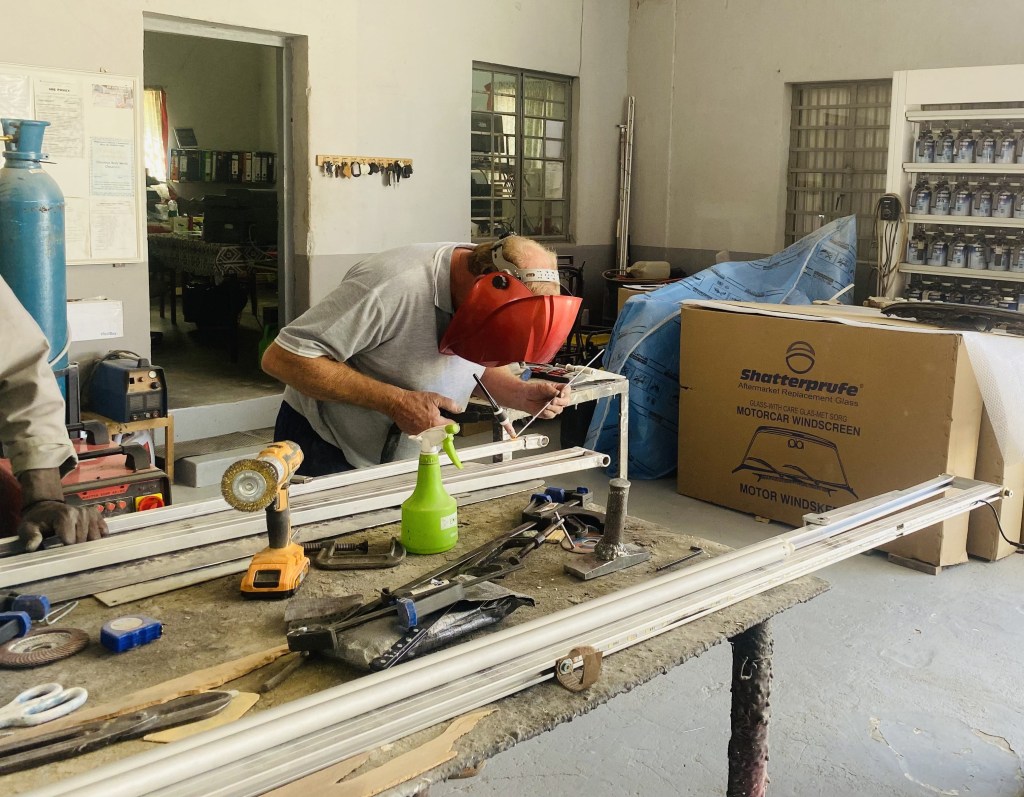
Bent
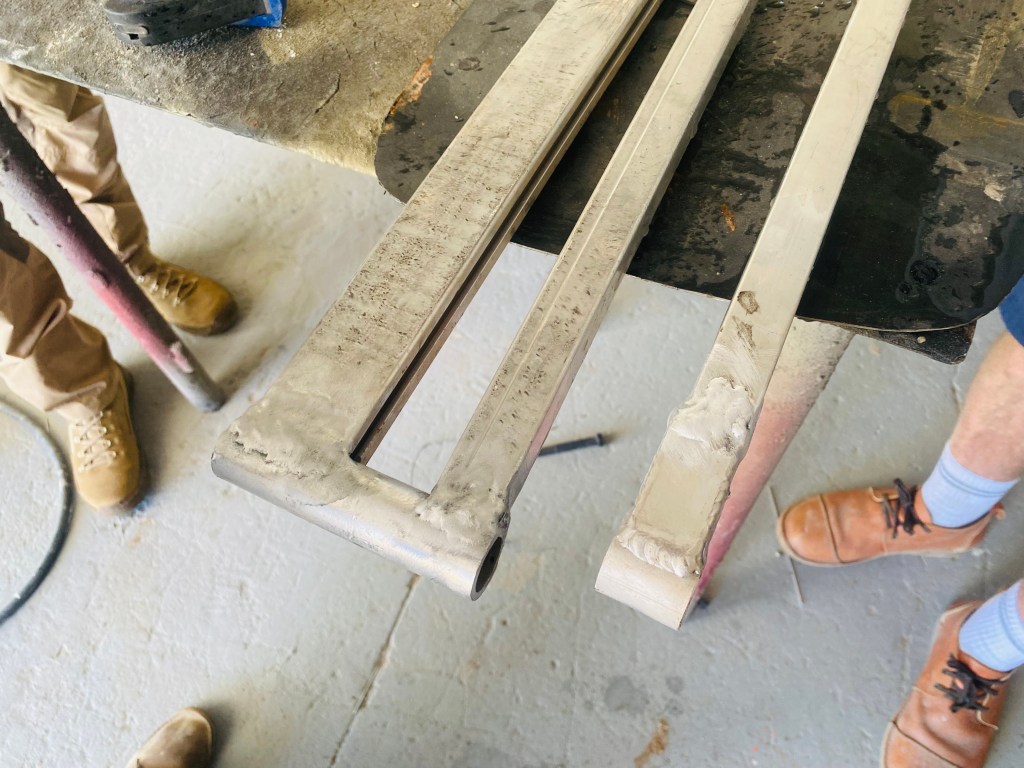
Welded again
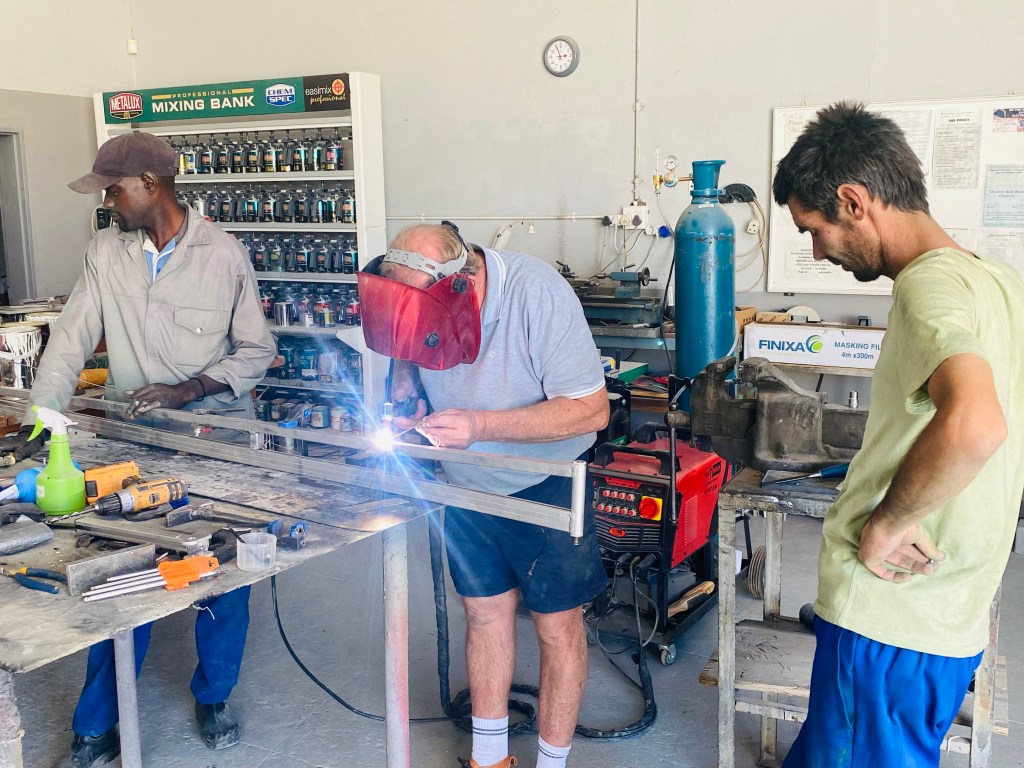
And finally it was ready to try out.
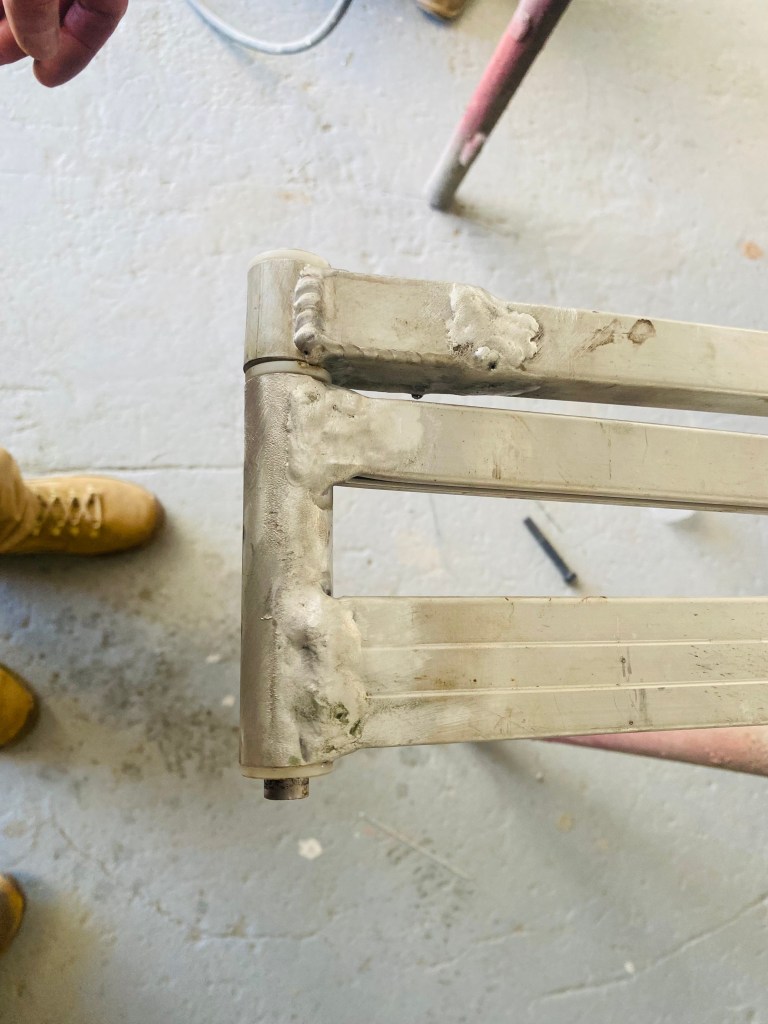
We refitted the arms to the back plate and it looked amazing! James was very impressed
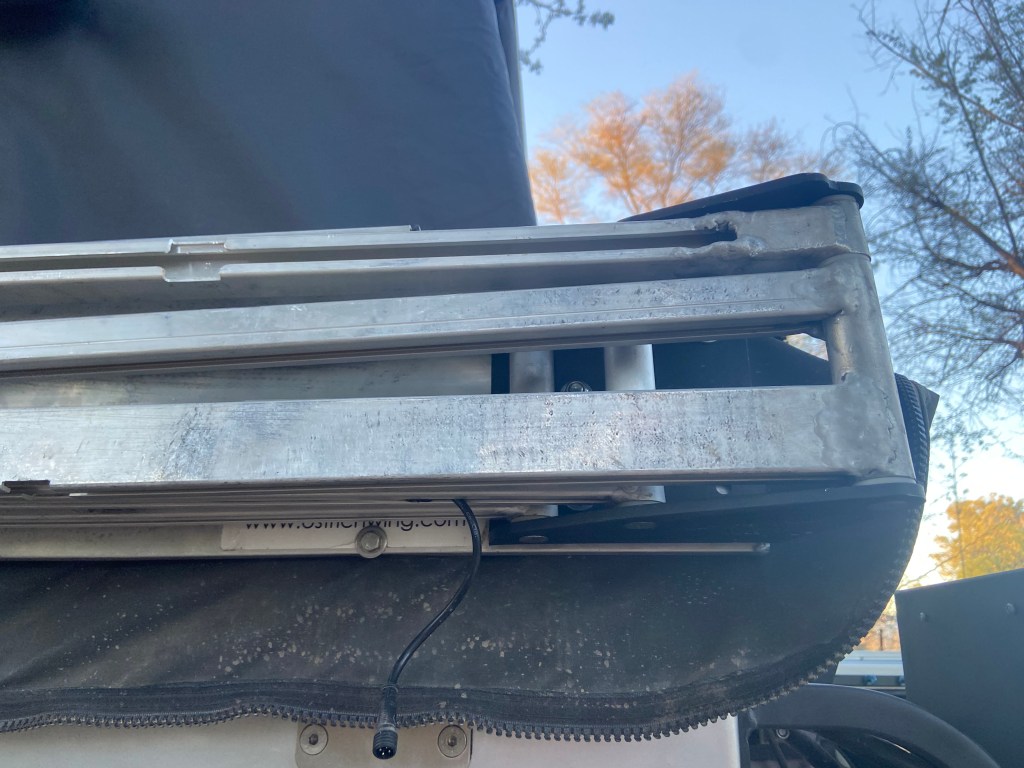
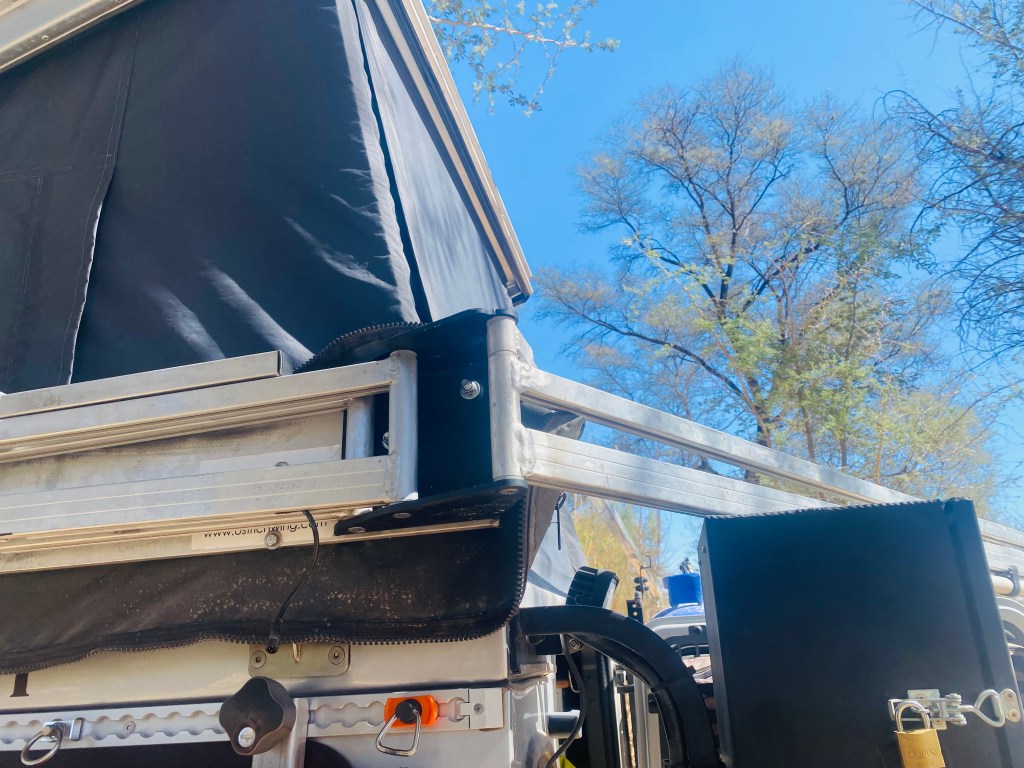
We checked into our usual Omaruru campsite and the owner was pleased to see us back. Once settled in we set about trying to put the canvas back on the arms – not an easy job
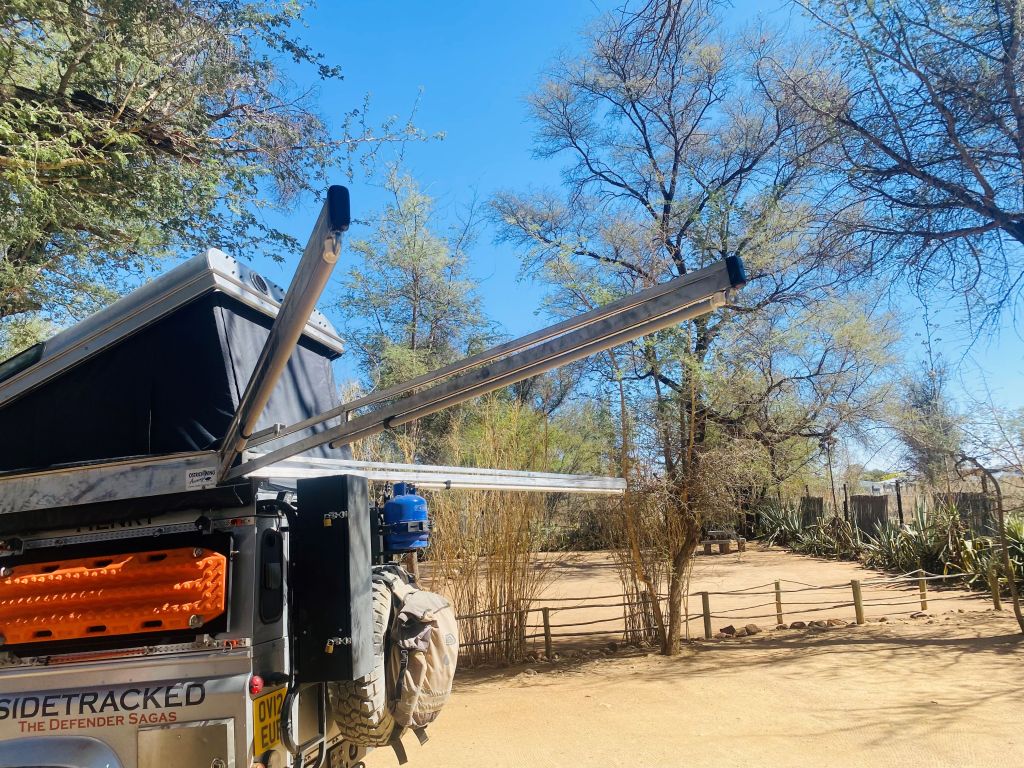
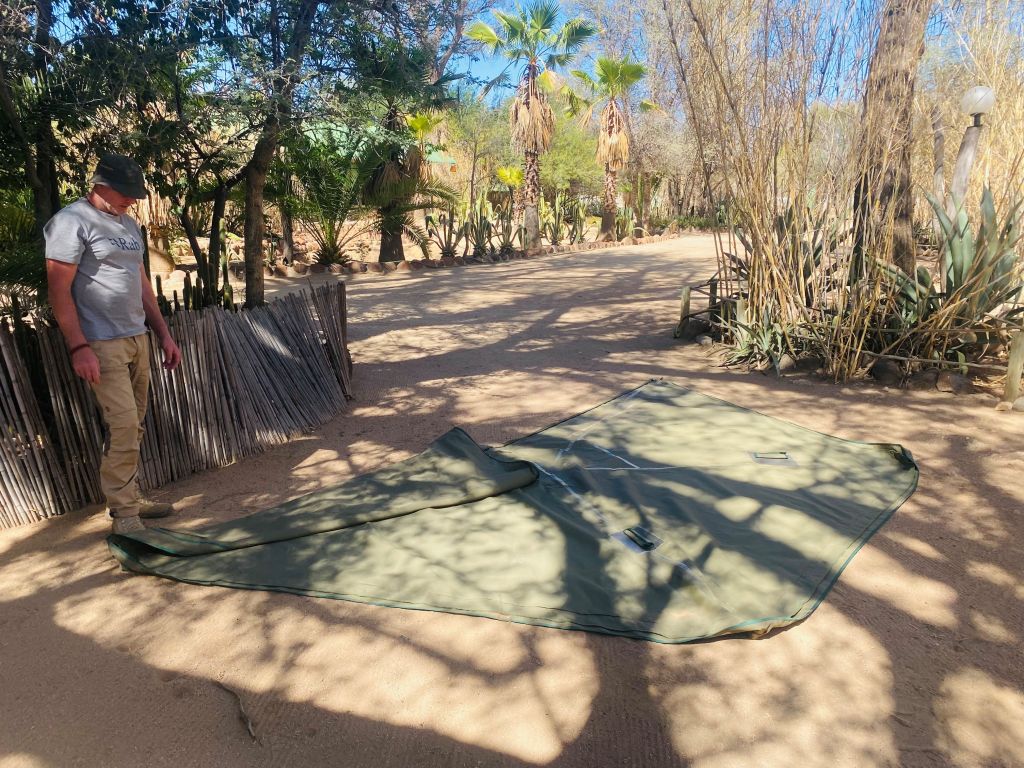
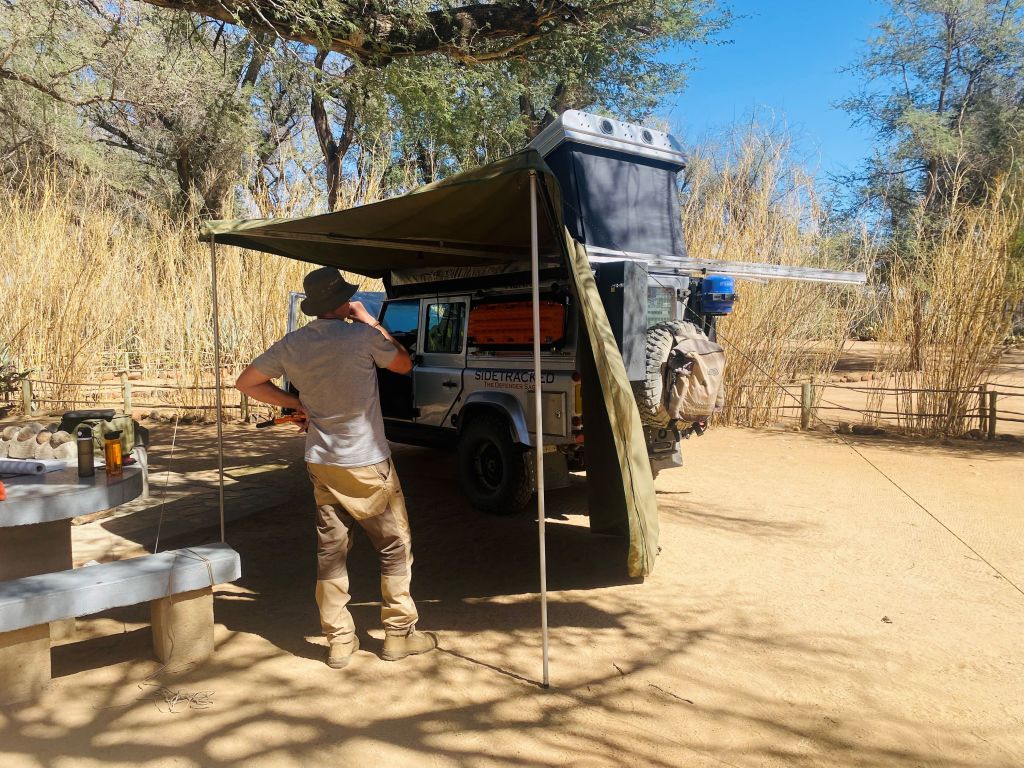
But James´ methodical mind and amazing memory for how it all went together first time round got us where we needed to be

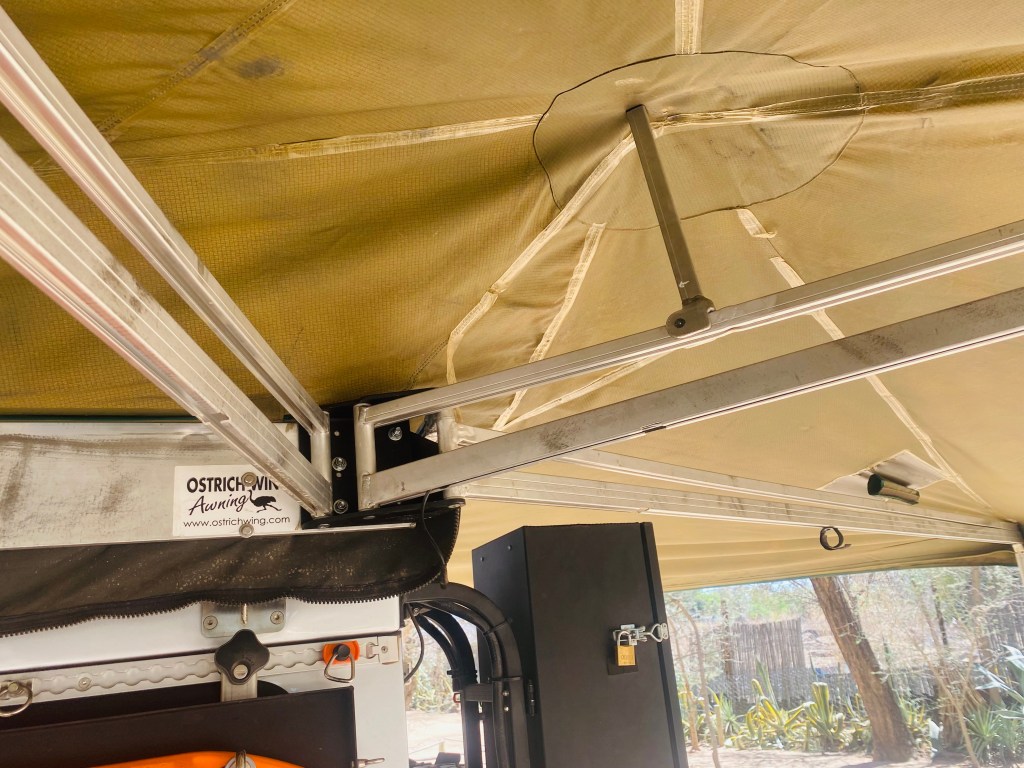
And after just over an hour we were pleased as punch to have our awning back together

Our next stop was the Etosha farm and as we left Omaruru heading north there was a strange feeling building in the back of our minds. We had not been further north than Omaruru for months and north was the direction of Zimbabwe. It was beginning to feel as though our circular lives might be coming to an end but with it our dreams of living on a farm in Namibia. We only had three weeks left on our visas so at some point within that time we would need to leave the country, enter Zimbabwe and not be able to return for at least three months. If we had not found a farm by then would we come back at all?
Part of me was feeling devastated by this thought but another part was feeling refreshed and excited to have a new and exciting adventure ahead of us – to be breaking out of the eternal Groundhog Day our lives had started to become and get back to our core roots of travelling.
We stopped at the Outjo Bakery where we had lunched many months ago when first leaving Etosha back in November last year. It was as bad as it had been that time and I wondered why on earth we believe the hype with these places! We stayed the night at a campsite just outside the town.
The campsite itself was lovely but the ablutions block was very run down. So we were up early and heading off back into town to meet the owner of the Etosha farm the next morning
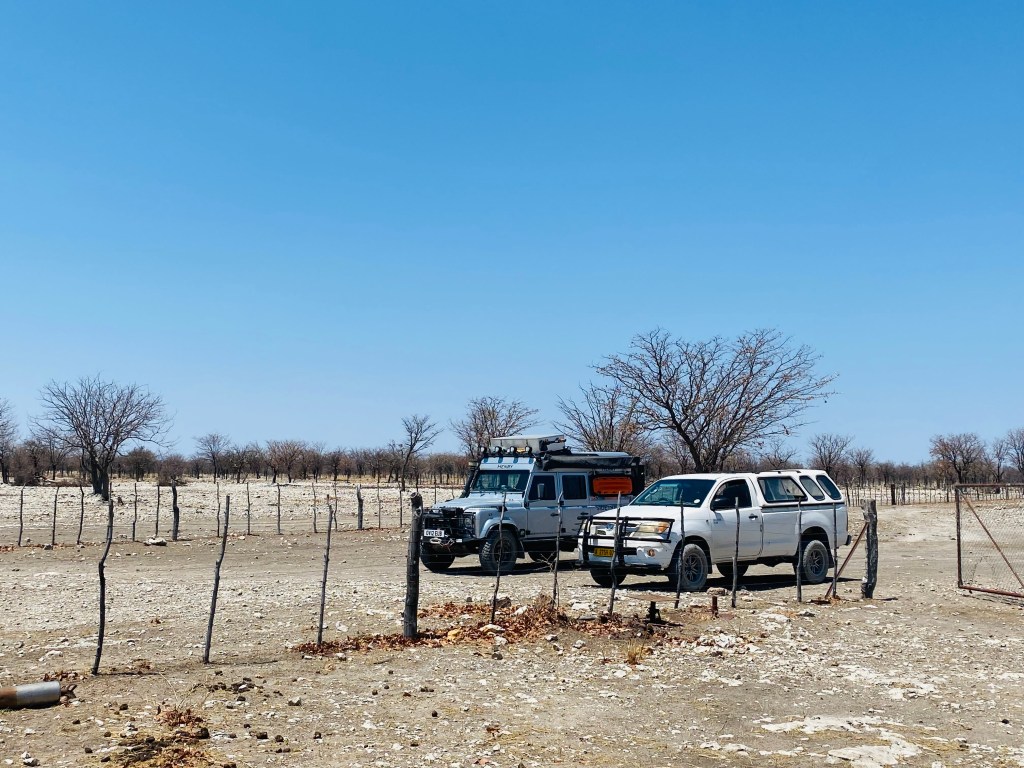
I´m not going to go into too much detail about this farm, I´m sure you are as tired of hearing about disappointing farms as we were visiting them! The road in was long, bumpy and wound through settlements full of run down shacks and rubbish. The farm itself was entirely overgrown with dense bush with no house to speak of
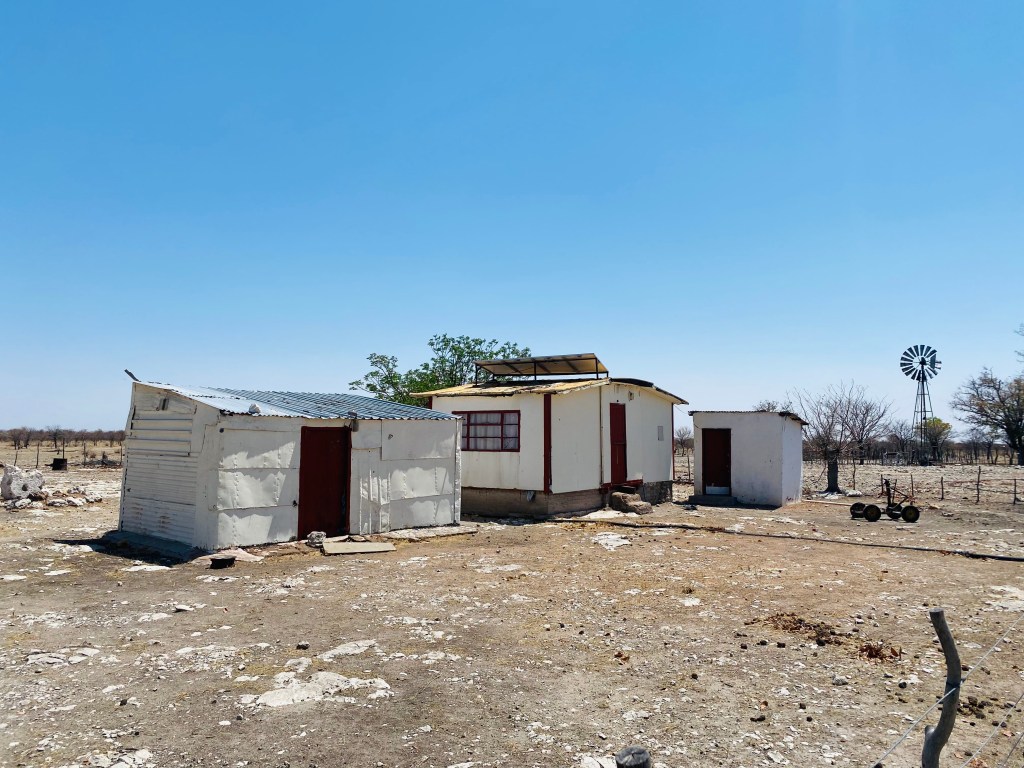
No infrastructure at all and very poor, overgrown roads. Poor Henry got badly scratched trying to get down some of the tracks and we got bored and frustrated spending four hours traversing the place behind the owner and trying our best to be polite and look interested when he stopped to show us various things – like broken fences and boreholes that didn´t work.
Eventually, fed-up and annoyed at yet more damage to Henry´s paintwork, we managed to get away and headed straight for a campsite by the western gate of Etosha. The campsite was wonderful, we had our own private ablutions and it was all spotless. It was just what we needed to de-stress and get some perspective
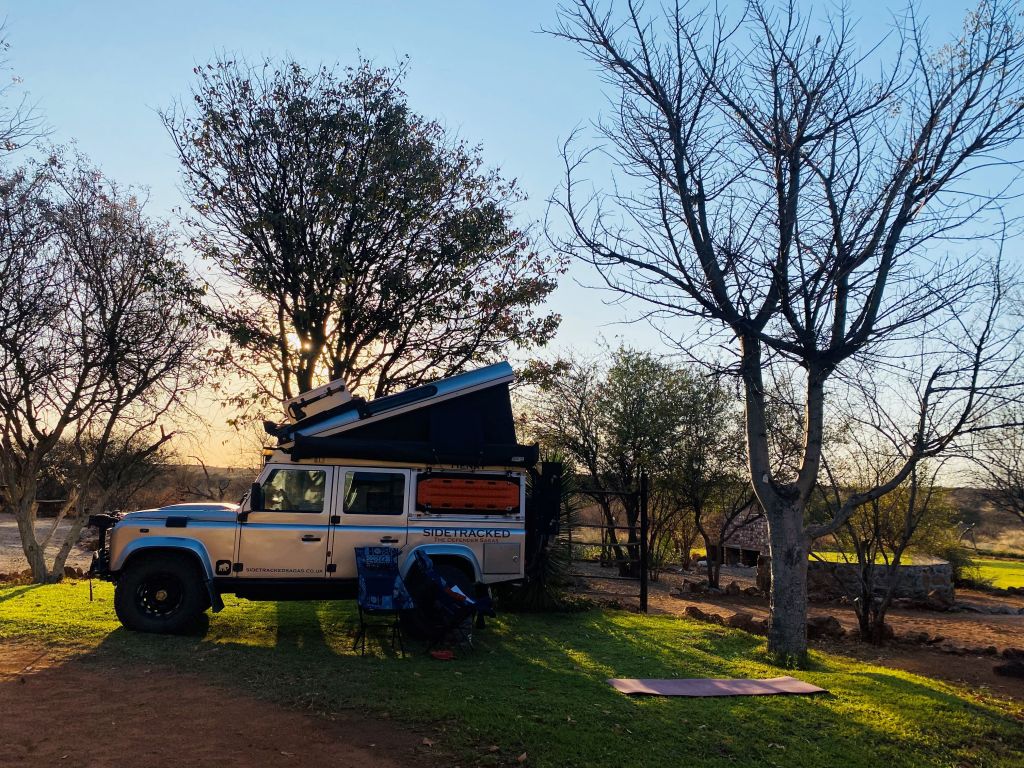
We had no more farms to view. We had serious concerns about buying a farm at all and the financial worries and huge responsibilities it would bring with it. We had three weeks left before we were forced to leave Namibia. Our short term future, at least, seemed clear. We would continue heading north, go east along the Caprivi Strip and finally, finally, almost exactly a year to the day that we first entered Namibia, we would leave and start exploring Zimbabwe.
Whatever happened after that, well we could think about that with the benefit of a bit of time and space between us and the decisions we needed to make.
A cold wind of air blew through my mind – chilling but refreshing in equal measure.
As we were going to be leaving Namibia we thought it would be a fitting farewell to this wonderful country to visit the magnificent and breath-taking Etosha National Park one last time.
So the next morning we put our ´permanent resident´ faces away, donned our ´tourist´ faces and set off to see whether we could find a lion…..
 The Sidetracked Sagas