We had left Namibia and our farm hunt behind with breaking hearts but we had left it for a reason – much as we yearned to make our home there our first love was still travelling and if we couldn´t do both the choice had made itself clear before we had even realised it.
We had spent a total of an hour crossing Botswana from the border with Namibia to the border with Zimbabwe and the excitement of a new destination and new challenges kept our eyes facing forwards rather than backwards.
Zimbabwe is not in the South African Customs Union so as we left Botswana Henry´s old carnet was finally stamped out and could be sent back to the UK for return of our significant deposit. We drove up to the Zimbabwean border post and were quickly stamped in at immigration but then found it was their tea-break so had to wait a few minutes before we could sort out stamping in the new carnet and paying the various road tolls and insurance fees.
It was far too hot and very humid. James decided to wait in the Landrover to try and keep cool in the shade but I stayed by the desk and chatted to the guys as they took their break. They wanted to know why James was hiding and I said he was just too hot. They laughed and said so he´s left you to deal with us! Their friendliness and easy manner was infectious.
They were all wearing football t-shirts and told me there was intense rivalry between supporters. They asked what team I supported and I confessed that I don´t follow football. I asked which team they supported and they said Manchester United. Of course you do I said, doesn´t everyone in Africa support such a local team?! A Chelsea supporter intervened and said they love fighting each other but the laughter and thumping of each other´s backs made me suspect otherwise.
An hour later we left the border with all our paperwork in place and big smiles on our faces. Our first impressions of Zimbabwe were very positive.
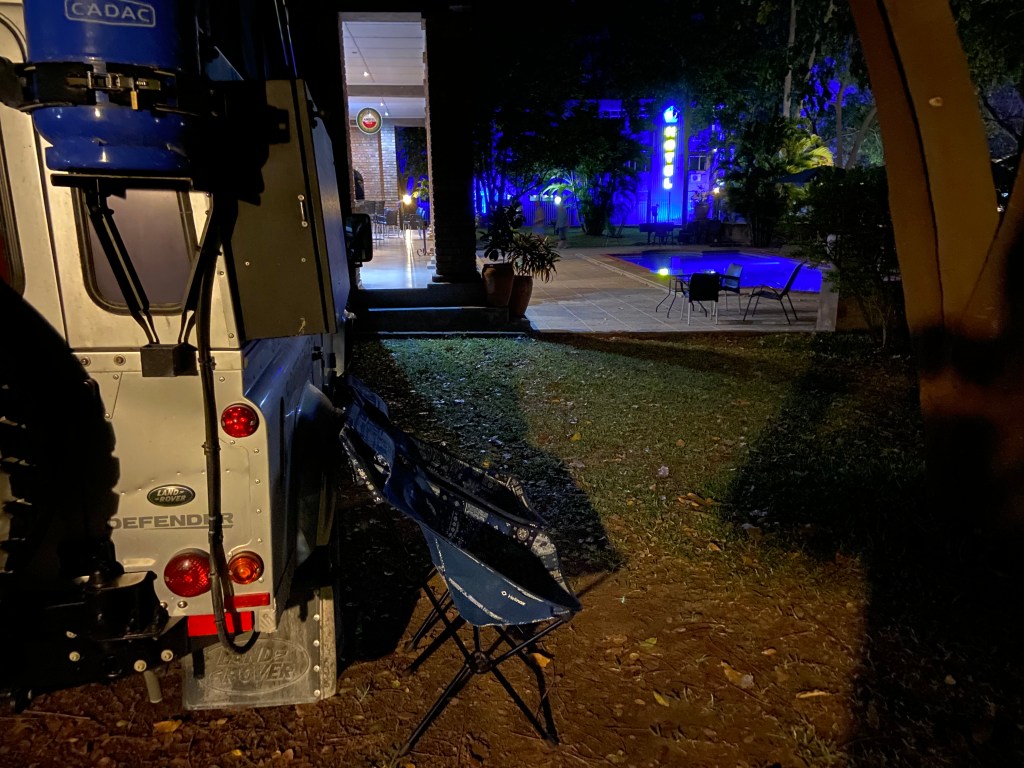
We arrived at Victoria Falls town by mid afternoon and it seemed cleaner, friendlier and far less desolate than when we had done our day trip there from Botswana back in 2018. I had found a hotel in the middle of town that had a campsite with good reviews and when we pulled up it was quite surprisingly smart. The campsite itself was crammed in around the hotel´s garden but it was safe and clean. There was a swimming pool and a bar serving amazing Chinese food so we piled into wonderful spring roles, stir fried rice and chinese chicken
Unlike all the other countries in Southern Africa everyone speaks perfect English, albeit many of them with a slightly American accent. Everyone we met was happy, welcoming and clearly well-educated. Much as we had long ago learnt not to believe what we read in the press about countries, this was not at all what we had expected from Zimbabwe.
It is a beautiful, lush, green and fertile country as different from Namibia as it is possible to get. Great rivers and lakes criss-cross the land and animals roam with the protection of the law and the wide-spread understanding that the natural environment has a value in its own right.
But the country has had a bad time of things recently. From indepedence in 1980 to the late 1990s things were good for Zimbabwe. They were called the ´Bread Basket of Africa´, healthcare and education were second to none and the economy boomed. But in 1997 the economically disastrous land reforms came into law allowing Zimbabwean war veterans who supported the government to invade and occupy farms previously owned by white Zimbabweans. Whilst there may have been some historical justification for this land re-distribution back to the native population and some people may have sympathy for the attempt to create a more equal society, it is beyond doubt that the consequences of the strategy have been devastating for the entire country.
Food, cotton and tobacco production practically came to a halt overnight. The new occupiers of the land had no commercial farming experience and no money to invest in the business. The economy started to slide, the people had nothing to eat and the country went from being the main exporter of goods to the rest of Africa to being a net importer – and with rapidly reducing finances importing goods became difficult. By 2008 the country was in a state of turmoil. At its worst inflation stood at 1,500,000% and the currency became worthless with the central bank famously printing 1 Trillion Zimbabwean Dollar notes that couldn´t even pay for a loaf of bread.
The time of farm invasions is now officially at an end but few productive farms remain and the confidence to justify investment in long term land ownership is low. Tourists stopped coming to the country cutting off another major source of income but are now starting to return albeit to old and badly run down facilities. Foreign investment was abruptly withdrawn leaving a crumbling infrastructure meaning that basics such as water, power and internet access are patchy and expensive at best. In fact everything in Zimbabwe is eye-wateringly expensive, especially food.
We have met many, many Zimbabweans who have talked openly about their lives over the last 20 years and the challenges they still face today. Even in the capital city of Harare there are places that have had no water supply since the farm invasions began. The remaining commercial farmers live in daily fear of having their land taken away. Corruption is blatant and sucks any money there is out of the country into the hands of the very few.
So it is a testament to the character and determination of the Zimbabwean people that we found a smiling, warm and friendly welcome. A people struggling under some of the hardest conditions of any country we have visited so far who refuse to give up, refuse to be broken, and who – as the ranger said at the View of World where Cecil Rhodes is buried – choose to believe that the past is the past and prefer to look to the future rather than dwell on historic wrongs.
Is it the fact that everyone is extremely well educated that makes it this way? Is it the fact that they were never subdued by colonial power but rather took the best of what the invaders brought and made it their own? We will never know but what we found beyond a shadow of a doubt is that Zimbabwe is one of our favourite countries so far – as long as you are looking for warmth, beauty and inspiration and can look beyond the inconveniences of appalling facilities, no internet access, no electricity and little running water.
As a traveller in this country these things really are just inconveniences and are far outweighed by everything else the country has to offer. But the experience of living in this country for a month gave us a very small insight into just how tough these people are, just how hard their lives are and how impressive it is that they carry on with hope and ambition whilst the slow but sure rebuilding process takes shape.
The problems we were to see in Zimbabwe took time to unfold. When we first arrived at Victoria Falls the two biggest problems we were aware of were the swarms of mosquitoes that were eating us alive and the intense, sticky and energy-sapping heat.
The first evening we could do nothing but sit by the Landrover gasping for breath and struggling to think in a straight line. That night we lay stuck to the sheets in misery and James commented grimly that if things didn´t change we would never make it as far as Kenya!
I couldn´t even train in the morning, just the thought of it made me feel dizzy. So instead we headed out early and arrived at the Victoria Falls National Park just before 8am. We chatted to the stall holders outside the gates as we got ourselves ready to see one of the seven wonders of the world and they told us how pleased they were that tourists were slowly coming back but regretting that they didn´t spend much money. With smiles we bought a new bangle for my arm and were gratefully thanked for the small gesture.
The real name of Victoria Falls is ´The Smoke that Thunders´ and it is about as apt as a name can get. Once in the national park we followed the winding footpath towards the sound of thundering water and cool, wet spray rising high above the trees
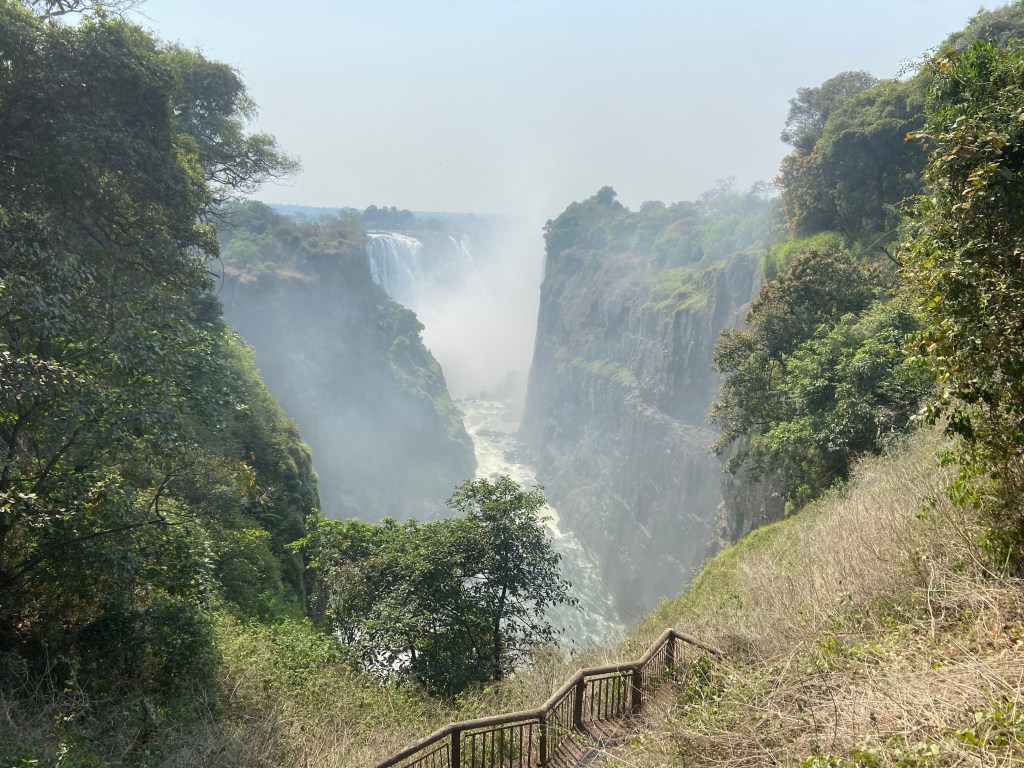
I have been to Victoria Falls three times before and it is always different. There was a lot of water coming over this time, it must have started raining upriver.
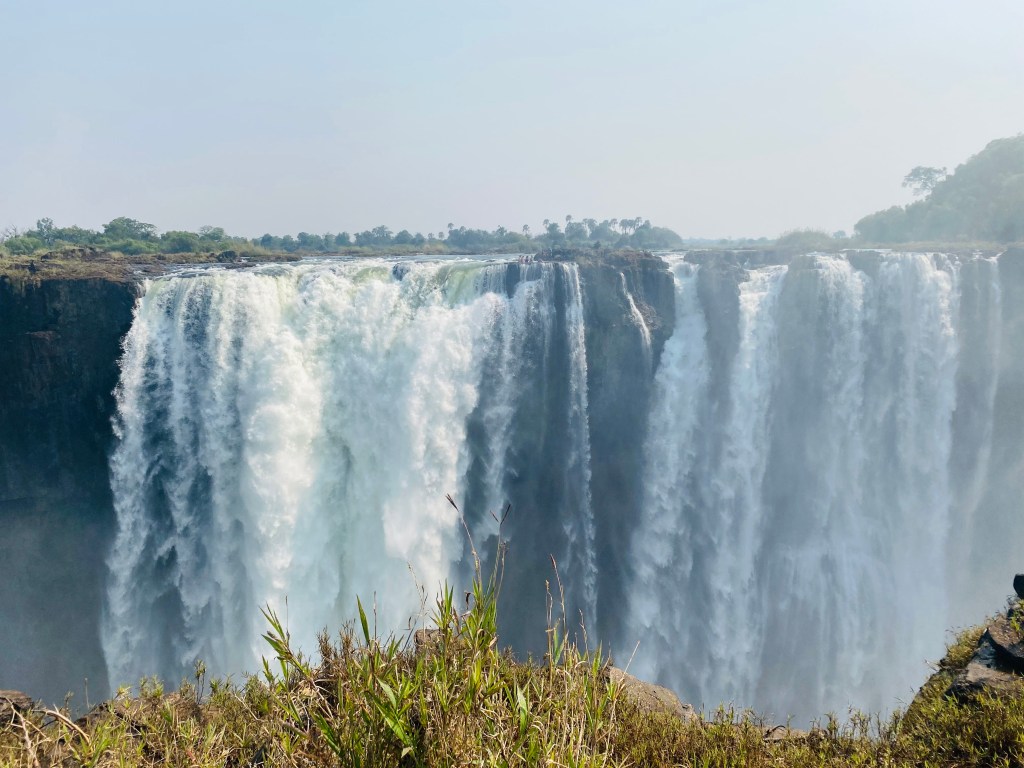
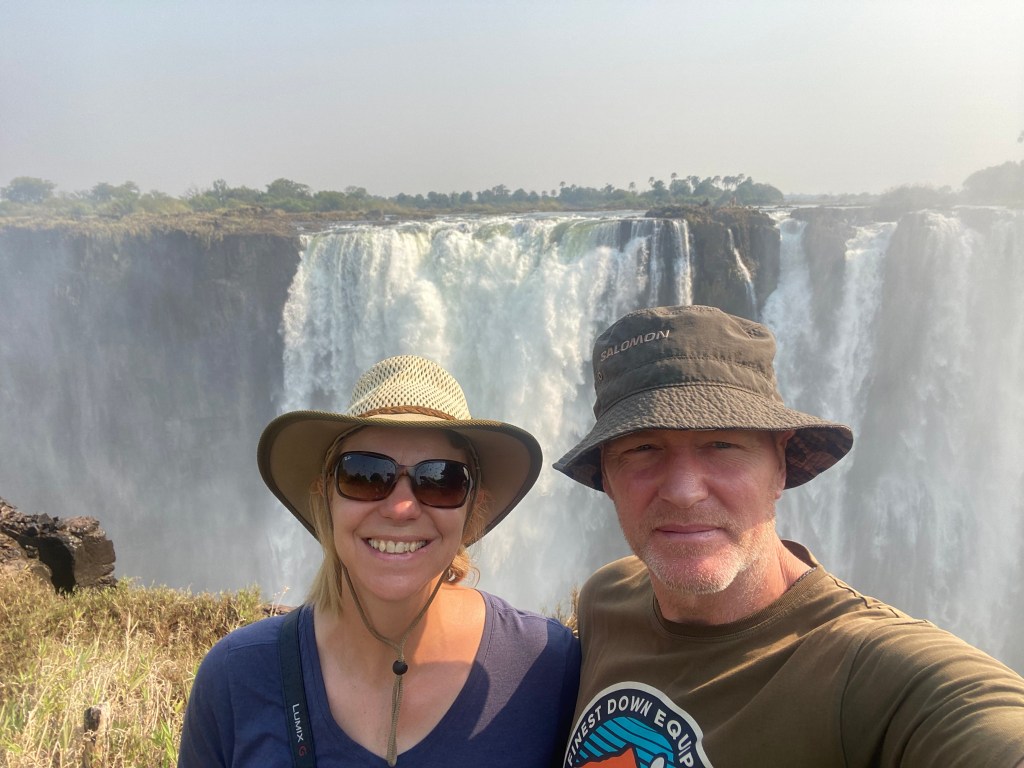
Try this with the volume turned right up to get a small taste of the drama….
The views were fabulous
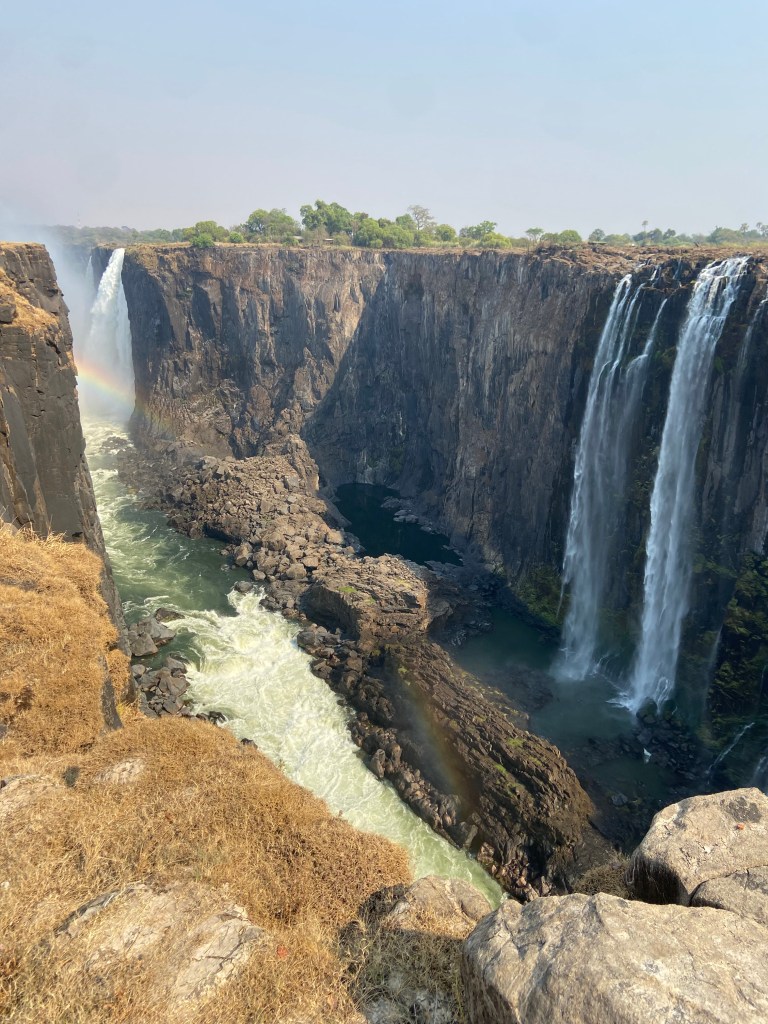
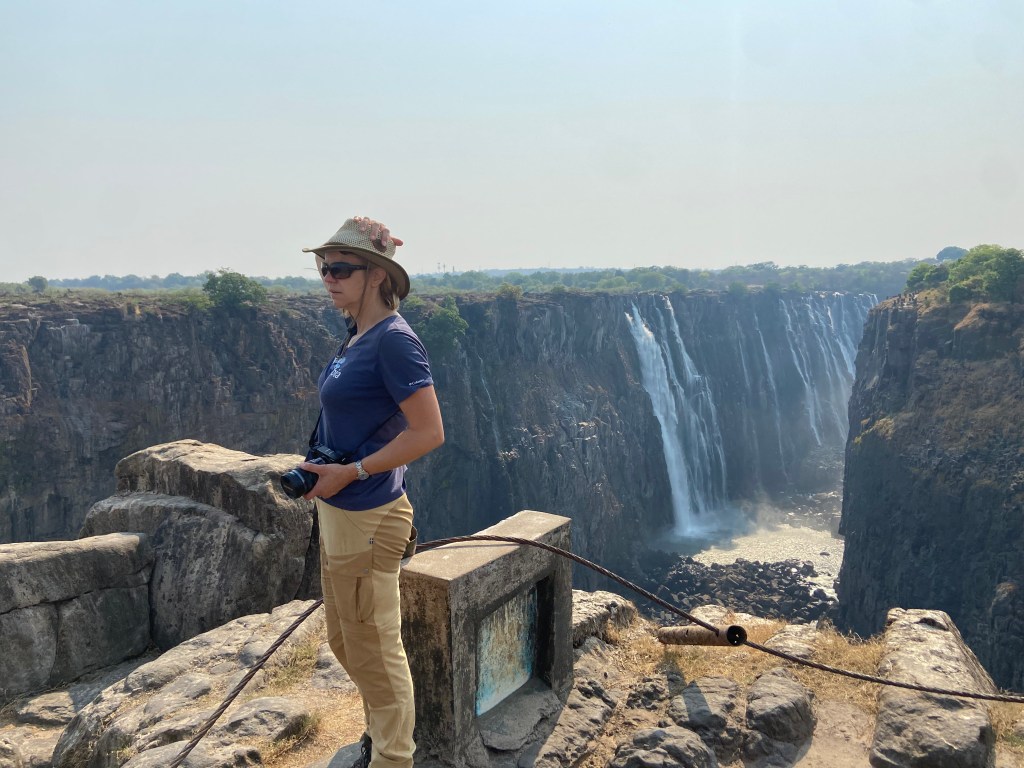
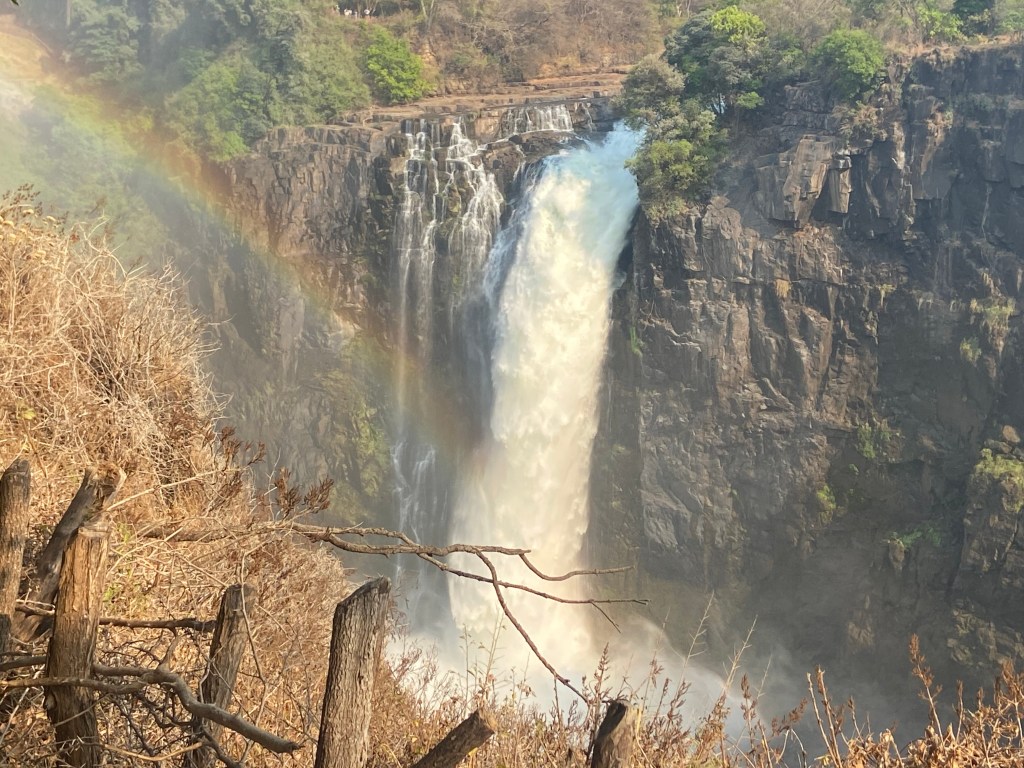
But it was tricky taking pictures at some spots as my camera was starting to get a bit wet
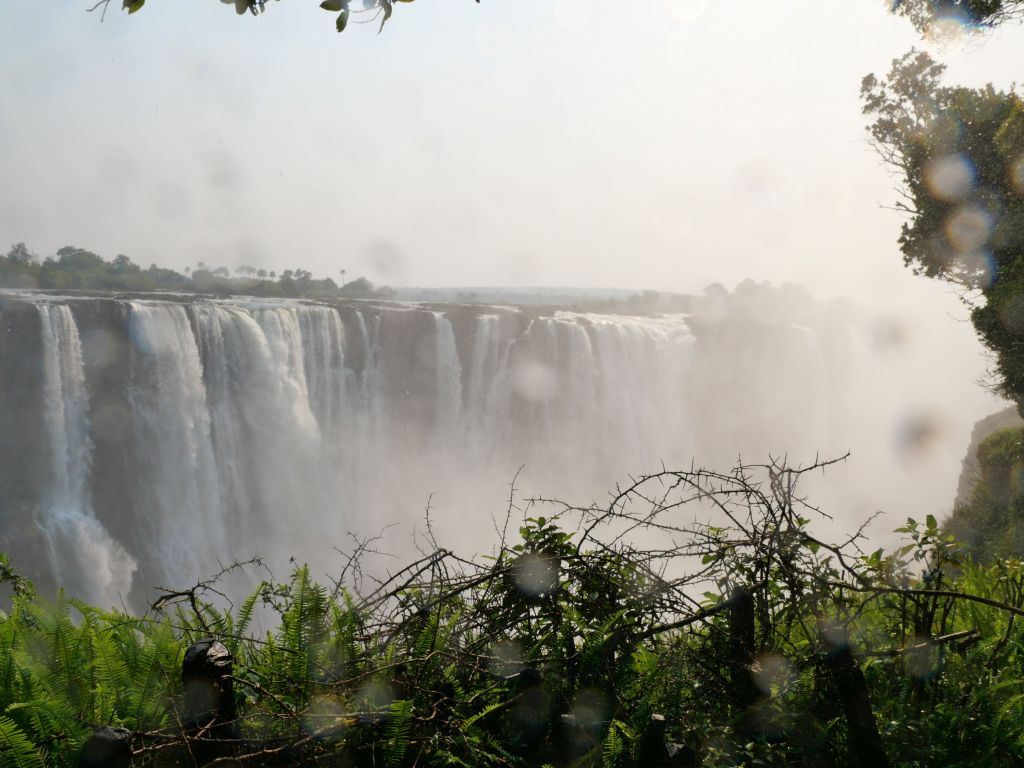
We didn´t want to leave, the water created a lovely, cool breeze and there were no mosquitoes. We wandered up and down the pathways taking endless photos, enjoying every minute.

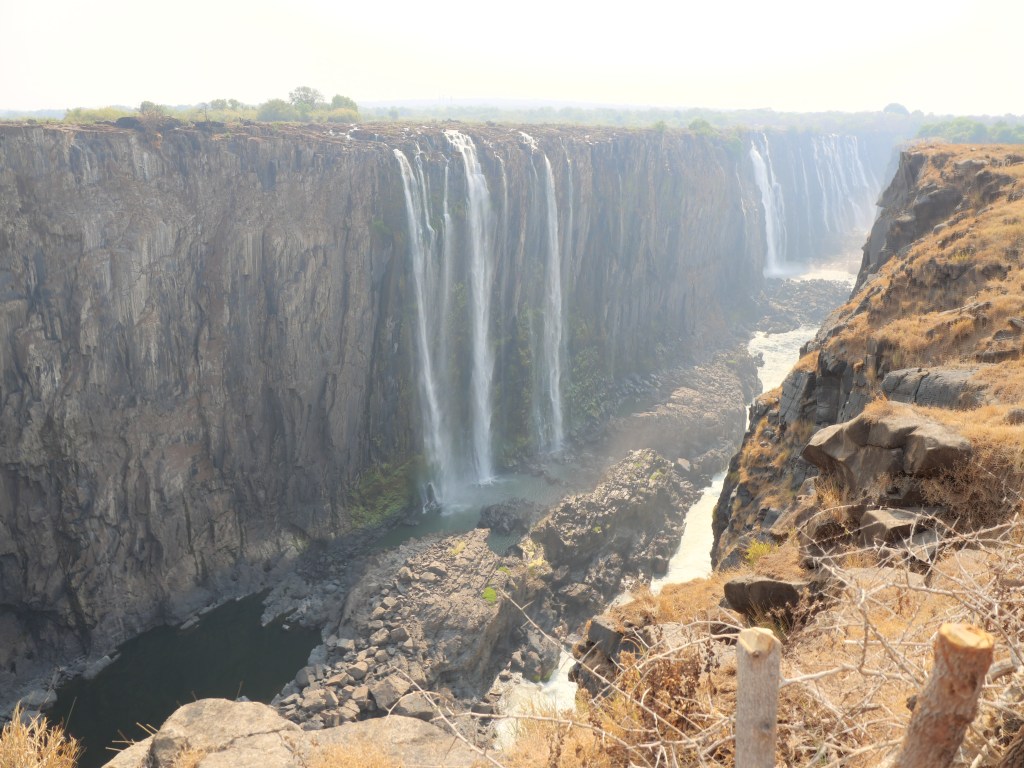
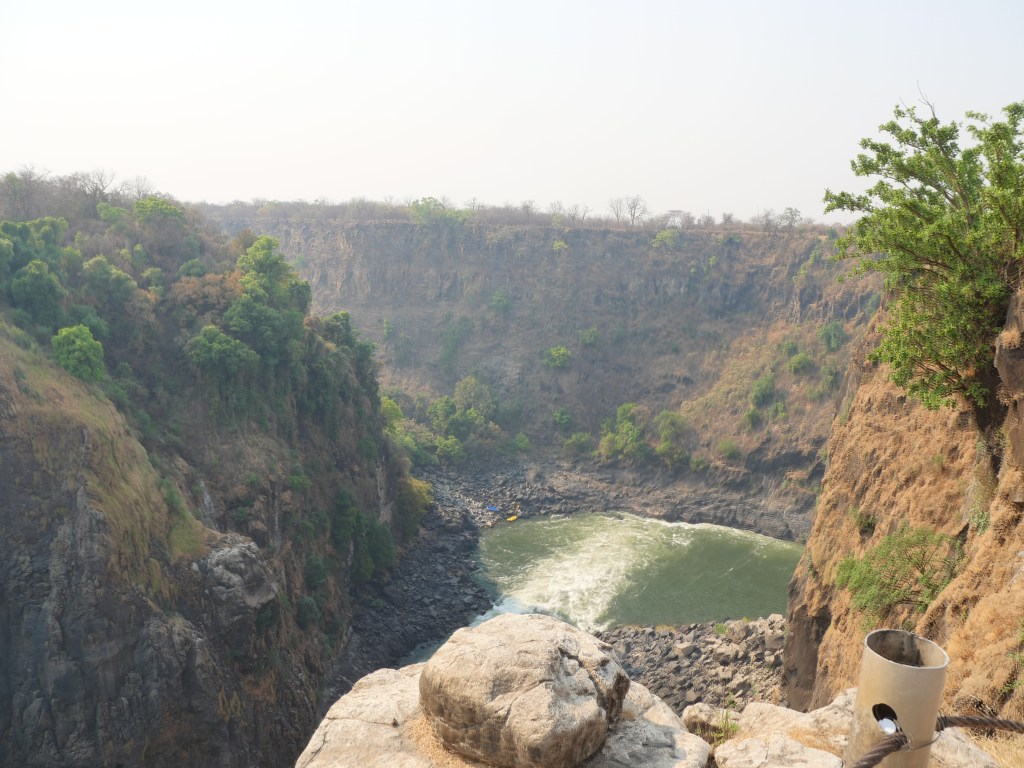
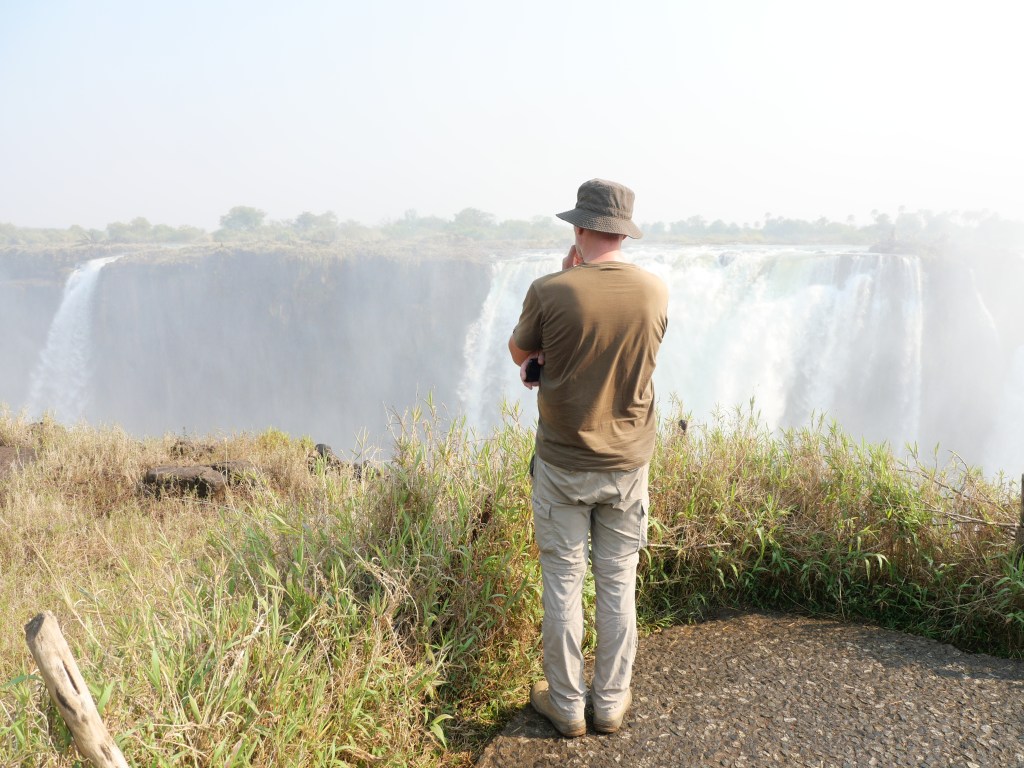
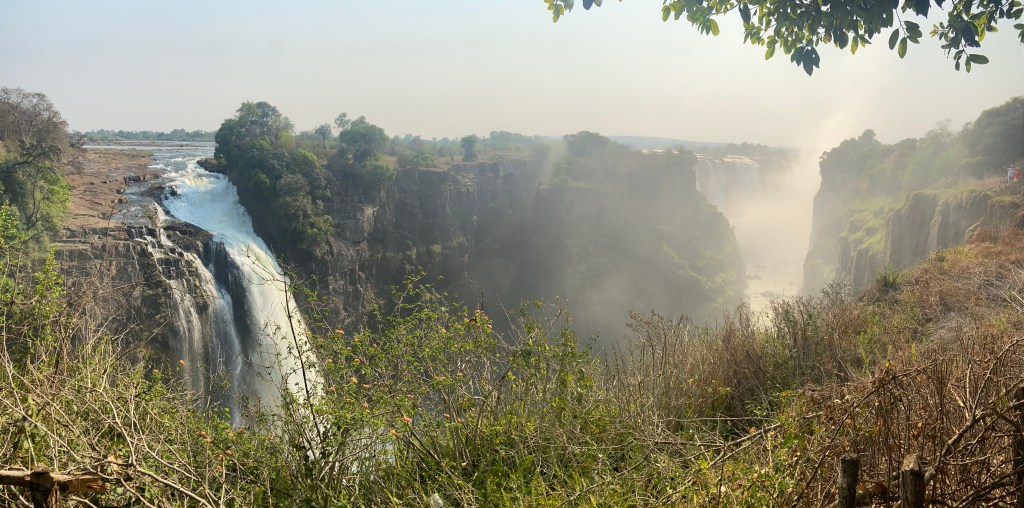
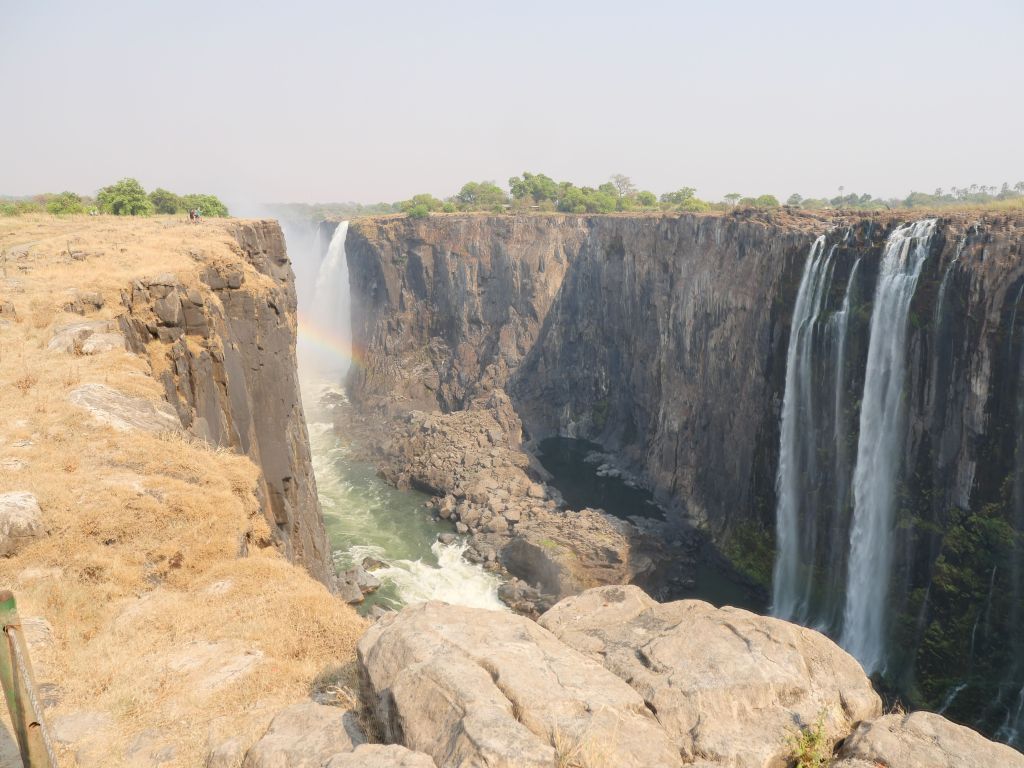
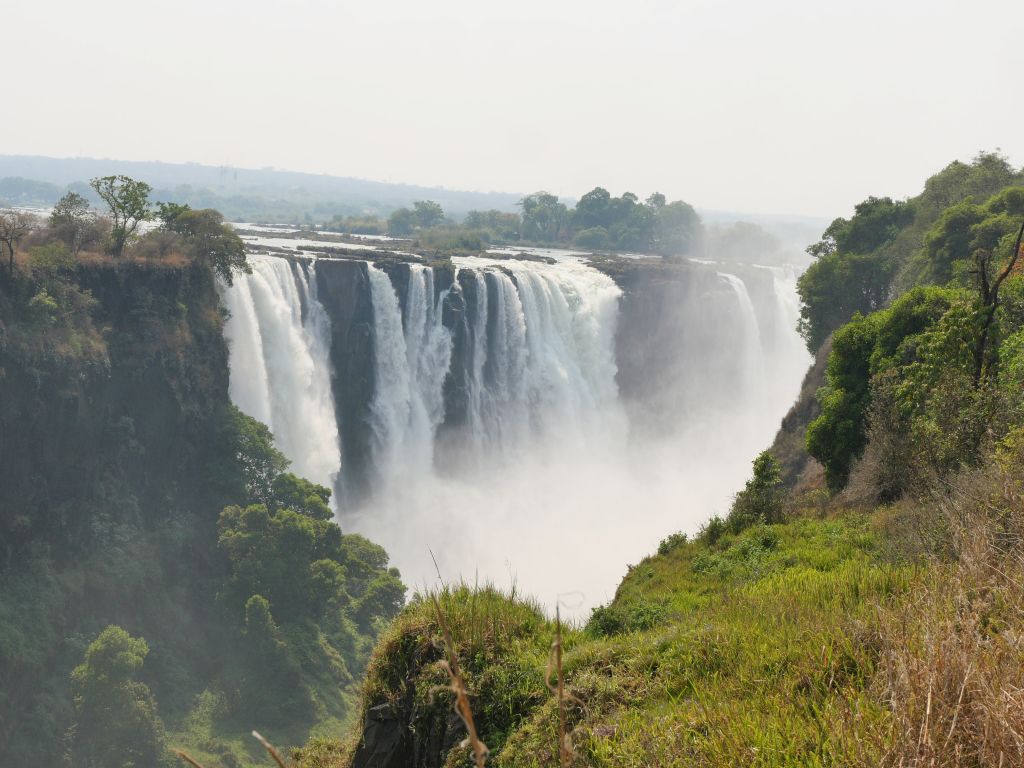
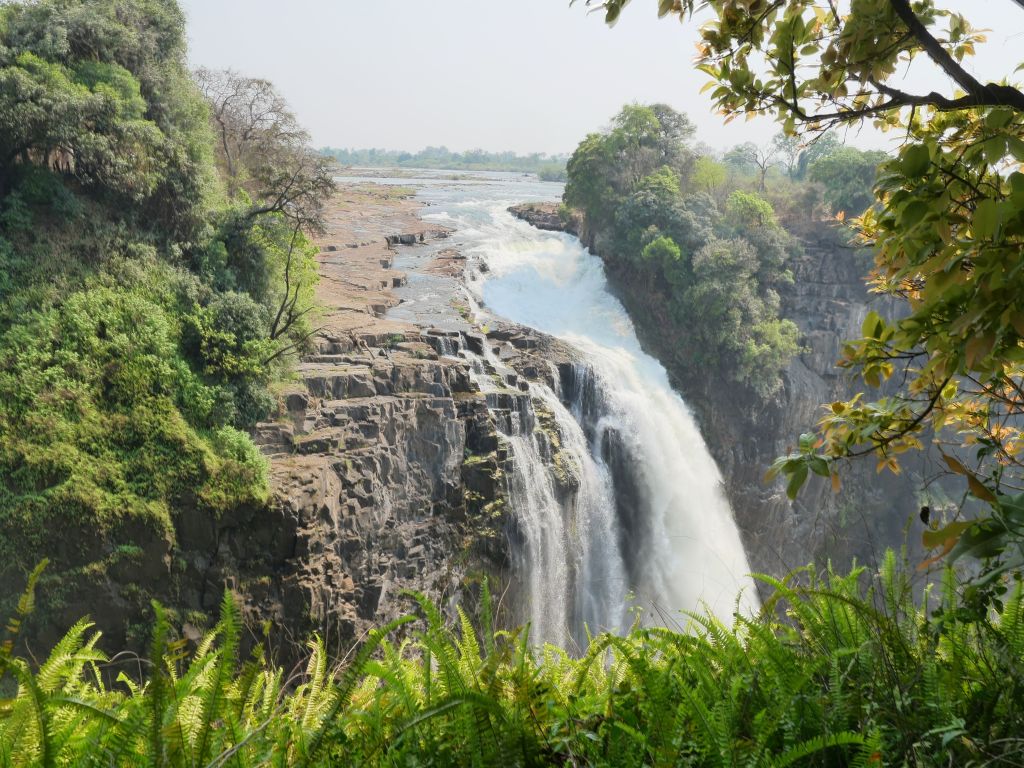
But eventually the number of other visitors got too much and it became tricky to get to the viewpoints so we headed back into town.
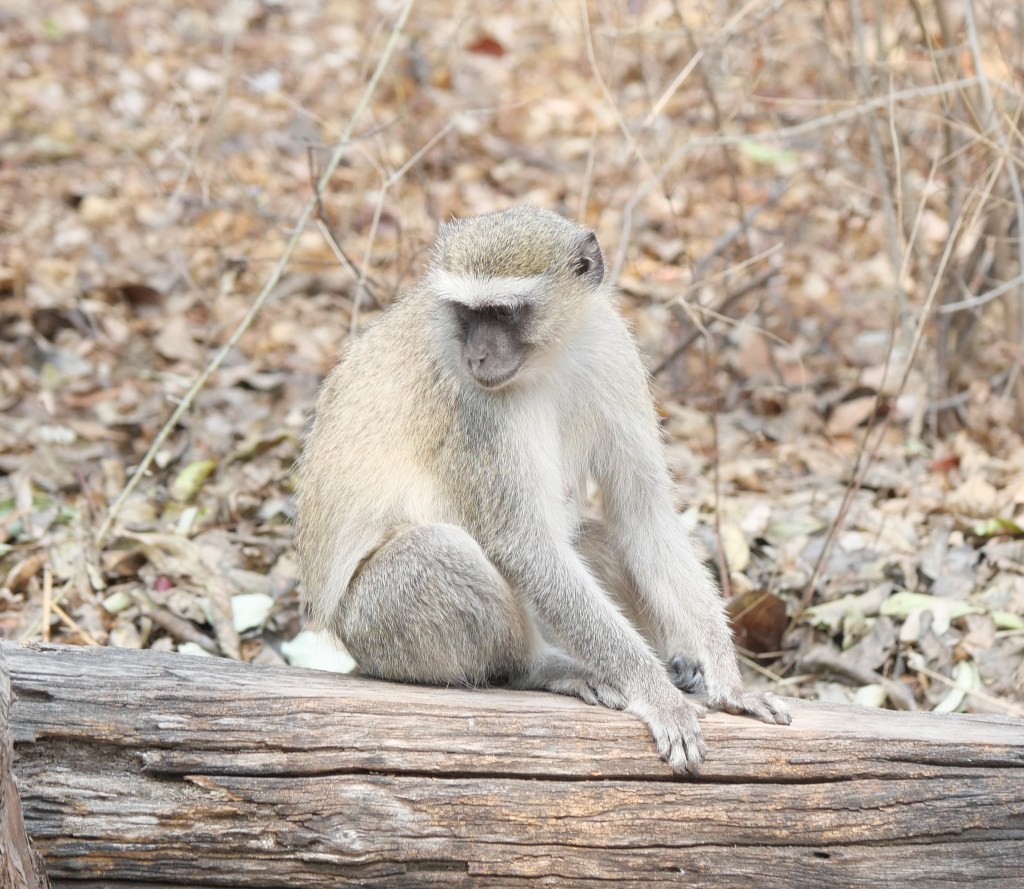
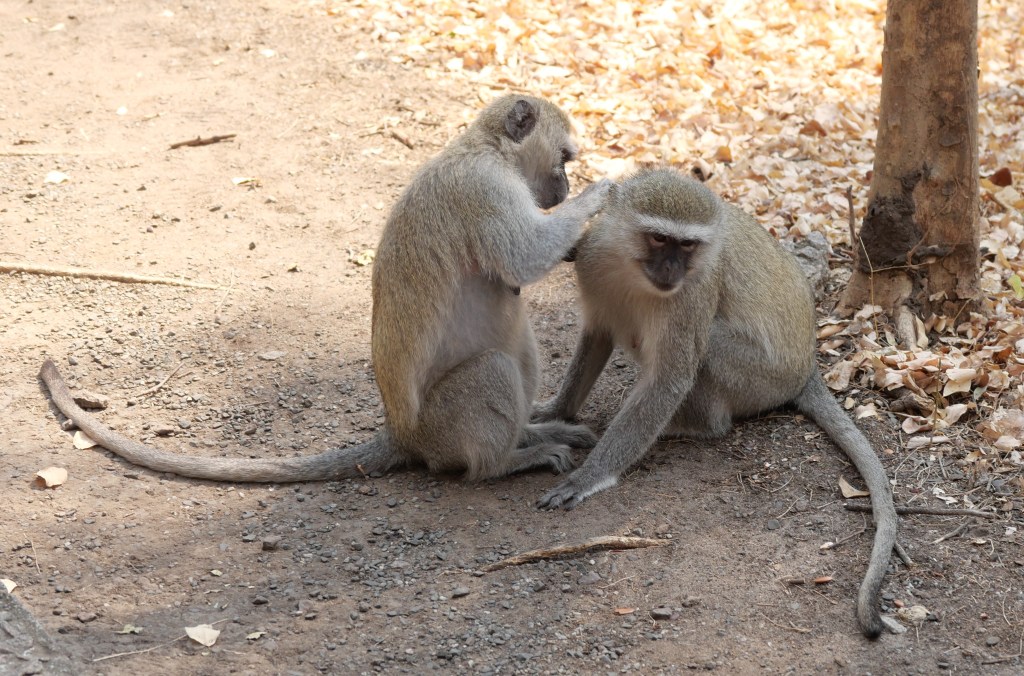
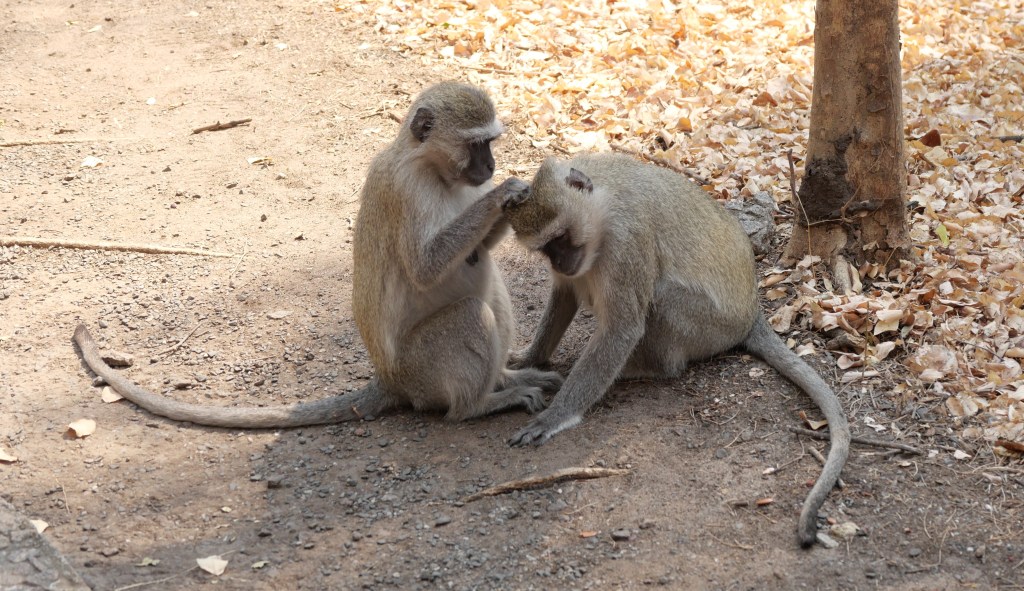
On the way out we saw some lovely wildlife who were also enjoying the cool, damp air

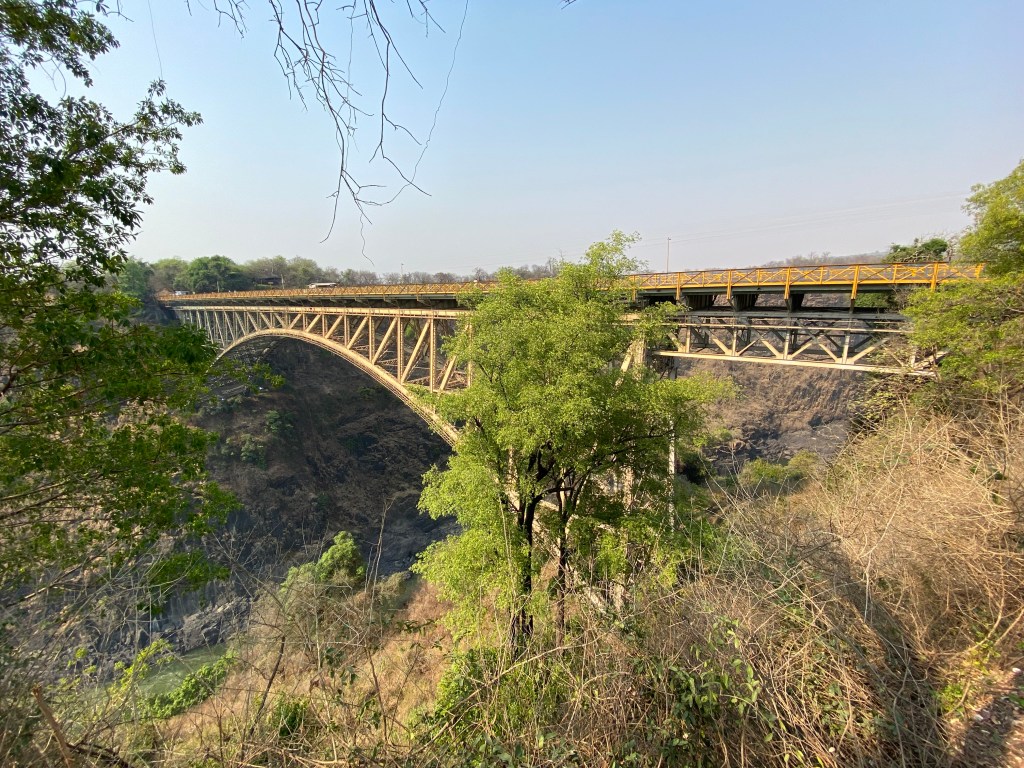
And of course the bridge between Zambia and Zimbabwe famously built by Cecil Rhodes for his railway but now even more famous for its perilous bungy jump….
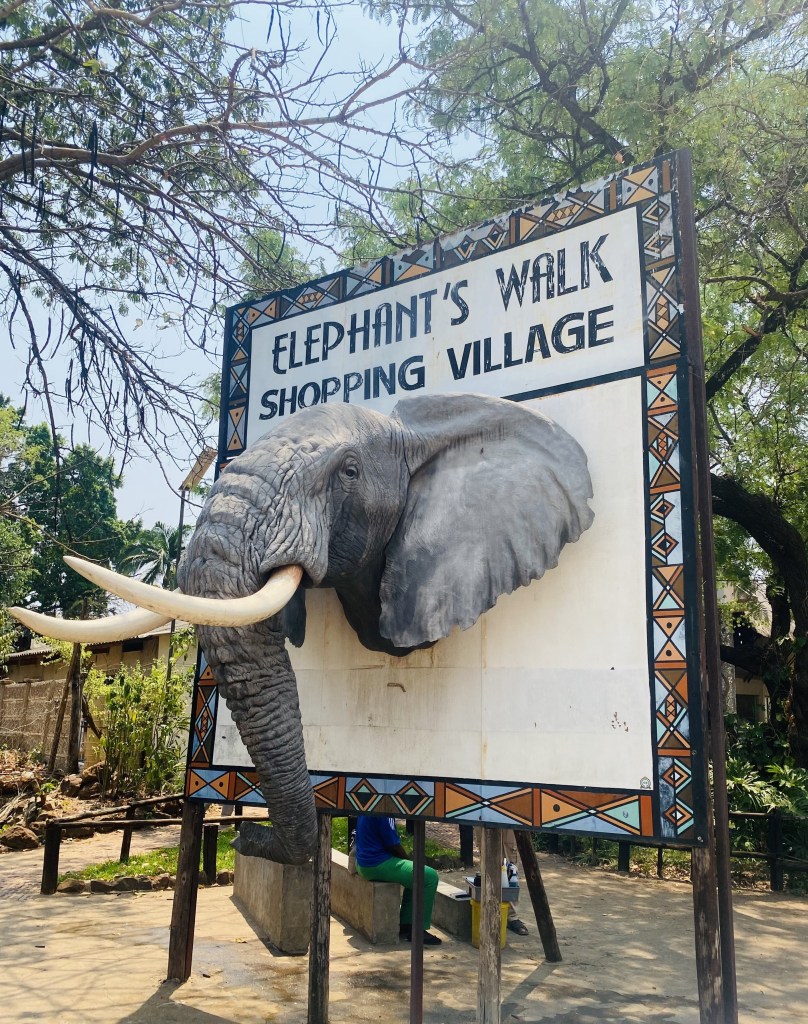
We hadn´t managed to get a Zimbabwean SIM card yet but when we got back into town and found the mobile phone shop there was a huge queue outside so we decided to leave it for another day. Instead we went to the Elephant Walk craft market for a quick look around – and to send our old carnet back to the UK via DHL who were based there
But away from the cooling Falls the heat was getting too much so we gave up and went back to the campsite for some shade and a cold drink
We were up early again the next day and queueing outside the mobile phone shop 15 minutes before it opened where we finally managed to get our SIM card. We were expecting data to be very expensive but in the end it wasn´t too bad so we bought 30GB on the basis that it should last us a month at our average rate of 1GB a day.
We had not yet been in the country long enough to know that it would be physically impossible to use 30GB in a month as there was no signal anywhere, even in the capital, where you could use data that fast. In the end we used barely a third of that amount and not for lack of trying!
We were also discovering the difficulties of actually buying things here. We knew that cash was king in Zimbabwe and that the introduction of US Dollars as an official currency a few years back had helped to stabilise the economy and bring inflation under control. So we had brought a month´s worth of cash in dollars with us but, knowing we were in an expensive country, spent the first week trying to use our credit cards whenever we could to conserve our limited resource.
We gave up on this idea pretty quickly! Our first attempt to use our card at the supermarket in Victoria Falls town had us being taken to the ´international credit card machine´ by the manager, waiting for an age whilst it connected and making the payment before being taken back to the checkout to wait whilst another customer was served then a few things were tapped into the till before finally our receipt was printed out and we could take our shopping. It probably took half an hour and we came away with the manager´s mobile number and a request to take him with us next time we go back to the UK!!
We used cash after that….
Lovely as the Falls themselves were, we were keen to escape the heat and mosquitoes of the town and head into quieter parts. Our next stop was to Hwange National Park where we spent a wonderful three days seeing lions, cheetah and thousands of elephants amongst many other wonderful animals. As usual, there is a seperate post on our time in Hwange but here is a quick photo of my favourite – the bizarre Secretary Bird!

After leaving the weird and wonderful creatures of the park behind it was time for a bit of culture.
The Khami Ruins are the little sister of Great Zimbabwe, the ancient ruins after which the country is named. Towers of stone build by the Shona people in the middle ages. They were just three hours south of Hwange and we arrived early the next day.
It was a much larger site than we expected
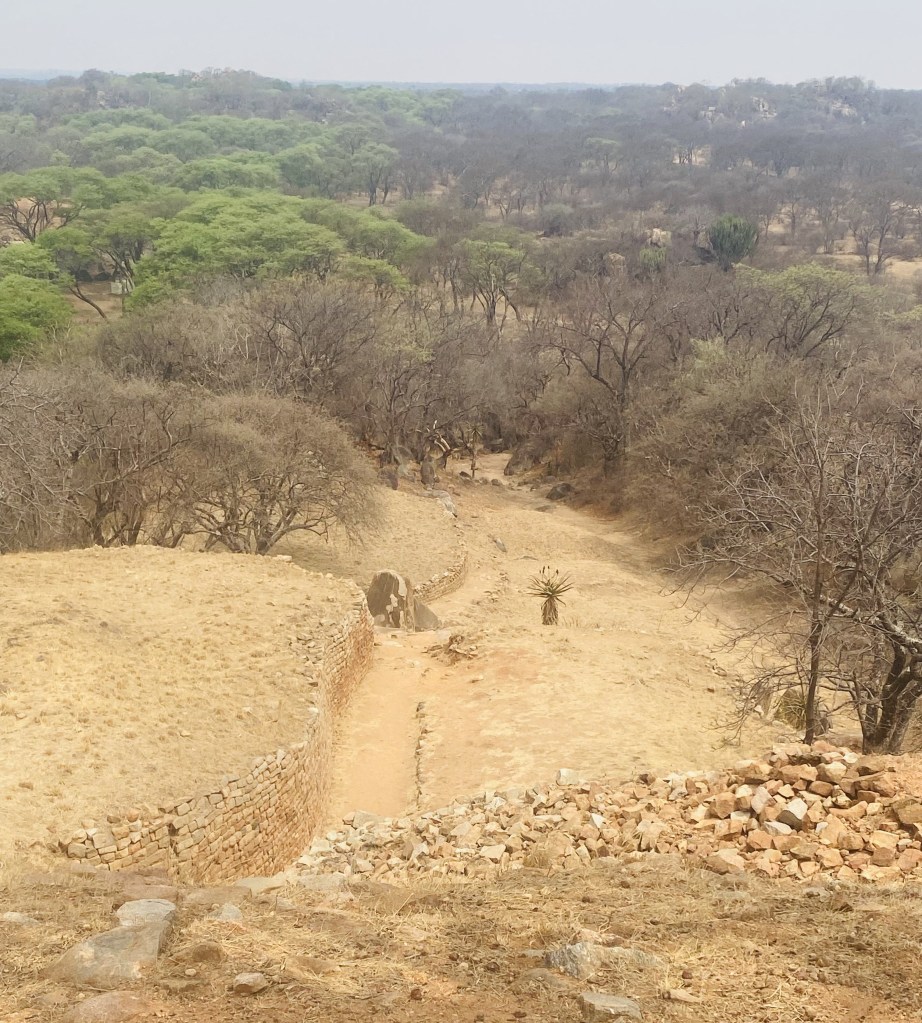
With platforms built to hold the huts of the chiefs and their families
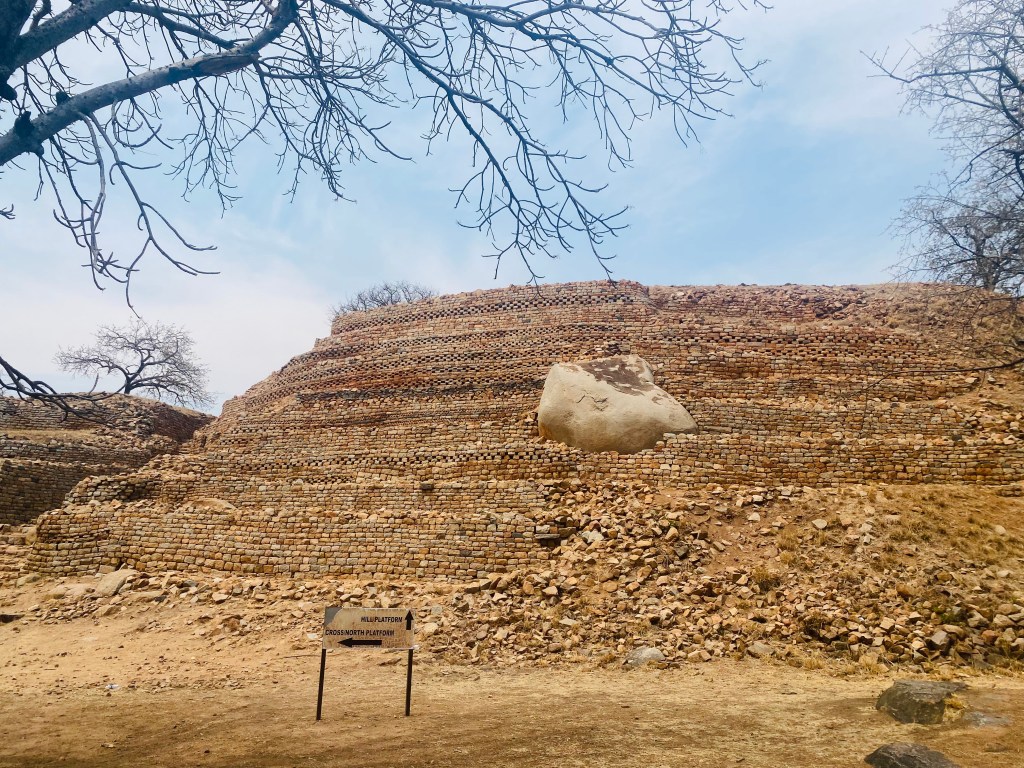
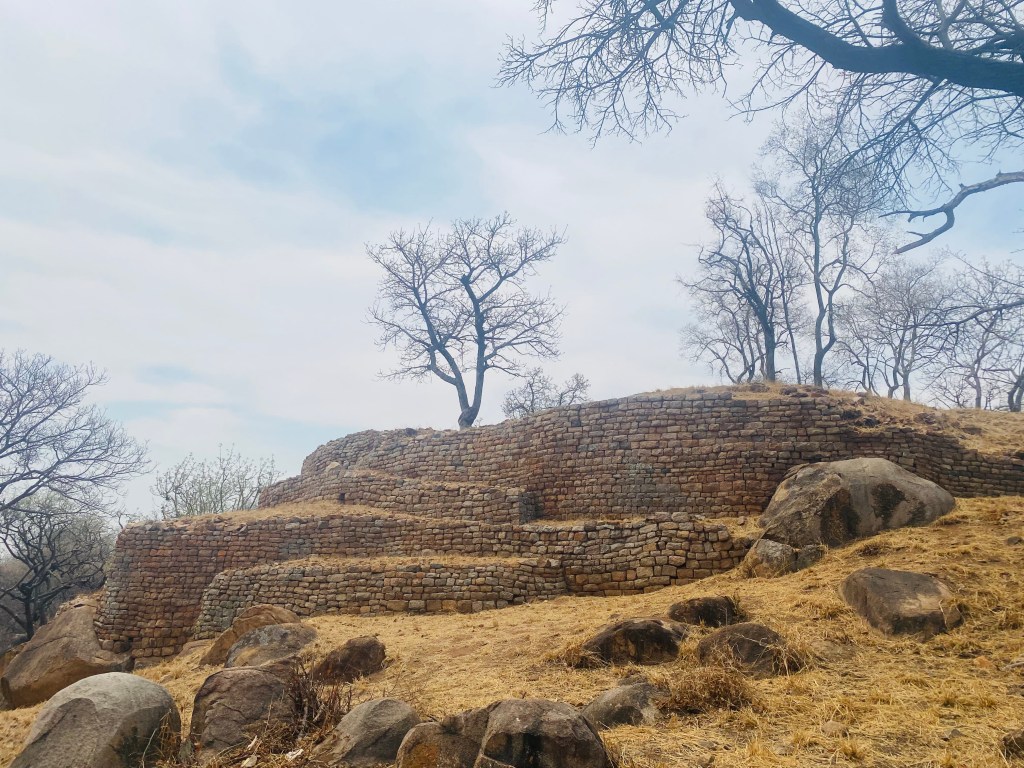
And pits for holding animals or treasures
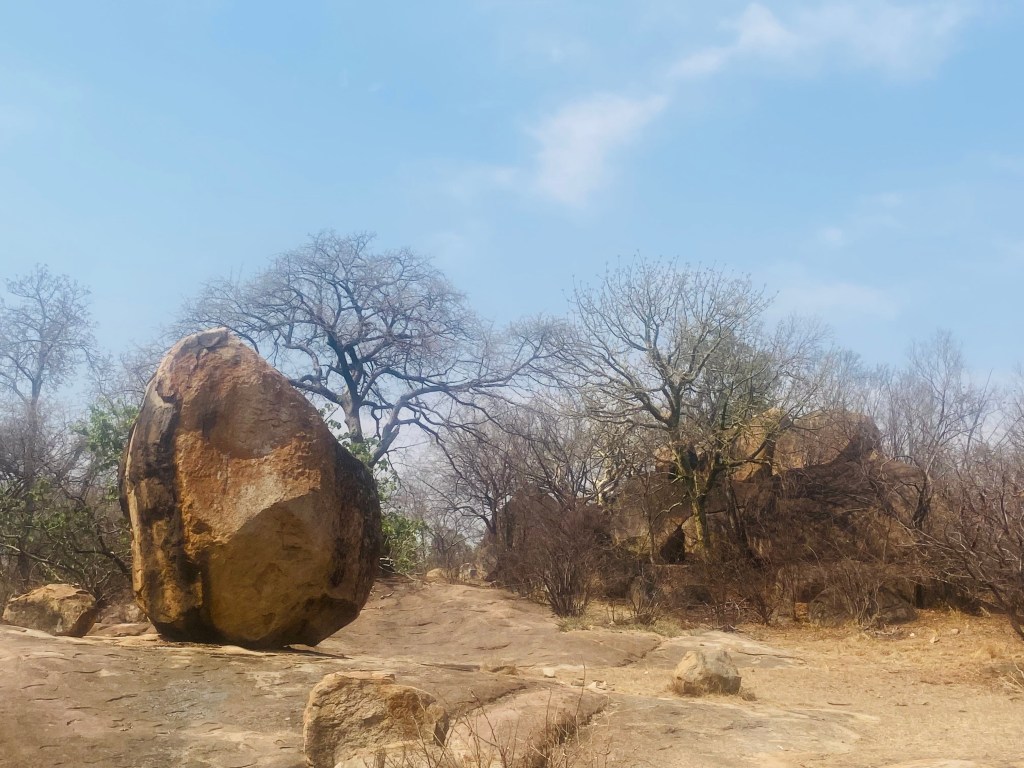
Apparently the normal guide was off sick and the security guard seemed worried about her, he thought it might be malaria. In her absence he showed us round the main platform himself and told us all about the fascinating history of the place.
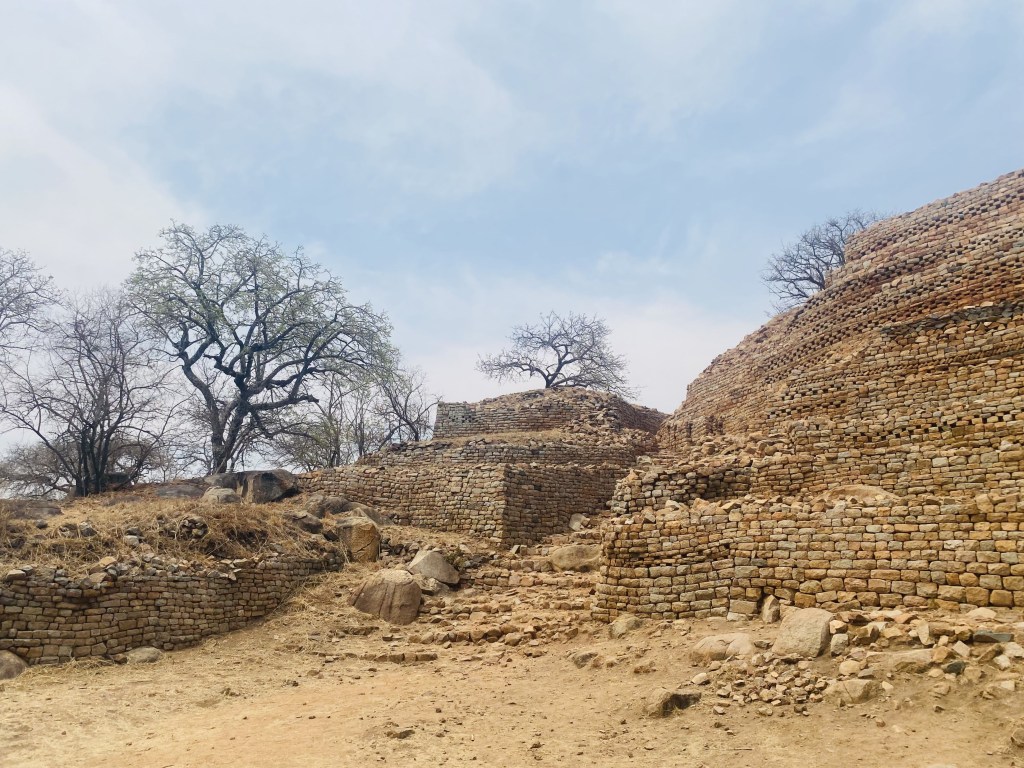
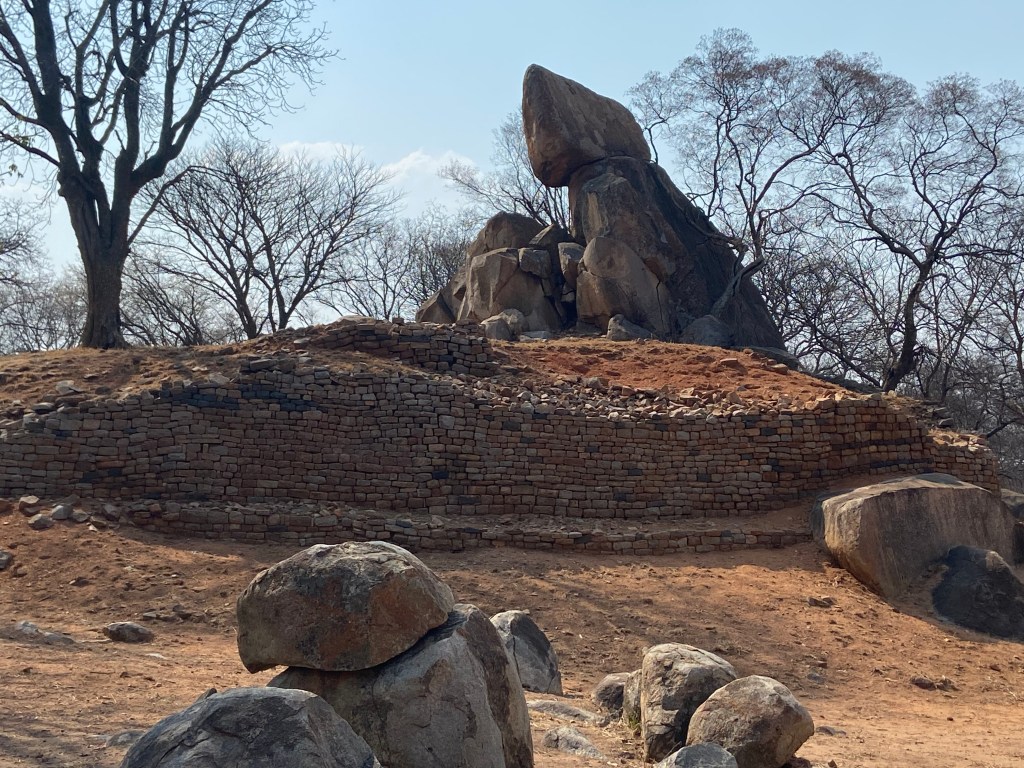
He left us to wander around the rest of the ruins on our own. It was so hot we could only walk at a snails pace but the scale of the constructions was impressive
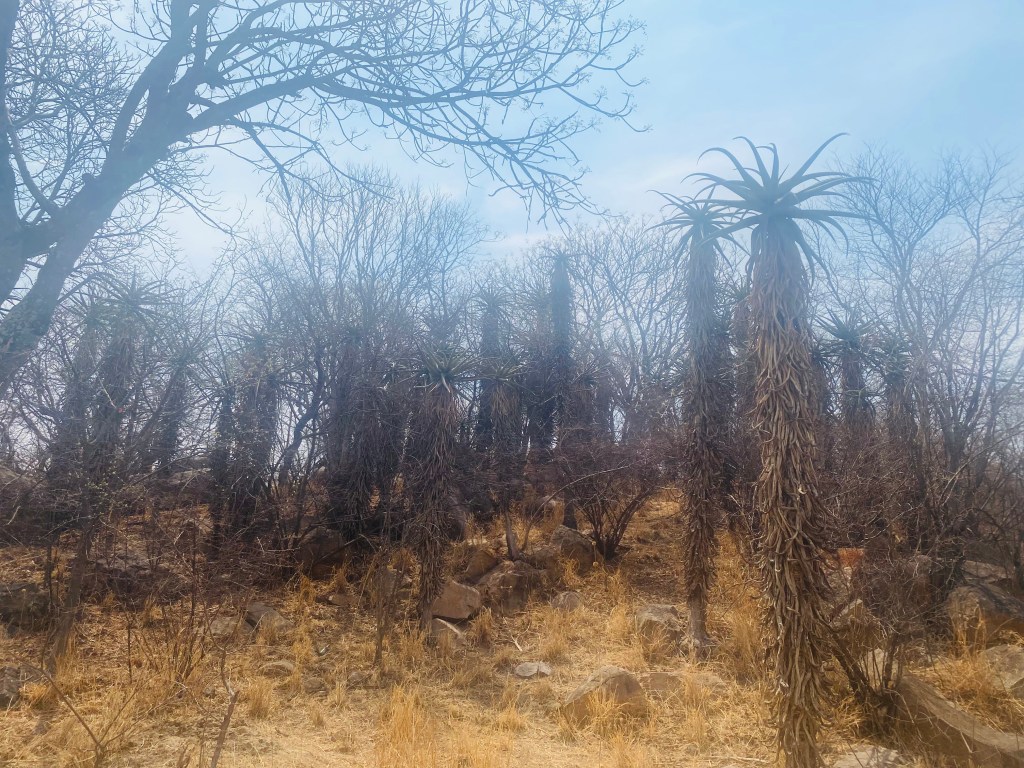
The final platform was built on the banks of the river by the dam. The dam itself was interesting
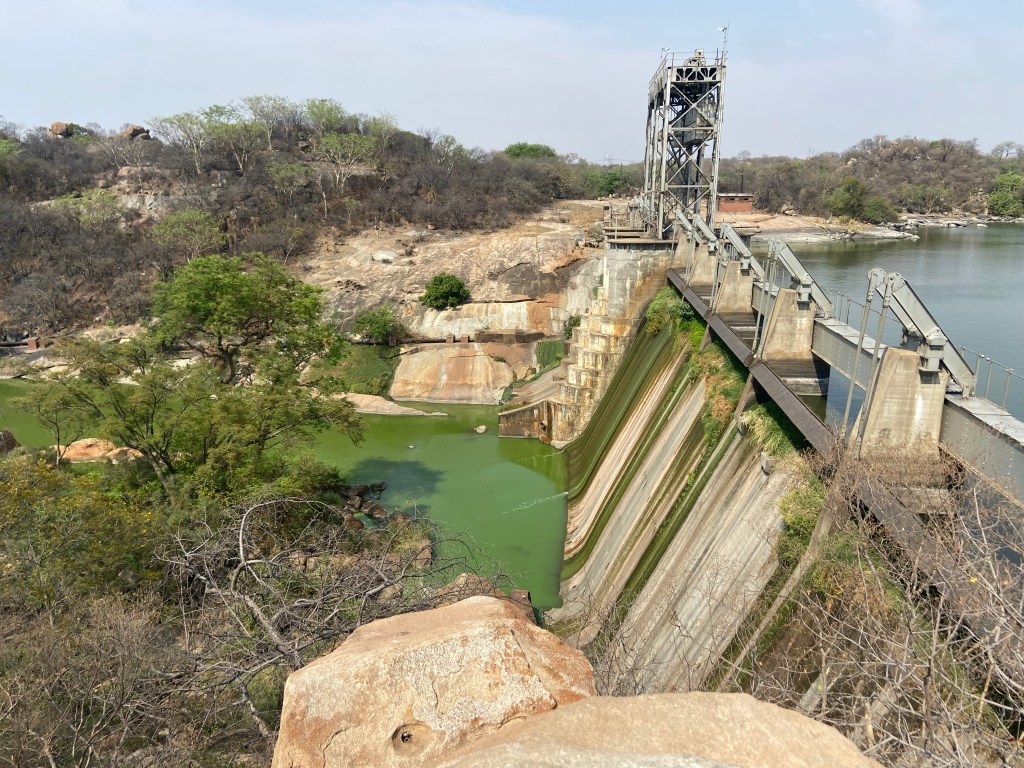
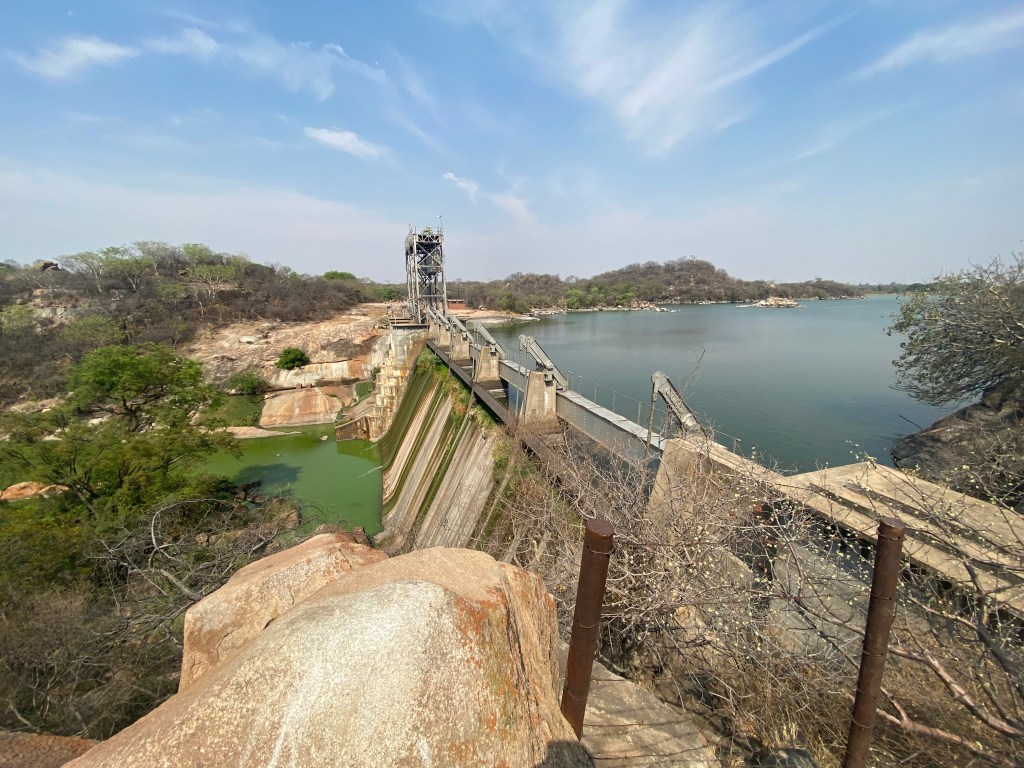
And the views from the bank were spectacular
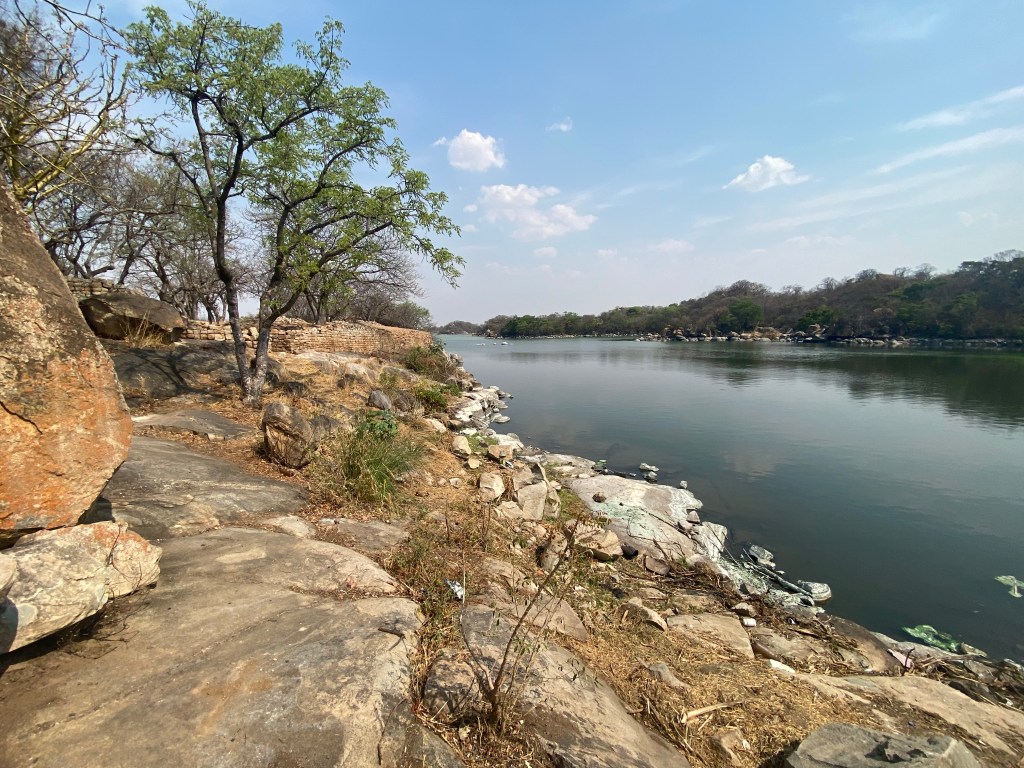

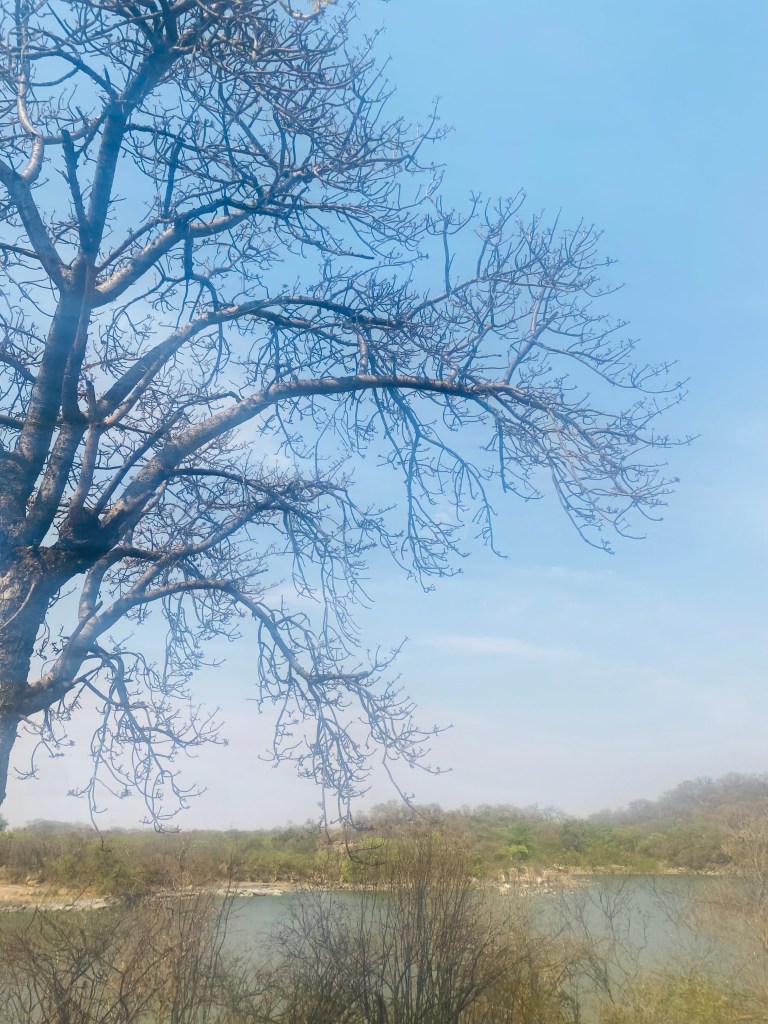
As we were preparing to leave, the guide herself walked up and told us she was feeling much better – the guard stood behind her with a big smile of relief on his face, I wondered whether she knew how much he cared about her.
On our way into the old colonial town of Bulawayo we passed through three police checkpoints. You can tell a lot about a country at police checkpoints – throughout West Africa they were a constant source of irritation as bribes were expected and rules made up to trap inexperienced travellers. In Southern Africa they were a source of fun and banter as the police stopped us to check our drivers license and have a chat about our travels. Apparently Zimbabwe used to be one of the worst with the police making a sport out of squeezing money from locals and tourists alike but in the last few years that has all stopped and we were waved through all of them with a smile and sometimes a salute. The government has apparently realised the value of tourism and woe betide any police officer who makes a tourist´s life difficult.
Bulawayo is a lovely city, the colonial influence being very strong. Wide avenues with old houses nestled behind high walls

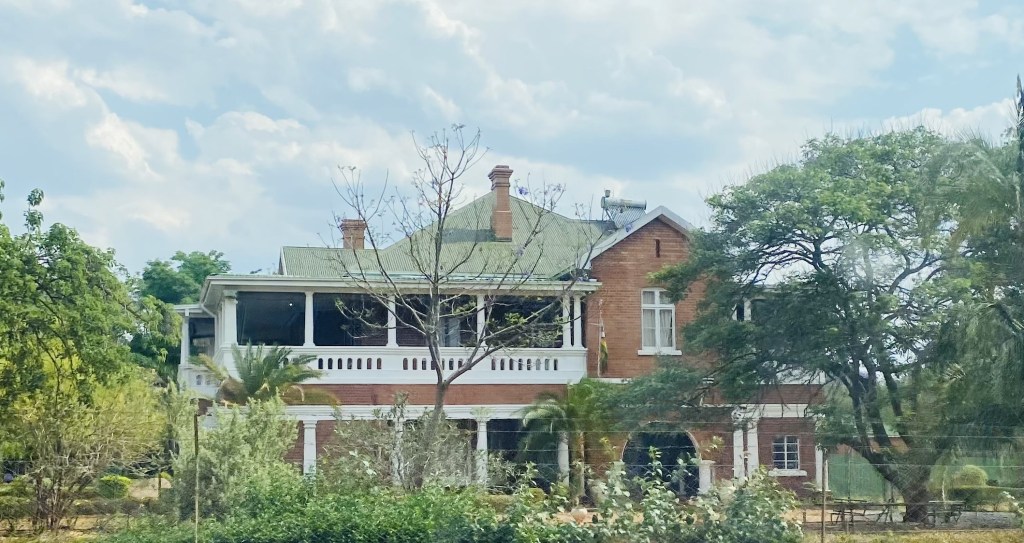
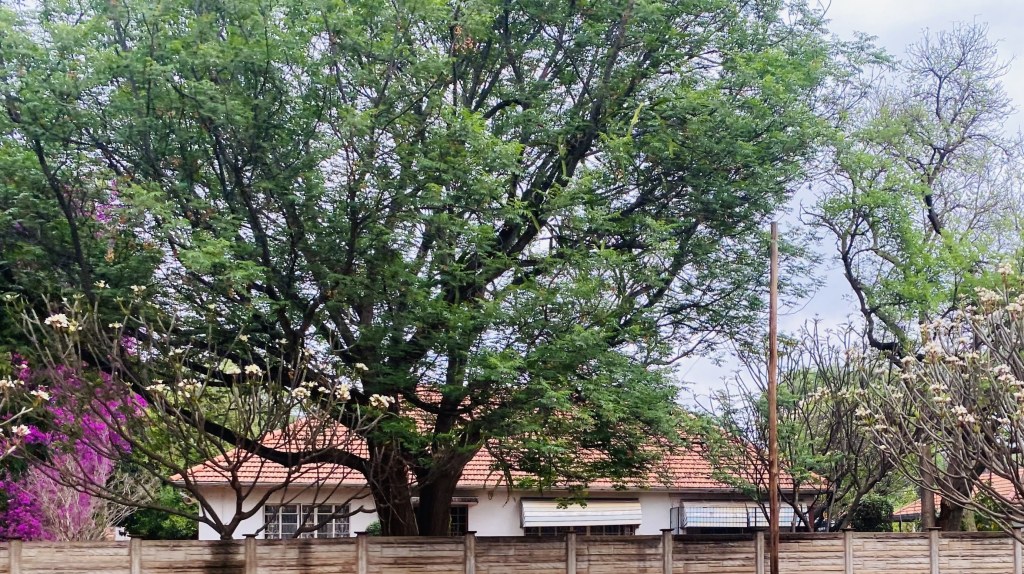
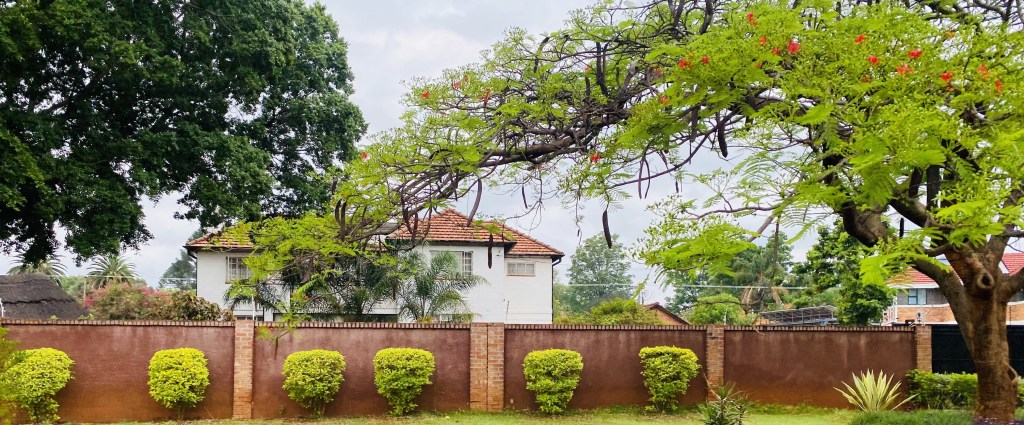
And thousands upon thousands of Jacaranda trees lining every street

They bloom in October so we were treated to a beautiful display
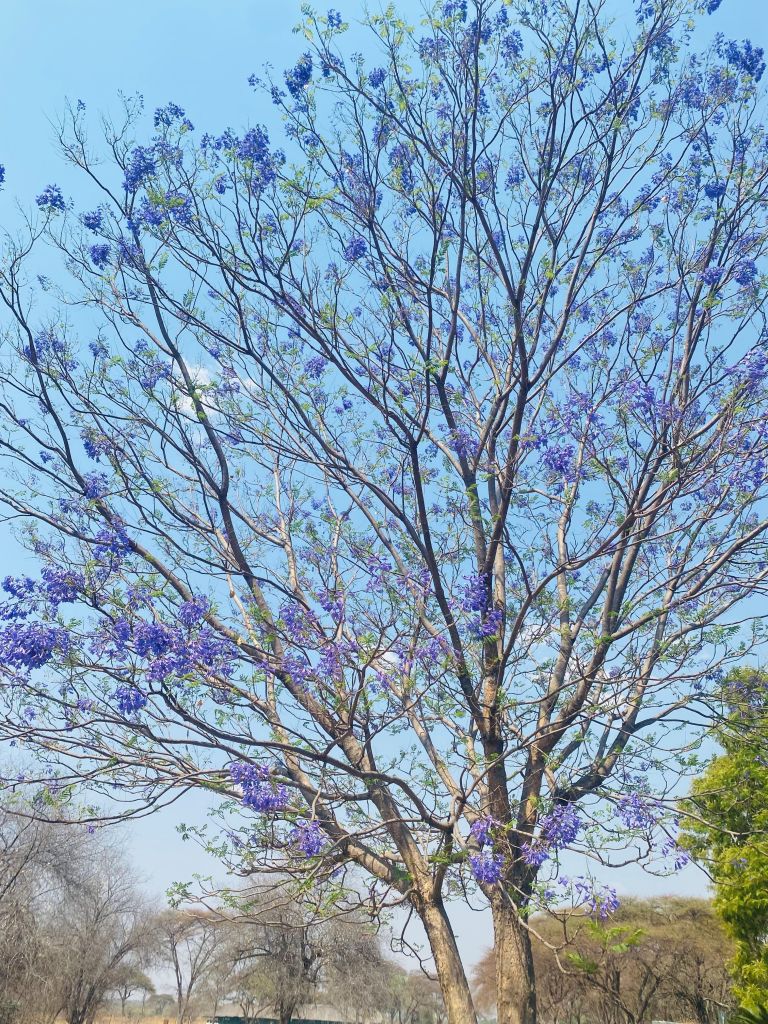

At the campsite I started chatting to the manager who told me that in Zimbabwe the blossoming of the Jacaranda trees makes everyone think of school exams as they always bloom at the same time of year!
Everyone was incredibly friendly and pleased to see us. Another guest was visiting the town for a tourism exhibition and invited us to join him. We declined but chatted to him for over an hour. He told us that the Zimbabwean people consider the English to be their brothers and sisters and cannot understand what happened within the government to turn them so against the British. He gestured at the land and the buildings with his arms wide and said ´see, Zimbabwe is just like England, we are tied to you and you to us, you are our family´. It nearly brought tears to my eyes to hear him speak of the bonds they feel towards the people who invaded them for many years – but more than one Zimbabwean told us they were grateful they were colonised by the British and not any other country as we were, apparently, the most benign option!
The owner of the campsite wandered by with a friend and we got talking about the heat and how much her garden needed the rain to come. It was the middle of October and the rains normally start in November bringing the cooler temperatures with them. But as we talked dark clouds started to move in almost without noticing until we suddenly all looked up at a distant rumble of thunder. And before we knew what was happening great goblets of cold, refreshing water were pouring down on us.
All four of us were thrilled and shrieked in pleasure as the temperatures literally dropped from 40 degrees to 20 degrees in the space of about five minutes. The rain was coursing down hard on us and we stood there with our arms outstretched grinning from ear to ear…..life was good!
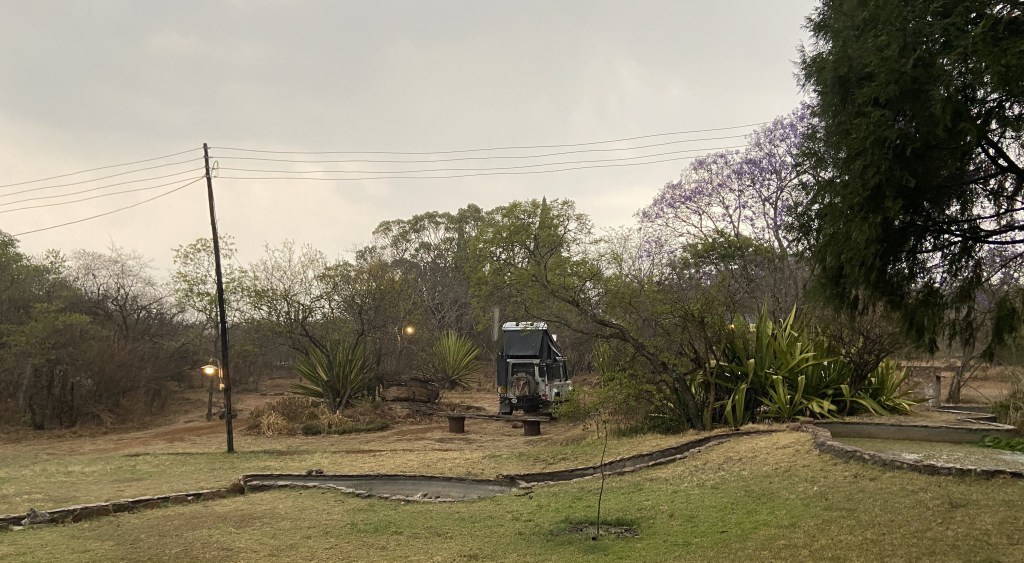
We decided to visit the natural history museum where we could see stuffed animals and a dodo egg! We ended up spending over three hours there and it was fascinating – but sadly no photos allowed.
At one point I sat on a bench to rest my back after standing for too long and a school party walked past. The kids all looked amazed to see a tourist and giggled and waved shyly. I waved back and said hello and they giggled again behind their hands before disappearing around a corner. A few minutes later six girls reappeared and walked up to me pushing each other forwards. The bravest one came up and said she loved my hair and could she touch it. I smiled and said that would be fine. Before I knew it I had six young girls surrounding me, stroking my head and whispering ´wooooow´!!!
We wandered into the geology section and looked at the displays of all the different elements. There was an empty case which seemed to once have been full of rare gem stones – now all removed. The carbon section also had an empty place where the diamond used to be and the display cabinet which said it housed a valuable trophy was smashed with the trophy gone. We found out later it had been stolen from the museum a couple of years ago and was probably the reason why the other valuable items had been removed.
After having our fill of natural history we decided lunch was in order. There is a weird and wonderful castle in Bulawayo called Nesbitt Castle which was built in the 1920s. It looked remarkable

Although perhaps not particularly authentic!
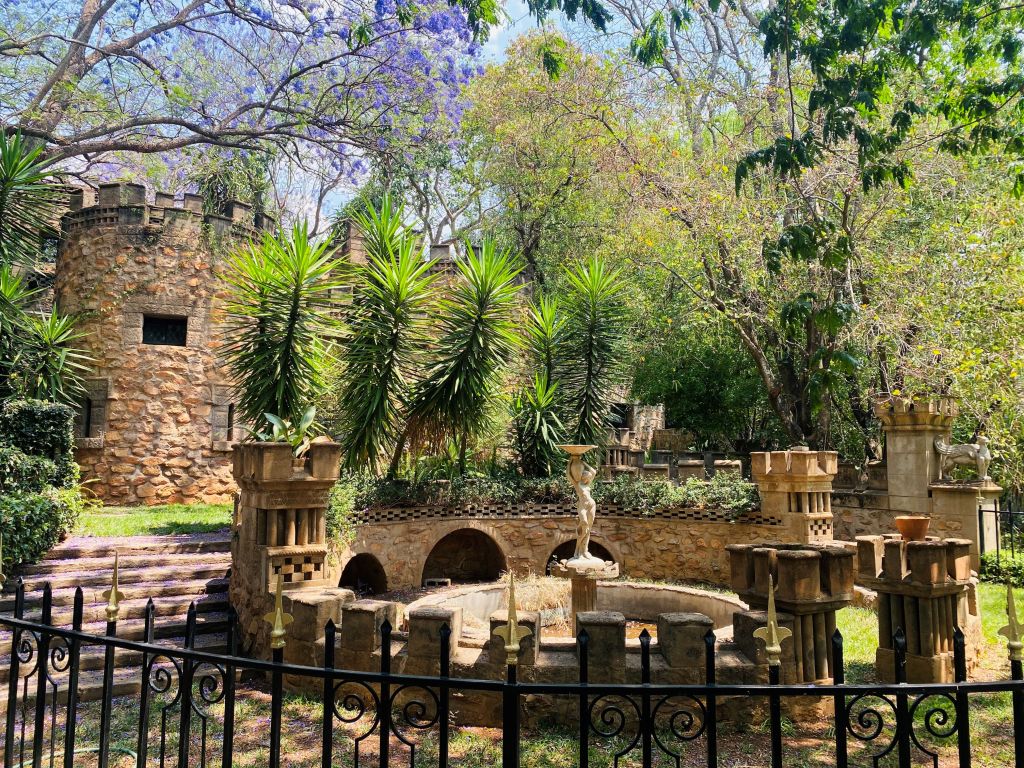
The gardens were very eclectic
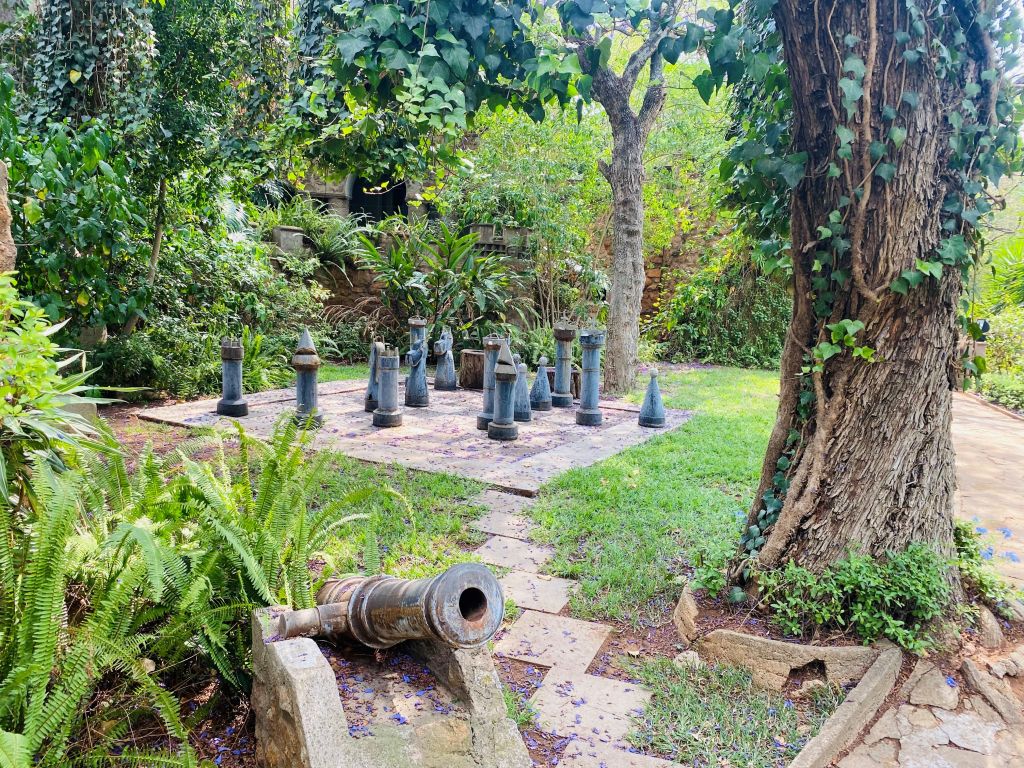
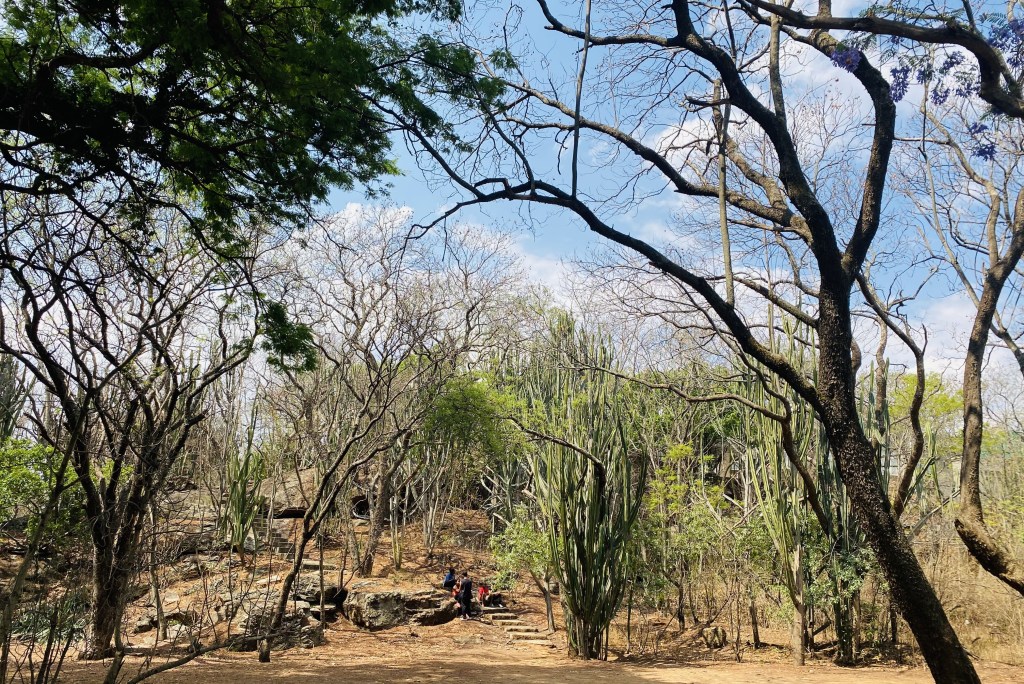
And the inside was just as you would expect
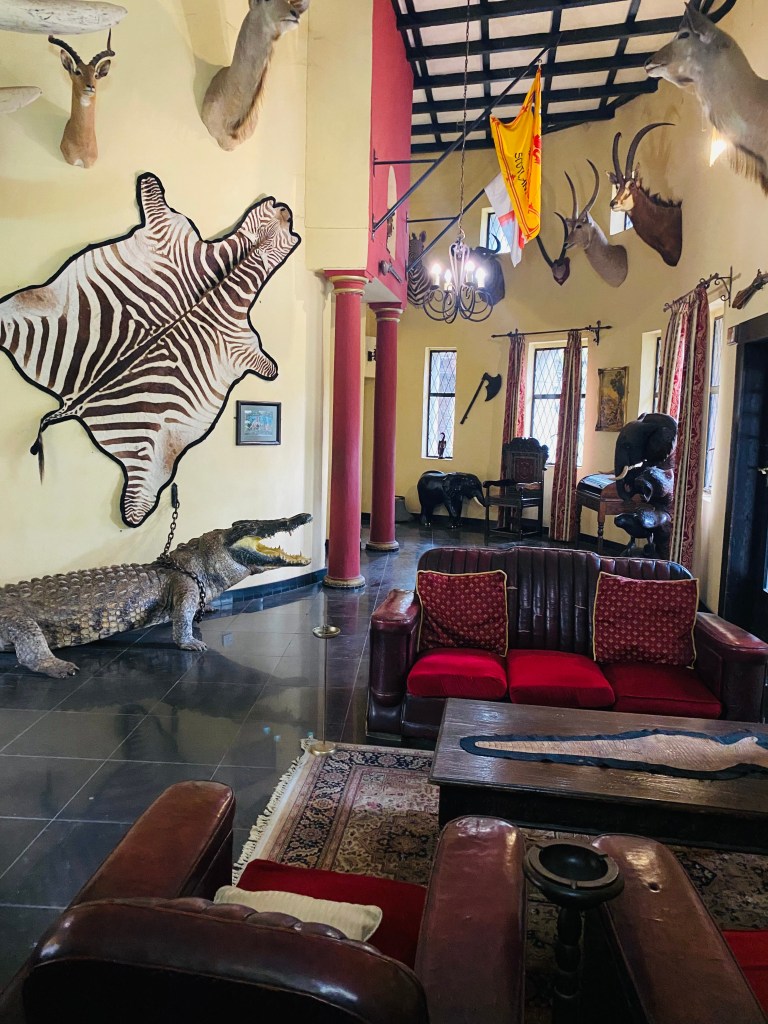
The restaurant had turned into a pizza place, the drinks were warm due to a broken the fridge and there was no ice. But the pizzas tasted good.
With full stomachs we went to the National Art Gallery which looked far better from the outside than on the inside
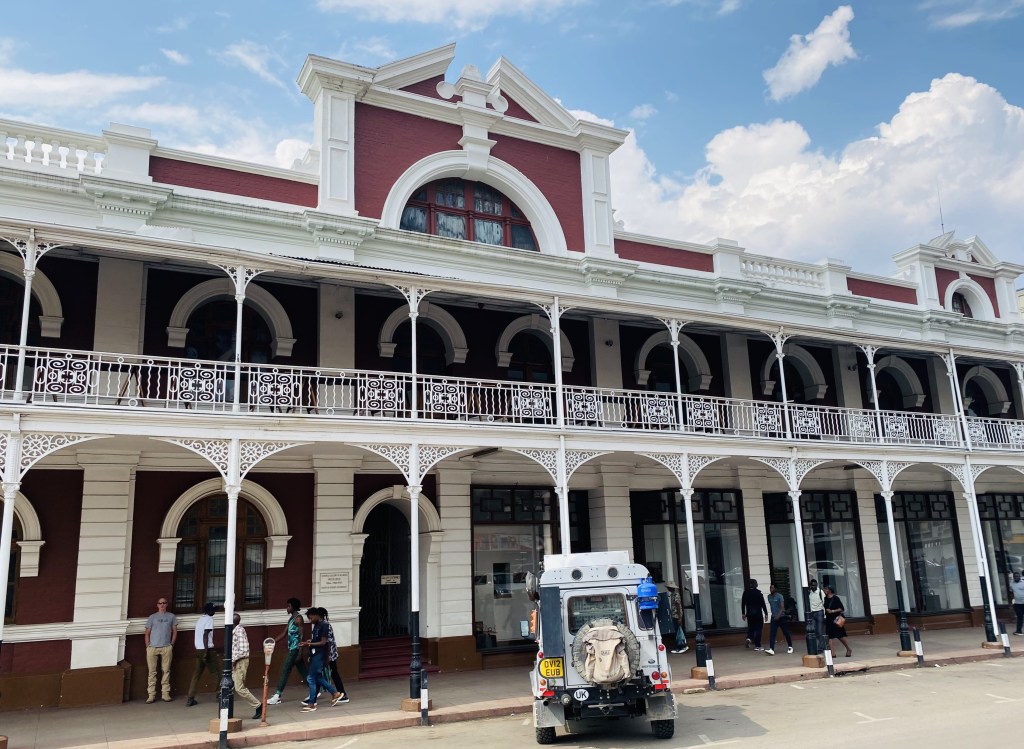
We felt somewhat cheated out of our $20 entrance fee with very little on display. There were two or three nice pictures

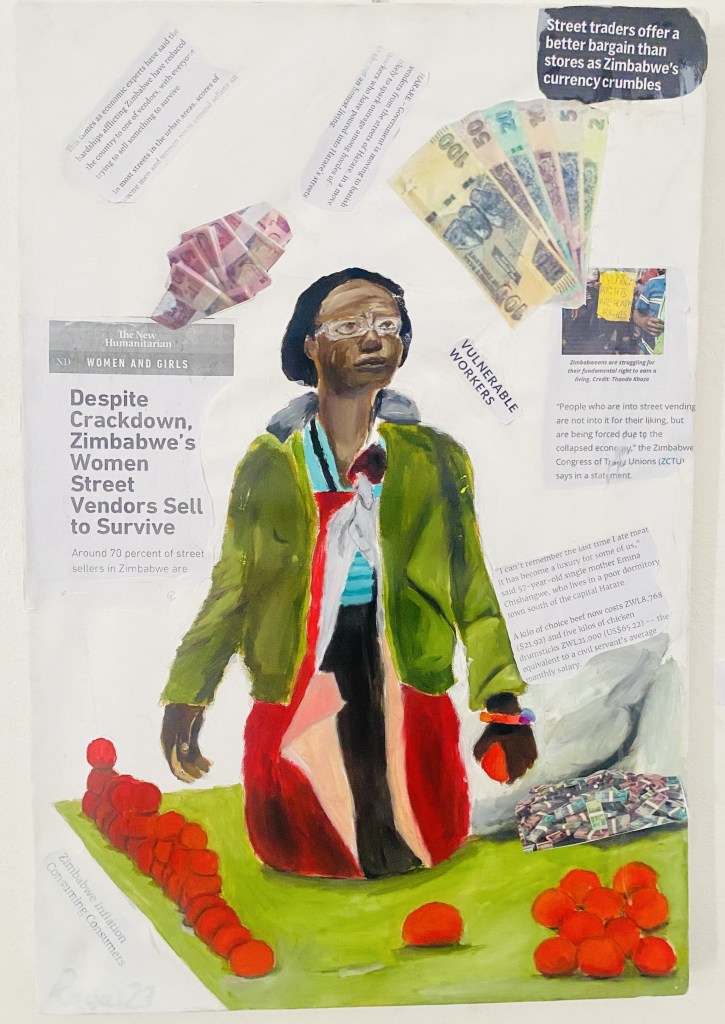

But by far the best bit was an exhibition by an artist who uses found materials to make astute comments on modern life
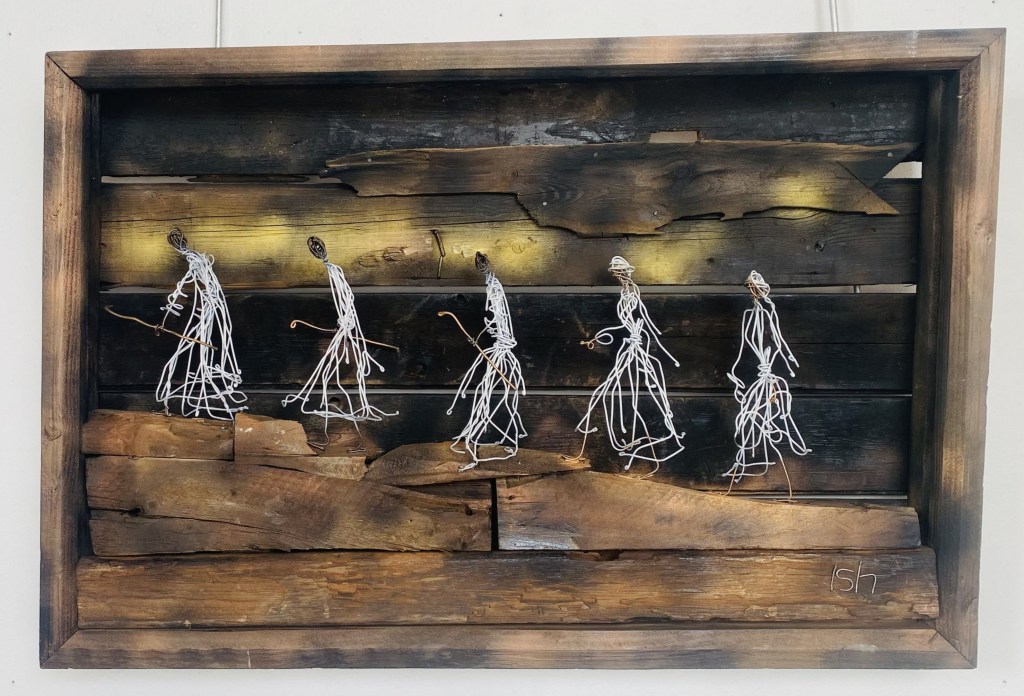
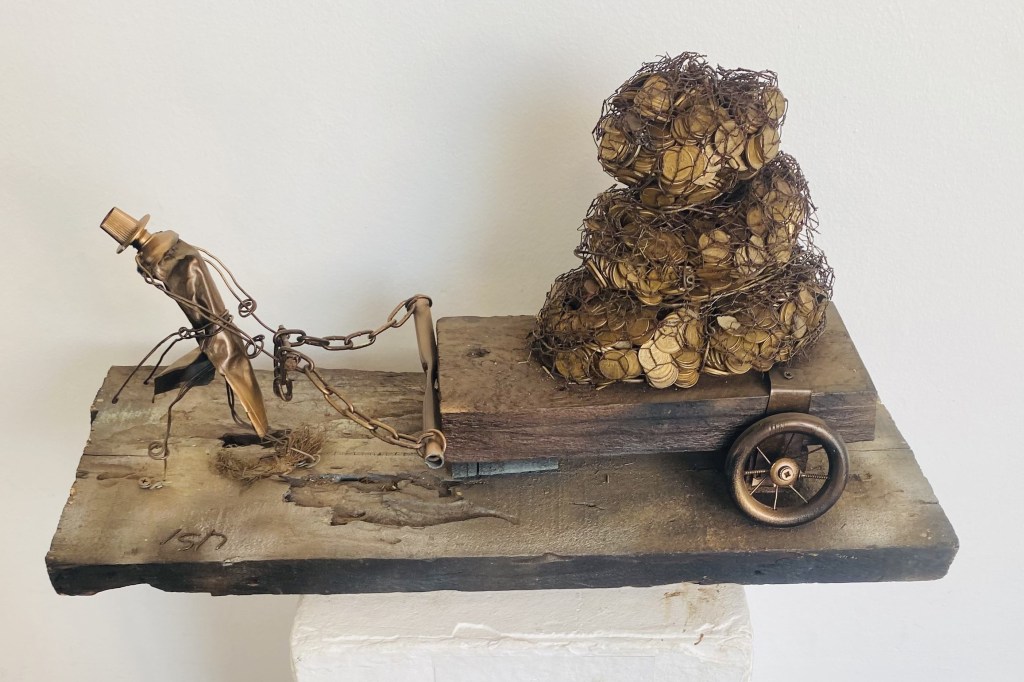

All in all it had been a good day and we were enjoying Bulawayo.
The next day we visited the Railway Museum, run by a very knowledgeable and helpful volunteer who is clearly proud of Zimbabwe´s railway history
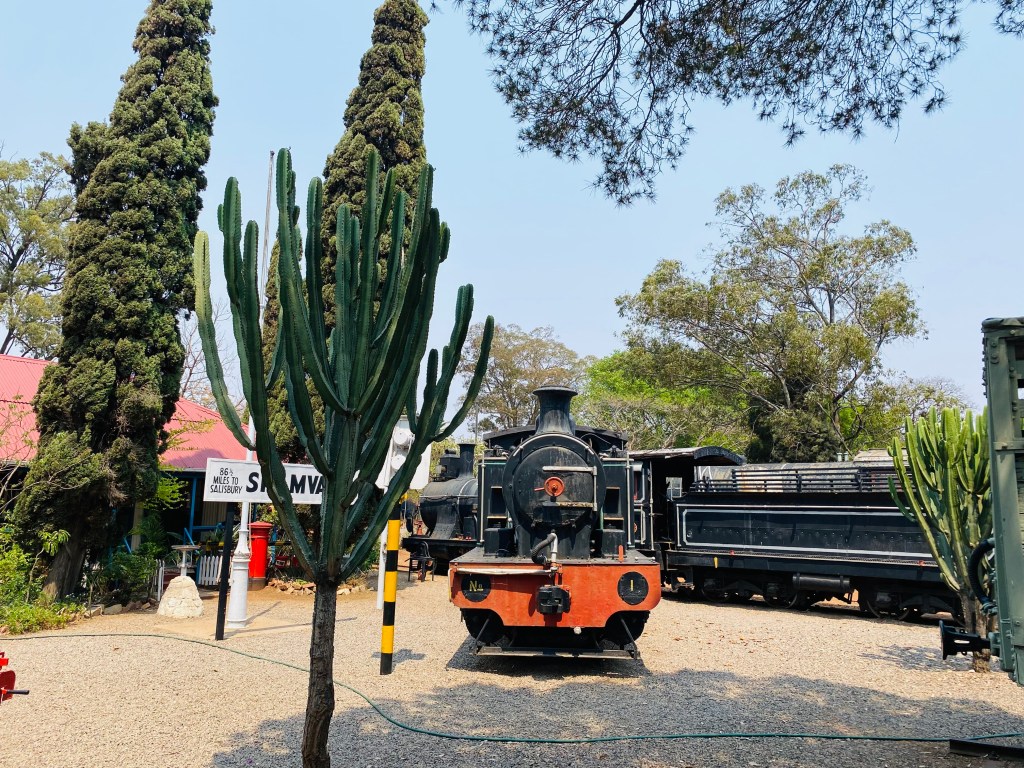
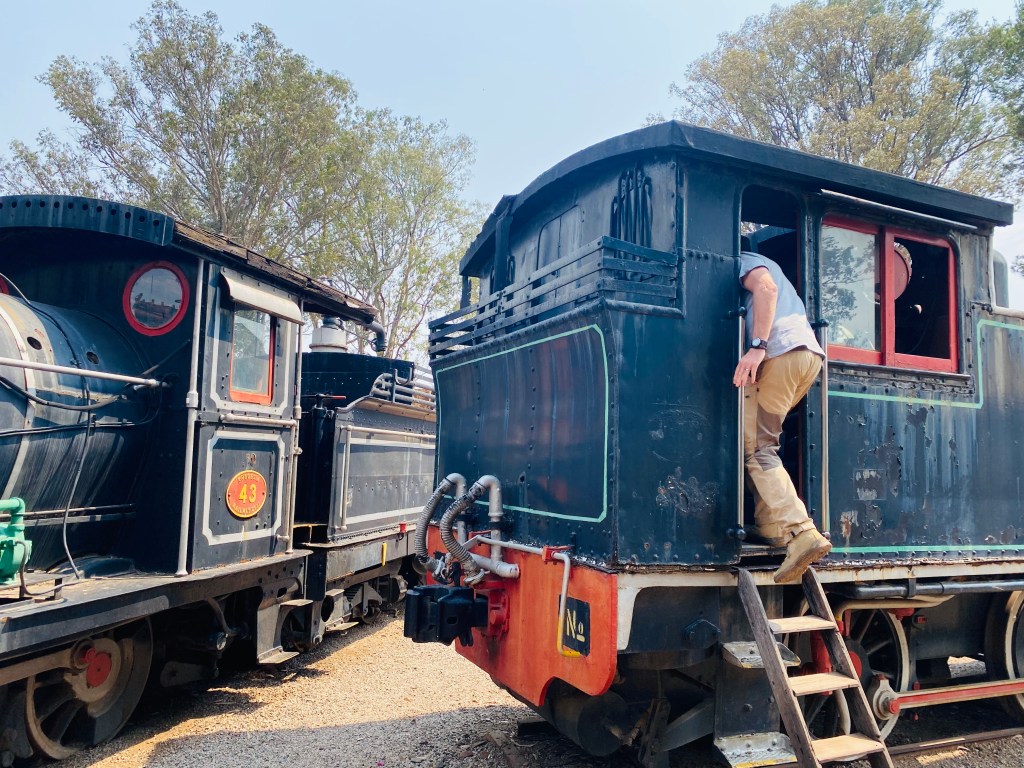
The museum was packed full of trains dating back to the 1890s
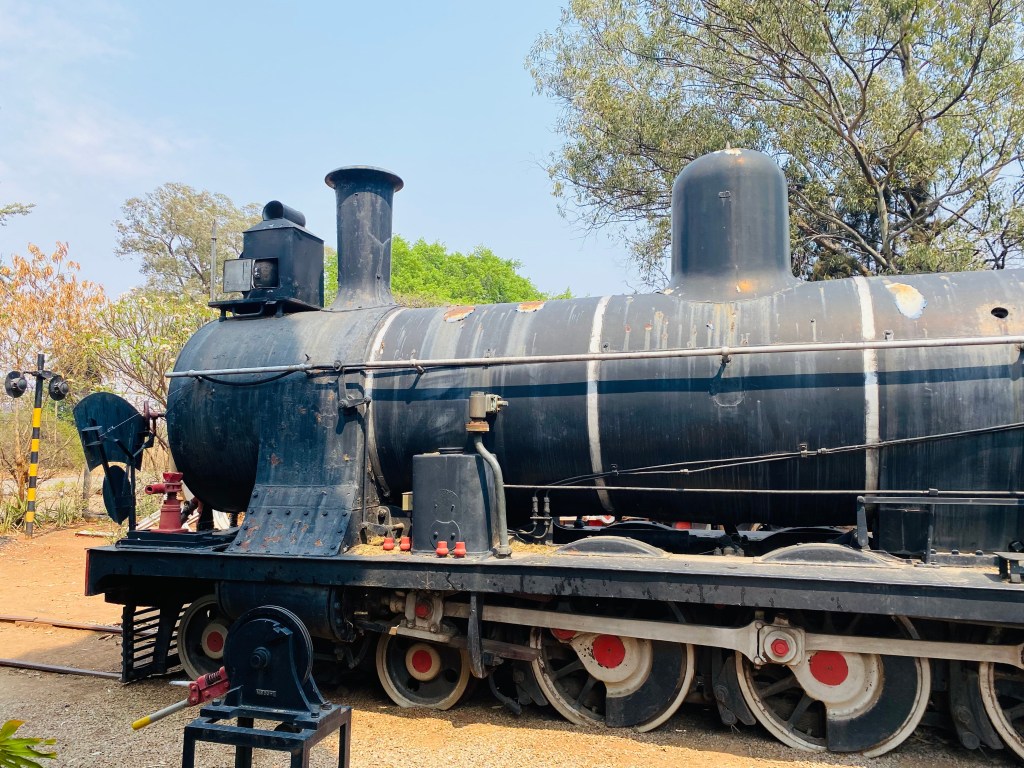
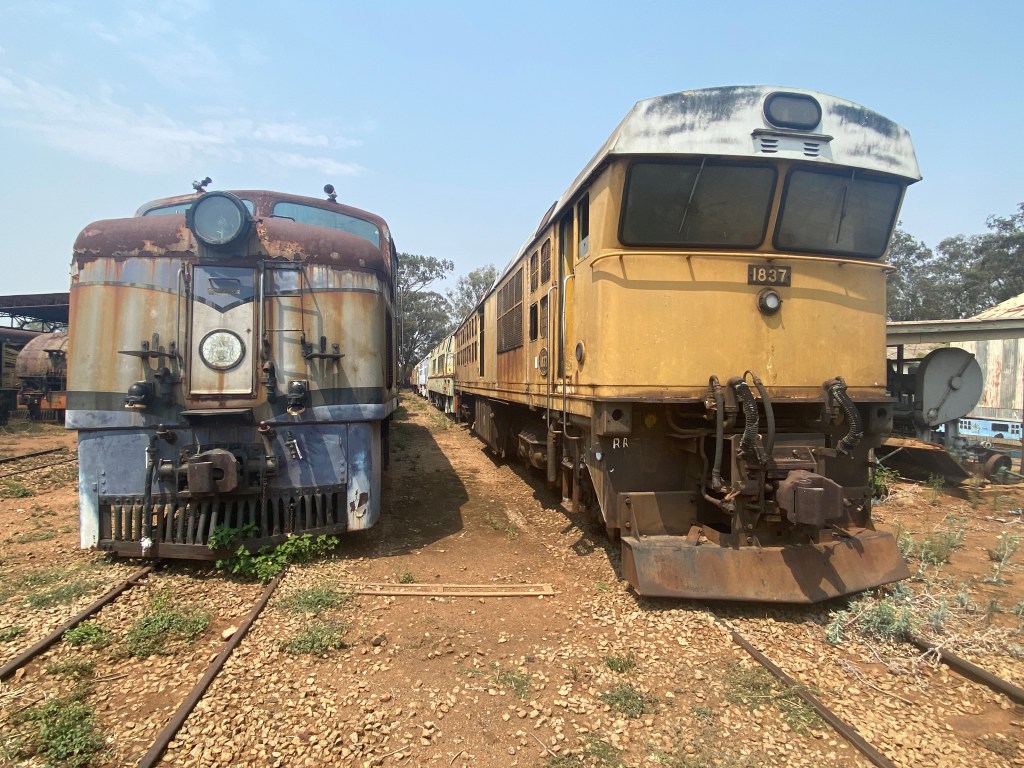
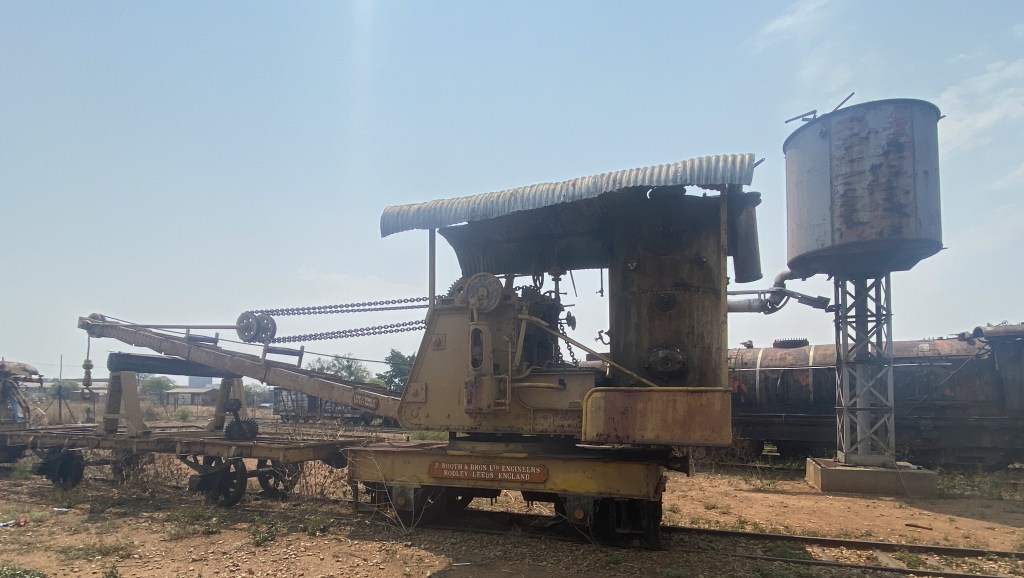
And we were even allowed to get on board and have a look around
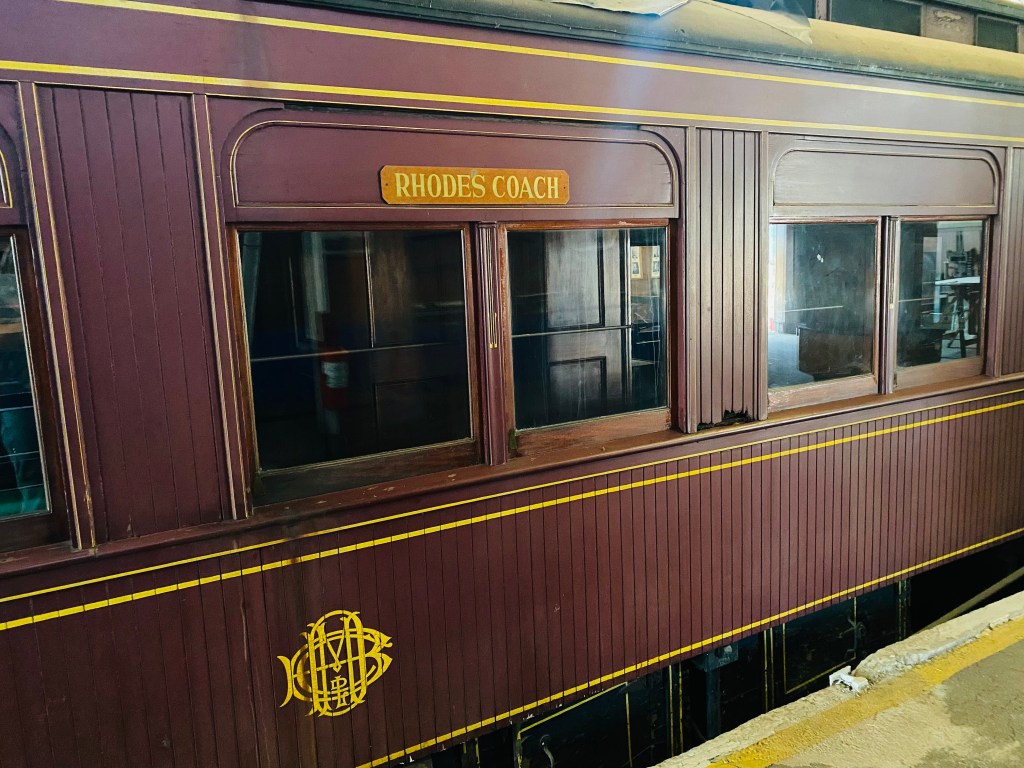
Including into Cecil Rhodes´ own personal carriage
Which was very posh inside
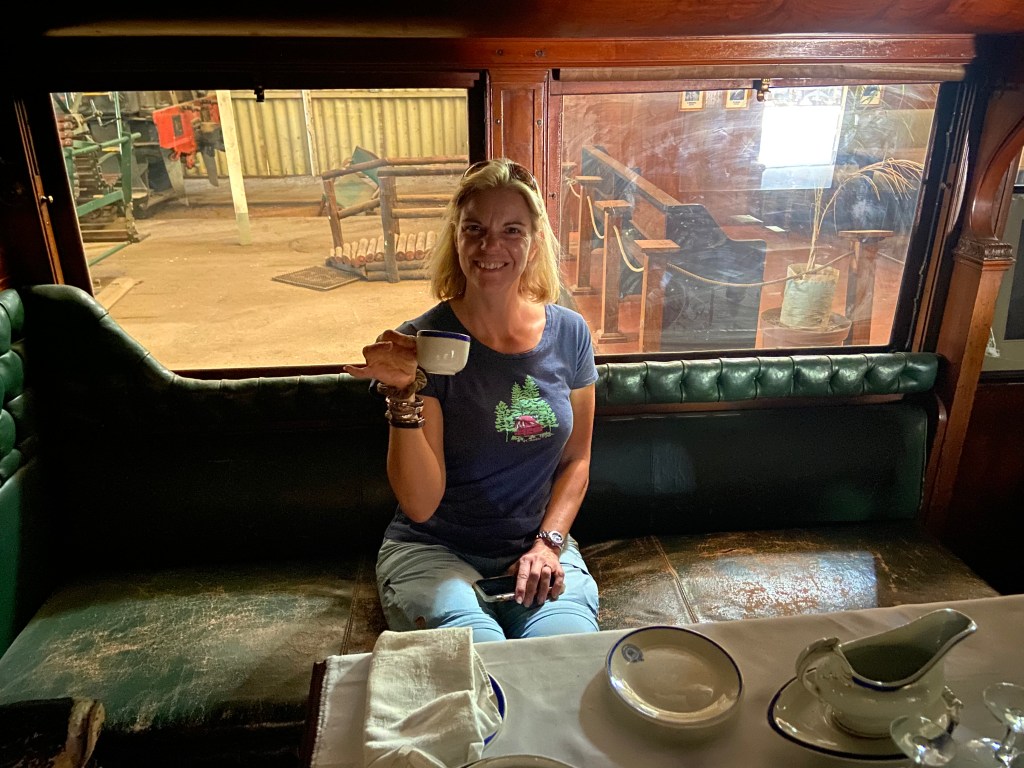

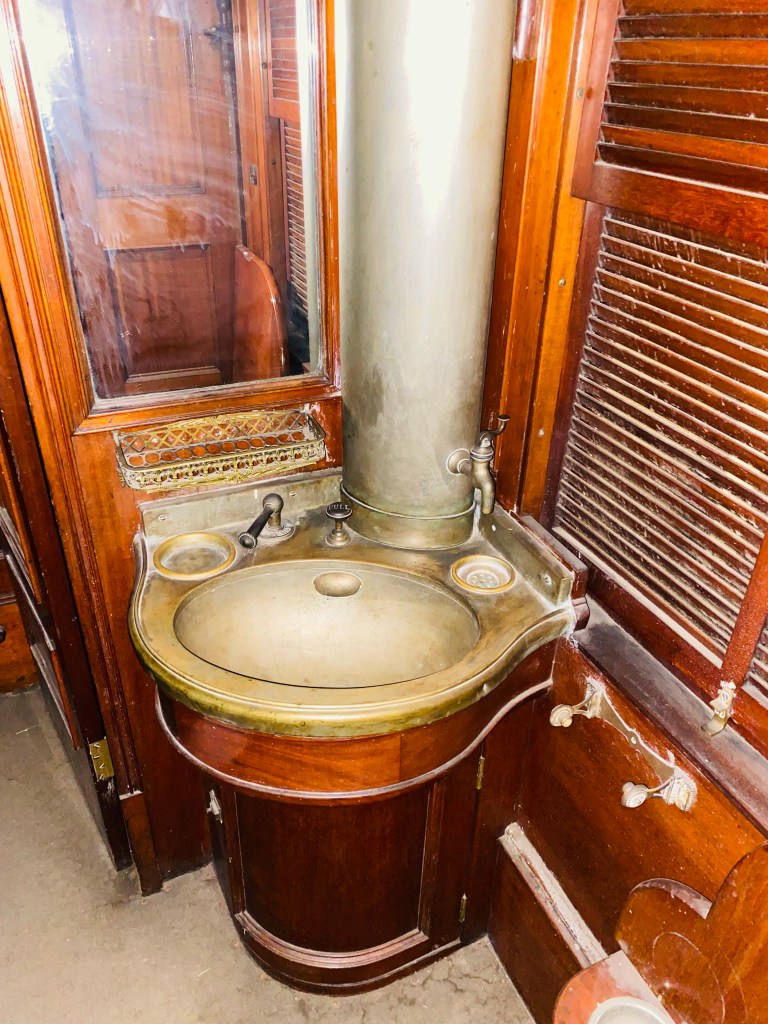
With all mod cons!

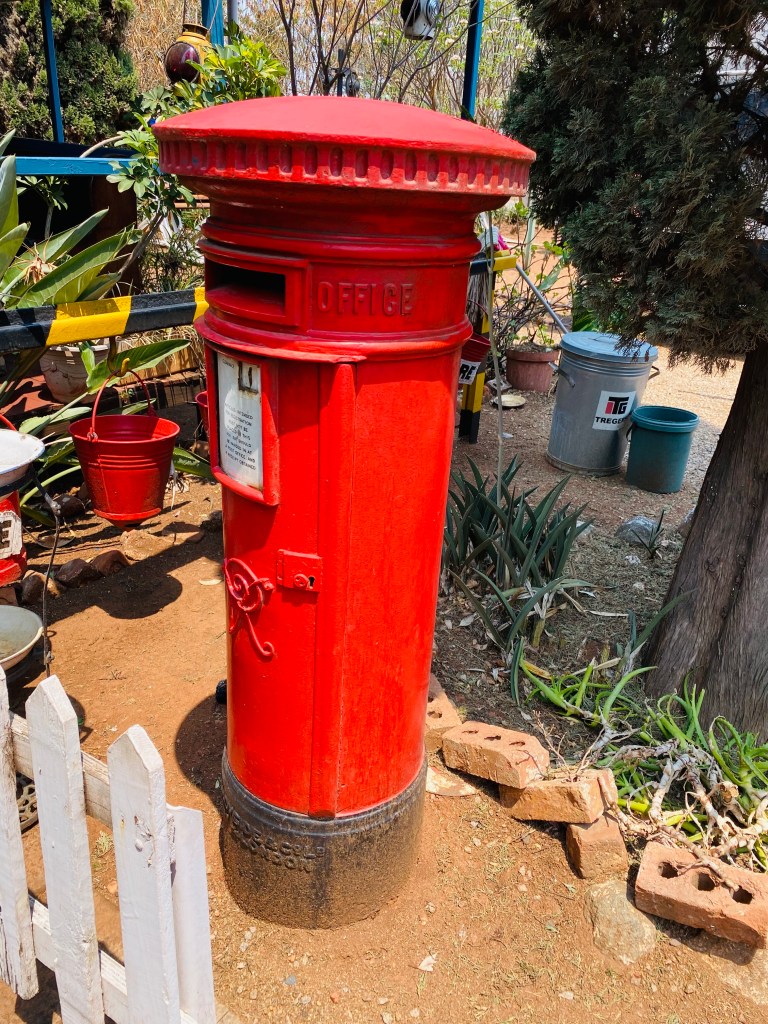
We were also noticing the very strong British influence throughout Zimbabwe with some very recognisable icons
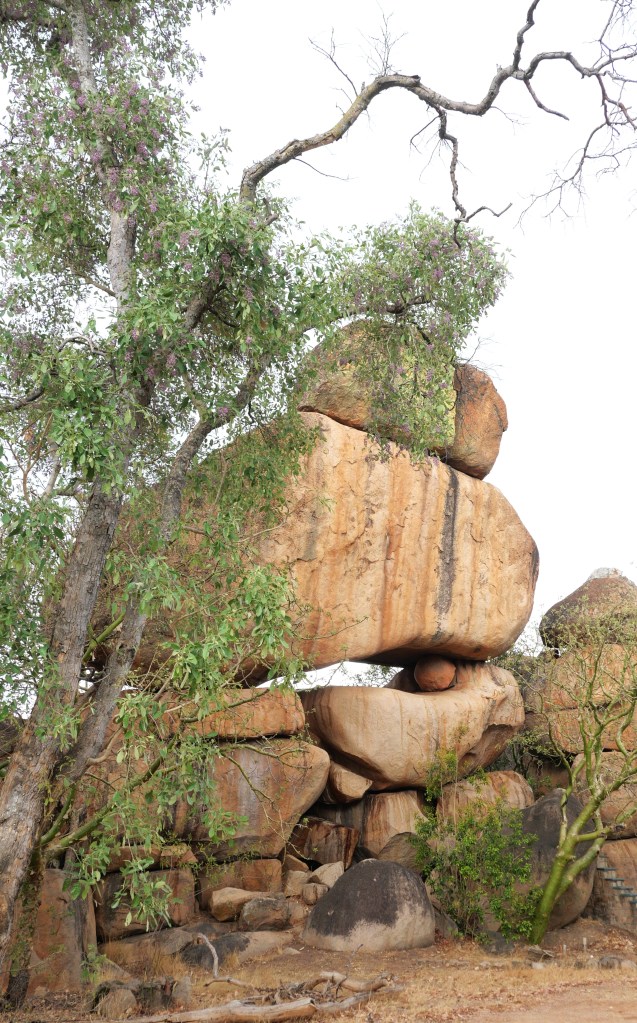
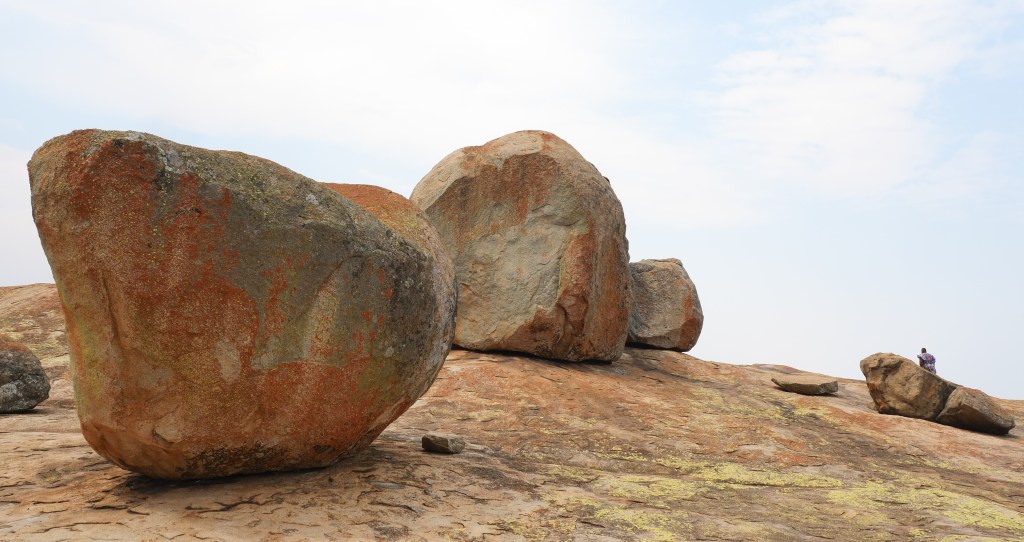
It was just a short drive from Bulawayo to the Matopos Hills, the spiritual home of Zimbabweans with its sacred balancing rocks – actually granite boulders left teetering on top of each other after millennia of erosion had carved away the softer rock in between

As we entered the park we stopped at a memorial to soldiers killed in the world wars. There was a Zimbabwean family visiting at the same time and they asked to take a photo of themselves with us. We politely posed for the picture and they were all elbowing each other out of the way to be the one to put their arms around James!
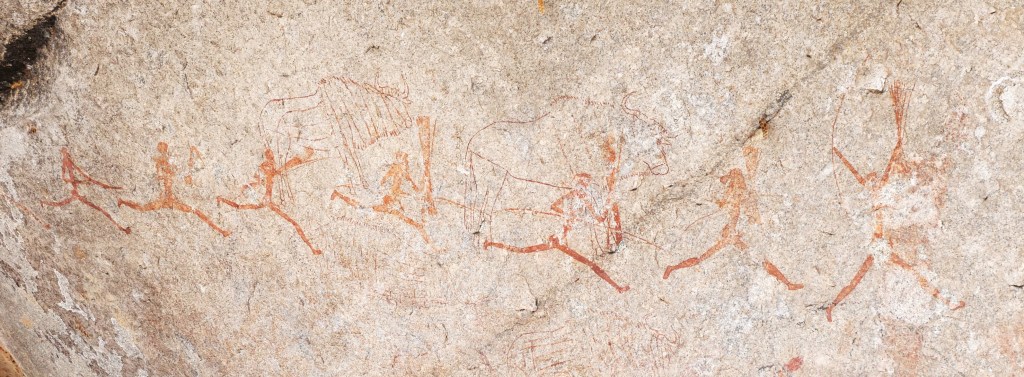
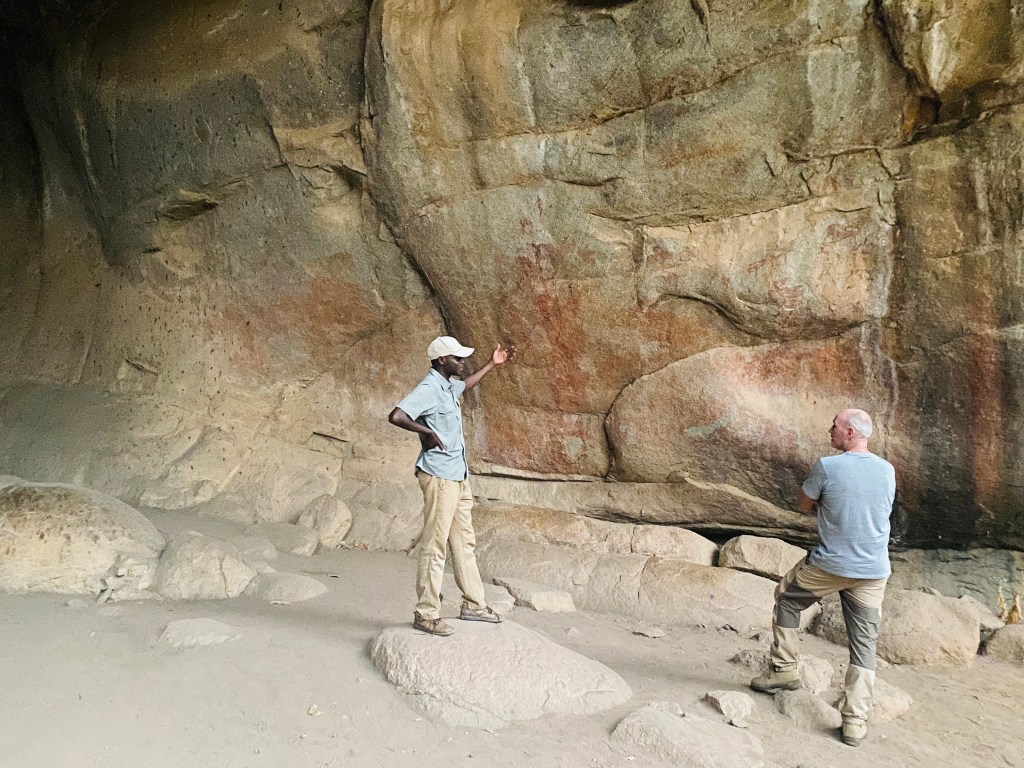
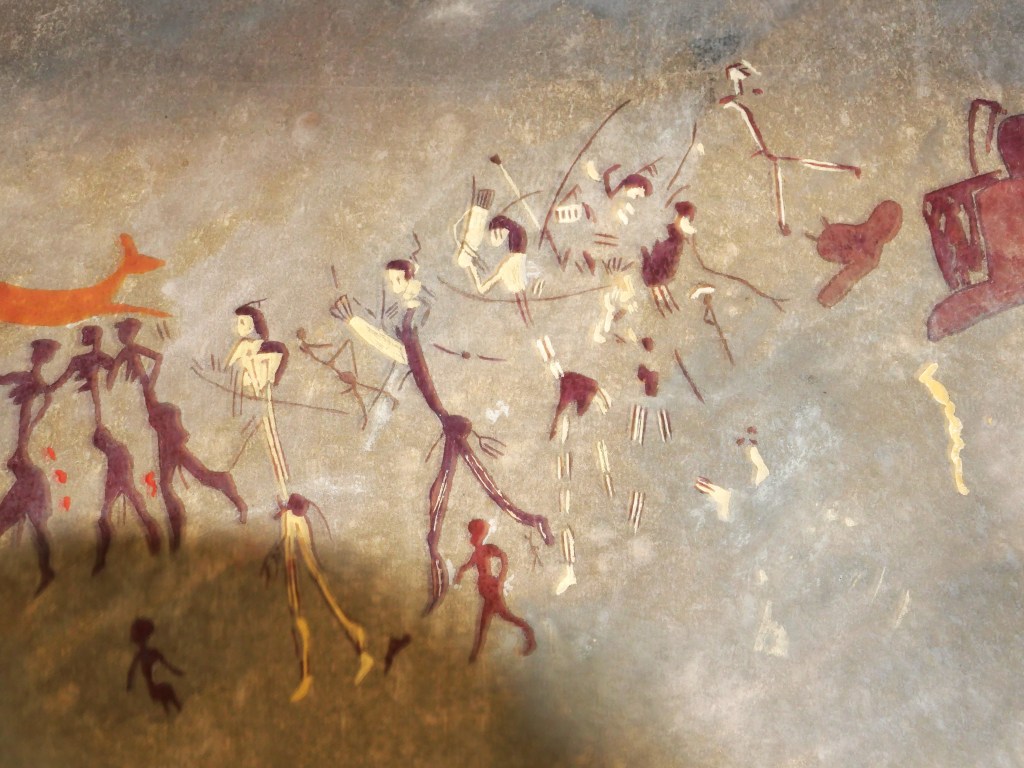
A little further down the road the White Rhino Cave was a short walk from the parking place and had some rather good rock art dating back to the days of the San people
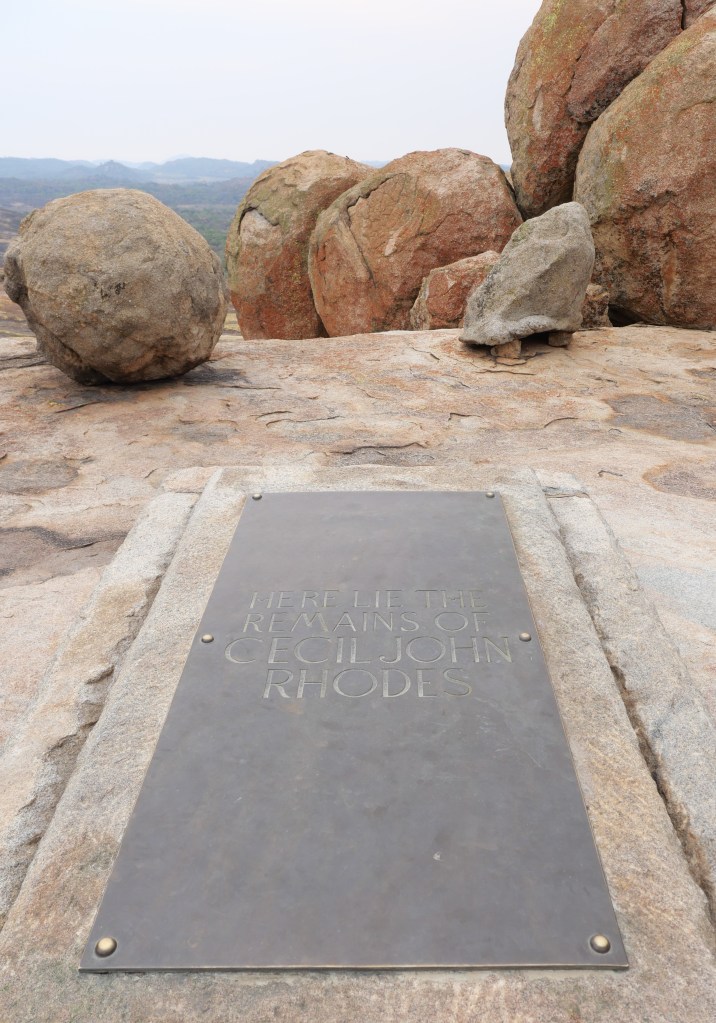
And from there we went to the ´View of the World´, a high point within the park that is the burial place of Cecil Rhodes himself as well as two other colonialists
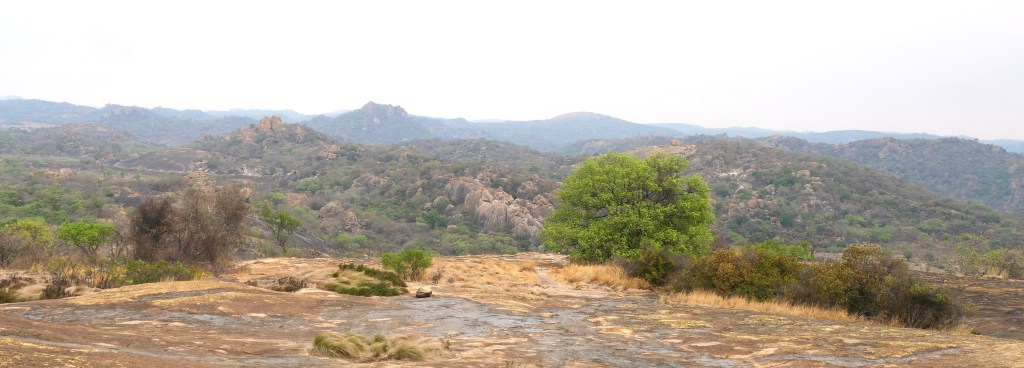
The view was spectacular although the weather was not on our side, in fact since the rain had started two days before it had barely stopped


We walked up to the place that Cecil Rhodes had loved so much that he asked to be buried there and we could see why it appealed to him

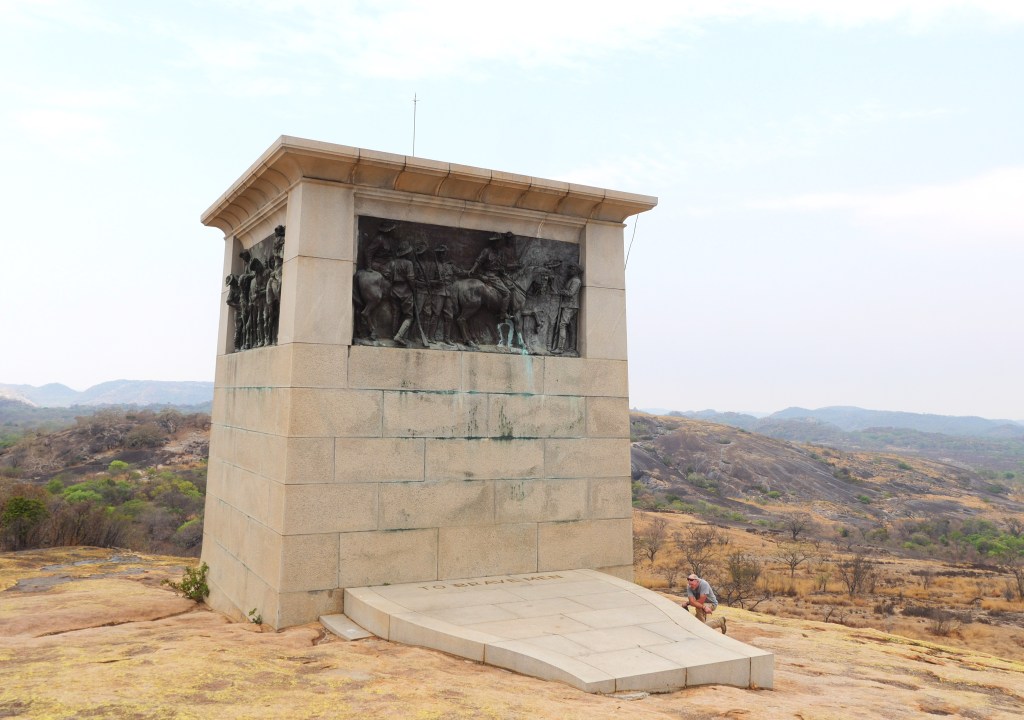
There was also a memorial to more soldiers killed in the wars.
I noticed there were a lot of local people at the spot including two or three groups of school children. I was curious to know what the Zimbabwean people think of Cecil Rhodes and whether they were visiting this place for his grave or for some other reason.
So when we got back down to the reception desk I went over to chat to the ranger and ask him. He told me that the English, Americans and Australians tend to come here to see the grave. The local people come to see the view and because it has always been a sacred site – they used to worship here at certain times of the year. He said no other nationality really ever comes, they just visit the park to see the balancing rocks and the rock art. I asked him what the local people think of Cecil Rhodes. He smiled a knowing smile and said ´you know, he murdered a lot of people but he also brought us the railway and developed a lot of good buildings. We Zimbabweans prefer not to focus on the past as we cannot change it, we look to the future and try to make that as good as we can´.
I thanked him for his time and climbed back into Henry amazed at the tenacity and fortitude of the people of this country.
Our final stop for the day was another cave. The ranger there talked to us about the history of the place as well as the wildlife in the area – leopards, snakes, dassies. The cave itself was interesting but apparently the British destroyed much of the art in the 1920s putting linseed oil on it in an attempt to make it look shinier for a visit from the Queen!
Our campsite for the night was in the park itself but when we arrived we found a desolate and empty place with extremely run down toilets and showers that looked like we´d be dirtier afterwards!
It was also raining, as had become the norm. We sat inside Henry eating snacks and looking out gloomily wondering whether we would get any dinner that night. After about an hour the rain eased off and eventually looked like it was stopping. So we dashed out, put the awning out and set up our cooking stuff. We cooked against the clock as the thunder rolled in the skies and the clouds descended again. By the time we sat down to eat the awning was the only thing keeping us dry and by the time we had washed up and stowed the awning again it was pelting down. We hid inside for the rest of the evening listening to the rain pounding down and watching movies on the laptop very pleased we had been given a few minutes relief to fill our stomachs.
That evening we slept soundly listening to the sounds of the night. I stared out of my window at the stars and couldn´t help but wonder at the endless beauty of the Matopos Hills surrounding us, the darkness and the rain enclosing us. Zimbabwe had welcomed us like no other country. It was getting harder to travel here with poor conditions everywhere but we had no doubt in our minds that it was worth every minute…..
 The Sidetracked Sagas