Our first couple of weeks back in Malawi had been fabulous. The southern part of the country was spectacular and between pottery classes, high teas, forest retreats and mountains we had kept ourselves very happily busy.
And now, after a bad spell with my back, we were finally heading down from the Zomba Plateau towards the Liwonde National Park to find lions.
En route we decided to visit the Chilema Tree – a huge Banyan tree which covers over 700 square meters with hundreds of branches and trunks sprouting up from the ground
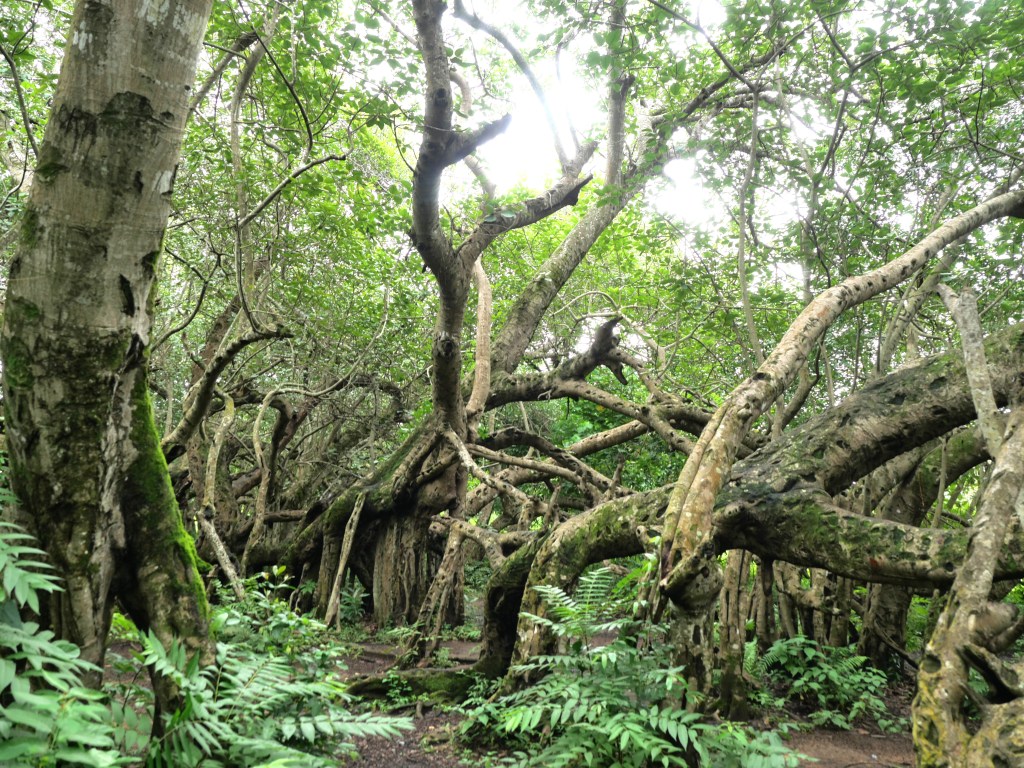
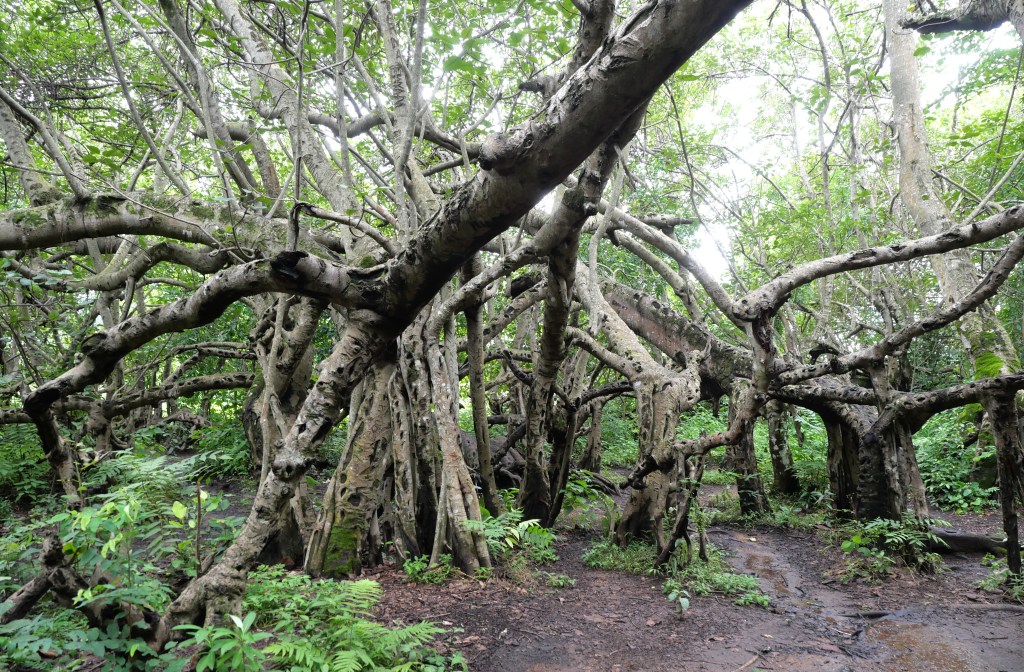
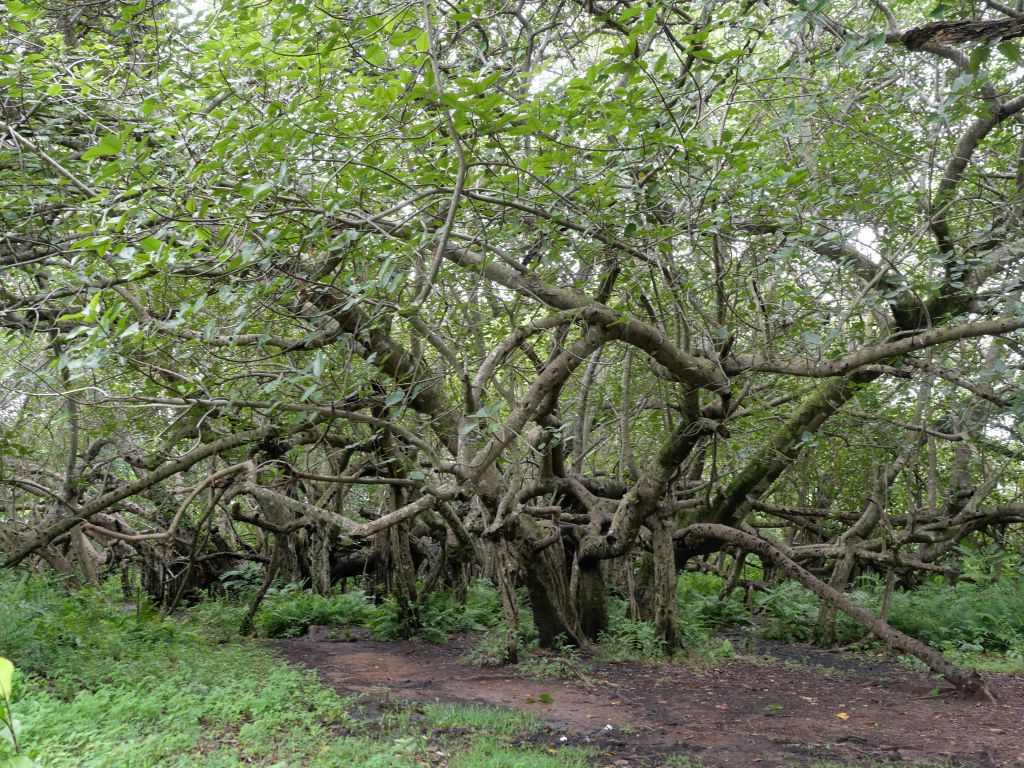
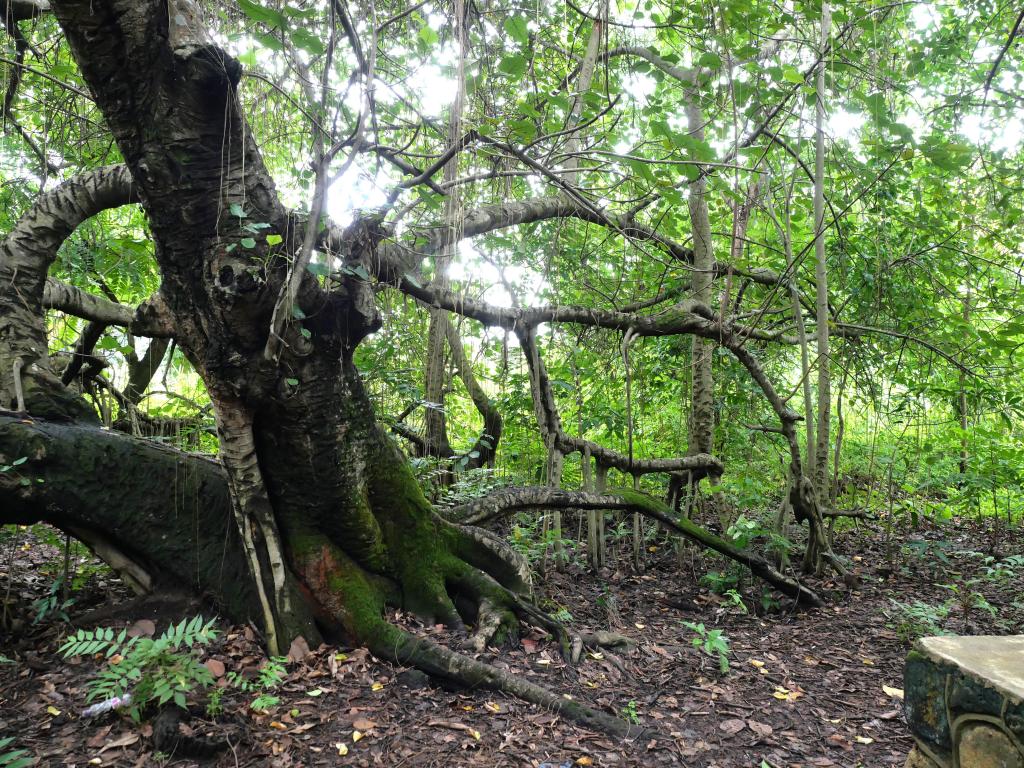
All of this is one tree! The locals are very proud of it.
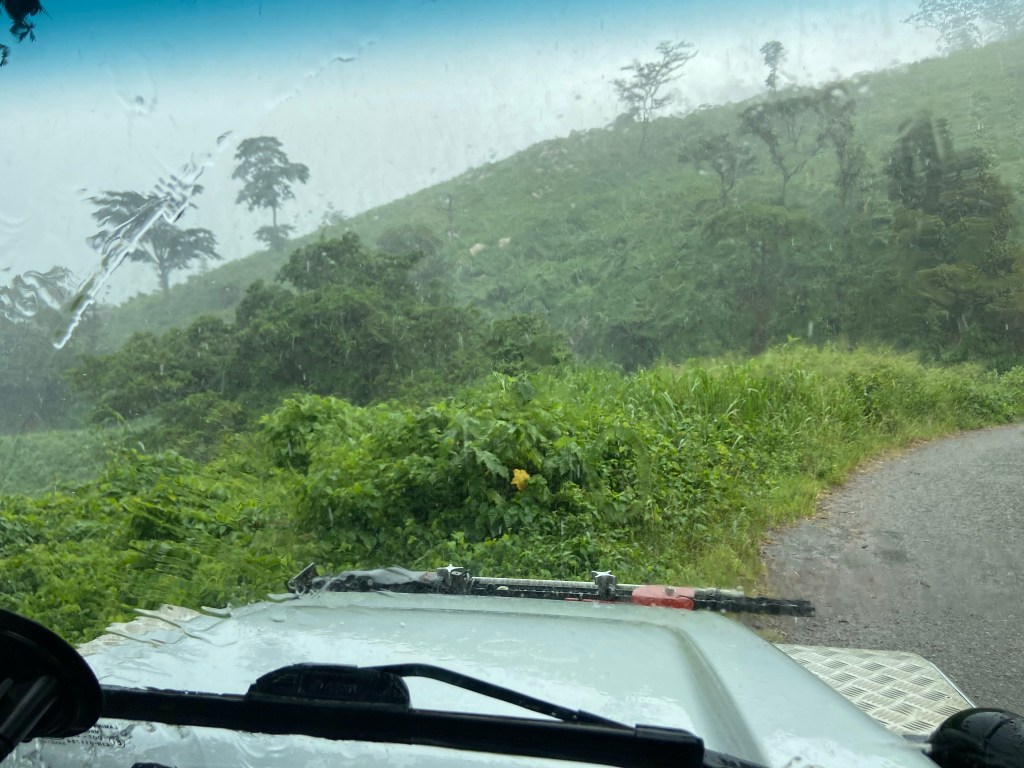
We pressed on towards Liwonde – as usual it had started to pour down with rain and the views were hidden behind low clouds
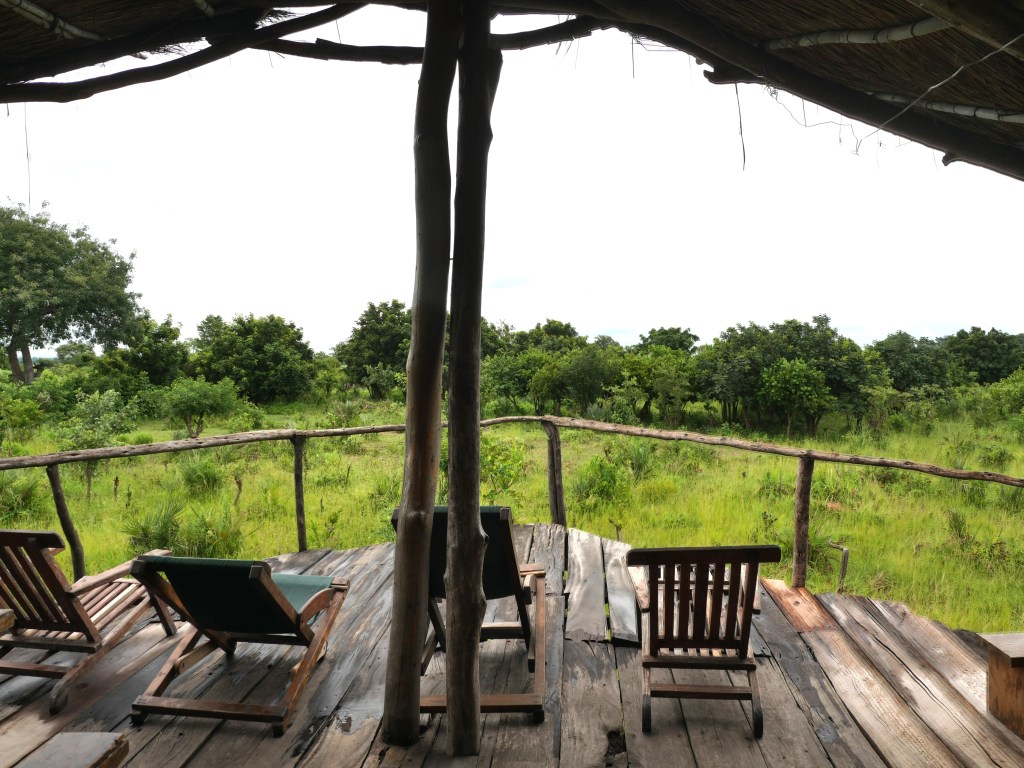
But when we arrived at the campsite we were delighted. For a national park campsite it was gorgeous. A platform nestled above the waterhole full of comfortable chairs and sun loungers
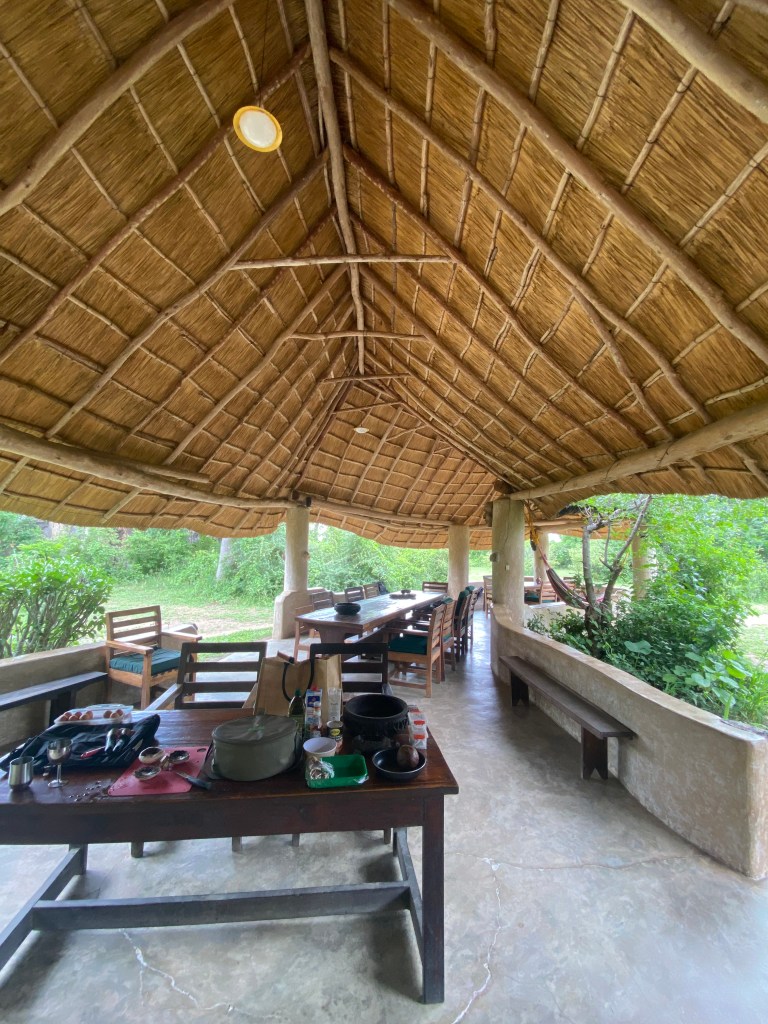
There was an undercover area with seats, tables, sink and running water
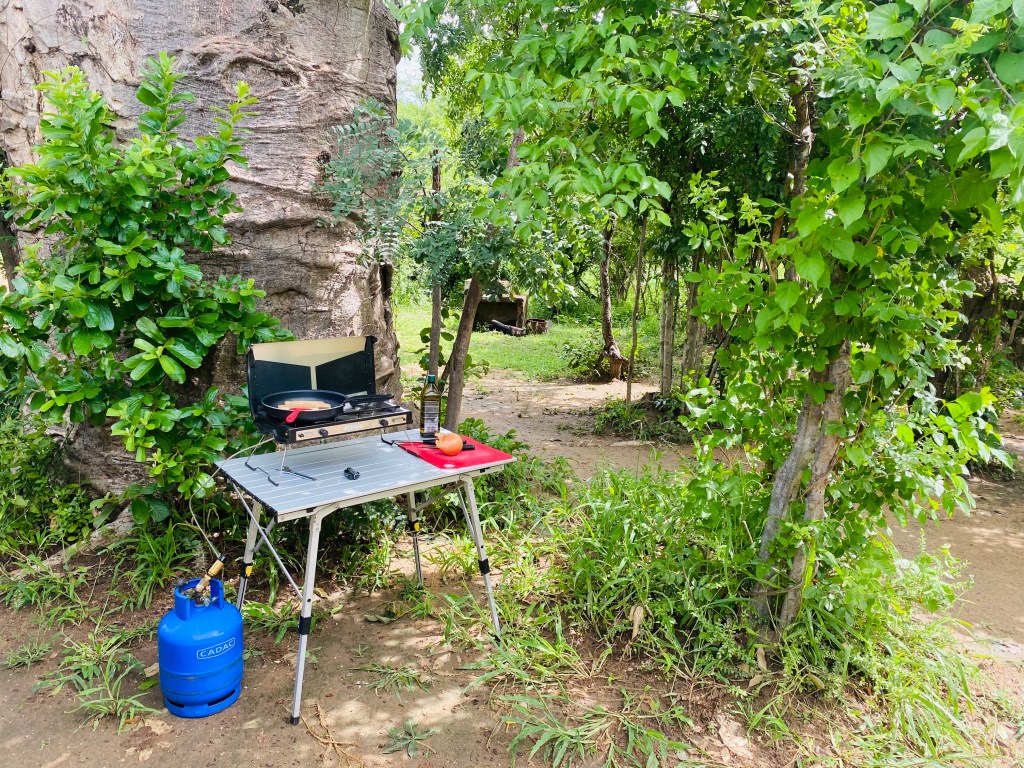
The pitch was spacious and green
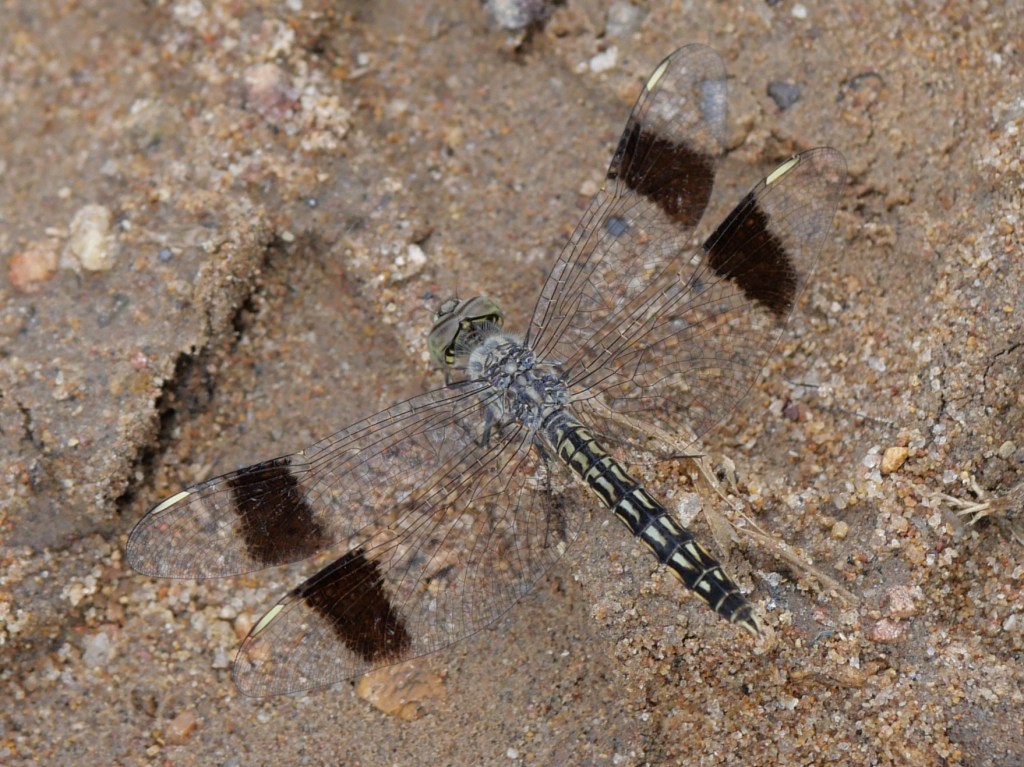
With more than a few friends buzzing around
We couldn´t have asked for more.
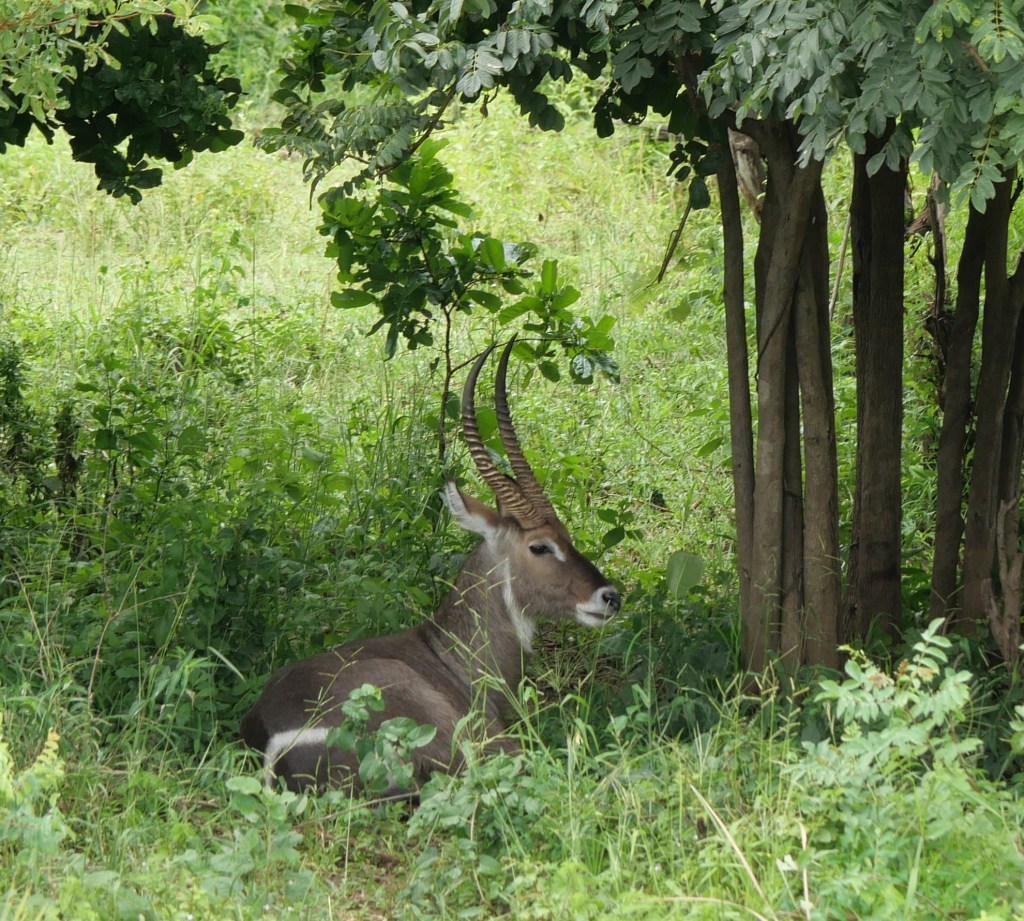
It had been a long drive so we settled ourselves in on the viewing platform and spent the afternoon chilling out with the waterbuck and our books
That evening it rained heavily but we didn´t care, we cooked dinner under cover and had proper tables and chairs to eat at.
We were up early the next day and at the gates of the park before 6:30am ready to start our lion hunt. We met a safari guide with six guests at reception as we signed in and they were pretty much the only other people in the park with us. The guide was very friendly and we agreed to keep in touch during the day and let each other know if we found lions.
They went one way around the first circular path and we went the other, meeting up at the far end. Guess who saw the lions…hint, it wasn´t us.
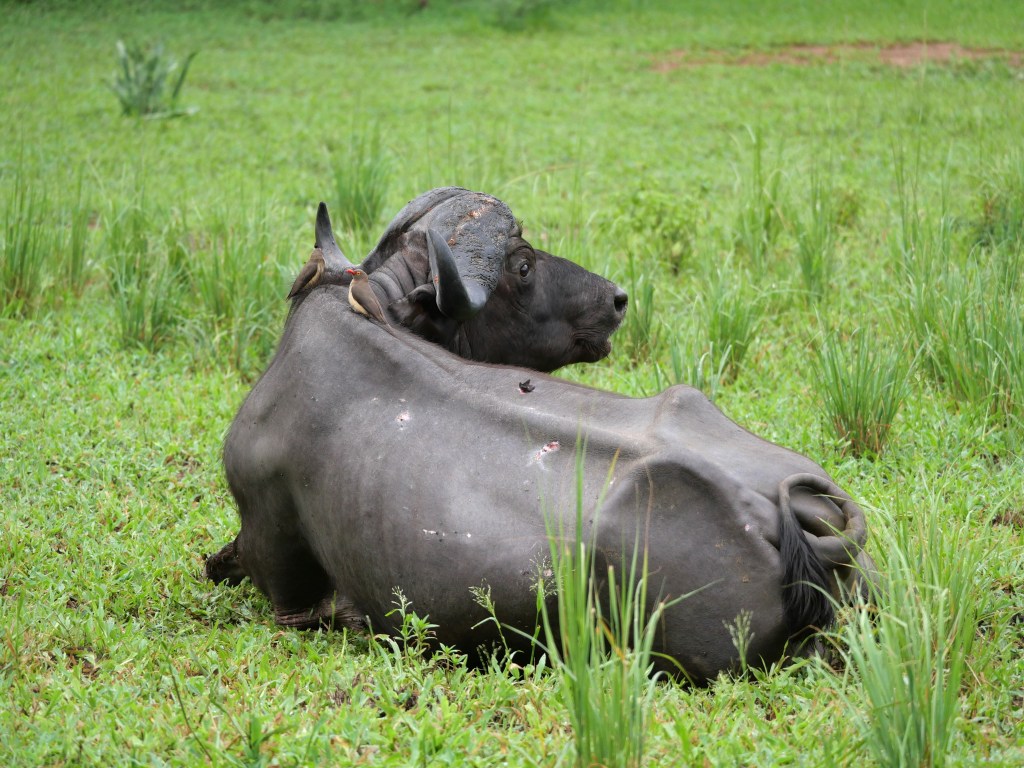
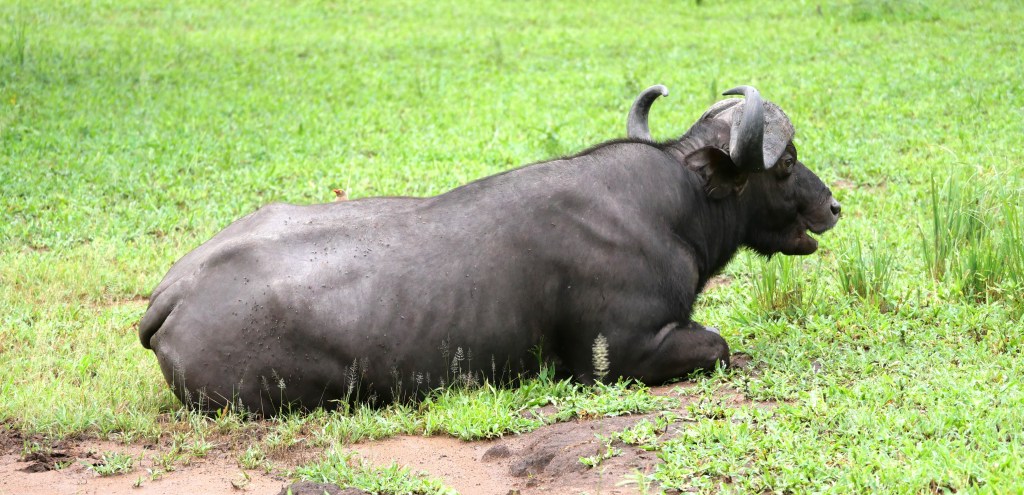
Never mind, we had all day ahead of us….and we did see a couple of buffalo lazing around just by the road
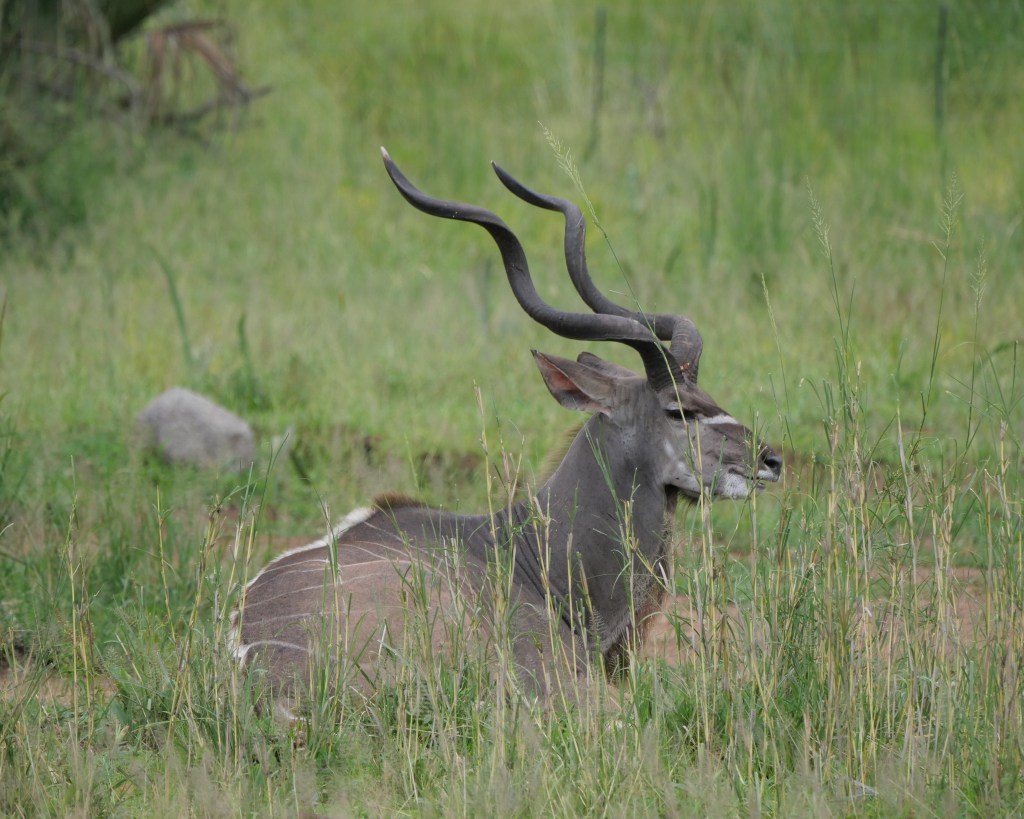
We drove together with the safari guide into the wet and muddy trails towards the river – safety in numbers. The landscape was lovely and there were plenty of kudu, waterbuck and other antelope around
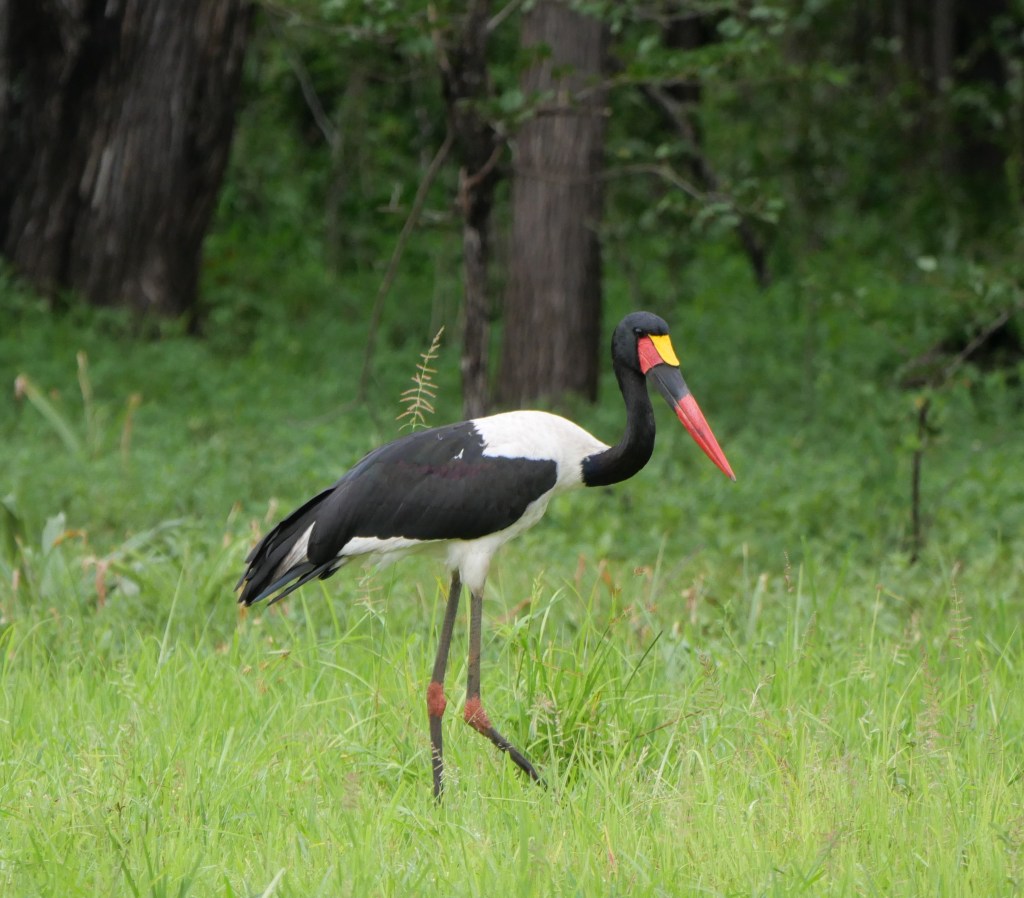
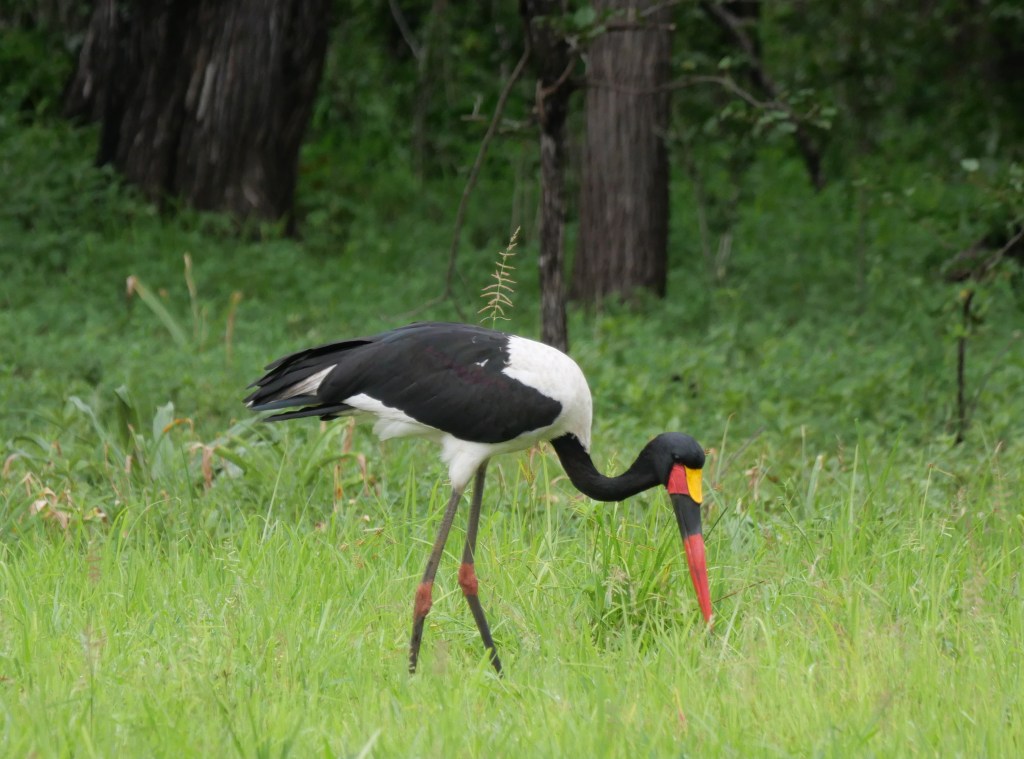
As well as some interesting water birds

The safari guide´s modified 130 Defender, loaded down with six passengers, slipped and slid around, sinking low but managing to pull itself out. We were much more nimble and Henry didn´t skip a beat making his way through the deep mud.
Once back on the main trail we waved them off as we took a detour down the ´seven dams´ loop. The detour was rather longer than we anticipated and at some points the road was quite challenging.
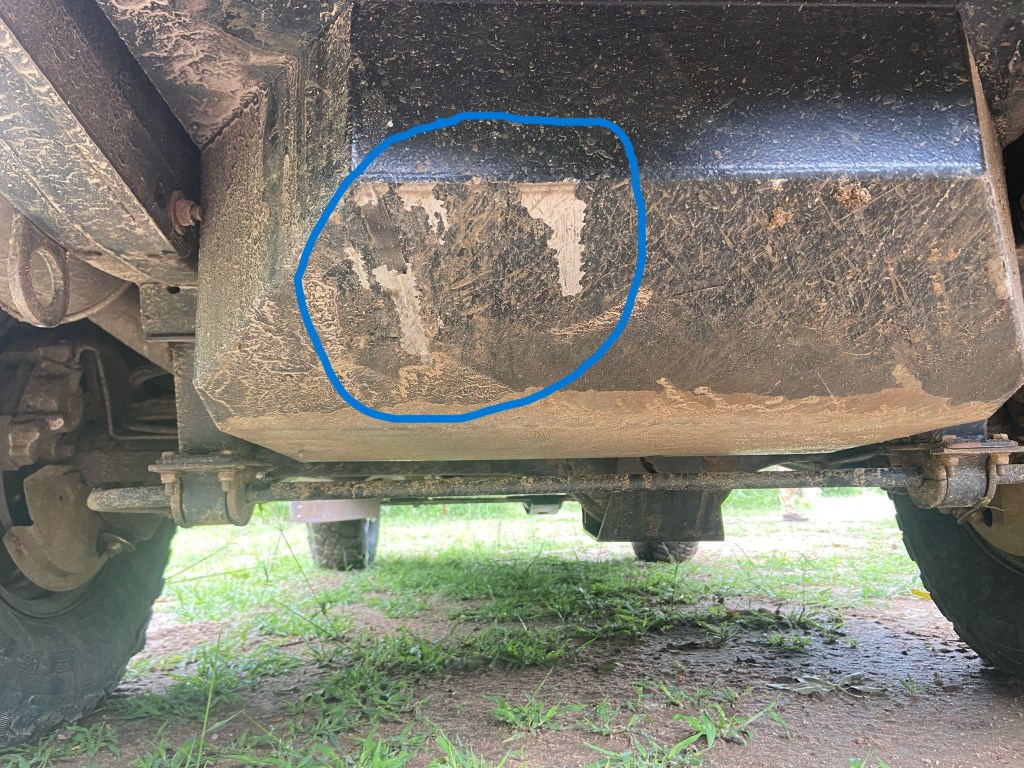
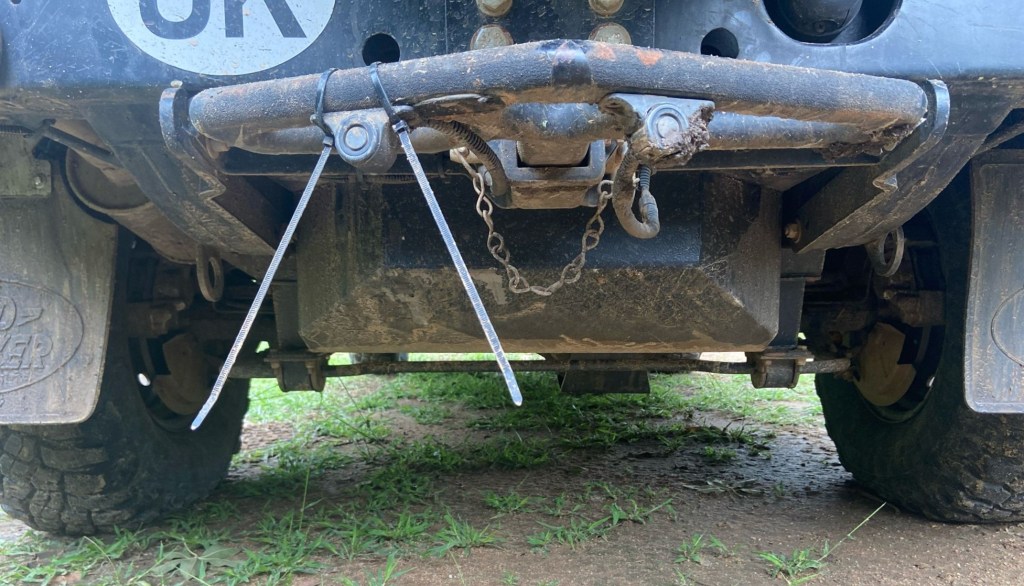
There was one particularly awkward part where the road had collapsed leaving a big dip to negotiate. We went down hard on the way in and heard a big crunch as we landed. Later on we discovered that the back step had hit a rock ripping off one of the reversing sensors and scraping the main fuel tank.
We were thankful that we had built the tank with 4mm thick stainless steel so the damage was minor – but the poor reversing sensor needed a couple of cable ties to keep it on until we could do a proper fix….
But we had seen three sable deep in the forests which made it all worthwhile.
The route turned out not to be a loop as the map suggested so when we met the park fence we had no choice but to turn round and do it all over again in the opposite direction! No further damage was done this time though, thankfully.
When we finally rejoined the main trail we followed it as far as we could and kept our eyes peeled for whatever was around.
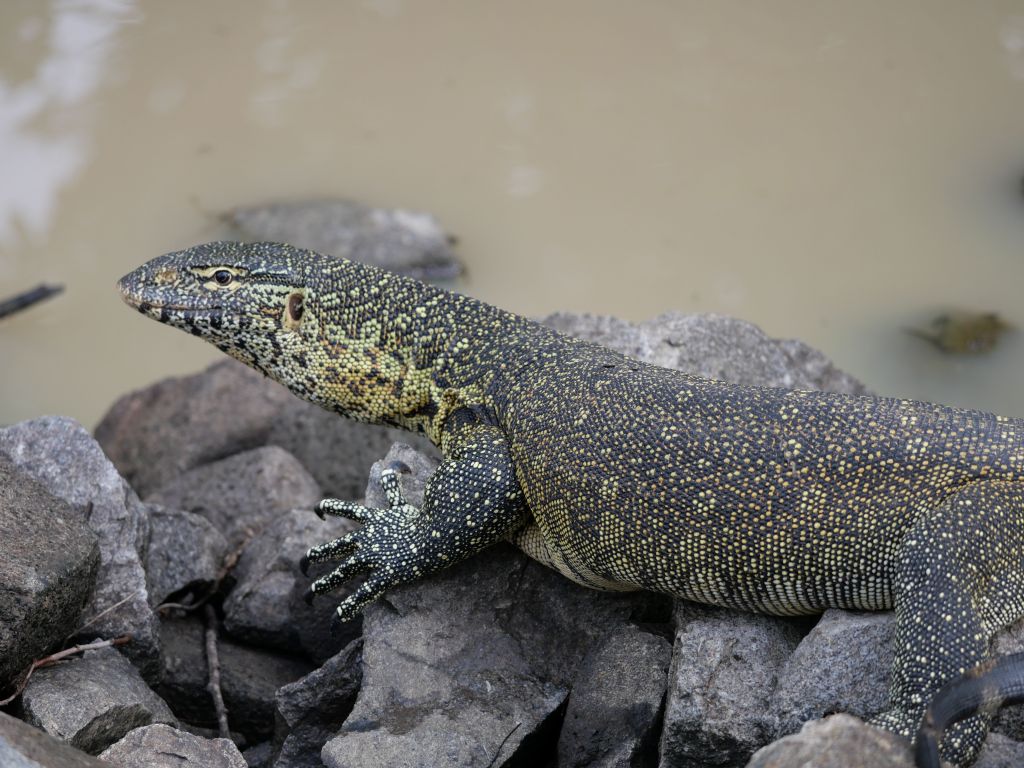
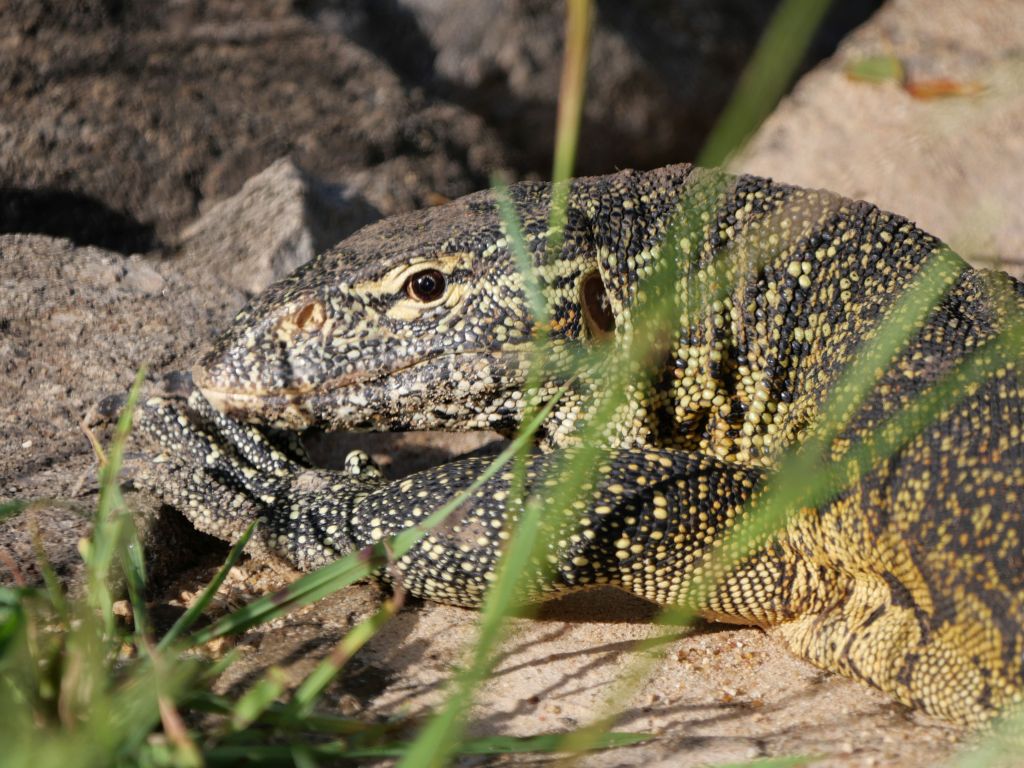
Just to the side of a small bridge over the river we found a fabulous water monitor lizard

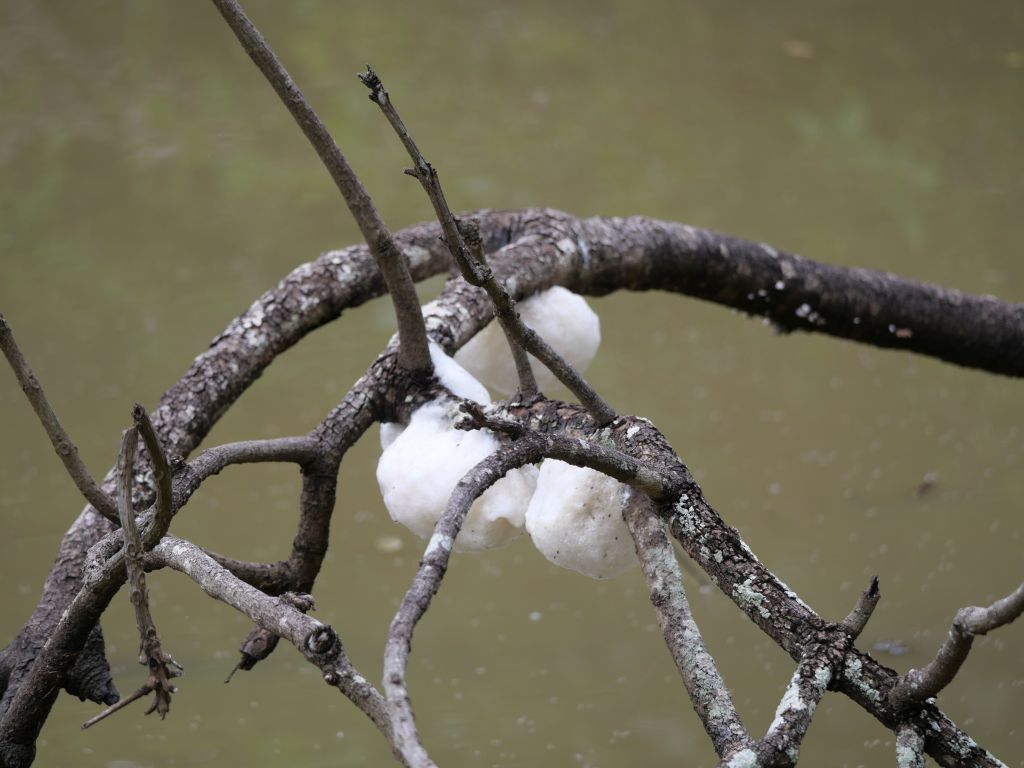
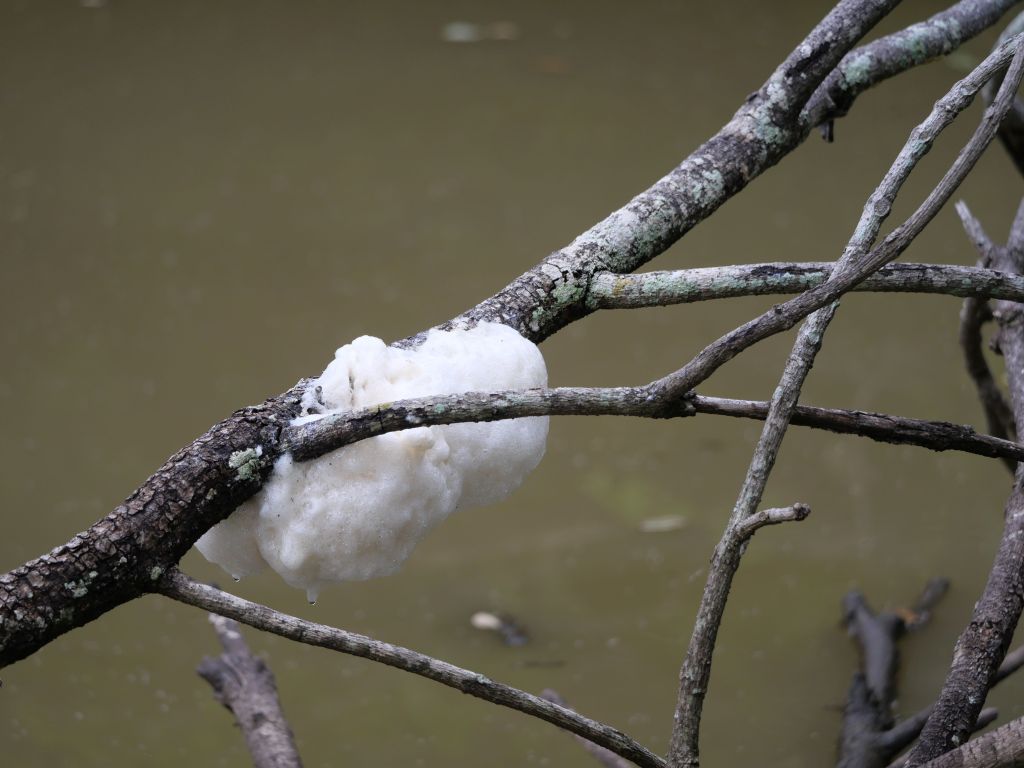
And what we could only assume were some sort of egg sacks stuck to branches across the water
The views were lovely, even when there weren´t any animals to spot
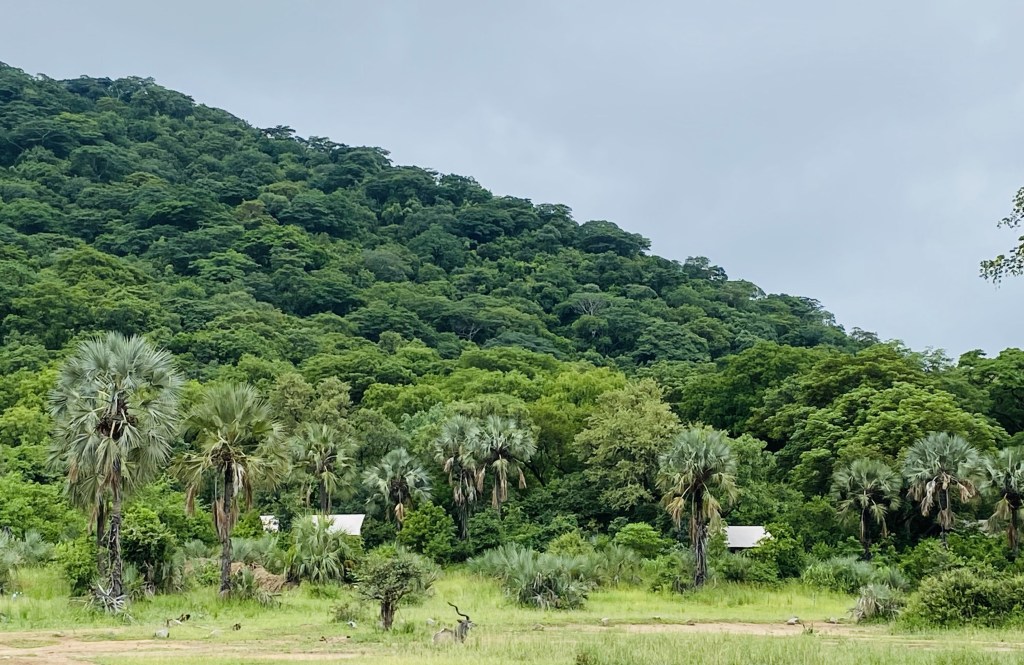

But eventually we were stopped by the flooded river blocking our way

By now we had been out for nearly four hours so we made our way back to the campsite for a picnic lunch and another relaxing afternoon by the waterhole.
Well, it was relaxing until a troupe of baboons decided to join us, surrounding us on all sides and refusing to budge. In the end we gave way and left them to the sun loungers.
We had thought we might book a boat ride on the river that afternoon but on the way back to camp in the morning we had discovered the river loop through the park and were keen to spend more time in what seemed to be the most beautiful part. So we gave the boat a miss and instead took Henry back into the park, spending a happy few hours enjoying the views and the animals

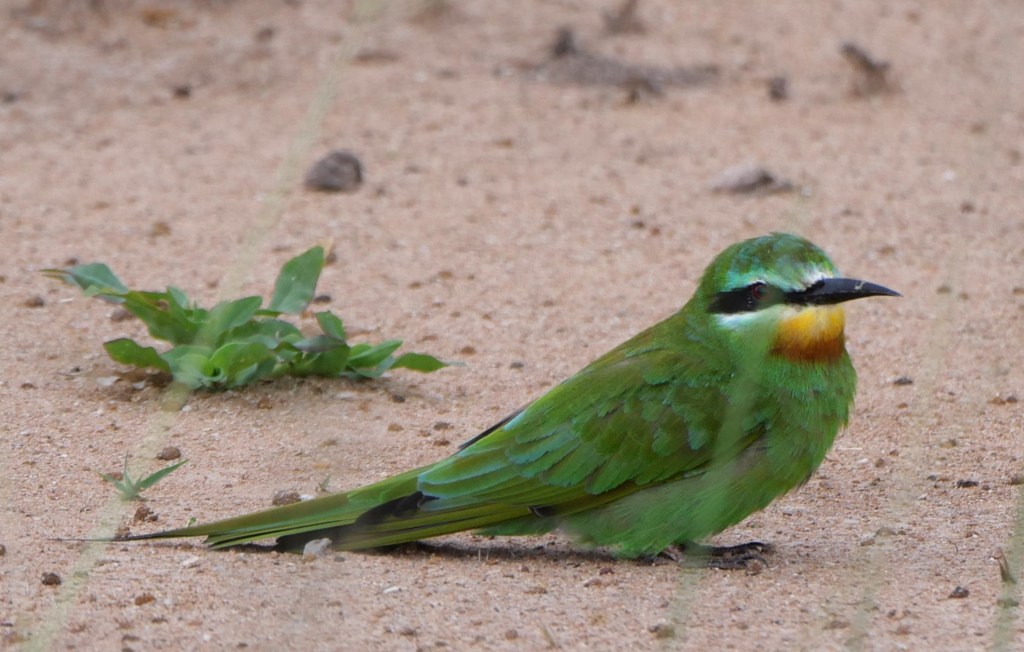
Not to mention the wet roads!


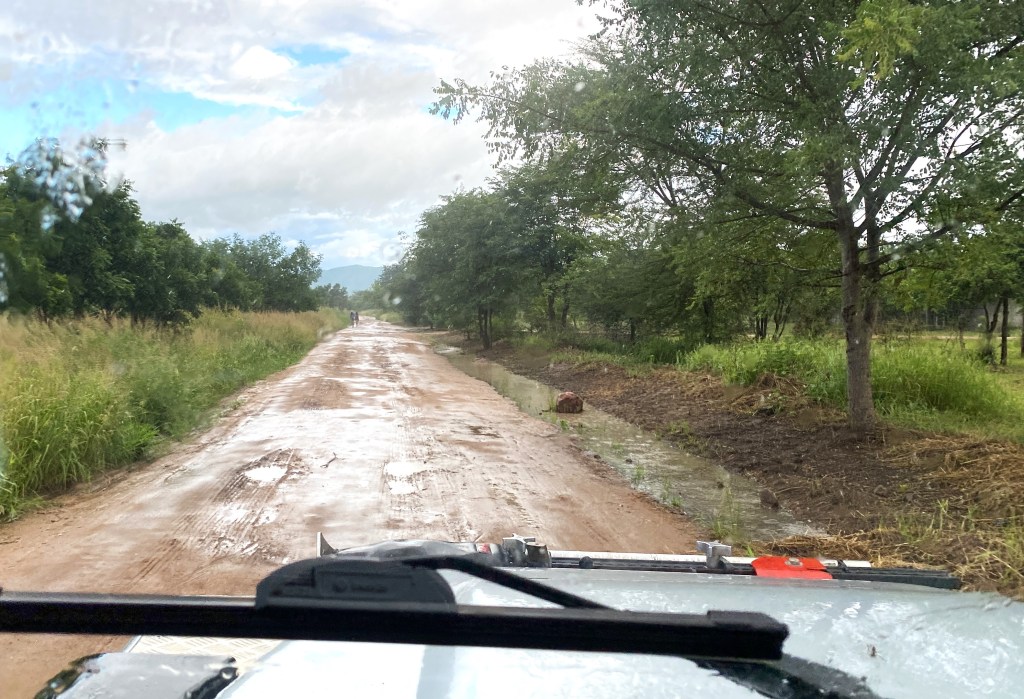
But still no lions….it just wasn´t to be for us at the moment.
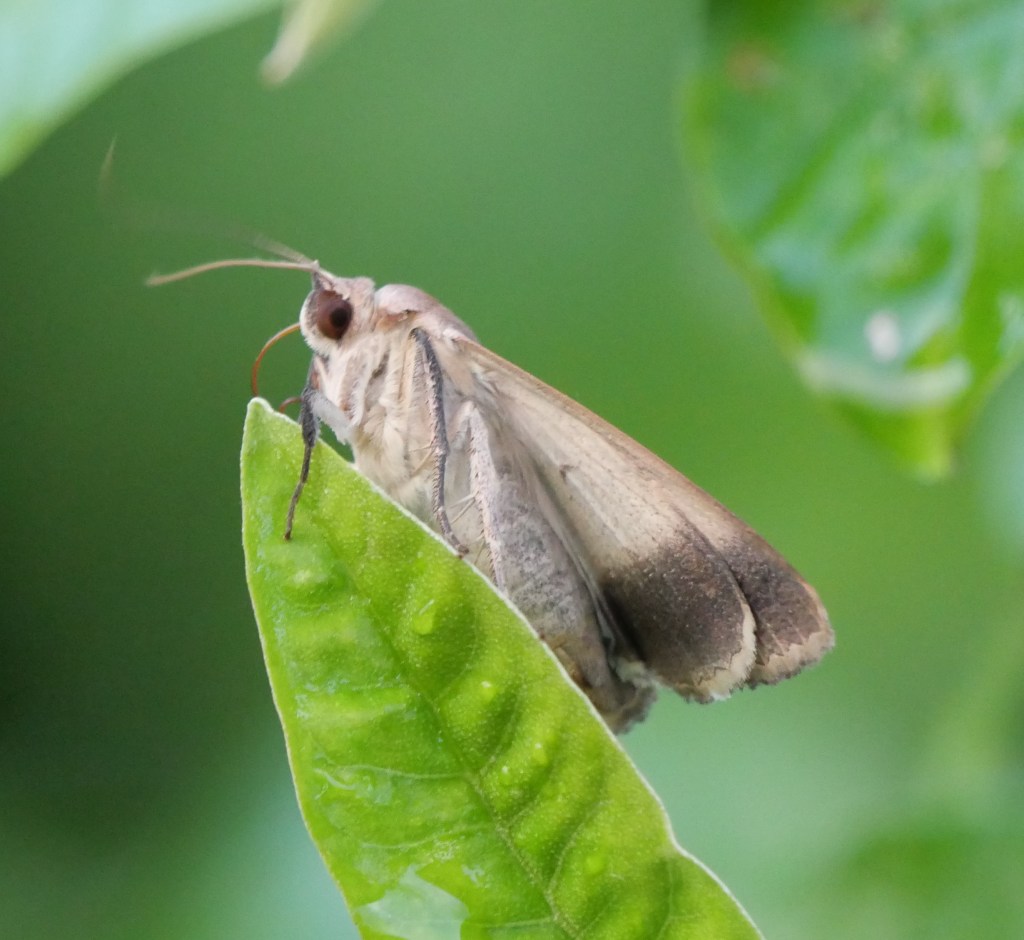
Back at the campsite I found a sweet little moth trapped inside Henry and managed to carefully rescue it onto a leaf outside. I watched for a while to see whether it would survive and was pleased to see it finally open its wings and fly away

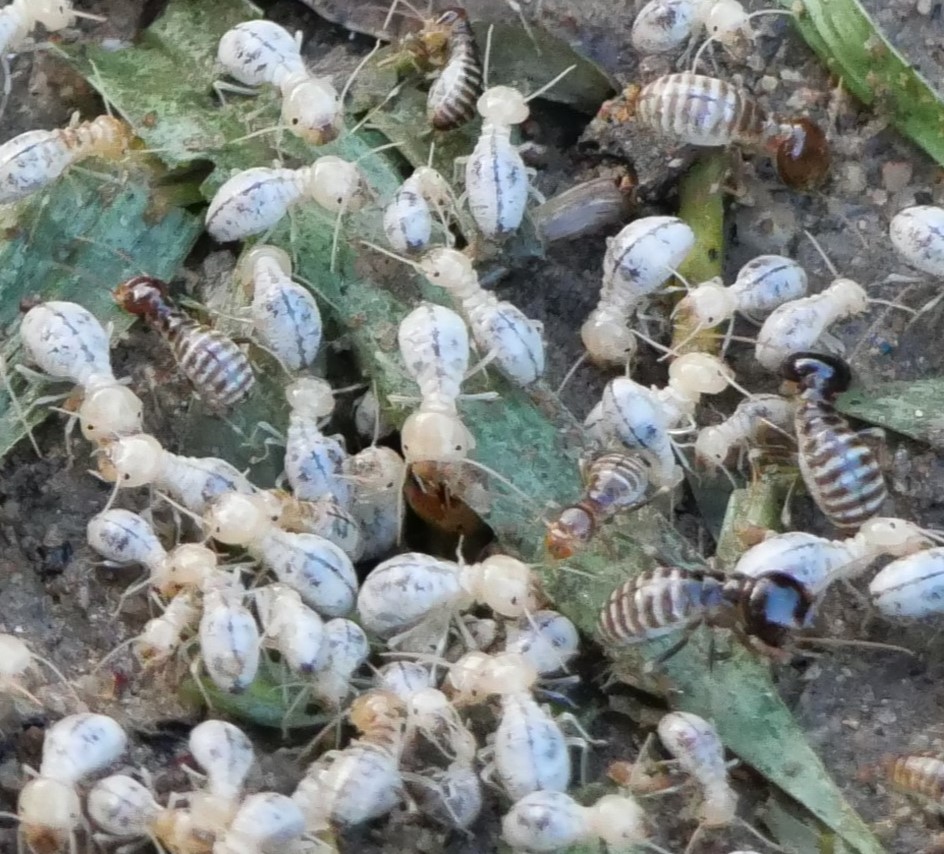
And just under Henry´s back step was a busy mass of something which we peered closely at before realising it was termites – thousands of them. We carefully stepped round them until the evening when they made their way home. Strange little creatures when you see them up close

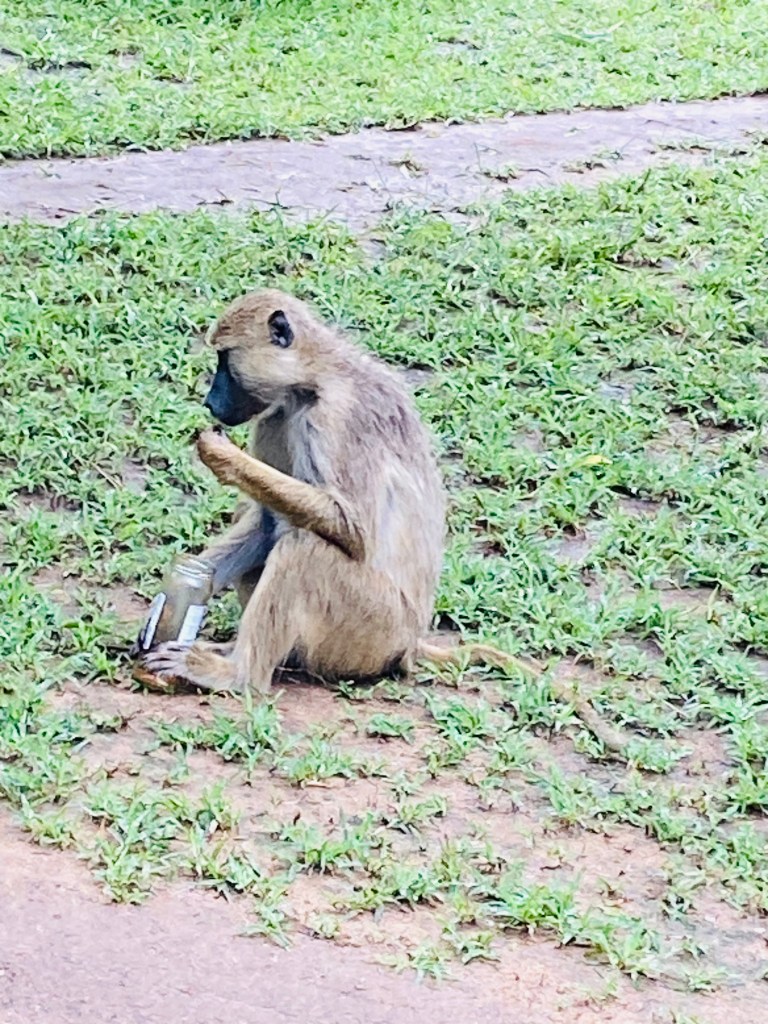
I was up early the next morning and headed for the undercover area to start my training. As I walked up a large baboon was sitting on one of the tables with her hand inside the empty jar of pasta sauce we had put in the bin the night before. I shouted and stamped my feet but she just looked at me as she put more pasta sauce in her mouth. Eventually she moved off the table and sat a few feet away finishing her breakfast
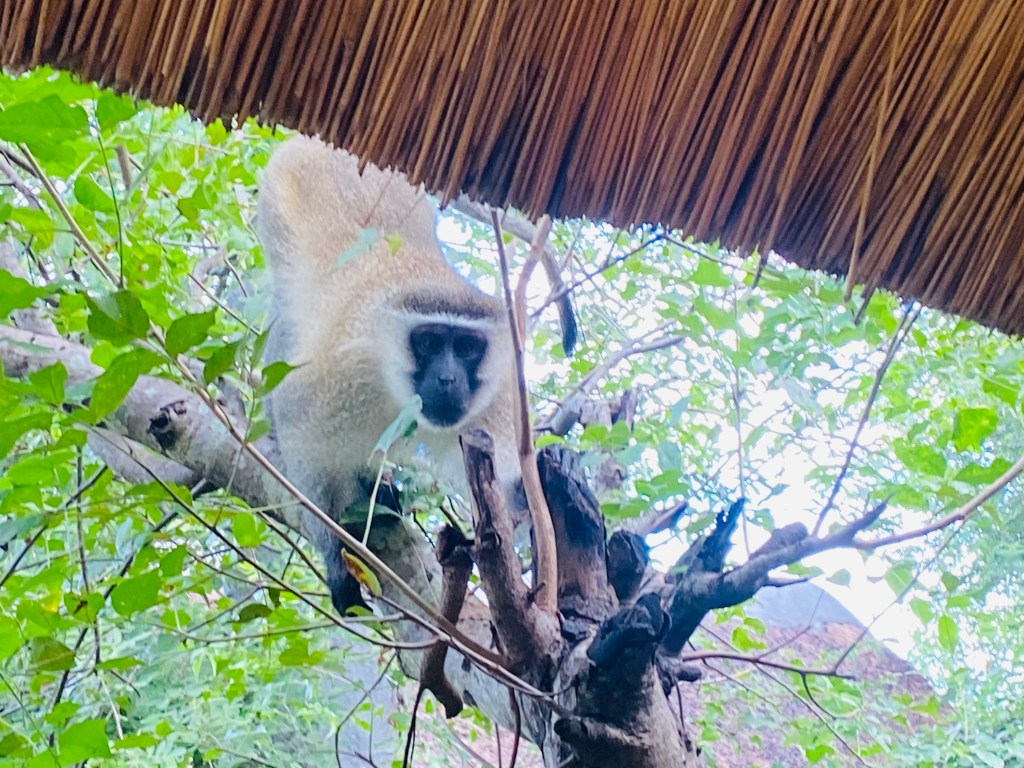
As I started my training a few vervet monkeys came past and peered at me. One in particular was fascinated and kept looking at me from his tree-top perch
Our next stop was to be the town of Mangochi where we were hoping to get our visas extended for another 30 days – we were falling in love with Malawi and didn´t want to rush our time here.
As we drove towards the town we started to see many, many bicycles most of which had a seat with handles at the back. We realised they were taxi bicycles which seemed a great innovation
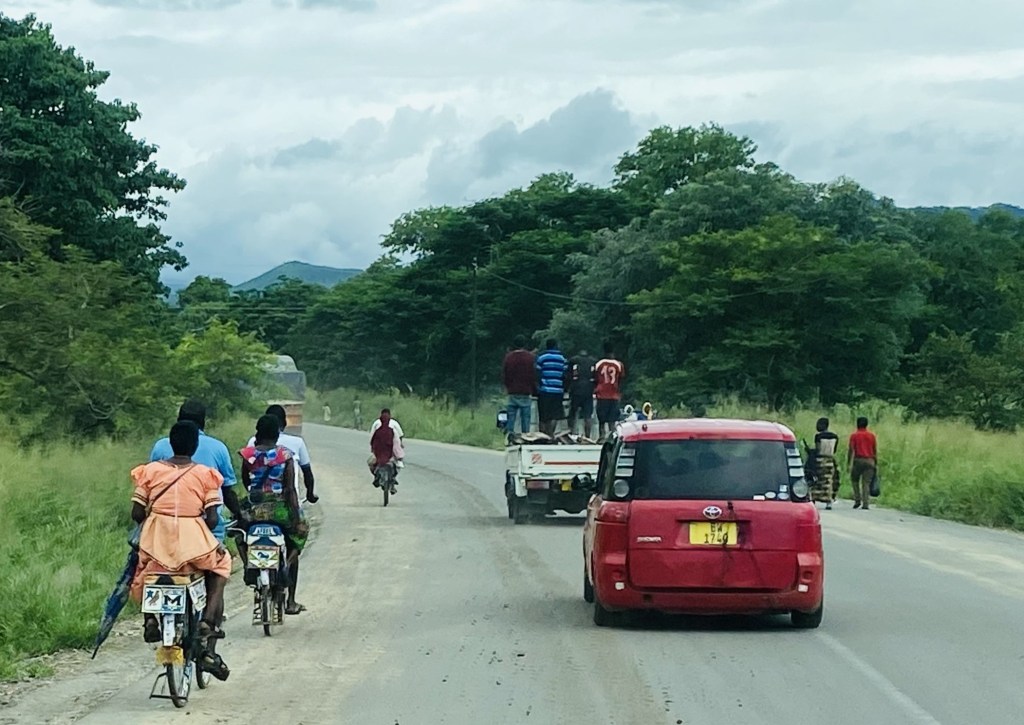
It took us a while to find the immigration office in Mangochi as Google had it marked in the wrong place, something that seemed to be happening more frequently in this part of the world. IOverlander came to the rescue though and we made it eventually.
As we entered the building we were shown to the right office and warmly greeted by the immigration officer. He got us chairs and asked how he could help. When we asked for a 30 day extension on our visas – something we knew we had the right to request – he initially seemed doubtful and concerned. He asked whether we would be asking for another 30 days after that but we said we were heading into Tanzania and up to Kenya, we just wanted to spend a little extra time in Malawi before we left. At this his whole manner changed and he smiled a broad smile saying we were very welcome.
We chatted about rice growing in Malawi as he did the paperwork and he recommended the best Malawian rice to buy whilst we were here (and we discovered later that he was right!). With another big smile he handed our re-stamped passports back and waived the fee.
Feeling very upbeat we drove out of town towards Cape McClear, finally re-joining the shores of Lake Malawi at its most southerly point having spent the last few weeks ´inland´.
Cape McClear is a peninsular that juts into the lake. It has a mixed reputation – it´s supposed to be really beautiful but the people are sometimes not so friendly with occasional reports of children throwing stones at tourist cars. We had decided to camp at a lodge which had very good reviews with a campsite right on the lake edge. We planned to stay a few nights and enjoy the lake views.
But when we arrived we were disappointed for the first time since arriving back in Malawi. There was one pitch with a lake view but this was already taken by a large overland truck that we recognised from Lake Kariba in Zambia. With that pitch taken our only other option was to park further away on a slope with views only of the back of house of the lodge and security fences.
Added to that the toilets were a long hike away and everything seemed very expensive.
We were a bit glum. We had taken a big detour to get here and we didn´t like it at all.
We made the most of it by cooking chicken fajitas on the braai but checked out early the next morning and decamped to Senga Bay on the western edge of the lake.
It was a long drive along poor dirt roads and we did indeed experience children throwing stones at us. As we were driving I was less than optimistic about what we would find when we arrived as the campsite we were aiming at had mixed reviews – some people loved it, some people said it was just a car park by a lodge. To make matters worse I had contacted the owner who said she had a large group of volunteers having a seminar there so we might find it a bit crowded.
But this time we were in luck, it was fantastic. A spacious, green campsite, lovely views of the Lake, friendly people and a relaxed atmosphere
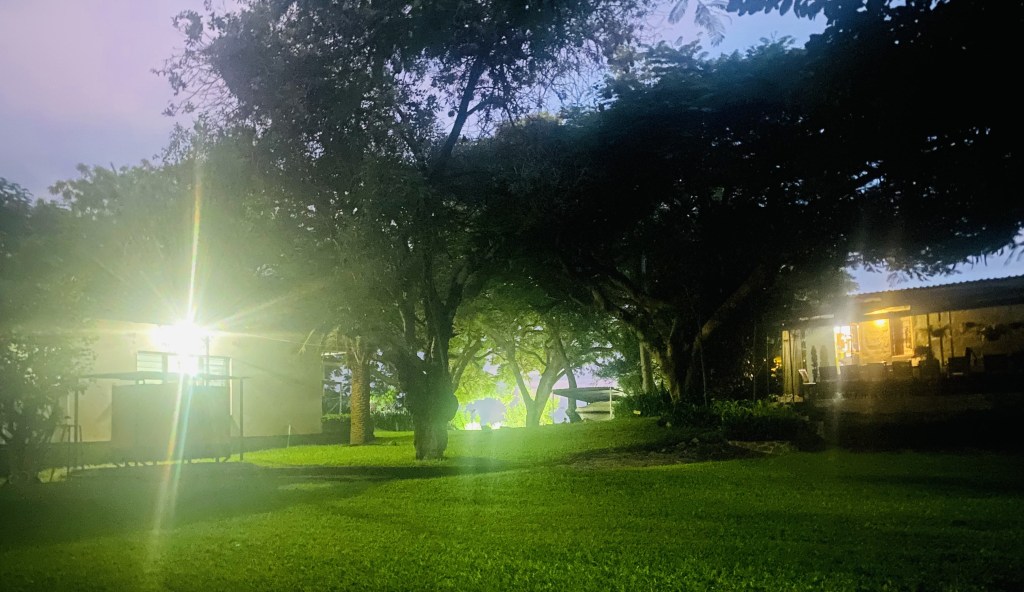
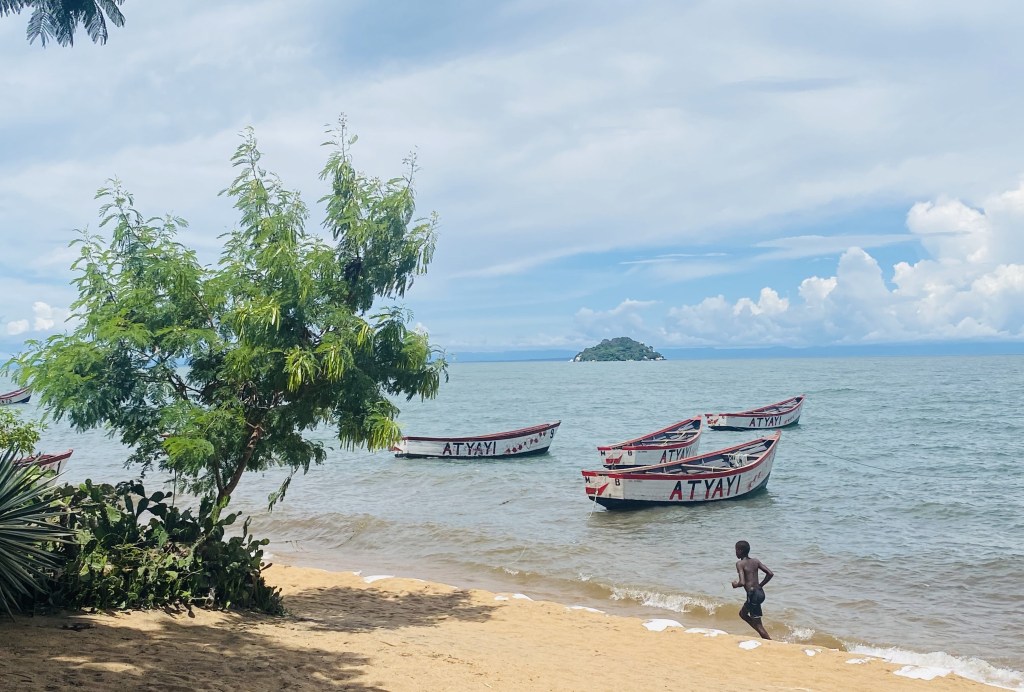
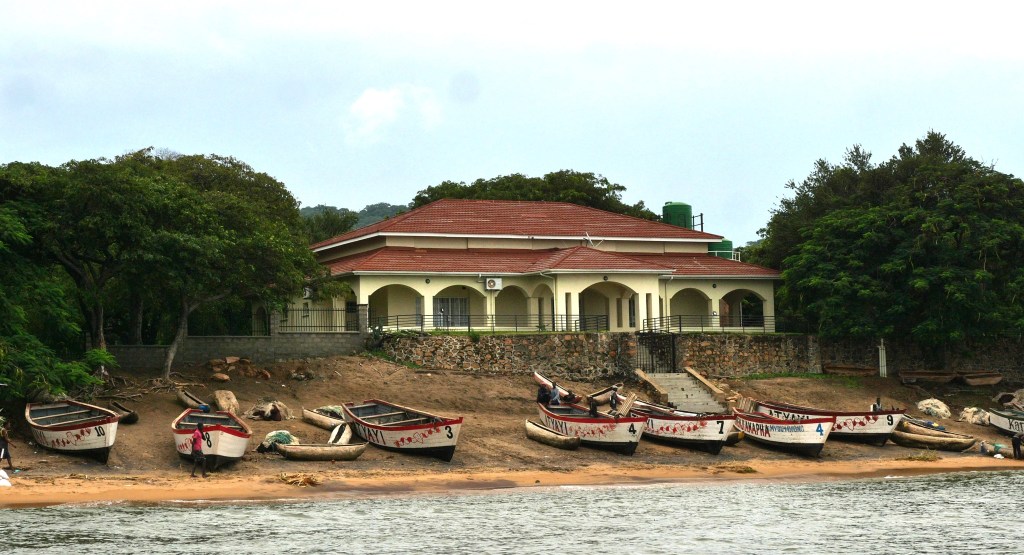
The volunteers were not camping, they were staying in the glamping pods and they added to the friendly atmosphere rather than detracting from it. In fact, when I came out of the office where I had signed us in I found a group of them surrounding Henry with James standing in the back leaning out of the roof window telling them all about our travels and showing them around.
The campsite owner, Sam, is an institution in her own right. She has lived in Senga Bay for 27 years and is the head of community policing in the area. She also holds a health clinic at her home and has established various environmental initiatives – such as exchanging recyclable materials collected by the locals for vouchers in the local shop. We spent hours talking to her, fascinated by her stories and insight into the community.
By 8:30am the next morning the endless rain had slowed for a while so we jumped on a local fishing boat and headed out to a little island. It took about half an hour to get there, holding tightly onto all our stuff trying to keep it out of the water sloshing around in the bottom.

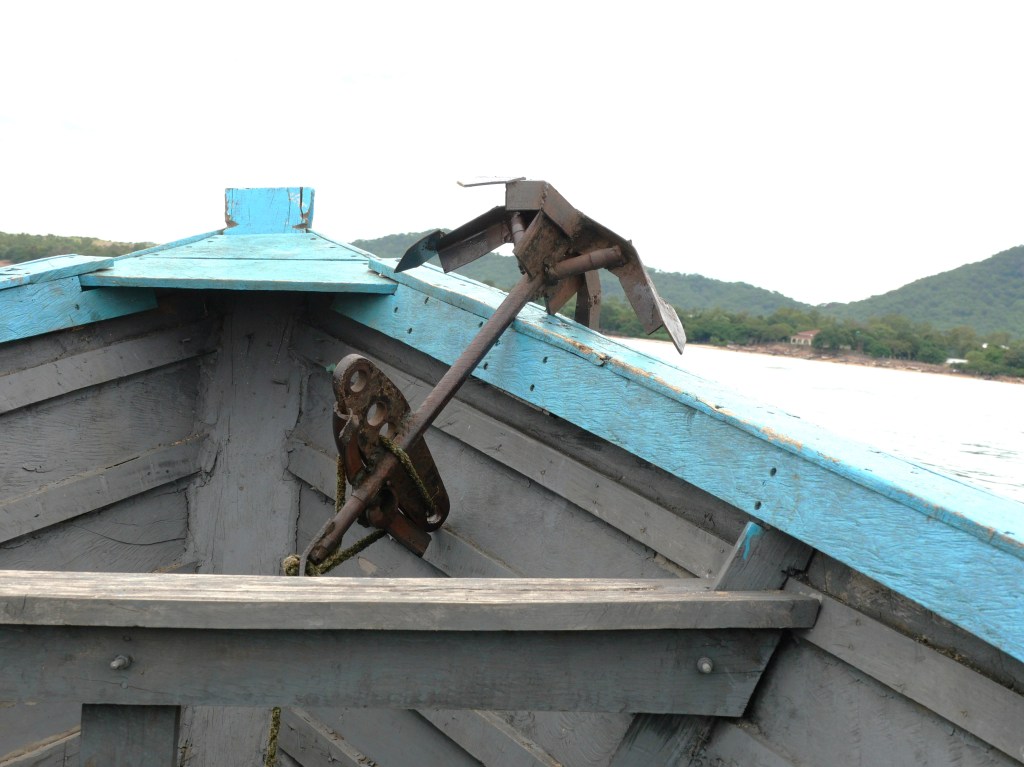
The island was just rocks so our first challenge was to scramble up to the top to see the views

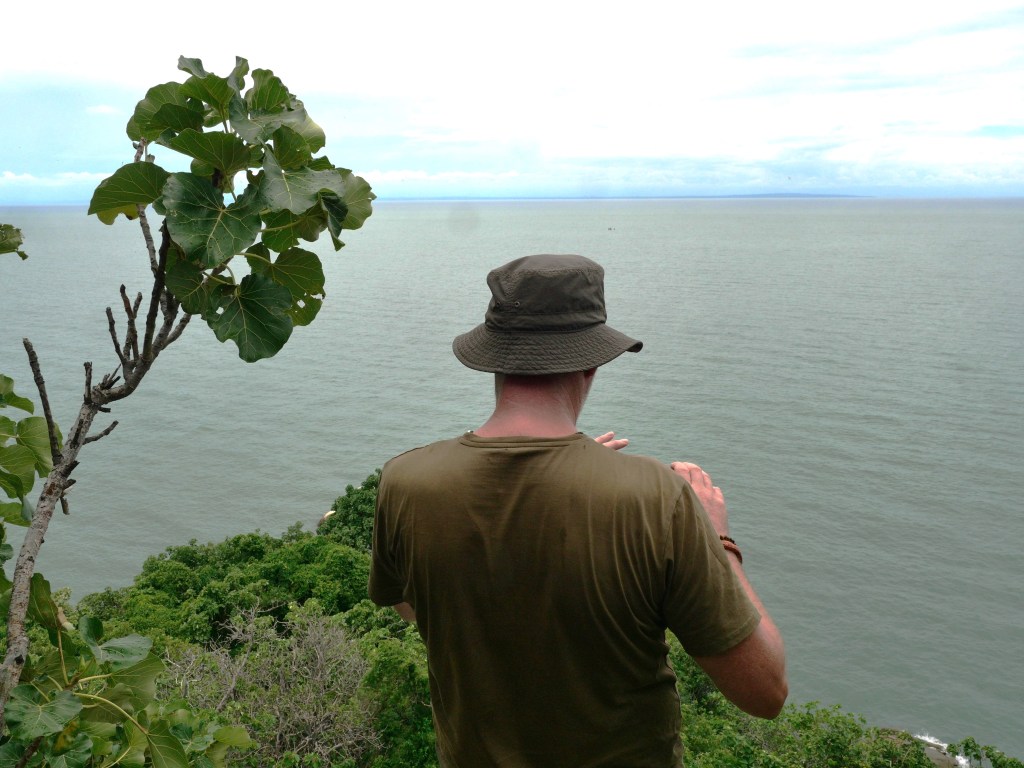
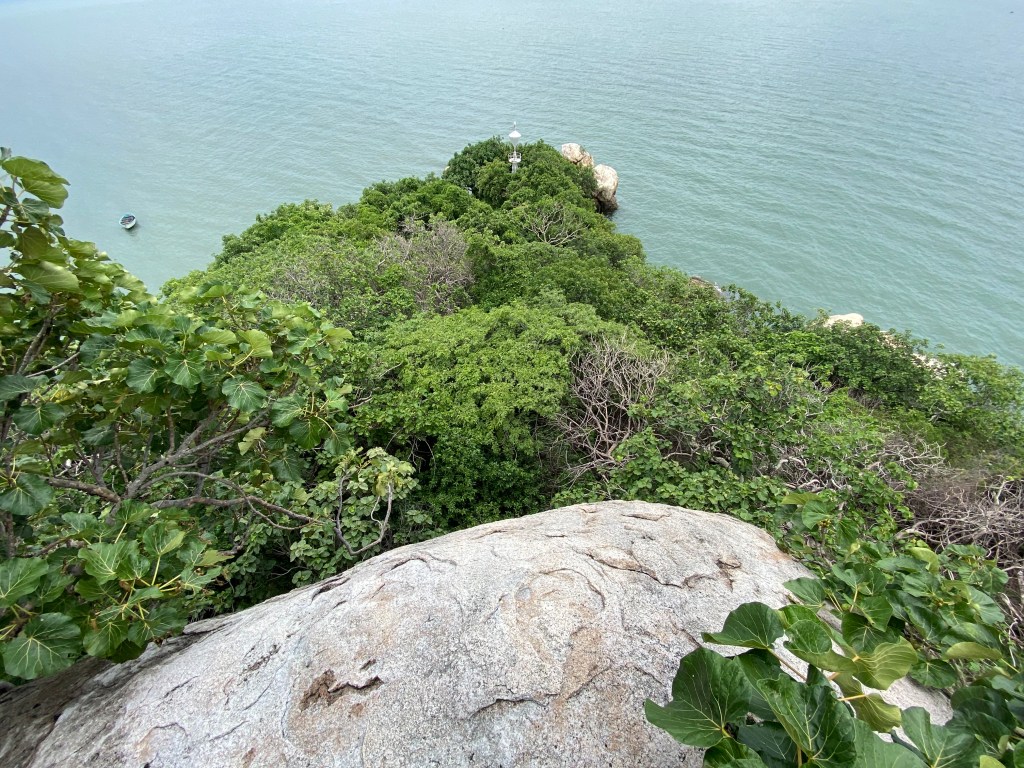
And James was fascinated by the spider webs all over the trees
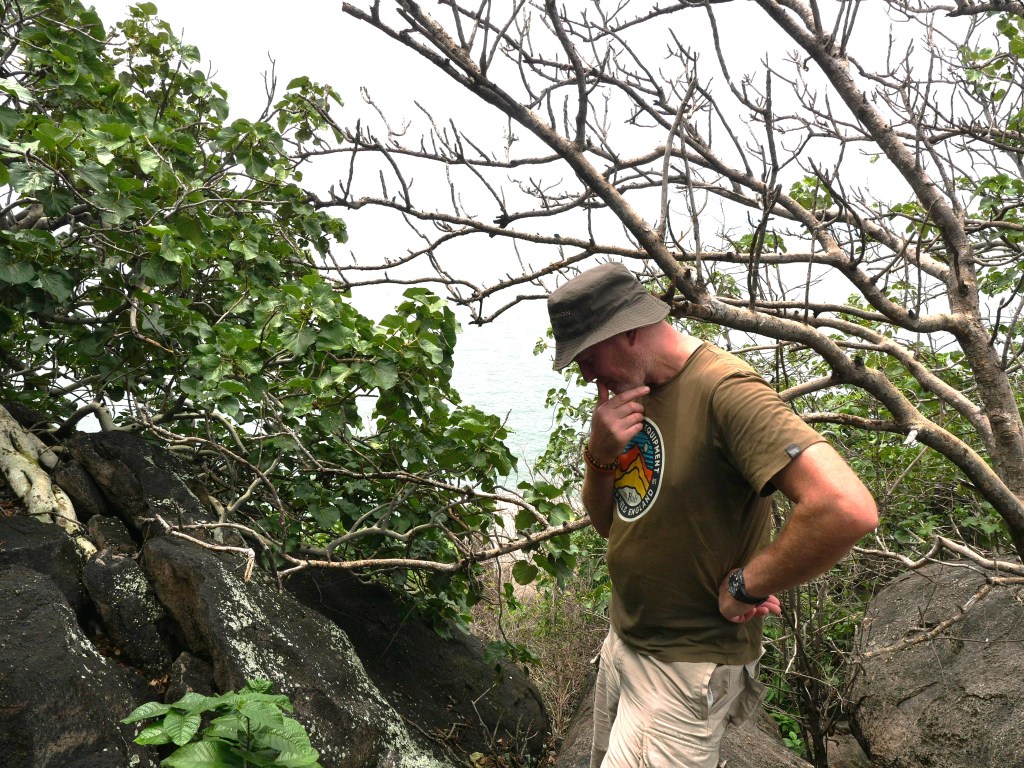
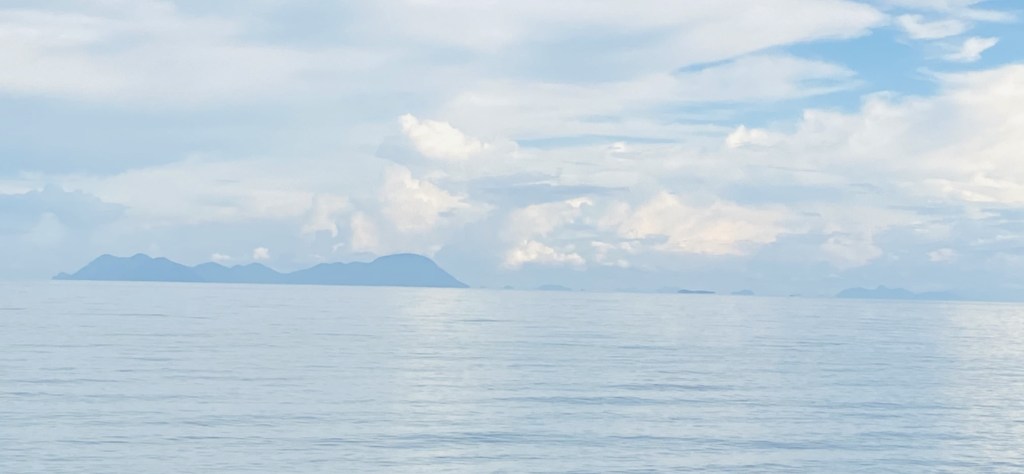
Sadly the clouds were dark and heavy so we couldn´t see far enough to make out the peaks of Mozambique but it was still nice.
Once back down James donned a snorkelling kit and jumped into the water to see what was around
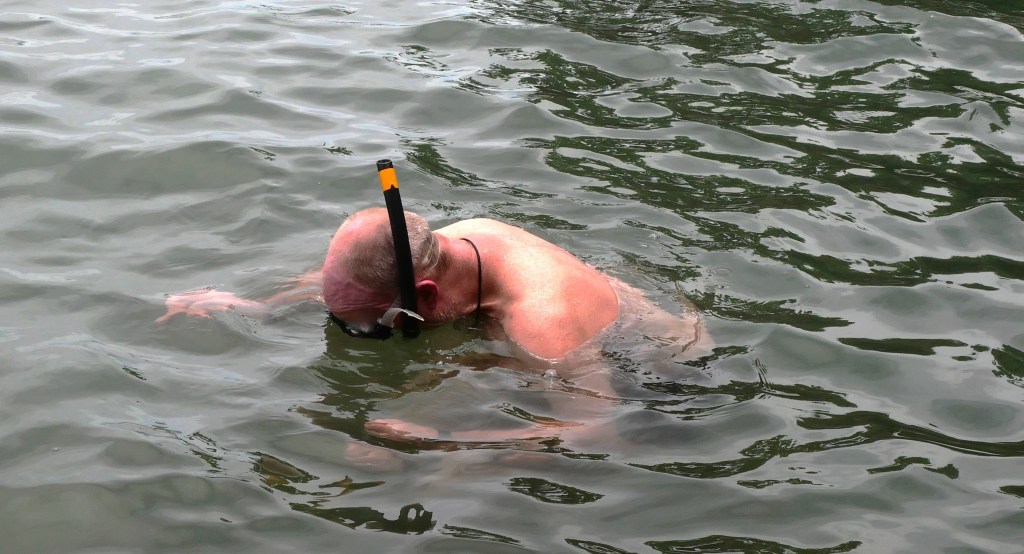
As an experienced diver used to diving in the Red Sea and other renowned places he came back up slightly less than impressed! But our guide had brought some bread which we had fun breaking up and throwing to the cyclids who crowded to the surface to nibble at it.
We spent an hour or so sitting on the rocks dangling our feet into the water, looking out at the view and watching the fish
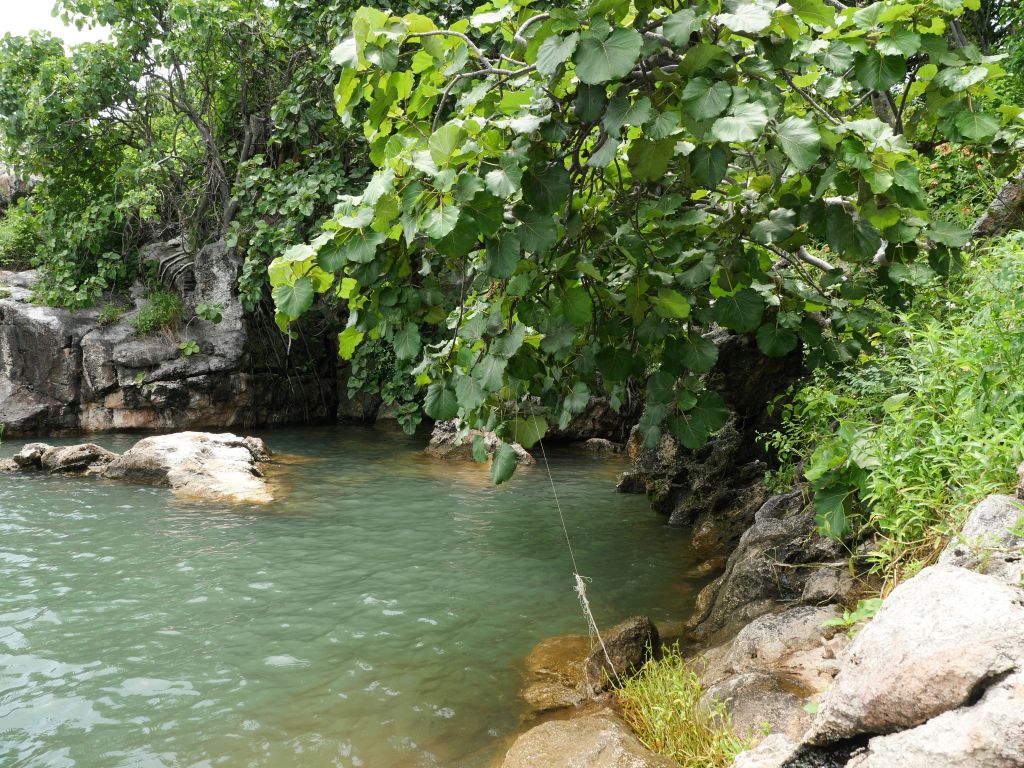
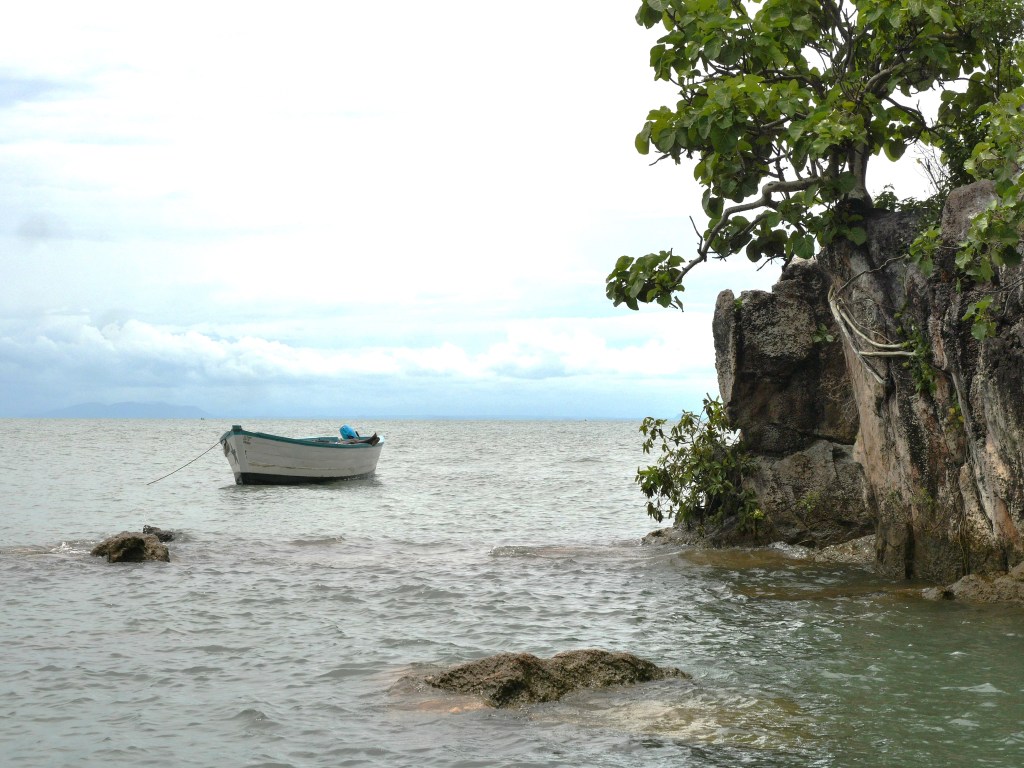
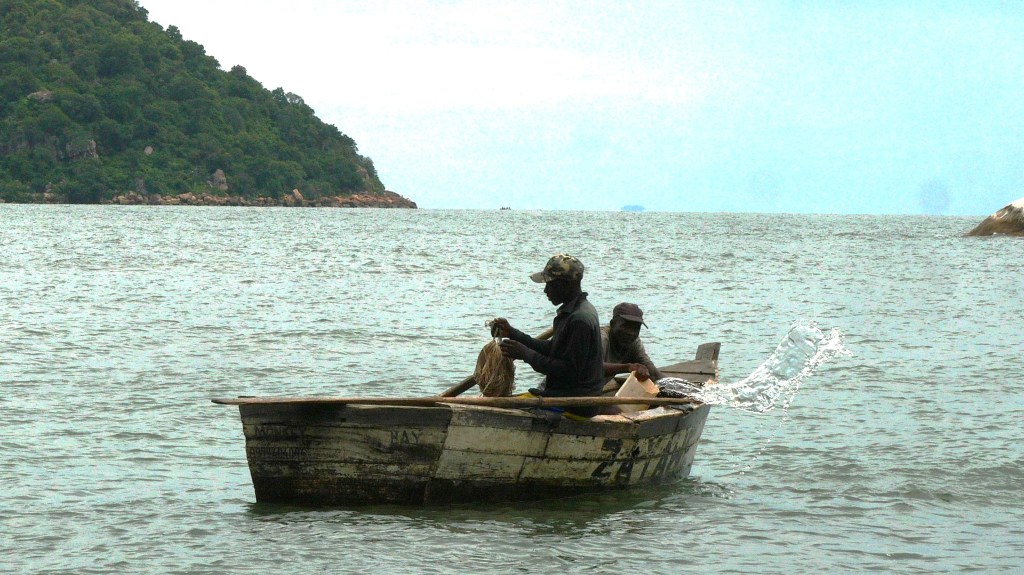
Before eventually making our way back across the water to the campsite
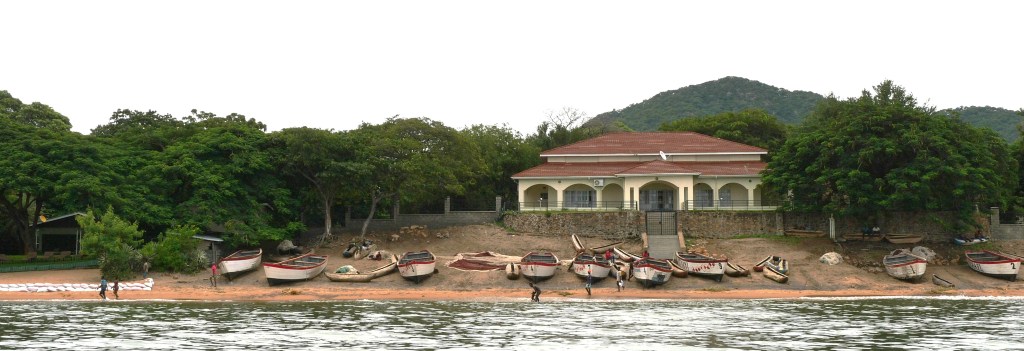
It had been a lovely, relaxing morning but James had caught the sun on his legs and even sitting under our awning for the afternoon the sun was so strong his legs ended up bright red and swollen for days afterwards.
We were doing well in the rains here, wet as it was the campsite had three little rooms next to where we were pitched up – the roof kept them dry whilst the front was open making a perfect place for me to train each morning or for us to sit or cook during the frequent downpours. Life was good.
We spent three happy days with Sam and the team and on our last morning she spent an hour or more giving us good advice, directions and invaluable information to help with the rest of our stay.
The biggest help she gave us was how to deal with the environmental issues Malawi was currently facing. Whilst the south was suffering with drought and the crops were failing, the north had the opposite problem – it was flooding
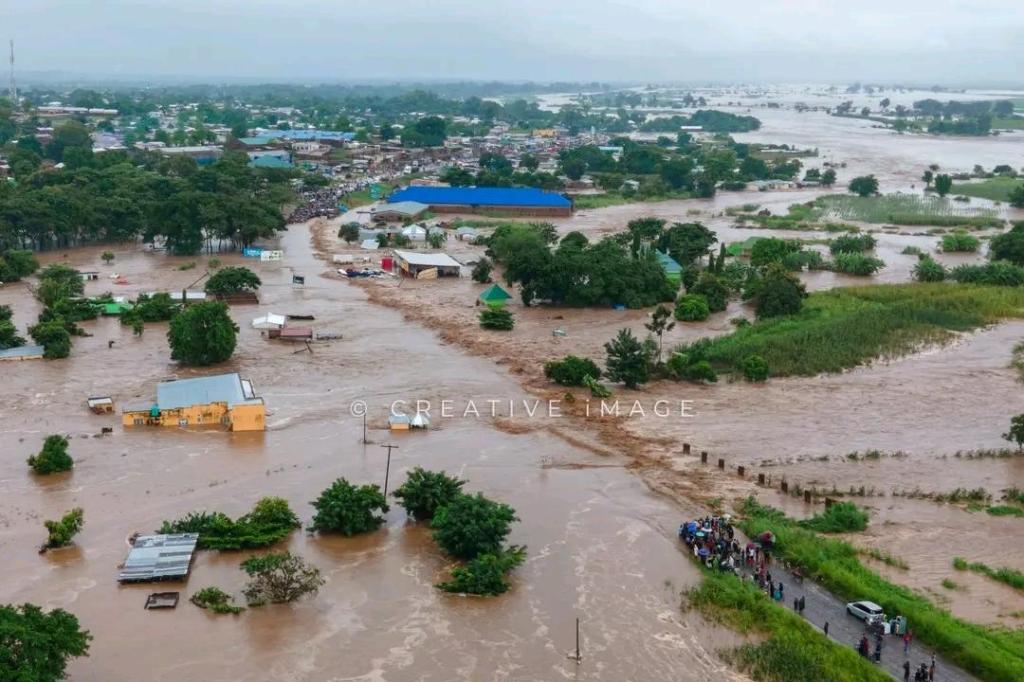
All along the coast road just north of where we were, El Nino weather was wreaking devastation. Roads were washed out, bridges swept away, homes gone. It was heart breaking – people who had so little were losing everything
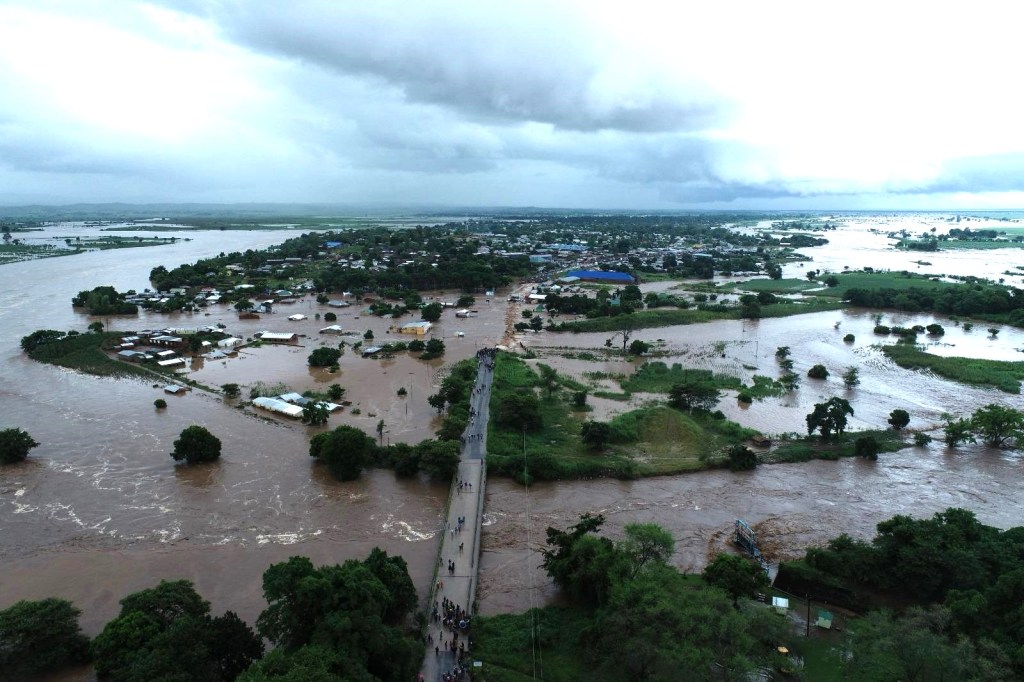
These two photos above are not mine, they were news footage that were widely shared amongst the local people to warn of the problems.
Another image that was being shared was the graph below showing the height of the Lake over the last 13 years compared with the height this year – it was already higher than the peak in most years and predictions were that by the end of April it would break all records
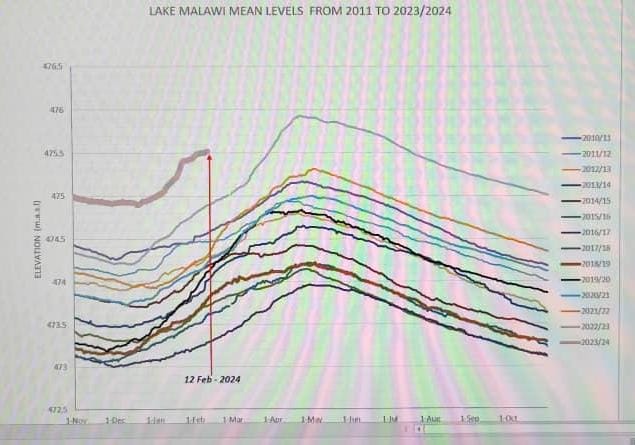
Sam showed us on the map where the worst of the problems were and gave advice on how to get north around the areas most affected. Three or four of the places we had hoped to visit were inaccessible and our plans had to change dramatically.
I contacted one lodge hoping we might be able to get to them from the north but they sent this video saying they were completely cut off and the village was destroyed
You see this sort of thing on the news in the West and, I think, sometimes get a bit hardened to it. But when it´s happening on your doorstep to people you have been living amongst for many weeks it really hits home.
Our only option now was to head inland and travel north up the main arterial road, overshooting where we wanted to go and dropping back down south along what was left of the coastal road. Enroute Sam suggested we stay at a forest lodge which she said was beautiful and remote.
We stopped off at the nearby town of Silema to pick up some supplies but there wasn´t a lot of choice so our cupboards were still pretty bare. We then set off for the forest lodge, starting off on good tar roads.
Sam had recommended a short cut down a dirt road that would cut 35km off our journey. We found it with no trouble and headed down. It was bumpy and slow but not hard and we even found a few familiar faces!
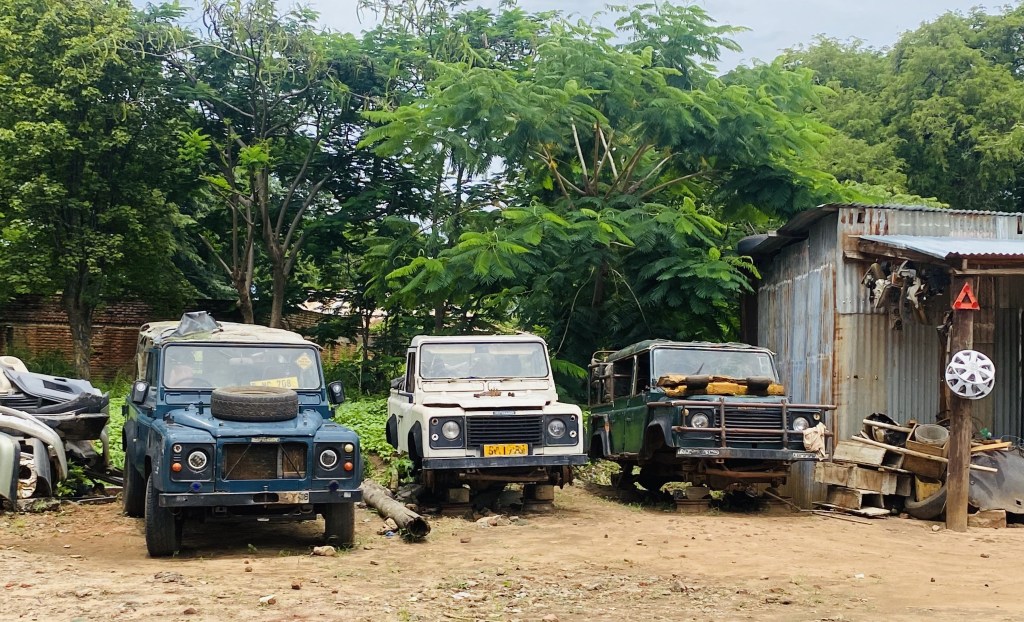
Even so we were pleased to be nearing the end where we were to turn onto the main M7 road straight up towards the forest. We fully expected the M7 to open out in front of us as a smooth stretch of tar but when we got to the end of the shortcut our hearts sank – it was a worse dirt road than the one we had just finished

Disheartened but in no rush we carried on. Bit by bit we realised things were getting worse. The road was getting slippery and wet, the mud was getting thicker. Huge puddles were getting more frequent. It was clear there had been little or no traffic down this road for a long time – apart from the ever present pedestrians and cyclists.
Everyone was as friendly as ever, smiling and waving as we went by. But they looked very surprised to see us.
After half an hour or so we were getting increasingly unsure about the conditions and looking further up the road it just seemed to be getting worse. Finally, Henry slid off the road entirely and down into a ditch. It wasn´t deep, no damage was done, but it took a long time to get ourselves out. At that point we decided that discretion was the better part of valour and turned back
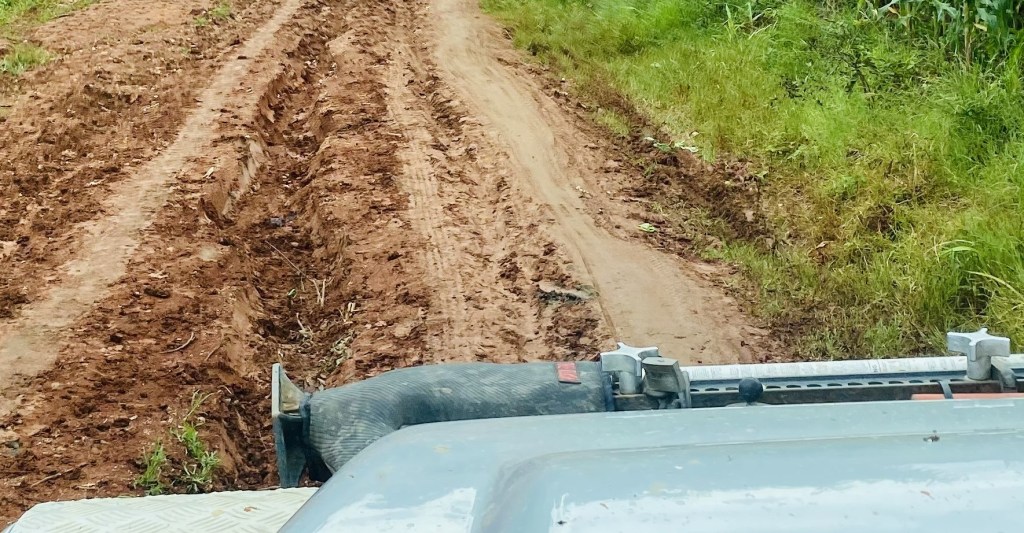
We set the sat nav for the town of Kasungu, well inland, on a tar road and on the way north. The sat nav and Google both agreed that the best way back onto the tar was to turn off the M7 a few kilometers down and follow a smaller dirt road as a short cut. We were skeptical at best! The M7 was bad enough, what would a smaller cut-through road be like? To make it worse this short-cut was about 30km long.
We deliberated for a few minutes before taking the turn. We knew what to expect from the M7 – was it worth taking the risk to shorten our journey by about two hours? In for a penny we decided, how much worse can it get?
Famous last words? Almost….
The first ten kilometers were terrible. Deep ditches, thick mud, huge ruts. We knew we´d made a mistake but we couldn´t turn around
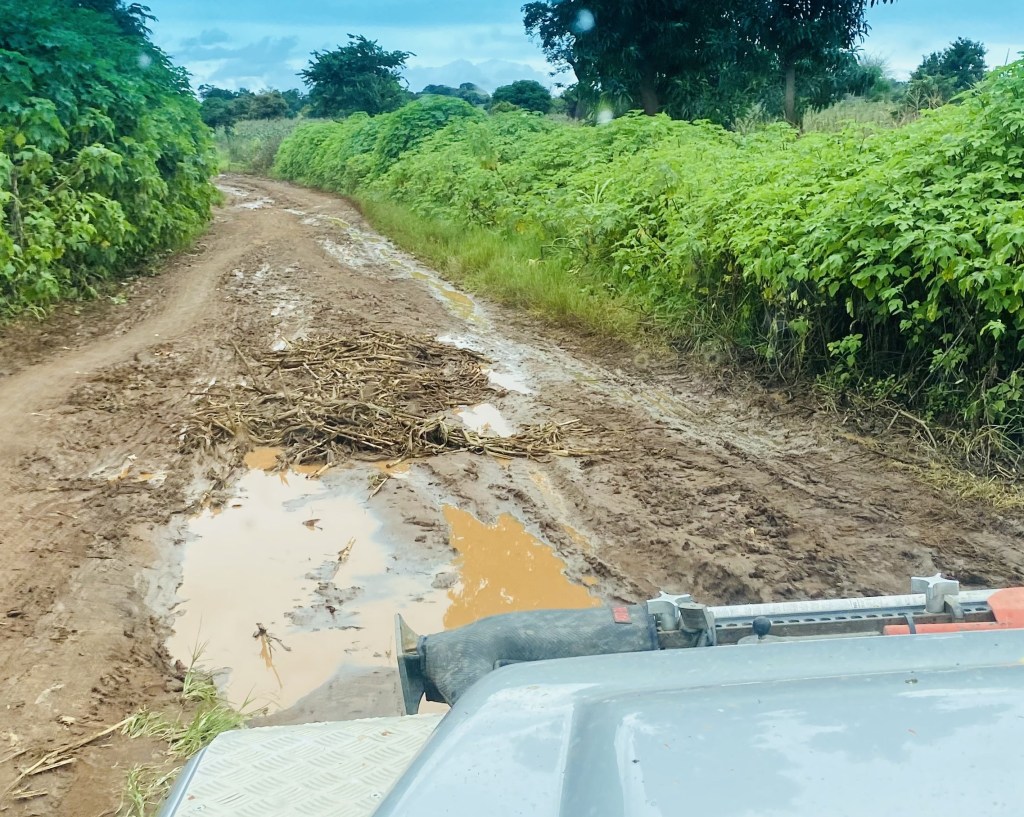
A local on a motorbike came alongside as we were carefully picking our way through some particularly deep and slippery ruts. He grinned at us from under his helmet and told us to follow him. We asked him through the window whether the road got any better and whether we´d make it through to Kasungu. He grinned even wider and said yes it was a good road, the right way to Kasungu.
We looked at each other and shrugged – if the locals can do it we´d give it a try

Before long we were crossing a river
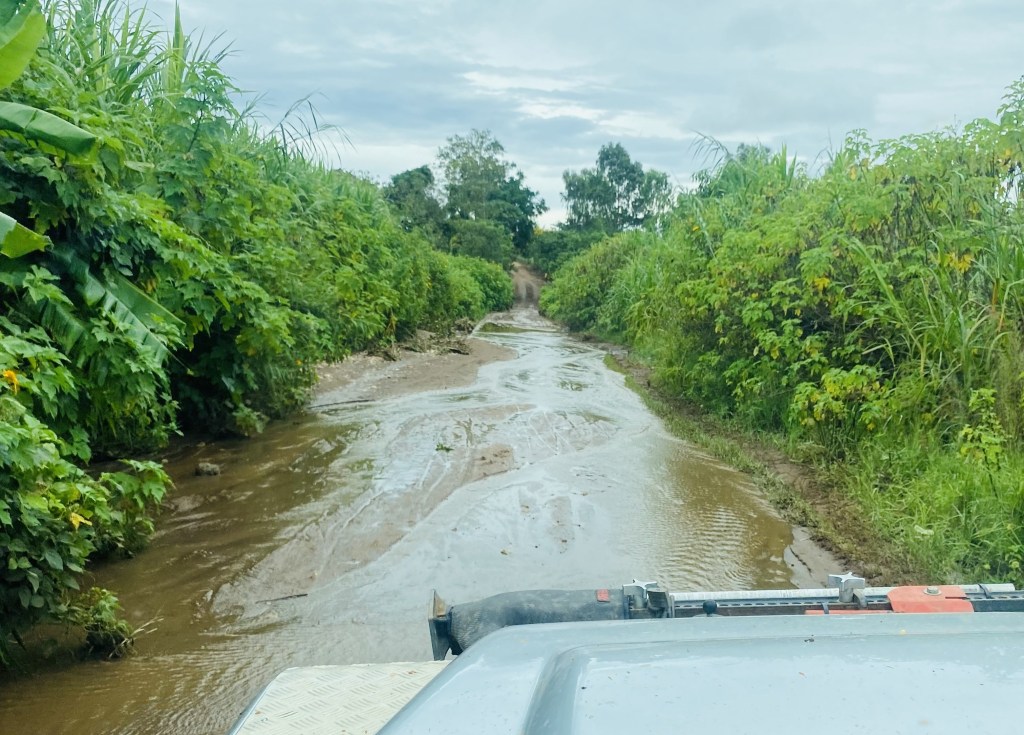
And then the road started to climb higher. As it climbed it dried out, the ruts smoothed out and it was easy driving.
We passed through some small villages and James commented that we were back in civilisation – how your perception changes after three years in Africa….
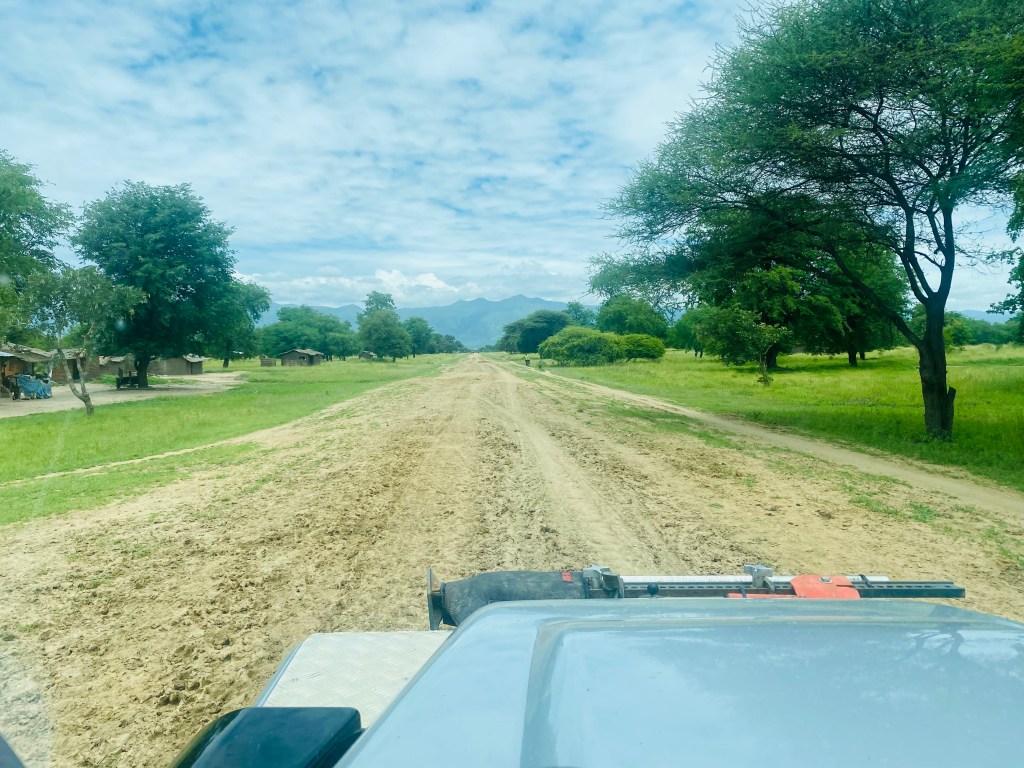
The road was now wide and smooth and we high-fived, our decision to take the risk had – for once! – paid off.
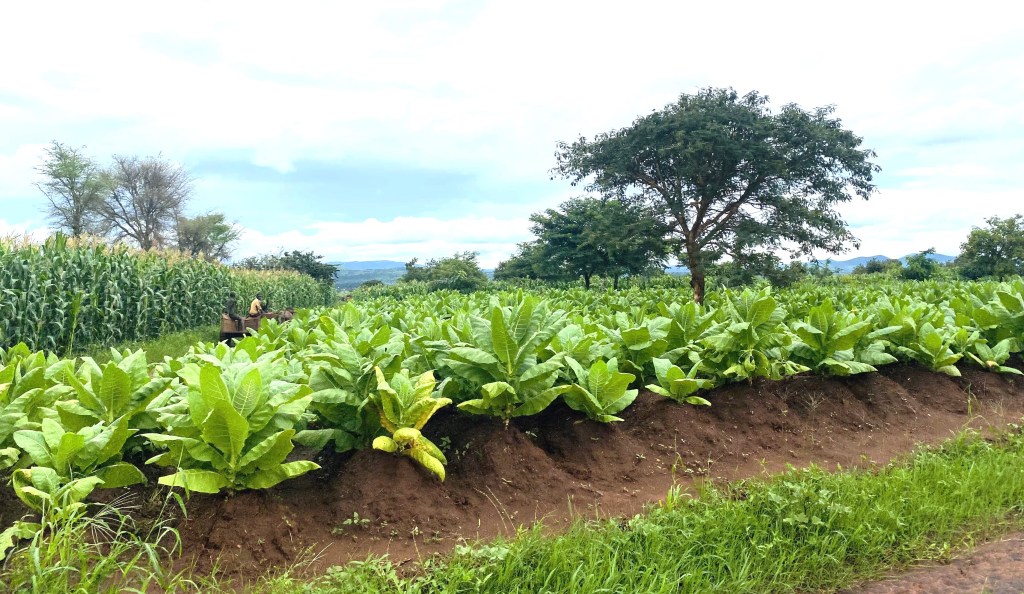
In this area the main crop was something we couldn´t identify
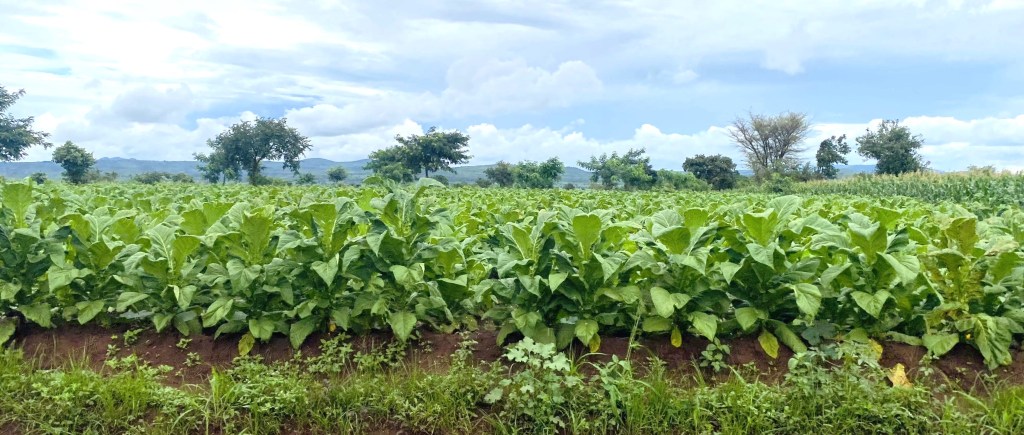
Growing in the fields it looked like Pak Choi and we had indeed seen Pak Choi for sale in some markets
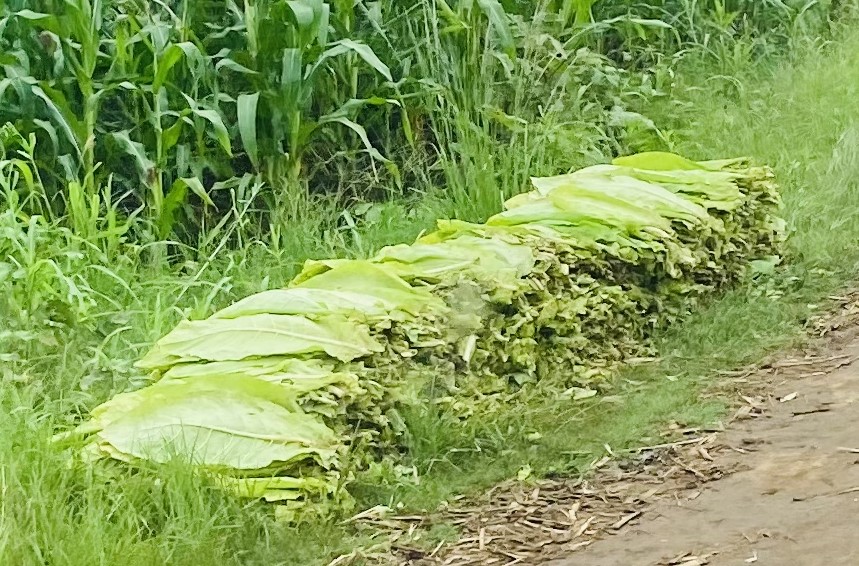
But the locals were collecting it into large bundles
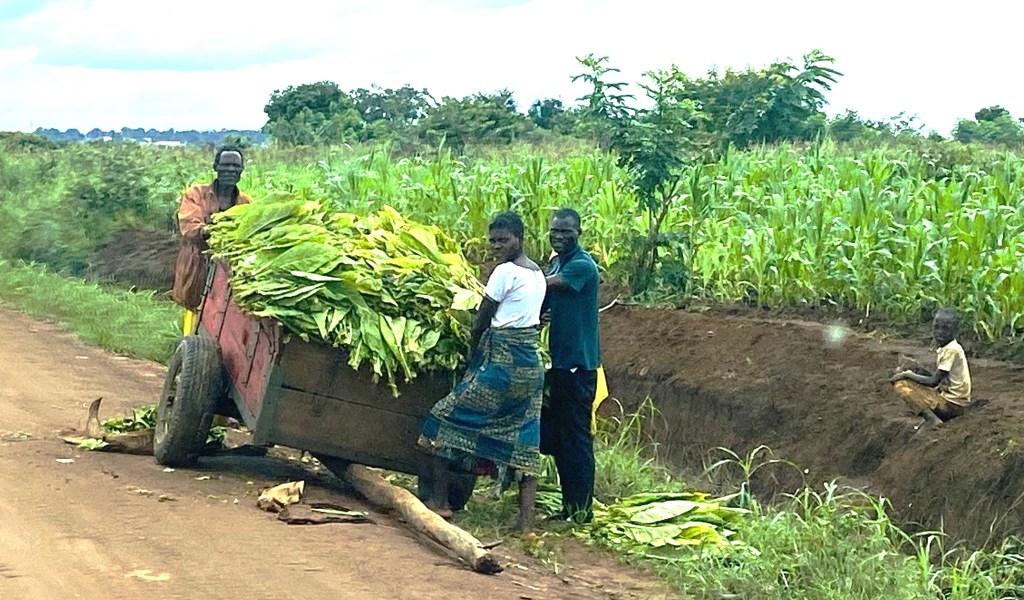
Loading it into their wagons
And hanging it out to dry on racks in large numbers
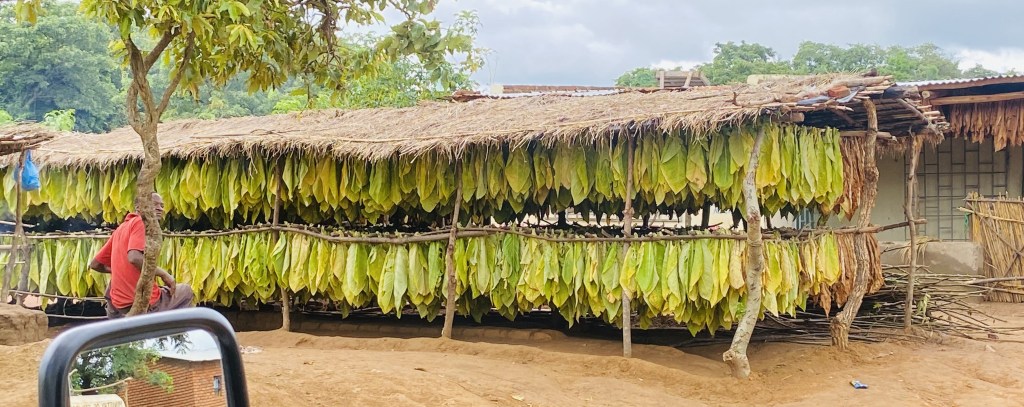
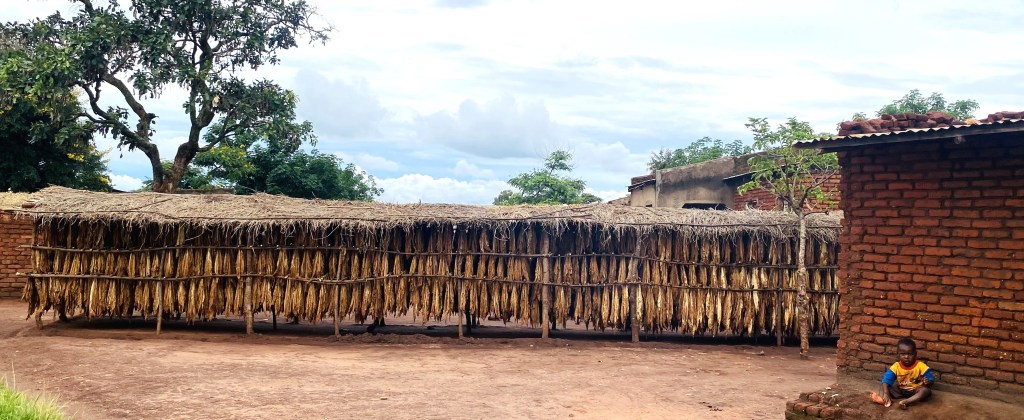
It was everywhere but we still haven´t found out what it was.
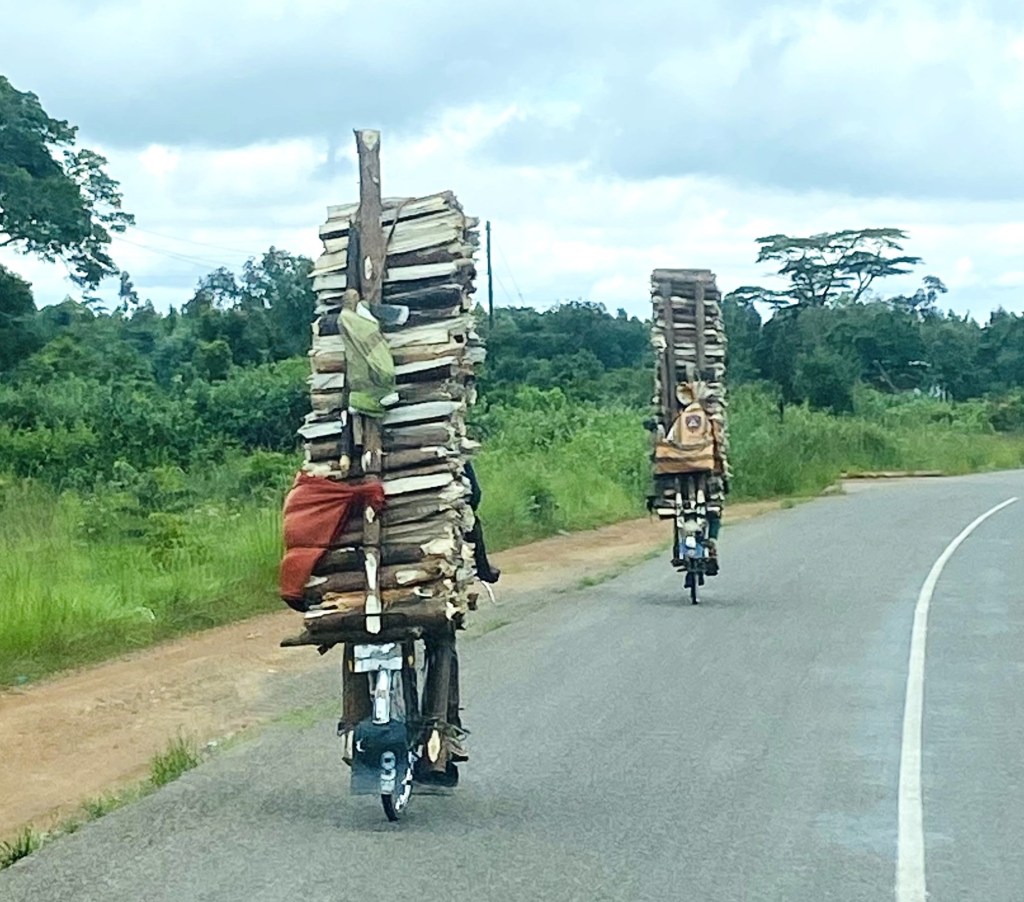
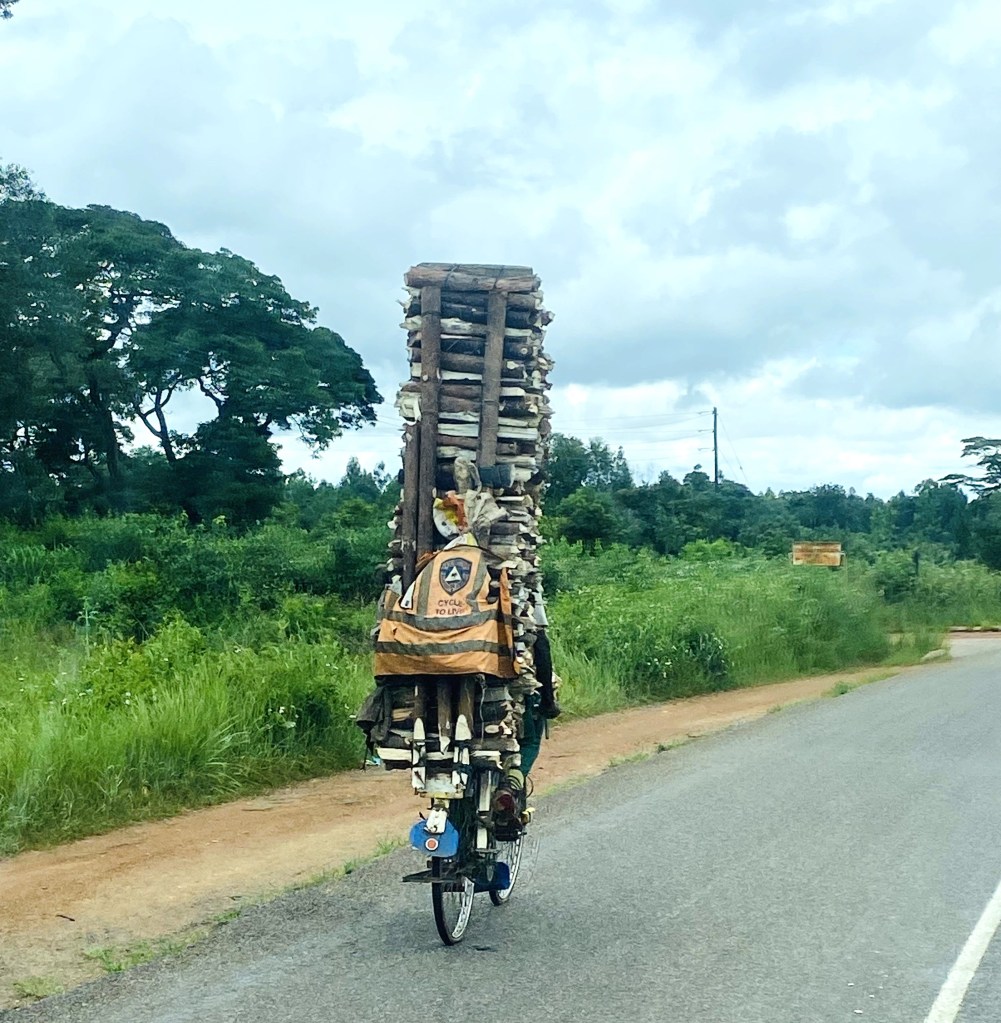
Eventually we made it through and hit the main tar road – which, as ever, we shared with some remarkably strong and well-balanced locals!
Before long we had arrived at Kasungu and stopped at a local hotel for the night. We had a basic but large and clean room. The mosquito net didn´t quite fit the bed but I managed to peg the sides together with our clothes pegs to keep the worst of the pesky little creatures out.
Staying in a hotel room is never as good as it might sound. Henry is home, he has a comfortable bed, all our things are within easy reach and there are never any mosquitoes inside. In a hotel room the beds are often hard as rock, the bedding old and frayed. There are always mosquitoes buzzing around and we spend half our time trekking backwards and forwards to Henry to get various things we´ve forgotten.
But there were upsides here – I could train inside in the morning out of the rain and we were invited to eat our home-cooked dinner in their restaurant with proper tables, chairs and cutlery, a real treat!
There is also the opportunity to meet local people and feel more part of the community. As we settled in to omelette and chips for breakfast the next morning the guy who was serving dropped the knife. I managed to catch it before it hit the floor, he looked impressed and asked whether I played netball! It was a small thing but it made a connection that can be missing when you stay in campsites all the time rather than where the locals stay.
We stopped in Kasungu long enough to pick up some chicken from the local food store but there was little else to see. We had thought about going to the Kasungu national park but too many people had advised against it in the rainy season – bad roads and no animals visible through the dense bush. So instead we continued our trek north, this time along perfect, smooth tar roads for about three hours to the large town of Mzuzu.
Mzuzu was the furthest north we needed to go before we were able to turn back south down the coast road and visit some of the places we wanted to go that were cut off from the south.
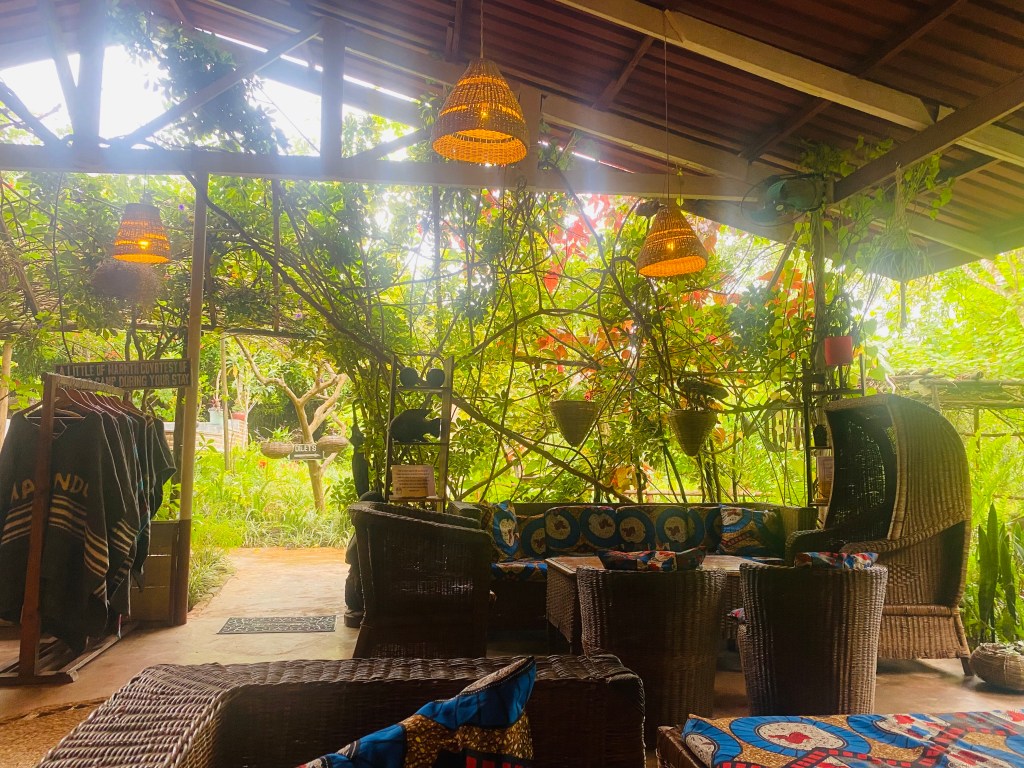
We could have done a walking tour of the city but cities hold less and less interest for us these days. So instead we went straight to our campsite for the night. Yet another one owned by an Italian couple and well known for serving wonderful Italian food in their nice restaurant area
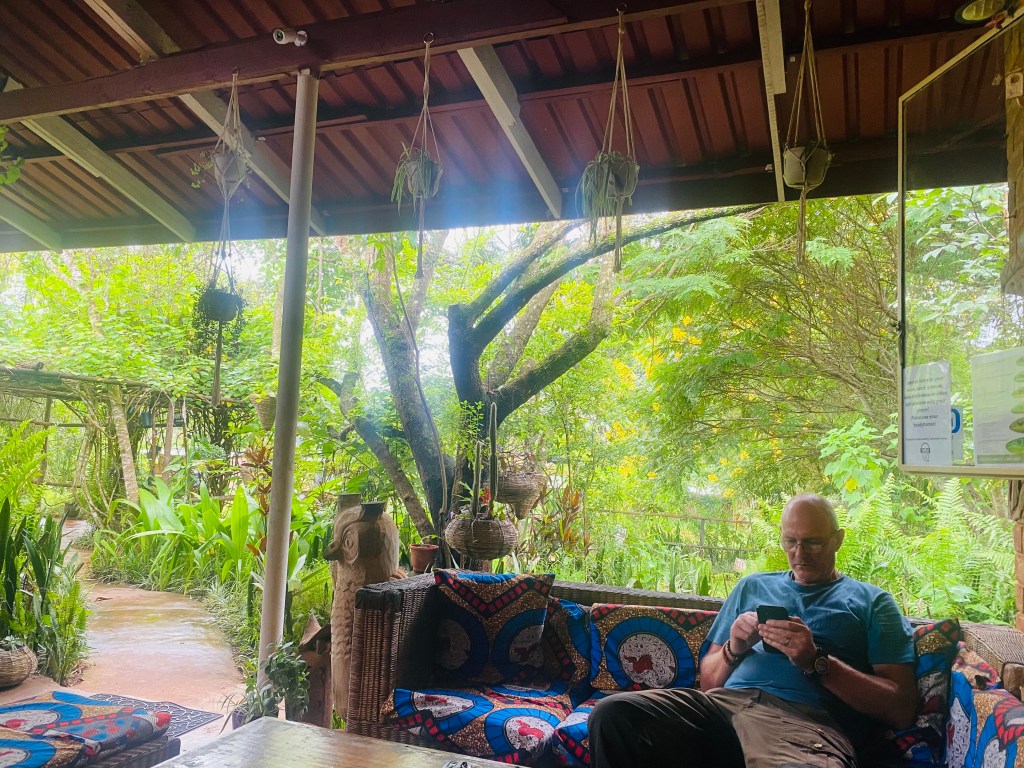
We had planned to stay just two nights but then got a bit over excited at the supermarket in Mzuzu and bought too much food to justify eating in a restaurant and seeing all our fresh food go to waste – without a freezer there is only so long it will last in our fridge.
So we ended up eating all our food over the first two days and extending our stay for a third night just to try the restaurant. As at the Italian campsite in Mulanje, it was worth the extra night – the food was amazing.
The campsite itself was nothing special. The ground was muddy and rutted, the toilets miles away and the little seating area had been built with such a low roof that James kept hitting his head
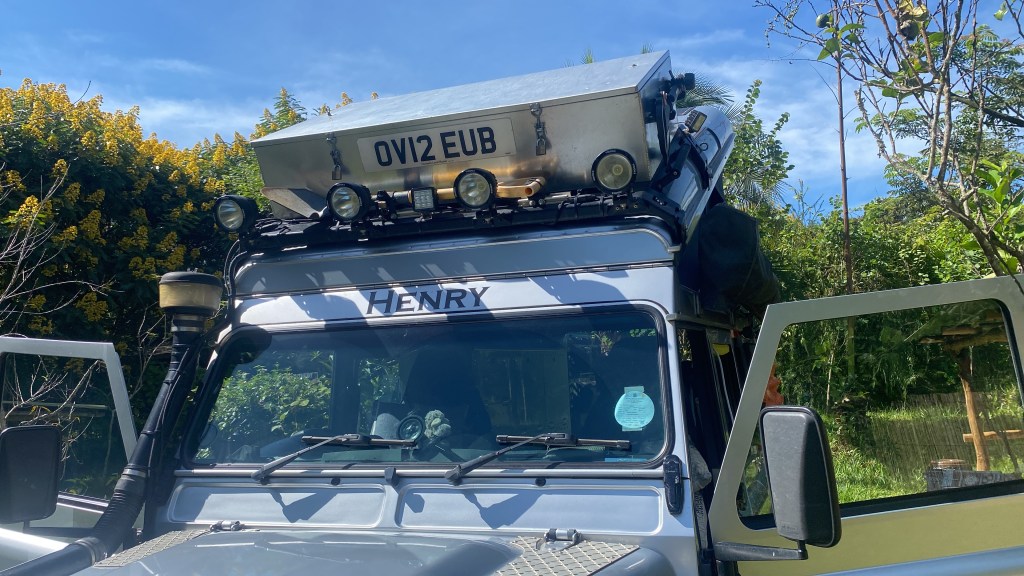
But the wifi reached all the way to the campsite so we were able to get lots of work done, blog updated and phone backups and updates done. Not so exciting but very useful.
There were also other attractions which kept us amused as we worked….
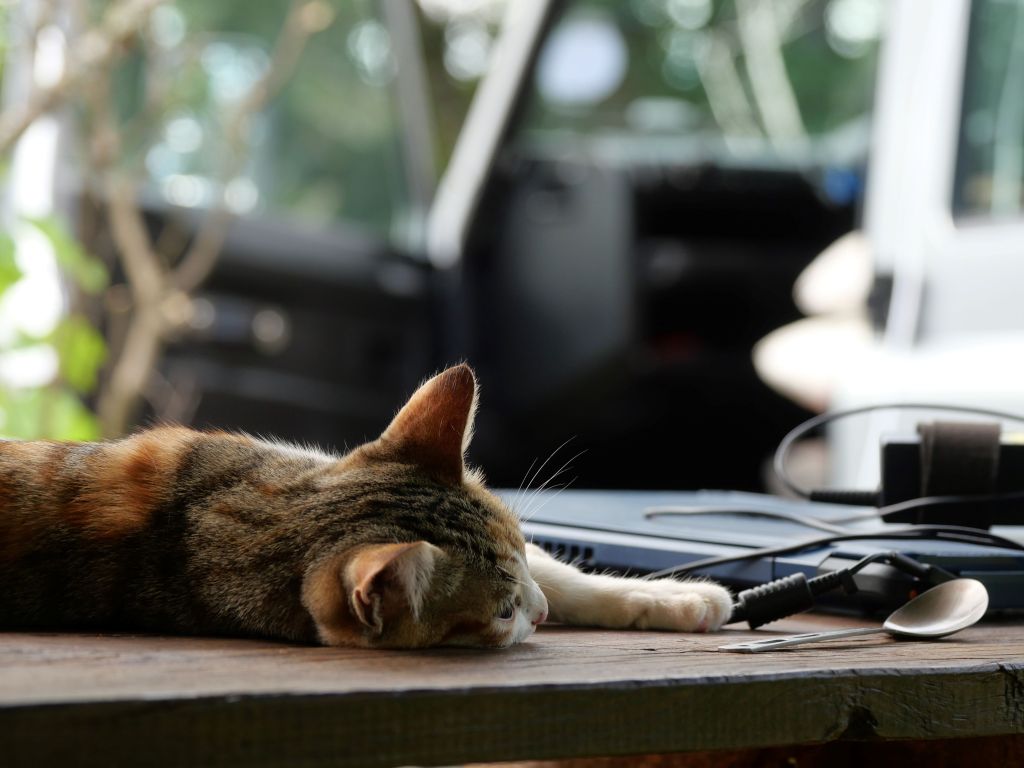
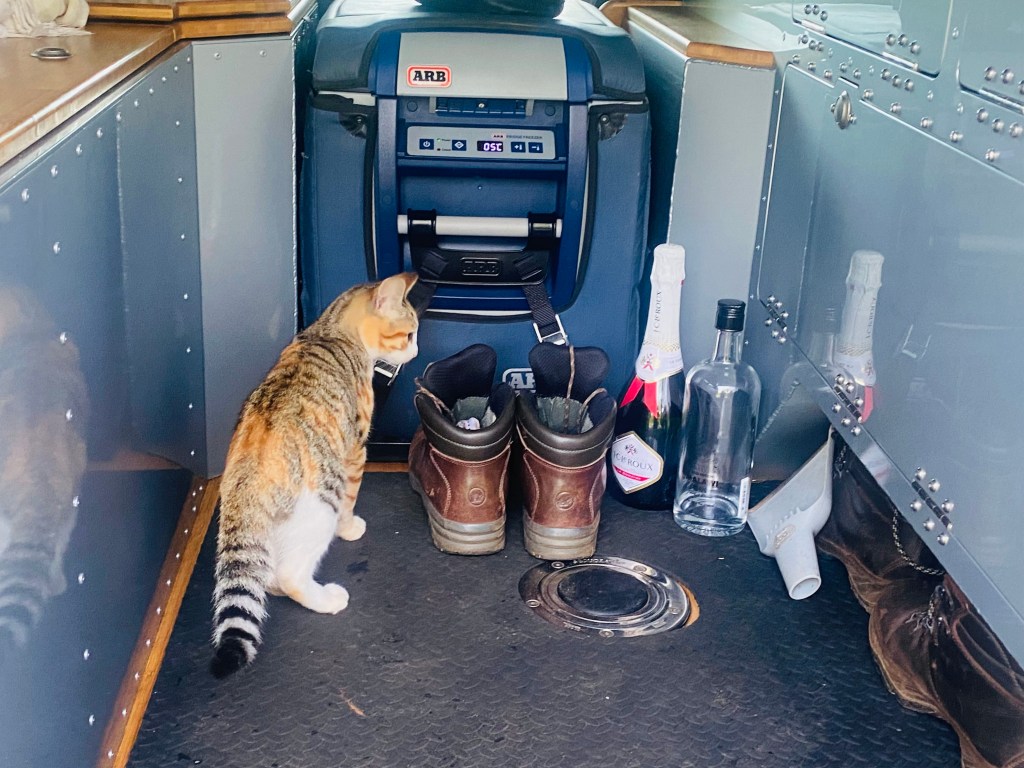
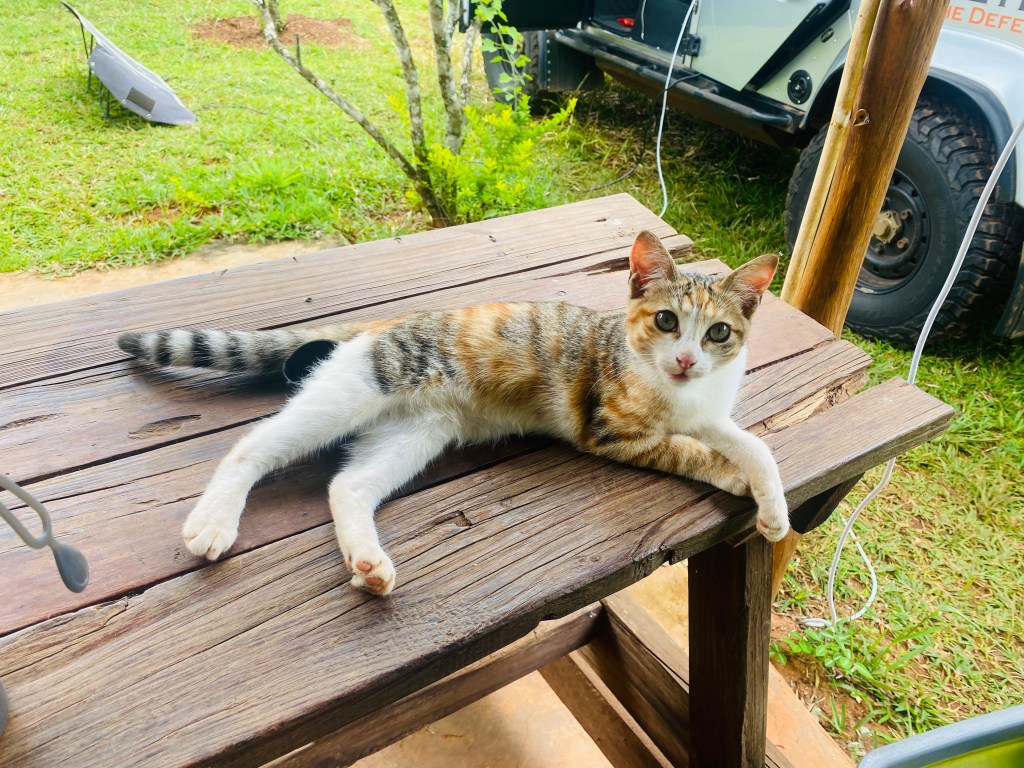
We saw at least four little cats wandering around the place but this one adopted us and almost got taken along with us when we left!

A French couple arrived on our second day. They had been travelling through Africa in their Land Cruiser for 18 months and after we had been chatting for a while we realised that she and I had e-met on one of the overland forums and talked on Whatsapp about Angola last year. The overlanding world is a small one.
We had seen very few other travellers for a long time so it was fun meeting these two. We had no idea at the time but this was not going to be the last we saw of the French couple, in fact we were about to become part of a group of travellers treading the same path for some weeks and making some new, good friends.
We were excited to find that the paradise beach where we had stayed just before Christmas was still accessible from the north. Despite this being where I´d had a nasty wasp sting on my leg, we had very fond memories of Makuzi Beach. The pitch where we stayed had its own private ablutions, the beach was stunning and the food in the restaurant was fabulous. We decided to return for a few days, eat in their restaurant for a couple of nights and treat ourselves to some luxury – it was about to be James´ birthday afterall!
So we drove the two hours from Mzuzu to Makuzi full of excitement.
When we arrived our hearts sank. The beautiful beach was gone, the Lake had risen so far that there was nothing left of it. We couldn´t believe the difference from just three months ago
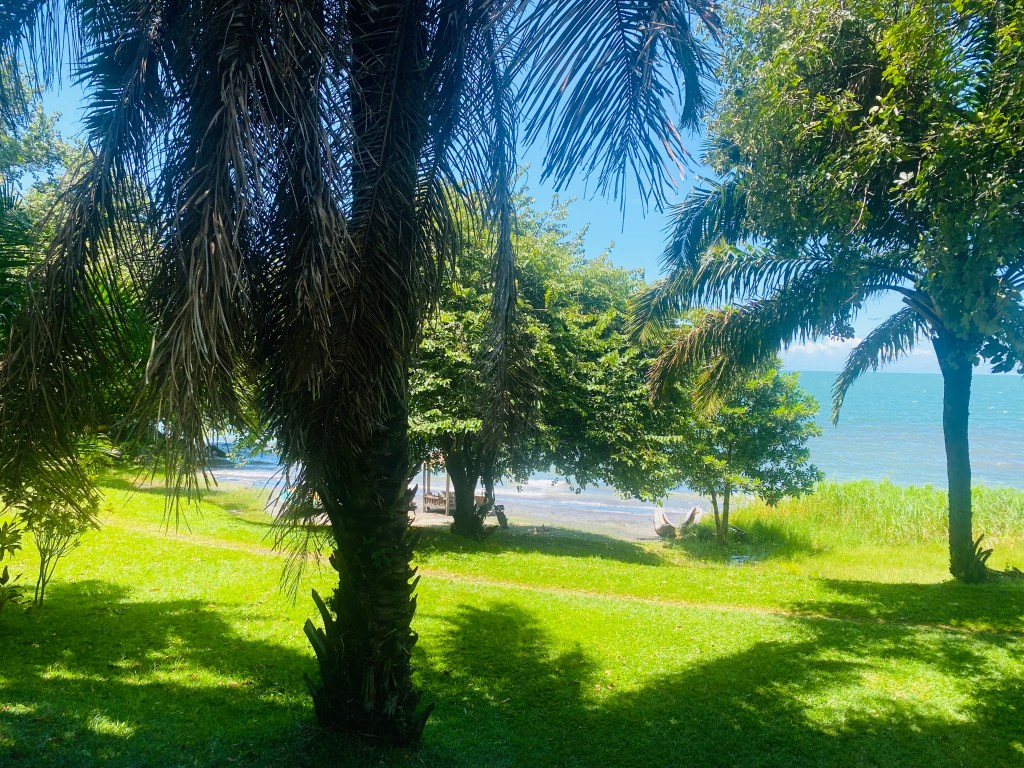
I checked in and confirmed with them that we had booked the pitch with the private ablutions. They looked sorry and said that someone was already on that pitch so we would have to stay on the one next door. This one was just a patch of grass – no ablutions, no water and now not much view
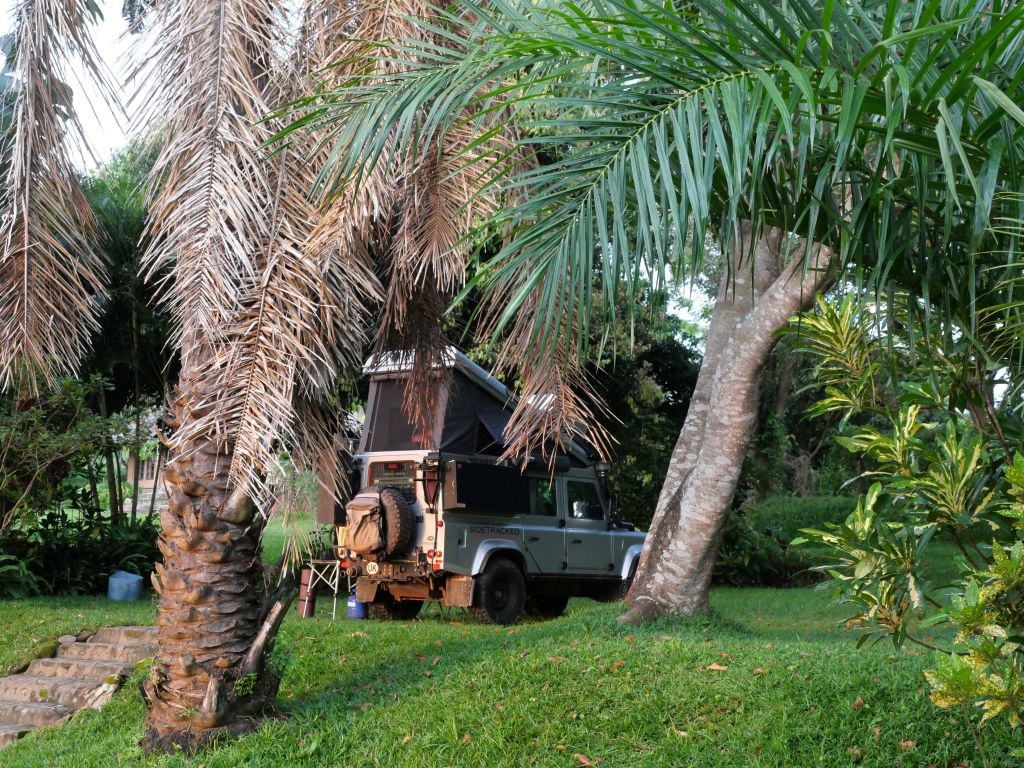
The toilets were about as far away as any toilets we had had so far.
I have to admit I was in danger of becoming a little grumpy!
But today was James´ birthday so we shook off our disappointment and went for a refreshing paddle in the Lake, then headed straight to the restaurant for a very nice meal – just as good as we had remembered.
They were even kind enough to allow us to drink our own bottle of fizzy that we had brought with us to celebrate


We spent three nights at Makuzi and despite the changes since we were last there we enjoyed ourselves. We had two more meals in the restaurant and both were as good as the first – in fact I even tried the local fish fresh from the lake (we had seen the fishermen coming up onto the shore and selling it to the lodge staff that morning) – it was as good as you would imagine.
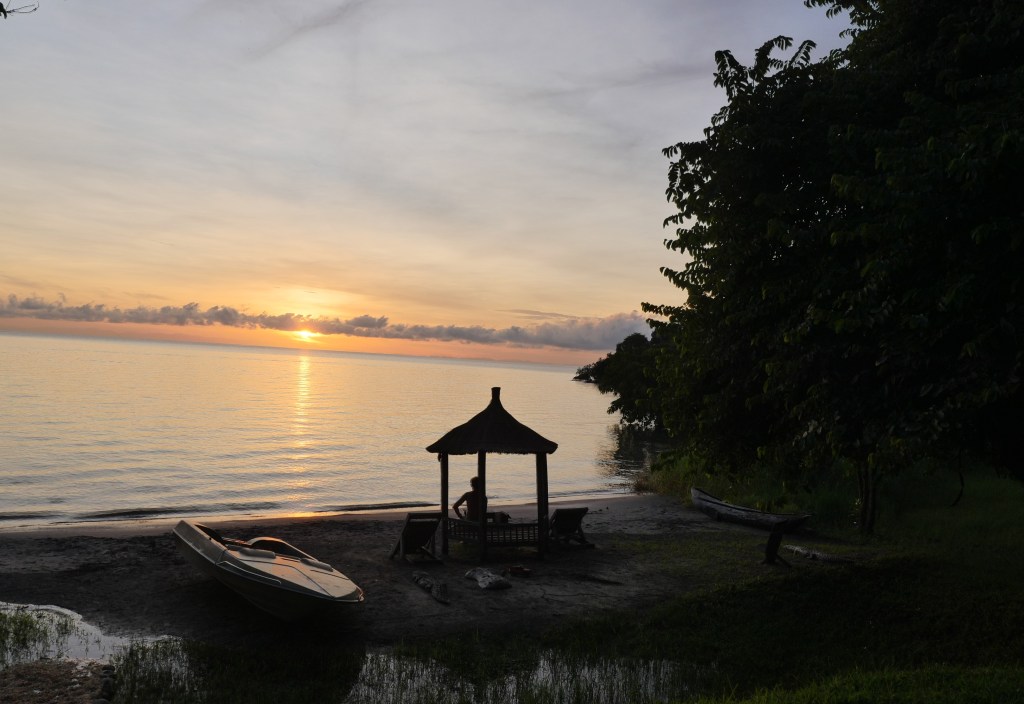
We swam in the Lake and James got a kayake out and rowed us both around for a while
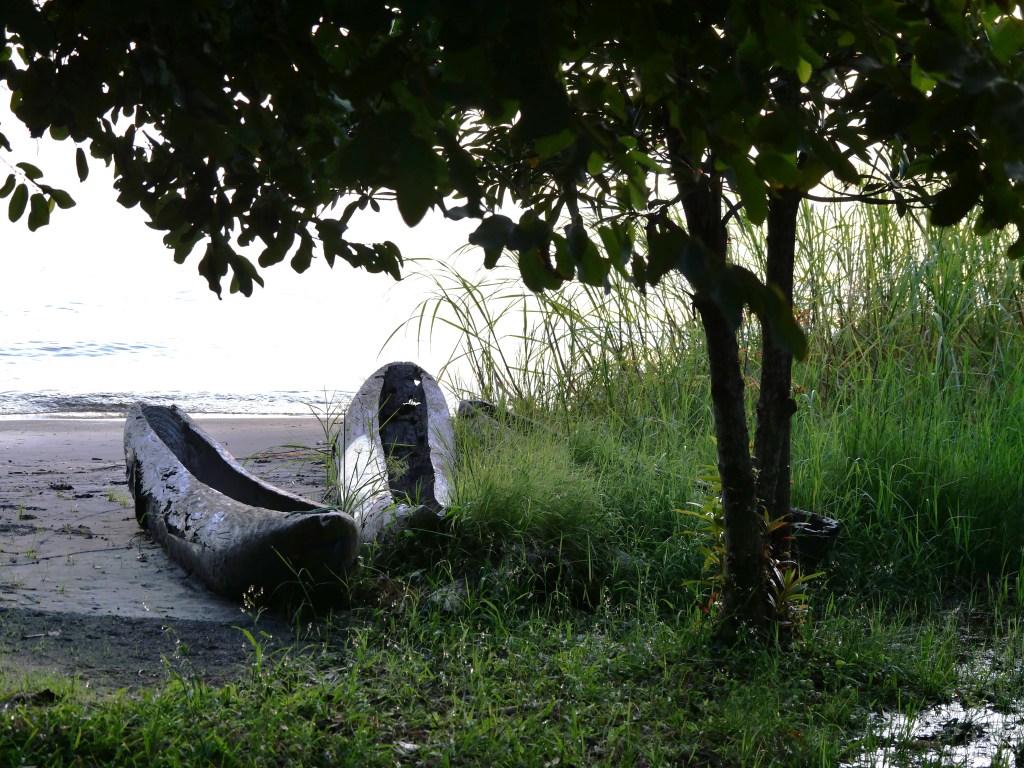
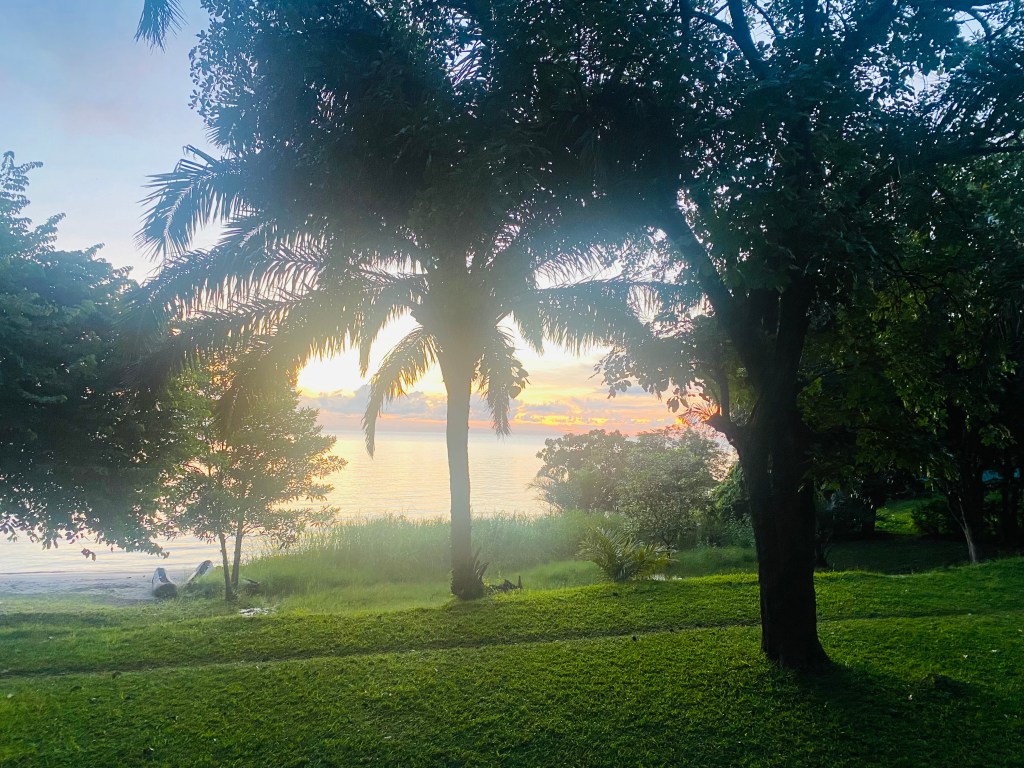
And when I said there was no view left, I might have been being a little dramatic – you just needed to know where to sit!
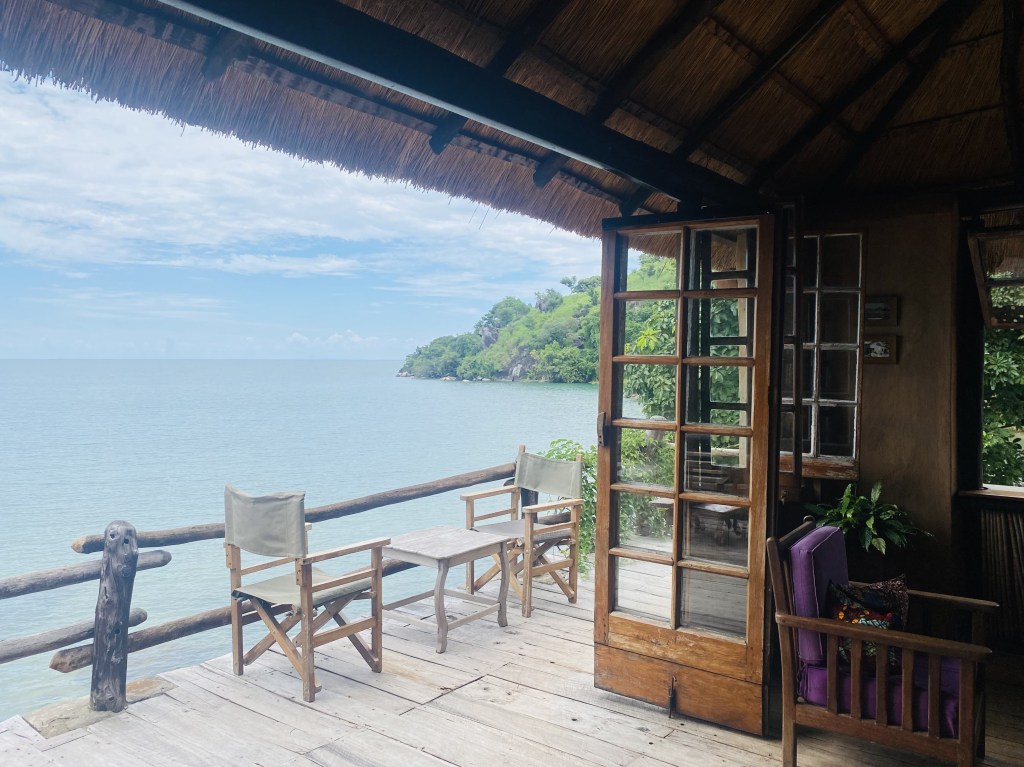
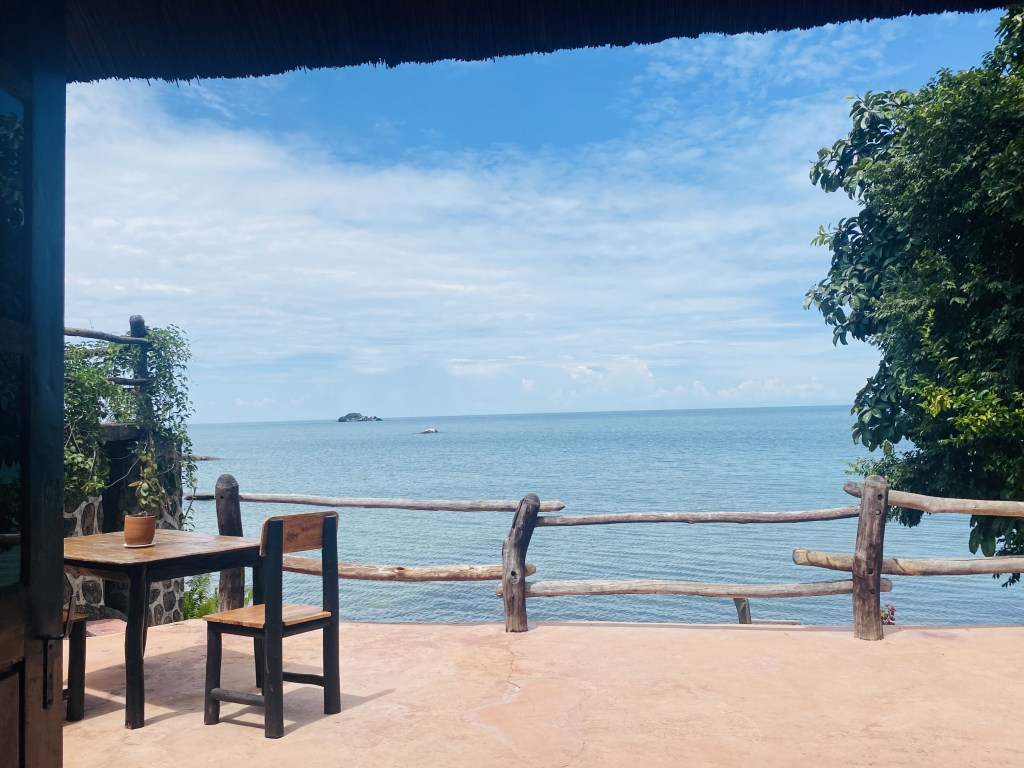
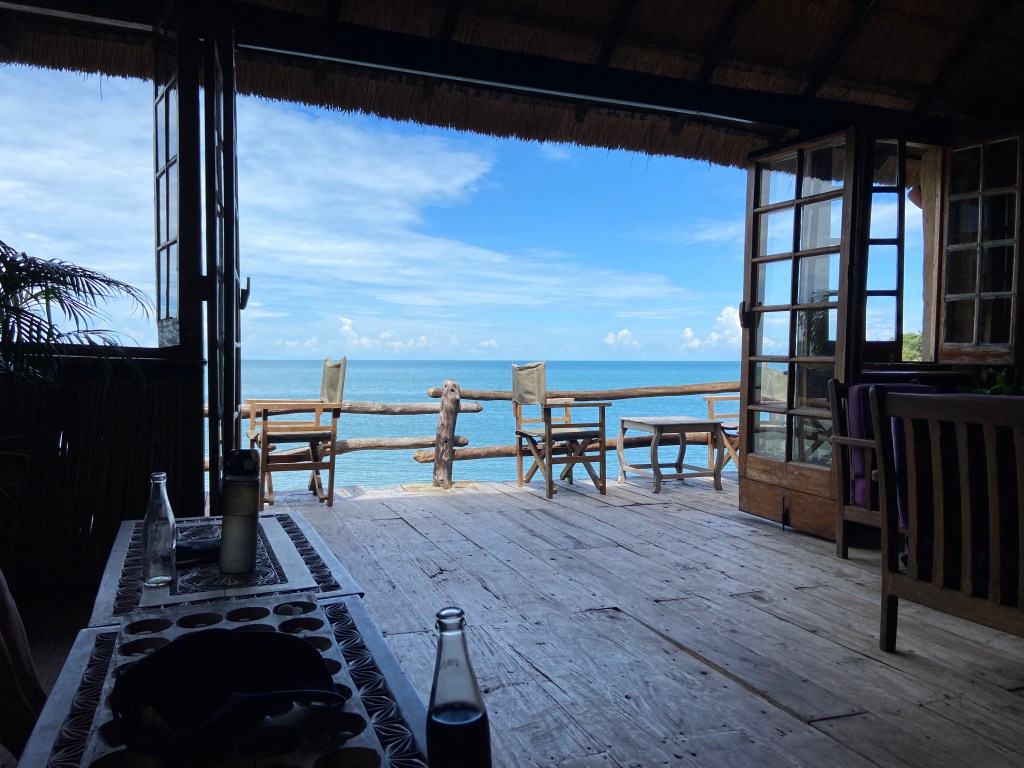
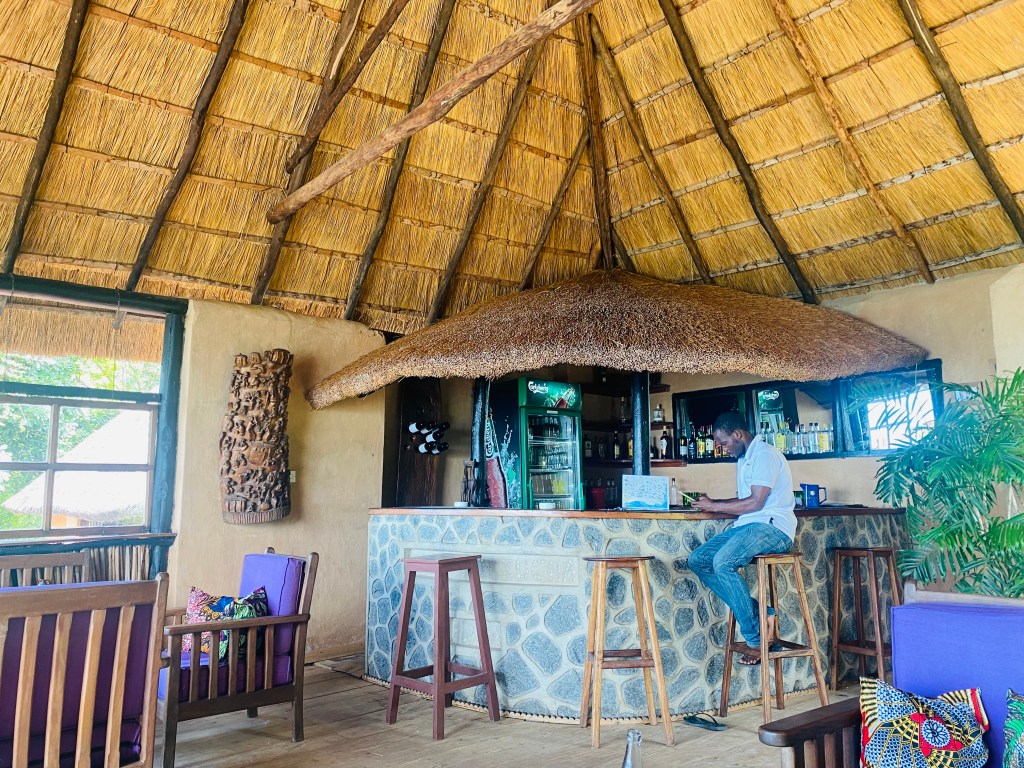
We even got to know the people camping where we had hoped to be and eventually forgave them for taking our spot! They were a Swiss / Indonesian couple with their seven year old son who we found were very friendly and easy to get along with. And this would not be the last we saw of them either, our new group of friends was about to start taking shape.
The rains were still a constant nuisance and on our last night the storms were so heavy that everything got soaked. We had left our damp swimming costumes, t shirts and shorts outside along with our chairs and by the time I got up in the morning everything looked like it had spent the night in the lake itself.
I gathered it all up and ran with it up to the restaurant area in my nightshirt. By the time I got there I was also ringing wet and my nightshirt was soaked. I quickly changed into my gym gear and hung everything out under the roof of the restaurant with the chairs tipped up trying to dry them out.
By the time I had finished my training the rain had stopped and the sun was out, but it still took another couple of hours before everything had dried out enough for us to pack it all up and check out.
So far the rain was causing us little more than inconvenience, a world apart from the devastation it was causing the local community along the lake shore. We were setting off further inland hoping that putting some distance between us and the ever-rising Lake would make things easier. Little did we know what we were about to find, Malawi still had some surprises to send our way!
 The Sidetracked Sagas