We had been in Tanzania for ten days already and only just started. It is a big country with a lot to see and do and we were already relishing every moment.
The campsite we had arrived at late the previous day was close to the Mikumi National Park which we would normally be keen to go and visit. But here in Tanzania there were two problems with visiting the national parks.
Firstly, it was the wet season so not only was it raining most of the time but it was also not the right time to see many animals – the grass and bushes were thick and high and the animals would be widely dispersed across the parks as water was everywhere.
Secondly, Tanzania knows how good and how popular its national parks are and charges accordingly. To get James, me and Henry into any national park here in this country was going to cost us around $400 a day – that includes entrance fees for James and me, conservation fees and the huge fee for taking a foreign registered vehicle in. We had to be selective – maybe the cost was worth it for the Serengeti and the Ngorongoro Crater but for Ruaha, Mikumi and some of the other, less well known parks? Maybe not.
We had enquired at a different campsite about a half day guided safari into Ruaha National Park. Doing a guided tour would side-step the $200 a day price tag for Henry and the cost of the guide could be shared between a group. But we had been told that the total charge would be $620 for two people! We just laughed and quietly walked away.
Here at our current campsite they were offering half day trips into Mikumi for just $150 for a vehicle carrying up to six people plus $35 per person park entry fees. That seemed much better but none of our group wanted to share with us so we decided against it. Instead we thought we´d try our luck with a walking safari in the Udzungwa Mountains just an hour away.
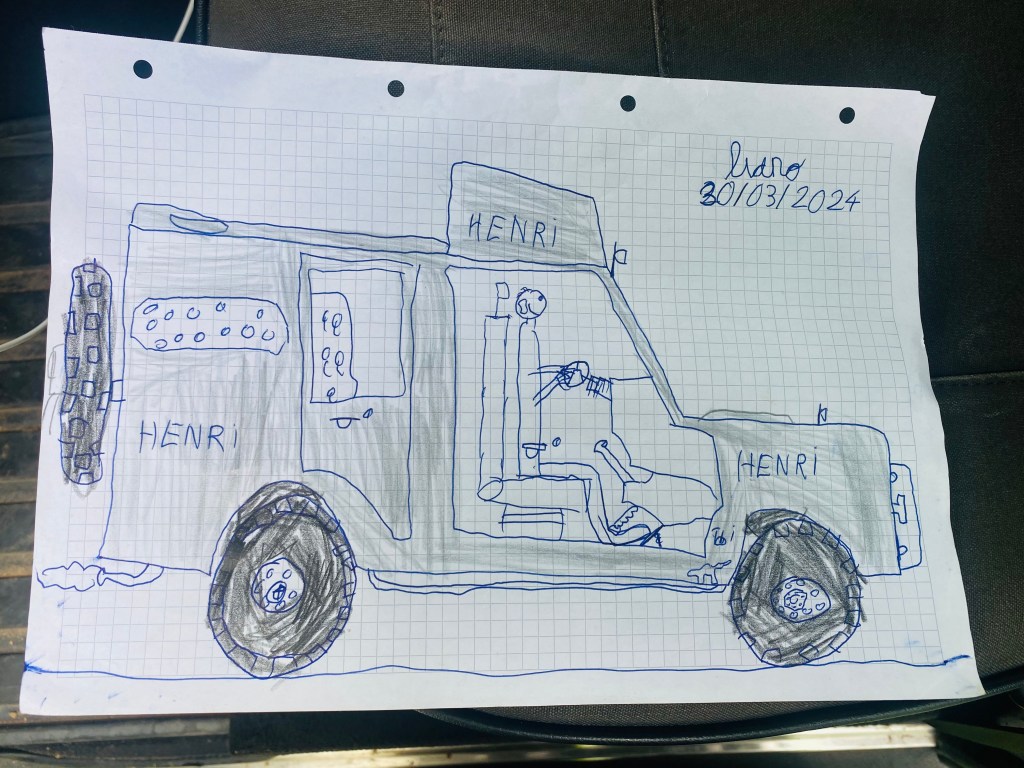
As we were saying goodbye to our new friends, Liano presented us with a rather good keepsake he had made for us
Finding a campsite in the mountains with a reasonable price tag had been a challenge but we had hit on the Honde Honde camp who charged only $35 a night and whose website looked exciting with all sorts of walking trips, boat trips and more on offer.
But when we arrived it was possibly one of the worst camp sites we have ever seen. No running water, run down, dirty facilities and staff who were friendly but seemed bemused to actually see visitors. We talked to them for a few minutes and they told us the elephants had ripped up the water pipes – I didn´t know there were even elephants in this area! They also told us that they were expecting a group of 36 locals who were likely to be very loud and disruptive for the next couple of days. All in all, they recommended we tried somewhere else and we didn´t need much persuasion.
I consulted IOverlander again and found the Twiga hotel which offered camping in their grounds. When we arrived the whole place was in much better condition but the staff spoke practically no English at all. They managed to communicate to us that their ´Leader´ was not there so they didn´t know how much the camping cost but they did know that there was a water problem in the rooms so we couldn´t stay in the hotel itself. Finally we managed to negotiate a deal with them and pulled into their garden at the back to set up camp
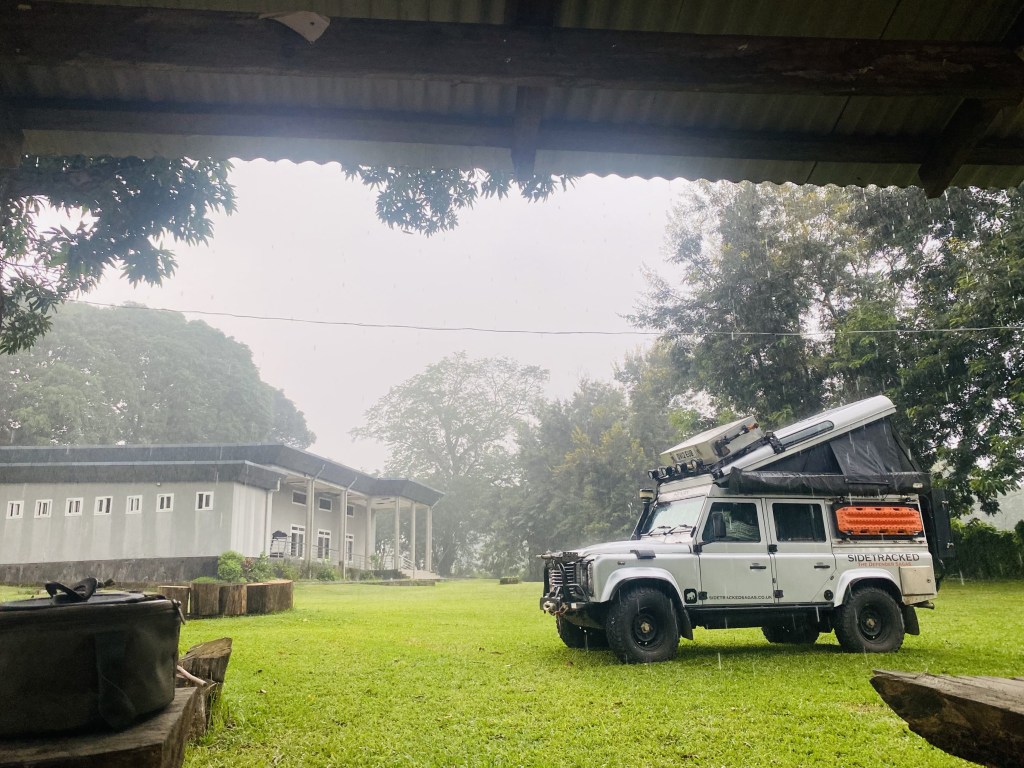
It was far too hot and humid to do anything but read and snooze for the rest of the day. We both had upset stomachs, probably from dehydration as in these temperatures it is almost impossible to drink enough water.
Baboons came to join us in the undercover area, sitting on the tables and tipping up the rubbish bins looking for food. It is a strange fact that baboons pay no attention to women at all so James was kept busy shooing them away
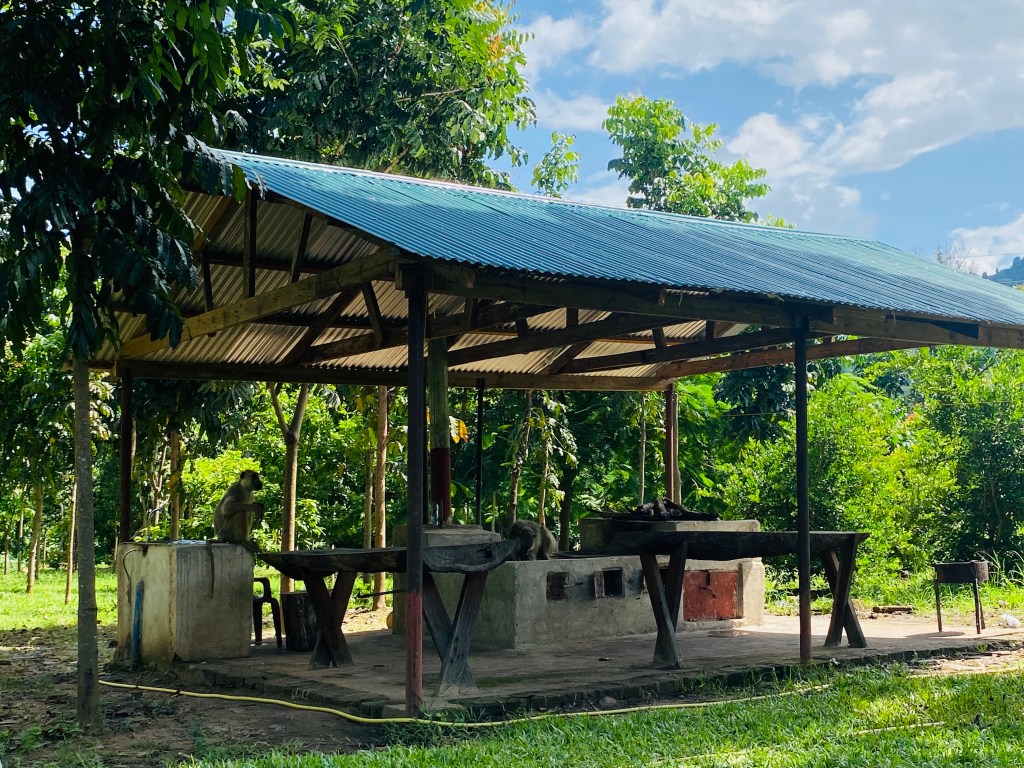
We cooked in the undercover area that evening to keep out of the endless rains which at least brought with them a cooling breeze for an hour or so. But after the baboons had spent the afternoon sitting in there it all felt a little grim.
The next day was Easter Day. We had bought ourselves an armful of chocolate a few days before but right now we just kept it in the fridge to stop it dissolving into goo.
The grass and the ablutions at our campsite were full of mosquitoes and there were ants everywhere. They all come out to play in the rains and they all like to bite your ankles! So we headed off quickly and drove to the gates of the Udzungwa Mountain reserve
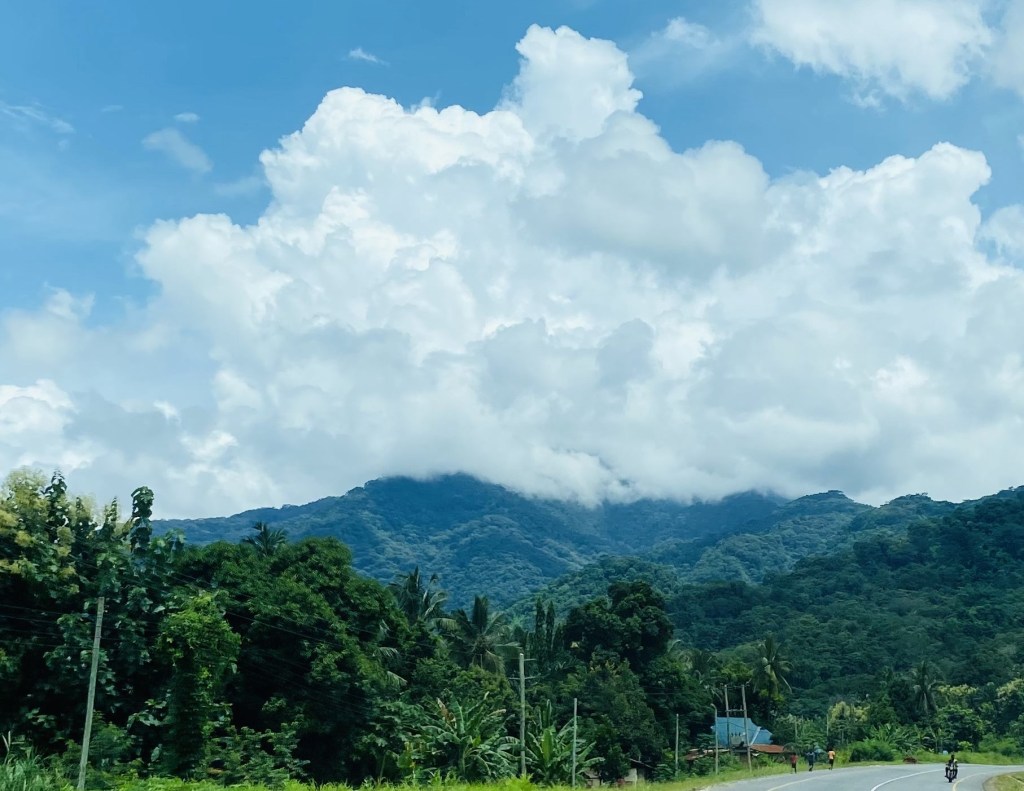
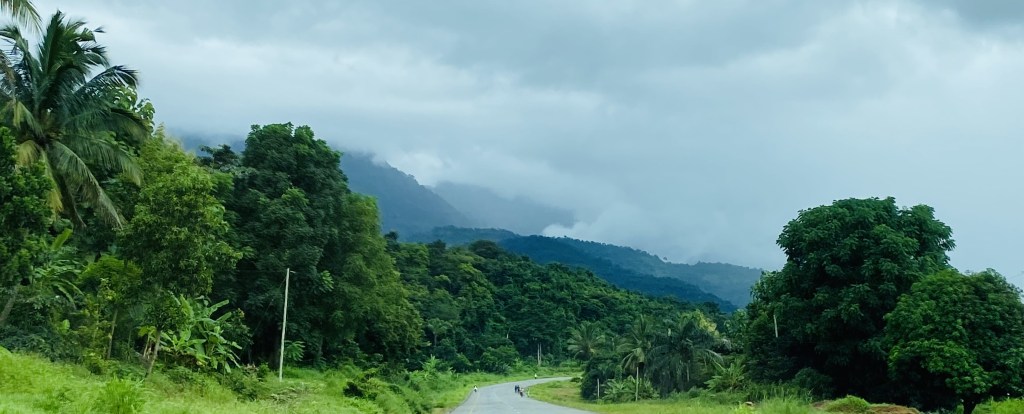
The whole area was stunning – lush, green forests and soaring mountains all around us
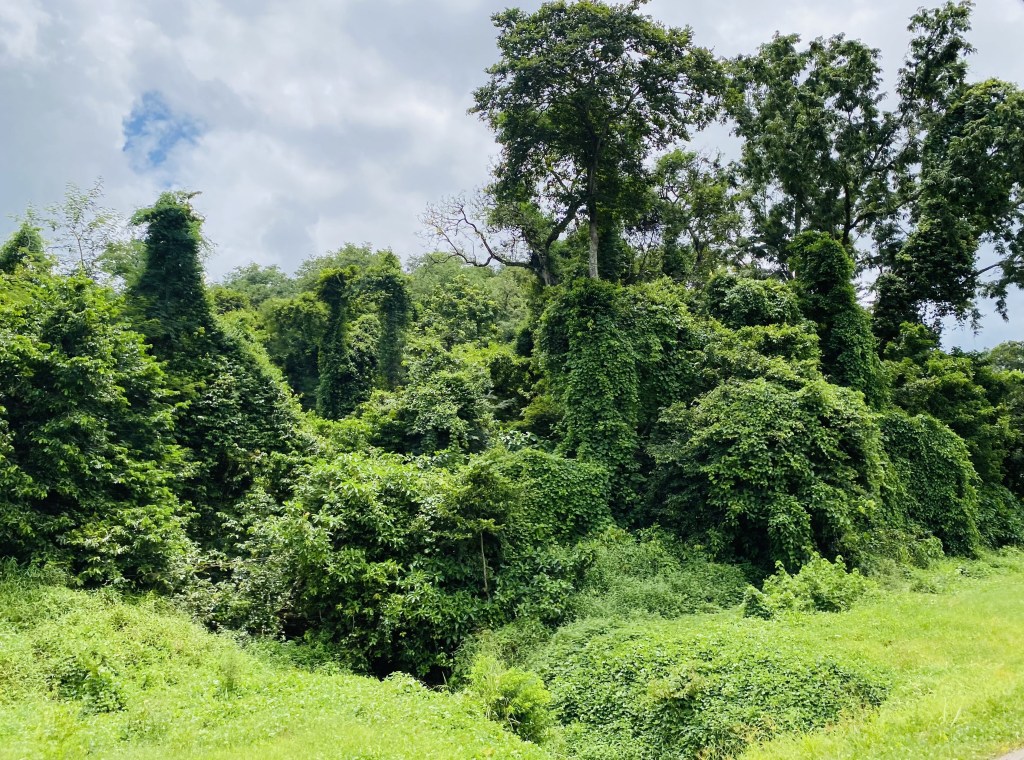
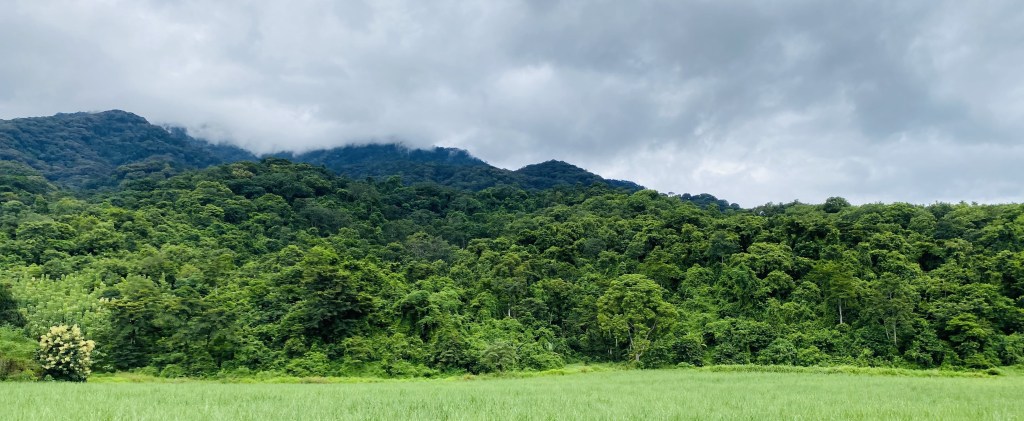
But we could hardly see the top of the mountains through the dark mass of low clouds and when we arrived we discovered that even without taking Henry into this park we would still have to pay $115 dollars each for entry fees and a guided walk. If it had been clear skies and warm sun we would have done it but right now, as yet more rain started to pelt down on us, it just seemed like a lot of money for a pretty miserable day out.
It would be easy to get a bit down in Africa in the wet season, everything is so much harder and nothing is much fun. But there is an old saying that you have to see places in the bad times as well as the good in order to really experience them and we were not exactly short of amazing experiences these days. So we tried to think of this period in our travels as more of a journey into the reality of life in Africa and less about being excited tourists seeing only the carefully cultivated image.
Some of you may know that I spent 3 months working as a research volunteer in the rainforests of Tanzania over 20 years ago, studying the impact of the teak forests on biodiversity. It was a fascinating but gruelling few weeks which left a permanent mark on me as well as fuelling my love of the African continent through thick and thin.
In those day there were no sat navs and Google didn´t run everyone´s lives, so I really have no idea exactly where our base camp was. All I know is that we were working on the edge of the Selous Game Reserve and the small town of Ifakara was our ´big smoke´ where volunteers took it in turns to go and buy food and provisions once a week.
Here in the Udzungwa Mountains we were about an hour away from Ifakara and I had put a trip to the town on our itinerary
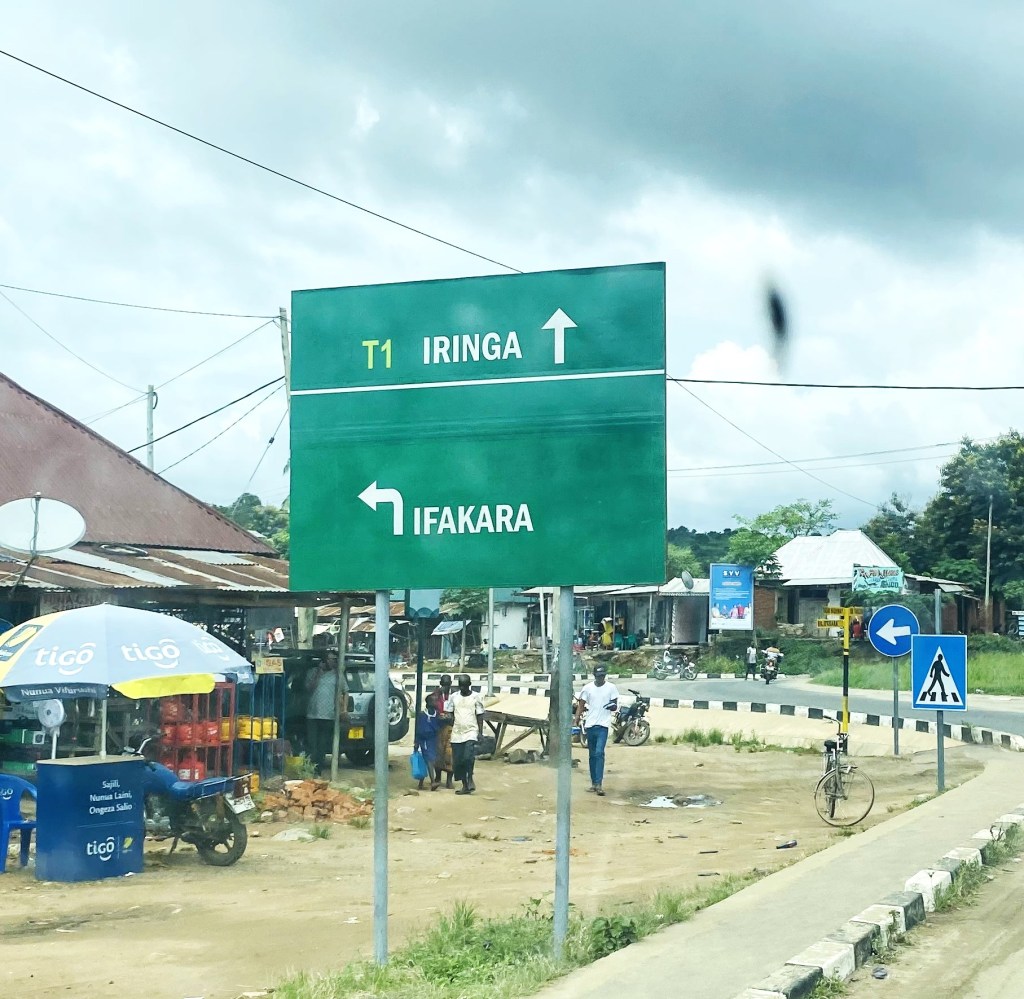
No matter how long ago my experiences in the rainforests were, I have clear memories and images of Ifakara burnt into my mind and I was excited to go back and see whether the place had changed.
So rather than doing a soggy walk seeing nothing but clouds and puddles we jumped back into Henry and drove towards Ifakara. I have to admit my heart was thumping with anticipation as we drove and memories came flooding back of my time here so long ago
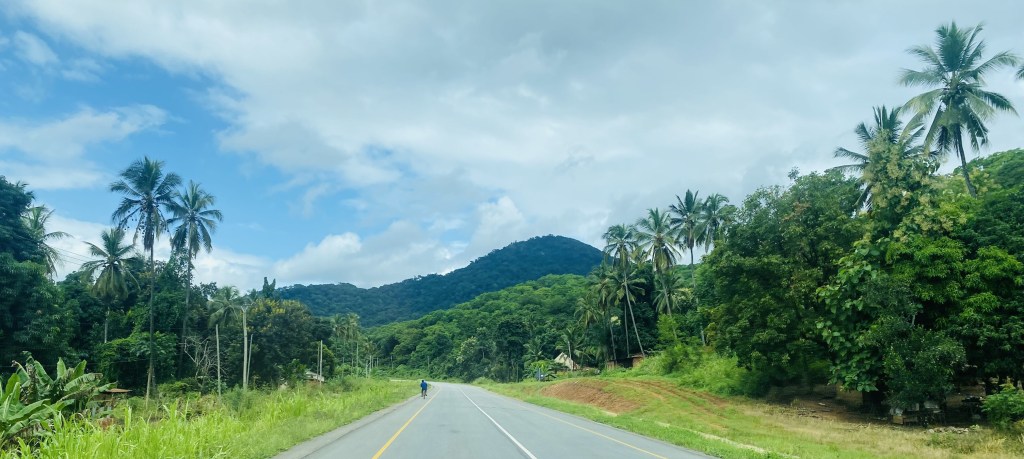
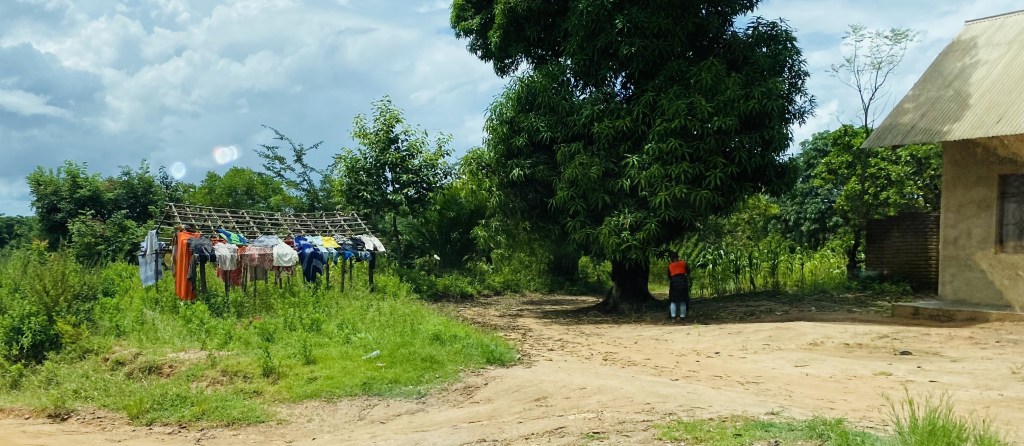
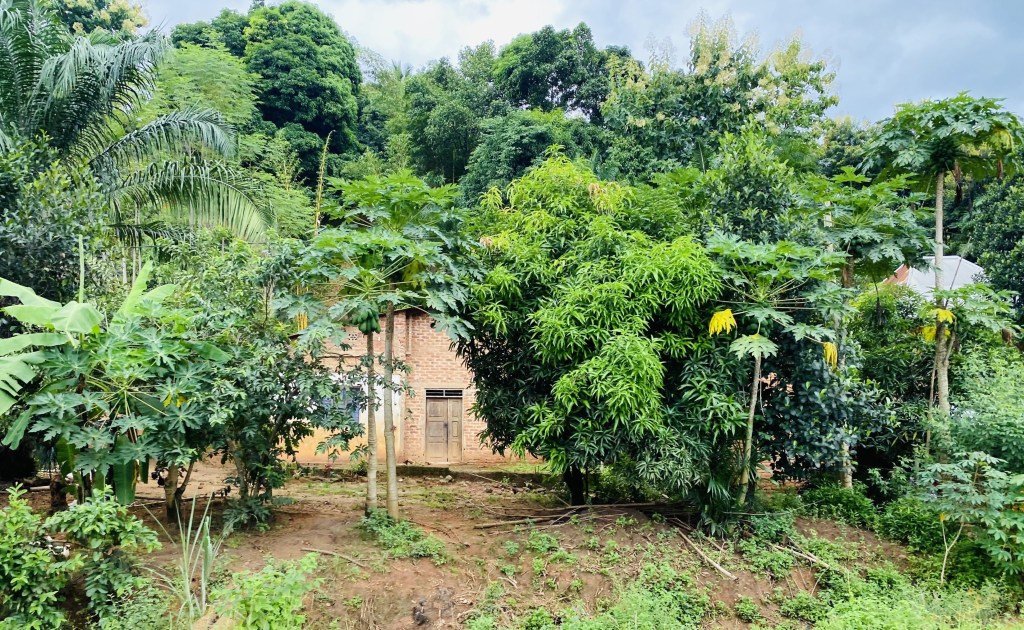
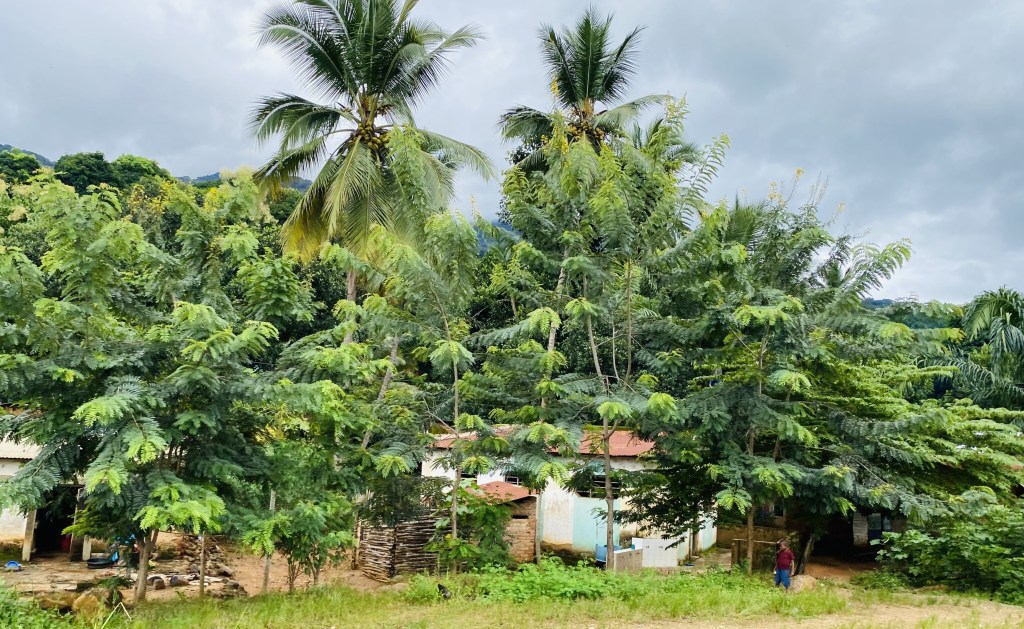
Back then there was no tar on the roads. We used to travel from base camp to the satellite camps in the back of a Bedford truck and more than once we slipped off the road, on one trip tipping the whole truck over and taking half a day to pull it out. Now the roads were smooth tar but that was just about the only difference I could see. At one point I was sure we were driving along the road where we had tipped, a sudden blast of memory clicking into place with familiar landmarks all around – but who really knows?
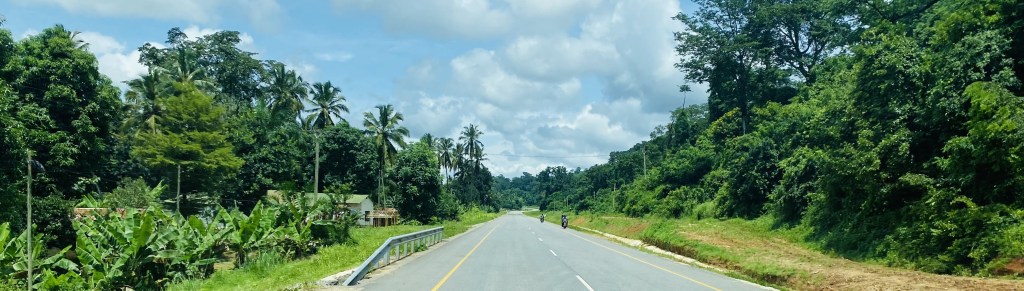
As we entered Ifakara itself it looked exactly as it does in my mind´s eye. But then we carried on down the road and I saw that it has grown significantly, now a rambling, industrial town.
We didn´t stay long, we just drove around for a while, but it was all I had wanted – to revisit a place that had been such a big part of my life for a short but transforming period.
Not keen to spend another night at the baboon campsite we pressed on all the way back to Mikumi where we had been the night before. There are two popular campsites here – we had stayed at one last time so we decided to try the other one this time.
But when we arrived everyone seemed strangely unfriendly. It is not what we have become used to in Africa but the staff were unhelpful and a little surly. And when we were finally shown to the campsite itself there appeared to be no way to get the Landrover in – with lots of the campsite´s own tents covering the grass.
But eventually someone came and started organising a removal of the tents so that we could drive in and park up
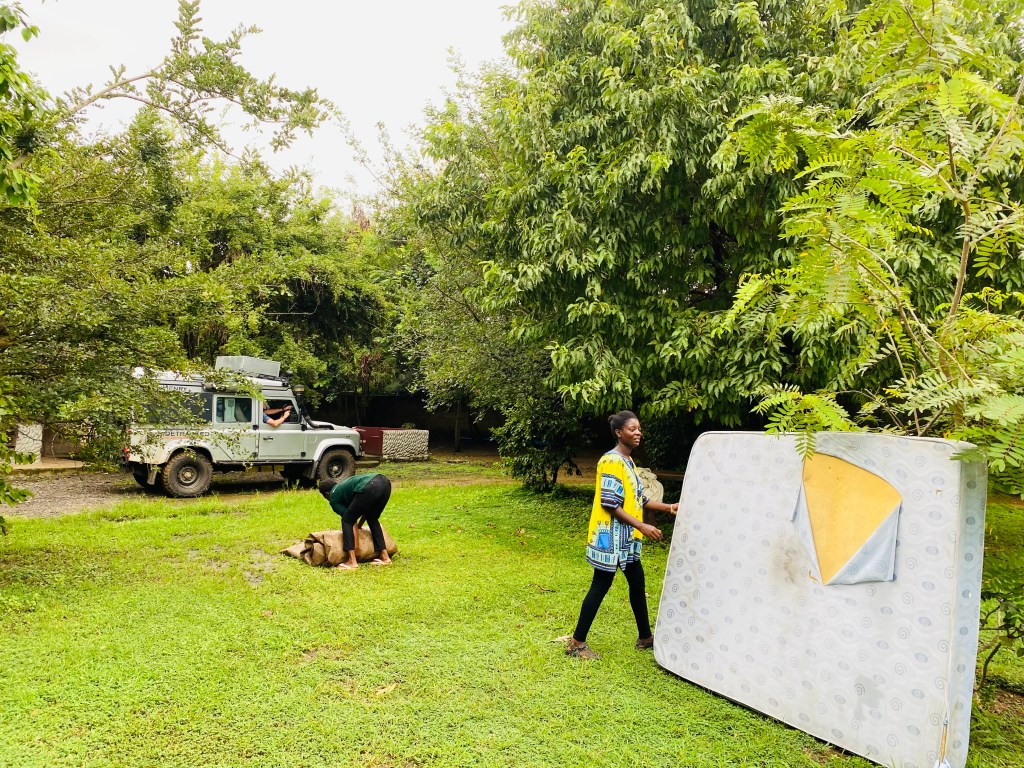
The whole place was like a muddy swimming pool. Henry sloshed through the water-logged grass and slowly sank in the mud where he was parked. We waded through the wet and mud getting our boots and trouser legs filthy.
And it was still raining. Heavy, relentless, miserable rain all day and all night, drenching us, Henry and all our stuff.
The first evening we were able to cook in the undercover area but the next day a large overland truck pulled in full of excited tourists and they took over the entire area so we were asked to move to a place that was even deeper in mud and had nowhere to cook in the dry.
But on the positive side we had asked the manager whether he could pair us up with other guests to share a half day game drive into the Mikumi national park and when he failed he kindly offered us the trip at half price which we happily accepted.
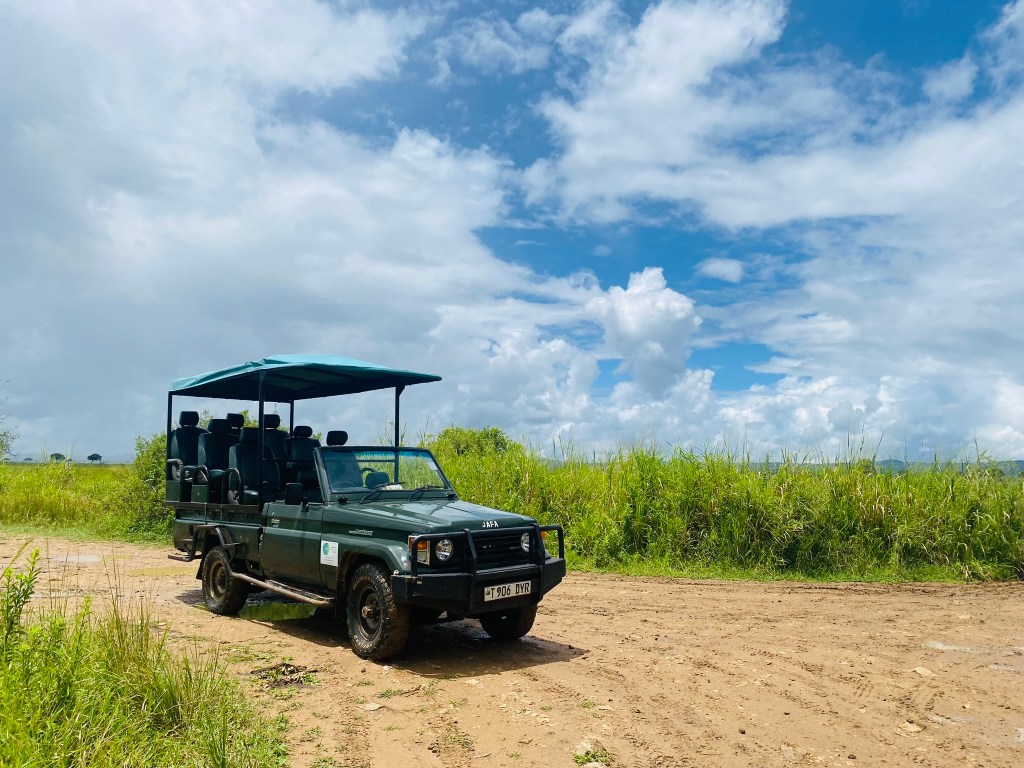
So the morning after we had arrived we were up early and meeting our guide at 6am ready to explore. The guide was great and when he asked what we most wanted to see, of course we said cats!
After nearly a year without lions we were not to be disappointed this time. We had only just left the campsite and were driving along the road towards the gate of the park when we saw what we hadn´t seen for so many months – a lioness!
She was trotting along the side of the road with two or three safari vehicles trailing along behind her
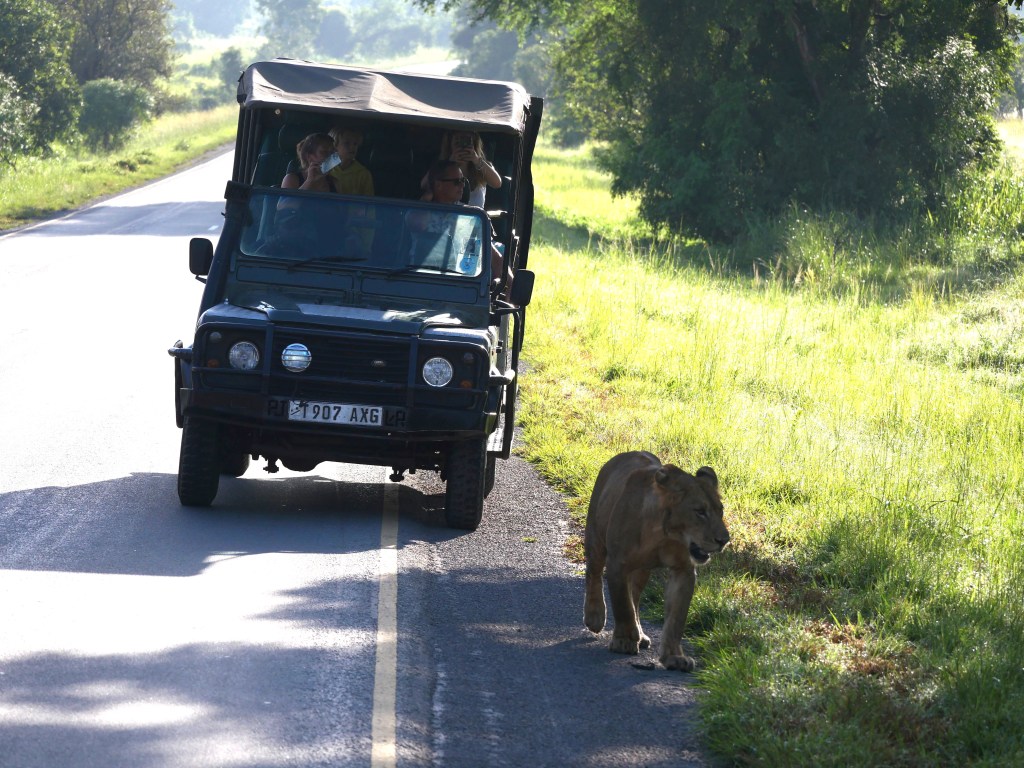
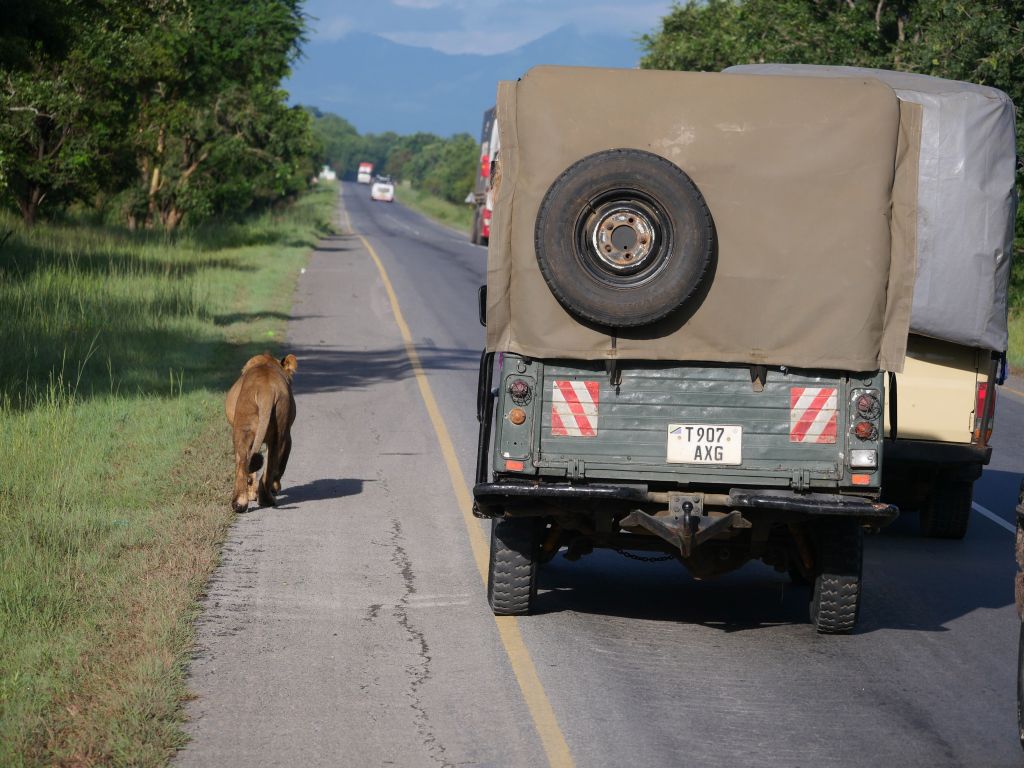
As we slowed to join the group we saw two more of the same pride down in the culvert drinking the water in the stream.
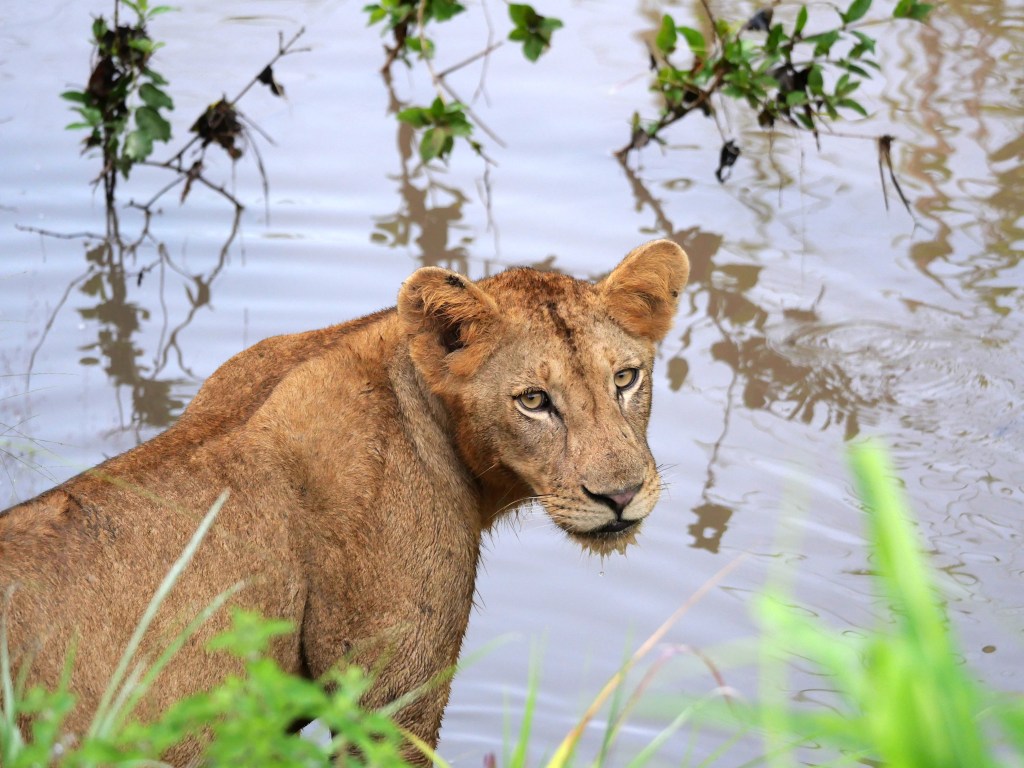
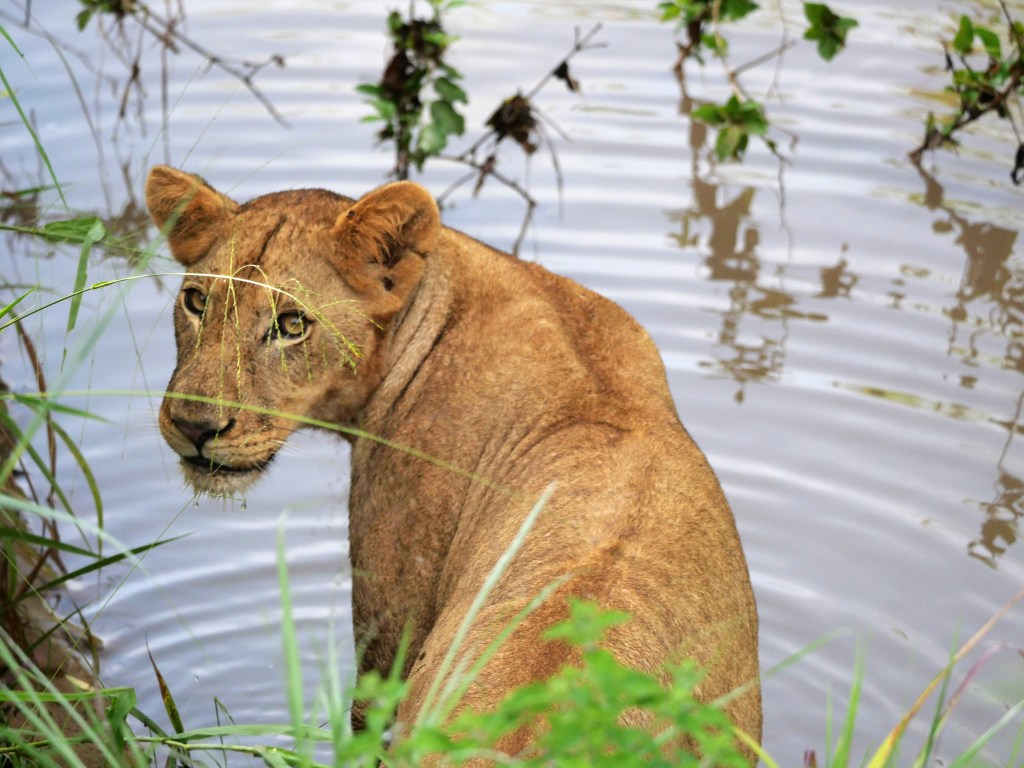
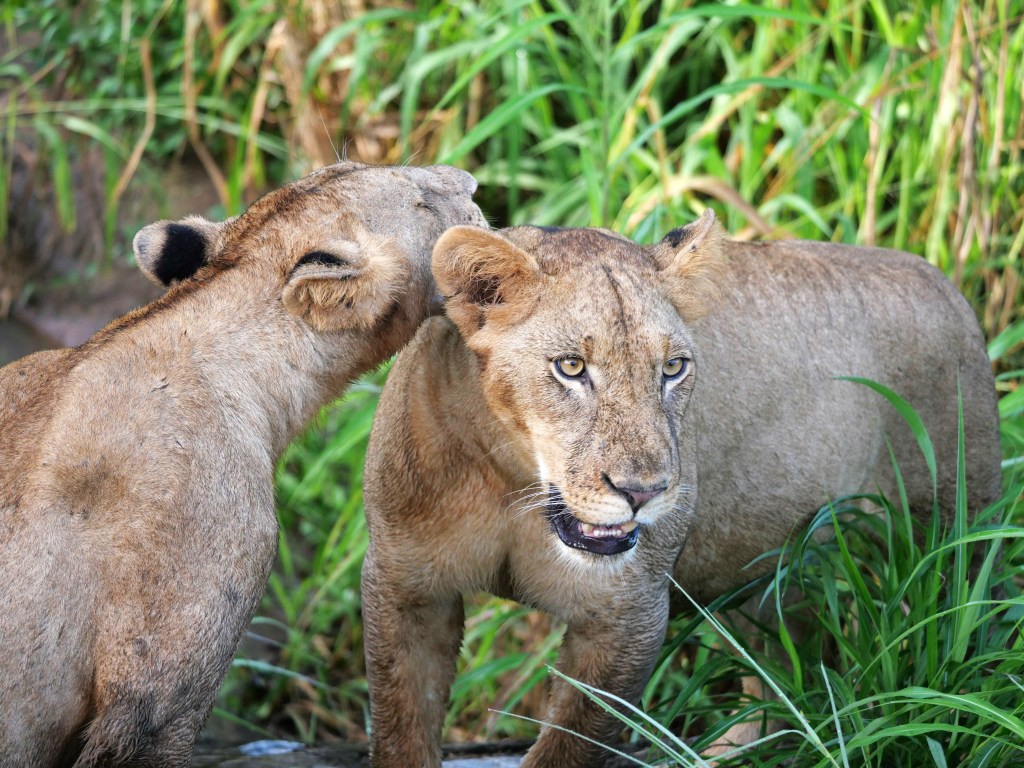
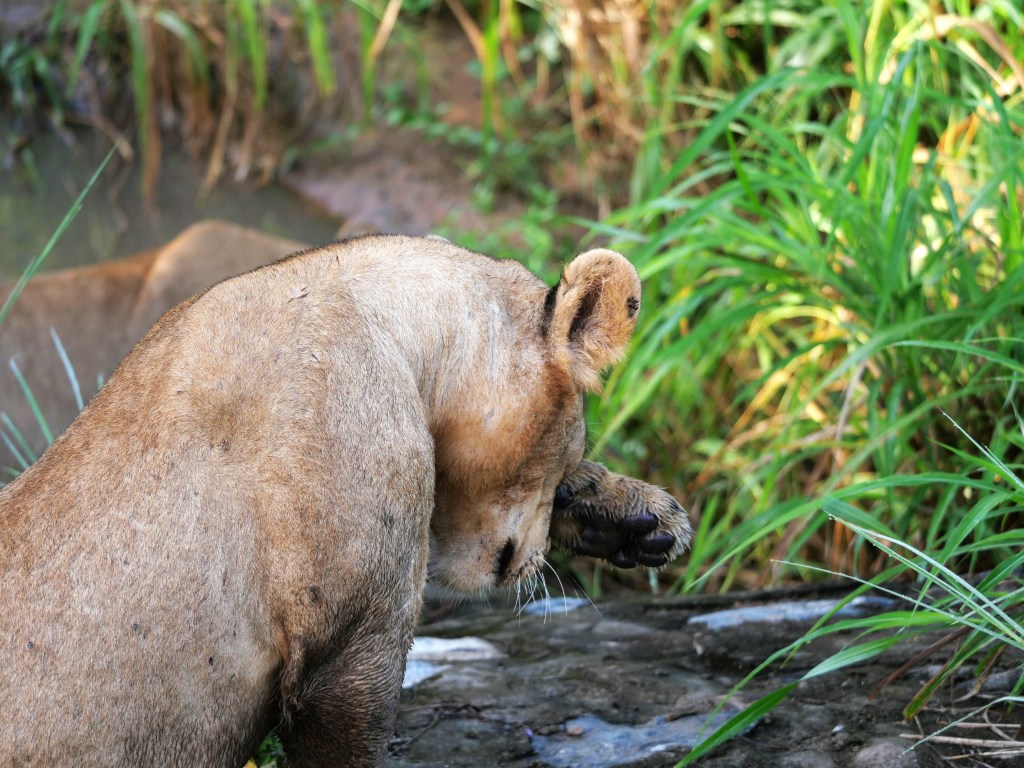
And before long more came striding out of the bush
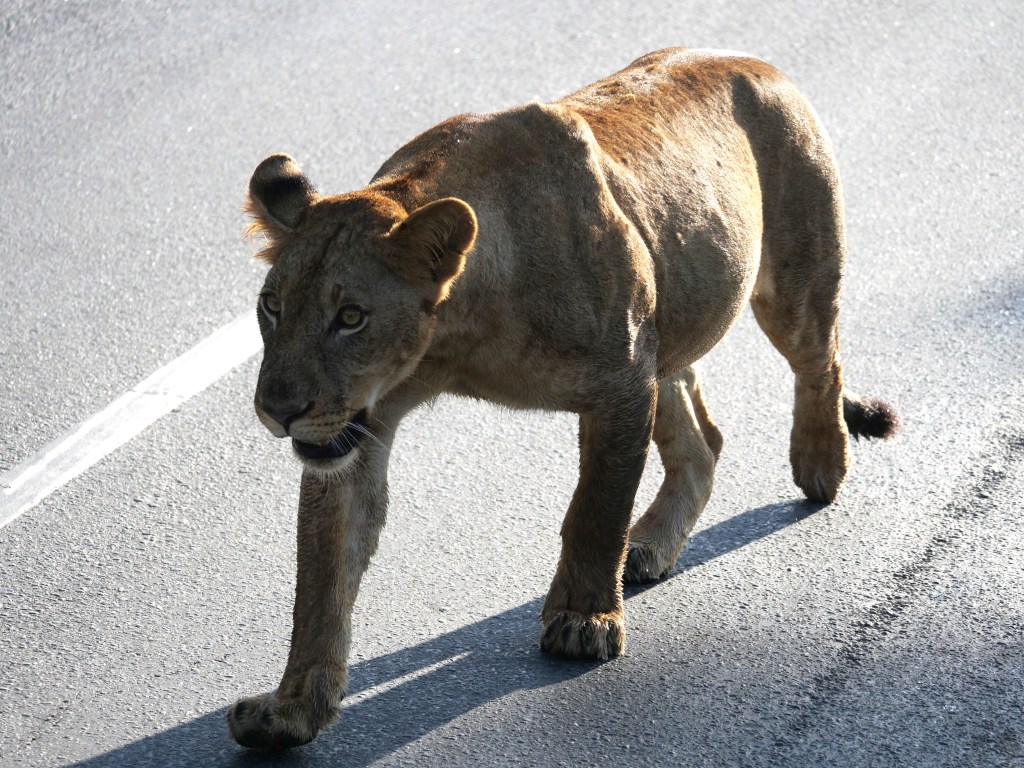
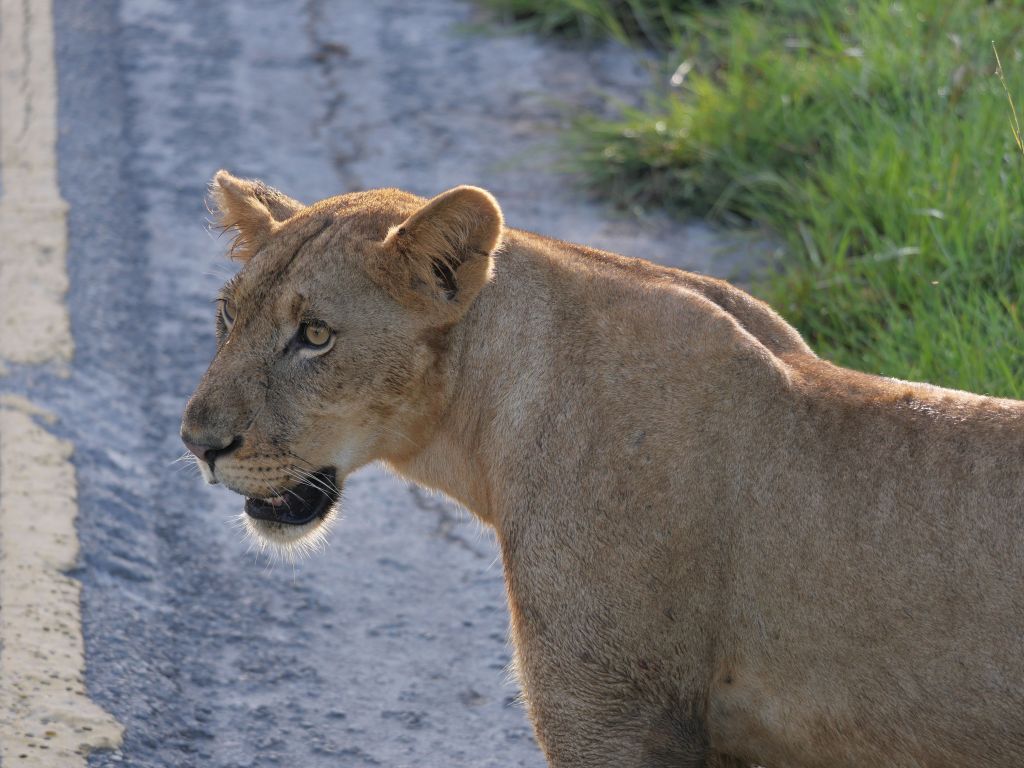
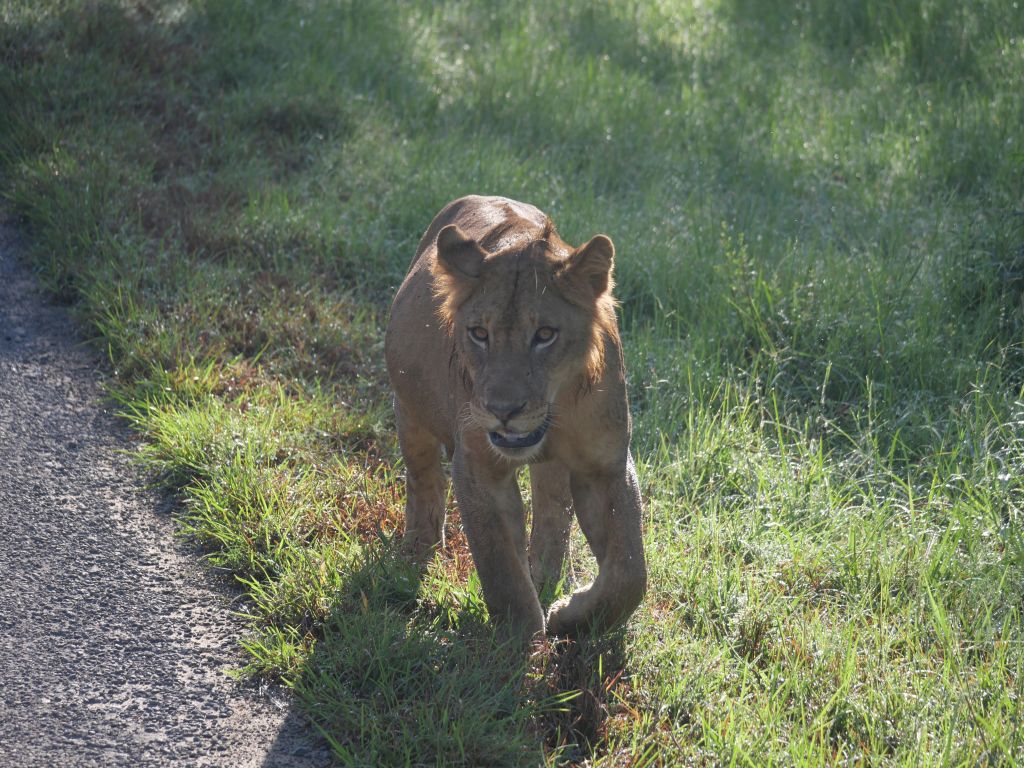
Including Mum who was a little annoyed by all the traffic….
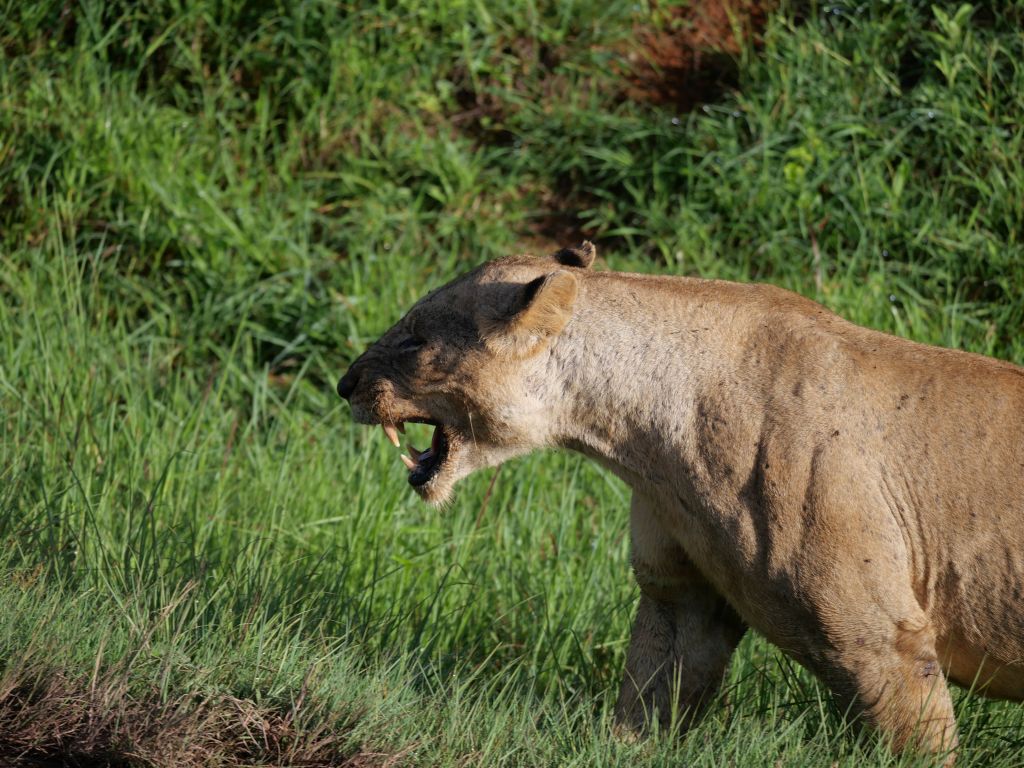
We spent a very happy half an hour or more circling round following them as they walked and drank
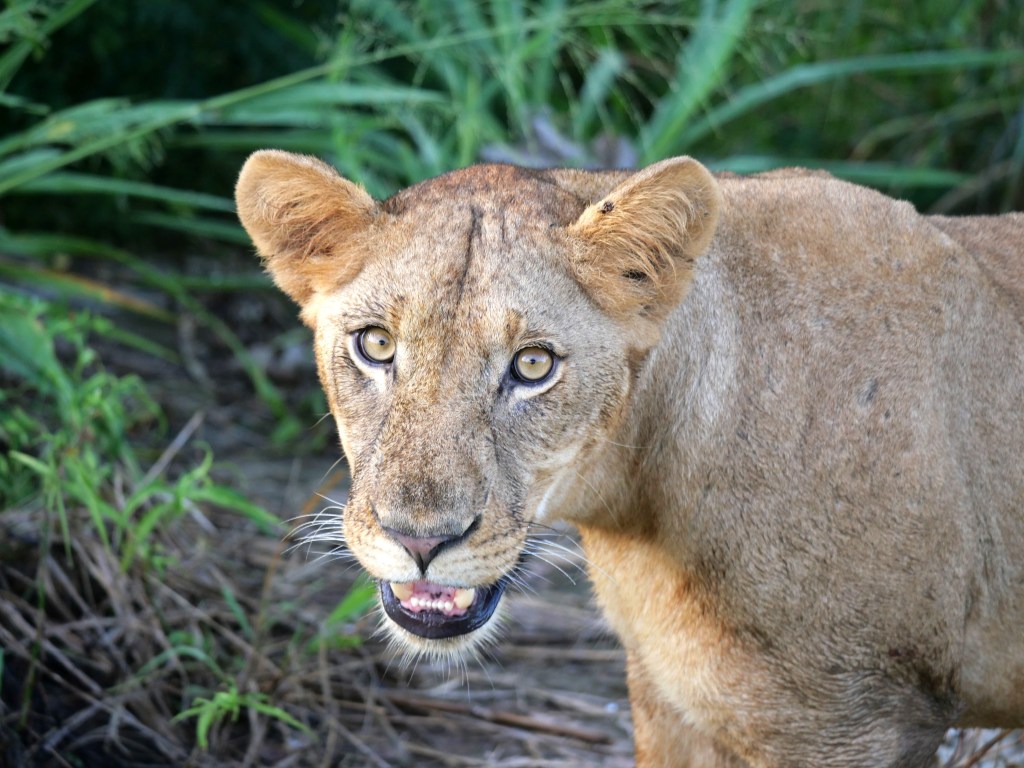
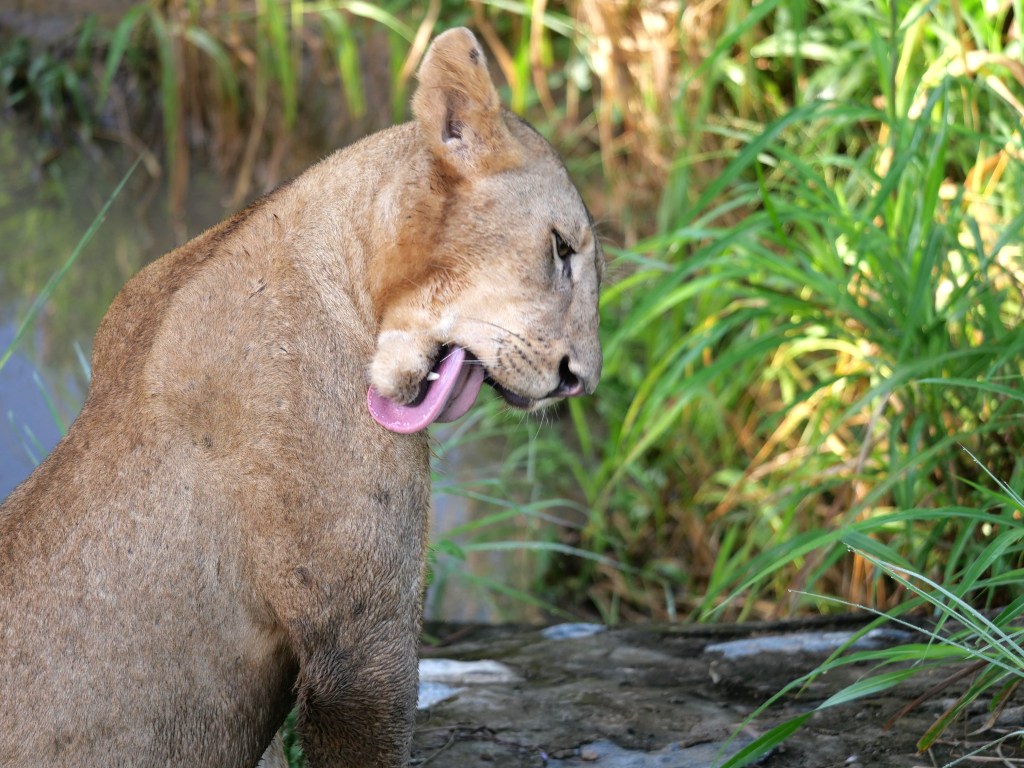
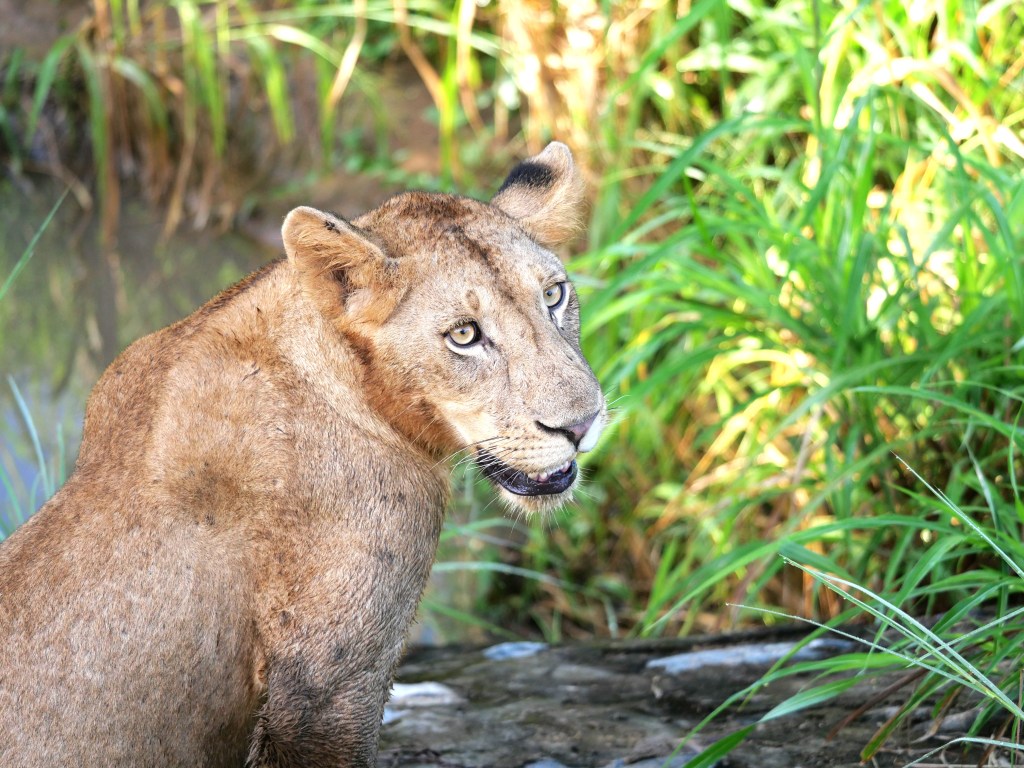
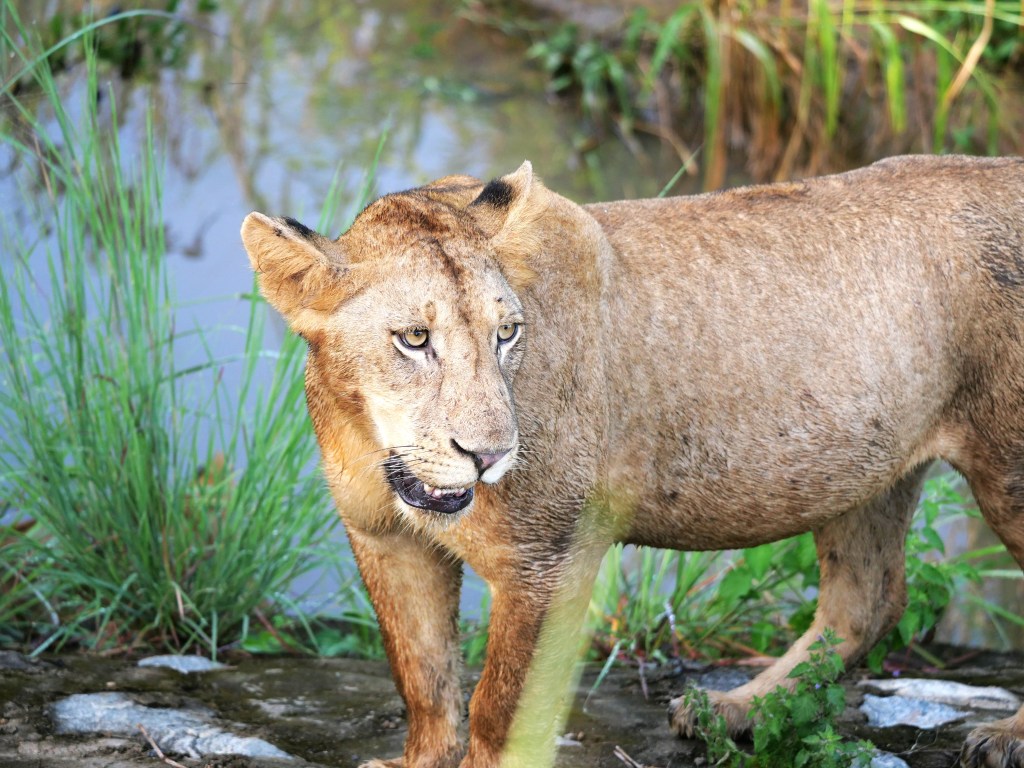
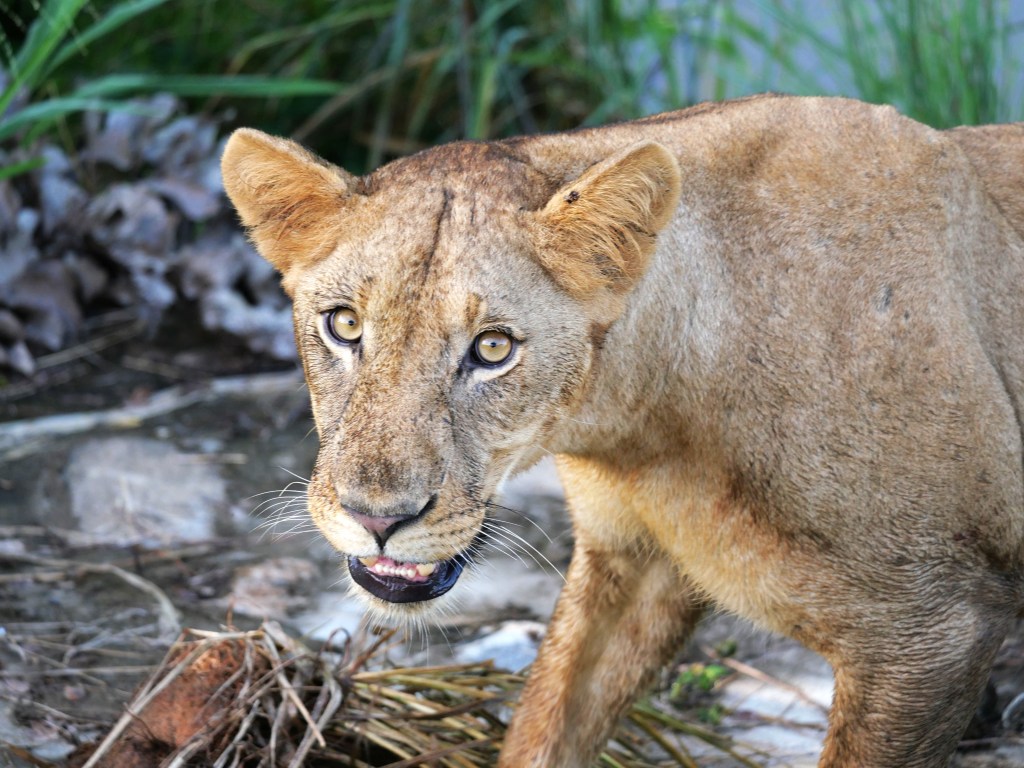
Clearly I could quite happily fill up this entire blog with photos of lions but I have spent hours trying to cut down the numbers just in case there are some strange people out there who are not absolutely obssessed with cats.
Certainly the lorry drivers transiting through were not too keen, there are hefty fines for killing wild animals on this stretch of road through the national park – and probably even heftier for killing tourists who get in your way!
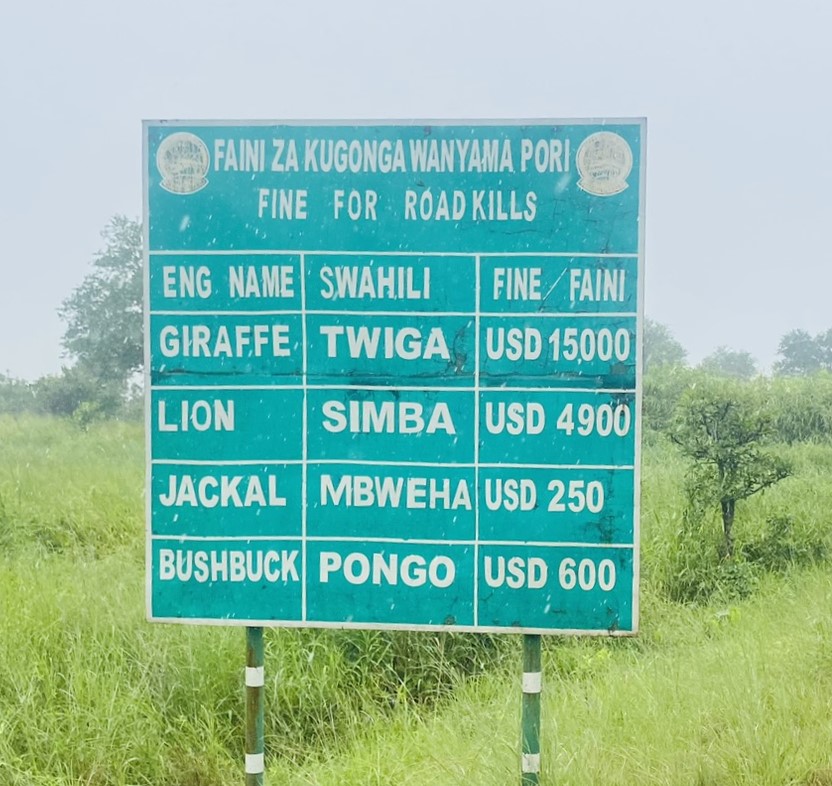
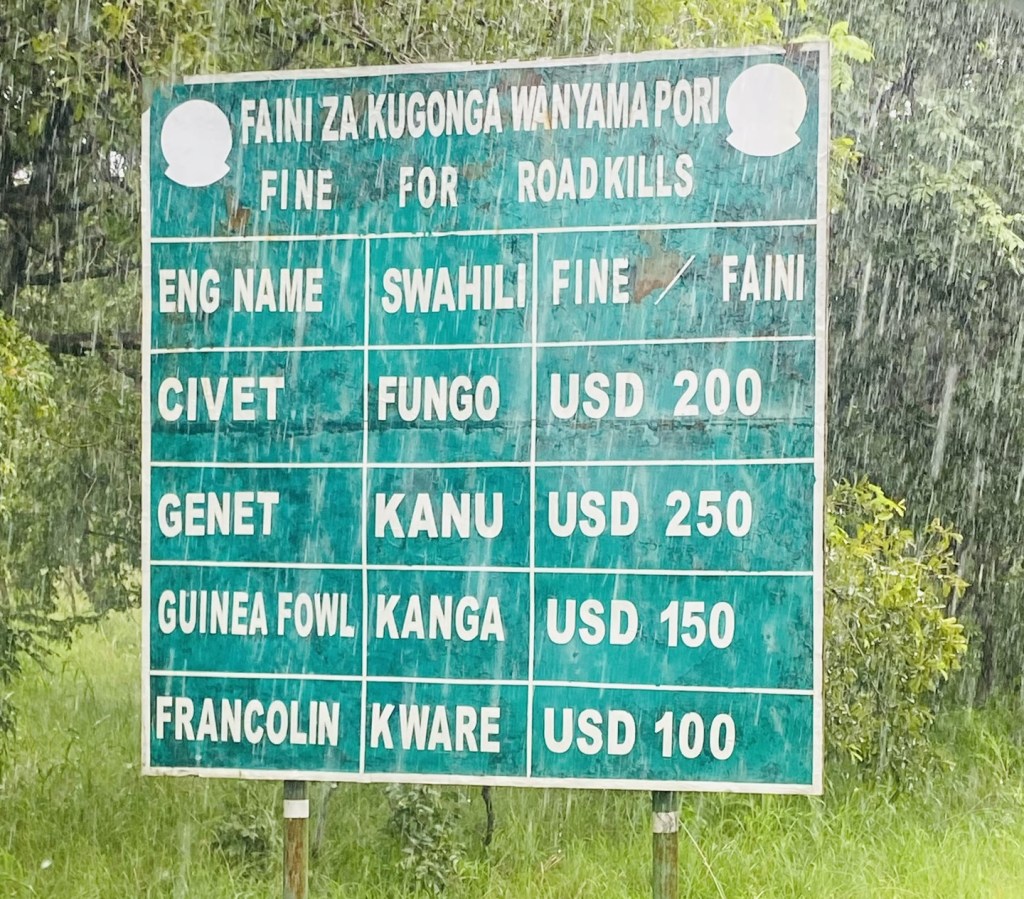
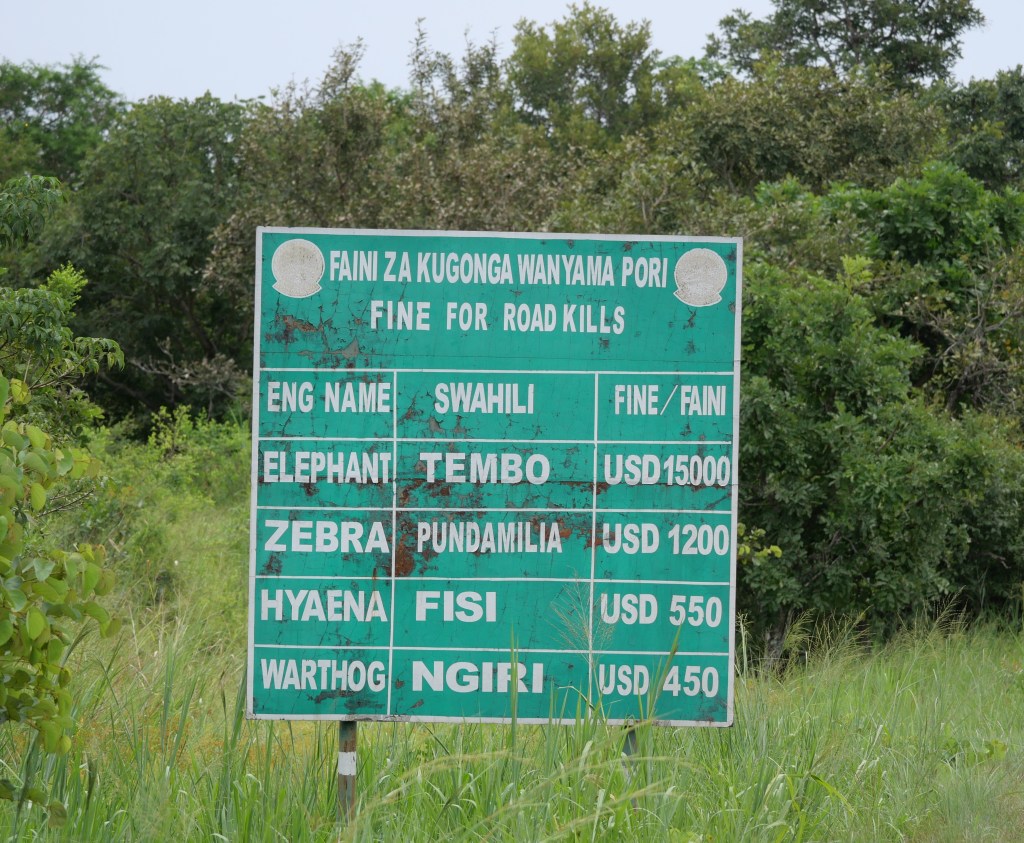
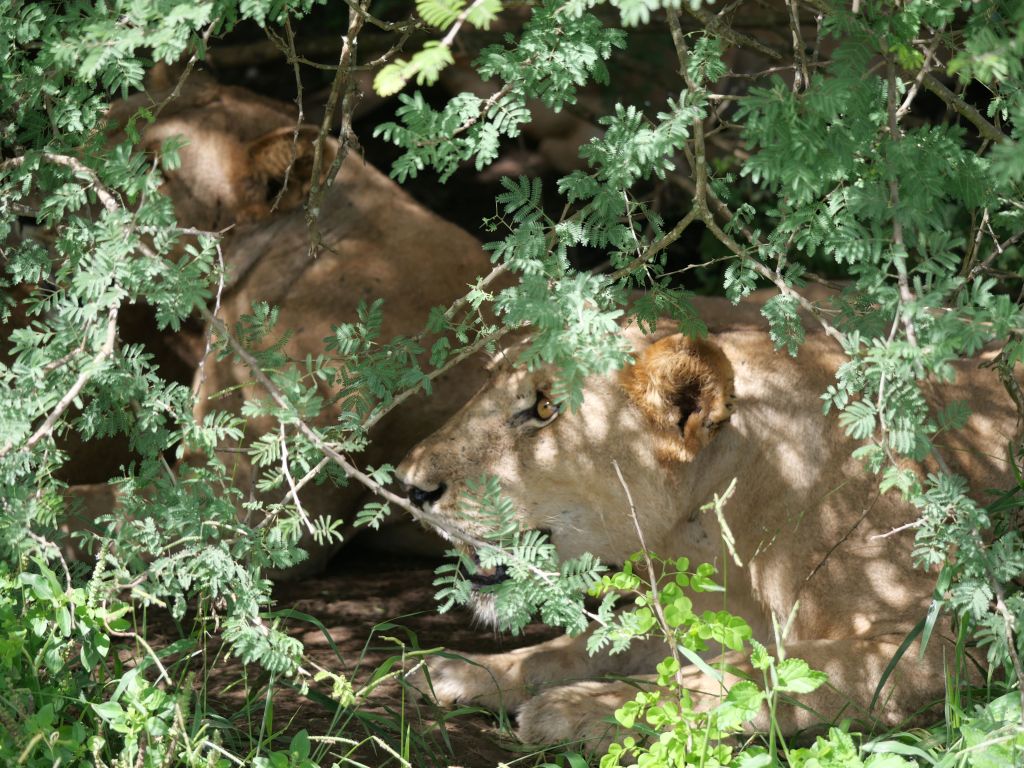
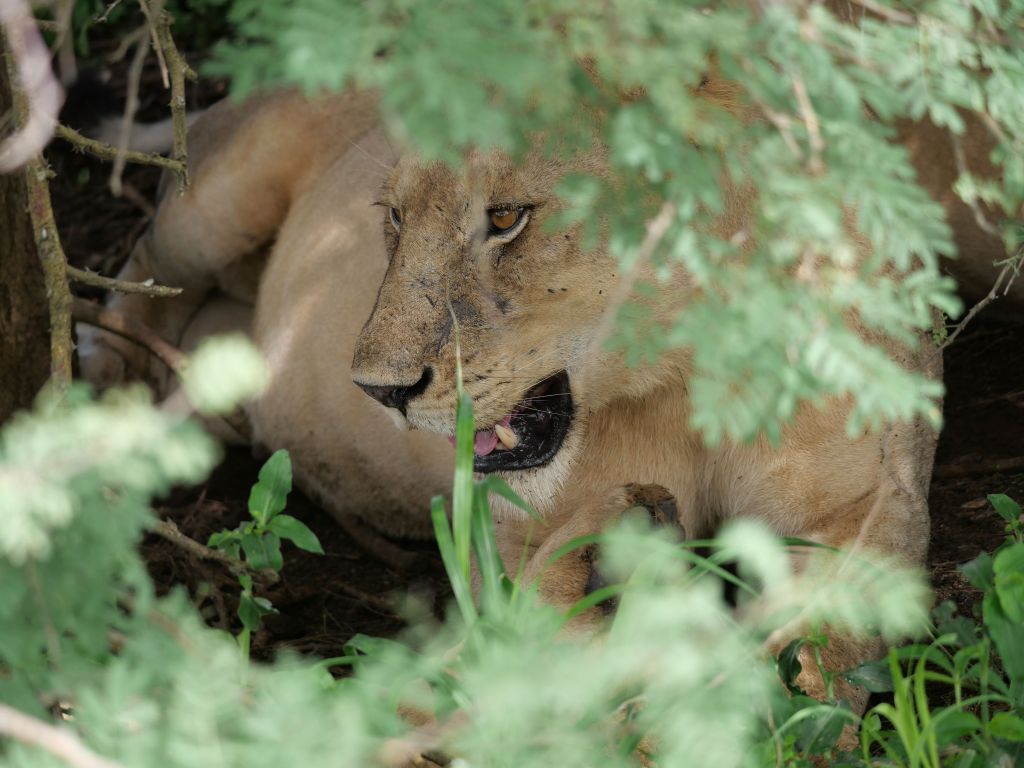
Once in the park itself we were lucky enough to see another pride of lions sleeping under a bush

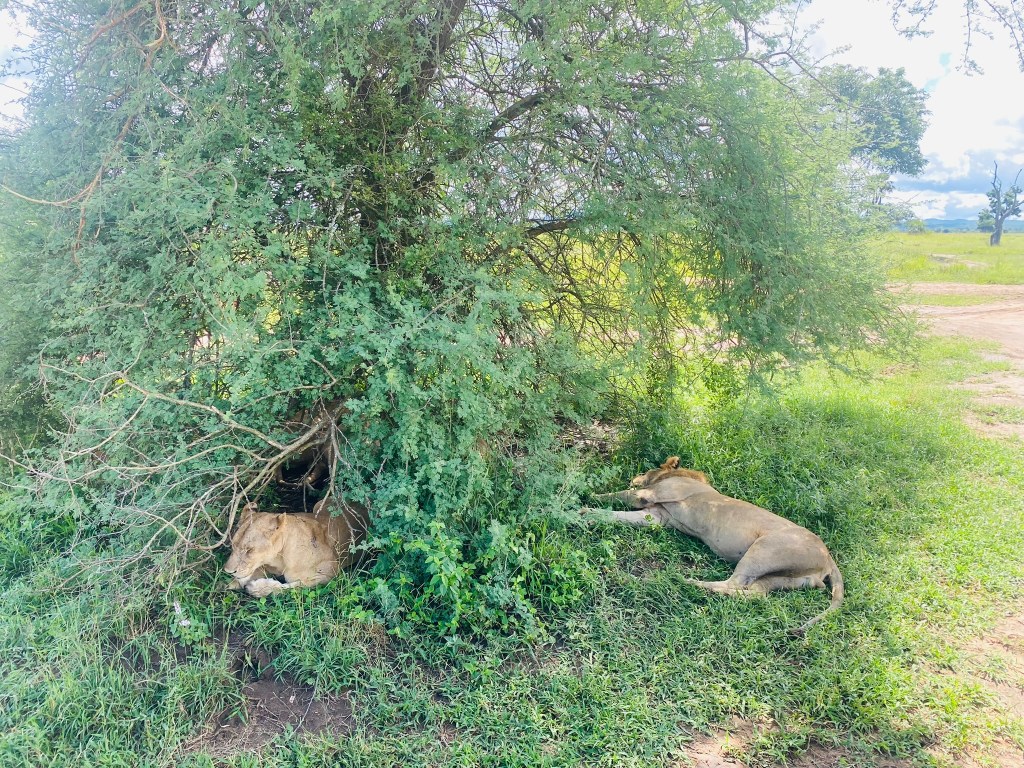
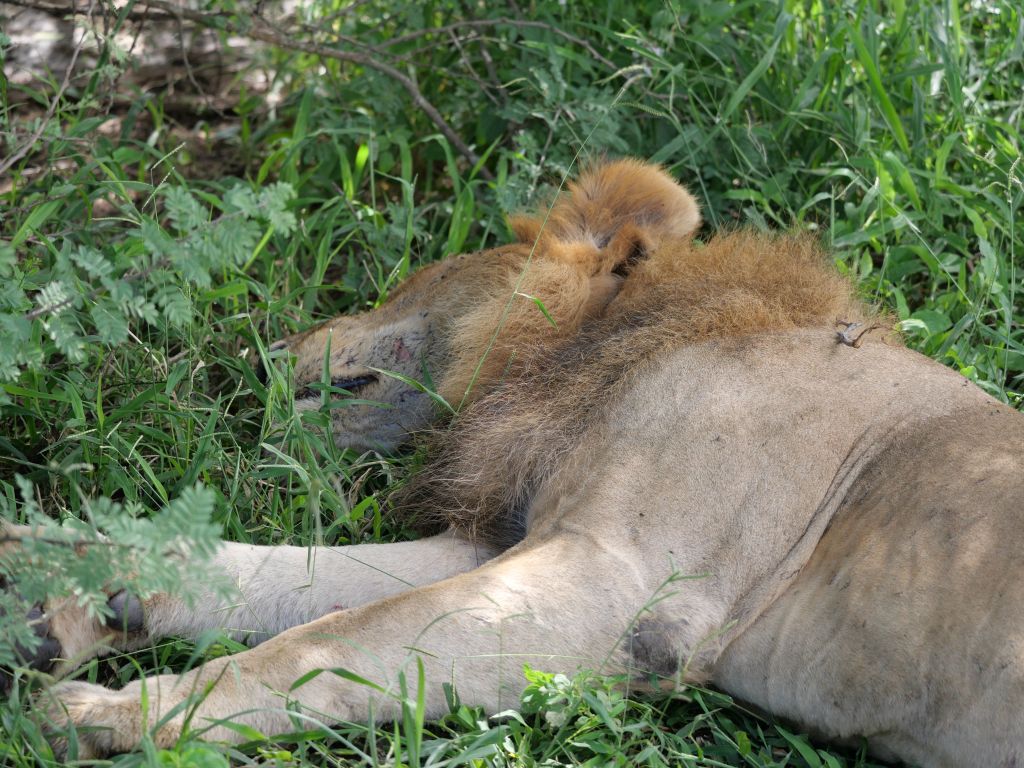
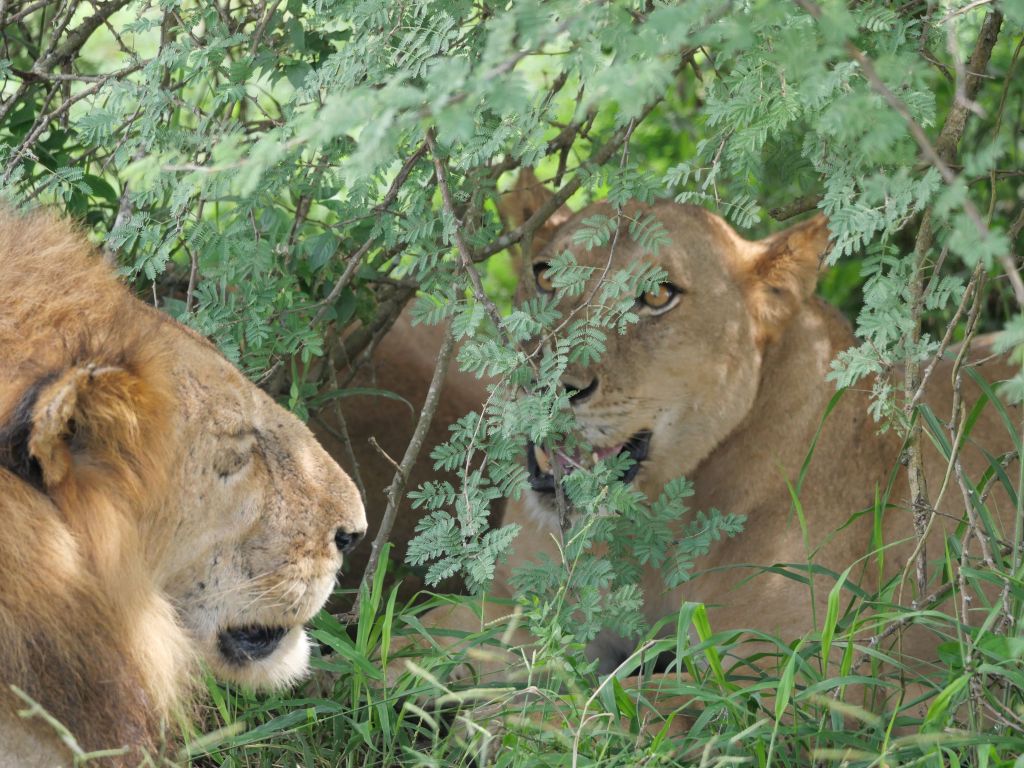
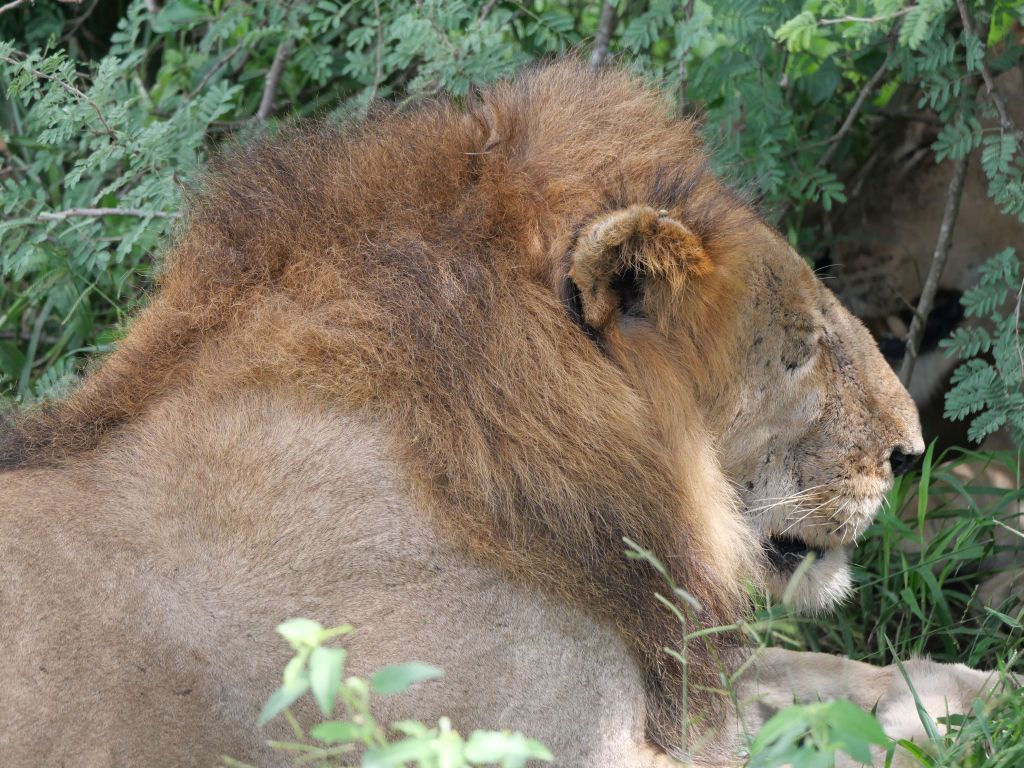
I had a very special moment with one of them. She was sitting under the bush, awake and watchful. I was being a very badly behaved tourist, standing up in the open-sided safari vehicle, leaning out of the truck trying to encourage her to look at me

Be careful what you wish for! For the first time in all my animal-spotting experiences the lioness actually saw me as a human being – normally lions will only detect the vehicle and not notice the people inside it. But tourists are always told to remain seated and not lean out of the vehicle to make sure it stays that way. I was deliberately breaking all the rules and the reason for the rules suddenly became clear.
As soon as she spotted me her head went up, her ears started twitching and her eyes focussed directly on me. I was thrilled – for a moment!
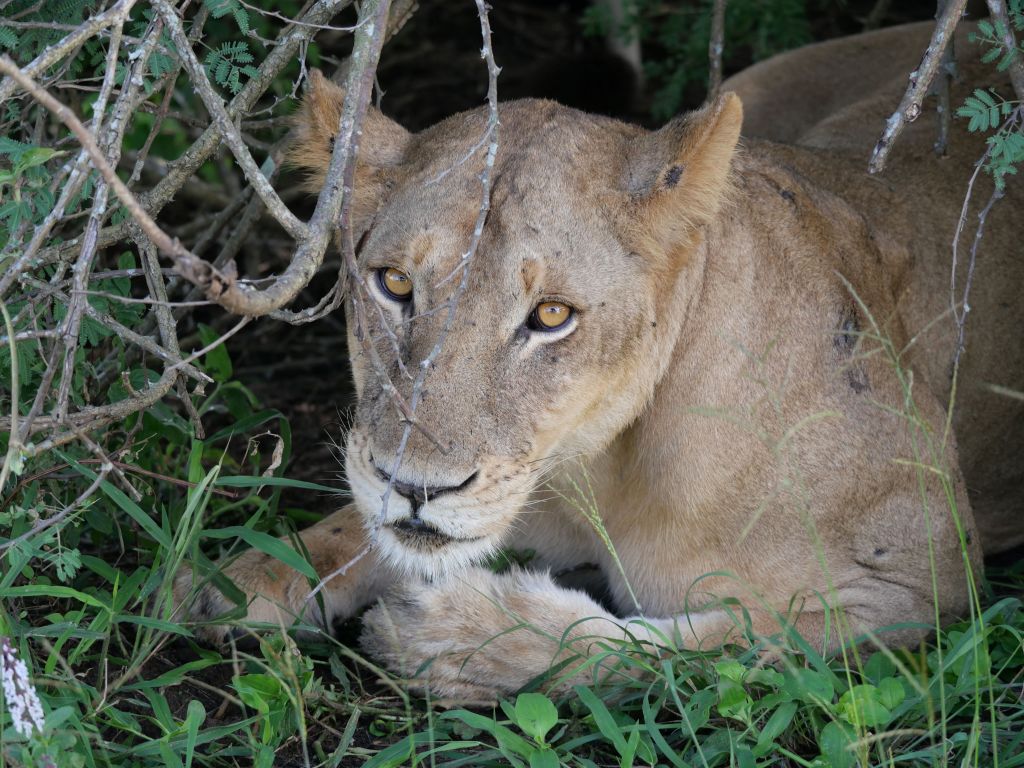
She started growling menacingly under her breath. My heart started racing. I stood absolutely still not daring to even lift my camera to take another photo. We looked at each other for a few moments, the thrill of actually engaging with a lion surging through my veins.
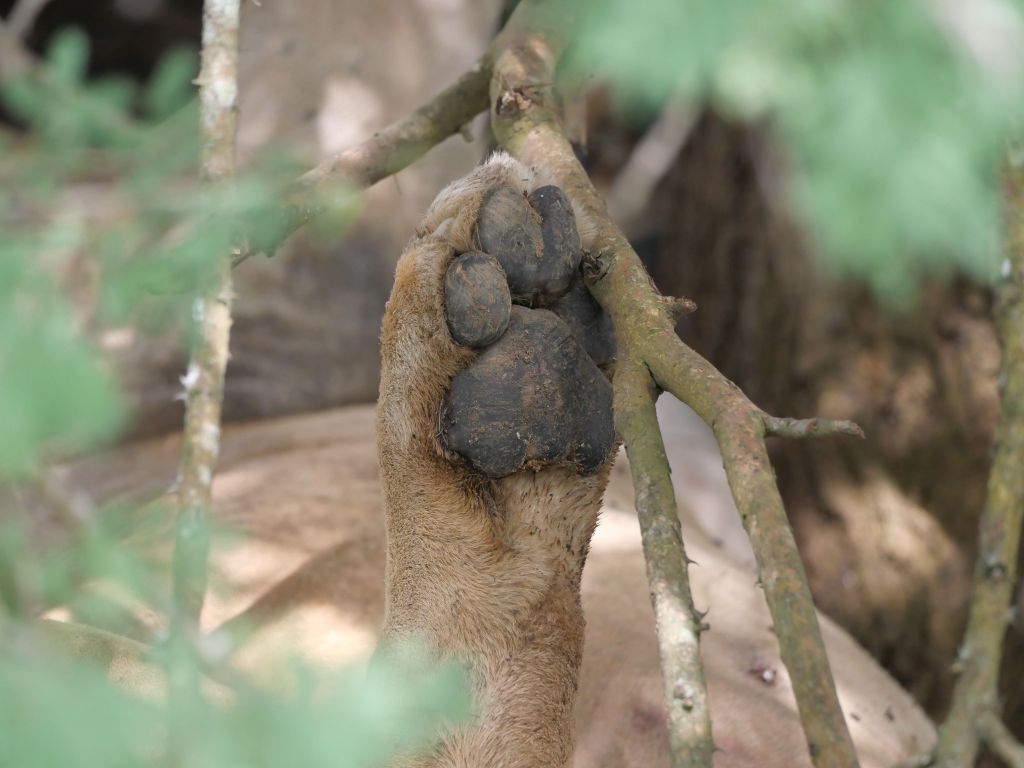
And then without warning she leapt up, thumped her front paws hard on the ground and let out a sharp grunt of warning. I was so surprised I sat down on the chair behind me with a thud, letting out an involuntary ´oh!´
She settled back down, satisfied that I had taken the warning. I looked over at our guide with a broad grin on my face as he just shook his head and rolled his eyes at the mad woman he had in his truck today!
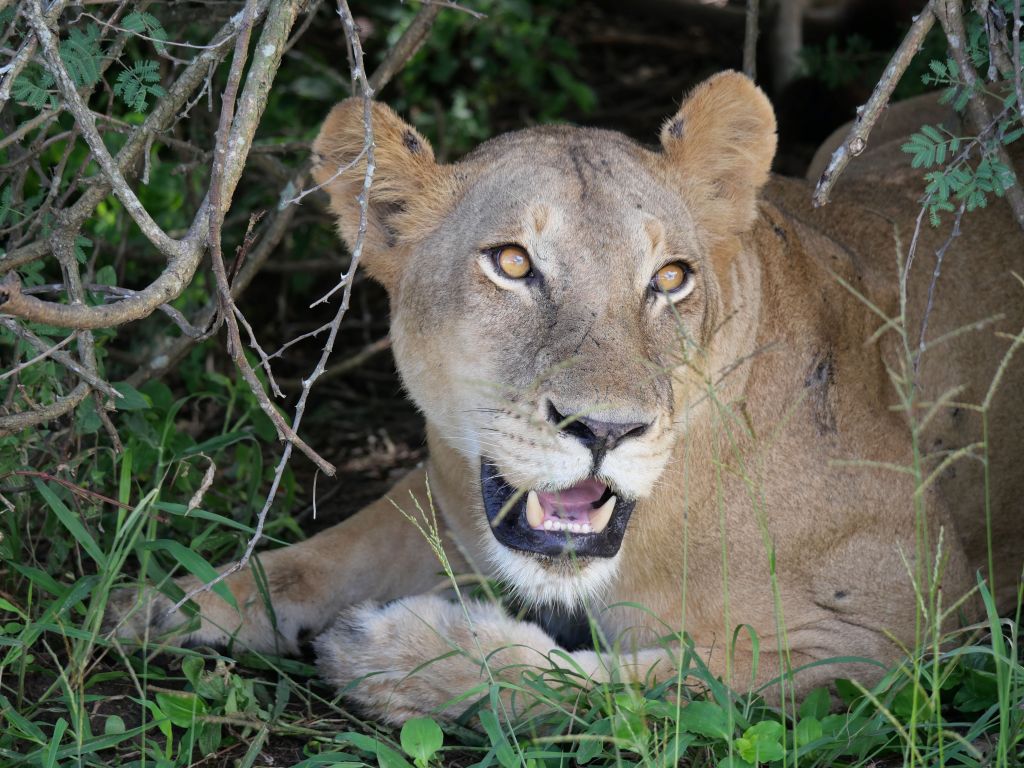
After a few minutes with the lions both our guide and the other three or four vehicles that had congregated around them suddenly drove off at a rate of knots. As we went our guide explained that we had technically been off-road to see these lions and that is illegal. A small, unmarked car had been spotted approaching the group which the guides had feared were the rangers so they had all scattered. But the car just turned out to be other visitors so one by one all the guides turned round and came back. Having had my close lion encounter and now understanding that we shouldn´t be there I suggested to our guide that we move on.
A little further up the road we came across another safari vehicle that was stuck in the mud. Our guide jumped out and tried to help push it out. They had no luck and with no tow ropes or any other recovery equipment there was nothing else we could do so we left. As we drove away our guide made me laugh – he said four people could have pushed the vehicle out but they were only three and one was a ´Muzungu´ so they had no chance. Muzungu is what Swahili-speaking Africans call white foreigners, similar to Gringo in South America. We gathered from his comment that Muzungus are not considered particularly able-bodied in comparison with the locals and I have to admit, from what I´ve seen of the African people in general, I can´t argue!

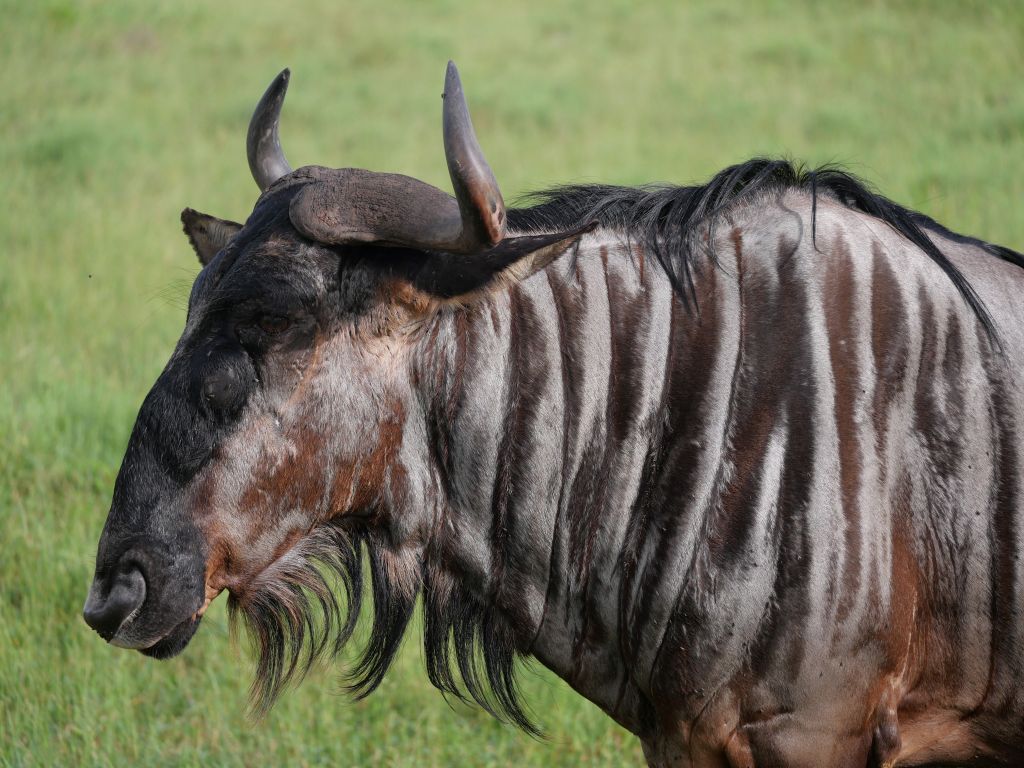
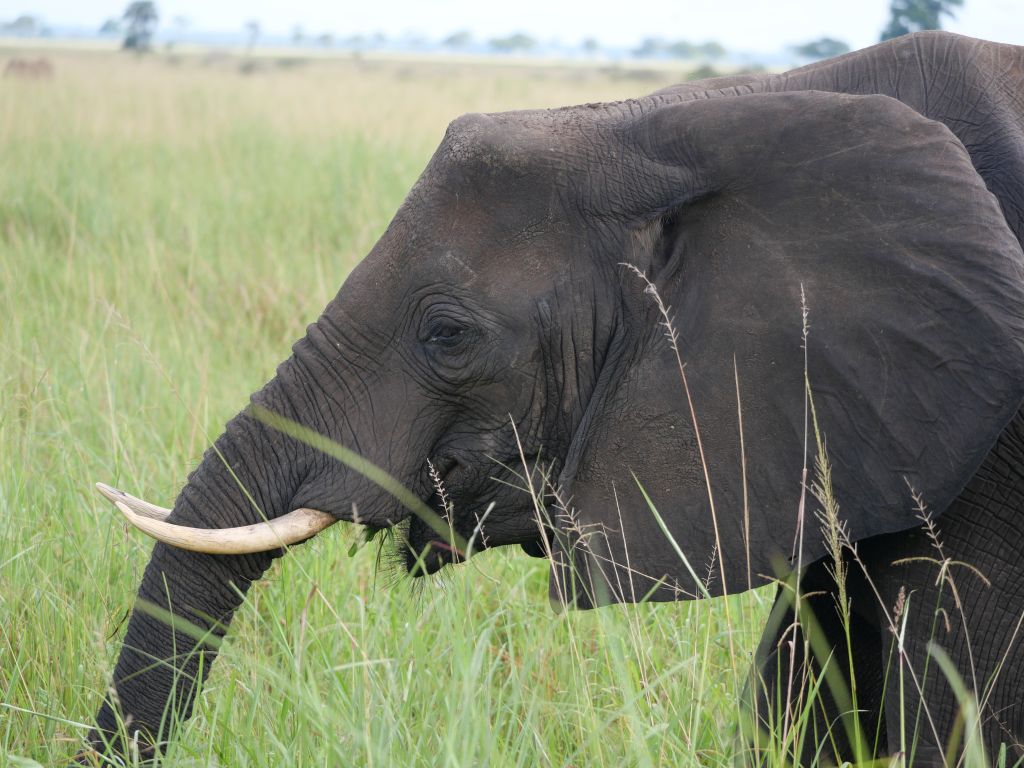
With two prides of lions under our belts in one morning we were as happy as ever so it didn´t matter much that we saw little else. The usual suspects made a brief appearance
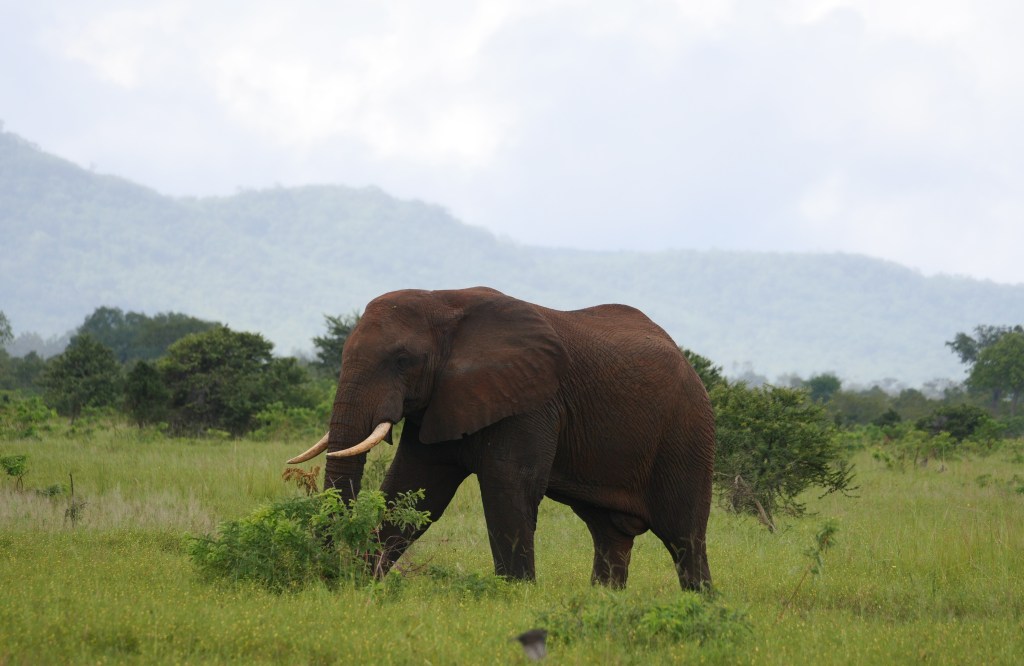
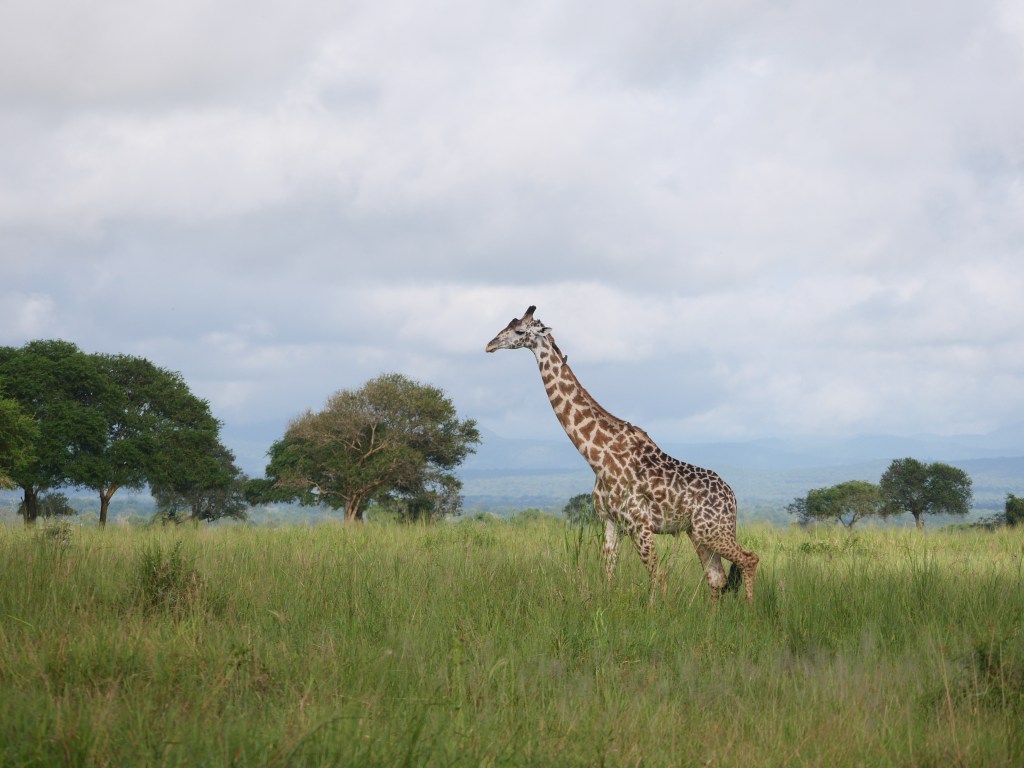
Including a rather windswept elephant

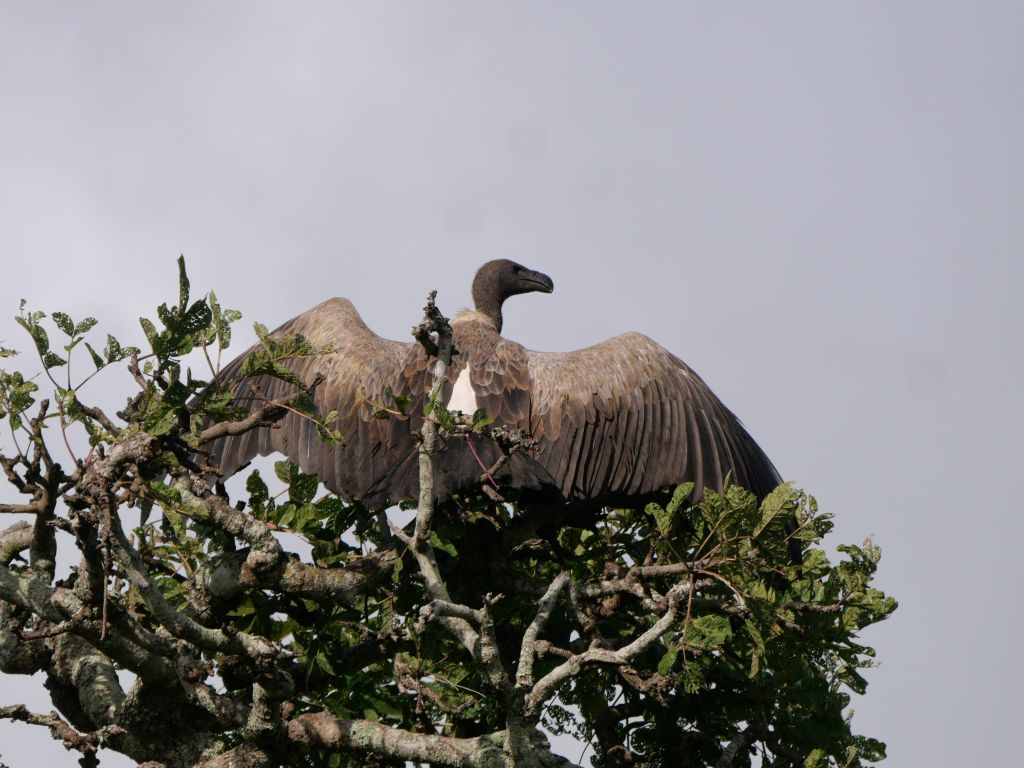
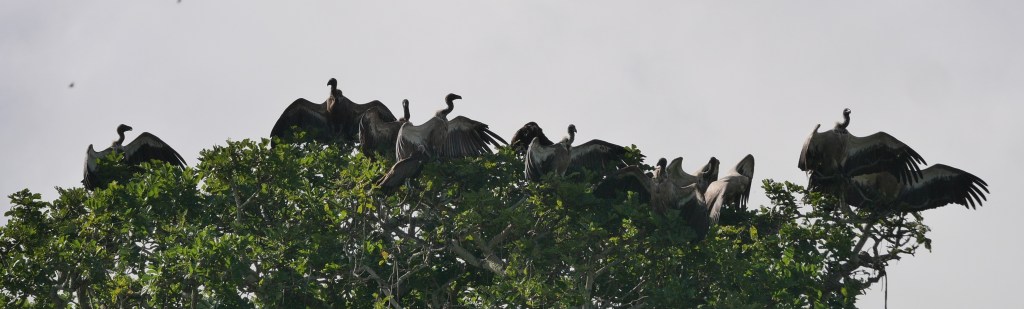
And a lot of vultures nesting in the trees

But there weren´t even any hippos in the hippo pool, all having left weeks ago when the floods started.
Nevertheless, we had managed to pick a great day for our trip, the rain stayed away apart from a brief five minute downpour that hardly troubled us at all.
Back at the campsite we had a celebratory lunch at the restaurant
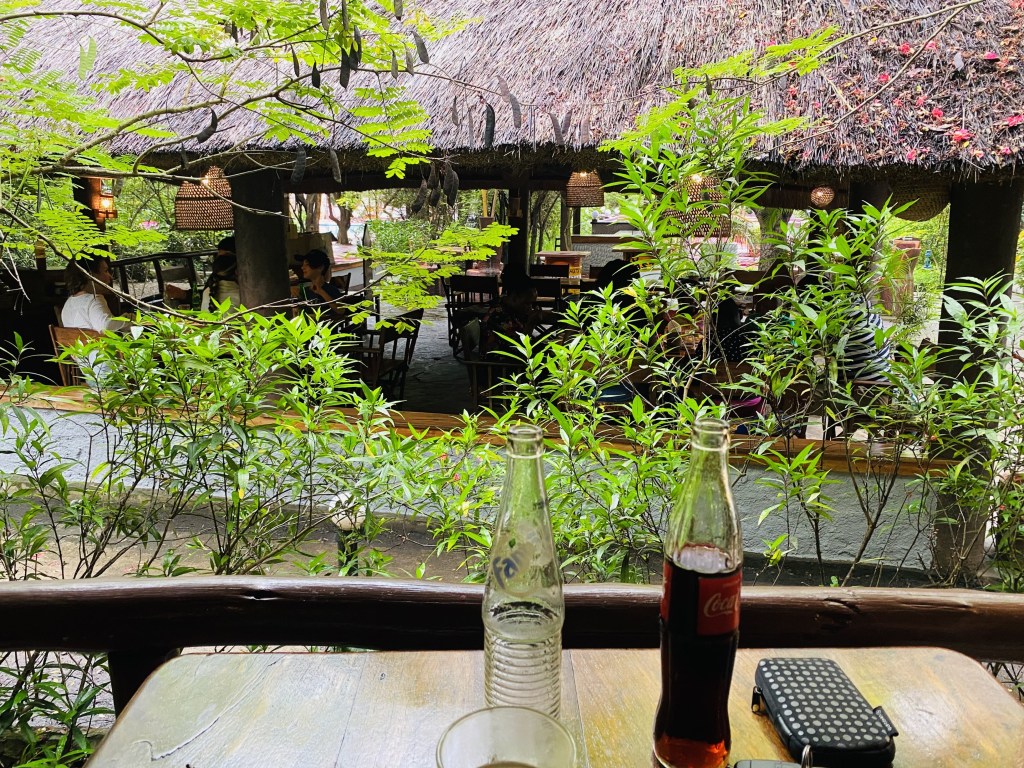
And hardly noticed the ever-deepening mud or the noise and lights all around us that night – we had broken our lion famine at last and all was good with the world.
But the next morning reality hit us hard. We woke up to torrential rain and I got absolutely drenched running to an undercover area by the bar area to do my training and even wetter running to the shower afterwards. It was absolutely relentless and we were getting cold and miserable
This campsite had no real facilities for rainy weather and with the overland group firmly ensconced in what small undercover area there was it left us completely exposed. We tried to wait it out but dry weather just seemed like a dim and distant memory so in the end we packed up our chairs, table and clothes, all dripping wet, put Henry´s roof down with sodden sides and drove away wondering how on earth anything was ever going to be dry again
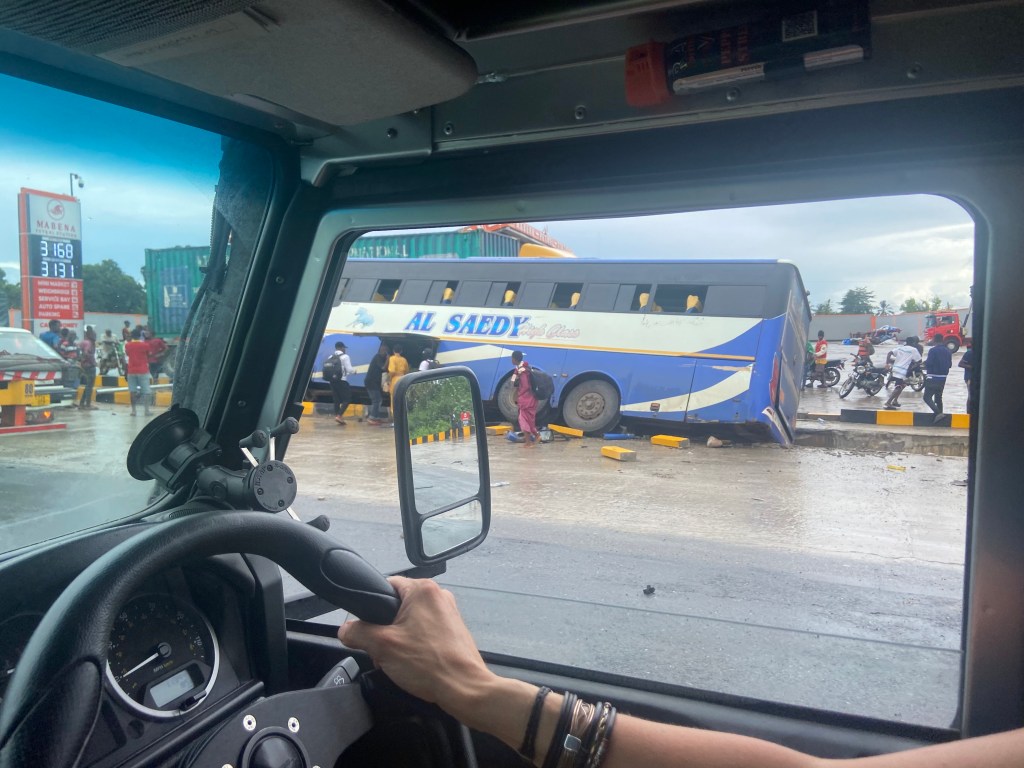
We were aiming for the old capital of Dar es Salaam – a far more famous city than the new capital of Dodoma. As we drove the traffic started to get heavier and heavier with lorries choking the roads. At one poiont we saw a victim of the chaotic traffic, apparently pushed off the verge
Our average speed was somewhere between 15-25km/hr and despite swapping drivers half way we were both exhausted by the time we reached the small town of Kibaha on the outskirts of the city.
We had found a local, cheap hotel on IOverlander and decided to stop for the night rather than run the gauntlet of Dar es Salaam that day. It took three goes to find the right exit off the main road and we found ourselves driving round and round in circles down ever-decreasing dirt roads before we finally found the place.
Once there it turned out to be quite nice. They did a rather good chicken and chips and had clean rooms. The staff spoke no English at all and Google translate had to be brought out just to order a coke. But the best thing about it was that there was a bed with a mosquito net that actually fitted! No need to peg it together or stretch it from one side of the bed to the other only to find the first side pings off. We settled in, tired and headachy, with our fancy mosquito net keeping us safe and watched movies on the laptop until we fell asleep.
Dar es Salaam is not a pretty city, nor a particularly cultural one. There were a couple of monuments we could go and see and the usual national museums. There was also a revolving restaurant with 360 degree views of the city that had been recommended by Lulu and Flo.
But the main reason why we were heading to the city was because we had found a good Landrover mechanic there who James had interviewed on the phone a few days ago. He seemed to know more about our more modern model of Defender with all its pesky electronics than most mechanics in Africa – who are generally more used to the older, more basic and therefore reliable versions.
We had recommended the mechanic to Liza and Tino a few days earlier and they had found a nearby AirBnB flat to stay in whilst he worked on their truck. They said the flat was clean, convenient and cheap and in return for finding the mechanic they shared the host´s contact details with us. Our new community was proving very useful!
So with the Airbnb place booked and the Landrover mechanic expecting us we headed into the city the next morning. It was steamingly hot and humid here on the coast and, as ever, it was raining. But the journey was painless and took less than an hour.
We had another small challenge to negotiate – it was Ramadan and the towns and cities of Tanzania are where most of the Muslim population live. When we arrived at the mechanic´s place he wasn´t there. His staff told us he was on his way and after a while he text me directly to say he wouldn´t be long. The problem with Ramadan is that the people celebrate the breaking of their fast each day late in the evening and tend to stay up late into the night eating, praying and socialising making for a very late and sluggish start the next day.
So it was nearly half past eleven before our man arrived but when he finally did he turned out to be the most helpful, friendly and knowledgeable person we could have hoped for
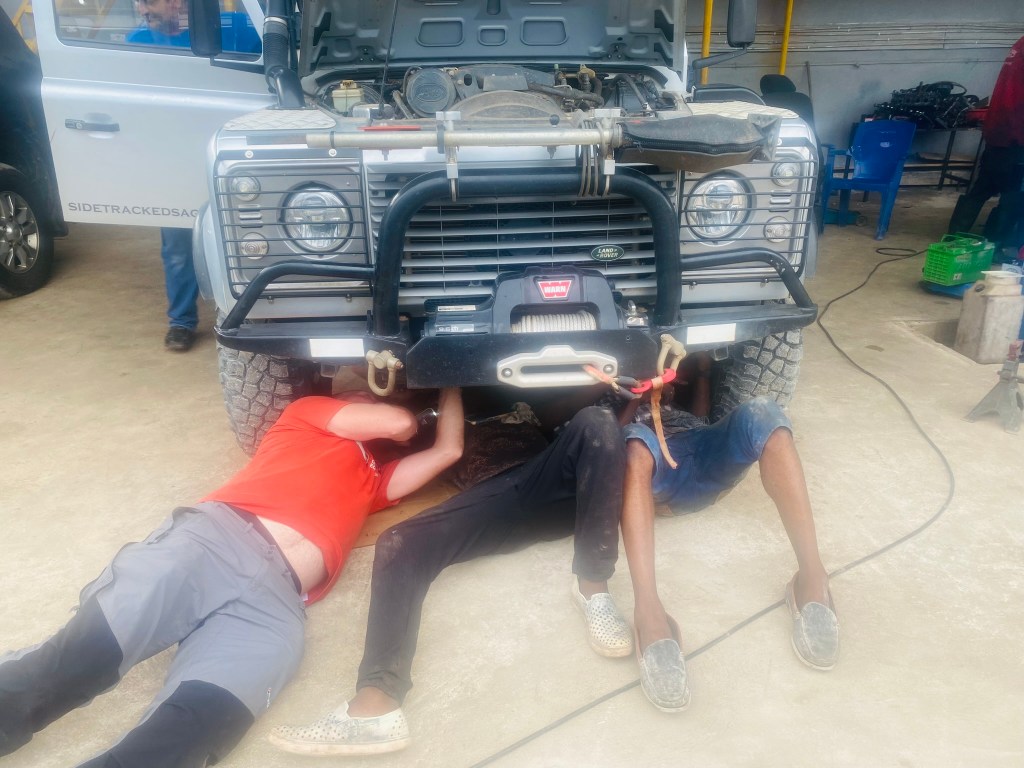
The main reason why we were here is because we had been suffering with a power problem on Henry that was gradually getting worse and was now becoming dangerous. In low gears and at low speed he wasn´t responding to the throttle and we could barely drive – sometimes having to put him into low box just to pull off on the slightest incline. On muddy dirt roads and in particular in busy towns and cities we were a danger to ourselves and others. Many people had looked at the problem, James had consulted the best people in the UK, we had changed so many parts we had lost count – but no-one had been able to identify what was wrong. It was like the diesel leak we had under the bonnet last year – it was a puzzle and it was driving James crazy trying to solve it.
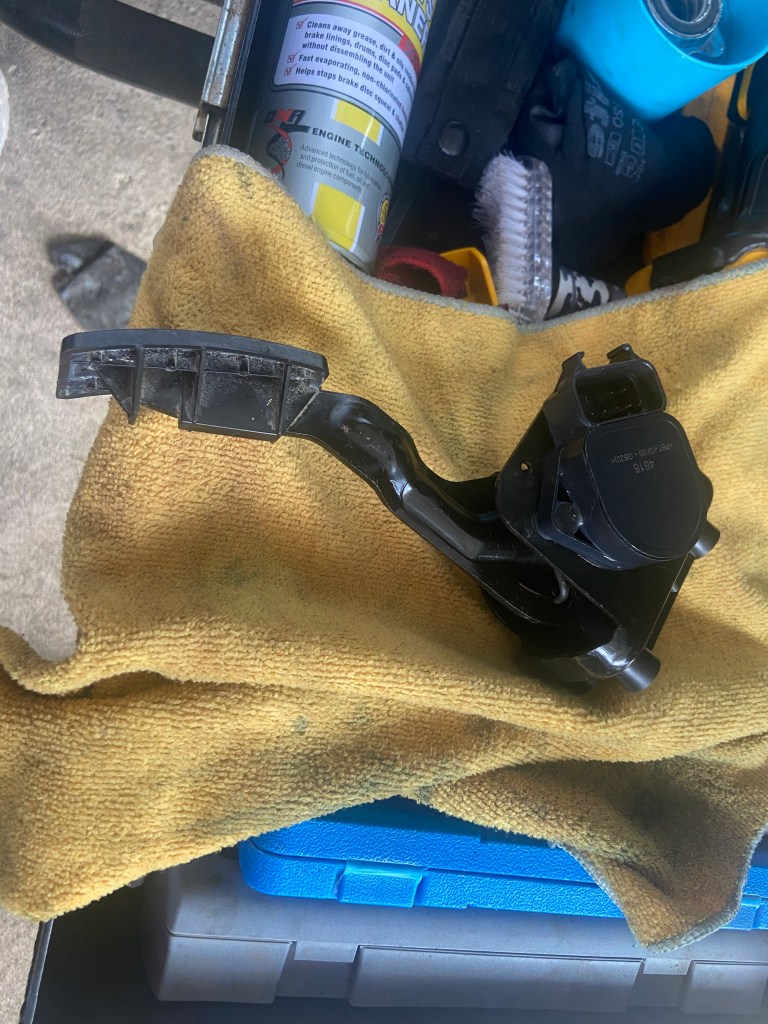
Within half an hour, our friendly Landrover specialist had linked Henry up to his diagnostics tool and found the problem – the fly-by-wire throttle pedal was faulty and was giving false readings meaning that the engine wasn´t responding to it properly.
I told him he was my hero but he didn´t stop there. He had his own Defender in the workshop with the same type of pedal and offered to swap it with ours to see if it fixed the problem. A few minutes later the new throttle was in and the engine was roaring like a beast. The look on James´ face was one of pure relief. In a gesture for which we can never repay him, our new friend said we could keep the new throttle pedal as a gift – what an incredible day!
To celebrate we decided to drive across town to the revolving restaurant. It was only a 9km drive but it took us over an hour and a half. The roads of Dar es Salaam were grid-locked with everyone ignoring traffic lights, driving like maniacs and causing chaos. When we finally arrived, however, the madness was all worthwhile.
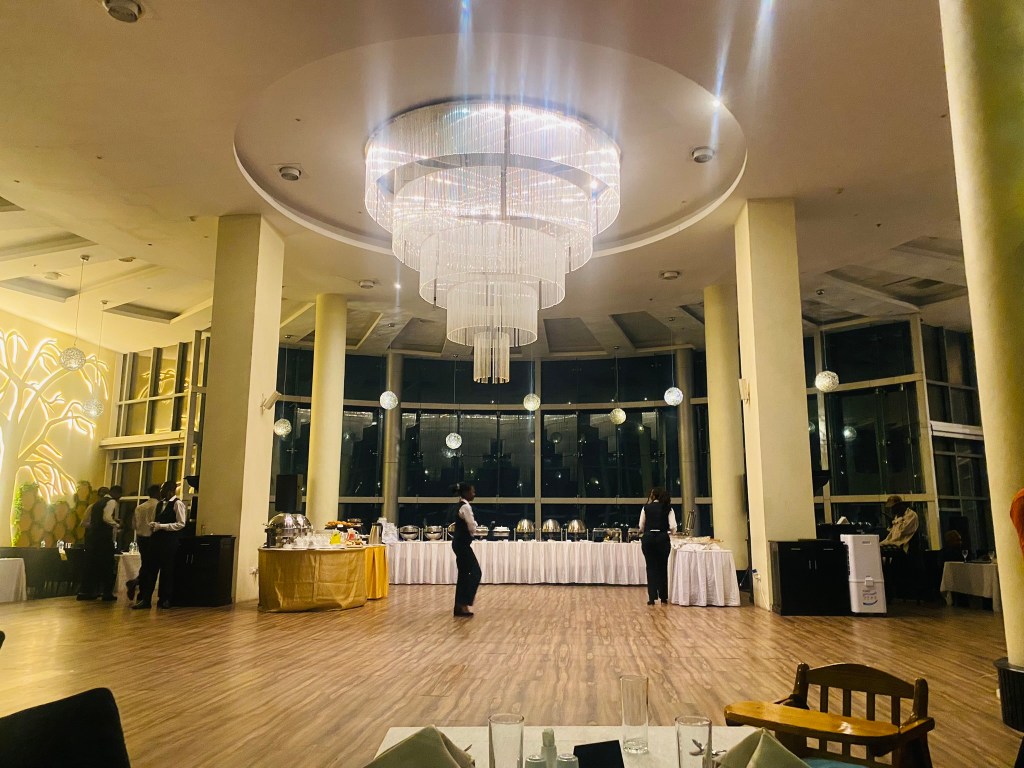
The restaurant is on the top floor of a 27 storey tower. The tables are arranged around the edge of the room by the windows and the floor gently revolves so that you can see the whole city in front of you.

You also lose your table if you go to the toilet as it´s never in the same place as you left it! James put the Landrover keys down on the window cill by the table when we first arrived and a few minutes later they had disappeared. We looked round in a panic for a few moments before spotting them a few meters away still on the cill where he had put them – the cill wasn´t moving, it was us that had run off!
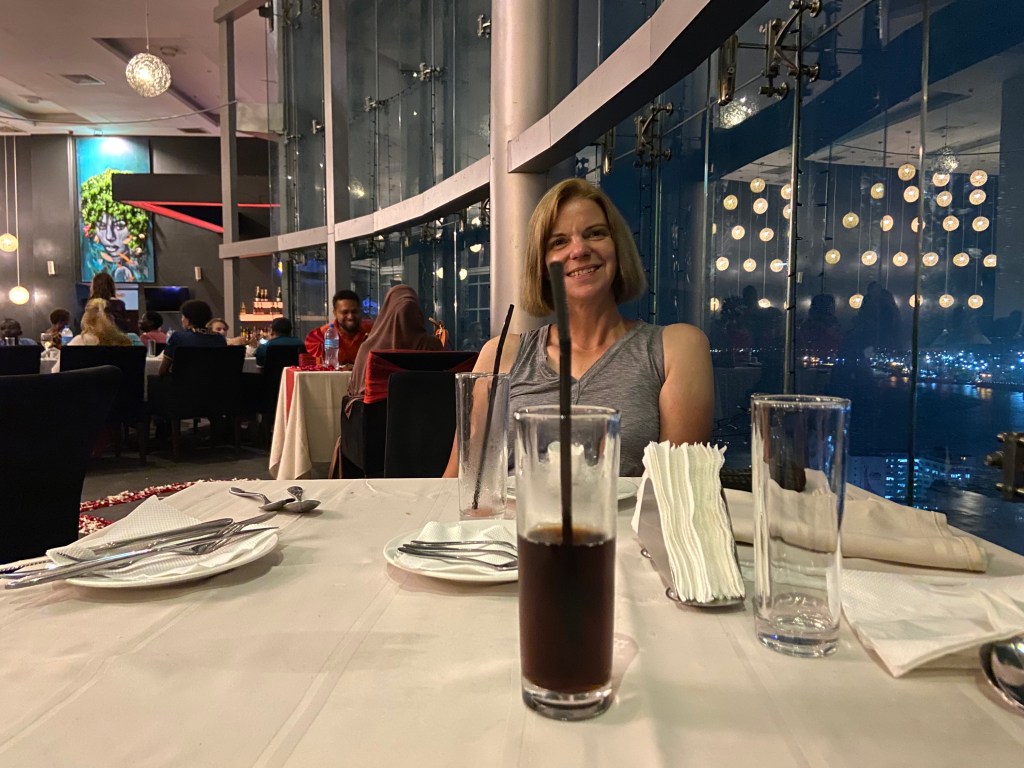
We had seen the menu on their website and it was full of Indian, Chinese and traditional food. We were keen to try a curry as we hadn´t had one for a long time. So when we were told that they were not offering their usual menu because of Ramadan we were initially very disappointed. Instead they were offering a buffet that started after dusk when the fasting period ended for the day and we sat and waited for nearly an hour whilst one by one trays of delicious-smelling dishes were brought out.
When we were finally invited to go up and make a start we were thrilled to find that we could help ourselves to as much and as many of the dishes we wanted and go up as many times as we could manage. And the food was all absolutely wonderful. We started with soup, samosas, fat balls with salad and various other bits. Then it was time for chicken tikka, rice, dhal. I had planned to try the Chinese dishes and maybe the grilled chicken or fish but my eyes (as always!) were bigger than my stomach and the chicken tikka was just too good. So I had to satisfy myself with a second portion of that and five deserts and the rest had to be left.
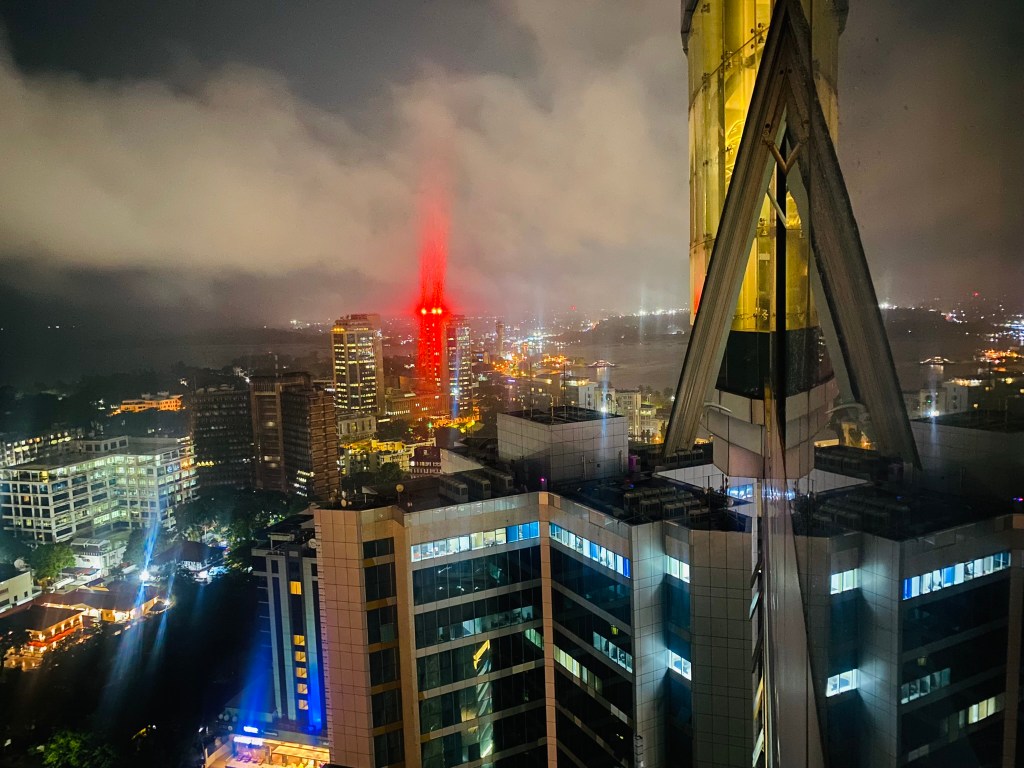
Even the two hours or more it took to drive back to our flat in the pouring rain didn´t take the shine off such a fabulous meal

We fell into bed late and tired but still smiling.
The next day we found an upmarket shopping mall where we managed to stock up on food and find someone who thought he could fix our broken wifi hotspot. Sadly it was a lost cause even though he went as far as taking the whole thing apart and soldering the motherboard. It seems this new purchase back in the UK was a dead duck. But we were cheered up when Liza and Tino text to say they were also in the city. We met up with them at a nearby Turkish restaurant to catch up on where we had each been since leaving them in Mikumi a few days earlier.
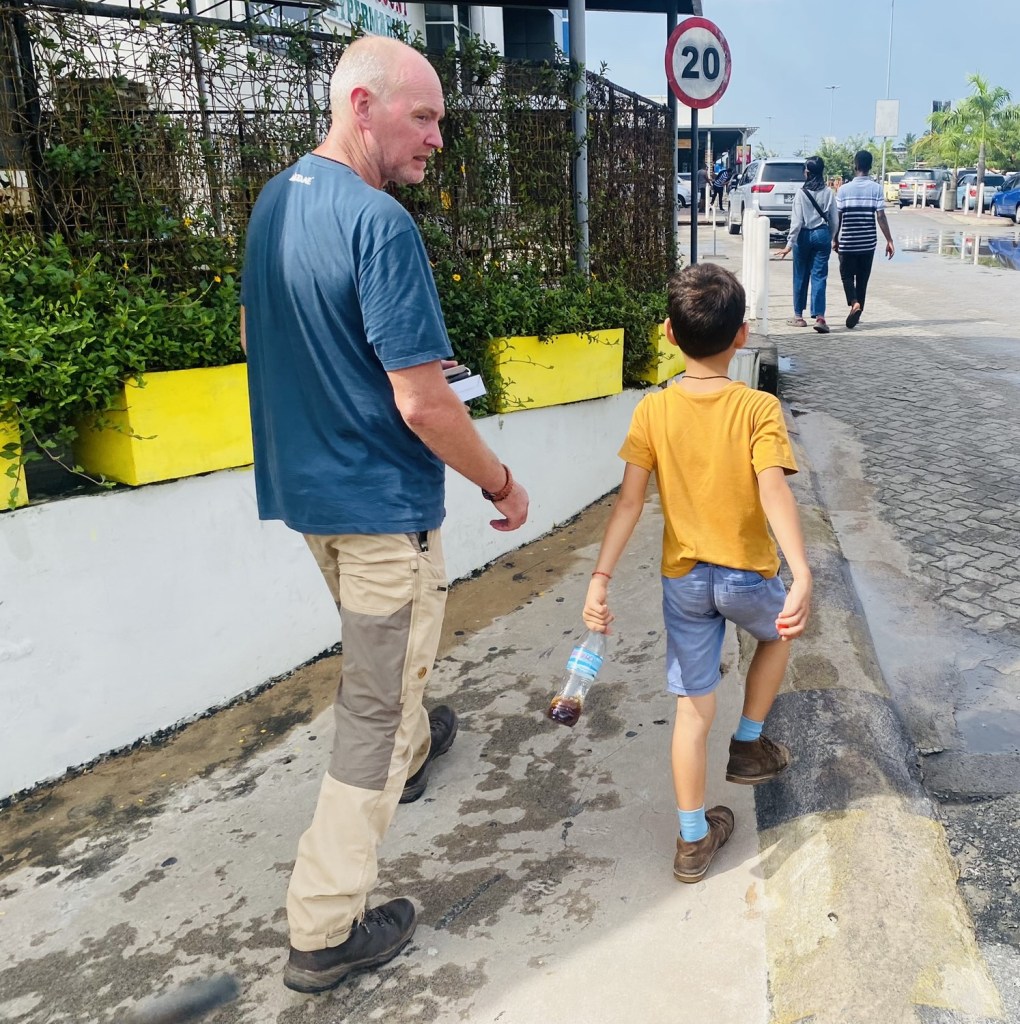
As we walked back to the car park, James and Liano were walking ahead of the rest of us chatting happily about zombies, vampires and how to read each others minds – like two peas in a pod. They looked so sweet together I tried to take a photo but sadly James turned around just as I clicked the button…..
After lunch we wandered through the shopping mall and found ourselves chatting to two of the staff in an electronics store about life in Tanzania. One of them was sitting studying for a post graduate diploma in statistics on his laptop and it got us talking about education and work around here. They told us that even with a degree it is hard to find a job that pays enough to live a comfortable life so higher learning is important to anyone with ambition in the city. A doctor earns only about $300 a month and a young lawyer $200, but their education system is not good enough to allow them to secure similar jobs abroad.
The lady also told us that women are expected to marry young and have children – living with a partner outside of marriage is strictly forbidden, especially amongst the muslim population. If a woman has a boyfriend she is expected to marry him quickly and they have less independence than men. But she smiled as she told us that the younger generation are quietly rebelling against all this and starting to live freer lives, albeit keeping the details carefully hidden from their parents.
It will be very interesting to see how things evolve in Tanzania over the next few years. In fact across Africa the tide seems to be turning from a struggling continent held at the whim of the West, subjected to exploitation and refused access to a fair allocation of trade. We have seen and heard the start of numerous changes, with many African countries asserting themselves, recognising the value of their own natural resources and becoming less willing to pander to the greed of other, more wealthy nations.
With all this whirling around in our minds we prepared to leave the city and head south down the coast towards the ruins of Kilwa Kisiwani, one of many sites from centuries past when East Africa was a powerhouse of industry and trade. With such a wealth of history and changing fortunes, this country and this continent no doubt has many more pages to fill before it´s through….

 The Sidetracked Sagas