Lake Victoria was a long drive from the Kondoa Irangi Rock Paintings and we had been unable to find a campsite anywhere in between. There were a few wild camps marked on IOverlander but none had been visited for years and it all seemed very risky.
But with no choice we decided to just drive, check out the wild camps as we went and hope for the best.
At first we were concerned that the best was not going to happen – every wild camping spot was either inaccessible or we couldn´t find it at all. We were staring down the prospect of eleven hours in the car before arriving at the lake in the middle of the night.
Out of nowhere James spotted a sign on the side of the road saying ´Campsite´. We screeched to a halt, did a 3-point turn and went back to investigate.
The manager welcomed us warmly and showed us to a beautiful campsite behind a restaurant – spacious grassy pitches, clean and most importantly safe and secure
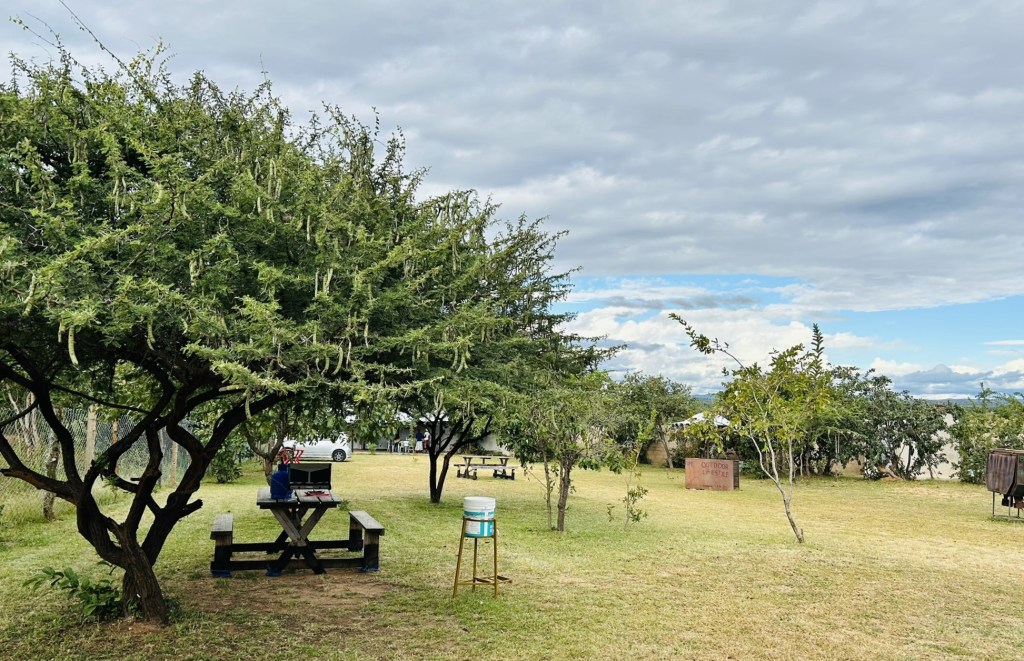
We had to use our porta pottie and didn´t have anywhere to shower but we didn´t care, we had a great place to spend the night and we were happy
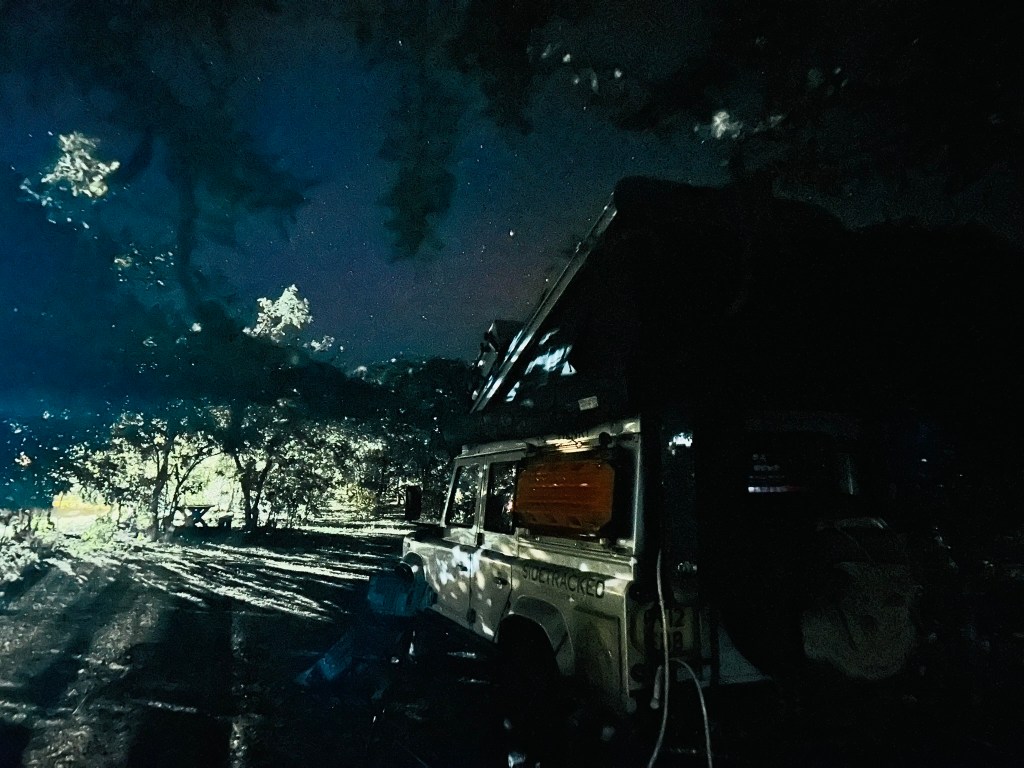
We set off early the next morning as we still had a seven hour drive ahead of us to the lake. As we got closer to our intended campsite I was looking at the maps and realised that there was a finger of the lake between us and our destination. It would be a long way around so we hoped we could go across – maybe a bridge, or maybe it was seasonal wetlands.
Nope – it was a boat!
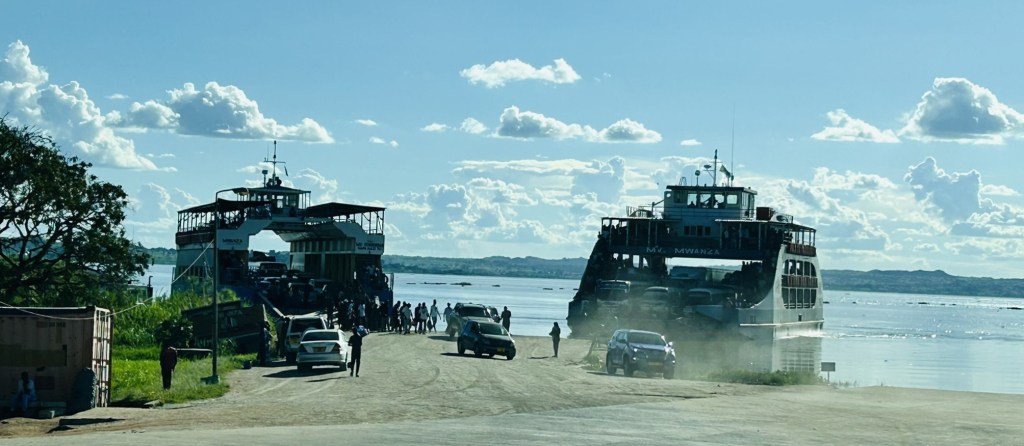
We arrived at the small port tired after the long drive, unprepared for negotiating a ferry and somewhat confused by the crowds of people, various barriers and different ticket offices. But as usual the locals immediately ran to our assistance and guided us around. The tickets cost no more than a few pence – in fact Henry cost more than we did by a factor of about ten, but we think he was worth it!
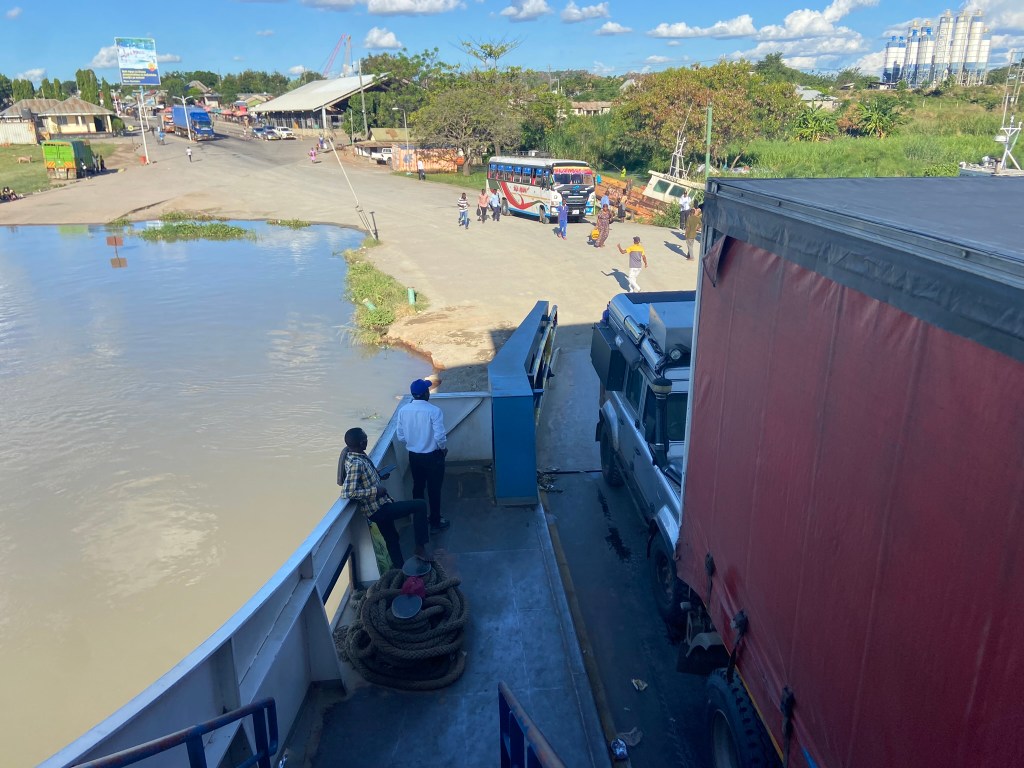
The crossing was quick and easy
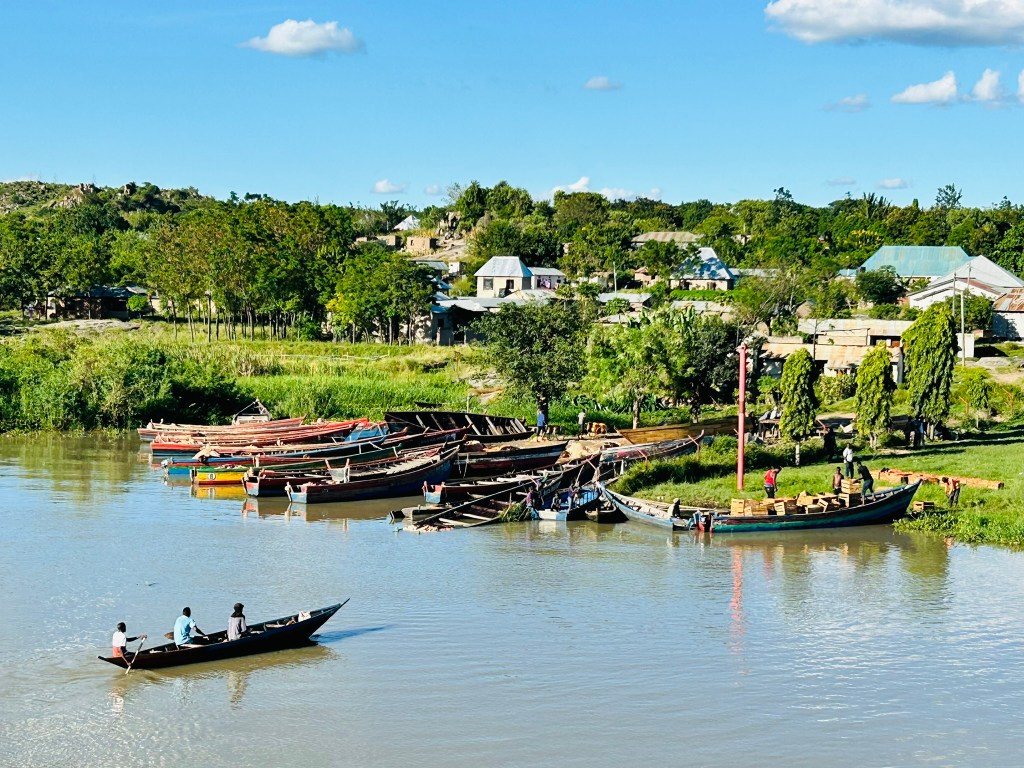
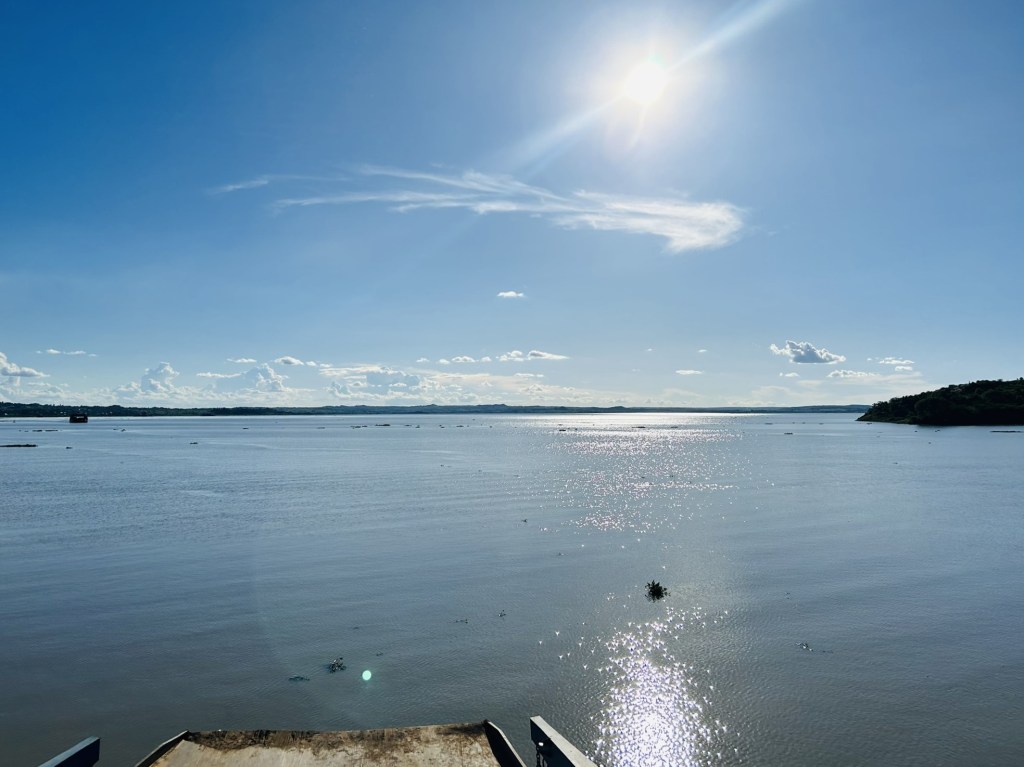
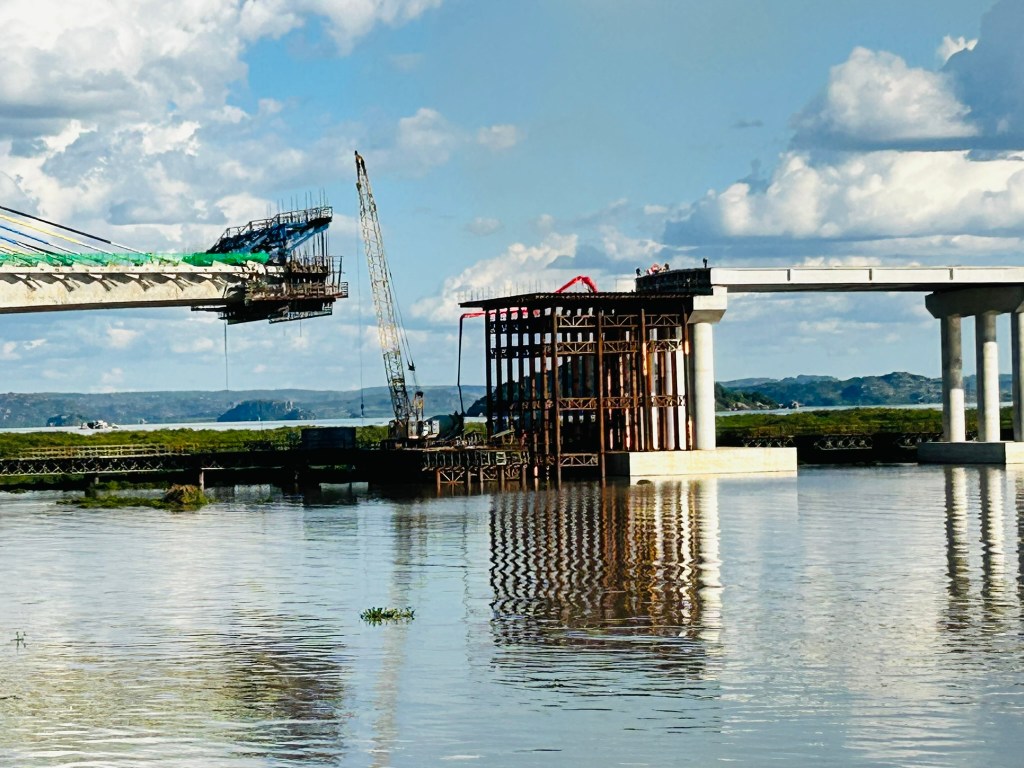
James spent the half an hour chatting to the locals whilst I took photos of the bridge under construction
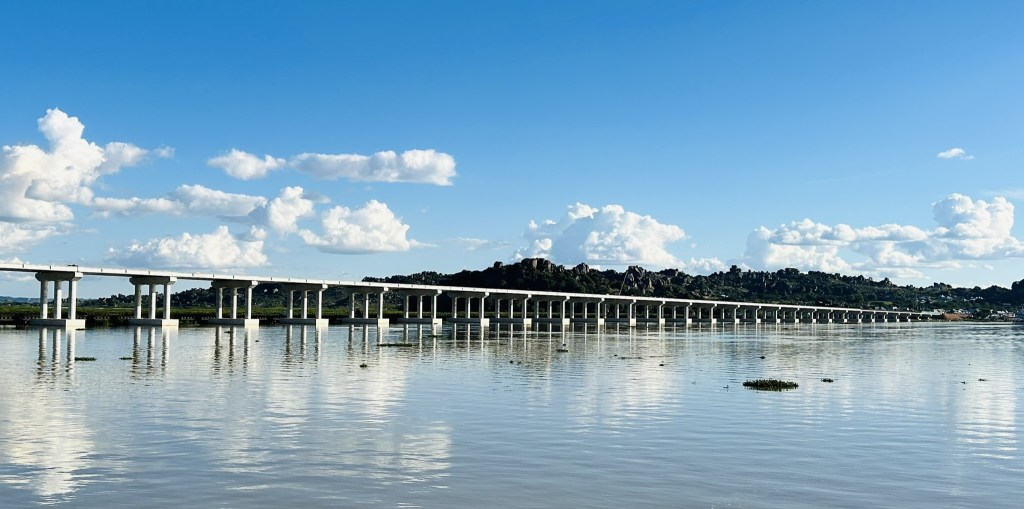
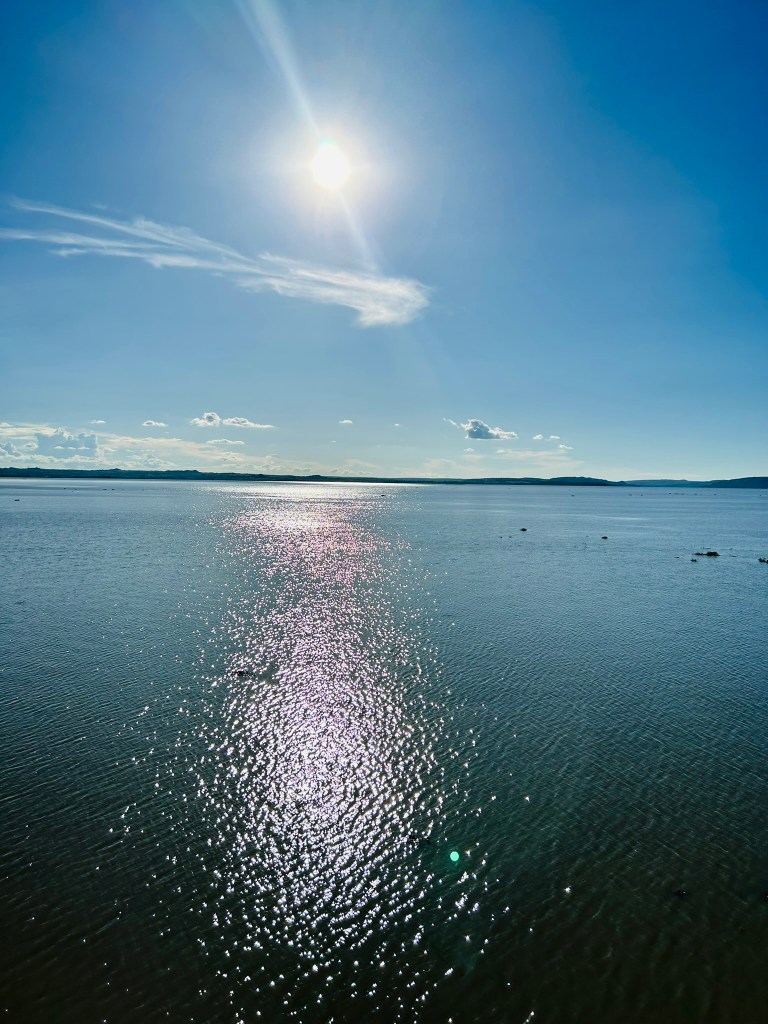
We finally arrived at the campsite and were absolutely thrilled – it was amazing
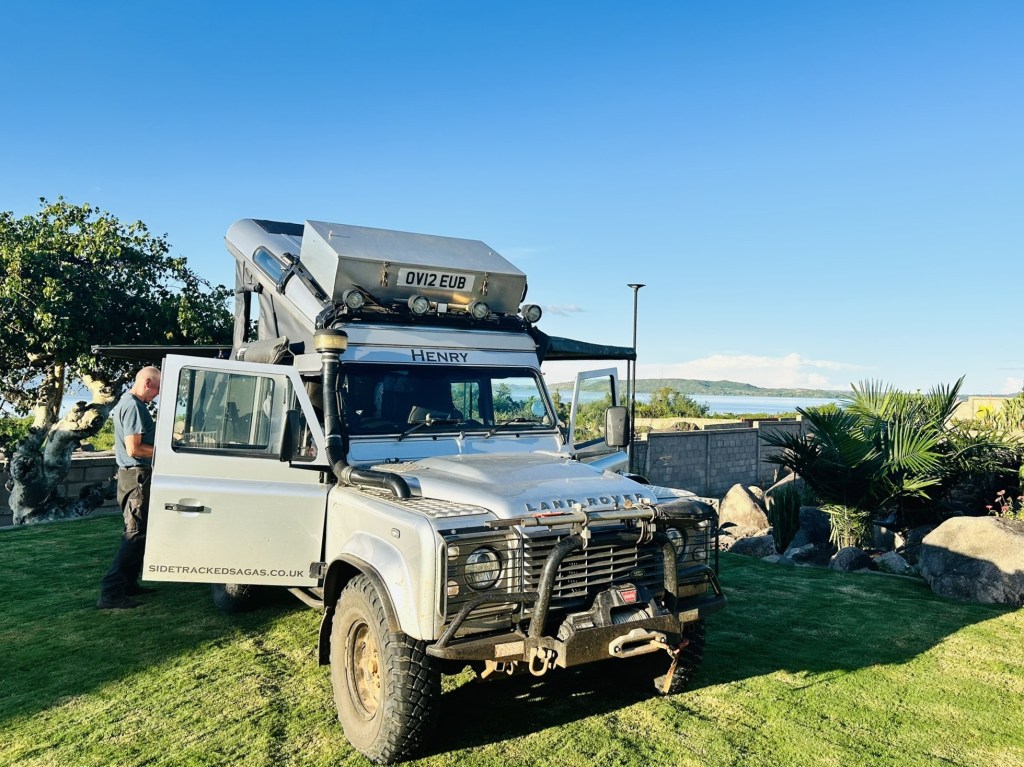
We had our own private ablutions with a key. The pitch was perfectly manicured and the view over the lake was gorgeous
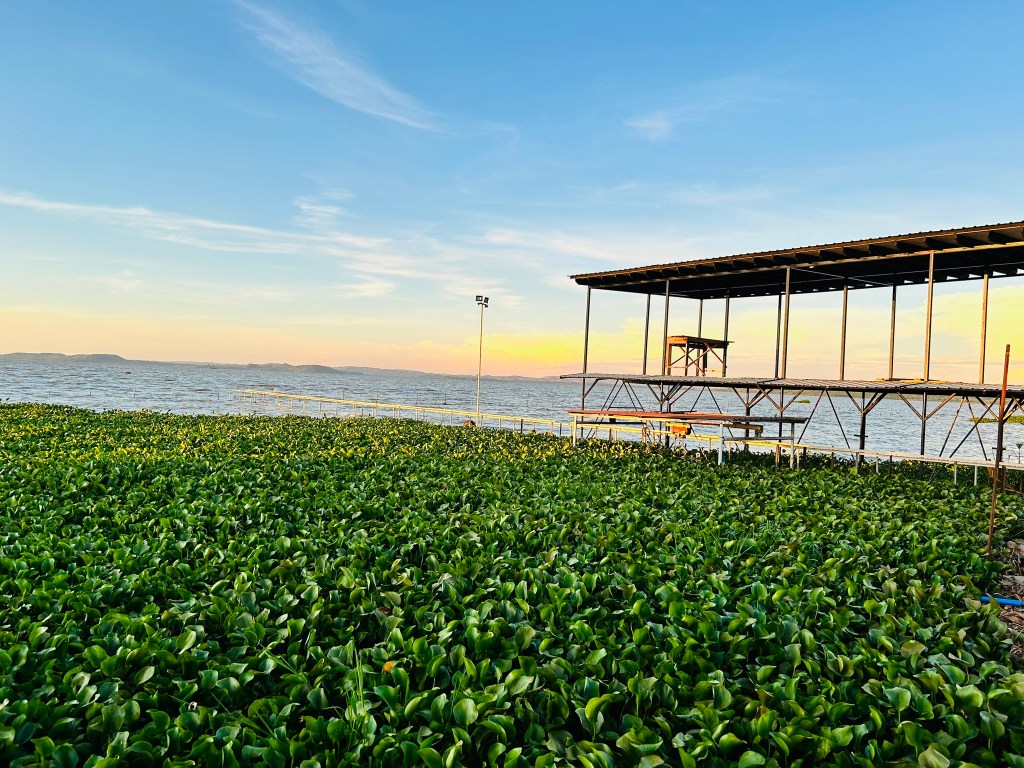
We happily settled in and set up camp then wandered down to the restaurant area for dinner
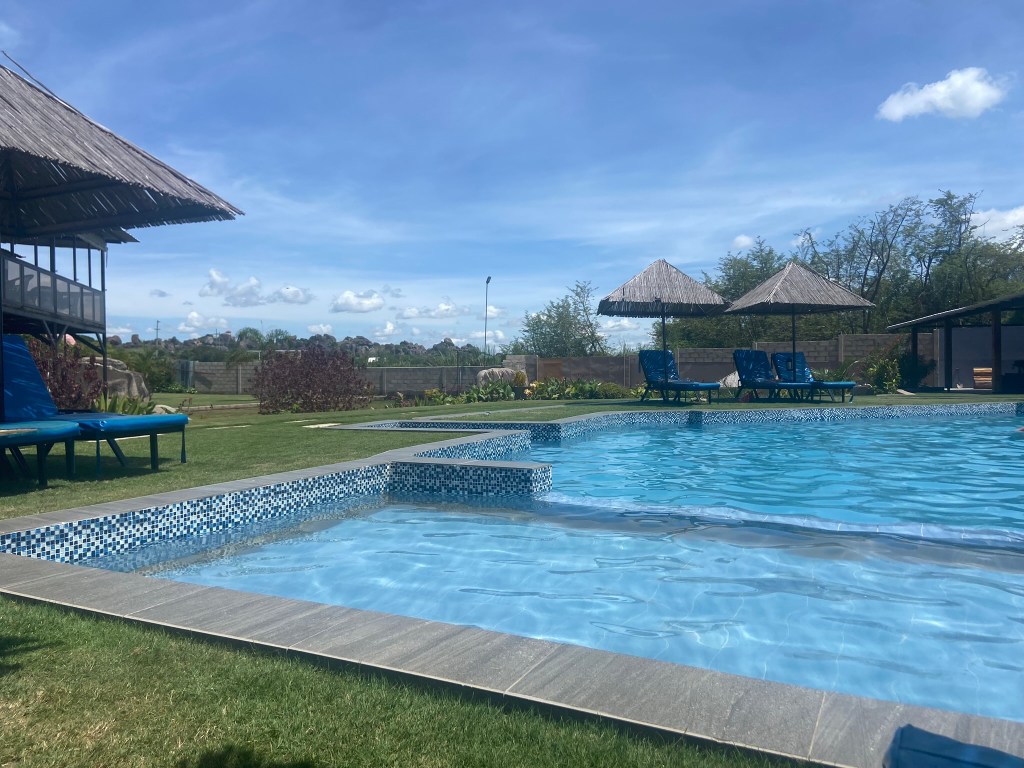
It couldn´t have got any better! The grounds were immaculate and beautiful
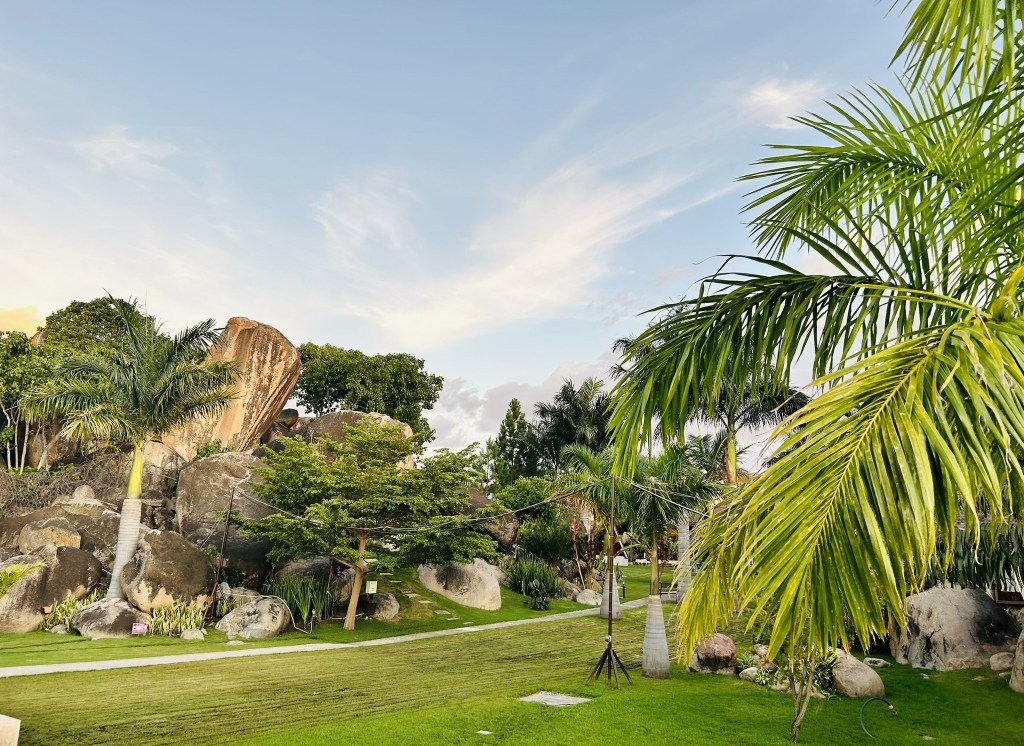
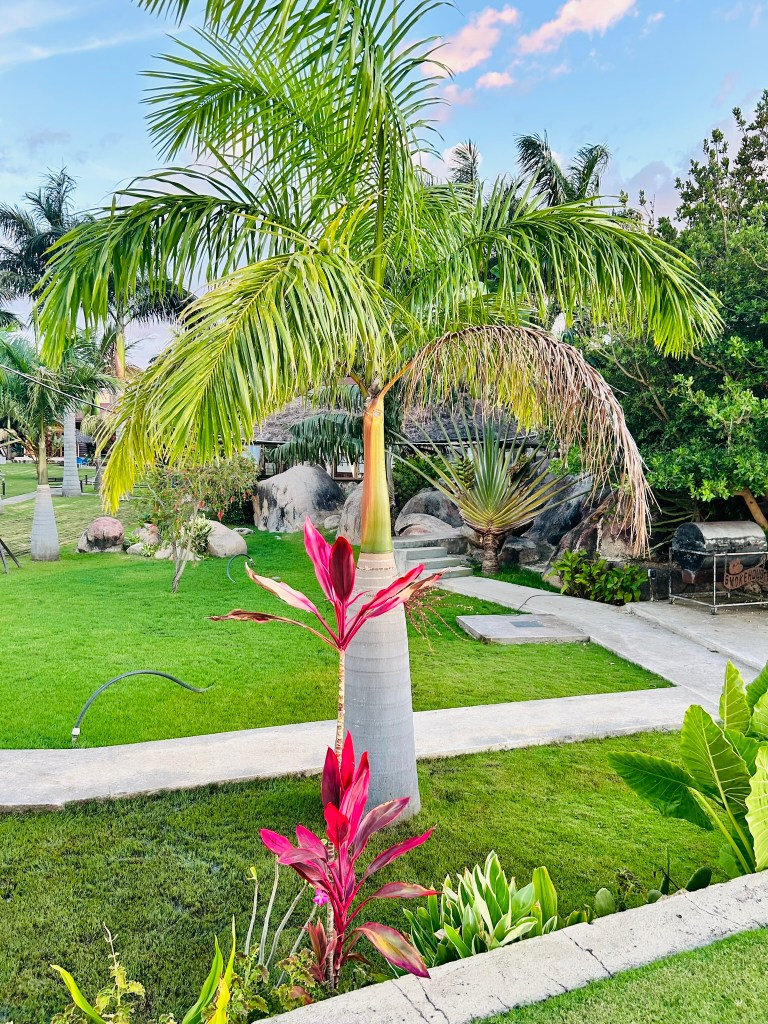
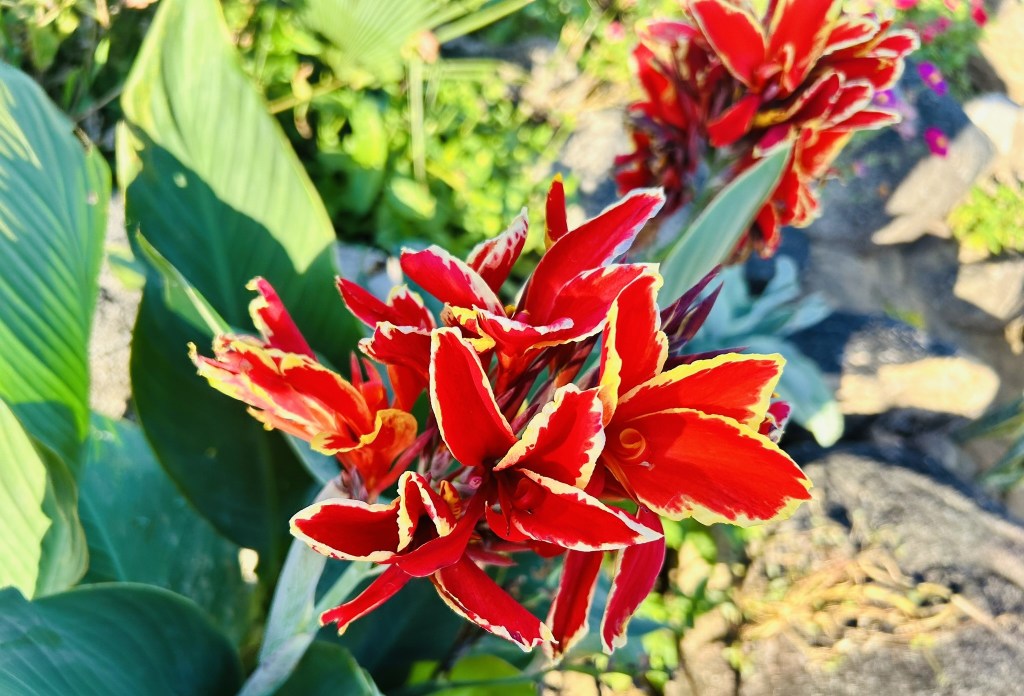
We had planned to stay here for three nights and did not regret our decision
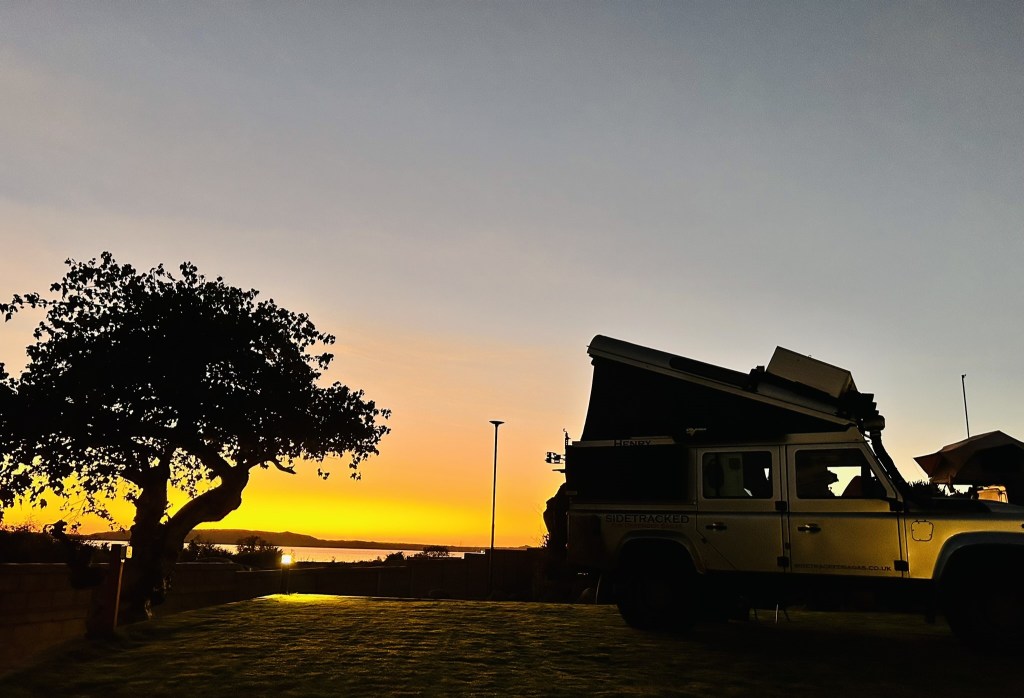
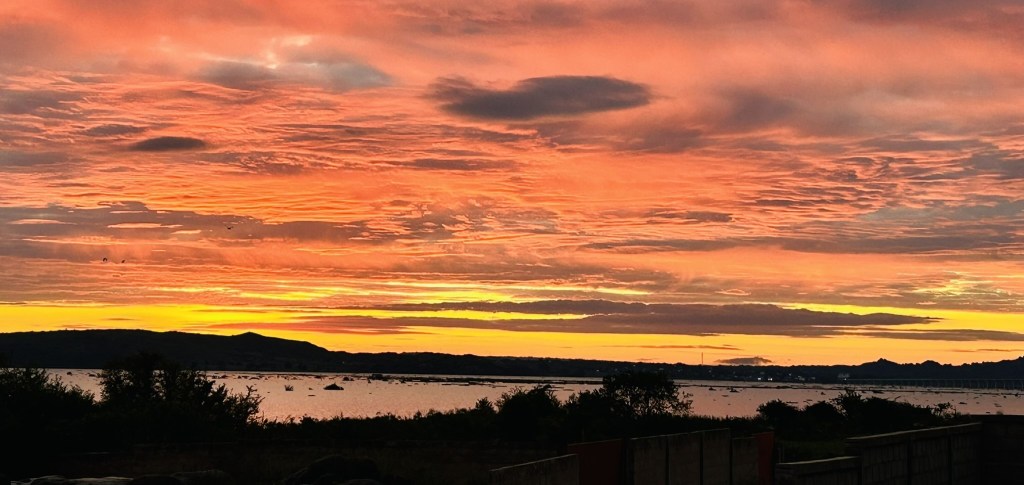
We spent three wonderful, peaceful days doing very little
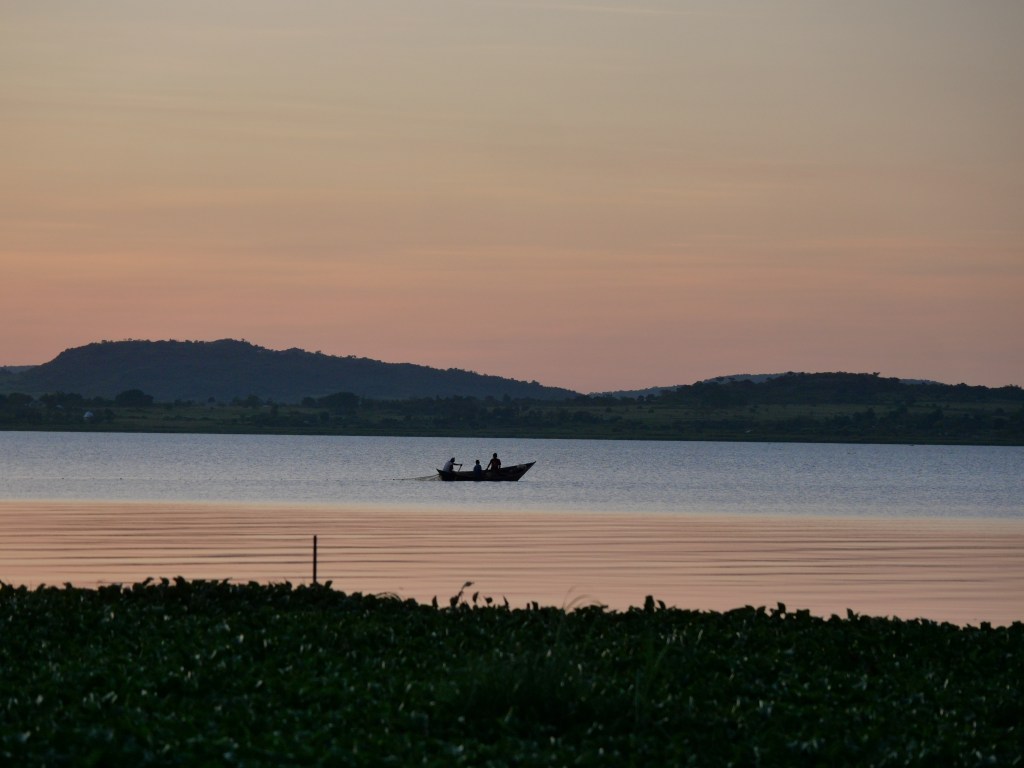
We read, worked on the blog, tinkered with Henry and just sat and watched the world go by along the lake

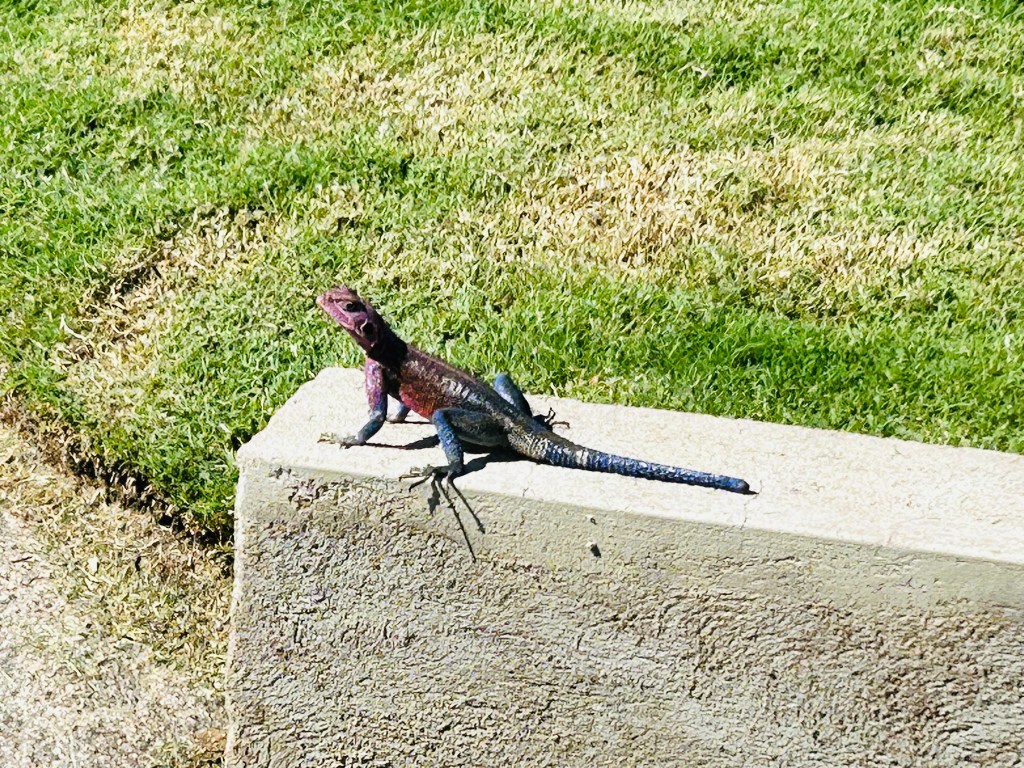
We ate in the restaurant most of the time as the food was great and very cheap. Even the thousands of geckos and lizards sharing our pitch ate well!


We got our laundry done and enjoyed the cool breeze that took the heat out of the sun by mid afternoon. And every evening we watched the sky turn from blue to yellow to deep red as the sun went down in a dazzling display across the lake

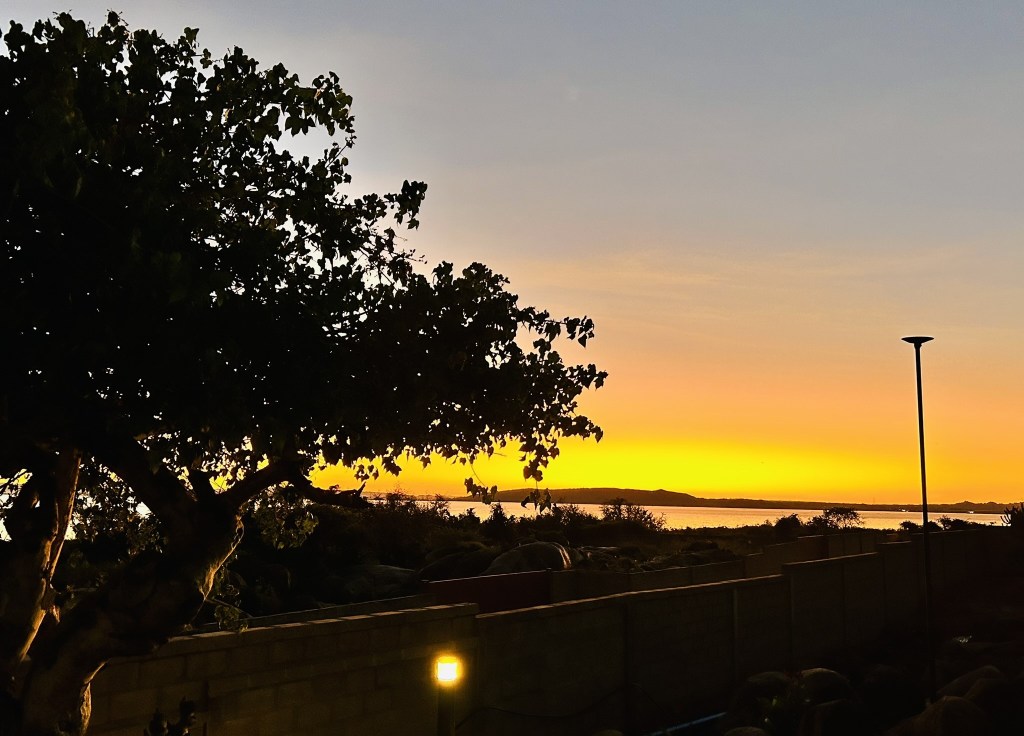
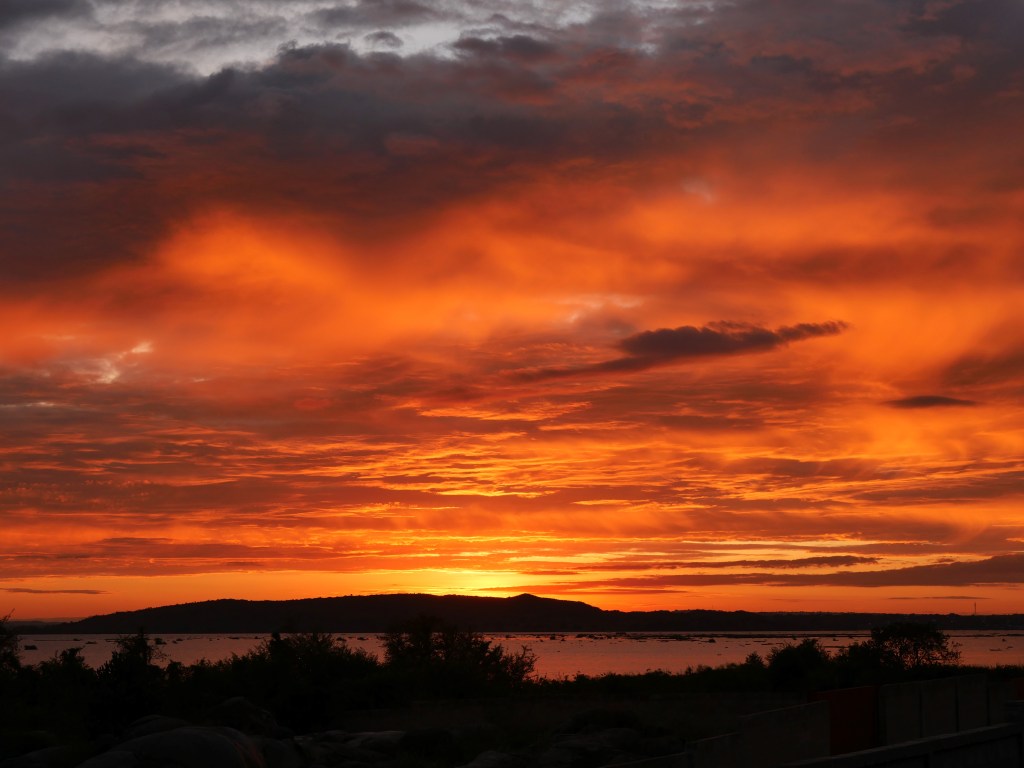
The only downside was the mosquitoes that ate us alive but even they couldn´t spoil our paradise.
Eventually our feet started itching again and we were champing at the bit to get moving. We were off to Rwanda, a country that had fascinated me for years and I couldn´t wait to get there.
We had a five hour drive to the border so decided to stay in a local hotel on the Tanzania side that night and cross the next day. It had been recommended on IOverlander and when we arrived it was perfect for one night. There was only a squat toilet but it was clean, comfortable and secure. The owner was a lady who spoke no English but smiled at us a lot. She came round the corner as we were cooking our dinner by Henry in the car park and looked amazed that we had so much equipment with us. I showed her around and she was nodding and grinning – especially when I squirted the water out of the tap.
And the next morning as I was training in the same spot the locals looked on fascinated and a little bemused by the strange Muzungus that had landed in their village!
The border was friendly and straight forward, as we had hoped from Rwanda, but when it came time to search Henry the usual quick look inside and request to open a cupboard door or two was replaced with a long and thorough search of everything – every clothes bag was opened and searched, every cupboard. The guard put his hand between the bed and the roof and searched right down to the bottom. And when he unzipped the awning and searched all along it James and I were looking at each other in horror, trying to keep calm, wondering at what point the drone and pop gun from South Africa were going to fall out.
They didn´t and the guard didn´t spot them – how that happened we will never know but someone is looking out for us!!
The first town after the border had a cash machine and an MTN shop for a SIM card. It normally takes about half an hour to register for a SIM and get it working but today it took nearly two hours. There seemed to be a great deal of confusion and repeating of steps but eventually we were up and running.
It was about this time that we discovered a fibre cable had been cut in South Africa a couple of days ago taking down the internet across the whole of east Africa. We struggled with connectivity for most of our time in Rwanda.
Our first stop was to be the capital city of Kigali and it was a three hour drive. We settled in, excited to see whether the country would live up to its reputation
When you hear the word Rwanda, what comes to mind? When I told my sister we were heading that way she said ´Oooh, gorillas and David Attenborough´! I believe that the people of Rwanda would be absolutely thrilled to think that this was what the rest of the world equates with their country.
Sadly, all too many people will rather think of the horrific genocide of 1994. It hit the headlines across the world and rightly so – the atrocities perpetuated against the people, in many cases by the people themselves, were of a magnitude that has rarely been seen. I read a book by a journalist who had worked in war zones across the world – he said what he saw in Rwanda at that time was something different, something he could not speak or write about for many years. Over a million people butchered and mutilated in just 100 days, often by their friends and neighbours.
Before the Europeans colonised the area, the Hutu and the Tutsi were one people – Tutsi if you owned more than ten cows, Hutu if you owned fewer. So the terms were social rather than tribal or ethnic. The Europeans decided that the best way to conquer was to divide so issued everyone with identity cards stating their ethnicity as either Hutu or Tutsi (or the far smaller group, Twa) and promoted only Tutsi into high-status positions, drumming up animosity between the groups.
When the Europeans left they put the minority Tutsi in charge over the majority Hutu and left them to simmer. That simmering boiled over in 1994.
What has happened since then is something of a miracle. Civilian Hutu who had fled the country to avoid retribution for the violence were forcibly taken back to Rwanda. It became illegal to use the terms Hutu or Tutsi or even to enquire as to which someone was – everyone is just Rwandan. Community courts were established to allow the people to try war criminals but those Hutu who were not accused of crimes were allowed to live peacefully alongside the surviving Tutsi.
In the meantime, the government has applied for large amounts of foreign grants and used the funds to invest in the country’s infrastructure and economy, actively raising the living standards of everyone. Plastic is banned and the entire country is spotlessly clean. In fact, with good roads, working power, water and internet, a supportive environment for business, absolutely no corruption in the police or civil servants and little amongst politicians, Rwanda is about as different from every other African country as it is possible to be whilst still being on the continent.
But is there a downside? Unfortunately the answer is yes. It is sometimes said that the best form of government is a benevolent dictator and that is not far from what Rwanda has. Human rights and freedoms are limited. Everyone is tightly controlled. But still everyone is happy and everyone keeps voting for the President in every election. Why? Because it´s working.
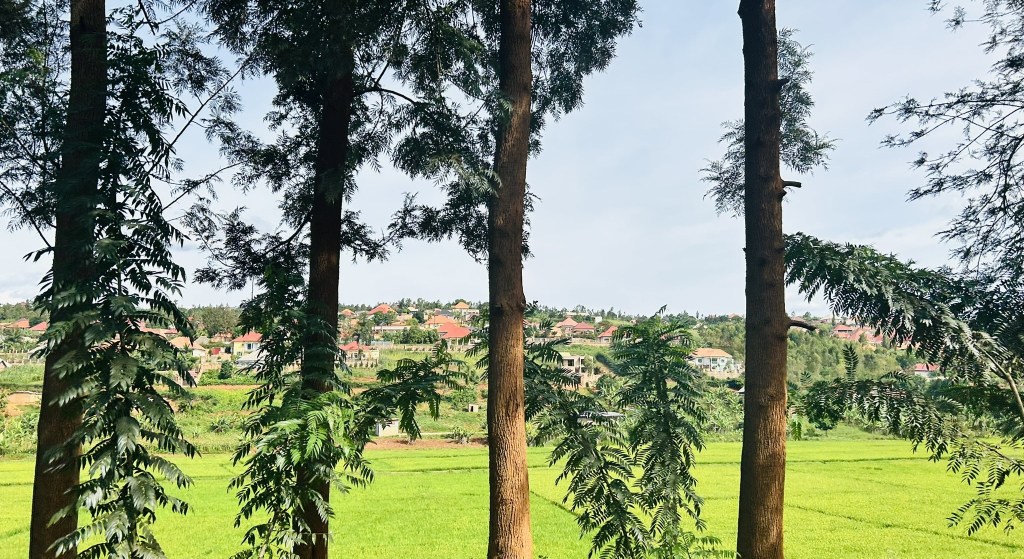
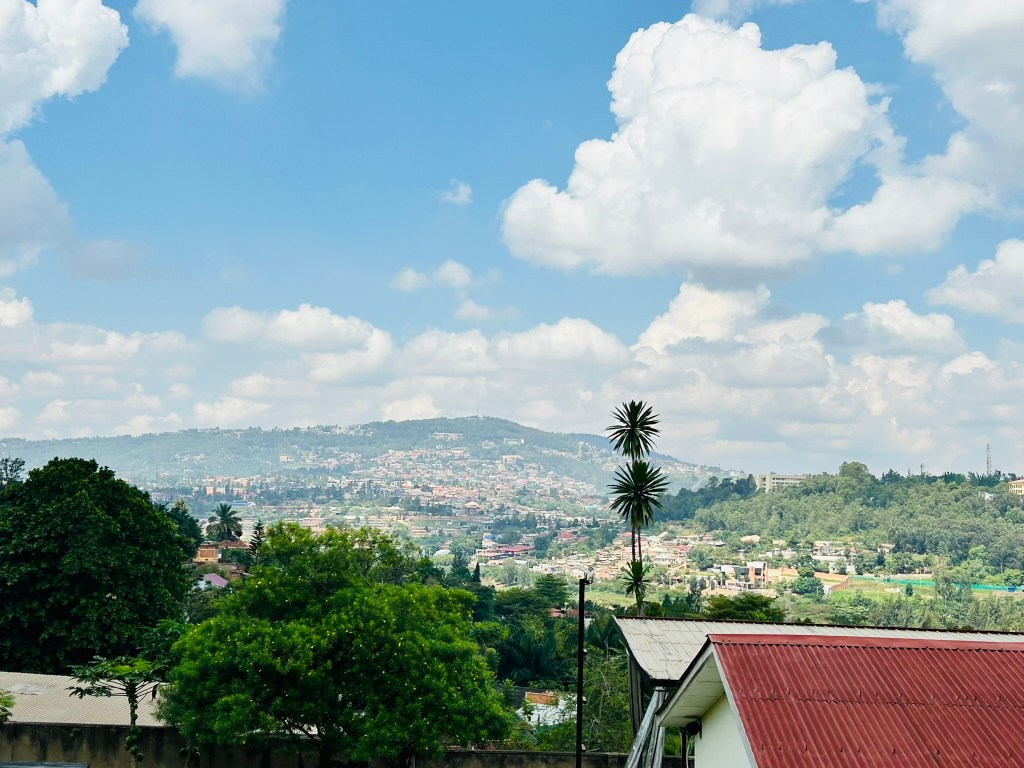
Rwanda has always been called ´the land of a thousand hills´. It is calm, peaceful and utterly, utterly beautiful
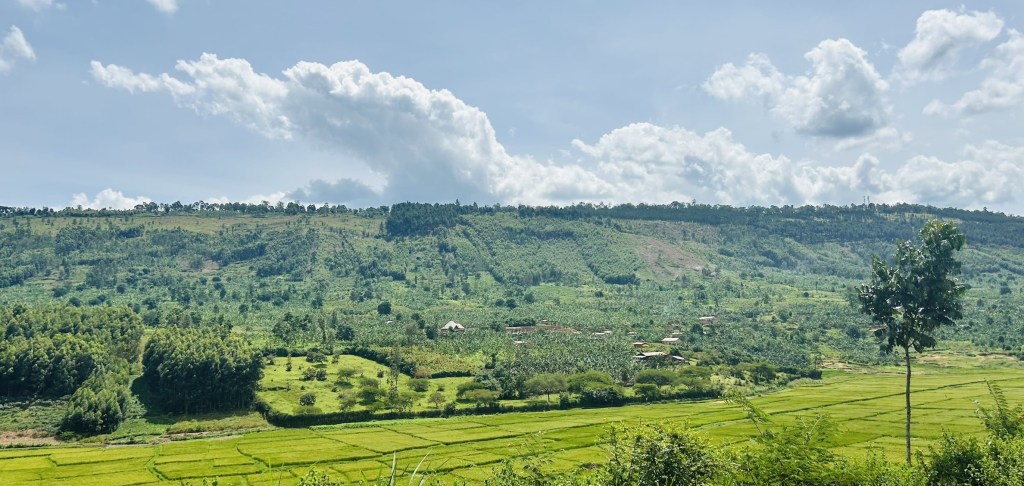
It feels different, it looks different. It is known as the Switzerland of Africa and from the first moment we arrived we could see why
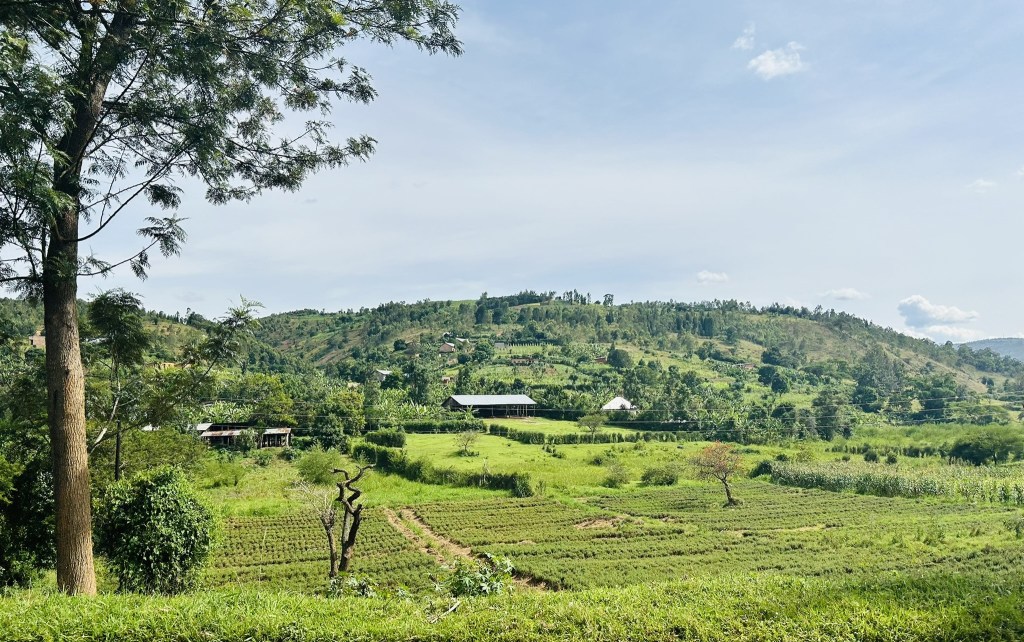
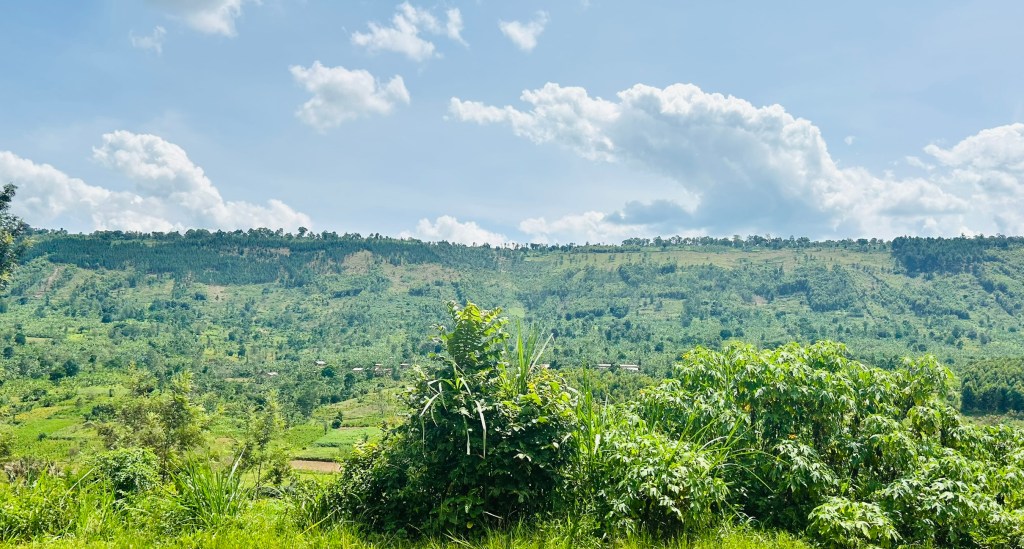
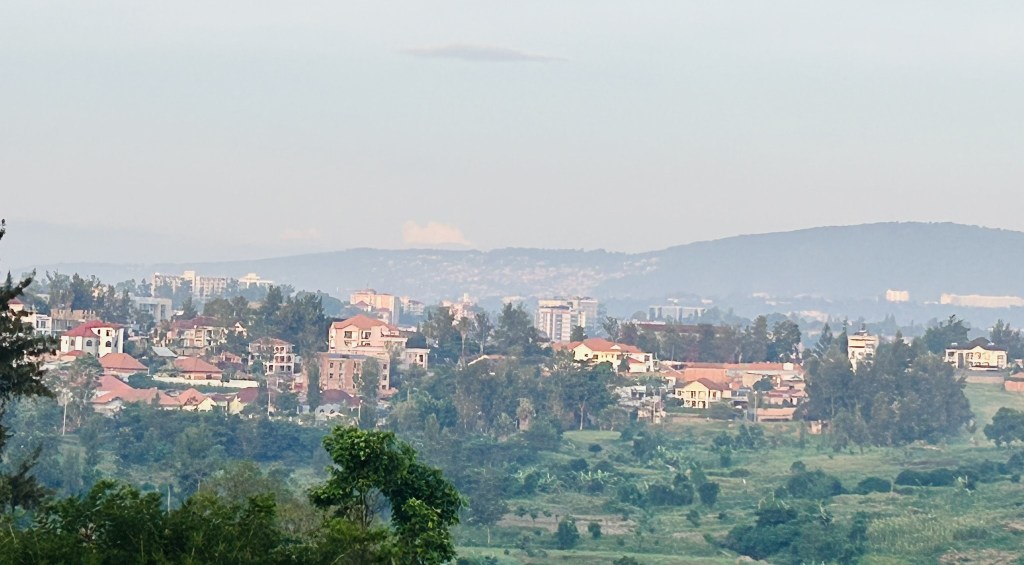
When we arrived in Kigali the city was clean, relatively small and well organised. The traffic was well behaved and we saw something we had never seen before in Africa….
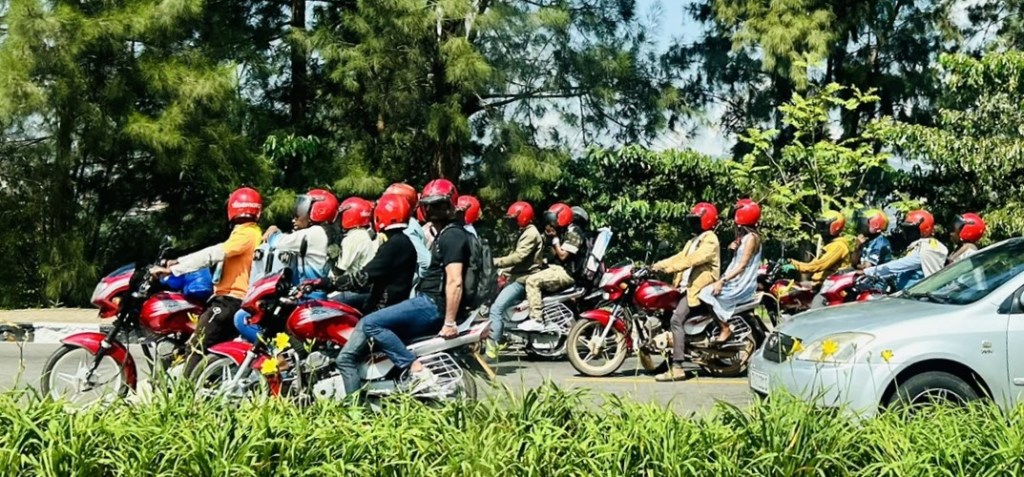
We had seen hundreds of thousands of motorbikes but here everyone wore helmets! And they carried only one passenger each….

The city was all hills with twisting roads snaking up and down
When we finally found our guesthouse we were initially concerned by how central it was as our experiences of African towns so far lead us to assume it would be noisy. It was also a tight squeeze to get Henry in through the gates
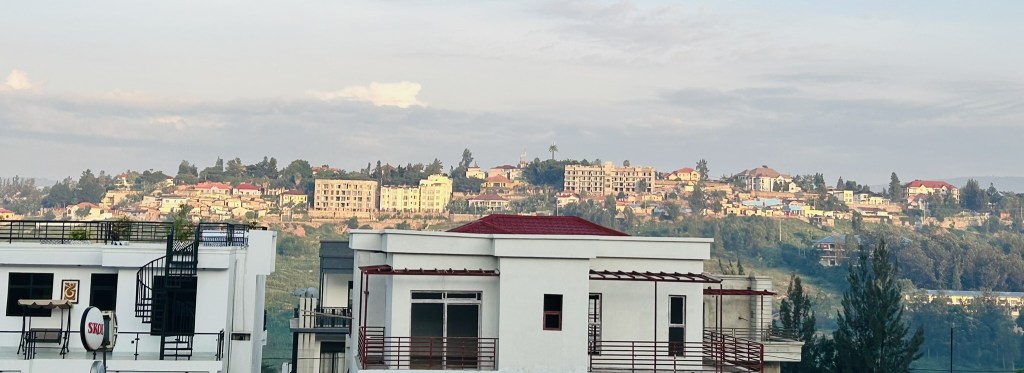
But we need not have worried. Once inside we found a lovely, friendly and welcoming place.
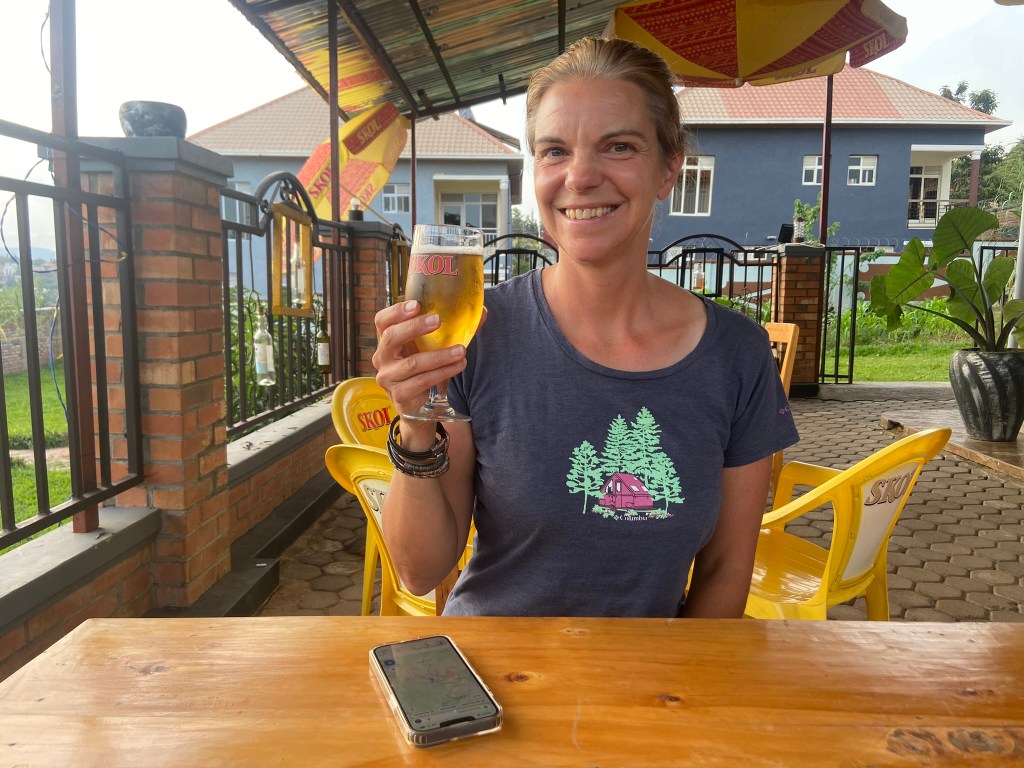
We had a large, double room with en-suite for less than we had been paying for campsites in Tanzania!
The owner was fascinating. He was half Sudanese, half Egyptian and had been living in Sudan for many years until the civil war broke out just over a year ago. He had to leave everything behind to find a new home and listed all the pros and cons of the surrounding countries before making his decision that Rwanda was the best place to be.
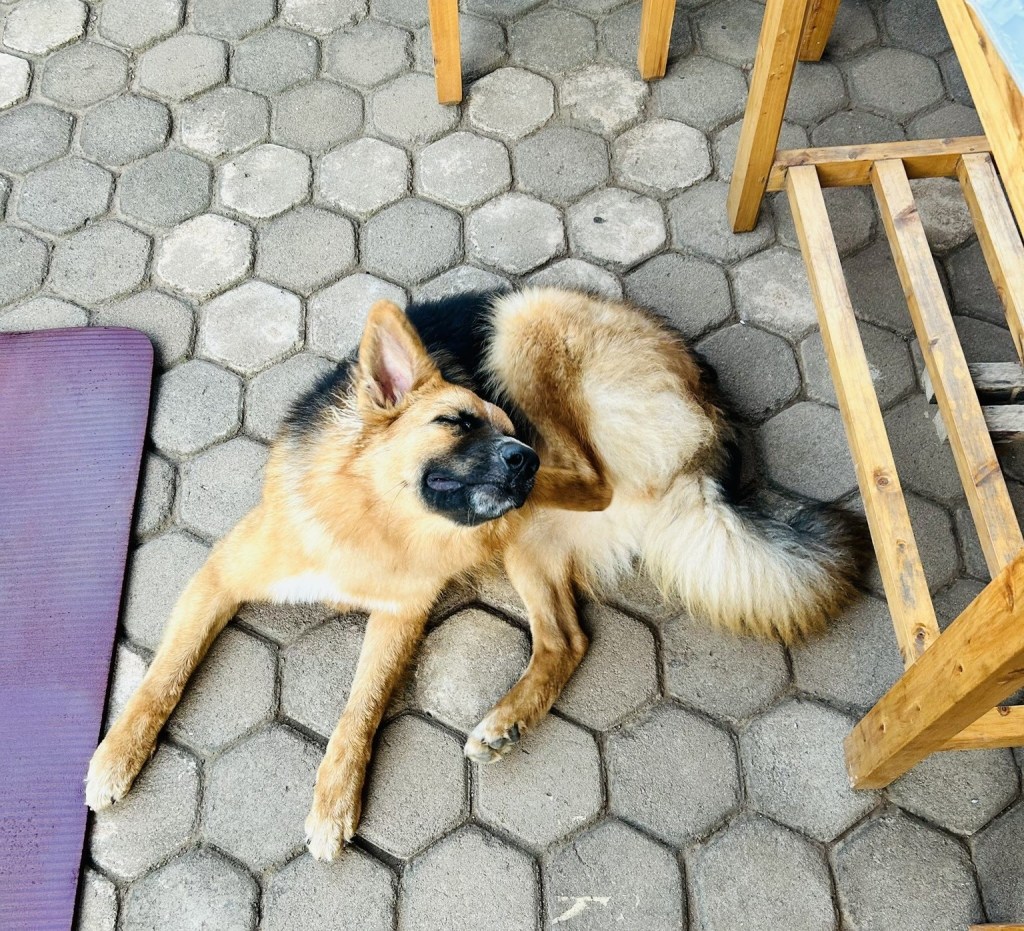
He had a young Alsatian who was one of the most gorgeous dogs we have met on our travels
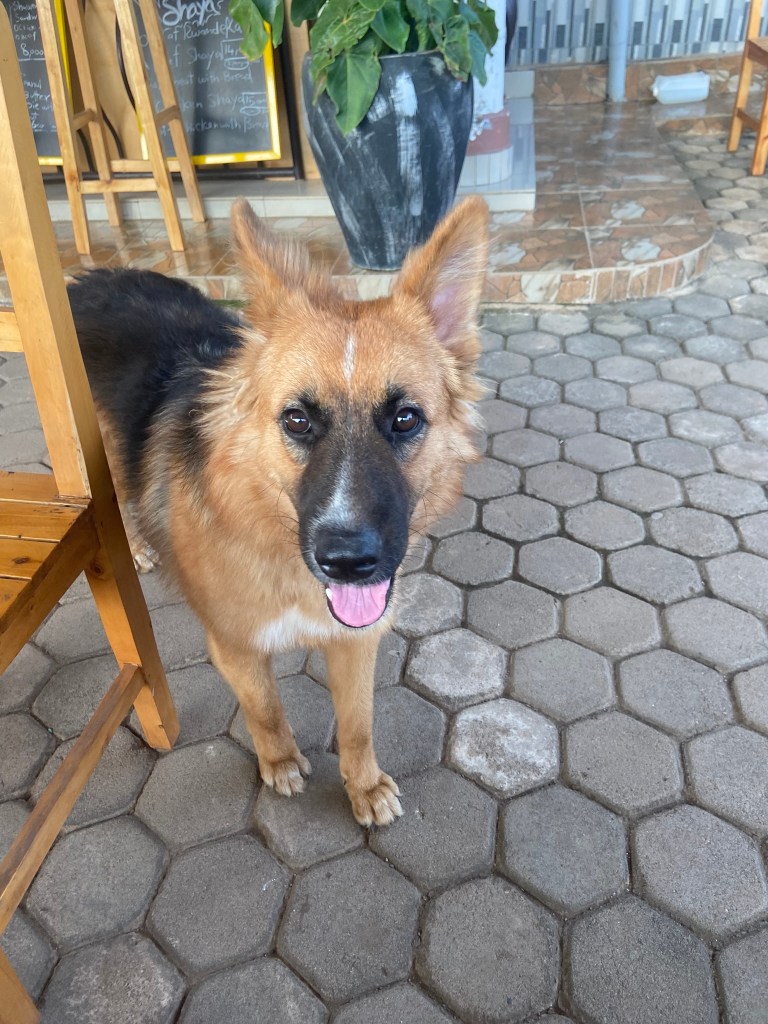
They were clearly devoted to each other
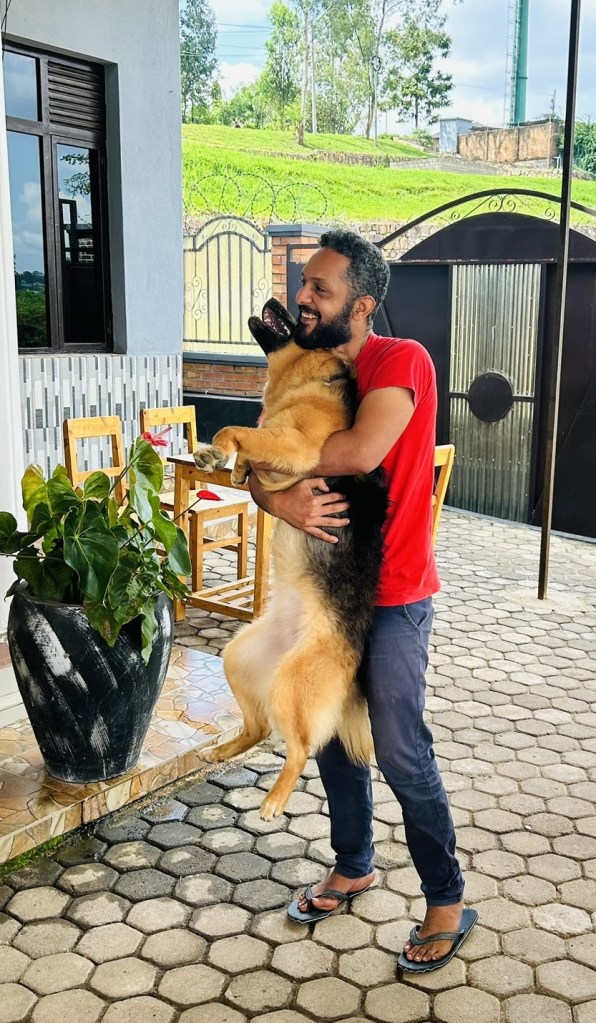
But after a day or two she started to bond with us as well
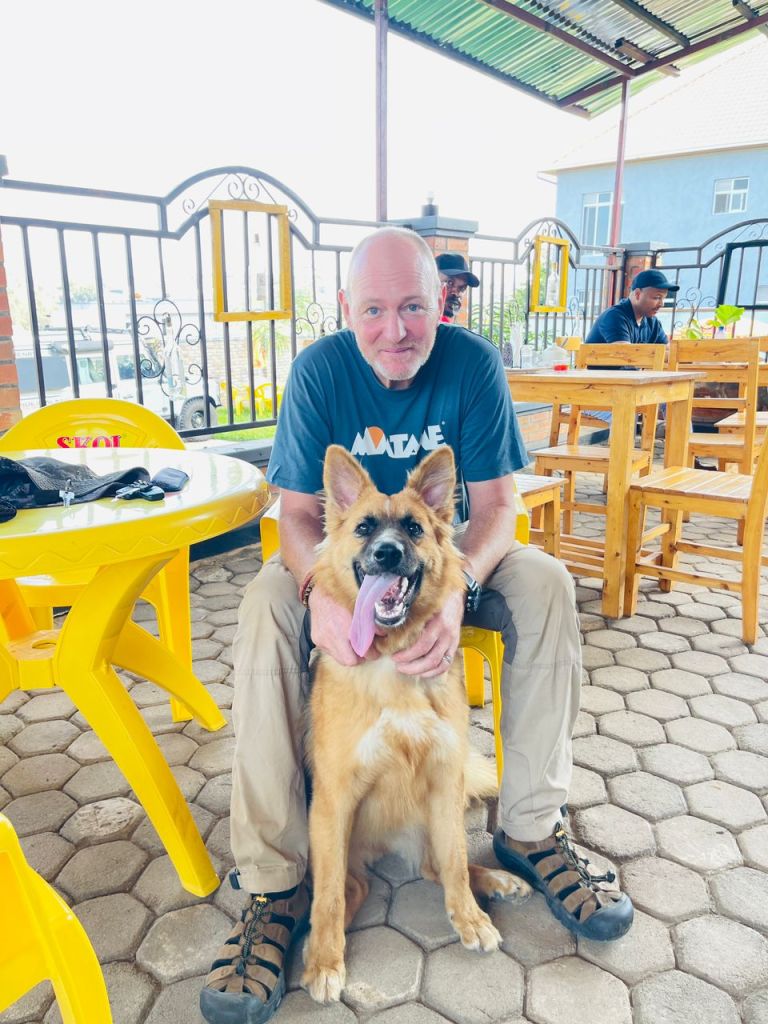
And even ended up helping me train in the mornings!
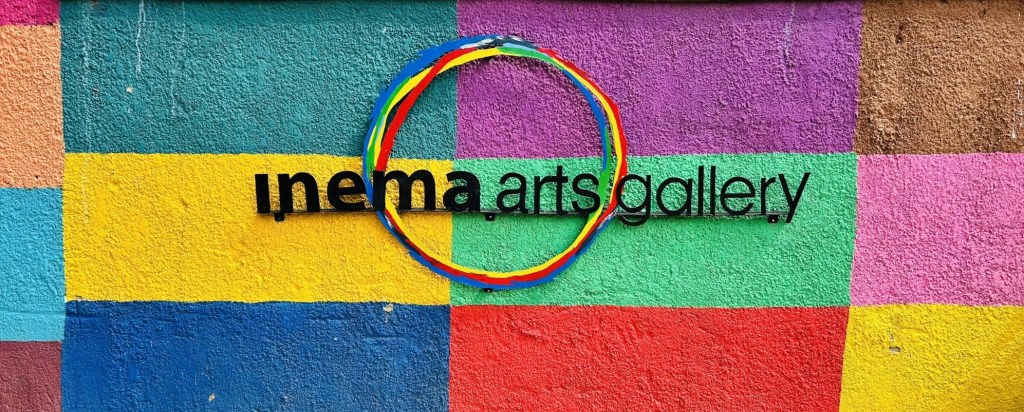
Our first stop in the city was the Inema art gallery
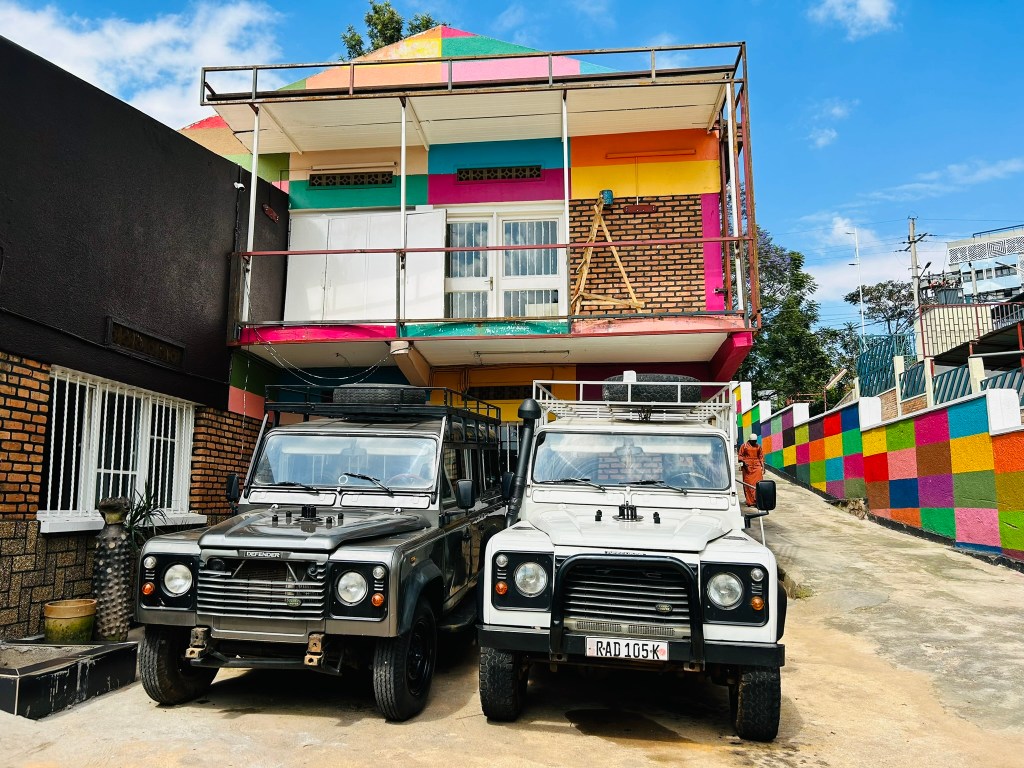
Sadly the main exhibitions upstairs were closed for renovation but they had plenty of Landrovers outside
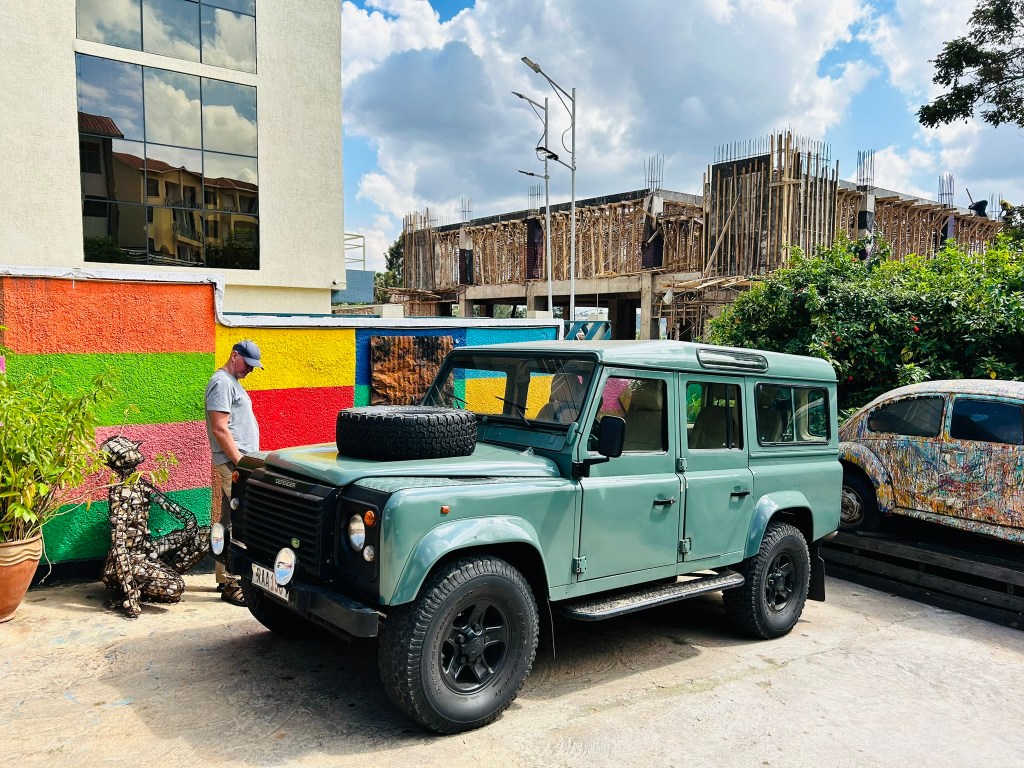
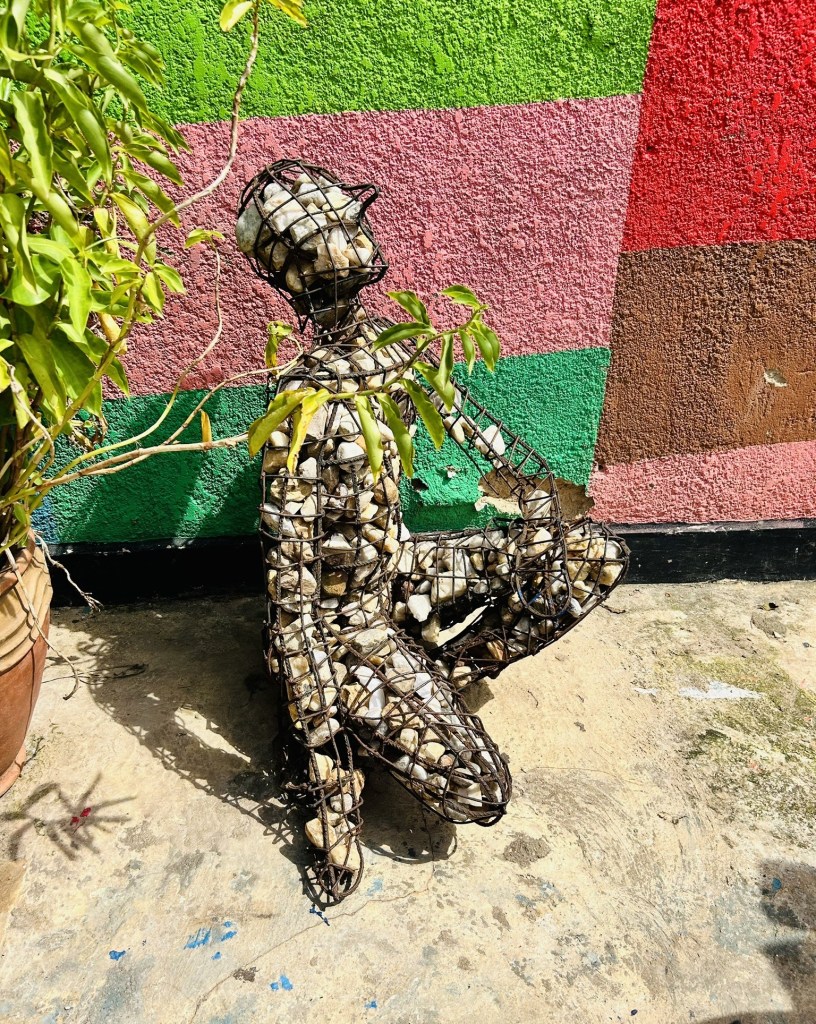
And the artwork on display downstairs and in the garden was interesting
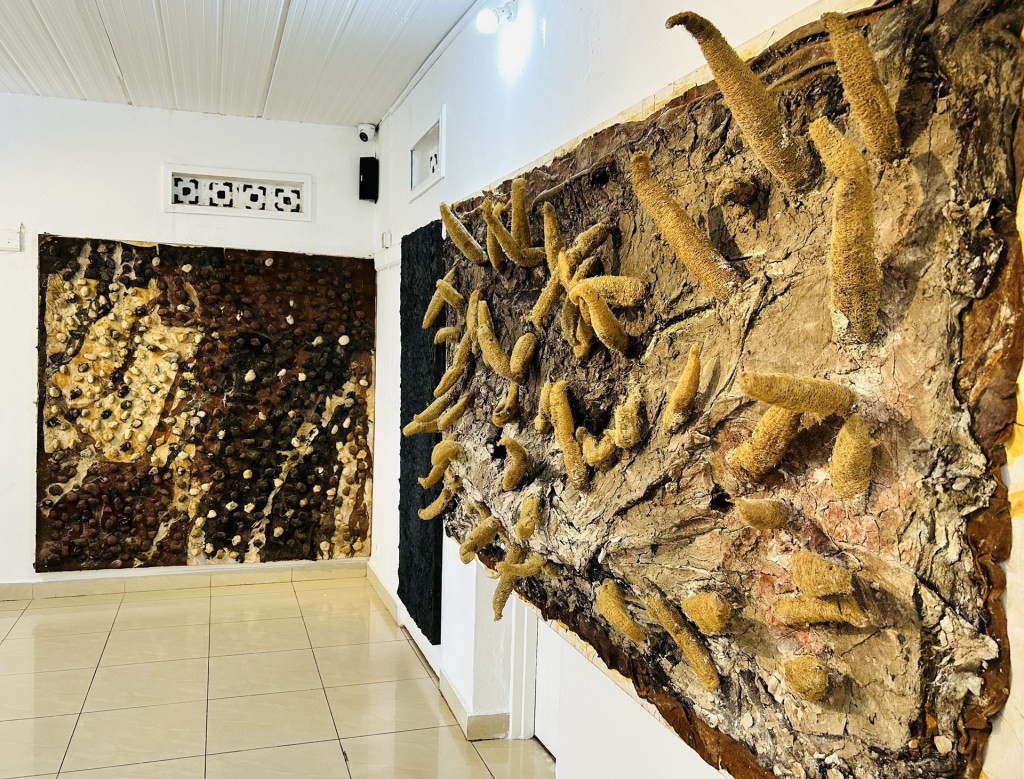
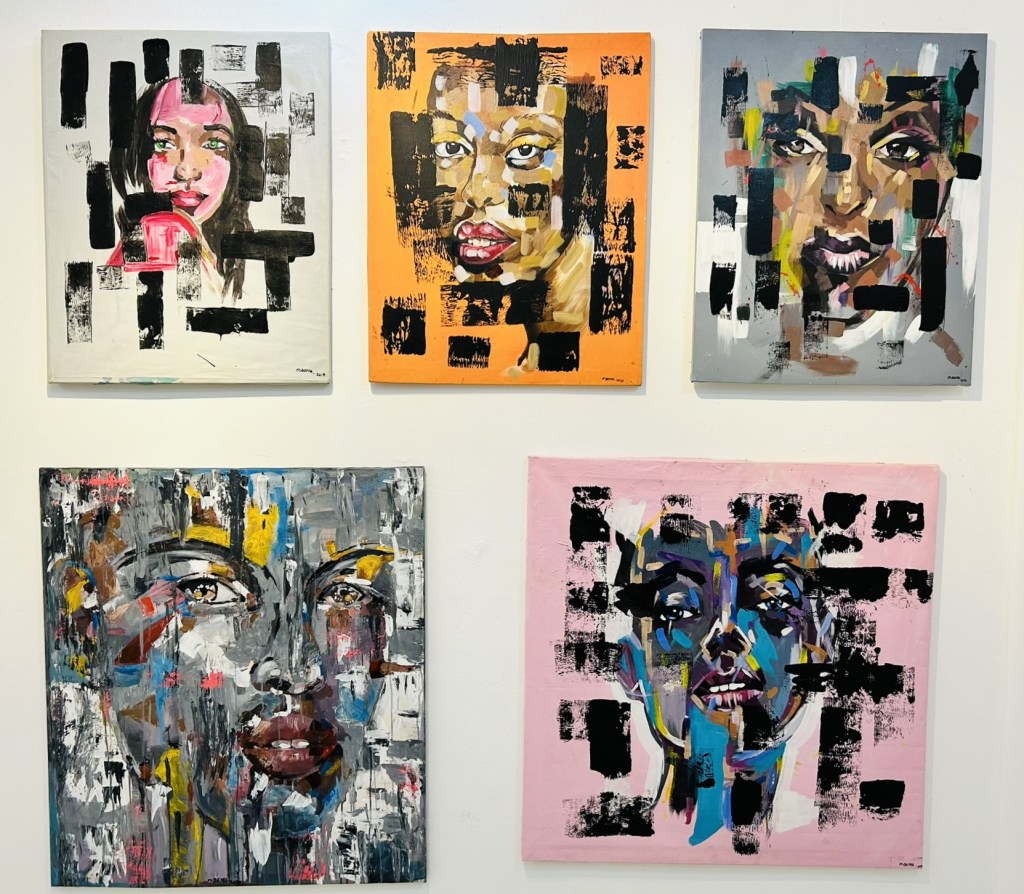
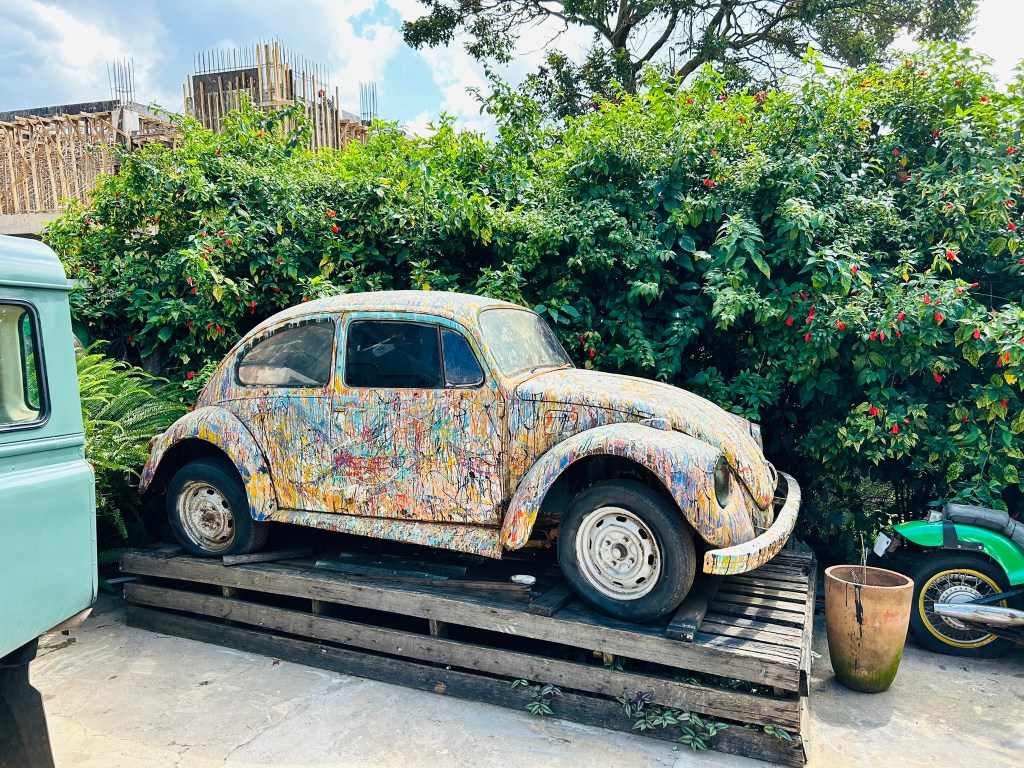
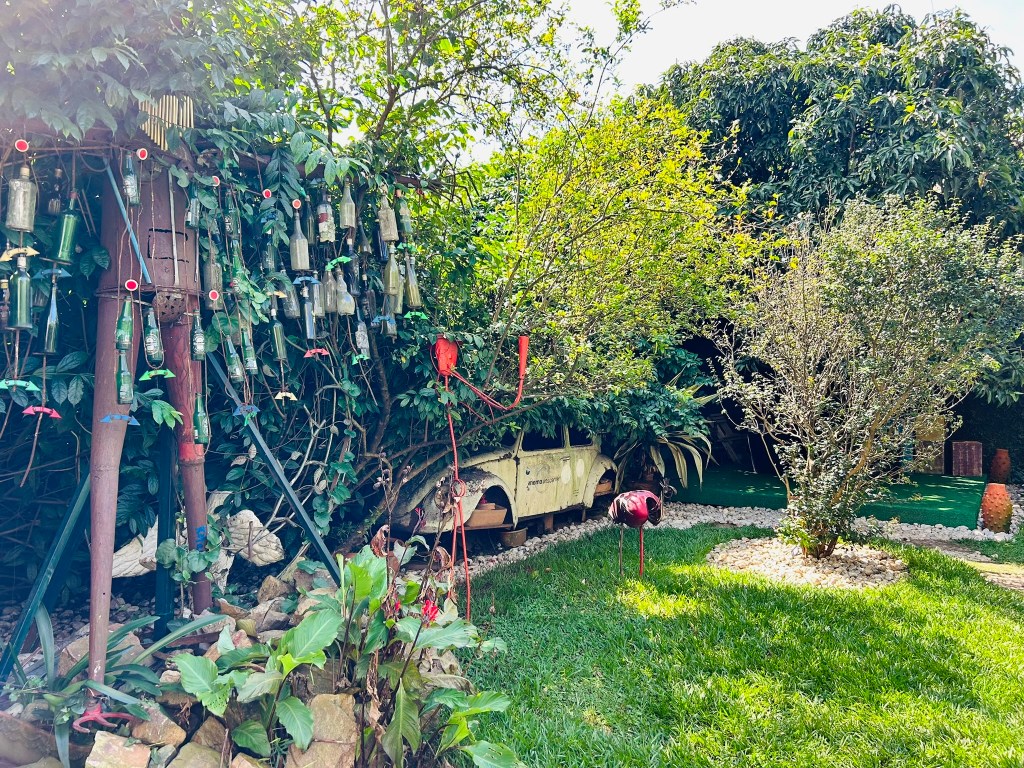
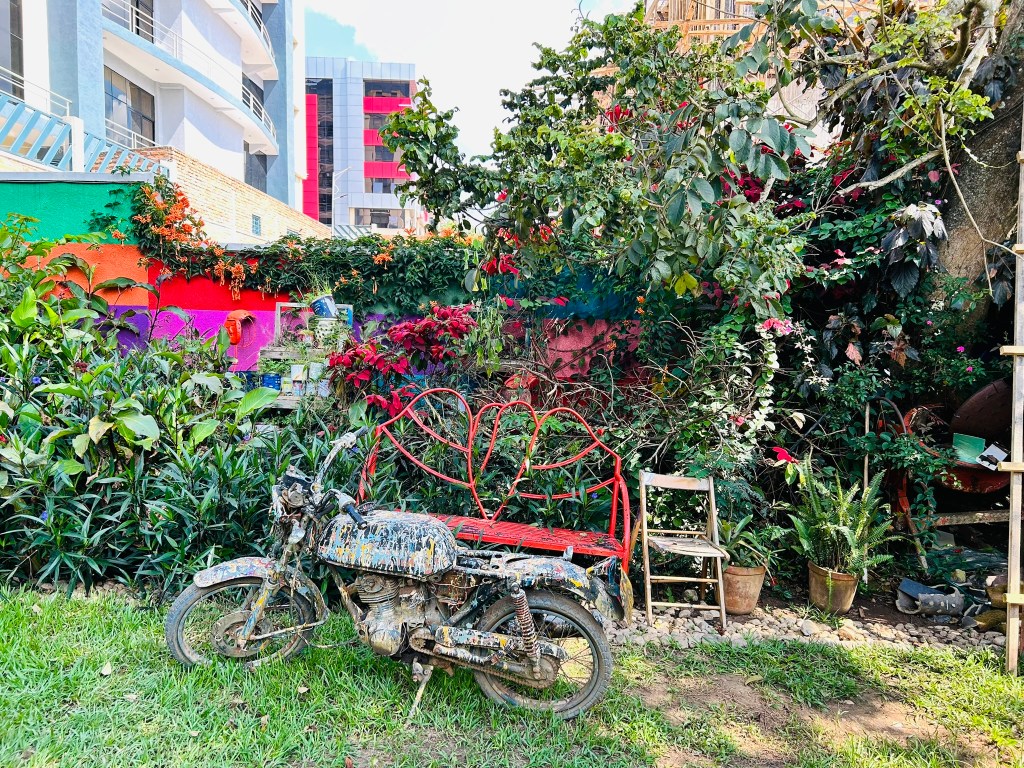
From there we went to the Niya art gallery which was less exciting, more of an art shop than a gallery, but there were a few nice paintings
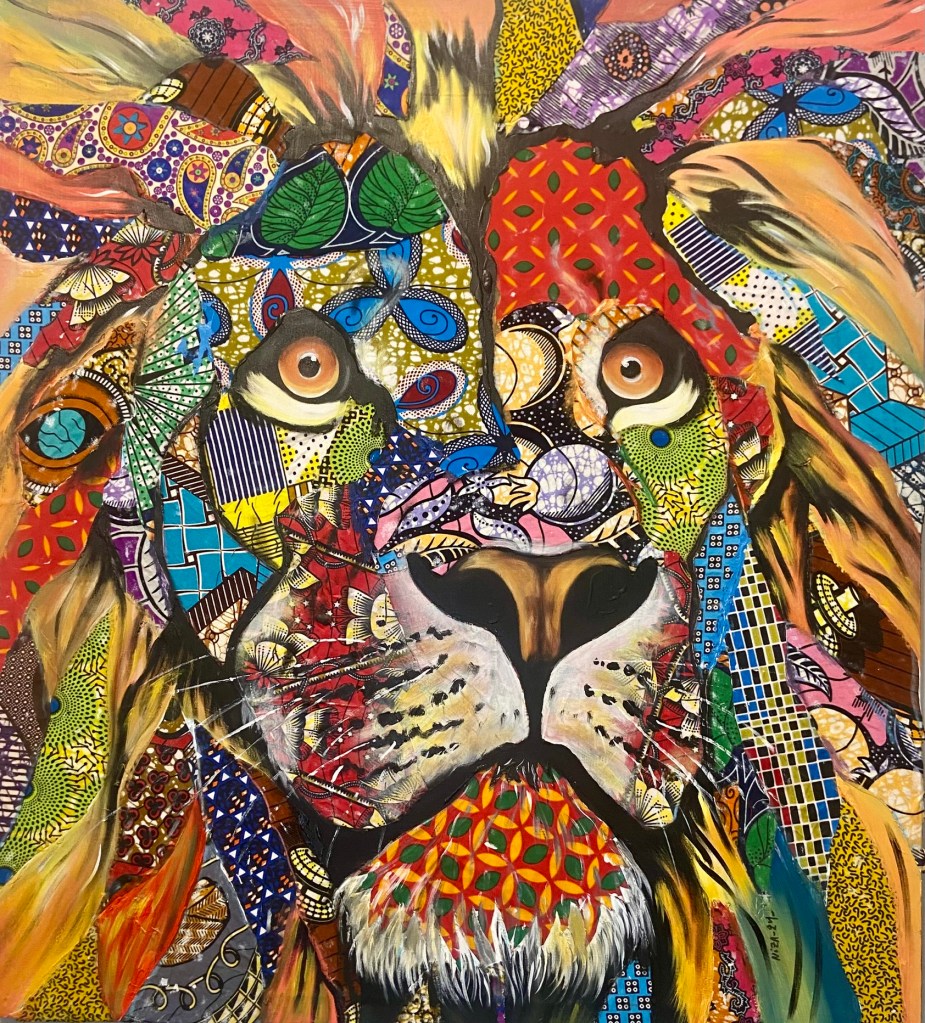
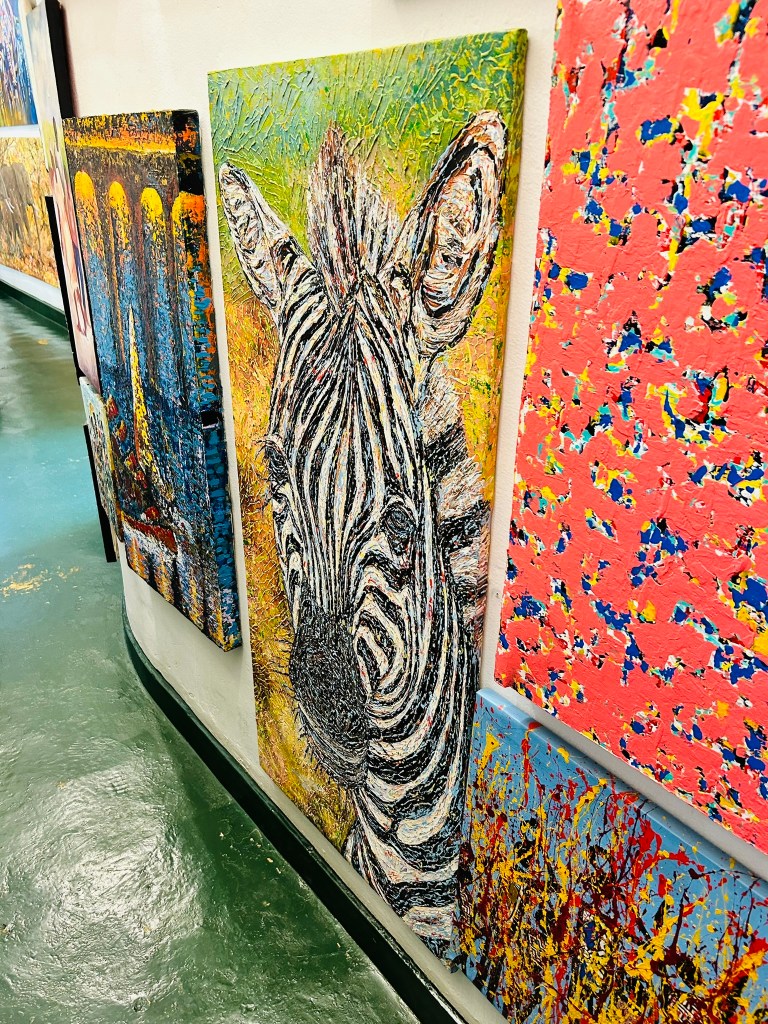
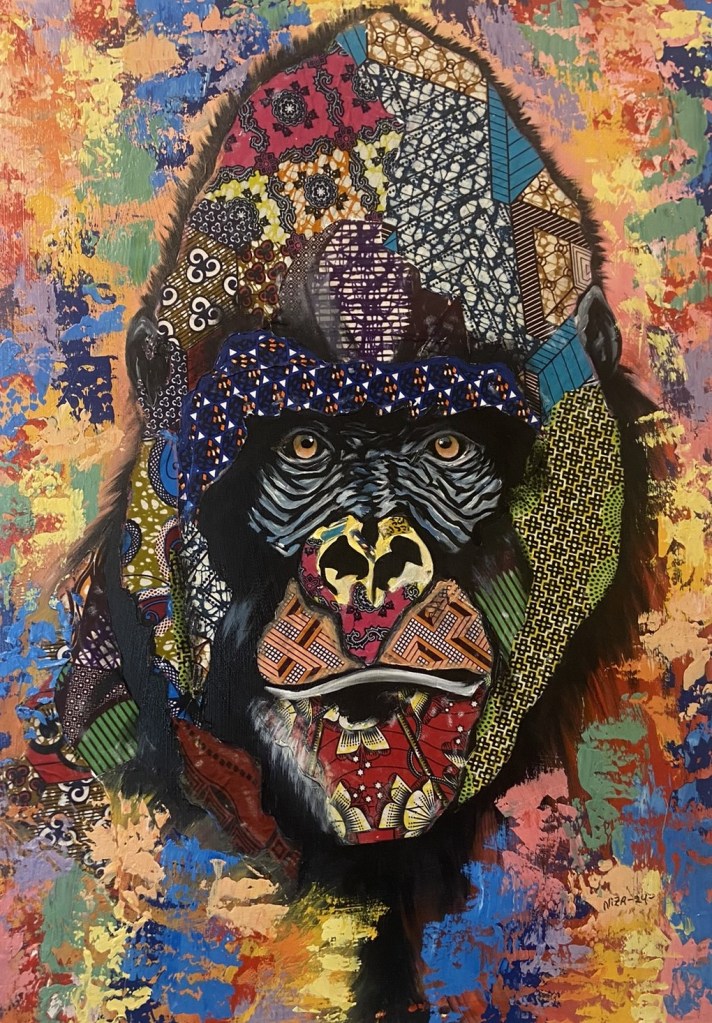
It was a bit early for lunch at this point so we continued on to the main attraction – the Genocide Museum.
There is a genocide museum in every town across the country but the one here in Kigali is the main memorial. We were lucky to be visiting on the 30th anniversary when there were some special displays
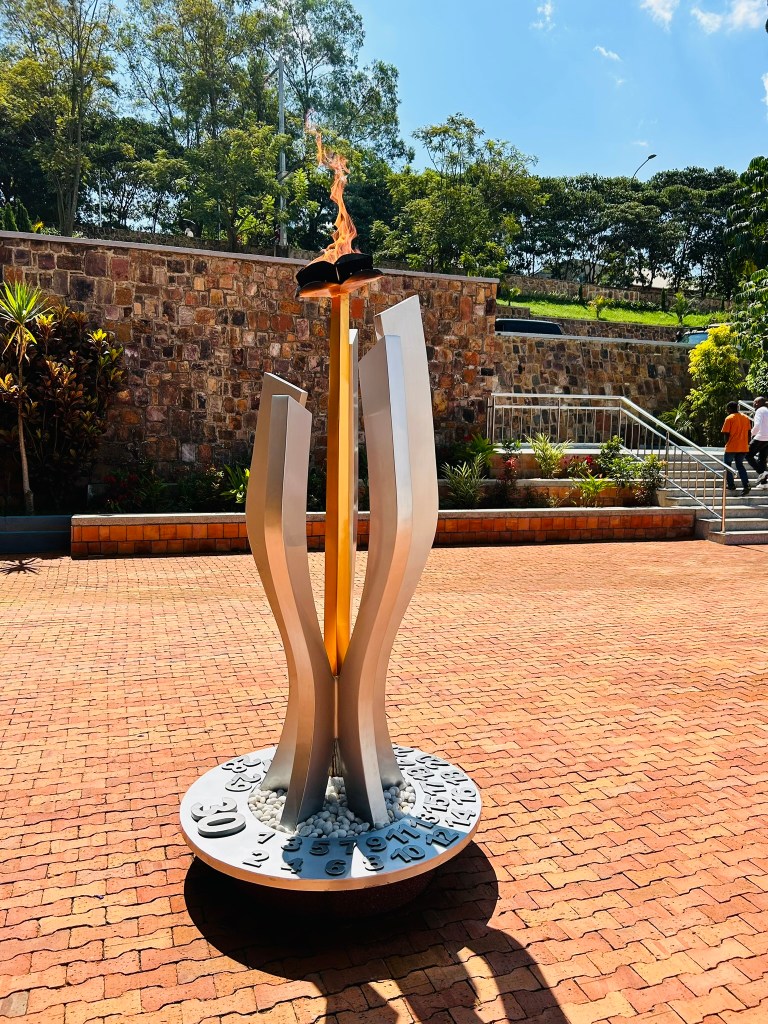
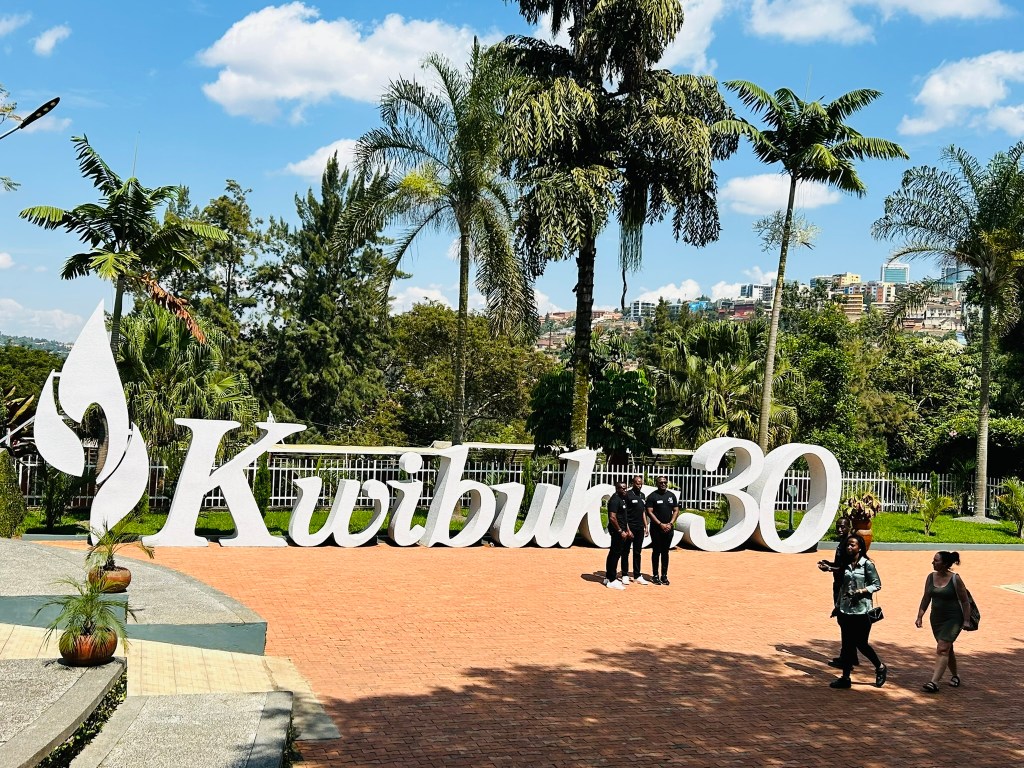
Kwibuka – to remember….
It was a difficult visit, some horrific images and information boards were hard to read through. How has this country recovered and thrived so quickly?
After a couple of hours we had to leave as we were both in a bit of a state of shock. We sat quietly, deep in thought, as we drove to the KG Craft Café for lunch and some homemade lemonade to try and shake ourselves back to the present day.
After browsing some of the pottery at the craft shop we headed back to the guesthouse for peanut butter and pineapple pie. We chatted to the owner for hours and met a very interesting French NGO worker who was visiting from Madagascar and had another perspective on life in Africa.
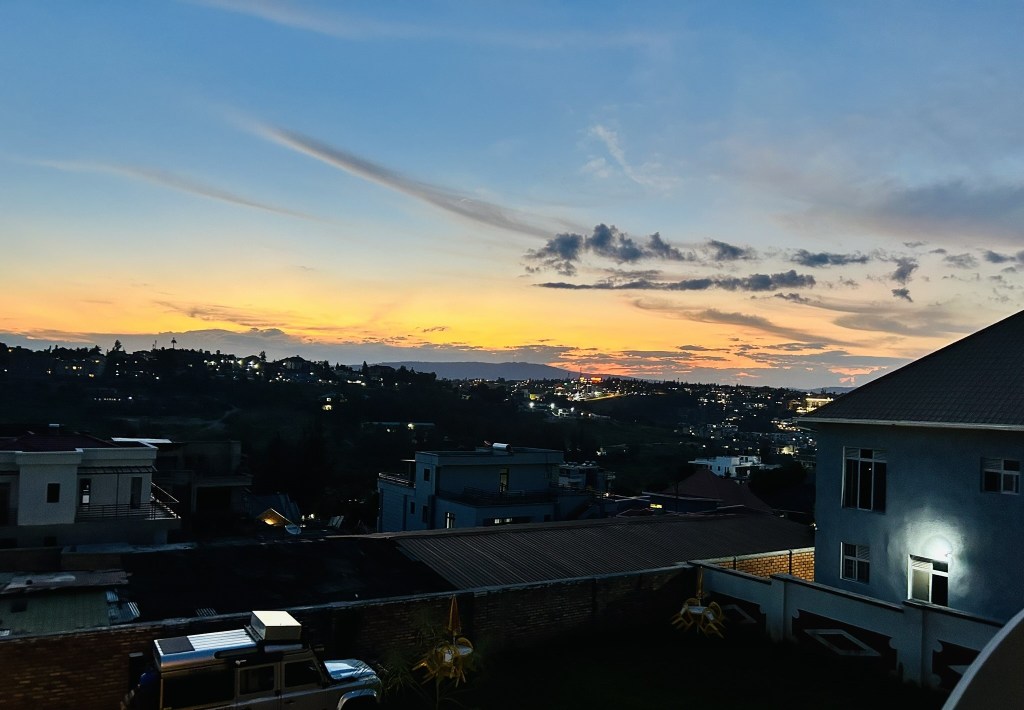
As I woke the next morning and started training on our balcony I saw one of the staff cleaning Henry. I rushed down to stop him as all too often such ´helpful´ cleaning consists of grinding dirt and dust into his paintwork and causing all sorts of damage. But as I got closer I saw that Henry was not just in safe and dedicated hands but positively gleaming. I smiled at the man and thanked him for his efforts. He beamed at me and carried on.
We wanted to spend the day visiting various important genocide sites around the city such as the St Famille Church where thousands had been massacred whilst trying to seek refuge and the Hotel des Mille Collines where the manager successfully hid many more thousands, saving their lives.
But we didn´t get away from our guesthouse until midday as we got chatting again with the owner and he sent out for corn to munch on whilst we talked. We were so fascinated by his experiences and his views on everything from war to corruption to business to dogs that we couldn´t pull ourselves away!
But eventually we headed out into the city and found the St Famille Church
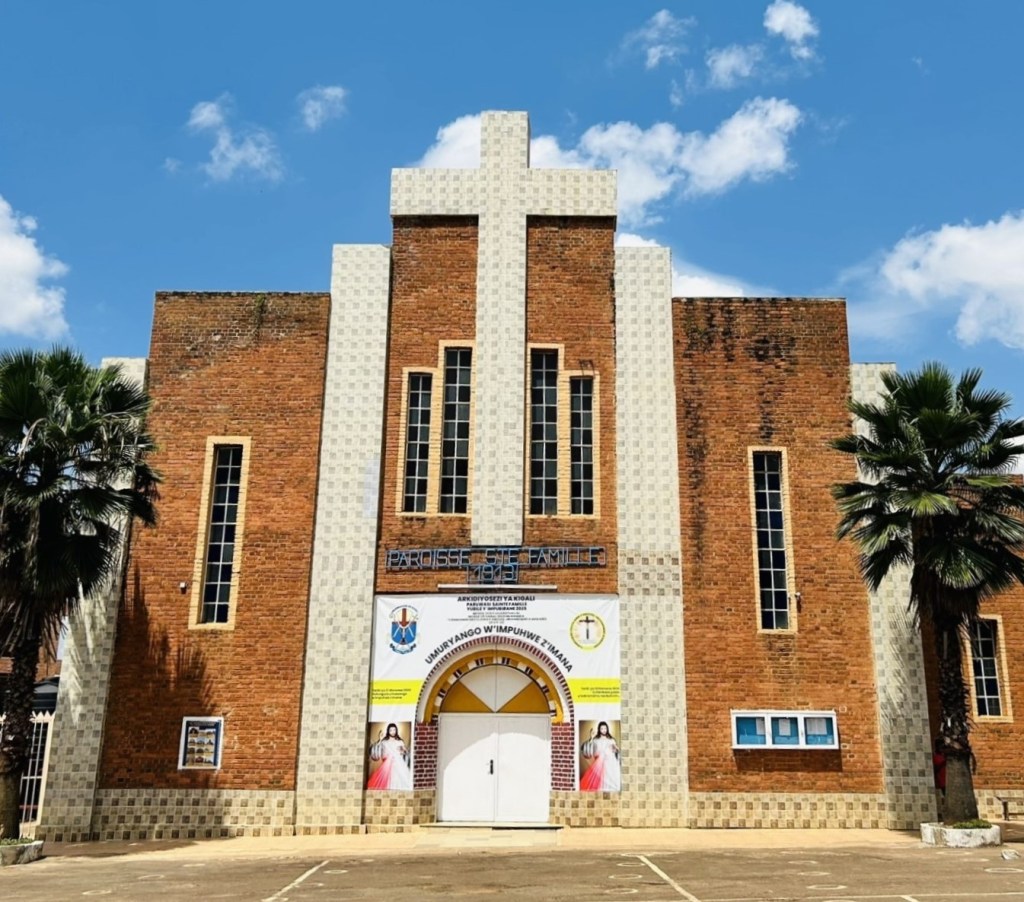
We couldn´t go in but there was a memorial taking place outside which was interesting to see.
The Hotel des Mille Collines (Hotel of a Thousand Hills) was next. From the outside it looked nothing special, just an unassuming, modern box of a place
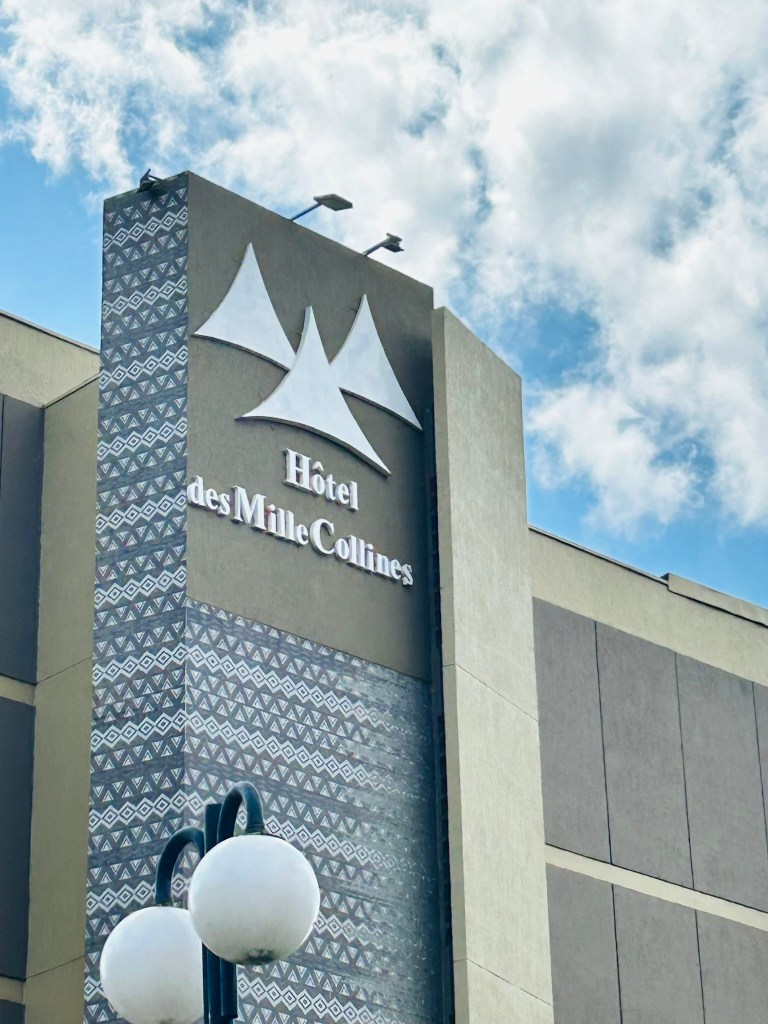
But there was some artwork outside worth seeing
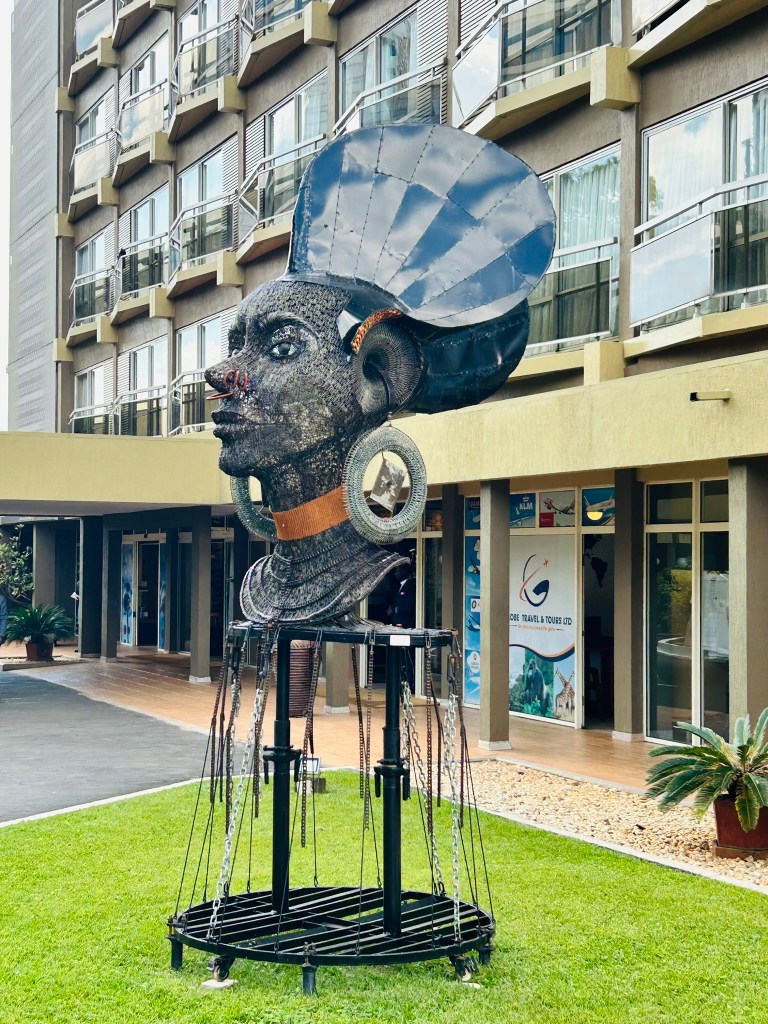
And once inside it was quite smart
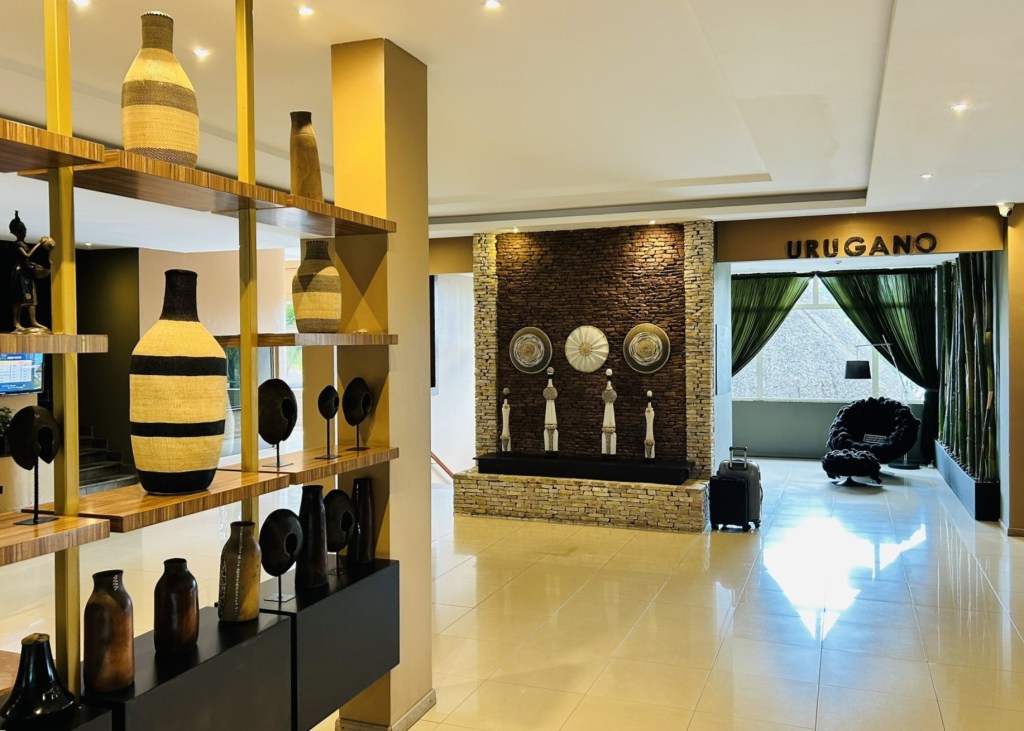
We headed straight for the poolside restaurant to have a cup of tea and soak up the atmosphere
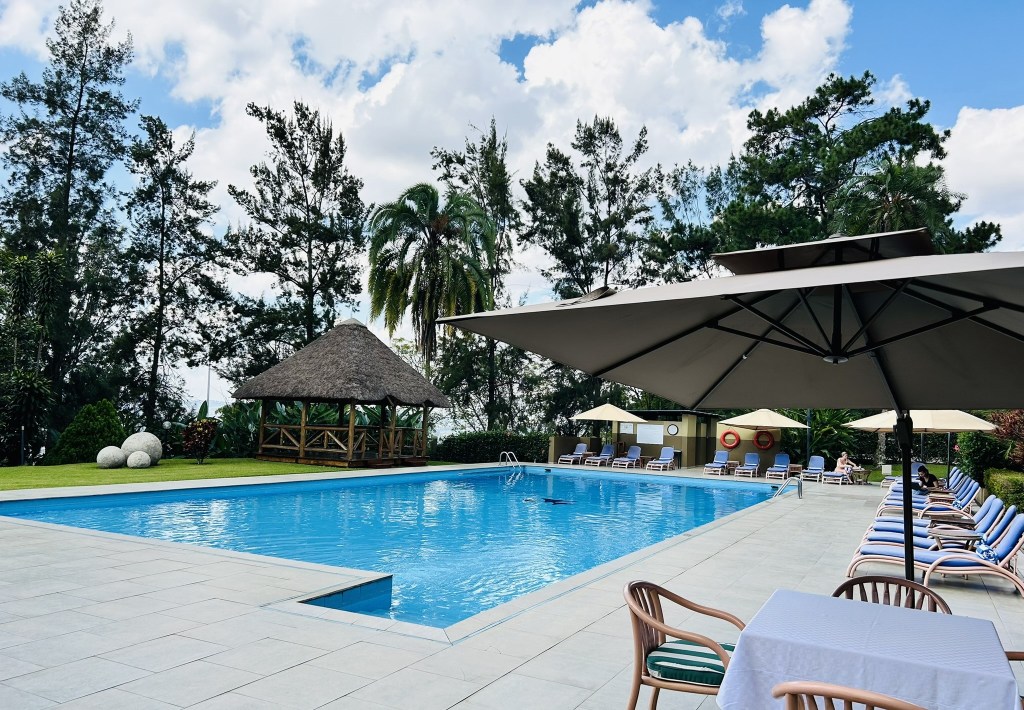
This is such a historic place that it felt like the epicentre of the genocide.
A couple of months ago I read a book called ´A Sunday Afternoon by the Pool in Kigali´ that was based right here during the genocide and it had affected me greatly.
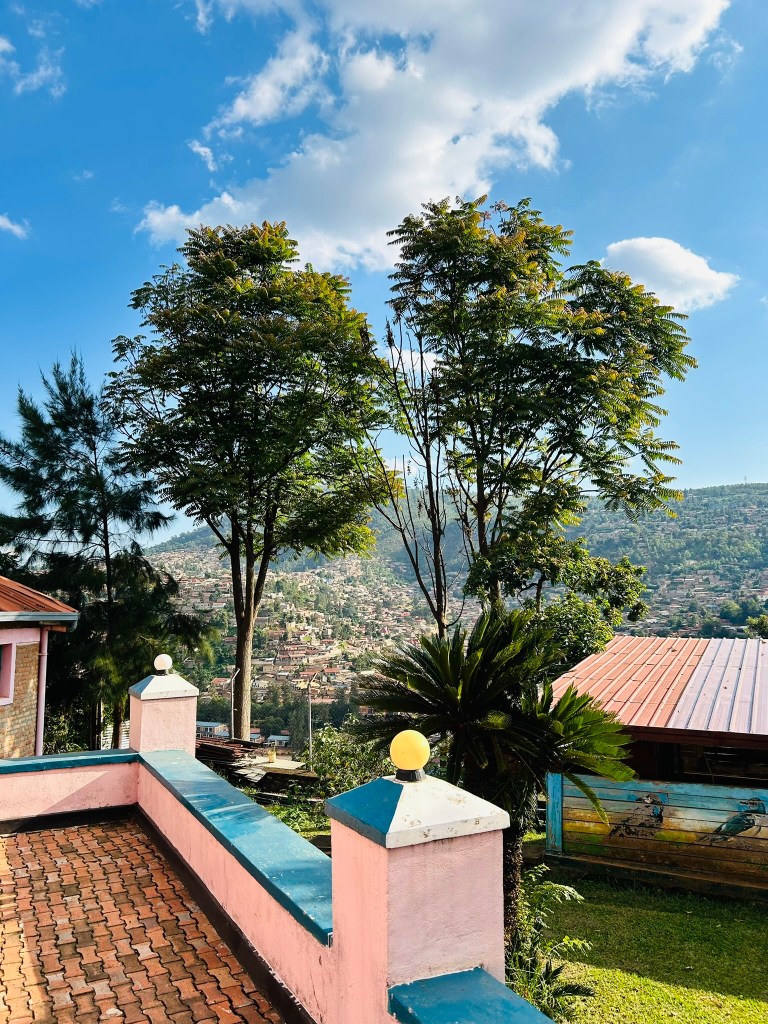
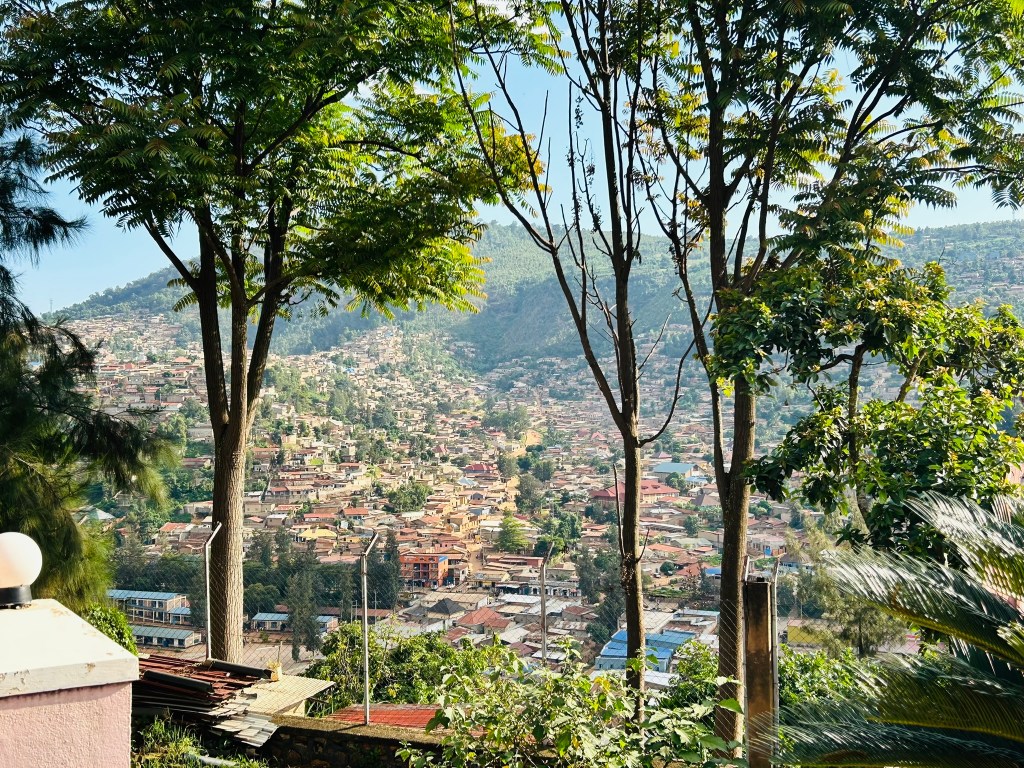
We ended up staying for a couple of hours and having lunch, looking out over the city, wondering what the people hiding here in 1994 would have been seeing and how they must have been feeling as the whole city rang with screams and blood flowed down every street
Our next stop was the Kandt House museum which traced the history of Rwanda from its early days through colonialisation and beyond. It gave a different perspective on things, a longer term context, and was very thought provoking.
We chatted to the manager for a while about life, Europe and Rwanda, putting the world to rights as usual!
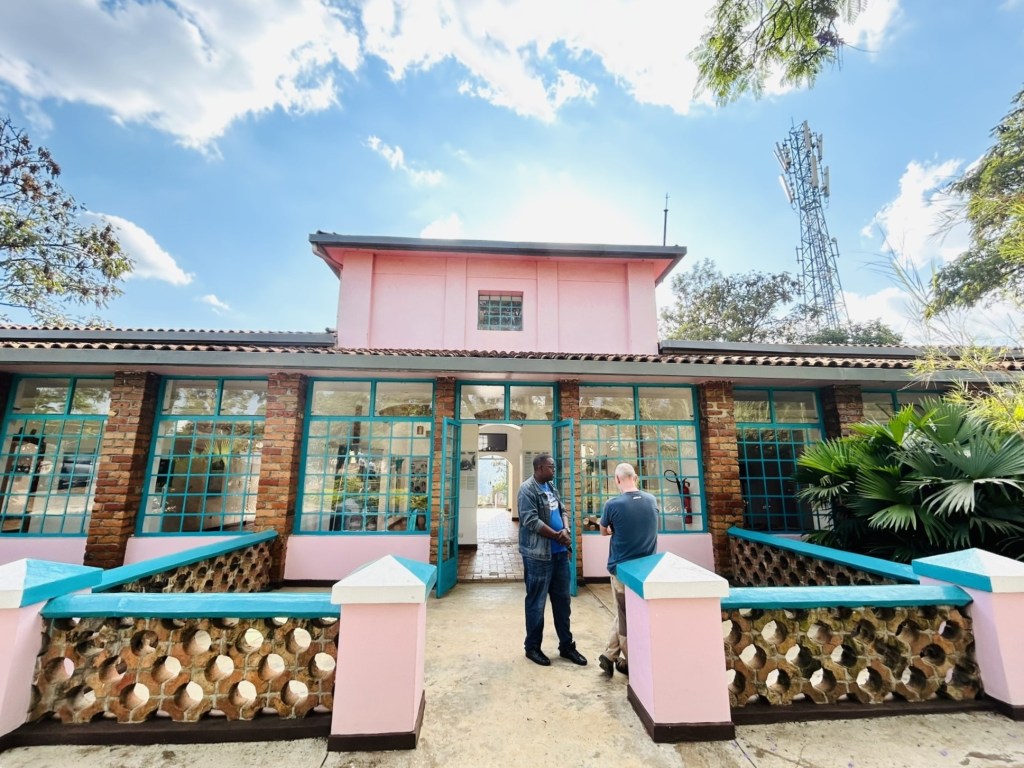
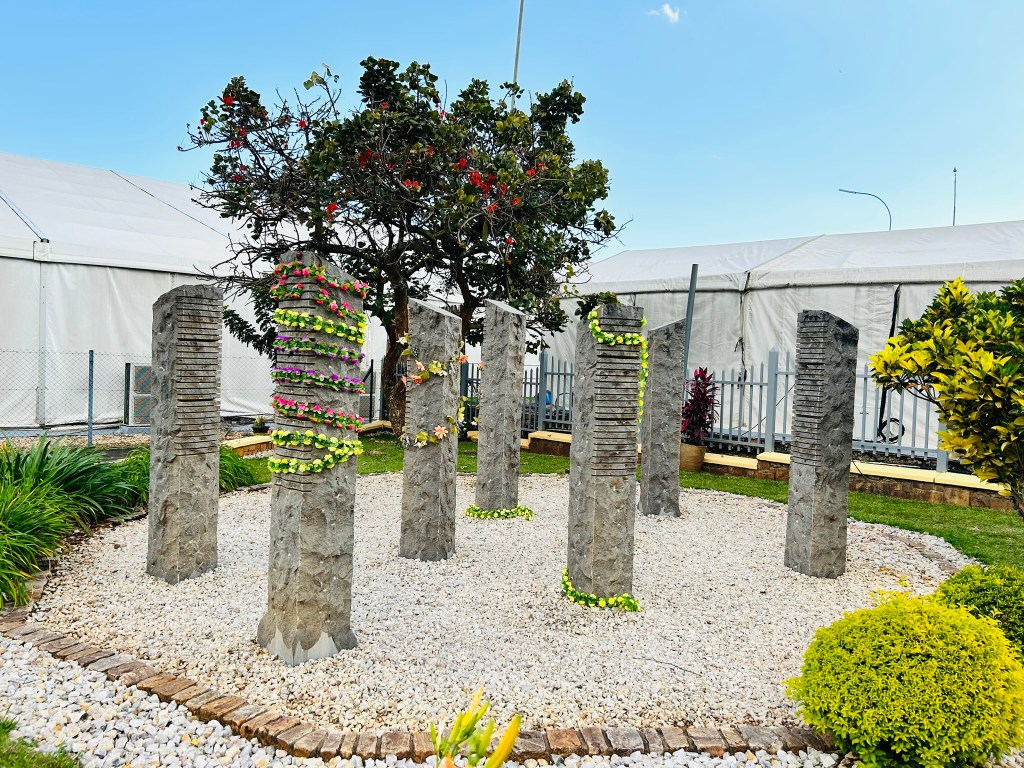
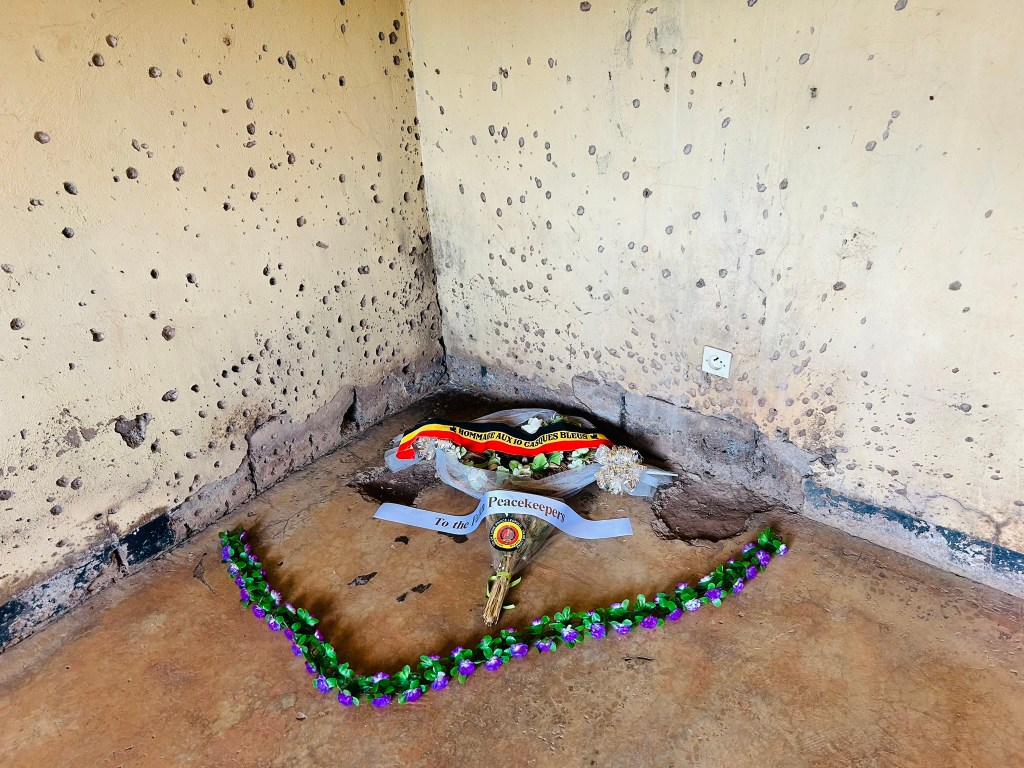
Our final stop was the Belgian Peace Memorial, a tribute to ten Belgian peacekeepers who were killed on the first day of the genocide
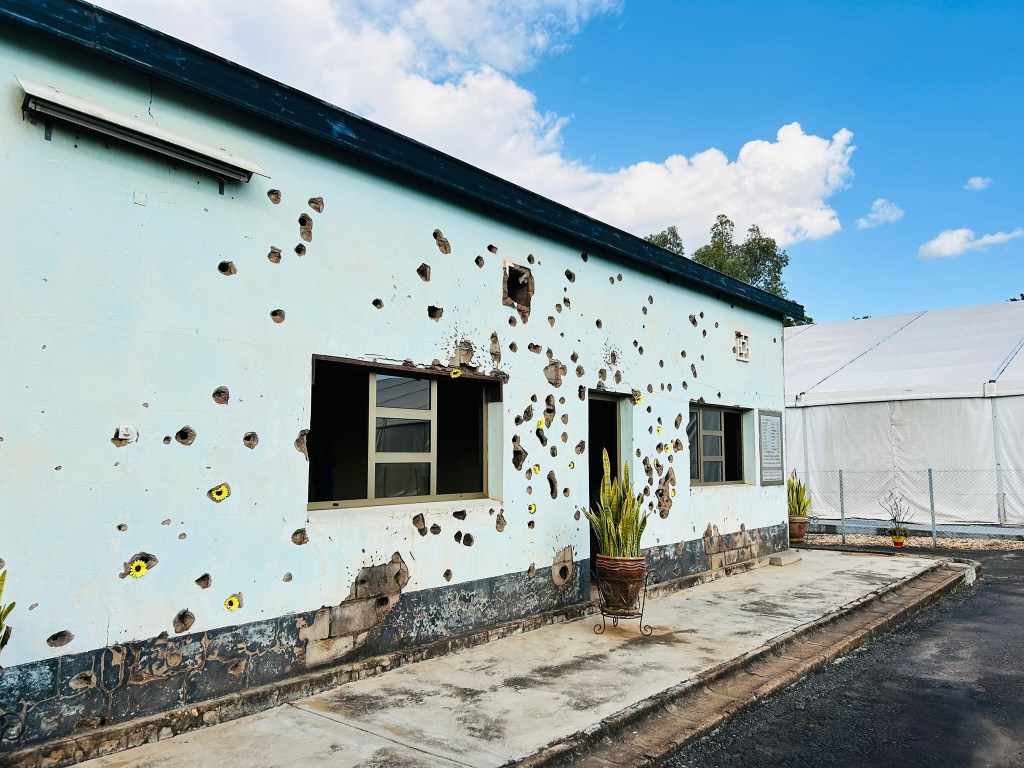
The outside has been kept exactly as it was with bullet holes spattered everywhere
Inside we read about the mistakes and ineptitude that played a part in leaving the victims unprotected – although more likely a complete inability to comprehend the scale of what was happening
We had a brief drive around the more bohemian part of the city where there is a women´s centre and some old buildings but had really had enough for the day – it had been thought provoking and harrowing and we were ready to get back to our guesthouse and share a bottle of wine with the owner
There is a fine balance between disregarding the past and the heritage of a place and dwelling on it to the detriment of the present. And especially when the past is so desperately awful whereas the present is so absolutely wonderful. We had spent the whole of our time here in Kigali so far visiting memorials, museums and sites of the genocide and it had been fascinating. But now we were ready to start seeing today´s Rwanda.
We had breakfast at the Patisserie Royal – delicious but very spicey! We found a German butchers and a supermarket but the local markets were too busy to park anywhere close.
So we pressed on to the Rwanda Art Museum which was a strange place. The building was the old Presidential Palace which was interesting to look around with beautiful grounds
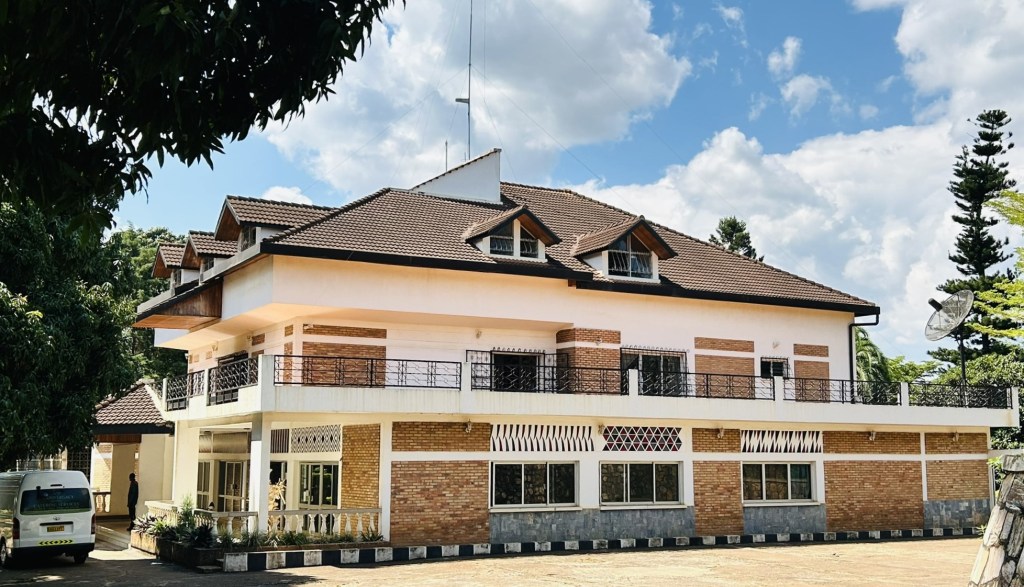
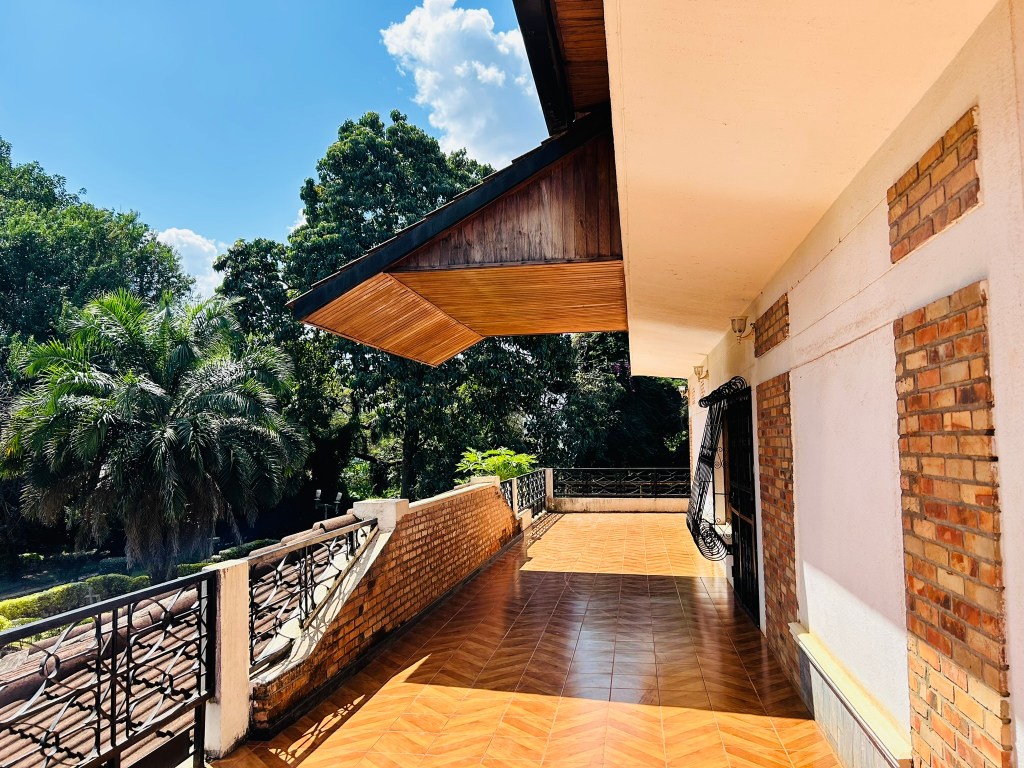
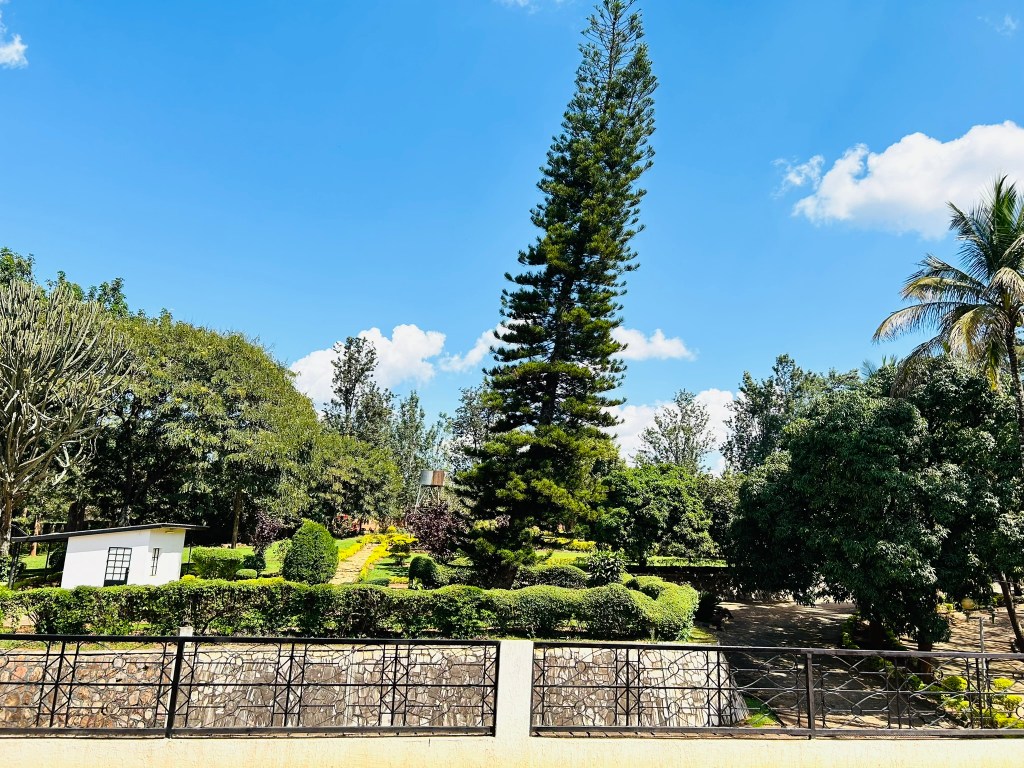
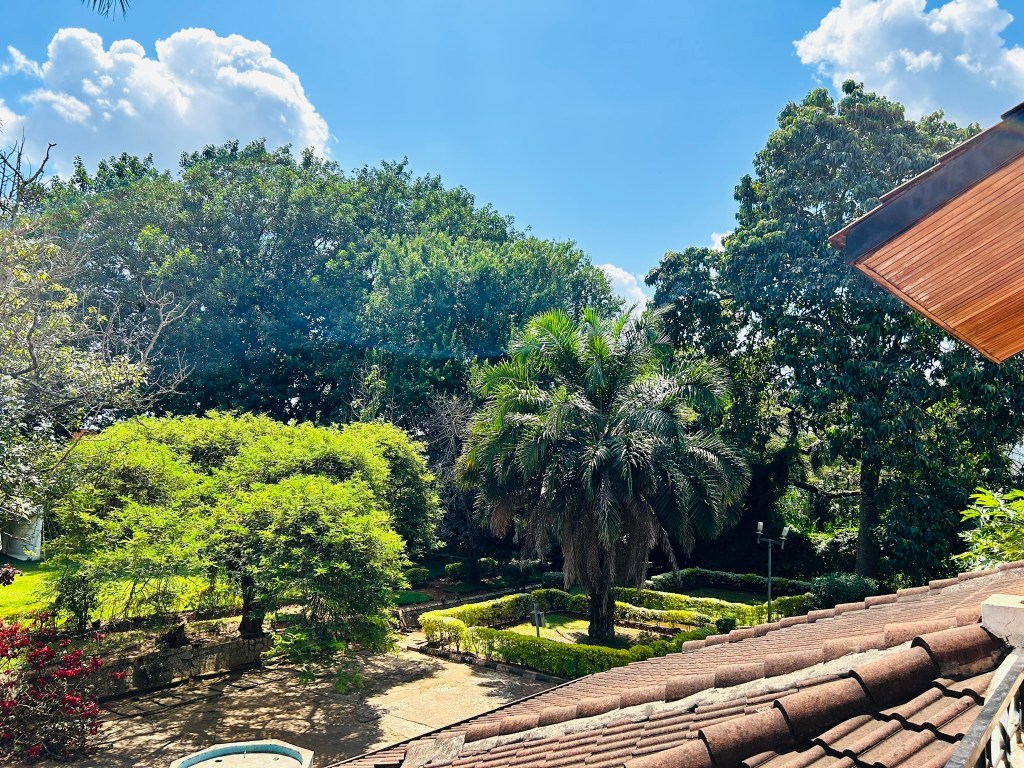
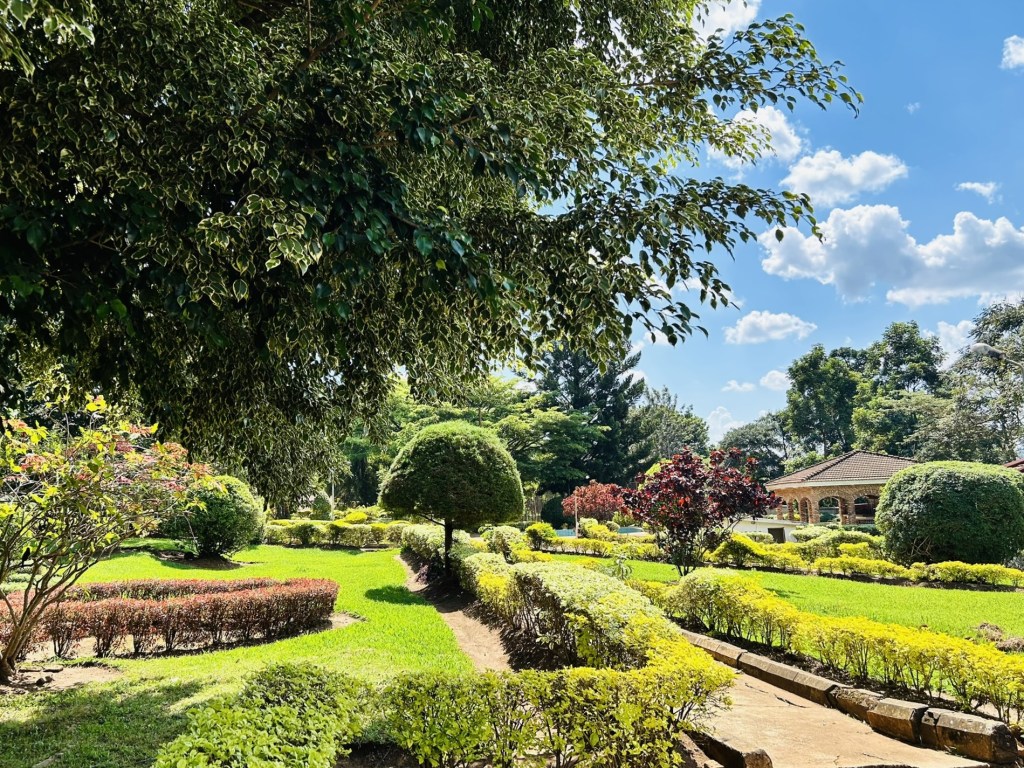
But the normal artwork had been boxed up and replaced with a temporary exhibition of strange things like chairs!
In many ways the shop on the way out had more interesting artwork!
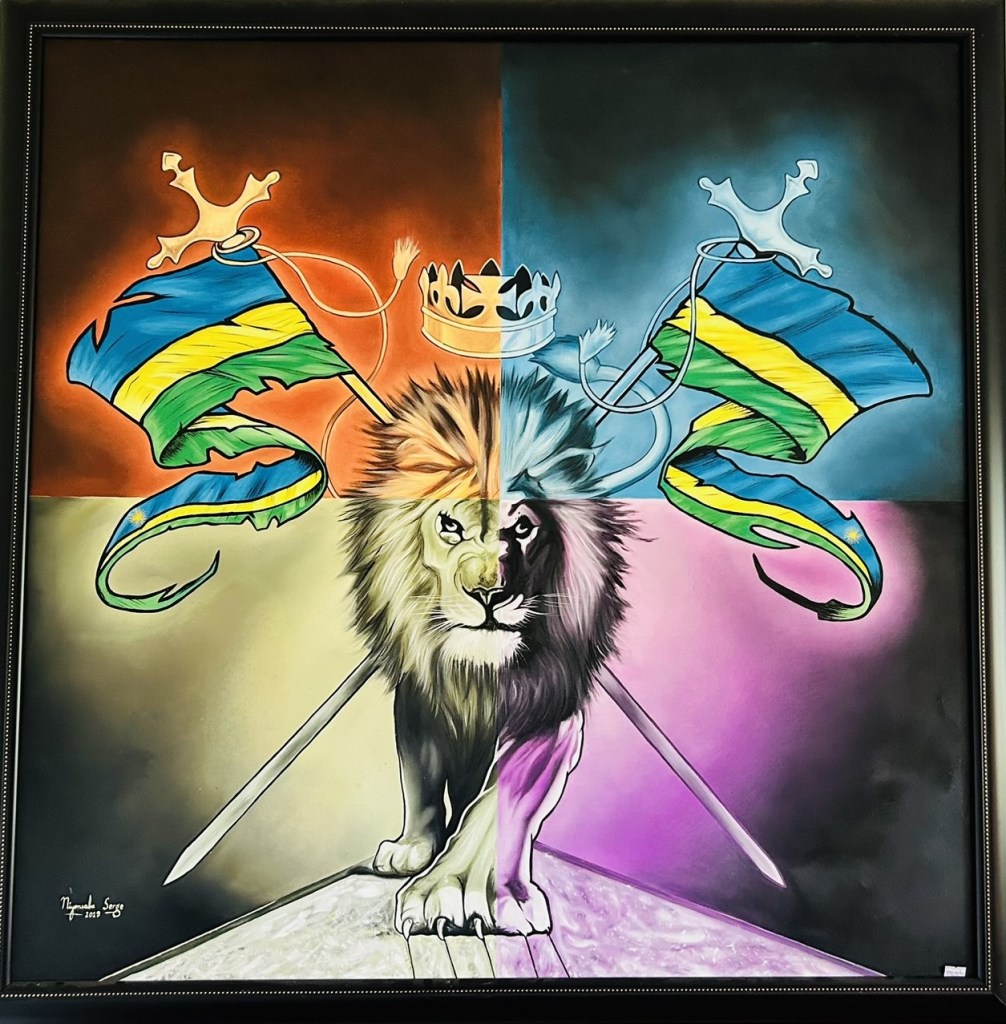
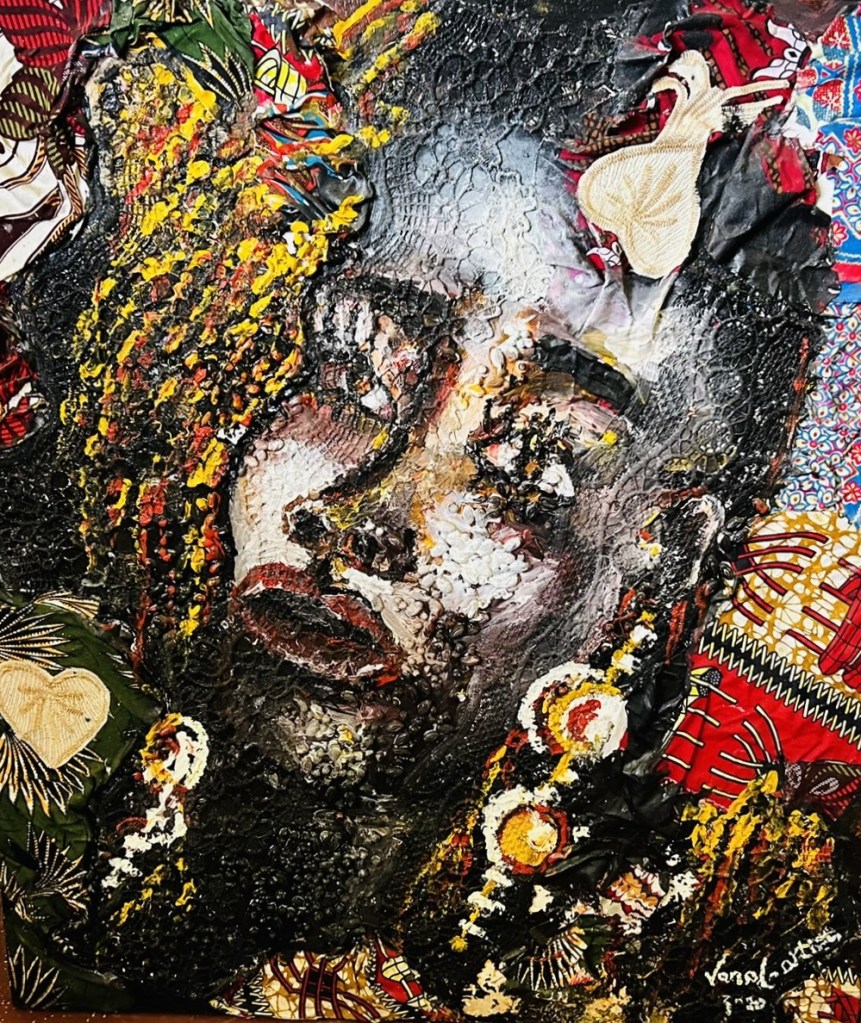
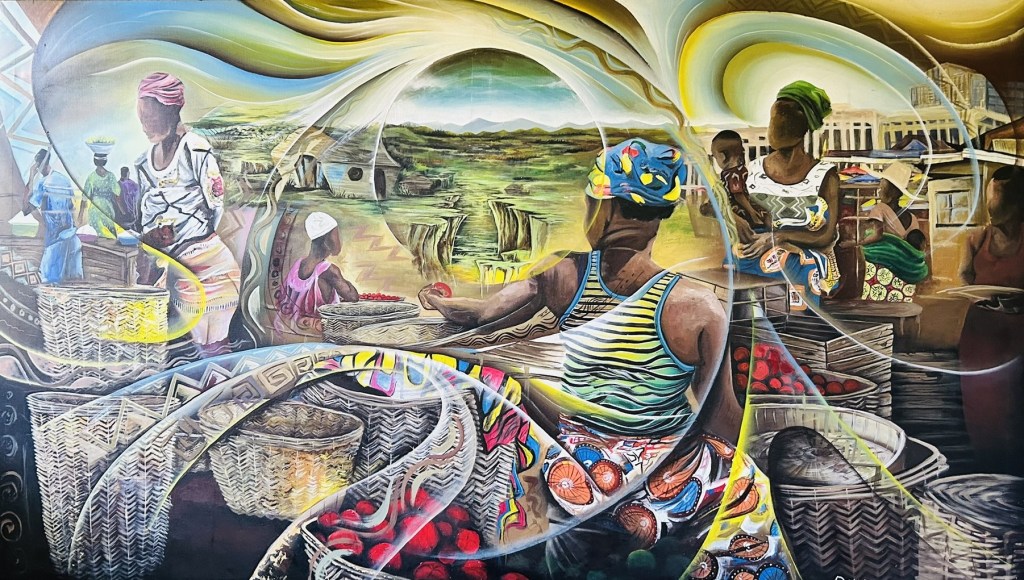
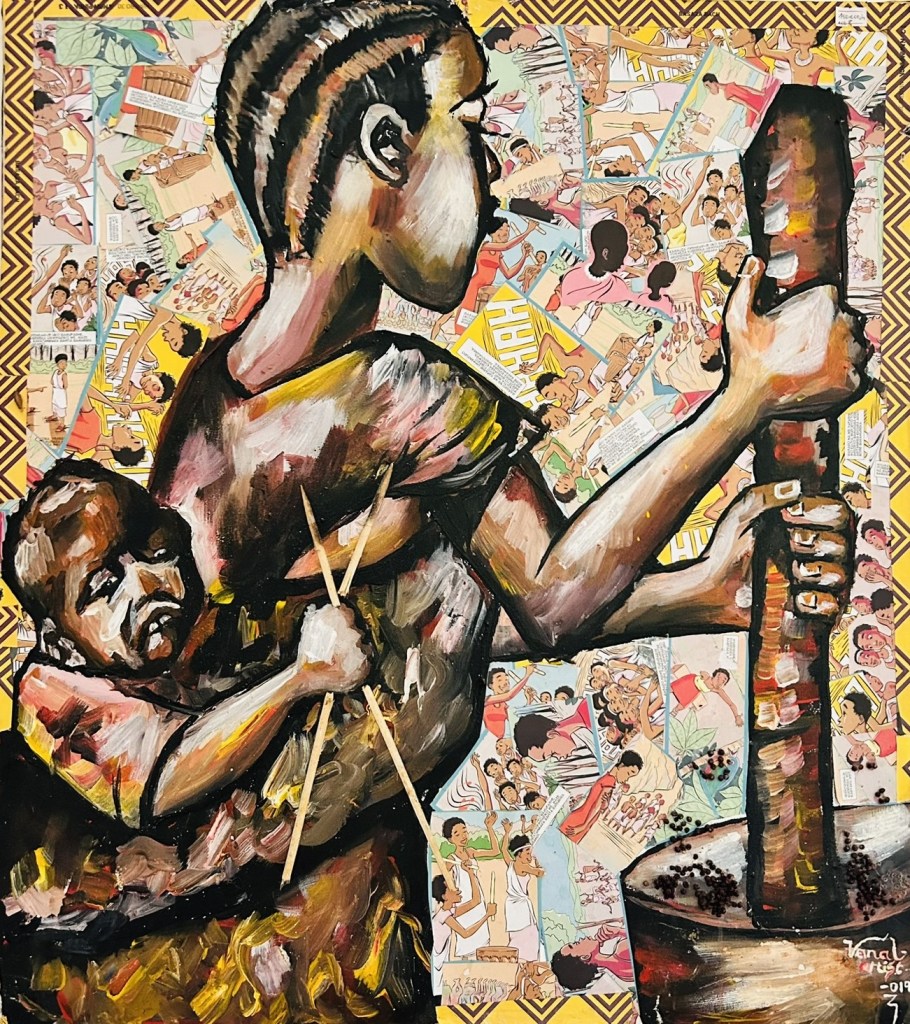
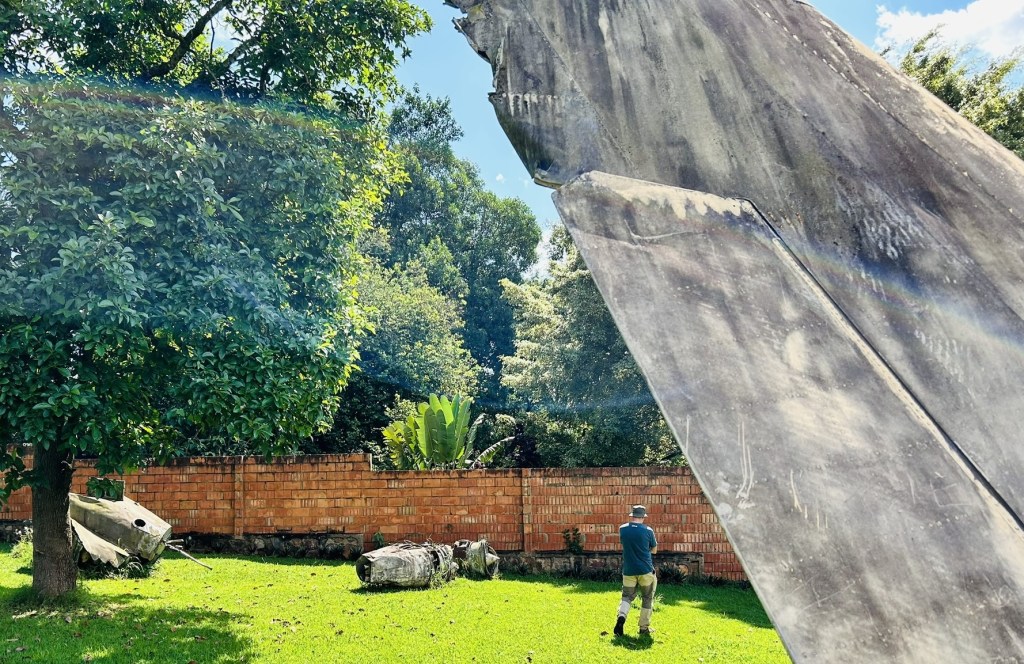
For a small amount extra on the ticket price we were taken to see the site of the 1994 plane crash in which the president was killed and which was the start of the genocide. The pieces of the wreck have been left where they fell
There was apparently a gin distillery in the city but we had had no luck contacting them and when we went to find them we ended up in an industrial estate so gave up and went back to the guesthouse.
Later in the evening we treated ourselves to dinner at Kurry Kingdom which was not only in a fabulous building
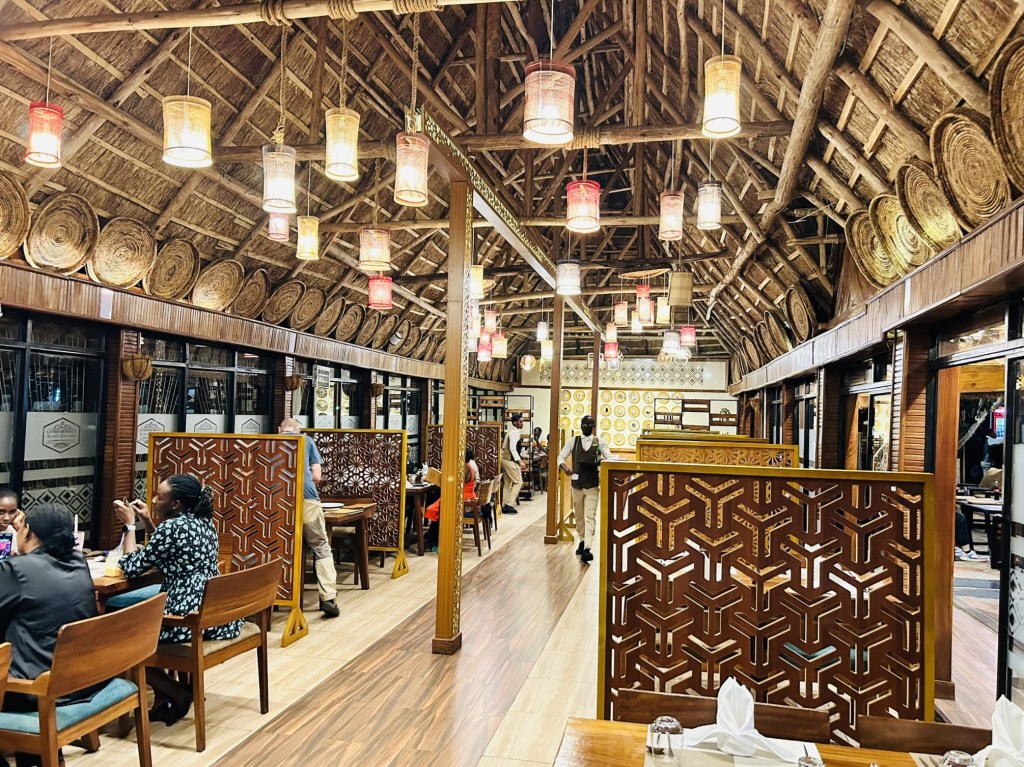
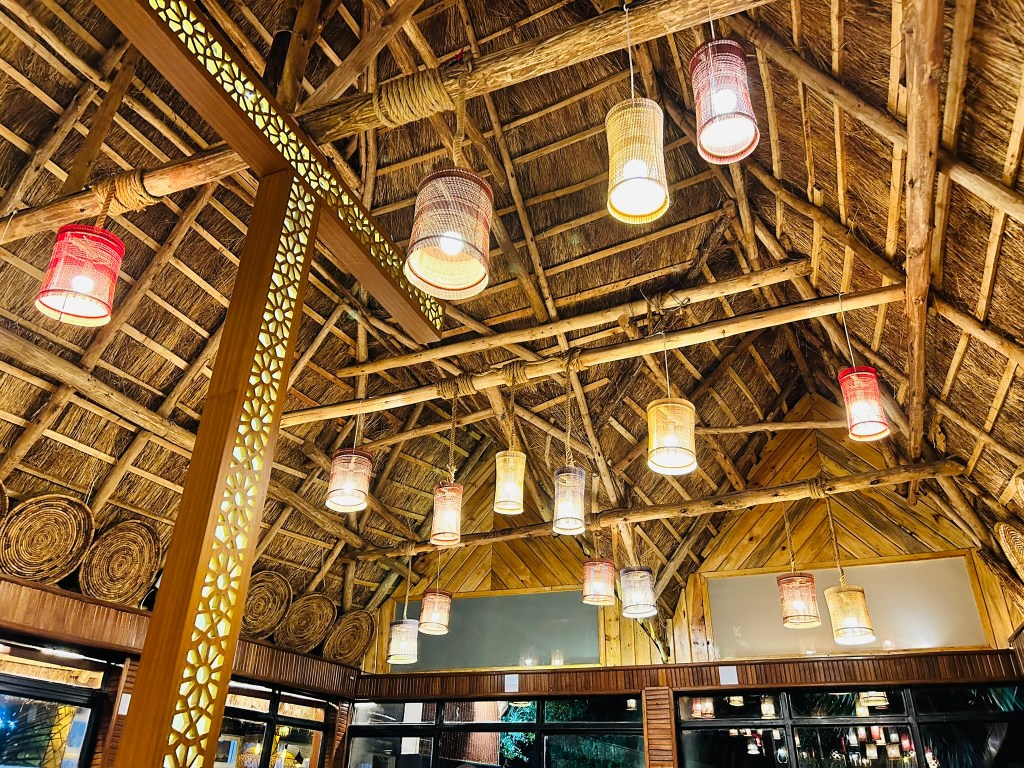
But also served fabulous food – we staggered out a couple of hours later carrying our stomachs on wheelbarrows, clutching a paper bag full of leftovers!
The next morning we were heading out of Kigali to explore everything else Rwanda had to offer.
We said our goodbyes and took lots of photos of everyone
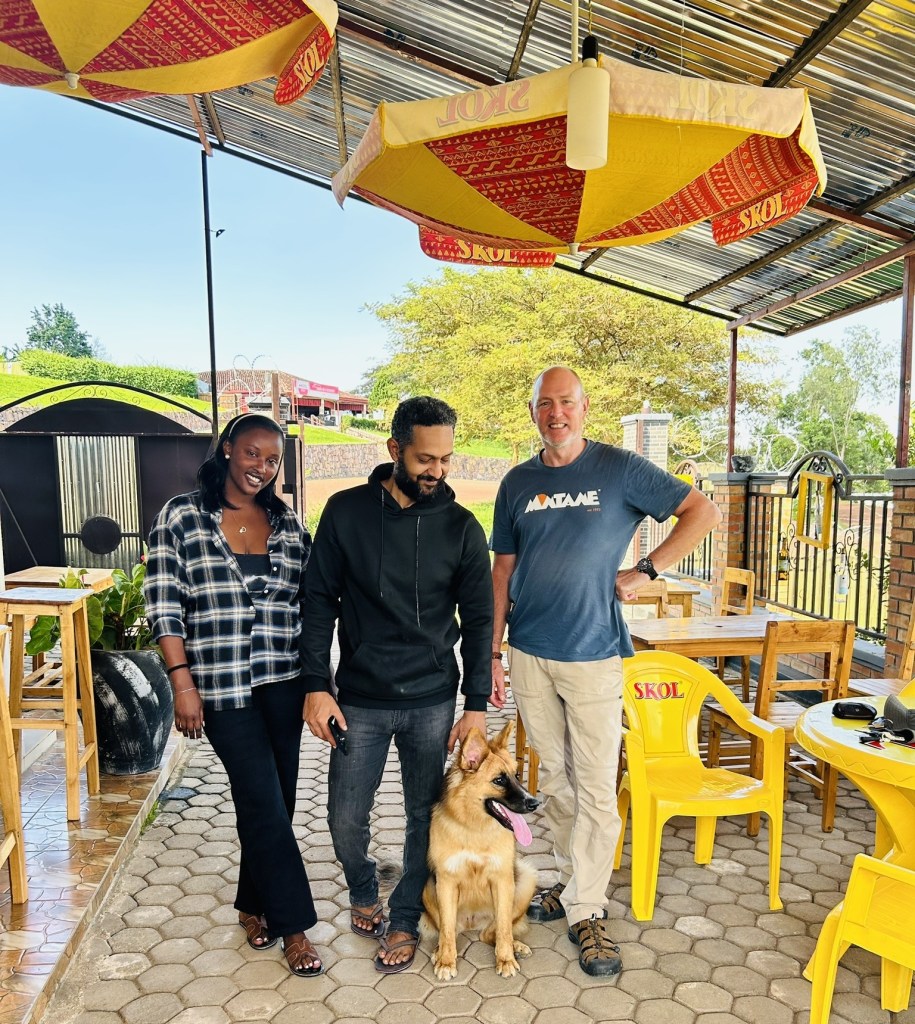
Then drove south to the King´s Palace Museum
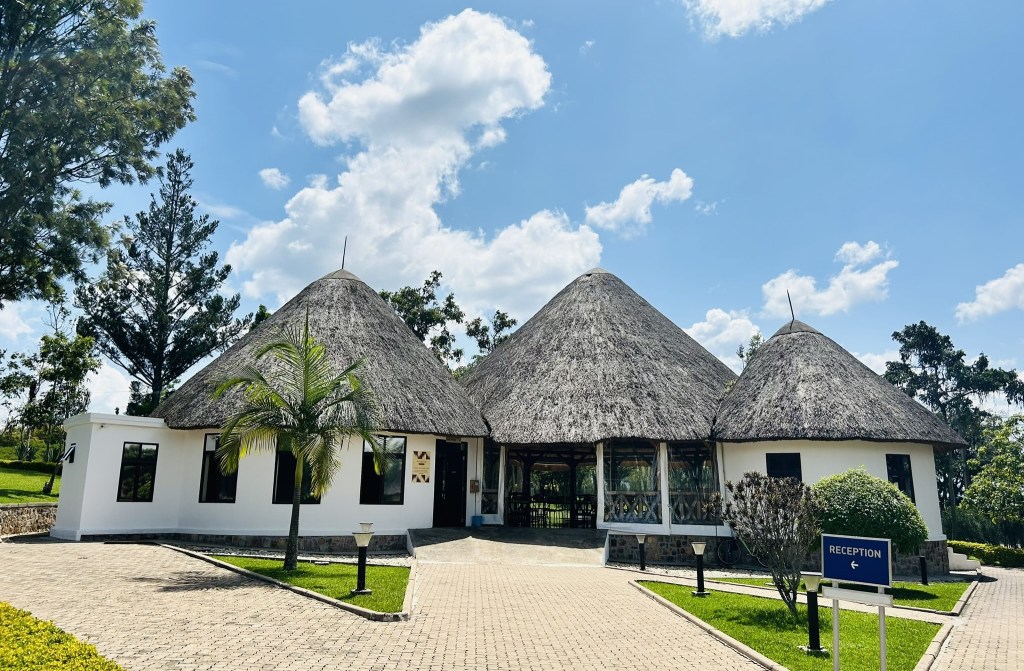
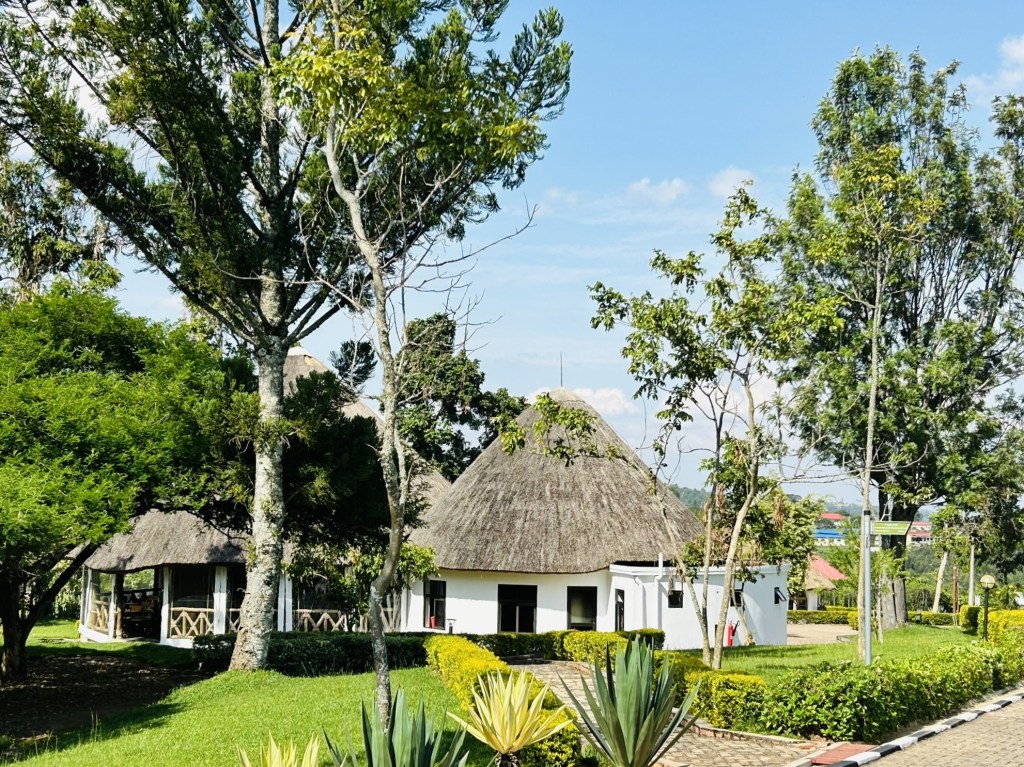
This is a reconstruction of where the old kings used to reside before colonialism.
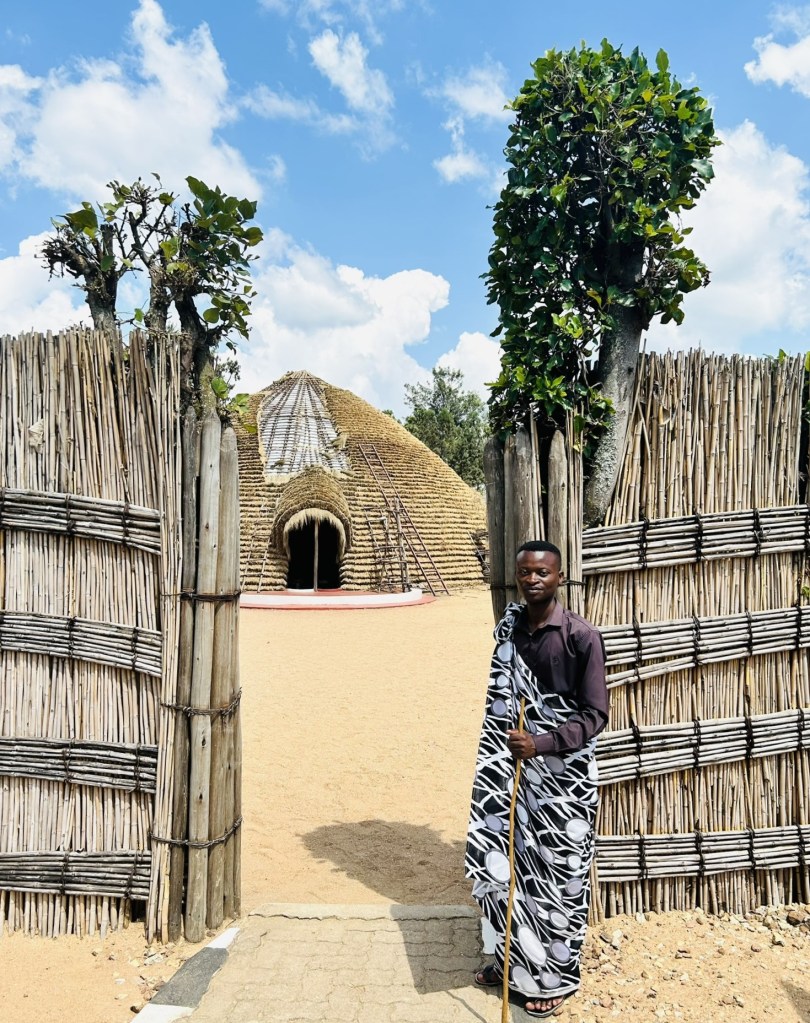
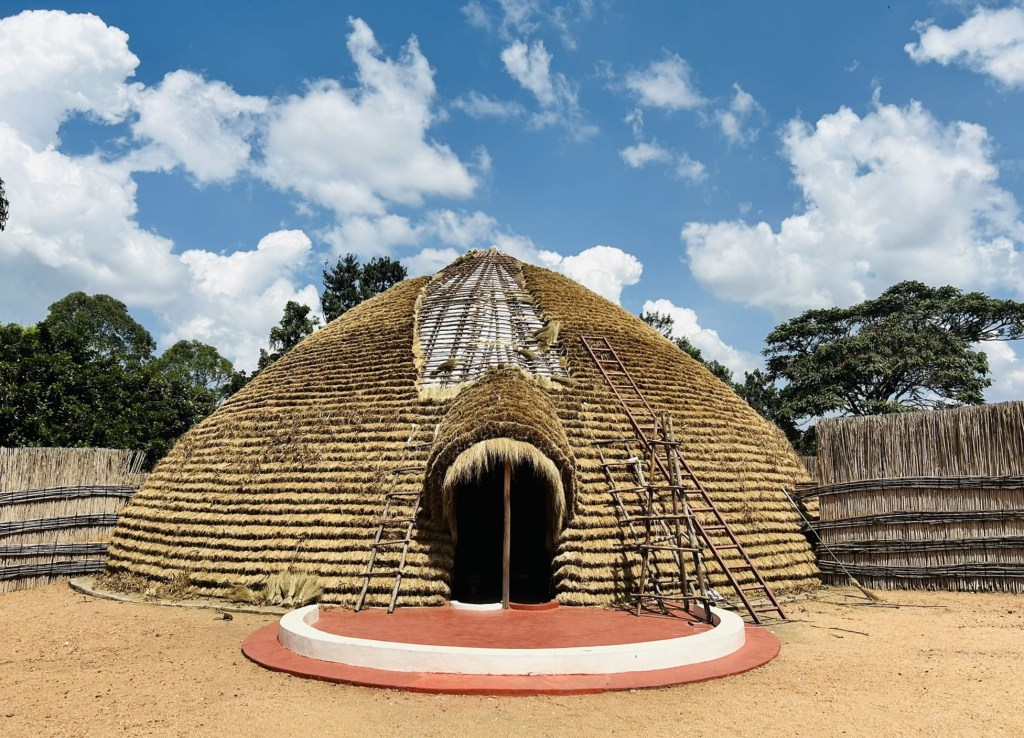
We were taken inside some of the huts to see the amazing construction
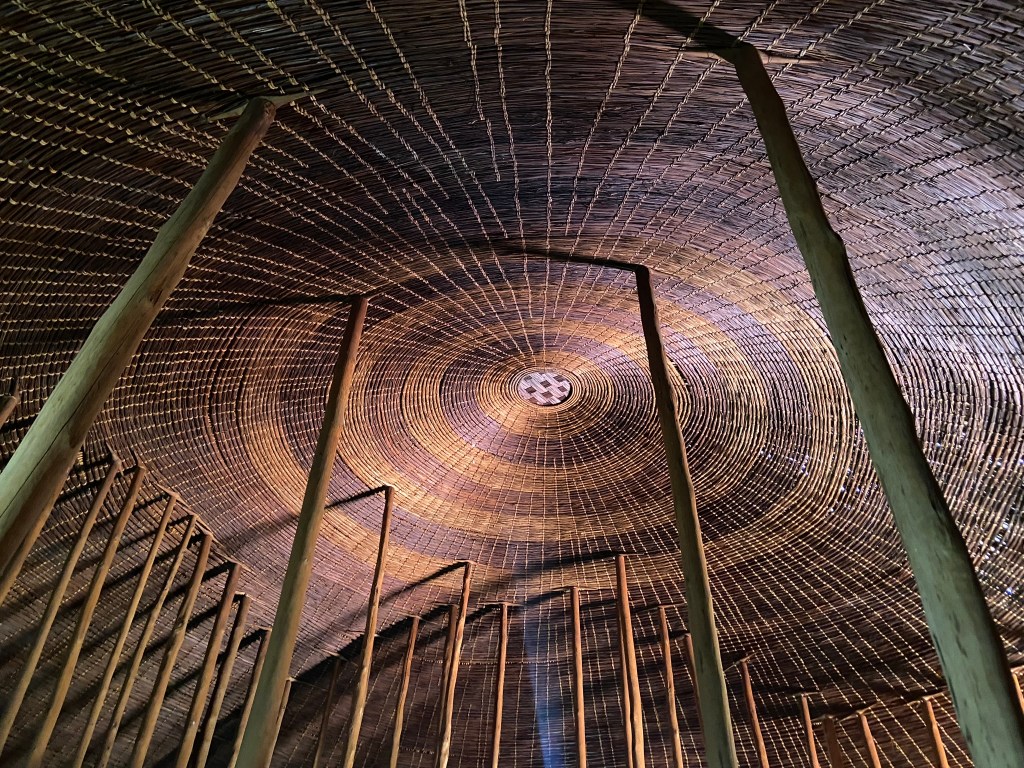
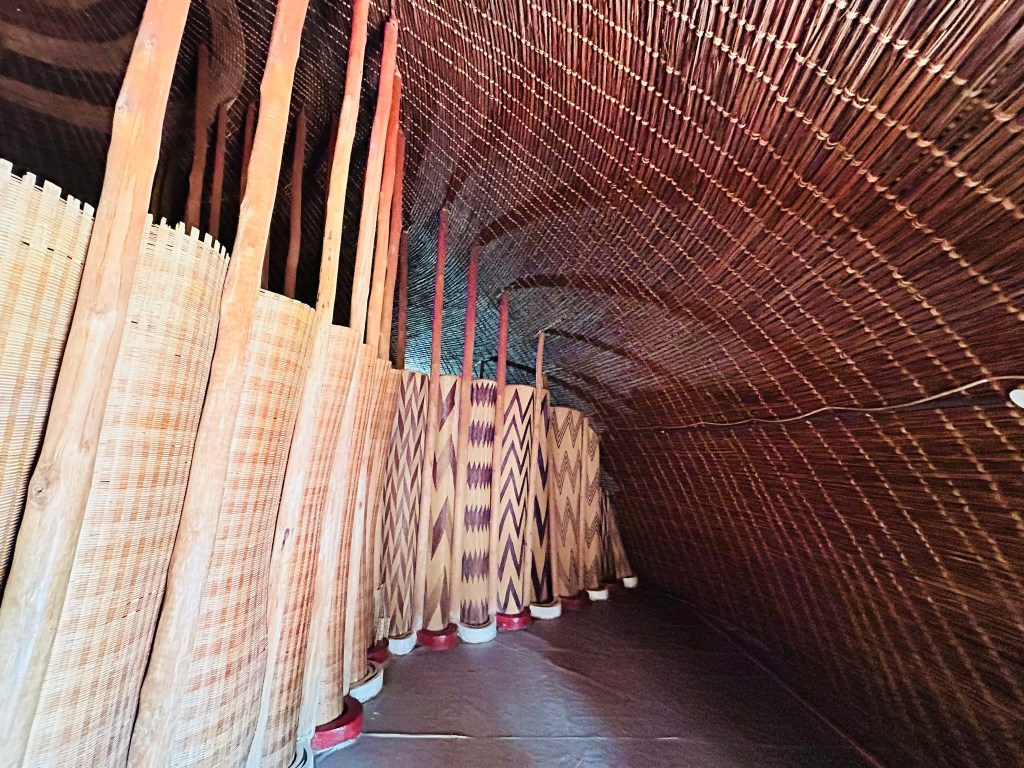
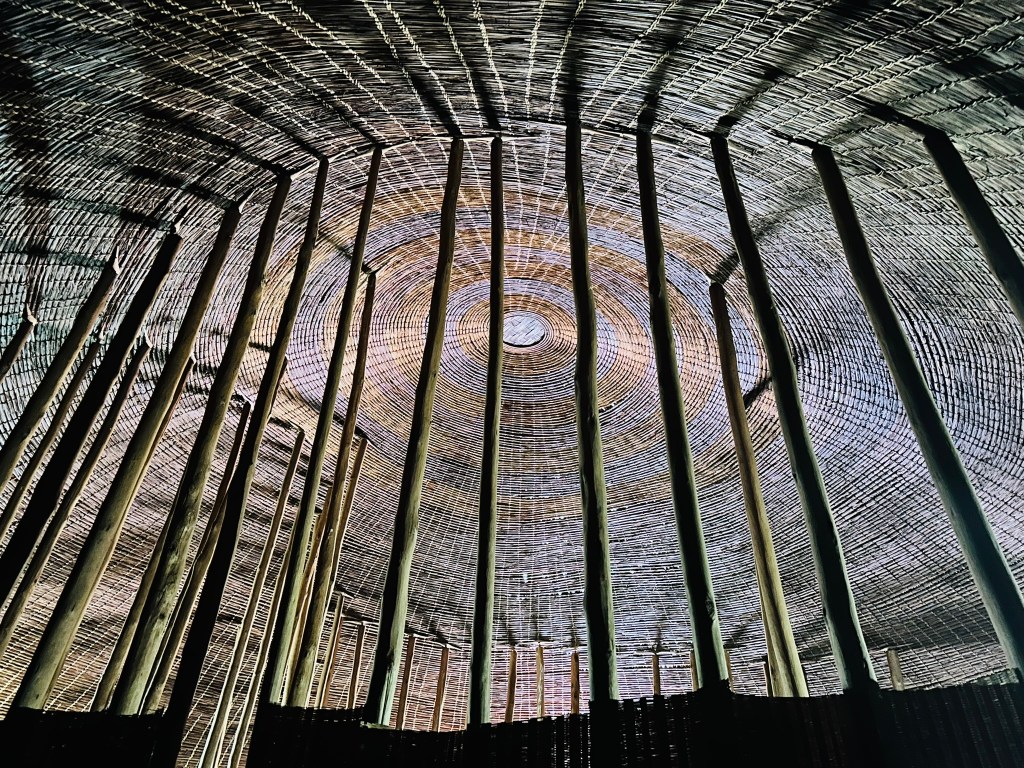
Including where people would have slept and how they lived
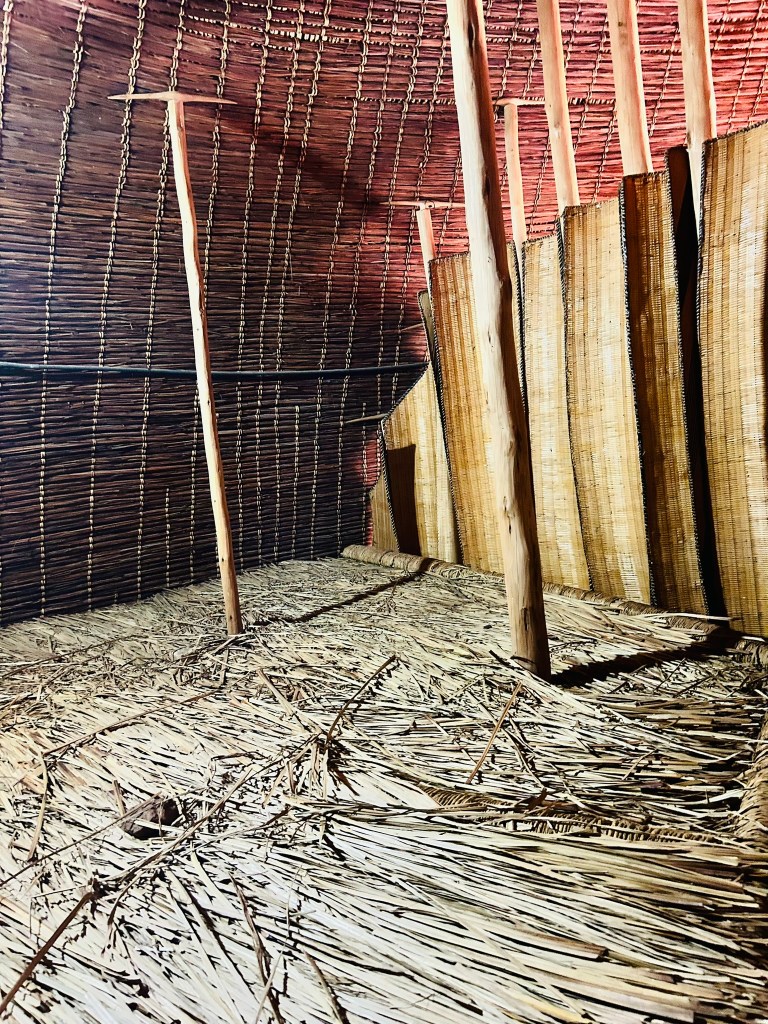
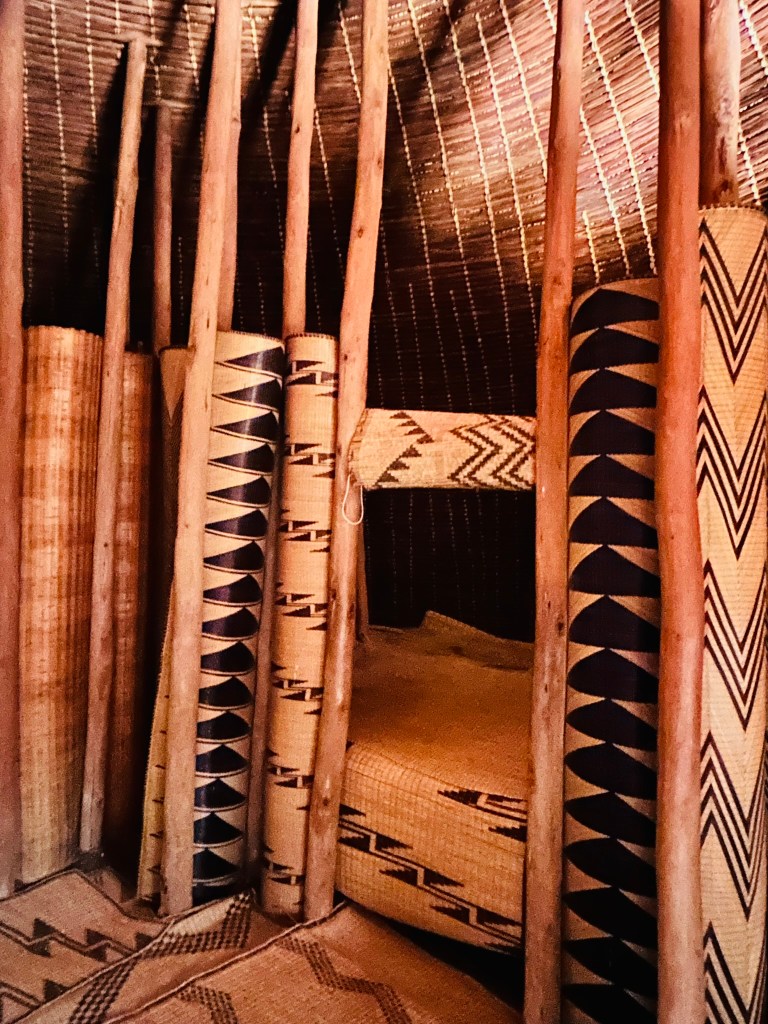
We learnt all about the people who lived and worked here including the women who kept the King´s milk and who had to stay virgins
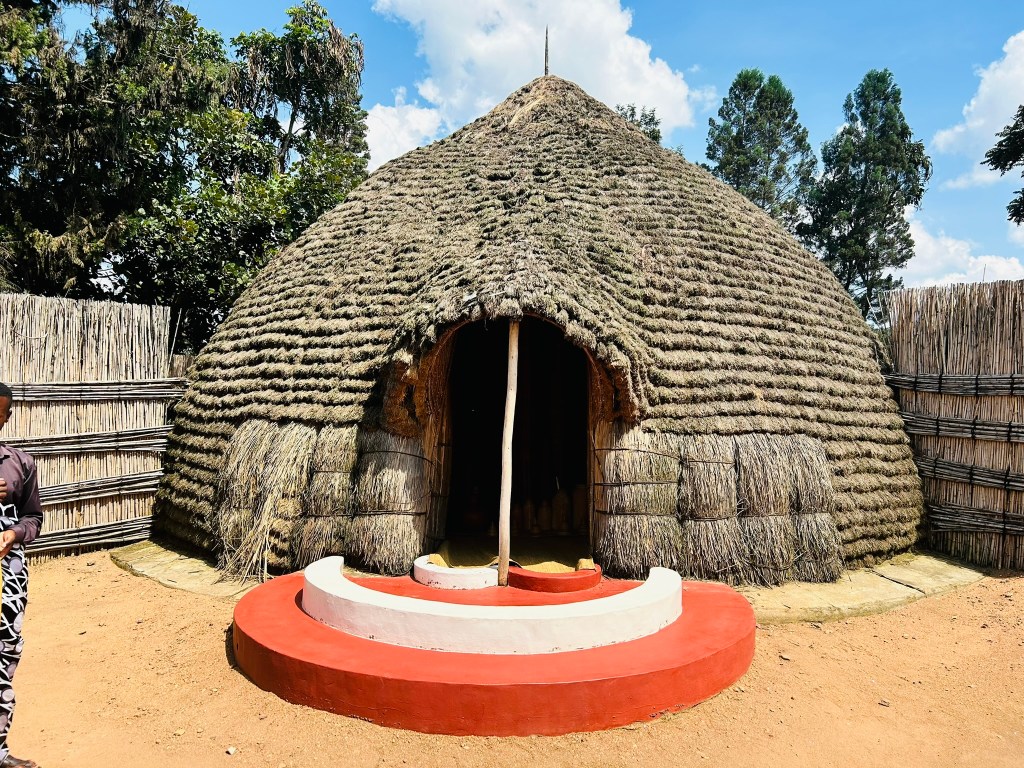

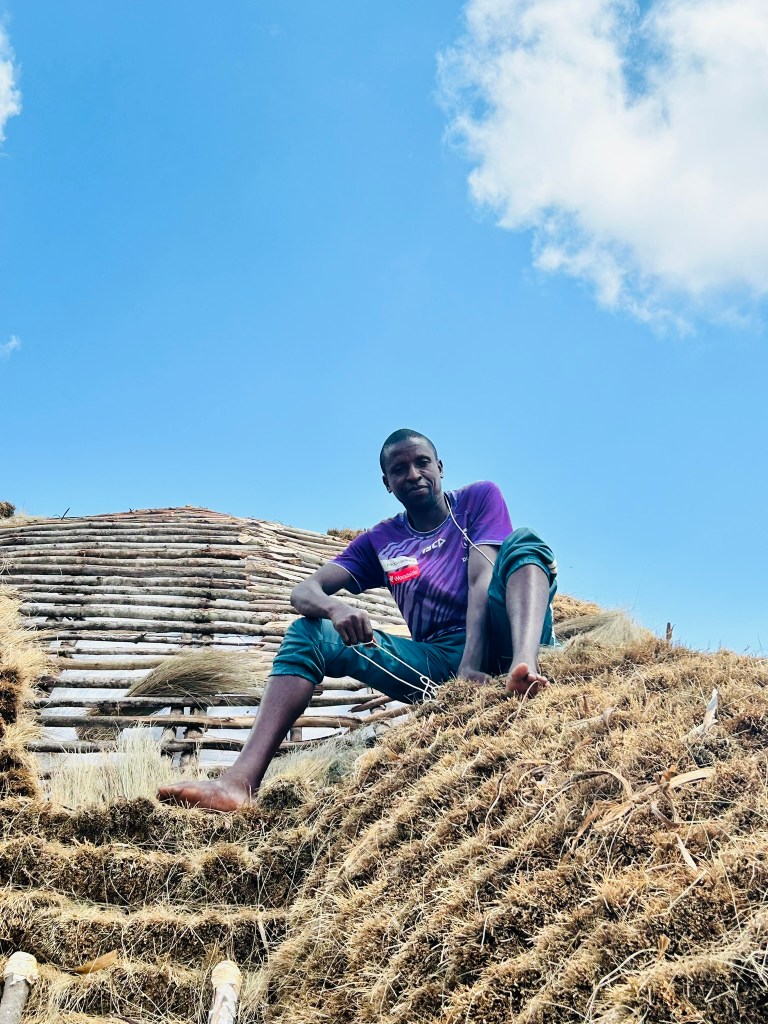
They were renewing the thatched roof whilst we were there and the thatchers showed their skill not just in doing the roof but also in keeping their footing whilst they did it!
But there was more to this place than historic buildings – there were cows!
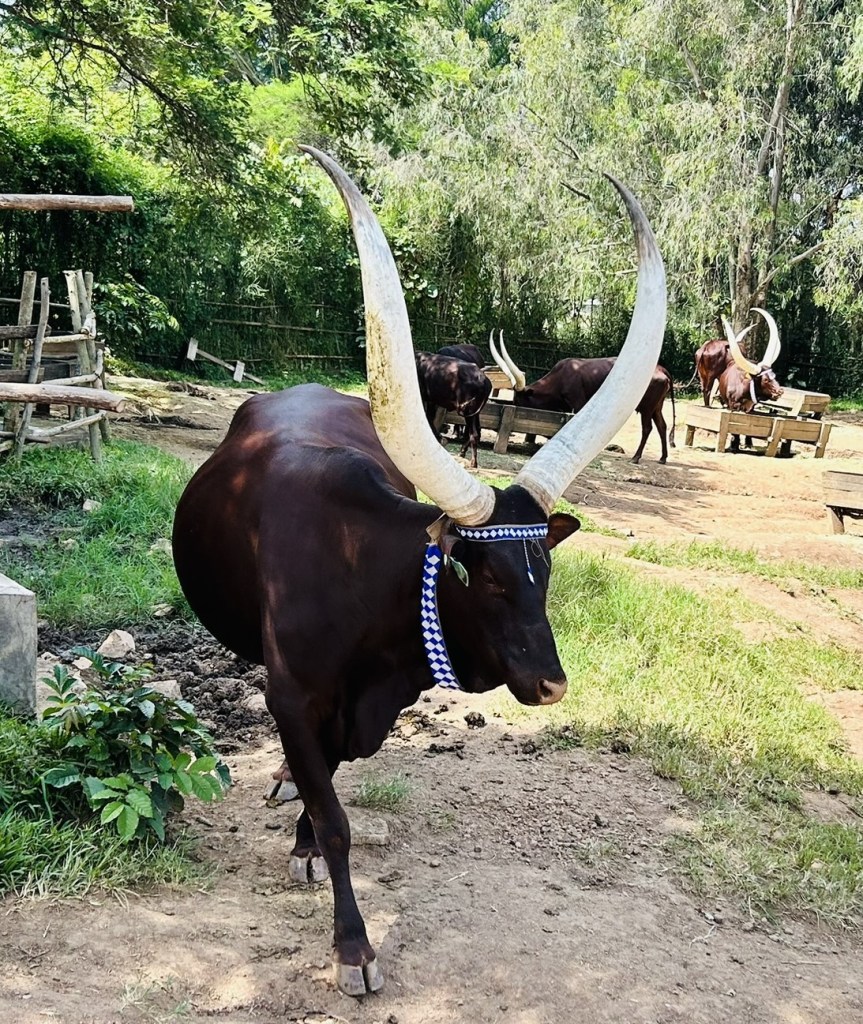
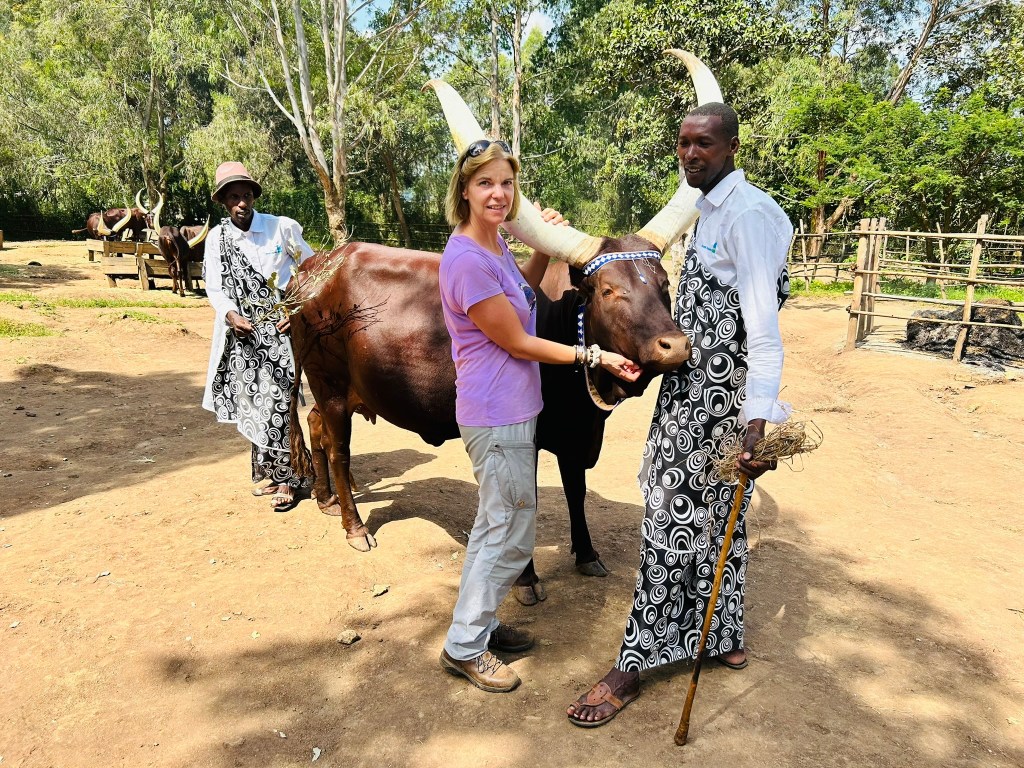
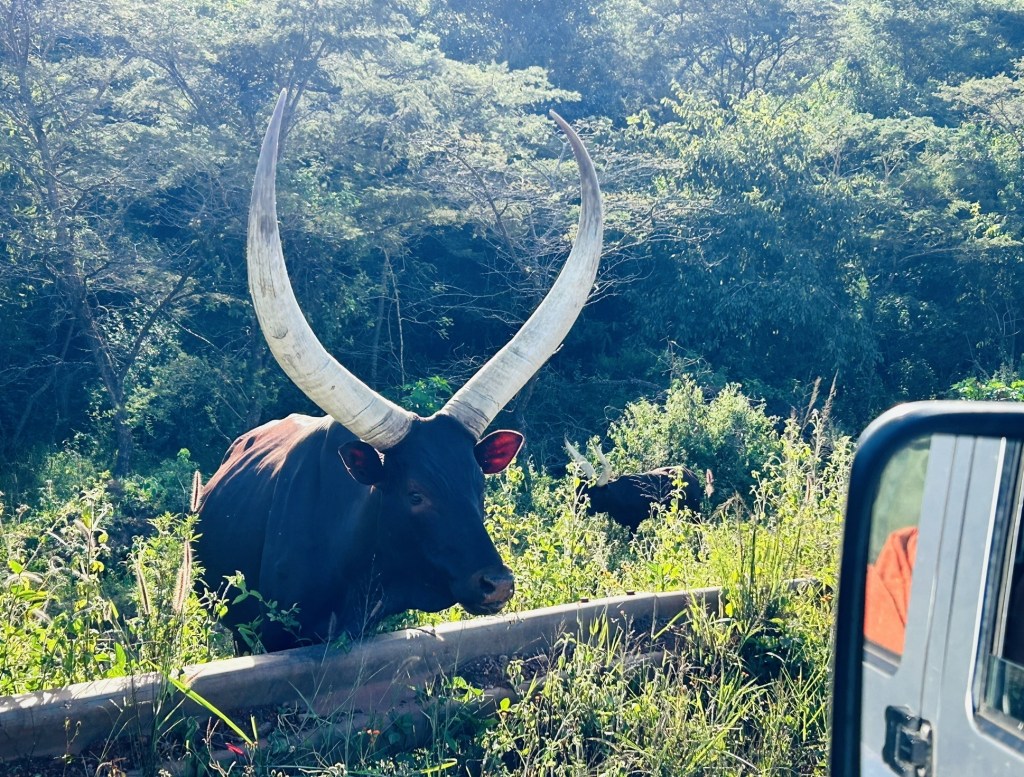
And not just any cows. These are Inyambo cows
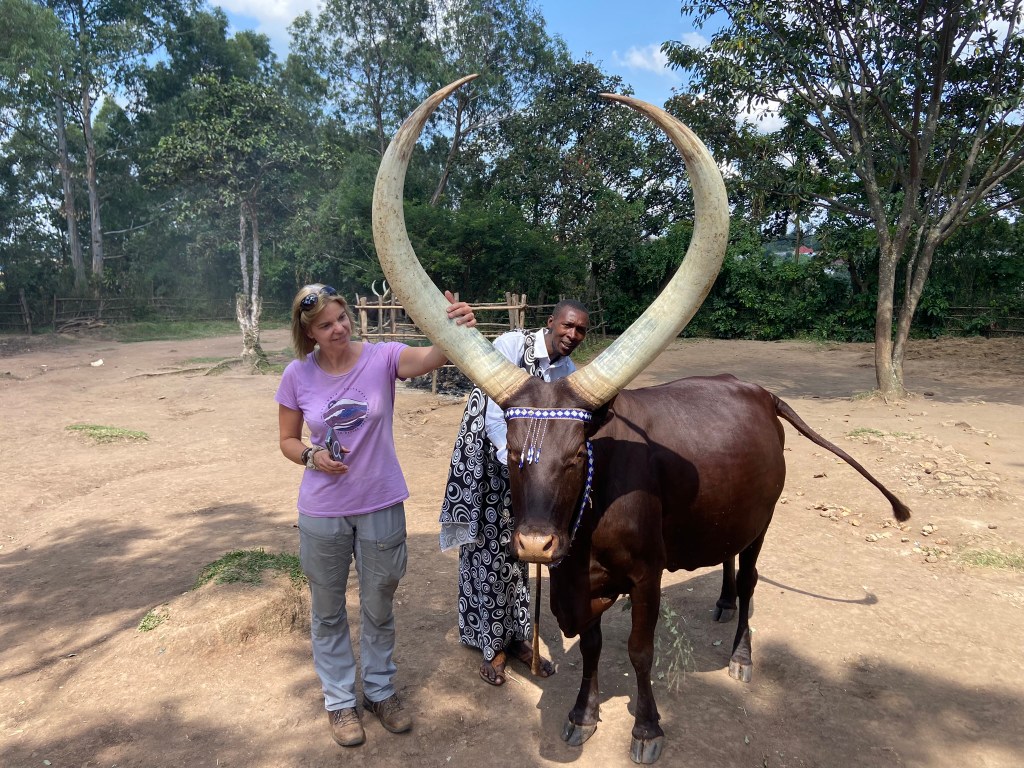
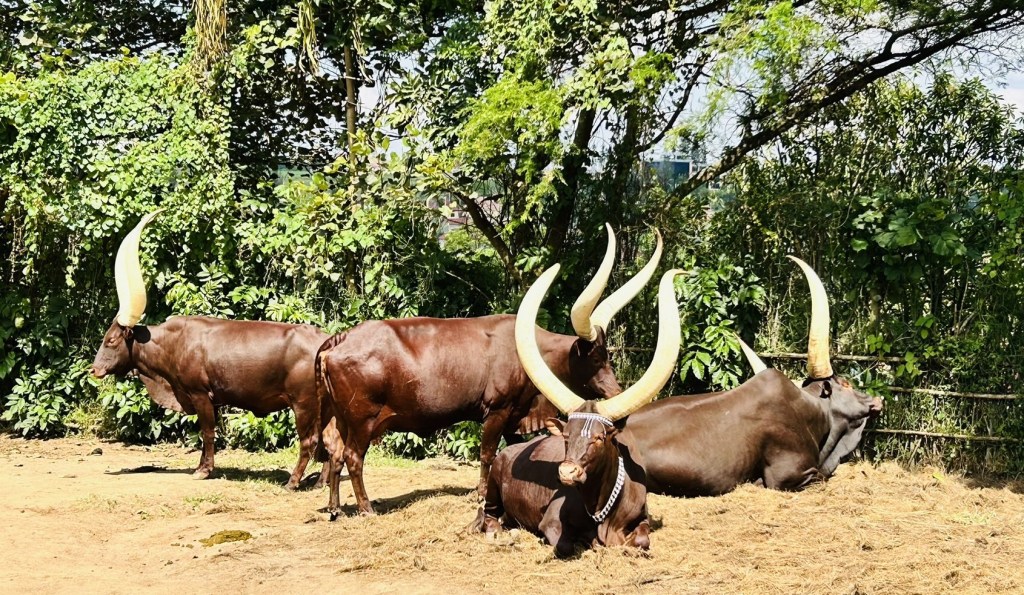
No-one owns Inyambo cows in Rwanda, they are public property and even the King only holds them in trust for the people much as he does the kingdom itself.
With their huge horns they are kept for ceremonial purposes and their meat is never eaten, even after a natural death – rather they are buried at the palace with full honours.

They want for nothing, spending all day being brushed, stroked and sung to
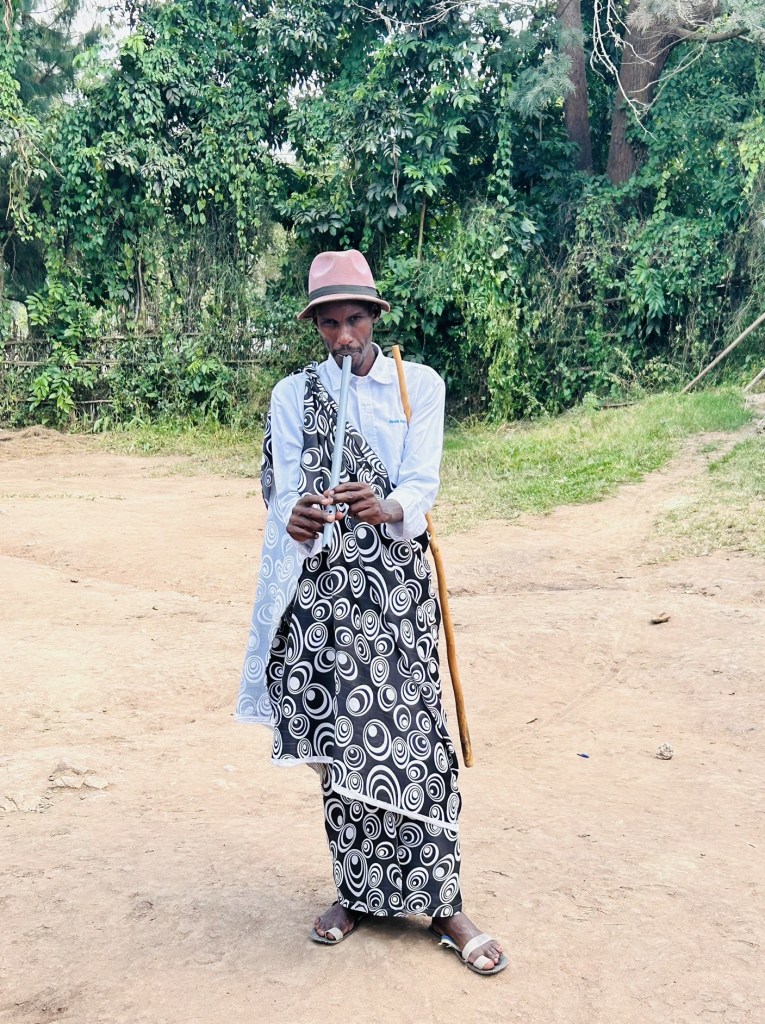
They are special….and they know it!!
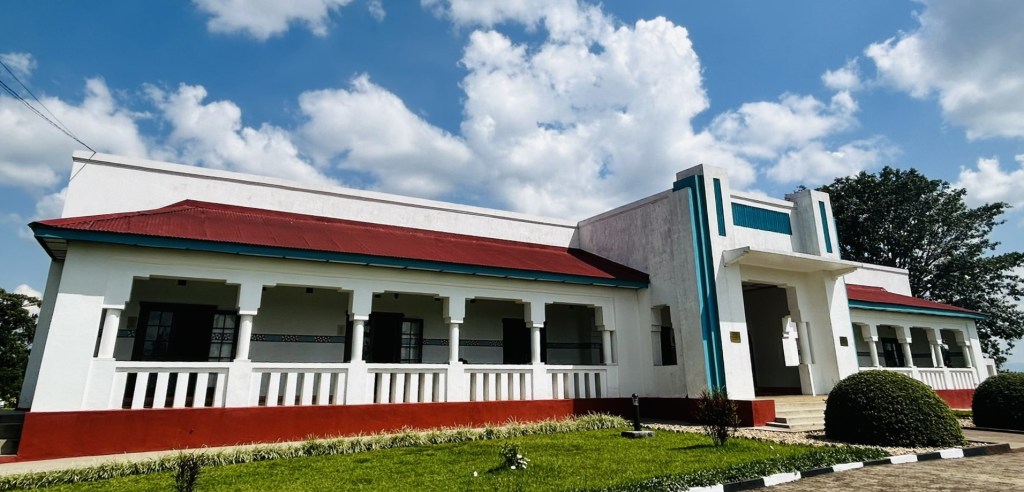
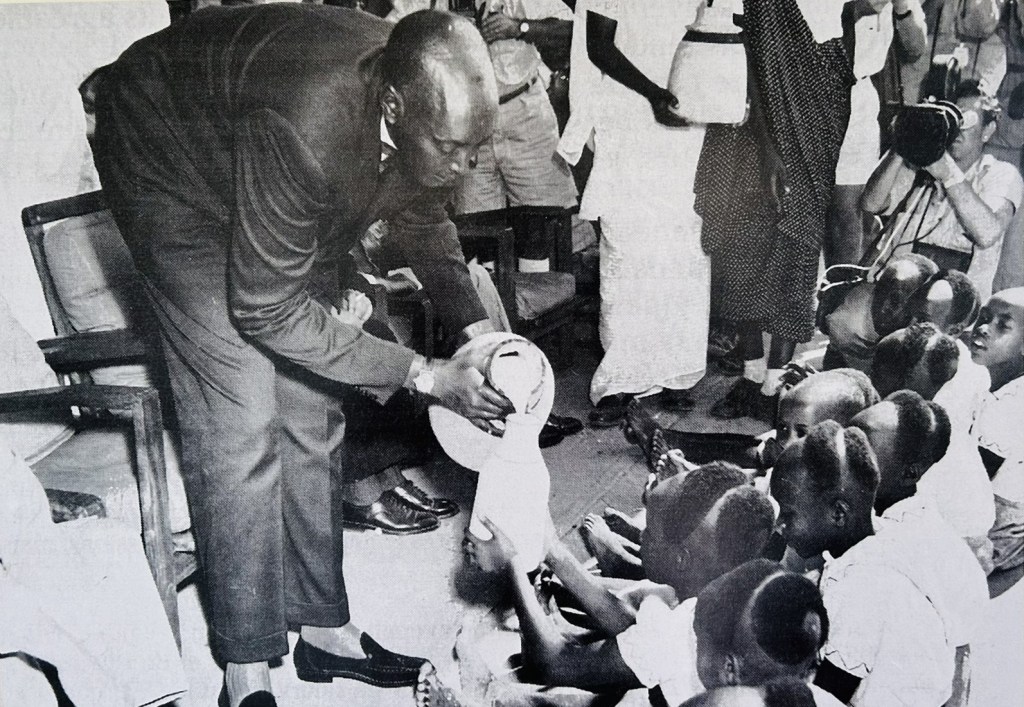
Our final stop was the ´new´ palace built by Belgium for King Mutara III in 1932. He lived there until he was murdered in 1959 – probably by the Belgians!
A room in the palace was packed full of historic photographs and information, including this photo of him giving milk to the children just days before his murder. I found it very touching
The palace itself is now a museum full of period furniture which was fascinating to wander around
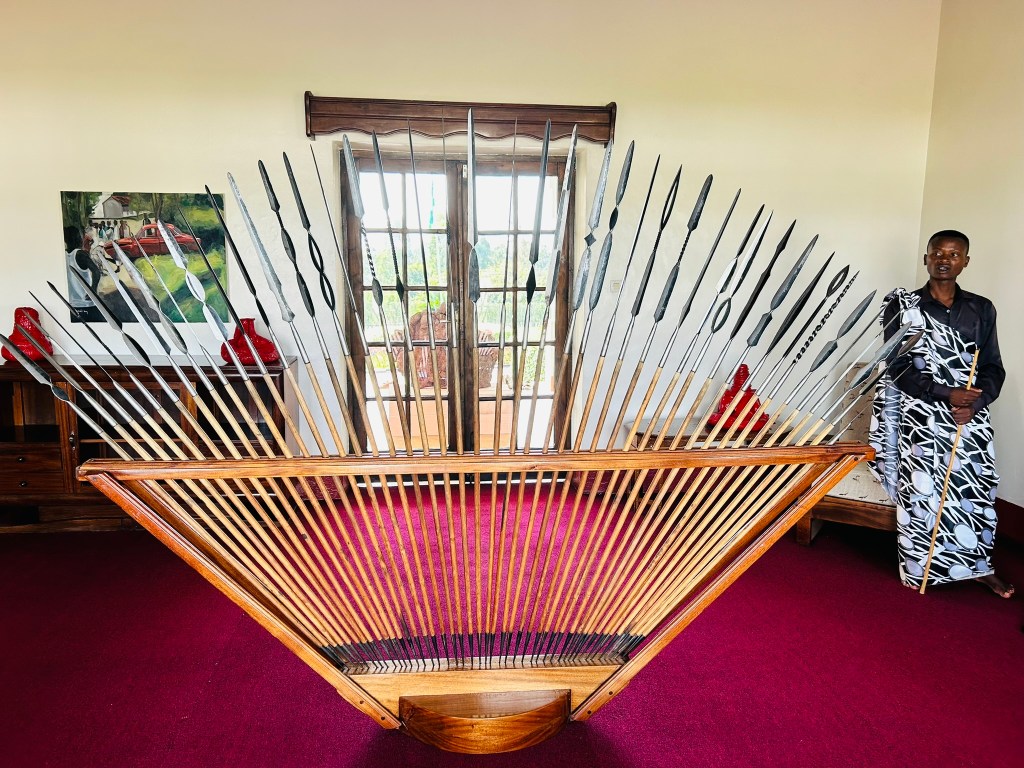
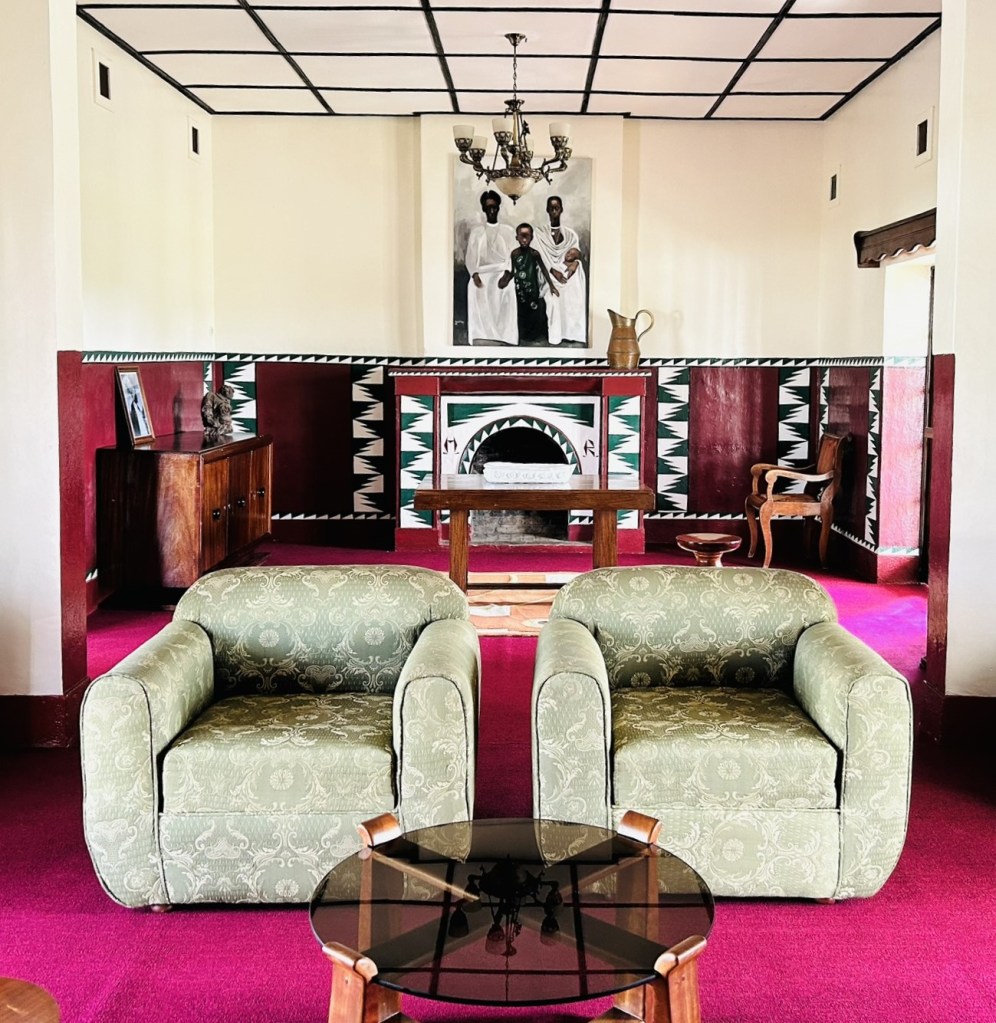
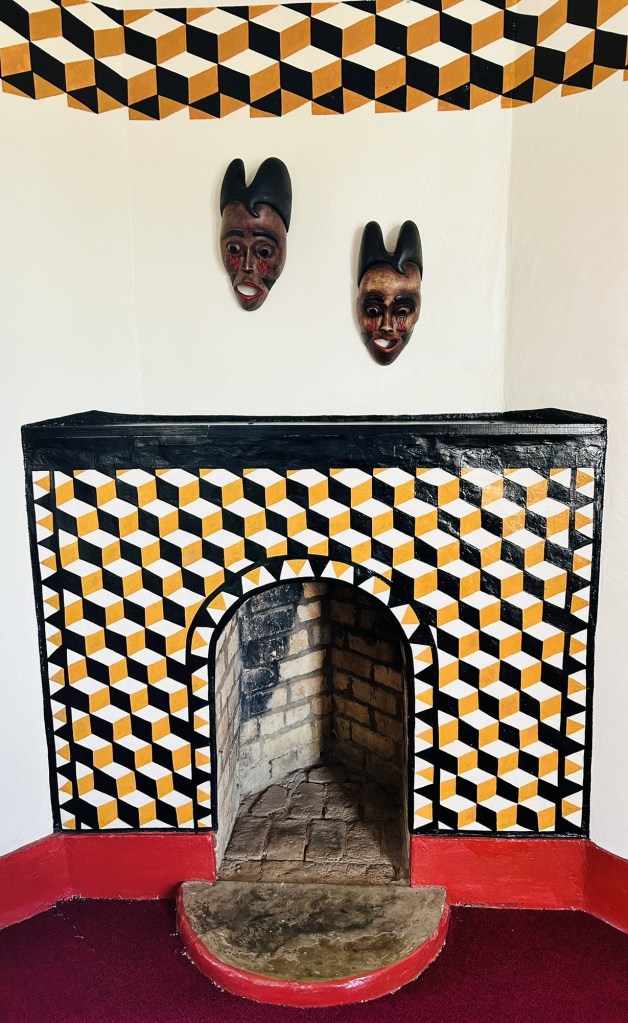
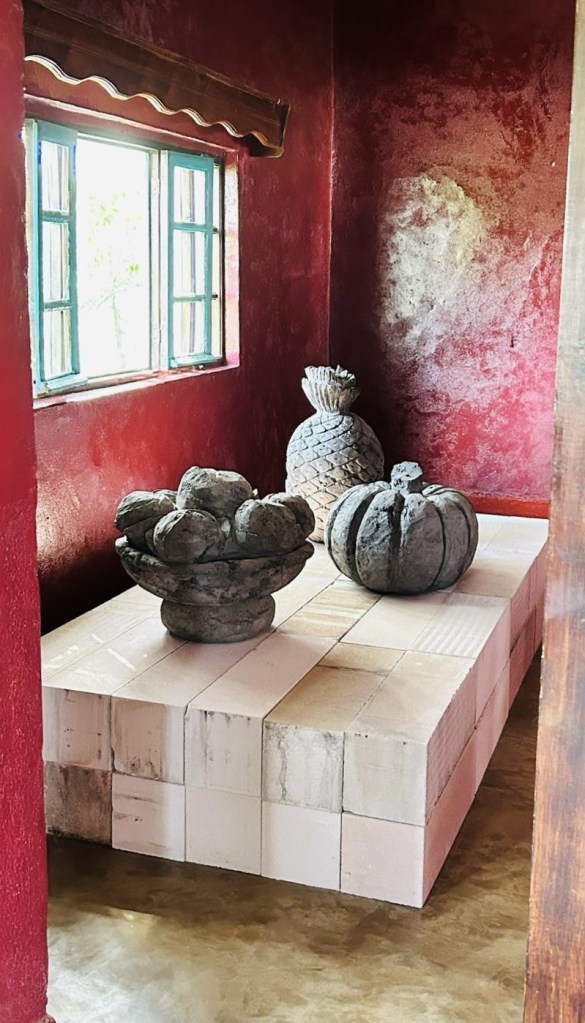
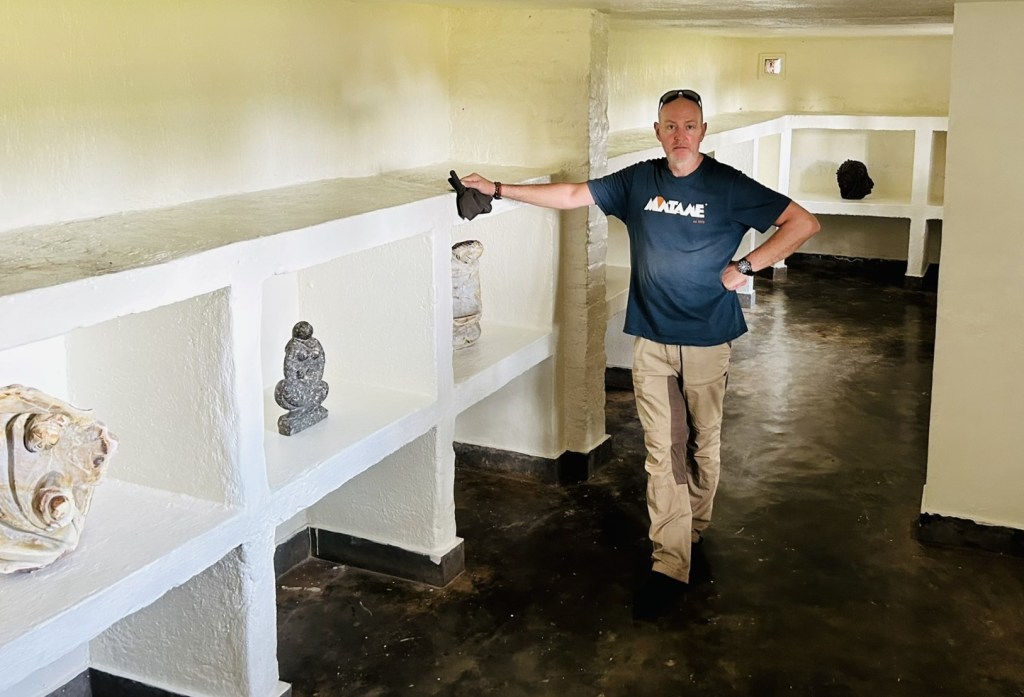
Especially the downstairs cellars which now housed some obscure artwork!
Having seen all there was to see at the palaces we set off for the town of Butare, seeing more Inyamba cows on the way, although these seemed a little less spoilt but no less curious!
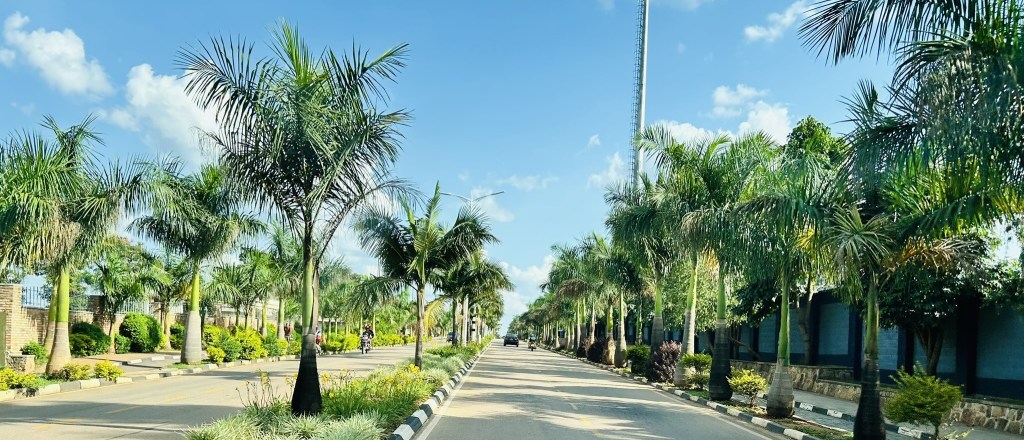
Butare seemed like a nice town with wide avenues and as clean as you would expect from Rwanda
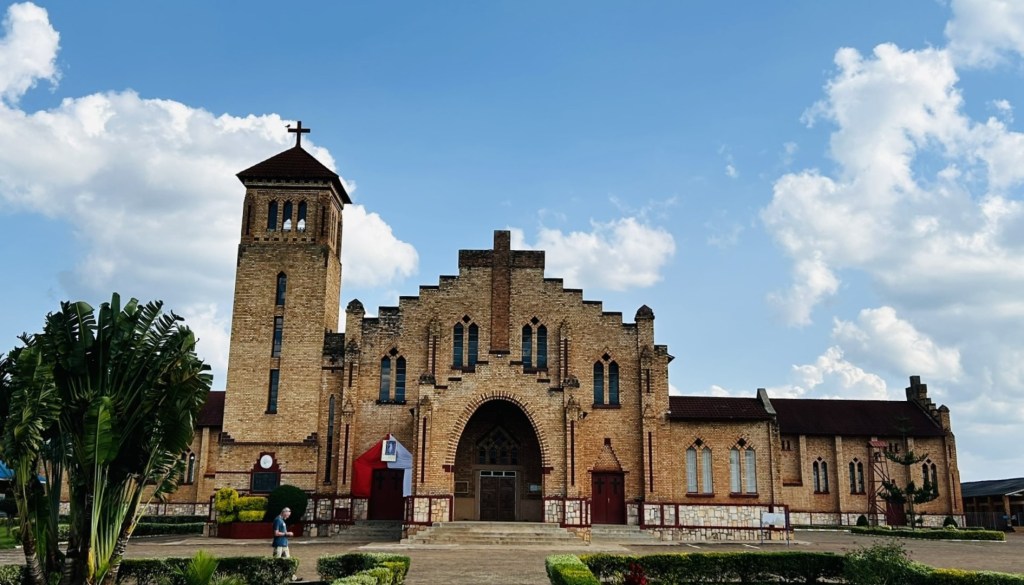
We headed to the cathedral which was huge but all the doors were closed so we could only admire it from the outside
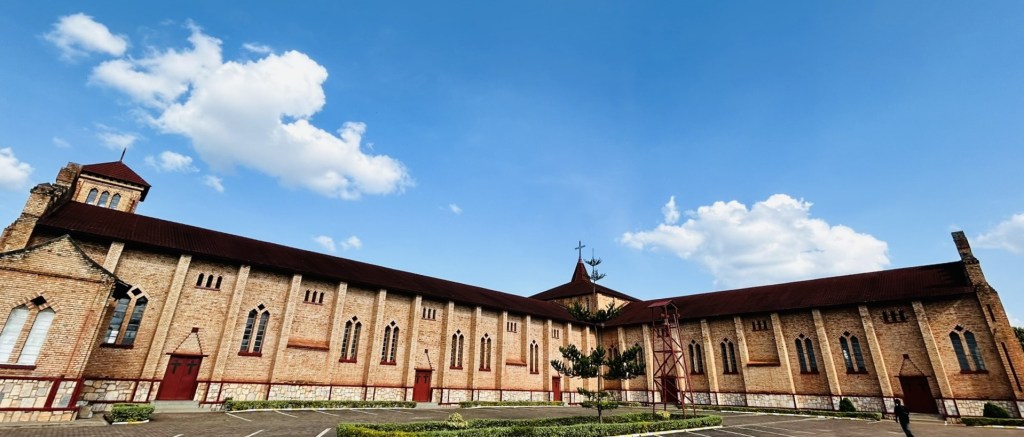
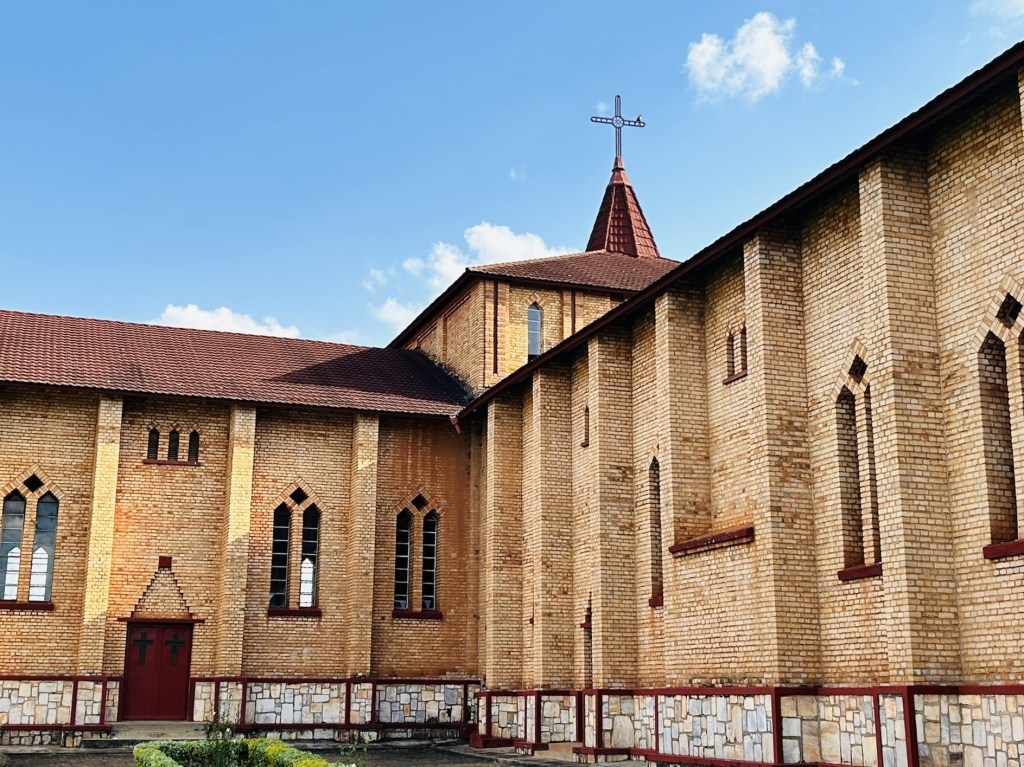
As we wandered around a group of children watched us shy and giggling. One of them eventually came up to us hoping for something from the Muzungus but left empty handed! We were also approached by a very rare beggar with his hand out – the only one we came across in Rwanda.
It was getting late and campsites are not something that Rwanda has many of, so we drove across town to a hotel that we hoped might allow us to camp in their car park. When I spoke to the gentleman at reception he smiled broadly and said we were very welcome.
We set up at the back of the hotel with a lovely view over the gardens and swimming pool
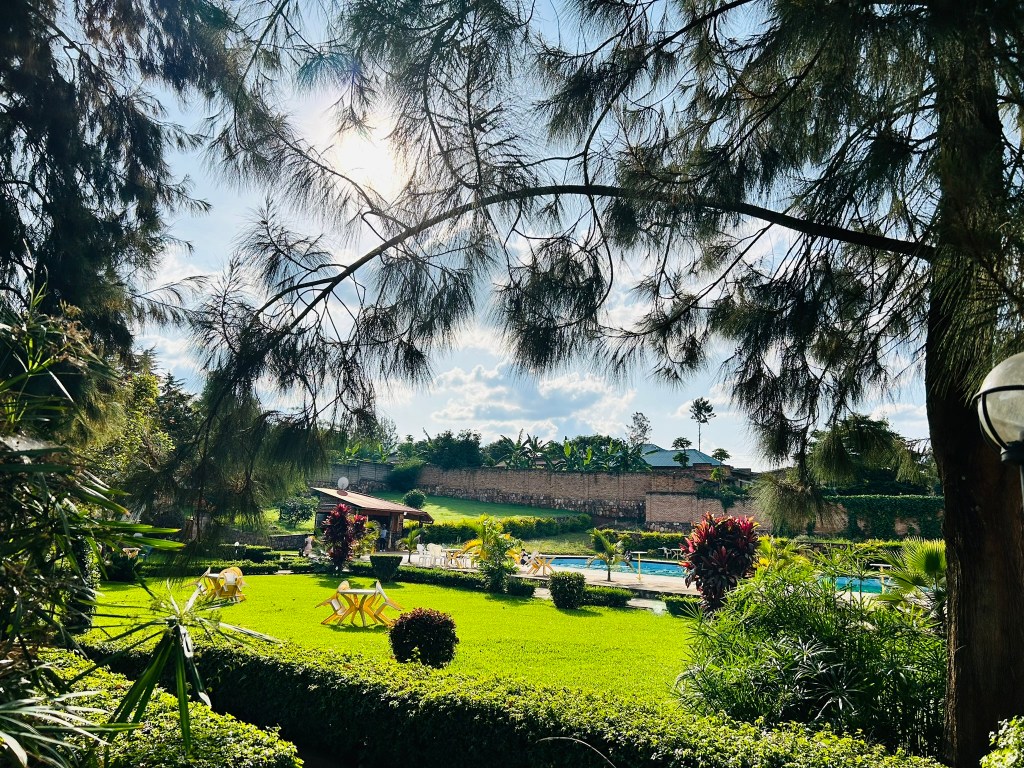
We were given keys to the back door and a room inside to use the shower and toilet then settled in to re-heated left overs from our curry the night before and fell asleep watching a movie inside Henry sheltering from a short rain shower that had started earlier on. Nearer the equator and high up, the seasons were becoming fuzzy with no clear wet and dry season so the odd rain shower was to be expected and felt quite refreshing – nothing like the endless rains we had experienced in Malawi and Tanzania.
We were very contented – after a few days in the guest house in Kigali we were pleased to be back home, sleeping in our own bed with Henry´s sturdy form all round us, keeping us safe and warm. Rwanda was living up to expectations and then some. Life was good, we slept soundly, recharging our batteries ready to see what this remarkable country had in store for us next….
 The Sidetracked Sagas