One benefit of leaving the Skeleton Coast earlier than expected was to make the afternoon much more sedate as getting to the campsite at Twyfelfontein was now very achievable.
This area in particular is very dependent on tourism with many sites to see on the standard tourist trail. So the whole place was devastated by Covid and now everyone is trying to recover as best they can – and that means putting prices up! The main attraction, the UNESCO protected Twyfelfontein Rock Engravings was NAD250 each to see which is just over €25 for the two of us. That seemed fine. But the Petrified Forest, the Burnt Mountain and the Organ Pipes were each the same price – if we wanted to see all of them it would cost over €100. We read reviews of them all, looked at photos and decided we would do the Rock Engravings and the Petrified Forest but give the rest a miss.
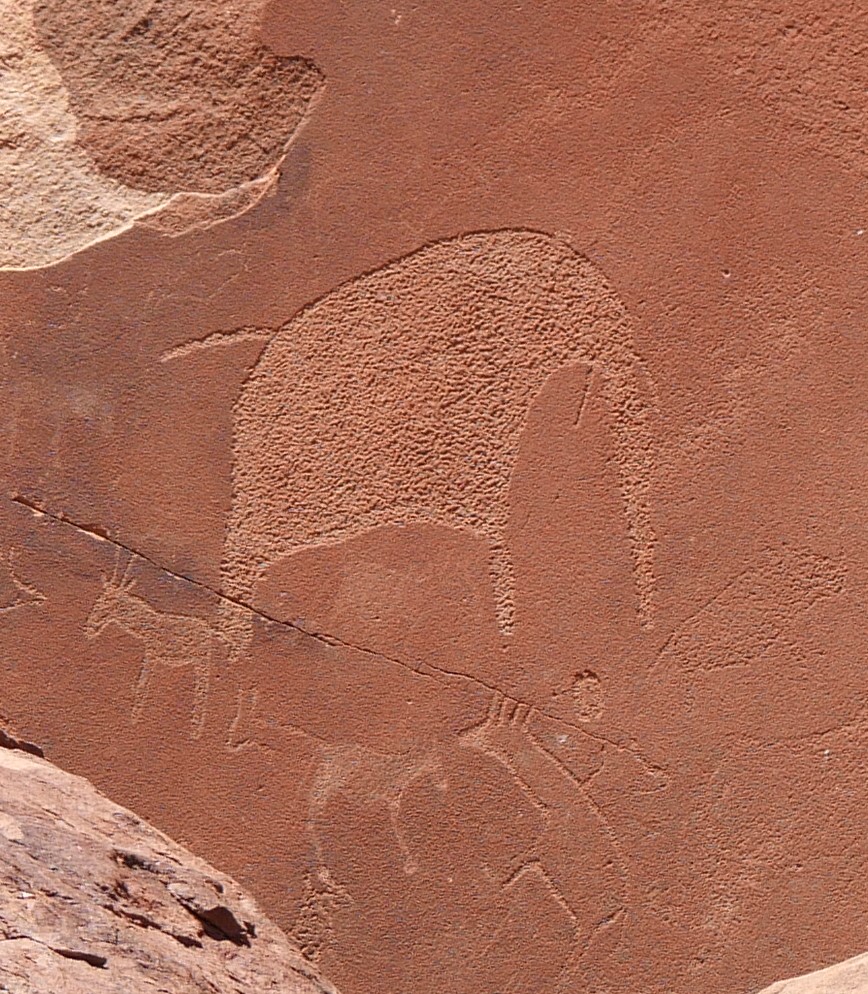
The Rock Engravings were great and well worth the money. Our guide, Sylvestor, spent over 2 hours taking us around, clambering over rocks and was a fountain of knowledge.
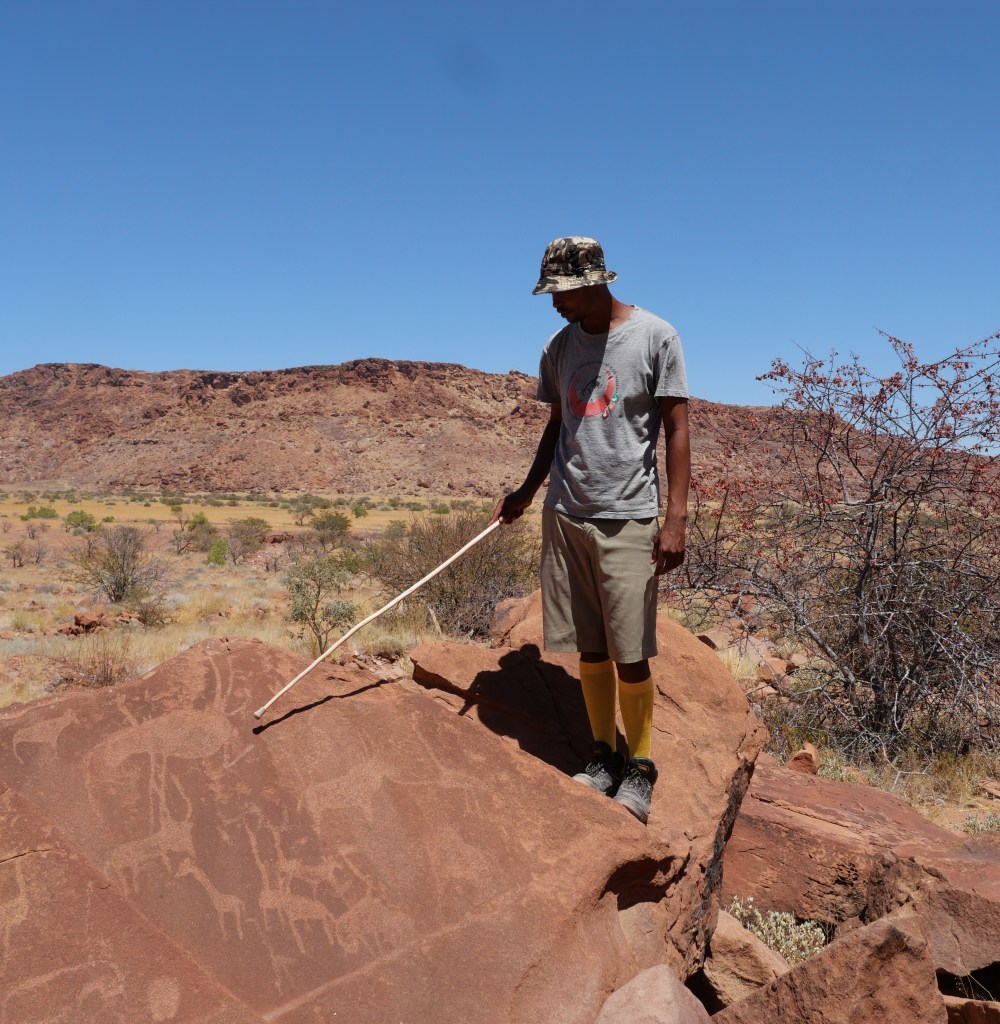
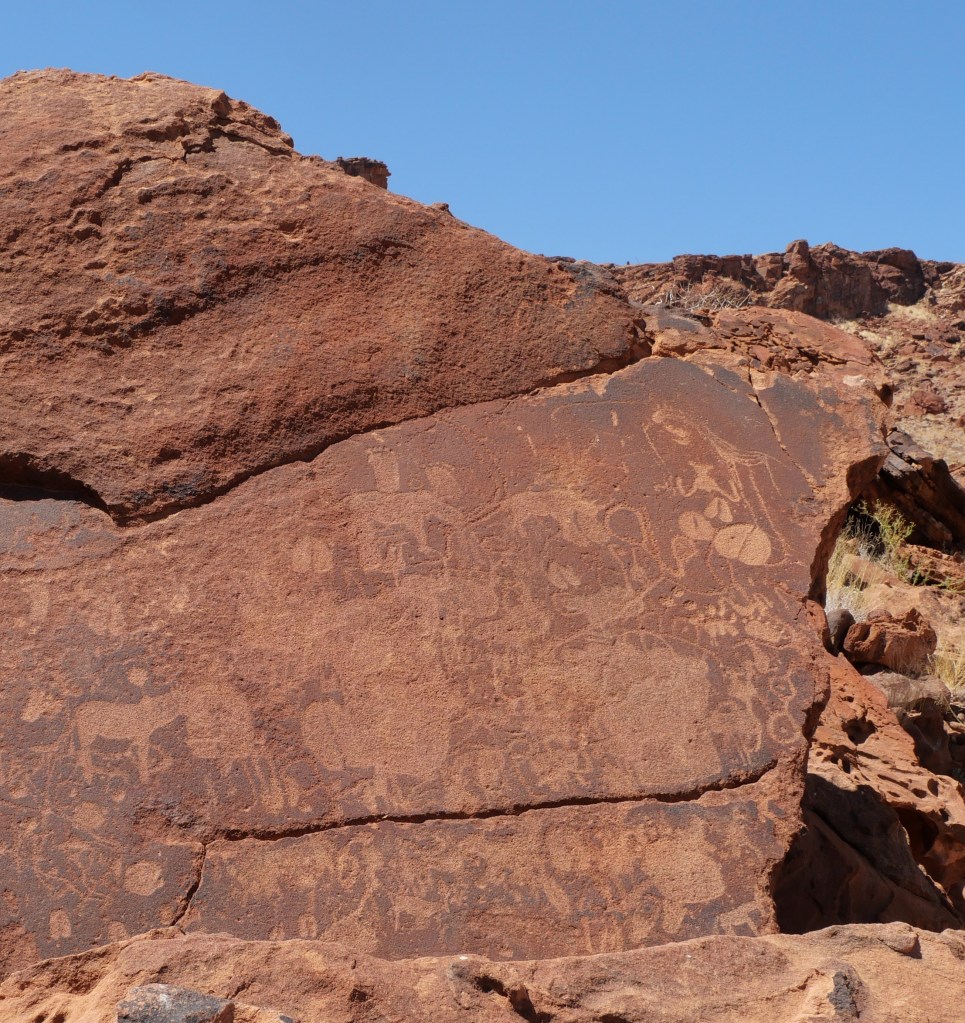
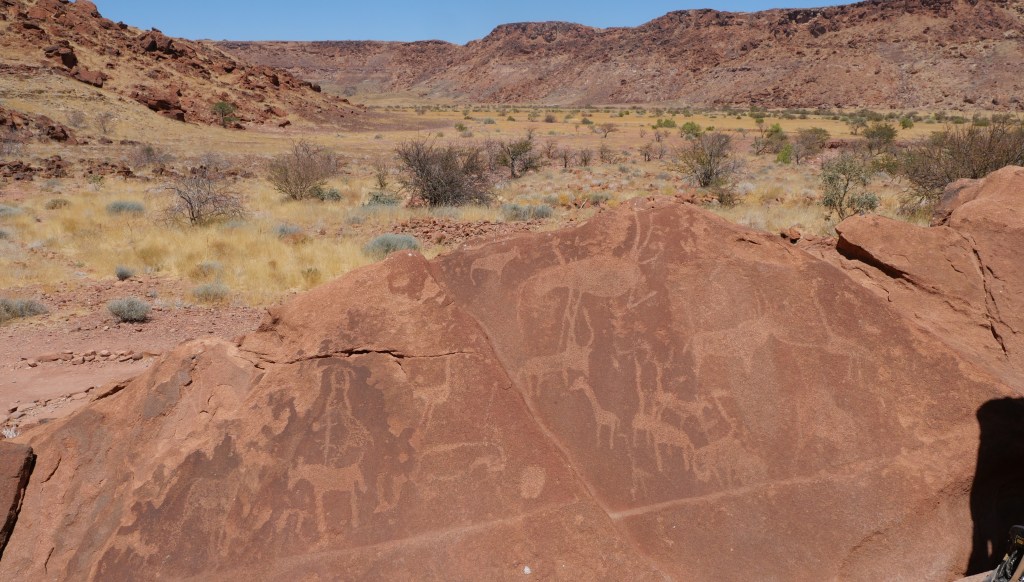

He showed us how the direction the engravings were facing meant different things
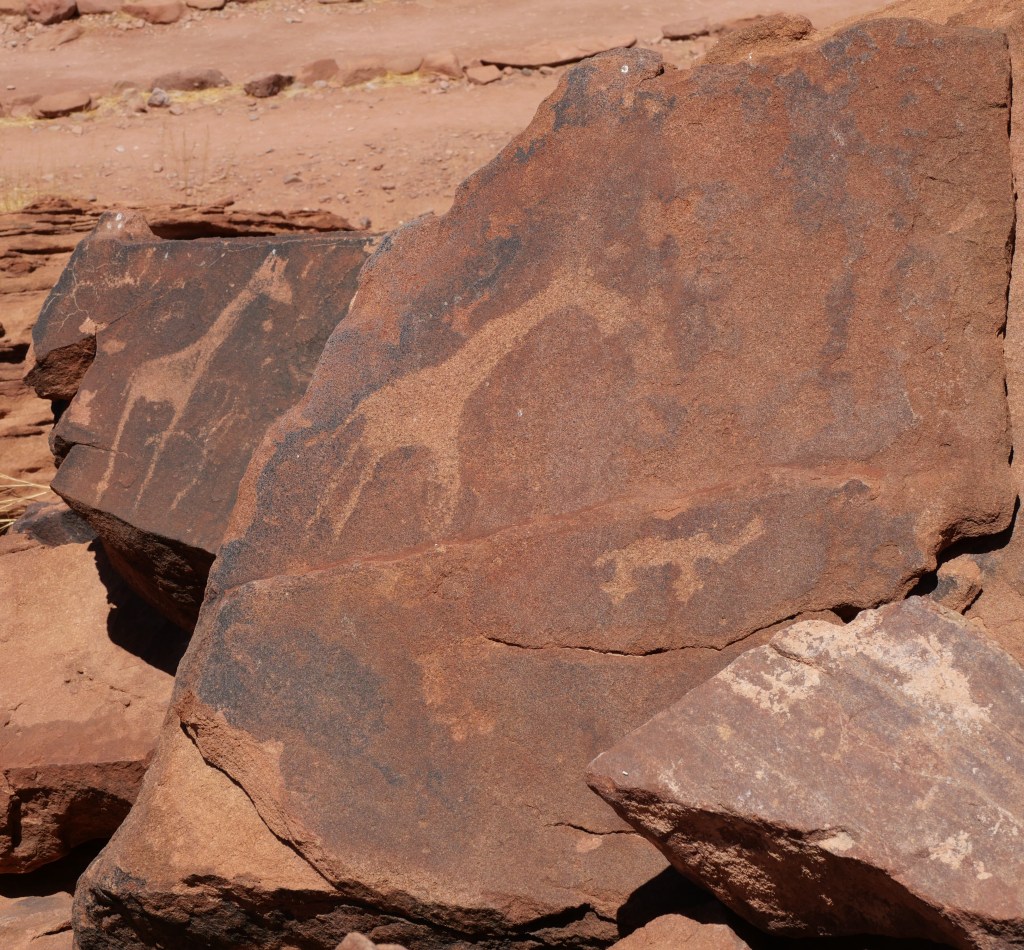

Explained about the human feet being signatures so the next group would know who had left the message
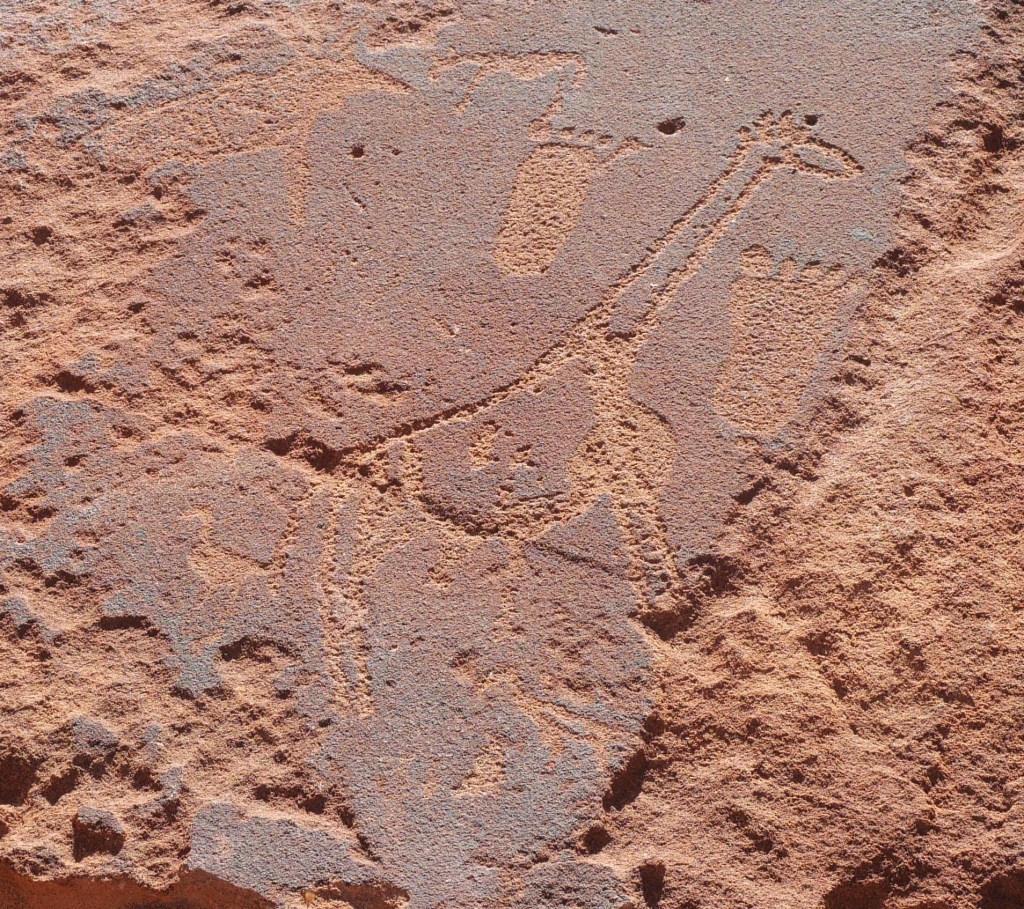
And a whole host of other insights.
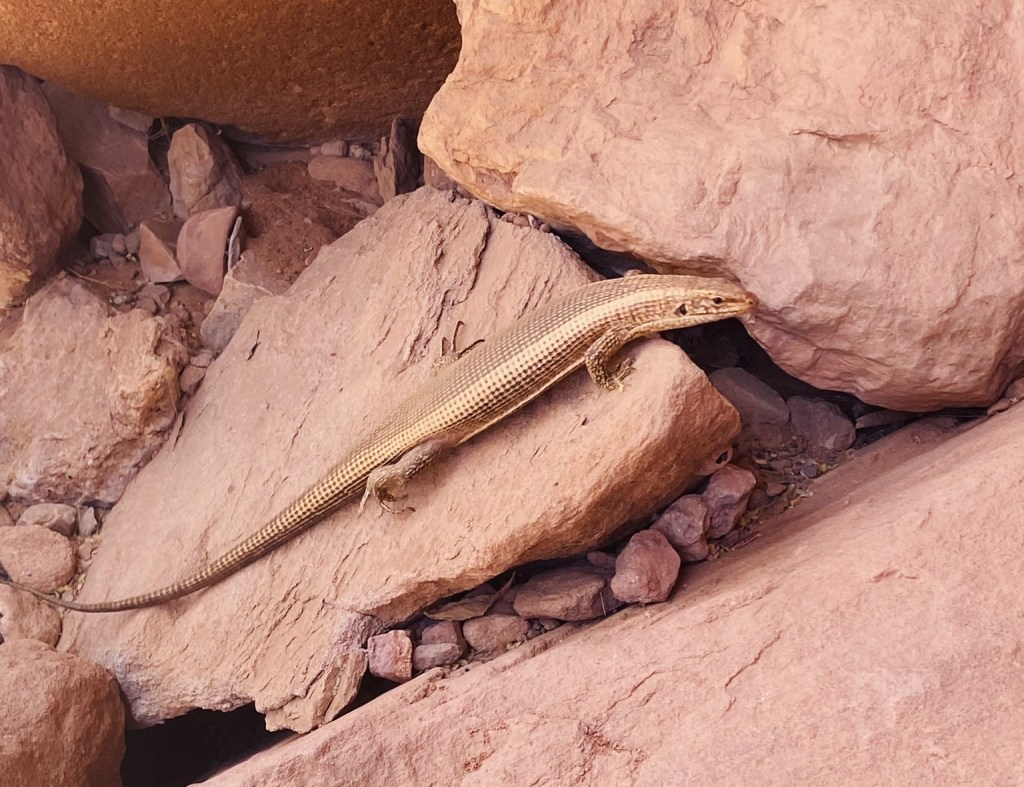
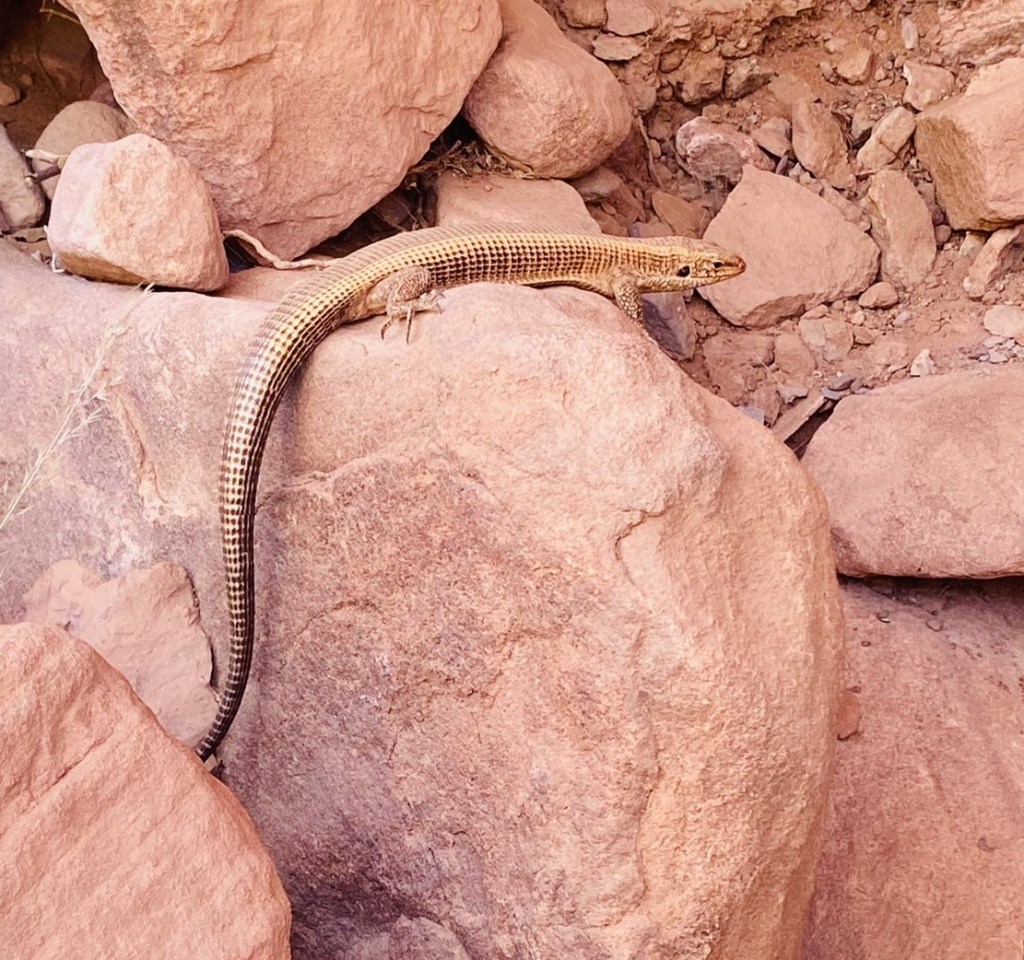
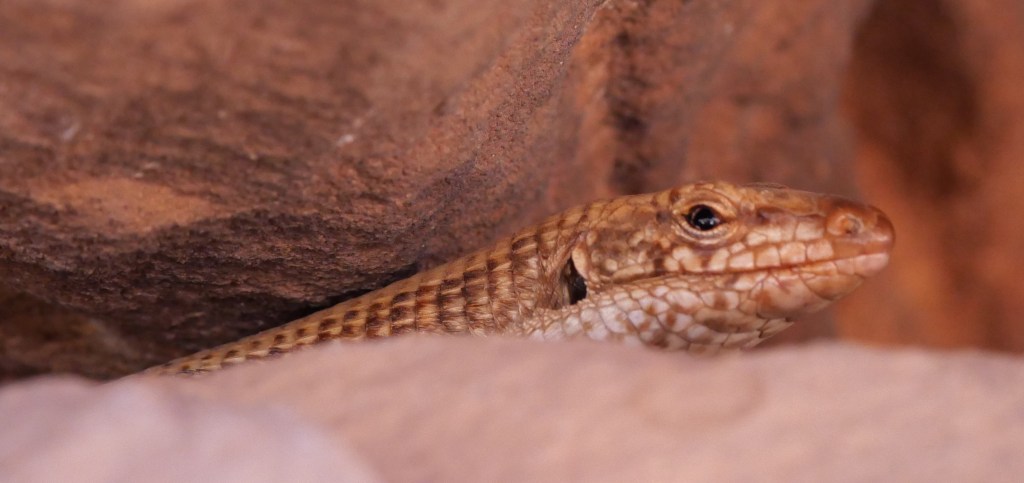
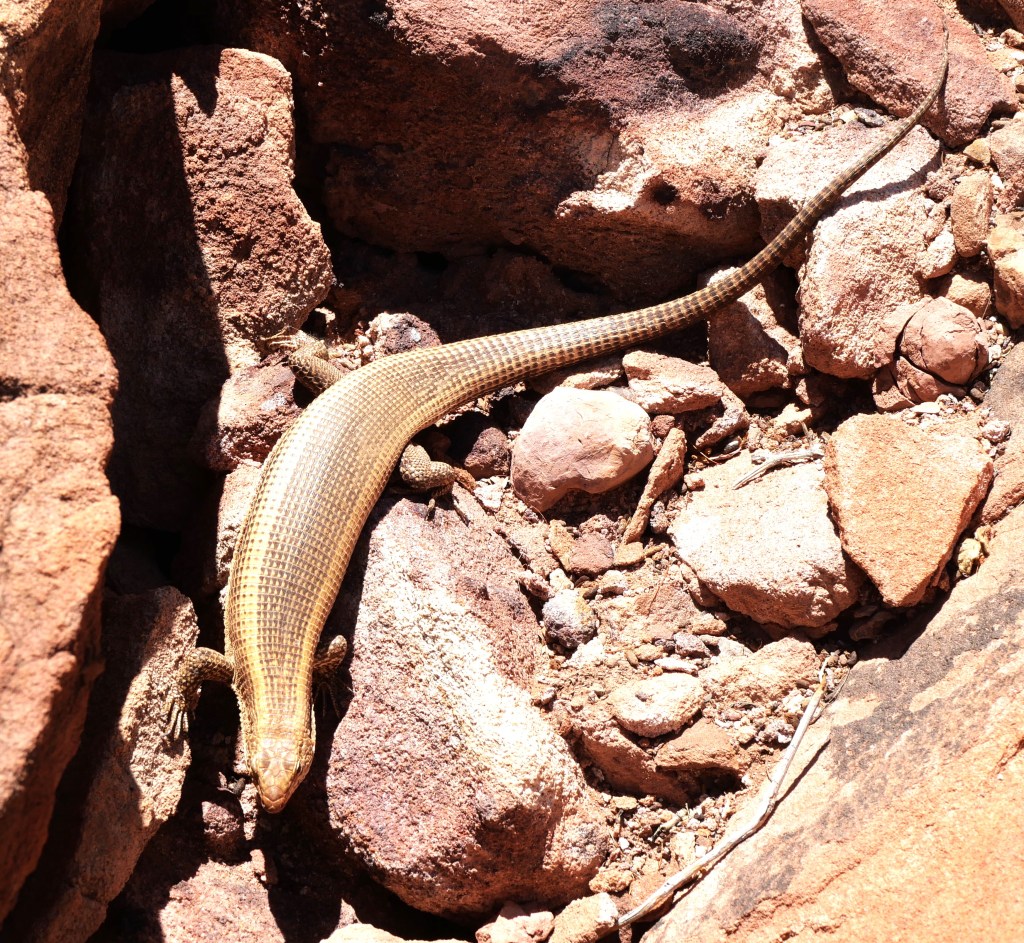
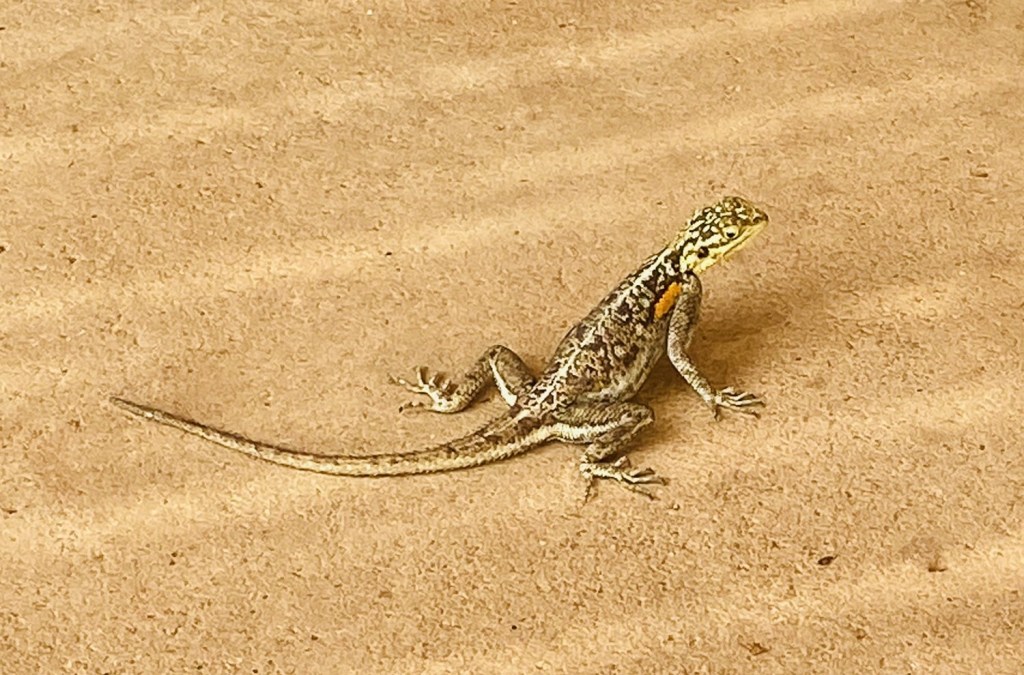
We also saw a huge lizard crawling past – not a gecko, of which you see hundreds everywhere you go, but a proper lizard!
The Petrified Forest was a slightly different story. It was fascinating to see these petrified tree trunks lying half-buried in the sands having been washed down from Central Africa 230 million years ago

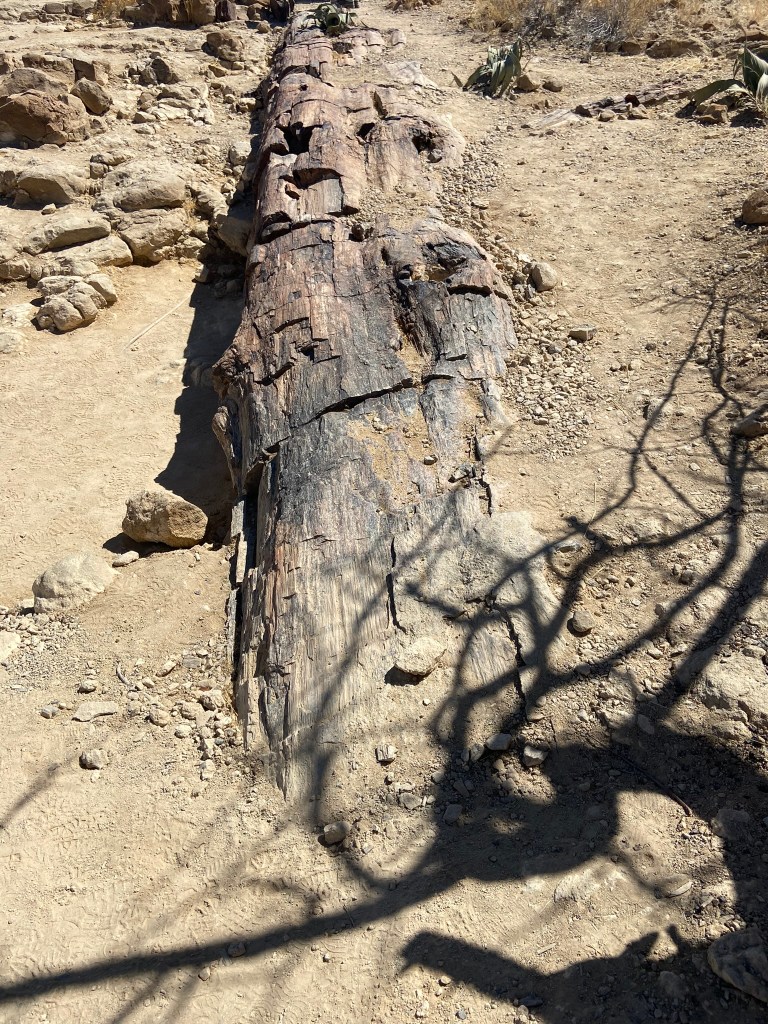
But a forest it was not!
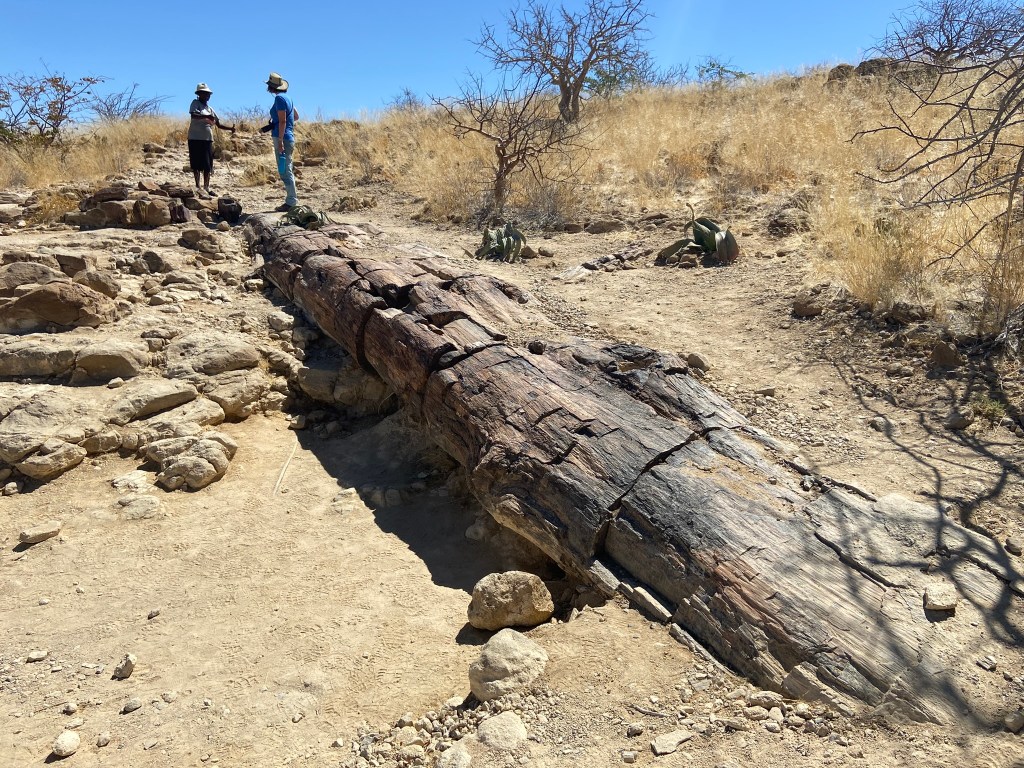
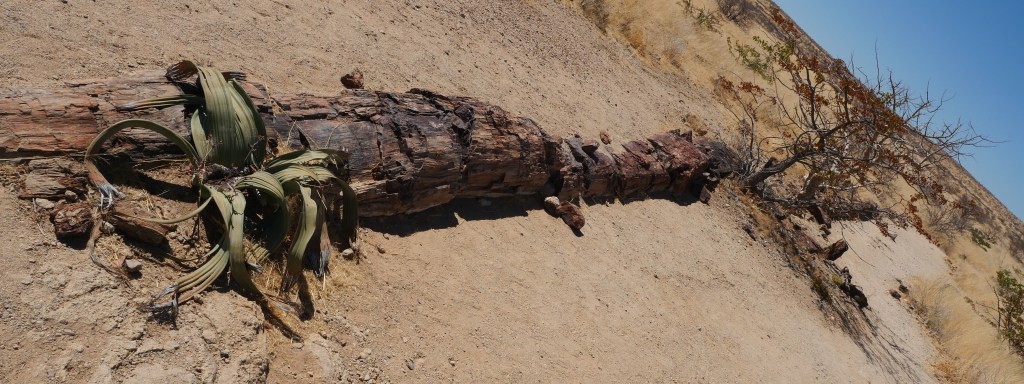
And the whole tour took just under 15 minutes….
The days were getting very hot now. It was towards the middle of November so we were rapidly heading into the hot, wet season – Namibia´s summer. We were also much further north, long past the Tropic of Capricorn and getting closer to the equator every day. The nights were still cool but we noticed we weren´t putting our big fleeces on in the evenings any more, sometimes not even our light ones. And more often than not the duvet lay crumpled up at our feet overnight.
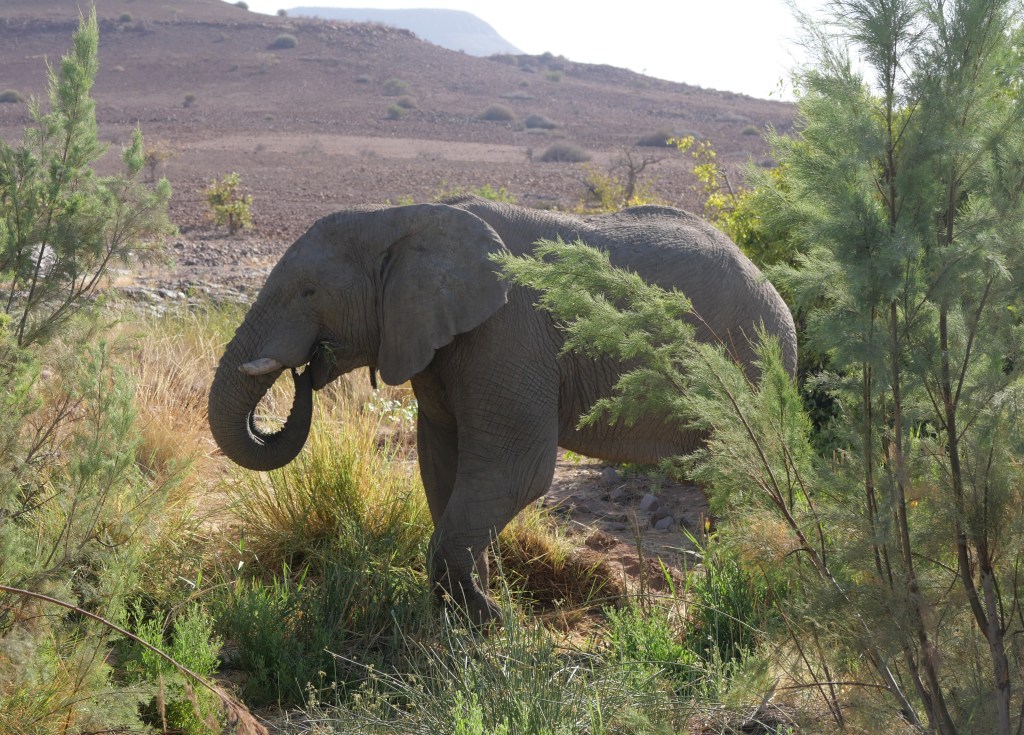
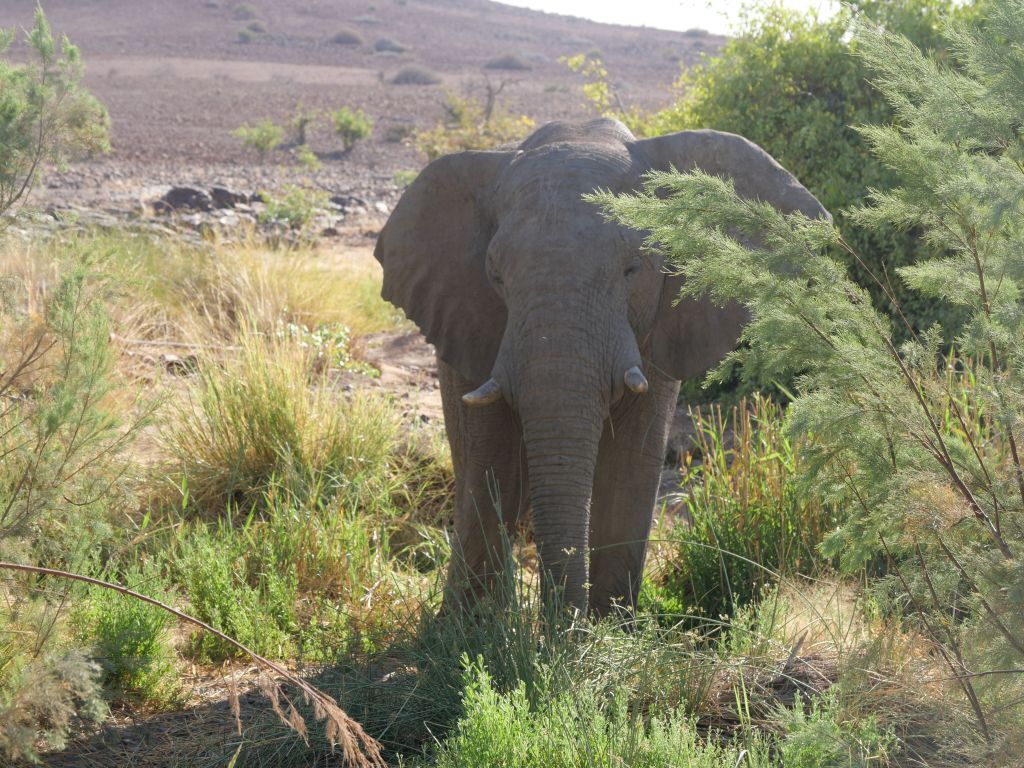
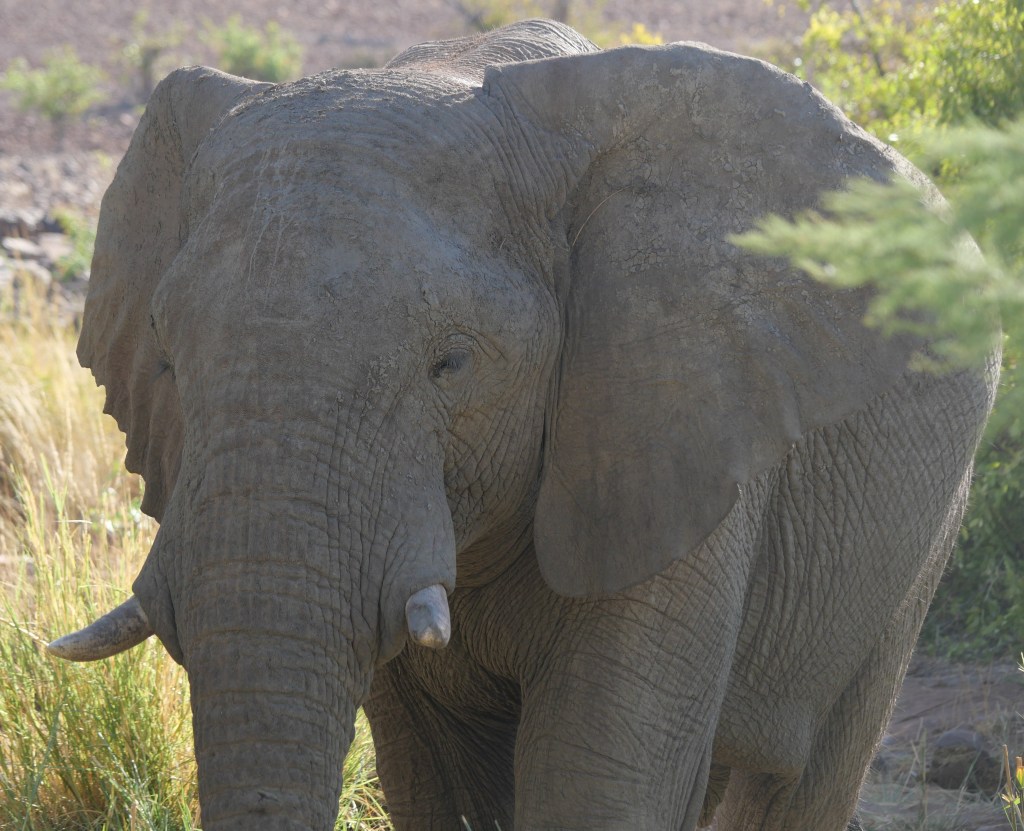
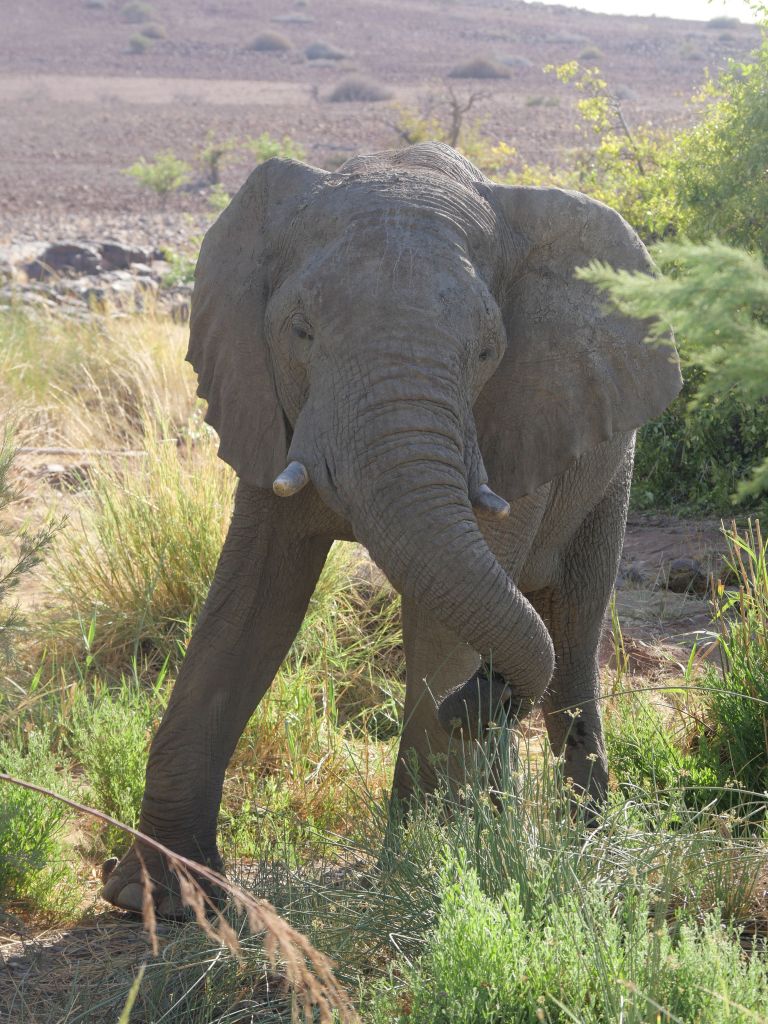
After seeing everything we wanted to see around Twyfelfontein we headed further north again into Palmwag. This area is in the heart of Damaraland, famous for the Desert Elephants – smaller elephants adapted for desert conditions with shorter, wider legs for support and who tend not to wreak quite so much destruction on their environment as they have to conserve their resources.
Everywhere around here offers tours to go out and find the elephants and we had chosen our campsite for a combination of good reviews, price of camping and price of their elephant tour! The Palmwag Lodge and Campsite charged a hefty €30 a night for camping but their tour was the cheapest at around at €120. It was going to be an expensive couple of days!
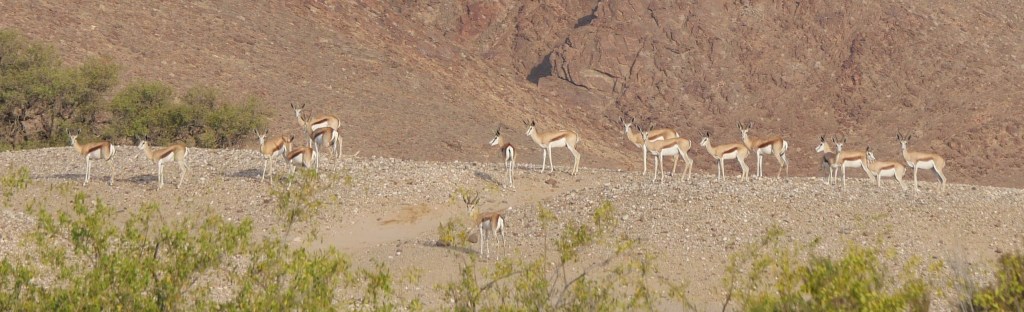
We set off with high hopes for elephants and on the way saw a few more of the local animals!
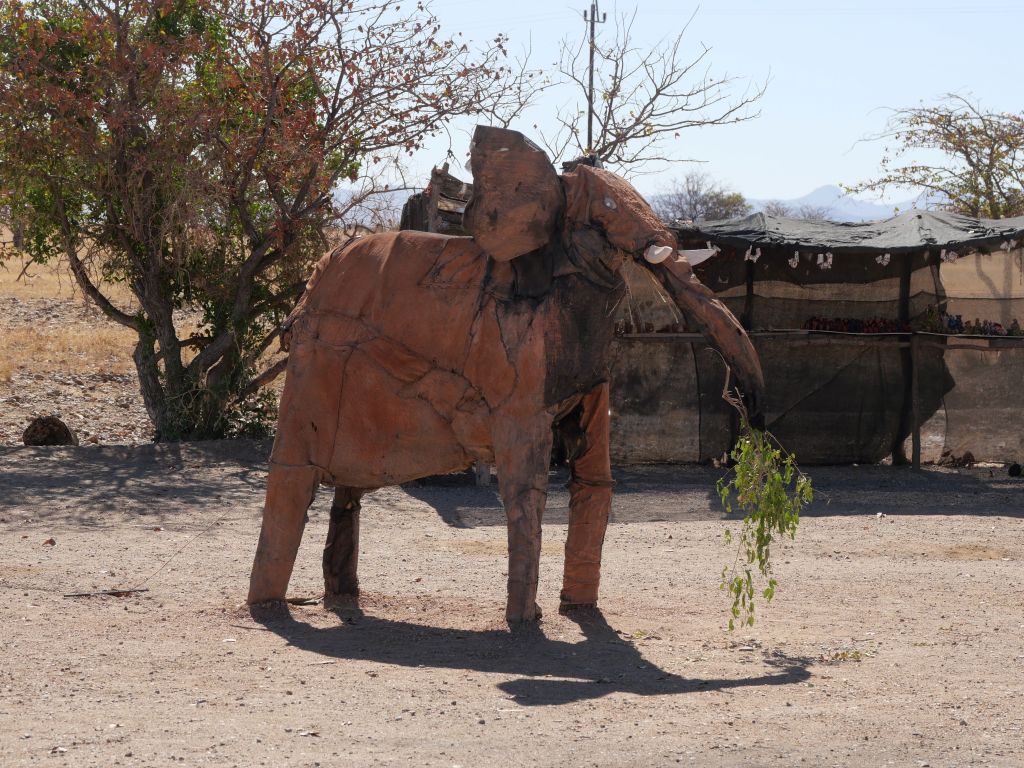
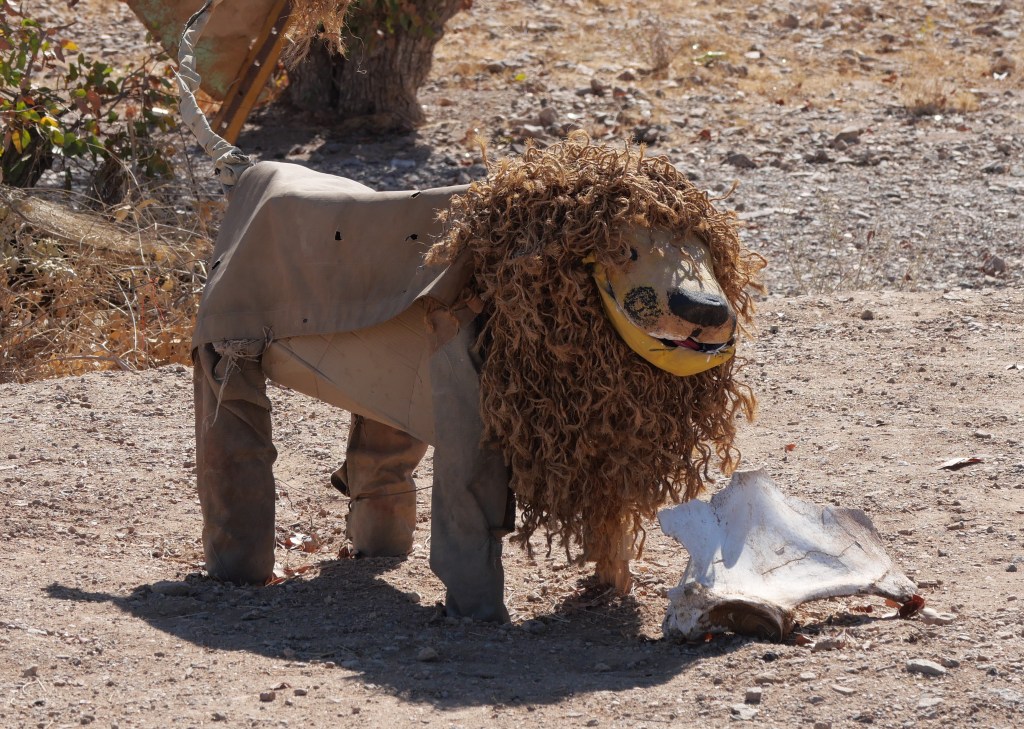
But when we arrived at the campsite my heart sank a little. The pitches were crammed in together with people walking past and through your site all day. There was a bar, restaurant and pool which is nice for a change but made for a lot of noise from kids and adults alike.
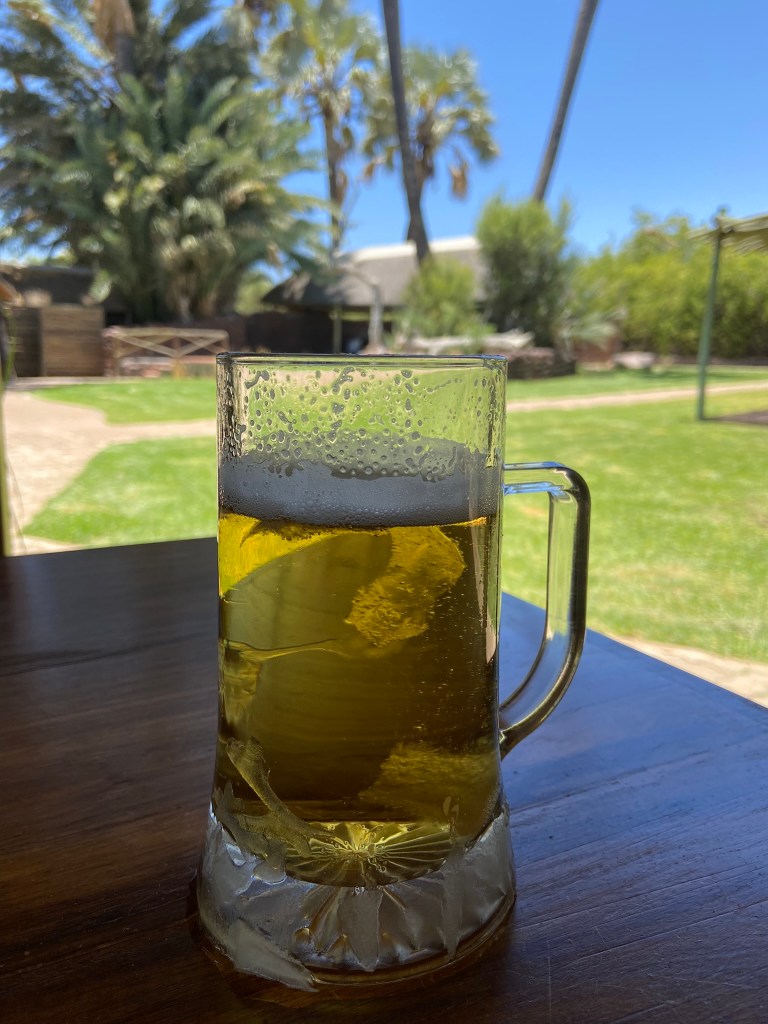
I spoke to a guide who had just come back from the morning elephant drive and asked whether the elephants were in the area. He said he had not seen them at all and his tourists had been very disappointed. He promised to come to our campsite that evening to let us know whether the afternoon drive saw them so we could decide which trip to book the next day. We headed for the restaurant and had pizza and burger for lunch both of which were surprisingly good. We sat by the pool sorting our endless stream of photos, eating cake and generally trying to relax
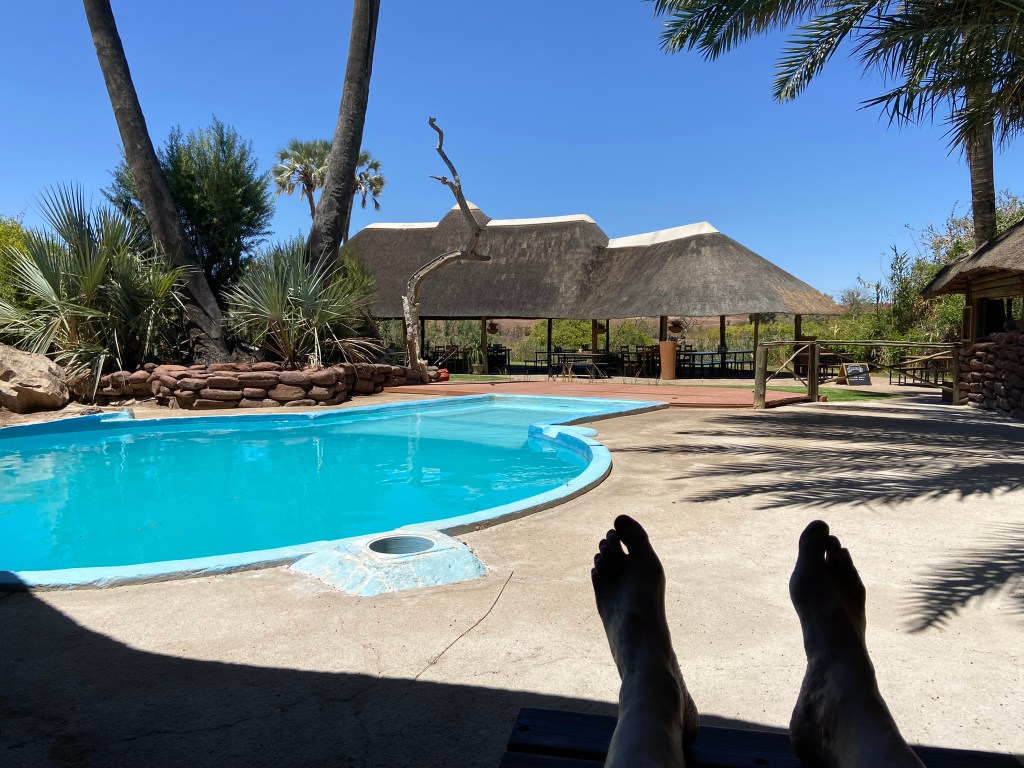
Then suddenly the guide came running over grinning saying the elephants were here.
And he didn´t mean generally in the area, he meant right here! We looked up and saw four elephants wandering through the trees right in front of the restaurant.
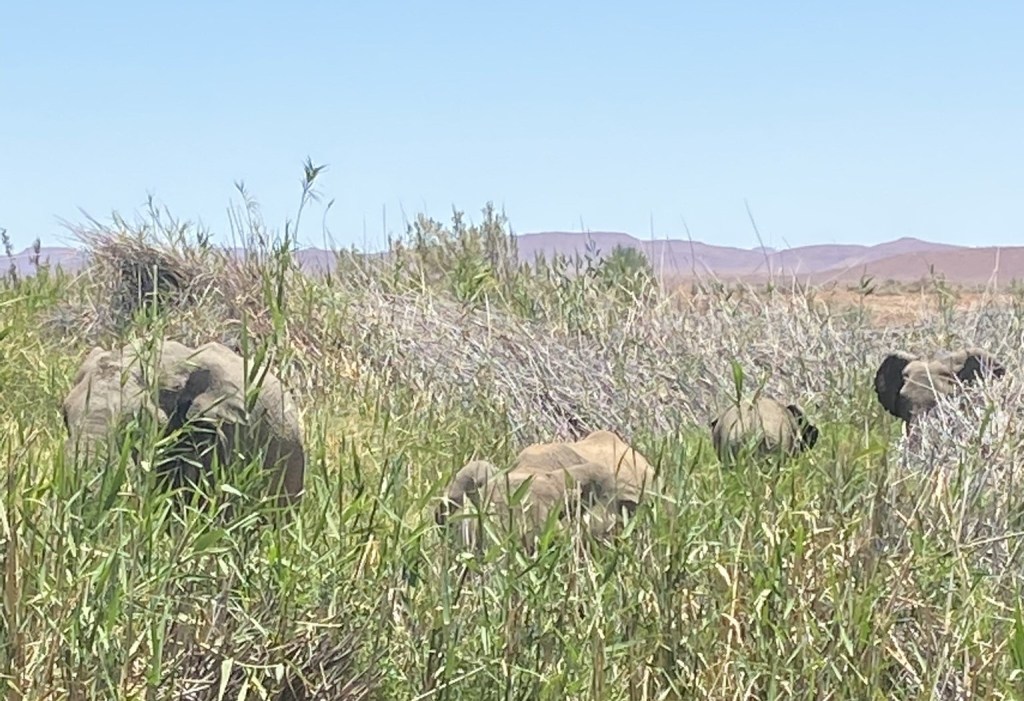
They stood and chomped on leaves and grass for the rest of the afternoon whilst everyone took photos.
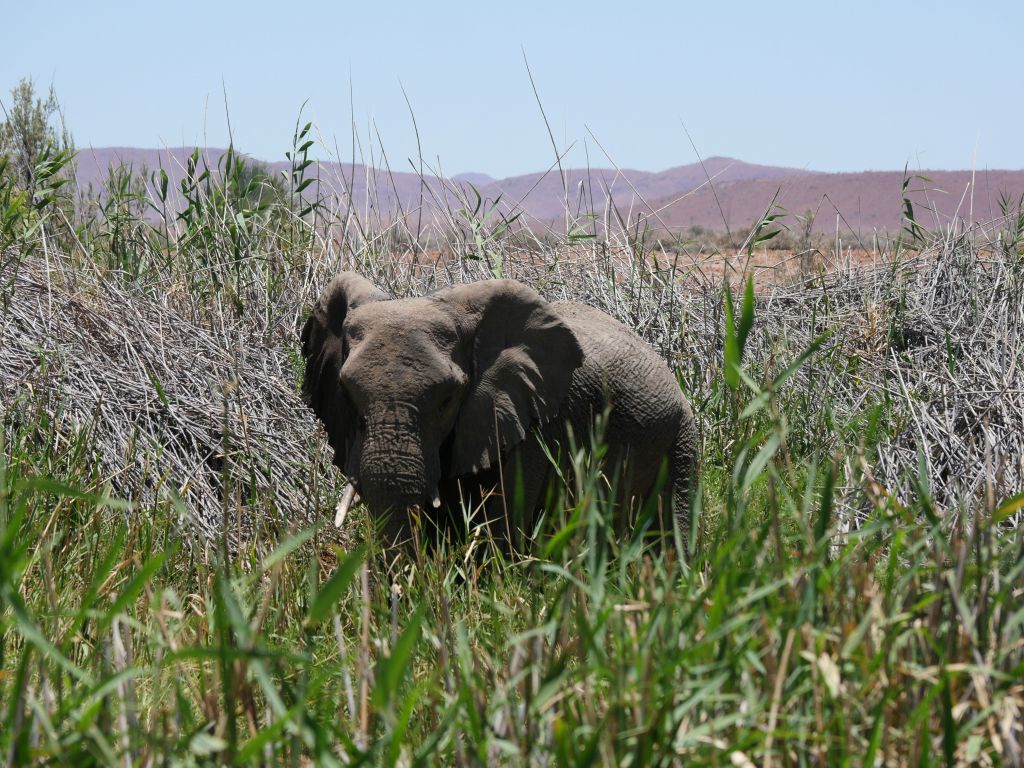
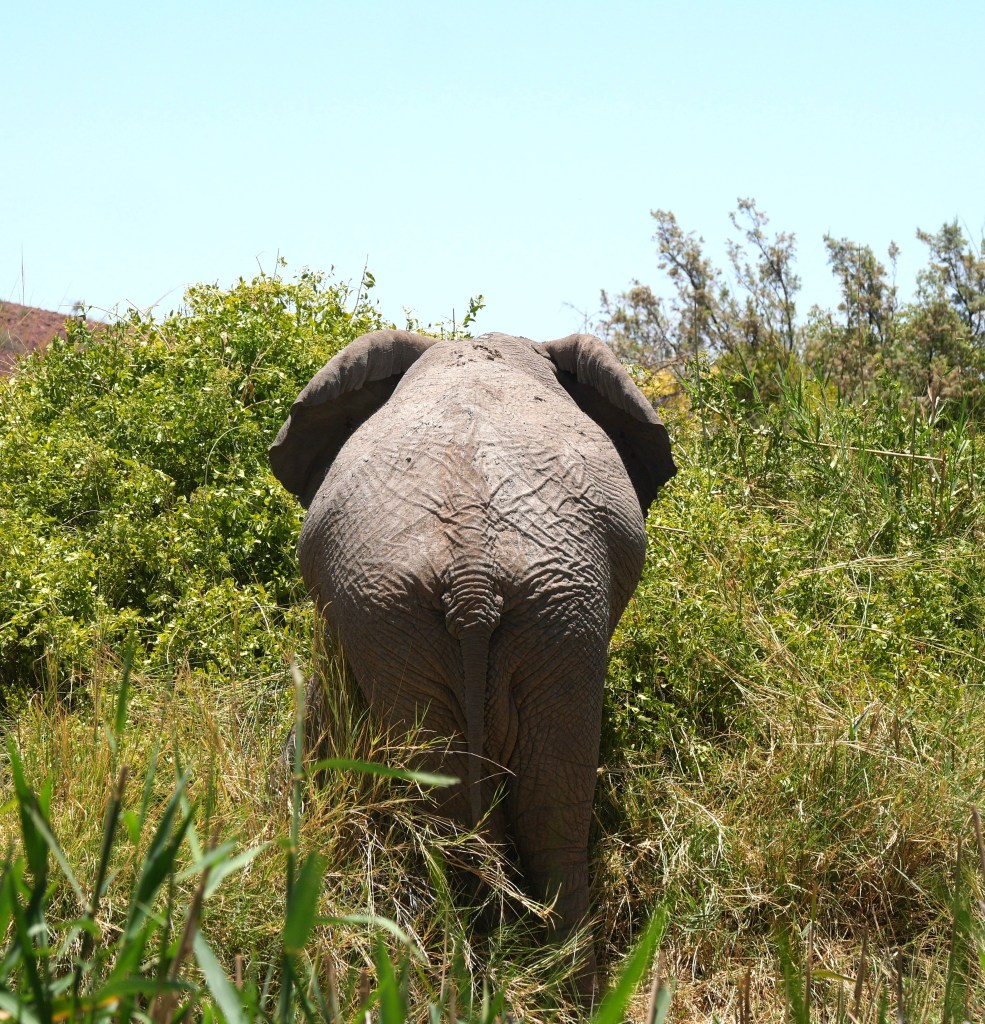
And one decided to have a dust bath then and there!
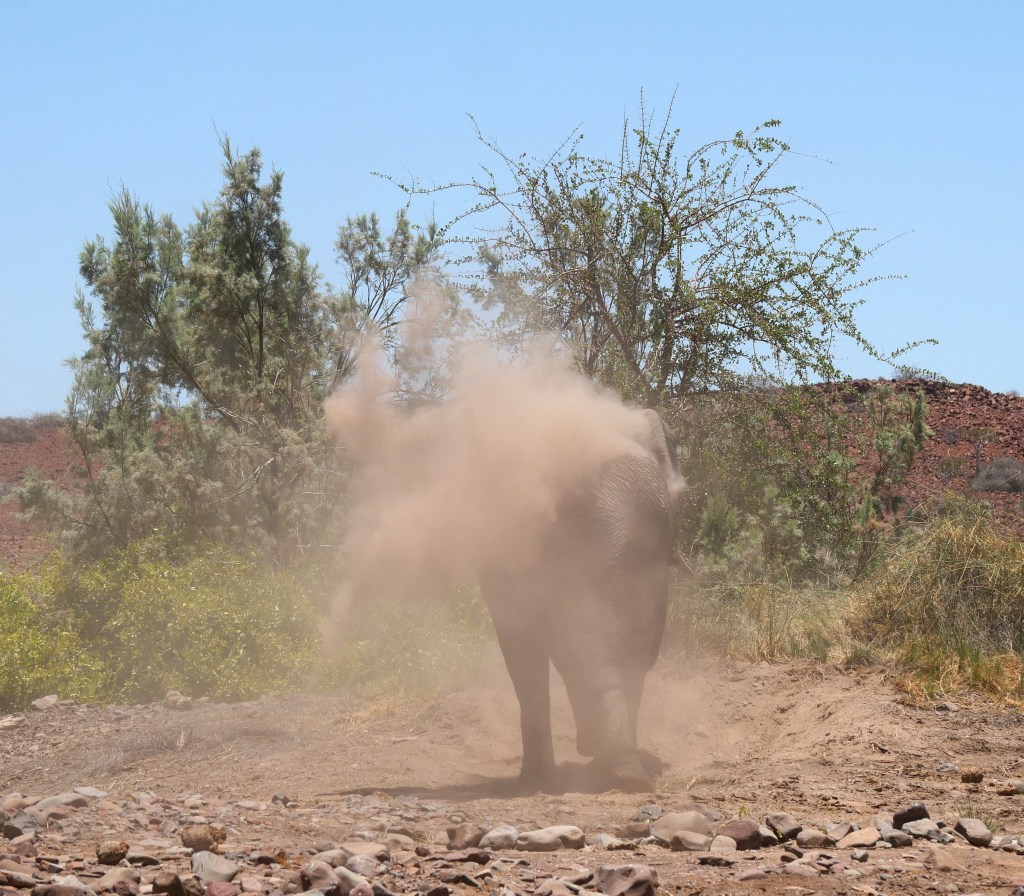
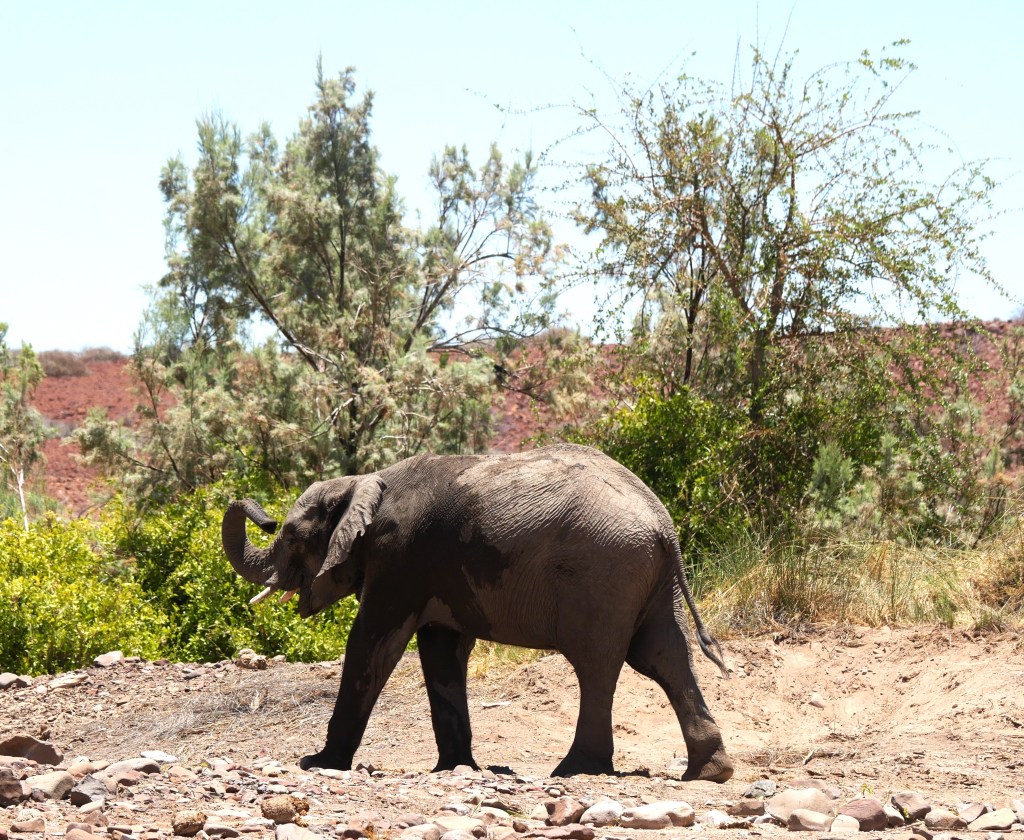
At one point the adults wandered off whilst the baby was playing with the leaves. When she noticed she had been left behind she gave a surprised bellow and ran off towards them.
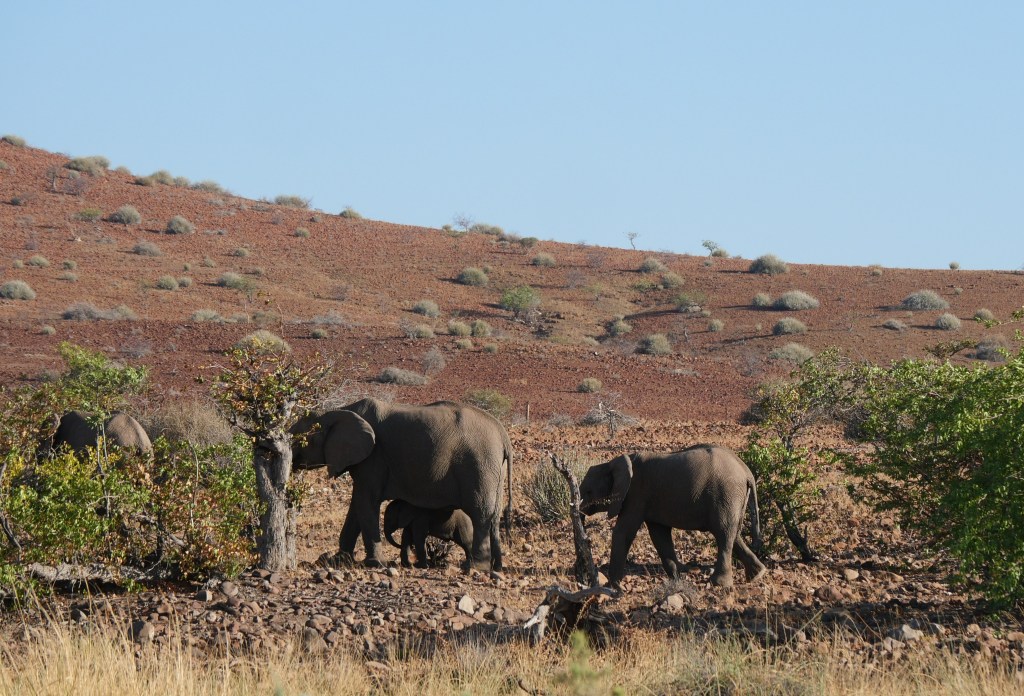
From our campsite later that day we heard trumpeting and I went to the edge of the camp and saw the whole herd passing by under the trees


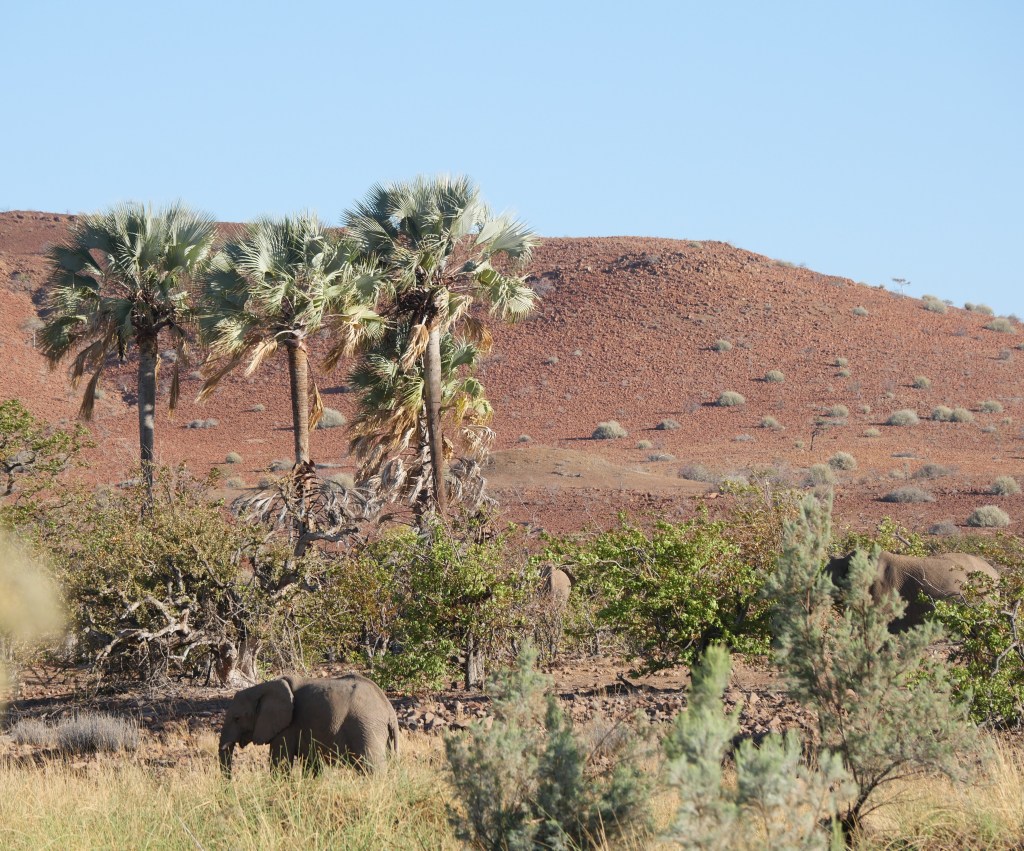
We awoke that night to more trumpeting and a strange gushing sound. It was 4am, we both got up to use the toilet and found there was no water. We grumbled that at the cost of the camping you´d think they would supply water overnight and went back to sleep. I awoke properly at 6am and found there was still no water but the gushing sound was still there. I investigated and found that a water pipe behind our pitch was broken and water, so precious out here, had been gushing out down the hill all night – no wonder the campsite had none!
I quickly dashed up to the restaurant area and told them. They knew there was no water – the whole lodge and campsite was without it – but up to that point they had not been able to work out why. Within the hour the staff had come round, fixed the problem and the water was back on.
But the damage had not been accidental, it was deliberate vandalism – by the elephants! They had come up in the night, ripped the pipe out and had been enjoying playing in the water and having a good drink all morning. When the damage was repaired and the water flow had stopped they complained bitterly with loud trumpets and snorts and stamping of feet! I smiled at James, these are not first world problems….
Needless to say, we never did do an elephant tour – with the whole herd on our doorstep, why would we??
We had been able to fill up with fuel at a fuel station adjacent to our campsite but we were very low on food and cash. We were aiming for another campsite in the area the next day which was a little out of our way but looked peaceful and remote and everyone said was one of the most beautiful places to stay in Namibia. It was an hour east but the only food shopping we could find on the maps was either two hours east or three hours back down south. I asked at reception and she happily confirmed that, yes, we could get food ´only two hours drive away´.
So off we went, two hours along a bumpy, dirt road to a small town with a medium sized supermarket and then an hour back down the same road to our new campsite.
In reality it was fine, you don´t expect conveniences on your doorstep here and if you want even half the range of food options you get in Europe you expect to have to go a long way for it. We found fresh fruit and veg, bread, milk, frozen chicken and a piece of steak – paradise.
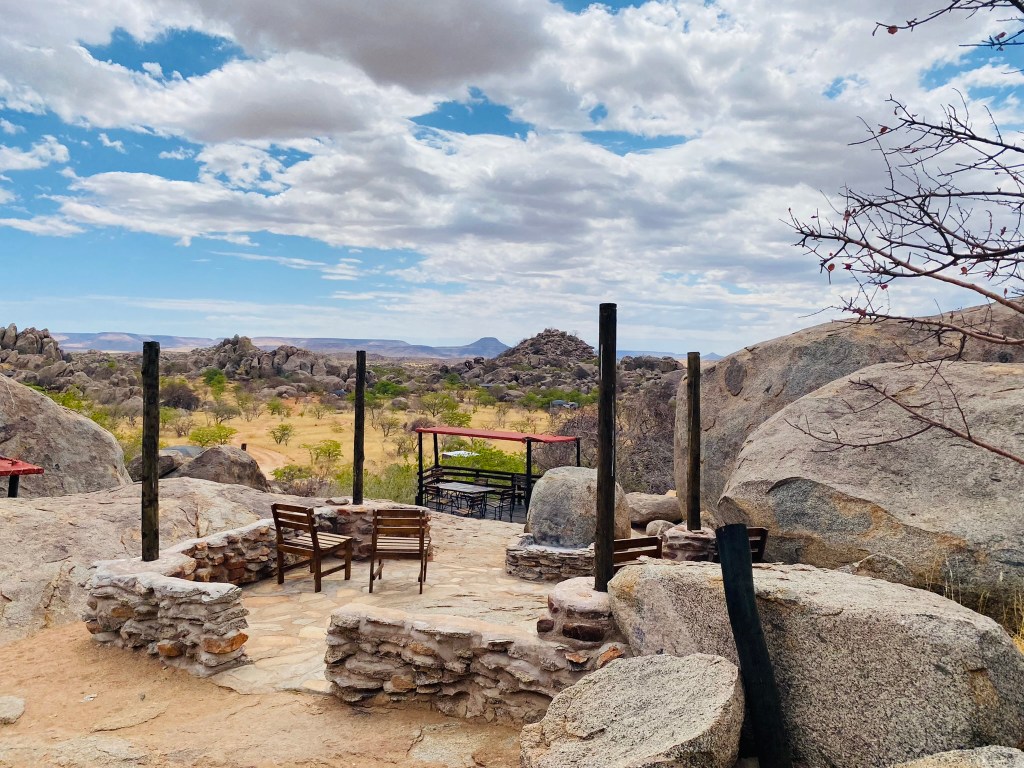
When we arrived at our new campsite we found a friendly, helpful manager and a really beautiful location.
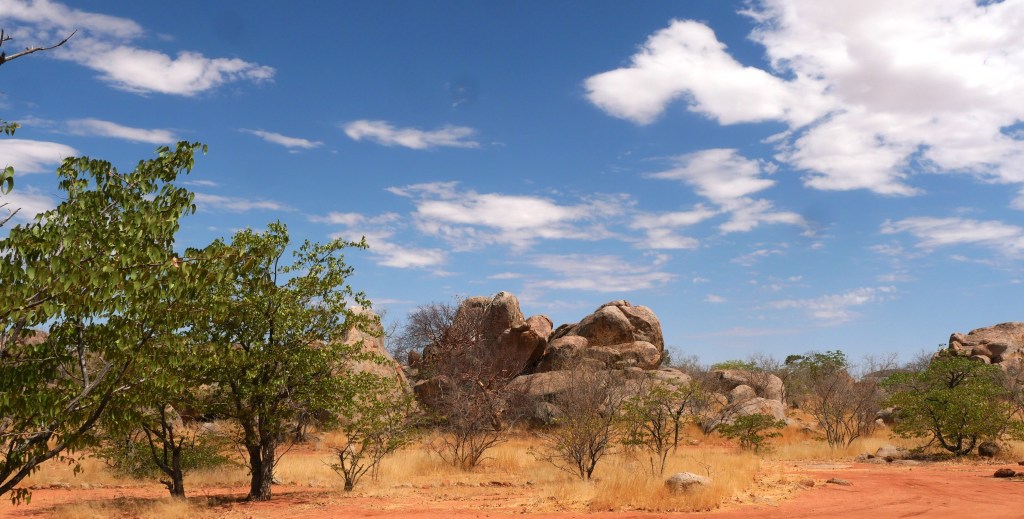
Our camp was carved into the rocks with an open air toilet and shower and gorgeous views.
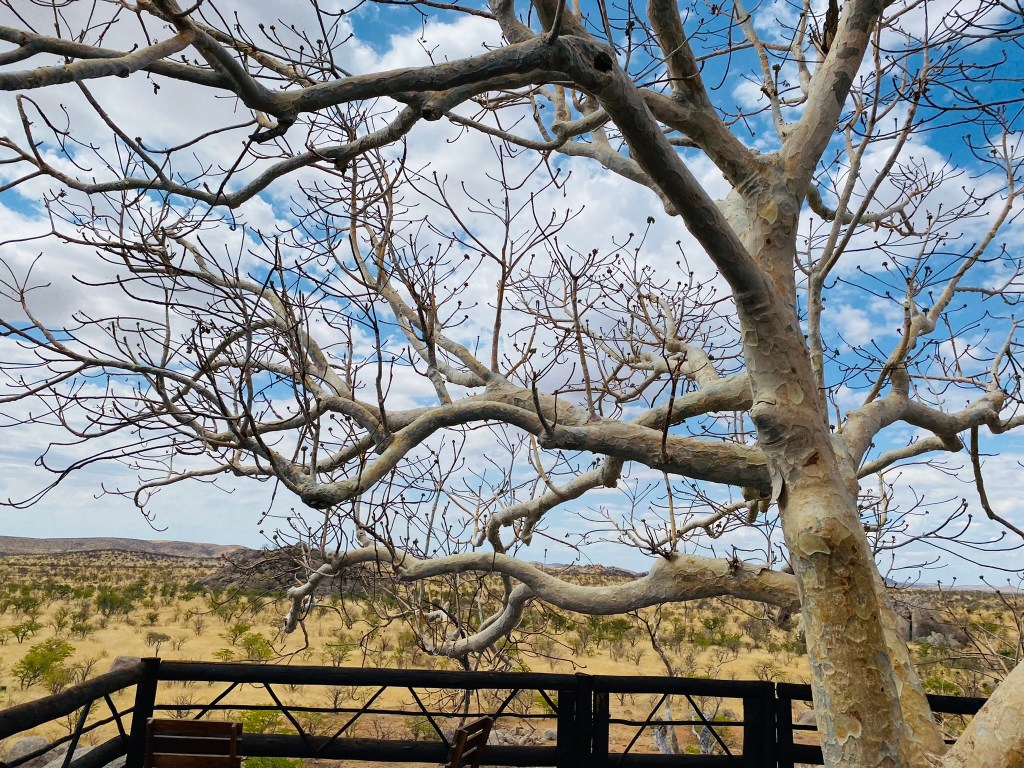
We spent the day trying unsuccessfully to clean out Henry´s water filters. The pre-filter had only lasted 6 weeks compared with 5 months in West Africa – just goes to show what getting water from deep boreholes with corroded copper piping will do to a water filter! We had to remove it completely in the end and keep our fingers crossed that the main filter would last out until we could pick a new one up in the UK at Christmas.
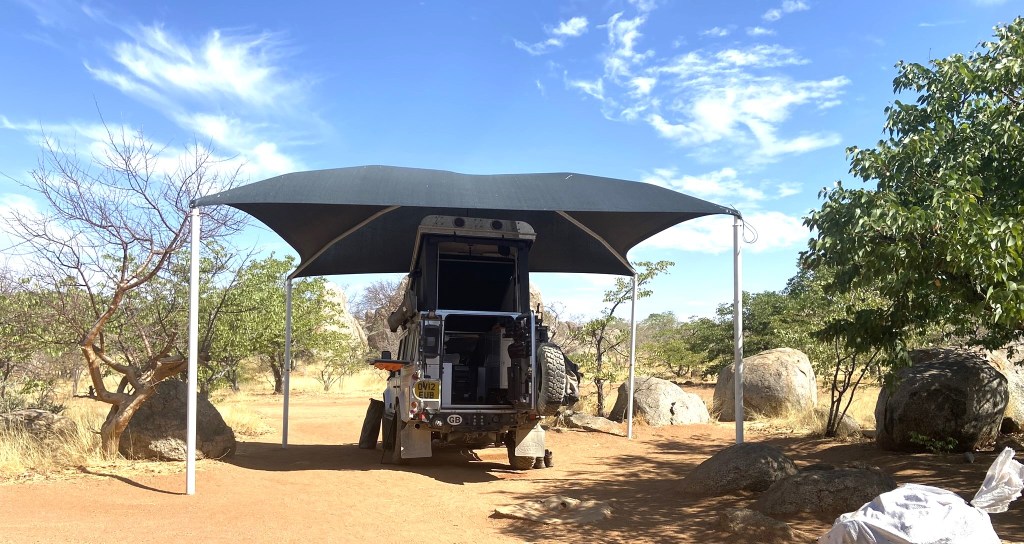
That evening we were too hot in shorts and t-shirts never mind any fleece, and we woke up in the early hours of the morning pouring with sweat to find the temperature inside Henry was still over 32 degrees. Not as humid as West Africa so we weren´t sticking to the mattress but sleep still evaded us for most of the night. How different from only a month ago.

The next morning we went for a walk with the camp manager, Deska, down to the farm where the family who owned the land lived and found that it was actually his own family. He told us they were of the Damara tribe but other farms in the area were owned by people from other tribes alongside some White Afrikaans and some ´foreigners´. Everyone was part of the same community and operated together as a Conservancy where income from farming and tourism was paid into the Conservancy and the Conservancy paid it back to members of the community as they needed it – NAD500 for a goat killed by a lion, NAD10,000 to repair a borehole and so on.
The campsite itself was on their family land but owned by the community as a whole. It was then operated by an Italian company who took 60% of the profits and gave the community 40%. He talked about the power the community has – to end the contract if it wasn´t working for them, to scrutinise the company´s accounts and challenge every item such as salaries paid, food purchased – and he said that the community wields their power effectively to keep the company fair and honest.
We have heard since that there are a lot of Conservancies across Namibia and they all work in the same way. It seems a good solution to ensuring the people and the communities are supported whilst still having their own independence.
But this area had had a double-whammy in terms of income. They suffered 7 years of drought impacting their farms followed by 2 years of Covid impacting tourism. They were, we could clearly see, on their knees. Their livestock was decimated and Deska said farming had all but ceased and was unlikely to ever come back. They are now totally dependent on tourism.
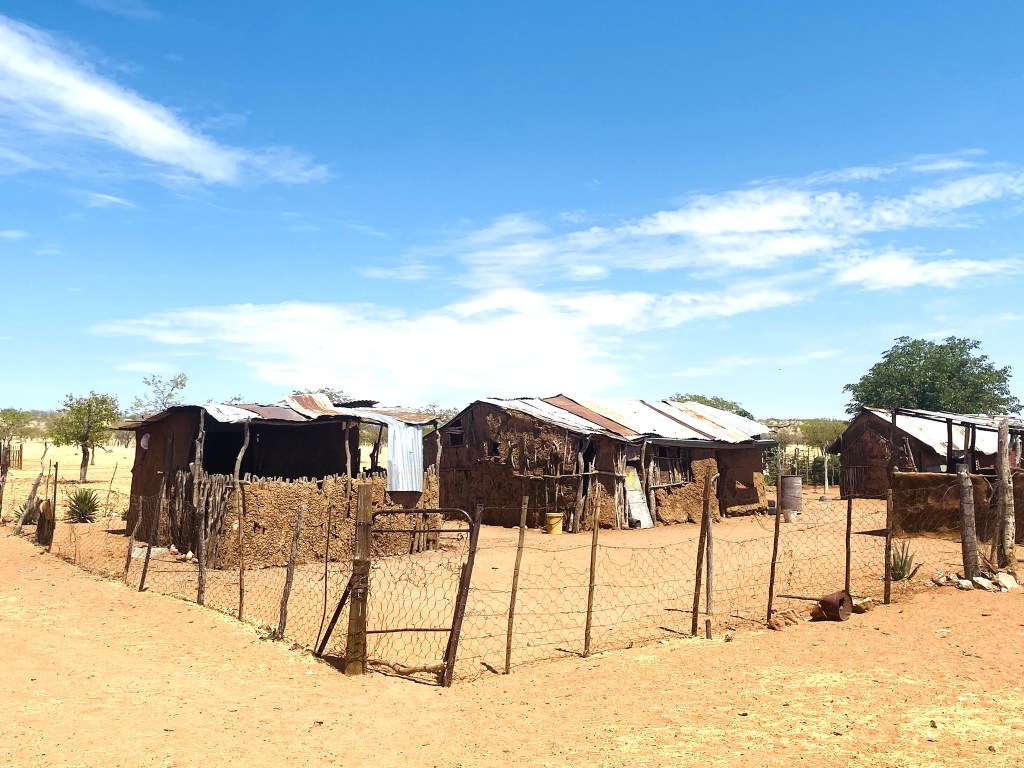
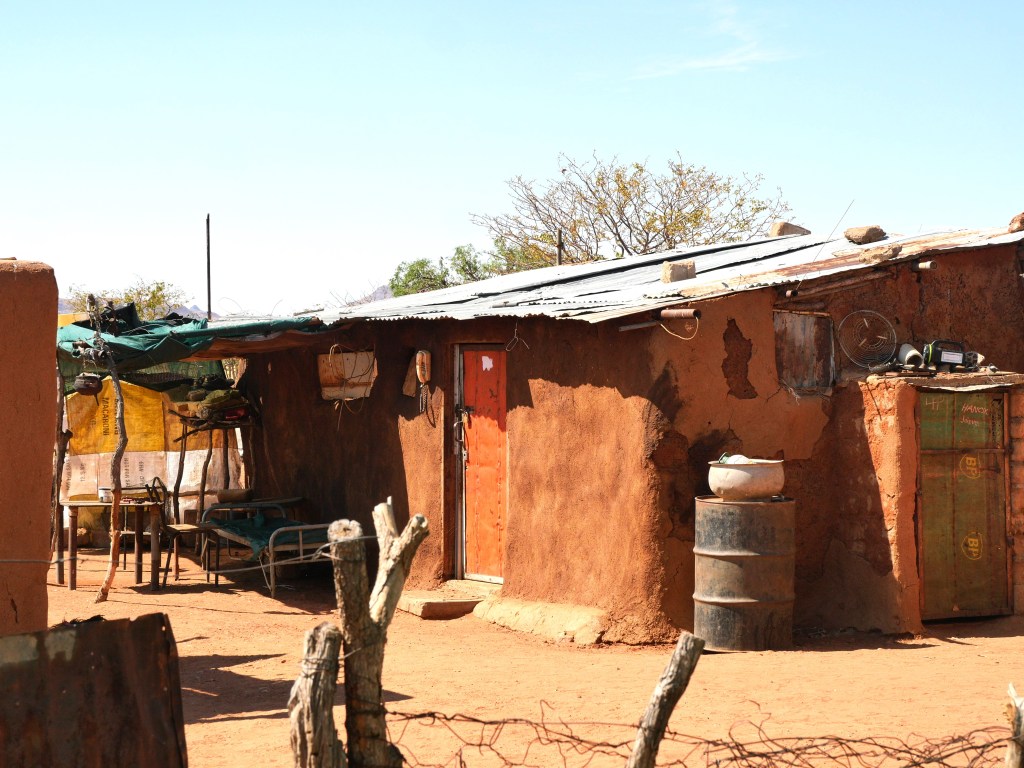
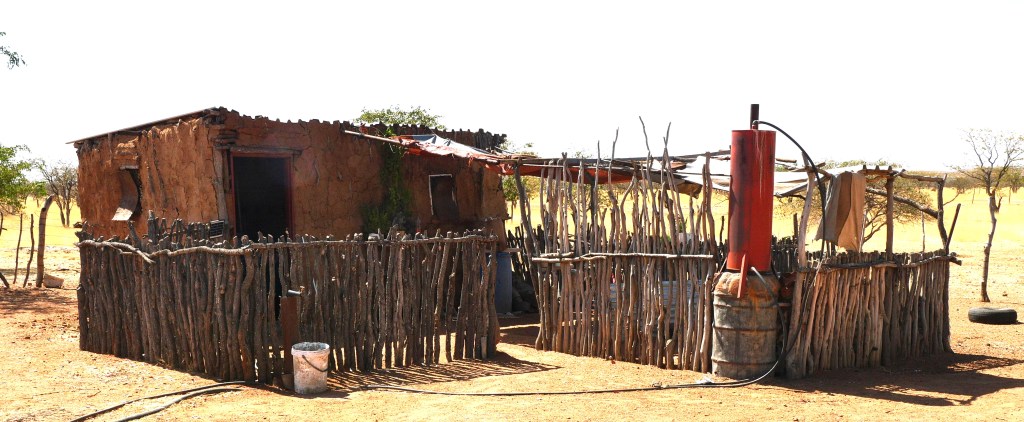
We visited some of their homes. They were small and functional.
But their gardens were beautiful. They grow an amazing variety of crops from corn to beetroot to cabbage.

And the ground is so full of goodness that with just a little water from the borehole they can grow radishes the size of footballs!
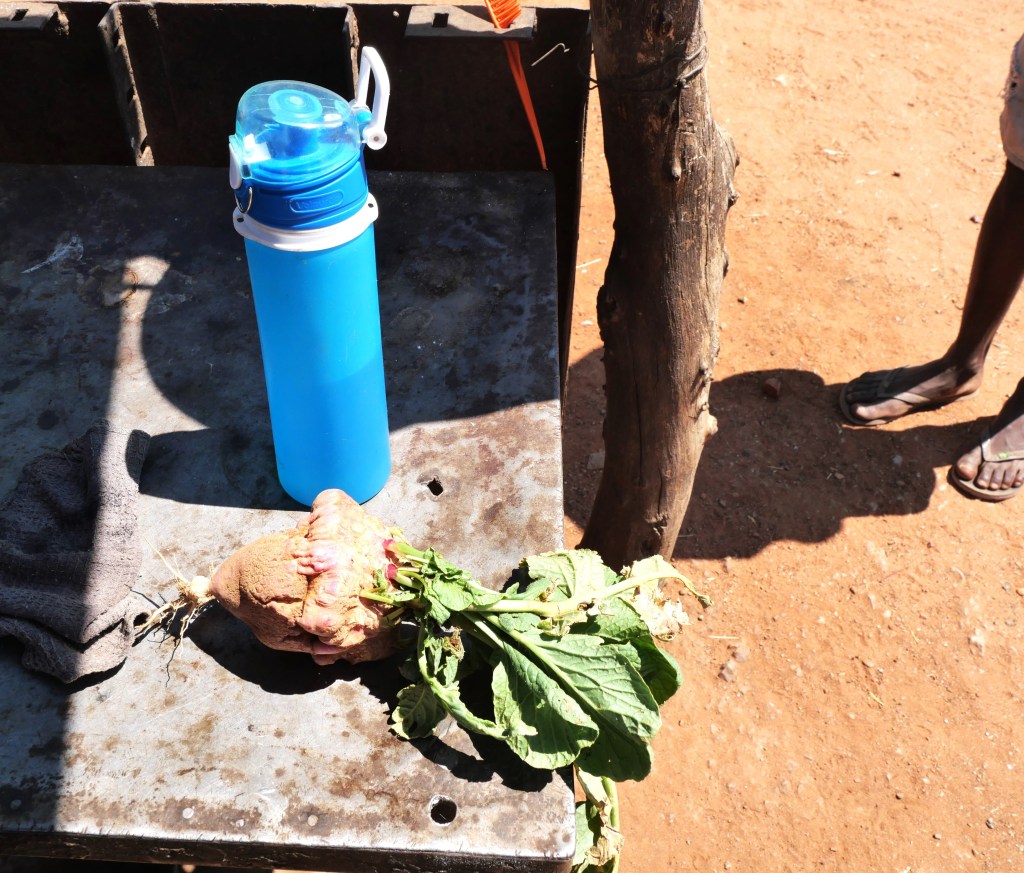
This one was a gift to us along with as many ´fat balls´ as we could eat – and given that fat balls are actually deep fried doughnuts covered in sugar, that was quite a lot!
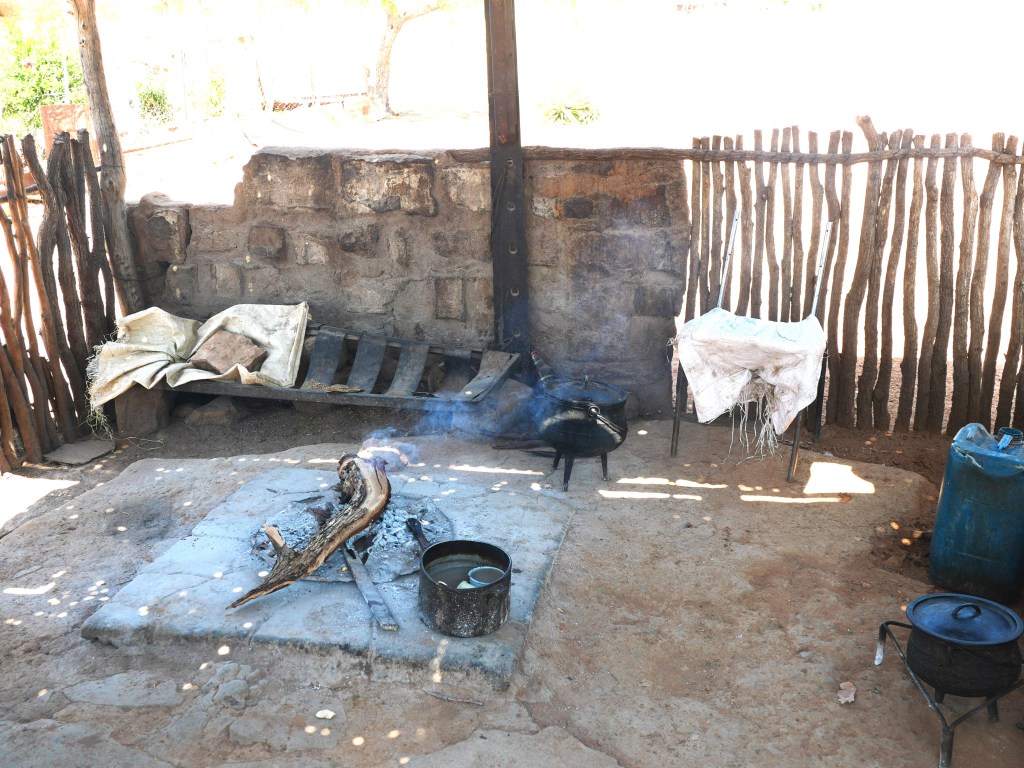
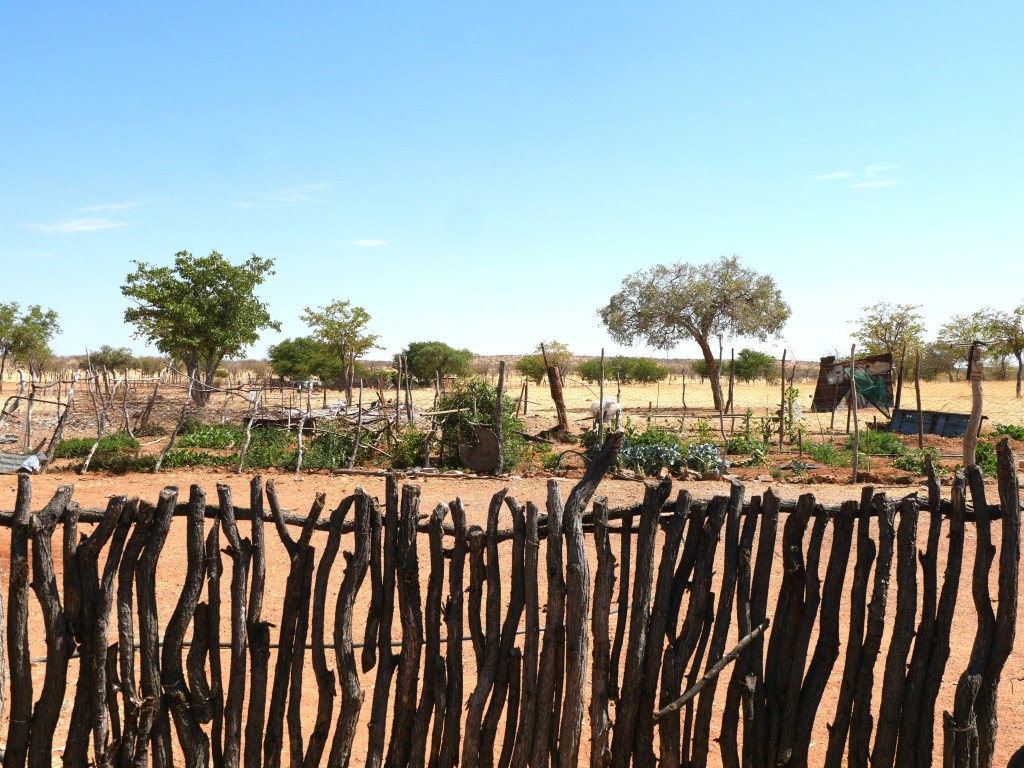
The farm walk was supposed to take us three hours but actually took five and we weren´t back at the campsite until gone midday by which time we were so hot and dehydrated we were struggling to keep putting one foot in front of the other. We were very late for heading off to our next destination but still needed a cold drink and a sit down before we could even think about doing anything else.

We were heading into the northwest to the Puros conservancy. Roads are a vague concept out there, tourists uncommon, internet coverage non existent. Lonely Planet says of the area ´this is your true wilderness´ and given how wild we had already been that was going to be something. We had intended to set off at 10:30am to give ourselves plenty of time to get to the community campsite before dark and allow for any unexpected problems. But as we headed off it was past 1pm and things were feeling a lot less relaxed.
First stop, the Palmwag fuel station an hour back down the road to fill our tanks ready for the journey. We pulled up to be told the fuel truck had not made it yet so they had no diesel. The next town was the tiny Sesfontein and they said there was none there either. We enquired where the nearest fuel was and were told it was Opuwo, 350km in the wrong direction.
We have a long-range fuel tank and a side tank and after a few quick calculations decided we had enough fuel on board to get to Puros then across to Opuwo before we ran out. It was a small gamble but we were confident – and in any event, if we did run out no doubt wherever we were the locals would be only too pleased to sell us a jerry can full at a price!
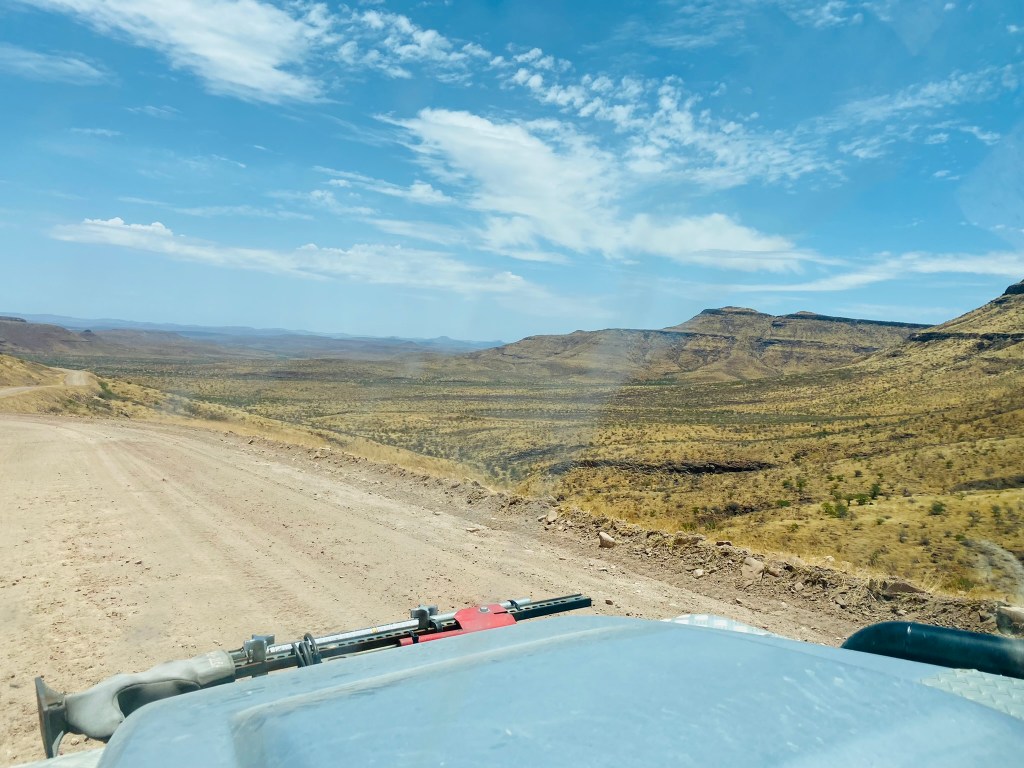
So off we went, heading deep into the unknown yet again. From the town of Sesfontein it was 100km down a very bad road and it looked as though we would be lucky to get there before dark. But the views were spectacular.
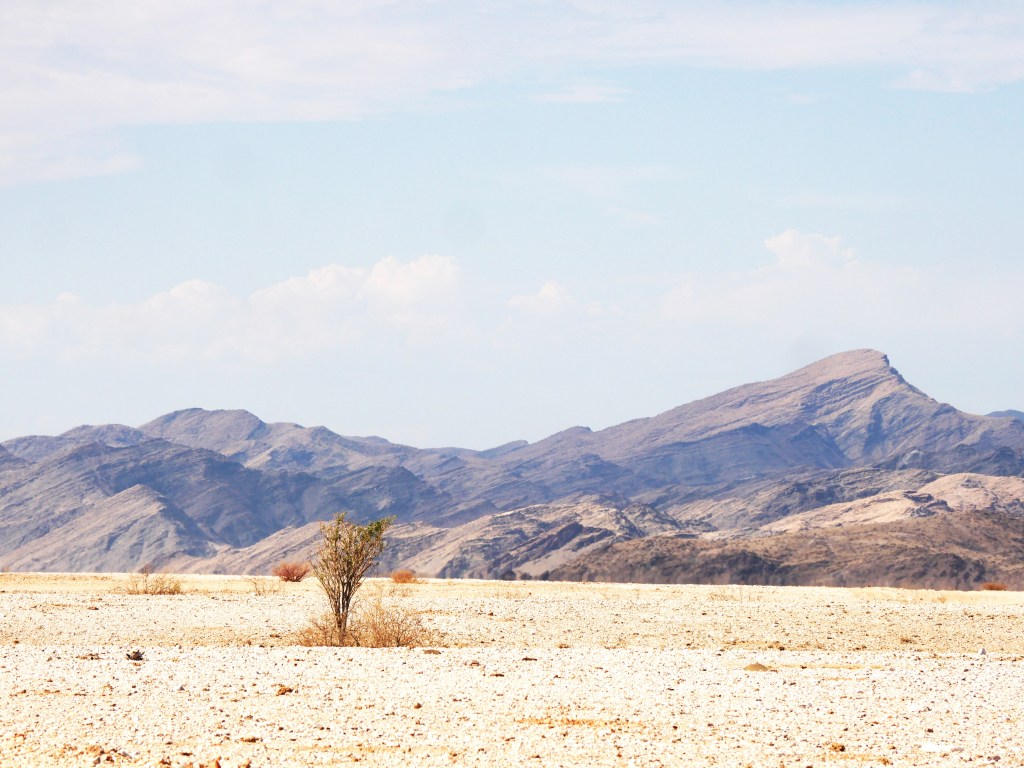
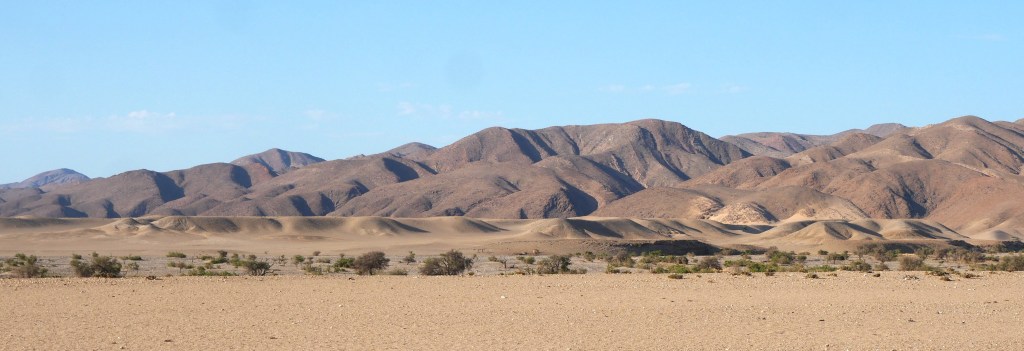
We weren´t sure exactly what there was to do at Puros but that was not the point, the point was to experience the scenery and remoteness and we were enjoying every minute.
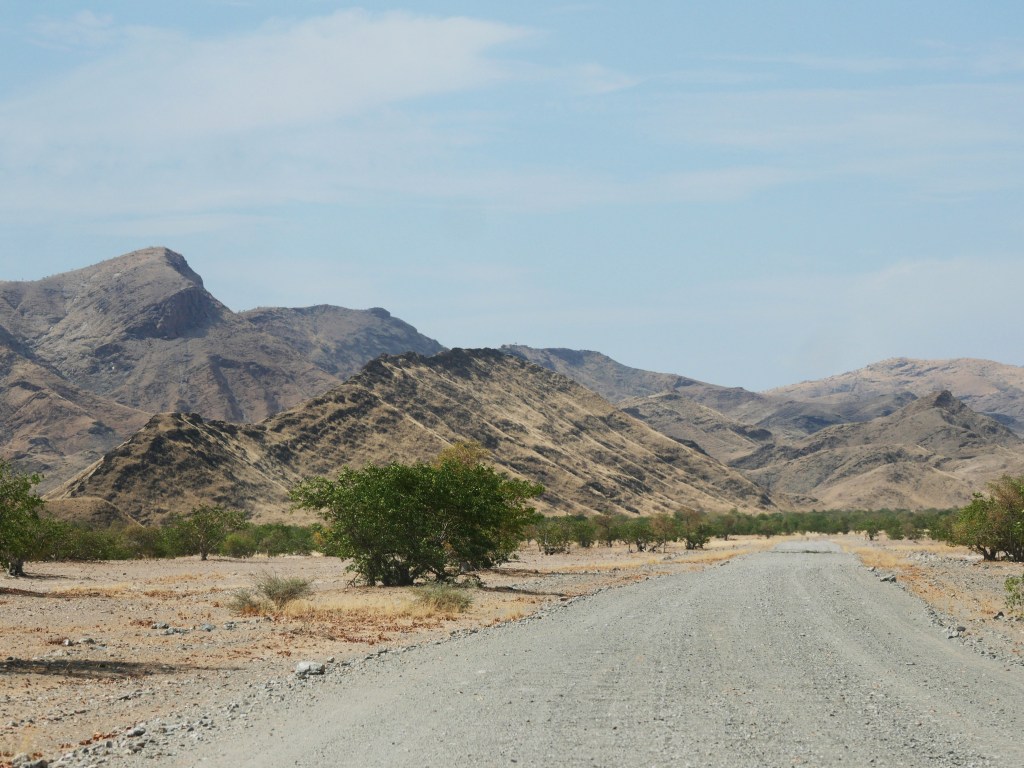
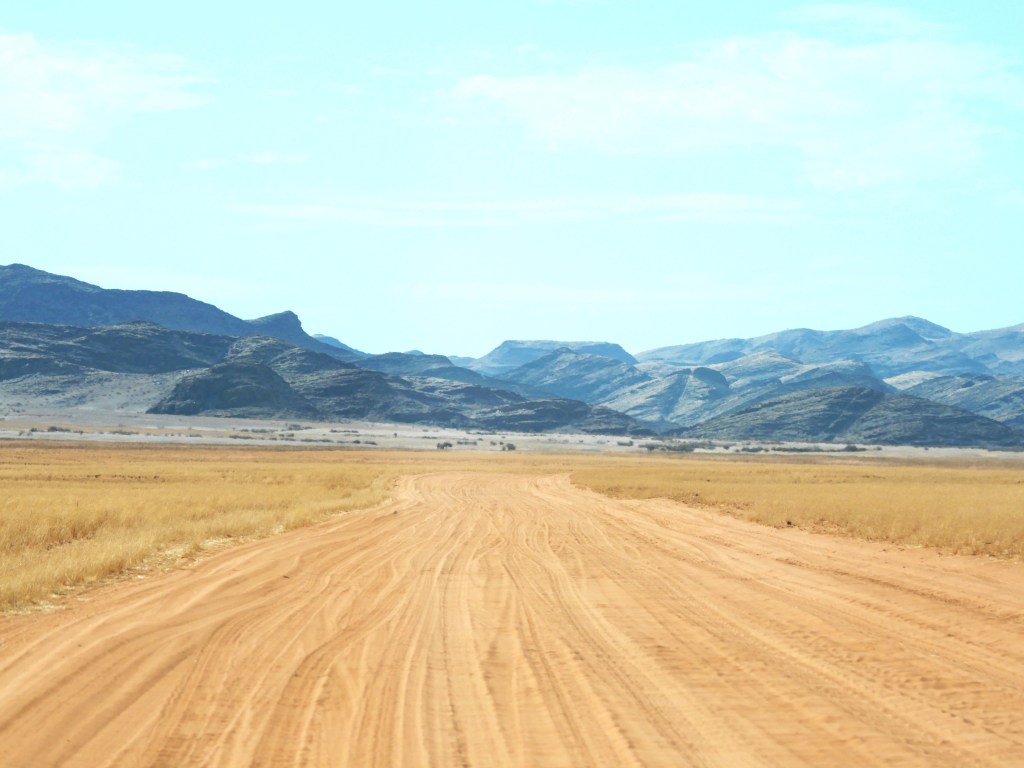
The road was an eclectic mixture of rocks, sand, narrow, wide.
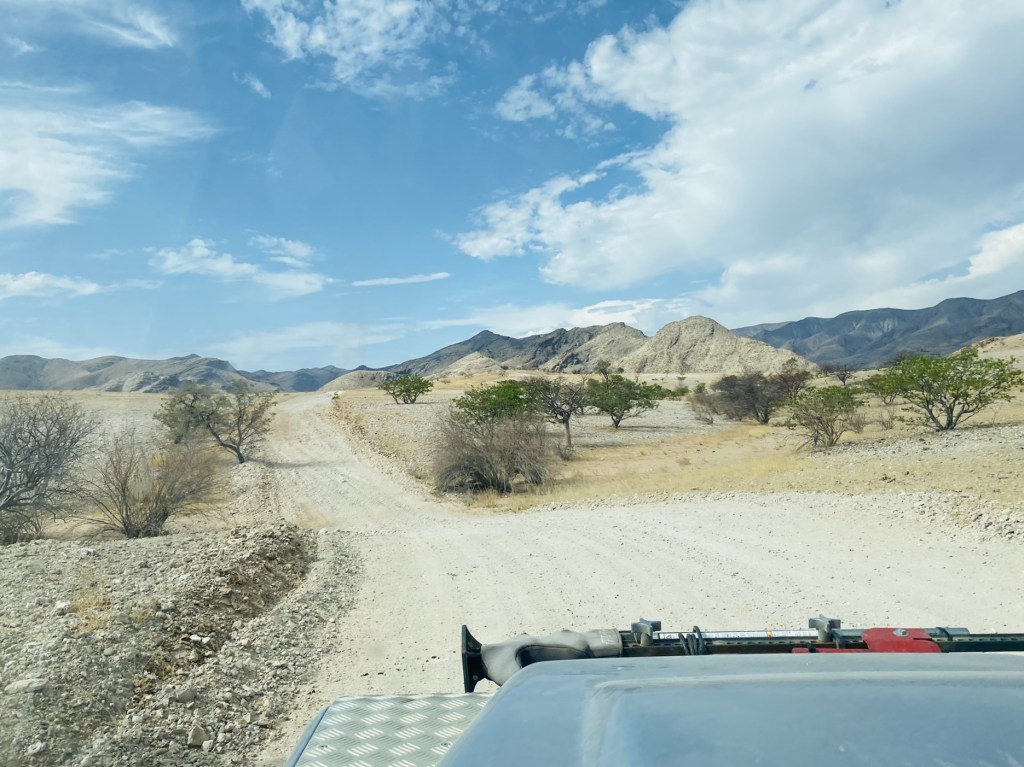
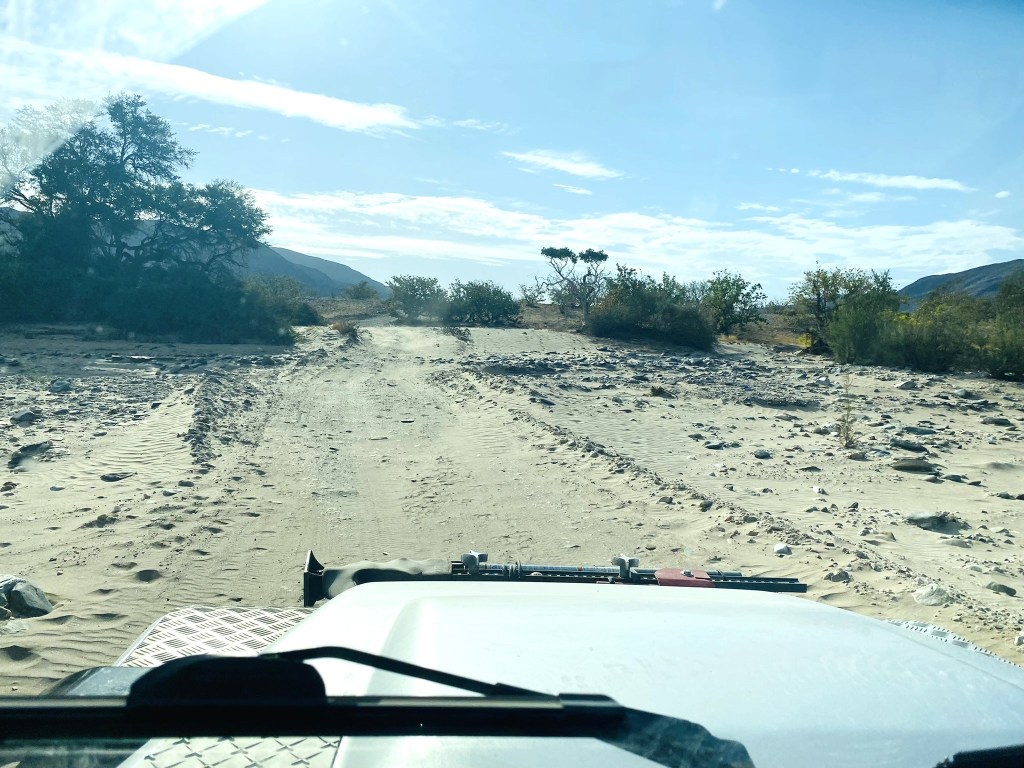
Sometimes it was a winding country road
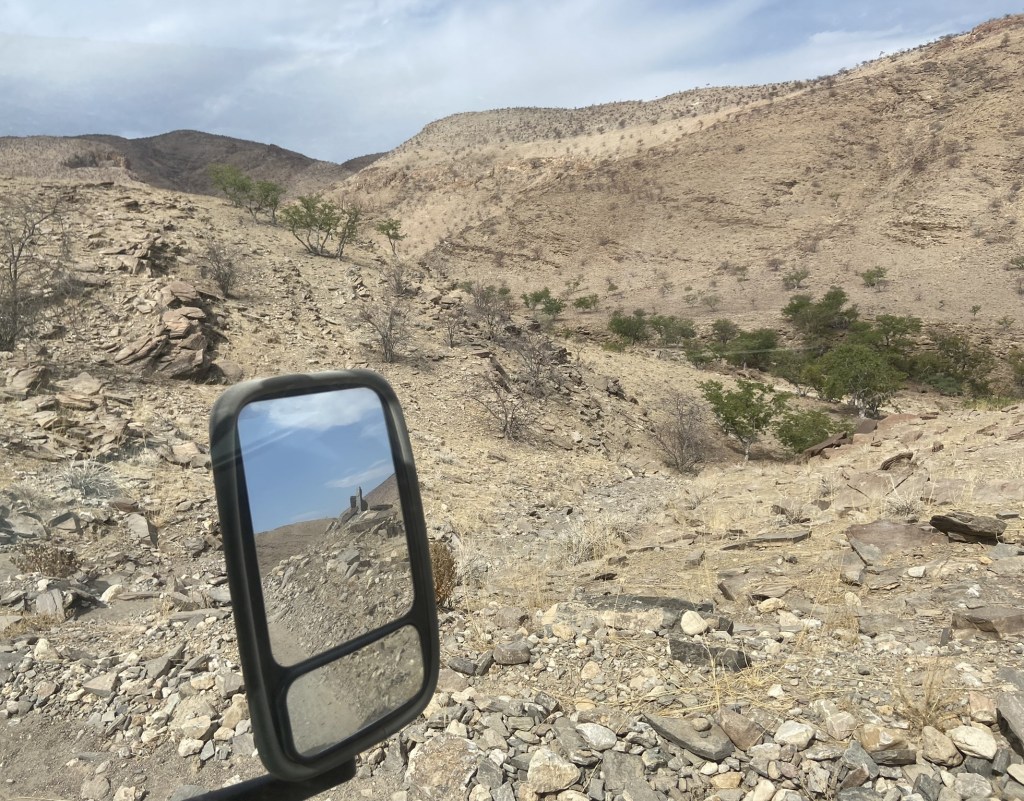
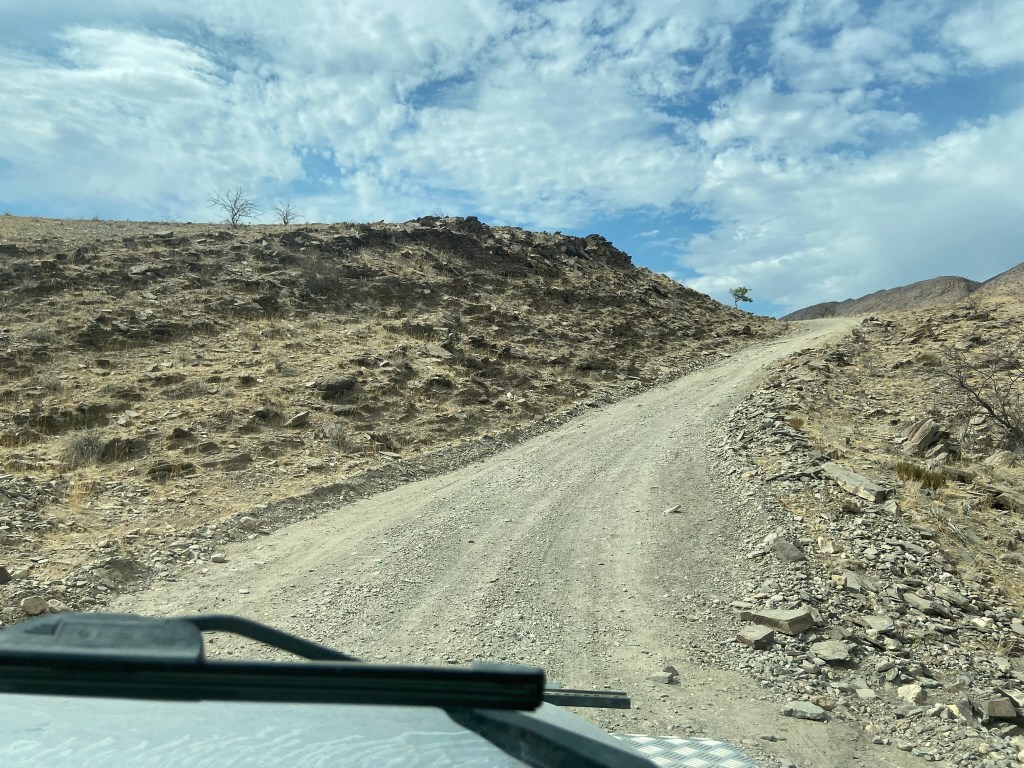
Other times it was a four lane motorway!
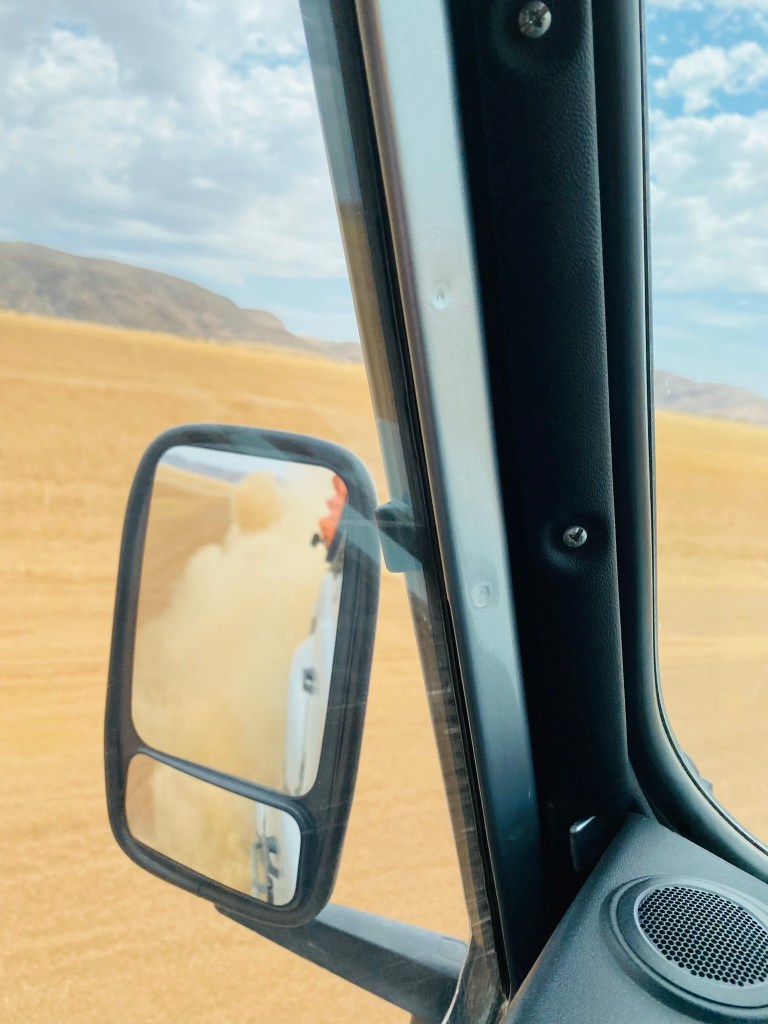
At one point the sand was so deep and fine that Henry´s tyres threw it up in such quantities that we couldn´t see through the windows.
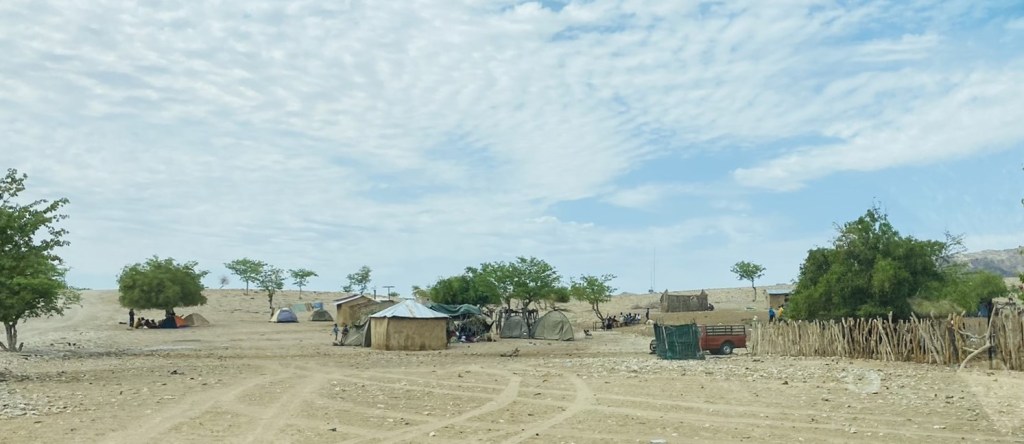
After about 2 hours of driving through nothing we came across a large village with hundreds of people and goats milling around. It looked very colourful but I was curious to see that there were a lot of tents around, most with trucks parked up next to them.
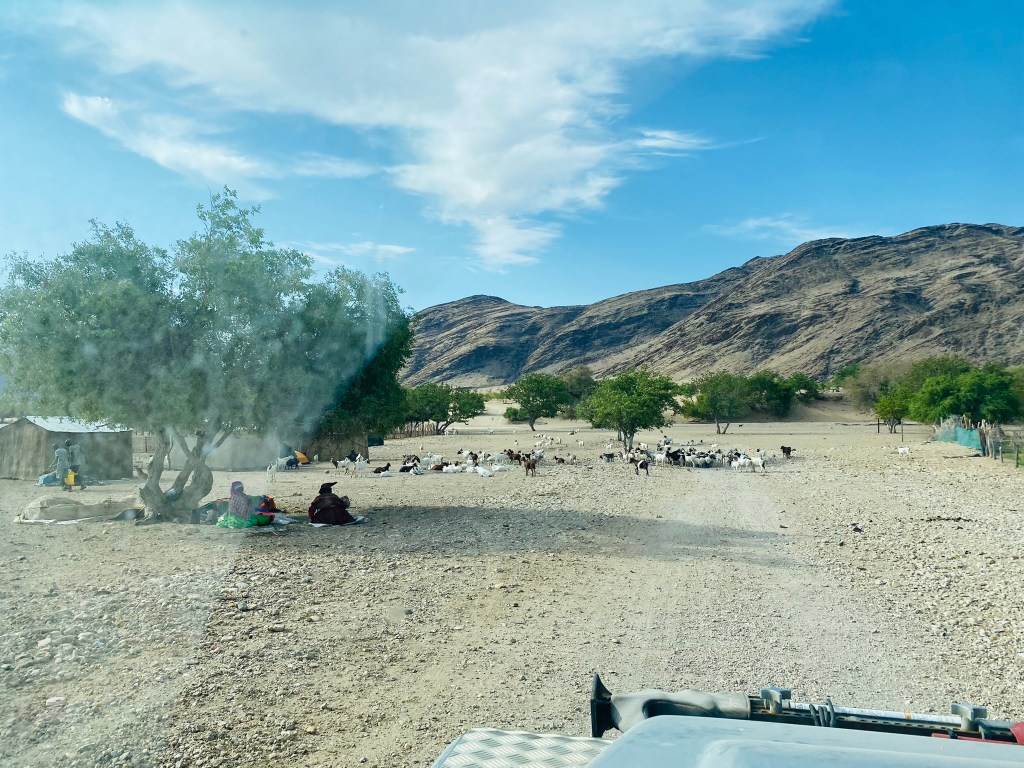
It seemed strange at the time – why would the local people be living in tents rather than houses or huts? We found out later than the ´big man´ of the area had recently died and everyone was travelling from far and wide to the village to pay their respects. The funeral gathering would last two to three weeks and most things around, including our campsite soon, would be closed for the duration.
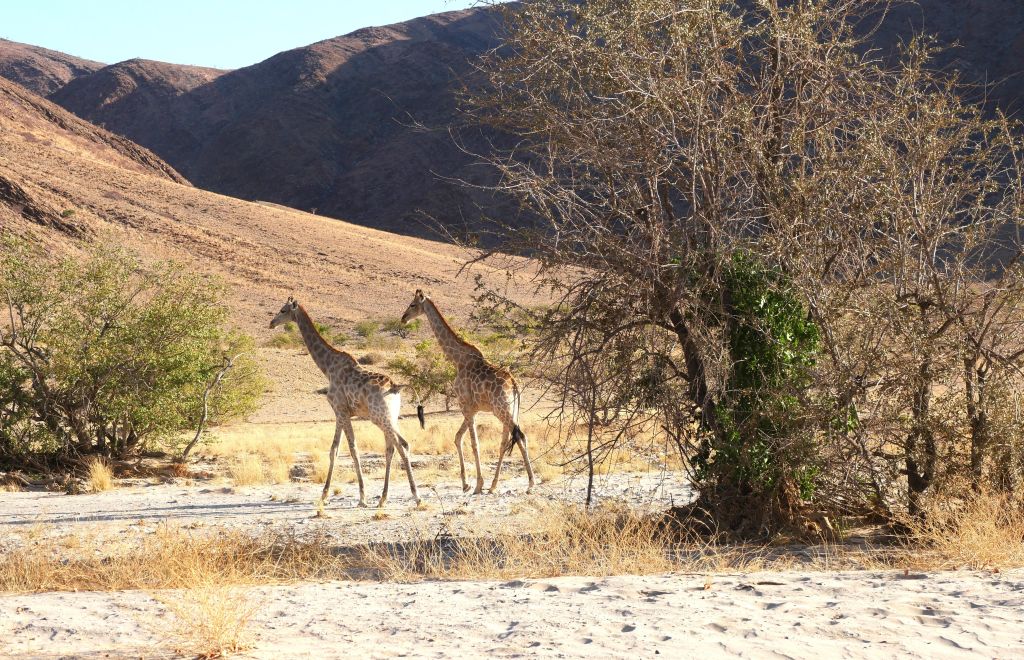
Shortly afterwards, with the people left far behind, we came across a couple of giraffe wandering calmly across the road
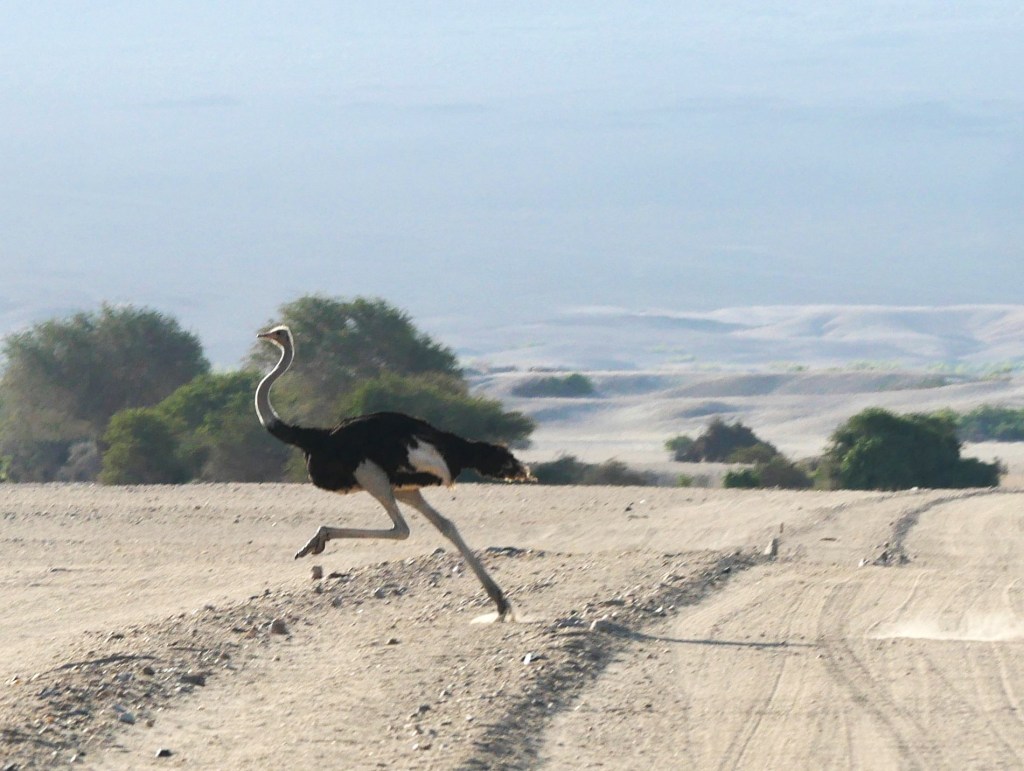
But a fast-moving ostrich clearly didn´t want to get involved with the big silver thing making all the racket!
Eventually we made it to the town of Puros. It was just a few houses scattered around and the road had become a couple of tyre tracks in the sand.

We tried to follow the sat nav to the community campsite but found ourselves going way off route more than once. Finally, after many back-tracks and about-turns, we made it and were greeted by a red-faced guy out of breath running up to us – he had been chasing us around as we took all the wrong turns trying to show us the way!
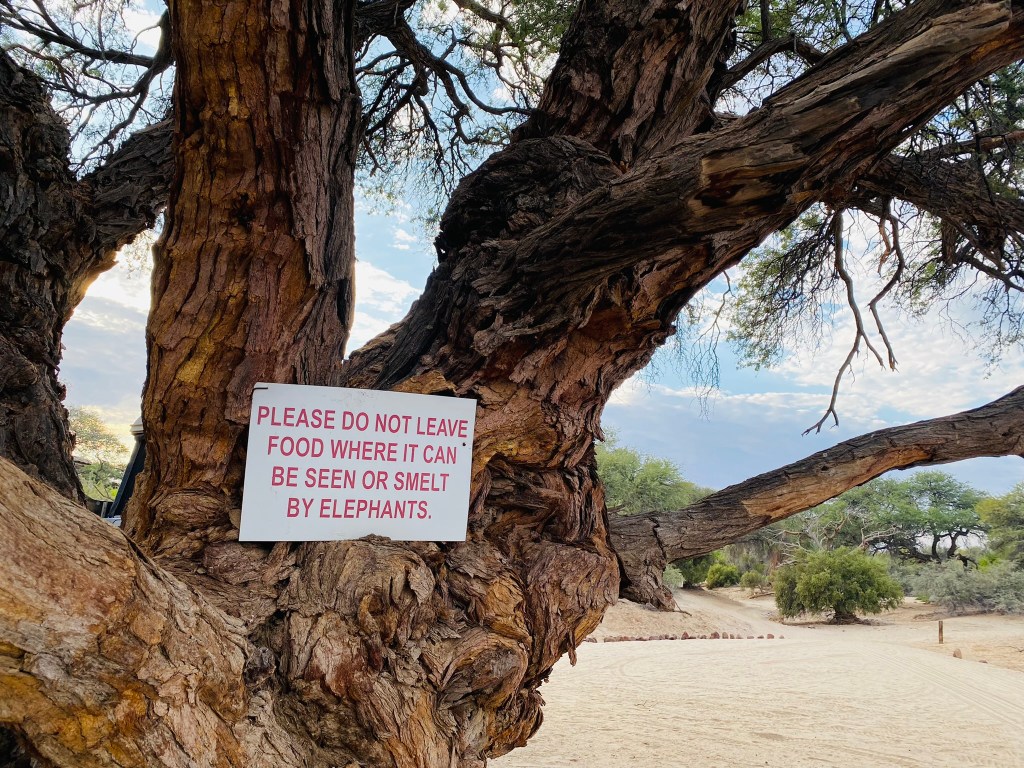
The campsite was beautiful. We had our own private ablutions block and some hungry neighbours!
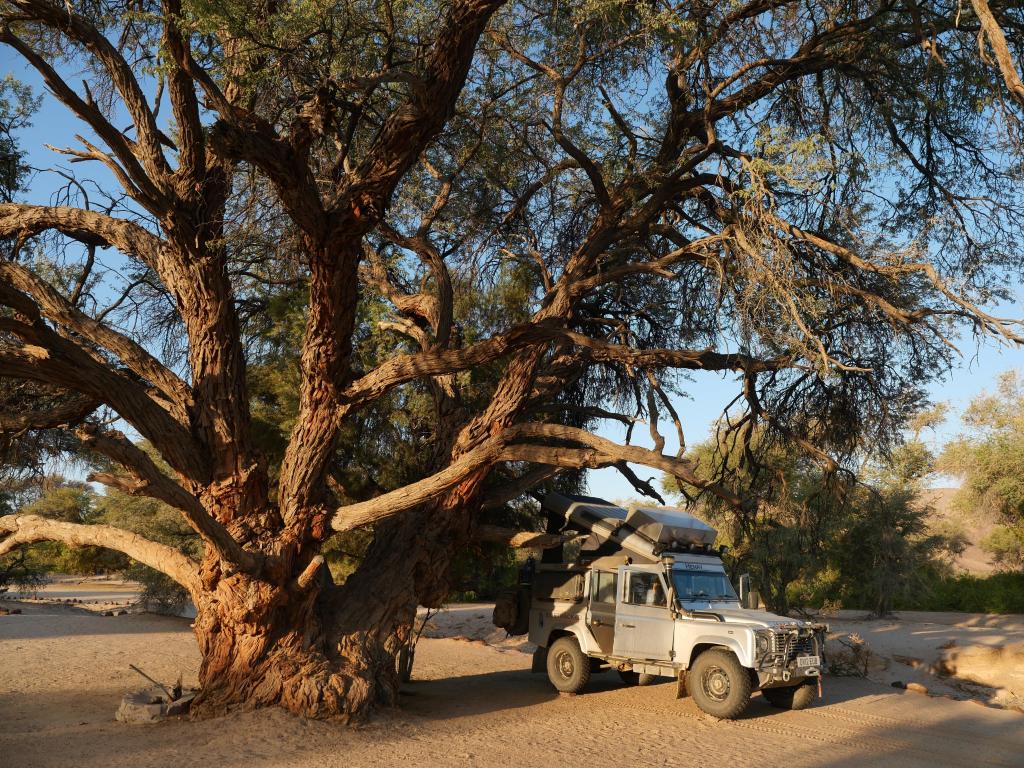
It was cooler in the evenings here and there were fewer mosquitoes so we slept well and felt invigorated the next morning.
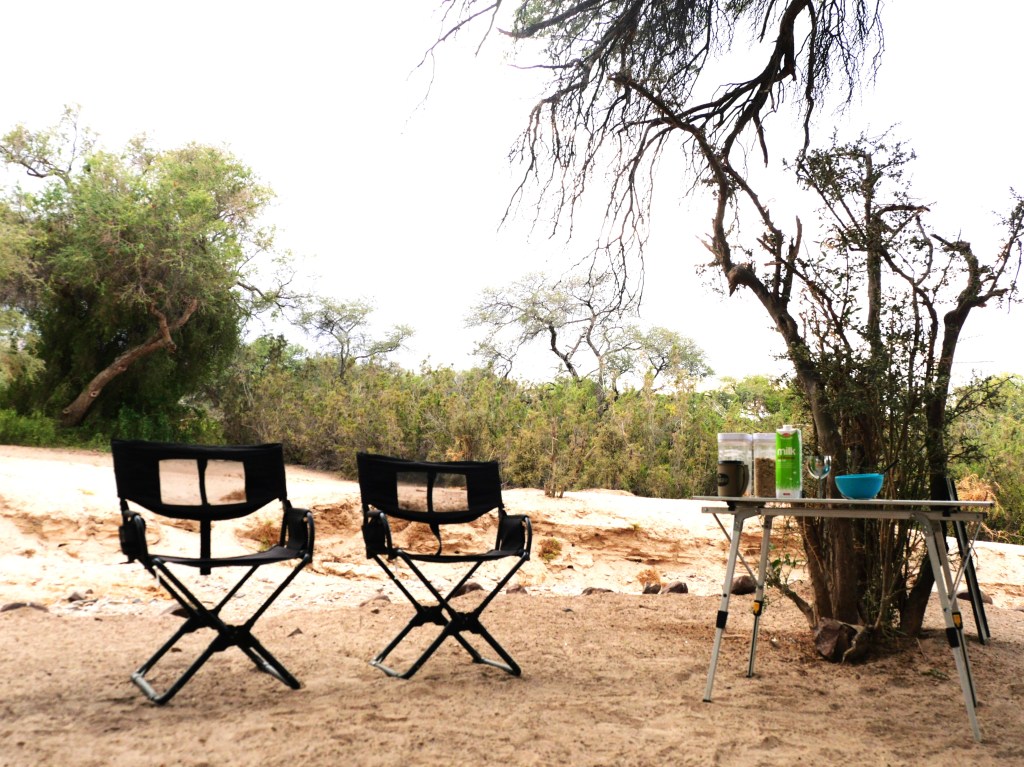
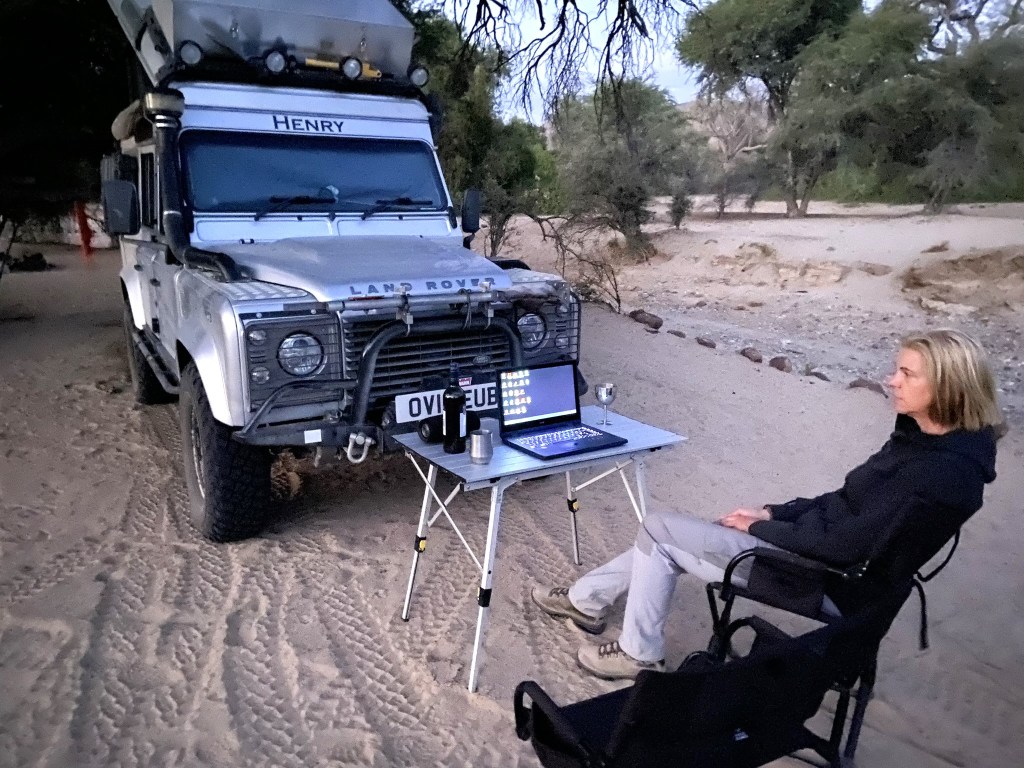
We hired a guide to take us on a walk through the conservancy that afternoon when the sun had cooled. There were few animals to see but that didn´t matter.
The views were stunning
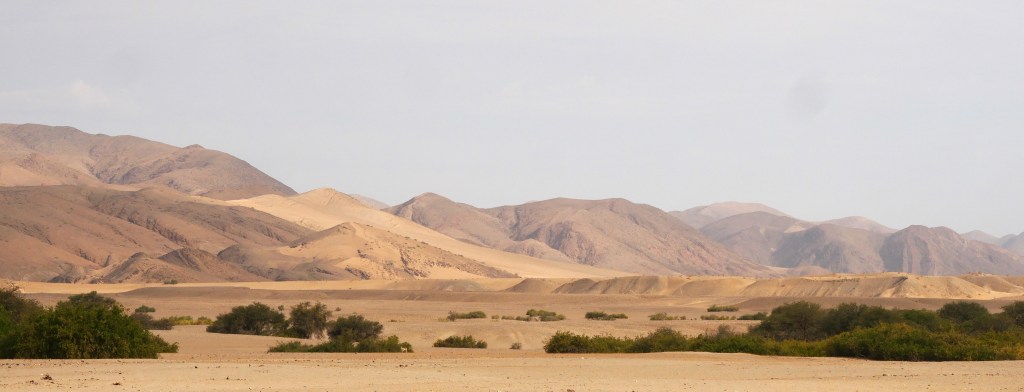
It was peaceful and there was a very welcome cool breeze.
We took the opportunity of chatting to our guide to understand more about the local culture. The people here are Himba.
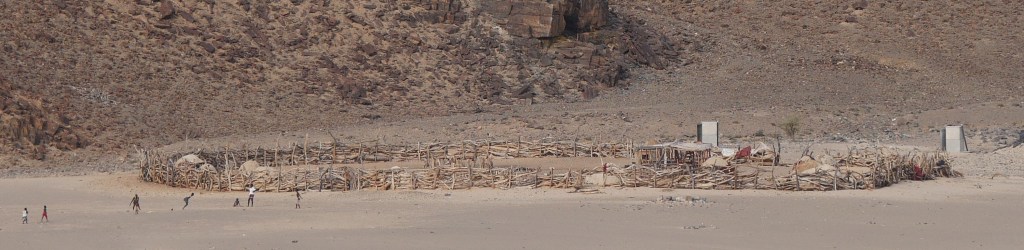
Many stay in their villages and continue to live a traditional life. Others move away to the cities and still others, like our guide, stay local but find work outside of farming and live a more modern life.
He talked about marriage and children. Men, apparently, take no responsibility for children, they belong to the women. The average age for a man to marry is around 40 as apparently ´there are so many other women to have first´. And men can have numerous wives, depending solely on how many they can afford to buy with cattle from their parents. His father had 14 wives and 120 children. These days it´s more common for a married couple to have nearer to 10 children – they will send their favourite 6 to the towns to be educated and find work and keep the other 4 in the village to tend the animals.
As an educated man working outside of the village I can only assume our guide was a favourite!
We also heard that whilst the villagers value the wildlife there is a problem of poaching from outsiders. If caught, punishment is reassuringly harsh. 45 years in prison for killing a rhino, 25-30 years for a lion or elephant and 8 years for a giraffe. Animals are serious business for Namibia.
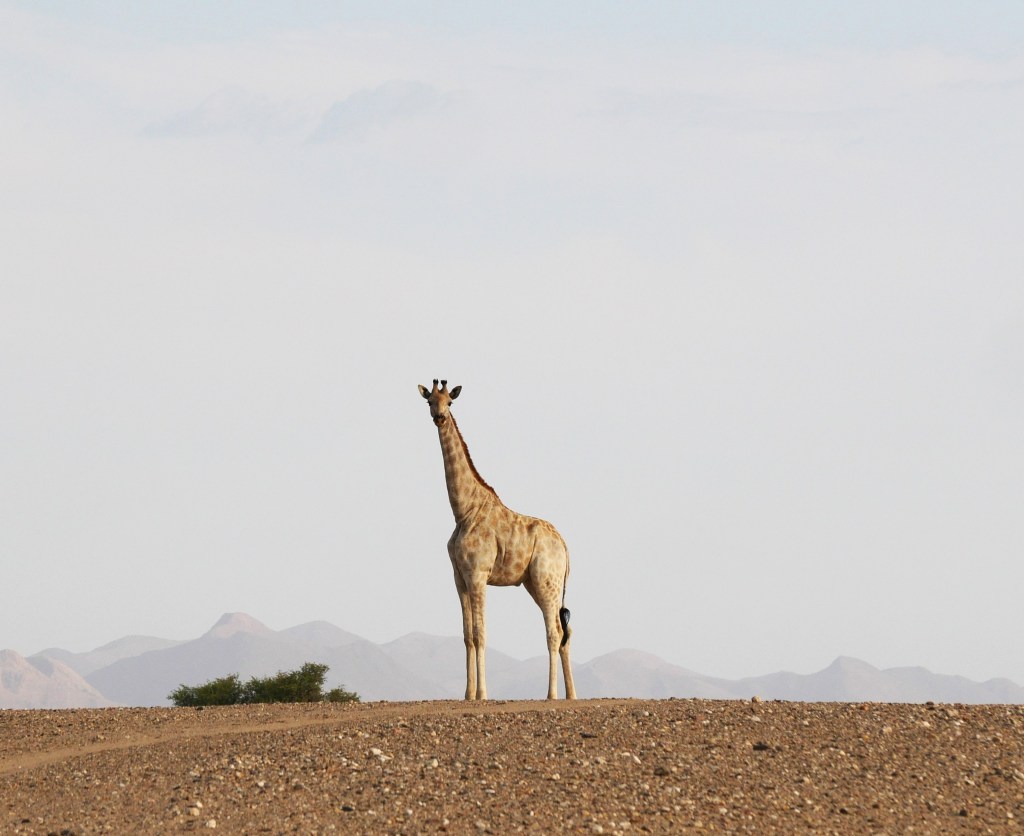
As if to prove the point, as we were winding our way back to the campsite we came across a large herd of giraffe.
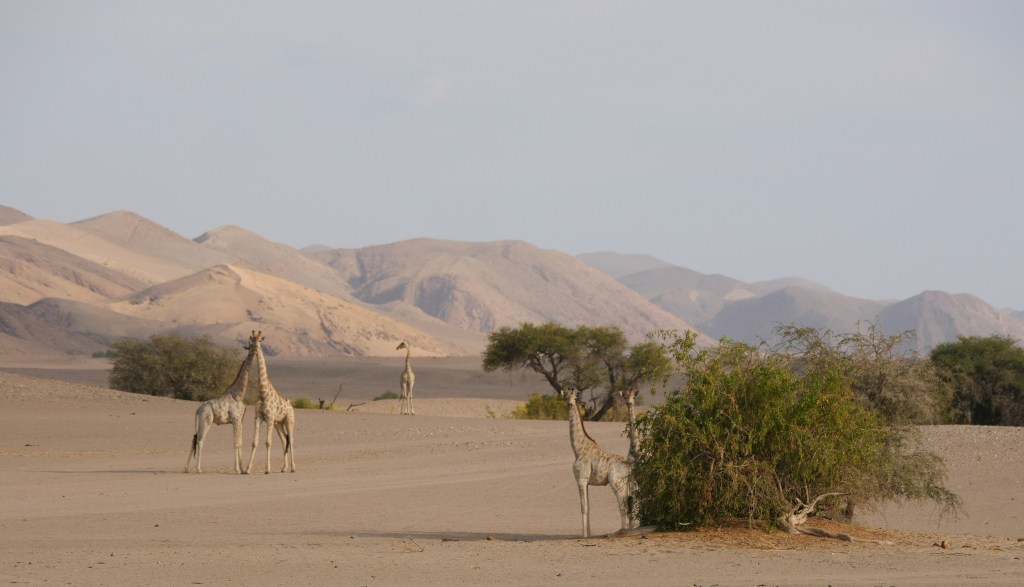
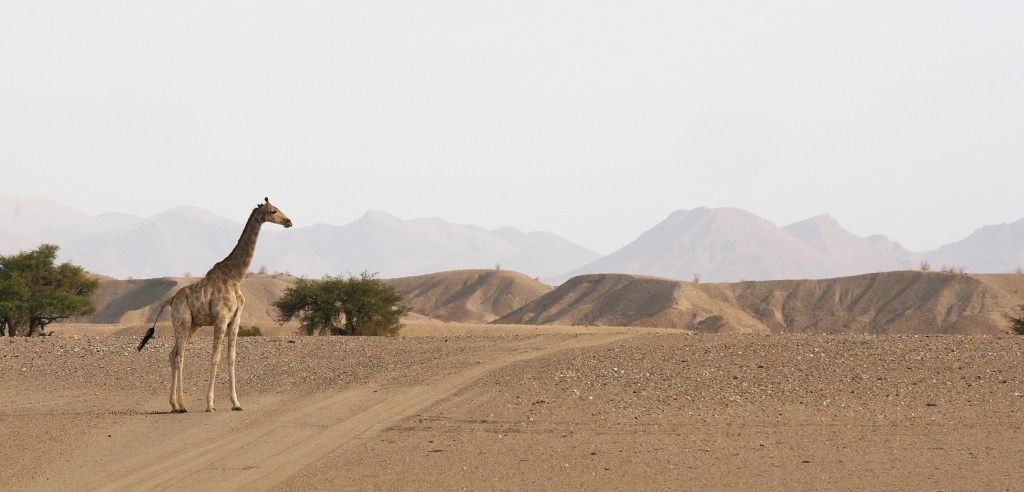
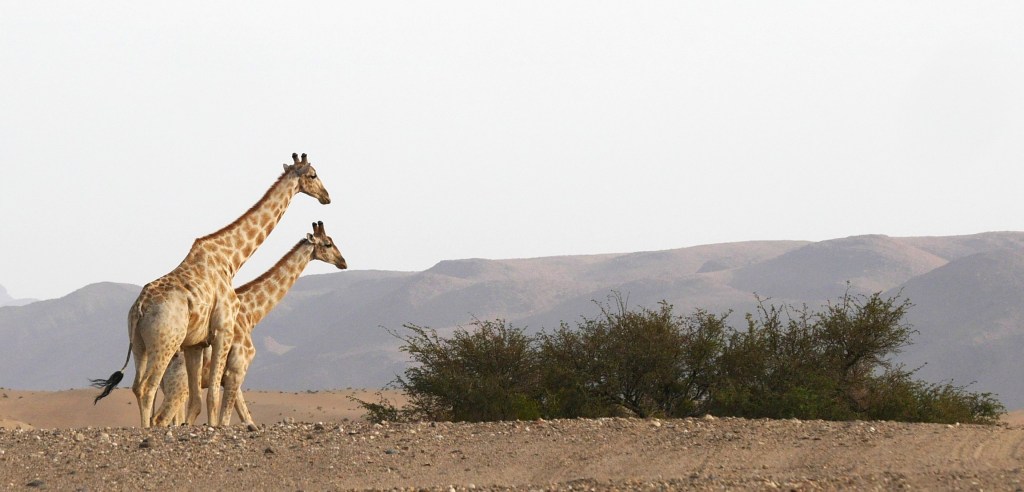
Getting close to these magnificent animals on foot was a wonderful experience.
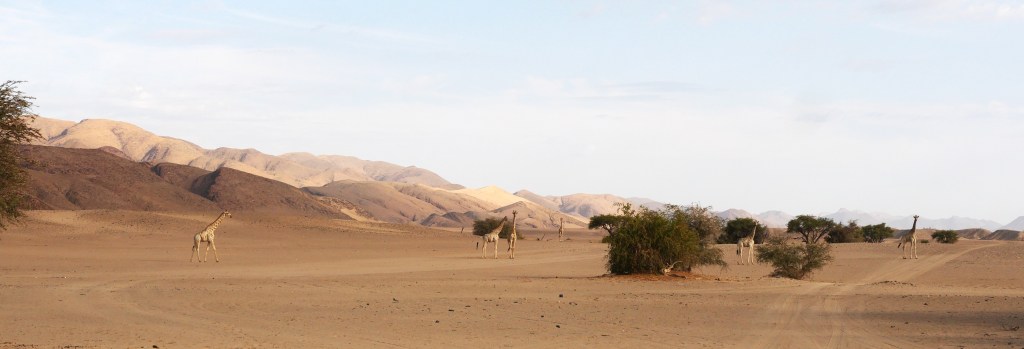
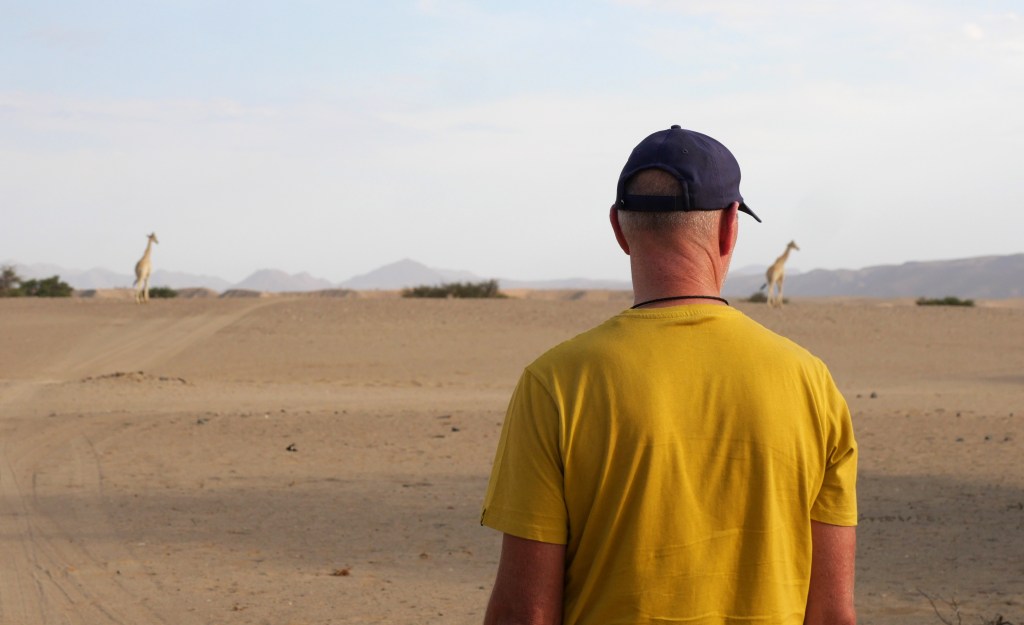
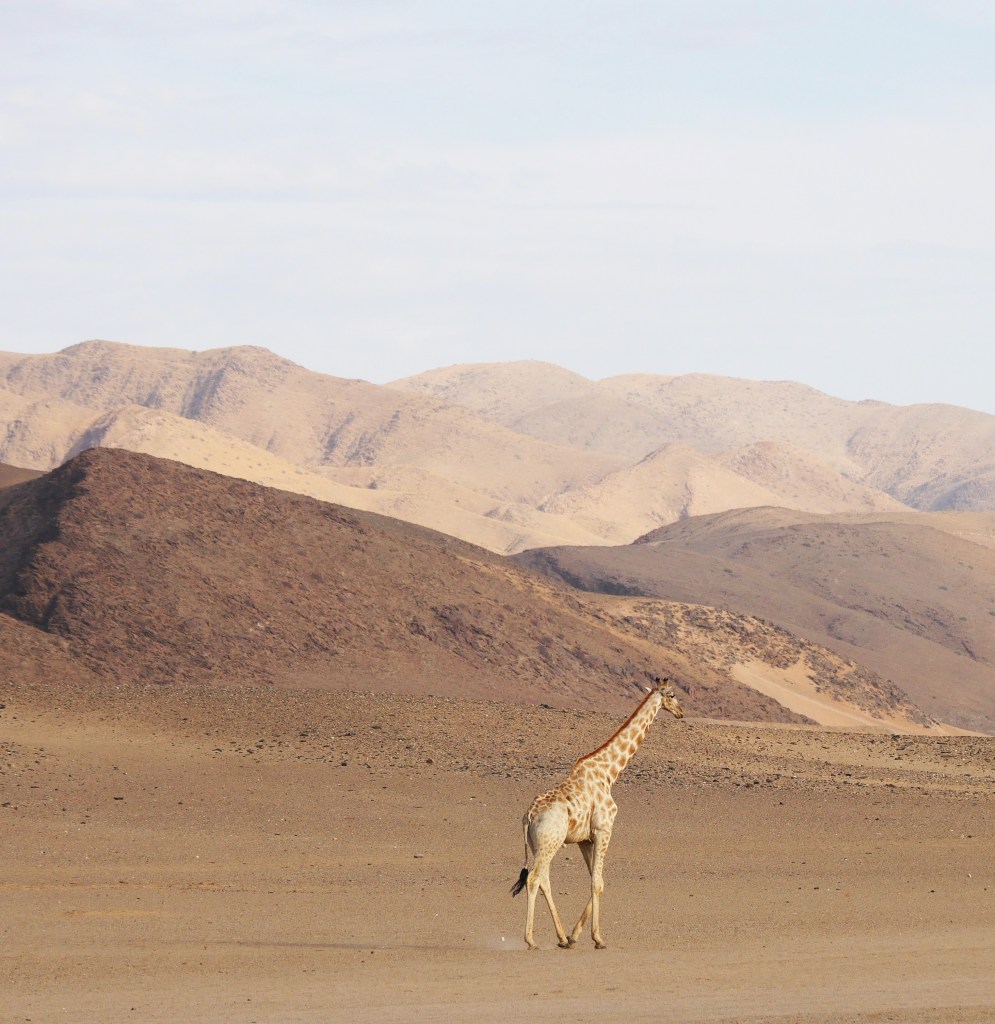
They surrounded us, eyeing us closely
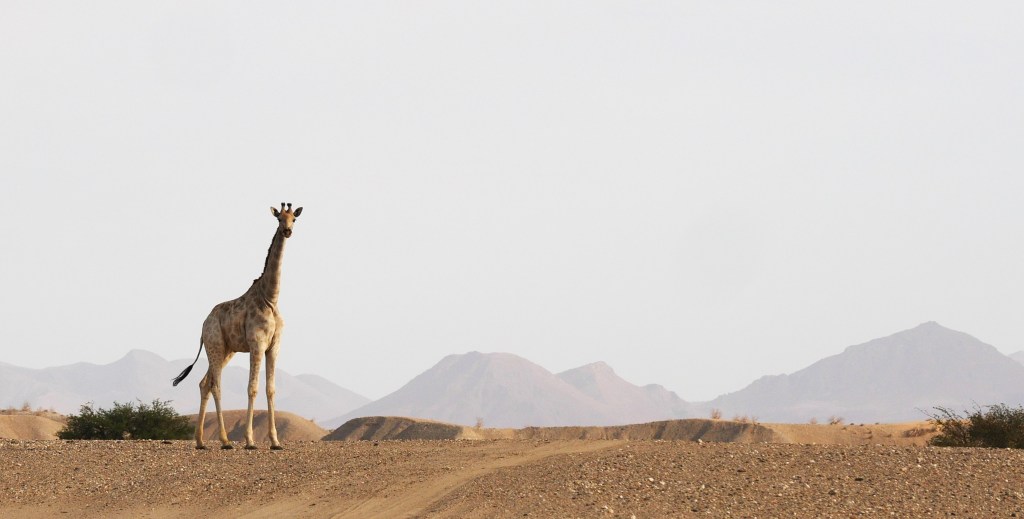
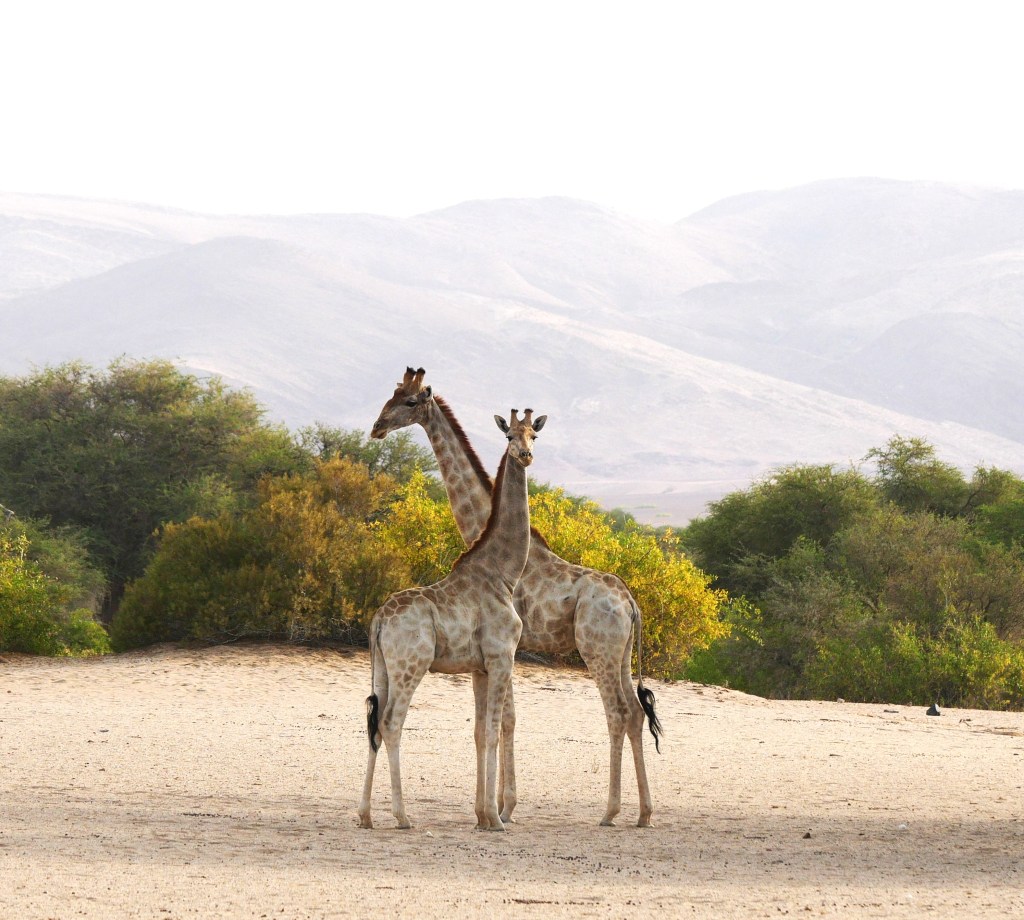
And three got stuck on the wrong side of us at one point
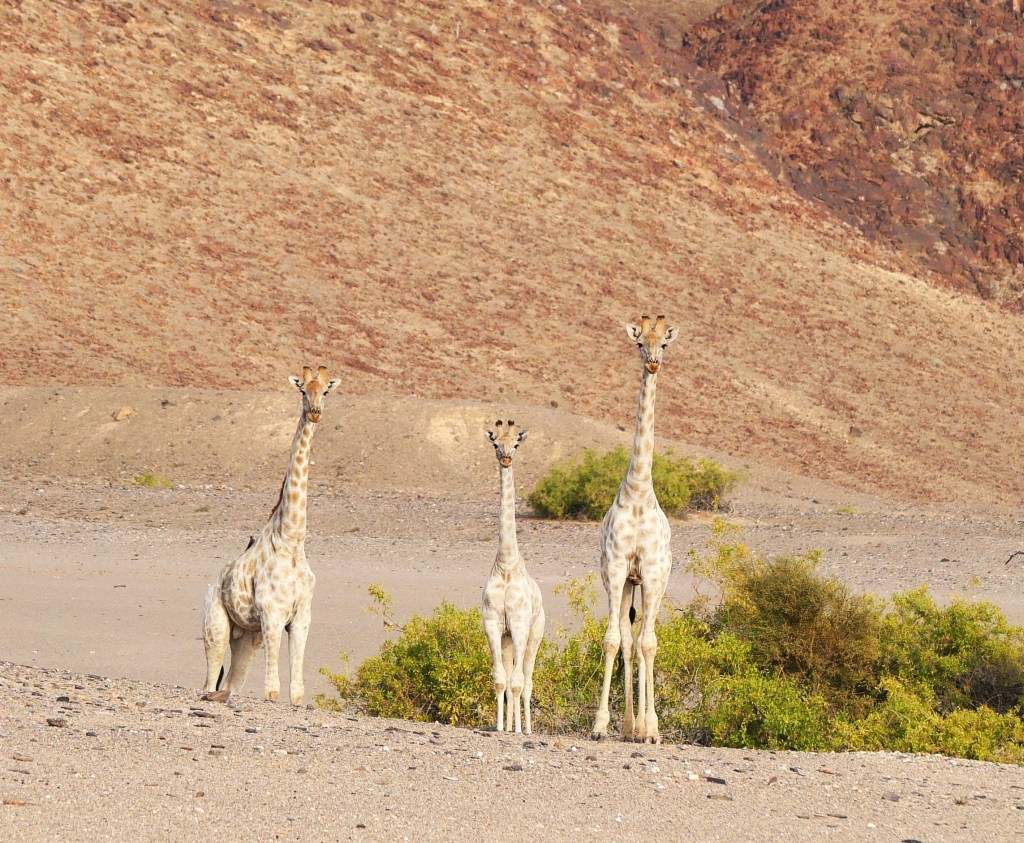
The two adults tried to lead the way past, back to the herd, but the baby was unsure
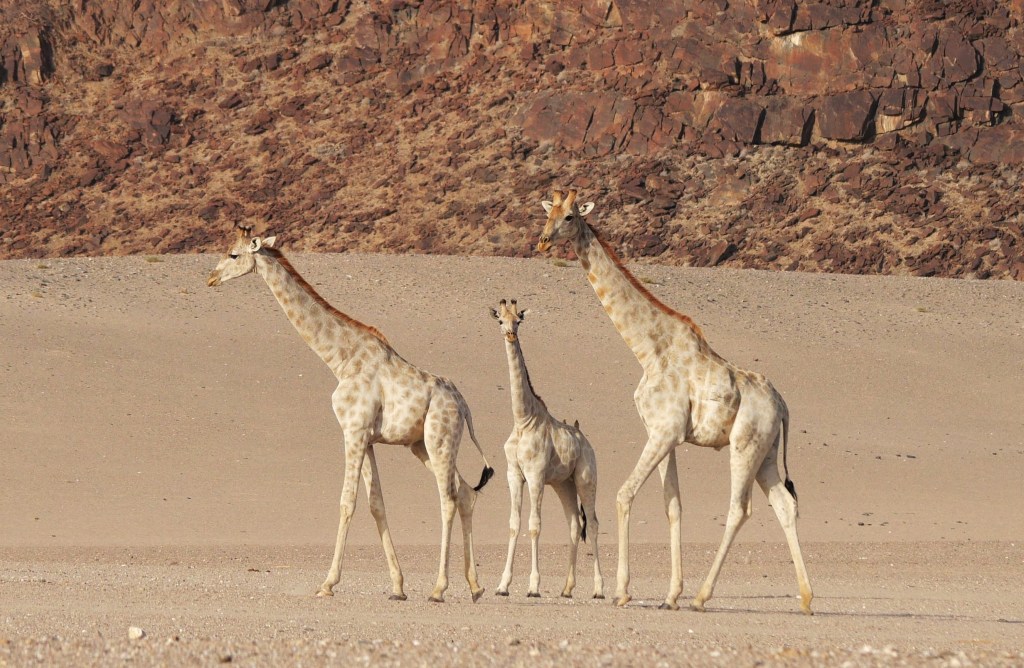
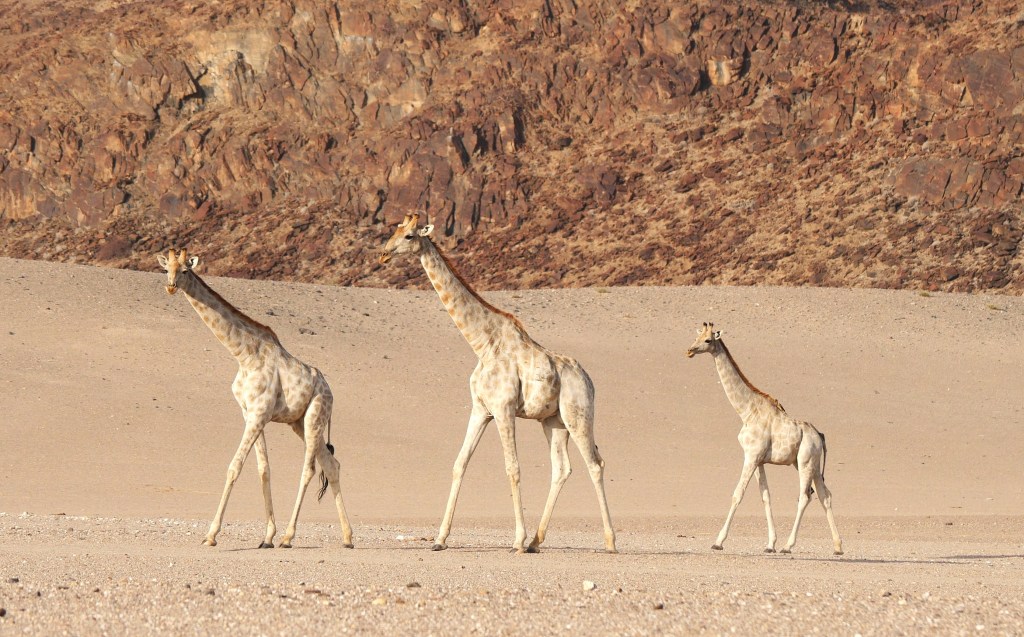
Eventually they all got their courage up and walked past us, one keeping a watchful eye out
That evening we came across another, much less welcome, creature – one which we had mercifully not encountered yet…the Tetse Fly.
For those of you who don´t know about Tetse Flies, they are large, black flies who look as evil as they are. They are attracted to blue, can fly as fast as a safari vehicle (so you can´t outrun them) and they suck your blood like a vampire. They make mosquities look like amateurs! Whilst the proboscis of a mosquito is thin and needle like, tapered at the end so you don´t know you´ve been bitten until it starts to itch, that of the Tetse Fly is more akin to a large straw. They stab you with it causing not just immense pain but actual bleeding. And they´re hardy little buggers – when James was bitten by one that night he hit it square on three times before it eventually let go and flew off.
And when I found two inside Henry before we went to bed I hit them with a fly swatter and they just sat there looking at me. I actually had to stamp on one repeatedly on the floor with my walking boots on before I killed it.
We had booked a scenic drive the next morning but things around here were all a bit vague and no firms plans had been agreed. We appeared to be entirely alone at the campsite and when no-one had turned up by 8am I had to wander up the desert tracks through the sand dunes to try and find someone who looked like they might be a guide. Eventually I found Kai who was surprised to see me appearing through the dunes on my own but very happy to take us on the trip.
The drive was lovely in general but had one very exceptional factor which we hadn´t seen for nearly two months…water!
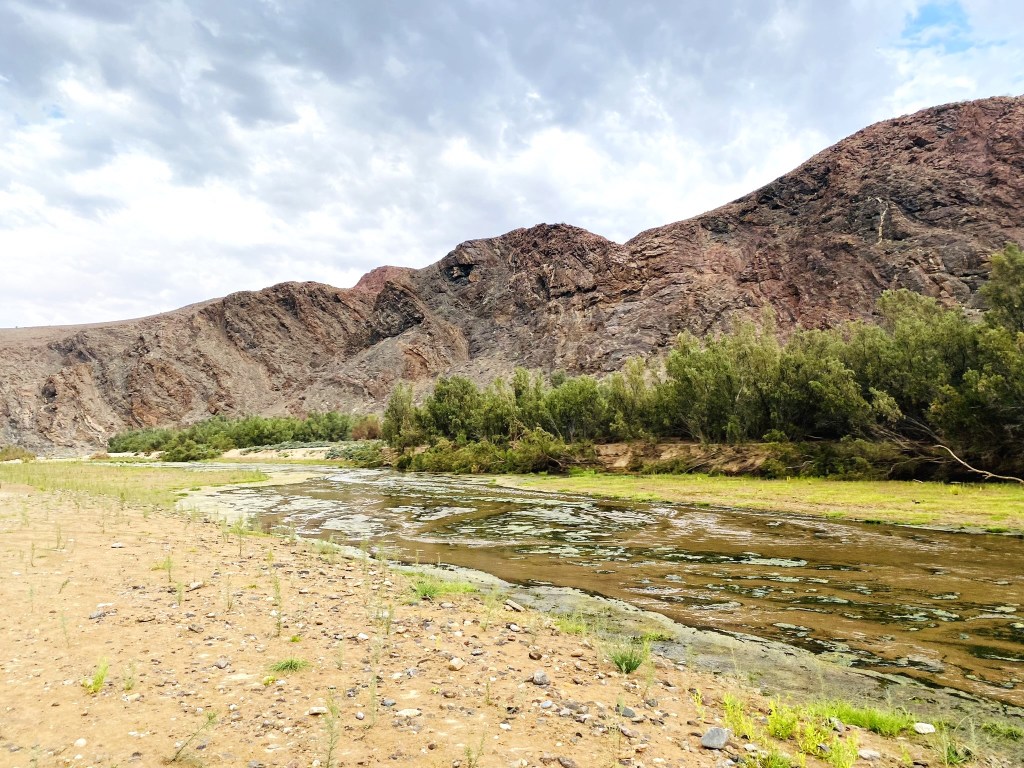
Anyone who studies a map of Namibia will see countless rivers marked, criss-crossing around the country. But rivers in Namibia do not come with water. They are dry river beds 99% of the time and water only flows for a few days at the height of the wet season – or often not at all in the all too common years of drought.
But up here in Puros they have the Hoarusib River and it flows all year round every year.
Until I saw it I hadn´t realised how much I missed water. It was beautiful and the whole atmosphere of the air was different here. Crisp, clean and fresh.

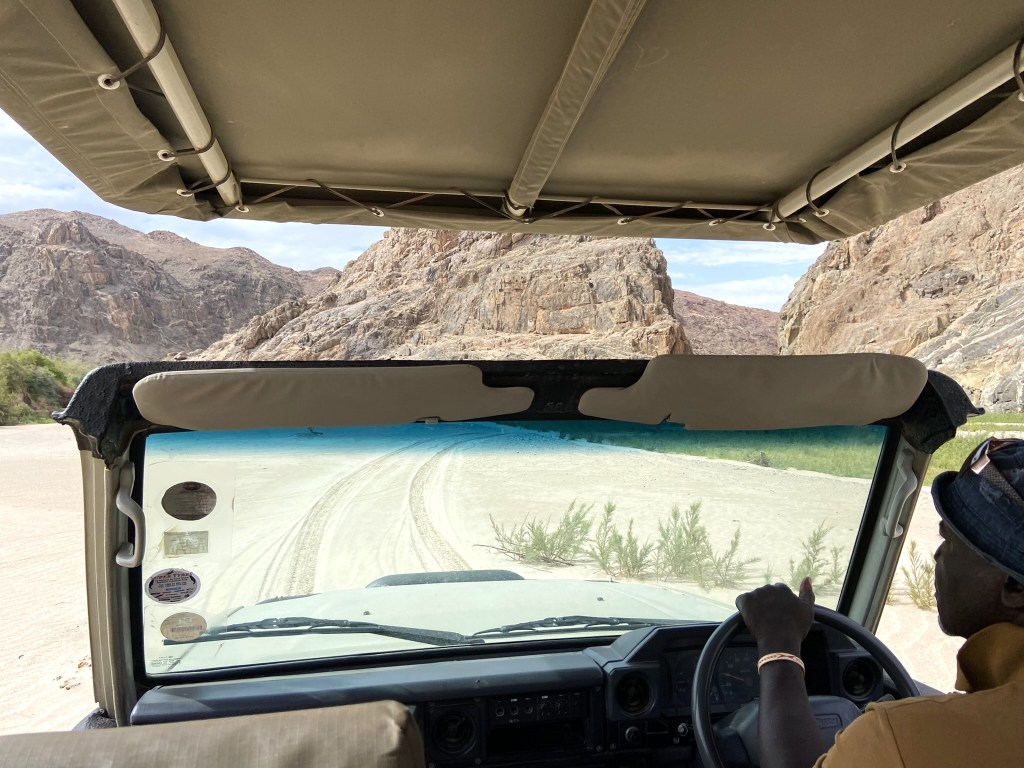
We drove in and out of the river, crossing back and forward with the tyres making swooshing sounds. It felt magical.
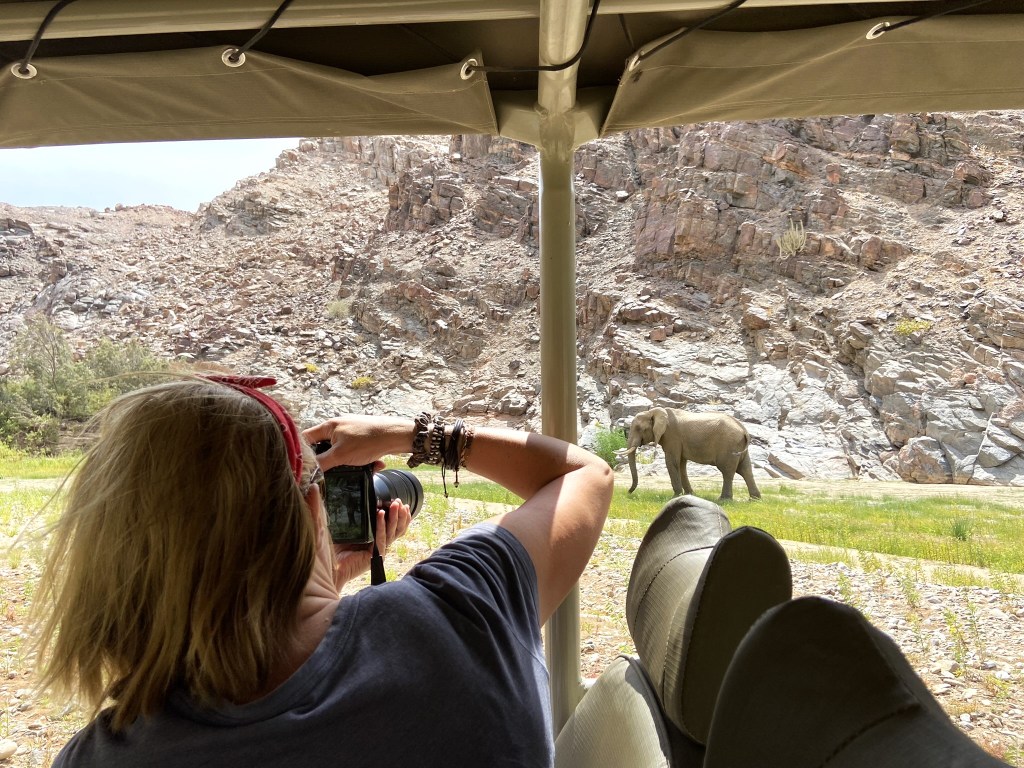
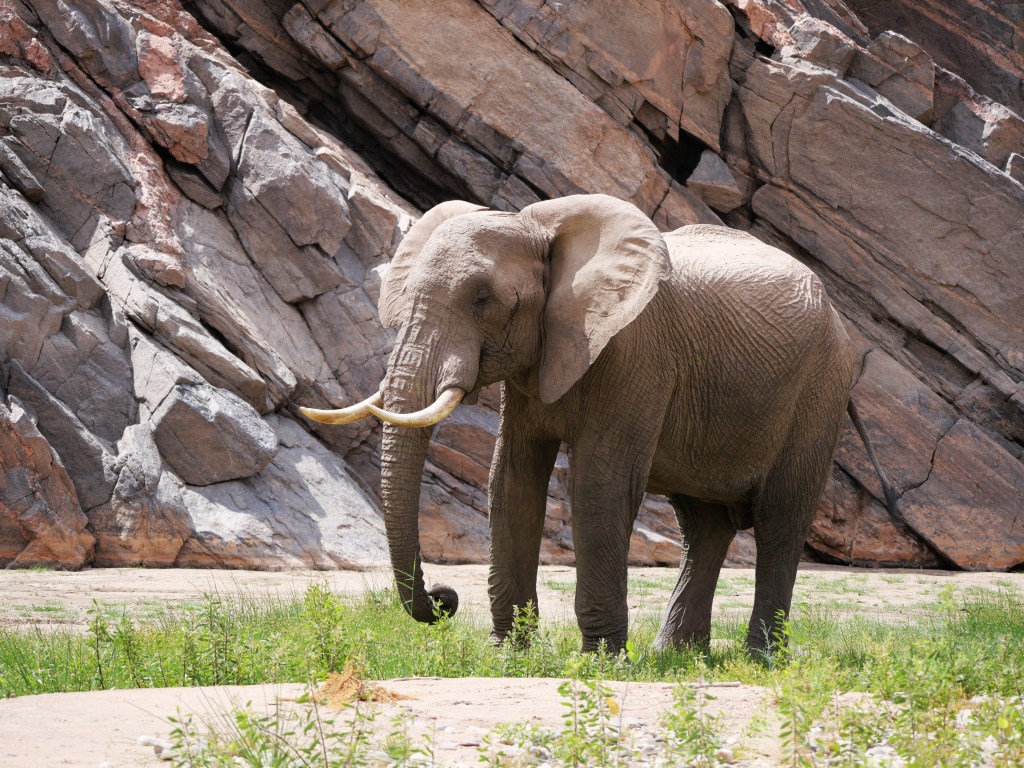
We saw a lone bull elephant


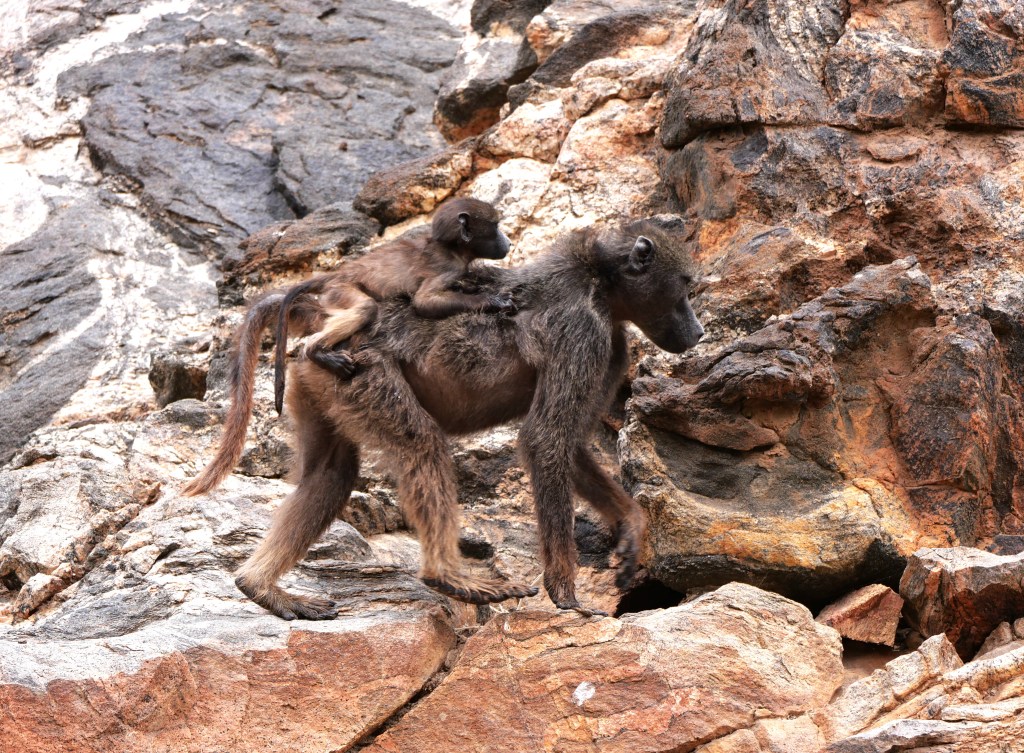
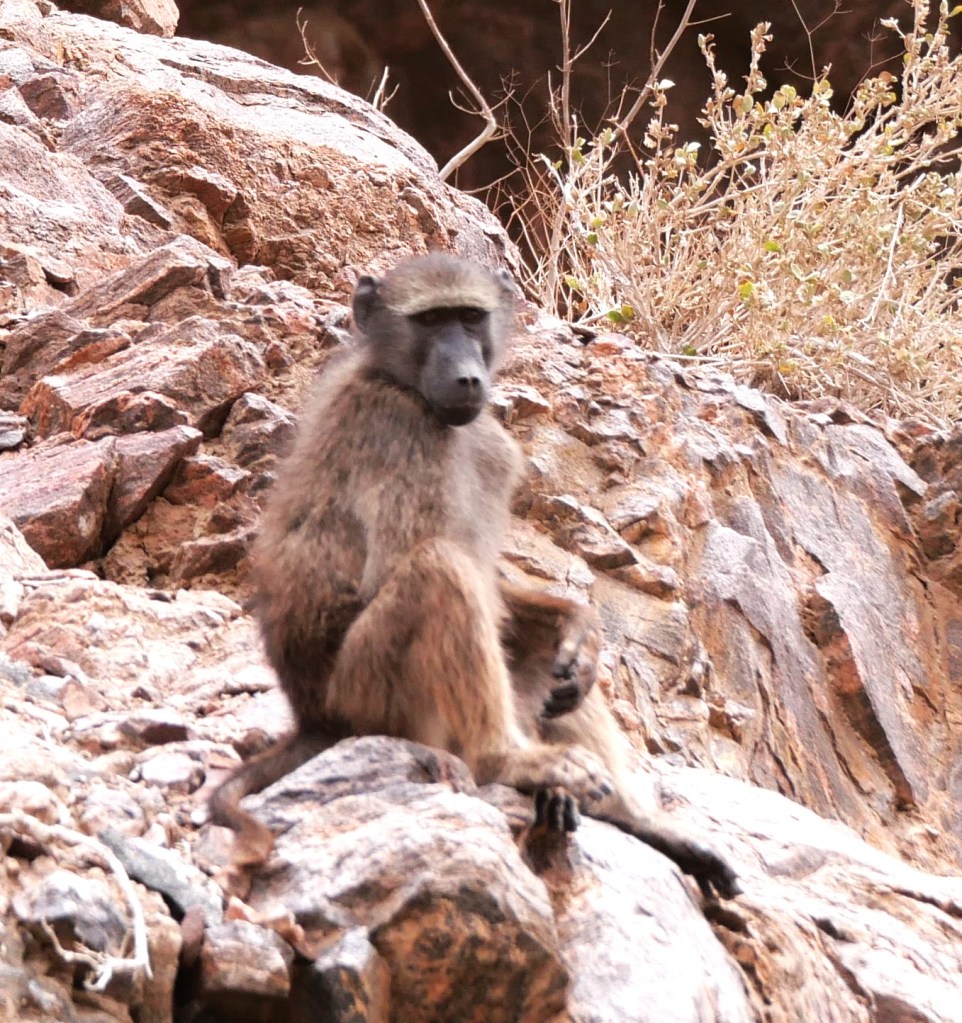
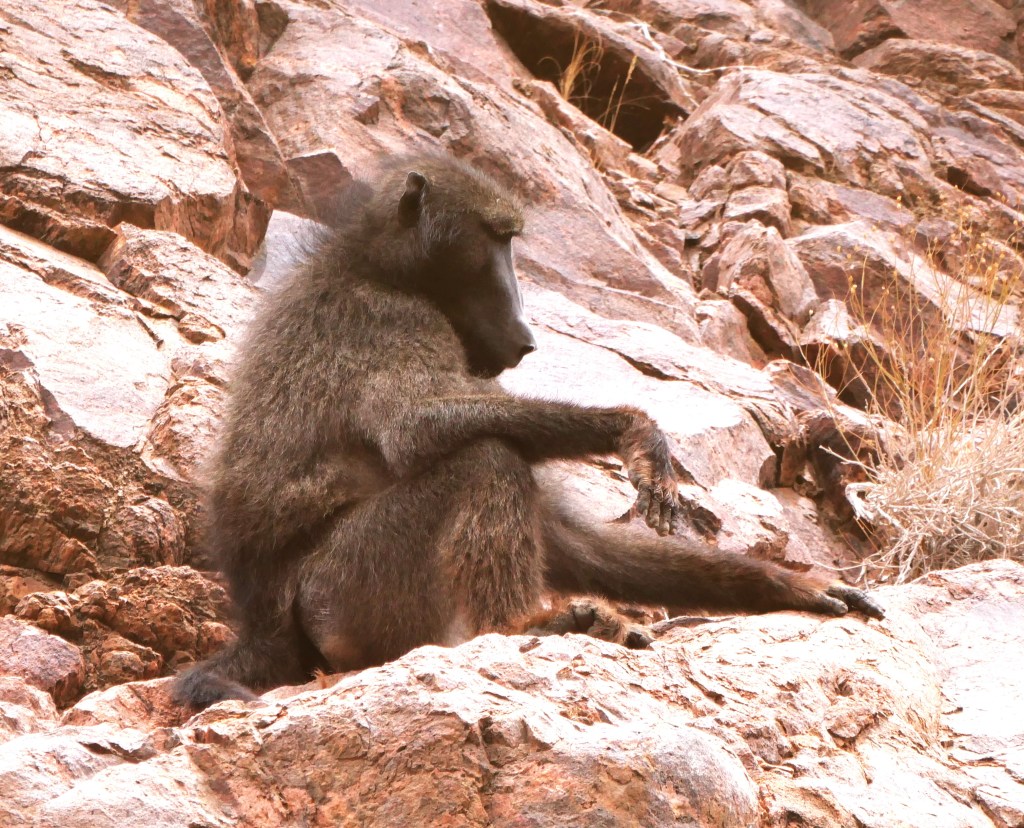
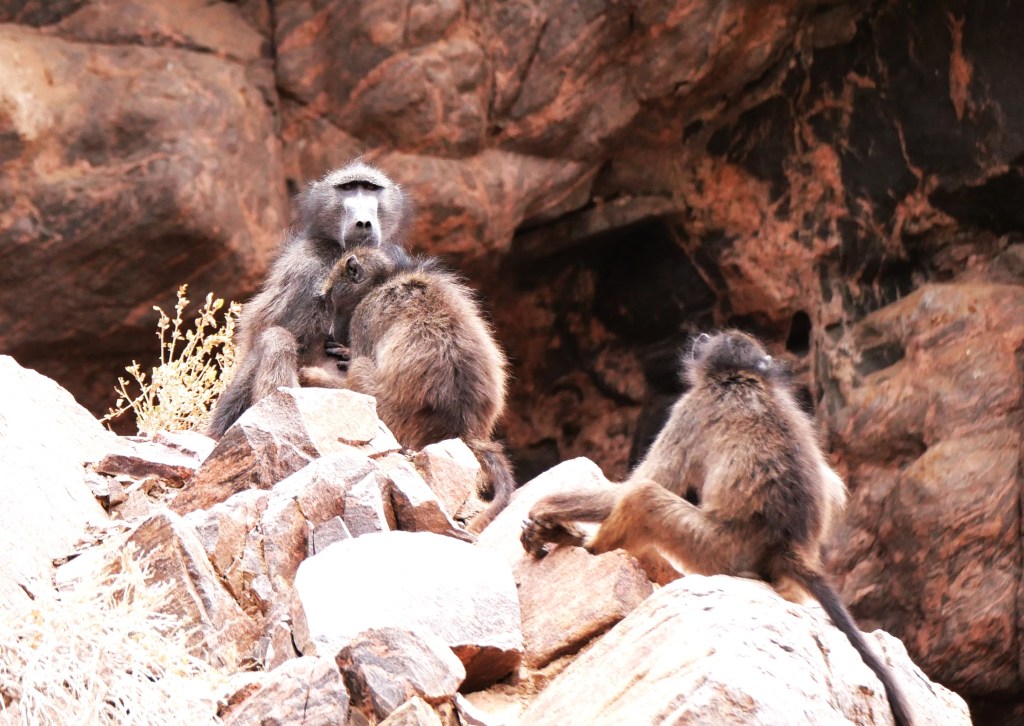
And a troup of baboons with their babies showing impressive agility as they climbed up the rocks
And I´m sure this was a school!
We also found a whole load more Tetse Flies, many of which hitched a lift on the roof of the truck making me very nervous.
We needed to get to Opuwo the next day and sort out our fuel situation. So we left early and made it back to Sesfontein by lunch time.
We weren´t surprised to find that the diesel truck still hadn´t made it so set our sat nav for the remaining 185km to Opuwo hoping that it was a large enough town to have fuel stocks.

When we arrived that afternoon we were relieved to find it was actually quite a large town and had plenty of diesel. The food situation, however, wasn´t great – the fruit and veg in both supermarkets were grim and in short supply and the only meat we could find was frozen chicken.
The town was clearly very poor. We were approached by kids and Himba women for food and money – some were holding adverts from newpapers and pointing to the items they wanted us to buy for them from the shop. Some looked more in need than others, one guy with an enormous beer belly got short-shrift from James! But it all seemed good natured and we had a bit of banter with most of them.
We had chosen a campsite on the edge of town and headed towards it. Being in a town felt strange after such a long time in the middle of nowhere and we hoped the campsite wasn´t going to be too noisy. Our next stop was due to be Epupa Falls, a three hour drive away right on the northern border between Namibia and Angola. But before we got there we had a surprise in store for us…long lost friends, who had been in Kenya heading north when we last heard from them, had been forced into a sudden change of direction as Ethiopia has recently closed to foreign vehicles. They had turned around to head back south and were heading straight for Namibia. It seemed as though our plans were also about to change!
 The Sidetracked Sagas
2 responses to “The Land Where Elephants Play…”
Another lovely update and some beautiful photos of the local wildlife!!! Happy Christmas both!
LikeLike
Hi, brilliant comments on your adventures and photos. I am getting upto date, as James is aware my home life is somewhat distracted at the moment. Great stuff, really enjoying your adventure. Cheers Bob
LikeLike