We were back in Botswana after 3 weeks in South Africa. Pretoria had been useful and a complete change of pace for a while but we were glad to be back on the road.
We stayed two nights in Gabarone in order to allow ourselves time to book the rest of our Botswana campsites in advance – not something we normally do but we were heading into the north where the big ticket tourist areas of Moremi, Chobe and the Okavango Delta are. It was still only the end of March but the rains were slowing significantly, the landscape was drying out and the blistering temperatures were about to start falling. And with the cooler, drier winter on its way, the tourists would soon be coming back. We couldn´t afford to risk campsites being booked up before we got there – not only would we miss out on the sites but we could end up with nowhere to sleep.
Booking campsites in Botswanan National Parks is notoriously difficult. There are a large number of different operators running the various campsites and the government still run many. Each operator has a different way to book, none of them are online, few have mobile telephone numbers for Whatsapp calls or texts and no-one ever responds to emails. They all want paying in advance and unless you can find their offices and walk in with a handful of cash you´re into a world of pain trying to sort out international money transfers or giving out your credit card details over email.
The lovely lady at Big Foot Safaris, who run many of the campsites in the Central Kalahari, spent over an hour with us ringing round all the other operators – finding out what dates were available, what the costs were and getting as many mobile numbers for us as she could so we could at least make contact directly once we had a plan. I don´t think we could have got as far as we did without her.
Two days was barely enough time but eventually our itinerary came together. I made so many lists and notes to keep track of it all, who we had paid, what we had booked and when…it was an almost impossible juggling act.
Booking the government campsites required a personal visit to their offices – we found the Ministry of Wildlife and Tourism and went in. We were told we didn´t want the Ministry but rather the Department of Tourism. They gave us directions, we headed off but it took an hour and many helpful locals to find it. Once there, hot and bothered, we waited for the lady to come back from a meeting only to be told we shouldn´t be at the Department of Tourism but rather the Department of Wildlife and National Parks. Another hour later I was finally walking out of the right office with the valued pieces of paper clutched in my hands and a smile of relief on my face.
All the other operators had been spoken to and some paid in Gabarone or via bank transfer. All that was left was to hope that the four operators based in Maun would hold our reservations until we got to their offices in a couple of weeks´ time. They all did, everyone got paid and I only made one mistake in the order of the campsites which was remarkable!
All this had taken so much time that we were late leaving Gabarone for the long drive to our next campsite. We hurriedly did a food, gas and fuel sweep and set off, heads spinning. We were aiming for a campsite right back next to the Khama Rhino Sanctuary which was to be a rest stop on the way to the Central Kalahari. Because of the way the dates had fallen with our bookings we were staying there for three nights.
When we finally arrived we were met by the owner, Pule, a lovely, friendly man eager to ensure his guests were happy and comfortable. The campsite was beautiful and as they were still quite quiet Pule gave us one of his largest pitches, designed to accommodate up to 50 people
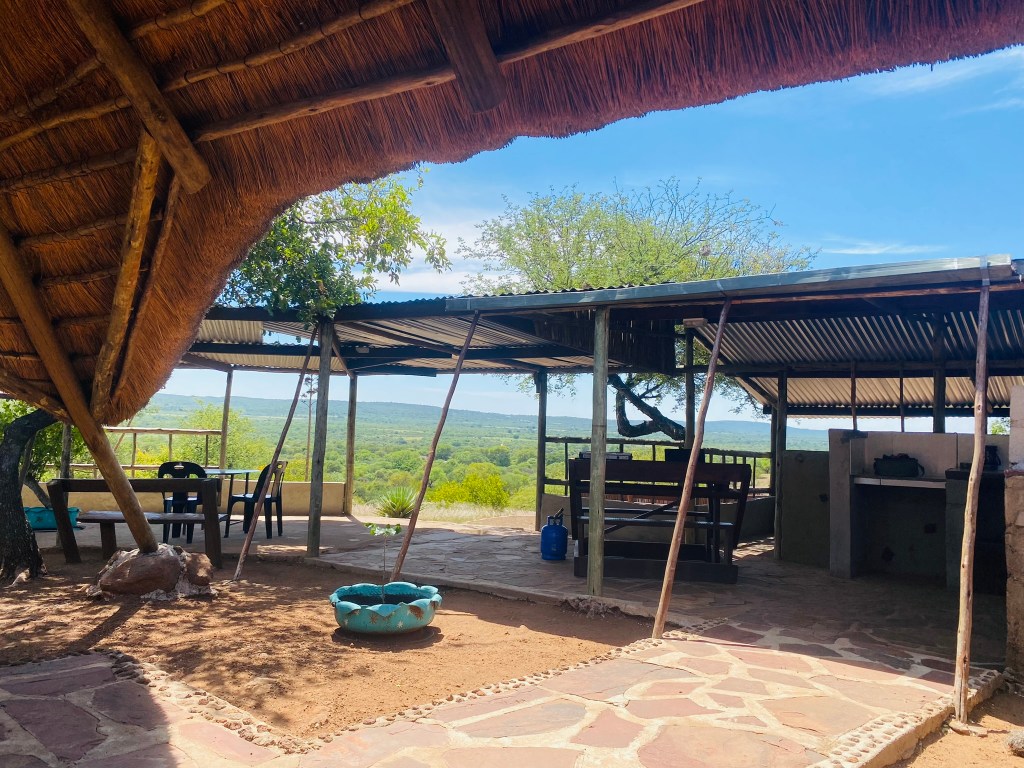
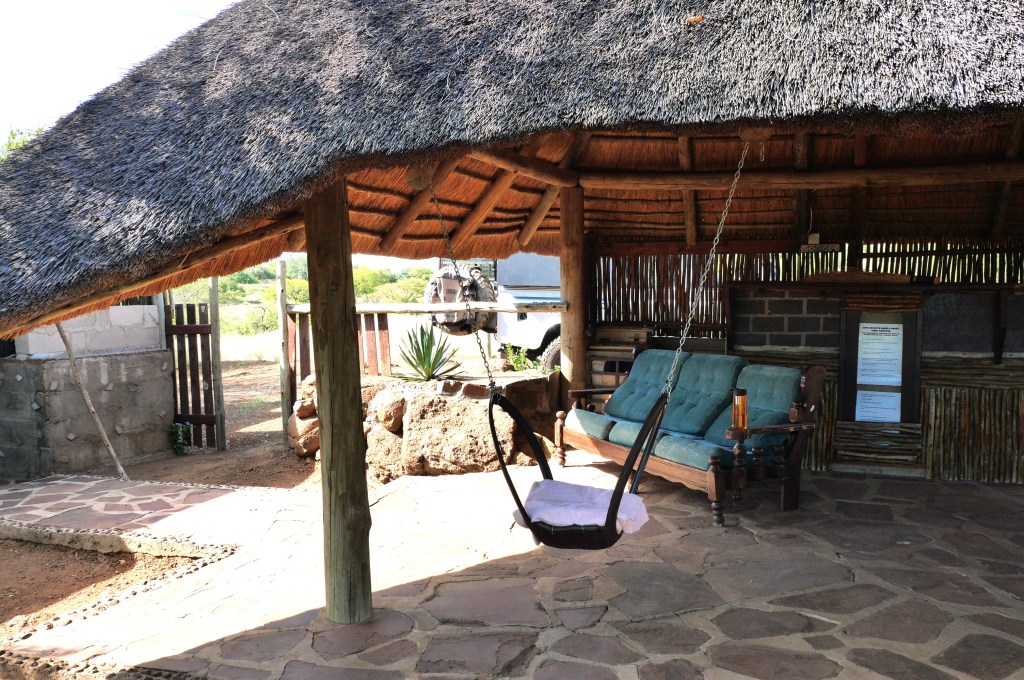
The views were spectacular – you would never believe we were in a desert country
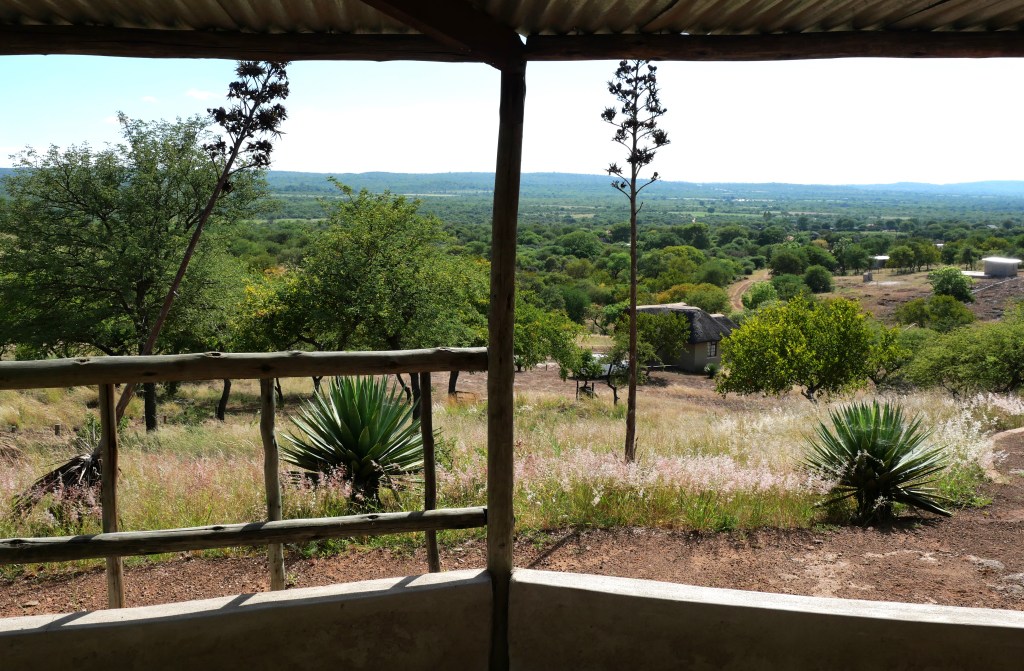
Water was problematic and the place was full of mosquitoes but we settled in and relaxed, spending the rest of that day and the next enjoying the view and taking advantage of a surprisingly good internet signal to research various potential improvements to Henry and write a blog post.
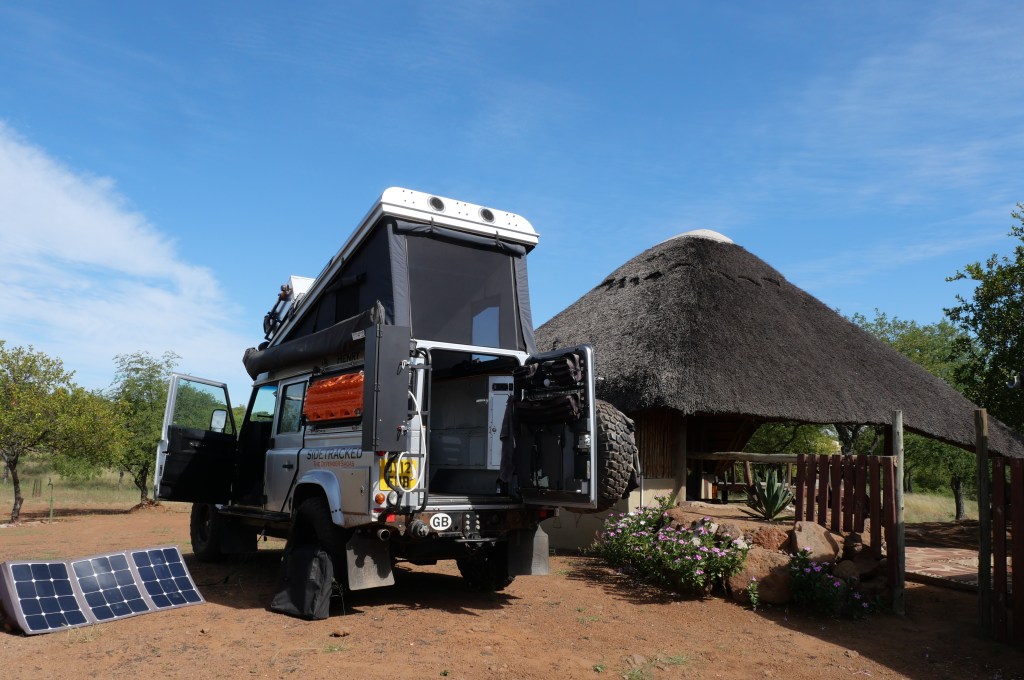
Pule popped round a couple of times each day to chat and put the world to rights. It felt like settling back into an old pair of shoes.
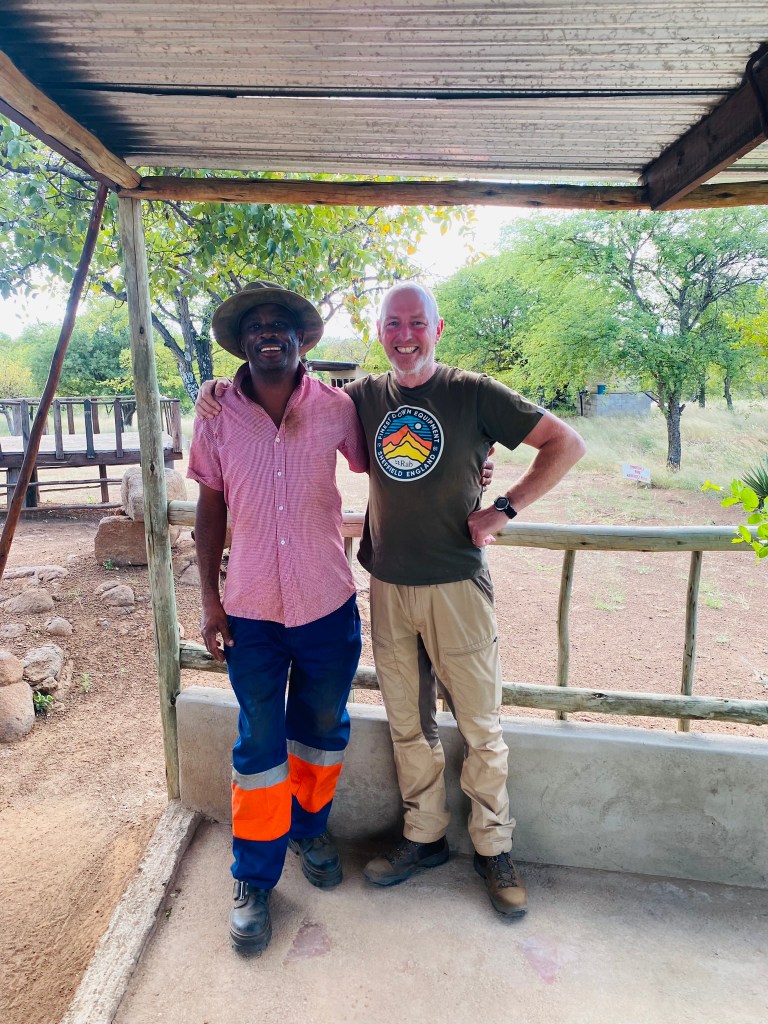
The next day we decided to go back to the Khama Rhino Sanctuary. Our return trip was, if anything, more successful than the last.
This place really is special. We started with Waterbuck
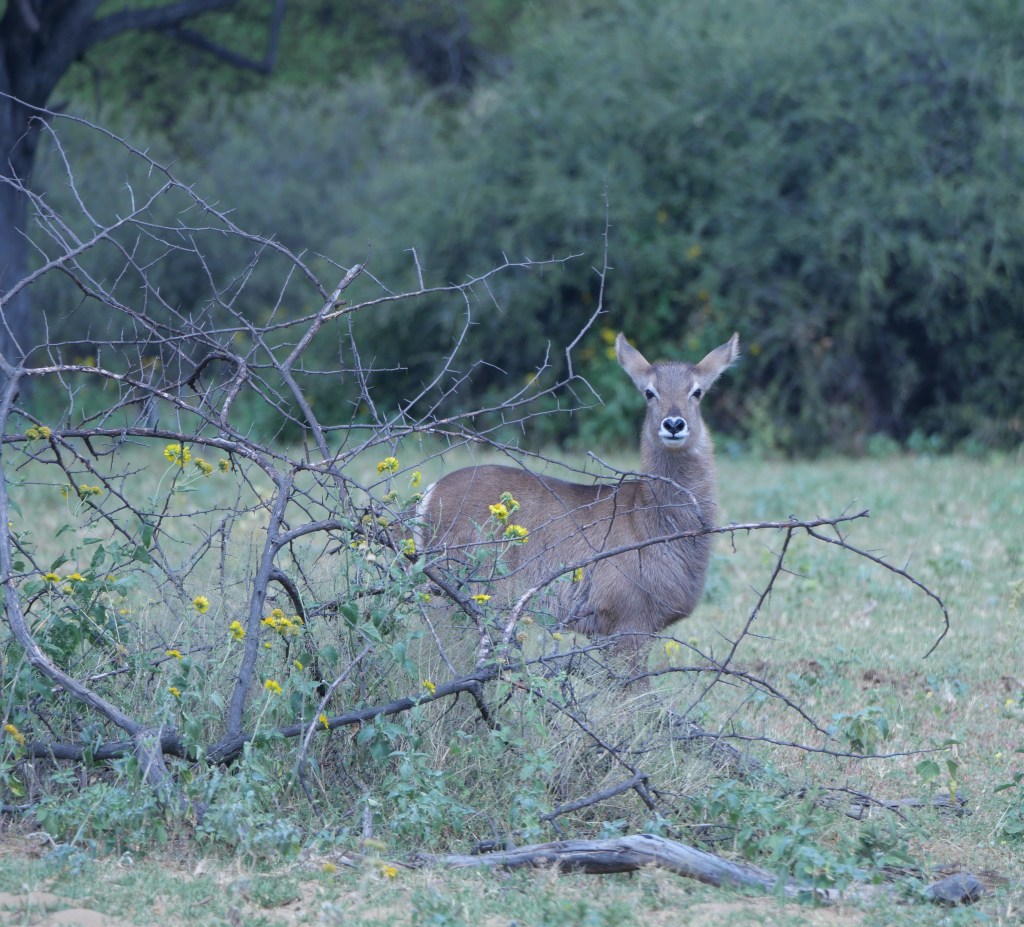
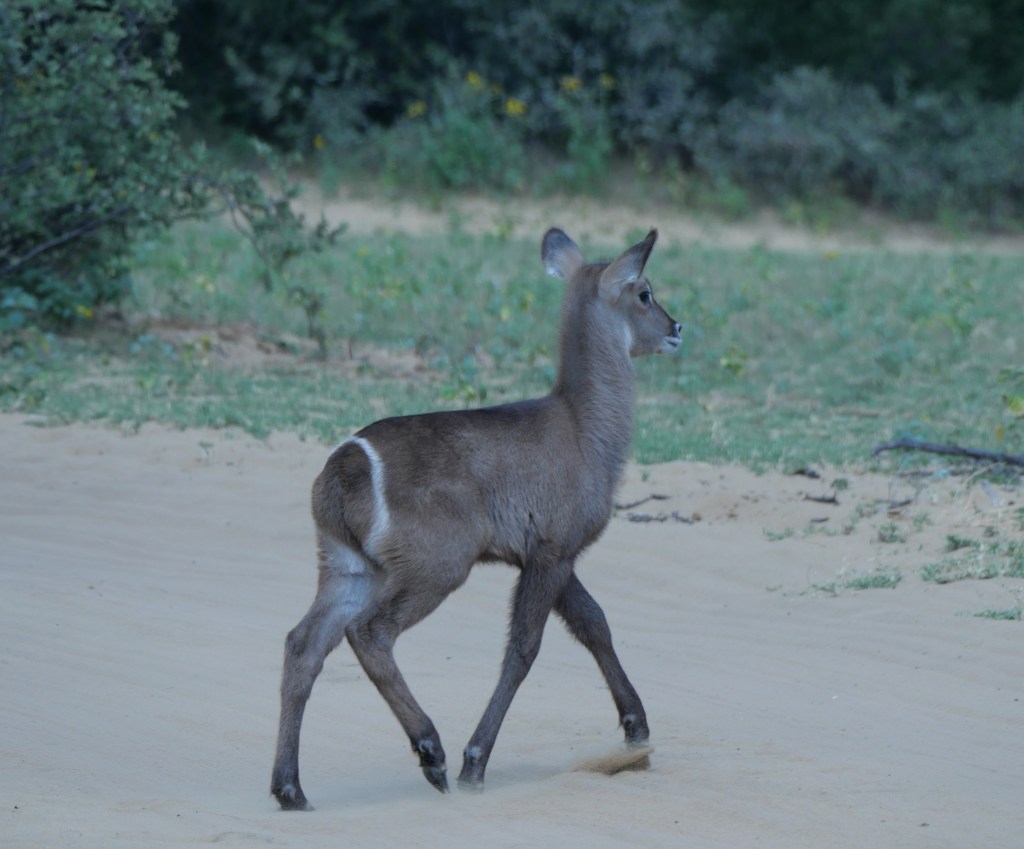
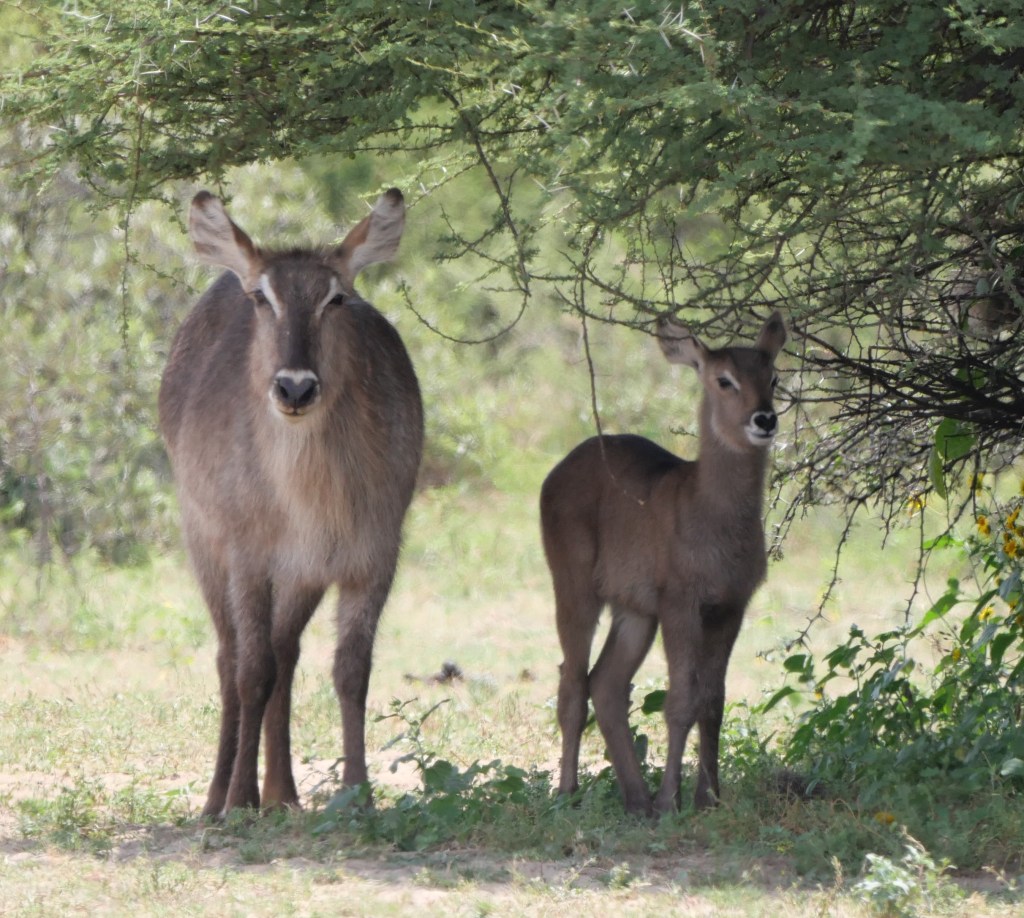
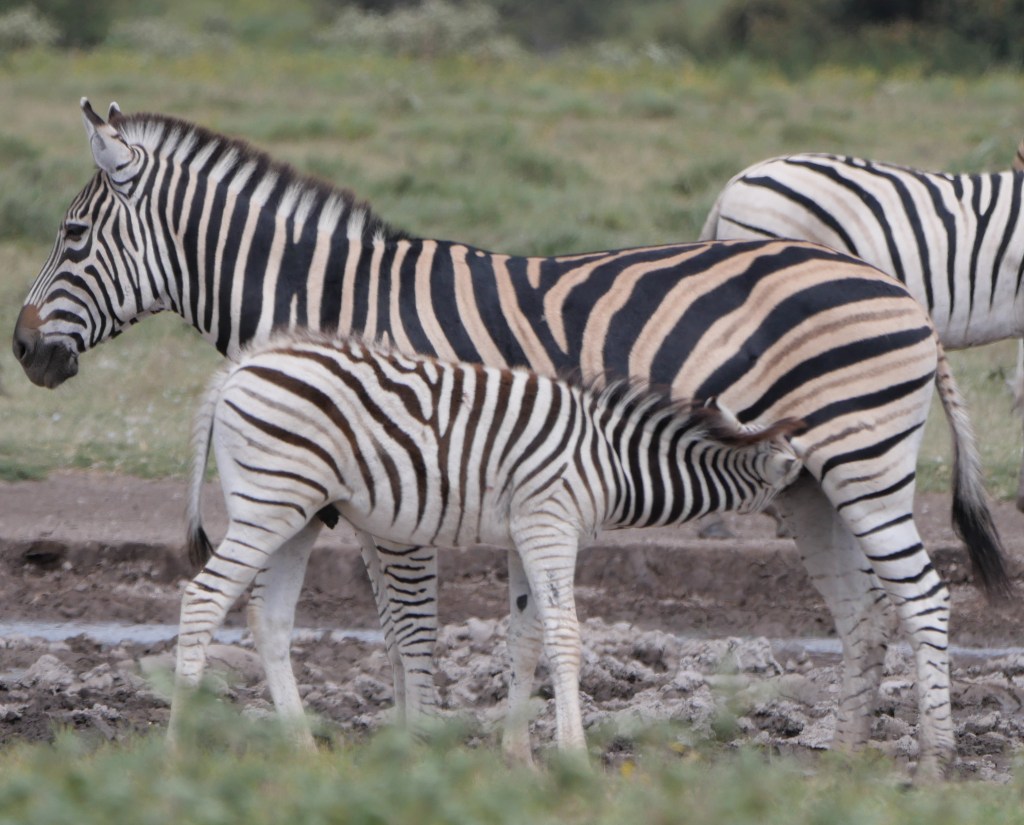
Saw more and more babies of all shapes and sizes


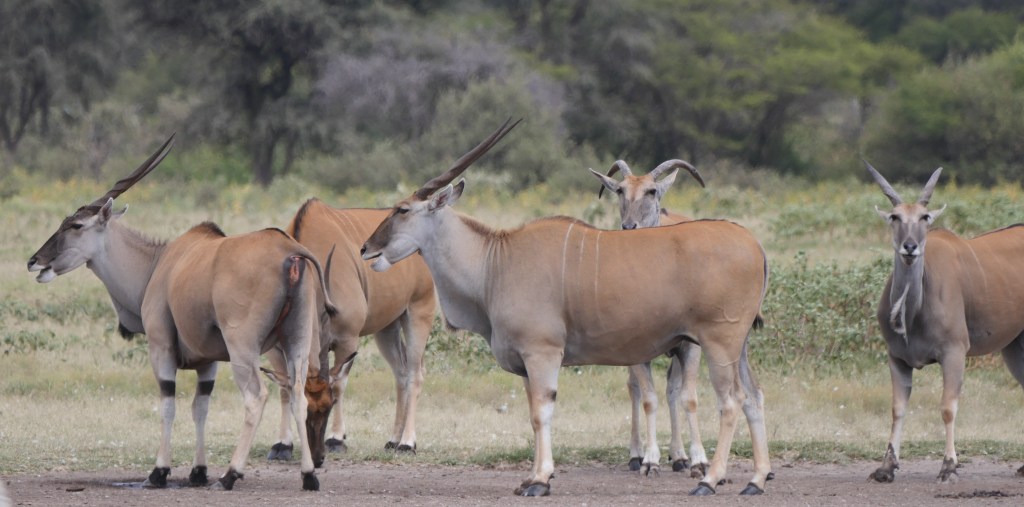
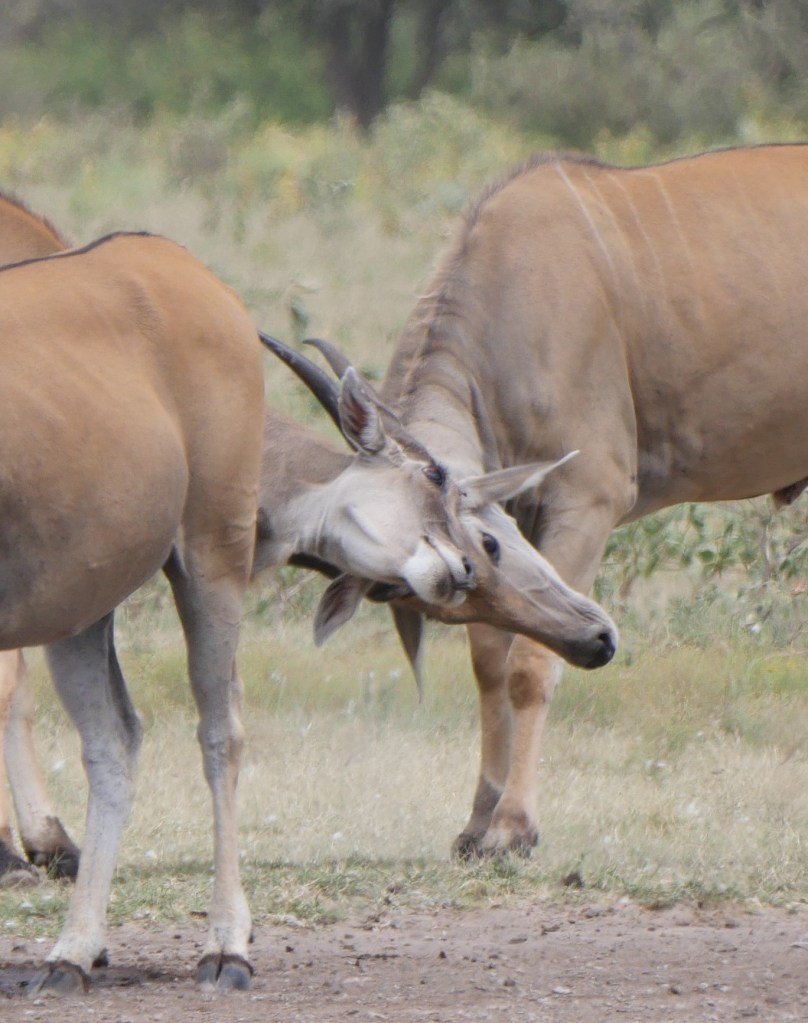
Then came the large and beautiful, but quite amusing, Eland


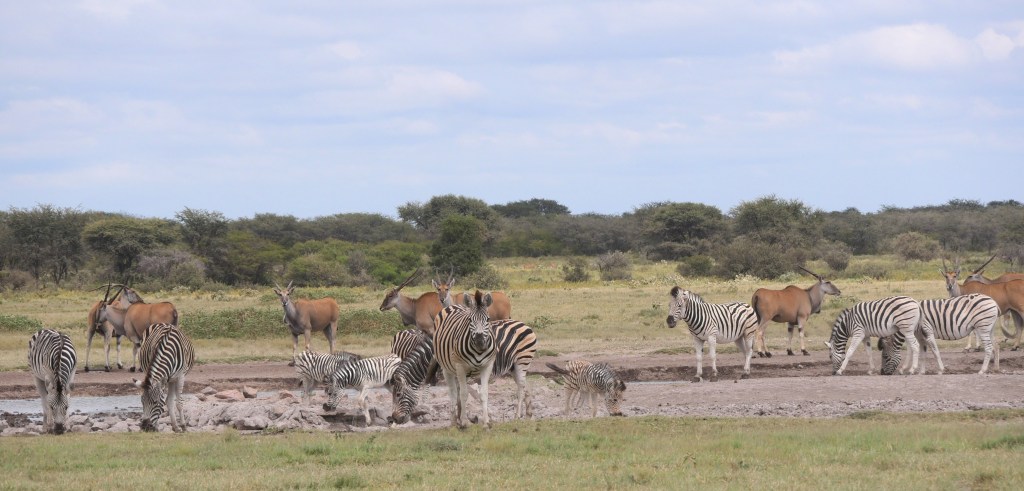
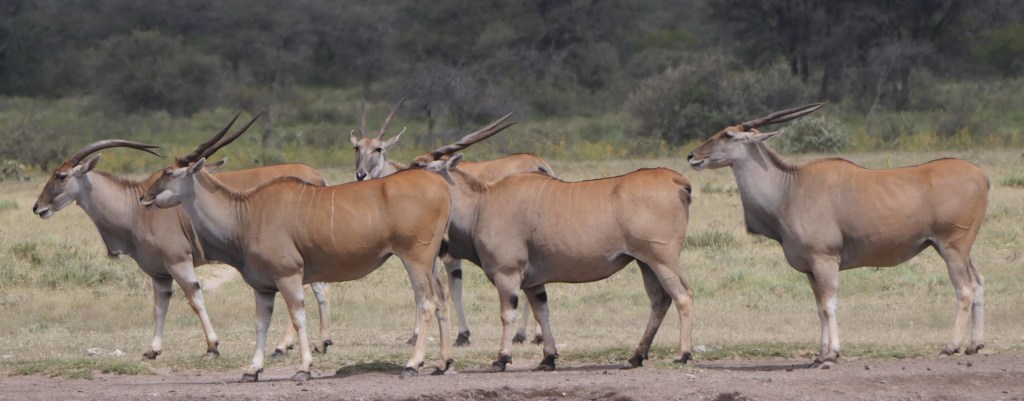
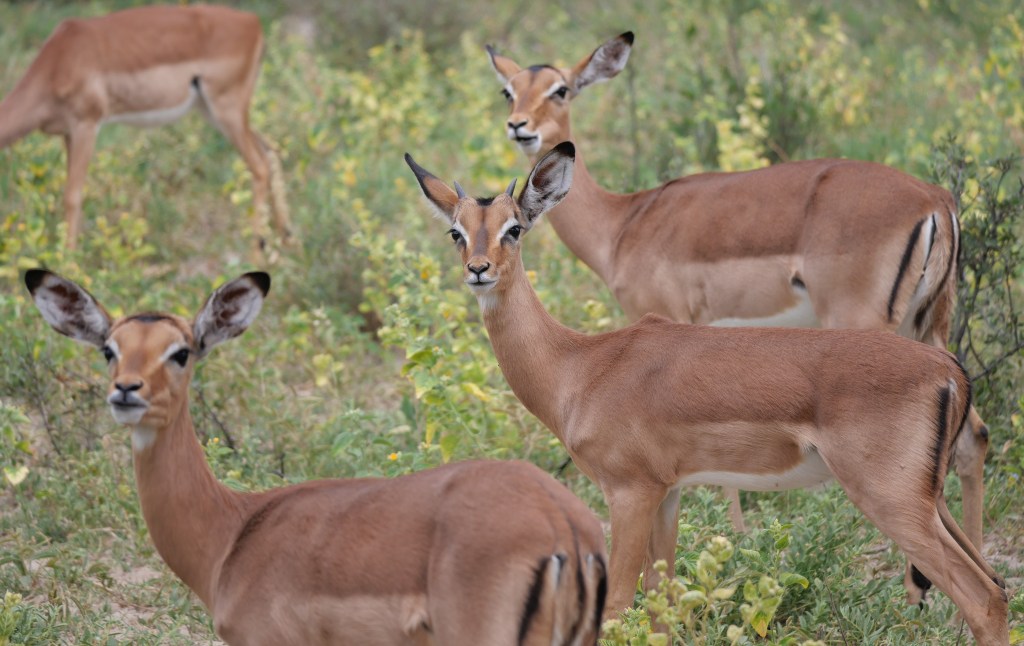
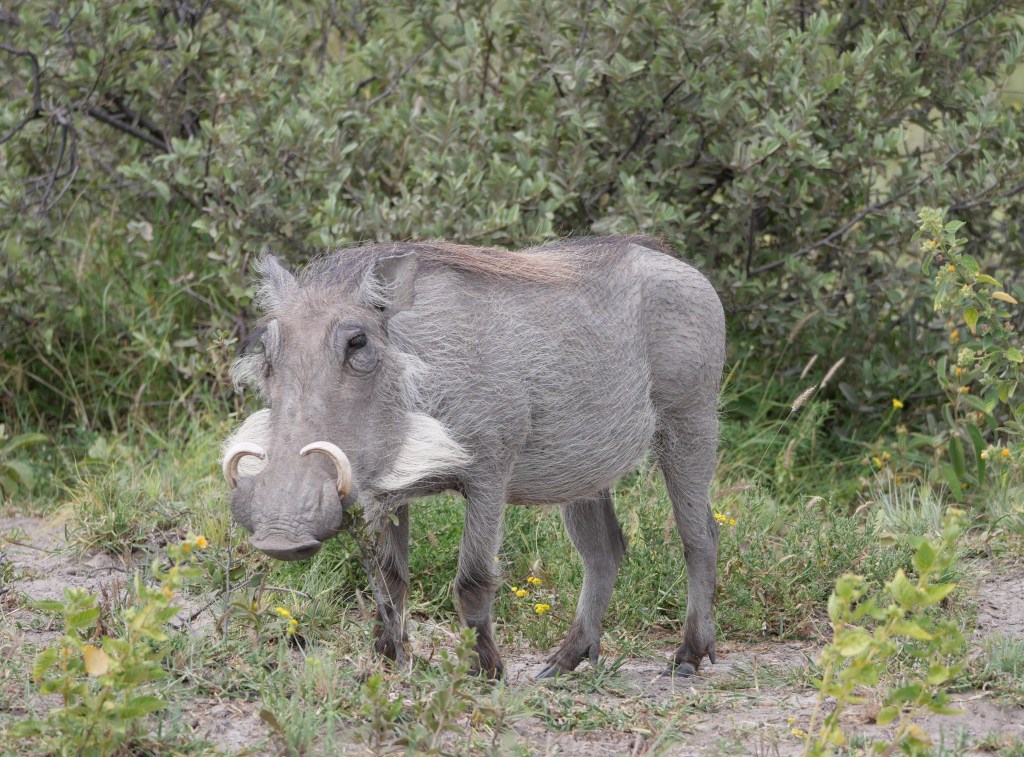
The usual suspects made a regular appearance, seemingly completely unconcerned by us




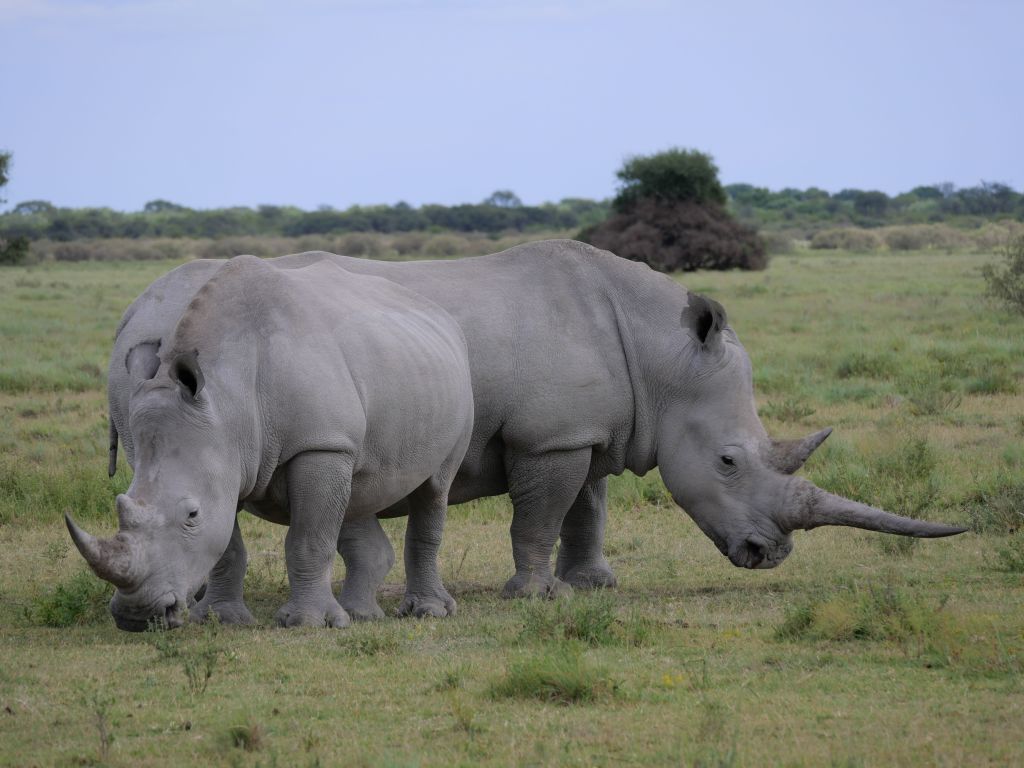
And of course, it wouldn´t be a Rhino Sanctuary without more Rhinos than you could count
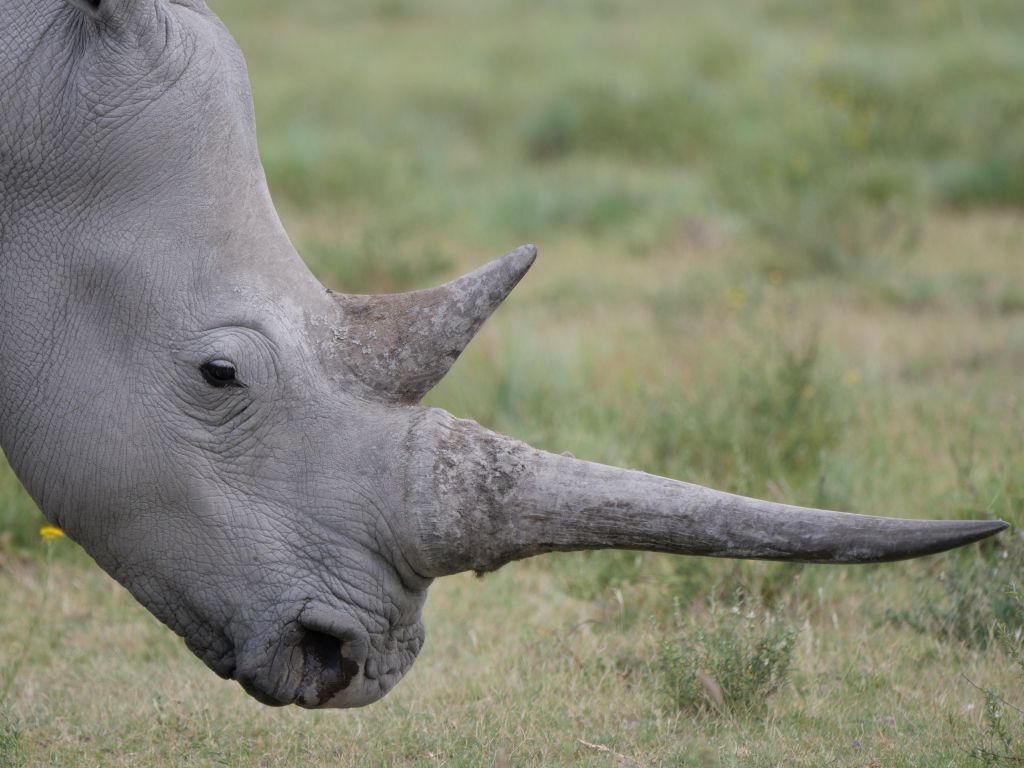

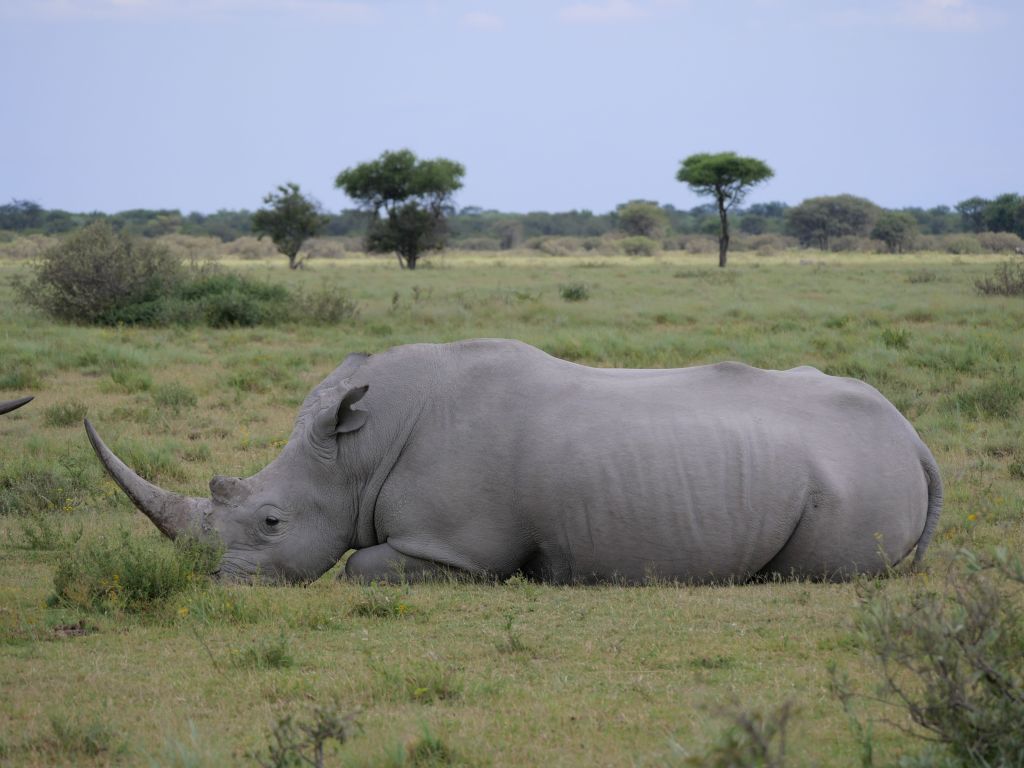

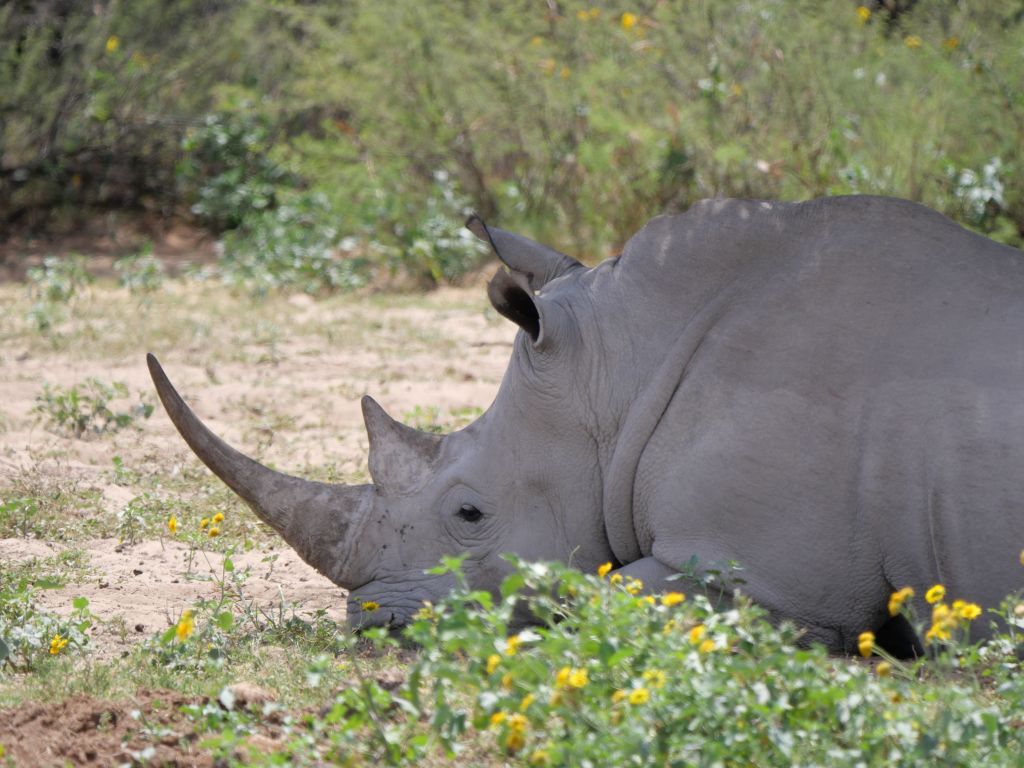
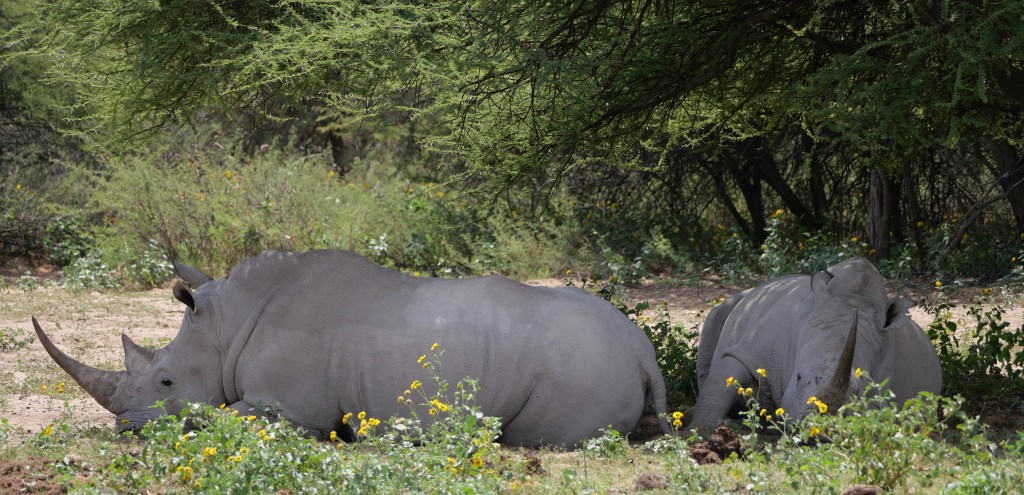

We found a waterhole with no animals but a few very sweet terrapin basking in the sun
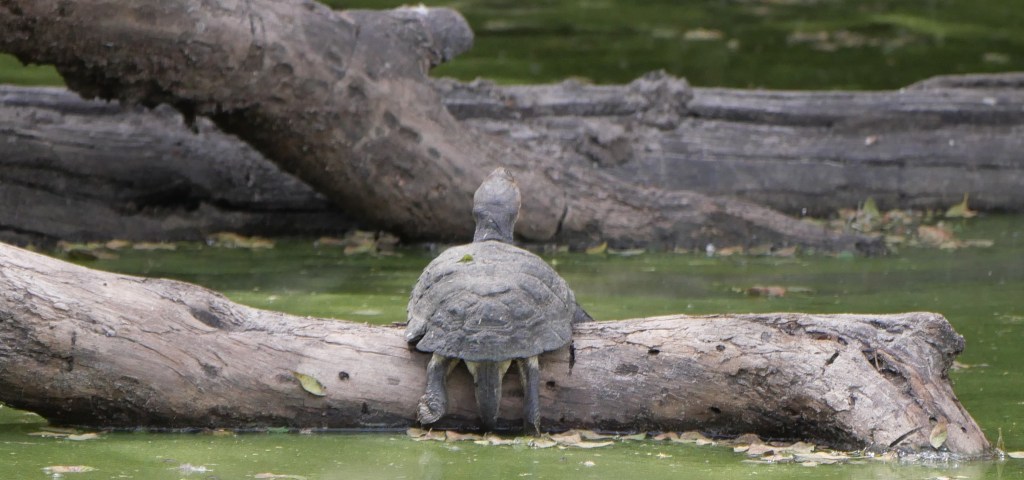
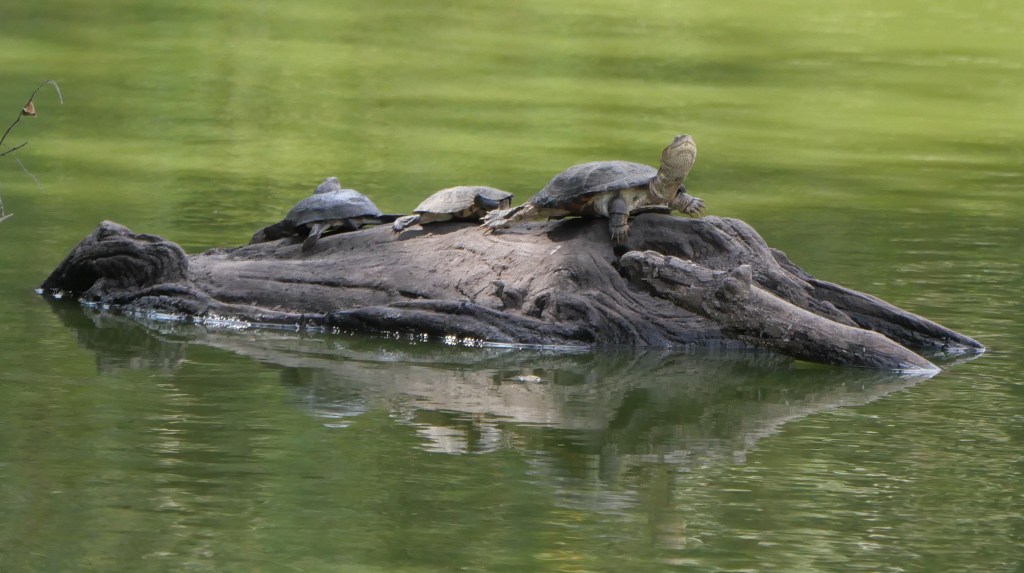
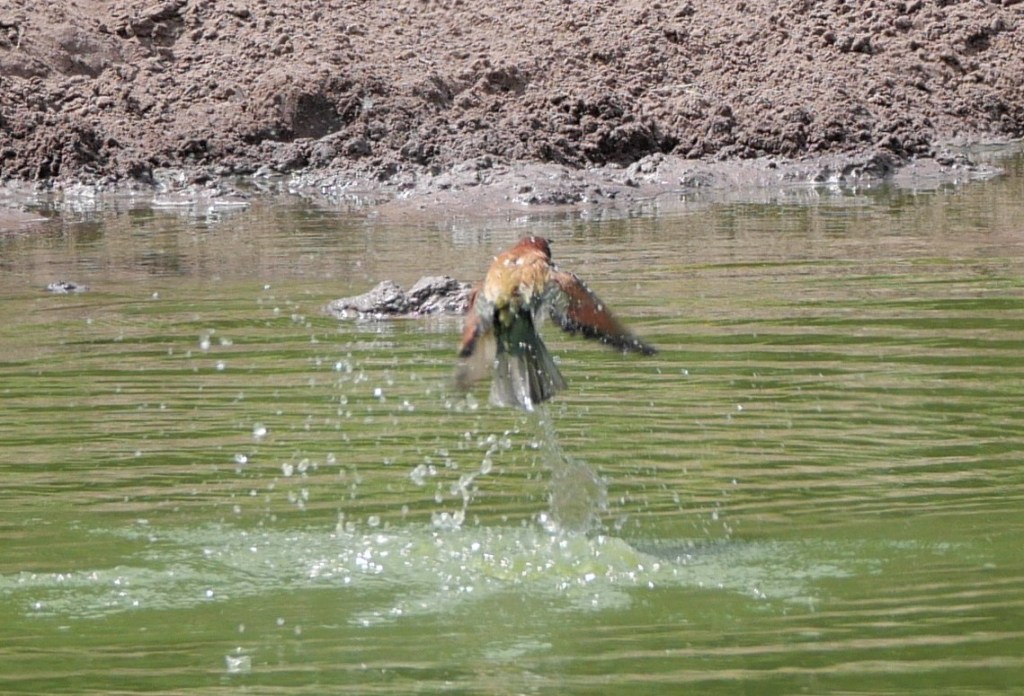
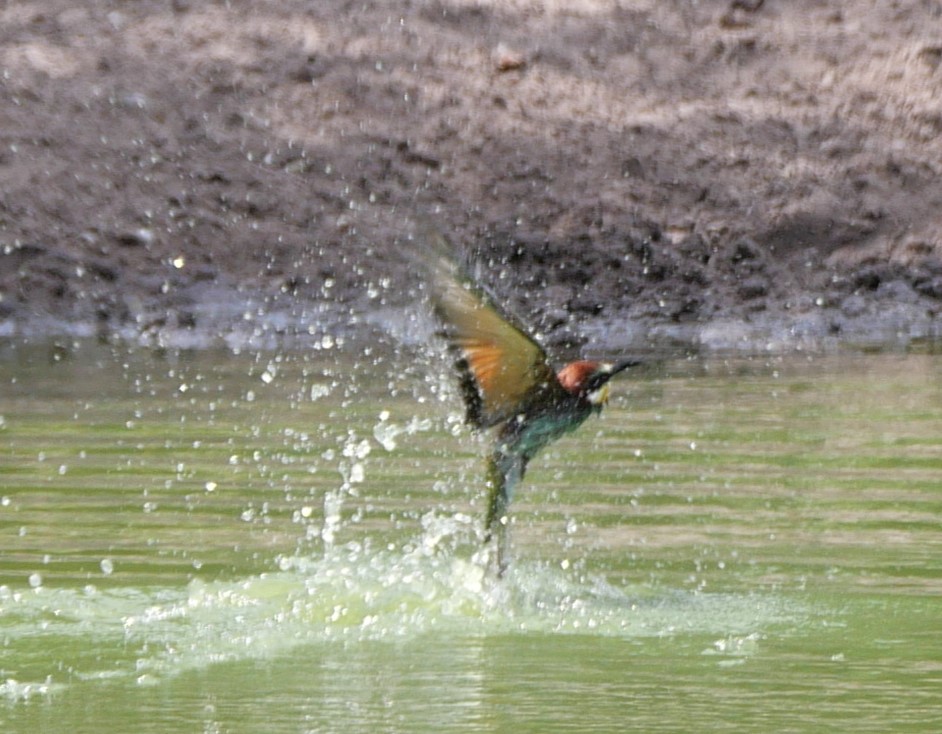
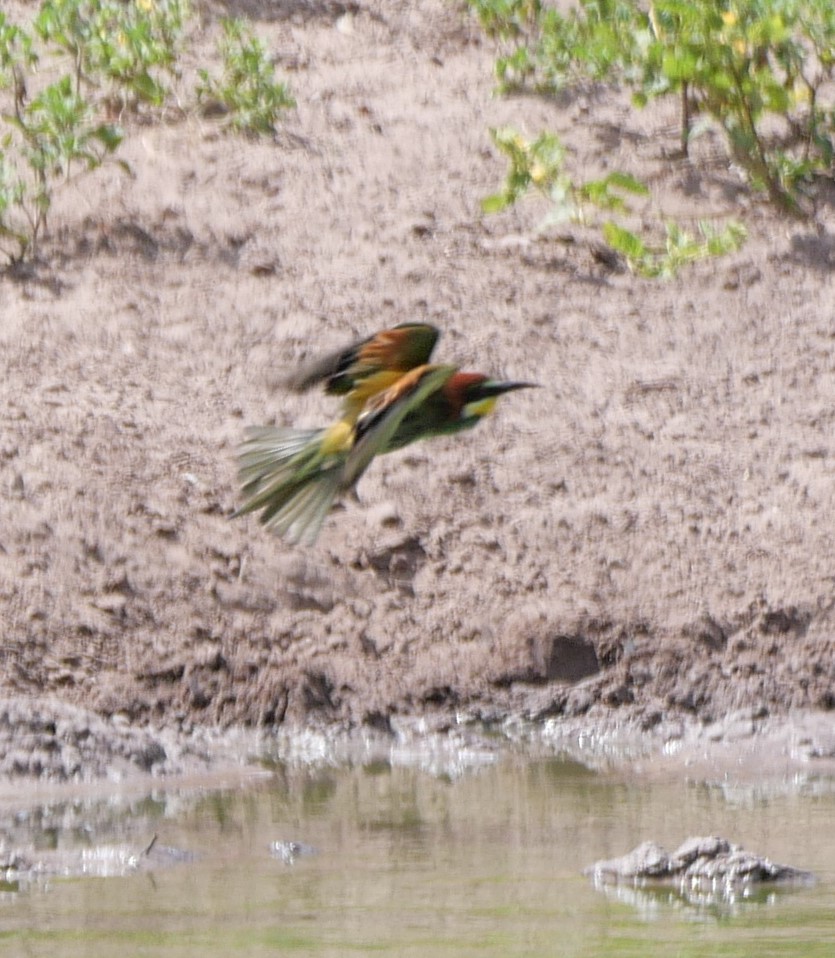
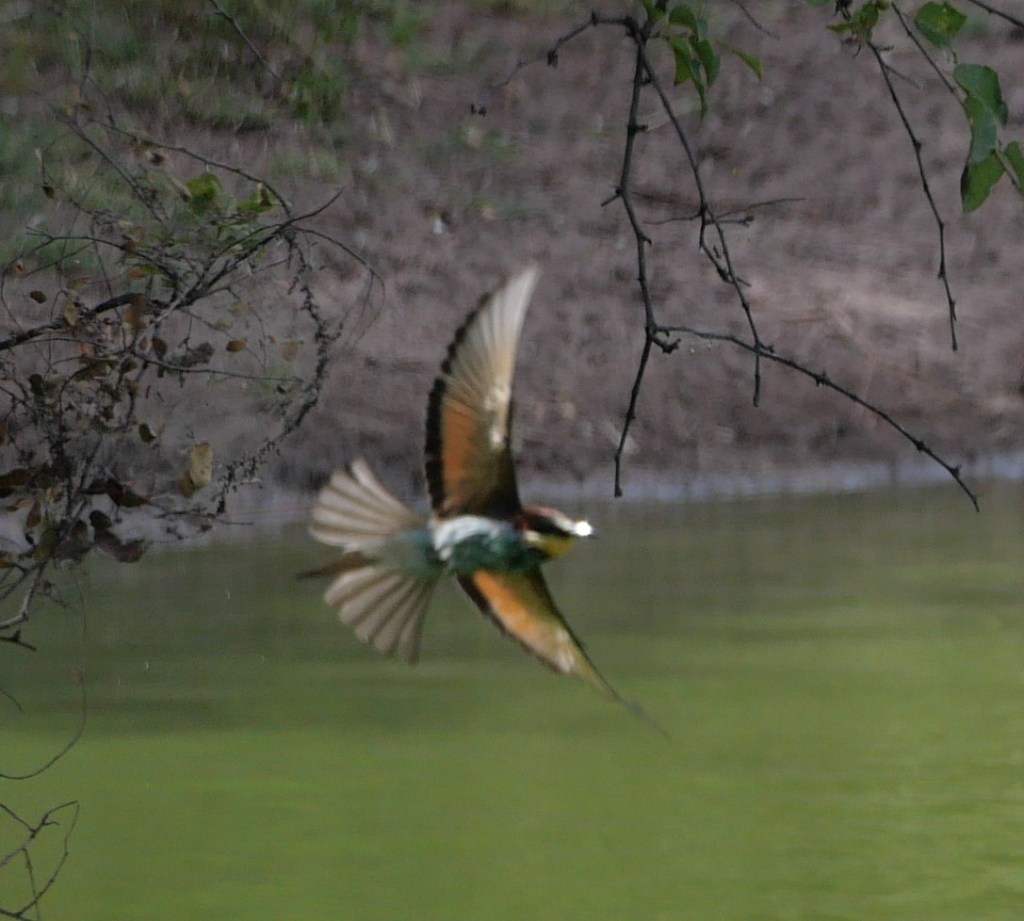
But the main event here was the whole host of birdlife
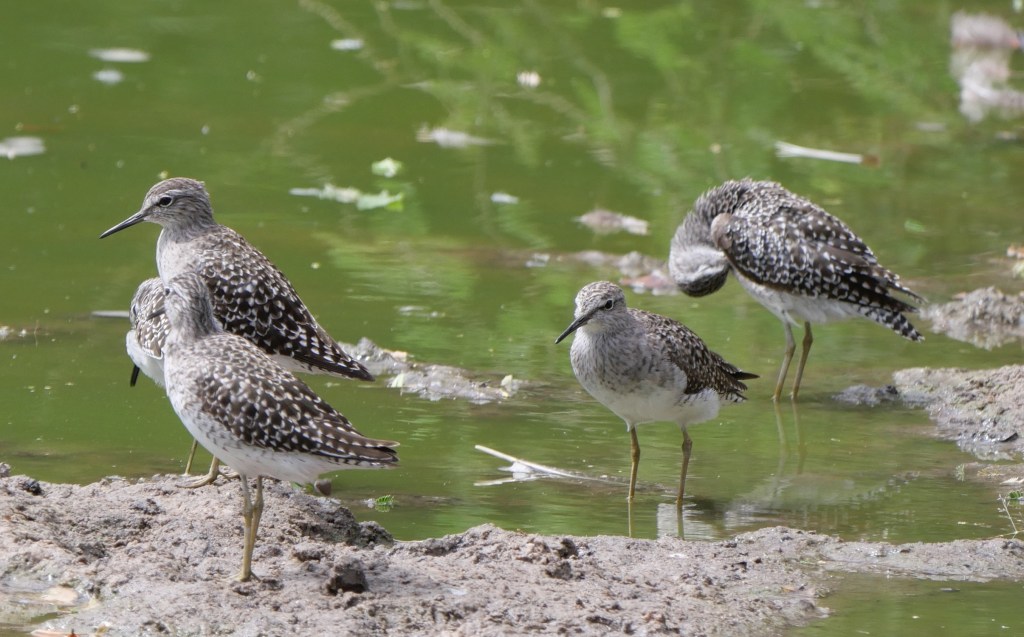

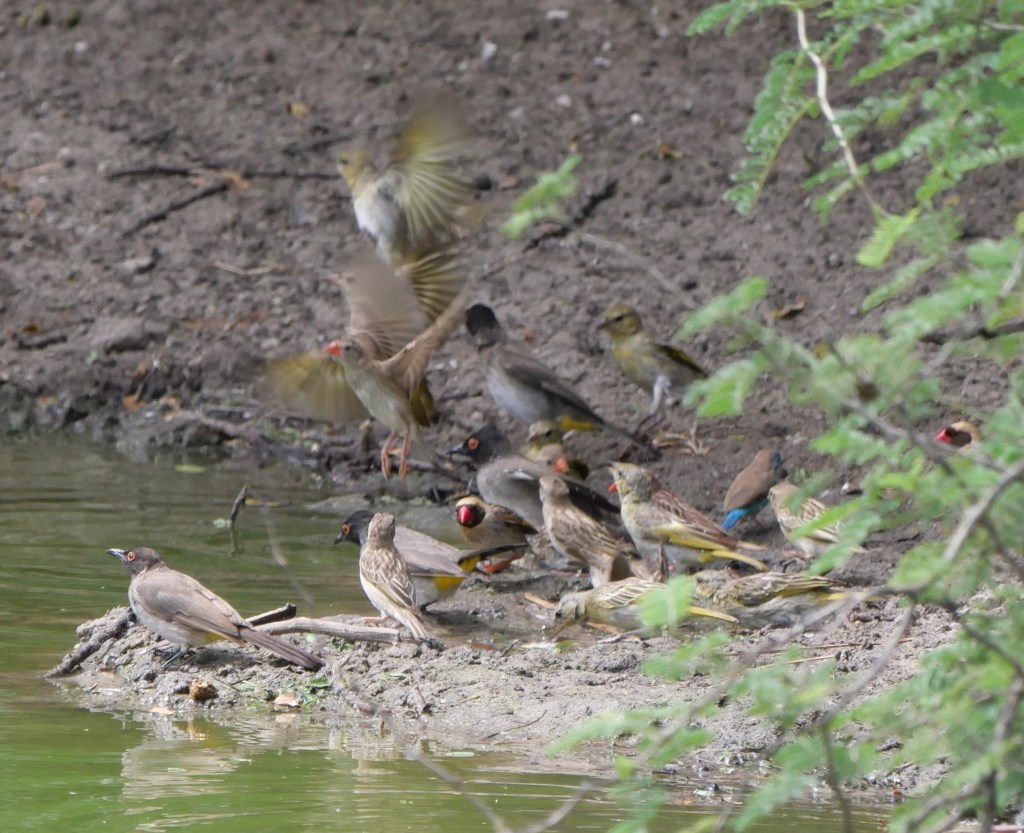
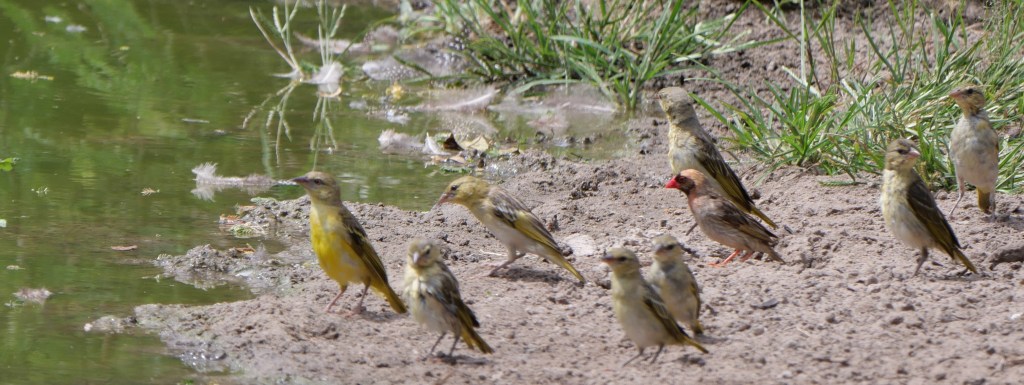
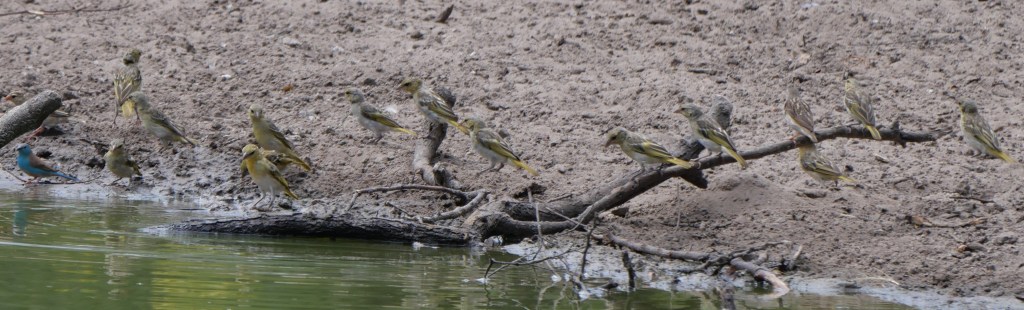
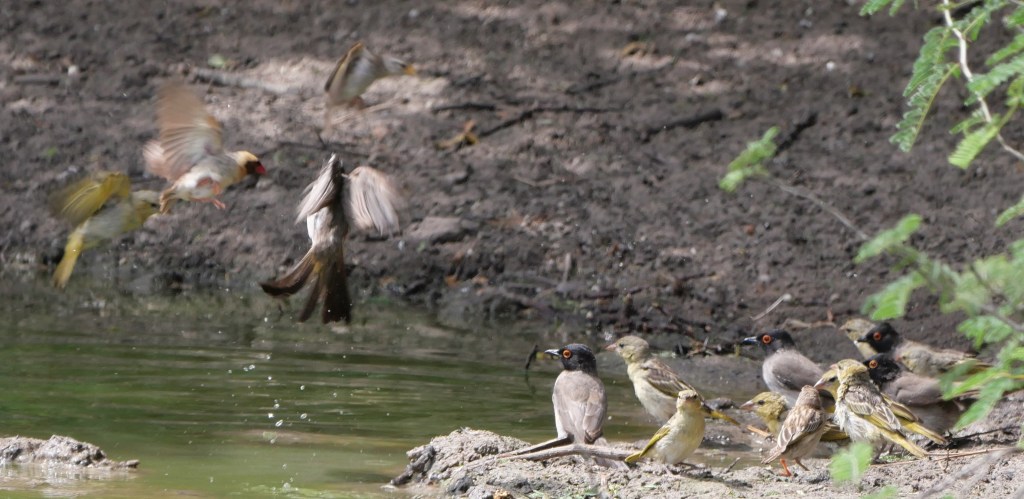


As we watched the commotion we saw a flock of Kingfisher settle in a tree just a few meters away

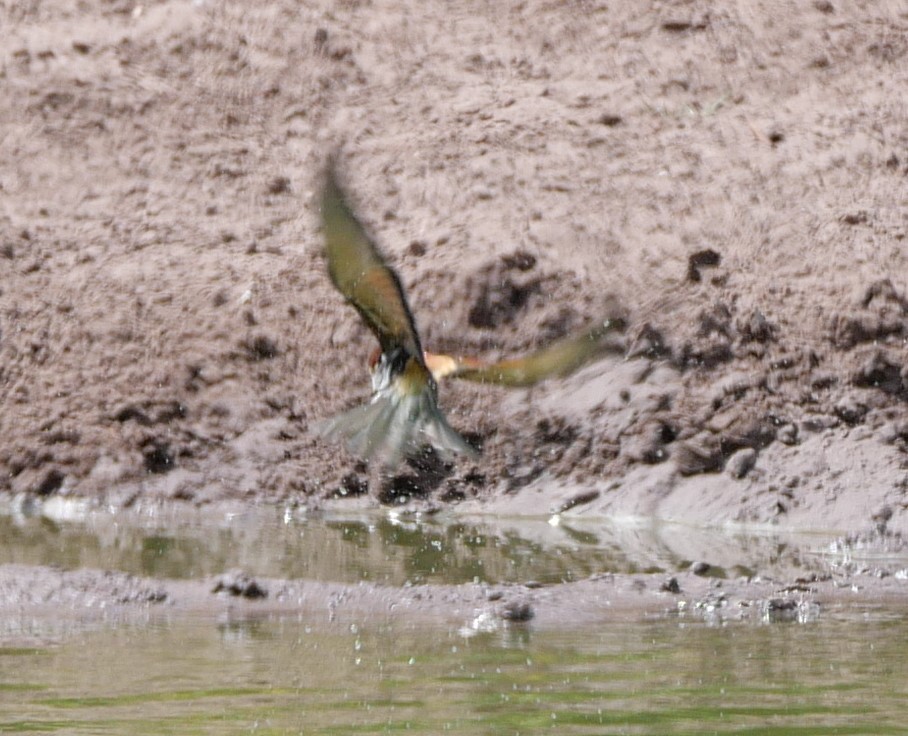
And were thrilled when they started diving into the water one by one catching fish. They were astonishingly fast, even my camera shutter was too slow to freeze their flight but these are some of the better photos I managed to get….


We had had a great day and headed back towards the entrance gate.
As we slowly drove over the trails we rounded a corner and came face to face with two huge Rhino standing right in front of us
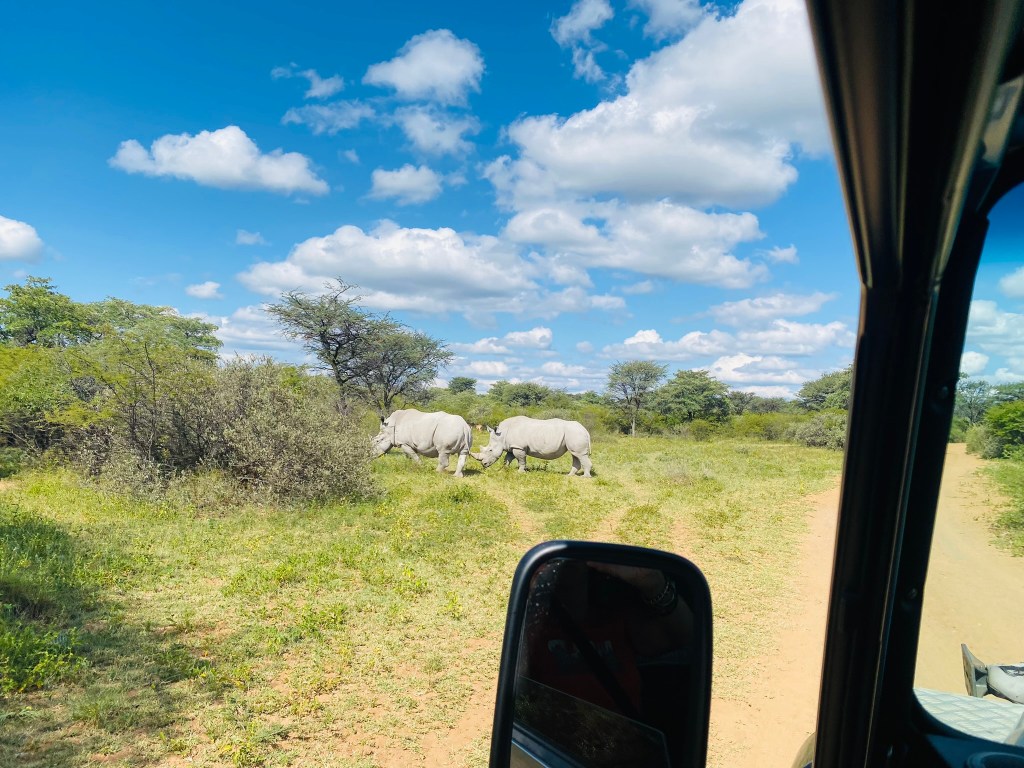
We edged towards them as slowly and carefully as we could. They moved away a few meters towards the bush but allowed us to come alongside them
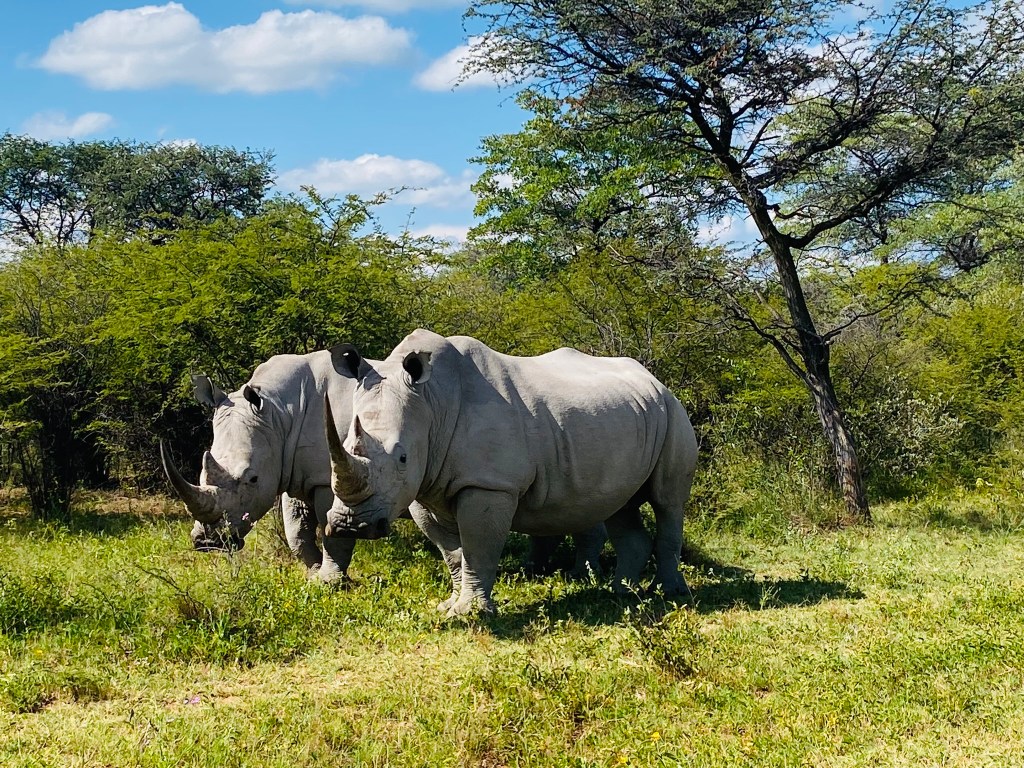
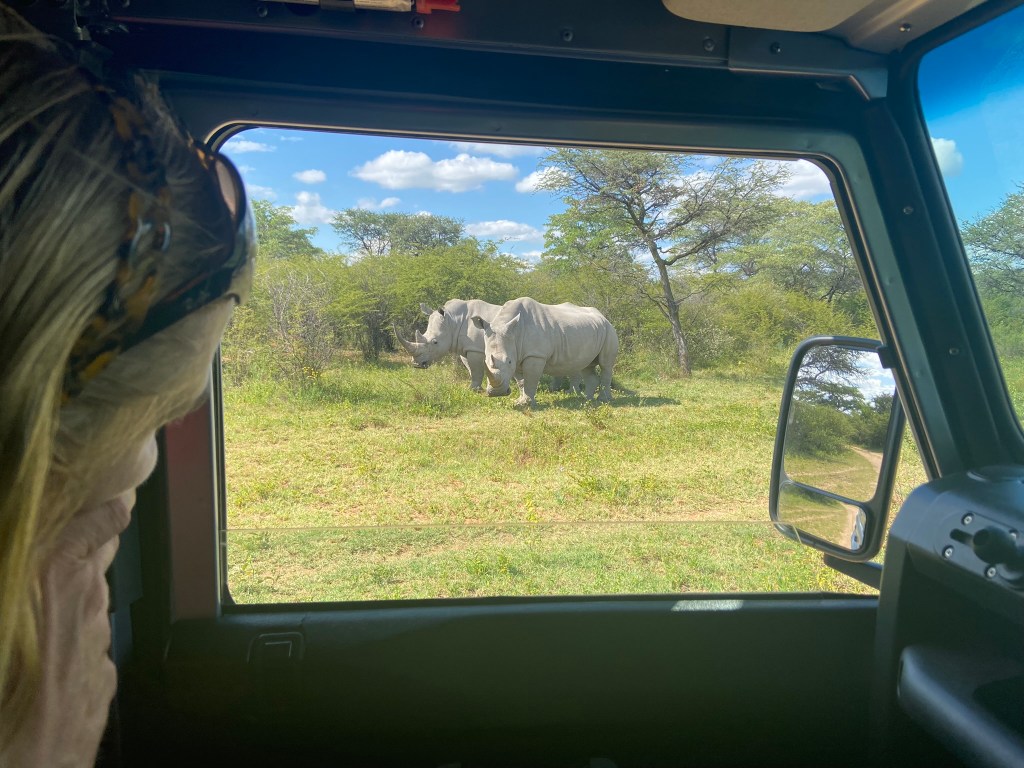
In fact they allowed us so close we could almost hear them breathing
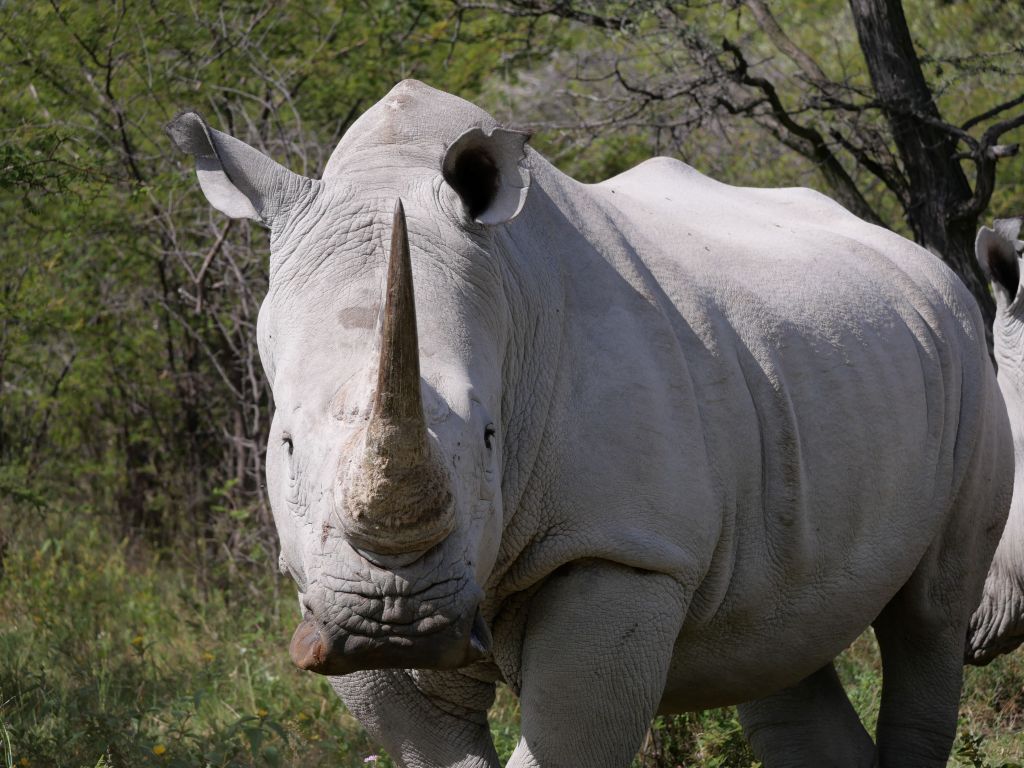
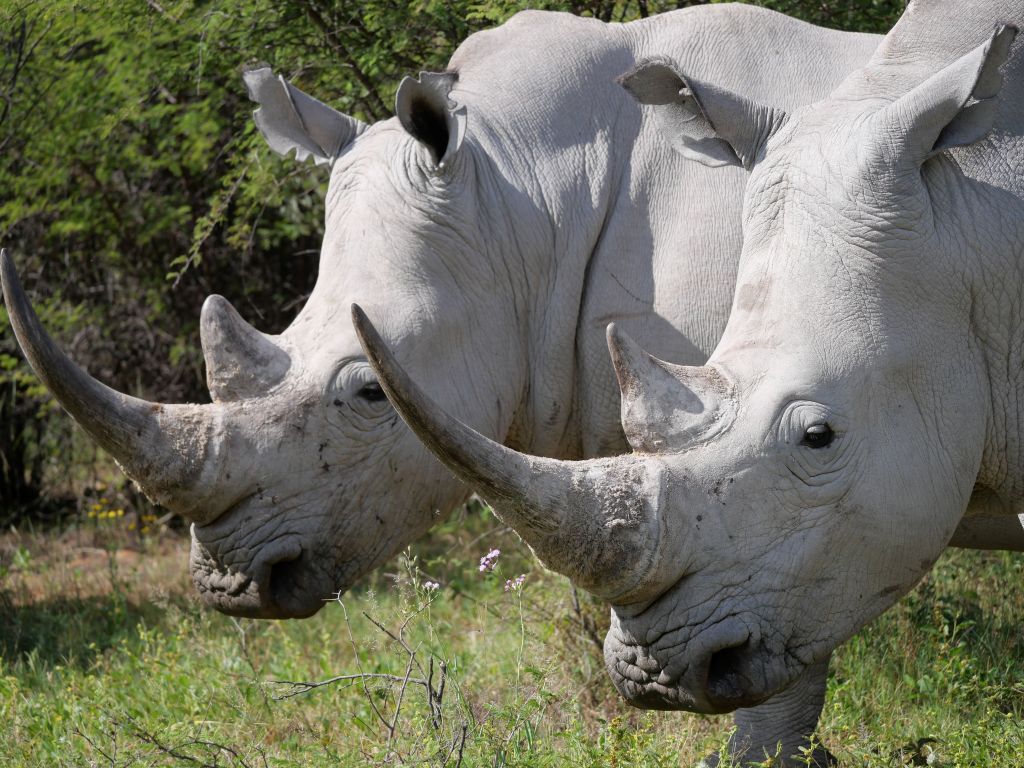
What a great finale to our visit!
With our three night stop-over at an end, we packed up and headed off on another long drive towards Rakops – the nearest town to the entrance gate of the Central Kalahari National Park. This national park is the second largest in Africa and very isolated – once again fuel was going to be an issue. We had already stocked up on all the food we needed but were keen to fill up with fuel as close to the entrance gate as possible. We also needed water – there are no facilities at all in the Central Kalahari so we would need our full compliment of all three water tanks filled to the brim to ensure we could last four nights there without running out.
We knew there was a fuel station in Rakops and there was also a campsite, but very little else, not even a supermarket. It´s a bit of a dust bowl as you might expect on the edge of one of the driest deserts in the world. As we drove I was reading reviews of the campsite and we came to the conclusion that it would be very run down and might not actually have any water itself. So at the last minute we decided to stop at a different campsite an hour before Rakops which was clean, well maintained and had plenty of water, including hot water for our last good showers in a while.
We knew we were an hour from Rakops and we knew the road from Rakops to the entrance gate was 45km of deep sand and mud. Google said it would take around 3 hours, our sat nav said half an hour – the staff at our campsite said that in the Landrover we would do it easily in an hour. We set off early in the morning just to be on the safe side.
We had only just left Rakops down the long sand road when we found ourselves very glad we had plenty of time!
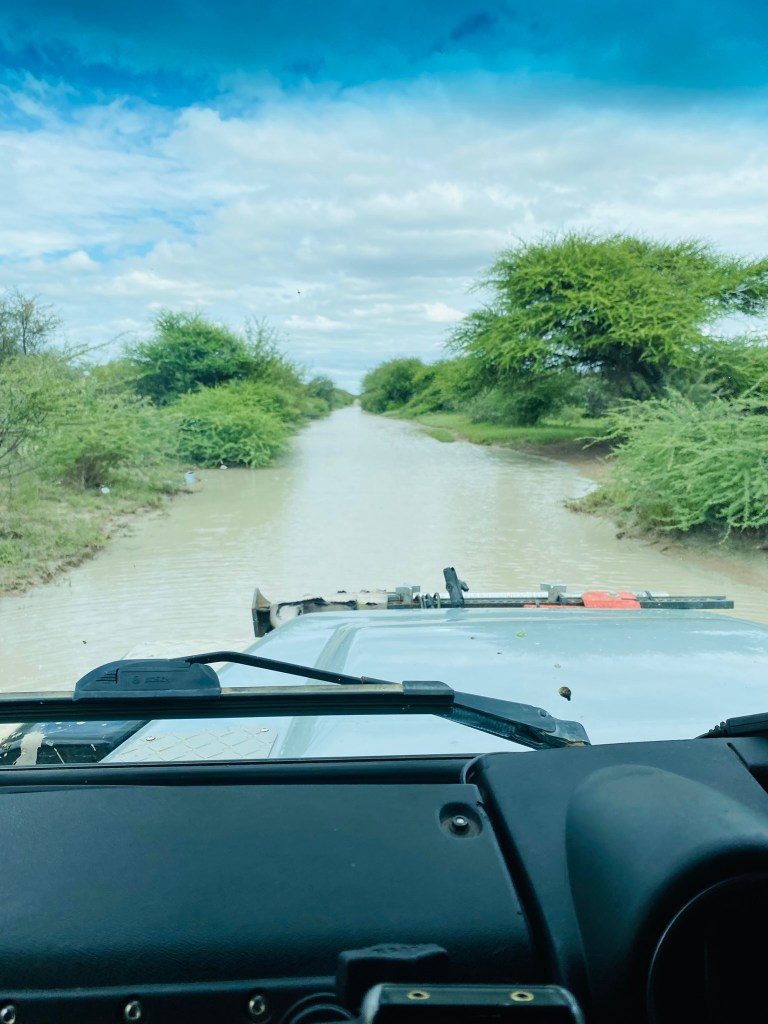
The roads were one deep lake after another
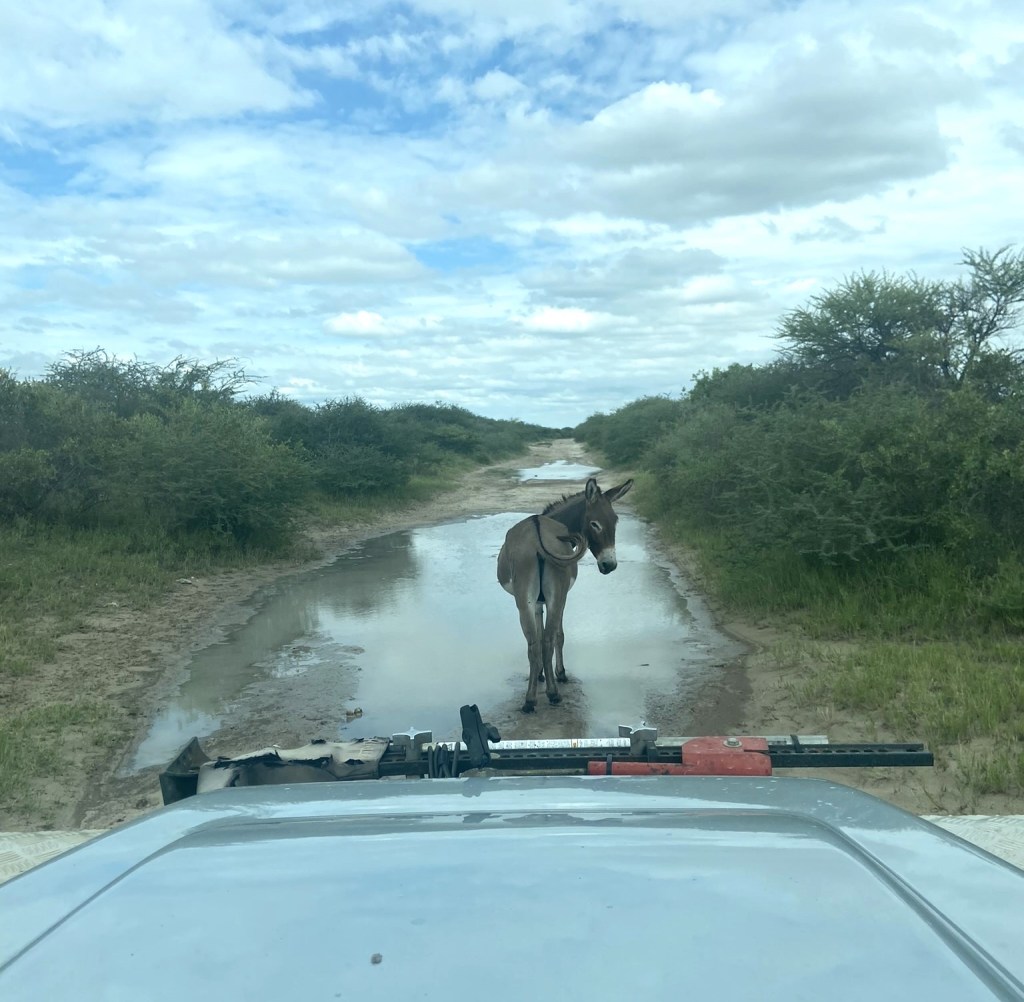
At first we found ways around through the bush but after a while the vegetation got too dense and it looked as though the water was getting shallower. So eventually we gritted our teeth and started heading straight through. It was quite good fun
But many of the puddles were rather smelly, I suspected it might have been something to do with these ladies
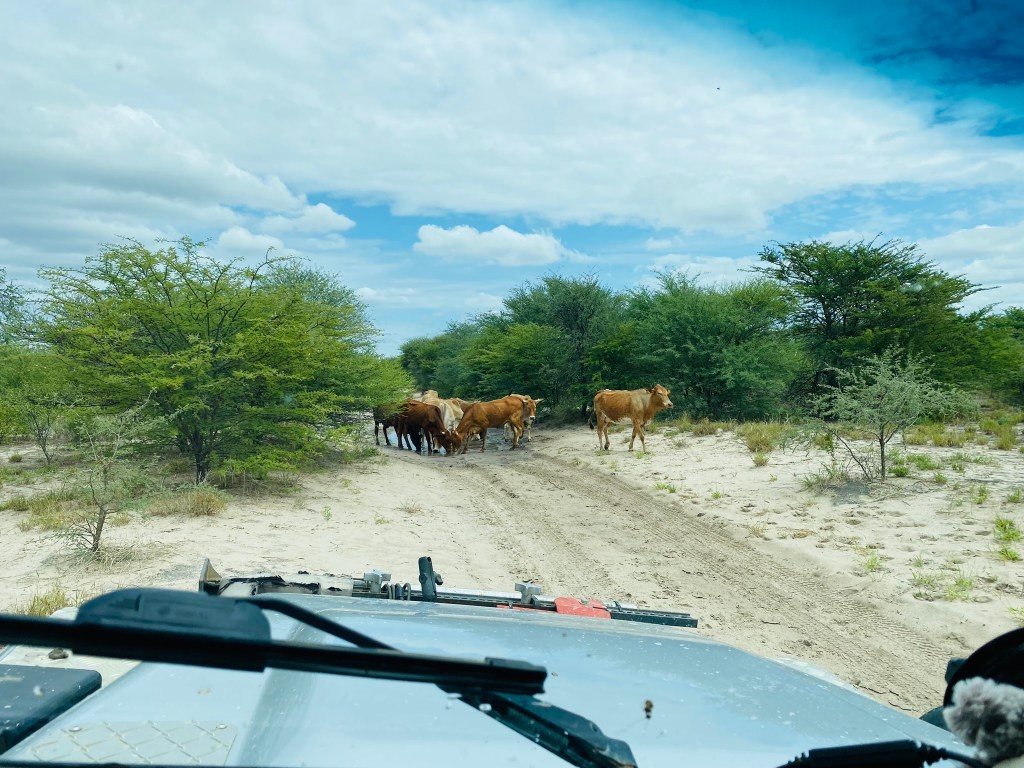
Who weren´t remotely interested in how keen we were to get to the gate before dark…

Once at the entrance gate we showed our paperwork, bought wood (getting my first wasp sting in the process, right in my hair, ouch!) and headed to our first campsite. The roads inside the Park were no better than the road from Rakops, if anything they were worse. It took us 3 hours to drive 56km but when we arrived, just as the sun was setting, we were very happy – the campsites here are very large and there is anything from 1km to 20km between you and your nearest neighbour
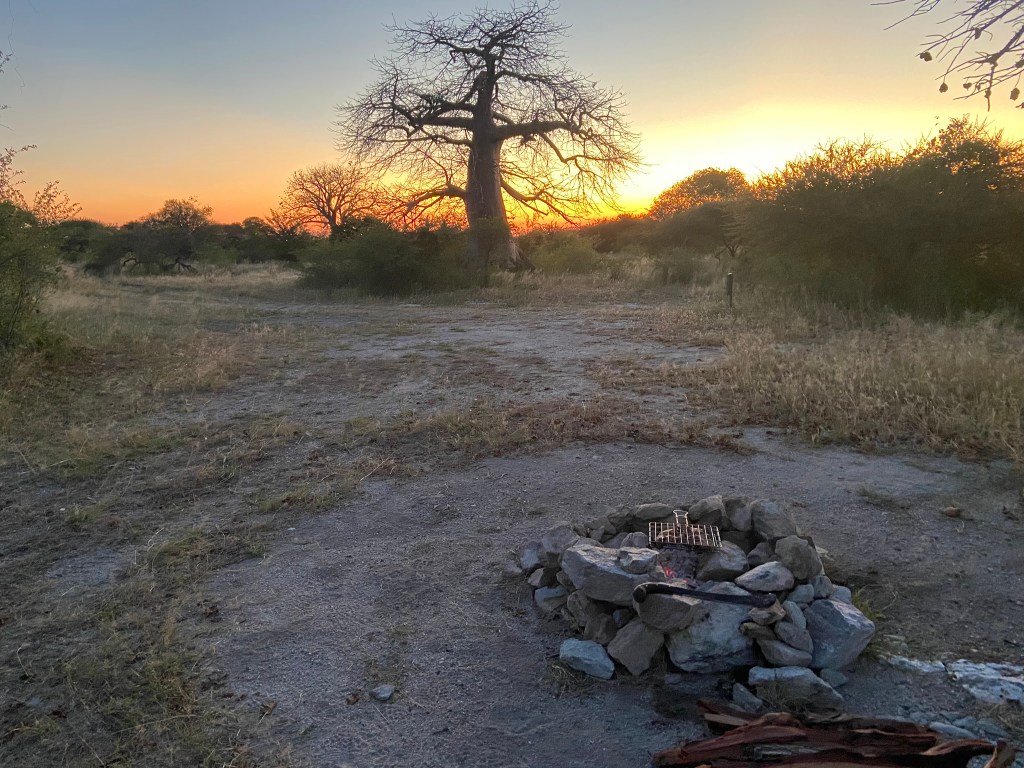

It was so quiet and peaceful and as night fell it was pitch black with only the stars twinkling above. We breathed a big, deep breath of contentment.
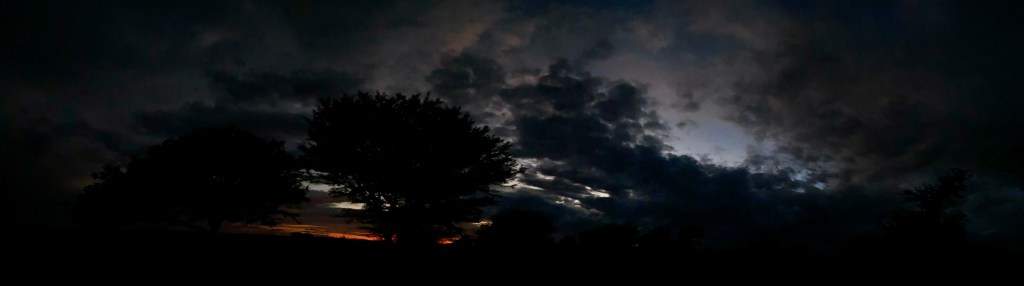
All the campsites in this park are by the salt pans where the views are good and the animals most densely populated. I had chosen all four specific campsites here based on which ones had the most reported lion sightings and on the basis that lions and leopards were as likely to be in our campsite as anywhere else in the Park we didn´t plan to set out particularly early as we normally would in a national park.
I was therefore slightly disappointed to wake up the next morning and find that no lions had joined us in our camp. In fact the whole place seemed very quiet.
So we sadly packed up and headed off to see what we could find.
The Park is so large that each day would simply consist of doing a long, one-way game drive from one campsite to the next. Because of the rains, most of the trails in between were overgrown and challenging with few sitings likely
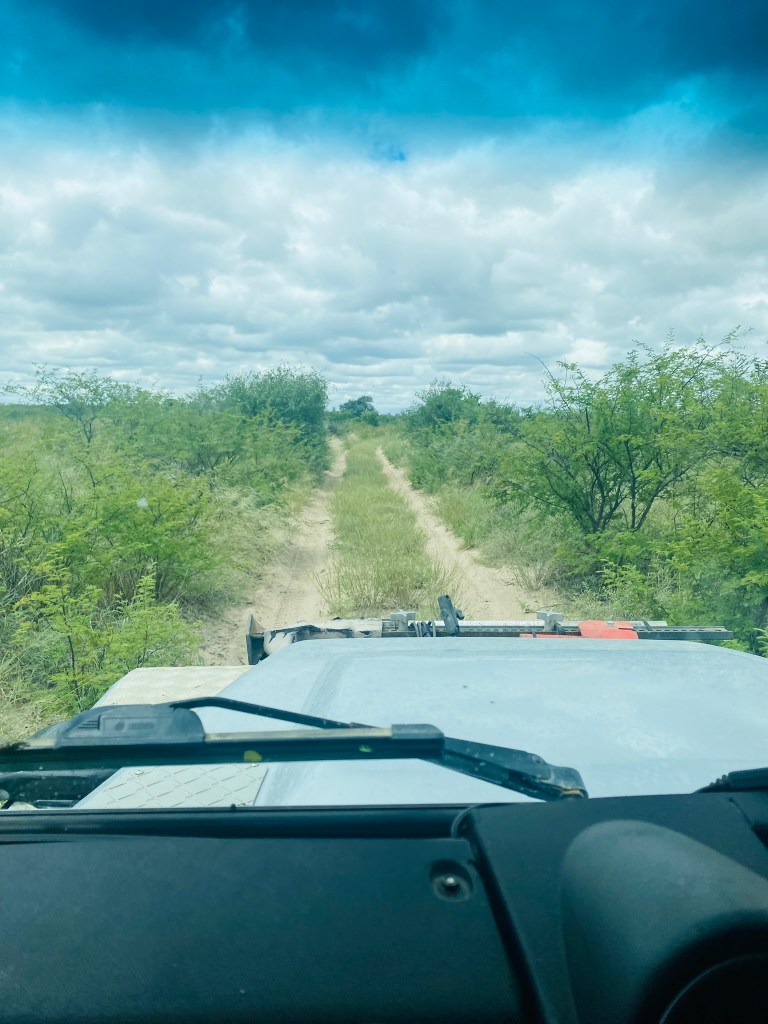
The whole place looked so unlike a desert it was hard to believe we were in the Kalahari. It took over six hours to get through to our next campsite
As we approached one watering hole we came across a Landcruiser stuck fast in the mud. I had to laugh, there is always fierce competition between Landcruisers and Landrovers so we had big grins on our faces as we offered to winch them out – especially as they were rangers from one of the lodges based in the safari capital of Maun!
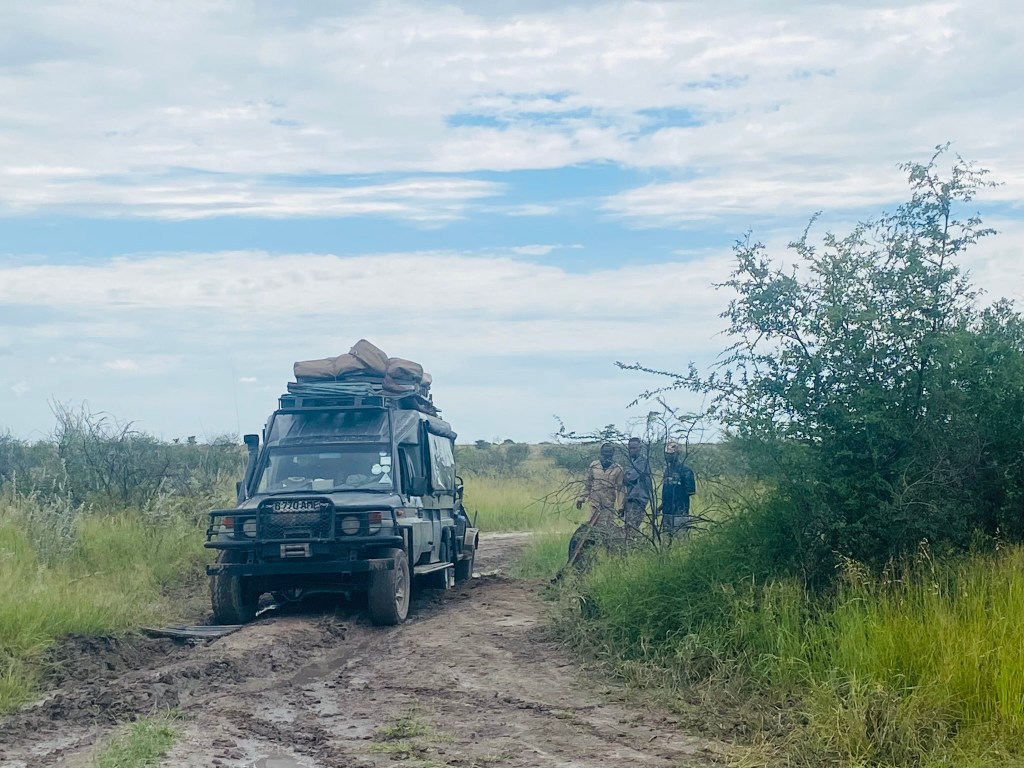
As always, James took charge and managed the whole operation with military precision…
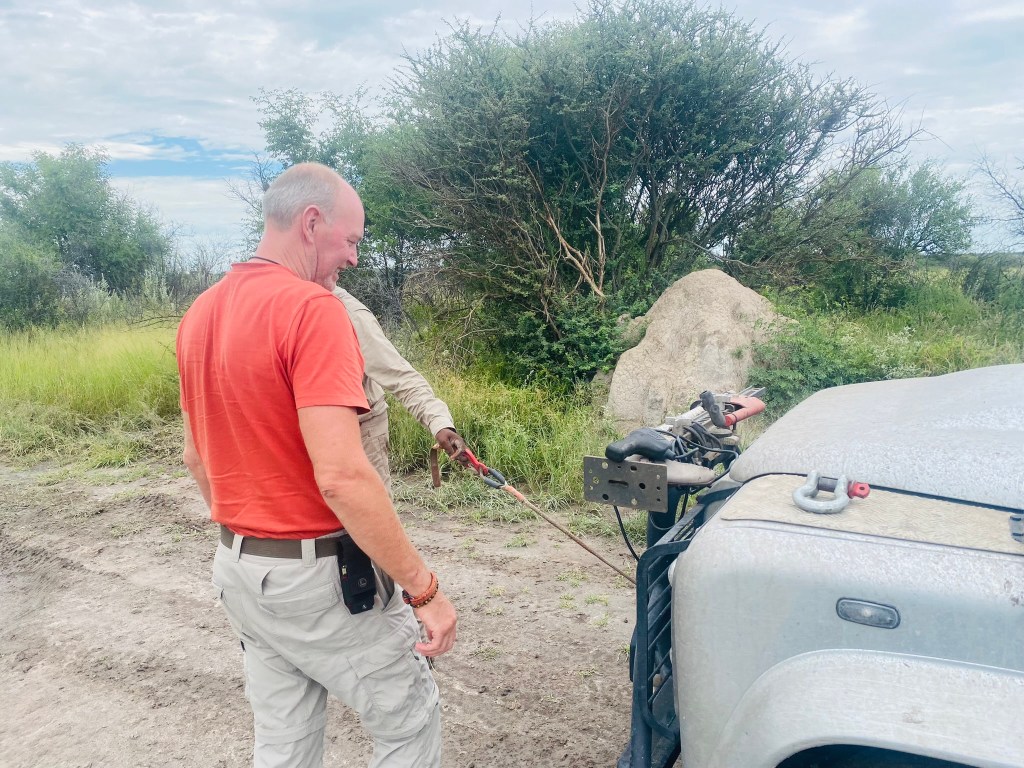
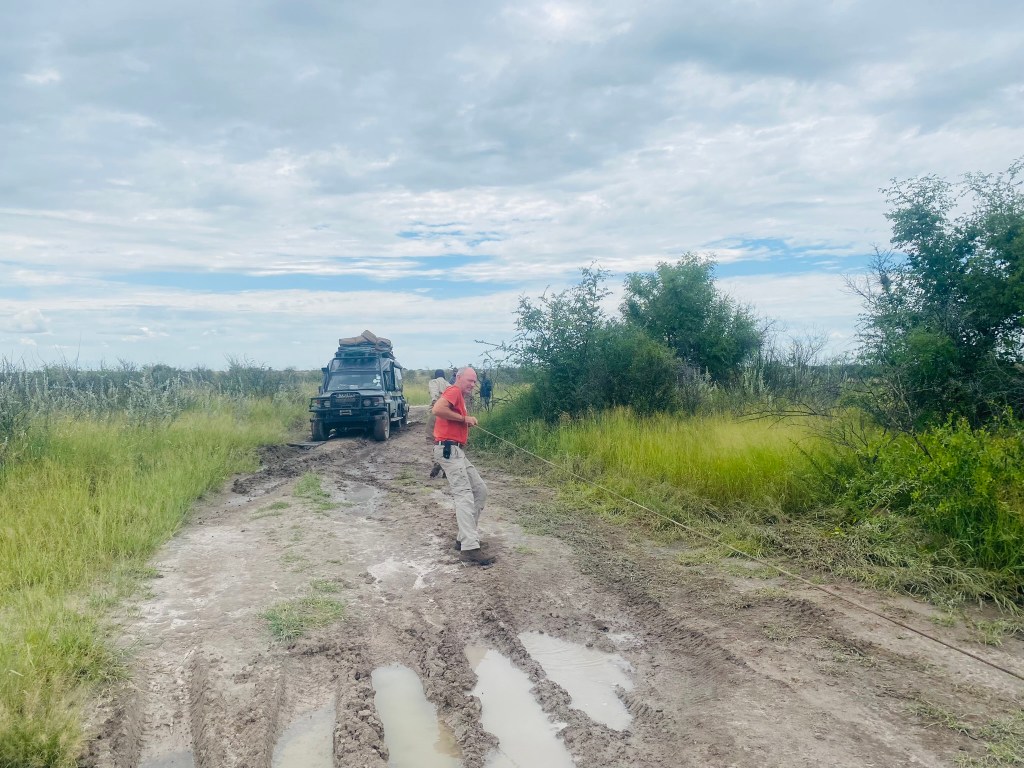
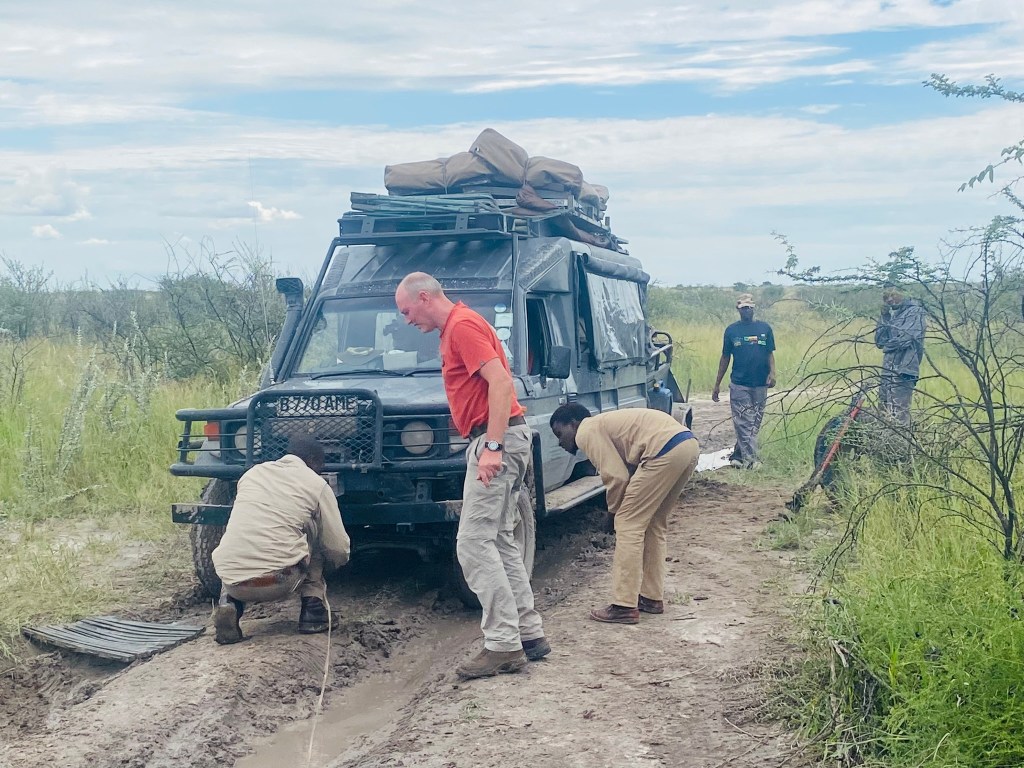


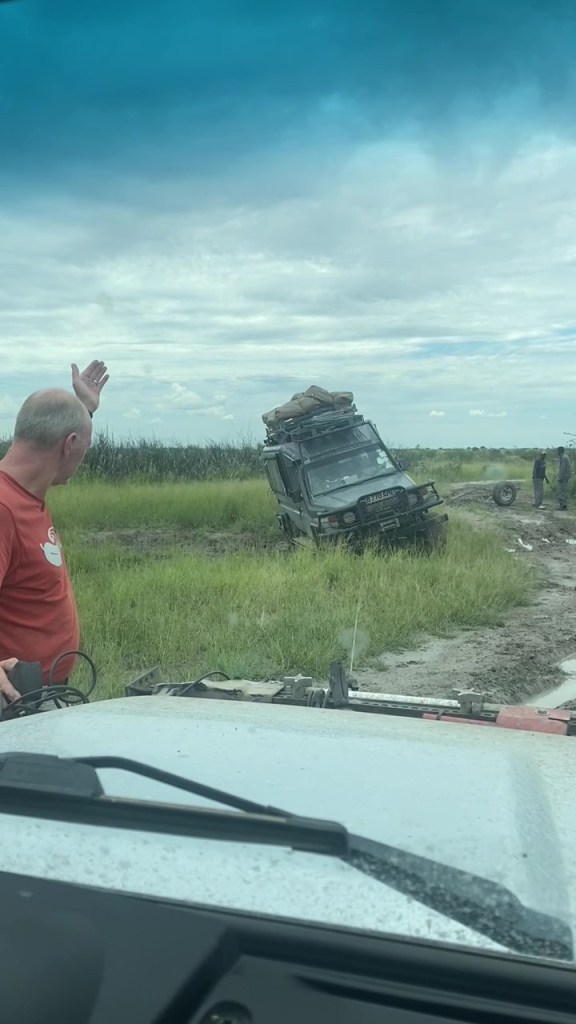
The final pull saw them sliding deeper into the mud before they could reach the drier part of the trail and as their truck leaned ominously over the driver panicked. Only James´ encouragement to keep going got them through….
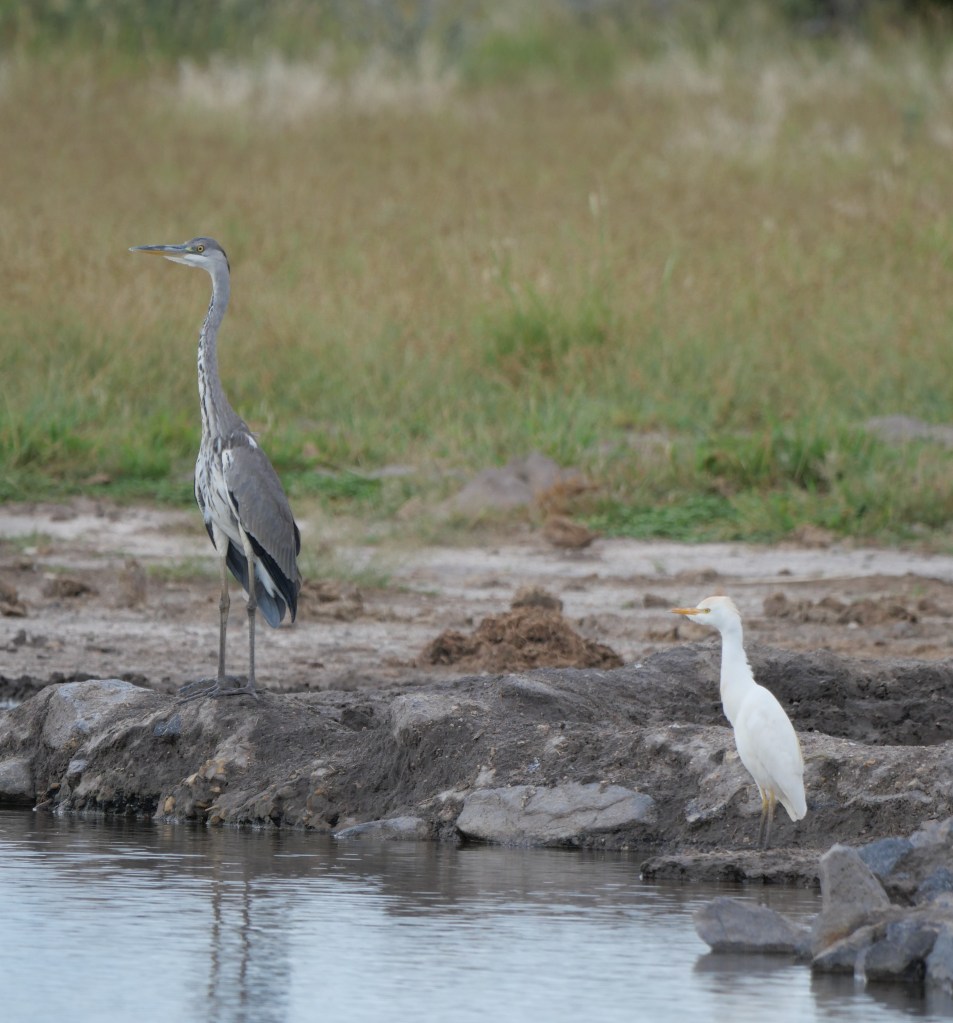
After rescuing them we parked up at the watering hole and had a picnic lunch in Henry watching the Oryx and birds doing their thing
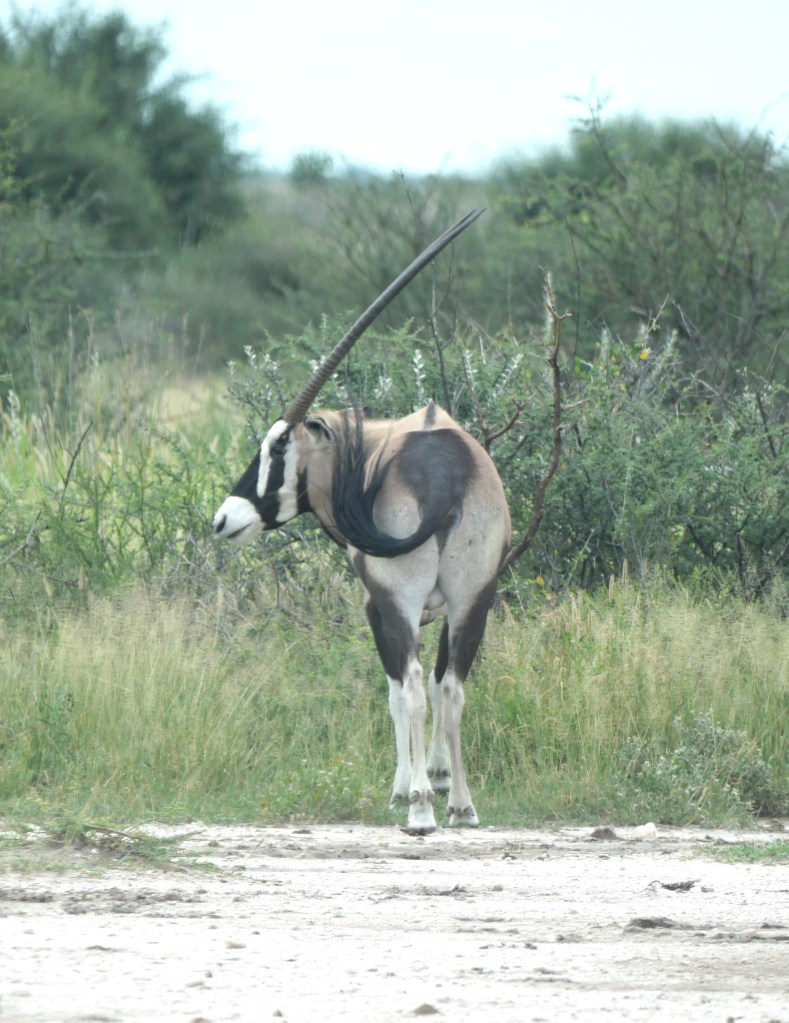
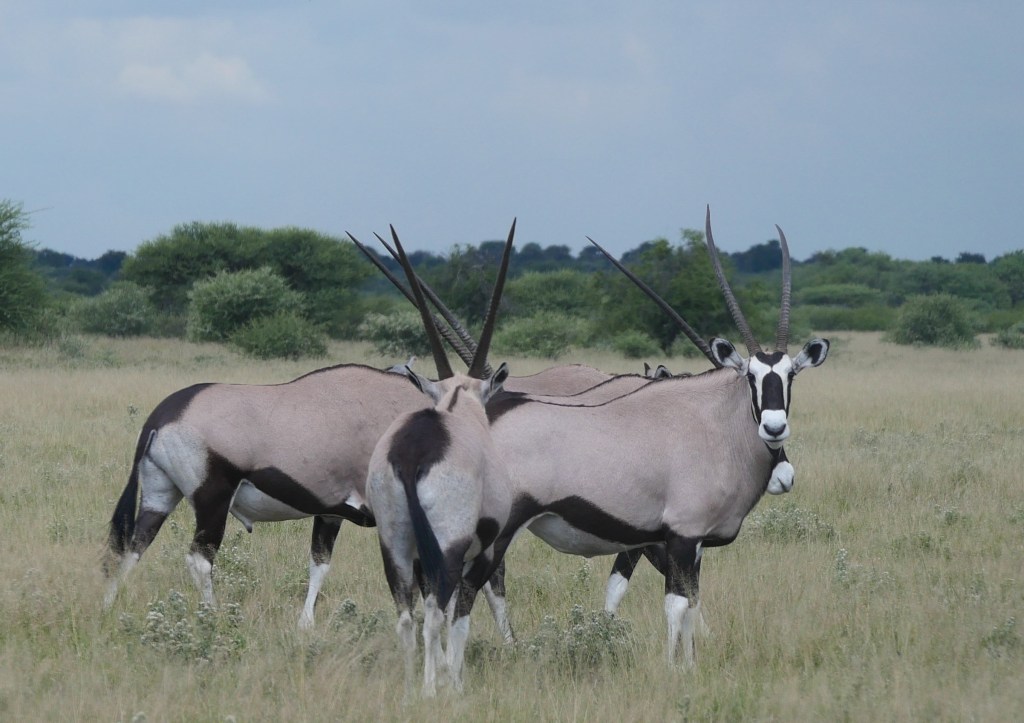
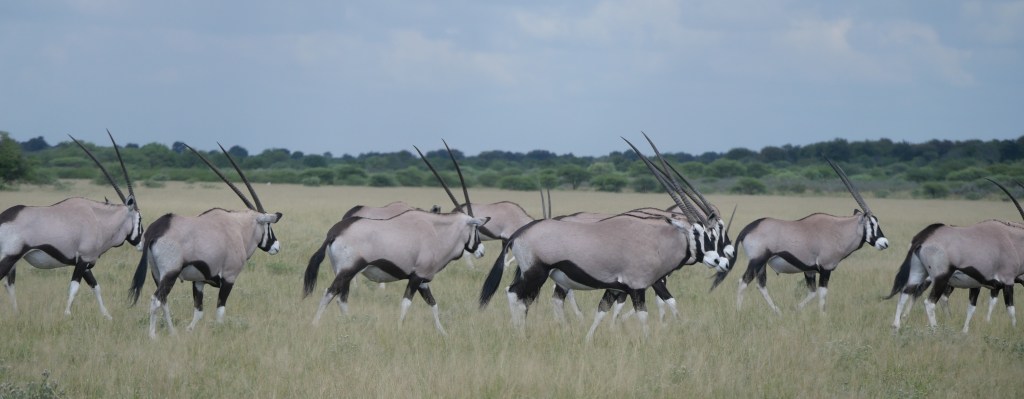
We finally made it to our campsite at around 3:30pm only to find people already there. After pieces of paper had been thoroughly checked it turned out they were in the wrong place. This was Passarge 1, they were supposed to be in Passarge 2 – 16km away. They already had two roof tents set up, multiple tables arranged around them and their food out ready to cook – packing up and moving was going to be a long task. I asked them if they were absolutely sure they were booked into Passarge 2 and they rechecked and said they definitely were. In that case, we said, you stay here and we´ll go to your campsite.
They were delighted but not as delighted as me – Passarge 2 has far more beautiful views and more lion sightings, we had been disappointed to find it already taken when we booked in Gabarone.
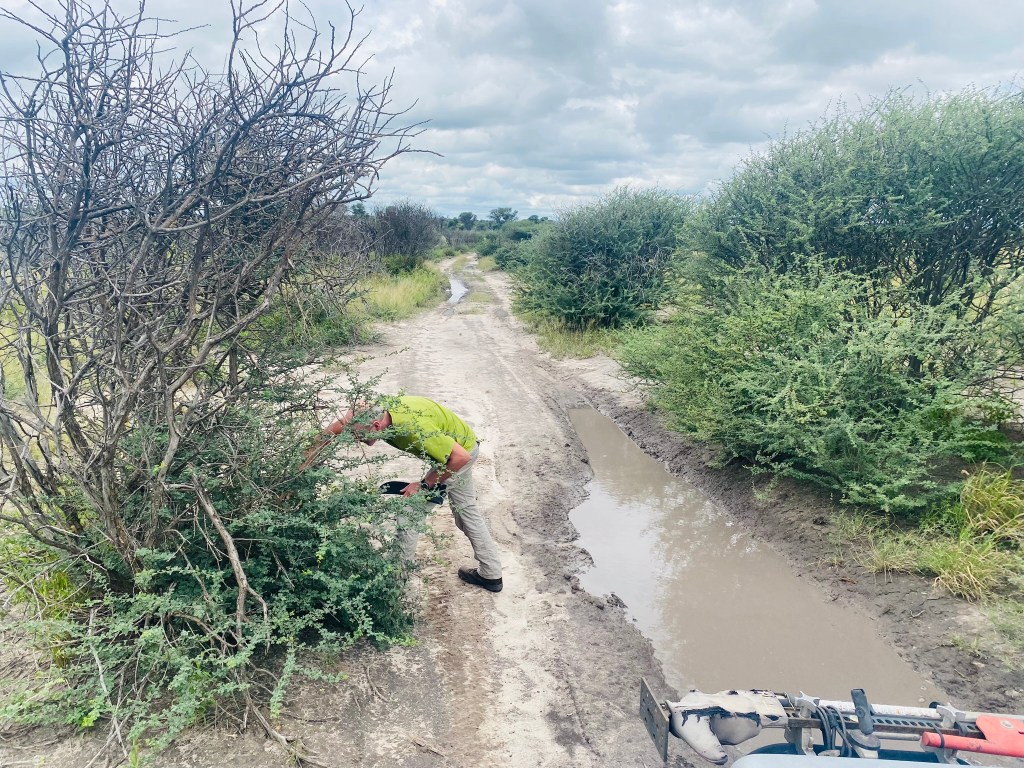
So far we had enjoyed some lovely views and appreciated the remoteness and tranquility of the campsites. But we had seen very few animals and been worried for Henry with the dense vegetation all round. James had been kept busy with the machete trying to clear a path through the thick, thorny scrub whilst I maintained lion-watch standing on the rock sliders
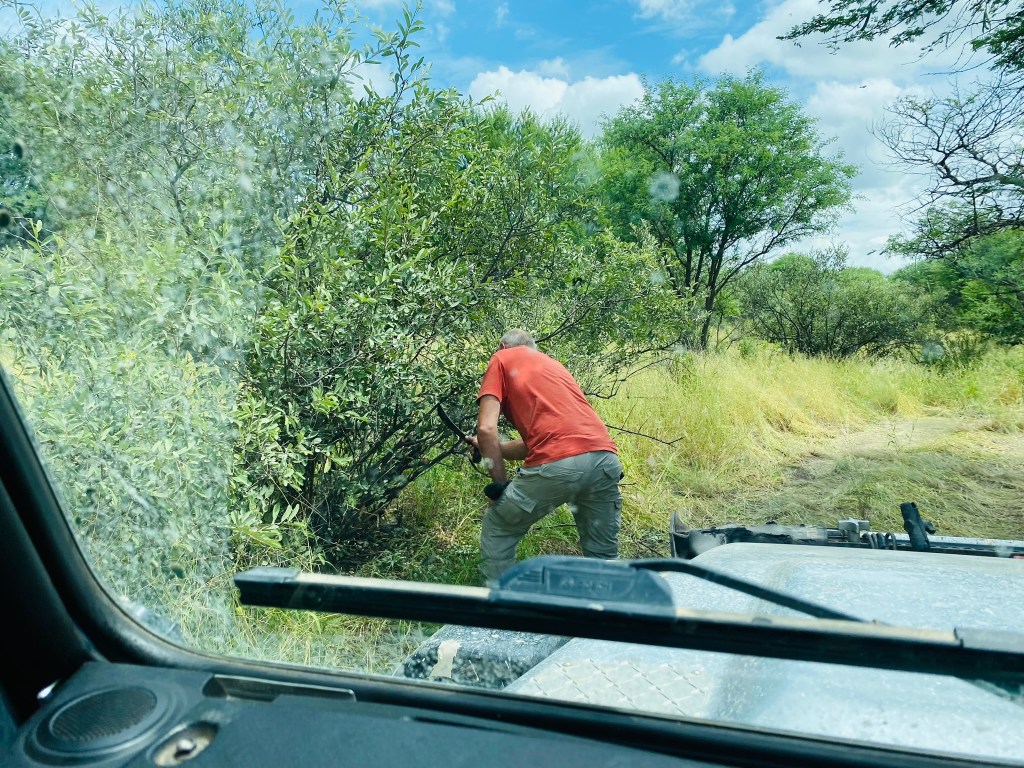
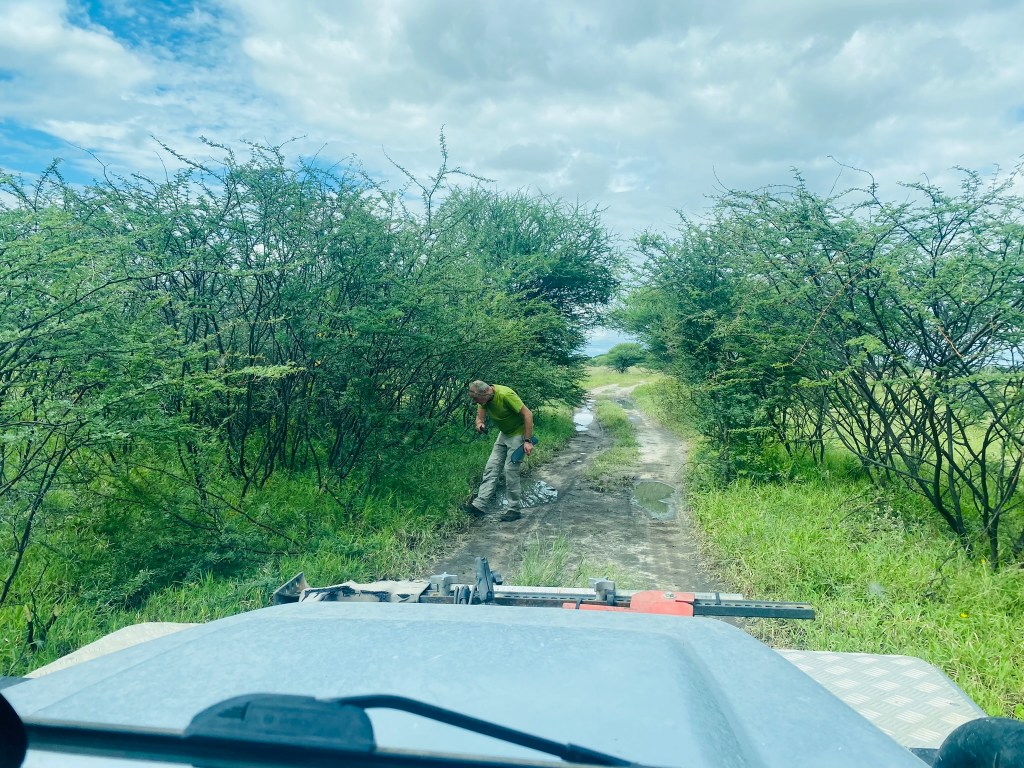
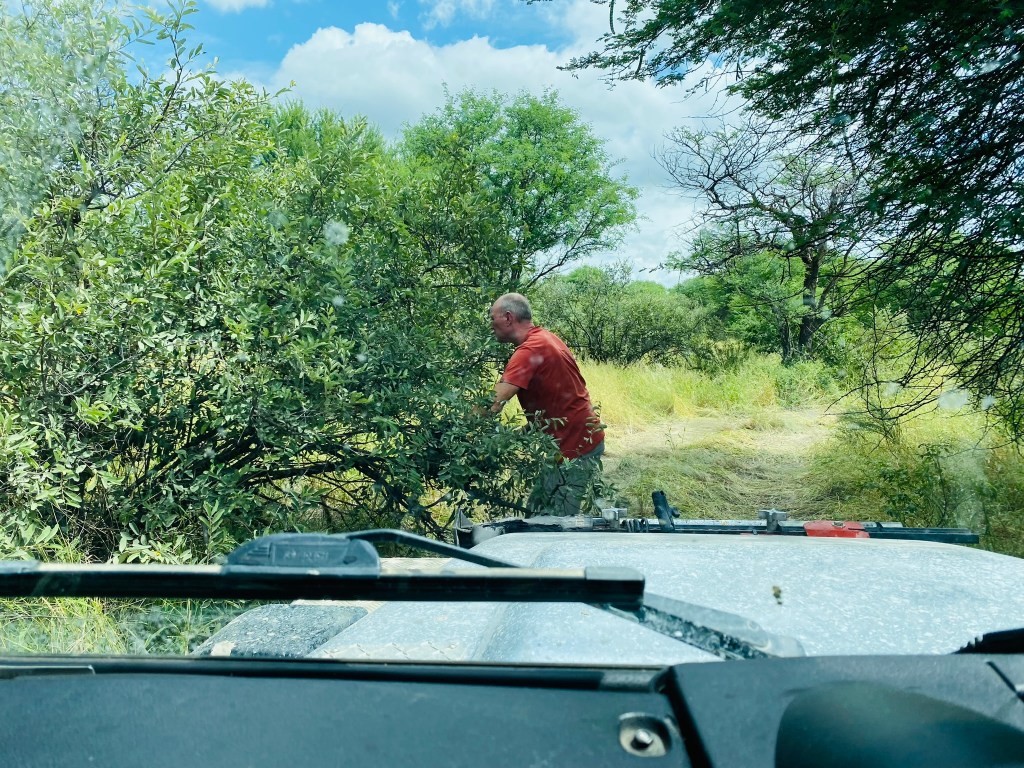
Everywhere we went the roads were deep mud and puddles making progress increasingly challenging
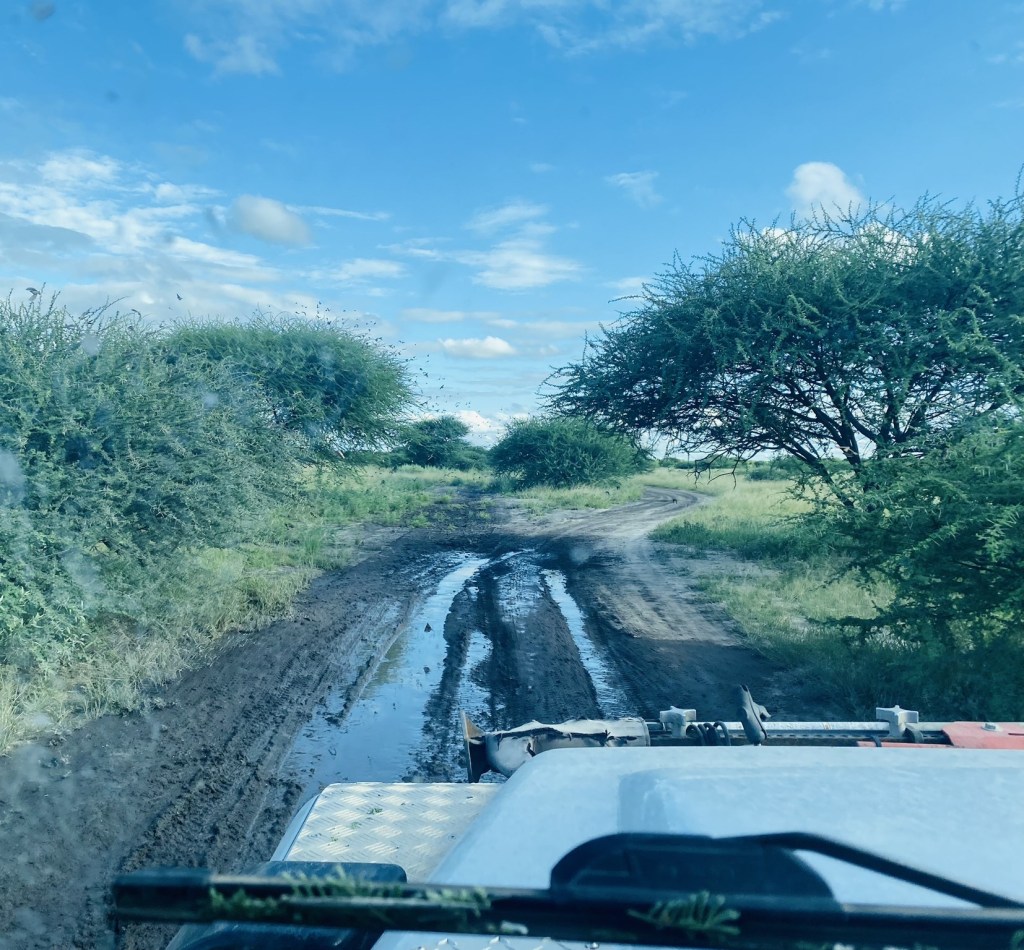
And poor Henry was getting filthy!


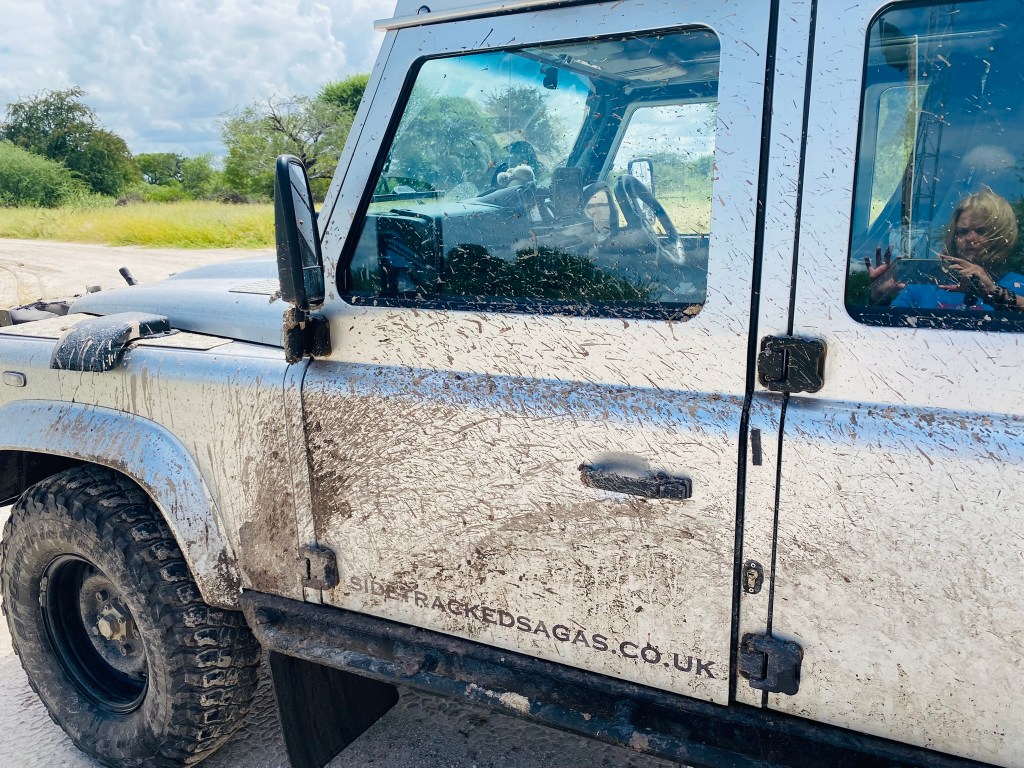
The next day things got decidedly worse. We drove all day through thick, deep, wet mud with thorny trees and bushes encroaching so far into the trails they left barely any route through. James jumped out with the machete hundreds of times to clear our way but even though he was getting exhausted, hot and his hands were increasingly full of thorns and bleeding, Henry was still getting very badly scratched. At one point I suggested we turned back and found a campsite nearer where we had come from closer to the entrance gate but James was determined to make it to where we were supposed to be.
We finally arrived at nearly 6pm just as dusk was about to settle – exhausted, upset and completely frazzled. And we had seen no animals at all for hours since we left the plains.
As we started setting up camp the heavens opened and torrential rain poured down on us. Bolts of lightening and deafening claps of thunder surrounded us. We hid inside Henry with the roof windows battened down watching the storm with long faces whilst I picked thorns out of James´ hands.
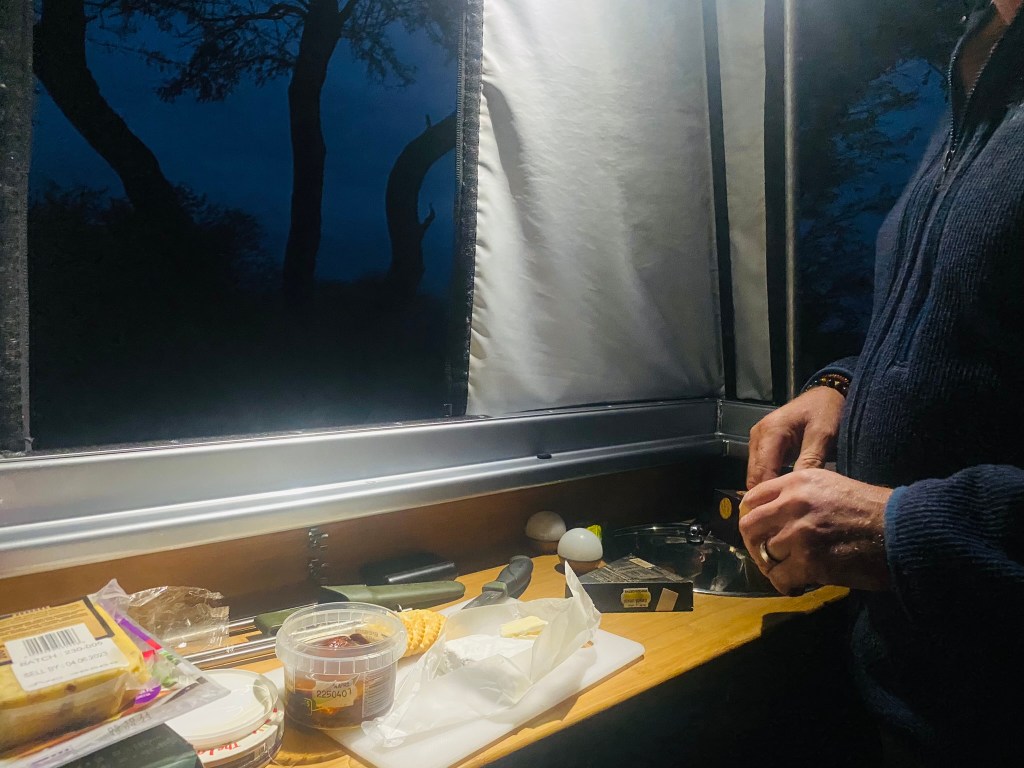
Eventually it stopped and we managed to get a small fire going. We were setting up the table and chairs ready to start cooking, all the food was out and the knife was poised in my hand above the vegetables about to start cutting when another, equally deafening noise made us jump out of our skins……lions!
Lions generally roar between dusk and dawn to let other lions know they are there and warn them to keep out of their territory. You can gauge roughly how far away the lion is by how much of the roar you can make out. You generally mark it by kilometers – a distant grunt is about 5km away. If you can hear the whole roar and a bit of panting it´s about 1km away.
We didn´t just hear the entire roar. We didn´t just hear panting. We heard breathing! We heard rustling. We heard the birds in the trees around the campsite shrieking.
These lions were not just close, they were right on top of us!
I grinned from ear to ear and darted around straining my eyes in the dim light to see if I could see them. The trees were dense and the grasses high but they were so close.
James, on the other hand, was not so excited by this turn of events! He practically picked me up and dragged me kicking and screaming into Henry and shut the doors behind us.
Now safely inside, we rolled up all the roof windows and peered out trying to catch sight of them. Nothing. We heard plenty of roaring and panting, even maybe some more rustling, but still no sight of them.
With disappointed looks on our faces we eventually gave up and sat down on the benches inside Henry to enjoy a far less nutritious dinner than planned – crackers and cheese with a breakfast bar and apple each! I may have been excited to see the lions but even I wasn´t about to go back outside and stand in the dark cooking tonight!
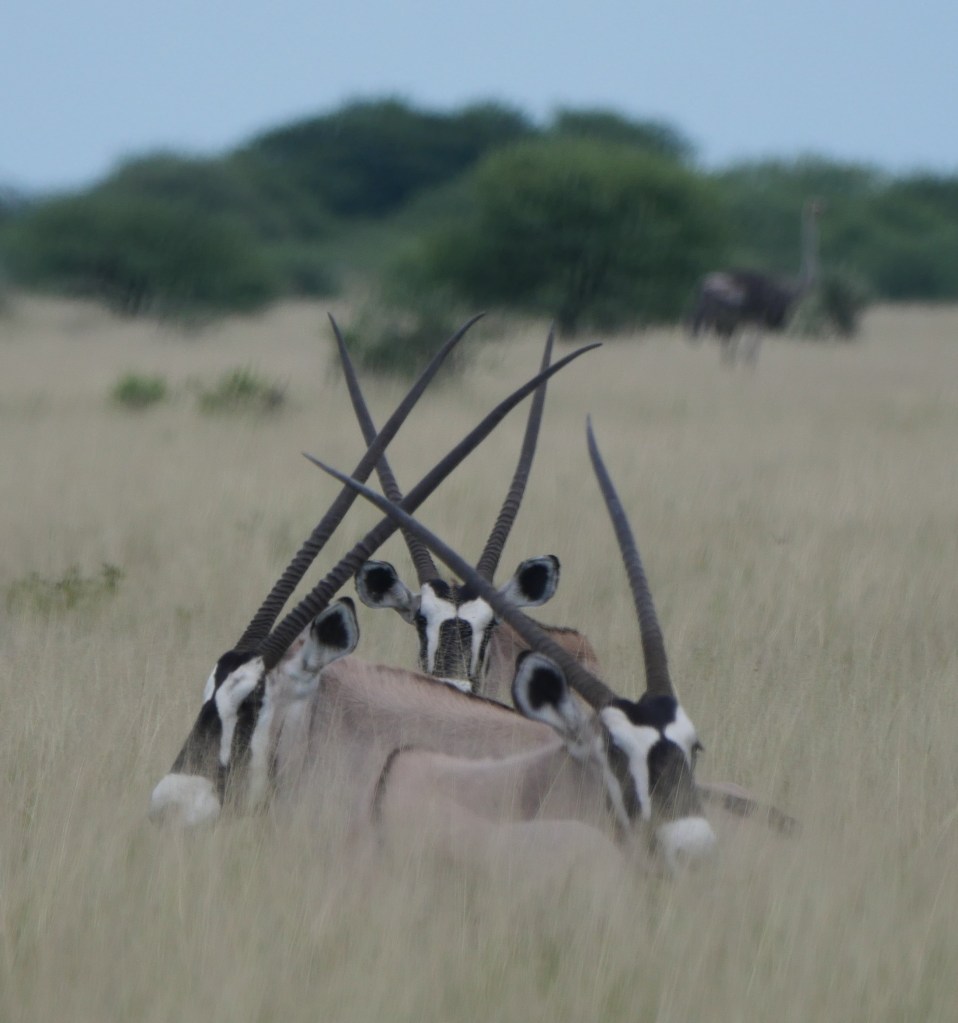
The next day was another long drive to our final campsite, this one back towards the entrance gate so retracing our steps for the first few hours. With James having hacked away the bush the day before it was slightly easier going. Eventually we popped out onto the plains and enjoyed watching the Oryx and Impala.

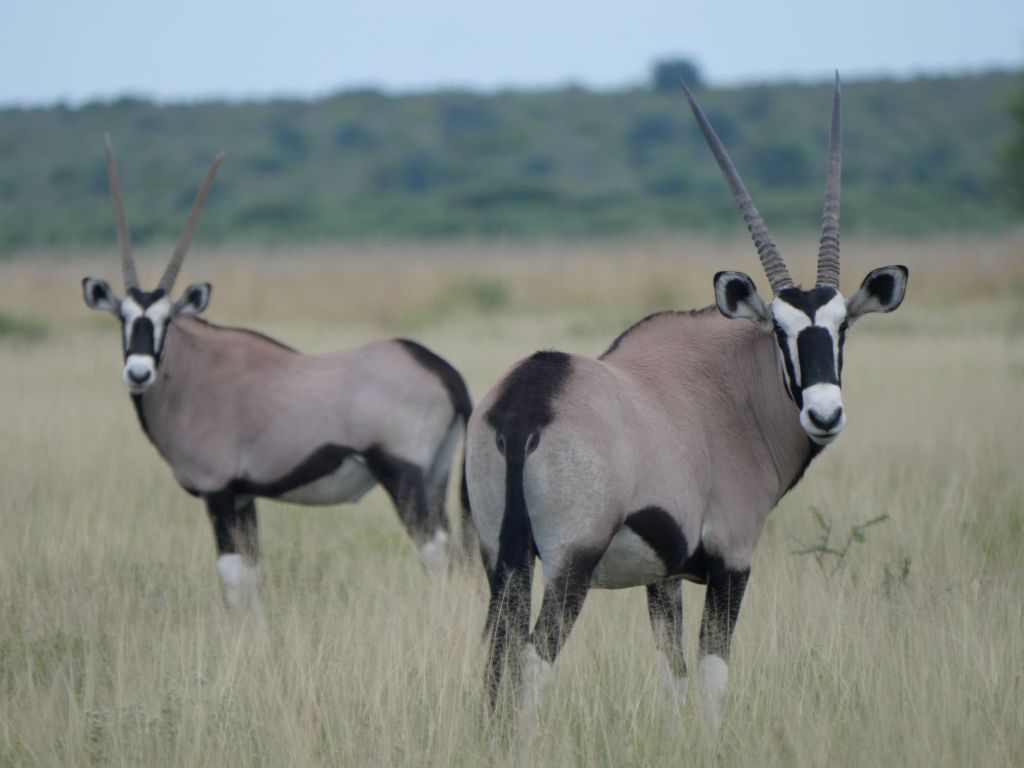

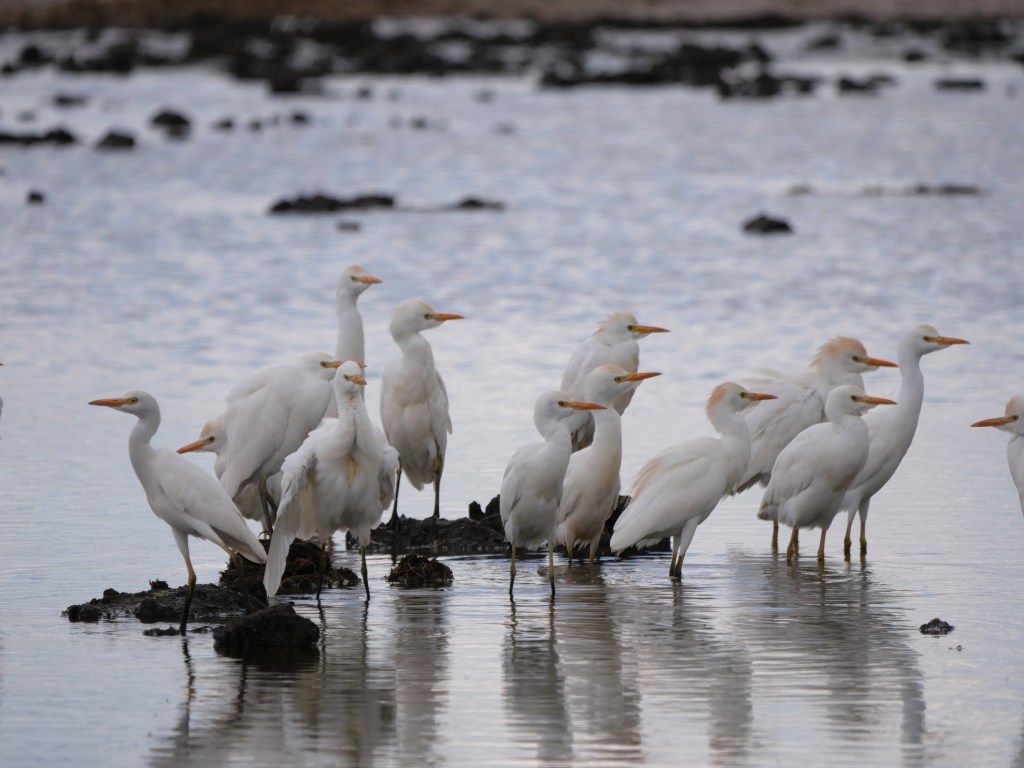
There was more bird life
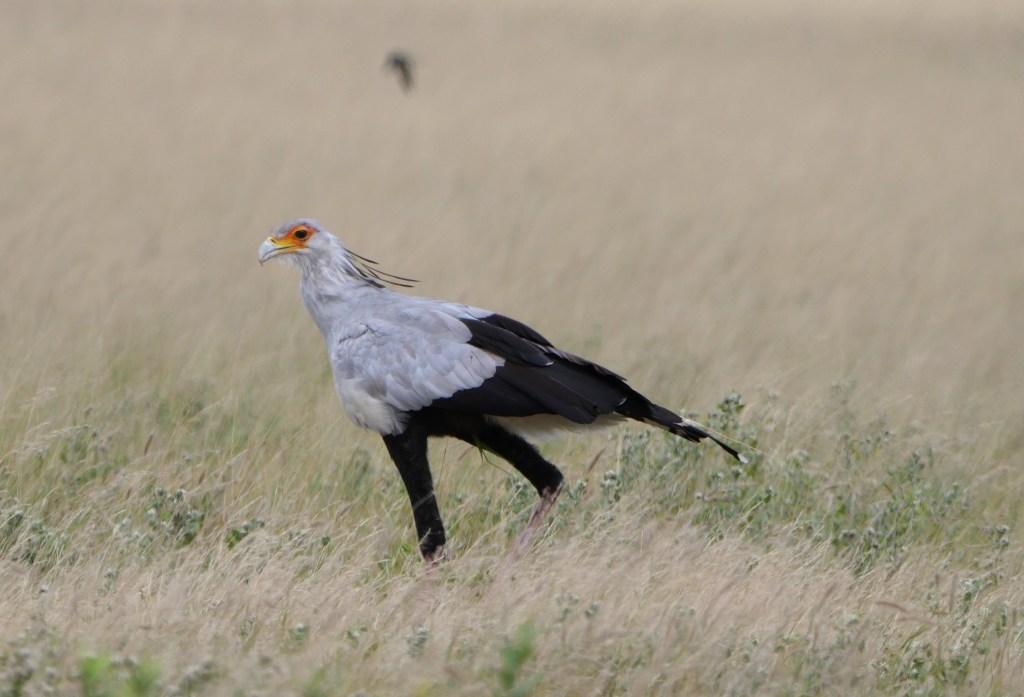
Including the statuesque Secretary Bird
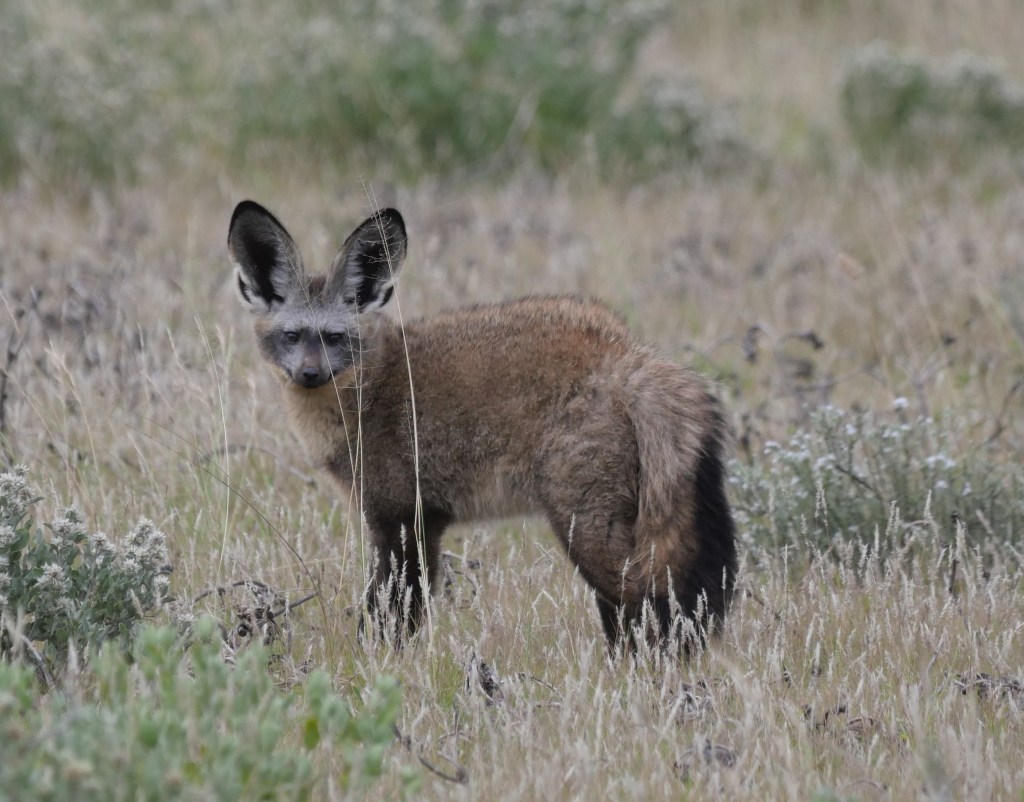
And I was thrilled to see another Bat Eared Fox and this time I even got a pretty good photo!
The main activity here in the wet season, however, appeared not to be animal spotting but rather practising your off-road driving skills!

That evening we finally managed to have a proper dinner but halfway through watching one of our films on the laptop we heard lions again – not so close but close enough to be cautious in the dark. So we spent another evening huddled up inside Henry albeit with a beautiful starry sky shining in through the roof windows to keep us company.
Our last day in the Park saw us towing another Landcruiser out of deep mud. This time it was a lovely Belgian couple who spend half of every year in Southern Africa. They had simply made the wrong decision on which path to take and rather than driving through the water had opted for the mud and been stranded there for a while until we turned up
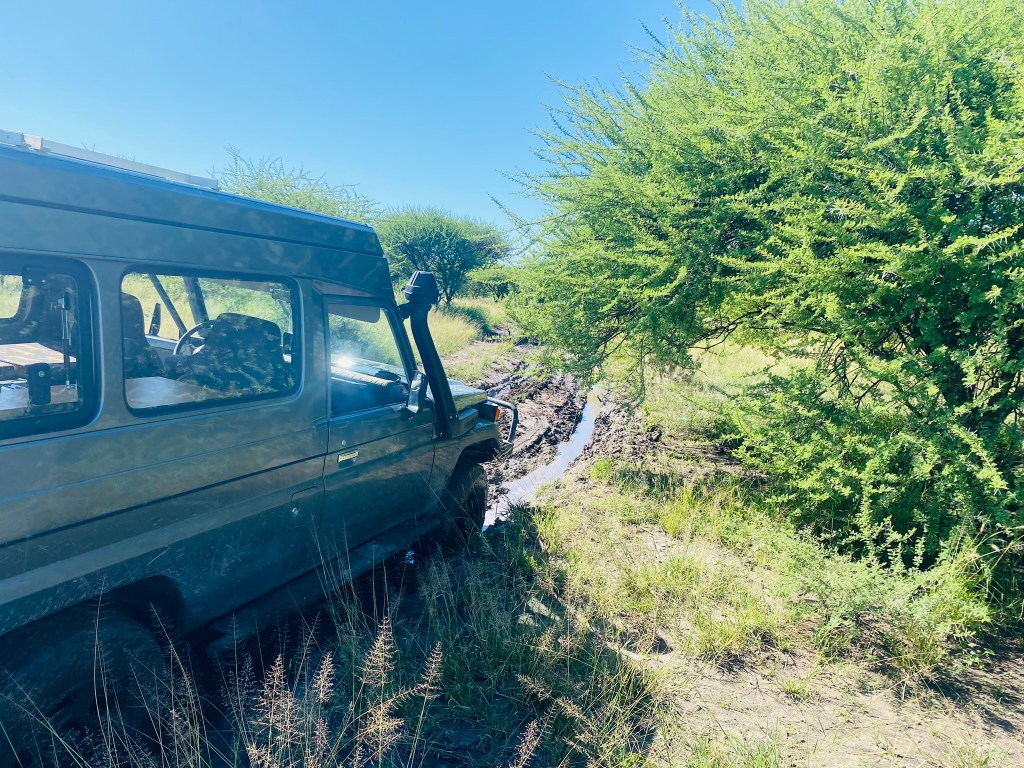
It is so easy to get stuck here, especially in the wet season and with the Park being so vast you could wait a very long time before any help comes.
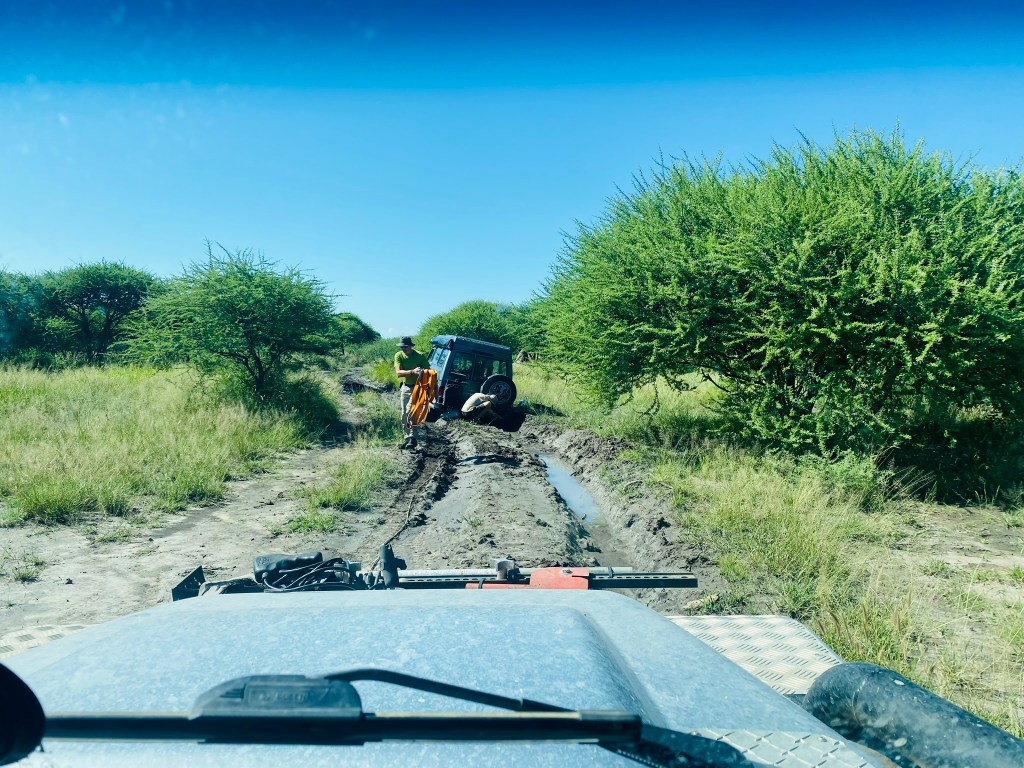
Notice in the video how much Henry is bobbing up and down with the strain of pulling a fully-equipped Landcruiser out of deep, thick mud…
They were very relieved to be rescued and called us their saviours. But as we packed all our recovery gear back I couldn´t help but notice a very fresh, large paw print right next to us…
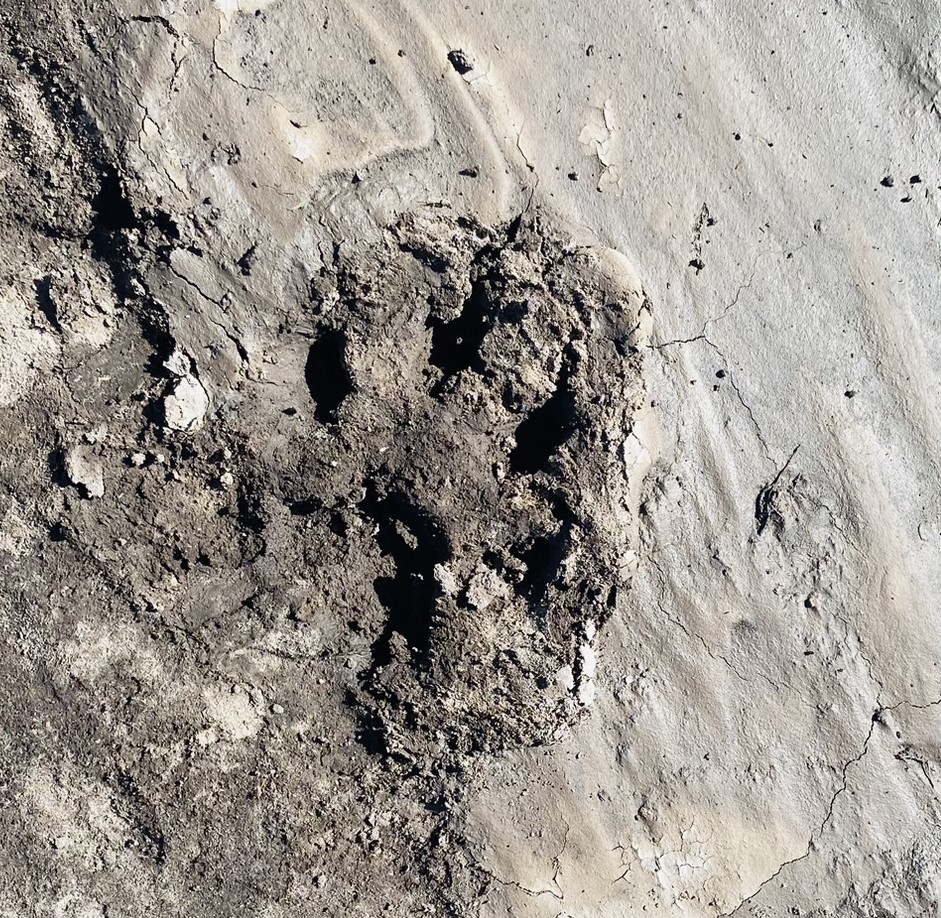
She could well have been sitting under a bush watching the whole rescue, but who knows with lions!
Muddy it may have been but it was noticeably drying out and the road back to Rakops was surprisingly less water logged than it had been only five days earlier.

In fact we made such good time we decided to press on all the way up to the Makgadikgadi Pans.
The journey was quite eventful. We were engulfed in yet another torrential thunder storm…

The road recommended by our sat nav turned out to be under water forcing us into a rapid u-turn and a 30km detour. And we nearly got stopped in our tracks when a group of young cows, normally very traffic conscious, suddenly ran out into the road in front of us.
Later on we were amused to see elephant on the side of the road, breaking into the mains water pipes and drinking the water as it came gushing out.
But we made it in one piece and were pleased to find our chosen campsite was clean, spacious and had lovely, clean water including wonderful hot showers – a real treat after five days in the Kalahari. Not to mention an enormous, pink Aardvark guarding the entrance
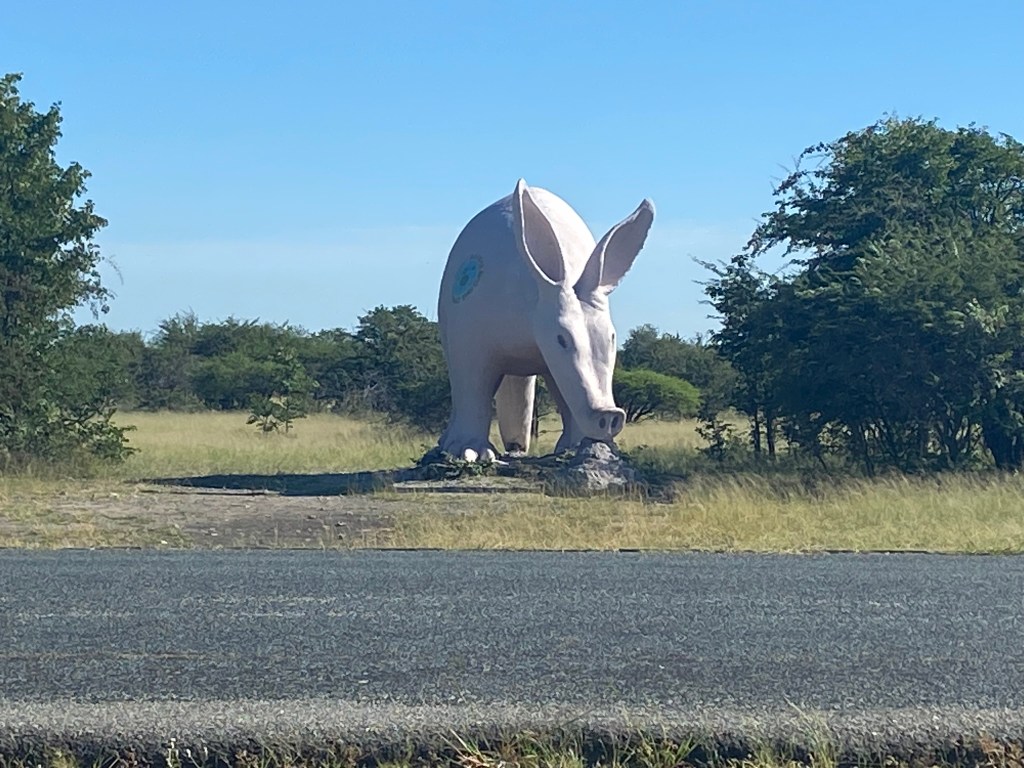
We tried to stock up on food at the local supermarket but there was very little there so ended up eating at the campsite restaurant – a delicious piece of fish for me and an indulgent burger for James.
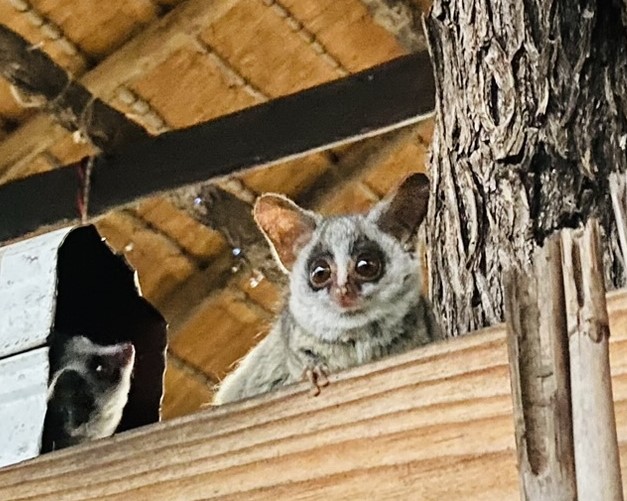
As we were eating I saw something moving in the rafters above us. I looked up to see the smallest, cutest, furriest face staring down at me for a split second before dashing off into the bushes. This was an entirely new animal siting for us but I knew what it was – a Bush Baby. It made my evening to have seen it, even if it was just a fleeting view.
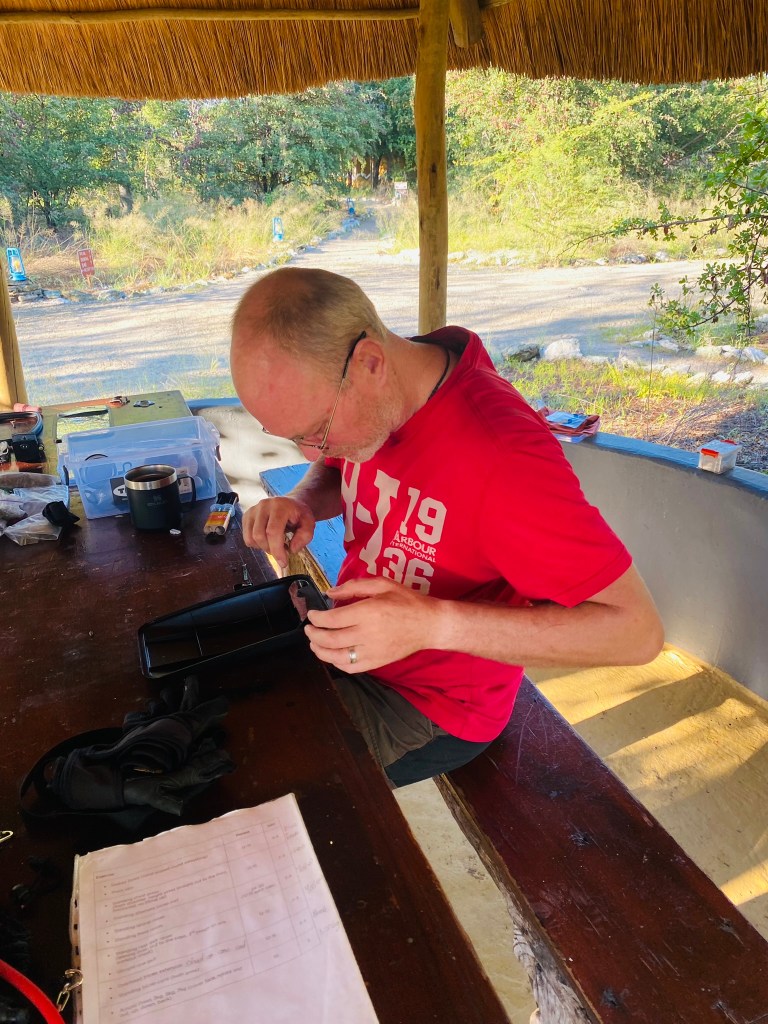
We had planned to drive into the Magadikdagi National Park the next day but on the way from the Kalahari Henry had seemed a bit off. His steering wasn´t very crisp, both his wing mirrors had taken heavy bumps and there were a few new rattles. We were sure it was nothing to worry about, just the stresses and strains of the rough roads but nevertheless James wanted to give him some TLC before we went any further.
So we spent the next day on camp, me working on our end of year accounts and re-financing what is left of our UK property business and James tightening, greasing and generally taking care of Henry´s bits and pieces.
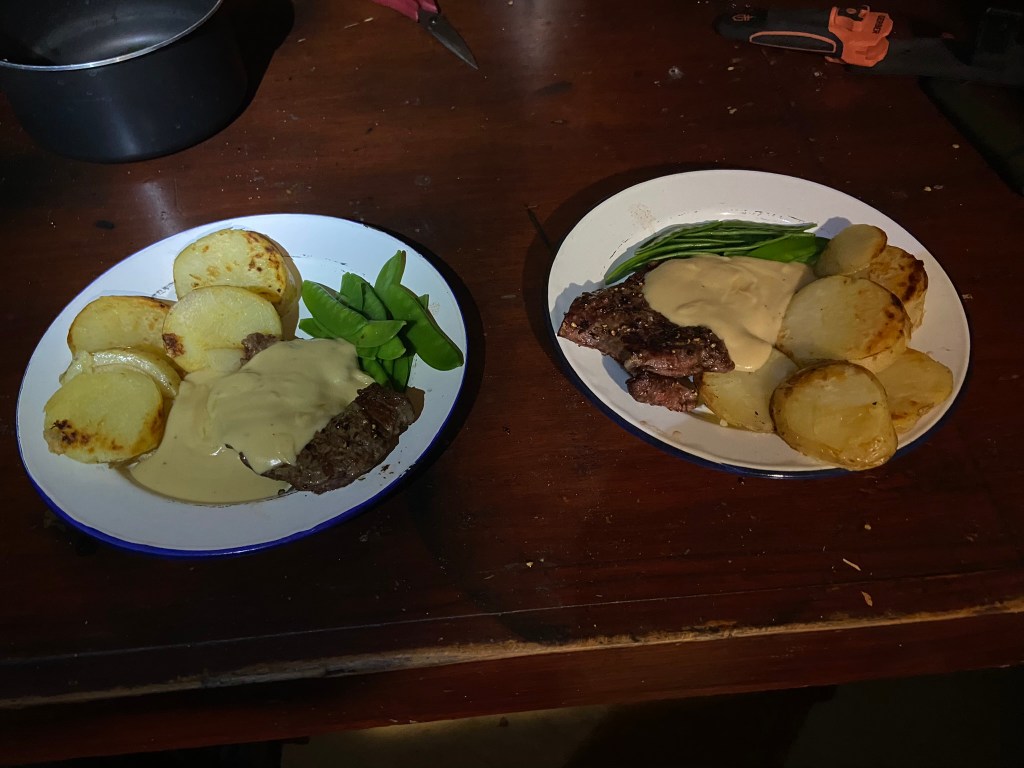
That evening we took advantage of the large campsite table and benches to cook a surprisingly successful dinner of steak and chips on the braai!

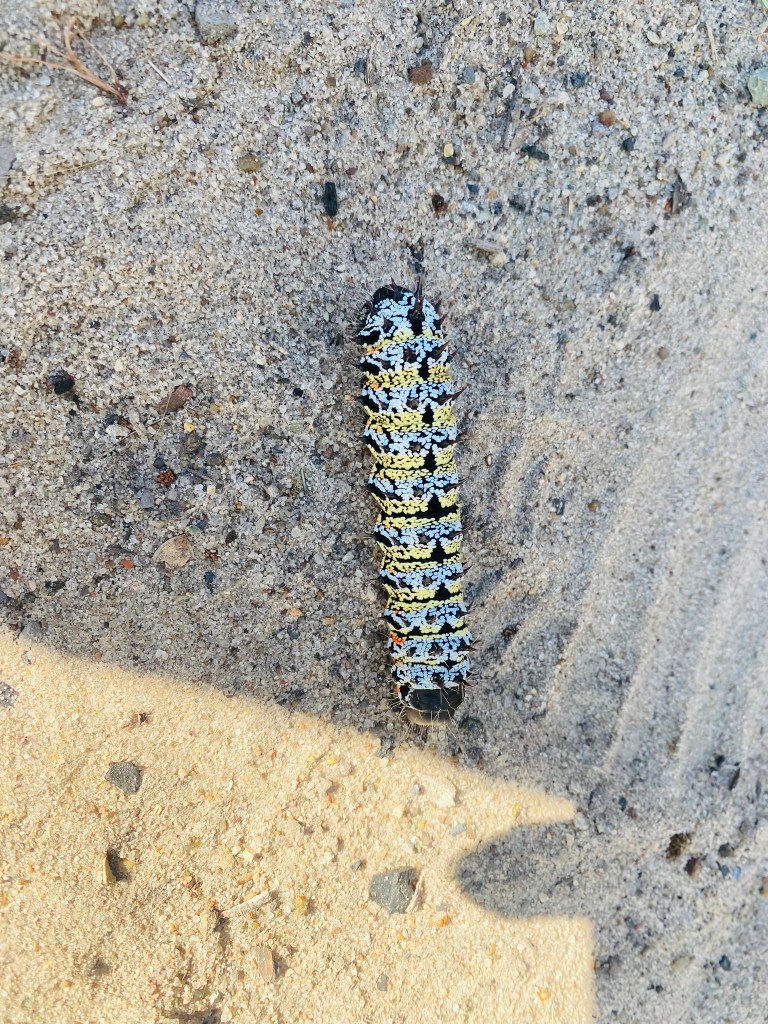
The campsite was also home to some huge and rather lovely caterpillars that we hadn´t seen before. They wiggled their way around Henry and our feet all day challenging us not to accidentally squish them…

We had two choices for the following day. We could either have a long day getting up early and going into the national park – self drive or on an organised game drive – then drive 2.5 hours to our next campsite arriving late in the evening; or we could give up on the Park and head straight for the campsite via a bigger supermarket in the next town, get settled in early and try driving the salt pans another day from that side.
We spoke to one of the rangers at our current campsite and heard that the migrations had not made it this far south over the summer and furthermore the pans in the national park were still very wet and dangerous to drive. The fact that the migrations had not come down from Chobe this year explained a lot about the lack of animals in the Central Kalahari and all in all we decided to give the Park a miss and have a more relaxed day.
When we arrived at our next campsite we were pleasantly surprised. Campsites come in all shapes and sizes but can broadly be categorised into – wild and remote (like in the Kalahari and most of southern Namibia), commercially run with restaurant, bar and often a swimming pool (like the one we had just come from) and small-scale, family run affairs with some facilities but still fairly basic. These ones can either be polished or bohemian and either works for us. This one was definitely on the bohemian end of the scale
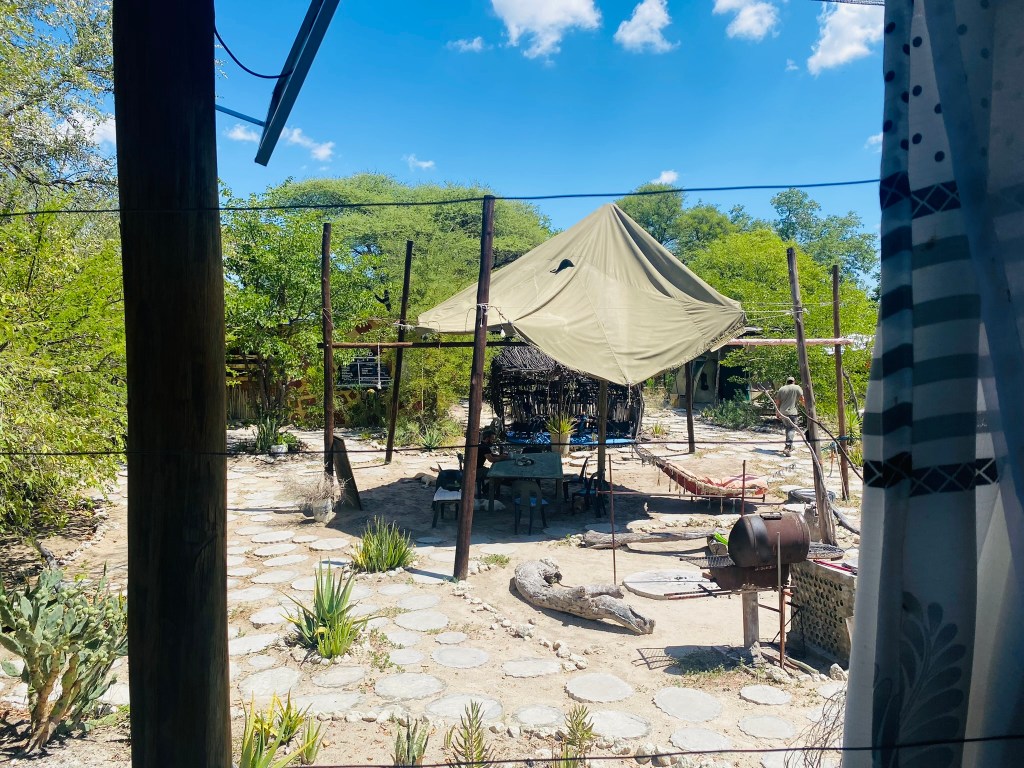
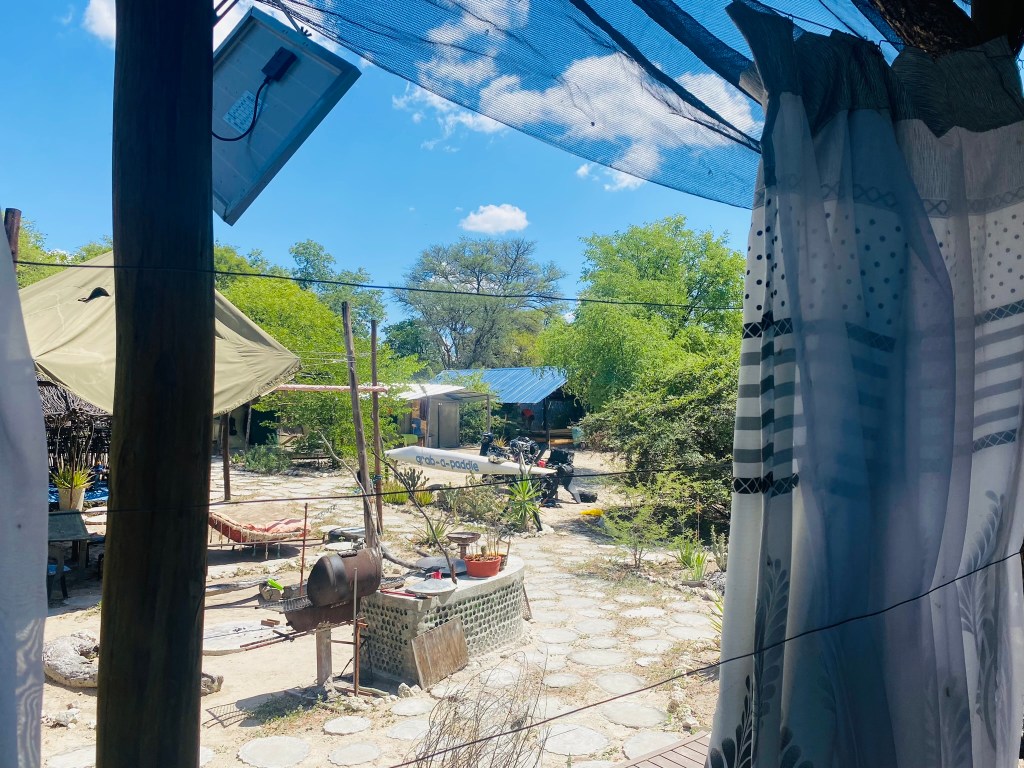
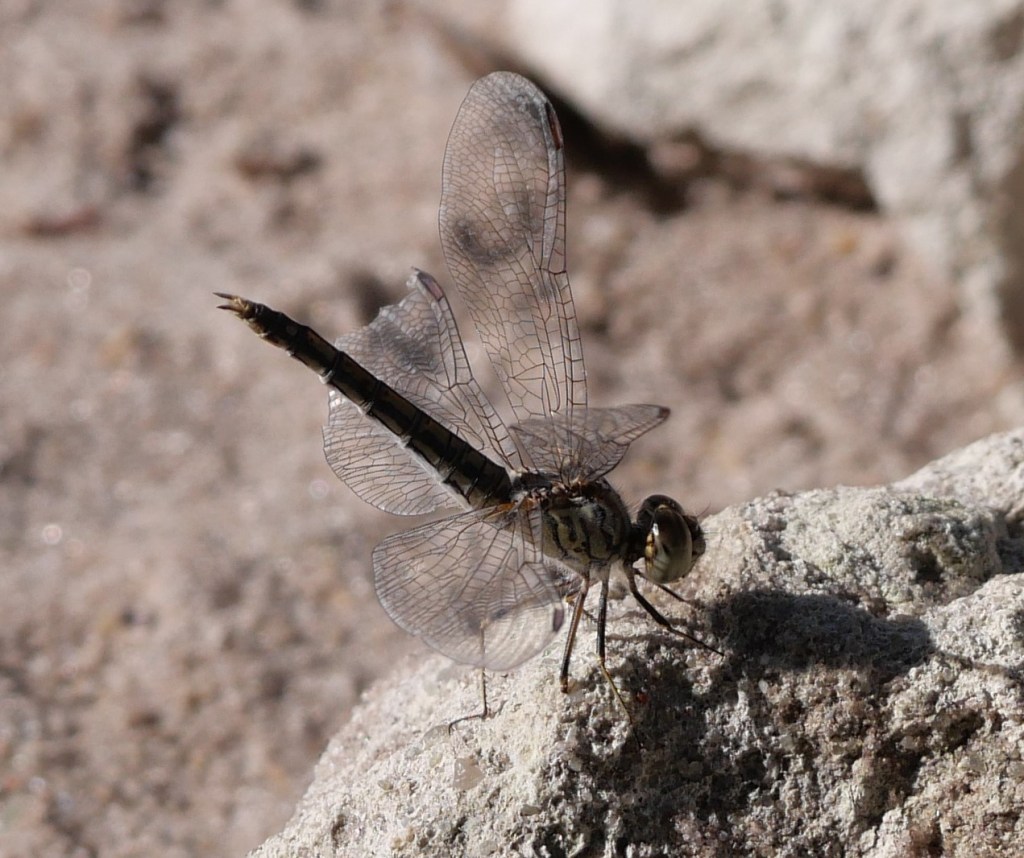
The owner was Rupert and he was joined by two lovely volunteers, Isabel and Matilda, who helped him run the place. They welcomed us like old friends and we sat and chatted with them for hours.
One of the other guests was an American travelling on a motorbike. Two days earlier, he had taken one of the organised game drives into the salt pans on the side we had just come from. The trip he had joined was an overnighter, camping out on the pans. But on the way in they had sunk and were nearly stranded in the dark. They dug themselves out but had to camp in the bush on the edge of the pan where it was safer. They had seen no animals at all. And on the way back early the next morning they had had an accident during which he had hit his head and been taken to hospital for stitches. He was annoyed but pretty stoic about the whole thing but it made us glad we had not tried to drive the pans ourselves the day before.
As we sat chatting, dusk fell and another face appeared – this time out of a pipe running along the ceiling….

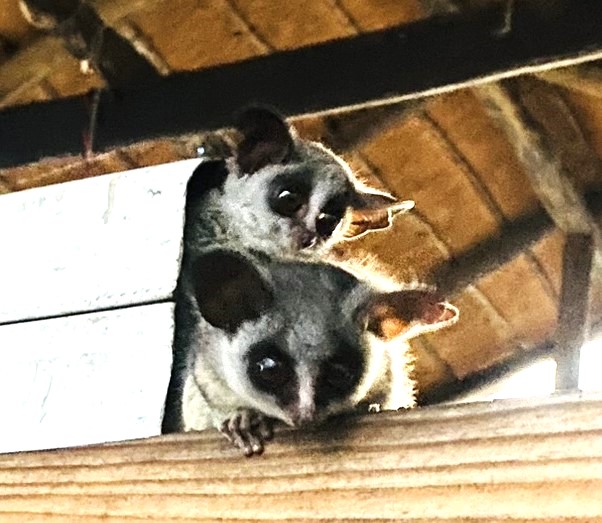
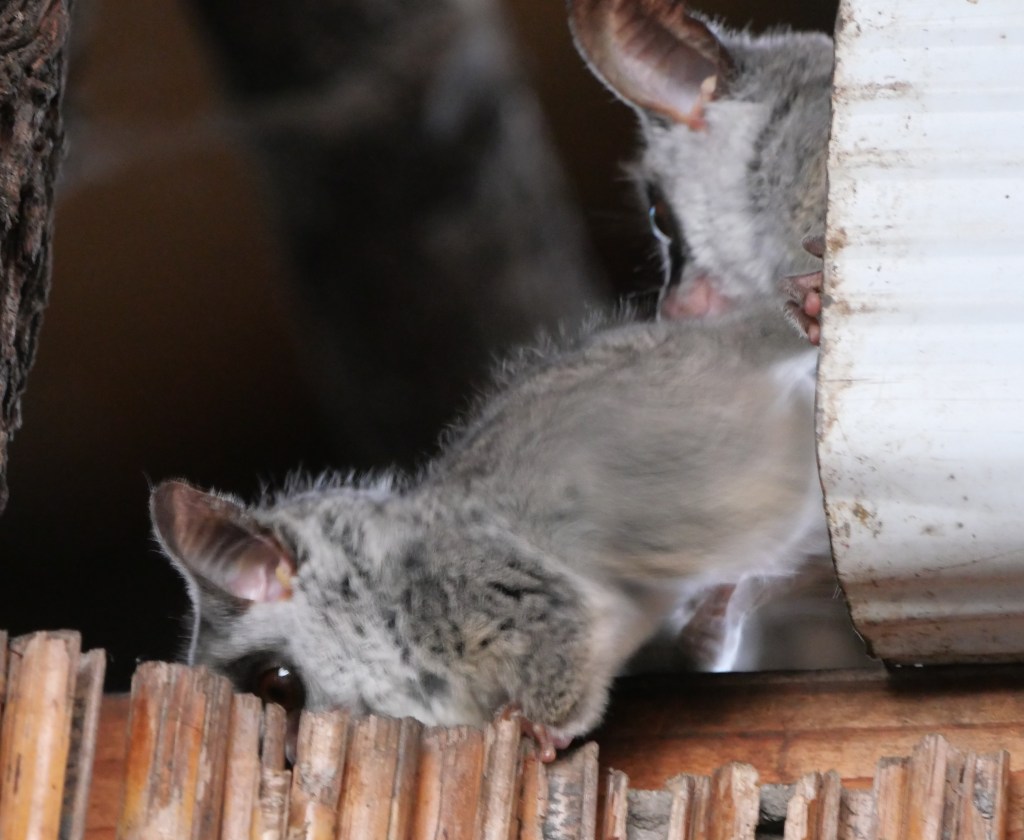
My second sighting of the endlessly cute Bush Baby. In fact, not just a Bush Baby but a baby Bush Baby!
Over the course of the two days we spent with Rupert and the team I could be found in the sitting area every morning and evening staring up at the rafters waiting for these adorable little things to pop out


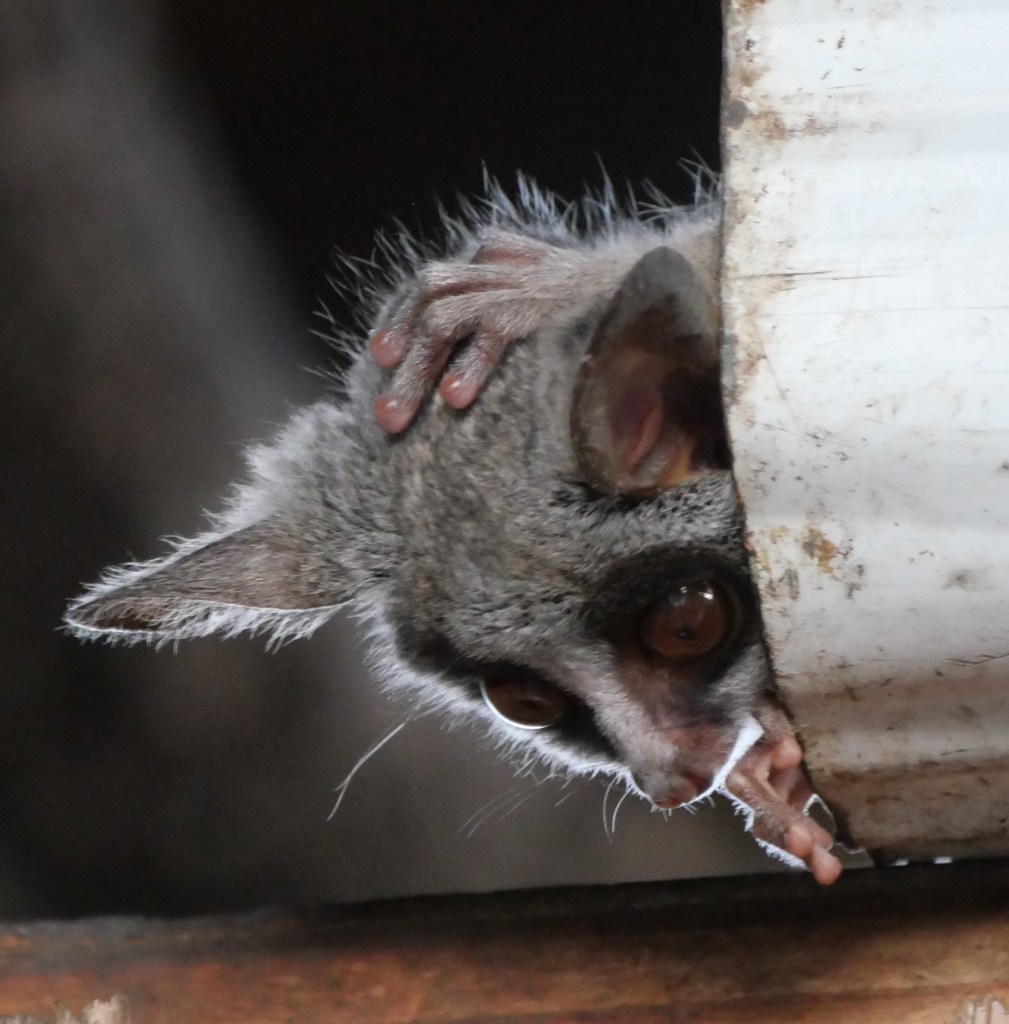
And they were happy to oblidge!
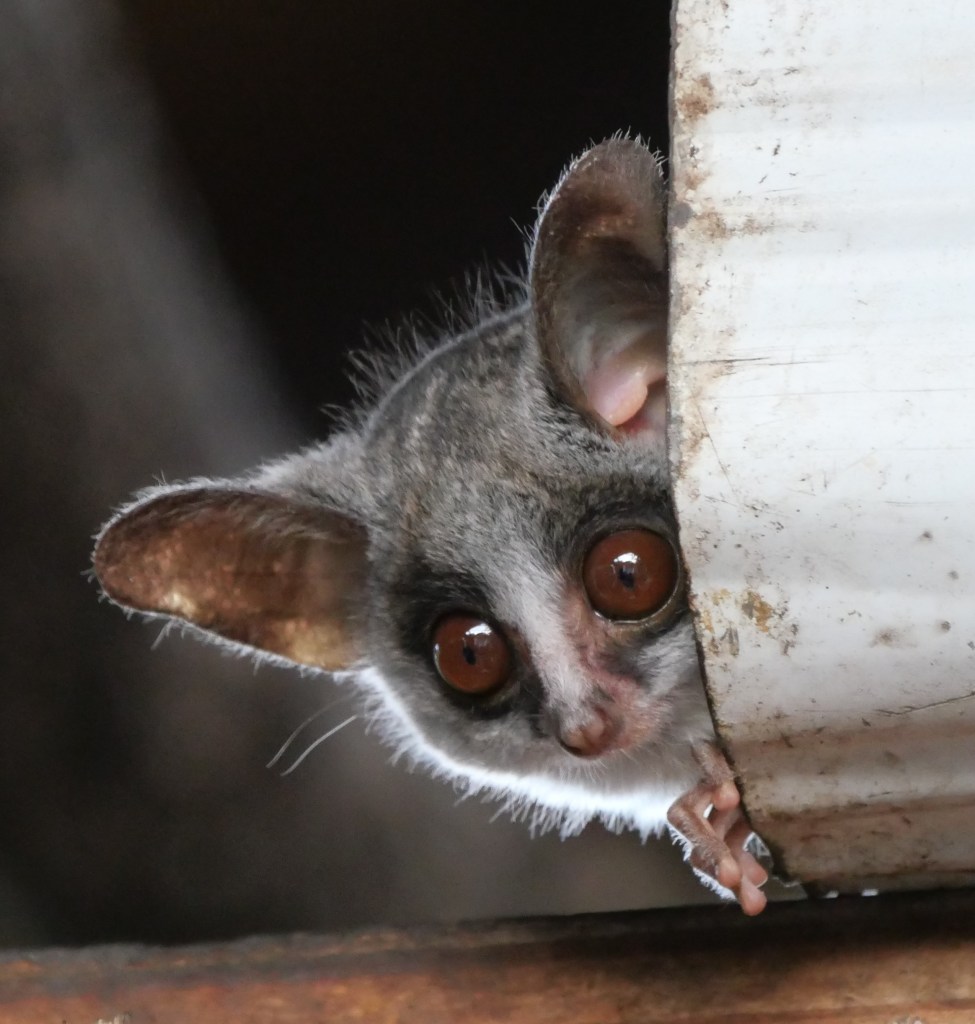
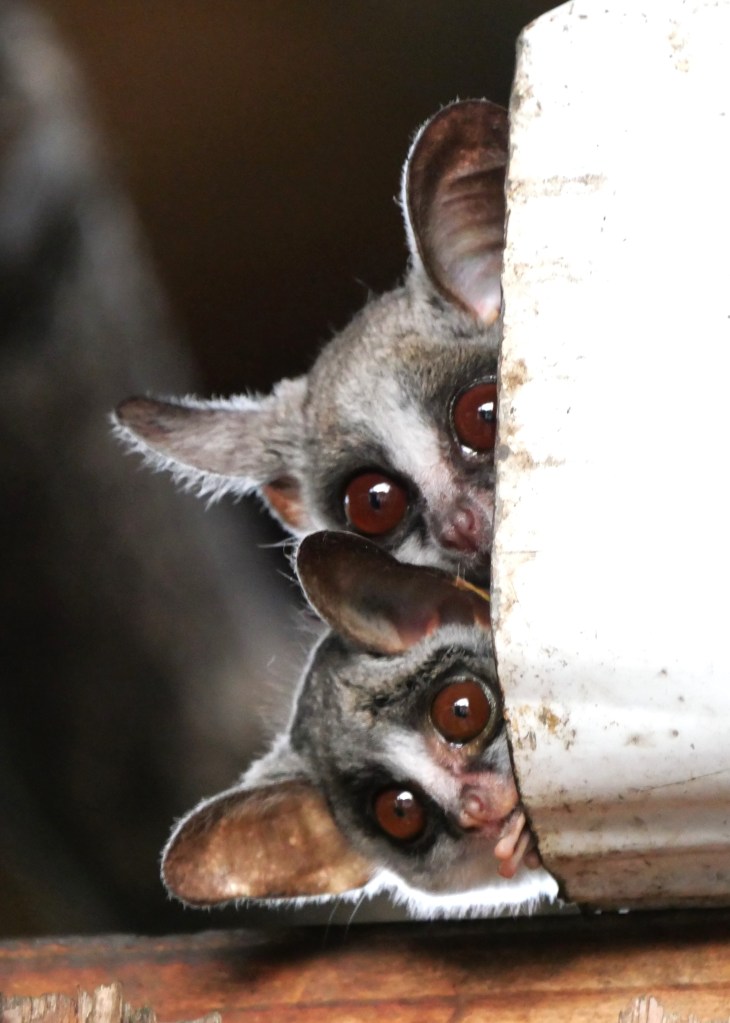
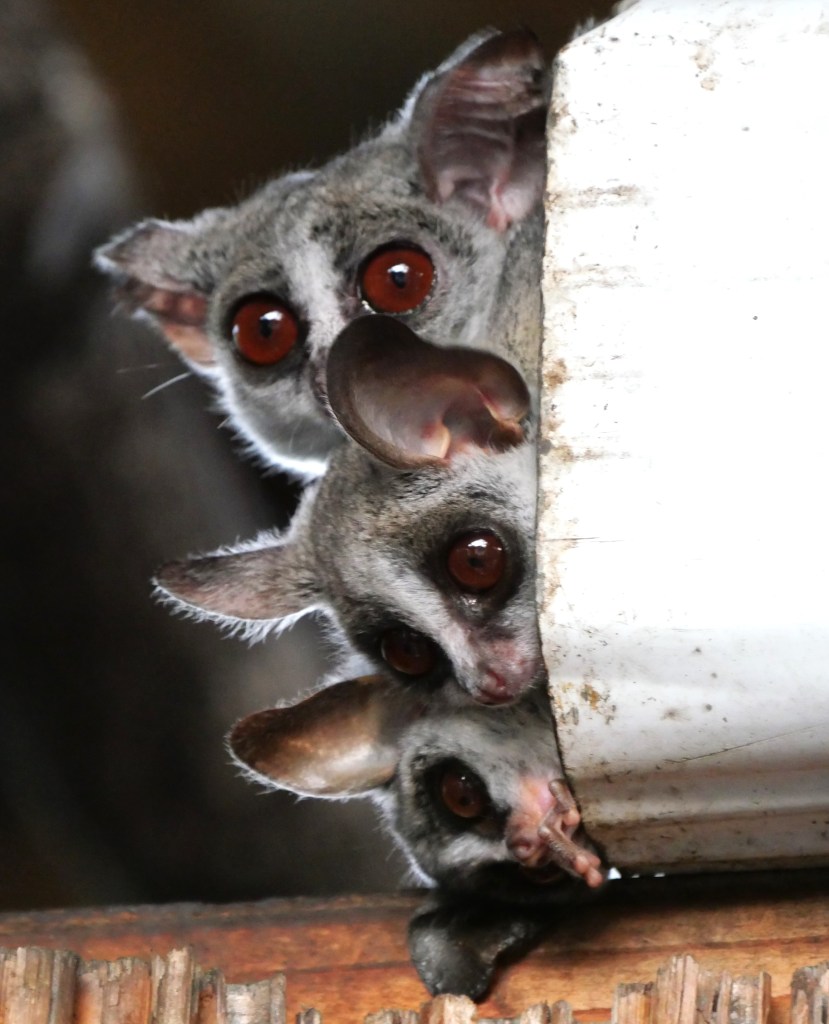
There must have been about 15 of them in total, most of them babies but Mum and Dad made a brief appearance every now and again. They move so fast, and are such accomplished jumpers, that as soon as they were out of the pipework they were gone!
On the morning after our arrival we decided to head into the Nata Bird Sanctuary – the only part of the pans accessible until everything dried out a bit more.
The views were spectacular
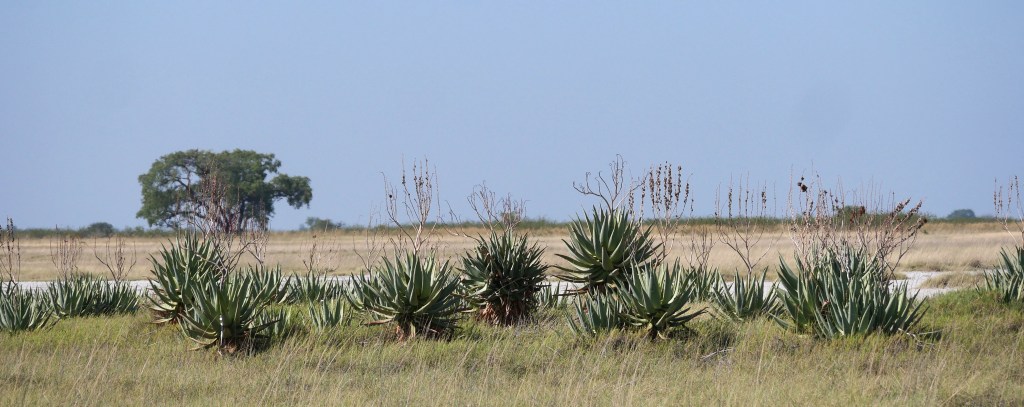
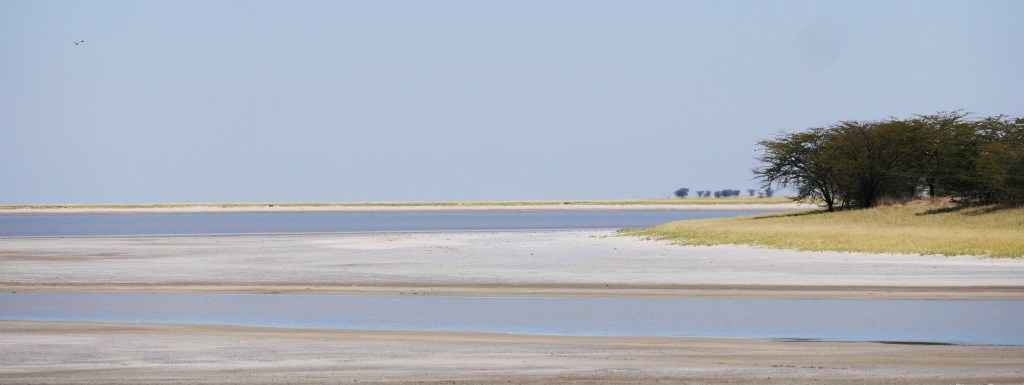

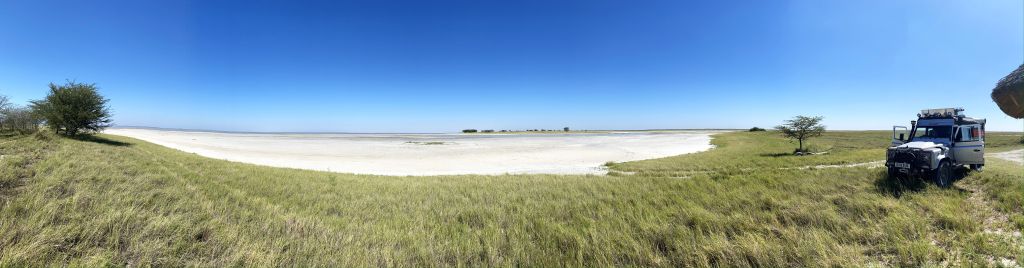
With flocks of birds quietly going about their day
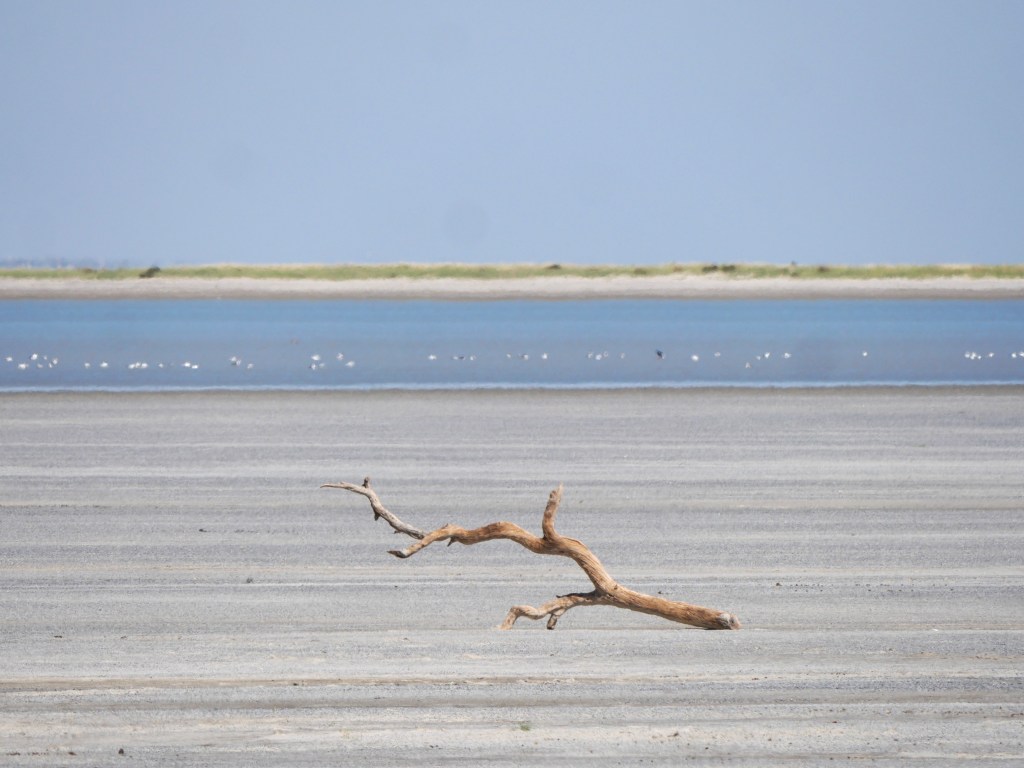
Stretching out into the distance as far as the eye could see
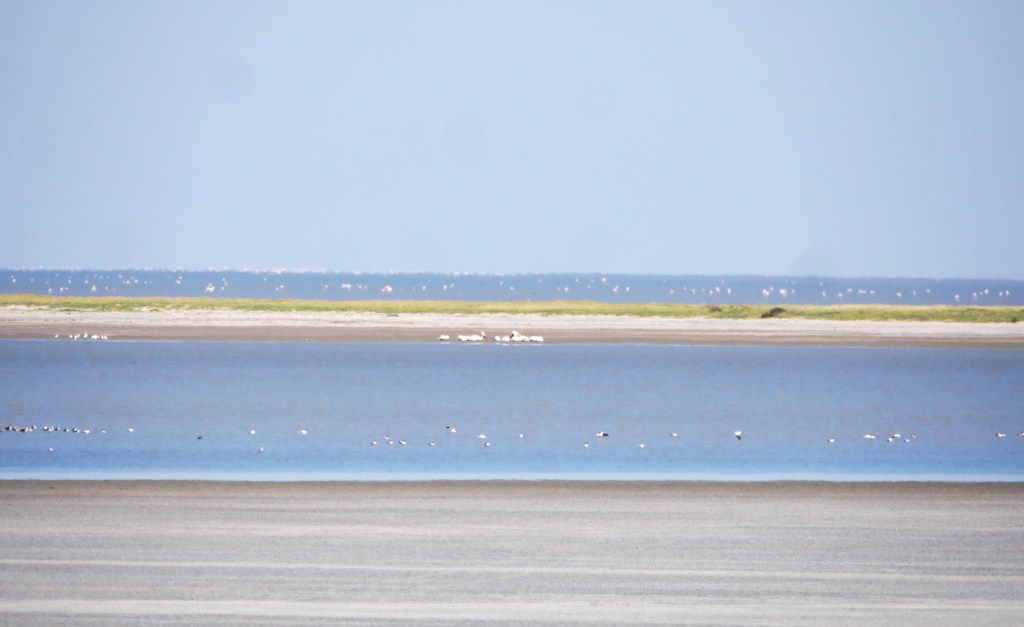
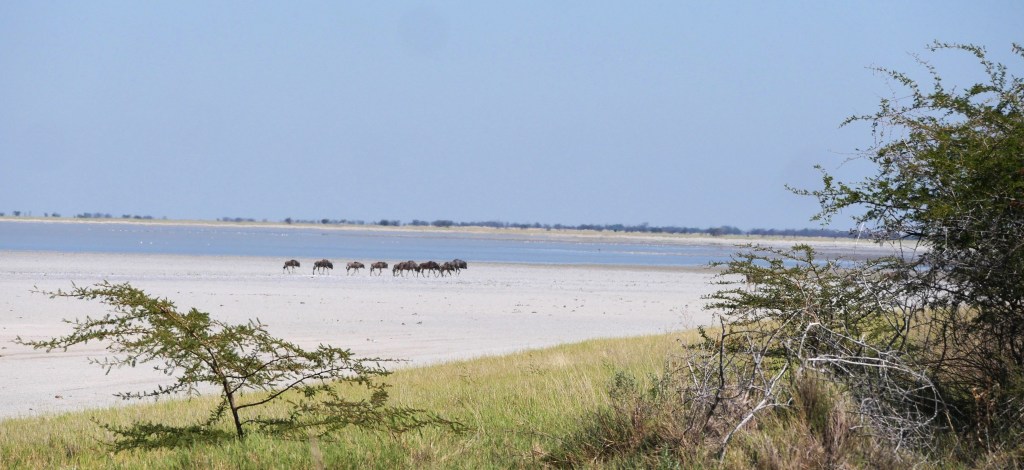
But again, strangely few animals for this time of year – is this another symptom of climate change?
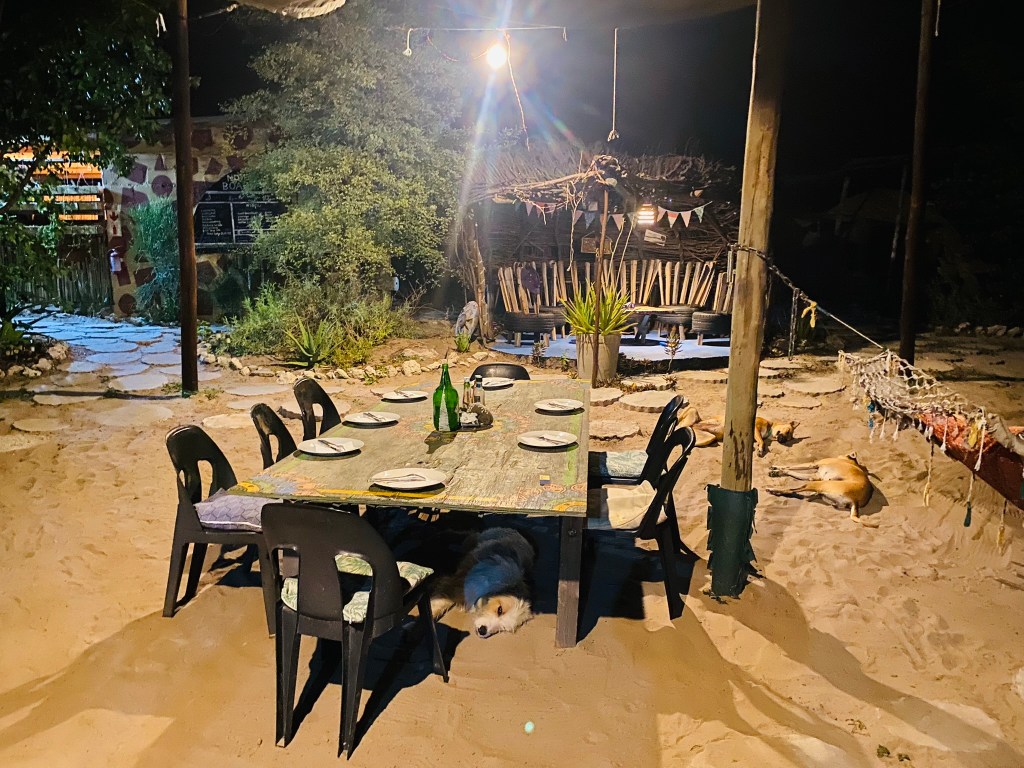
That night we returned to the campsite and joined the team for dinner under the stars
Our final stop in this area was to be Kubu Island. A mysterious forest of Baobab trees growing out of a rock right in the middle of a huge, flat expanse of salt pan. Jeremy Clarkson visited here some years ago and declared it to be ´just about the most astonishing place I´ve ever been…´. We visited back in 2018 and it was indeed quite surreal. Back then we had approached it from the south across the vast salt pan making its appearance seem incredibly strange – suddenly rising up in the middle of hundreds of square kilometers of nothingness.
This time we were north of the ´island´ so were approaching it from the opposite direction. As with everything in Botswana this time compared with our trip here 5 years ago, this meant everything was different.
Rather than driving hundreds of miles across a flat, dusty, remote salt pan, we found ourselves driving through yet more dense bush, past local farms and along deeply rutted mud tracks. Our sat nav had sent us off the main road at entirely the wrong place and taken us down trails that at times hardly existed. We struggled to follow faint tyre tracks through long grass and were again cutting back the bush to get Henry through without too much damage.
After a frustrating hour we had to find our way around a homestead which the sat nav didn´t know was there and in finding our own detour stumbled across the road we should have been on in the first place! Not exactly a main thorough fare but obviously well used, wide enough not to worry about the bush and we actually met a couple of other tourists coming the other way who assured us the road was good from then on.
But somehow, reaching a rock covered in Baobabs after 3 hours of driving through lots of other trees and farms lost some of the magic. And the Baobabs themselves were growing – not out of bare, sandy rock – but rather out of fertile ground awash with long, green grasses and bushes
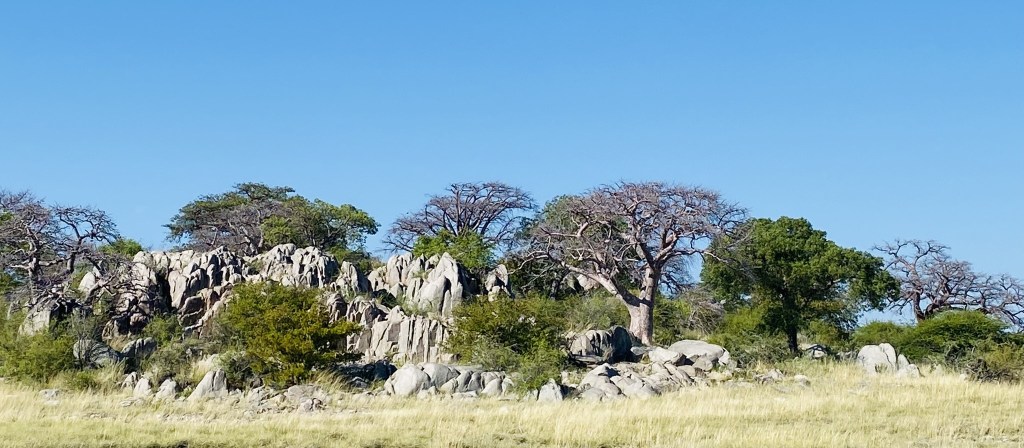
These are our photos of Kubu from 5 years ago in the dry season
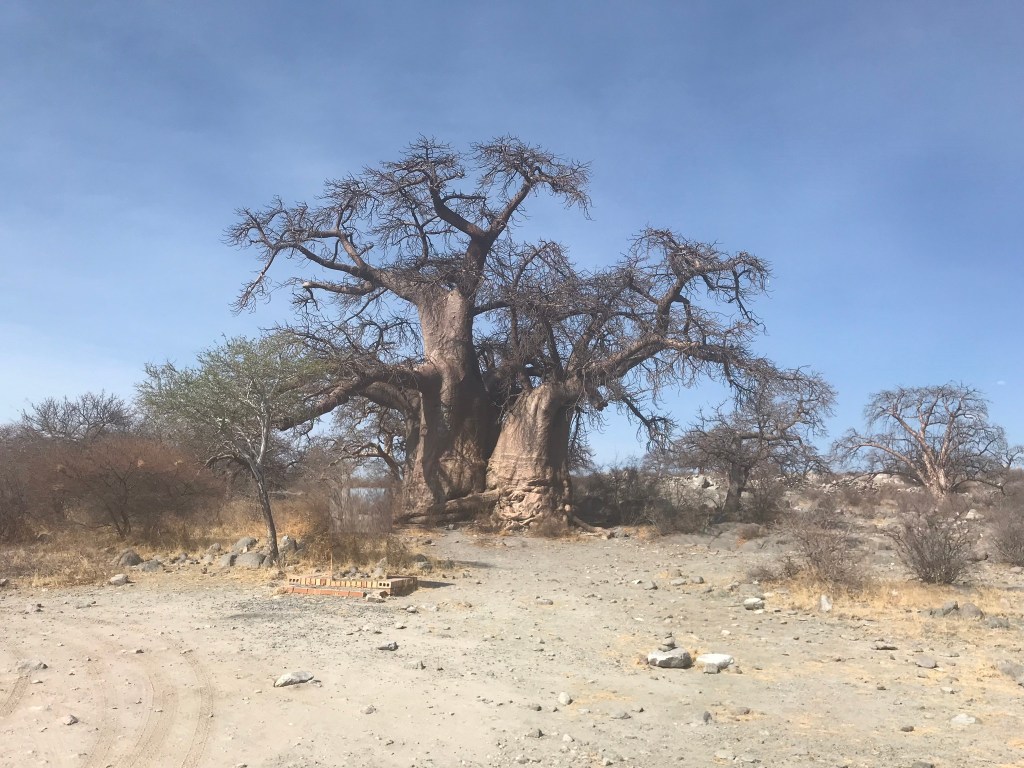
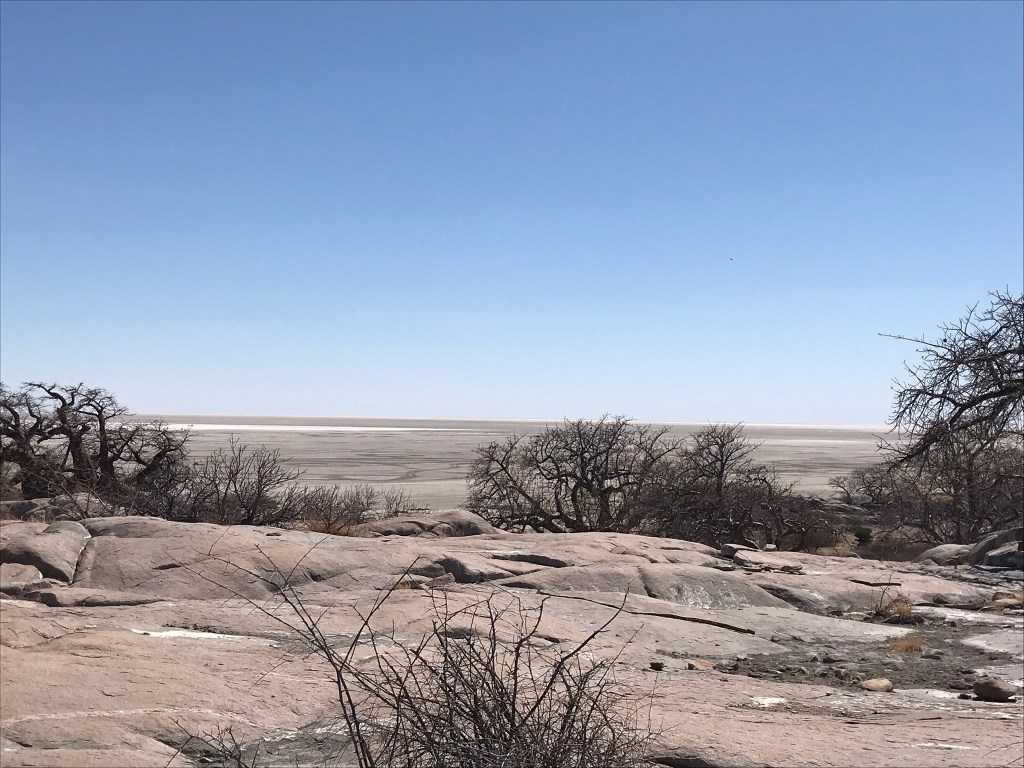
And these from today…

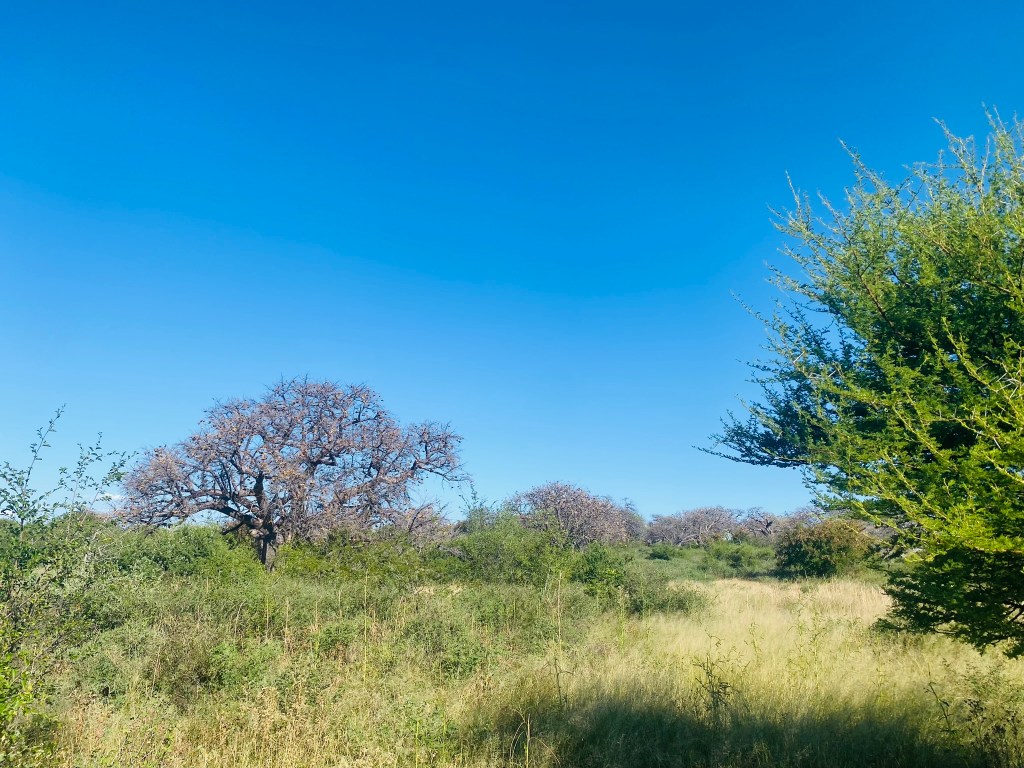
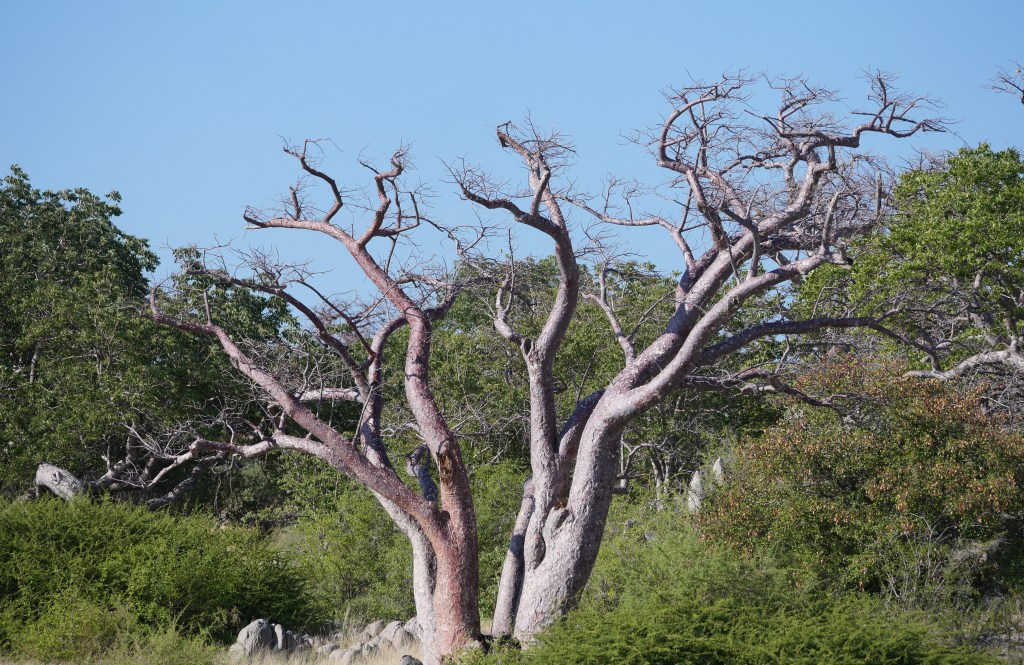
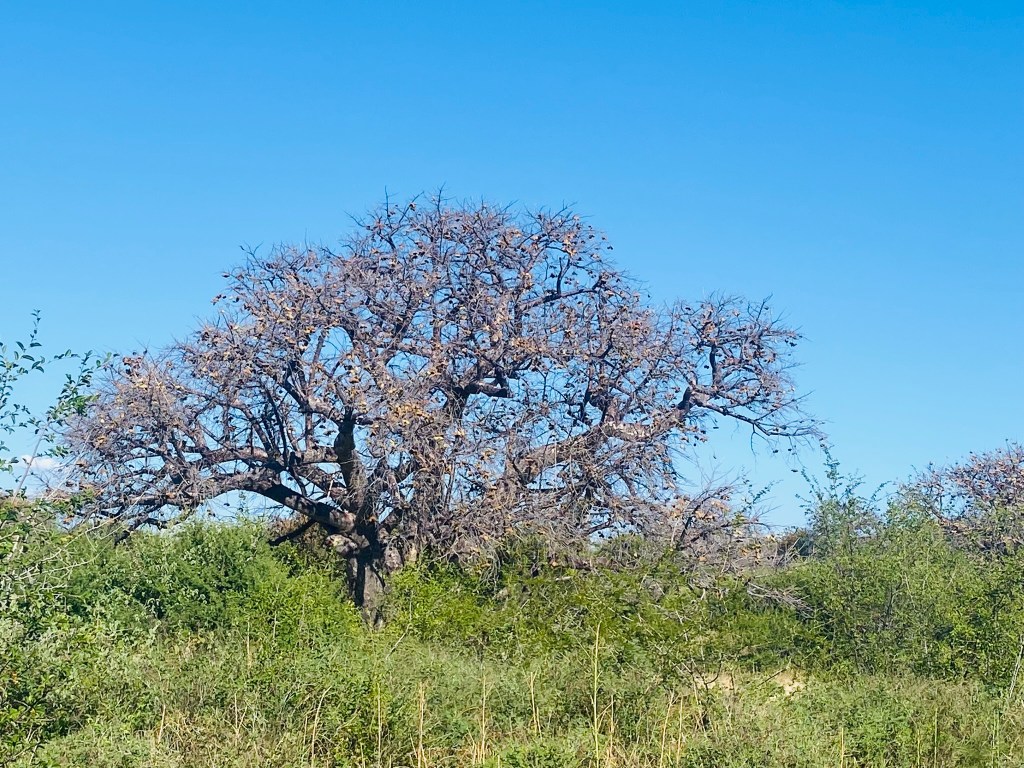
Such is the difference between the landscape in the dry season and that in the wet season!
It was only right at the very end of the drive there, around a kilometer from the island itself, that we came to the salt pan. We lost the road and ended up slipping and sliding – and partially sinking – in the soft, salty sand

But we made it happily in one piece, found a lovely place to camp and settled in for another couple of days of peace and quiet in beautiful, tranquil surroundings.
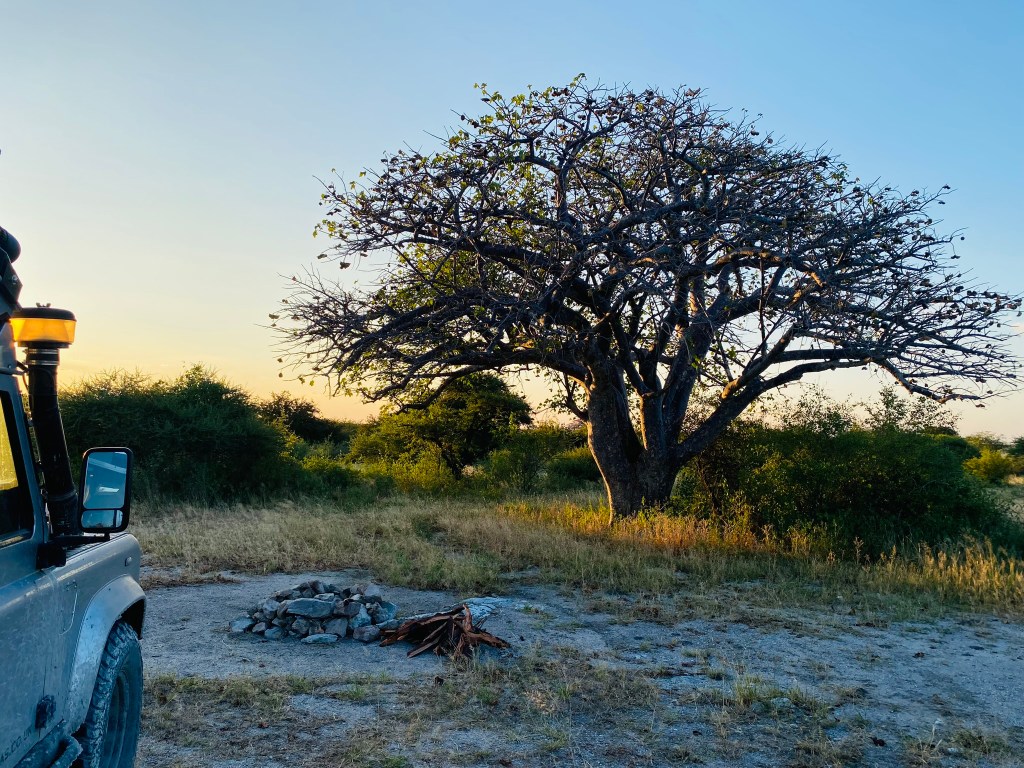
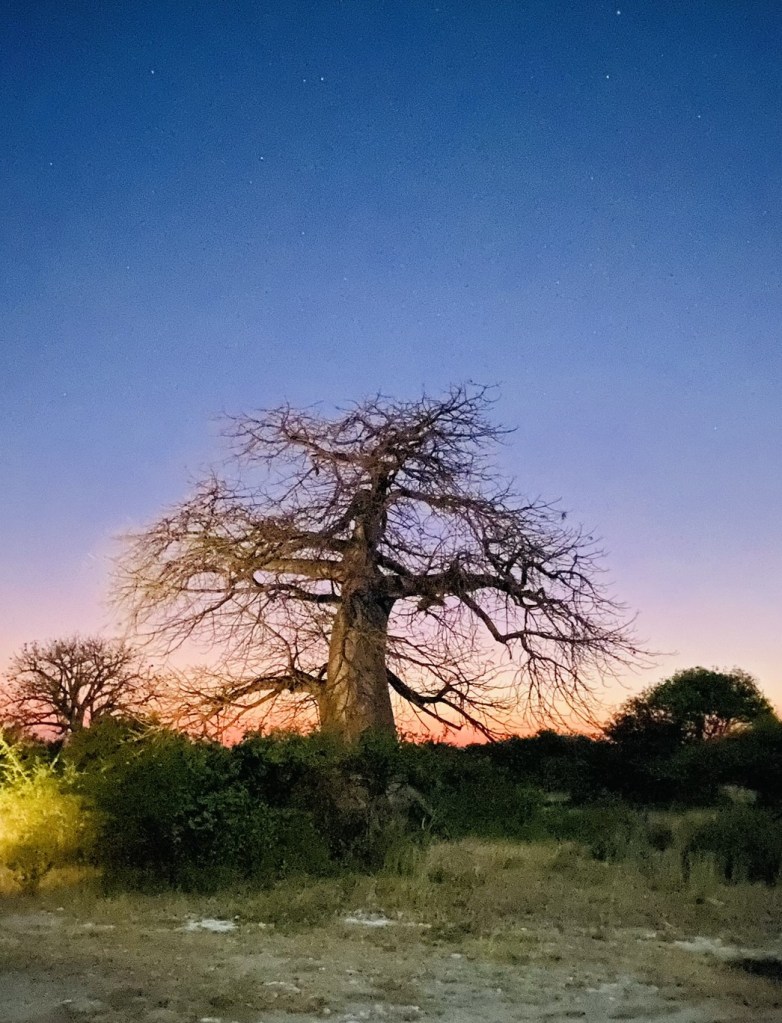
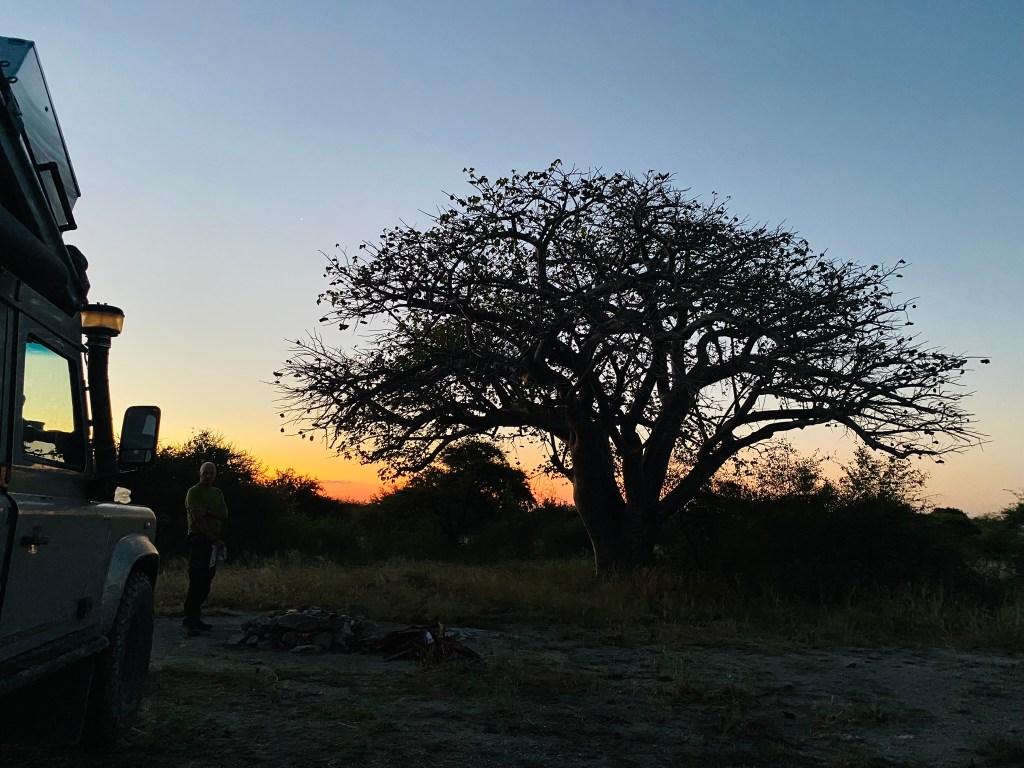
At around 7pm two rangers appeared to collect the camping fee. They apologised for disturbing us so late but they had a good reason. They had spent all that day rescuing a South African couple who had attempted to reach Kubu Island from the south over the salt pans. They had sunk and got stuck fast. They had managed to contact relatives back in South Africa via their satellite phone but with the pans being so vast, and with no other tourists trying to cross from that direction to help, it took four days for them to be found. Our journey from the north may have been a little less than inspiring but yet again we felt we had much to be grateful for and little to complain about!
We had now spent around 5 weeks in Botswana in total, mainly in the south of the country which is (suppposed to be!) the dry, desert region with fewer animals – and indeed had discovered that there were even fewer than we could have expected as the migrations had unusually not made it this far for the summer. We had seen first hand with startling clarity the difference in the landscape between the dry season when most tourists travel here and the wet season and had been completely caught off guard by the lush, green bush we were surrounded by rather than the dry, sandy moonscapes we had been expecting.
It was beautiful and we had started to enjoy this lovely, welcoming country far more since arriving back from Pretoria. But Botswana is supposed to be all about the animals and we were feeling distinctly short of our furry friends.
So after two days on the isolated Kubu Island we packed Henry up and headed further north towards the aptly-named Elephant Sands campsite before embarking on the last stretch of our Botswana adventure which would see us spending two weeks in the wild, animal-rich, barely populated, safari-mecca of Moremi, the Okavango Delta and Chobe National Park. If we couldn´t find animals there we wouldn´t find them anywhere and we were two determined people, still on our ultimate Botswana lion-hunt!
 The Sidetracked Sagas
One response to “Mud and Floods in the Desert”
Another lovely update. Great pics!
LikeLike