After visiting the lovely Binga Falls we headed further inland along gorgeous mountain roads through sub-tropical rainforests between the towns of Sumbe and Gabela. We were heading for a coffee plantation high in the mountains south of Gabela but expected it to take a couple of days to get there.
Everyone we had spoken to said this was one of the highlights of Angola, driving through the tree canopies with clouds hanging in the air like smoke rising up from the forest.
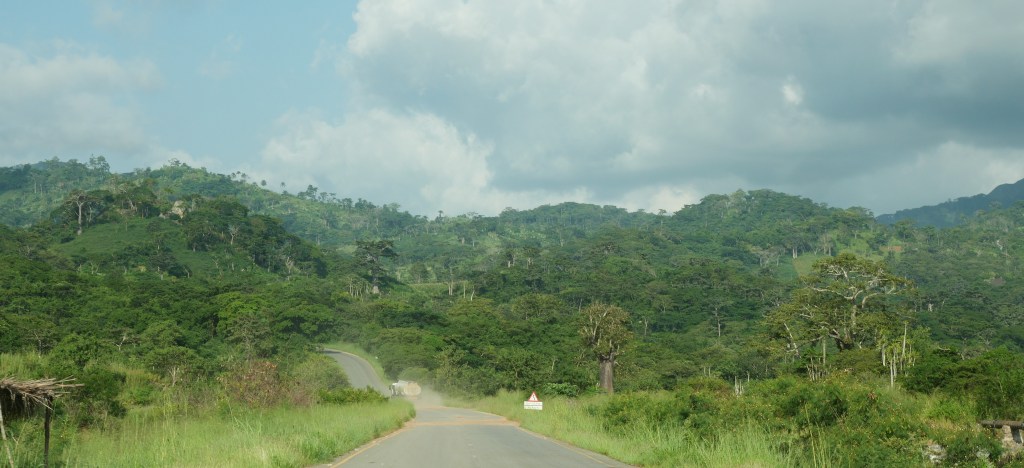
They were not wrong, it was stunning
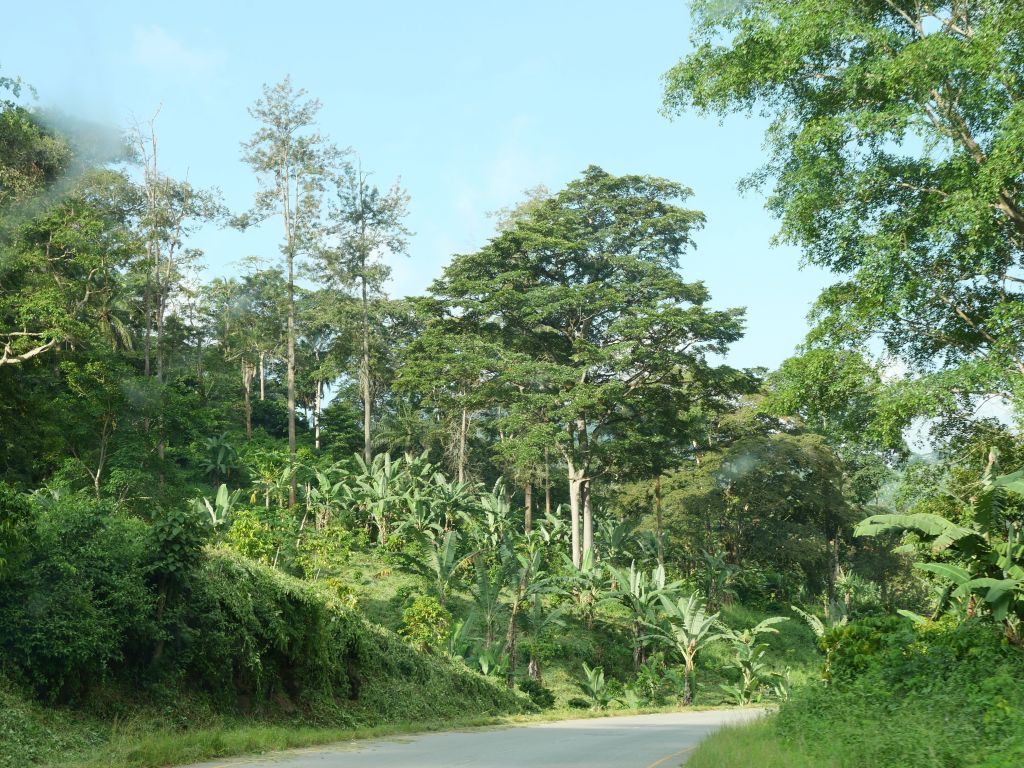


The road was steep and winding, often narrowed by the forest encroaching on either side.

With picturesque villages in red brick clustering up the hillsides.
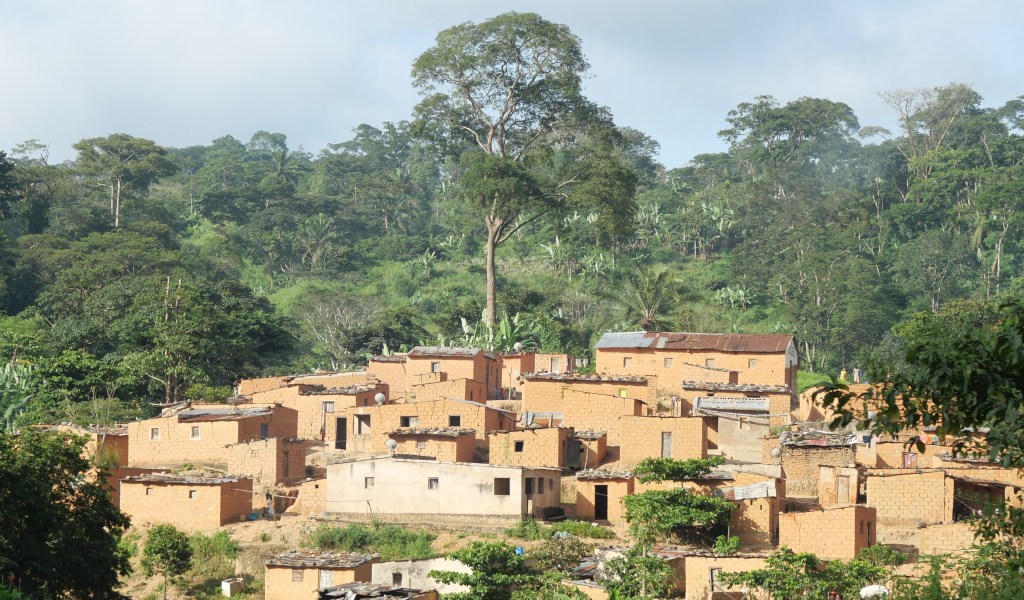
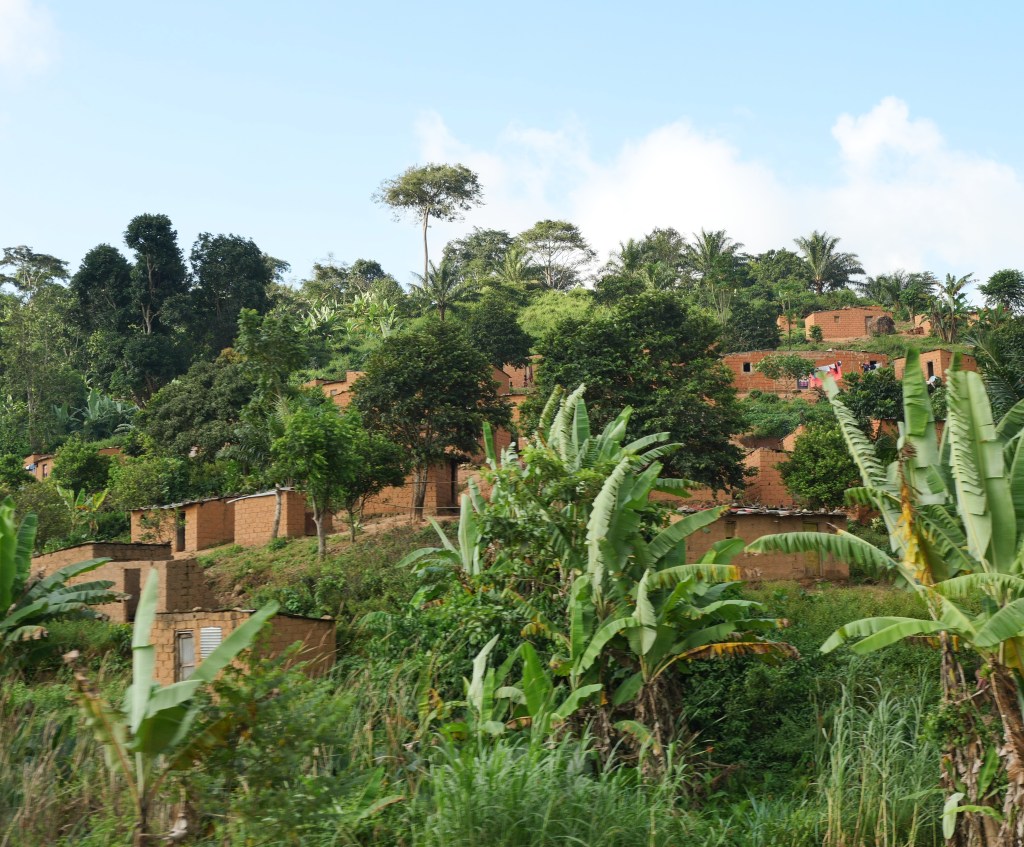
We drove for hours just pointing and smiling, taking endless photos and waving at everyone we passed
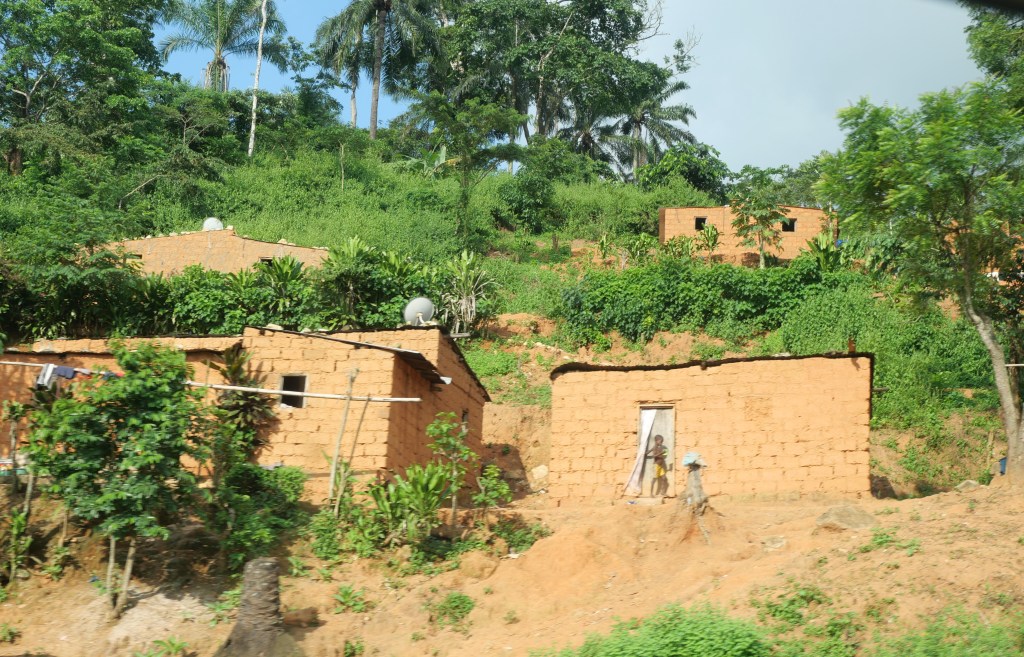
It was getting late but there were too many people around to find anywhere quiet to camp up for the night
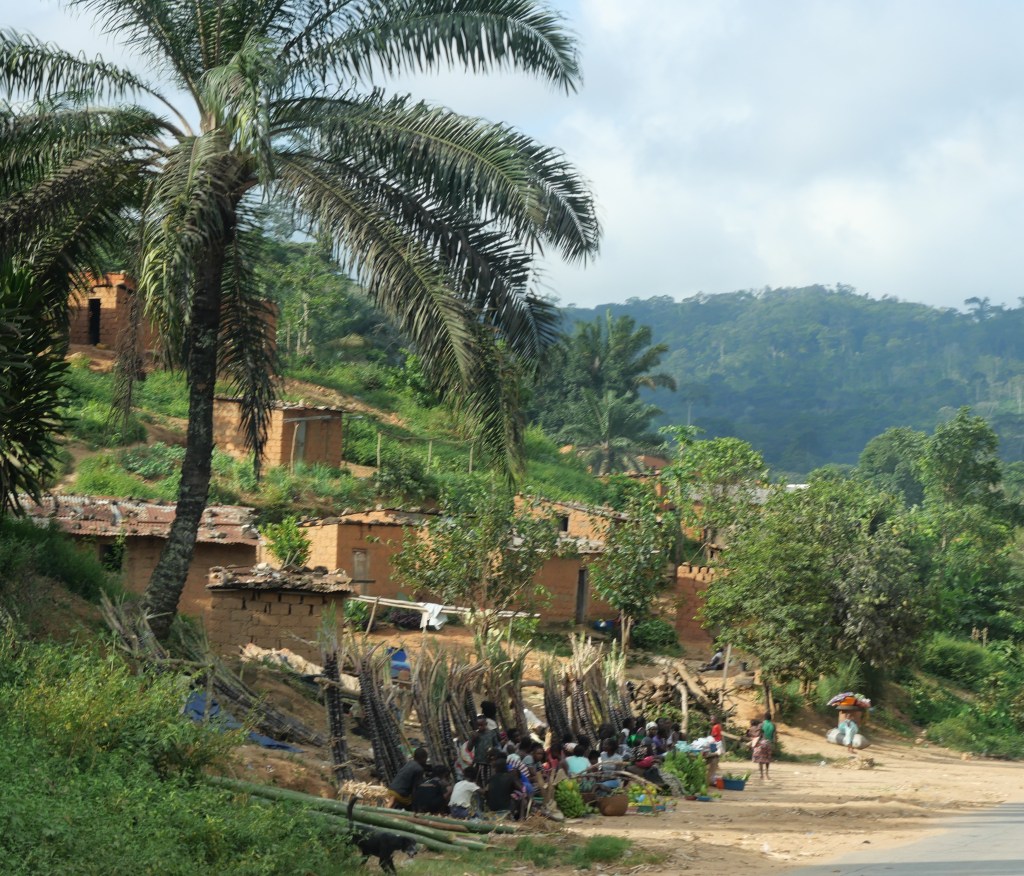
So we ended up going all the way to the coffee plantation without stopping.
When we arrived the place was beautiful

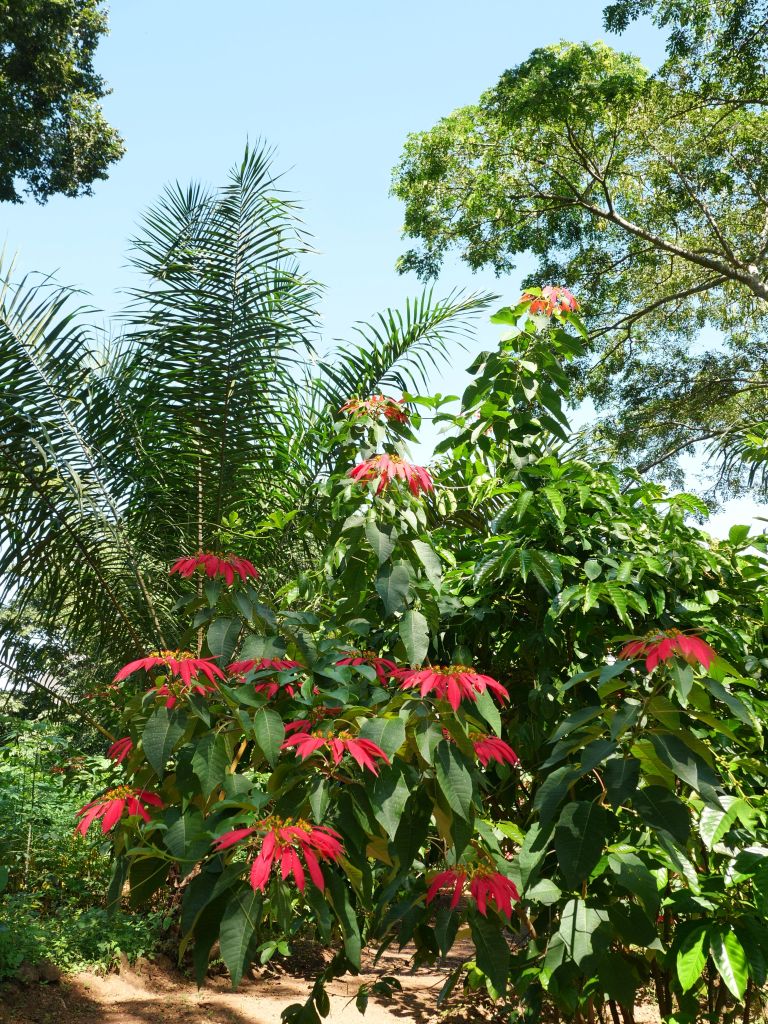
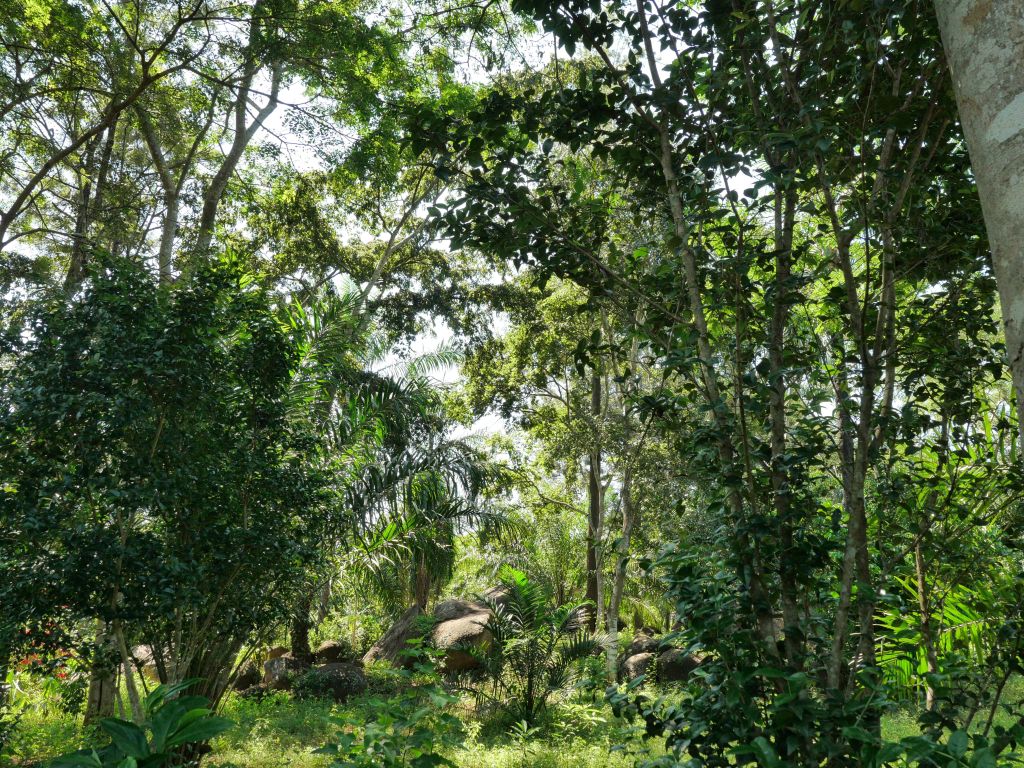
We booked two nights and treated ourselves to an air-conditioned room overlooking the forest

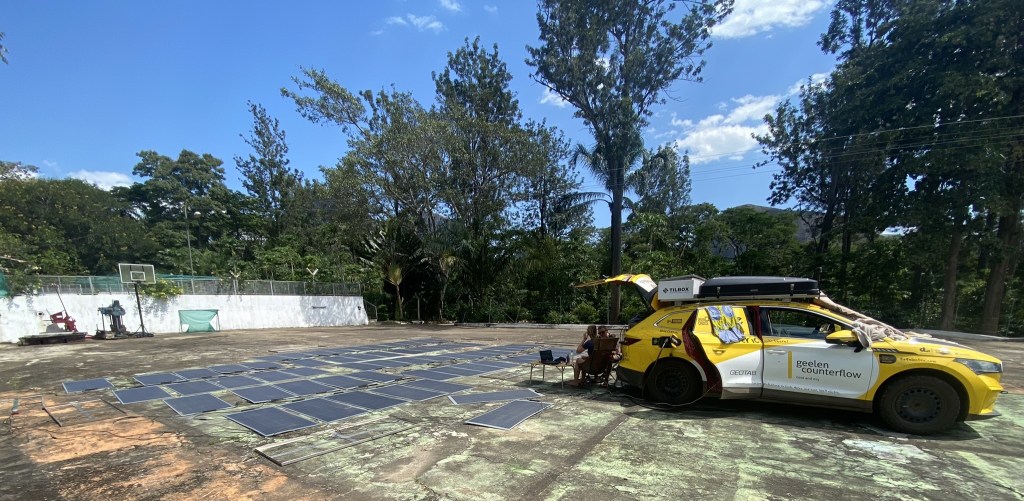
Just as we were checking in a Dutch couple came to see us. They were also overlanding and had driven down the west coast from Morocco in an all-electric car powered only by solar panels.
We got chatting to them for hours and had the most enormous dinner together in the plantation restaurant surrounded by the rainforest
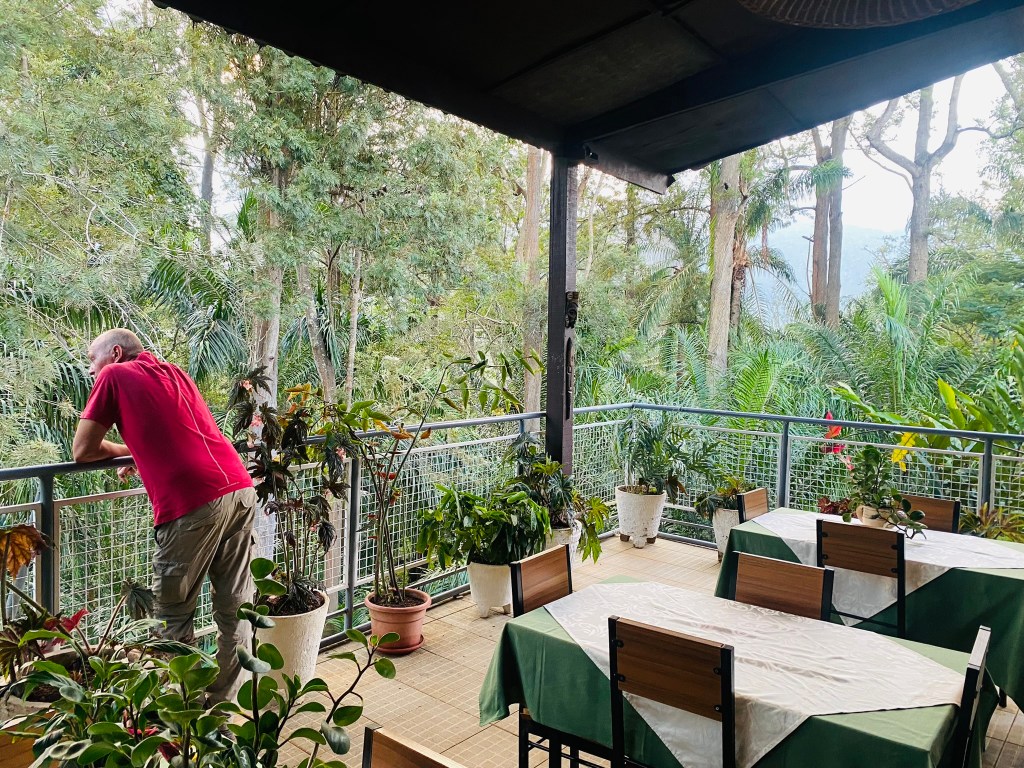
Our room was nice enough but the electricity had been switched off overnight meaning no air conditioning, which had kind of been the point of taking the room. To make up for it, the next morning we discovered that the price included the most amazing breakfast.
Huge plates of fruit
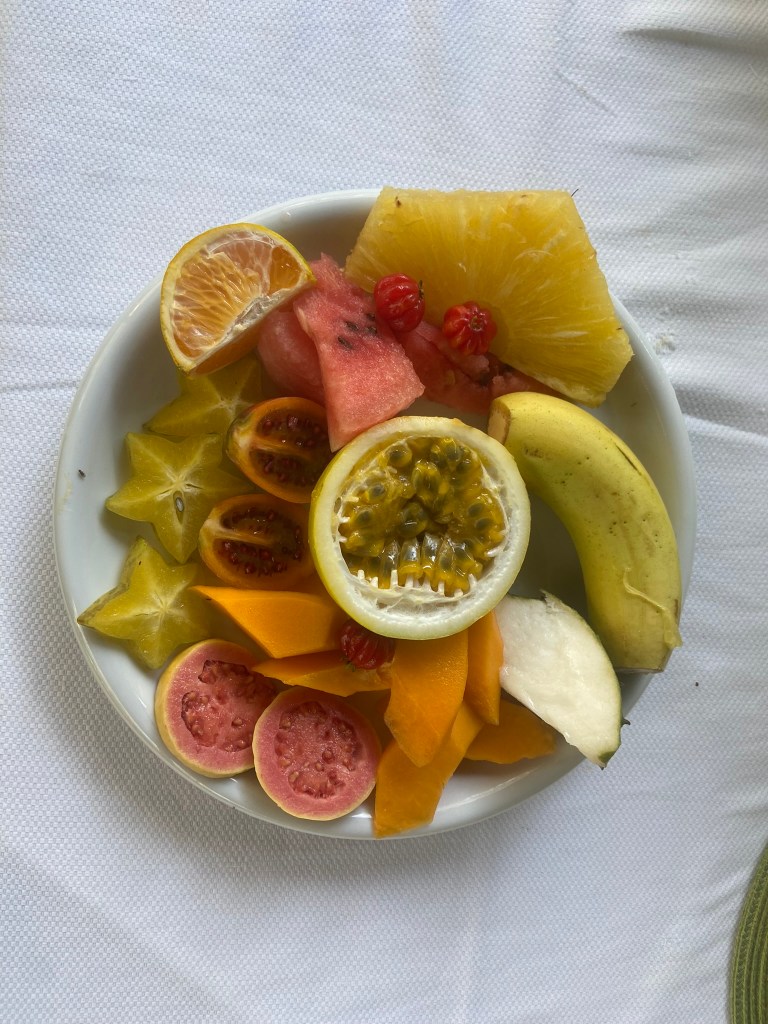
Breads, meats, cheeses, cake…there was far too much to eat although we gave it a good shot!
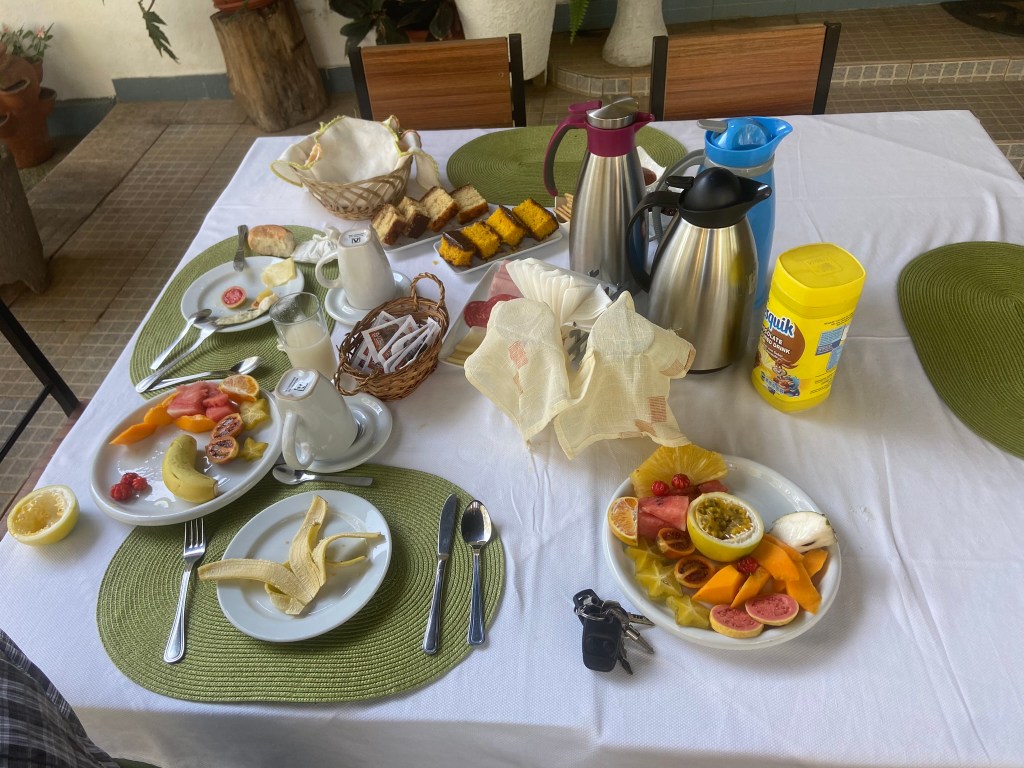
But even a breakfast fit for a King wasn´t enough to make up for missing Henry so we changed our second night´s booking to the campsite and moved Henry up to park next to our new all-electric friends

We had a relaxing day chatting, comparing travel notes and cooking together – whilst they recharged their batteries with their 60 solar panels
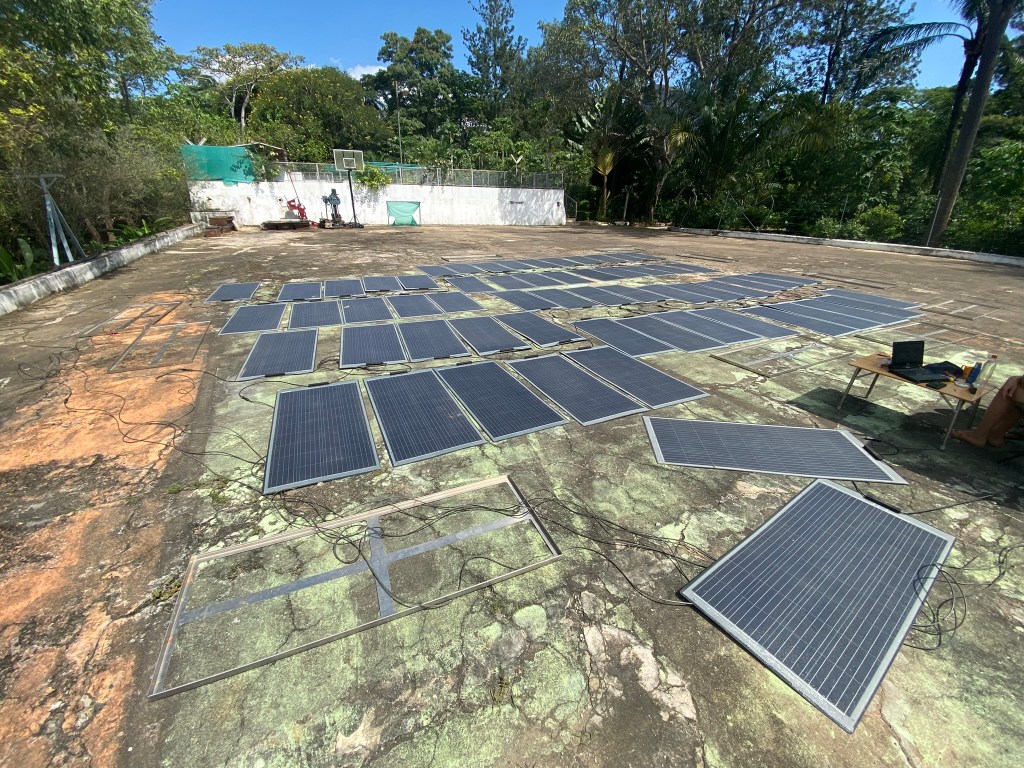
And I went for a short walk around the plantation to take photos of the forest and the mountains

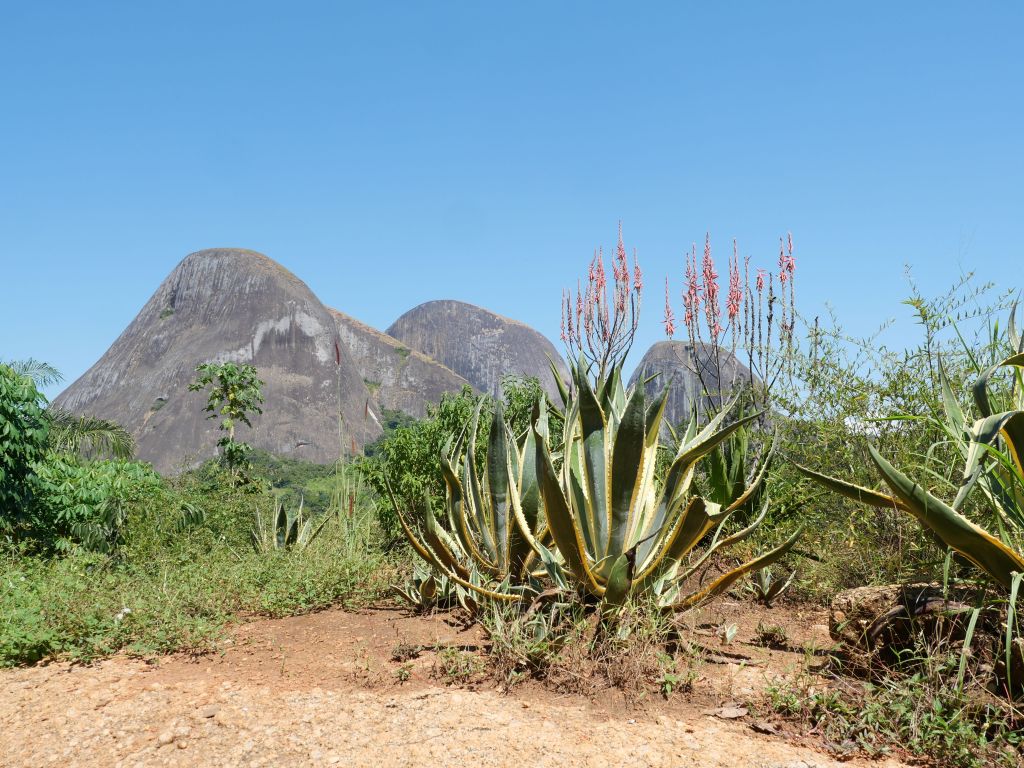
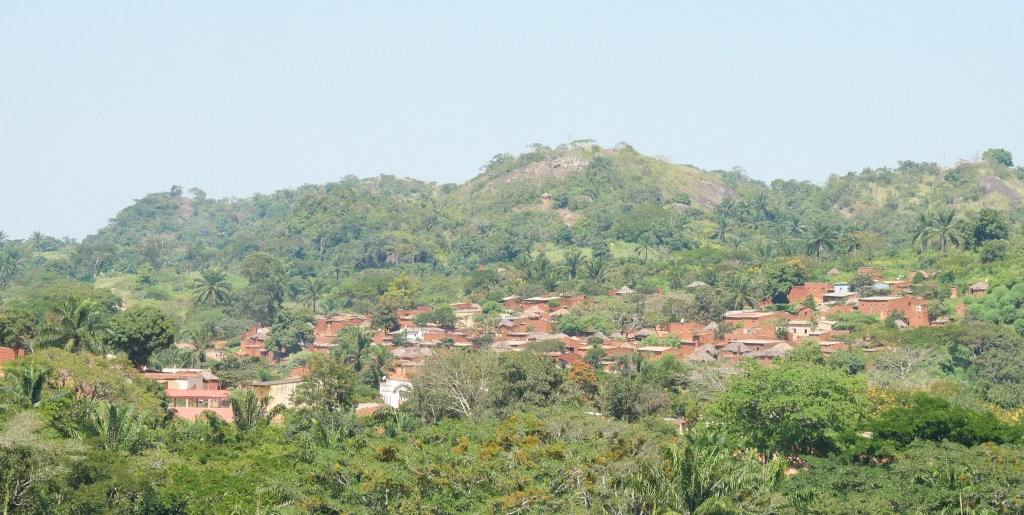
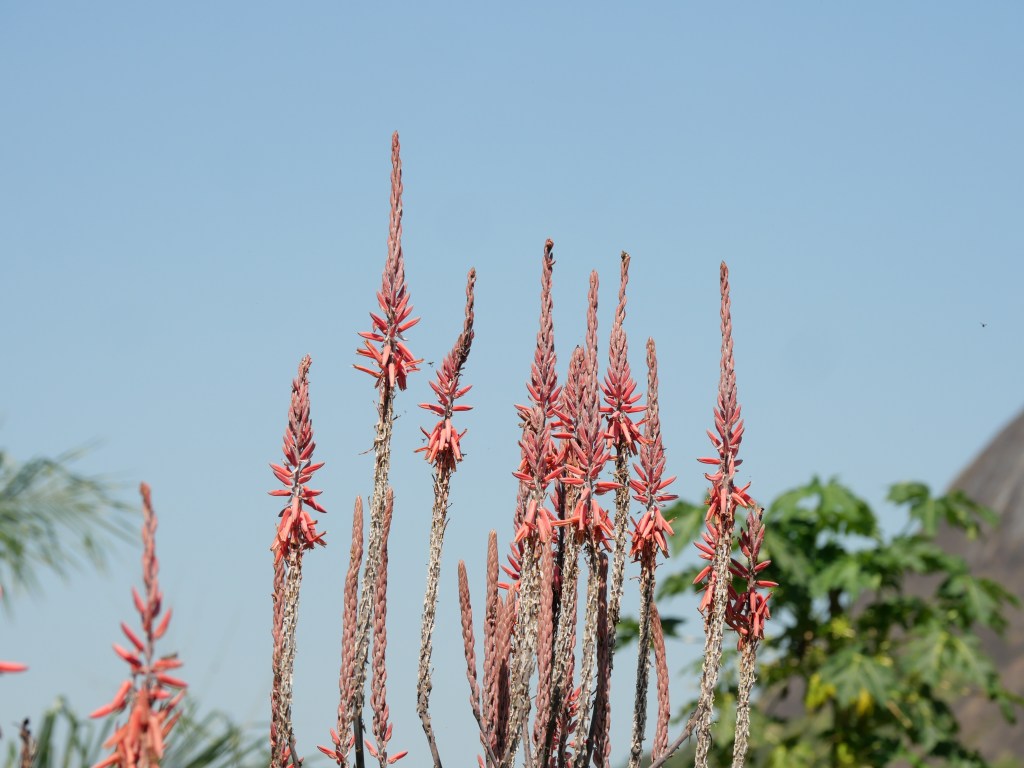
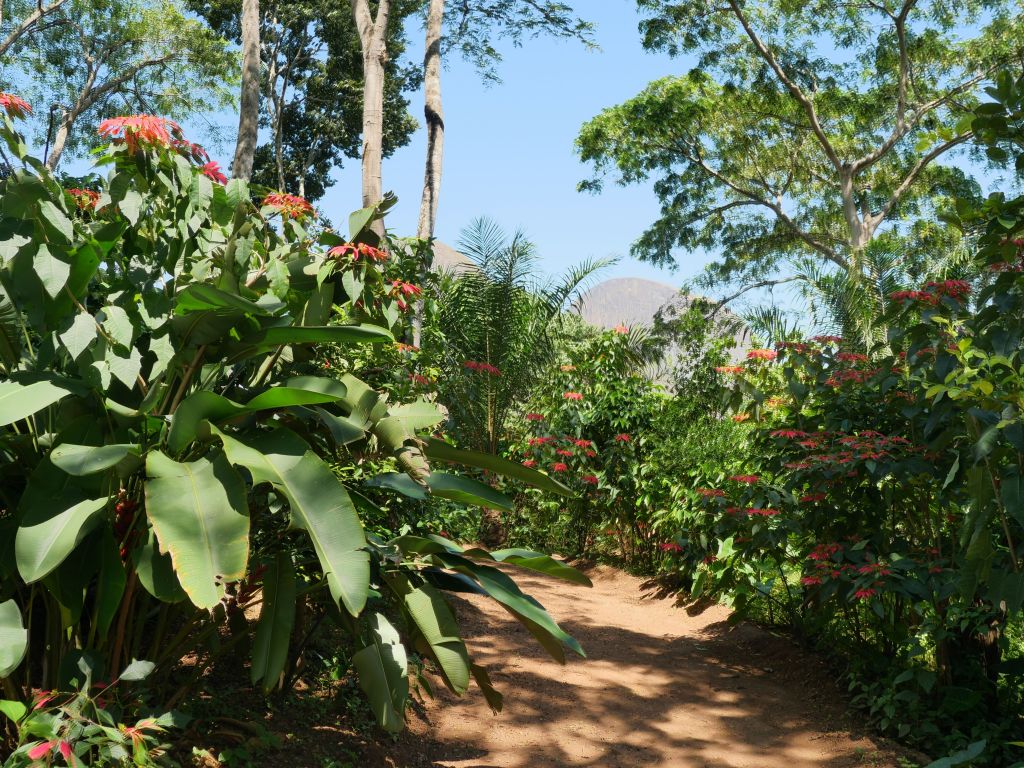

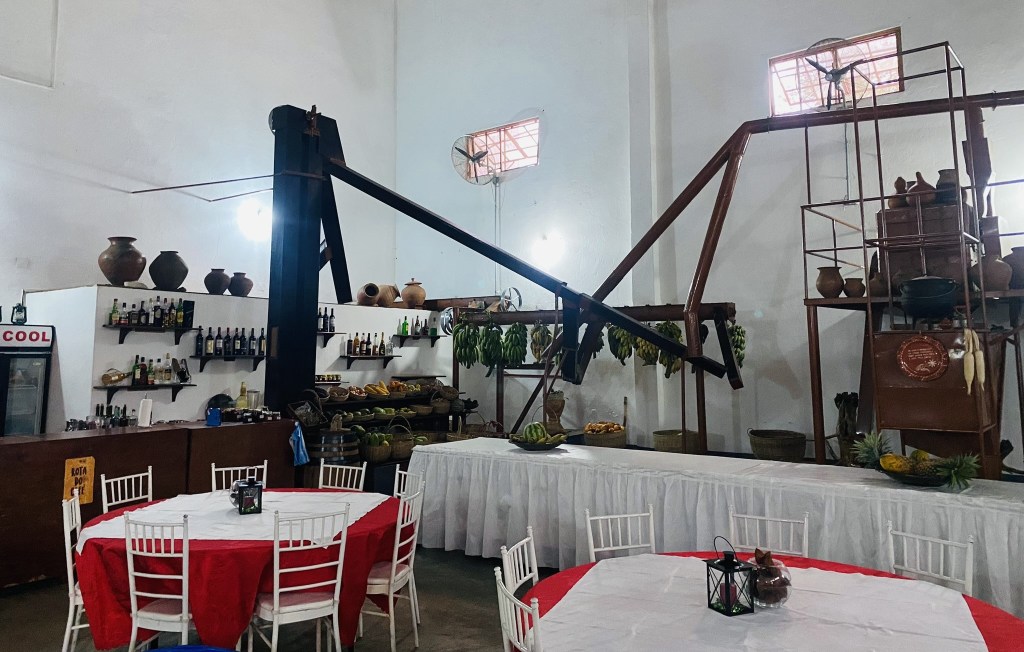
We cooked together at the campsite that evening and made the place look even prettier with all our lights stretched out between the vehicles
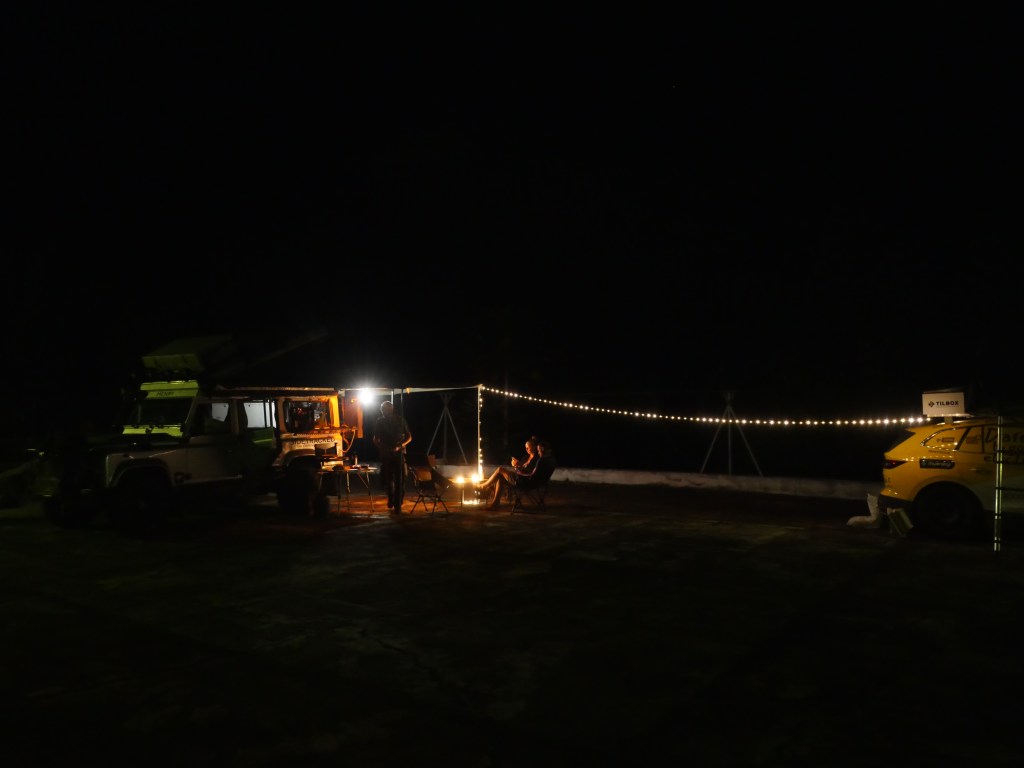
The next day we had intended to drive the short distance back to Gabela and spend some time exploring the town before heading to a Catholic mission to stay overnight with the Franciscan monks. But Gabela held little interest for us, it was just a town and we weren´t in the mood. So we had arrived at the mission by mid-morning and were concerned it was far too early to ask to stay – they only invited overlanders to camp with them out of kindness, it wasn´t a formal camping place.
So with more than a little disappointment at missing out on what had promised to be a unique experience we pressed on, driving the beautiful roads again intending to find a wild camping spot somewhere on the way to the capital city, Luanda
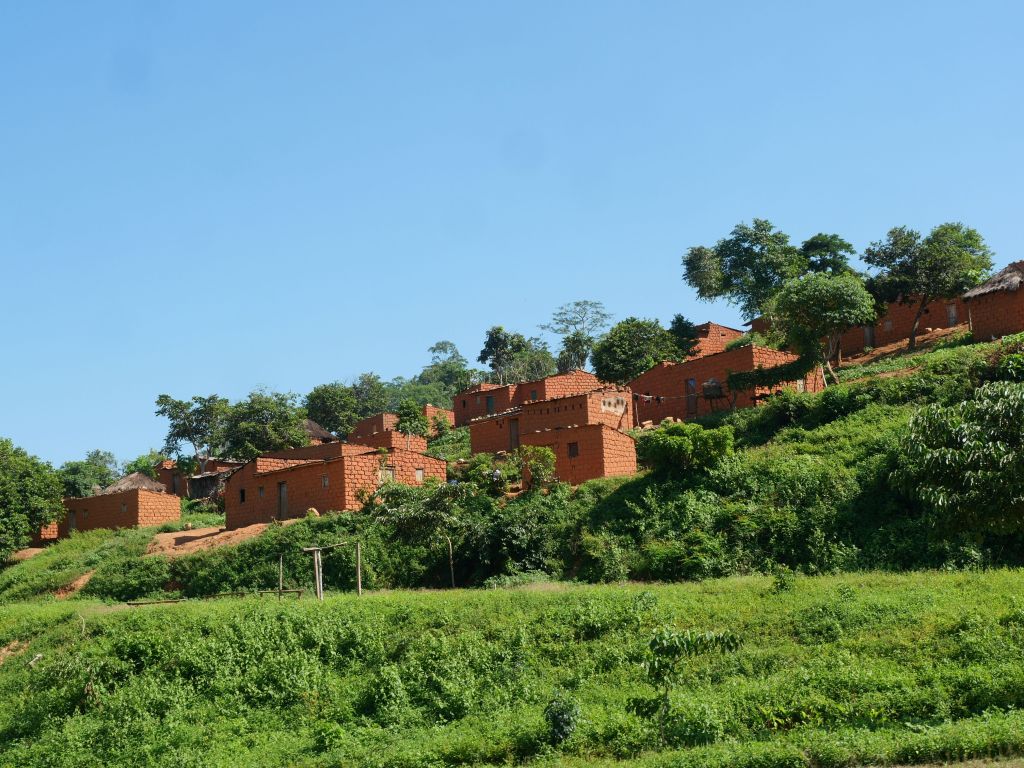
But, as we had found on the way to the coffee plantation, there was nowhere to stop. When the road passed through villages there were far too many people to find anywhere private
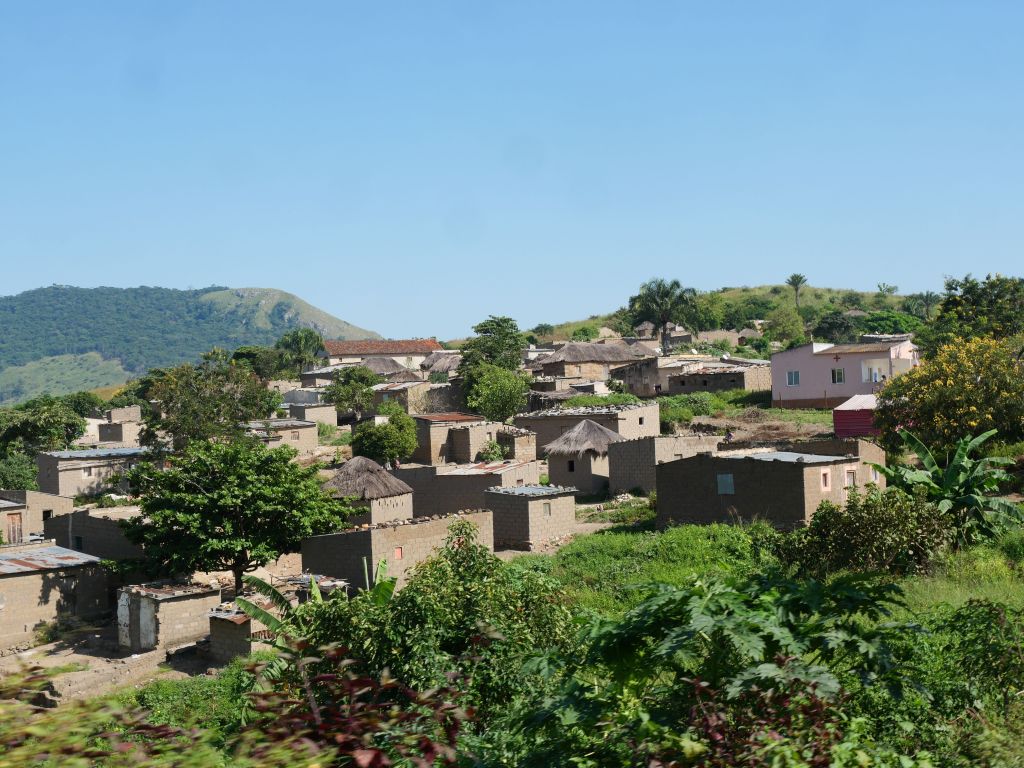
When the road was not near a village there was no way off it with thick forest and steep mountain slopes on either side
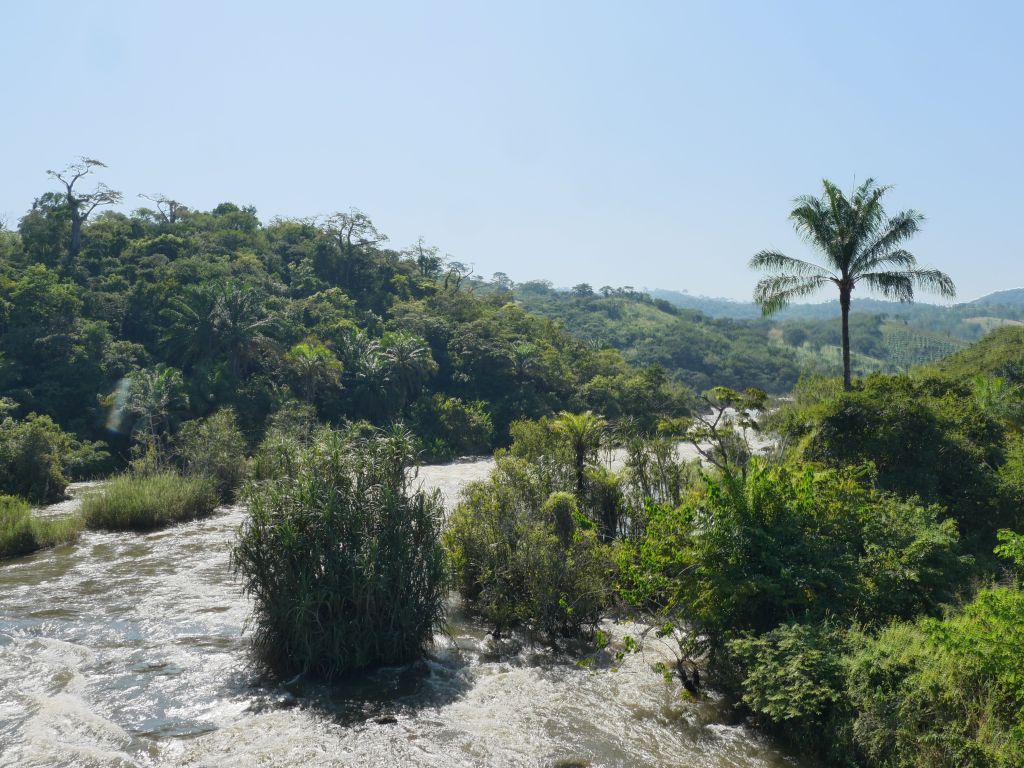
We drove on and on and on. The tar road was deteriorating with huge pot holes everywhere. We had had a lot of long driving days and James was getting very tired, but there was nothing we could do.
So eventually we swapped drivers and I took us the rest of the way into the city. We had been on the road for over eight hours and were exhausted.
We were heading for the only other formal campsite we were to stay at in Angola after the coffee plantation. The reason for visiting this place was that the owner had written the letters of invitation for our visas and we wanted to meet him in person to thank him and also to show our gratitude by giving him some business.
It took some finding. The roads through the city were busy and chaotic and the campsite itself was down a tight, rocky track just off the main dual carriageway. But when we finally arrived we were greeted with a very warm welcome and pretty surroundings
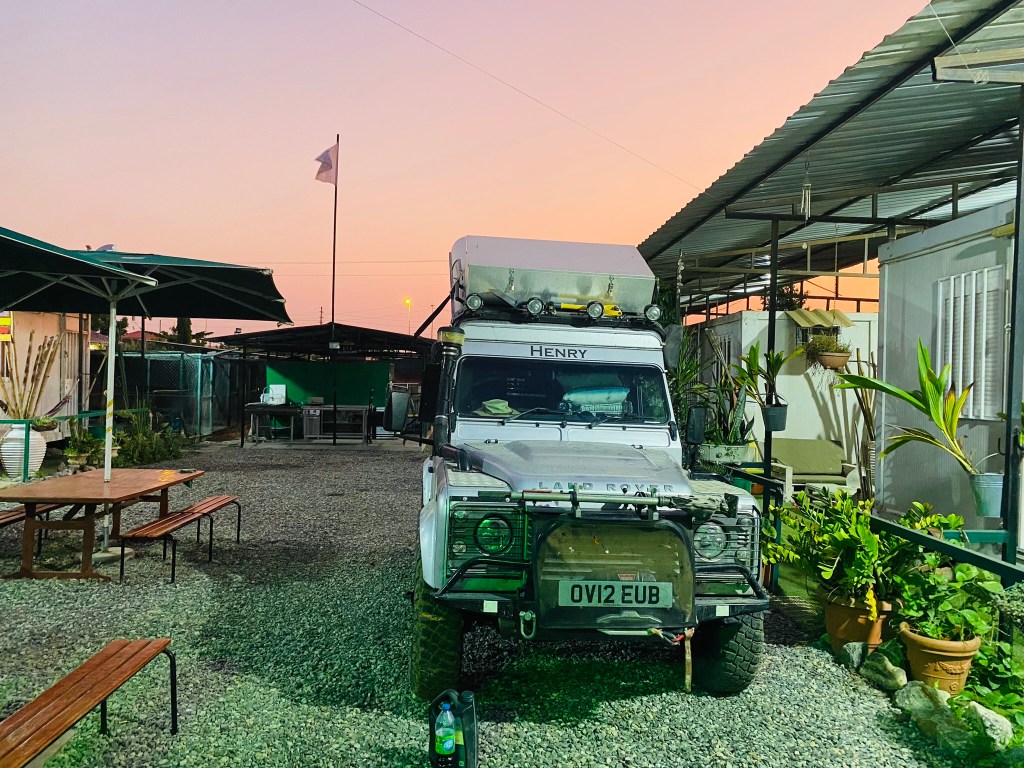
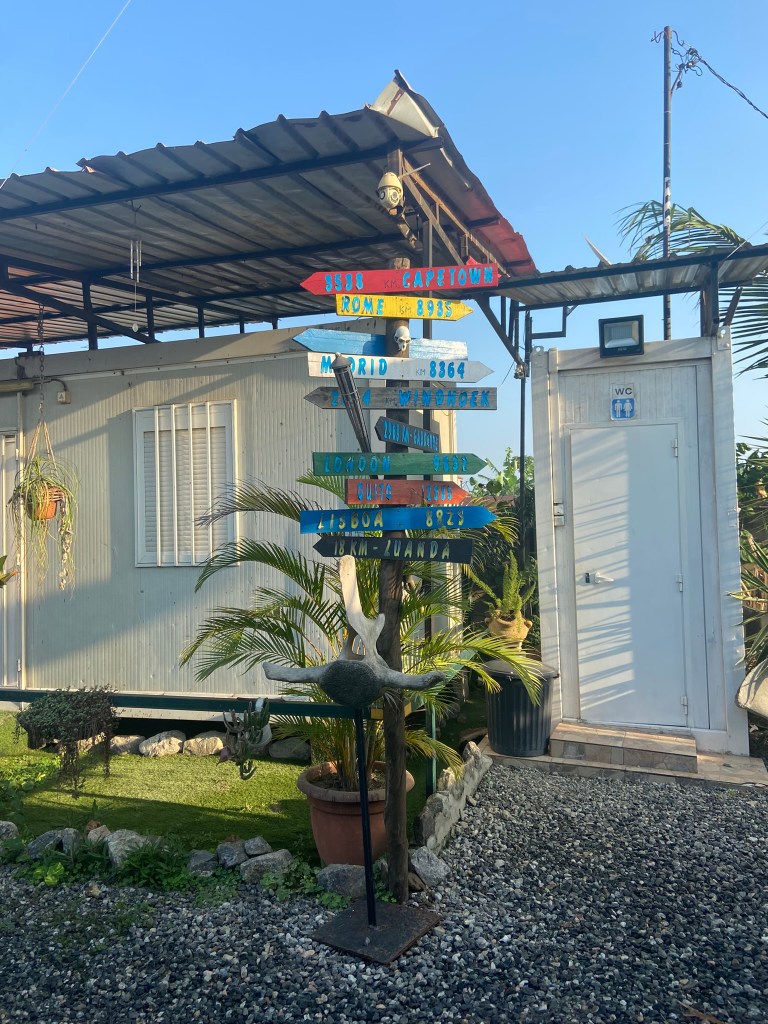
But my goodness was it noisy! After the peace and tranquillity of our wild camps and mountain plantation, a small city-centre campsite on a very busy main road with more barking dogs than I cared to count was a shock to the system. As well as dogs there was an ostrich, an eagle, a crocodile, peacock, fish and who knows what else, all crammed into this tiny space
We met two French women who were also travelling through Africa in their Landrover. It was rather older than Henry but they loved it almost as much. He was having a few problems though so James offered to take a look!
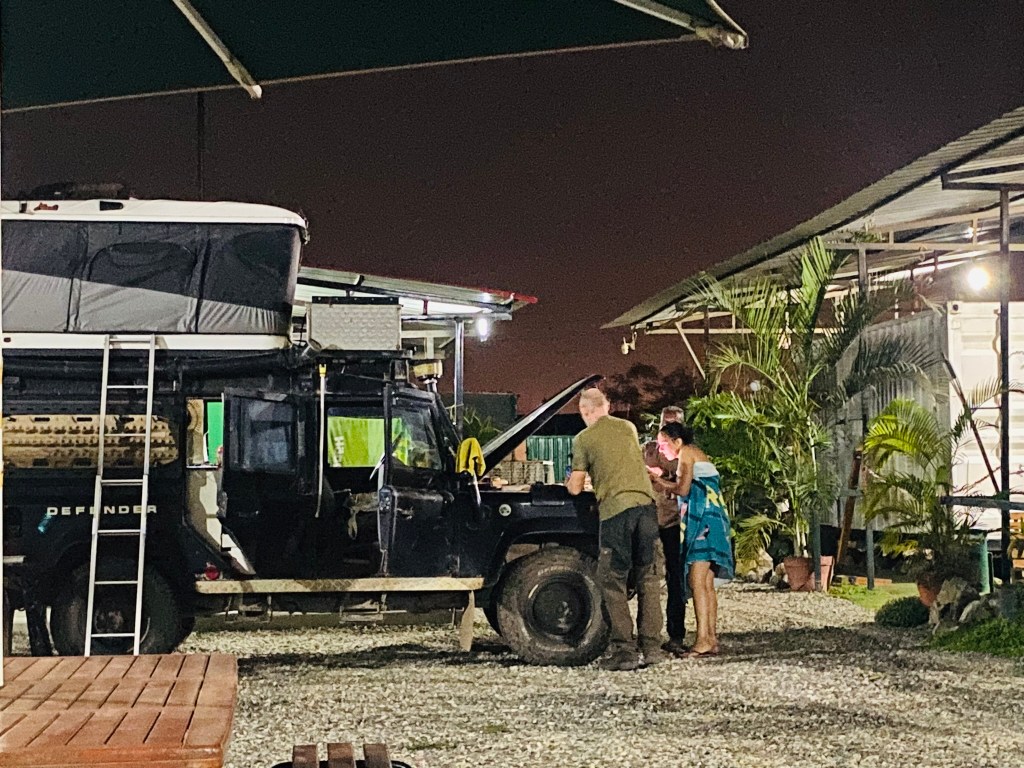
We were too tired to cook so booked dinner with the owners but it didn´t arrive until 9pm which was way past our bedtime. So we were late to bed and hardly slept a wink with all the noise
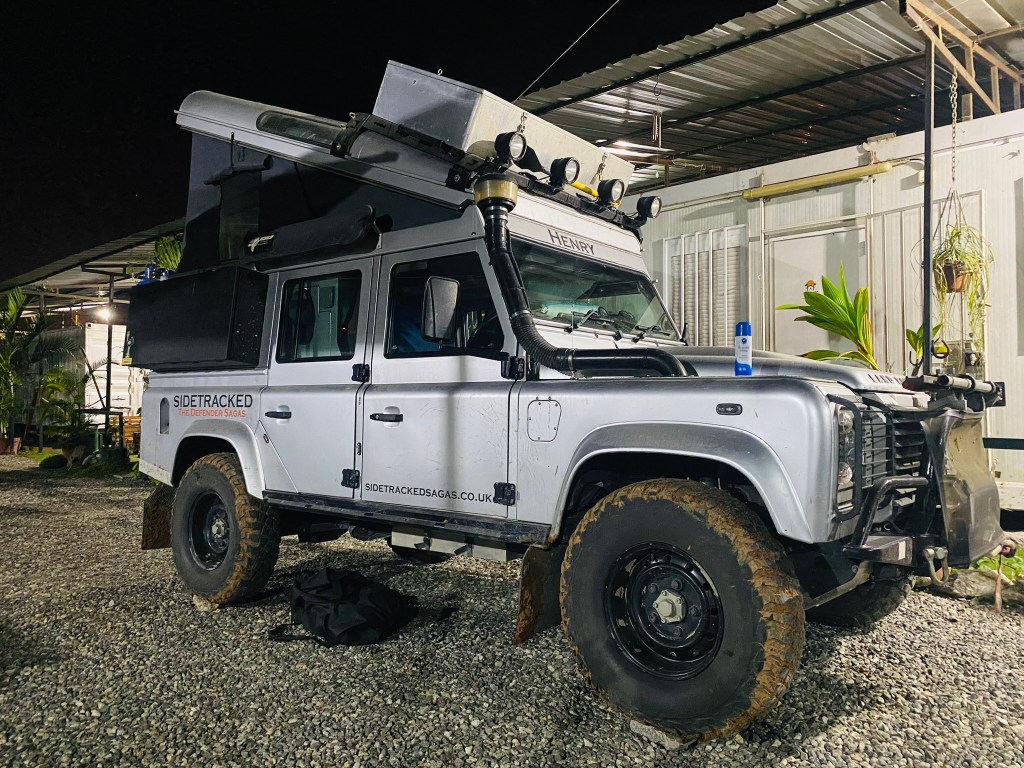
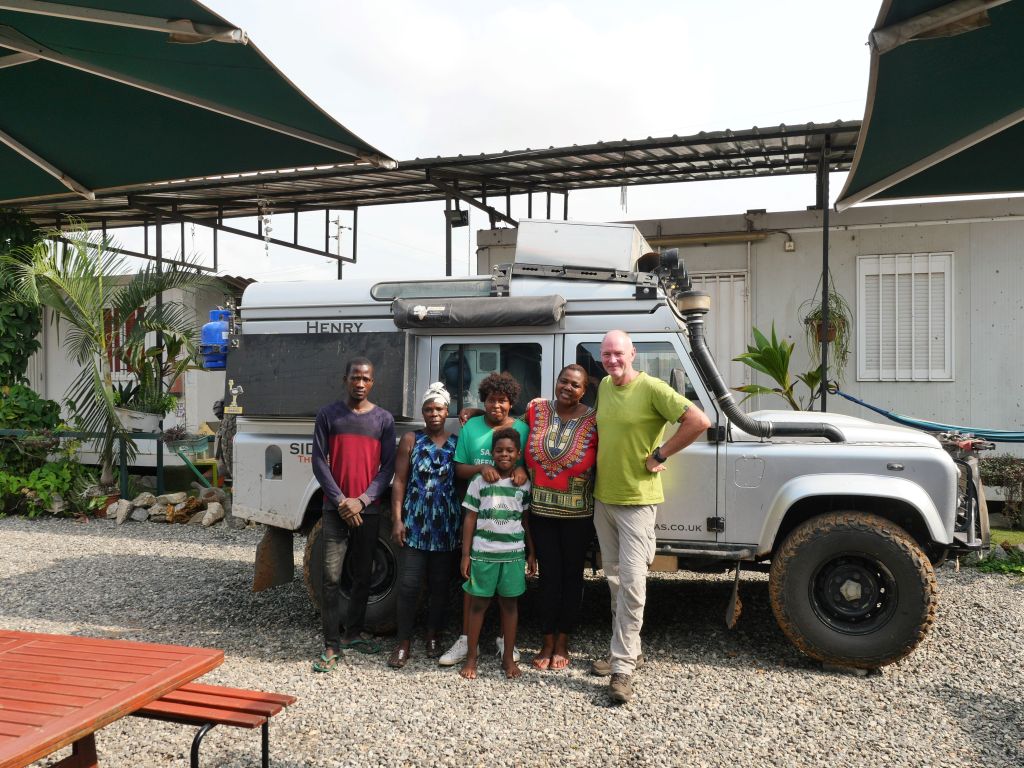
But despite it all we really enjoyed our two days with Luis and Julietta. They were incredibly warm and friendly people who made us feel like family. We managed to wash all our clothes and bed linen, James got a few bits done on Henry and I even managed to dye my hair for the first time in about 3 months! We booked dinner again on our second night and it thankfully arrived much earlier. We also had a lovely breakfast with them and Julietta´s Mum came over saying that she thought Henry was beautiful – all in Portuguese of course but Google Translate came to the rescue.
By now the heat was becoming a problem. As were the mosquitoes. We were spraying every square inch of skin, even under our clothes, every night but still we were both covered in bites. Energy levels had sunk to a new low and whilst a cool shower was by far the best part of the day, within 10 seconds of stepping out from under the water we were pouring with sweat again and wondering why we had bothered.
After two nights we left the comfort of the campsite and our new friends
And threw ourselves on the mercy of the big, busy, confusing capital city. The roads made little sense and the other drivers seemed to have a death wish.
We were heading for the ship cemetery – a 5km stretch of beach apparently covered in old ship wrecks. Google and our sat nav had different opinions on where it was and how to get there but Luis had assured us it was easy enough.
Luis was wrong! As we approached the outskirts of the city Google told us to turn left down a small, dirt road through tightly packed houses. The sat nav also showed a left but not until a couple of miles later. Looking at the options we decided to trust the sat nav. We found ourselves driving through a small village with no road to speak of. People were looking at us with a combination of annoyance and surprise. The roads did nothing like the sat nav suggested so we just tried taking one route after another until we seemed to be heading in broadly the right direction. Google had thrown its hands up in horror by this time!
After a while we left the houses behind and were driving through a field of high grasses. There was no obvious road at all, Henry was simply crashing through the green grass with no idea what the ground was doing beneath us.
Here we go again, we thought, how many times are we going to get ourselves into trouble like this?? But we really wanted to see the ship wrecks so we carried on. The grass got higher and thicker but still we carried on.
Eventually we popped out onto a wide, clear dirt track but before we could relax the track appeared to disappear beneath us – more deep ruts than actual road. James got out and walked round the corner to see what it did further up, neither of us fancied back-tracking but we weren´t about to risk falling down a crevice. He was gone for a few minutes but returned with a broad smile confidently declaring it was passable as long as we were careful.
We slowly edged forwards, bit by bit, keeping the wheels carefully balanced on the top of the huge ruts and after a few minutes we rounded a corner and found the wide open expanse of a sandy beach stretching out in front of us.
We couldn´t help a little cheer!
Safely on smooth, flat, sandy ground we headed for the sea and followed it towards the wrecks

We couldn´t miss them, there were hundreds of them
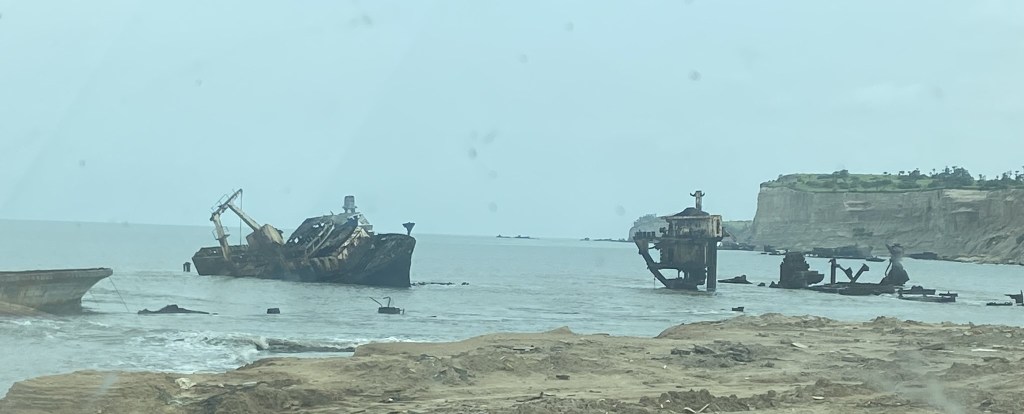

Many were sinking or rusting in the salty water
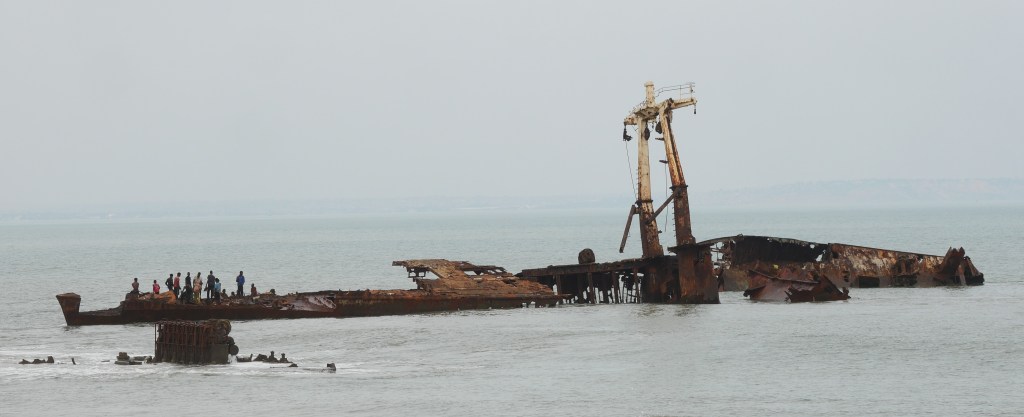

And locals were rowing out to others to salvage the metal
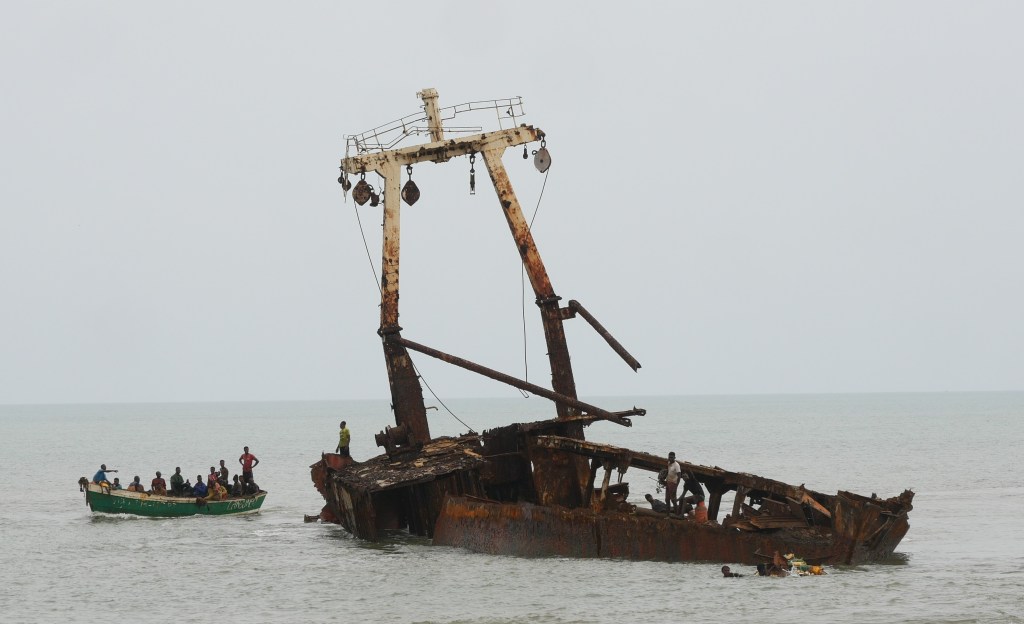
But it was fabulous

We turned to follow the line of the ocean in the other direction and see what else we could find. The path wound its way further and further inland until we turned to cross a narrow land bridge back to the sea.
Eventually we found our way to the spot where Google had said the cemetery was but found very little there – just a few masts jutting out from the waves and some locals passing the time of day

So the sat nav had been right after all – we may have had to drive through some tricky trails but we would never have found the main cemetery otherwise.
A little further on we watched the local fisherman hauling in their catch
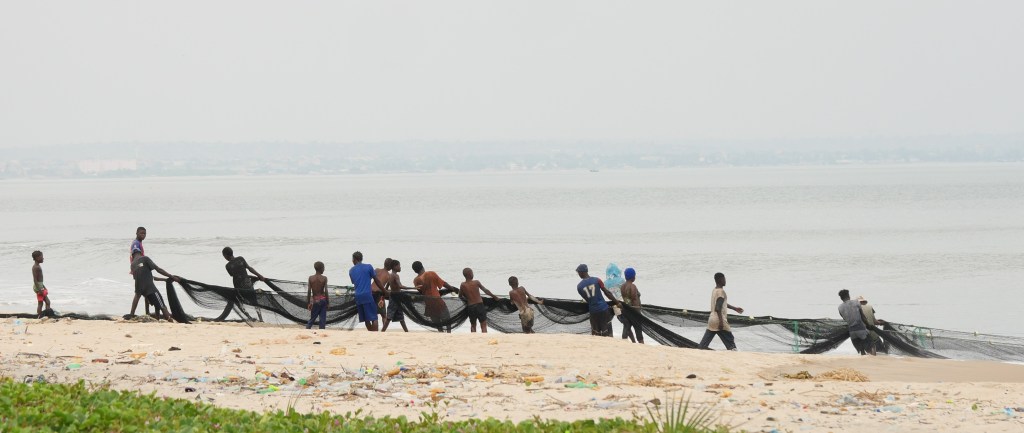
Satisfied that we had seen the best of it, we headed back towards the city, this time determined to follow only the main dirt tracks no matter where they led!
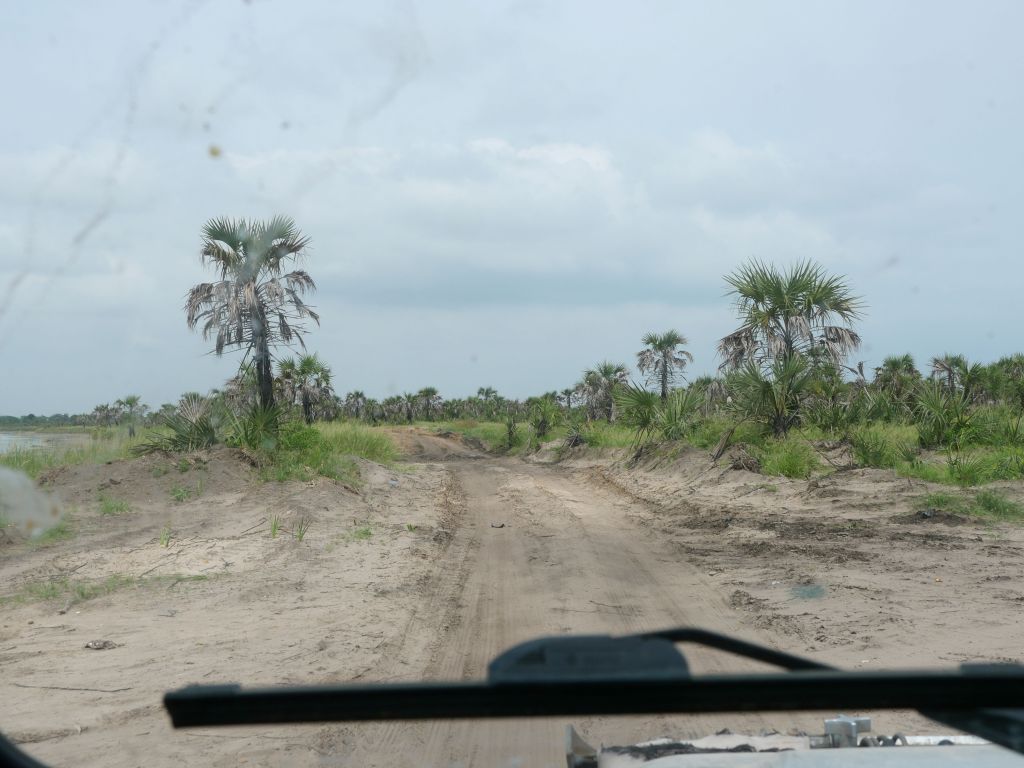
It was a smooth journey this time but Henry was looking very grubby. We had also not managed to find a car wash which could clean his under carriage since the Botswana salt pans and James was worried he was rotting.
So when we found a place on the outskirts of the city with ramps and high pressure jet hoses we were thrilled

Henry hadn´t been this clean in months!
On a high we headed for a random supermarket on Google and found it was a very posh international store full of very expensive goods from Europe and America. We spent a fortune on complete rubbish including something I was very excited to see…
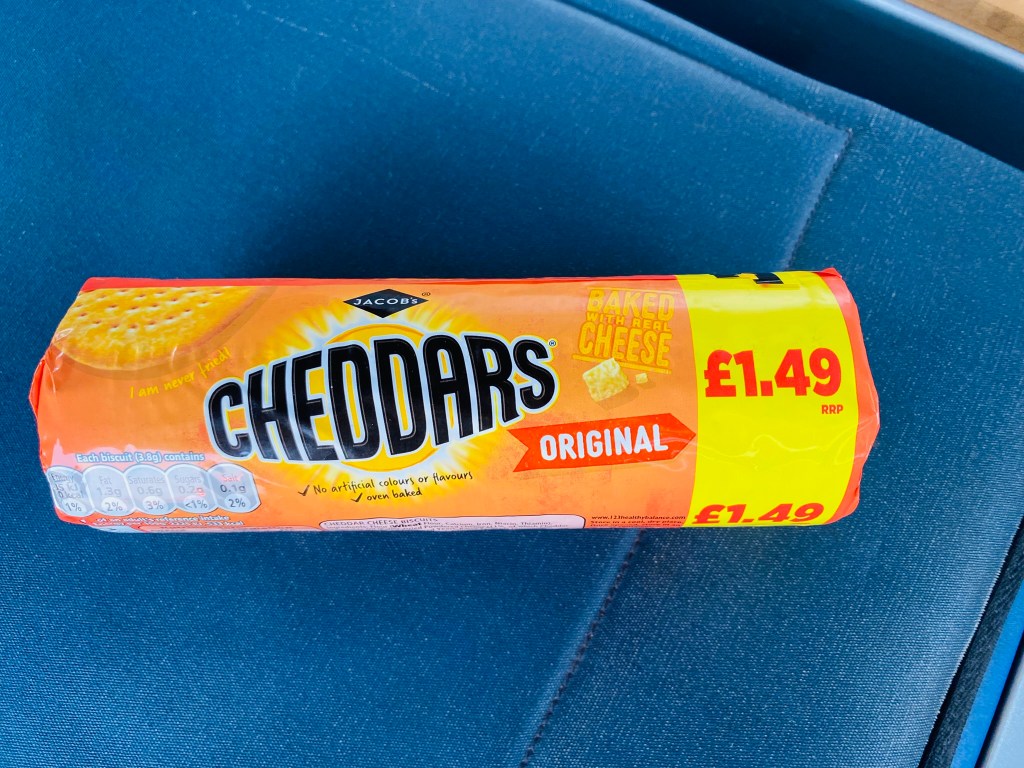
And before you ask, no, they didn´t cost the price on the label – maybe five times that! But they were worth it!
Whilst browsing the shelves we overheard a couple talking to each other in very familiar accents. We turned to greet them and found they were from Wales, living for the last four years in Luanda working in the petrochemical industry. We chatted for ages and they gave us lots of good advice. And in a strange quirk of fate this was not going to be the last time we saw them….but more of that to come.
Whoever you speak to in the overlanding world about Luanda they will all say the same thing – when in Luanda you must stay at the Naval Club. They love Overlanders, the President is a particular Landrover fan and they will welcome you to camp in their car park and use all their facilities for free.
So this was our next stop. It took a bit of finding but once there the views were amazing
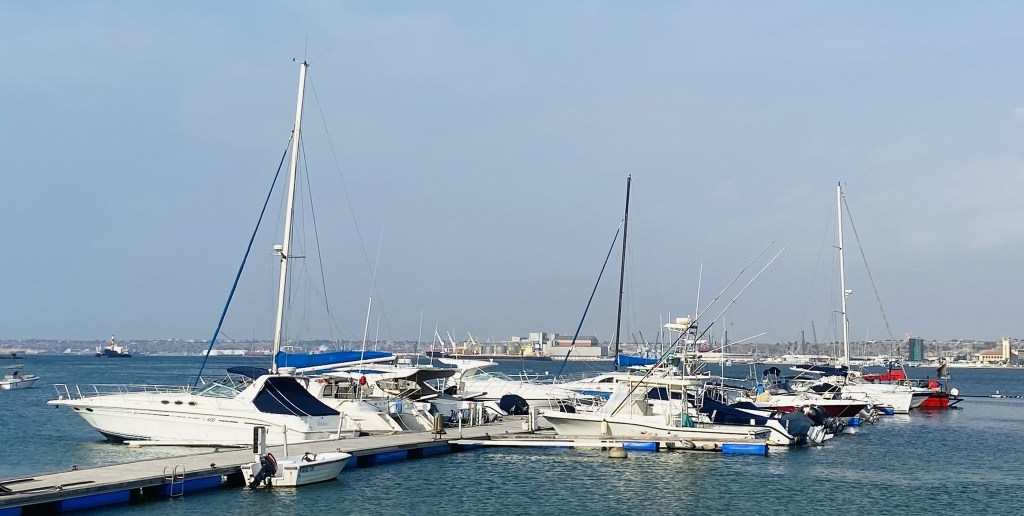
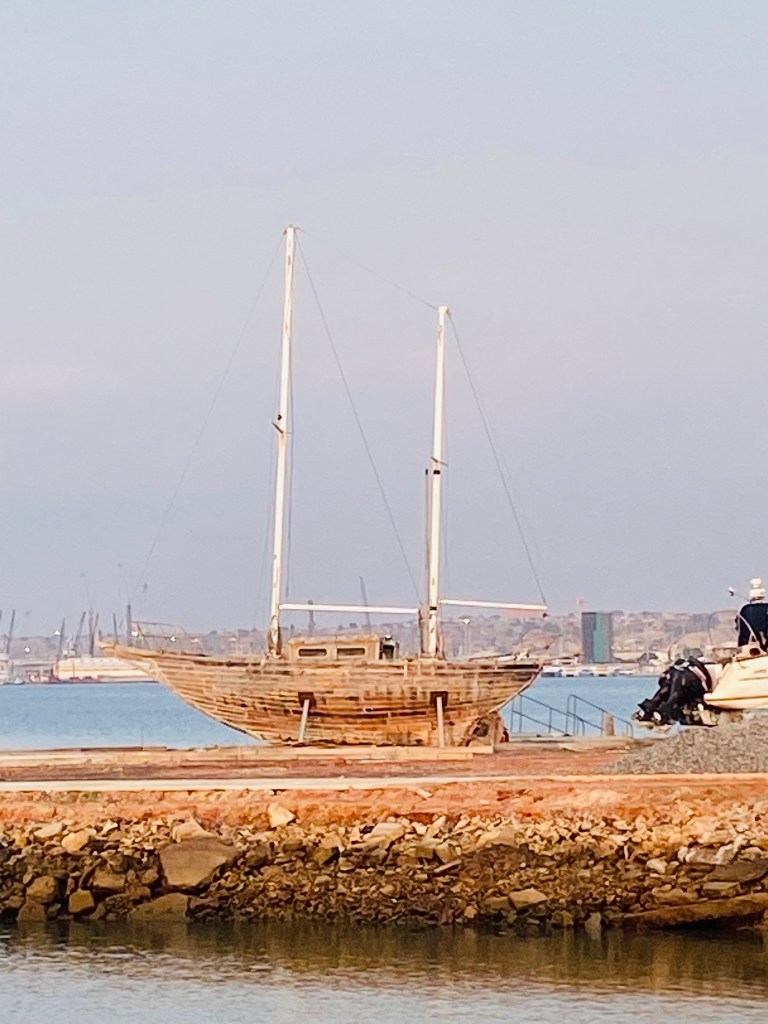
The manager warmly welcomed us and said Henry was beautiful. All the staff came round to admire him and get a guided tour
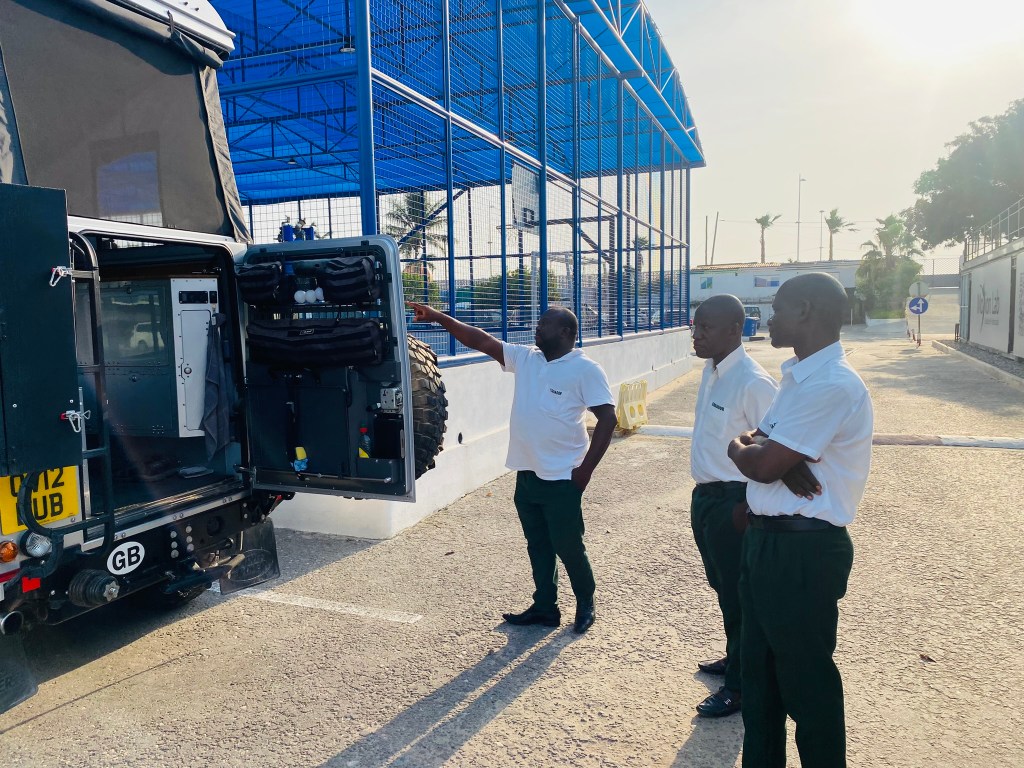
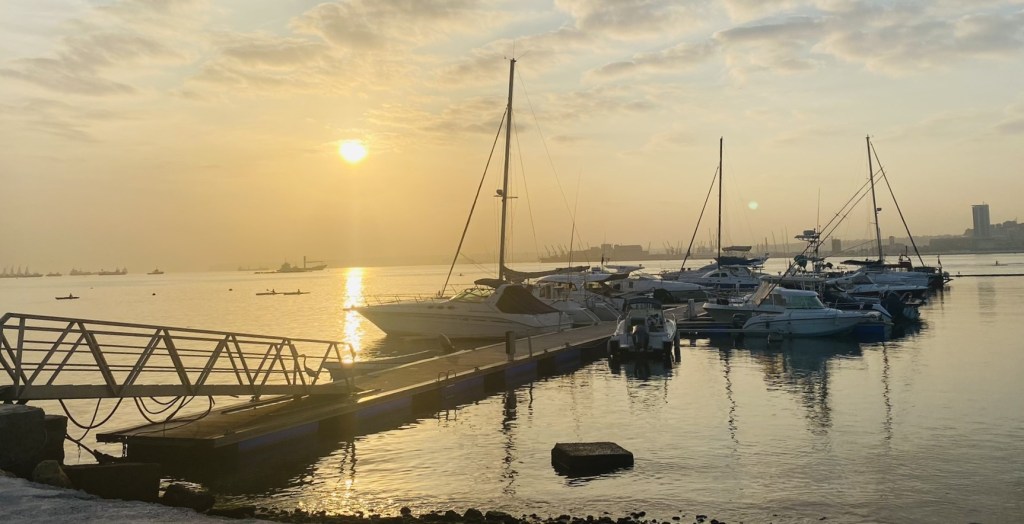
We parked up on the quayside with a fabulous view over the harbour

And made ourselves at home
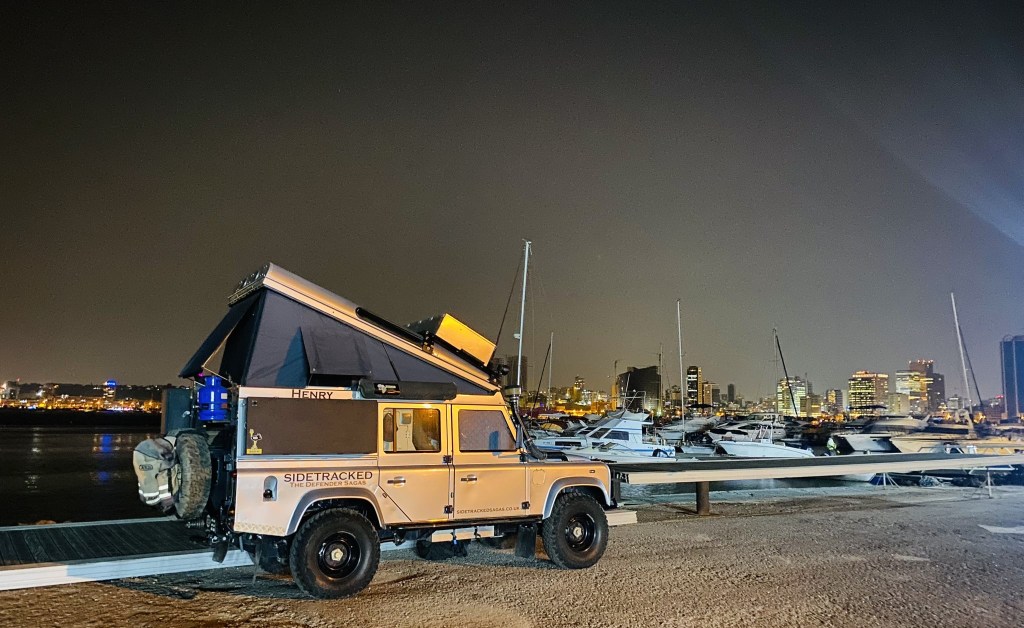
But if we thought Luis´s campsite was noisy we had heard nothing yet! Despite its idyllic position, the Naval Club was surrounded in all directions by nightclubs and it was Saturday night. Beams of light flashed into the sky, different types of music thumped out from everywhere and it didn´t stop until 6am the next morning.
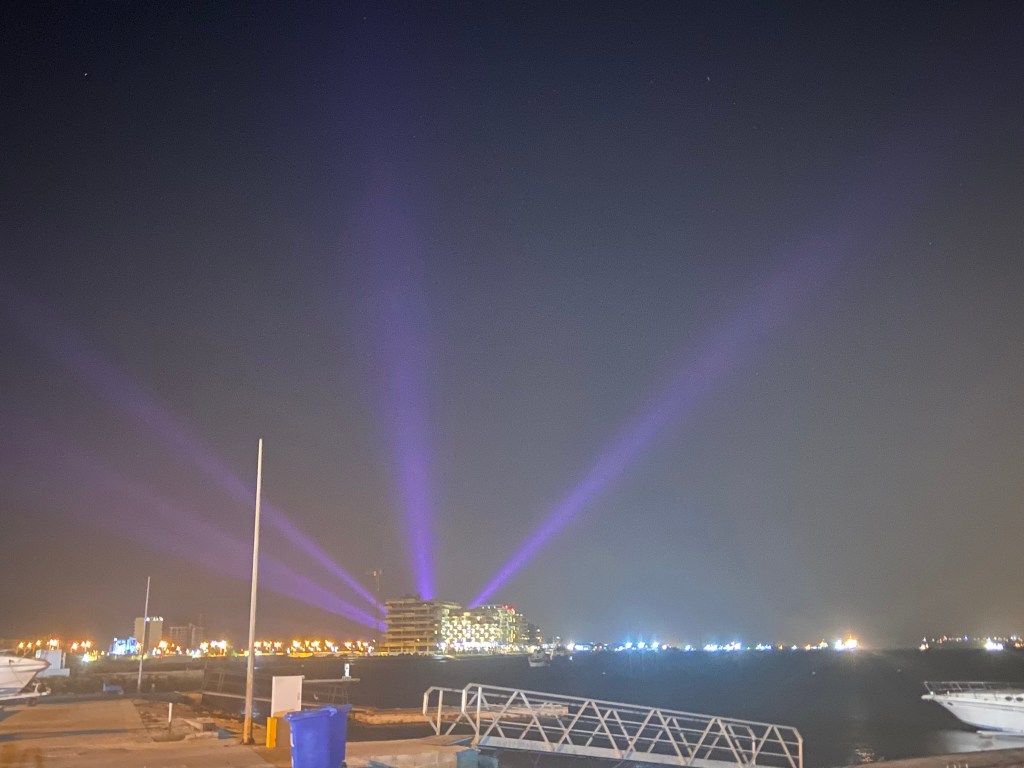
And it was hot. Unbearably, stiflingly, breath-sappingly hot. With thousands of mosquitoes everywhere. We had hoped that being on the sea front would bring a cooling breeze and the mosquitoes would stay away. No such luck, not even close. We hid from the mosquitoes inside Henry all evening watching a movie, each of us making a little puddle of dripping sweat beneath us on the floor. And when we finally went to bed we lay stuck to the sheets gasping for breath in the thick, treacly humidity.
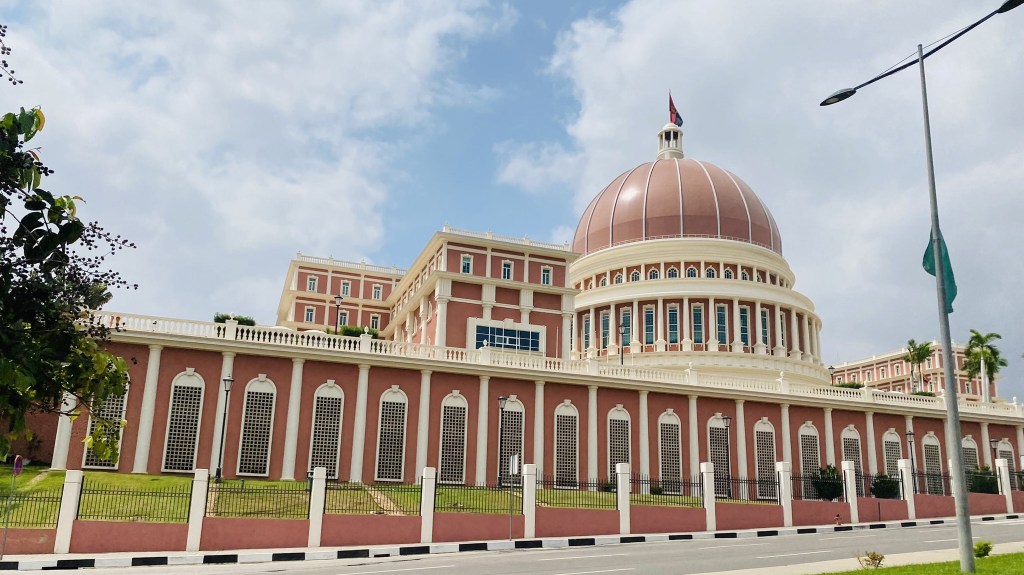
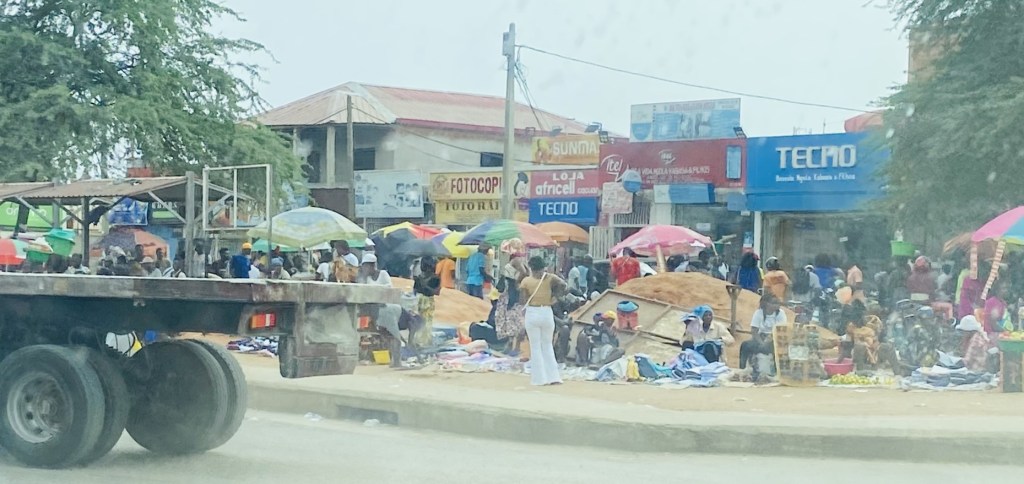
Luanda is a busy, metropolitan city built by the Portuguese for half a million people which now houses over 6 million. So whilst there are parts that are modern and quite impressive
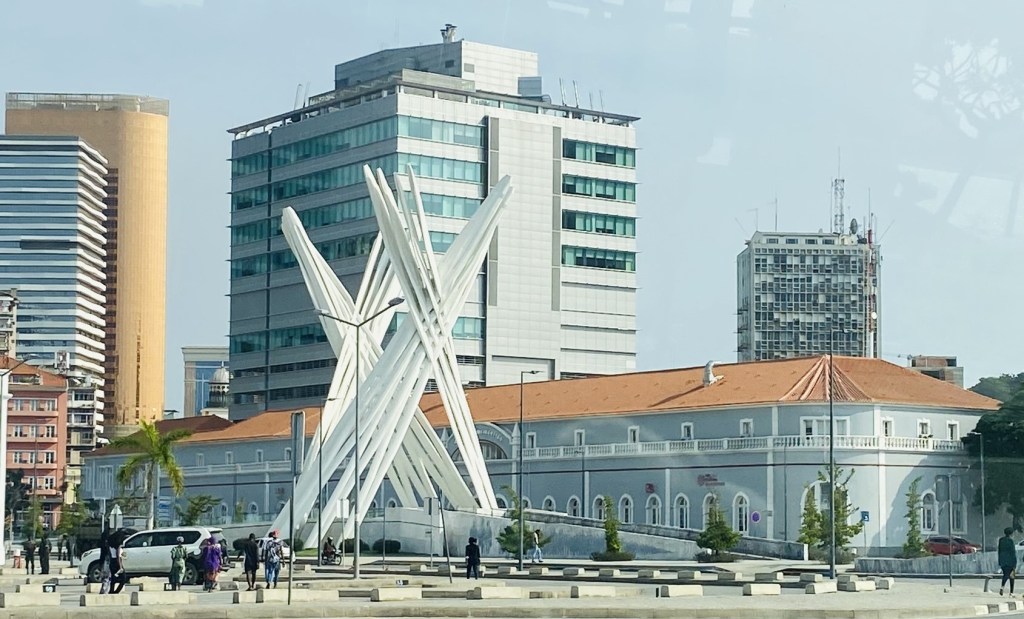
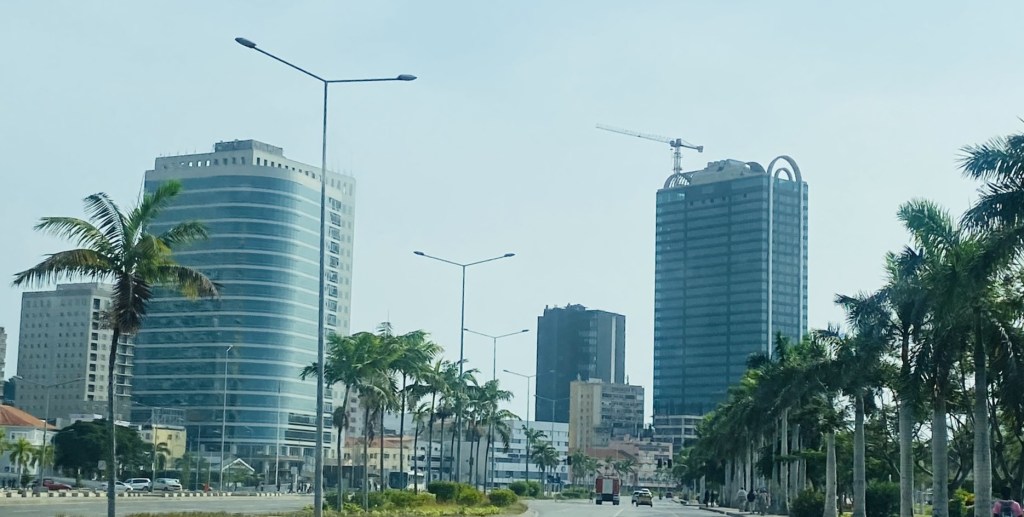
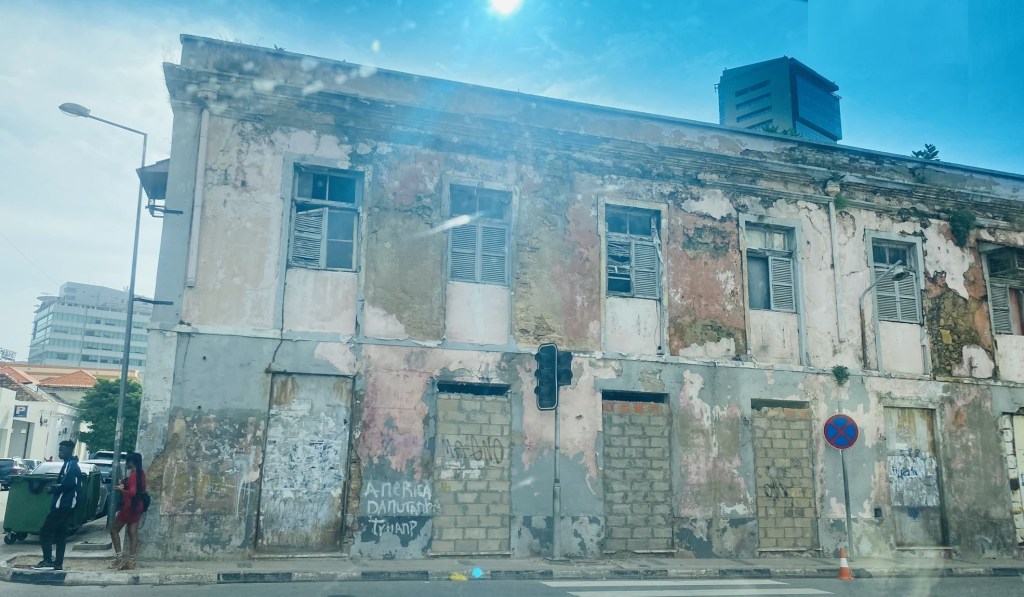
There are also areas which are shockingly poor, dirty and run down
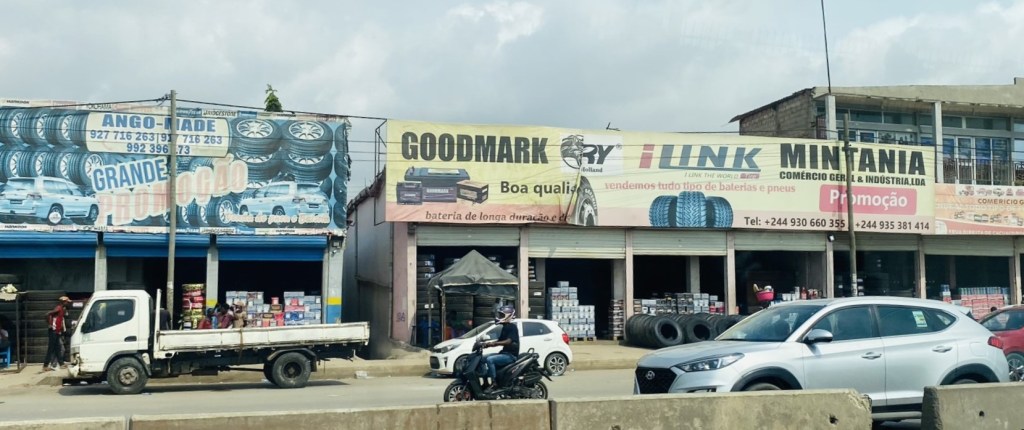
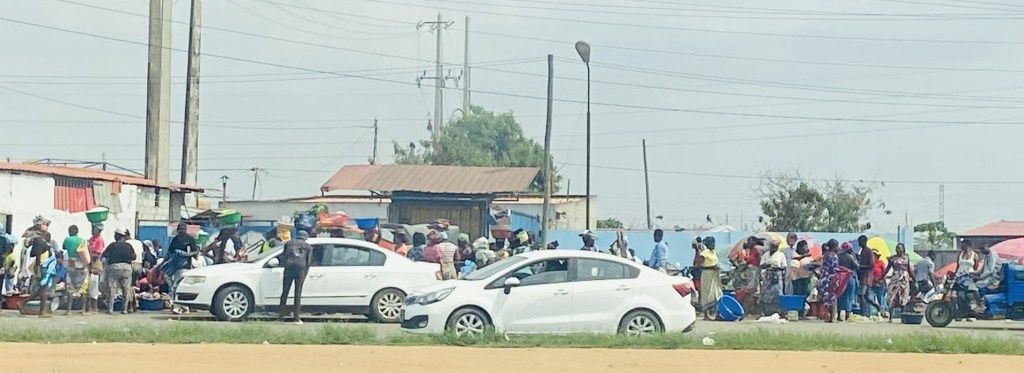
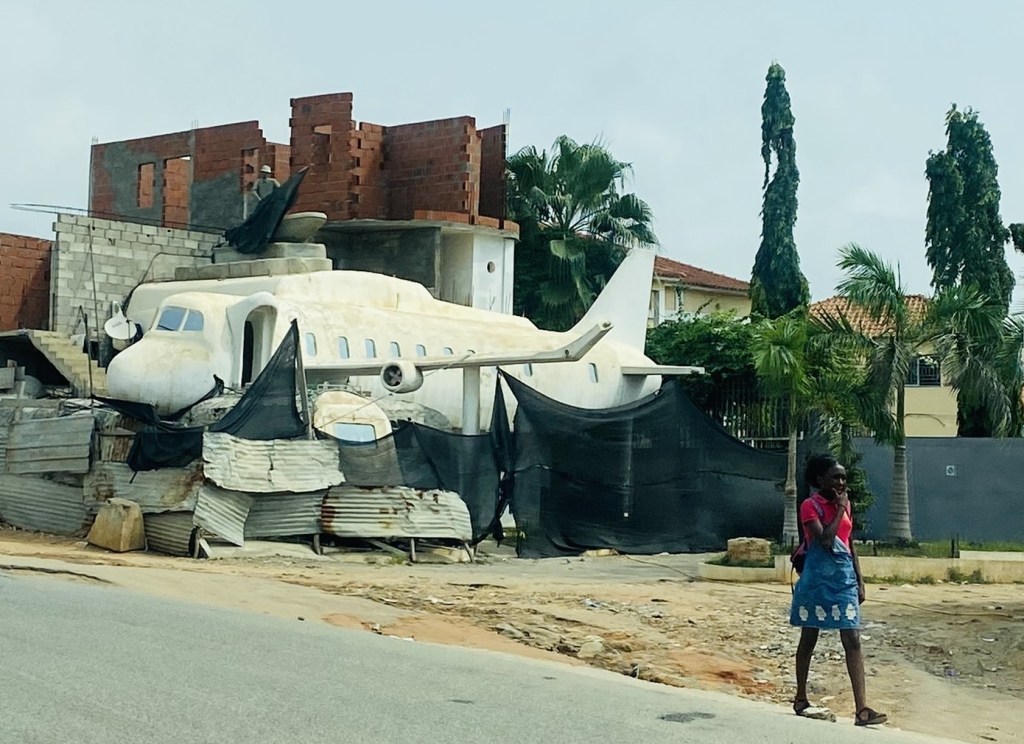
And some just quirky!
The roads are chaotic and dangerous, the driving is complete madness and more than a little frightening. But none of that mattered because the people are some of the most welcoming, friendly and generous we have ever come across and we have made some firm friends.
In all we spent nine days in Luanda and I´m still not sure where that time went.
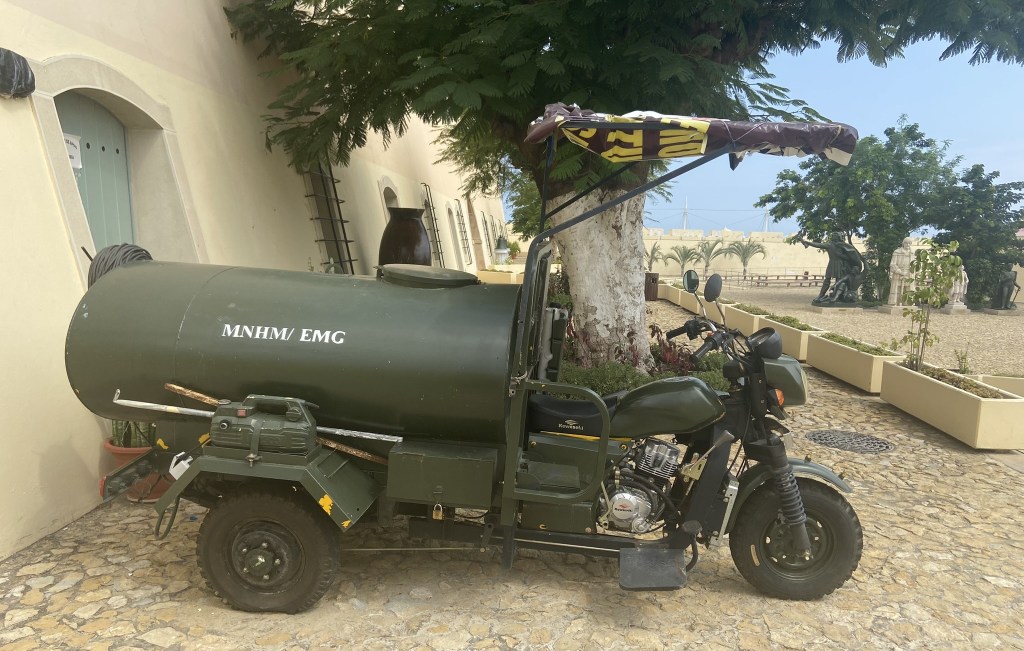
We visited the fortress and military museum of Sao Miguel
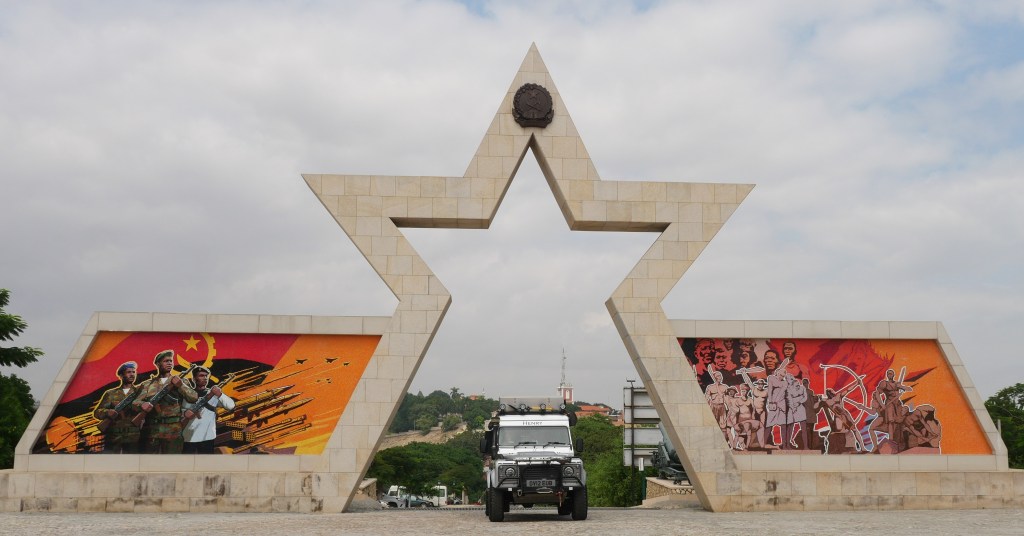

A huge castle which dominates part of the city and heralds the country´s military history
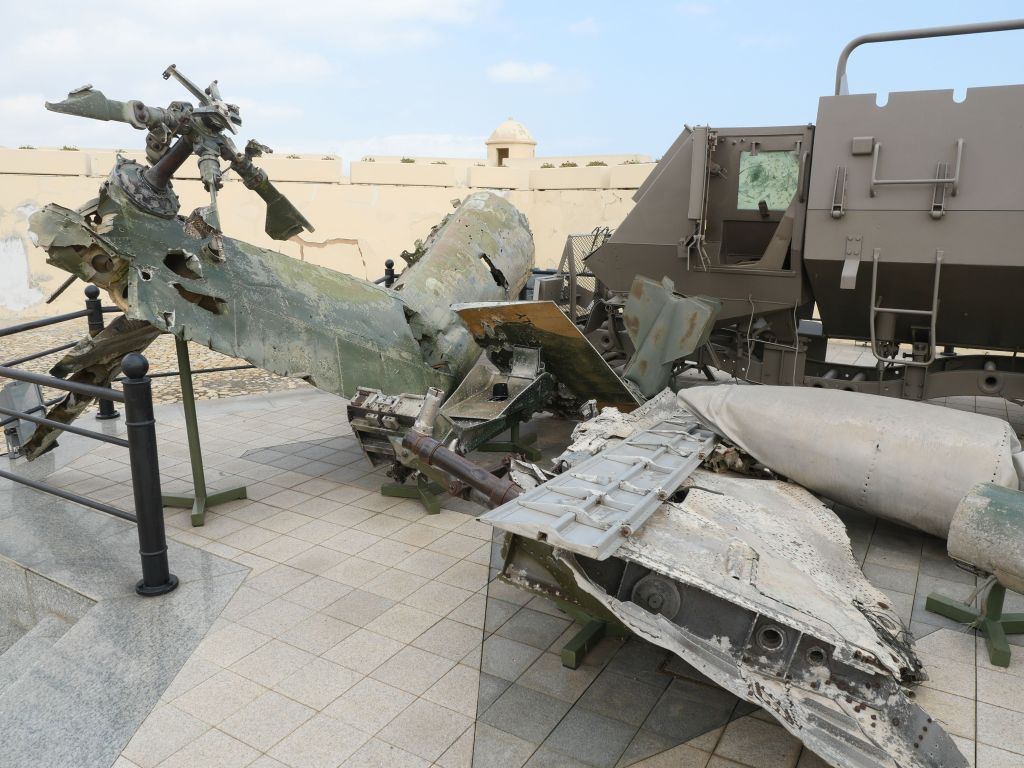
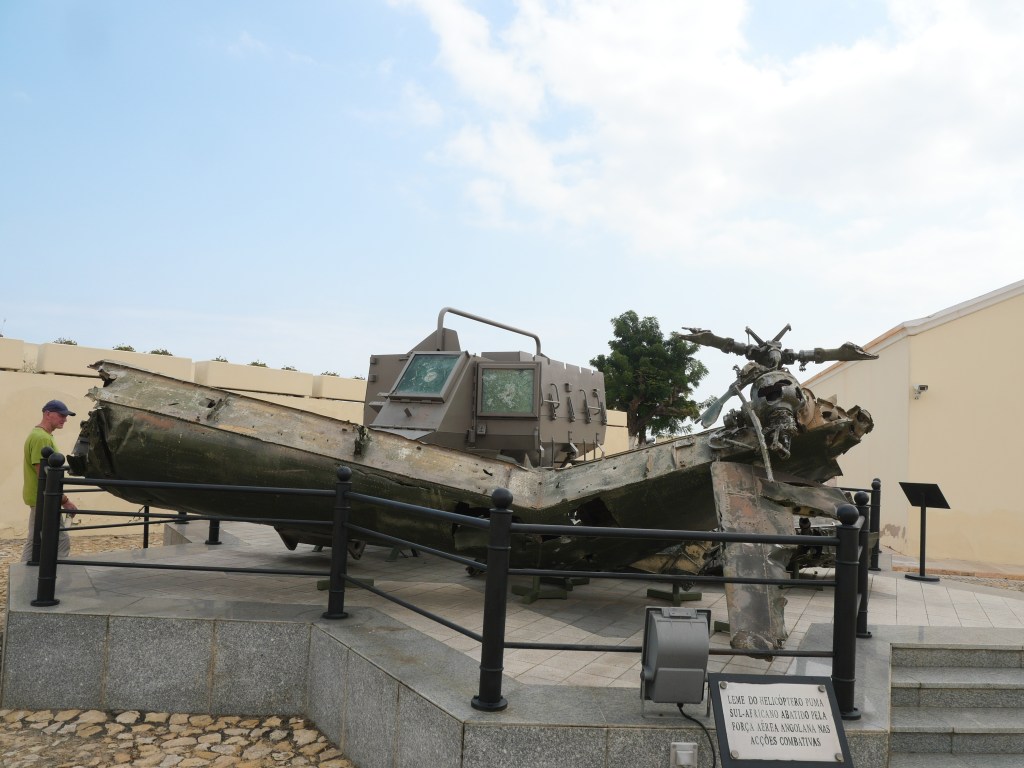

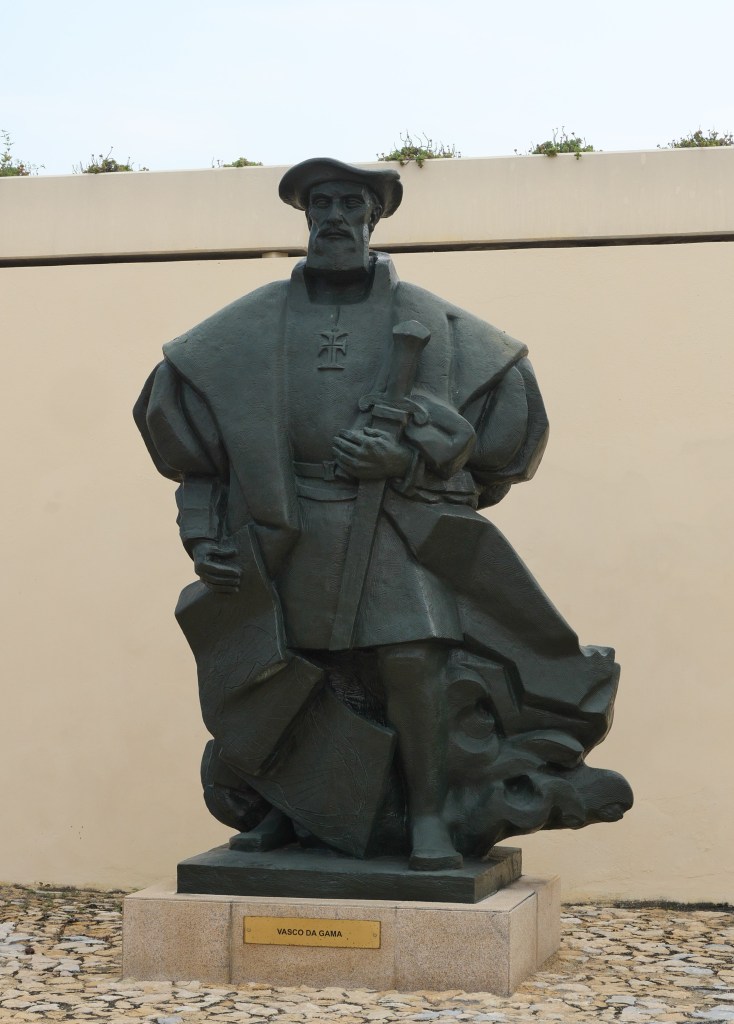
It was fascinating to wander around


With statues of all the major historical players
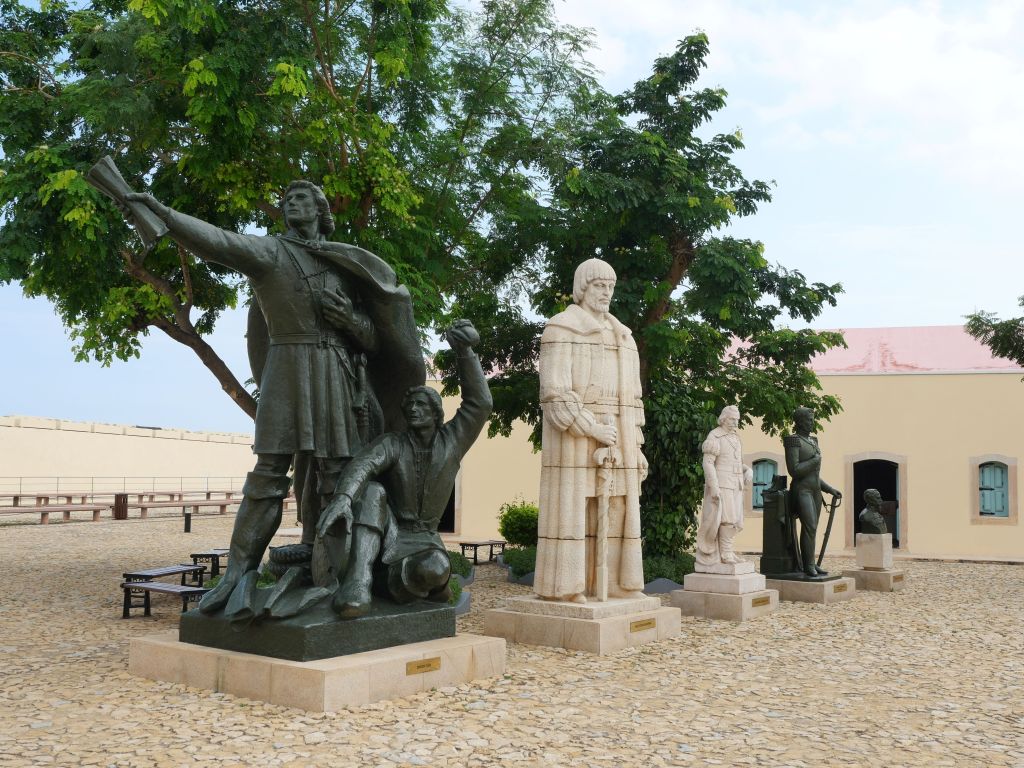
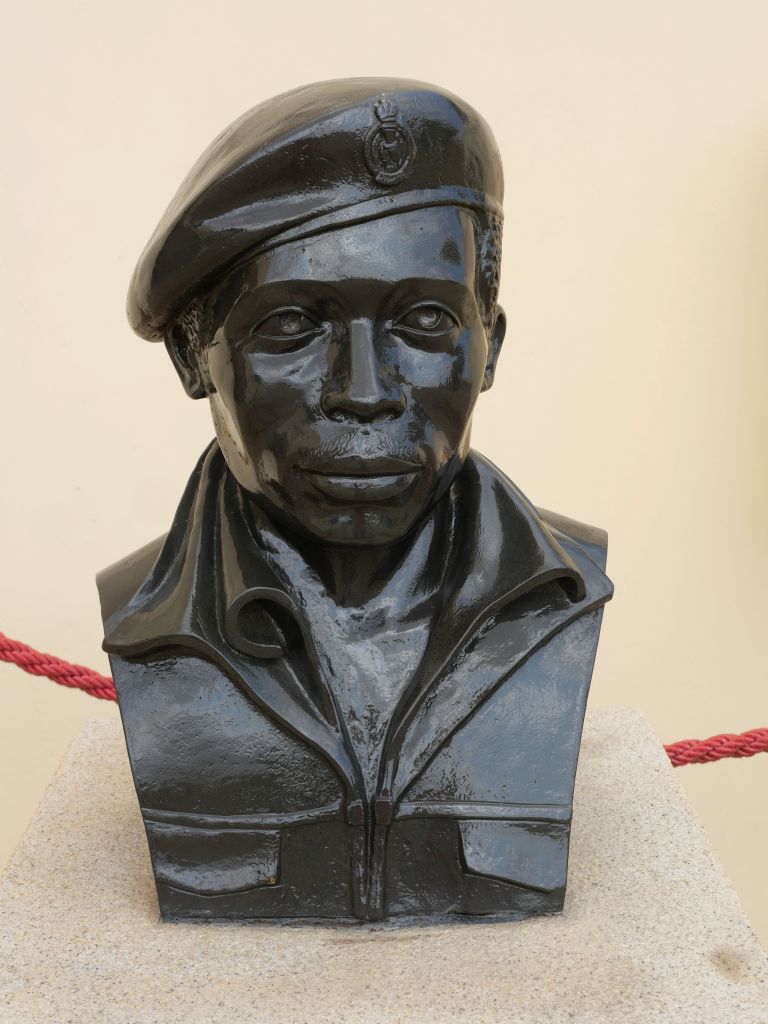
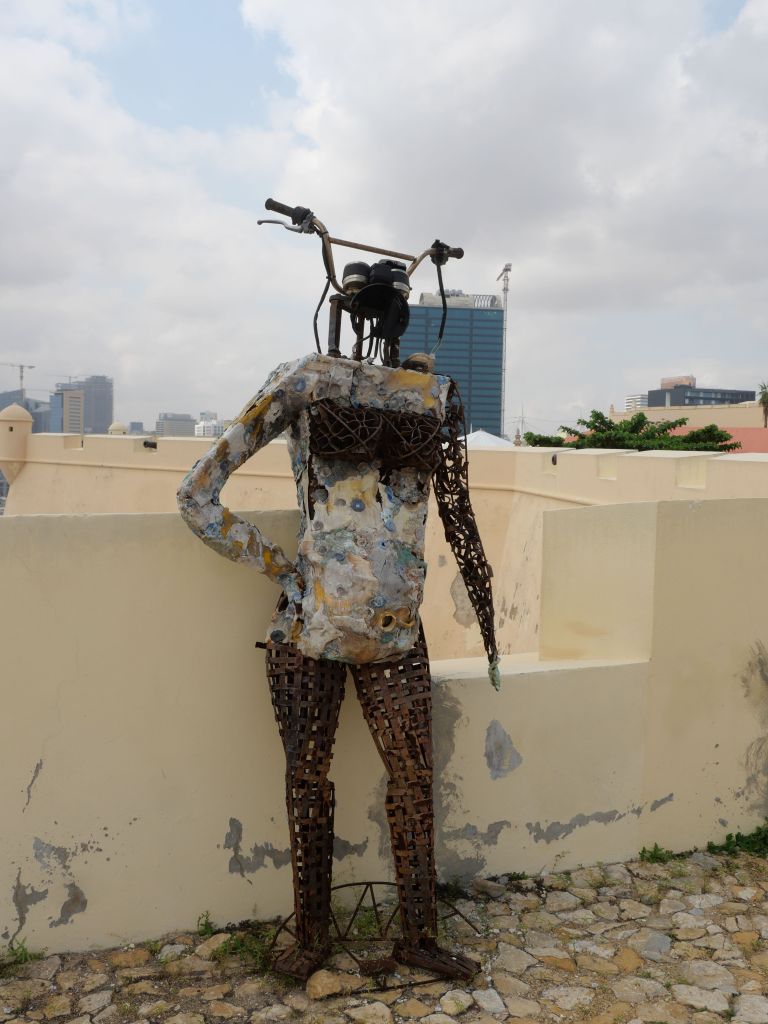
As well as some more modern types!

It took a long time as the temperatures meant we had to keep sitting down and glugging water.
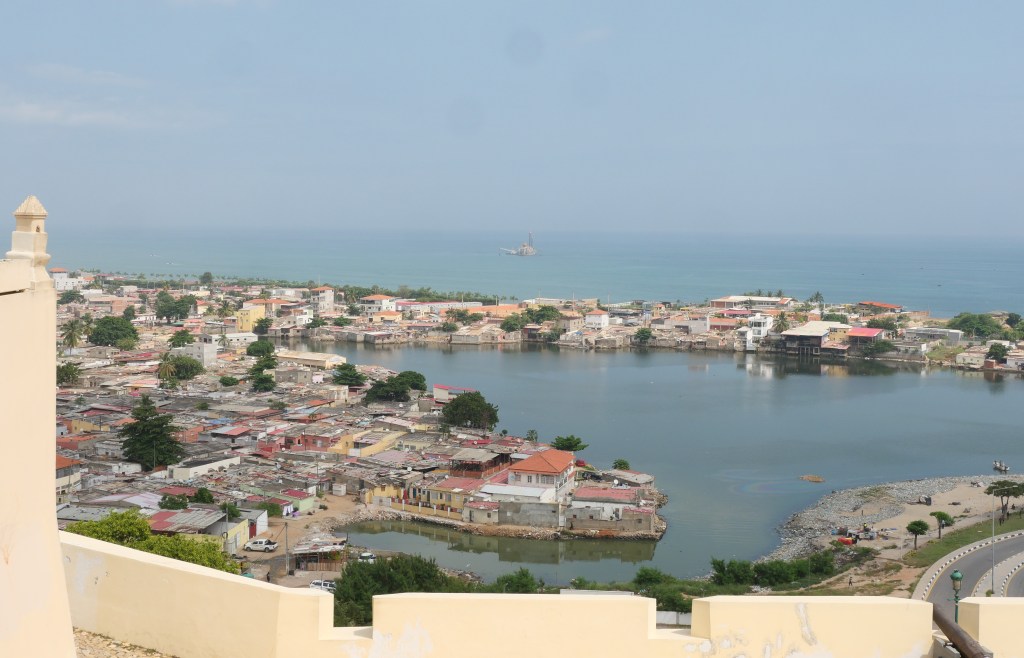
But the views from the top were spectacular, even if you could see the humidity hanging in the air like smog
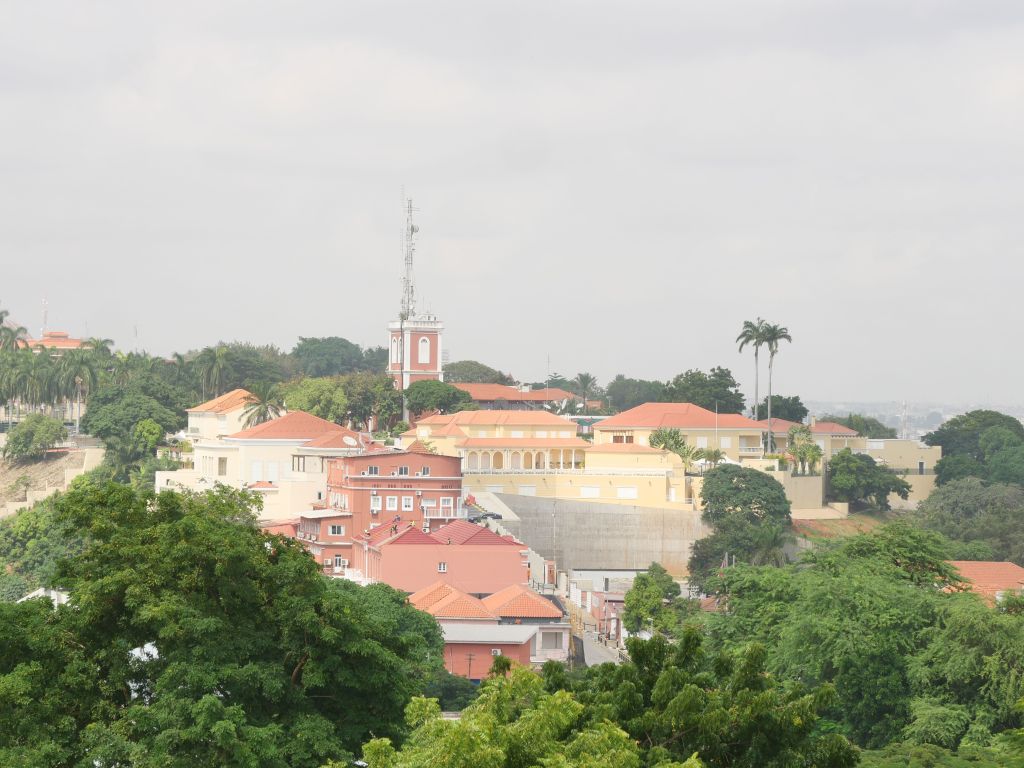
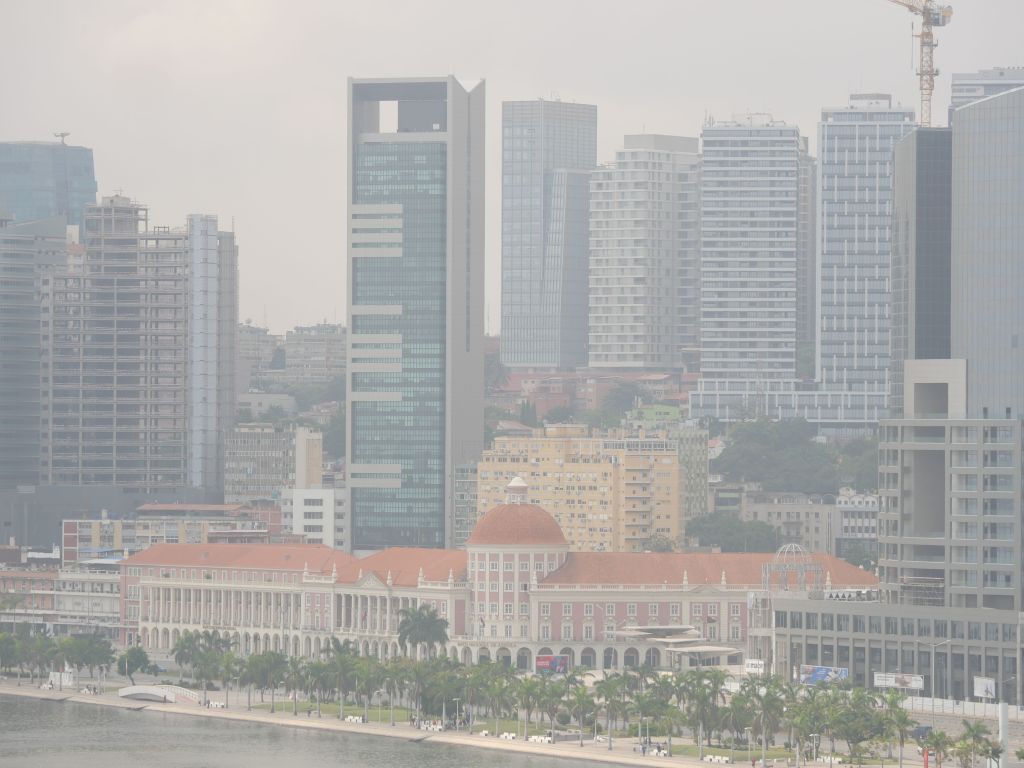
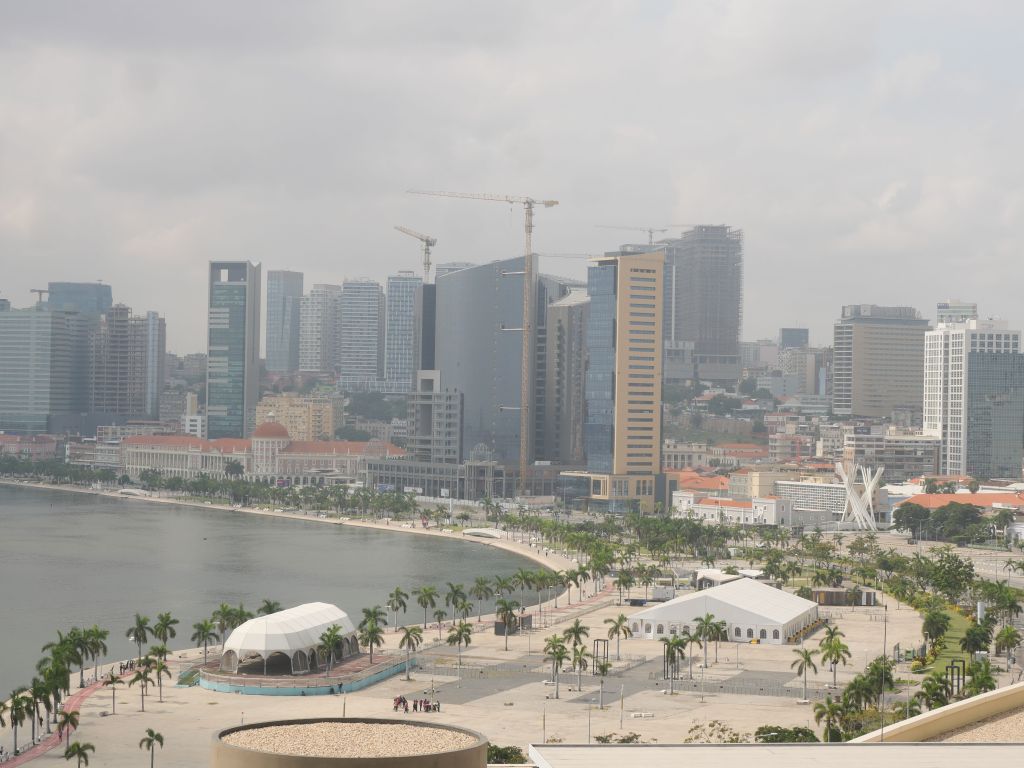
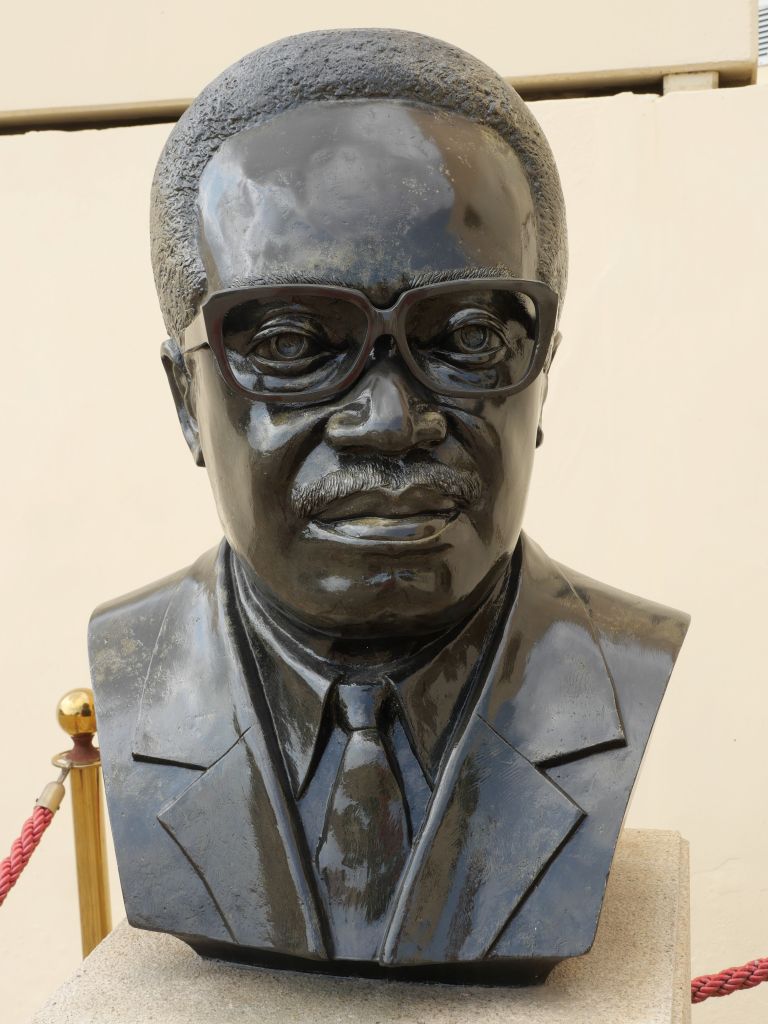
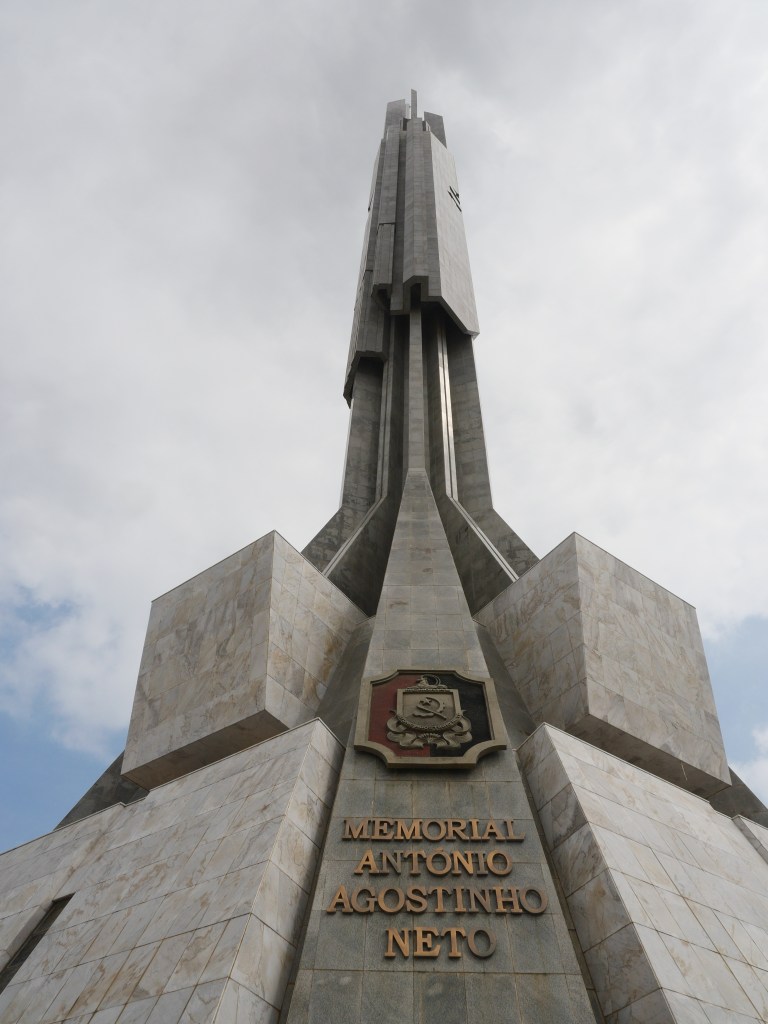
We also visited the Neto Memorial, a memorial to Angola´s first president after independence, Agostinho Neto
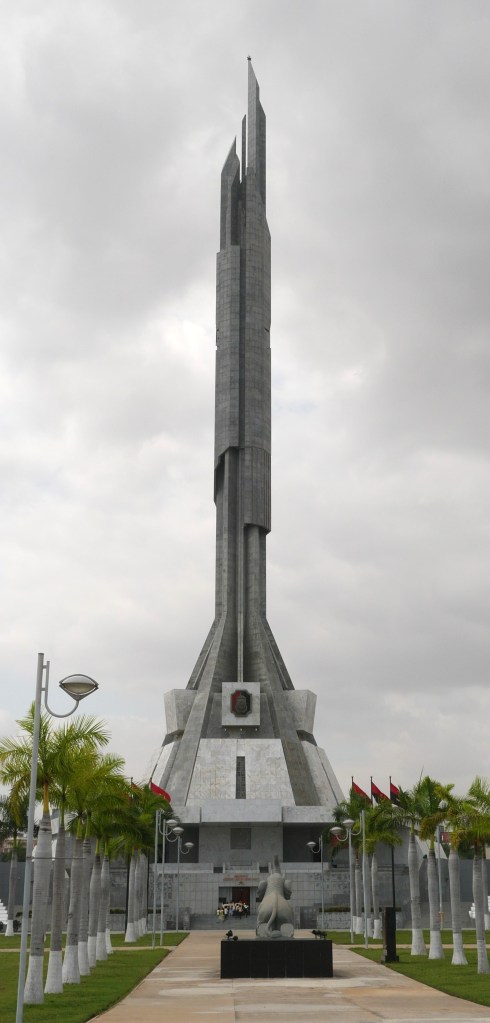
The memorial is welcomed and criticised in equal measure – Neto was undoubtably a great president

Albeit his tenure was cut short by his untimely death from cancer. However some people regret that the money spent on this building was not rather invested into the country for the good of all. It is a hard debate to enter, not being Angolan, however the memorial itself was very impressive and interesting
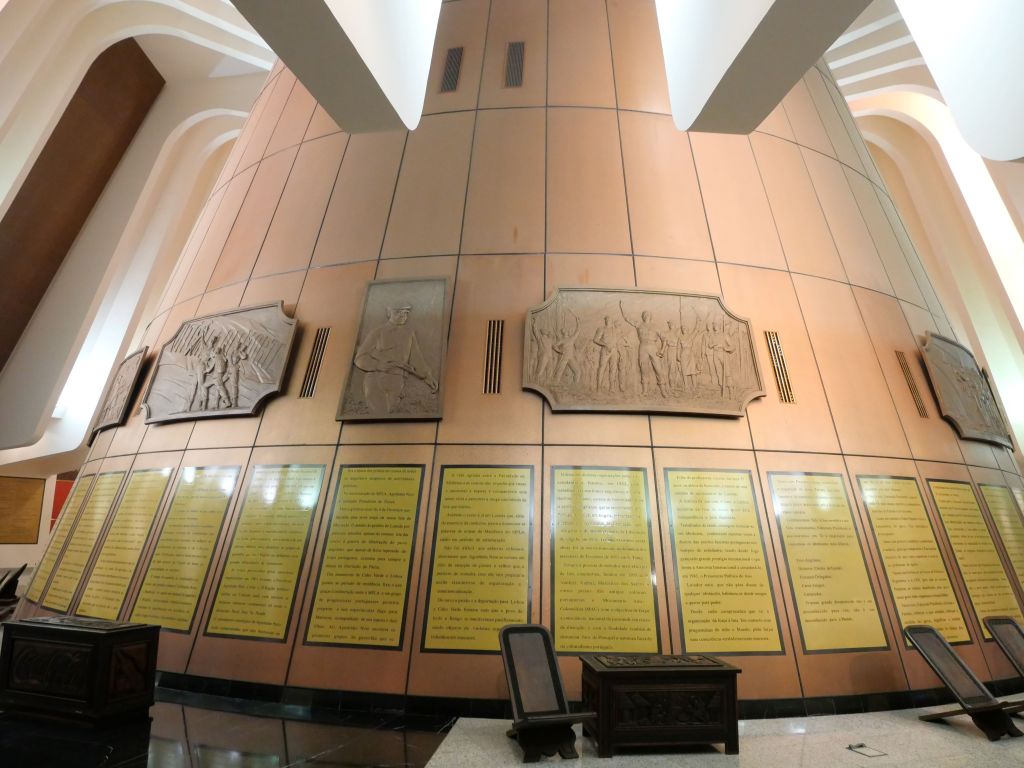
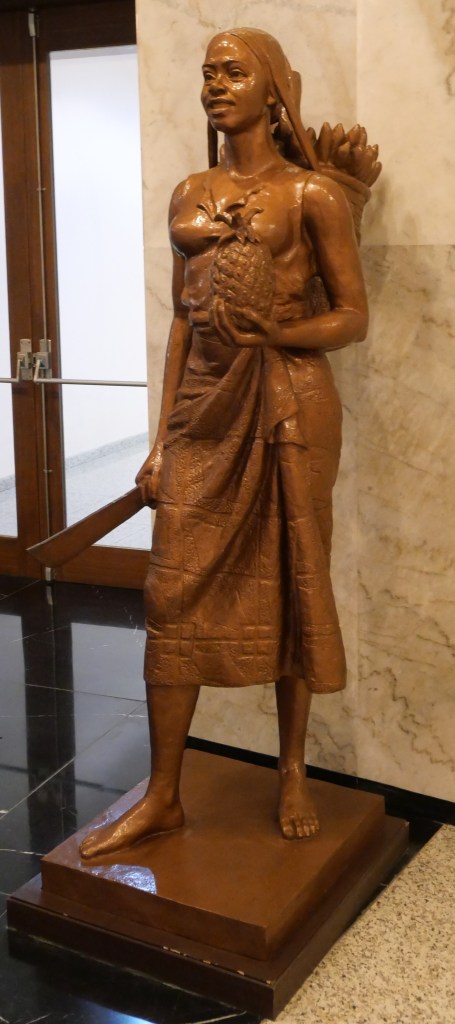
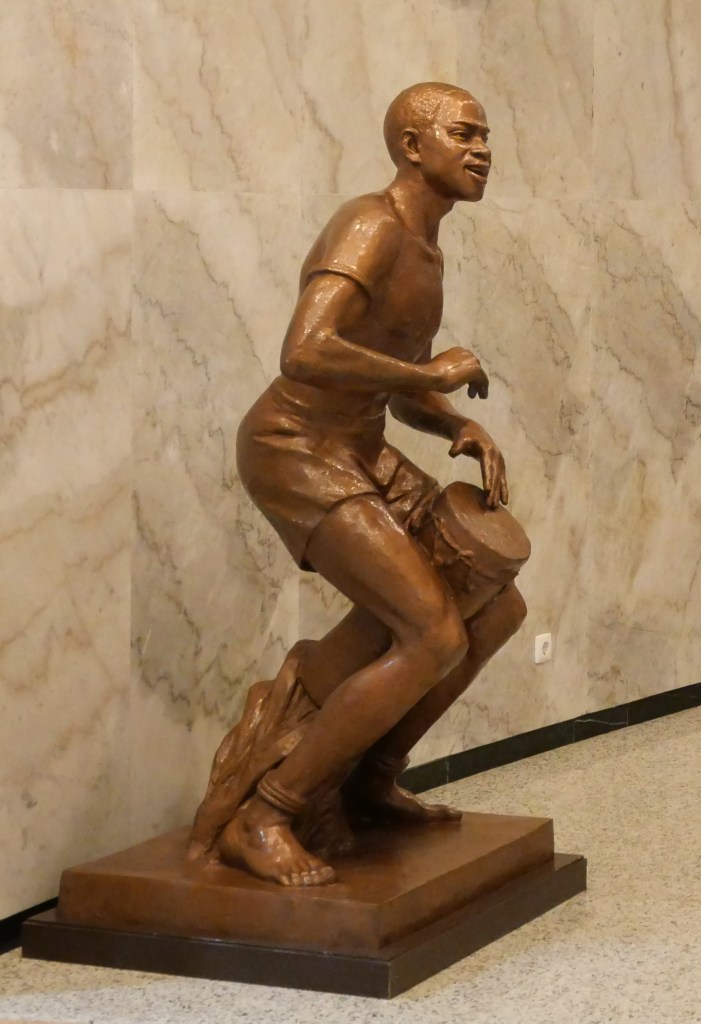
With tributes to every occupation and walk of life
And with more lovely views over what we were starting to realise was one of the most iconic buildings in the city
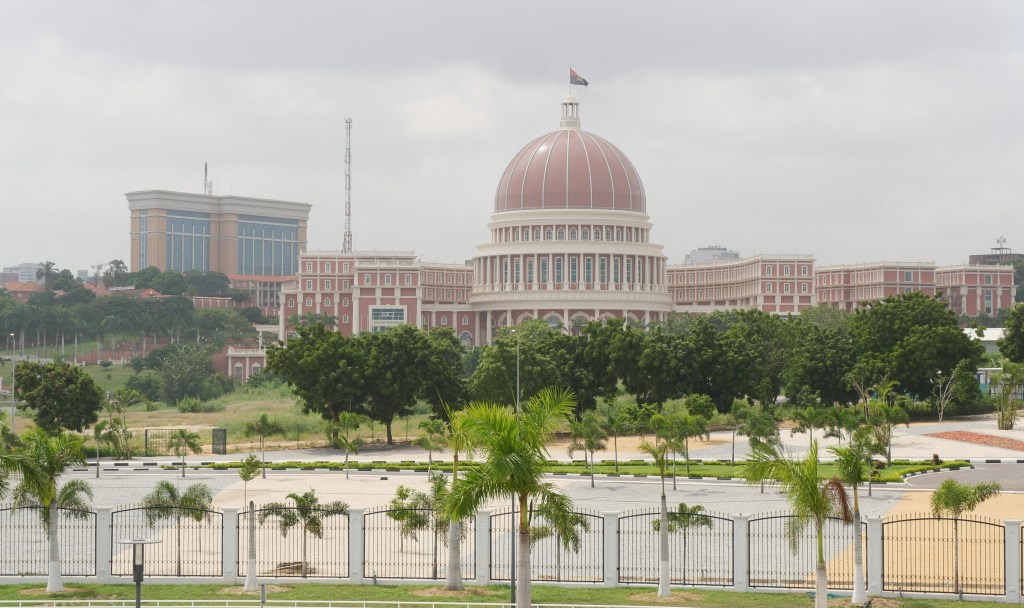
The usual guide was not available when we were there so the only other member of staff able to speak English was pressed into service to take us around. She was fabulous – incredibly knowledgeable and refreshingly candid about her thoughts on Angolan politics!
The next stop was the museum of money. We arrived late and it was due to close in half an hour so it was a bit of a rush. But it was another fascinating insight into Angola – and the air conditioning was brilliant!
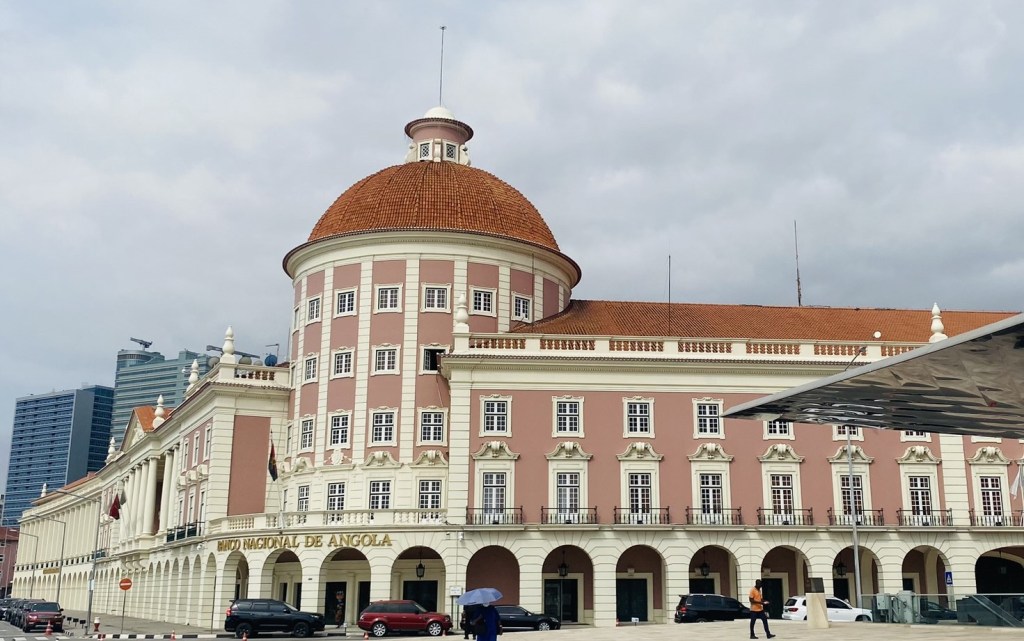
It was housed adjacent to the iconic Bank building that we had been seeing from afar so it gave us the chance to finally see it up close and walk through the colonnades
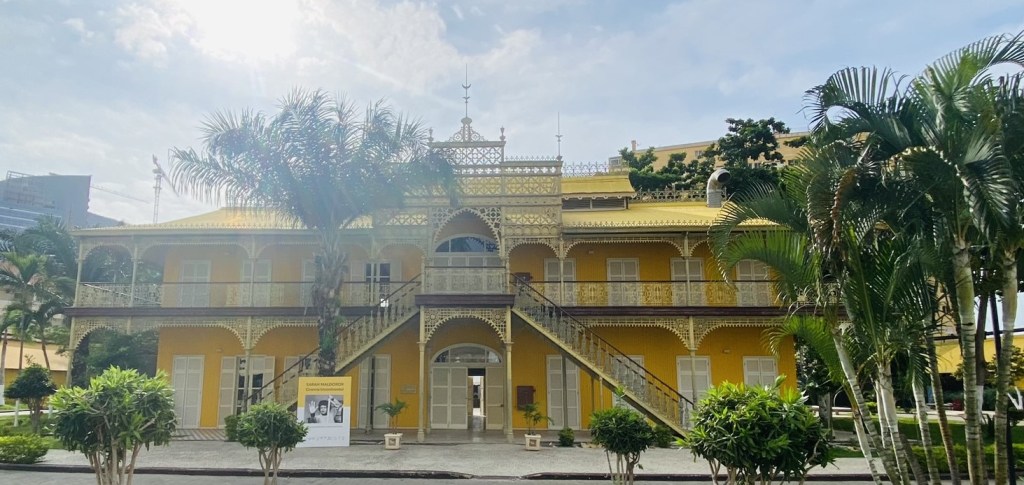
Another land mark in Luanda is the Iron Palace. The traffic was mayhem so we were only able to park up for a few minutes and take a quick photo. You can´t go inside though so it was enough
We also took full advantage of the multitude of restaurants in the city. We started with dinner at the Naval Club itself – very smart, full of the ´beautiful people´!
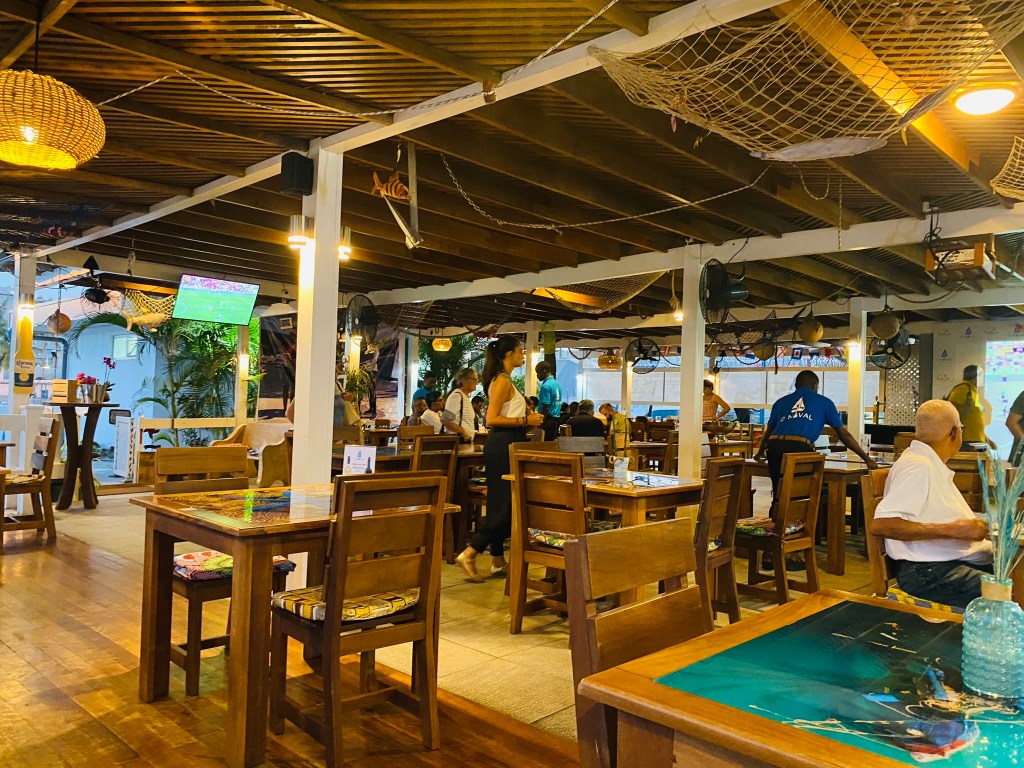
We tried a mexican restaurant on the Ilha de Luanda peninsula which was very expensive and very disappointing.
And finally we treated ourselves to a luxurious and very decadent meal at the Café Del Mar – one of the best places to go in town
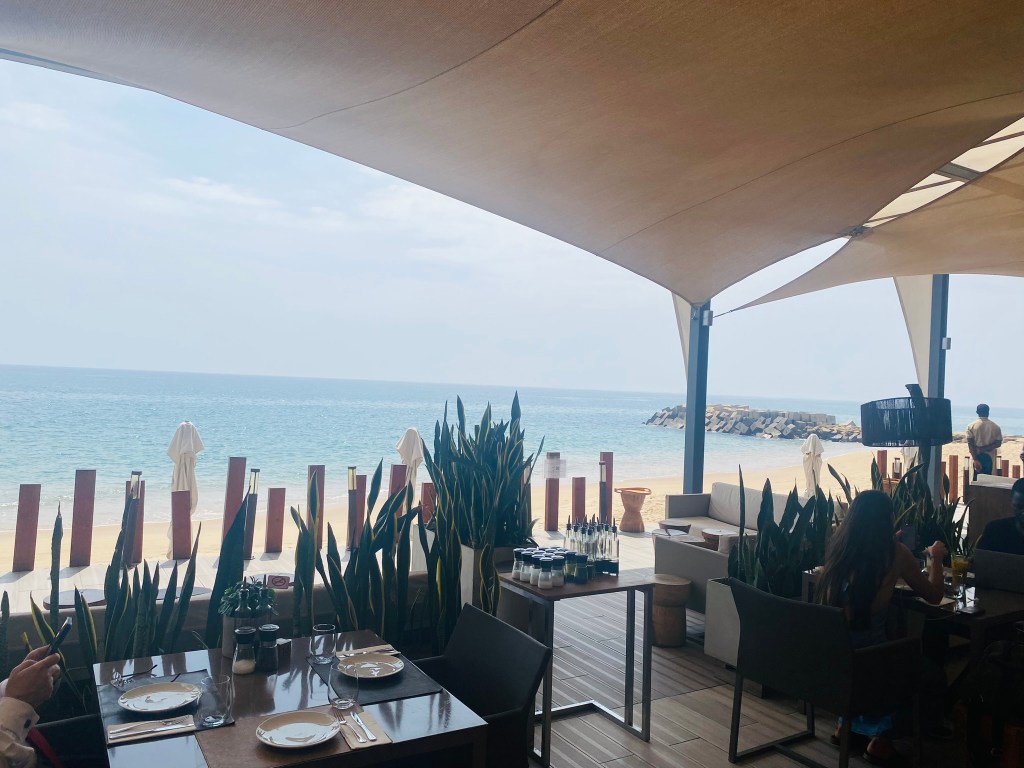
The views over the beach were lovely
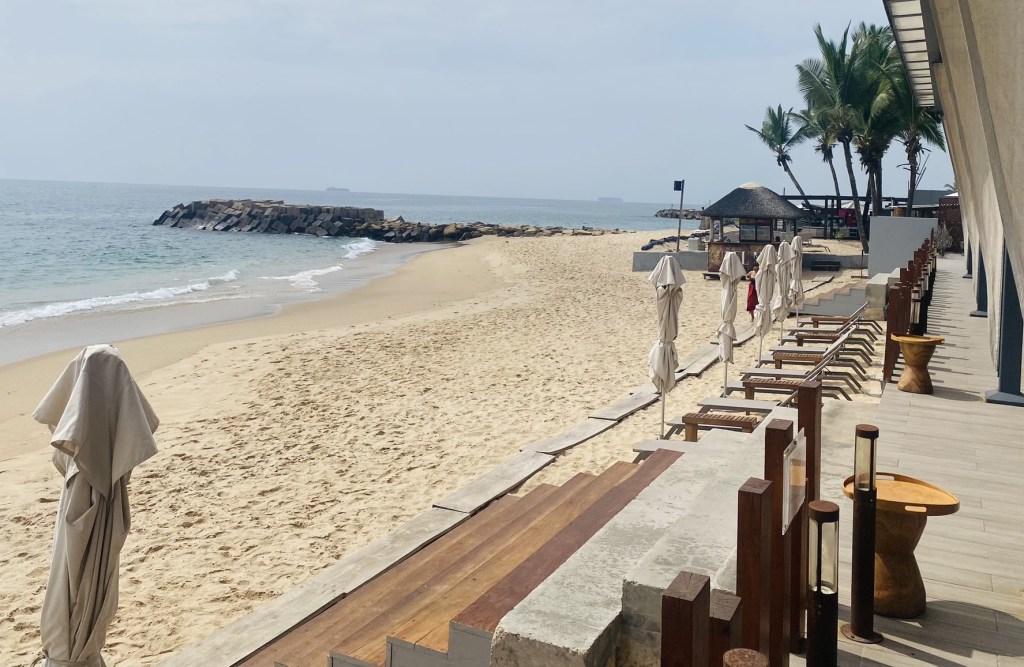
The restaurant itself was like something out of a film
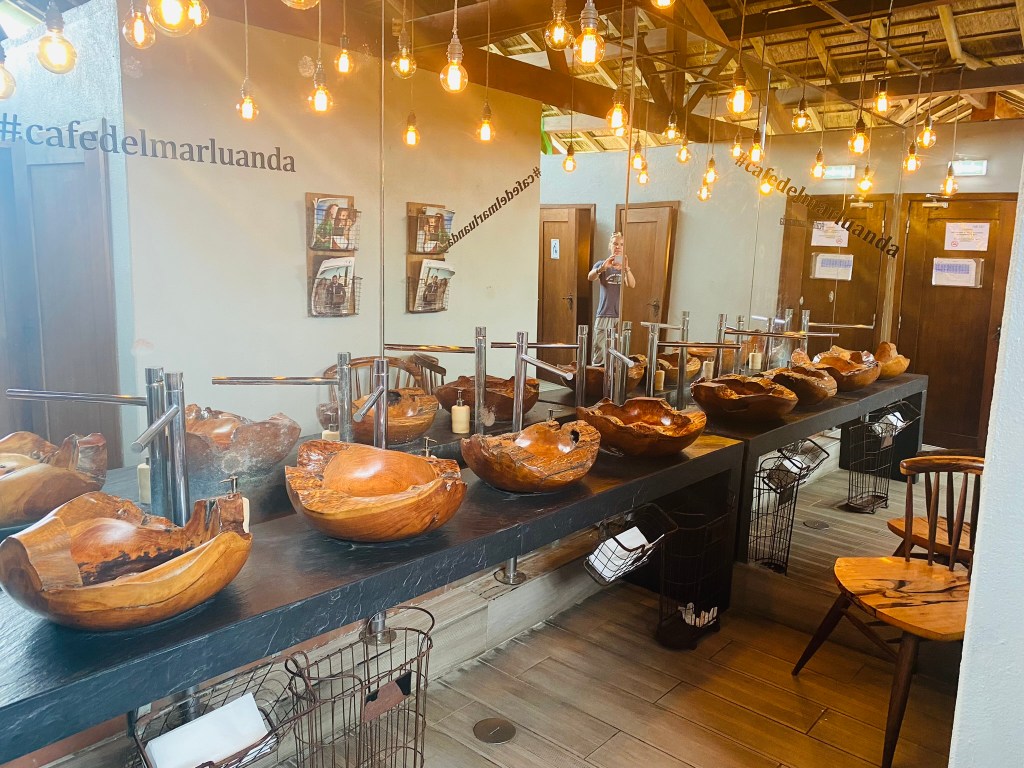
And the food was delicious!
It cost us an absolute fortune but between wild camping every night and fuel at 22p per litre we were spending practically nothing in this country and the experience was well worth pushing the boat out.
But whilst the sight seeing and the restaurants were great, the biggest appeal to this city by far were the people
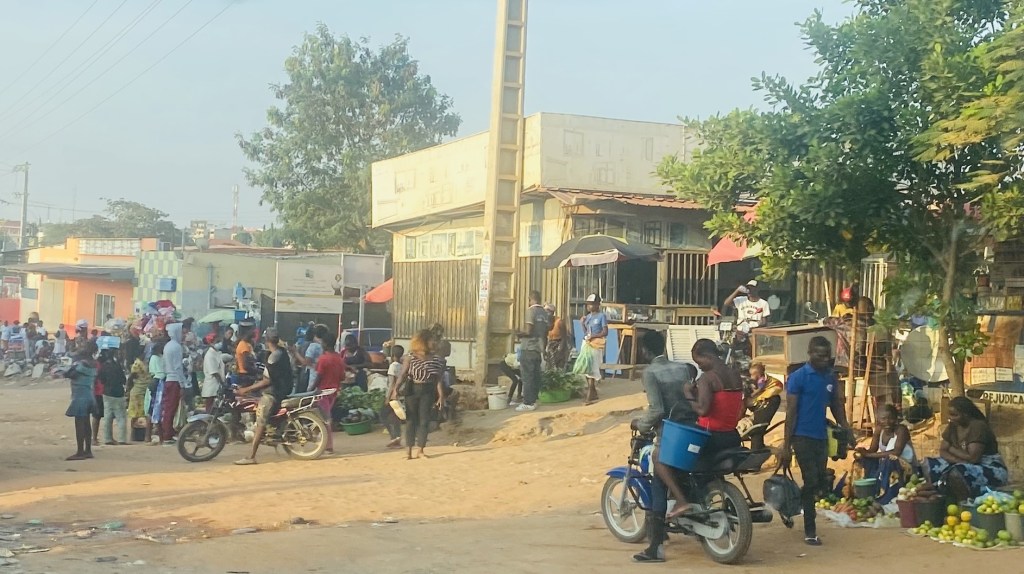
On our second day at the Naval Club a group of people came to chat to us on their way out to fish for the day on their yacht. They offered us some of their catch for our dinner.
On the third day I went back up to the restaurant area to work on the blog whilst James dozed inside Henry trying to keep cool. Despite the restaurant being packed with paying guests on a Sunday afternoon, the staff cleared a large table for me to set up my laptop, moved furniture around so I could plug in and went in search of an extension cable so the lead would reach. We were paying nothing for camping in their car park or using their toilets and showers and I told them I wasn´t going to eat lunch with them but even so I was treated like royalty and nothing was too much trouble.
And whilst I was up there, James had numerous visitors coming over to chat, admiring Henry, offering helpful hints and tips about where to go and what to do – and we even had an offer to join a group on their boat the next day to sail to a nearby island for lunch.
The President of the Naval Club regularly came over to chat to us. He wanted to be sure we were comfortable and had everything we needed. He was concerned to hear that we were worried we wouldn´t have time to do everything in our 30 day visa allowance – so he asked the Club´s immigration officer to help us extend our visas and had him running around the city, making calls and trying to get it sorted out on our behalf.
Sadly it didn´t work out and, in fact, wasted quite a lot of our time in the process, but it was the thought that counted!
And I will never forget getting up at 2am one night needing to go to the toilet. I reluctantly prised myself out of Henry and walked across the dark, deserted car park feeling slightly vulnerable. Over night all the toilets and showers were locked apart from one men´s toilet kept open just for our use. As I approached there were no lights on and the unlocked toilet door was ajar. I pushed it open to go in and was faced with a large, dark figure appearing to loom out of the darkness towards me. I screamed, a proper, momentarily terrified scream! Only to realise a split second later that it was simply the security guard who had nipped in for a wee not expecting anyone else to be around! I put my hands over my face and started laughing, giggling at myself for being so jumpy and also at the look on his face when we saw me – I´m not sure who had been more surprised.
By day five we were both covered from head to toe in mosquito bites and feeling very weary from the heat and humidity. We headed over to meet a new friend, Ugo, who lives in Luanda and is part of the Landrover community. We had been chatting with him on Whatsapp for a while about where to go and what to do in Angola.
Ugo runs a Landrover business – buying, renovating and selling. So he has a small team of Landrover mechanics and had kindly offered to take a look at some of Henry´s bumps and bruises. We were warmly welcomed and I was given a comfortable seat to wait whilst James worked with the team trying to fix the bent anti-roll bar hanger and look at the broken stud on the rear diff. There was nothing they could do with the stud but they were able to weld the bent hanger back into shape. The investigations and work took most of the afternoon during which time I sunk to an all-time Angolan low.
Ugo´s place was a small farm on the edge of Luanda full of trees and grass. It is beautiful and their home is lovely. However, at this time of year unwelcome visitors were everywhere – the whole place was seething with mosquitoes. Within half an hour both my arms were swelling up in huge lumps and my back and legs were itching all over. Ugo was very sympathetic, apparently he used to get malaria every year until he started using his own home-made mosquito repellent. He kindly brought some out for me – thick, sticky grease which smelled strongly of citronella. I rubbed it on as much of my exposed skin as I could and grabbed a bottle of our shop-bought spray in the hope that the two together would ward the evil creatures off. I moved into the front seat inside Henry with the door half closed against my legs trying to keep the mosquitoes out. And there I sat, miserably texting my sisters, making Angola sound like the worst place in the world!
After about an hour most of the mosquitoes had got fed up of all the repellent and went off to find someone else to torture and another hour later the work on Henry was done. Ugo invited us inside, offered us lunch and invited us to be the guests of honour at a Landrover party to welcome us to Angola. We gladly accepted and the misery of the mosquitoes and the heat were forgotten.
The party was held the next day and we arrived promptly at 5pm. We were to sleep overnight in their wonderful, air conditioned house, something we were very much looking forward to! We had also sprayed ten tonnes of mosquito repellent on every square inch of skin before we arrived and with the party being closer to the house, and so further away from the trees, the mosquitoes hardly troubled us at all.
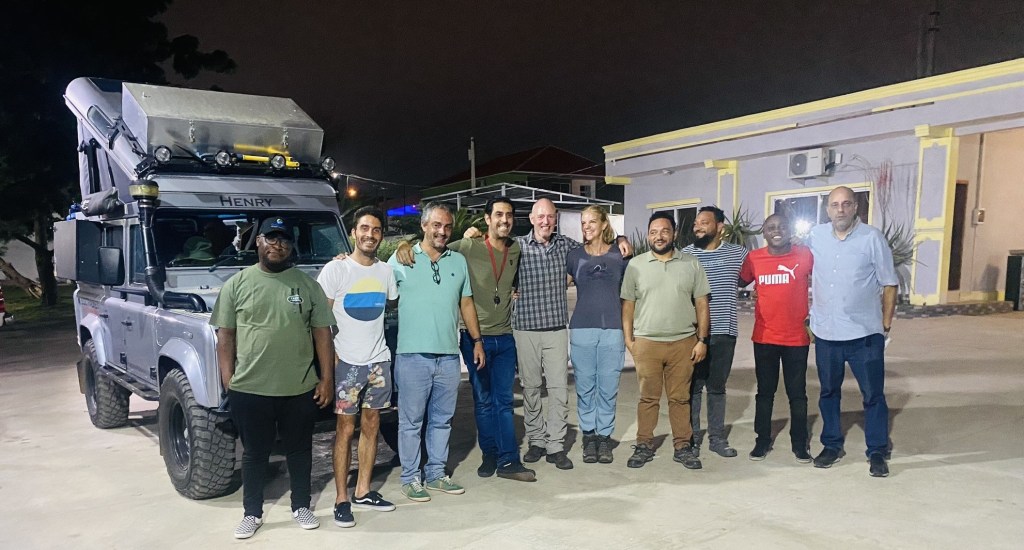
One by one the guests arrived until we were surrounded by about ten Landrover enthusiasts all excited to see Henry and hear our stories. It was a wonderful evening full of genuine, thoughtful and witty people – an evening which we will remember for a long time to come
But we still had the problem of a snapped stud and leaking rear diff. The two French women from Luis and Julietta´s campsite turned up at the Naval Club the day after we got there having just come from a Landrover garage a few miles south of the city. They said how impressed they had been by the owner, Alexander – not least because he had done a great deal of work for them and supplied some hefty parts without any charge at all.
We were all bemused by this but his experience with Landrovers and the high quality of his work were clear so we gave him a call and booked in to see him the following day.
We arrived early and found a large but somewhat chaotic workshop full of Landrovers of all shapes and sizes. Alexander and his team got started on replacing the front swivel seal for us which had been leaking since the rebuild. All went well, James was impressed
By the time the work was finished it was already lunchtime and we knew from previous reports that when Alexander went to lunch he didn´t reappear again for a couple of hours at least! So when he invited us to join him we were only too pleased to accept – we hoped it would give us the chance to get to know him better and find out why he was doing so much work for free.
We all climbed into his Discovery which was doing a very good impression of an oven. Even putting the fans on full blast barely made a dent in the heat. I was turning into a puddle. He took us across town to a small and unassuming café which served amazing food. We dug in to the most delicious chicken and rice but when the bill came and we tried to pay as a gesture of thanks he wouldn´t hear of it – we were his guests he said, we were not to pay a thing.
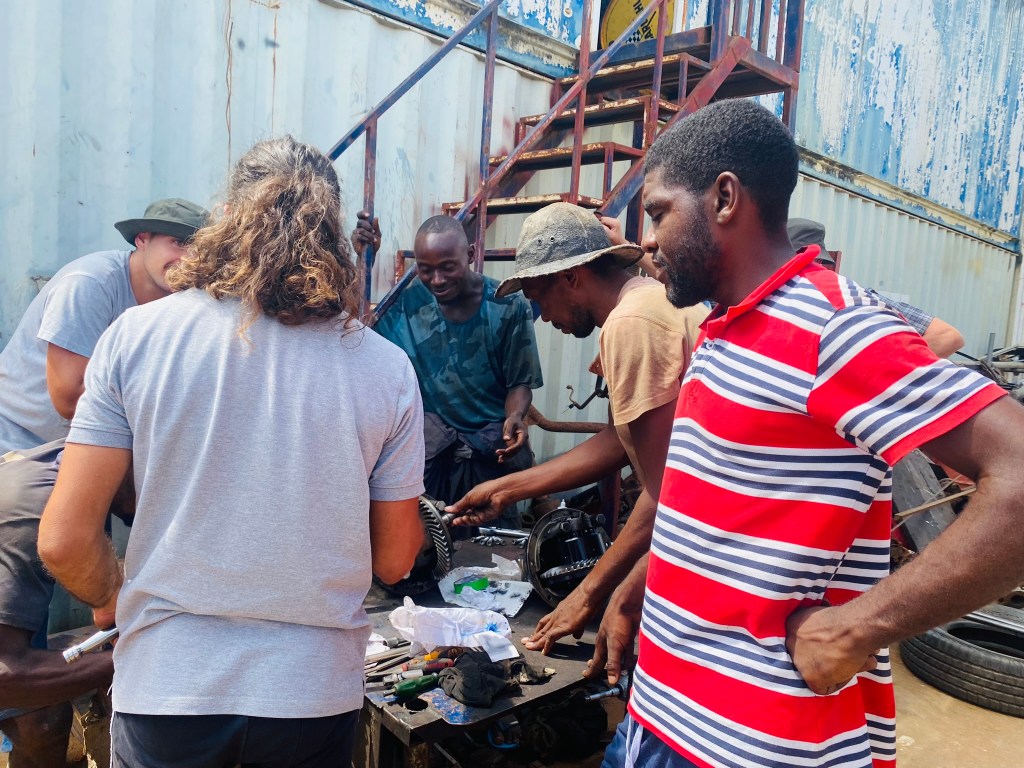
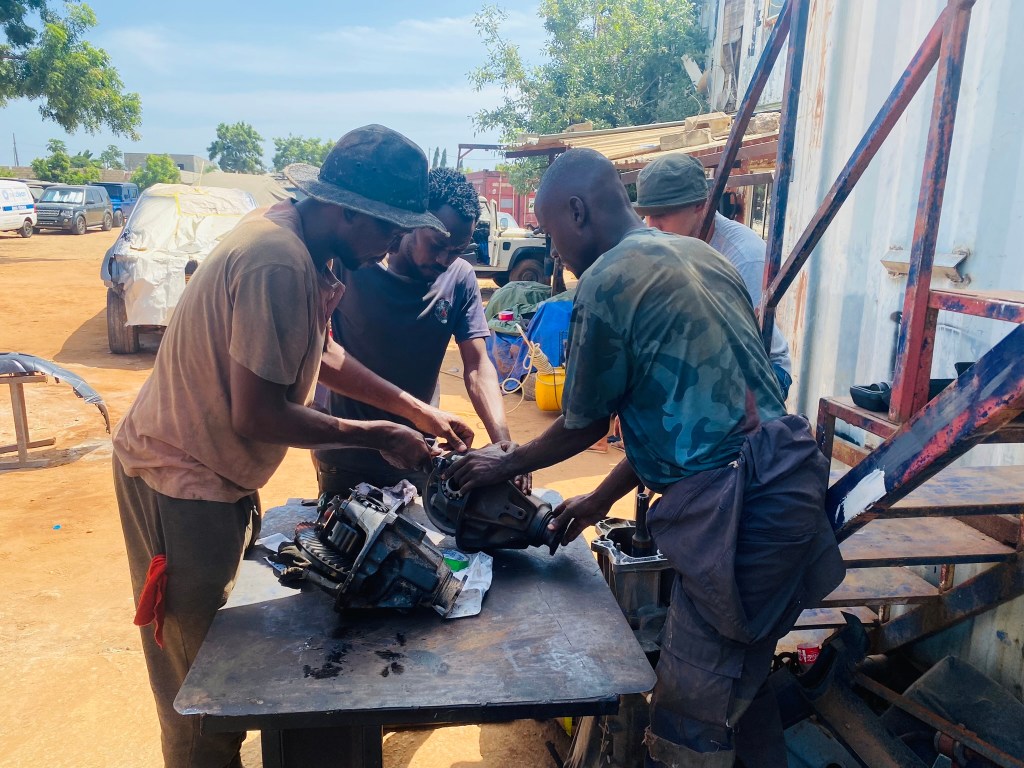
Once back at his workshop the work on the differential began. The team diligently disassembled the whole thing and looked it over. It was not good news – the fins on the crown wheel had been damaged through lack of oil and excess movement. The entire crown wheel and pinion would need replacing
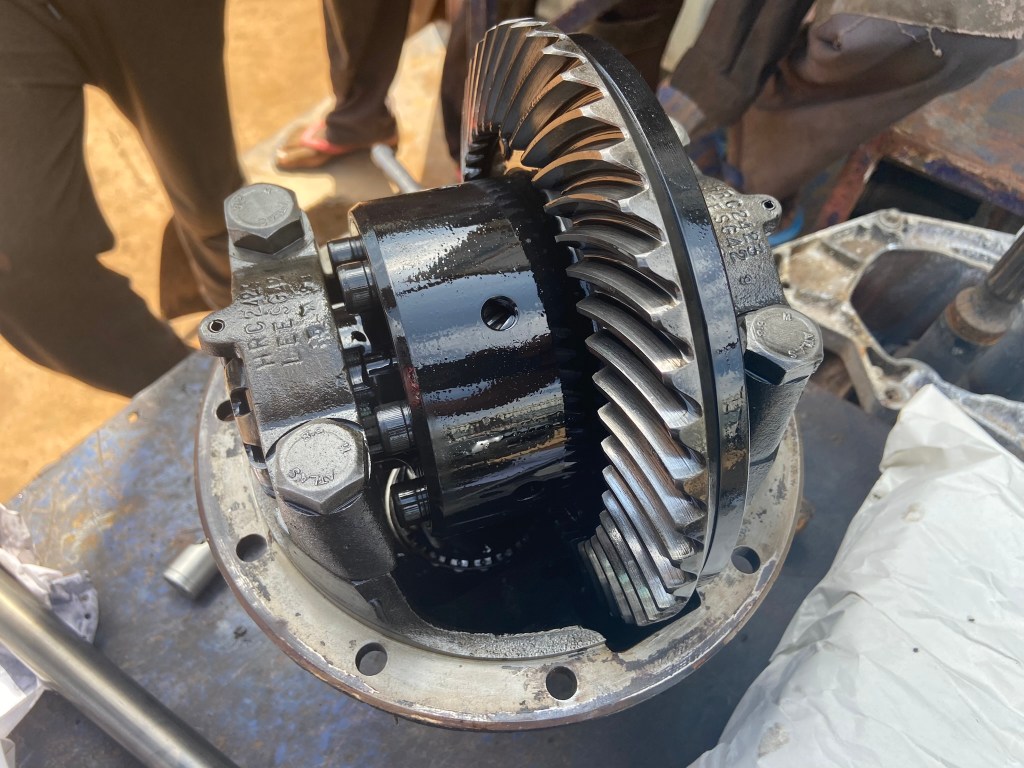
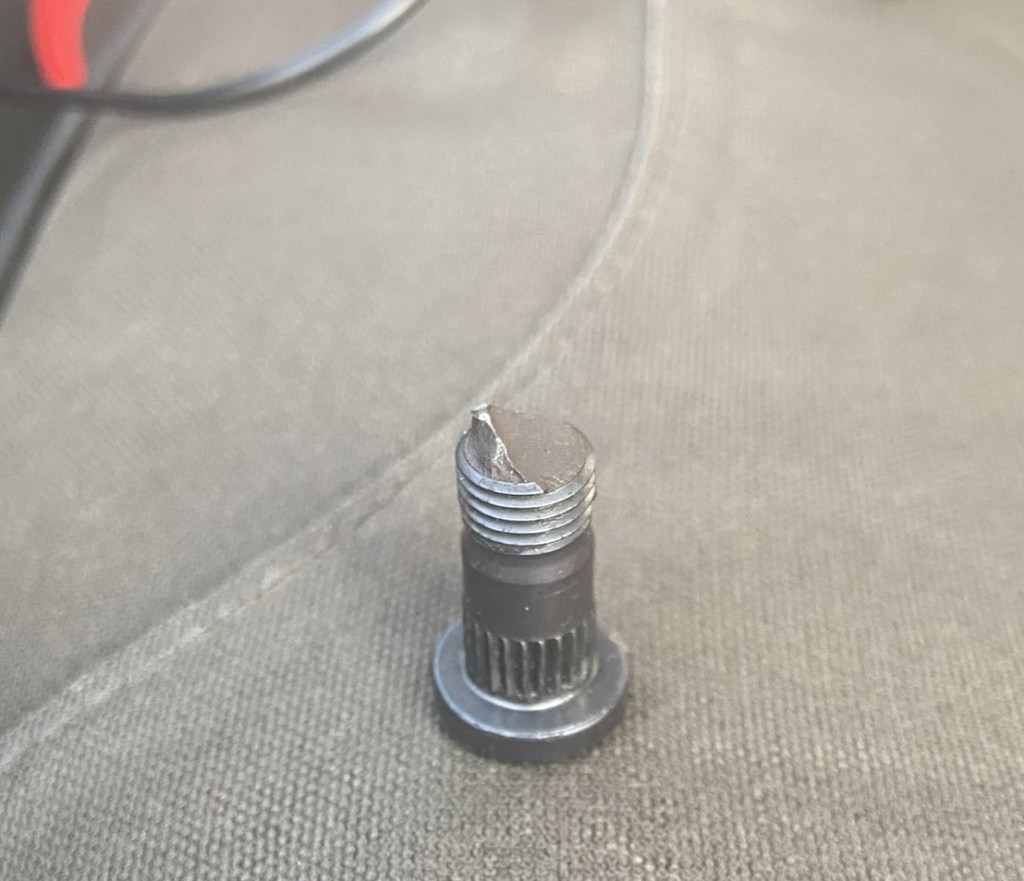
Our differential is not a standard Landrover part. It is an Ashcroft Limited Slip Differential made in the UK – differently designed and much higher quality that the standard factory fitted differential and the only place we were going to get a new crown wheel for it was the UK.
Alexander disappeared off for a few minutes and came back with a standard Landrover differential. He took it apart and removed the crown wheel. He compared it meticulously to the Ashcroft one but sadly they were too different. He then put his differential back together and offered it to us, free of charge, to replace ours until we returned to the UK and could get the parts we needed
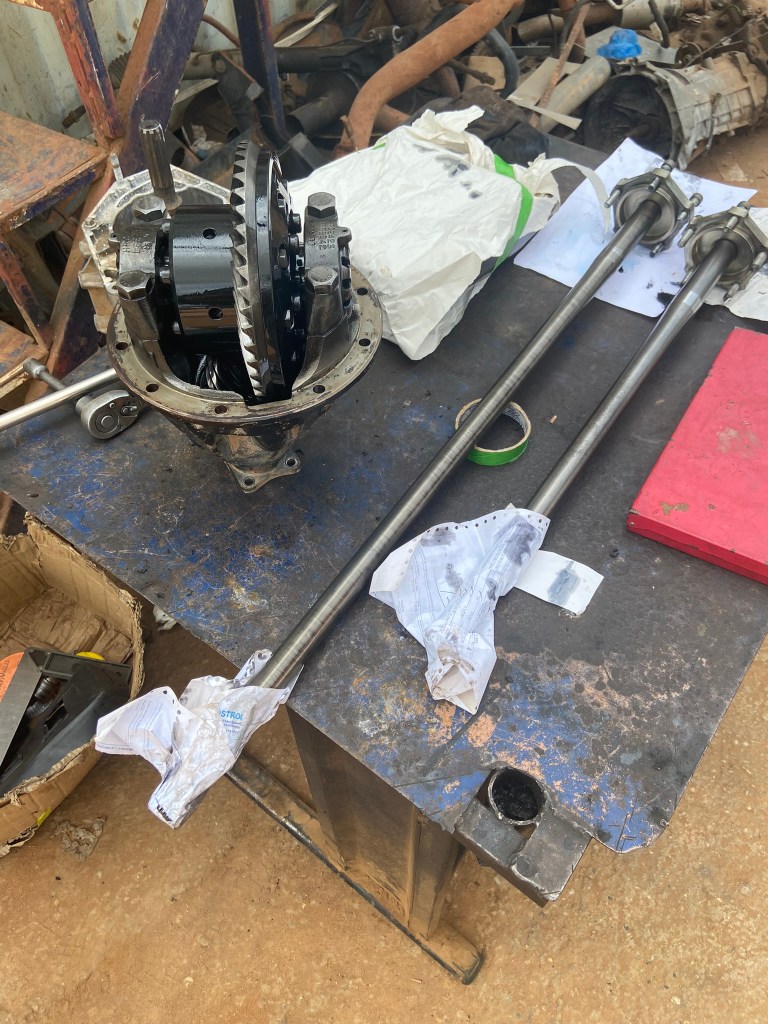
We nearly accepted his offer but it would have meant carrying ours with us for a few weeks until our next trip back to visit family and friends. It is a very heavy and cumbersome part and in the end Alexander said he could clean and tighten ours to make sure it would keep us going for long enough – we already had flights booked to the UK for the following month so this seemed like the best option.
After all that, Henry wasn´t back together until 7pm that evening. Alexander and his team had worked on him for over eight hours. And he charged us absolutely nothing! Overlanders and tourists are apparently guests in Angola who he is happy to help out whenever he can and expects nothing in return apart from happy customers.
We offered him the equivalent of £100 and he asked why on earth we would do that. But eventually he accepted and we drove away with new found respect and astonishment at his knowledge, kindness and generosity.
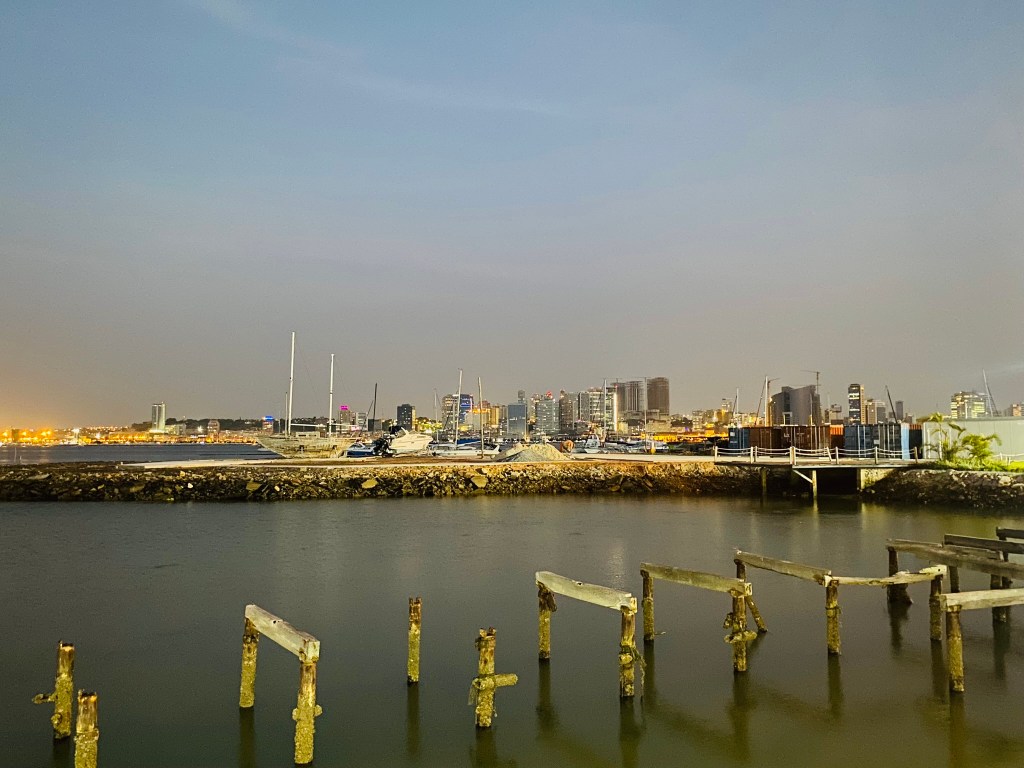
But at 7pm in Angola in May it is already dark. The drive to Alexander´s that morning in the light had been hair-raising enough with cars everywhere and none of them seemingly able to notice a large, silver Landrover on the road. We had hoped not to drive those roads again, instead planning to head further south away from the city to a wild camping spot called the Moonscape which we had heard from many people was spectacular – perched on the cliff edge, remote, quiet and surrounded by moon-like terrain.
We set the sat nav for the GPS coordinates but quickly found ourselves driving along dangerously bad dirt roads. Even in the city with the light from buildings and other cars it was tough going. Half an hour in we had to make a decision, and there was no good option – do we press on further down these roads which we knew would turn into remote dirt tracks in the pitch black not knowing where we were going? Or do we turn around and brave the kamikaze driving back through the city to the Naval Club?
James was driving. He was having to focus all his attention on the road and was looking to me to make a decision. My mind raced, quickly weighing up the worst-case scenario for each option. The answer was clear but we were going to have a difficult hour or so ahead. Take a right at the main road I said, we´re going back to the Naval Club.
Difficult is not the word for the rest of our journey – even locals try not to drive African roads in the dark, visitors definitely should not. But James, as ever, kept the three of us safe and out of harm´s way. We arrived at the Naval Club with heads pounding and nerves frazzled but all in one piece…..
 The Sidetracked Sagas
2 responses to “Friendships in a Chaotic City”
I loved Luanda and yes we stayed at the Naval Club too. What an adventure!!!!
LikeLike
Enjoying reading about your adventures in my birth country, of which I have no memories as I was only 4 when we left due to the war. I’m astounded by the electric car running on solar power! Fun fact in case you didn’t hear, but that Iron Palace is by Gustav Eiffel of Eiffel Tower fame.
LikeLike