
So far we had been enjoying our time in Zambia. The area around the Lower Zambezi was very beautiful with lovely campsites and friendly people. However after leaving the capital for the north east our first campsite had been more than a little disappointing. We spent the next morning applying for our Malawian visas online and then left the farm stay without even stopping at their famous pie shop – we were just not feeling this run down and impersonal place.
The Great Northern Road was not as bad as it had been coming out of Lusaka but it was bad enough. Huge pot holes, horizontal ruts and absolutely choked with heavy, slow moving lorries. We were making our way through a town very slowly in all this heavy traffic when a police officer waved us down. James wound his window down and greeted him. With a snarl he told us we were speeding and told James to get out.
Somewhat confused he did as he was asked and was put in the back of a police car. On enquiry he was told the speed limit was 70km/hr and we were doing 74km/hr. It was ludicrous, it would not have been possible to go faster than 30-40km/hr in these conditions but surrounded by five or six armed police James took the sensible of option of paying the small fine and asking for a receipt – which we will add to our ever growing pile of speeding fines!
This is what Zambia has a reputation for – police corruption. Whilst we took the problems in our stride in West Africa, here in Zambia it felt different – it felt as though there was no need for it in a country that has so much more than places like Mauritania and Guinea Bissau. I was annoyed, very annoyed, and it tarnished my view of the country.
The Great Northern Road turned to the east and the traffic eased significantly. But along the way we passed multiple lorry crashes, broken and twisted vehicles on the side of the road, victims of the poor road conditions and bad driving.
We arrived at our campsite by early evening – tired, irritated but at least now right in the middle of everything we wanted to see up here.
There was a large group of South Africans already pitched up and after a while we got chatting to them. They were very friendly and cheered us up – one couple even invited us to visit them in South Africa next time we´re there and gave us detailed directions to their house.
But it was expensive and a little cramped and the ablutions were of a similar quality to the farm stay the previous night and very different from the campsites in the south around the Zambezi. It was beginning to look as though conditions in Zambia were not so different from Zimbabwe afterall.
I´m sure the speeding ticket didn´t help but Zambia was beginning to grate on me – there were good reasons for Zimbabwe to struggle with tourist infrastructure, there was no excuse in Zambia. The people here weren´t as friendly as in most countries, the roads and the traffic were bad, there was nothing new in the landscape and we had been the victims of corruption.
Not to let anything get us down for too long we headed off to our first waterfall early the next morning. Along the way we noticed people on the side of the road selling mushrooms and not just any old mushrooms but absolutely huge ones. We decided to try one, with no idea whether it was a mushroom we could eat or whether they were used for very different purposes!

We arrived at the Chitambo waterfall by late morning and the whole place was extremely beautiful. We were greeted by the caretaker, Samuel, who welcomed us with a broad smile
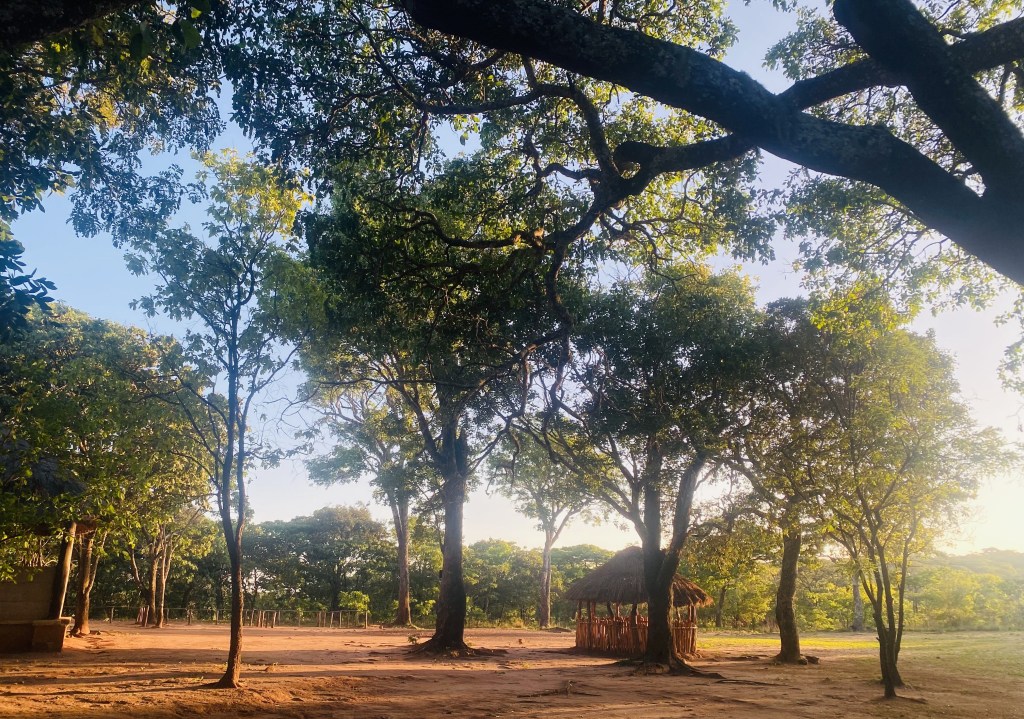
We planned to camp here overnight so were in no rush to set up and had a leisurely lunch before starting off on the walk down to the falls themselves

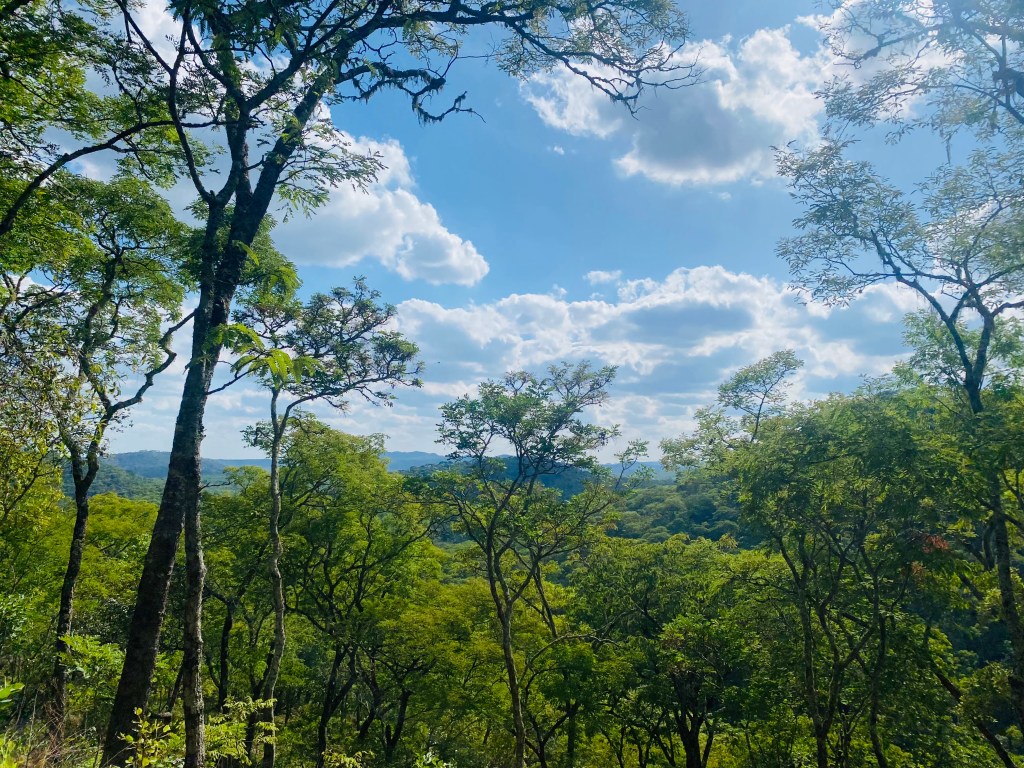
It was quite warm but we were high up here so it wasn´t too humid. The walk down was steep and rocky but thankfully quite short. It was all very peaceful and we had arrived within half an hour
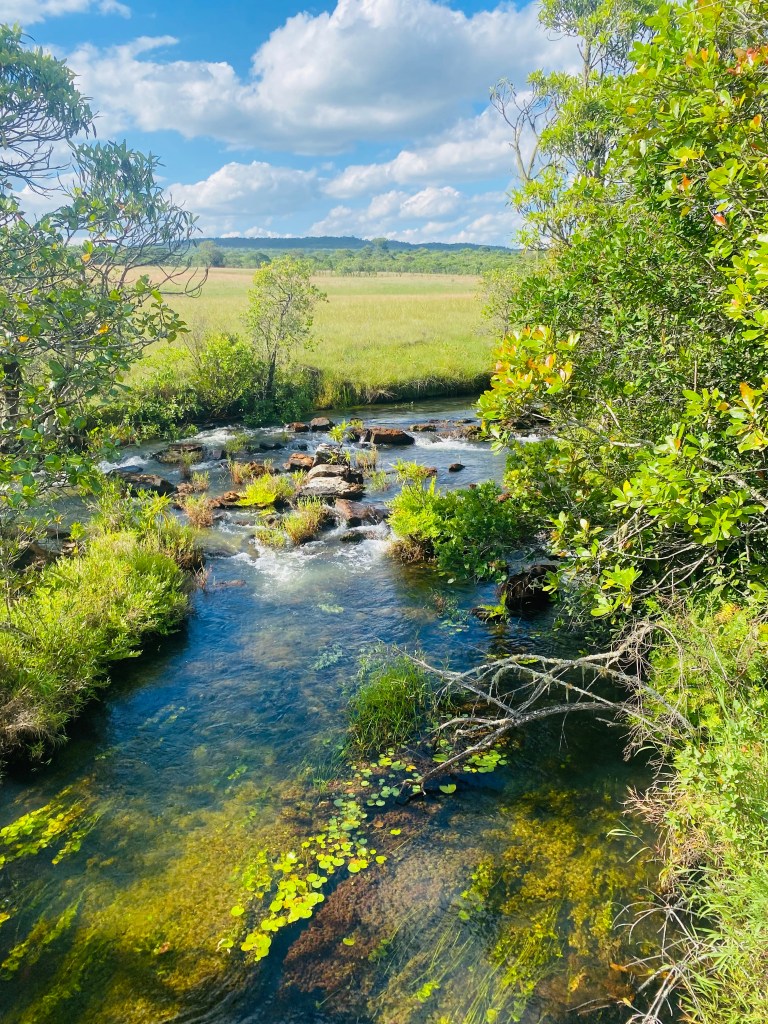
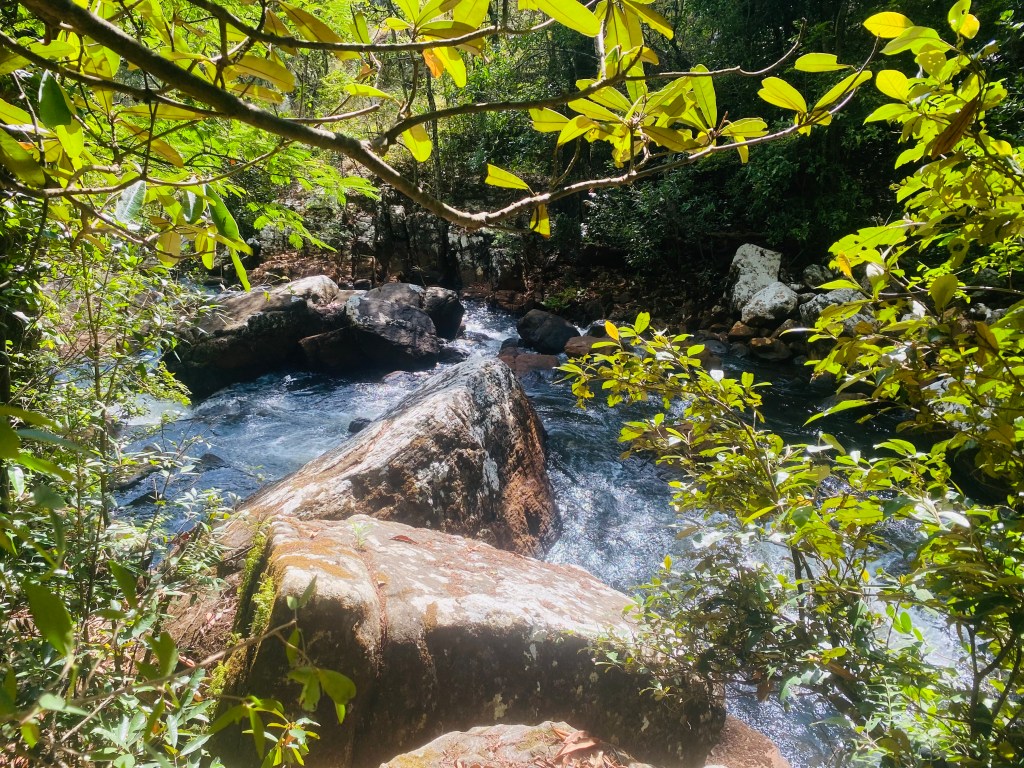
This was our first waterfall on the Zambian Waterfall Route and it was lovely
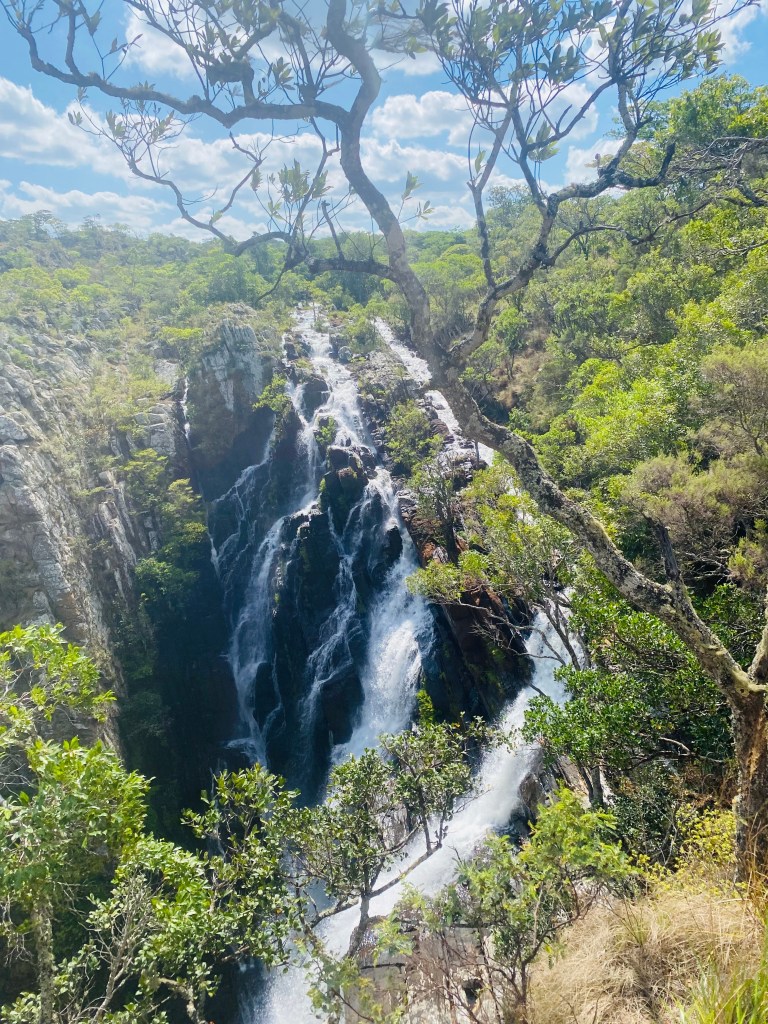
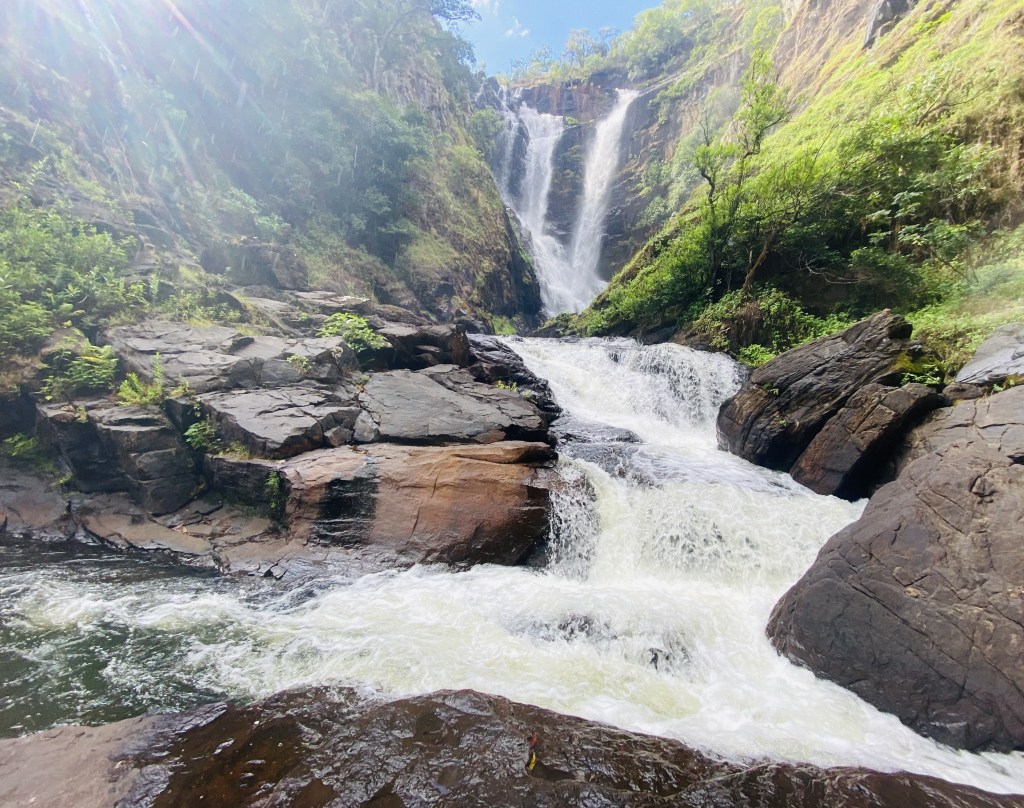

By the time we got back to Henry at the campsite, Samuel was looking flustered. We had accidentally left our bin bag outside and it had been grabbed by a resident large, black bird which hangs around looking for morsels. Rubbish had been spread everywhere and he had had to chase the bird around to recover everything. We apologised profusely for our oversight, feeling terrible.
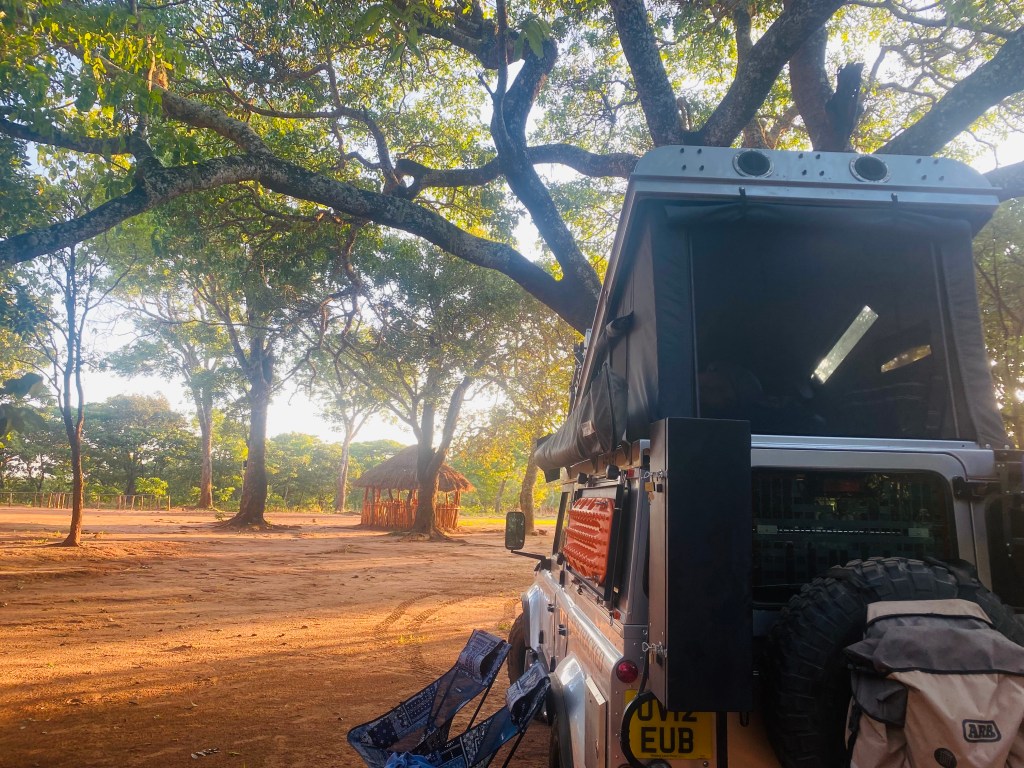
To try and rebuild bridges I took our new mushroom out of the fridge and showed it to Samuel. I asked him how we should cook it but really I was asking him whether it was to eat or for recreational purposes – we didn´t want to make a mistake and spend our evening flying. It seemed all was well, Samuel enthusiastically went through the best cooking procedure with me and told us to enjoy it.
We made mushroom risotto, it was delicious and our feet stayed firmly on the ground!
This campsite was really just the waterfall car park with a toilet in one corner. There was no shower. The toilet was broken and dirty and the tap didn´t work – we had to turn the stopcock under the sink to get any water out so I wasn´t sure whether my hands were actually any cleaner after turning it off again than they had been when I started.
But the place was beautiful, Samuel was great, we were entirely on our own all night and there were no mosquitoes.
The next morning we were off to see the largest mammal migration on the planet. Forget the Serengeti, forget wildebeest and zebra, the migration here in Zambia dwarfs it all with four times the number of animals migrating to the Kansaka national park. And what are these mammals? Fruit bats – eight million of them. They come from all over the world and descend on a small patch of swampy forest in Kasanka between October and December every year. For these three months, at 6pm every evening they darken the skies as they swarm out of the trees in search of food. And at 4am the next morning they fly back ready to sleep for the rest of the day.
It is a remarkable site and one of Africa´s best kept secrets. It was to be a highlight of our Zambian trip and we were very excited.
When we arrived at the campsite it was all very confusing. We were told we had to share a pitch that someone else was already on but we weren´t sure whether the other occupants were aware we were arriving. The caretakers were lovely and very helpful but the conditions of the campsite were appalling. There were two showers but only one worked and it was filthy. The toilets were old and broken and the water from the tap looked so dirty we weren´t even keen to use it after we´d filtered it. And for these unsanitary conditions we were charged $50 for a site that someone else had already paid for!
Kasanka is a privately run park and only really popular in the three months of the bat migration. So they push the prices up knowing that people will come anyway and they have little income for the rest of the year. I can´t blame them but maybe a basic level of provision for the campers who are paying so much would be nice
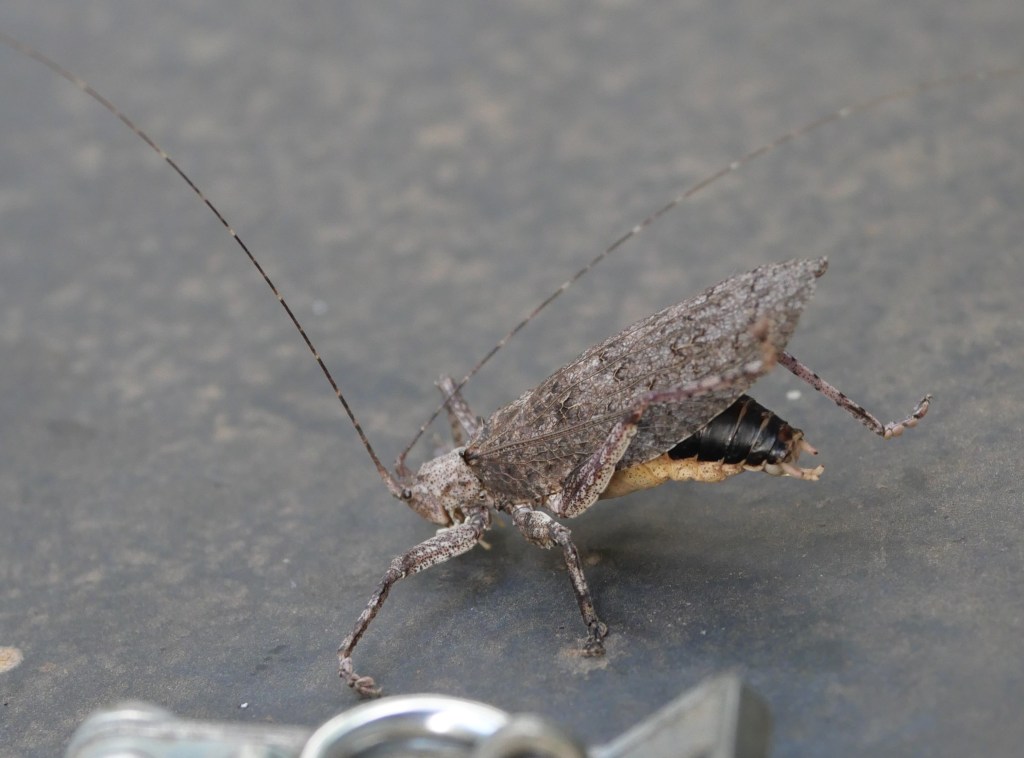
We settled in as best we could and had a late lunch of more of our huge mushroom. When the original occupants of the campsite arrived back from their drive around the park they were very friendly. They had been to see the bats the night before and gave us advice and directions to the public hide where the bats could be seen best.
At 5pm we set off to drive to the hide. There were no signs and the directions we had been given were hazy. Just as we thought we had gone the wrong way and were about to turn back we stumbled across a BBC documentor talking to a couple who had been here many times before. They were on their way to the same hide as us so invited us to tag along with them.
Twenty minutes later after driving to an apparently random spot and wading through swamps and reeds we arrived at the hide very pleased we had met them – I´m not sure we would have had any chance of finding it without them.
We stood and chatted to the knowledgeable couple for another twenty minutes as we waited for the bats to wake up. Suddenly there was a bat flying out of the trees
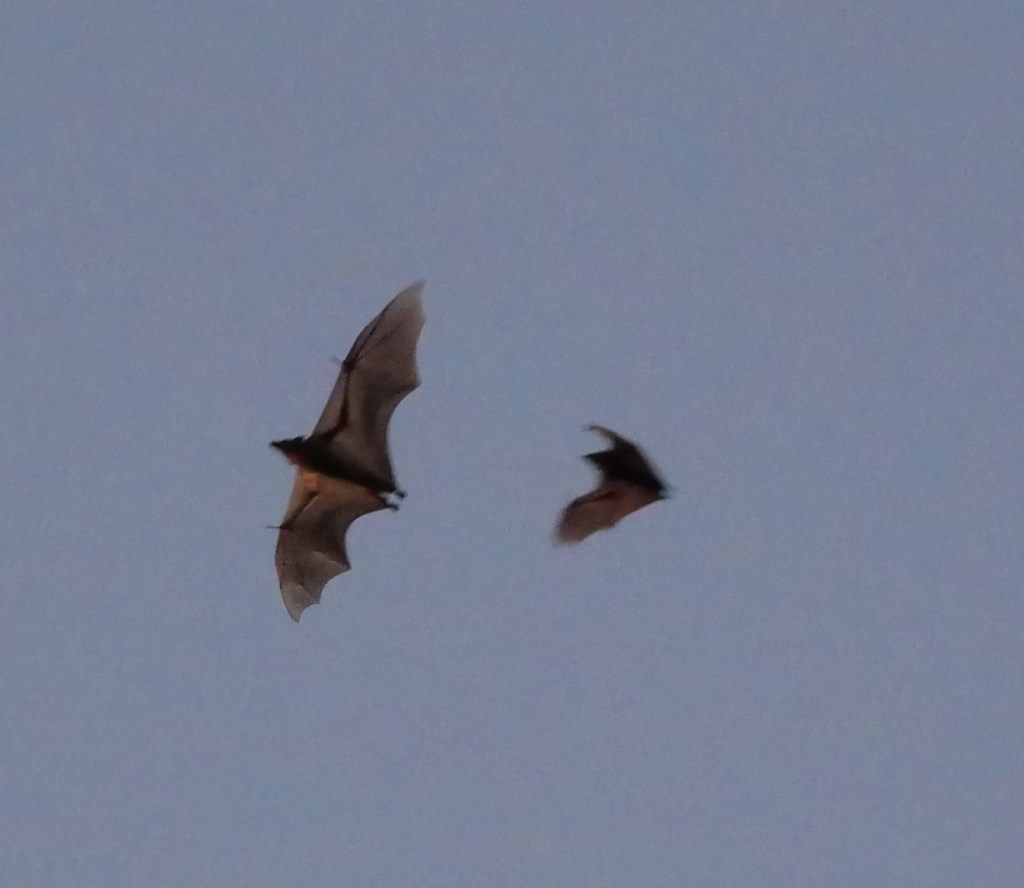
A second later there were ten bats and before we knew it the sky had darkened with thousands and thousands of bats streaming out of the forest and heading in all directions, fanning out towards the horizon
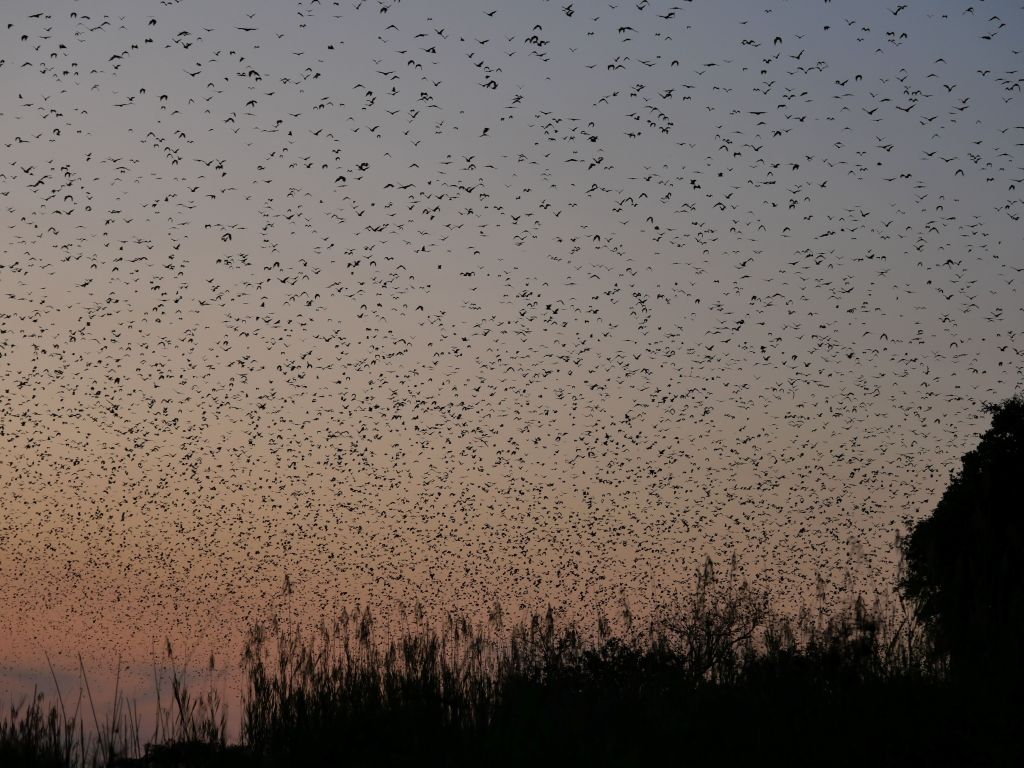
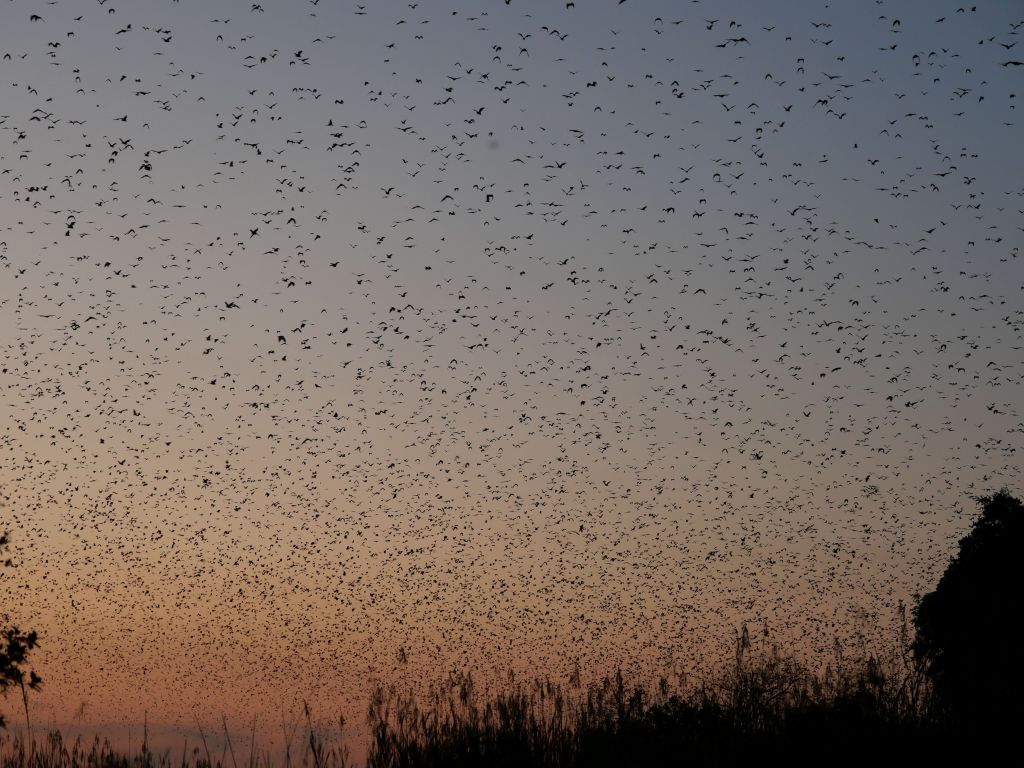
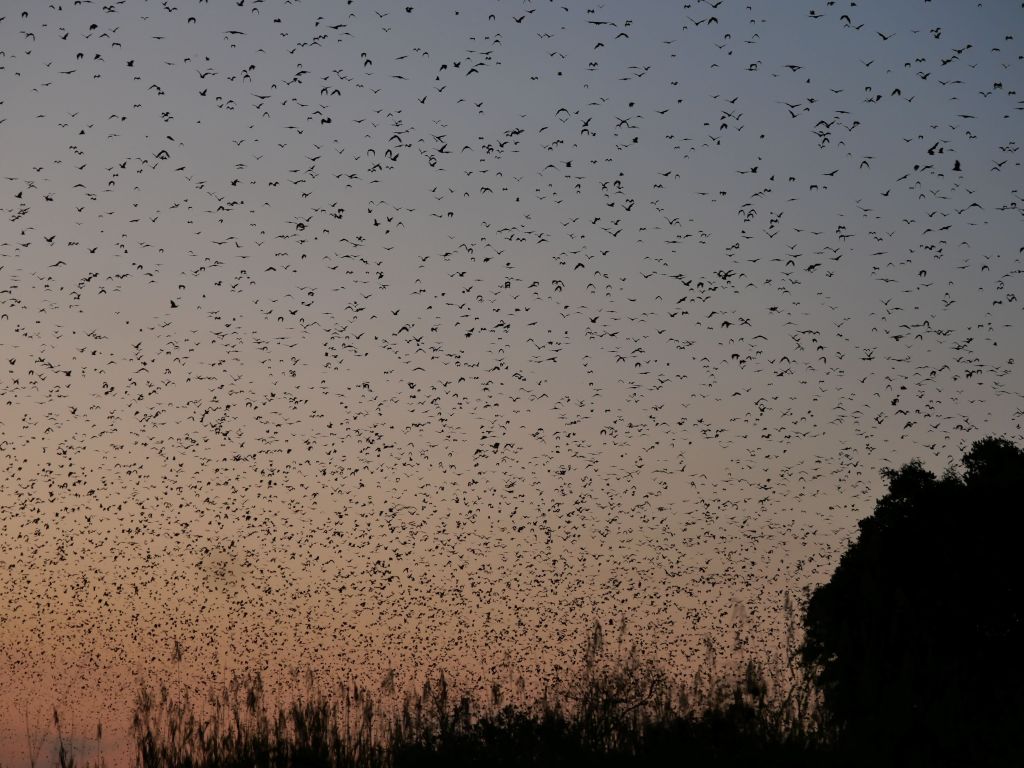
This amazing site went on for half an hour, a seemingly endless sea of fruit bats eclipsing the sun, taking control of the skies with their sheer numbers
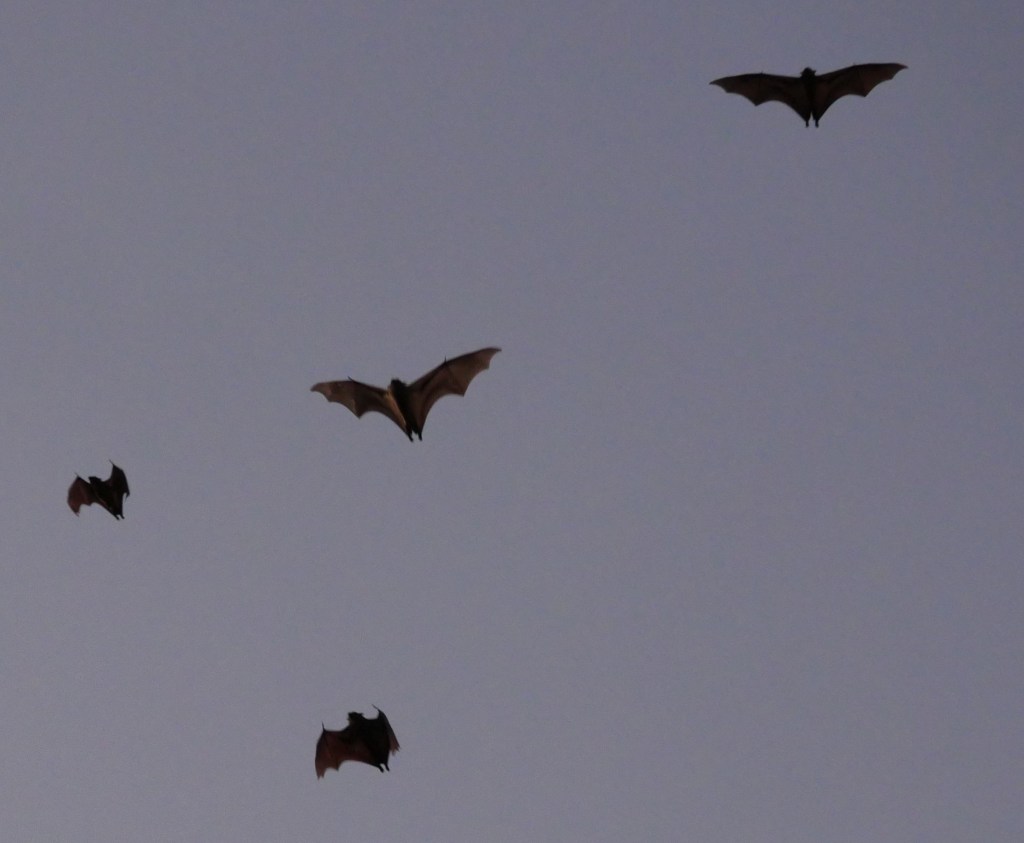

I took a few videos but sadly had not grasped that the bats would do all the work and I just needed to keep the camera still. This was the best of the lot but if I´d just pointed and held steady it would have been a lot better….
Eventually dusk settled and the bats were gone, spread out across the forests, searching for food. It would ten hours before they would return in the same awe-inspiring numbers but we would be fast asleep by then.
The next day was to be a long one. We were well off the beaten track here. The roads were difficult and getting increasingly wet as the rains started to settle in. They also criss-crossed around without a direct route between anything we wanted to see.
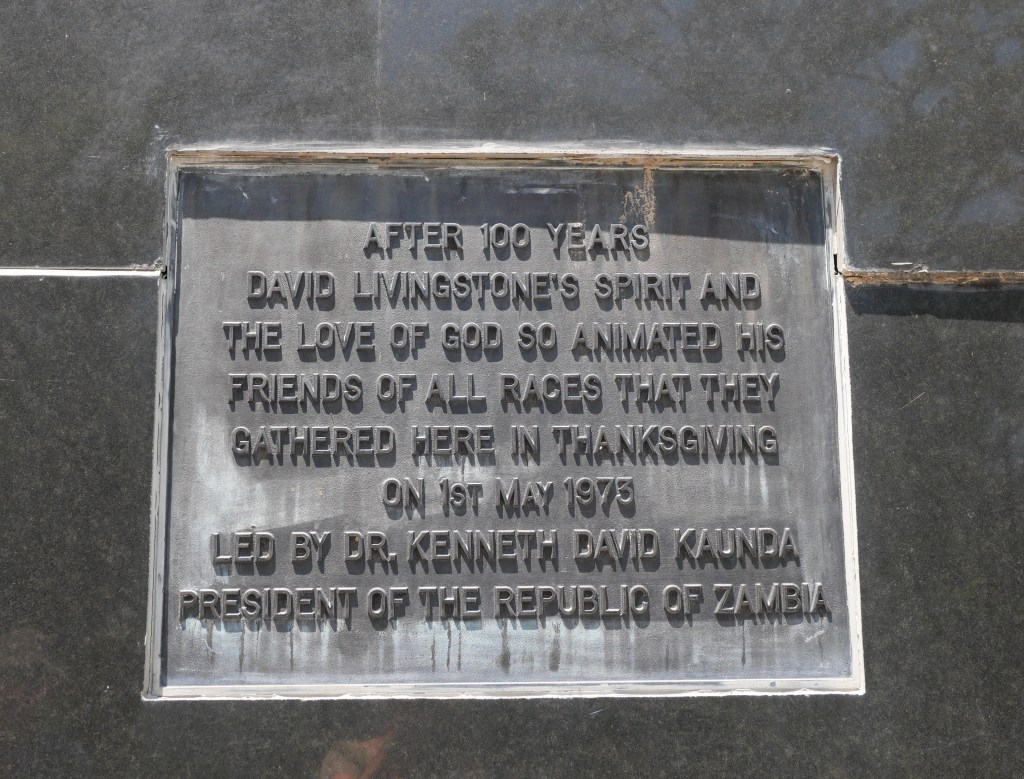
Our first stop was the David Livingstone Memorial. David Livingstone was my kind of person!
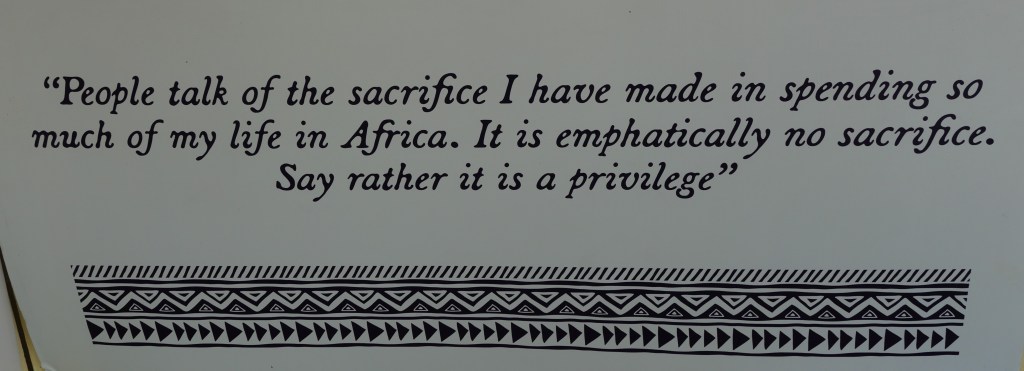
His memorial has been built on the spot where he died

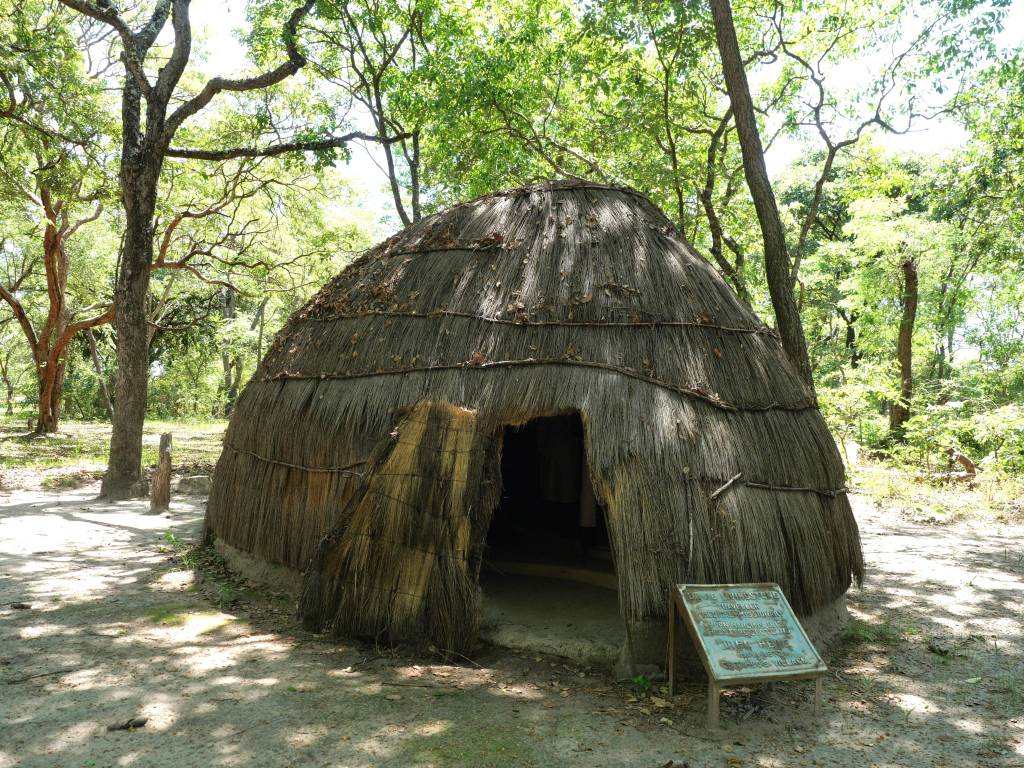
This hut is a reconstruction on the very spot where he died and inside there is a re-creation of his death – on his knees praying
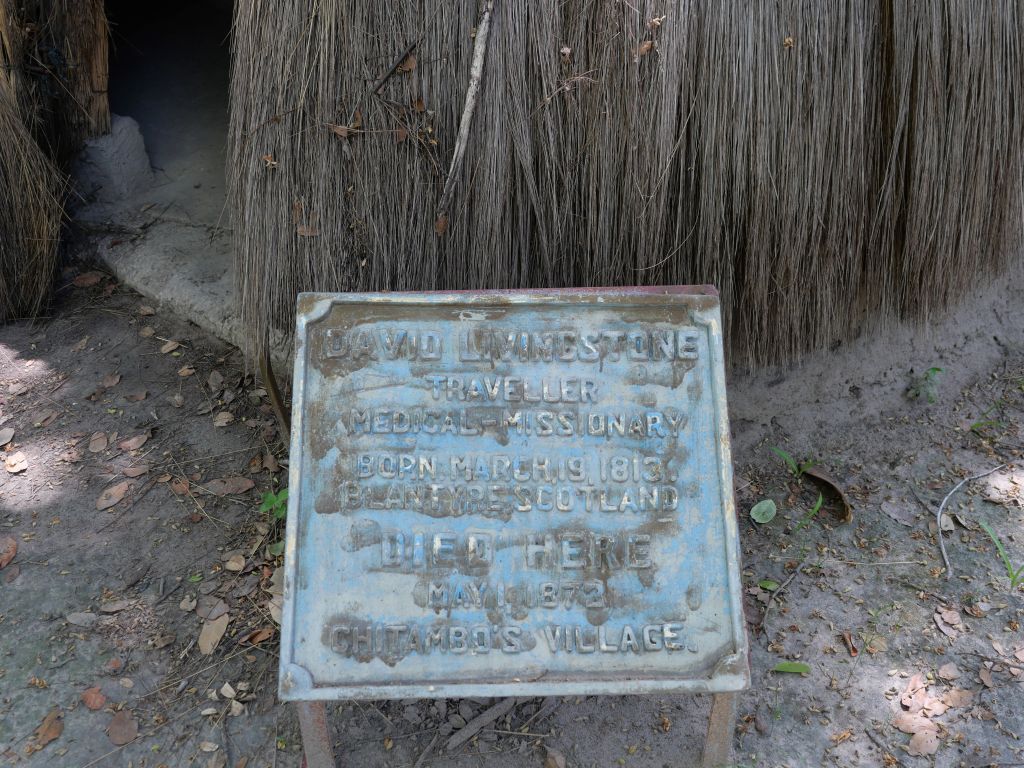

We had a lovely guide who told us all about the explorer´s last few days and we spent an hour or so in the information centre reading all about his amazing explorations as well as his enthusiasm and fascination for Africa, including the genuine friendships he made with the people here in a time when equality between Europeans and Africans was uncommon.
As we entered the information centre I saw our guide kicking something across the floor. She seemed to be trying to get it out of the building. I was curious and squinted in the semi-darkness to see what it was. Just as she manoeuvred it around one of the information boards it came into clear focus and I jumped backwards with a yelp. She smiled at me and said ´don´t worry it´s only an insect´. No it´s not, I replied, it´s a spider!!!
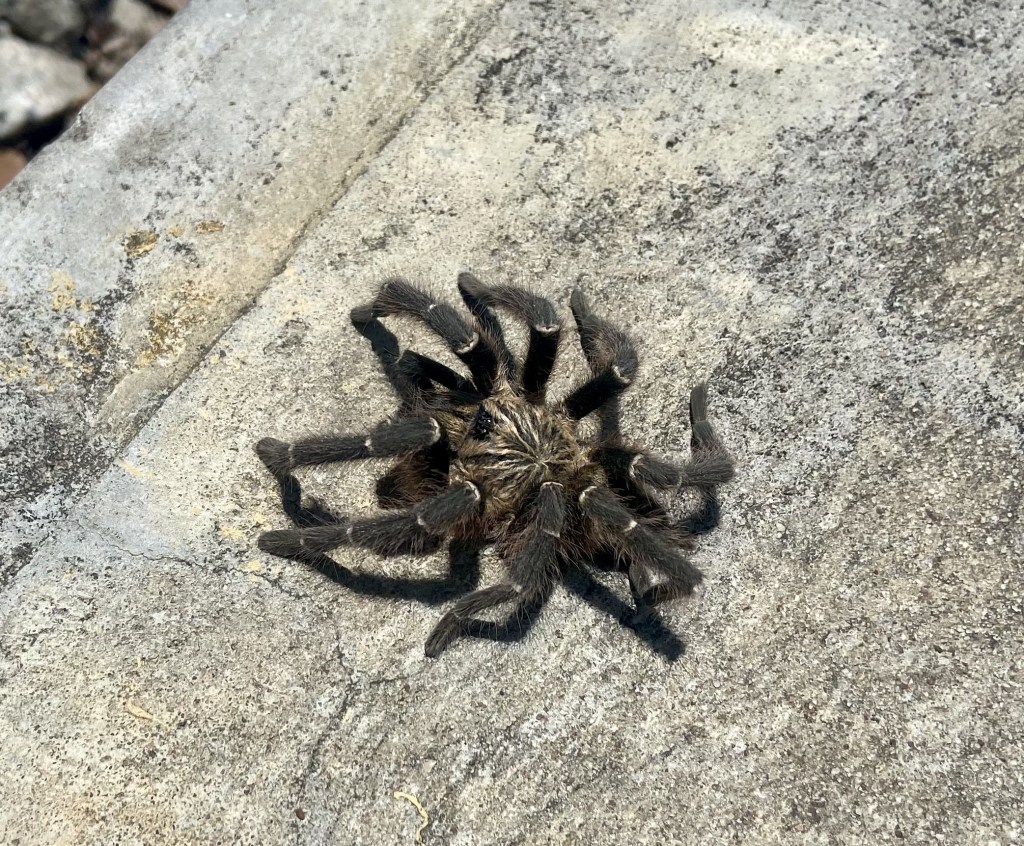
Despite appearances it was not a tarantula as they don´t live in Africa. But the Baboon Spider is no less large and furry – some might say it´s cute but I wouldn´t go that far!
We pressed on, heading towards the Bangweulu Swamps. It was going to be a long and difficult drive and we weren´t at all sure we would make it – very likely not before dark and possibly not even at all if the rains had washed out the roads
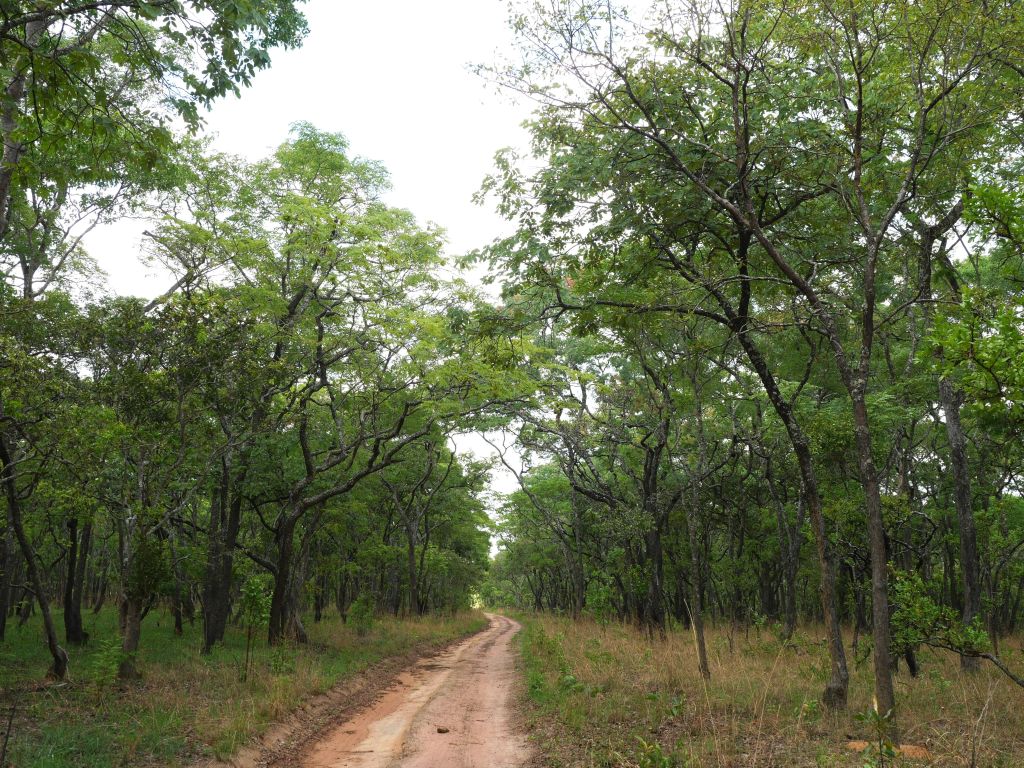
The route into the reserve was densely populated with villages packed in on both sides. People waved and smiled as we passed and it all looked relatively affluent with pristine houses and well dressed children running around
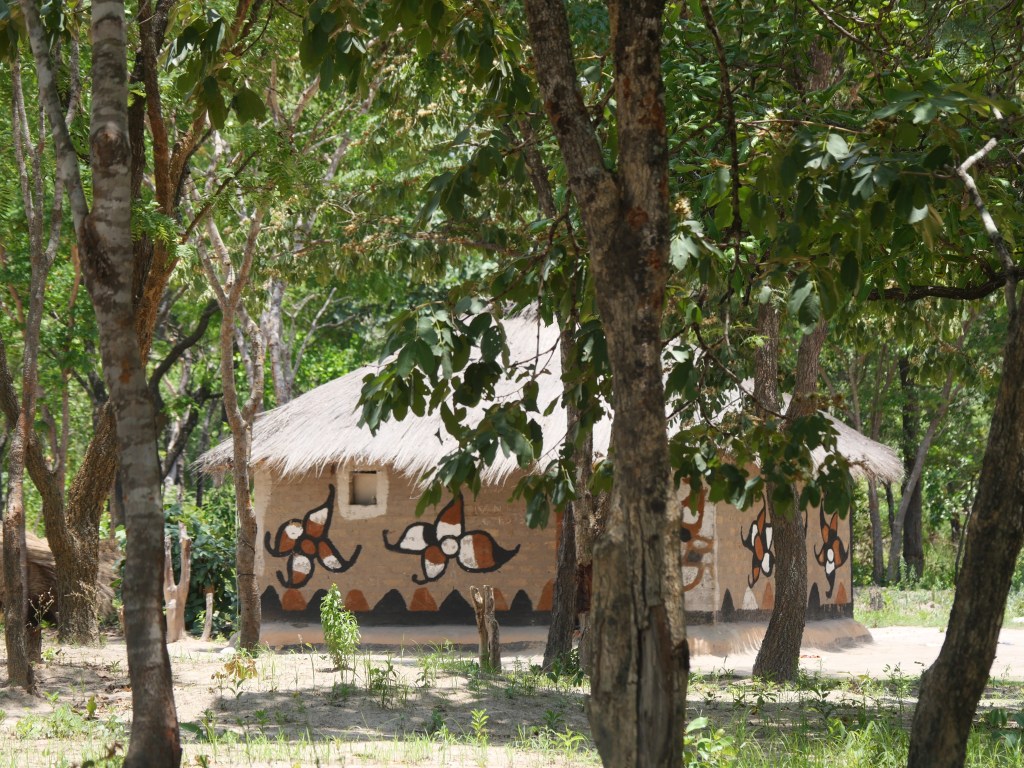

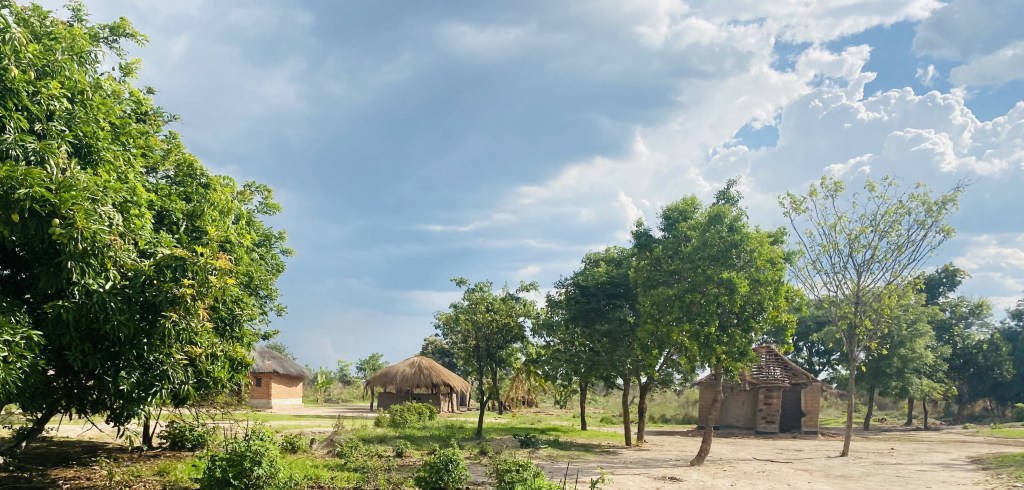
When we arrived at the gates I hopped out to pay the entrance fee. The young man who dealt with our tickets carried a large gun on his shoulder, was very friendly and helpful and looked about twelve years old!
I turned back to James and Henry and had to smile at what was now becoming a familiar site – James entertaining the local children
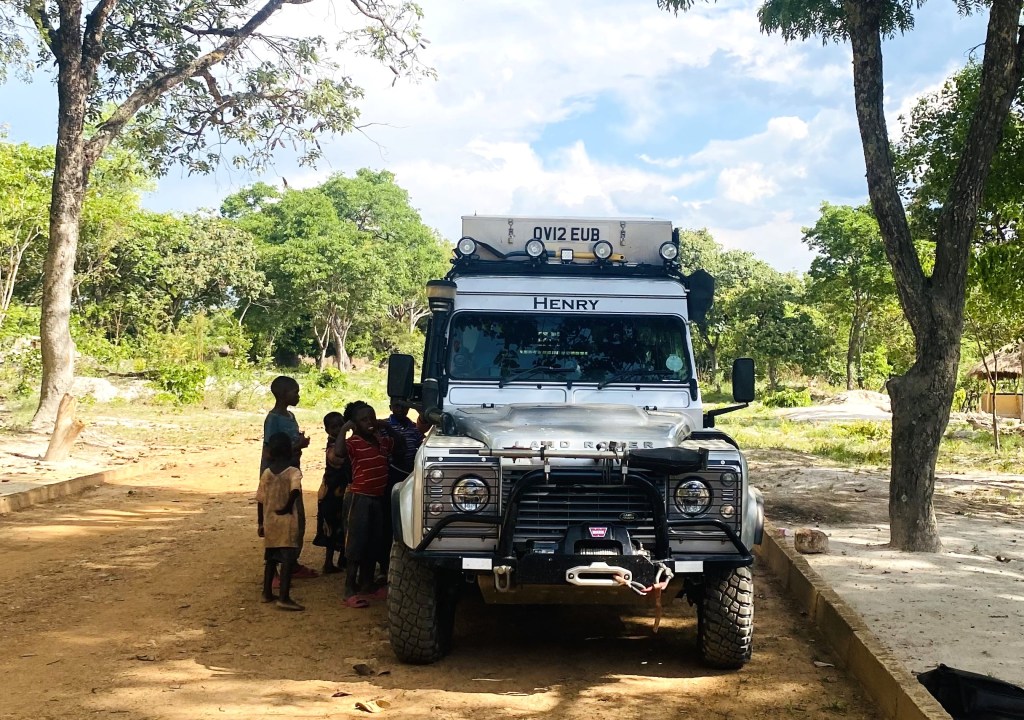
These kids looked as though they had rather less than the families further down the road and when I walked up James suggested we find something for them. We didn´t have a great deal but I managed to find three large cookies and gave six of the children half each. One young boy didn´t get anything and looked very sad. I couldn´t convince any of the other children to share with him but suddenly remembered a nutty bar we had in the back and handed it to him. It was far larger than the cookies the other children had and all their eyes lit up. He took one look at them all, grabbed his nutty bar and ran!
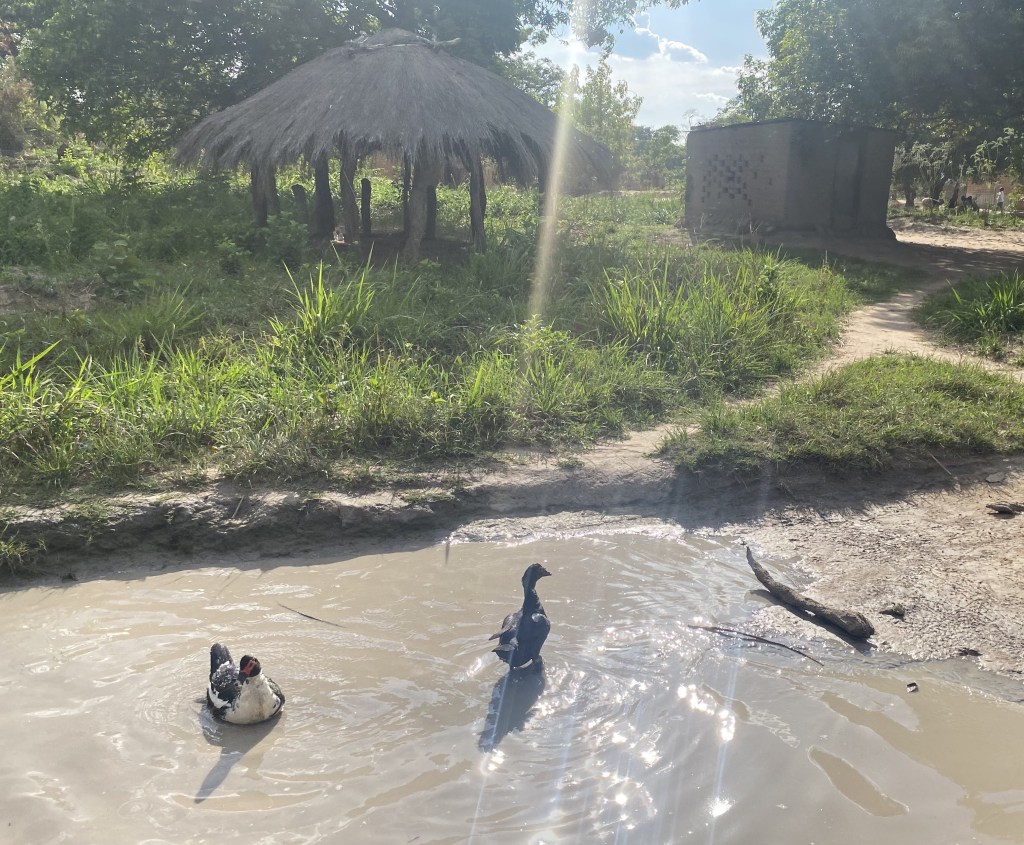
It took well over two hours to drive from the entrance gate to the swamps. We swooshed through huge puddles

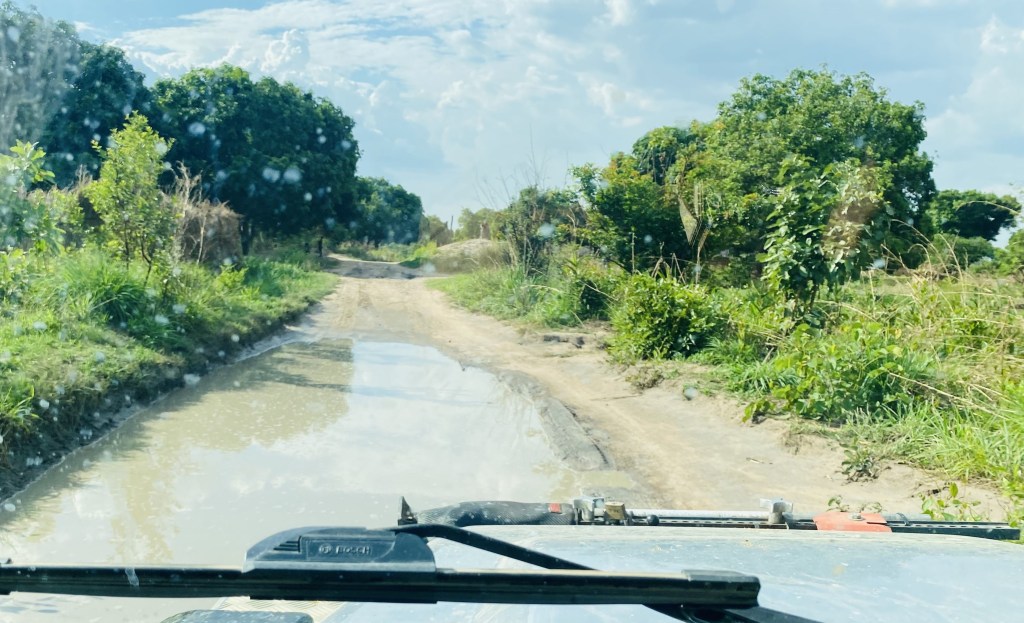
Some large enough for the local wildlife to enjoy
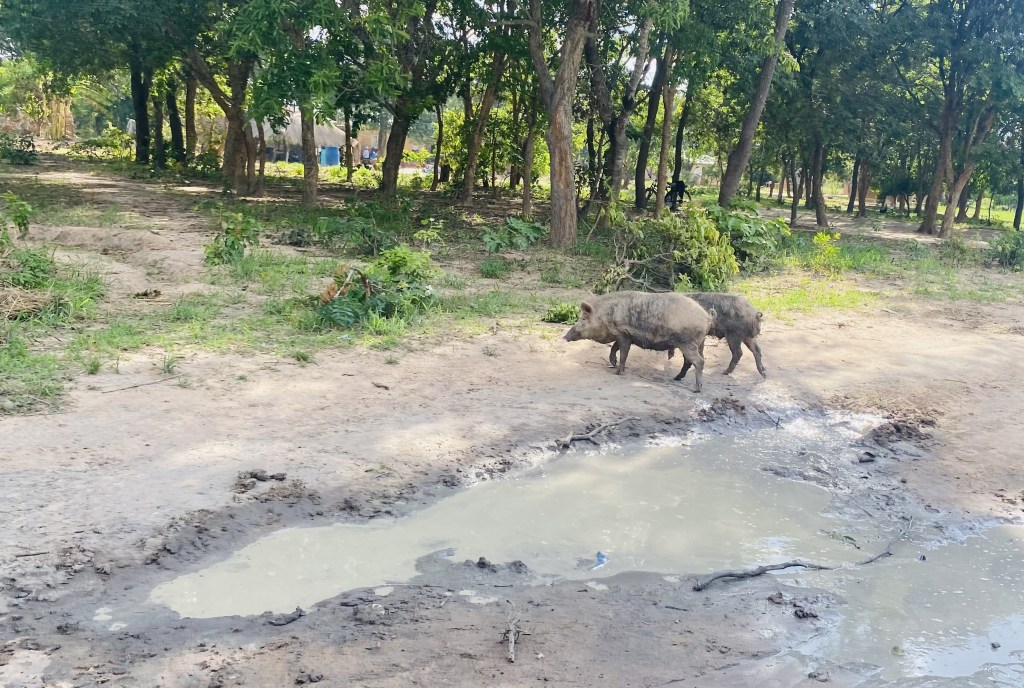

As we got closer to the swamps themselves the villages seemed to get poorer. The houses were less well kept and the children less well dressed

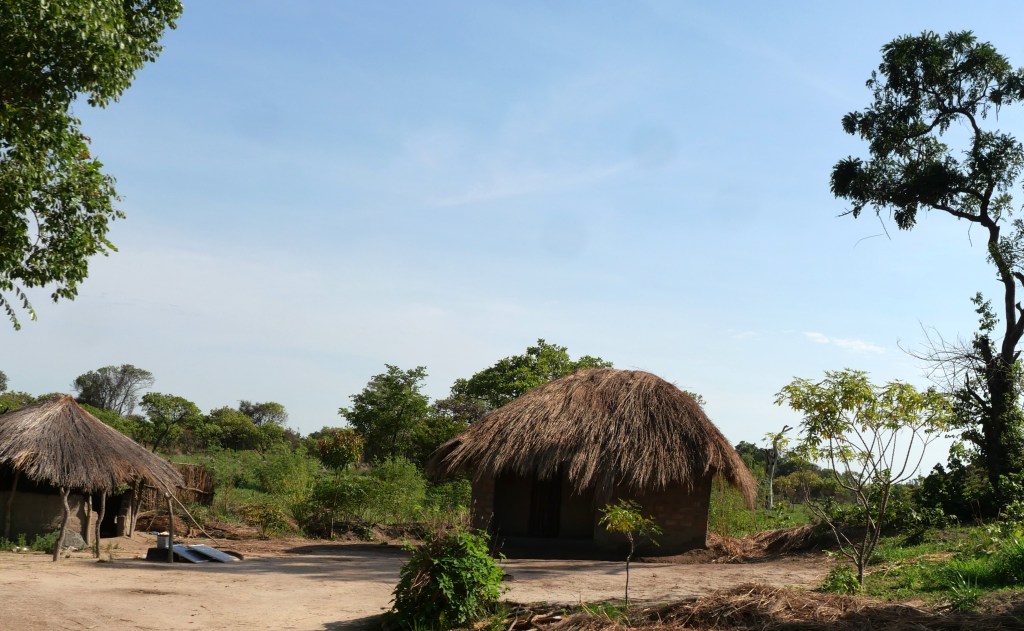
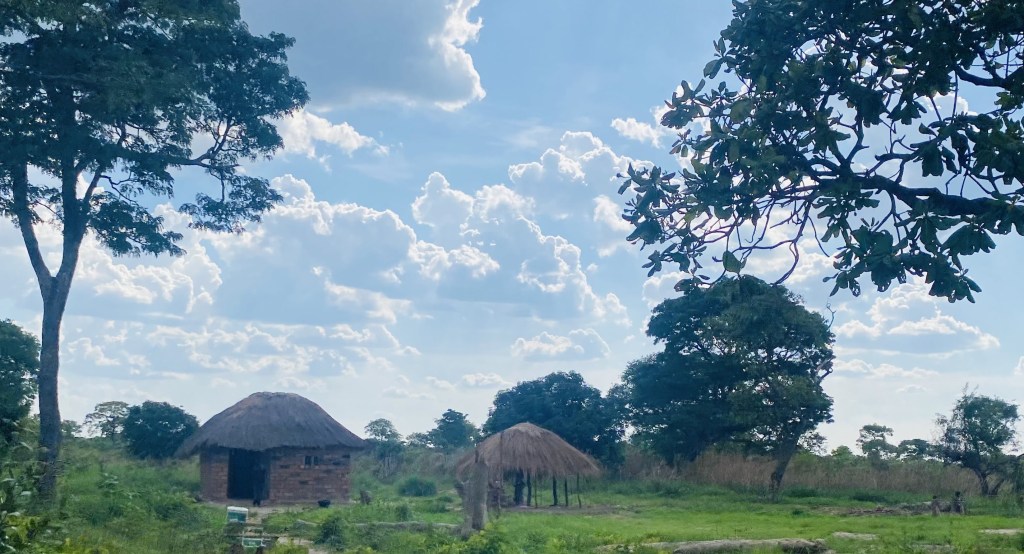
In some places they ran around naked. But everyone looked happy and were all pleased to see us – the kids running out waving and shouting ´hellooo, how are yooooo´!
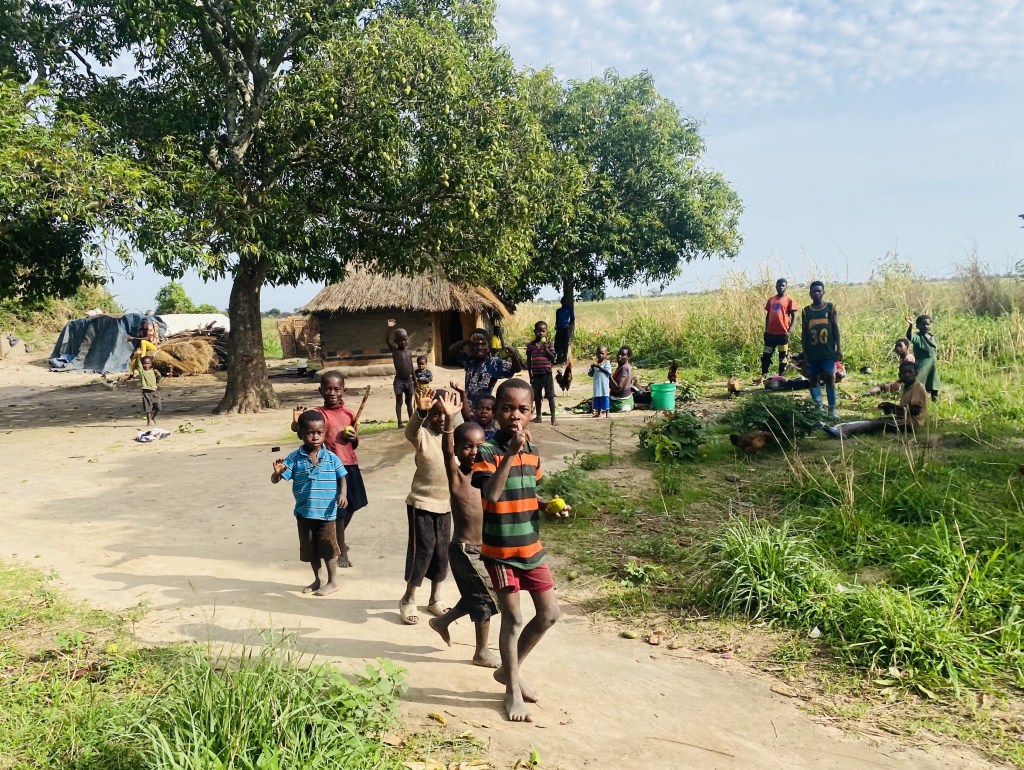
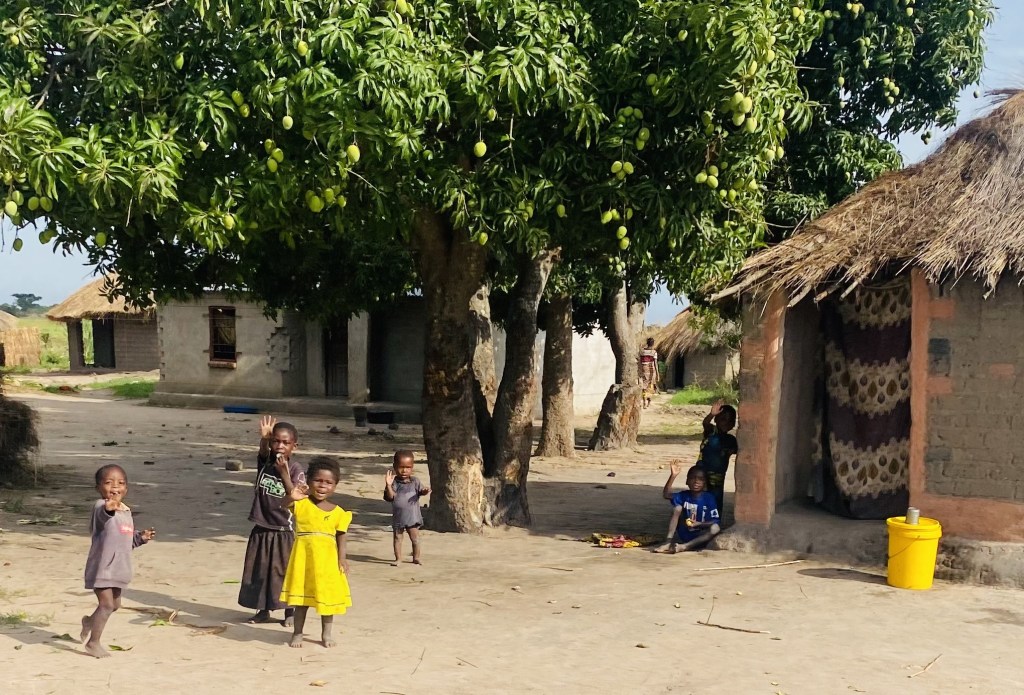
We couldn´t always see where the children´s voices were coming from but were keen not to disappoint them by not waving back so in the end were just waving and smiling randomly out of the windows hoping the children would see us even if we couldn´t see them.
In one village the kids jumped on the back of Henry and knocked the cap off from the door hinge. Just as we were nearly there we took a wrong turn and had to ask for help. It was a lot of fun but it had been a very long drive and we were exhausted and ready to have a rest from all the waving.
The campsite itself was absolutely beautiful
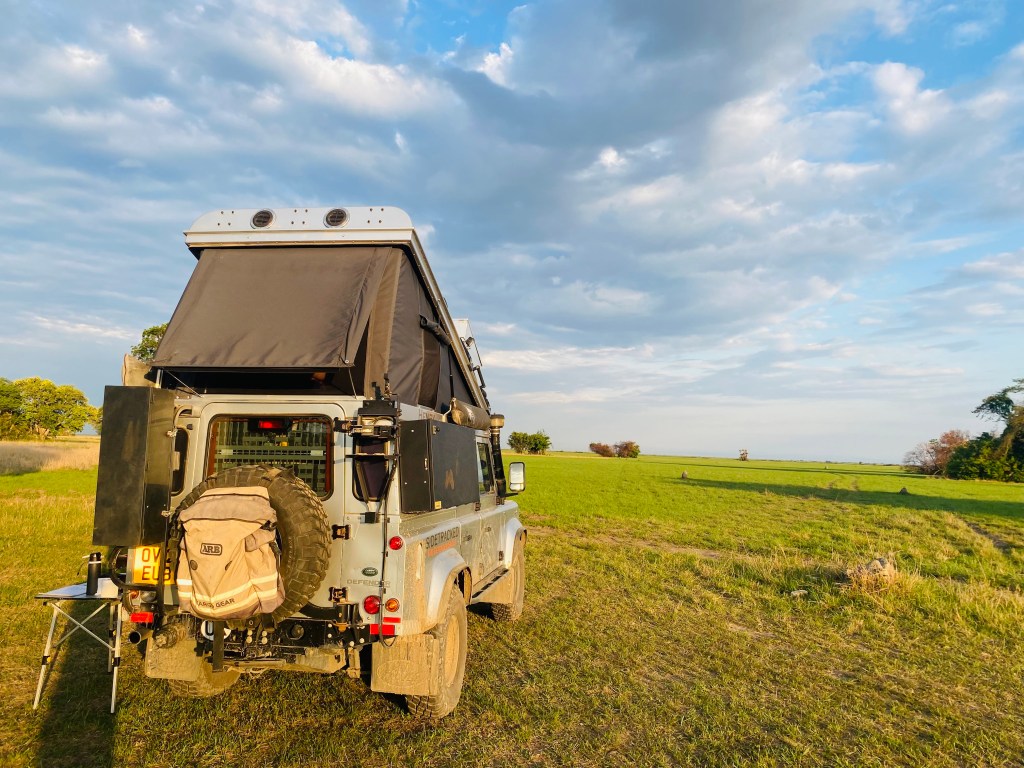
The swamps went on for miles in every direction and there wasn´t a sound apart from the gentle wind, the chirruping of birds and the occasional buzzing of bees


Apparently African Parks, who manage the swamps, had recently built a new ablution block but had not catered for the wildlife. Bees had built a nest in the water pipes and no cold water could get through – all we had was roasting hot water from the water tank but at least the toilets flushed!
The three guys who looked after the campsite greeted us warmly then set about filling a large container of hot water and bringing it to us at our pitch. The idea was that it would cool as it sat there allowing us to use it for washing. And when we needed a shower they came with me to the ablutions block, mixed some pre-cooled water with the hot and gave it to me in another big container with a jug.
At one point in this process a little frog suddenly appeared from out of the shower head and jumped into the bucket of hot water. One of the guys gently scooped him out and put him on the floor until my shower water was ready. He then very carefully lifted him up and took him outside to a tree where the frog jumped happily onto a branch and wandered off. I smiled at the man, pleased to see how much he cared for the wildlife. He smiled back and said he was a trained guide.
It was all lovely and the guys were brilliant

The idea at the swamps is to enjoy the scenery, search for the rare black lechwe and go on an expedition to find the even rarer Shoebill bird. The guys who were looking after us at the campsite were also the ones who would take us on the Shoebill expedition. But they told us there is only one Shoebill around these days and he is hiding deep in the swamps. To find him involved a ten hour hike carrying a canoe on our backs for when the water gets too deep to be traversed on foot. The chances of a sighting were slim and it would be a long, hard day.
We decided we would find a Shoebill somewhere else and spend our time here a little less strenuously. We spent the next morning driving around trying to find the black lechwe instead. This bit wasn´t hard!

Herds of them were grazing just a kilometer or two away from our campsite and we watched as they lazily wandered around


That afternoon we were sitting quietly reading when a strong wind started around us. We jumped up and quickly put the awning away, getting it zipped up just in time for the gale to really take hold. Paperwork flew out of Henry until we managed to close all the doors, our chairs blew across the field and finally our full water container was tipped over and we lost it all.
We jumped into the back of the Landrover with all the windows and doors shut and waited it out for an hour or so until things calmed down a bit.
At the main entrance gate the day before we had only been able pay the park entrance fees. The camping had to be paid for at the main office here in the swamps themselves. So once the gale had subsided we drove up to the office to sort it out. The guys were friendly enough but wanted to charge us $60 for the camping. It was supposed to be $10 per person per night so even for two nights this was too much. But we were too far from the entrance gate with no internet signal to do anything about it so I paid what they asked for. Just as I was leaving he called me back and double checked whether we were staying one night or two. When I said two he told me that $60 was for one night only so we needed to pay again. I tried to argue but he wouldn´t listen. There was no way I was paying $120 for two nights camping so in the end I said we would just stay one night and jumped back into Henry very annoyed.
We hoped that the three caretakers who had been so helpful and friendly with us would not come round later on telling us to leave. They didn´t but it made the rest of our stay there very unsettled wondering whether there would be any trouble.
On our final morning we packed up, gave our three friends a big tip and started on the long, two hour journey out of the swamps back to the entrance gate

There was all the waving and greetings
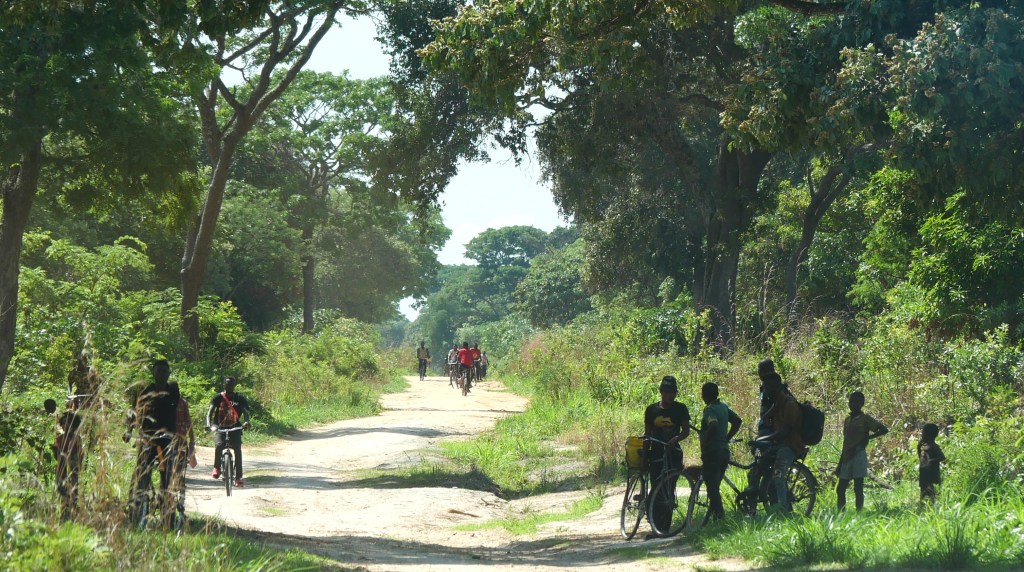
The pretty houses

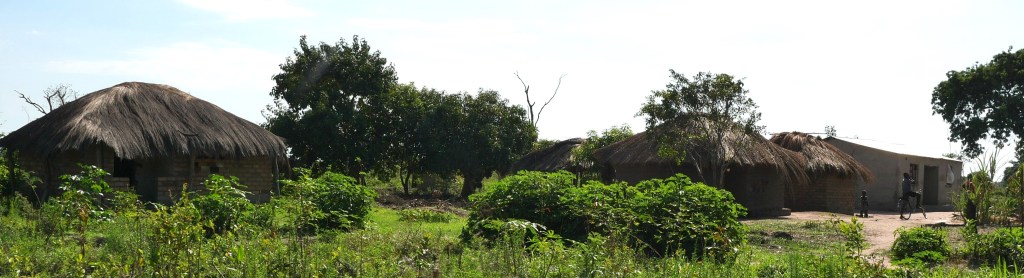

And the puddles again – which, after just a few more days of rain, were now getting wider and deeper

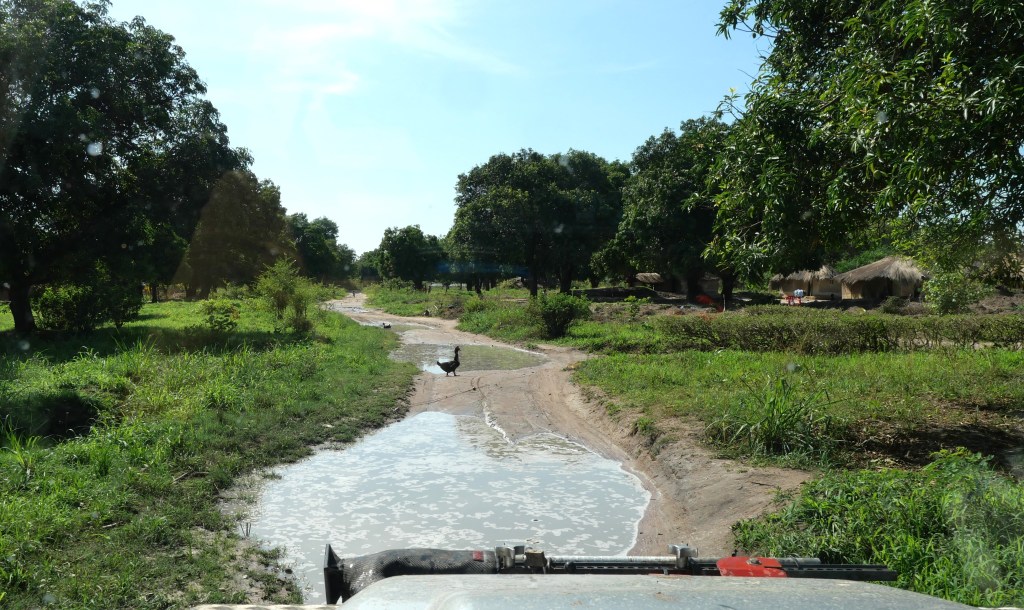
And eventually we made it.
The same young man welcomed us back and I jumped out to pay the second night park fees as we had agreed when we entered. He wrote out the ticket and then said that the campsite office had radioed to say we had only paid for one night camping so I needed to pay for the second night.
I was furious. I told him how much we had paid and that they had tried to charge us double even that. He looked very concerned and agreed that the price should have been $10 per person per night. He asked me to bring out receipt and he would refund the overpayment.
I went back to Henry to get the paperwork only to find that it wasn´t there. James and I tore Henry apart looking for it in vain. The only thing we could think was that the gale the previous day had blown it off the shelf and away across the fields.
The young security guard was sympathetic but would not let us leave without proof we had paid. He radioed the campsite office over and over again but they refused to answer. So he radioed head office and told them what had happened. We remained polite but angry and I told him this was putting Zambia in a very bad light.
Eventually head office said we could go without paying any more but without proof of the amount we had paid they could not give us a refund of our overpayment. We agreed this was a fair compromise, thanked the security guard for his help and departed.
Oh Zambia, how wonderful it all could have been but how disappointing it actually was…..
 The Sidetracked Sagas
One response to “The End of a Love Affair”
Truly amazing, the journey your both having, photo’s & all just fabulous
LikeLike