
After two relaxing days at our fascinating eco lodge at the foot of Kilimanjaro we decided to drive further round on the mountain road to the western face. We were aiming for the Simba Farm campsite which fellow travellers had said was luxurious.
The first thing that struck us as we drove was how much more beautiful the scenery was on this side. There were far fewer villages and not many people. Instead all we could see for miles was lush, green countryside
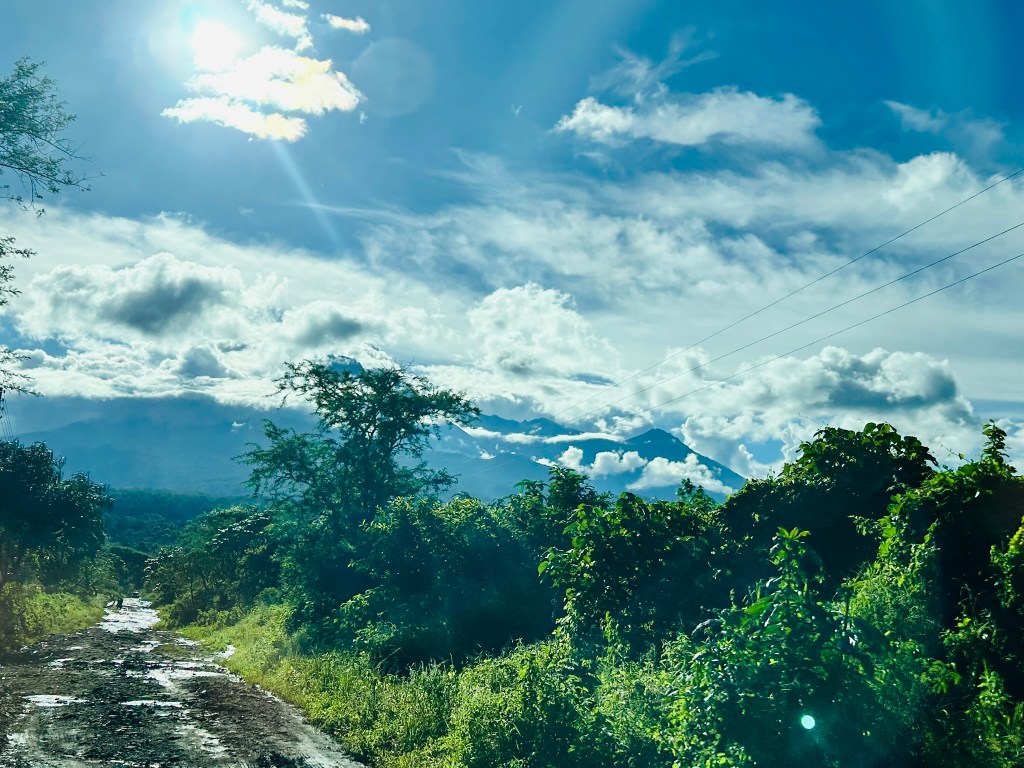
And when we arrived at the farm we were not disappointed. It was gorgeous

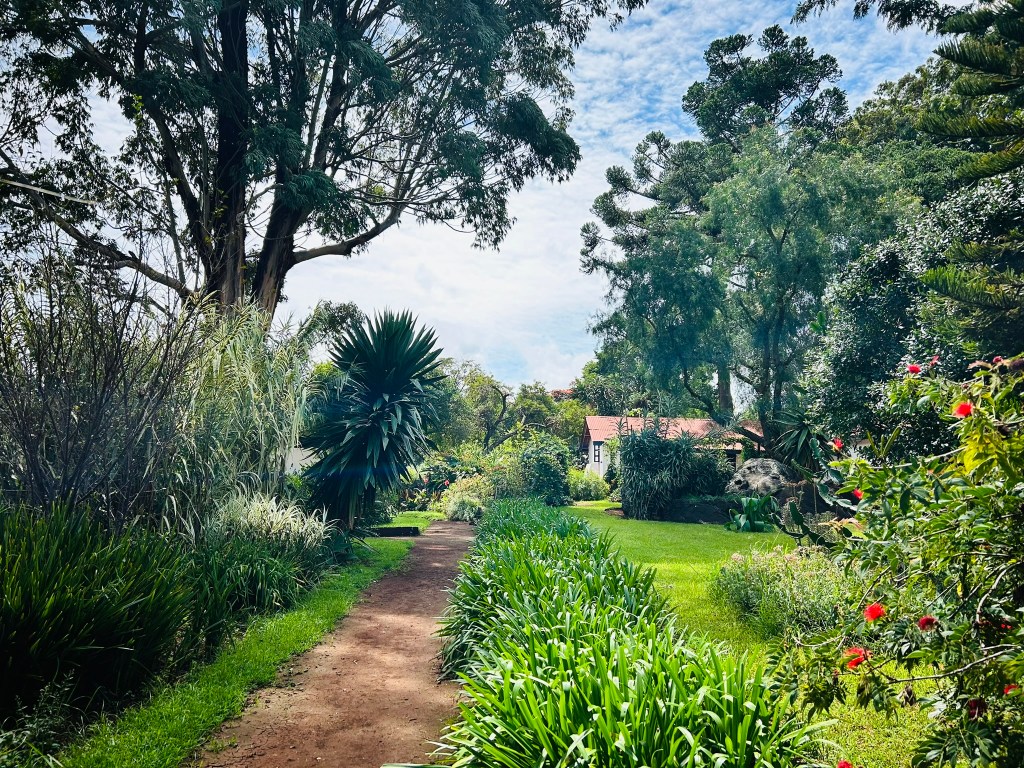
We were higher up here and the air was cool and crisp. There were no bugs anywhere and it was a completely mosquito-free place. The farm is owned by a family who have lived in Tanzania for three generations and in that time they have turned it into a paradise.
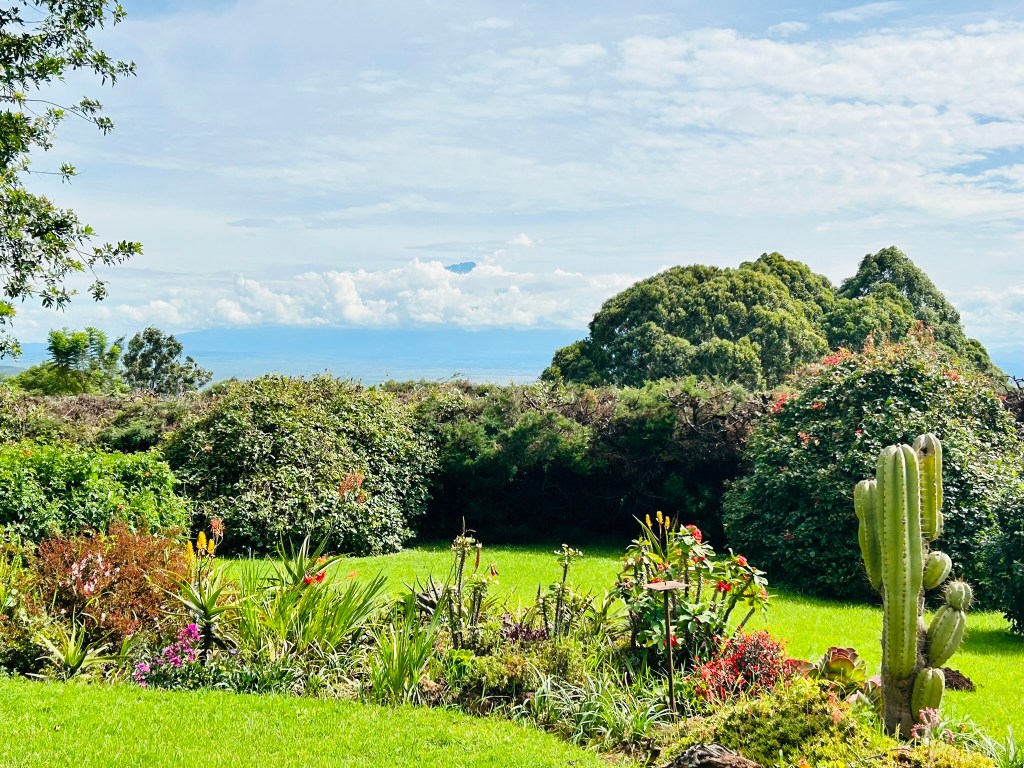
We spent the afternoon sitting in the garden, drinking tea and soaking up the amazing views
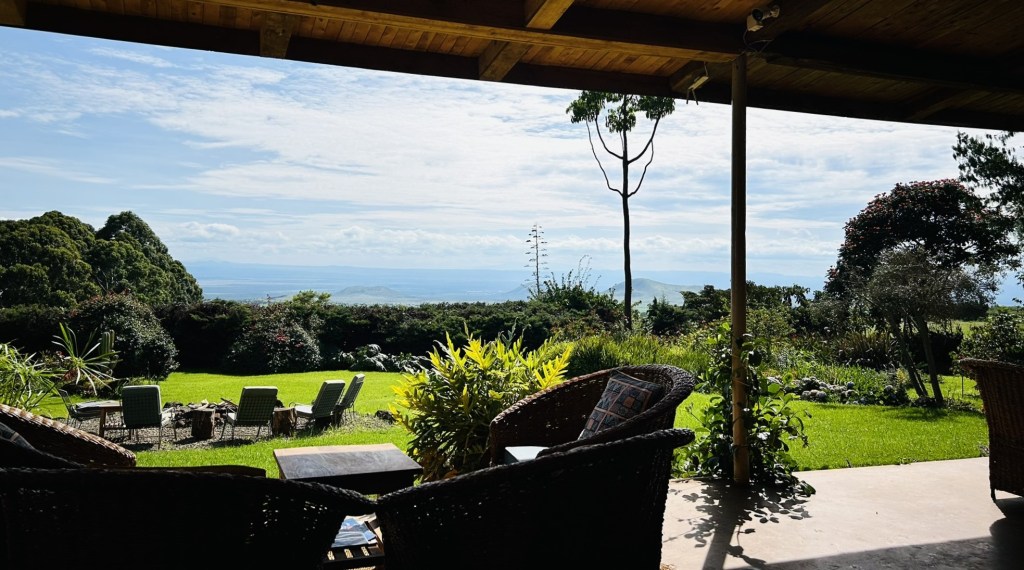
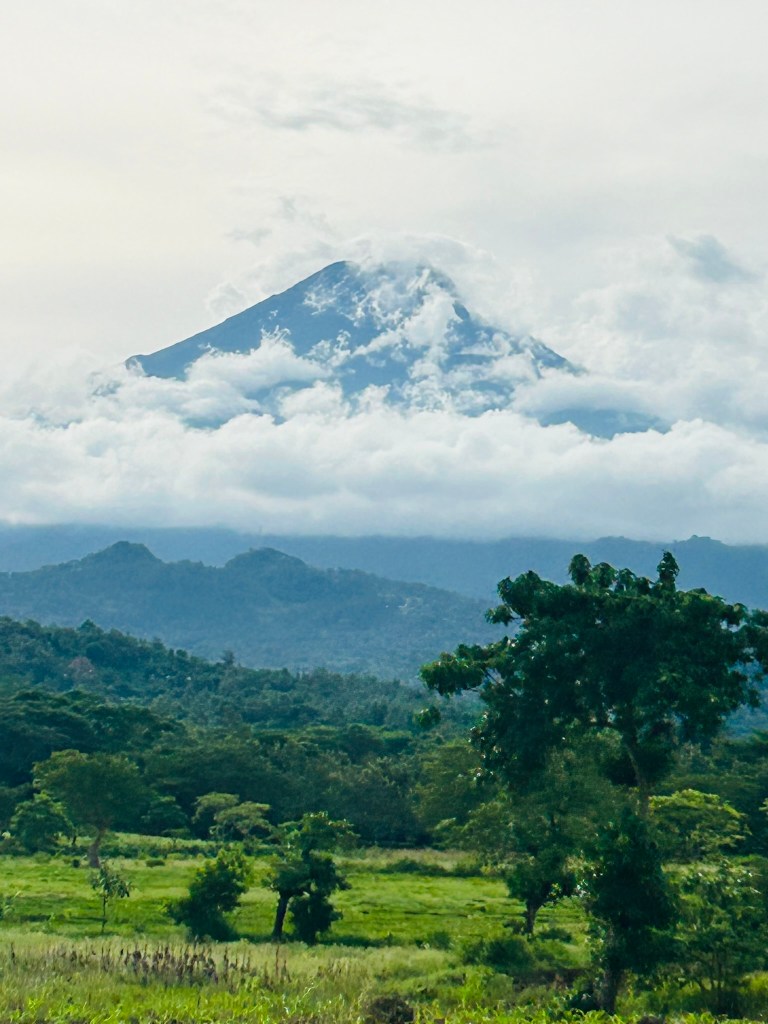
But this mountain was not Kilimanjaro, we had again inadvertently got too close to see her. We were looking out at Mount Meru which was equally stunning, albeit missing the snow.
As we sat there I realised with a sudden insight that I was feeling very at home, quite strongly so. It had snuck up on me without warning but this was the first place since we had left Namibia where I could see us living. Could the lush, green Tanzania really become home? It would be hard to think of anywhere more opposite to the dust-bowl dryness and emptiness of the Namib desert.
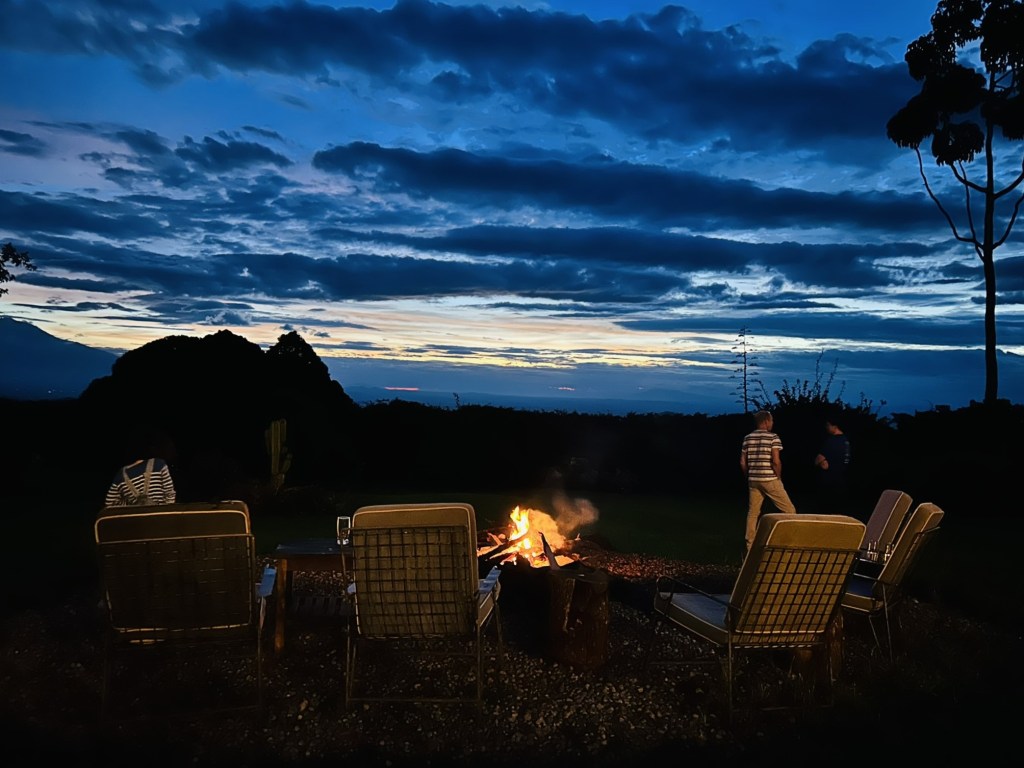
We arranged with a local guide to do a walk around the farm in the afternoon and then into the national park to see the colobus monkeys. We spent the morning sitting around eating, doing the blog and reading to while away the time. But we had been sitting around for a couple of days now and were both keen to do something a bit more active. So when the staff came over just as we were getting ready to go and told us that our guide had been held up and couldn´t do the walk until the next day we were rather disappointed. It turns out he had been doing a morning bike ride with a family and someone had had a puncture, stranding them all miles away. He was instantly forgiven!
To make up for our frustrations we treated ourselves to a three course meal in their restaurant and it was one of the best meals we had had in a long time – especially as the desert included custard

Our guide arrived the next morning and took us around the farm telling us all about what they grow and rear. We then entered the national park forest
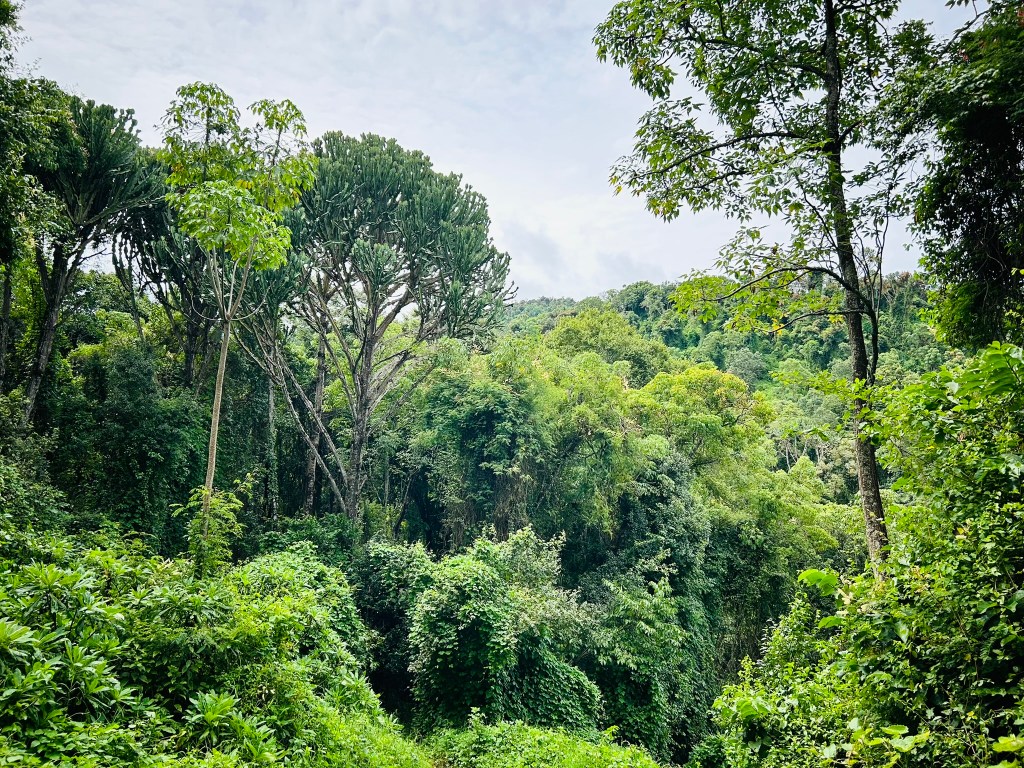
We had only walked a short way when the guide excitedly pointed up into the trees.
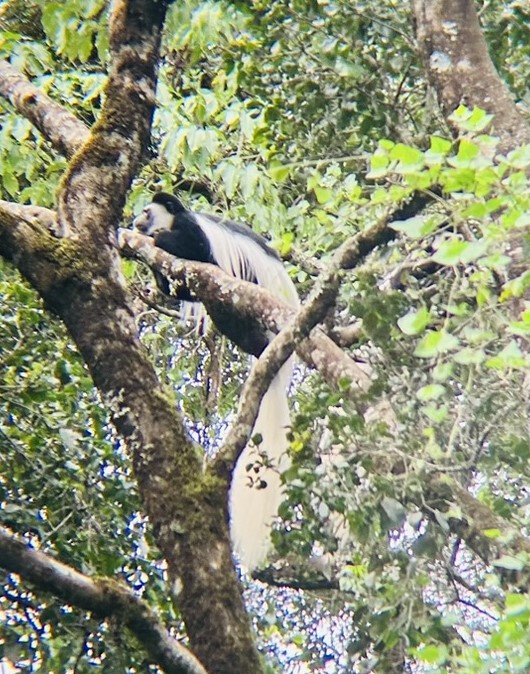
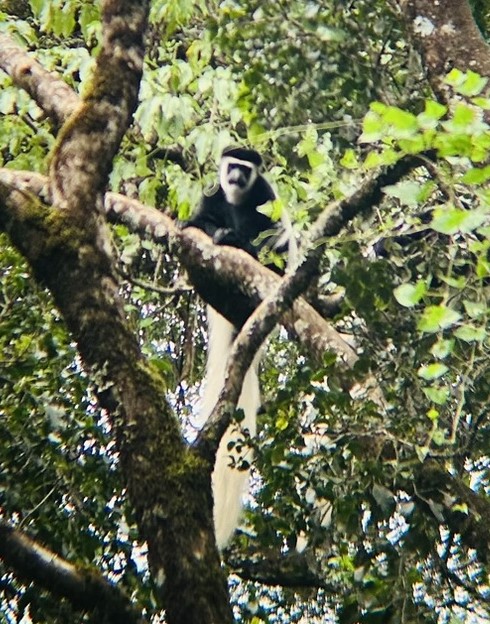
There we saw the most beautiful monkeys we had ever seen. Black and white colobus monkeys have tufted white beards, a stripe of long white hair down their backs and a huge, long white tail.
We could see them clearly in the trees through the binoculars but photographing them was another matter. Our guide showed us how to take a photograph with our iPhones through the lens of the binoculars
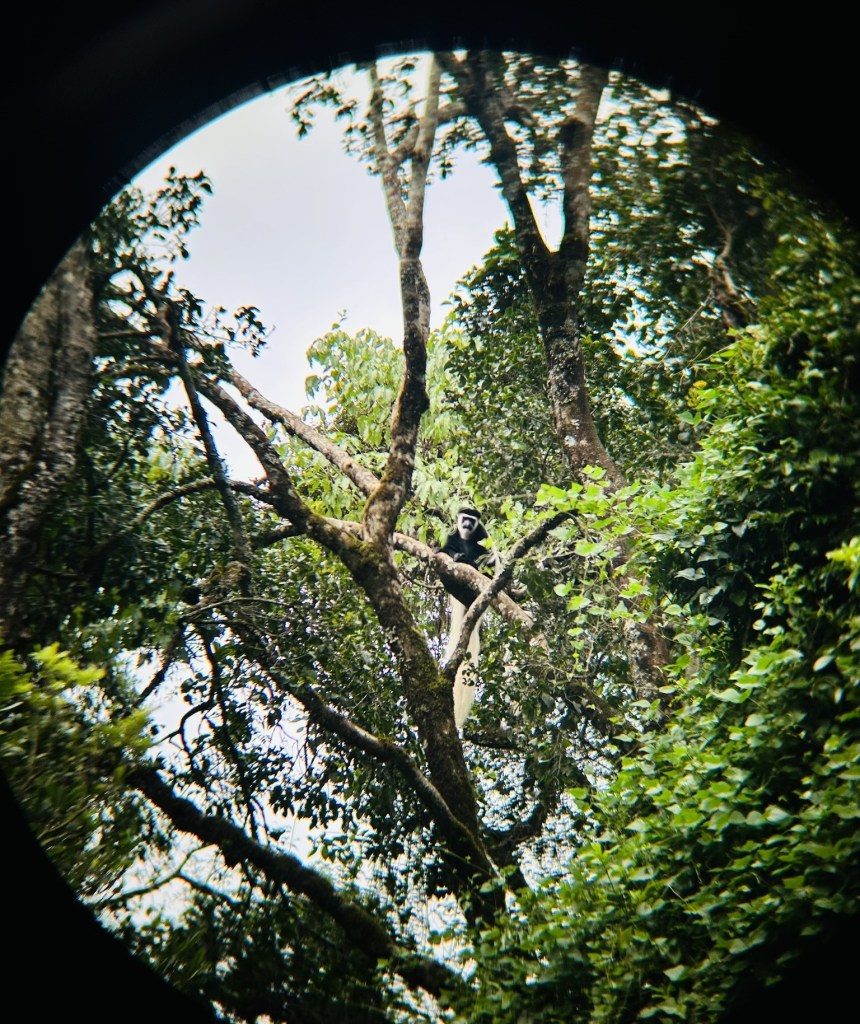
which worked pretty well….
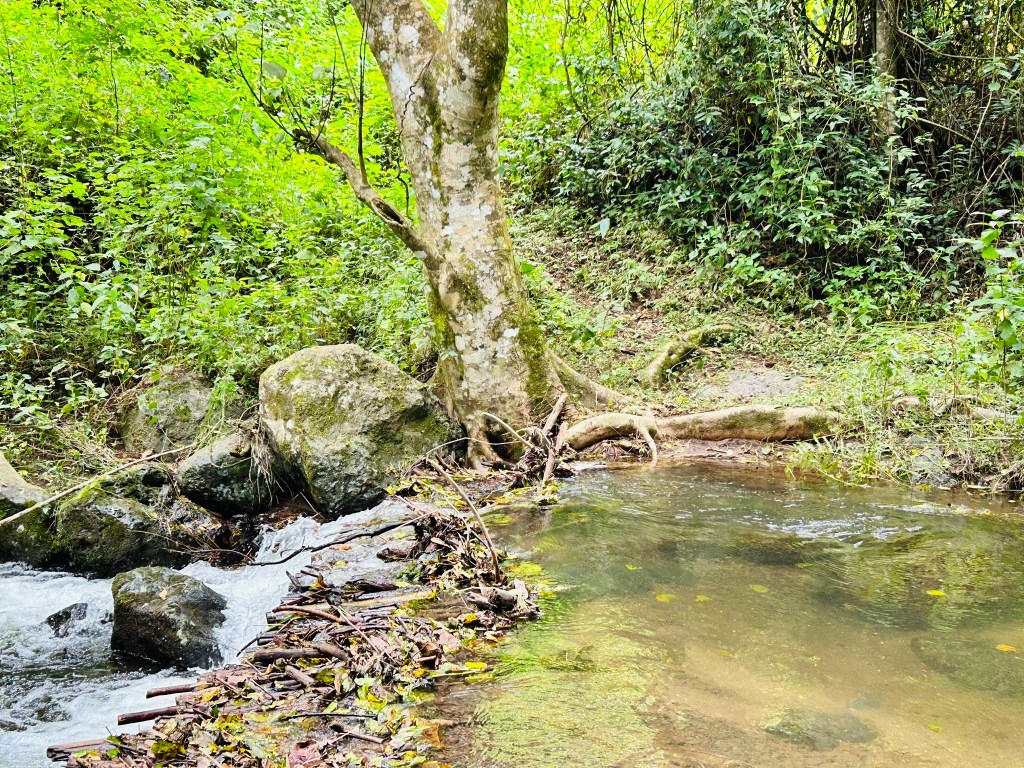
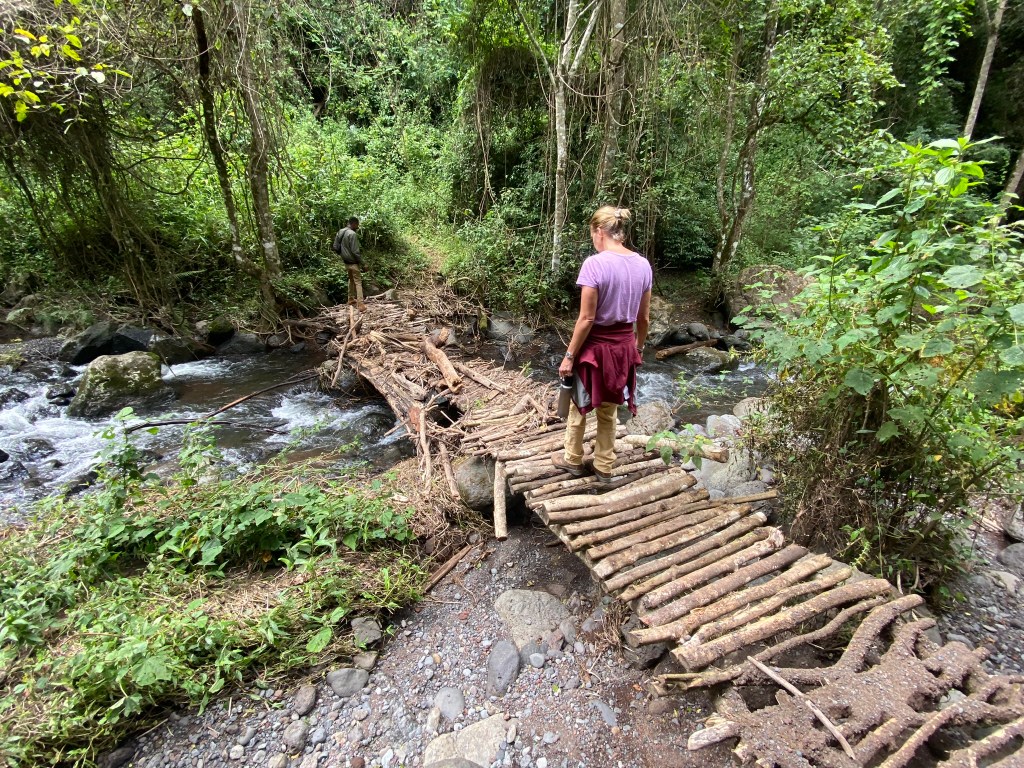
We carried on through the forest until we reached the river. It was only a small stream but it was flooded – the small footbridge across being underwater. Our guide was worried but we just threw our boots off and waded through – boy was it cold!
The blister on my foot from the walk in the Usumabara Mountains was only partly healed and I was wearing a plaster to protect it. The plaster got wet crossing the river and when I put my boots back on the blister started hurting quite badly again. I explained to our guide what had happened and he said he had a cure for me when we got back to the campsite.
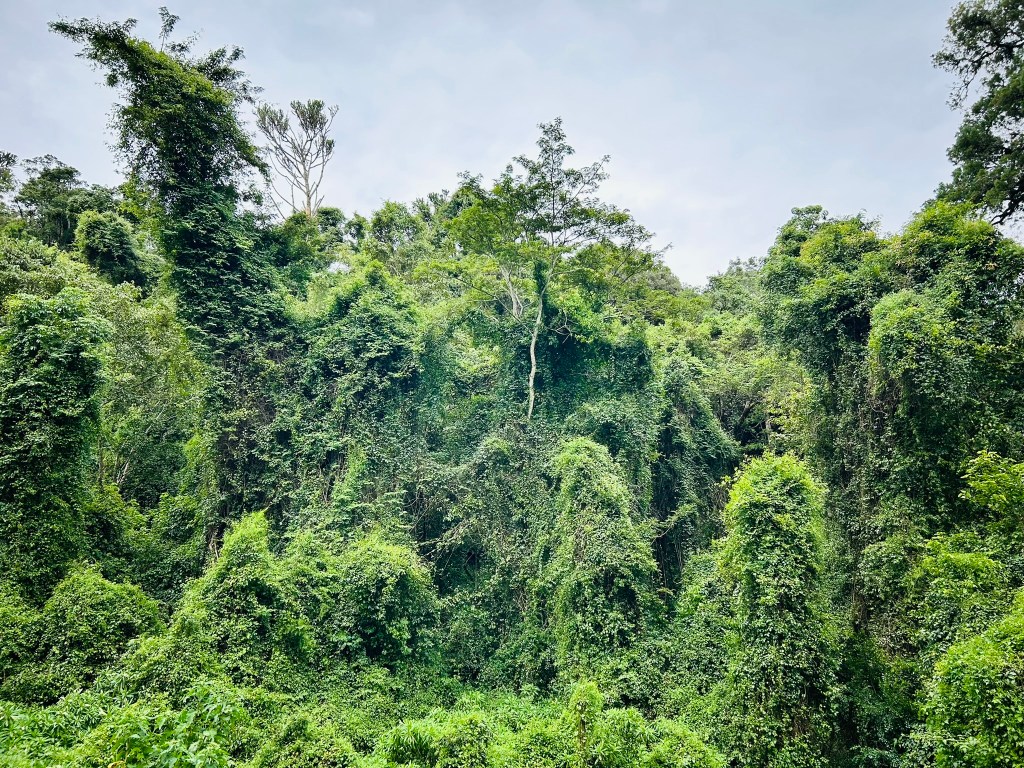
We finished our walk (or in my case, limp) through the forest across more rivers and through some beautiful scenery
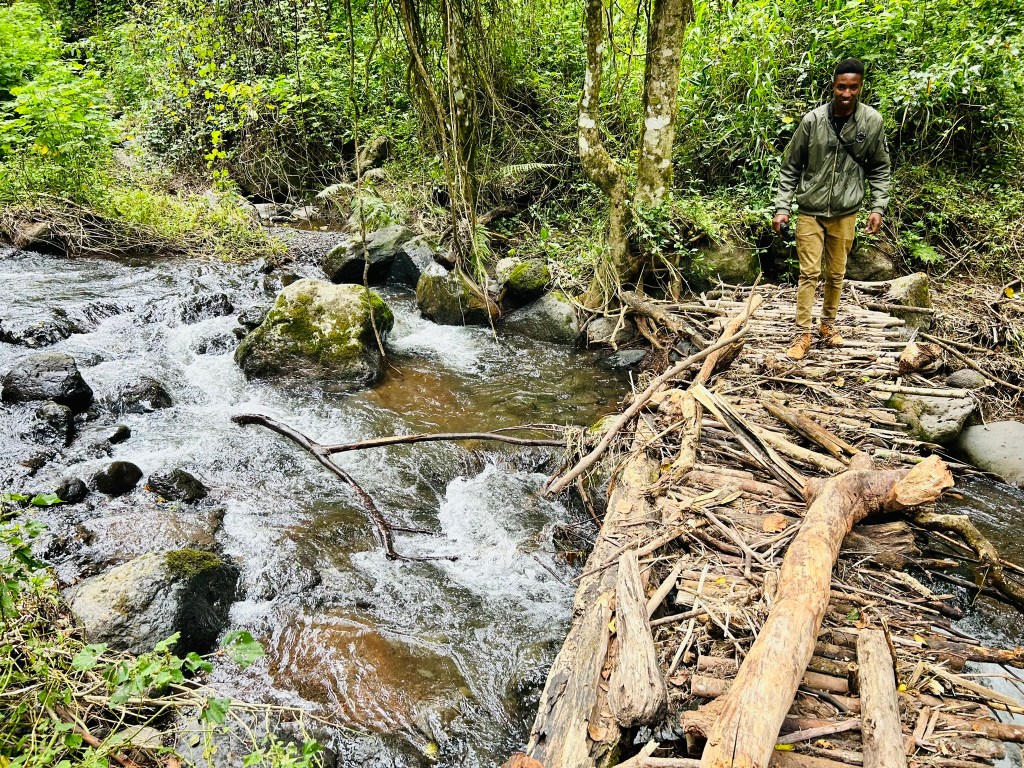


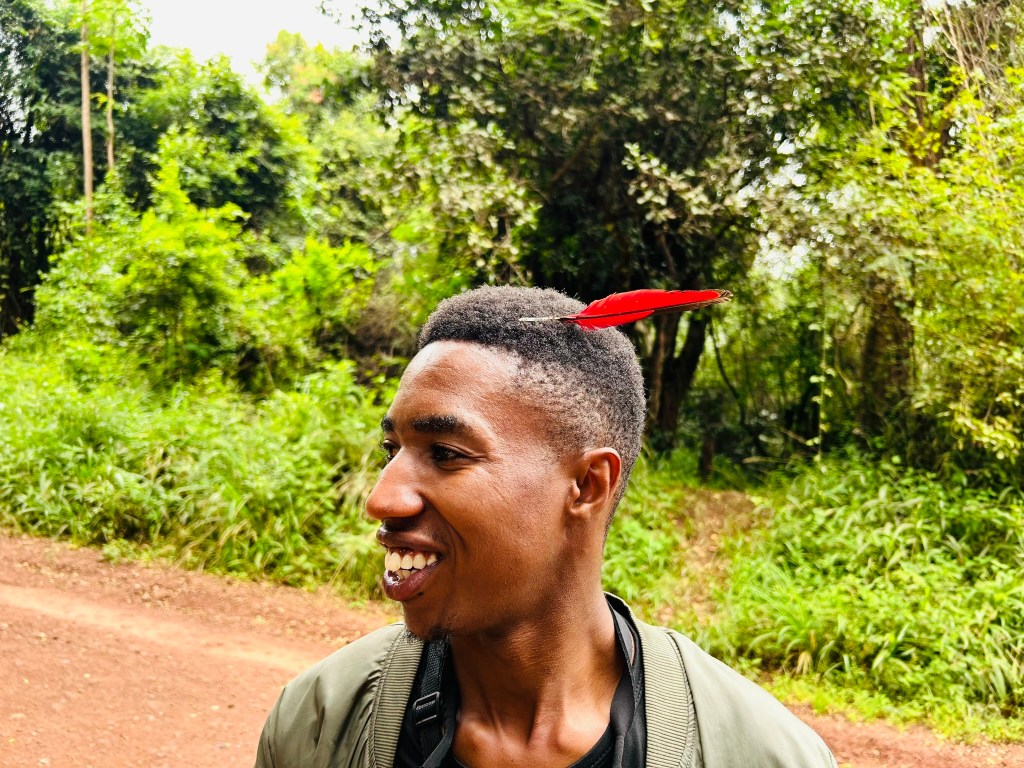
We found a number of red feathers on the ground indicating the scene of a hunt. They were lovely so we decided to make a gift of one to our guide!
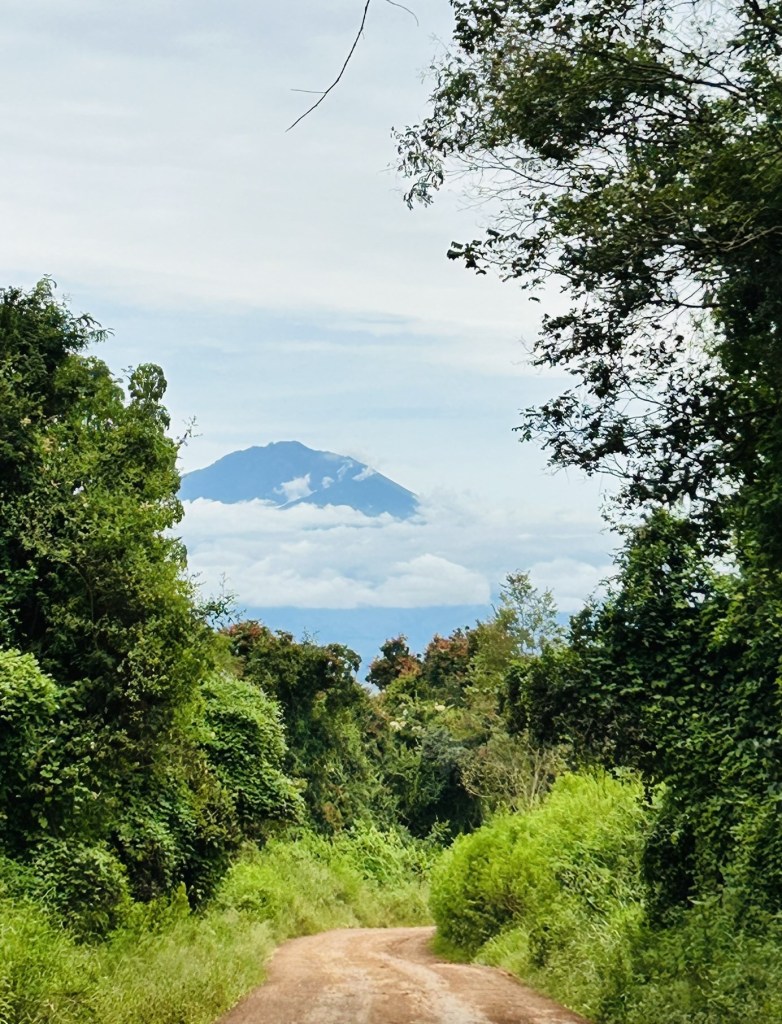
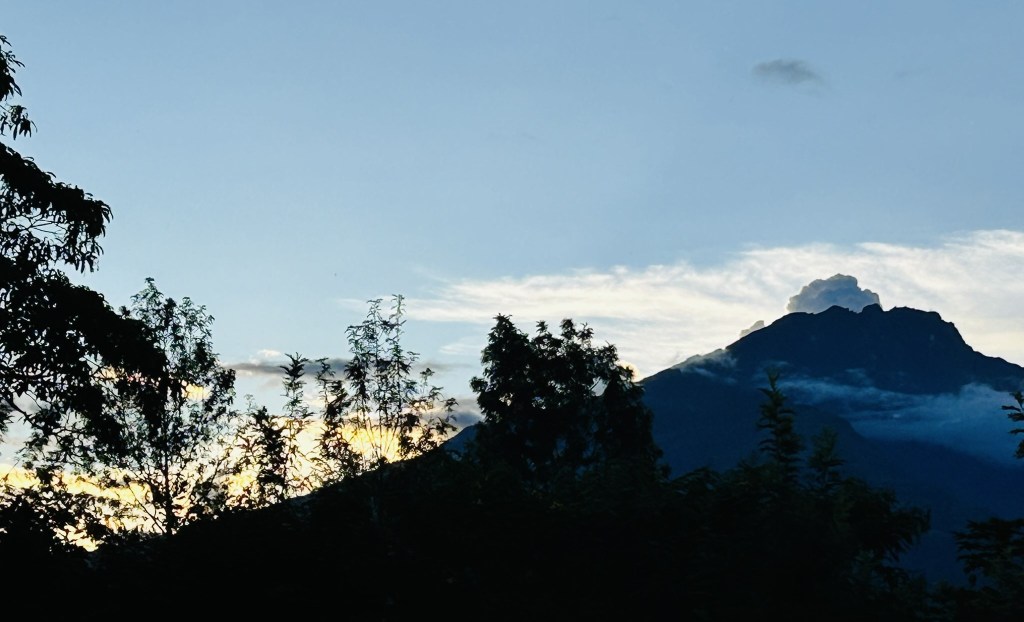
Just as we popped out of the forest back onto the main road we were treated to another fantastic sight – Mount Meru had made an appearance and was looking stunning in the glinting sun
As James and I took photos our guide bent down and picked a plant that looked like a thistle. He cut the stem and thick yellow sap oozed out

He handed it to me and told us it was similar to Aloe Vera. He said that if I put it on my blister it would heal up within three days. Given it had been causing me problems for over two weeks it was worth a shot.
Back at the campsite he set about coating my sore foot with the sticky, yellow gunk
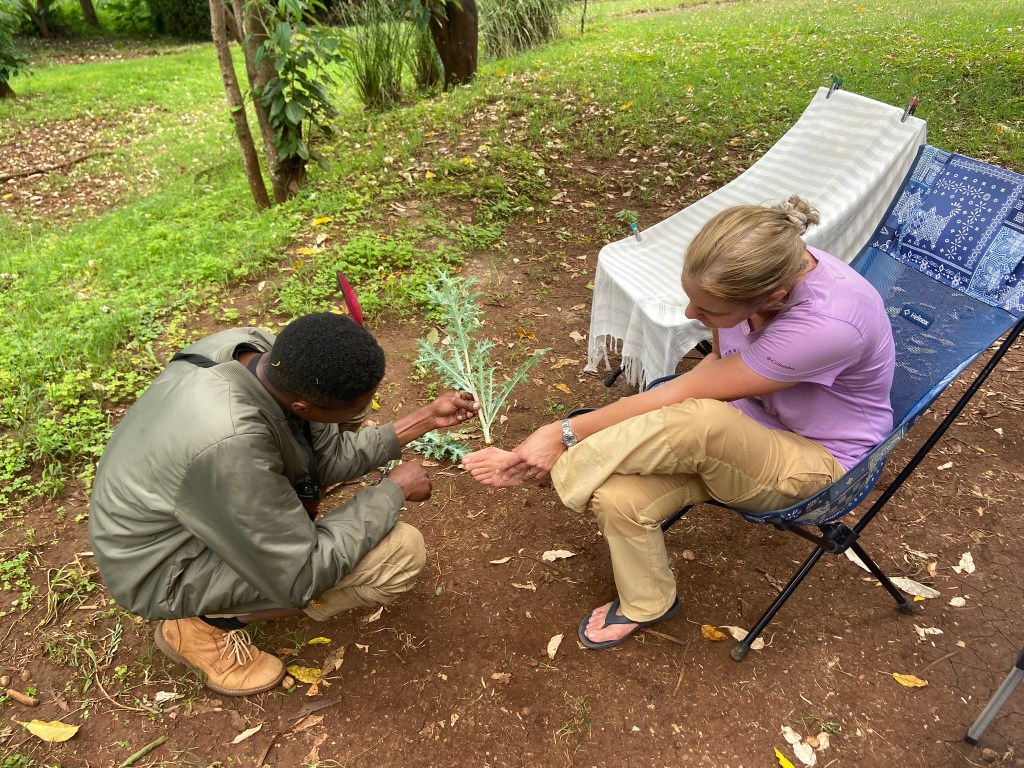
It stung like anything but I told myself if it doesn´t hurt it´s not doing anything!
Over the next few days the gunk turned from yellow to orange to brown and as it did so the oozing blister dried up and the skin healed over it. I was still left with a painful bruise for a few more days but it seemed a bit much to ask plant-gunk to sort that out as well!


That night we were woken at around 11pm by a lot of noise around the campsite. A family of five had been camping on the other side of the site and they appeared to be in some sort of distress. We peered out of our roof windows and saw two members of staff in overalls spraying the grass. Meanwhile the family were running about, taking their tents down and re-pitching them on the other side of the campsite. An hour later they took their tents down again and pitched them very close to us.
A chat with one of the owners the next morning confirmed our suspicions – someone had not been ant-aware, probably dropping or storing food on the ground, and the dreaded Seafu had swarmed…..
As I was chatting to the lovely lady whose family was lucky enough to call this farm home she told me that whilst she and her family were Tanzanian her husband was Namibian. My eyes lit up and I told her of our farm search in Namibia and the heartbreak of having to leave. I asked her whether, if she had a free choice, she would choose to live here or in Namibia and without missing a heartbeat she said Namibia. She told me what I already knew – that Namibia is safe, stable, democratic and jaw-droppingly beautiful, that the people are incredibly friendly and there is a great sense of community. I asked why then she was here and she smiled and said this is where her family have lived for generations. I paid our bill and left the farm with tears in my eyes….
Tucking what might have been back into the small corner of my mind where it belonged, we headed off to the Chimba Hot Springs. We had been warned that the floods had washed away the river defences and crocodiles had made their way into the pools, terrorising visitors. We had also been told that the so-called crocodiles had turned out to be a large monitor lizard. So after much debate we decided to go and see for ourselves.
When we arrived we found the place absolutely packed full of locals and tourists alike enjoying themselves swimming in picture-perfect pools

Swinging across the water on ropes


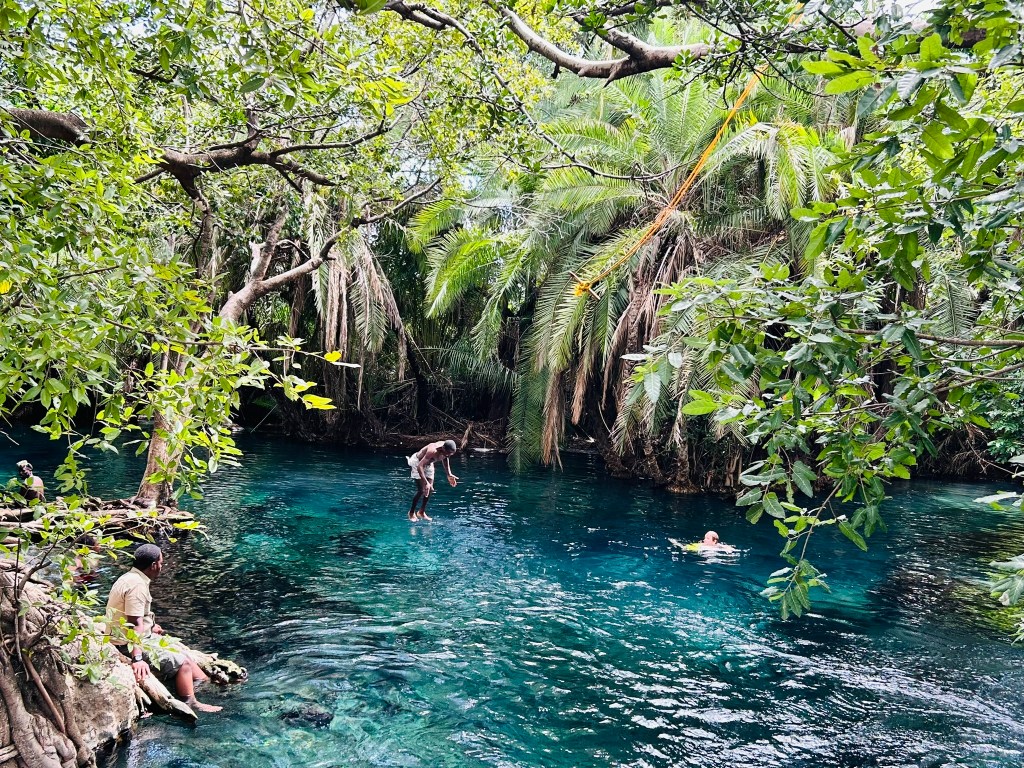
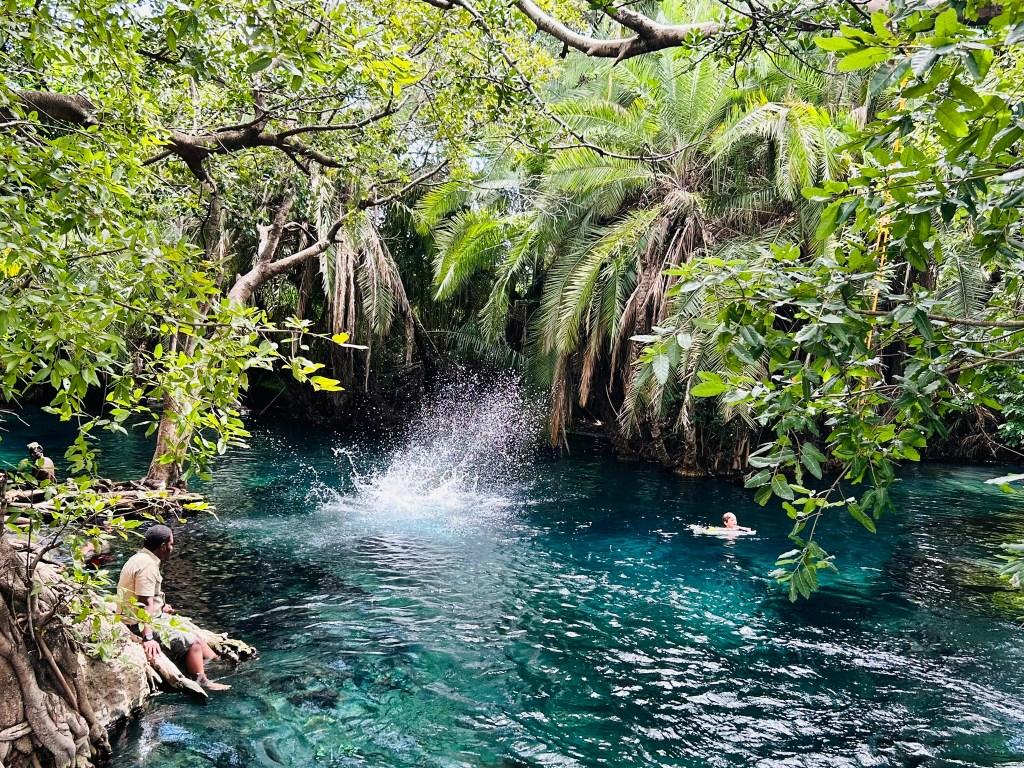
And floating about in inflated tyres.
No-one seemed concerned about crocodiles.
I have said it before and it is always true – you don´t know if you don´t go. How many wonderful experiences would we have missed out on in our lives if we believed everything we were told, took what the UK Foreign Office advised as gospel and never went to find out for ourselves? Most of them!
As we lowered ourselves into the water it was initially toe-curlingly cold, but after just a few minutes we acclimatised and concentrated on the little fish that nibbled at our feet, then our legs then our stomachs, tickling and unnerving in equal measure.
We floated around for a while then decided to swim through the drooping palm trees into the other pool. There turned out to be a surprisingly strong current pushing us back and it took some doing to get there. As we swam the water also got noticeably warmer until, by the time we reached the far pool, it was remarkably hot.
The way back was much quicker, the current shooting us along and I was disappointed to arrive back at the bank a little too soon. But on the basis that it´s better to finish just before you´ve had enough rather than just after we decided not to swim back and instead scrambled up the bank and stood watching the staff and kids having a great time swinging on the ropes and splashing into the water.
We were less than an hour from the busy town of Arusha – the tourism capital of Tanzania in the heart of the safari belt. From here tourists flock in their millions to the Serengeti, the Ngorongoro Crater, Lake Manyara and Tarangire. This is the beating heart of the Tanzanian allure – endless sweeping plains, the wildebeest migrations and the Big Five, the Africa that most people dream of.
But we were bypassing all of it. To us, Arusha right now was a place to find a good supermarket and fill up with fuel before heading away from all this towards Lake Victoria and, ultimately, out of Tanzania altogether.
But why, you may cry. Have you lost your minds? Three years in Africa and you walk away from one of the most amazing experiences it has to offer?
Well, we are not so world-weary or cynical as this may sound. The fact is that, whilst the rains had finally stopped, the whole of Tanzania was still flooded, the grasses and bush were still high, thick and lush and the animals were therefore dispersed and hiding. Going to the Serengeti and the Ngorongoro Crater is a once-in-a-lifetime experience, not to mention a very expensive one. We didn´t want to jump the gun and go at the wrong time, ending up disappointed.
We had a plan which would have us re-visiting Tanzania a couple of months later right in the middle of the dry season when animal viewing would be perfect – but more of that plan later. For now we were happy to be patient and enjoy everything else Tanzania had to offer – which, lets face it, was quite a lot!
There were a few sites to see in Arusha before we went though so after doing all our shopping we made for a campsite just on the outskirts of town.
This place was owned by an English couple from the west country who had lived here for 17 years. The campsite itself was in their beautiful garden, the ablutions were spotless and the couple themselves – Paul and Erika – were wonderful. We set up camp, had a late lunch of samosas and pizza bought from the supermarket and then headed up to the main lodge house to share a glass of wine with them. We sat up chatting until 10:30pm which is unheard of for us. It was a lovely evening
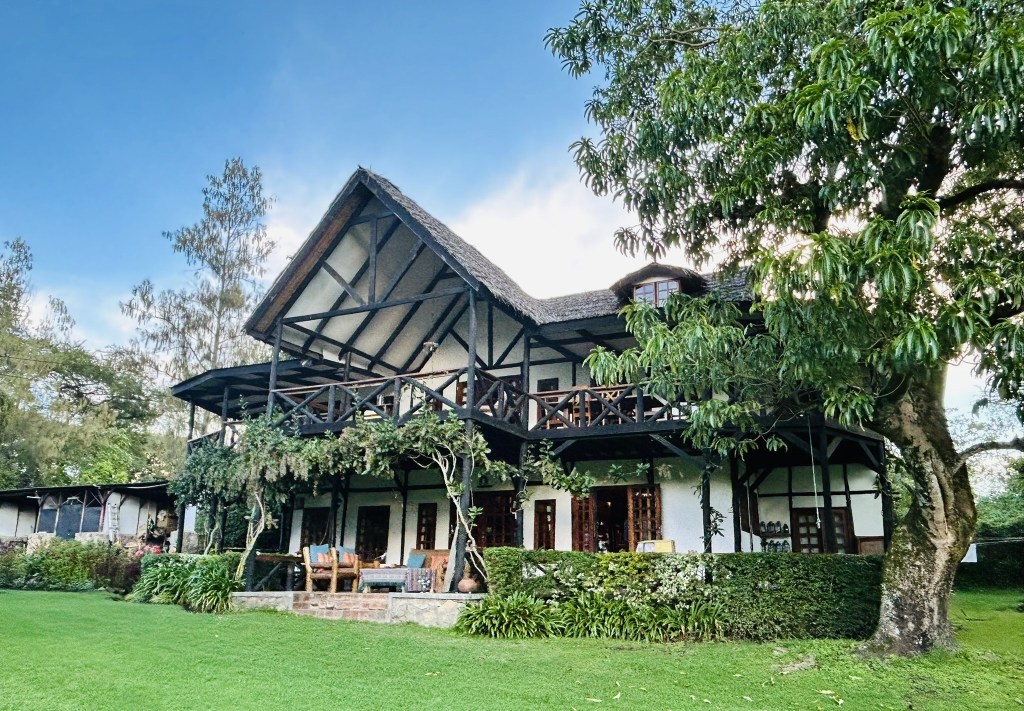
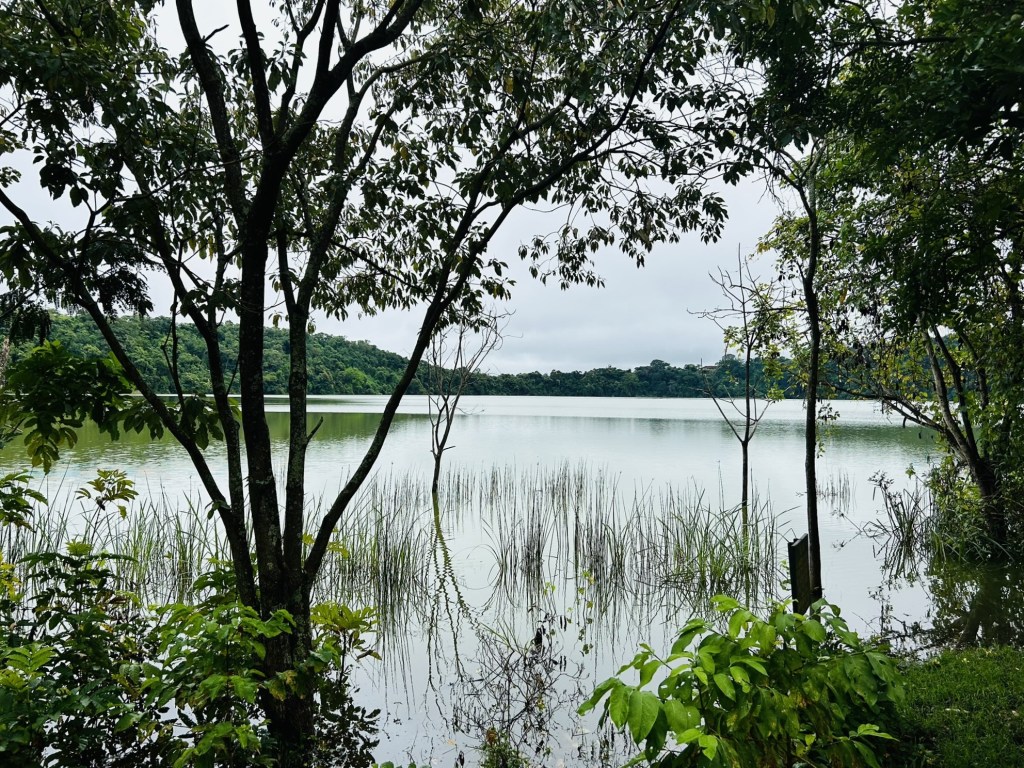
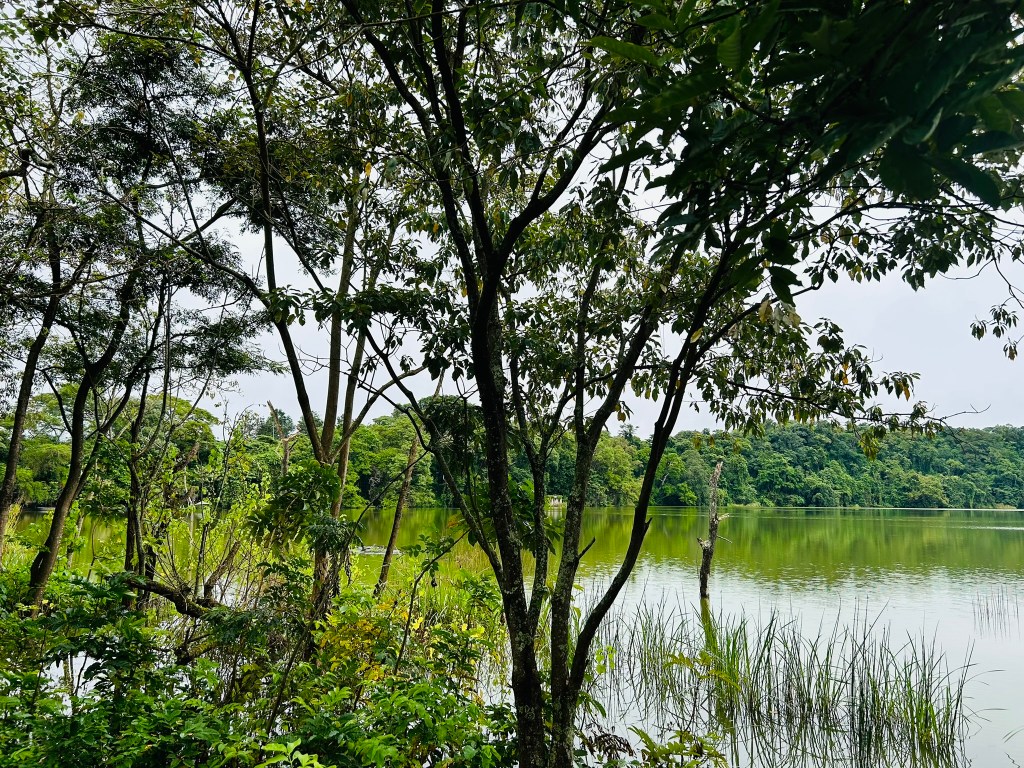
We had a full day of sight-seeing planned around Arusha the next day and started at Lake Dukuti. The weather was grey and gloomy so we didn´t stay longer than we needed to see the lake and take a couple of photos
The next stop was the Declaration Museum which was small and short but interesting to read all about the Arusha Declaration and what it meant to the country

After that we were heading for the Shanga Workshop, a sustainability-driven co-operative where we hoped to see artisans creating all sorts of things. We struggled to find it and drove up and down the same road three times getting a little frustrated. In the end, just before giving up, we asked a Police Officer – as you do! She pointed to large gates into a lodge and told us to go there. We weren´t convinced we had managed to communicate what we were looking for properly so pulled up to the gates rather uncertainly. I jumped out and spoke to the security guard. When I asked for the Shanga Workshop he smiled a broad smile, swung the gates open and welcomed us in
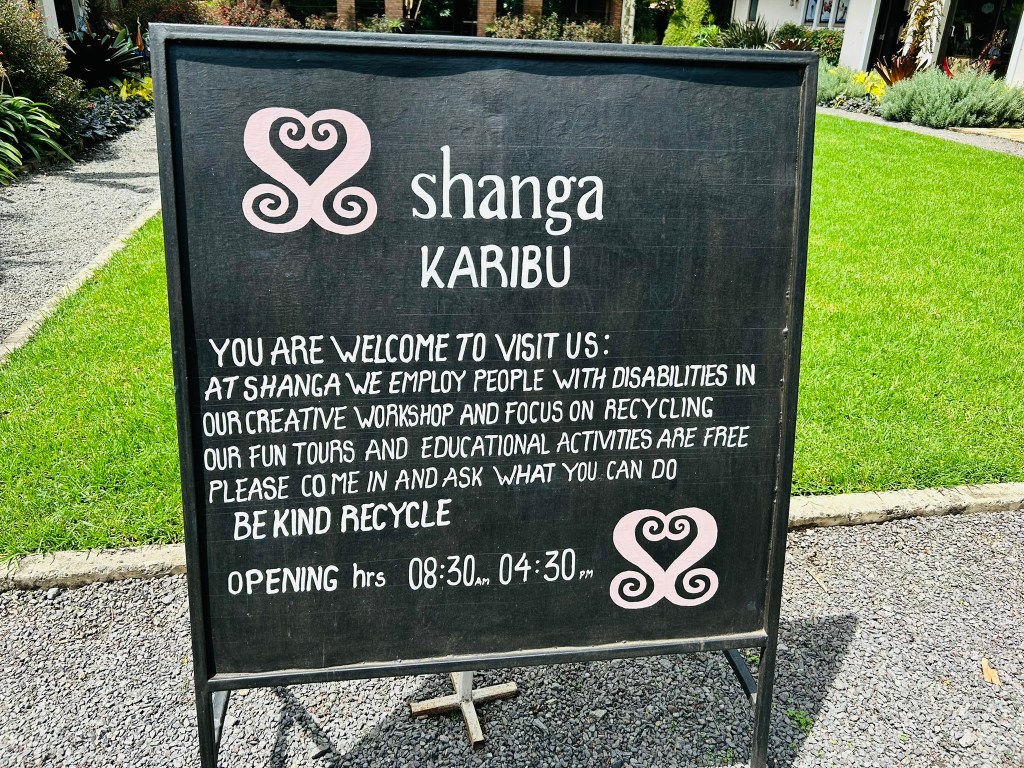
The workshop was amazing
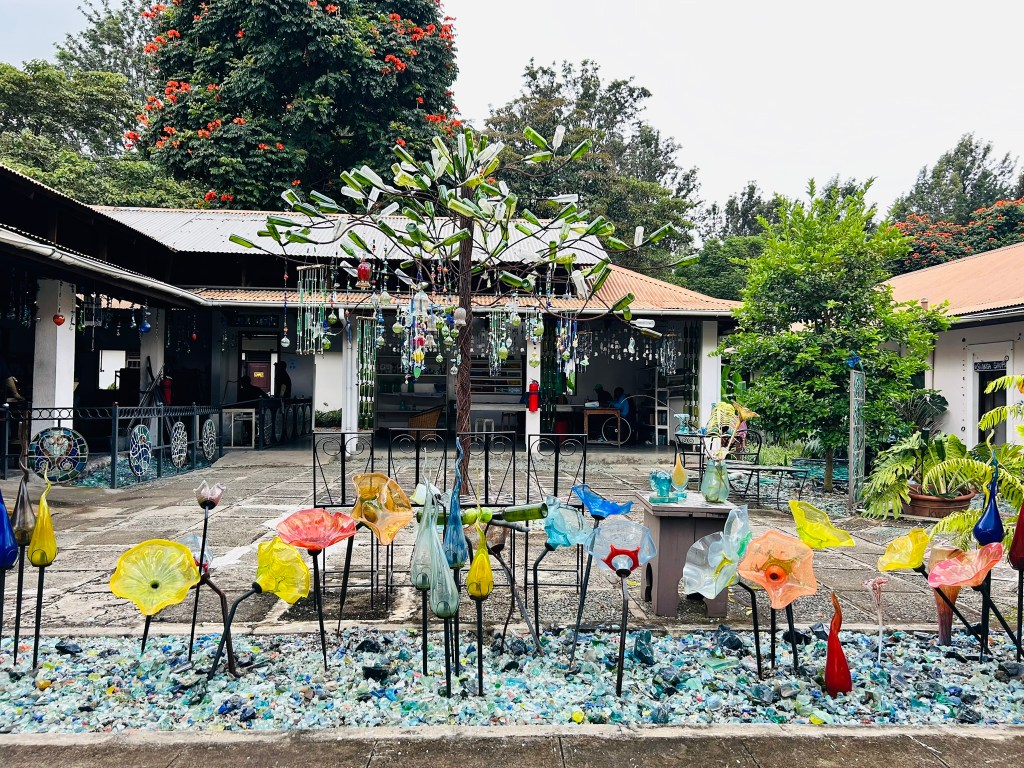
As soon as we parked up, one of the staff members came over to guide us around and made sure to point out the sign asking us not to pay or tip anyone, which felt very relaxing.
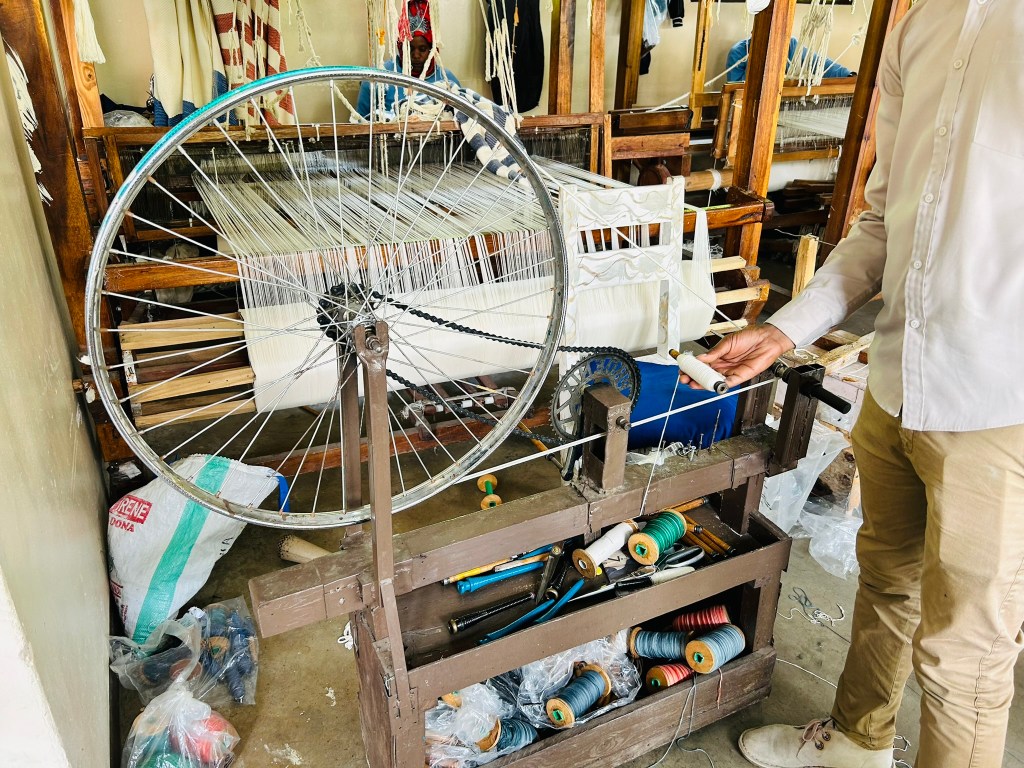
We started in the weaving room

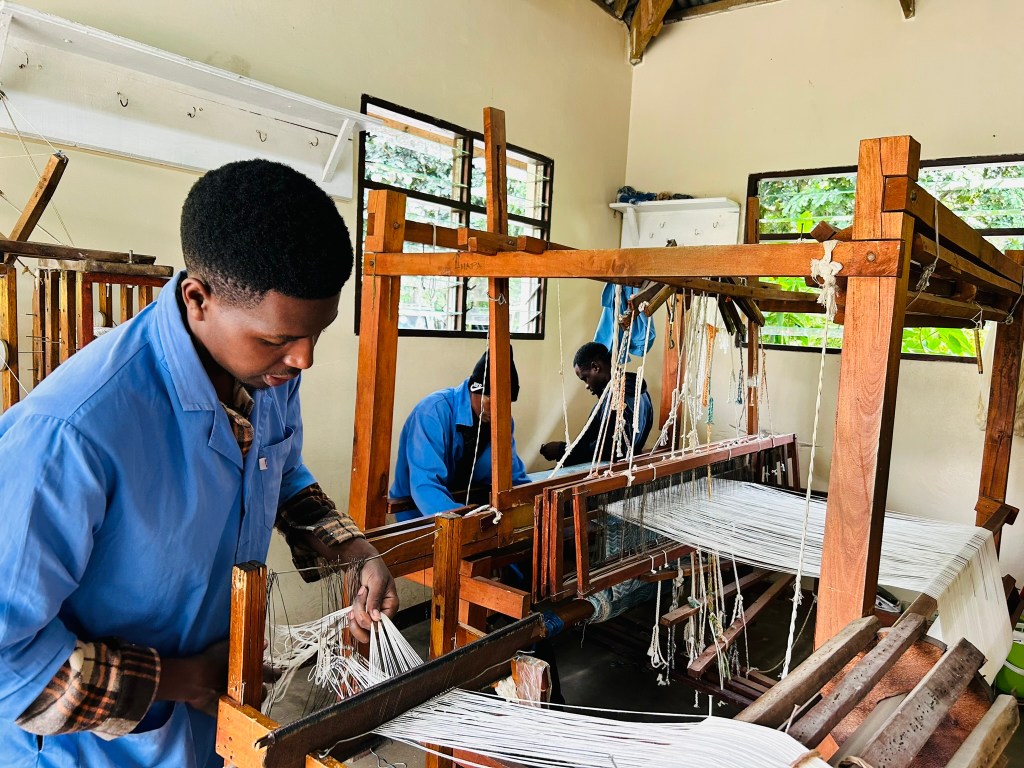
Fascinated to see the old bicycle re-purposed to load the yarn
Then it was on to the glass blowing
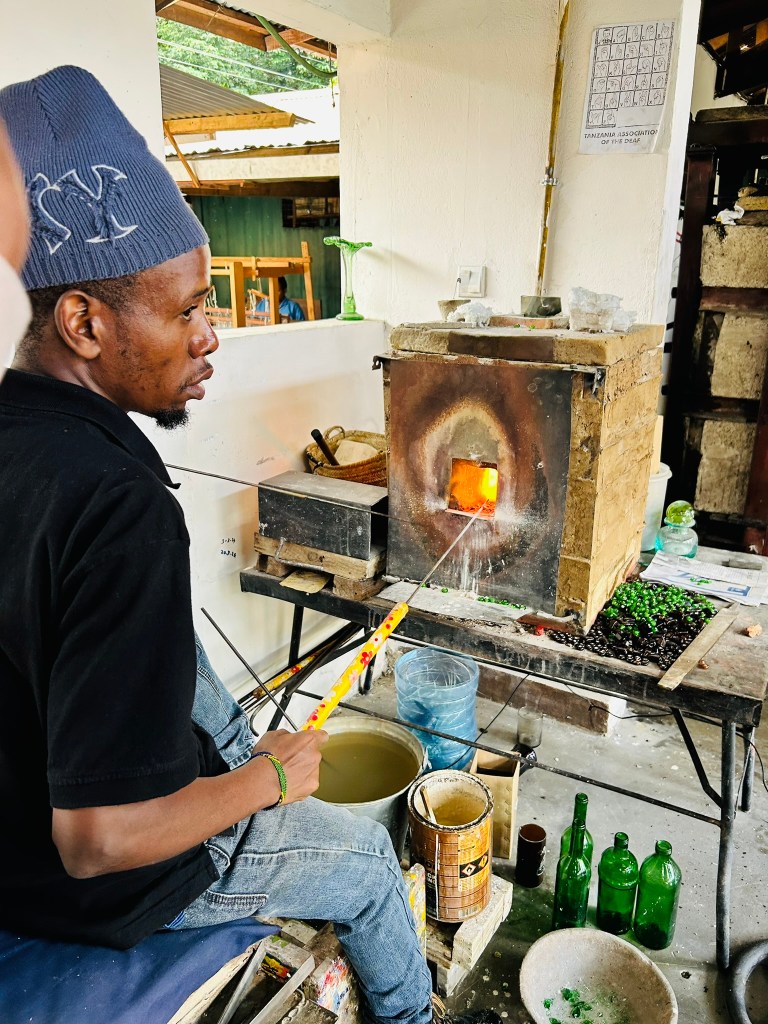
The artists making these glass bottles and bowls were so skilfull, we watched in awe
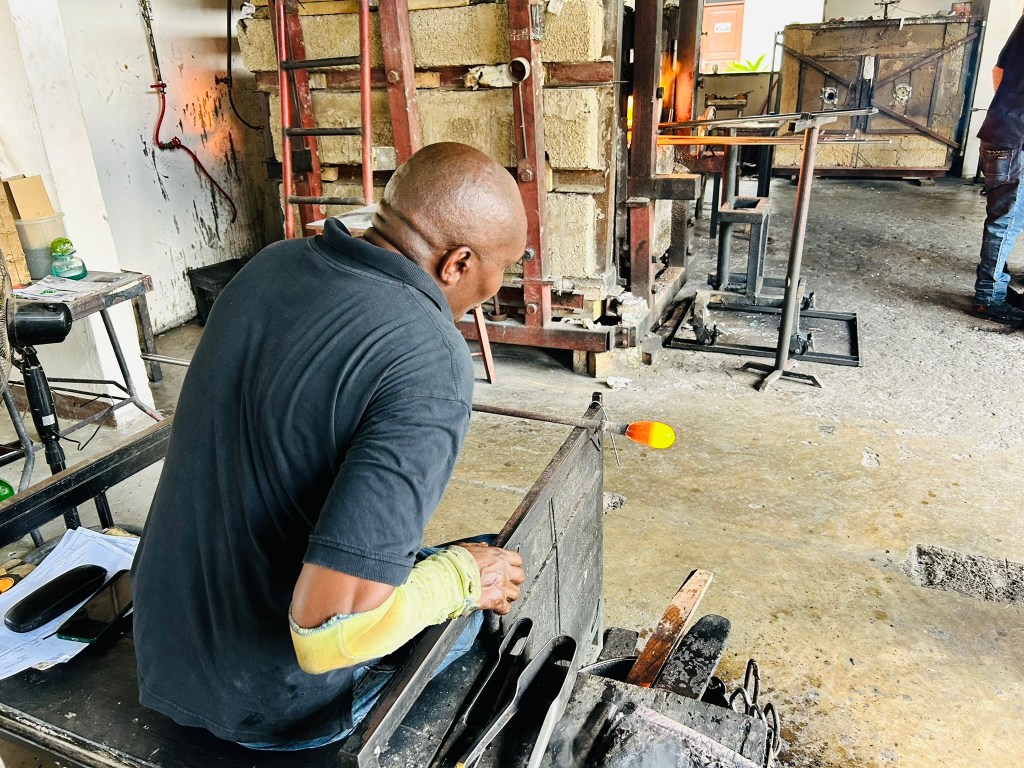
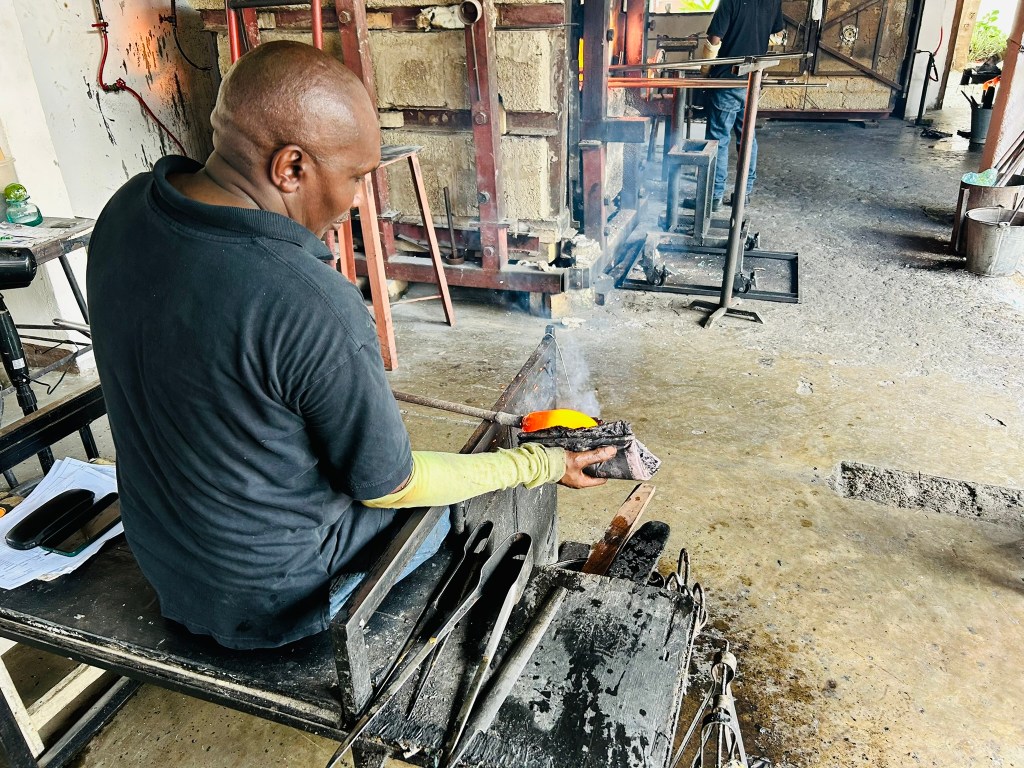
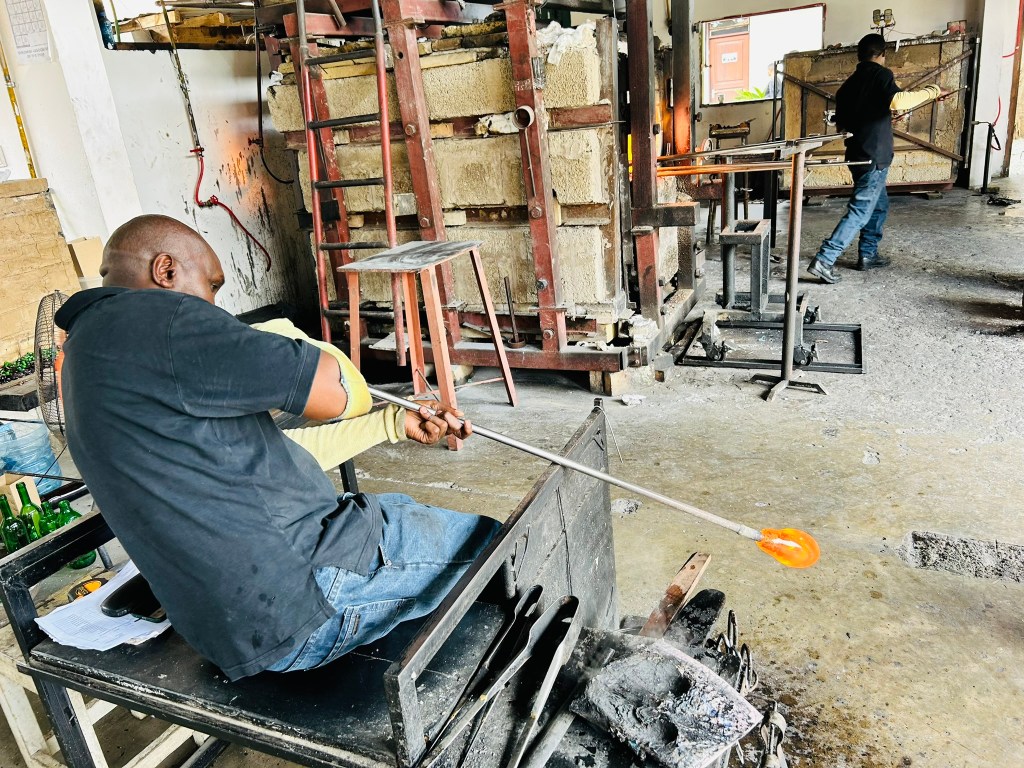
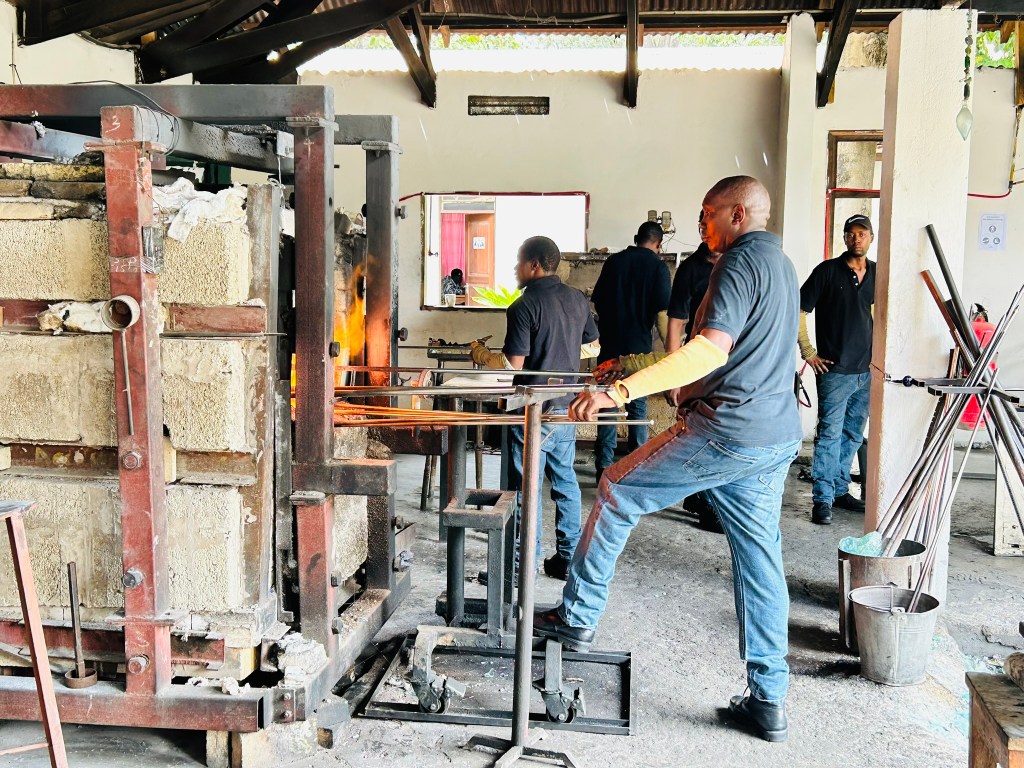
There were then the bead-makers whose attention to detail and dexterity was a sight to behold. And finally our guide showed us the mountains of bottles which are melted down to recycle into the artwork
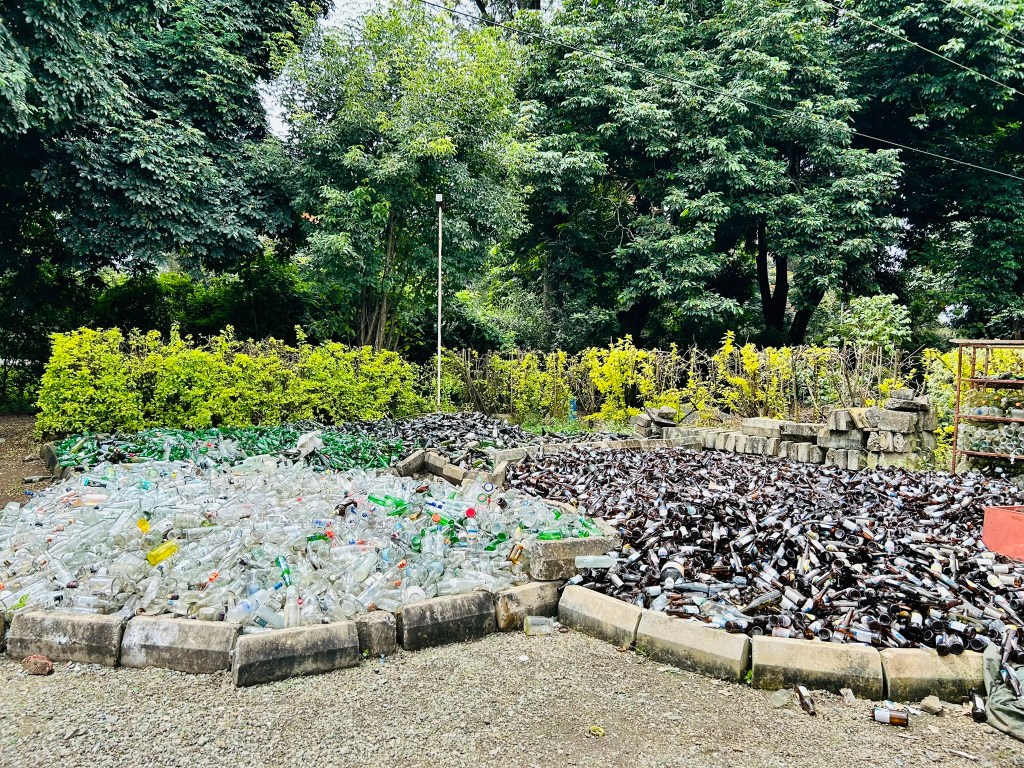
It was all fabulous and we were so pleased we had persevered in finding the place.
At the end we wandered over to the café where we treated ourselves to tea and cake.
As we ate, a Kenyan gentleman in stereotypical khaki shorts was talking on the phone very loudly in the upper-class British accent that many third or fourth generation white Kenyans have and I accidentally caught his eye. When his call was finished he came over to chat, opening with his admiration of Henry. He was one of those people who has done everything and been everywhere and wants to tell you all about it. Before long we were going cross-eyed. At one point he talked about studying in London as a young man where he used to dine at Lords with his friends a couple of times a week. James glanced at me and said ironically ´yes, I used to dine there regularly´. The man´s eyebrows went up in delight and he asked whether James was a Lord as well. I was laughing so hard I could barely finish eating my cake!
Our final stop of the day was the Cultural Heritage Centre and Art Gallery
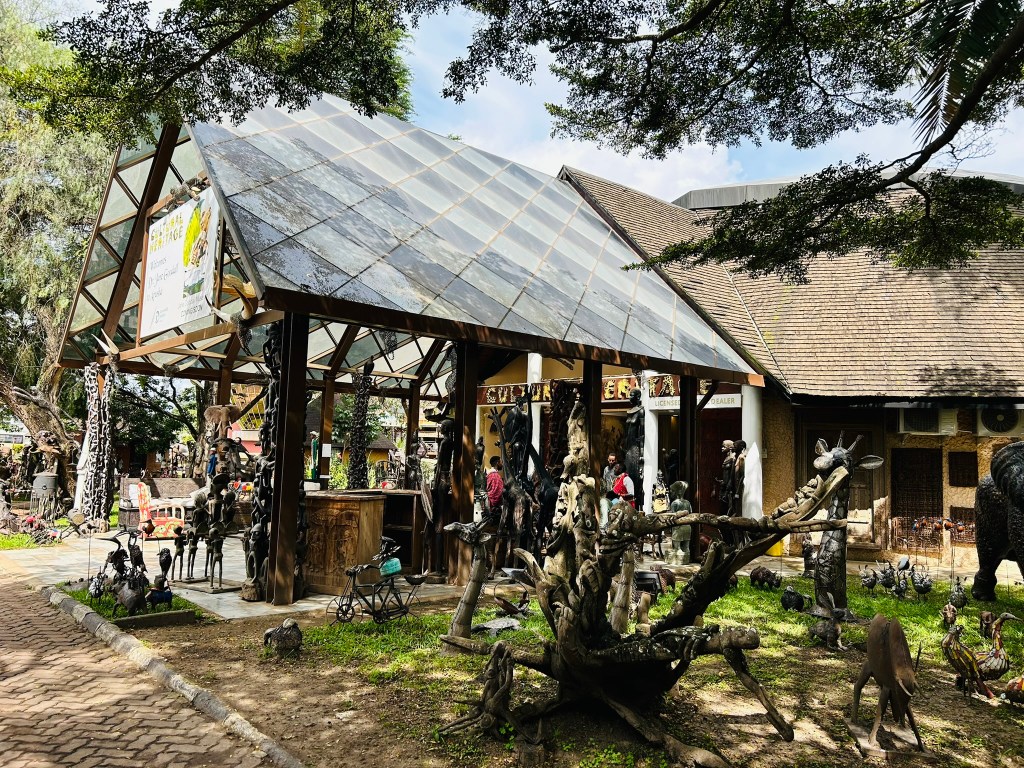

We chatted to a Tanzanite seller who showed us the difference in quality between the gems and had boxes full of stones worth anything from $150 up to $100,000. I chose one of the larger, better quality stones and asked James to buy it for me as an early birthday present. He looked at me with the same expression he had used when asked whether he was a Lord!
The art gallery itself was absolutely packed full of amazing things from paintings to carvings to statues to chairs. The top floors were mainly paintings, any one of which we would have happily hung on our walls had we had any walls!


As we went further down the items on display changed to look more like something you would expect to see in a museum – except they were all for sale


Many of the pieces looked centuries old and came from all over Africa including Cameroon, Nigeria, Ethiopia and the Congo.
I could have bought it all, it was just a shame there was no room in Henry to carry it – or maybe that was the only thing that saved us!
Back at the campsite we headed up to see Paul and Erika again and enjoyed another lovely evening with them.
The next morning, after having breakfast with our hosts we packed up, said our goodbyes, promised to stay in touch and headed off towards Lake Manyara. We had been struggling to find any mosquito spray for weeks and were getting perilously low. We searched everywhere on our route and finally managed to locate some in the small town of Mto Wa Nbo. The shop I walked into had sold out but a helpful local ran off to another store and brought back a few bottles. They were very small and not a brand I recognised but they assured me it was good stuff. With a lack of any alternative the only problem was the cost – they wanted $10 a bottle! It took about half an hour of negotiation and persuading them that we had been in Africa long enough to know the value of these things before the boss finally waved his hand with a smile and told his staff to let me have three bottles for $6 each! Not exactly win-win but at least we had something to keep us going.
The road up to the eco lodge was long, muddy and very slippery. It took nearly an hour to get there from the main road by which time we had lost all hope of ever finding it. The place had very good reviews and I had spoken to the owner previously who said camping was $20 or we could stay in what they called a ´Tiny Room´ for $100 including three meals a day. We had decided to stay three nights – two camping and one in a Tiny Room as a treat.
When we arrived, five or six staff members came rushing up to meet us at the campsite and sang us a welcome song which was fun at first but went on for a very long time too long. By the time they finally finished our smiles had become fixed and faltering and we were looking for somewhere to sit down!
As they showed us around it became clear that, whilst the lodge itself was lovely, the campsite was not yet up to the standards of everything else – the main problem being there were no toilets or showers. Instead they gave us a key to use the bathroom in one of the Tiny Rooms which was a long walk across slippery wooden boardwalks and cutting across a muddy path. The campsite itself was also rather uninspiring with long grass and no view of anything much, in fact we felt a bit as though we were in a car park.
In comparison the Tiny Room itself was beautiful


We were paying $20 for the camping but with not much food on board we needed to eat dinner with them at least one night and dinner cost $30. I was a bit unhappy with the situation and suggested to James that we stay just two nights, then we decided maybe one night in the Tiny Room but with the long drive from the main road it seemed nonsense to drive all the way back again the next morning.
In the end Ernest, the owner, arrived and we got chatting to him. He was a lovely man who had put his heart and soul into this place and supported a local school with the profits. He told his staff to upgrade us to a bigger room with a stunning view and then offered us two nights including full board for $150. It was a done deal!
We packed all our overnight stuff into shopping bags and carried it to our new home. It was everything we could have wanted and more


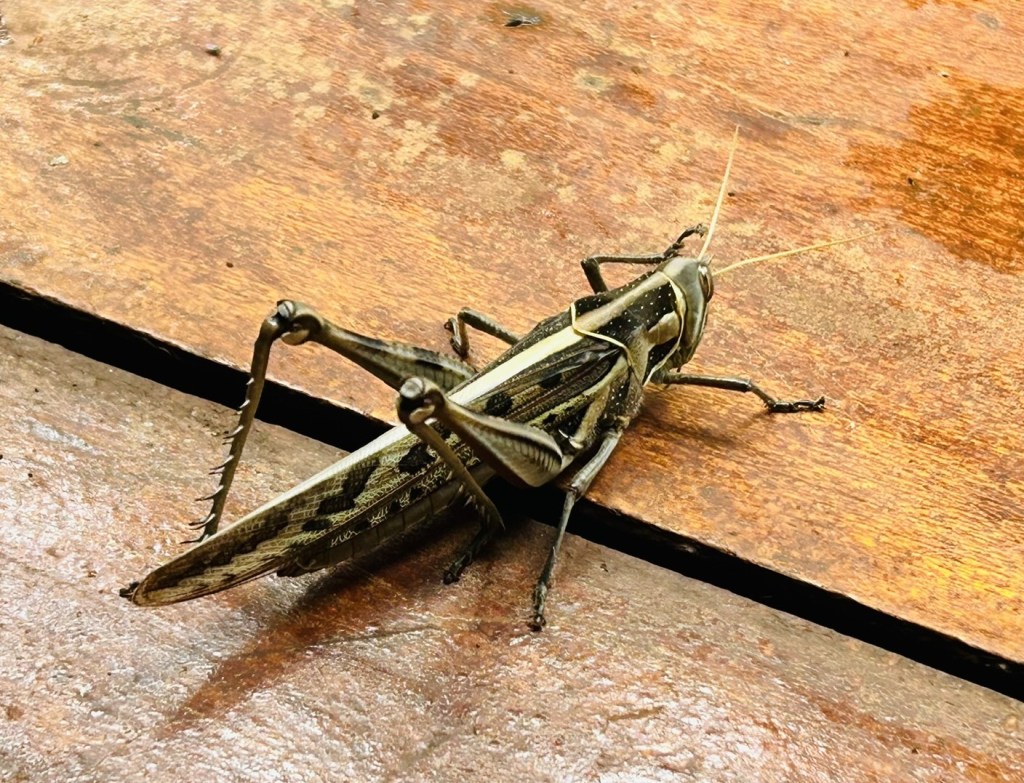
Including a brilliant drinks table that was hung from the ceiling!

We did very little for the next two days apart from eat, relax in the beautiful surroundings, play with a cute cat and enjoy our double bed and ensuite shower
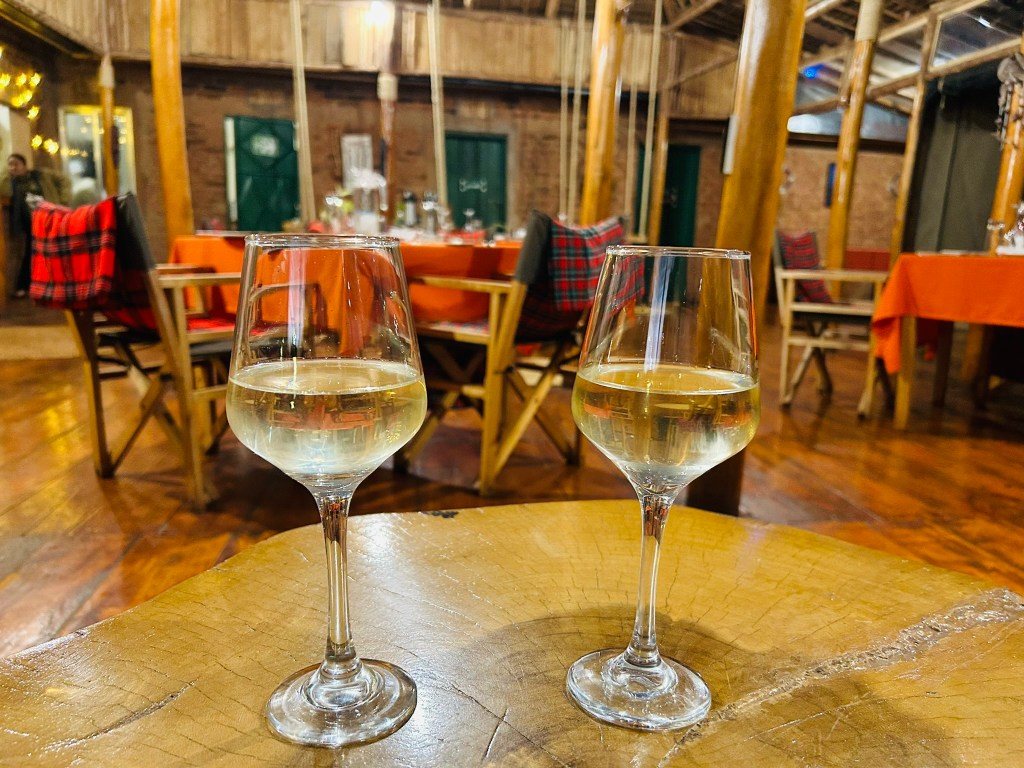
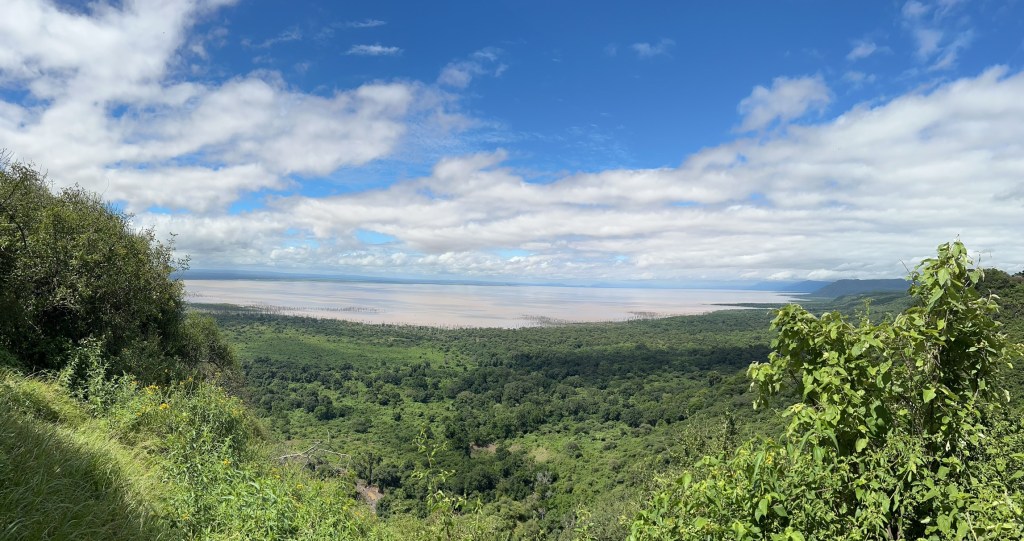
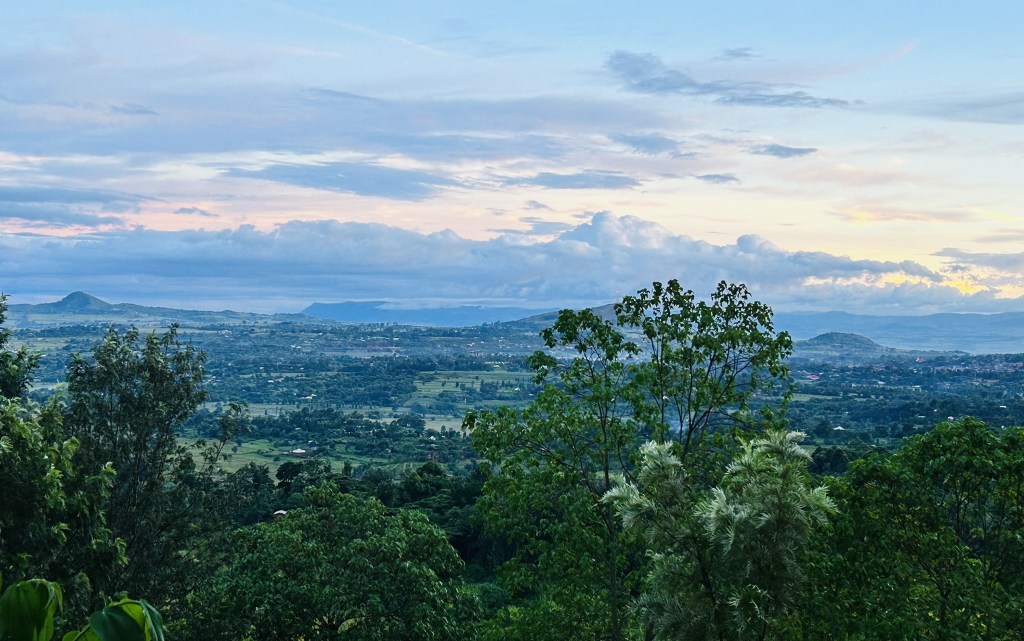
We also spent hours chatting to Ernest about the Tanzanian president, investment opportunities, the flooding and how much the communities supported those who had lost homes and belongings, the state of the roads and anything else we could think of.
And by the time we were packing up to leave we were so full we could barely move! I thought I wouldn´t eat again for a week.
We were heading for the Kondoa Irangi rock paintings which were about three and a half hours away. The staff at the eco lodge gave us a packed lunch of chicken, rice, yogurt and fruit before we left so, with our already bulging stomachs, food was not going to be an issue. But our water reserves were critical.
As we drove we kept our eyes peeled for any sign of a water supply but the only well tap we found anywhere was dry. Eventually we came across a large tourist place called the Africa Galleria which I thought might have a supply. I jumped out to look around and was greeted by a large Masai who asked if I needed help. When I told him we needed water he showed me to a tap and carried two of our water containers to it, filled them and carried them back again all the time chatting to me about our travels in his best English.
Once we were fully refilled I dashed to use the toilets before we left and when I came back around the corner I saw the Masai standing next to James holding our detachable steering wheel in his hands and laughing! The incongruity of the image made me smile.
Driving through Africa is a great way to understand the continent and get a feel for how it ticks. It is certainly never dull. This particular journey was no different from most others with stunning landscapes punctuated by friendly and often funny exchanges with the locals.
We were pulled over by three female police officers who just wanted to carry out basic checks. They tried to practice their English on me but weren´t very good. In the end they settled for the standard Swahili ´habari´ greeting and broke out in huge grins and a thumbs up when I replied with ´nsulu sana´.
Further on we were stopped by immigration officers who wanted to check our passports. When they saw different names in each the lady asked whether we were married. I replied that we were and she smiled and waved us off wishing us ´an enjoyable trip Mr and Mrs!´
By this time I needed to use the toilet again so we pulled into a fuel station but they did not have one for public use. They directed me to a restaurant across the road who they said would let me use theirs. I went in and the owner told a member of staff to escort me down the road to the public toilet which they use. By the time we got there I was desperate but the gates were locked. It took some time and asking around to find the key by which time a local shop-keeper was watching me jiggling about and asked with a smile whether it was that bad. I replied with a grimace and a nod. The man finally came back with the key and I was able to go. When I came out the key-provider had vanished but the shop-keeper put his thumbs up and high-fived me as I went past!
We had not found a campsite anywhere near the site of the rock paintings but IOverlander had a wild camp a few miles before it. Wild camps are very hit and miss – sometimes they are impossible to find, sometimes they no longer exist and often they are not suitable for us. So we were very relieved when we found a small dirt track leading behind a mound just as described in the IOverlander entry and a nice, flat space where we could tuck Henry out of site for the night

We were high up here again so it was cool and there were few bugs around. We were very happy with our find and settled in for the night.
We were only disturbed once early in the evening by a man on a motorbike pulling up to check his on his bees. He disappared into the bushes for a few minutes then apologised for disturbing us and rode off again.
But about half an hour after getting into bed, James had his earphones in listening to his audio book and I heard footsteps outside. They sounded human but could have been an animal. I thought it best to check just to be sure so shook James´ arm to get his attention and told him there was something or someone outside.
Without a thought, and without stopping to put on his clothes or even some shoes, he leapt out of bed, flew out of the back door and stalked around calling ´hello, hello´. There was no-one there, all was quiet and it was clear it had been nothing more than an animal passing by. But I have to admit, if I´d been some local walking past I wouldn´t have stayed around long with a half-naked man running around looking as fierce as they come!
It was only short drive to the office of the rock paintings the next morning and the rangers there were very friendly and helpful. We were happy to pay the higher ‘foreigner’ price for our own tickets but Henry was going to be prohibitively expensive. We managed to negotiate with them to agree he had been in Africa for so long he could be counted as a local vehicle! With smiles and shaking of hands all round the guide hopped in the back to take us to the site.
The road there was bumpy and a little soggy
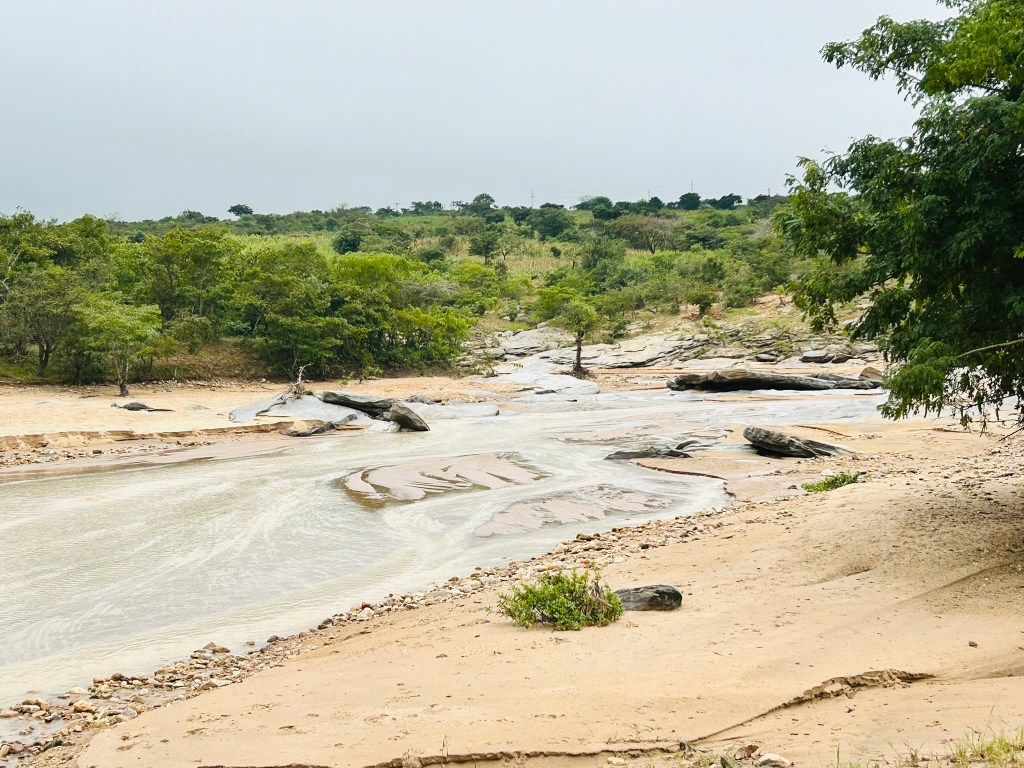
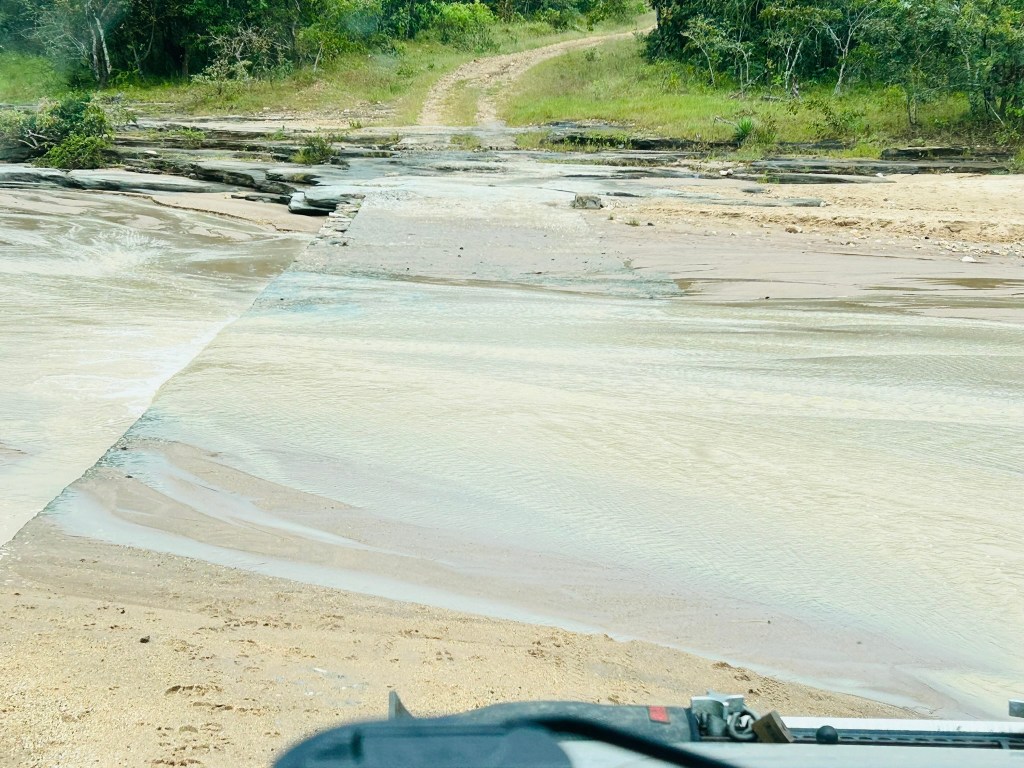
It was a short walk from the car park to the caves and our guide was very knowledgeable about the history of the paintings

We wandered between three sites admiring the artwork and seeing geometric shapes amongst them for the first time


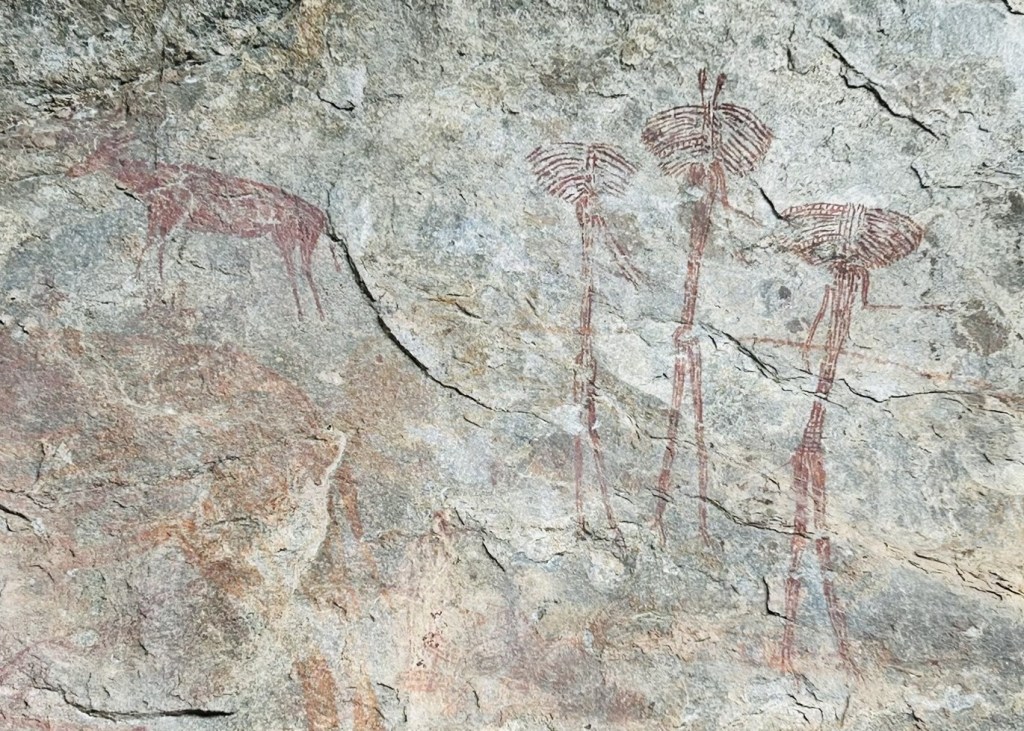
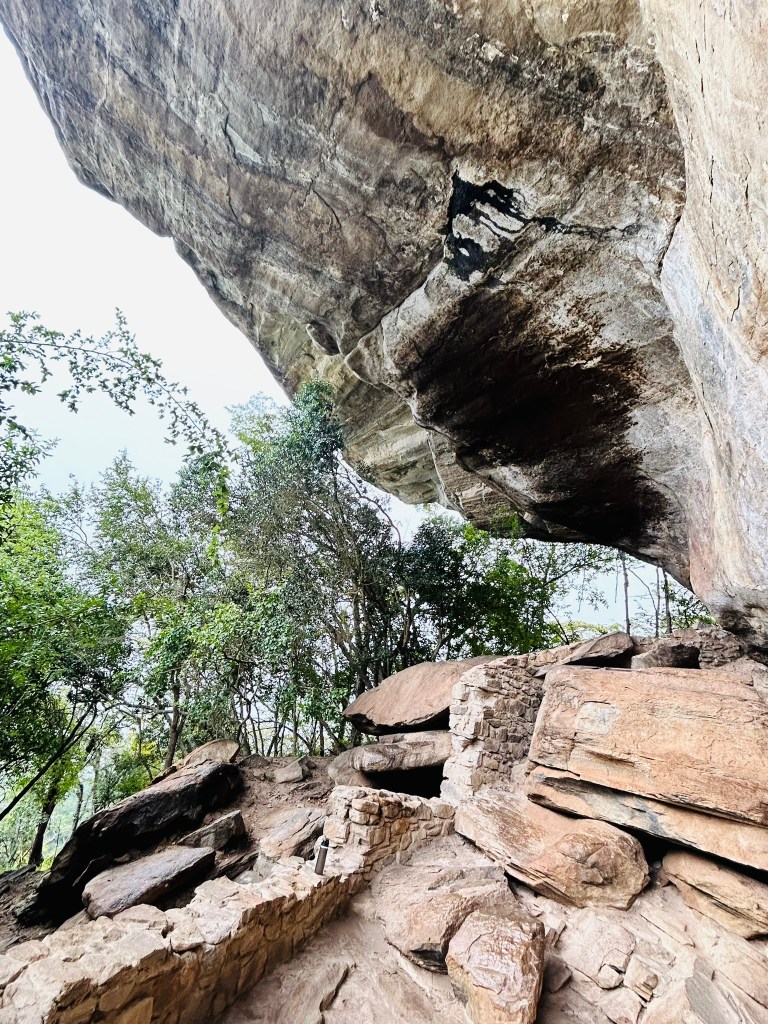
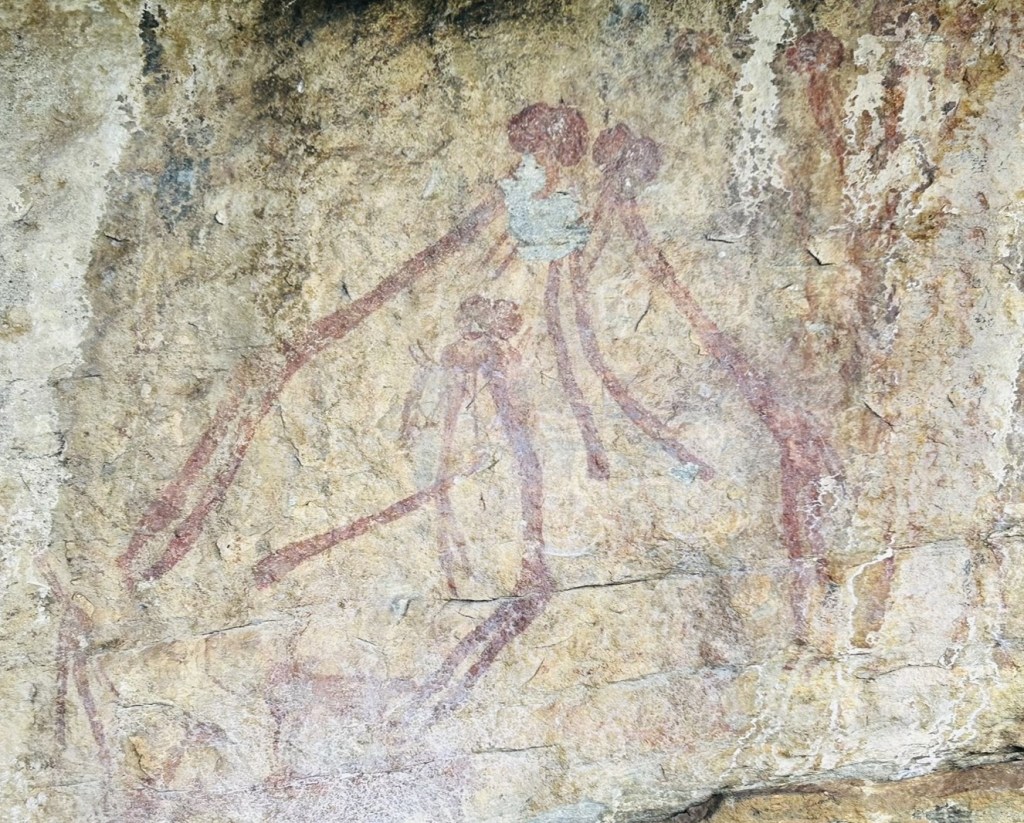
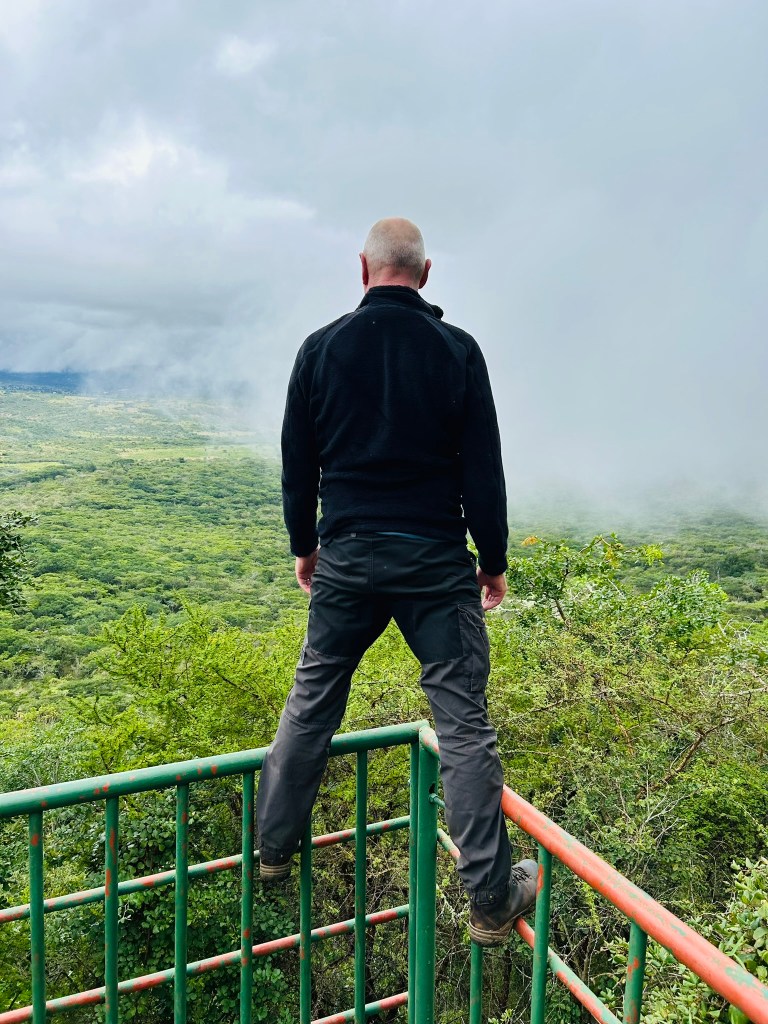
The views from the top were spectacular

After taking the guide back to the office we headed back the way we had come before taking a turn west towards Lake Victoria. The lake was to be our last stop in Tanzania before leaving this amazing country and starting our new adventures in Rwanda. We had been here for two months already and seen so much in that time we could barely remember everything we had done. Tanzania had turned out to be one of the most interesting places we had visited so far and any fears we had had about the police forcing us to cut our stay short were long forgotten.
So it was with a tinge of sadness that we neared the end of our time here, Tanzania had felt like home for a while and we were determined to enjoy the last few days as we steamed relentlessly onwards…
 The Sidetracked Sagas
2 responses to “Lord James of Stirchley”
I love reading your blogs!
ESending you lots of love
LikeLike
wow!! 93The Land of 1,000 Hills
LikeLike