Gradac Monastery was beautiful. Not just because it was a lovely old building with a long and intriguing history, but also because it was 19 degrees with blue skies and a warm sun shining down on us

But we couldn’t stay forever so eventually we dragged ourselves off our bench and back to BigMog. We were heading for Studenica Monastery, reputed to be one of the most beautiful of all.
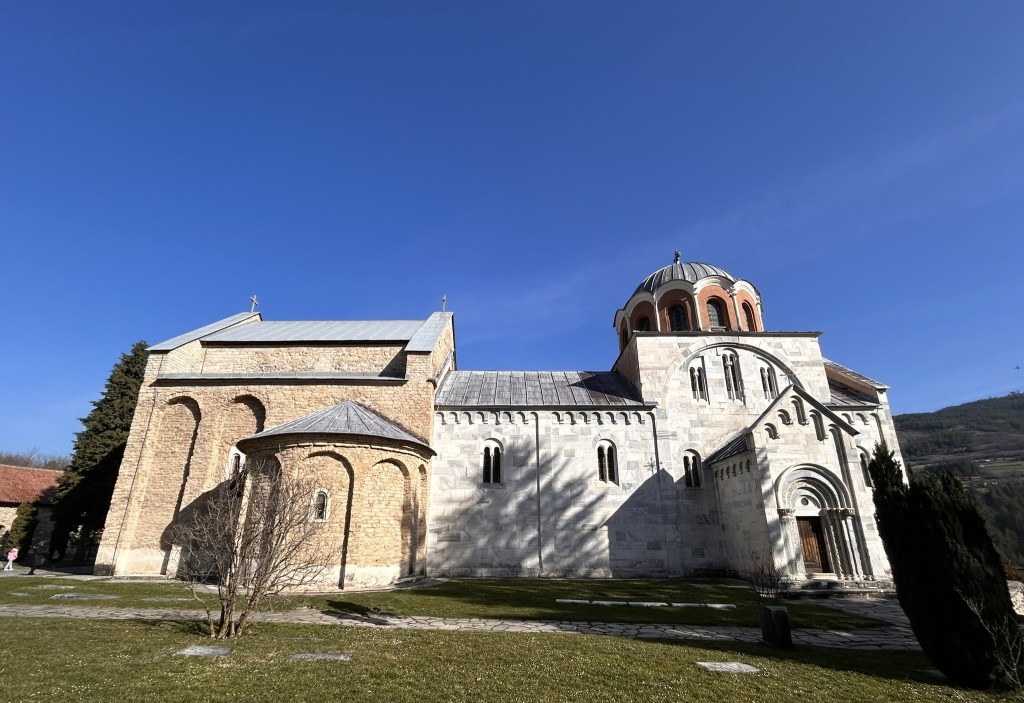
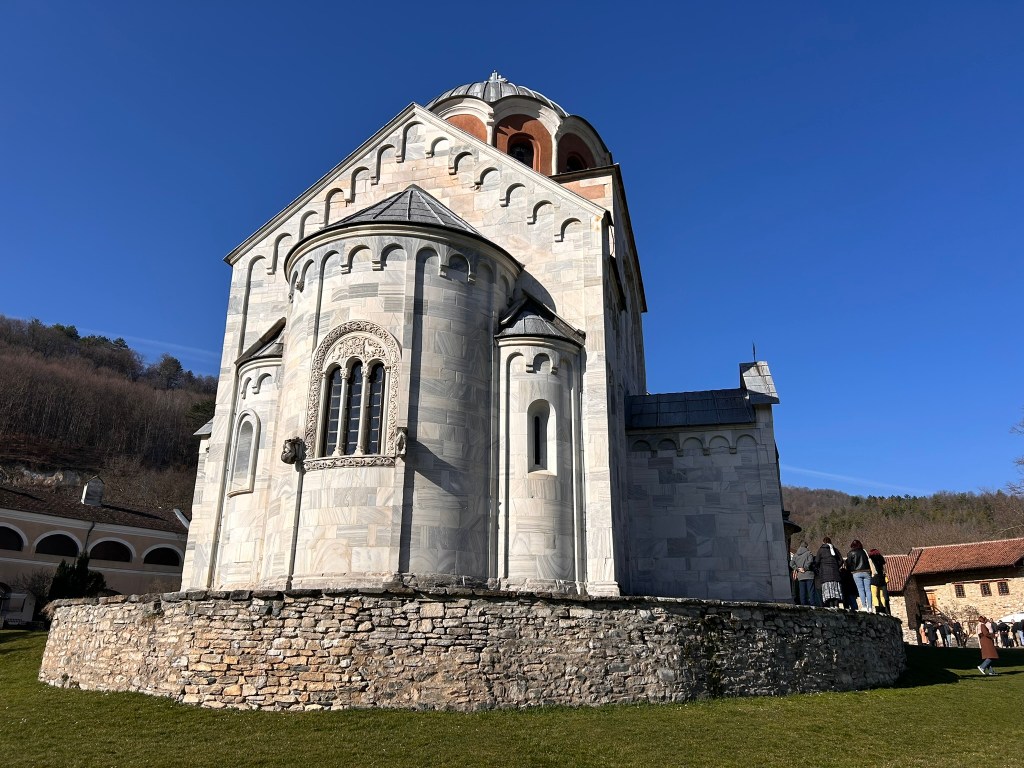
We were not disappointed, it was gorgeous
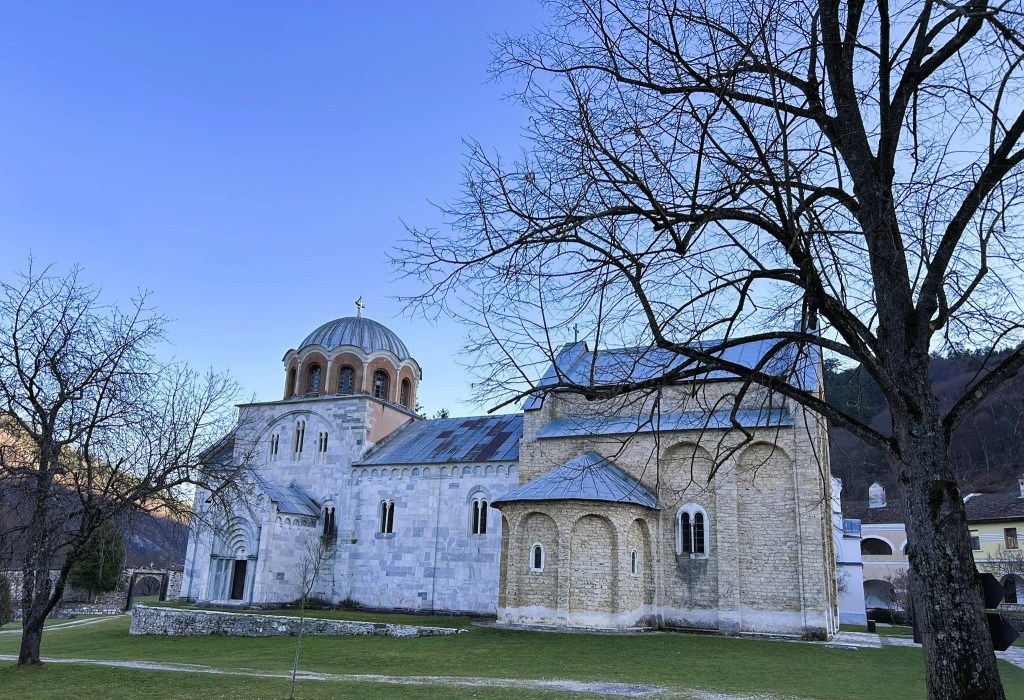
It was also one of the largest we had seen with a ring of monastic buildings circling two churches
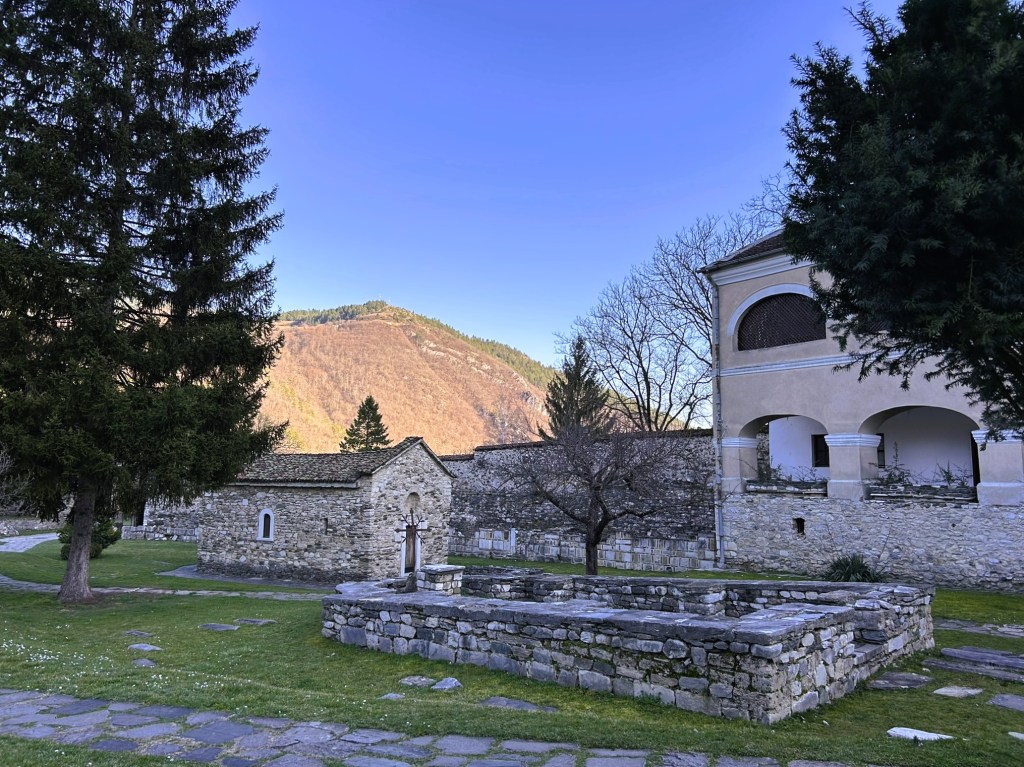
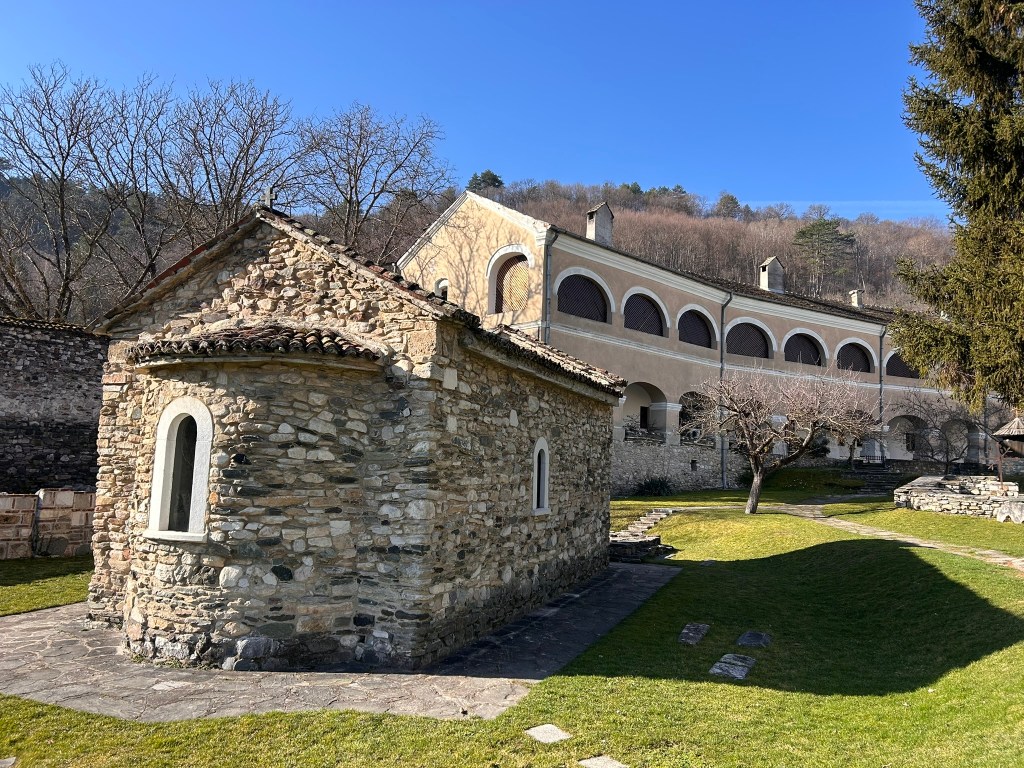
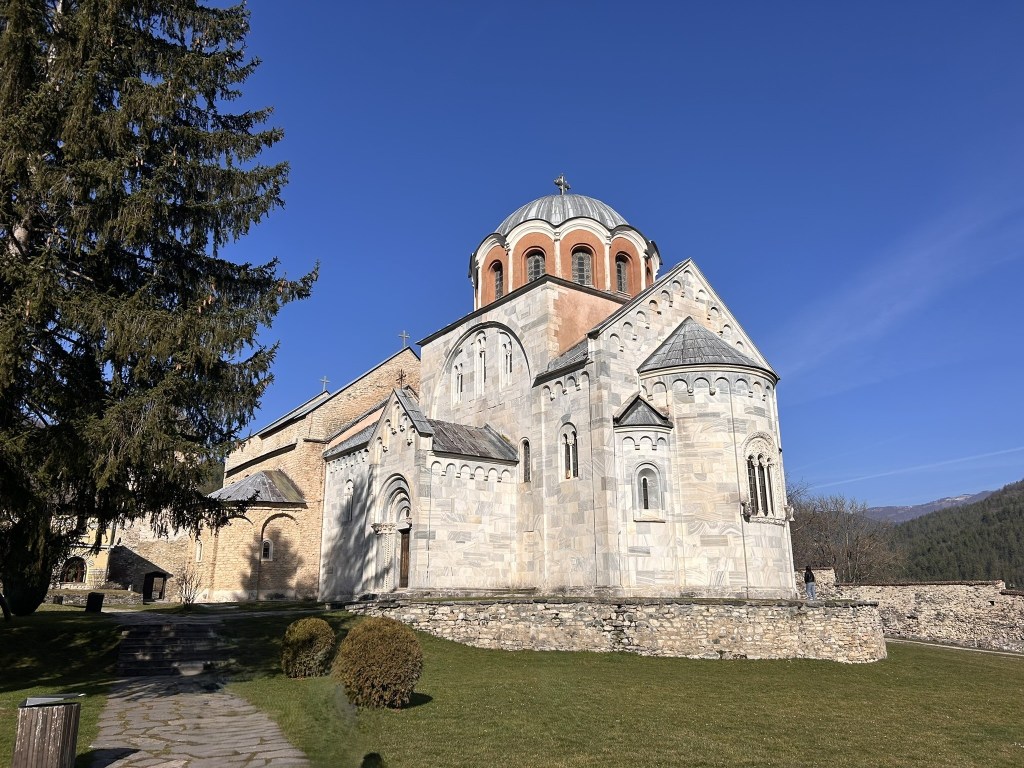
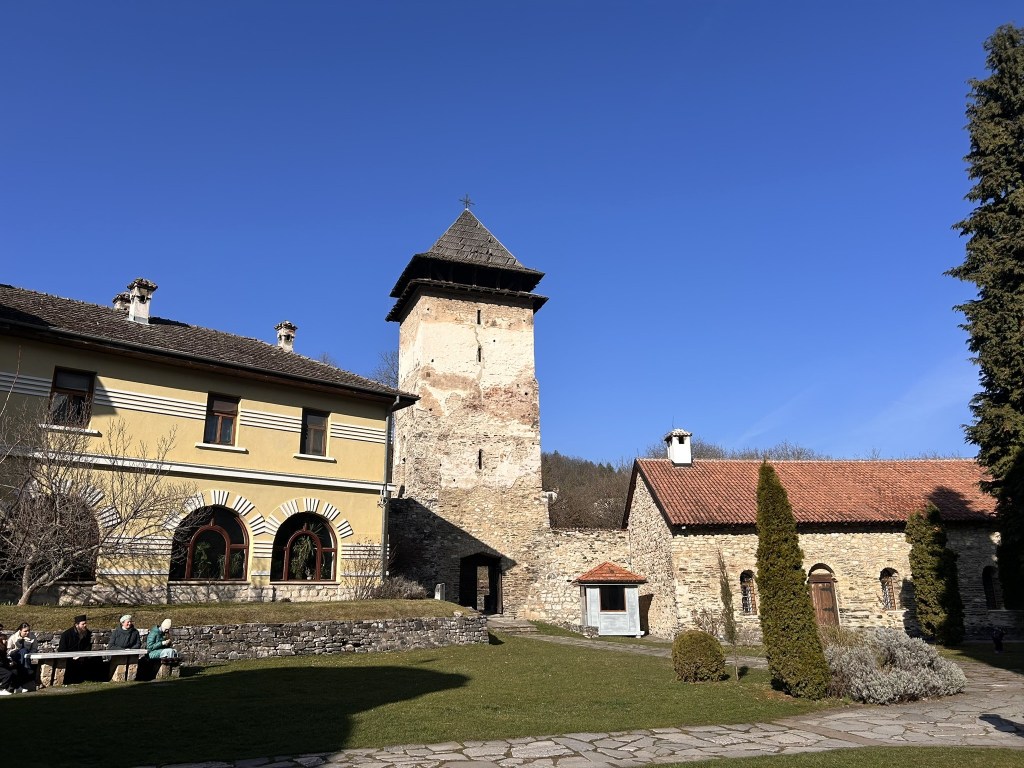
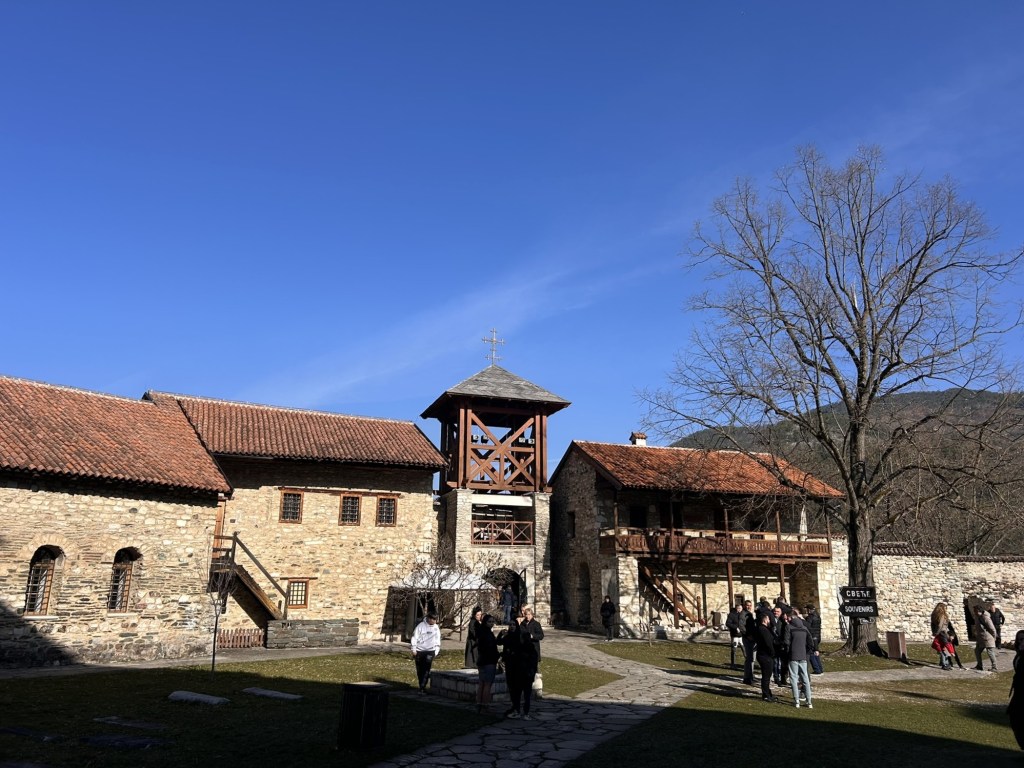
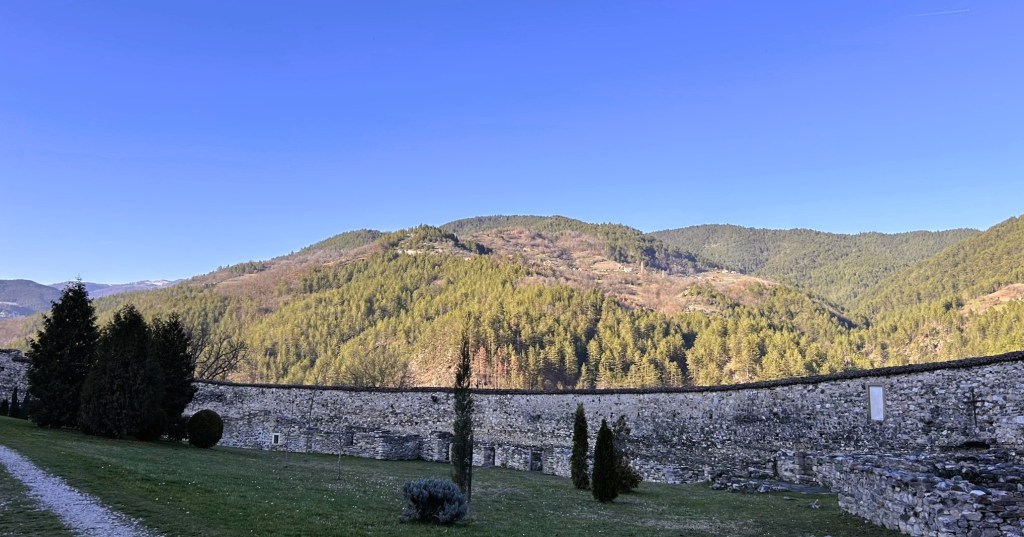
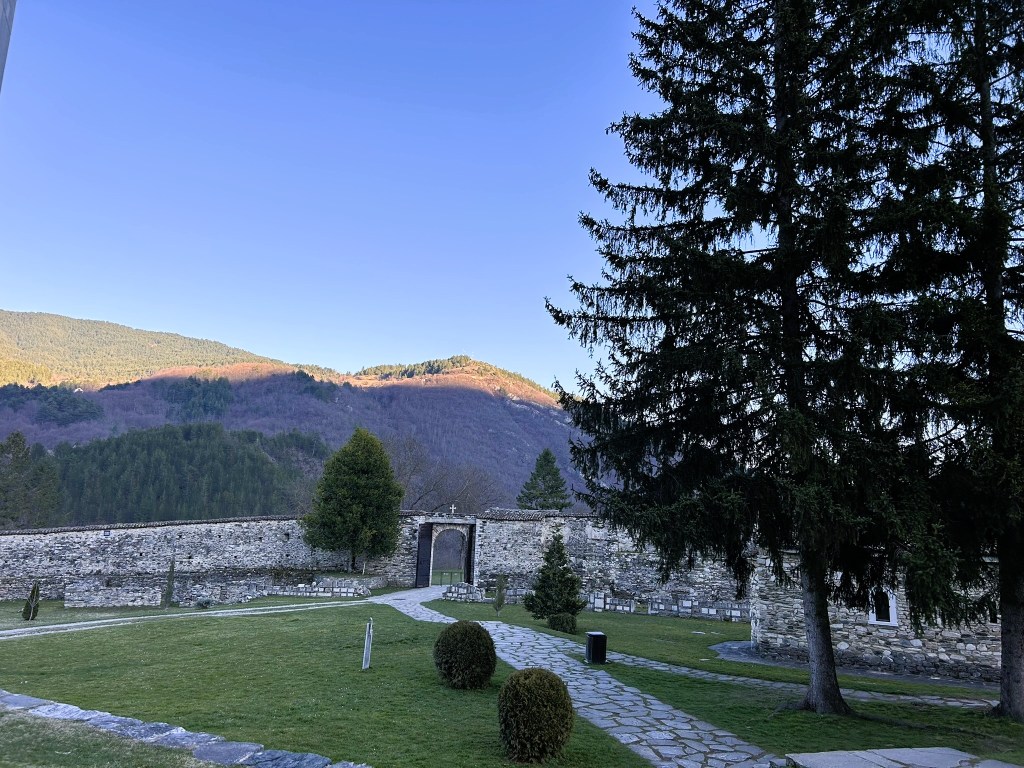
The views were lovely
The church itself was huge inside
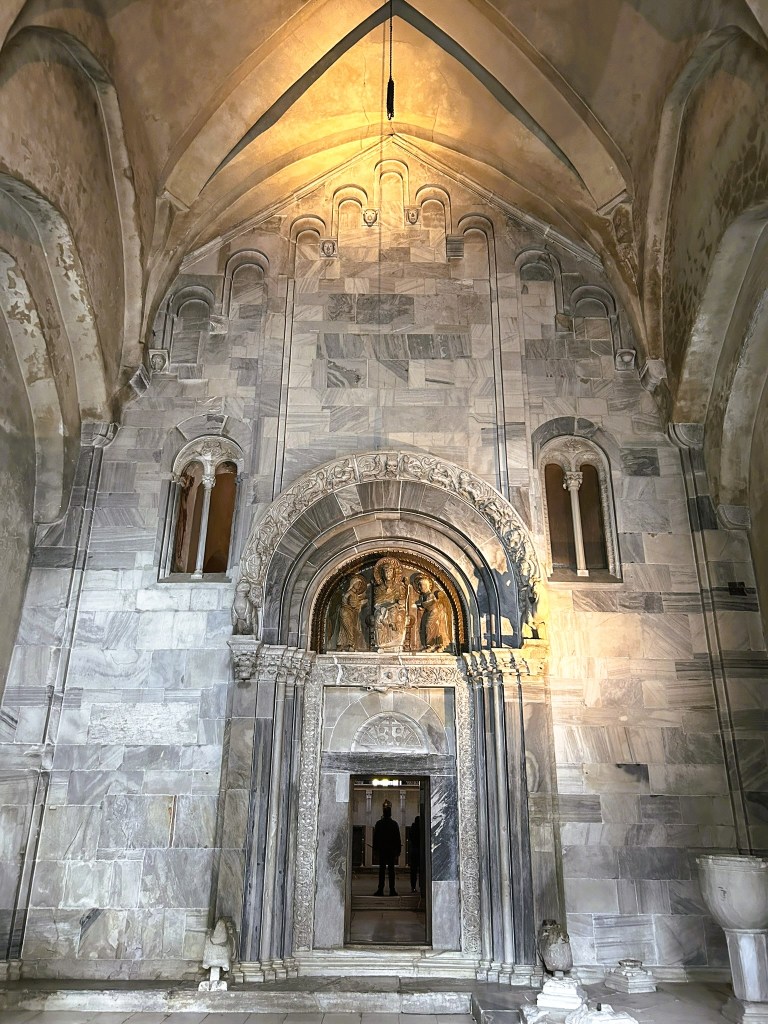
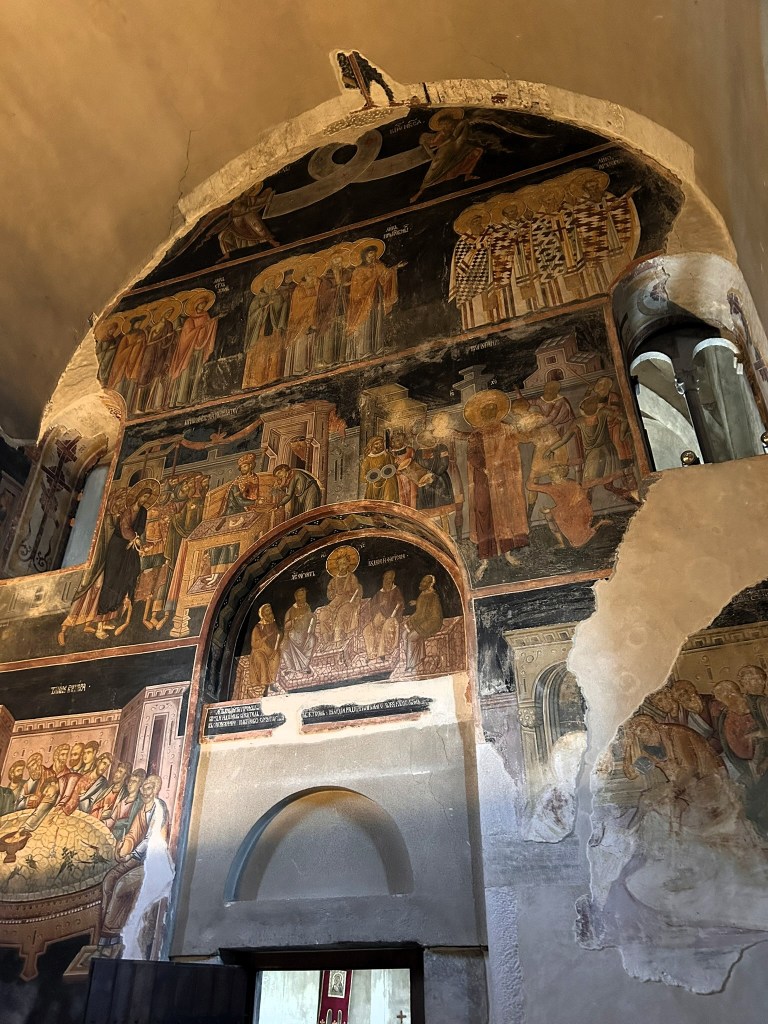
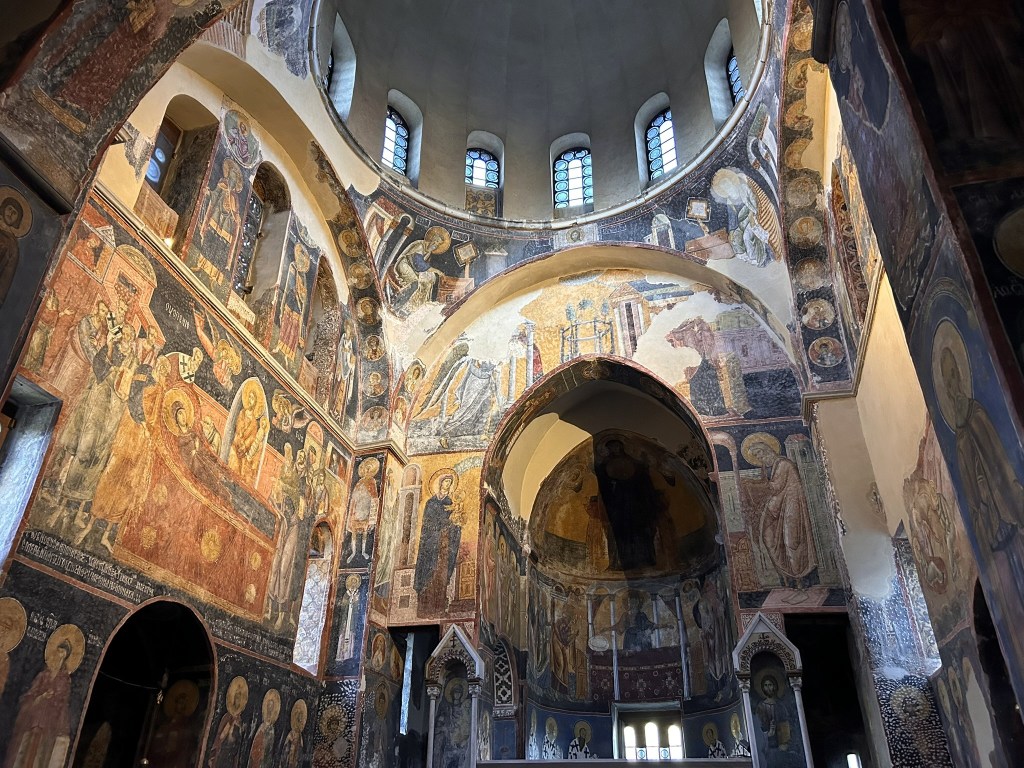
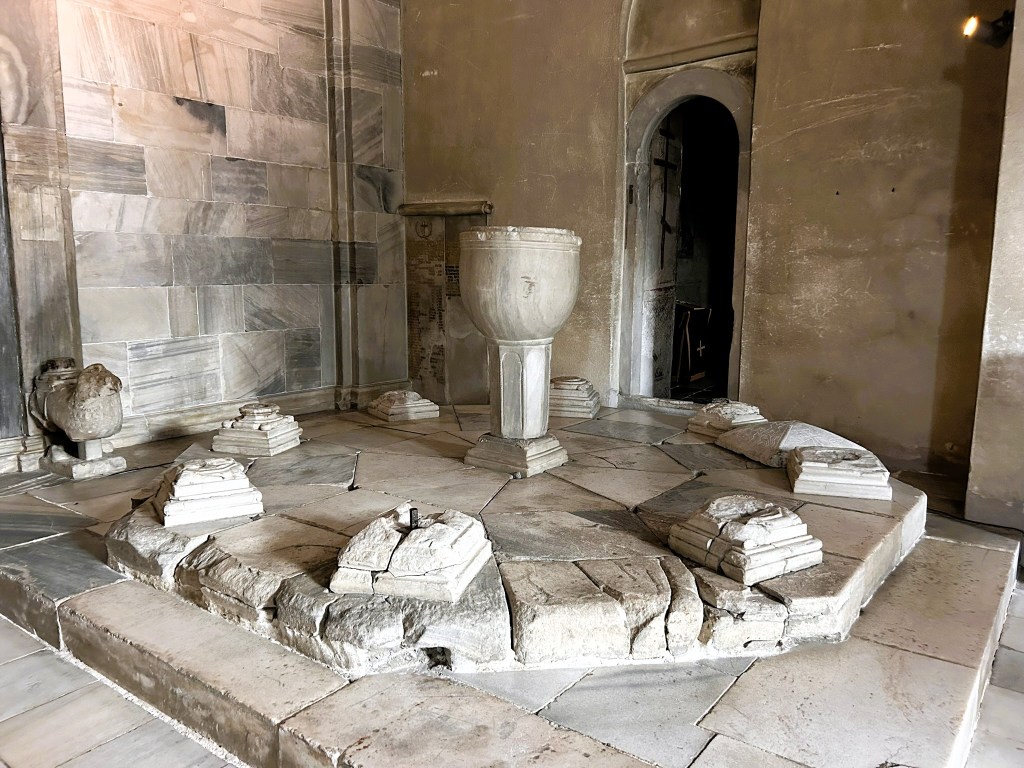
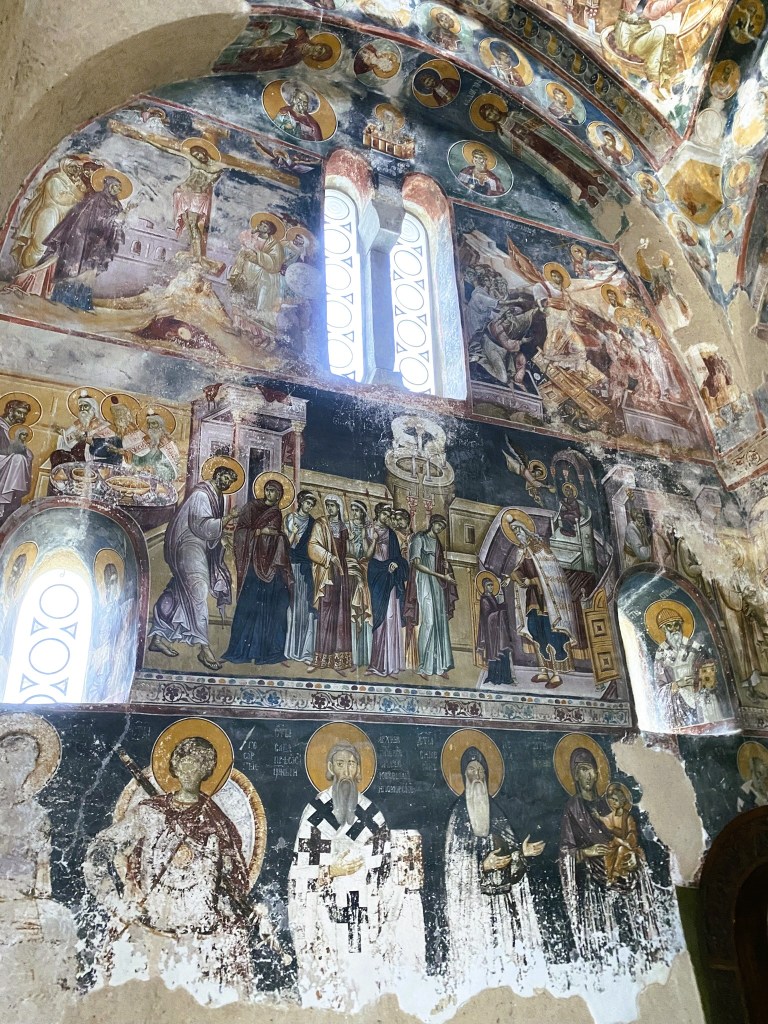
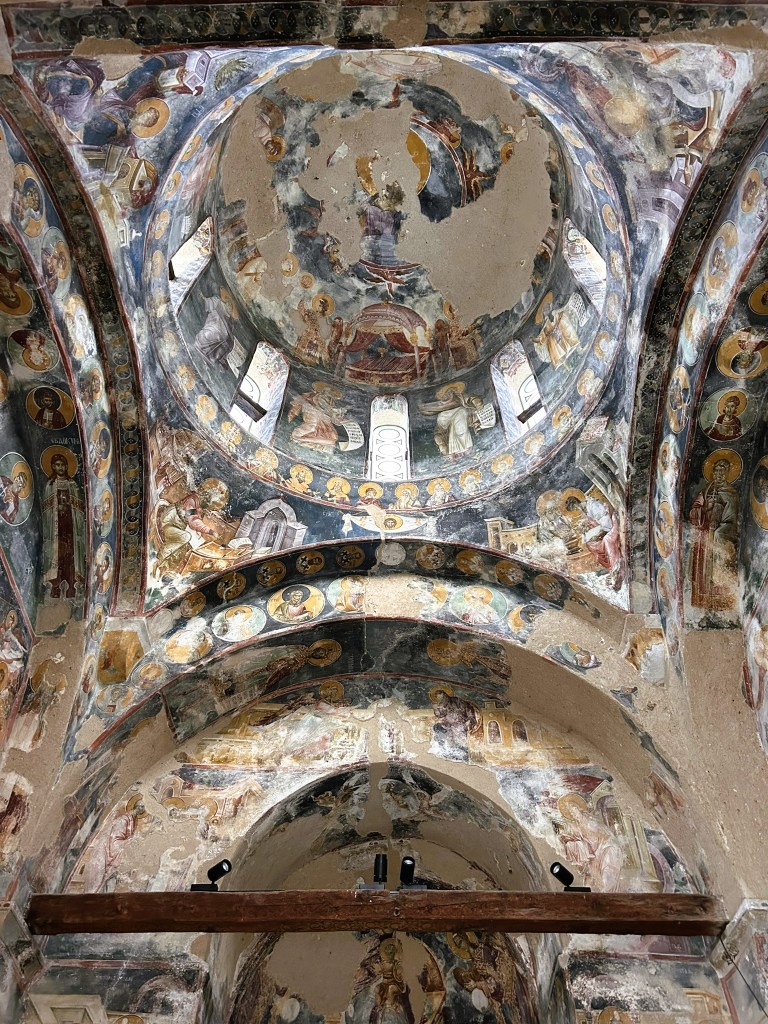
With the tomb of one of Serbia’s greatest rulers – Stefan Nemanja who was buried here in 1206
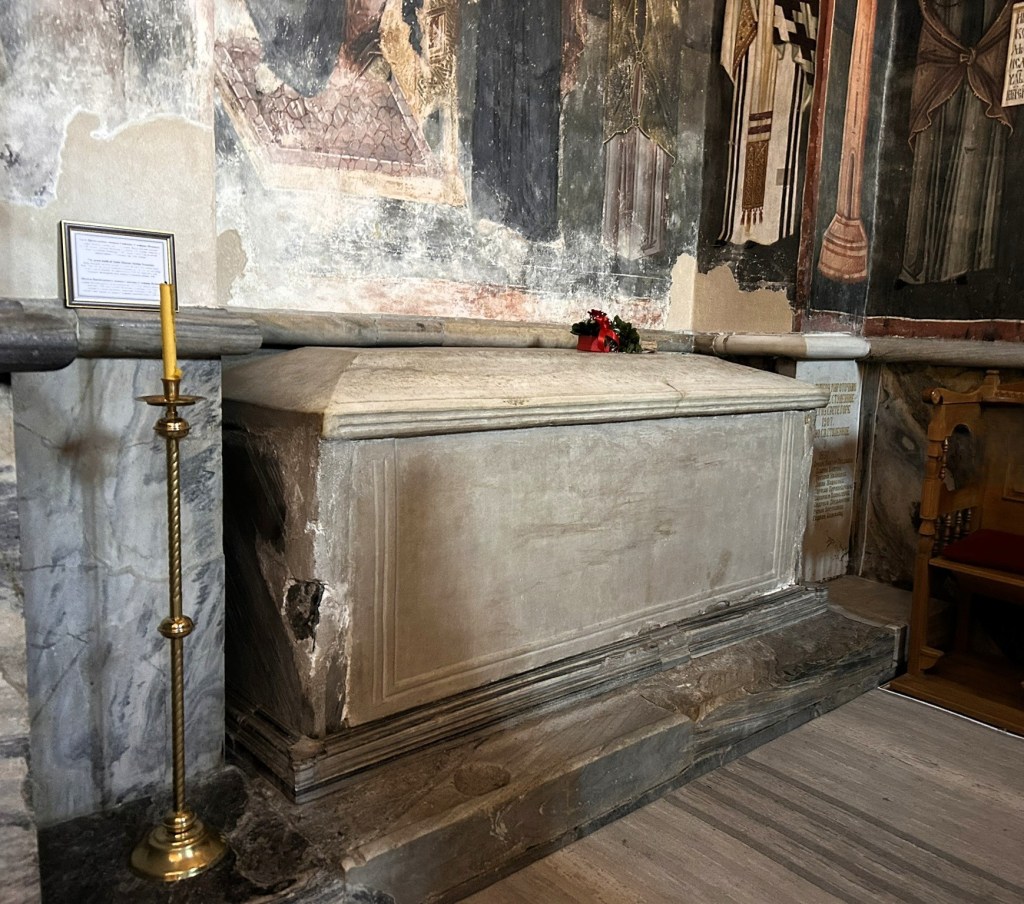
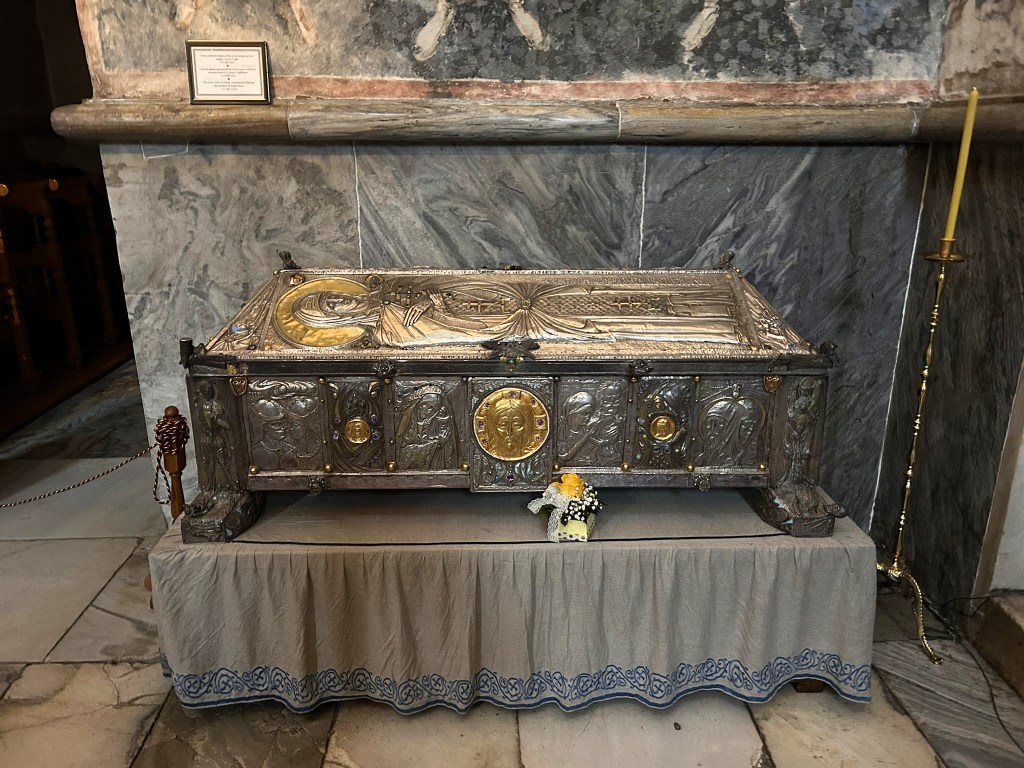
It was late in the afternoon by the time we’d finished so we stayed overnight just outside the gates
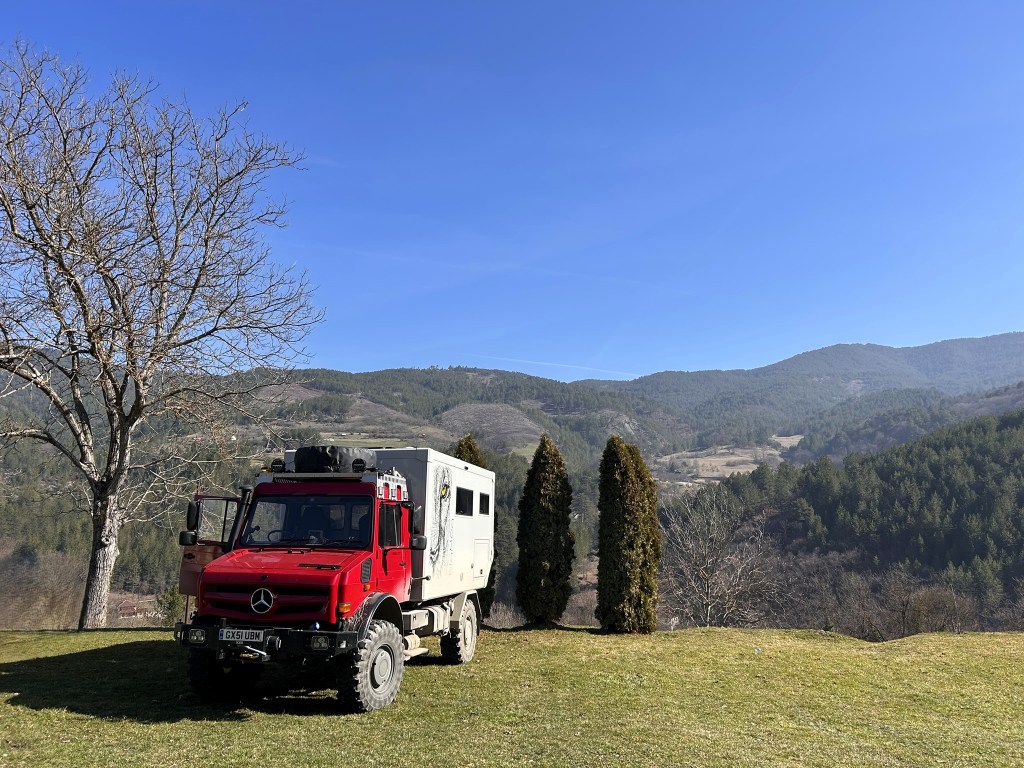
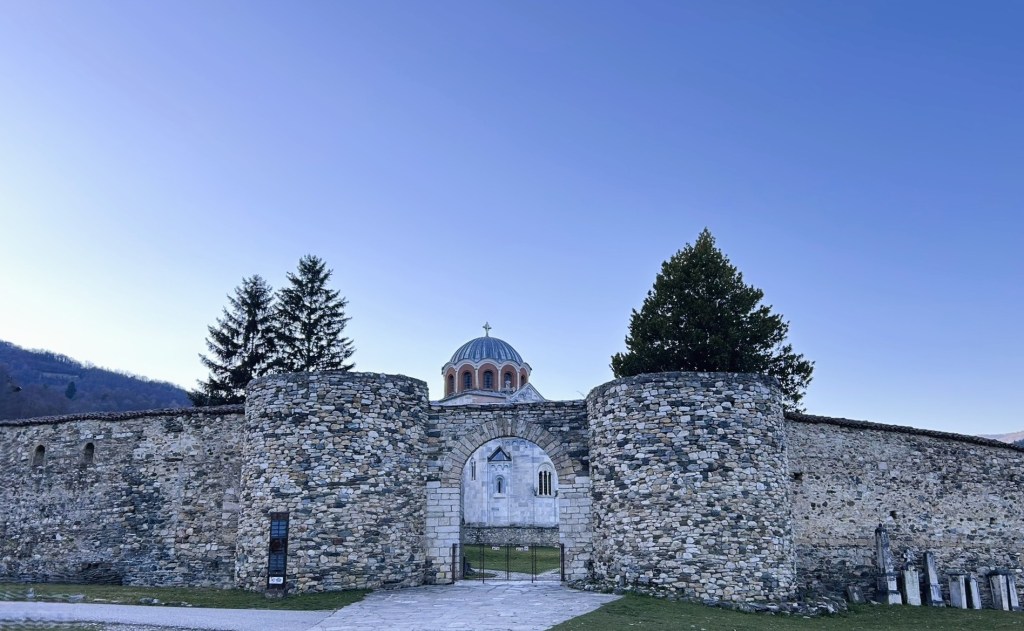
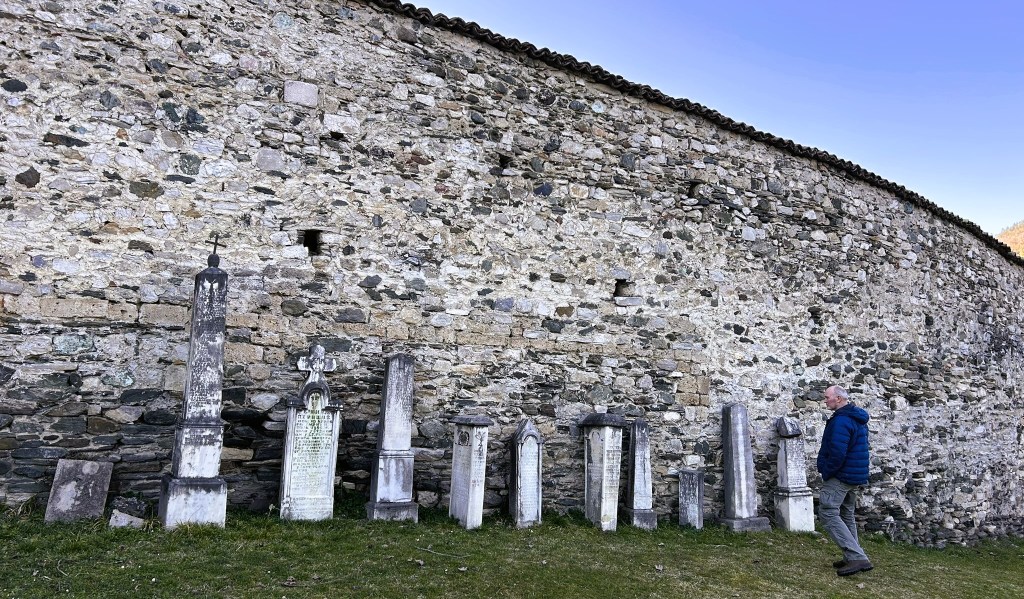
The next day was Sunday and when we woke up we found ourselves surrounded by cars with people filing through the gates into the church
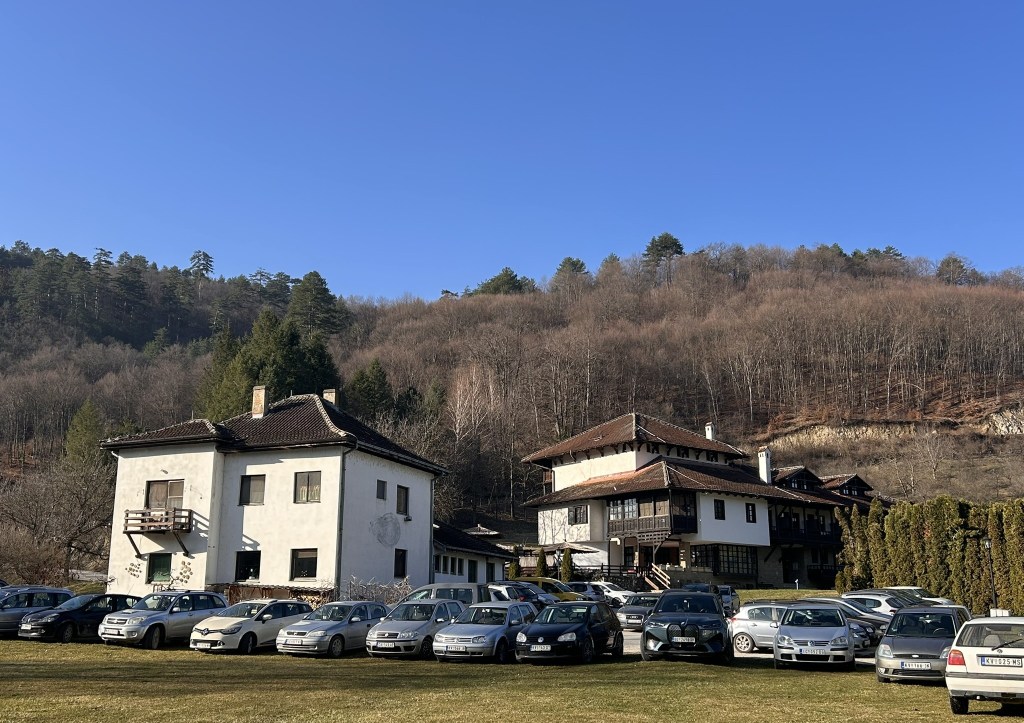
I hurried through my training feeling a little self-conscious then went to take some more photos in the morning sunshine
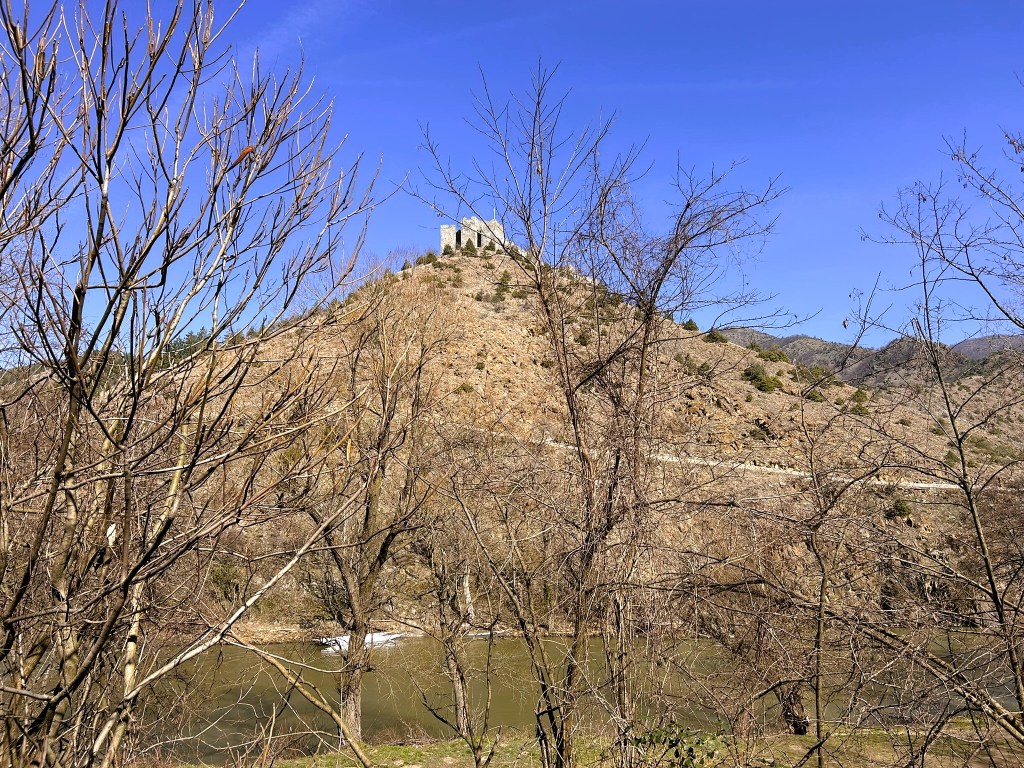
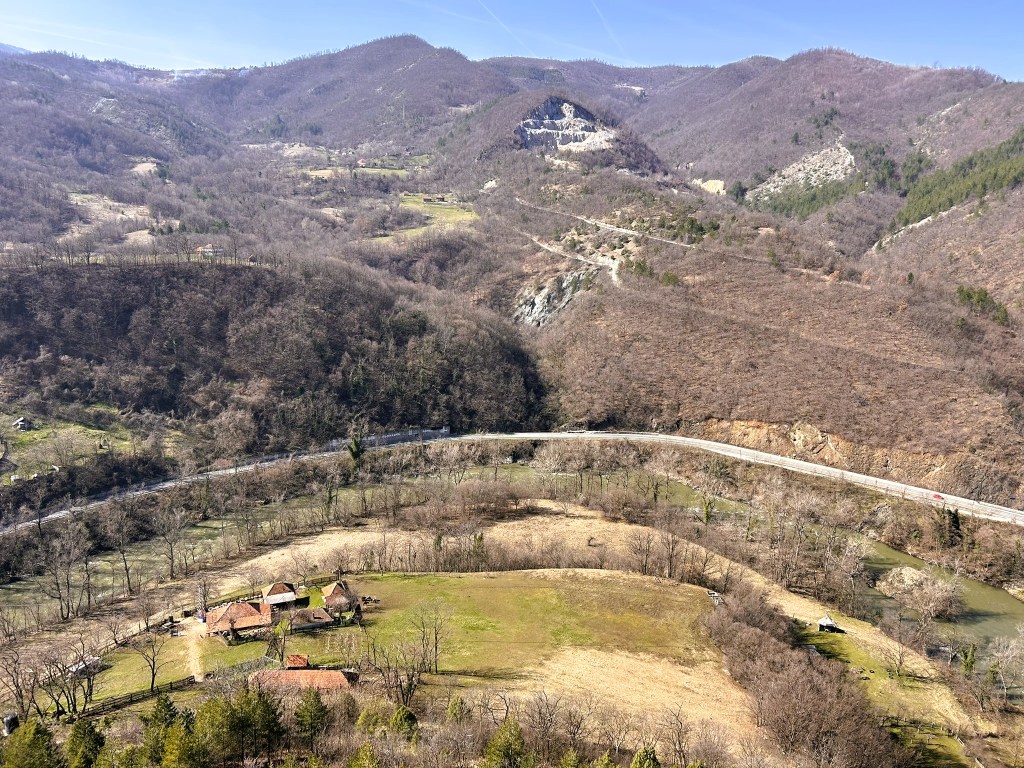
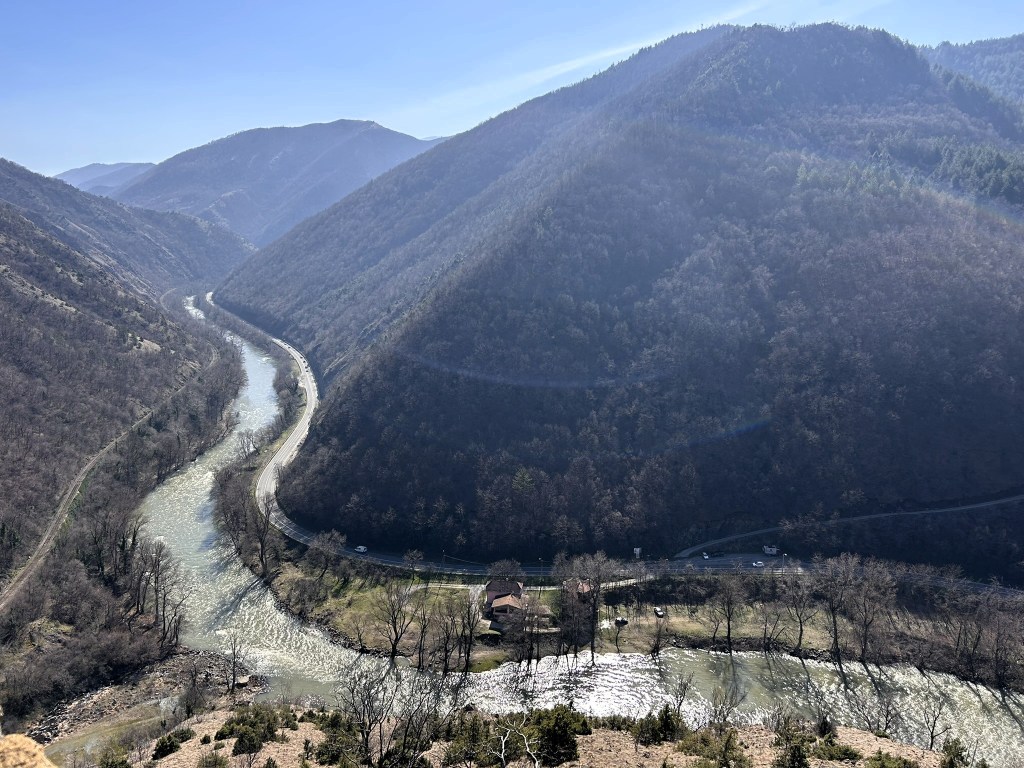
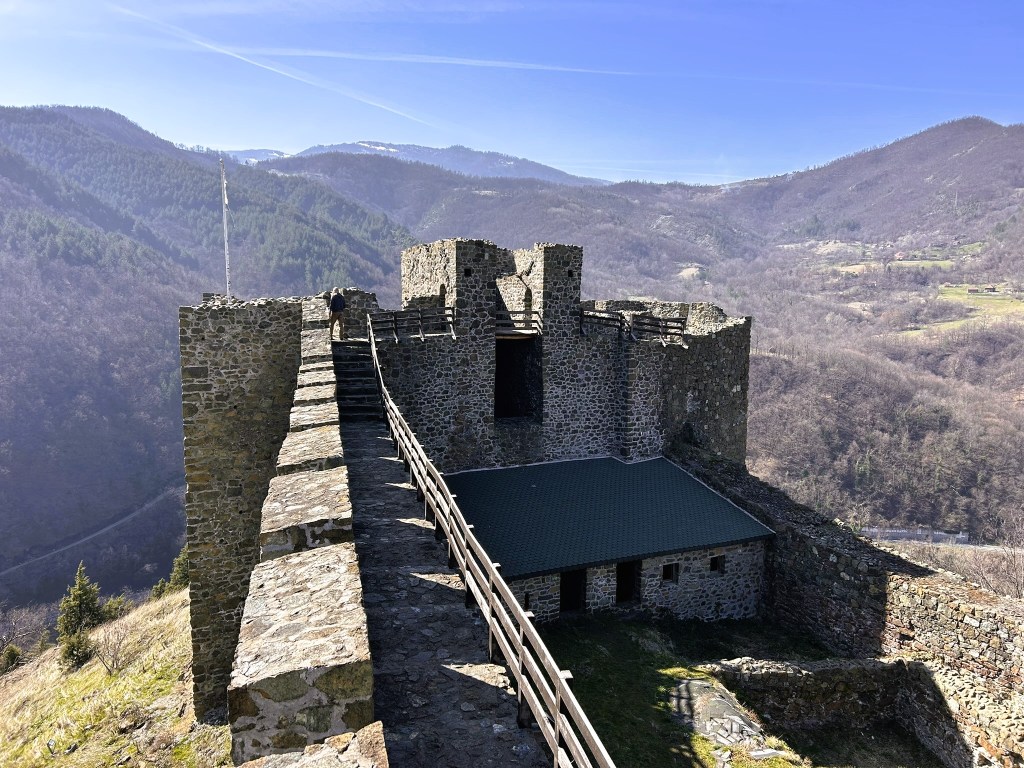
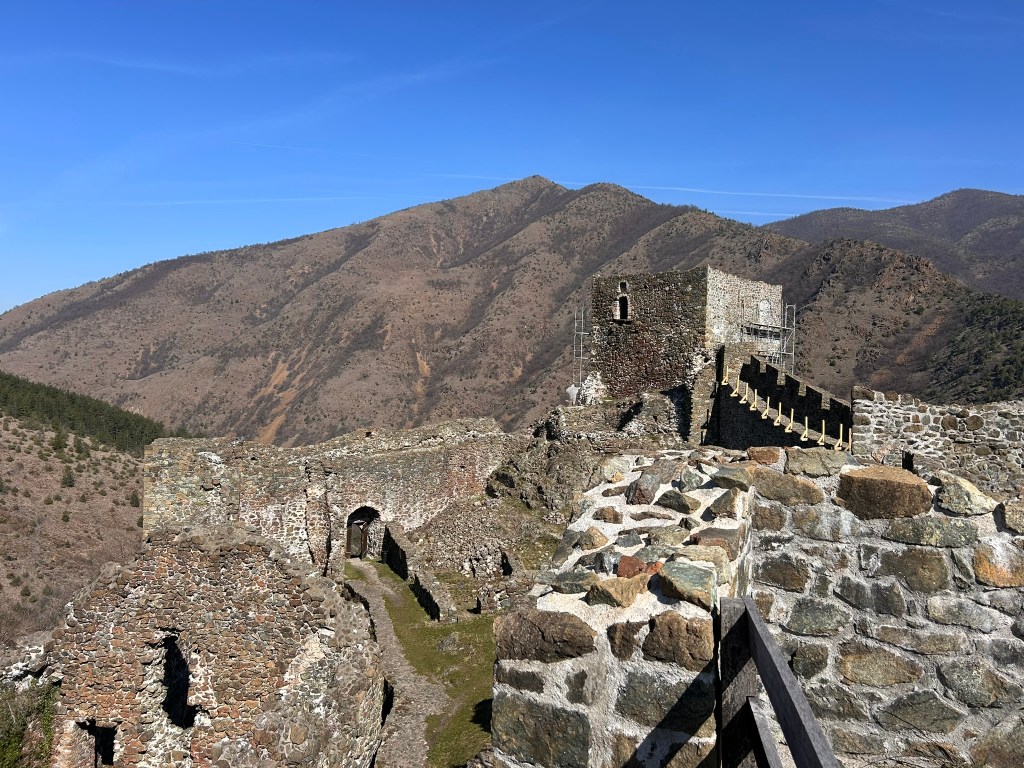
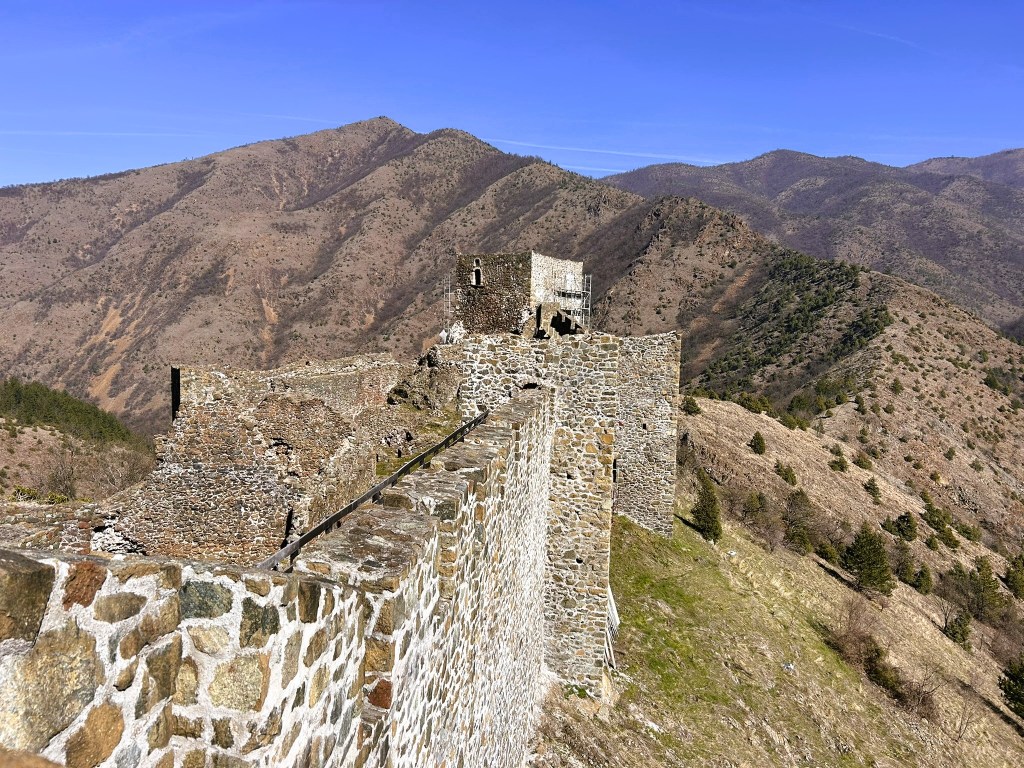
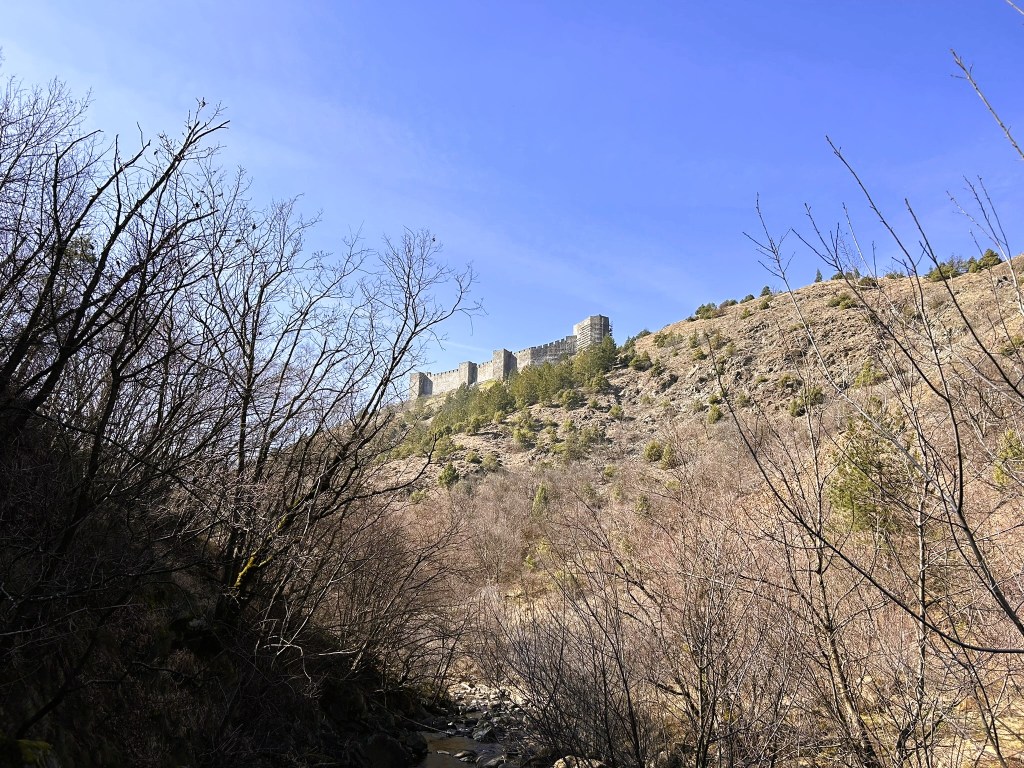
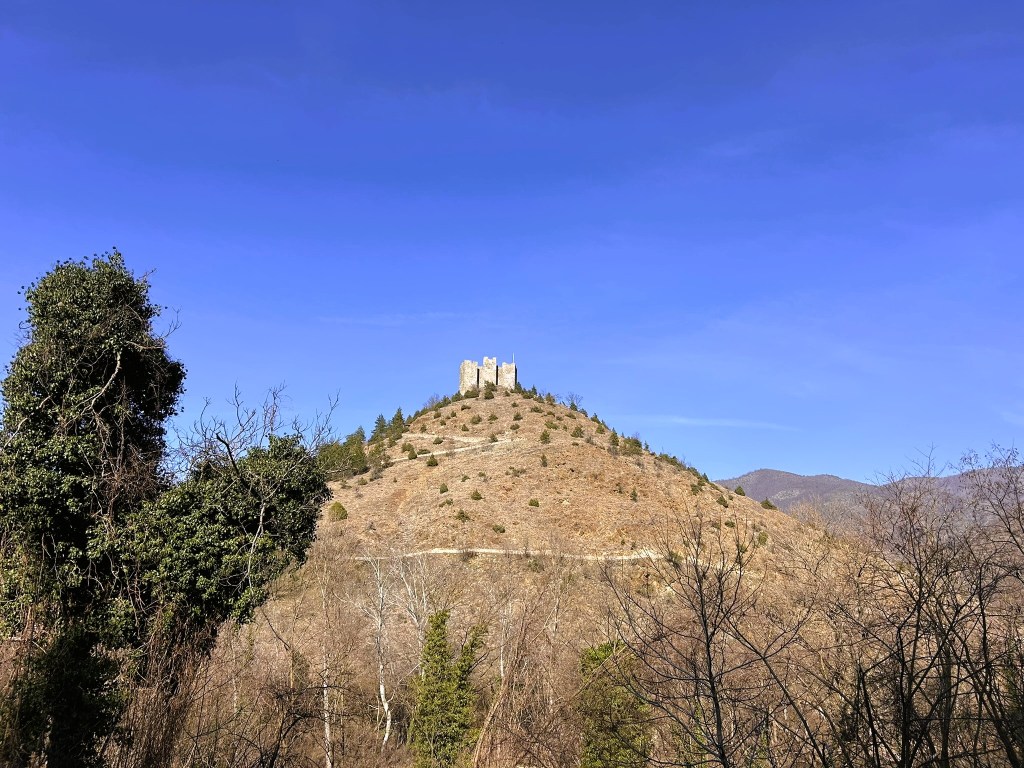
Our next stop was Maglic Fortress, a 13th century castle perched on top of a hill by the Ibar river
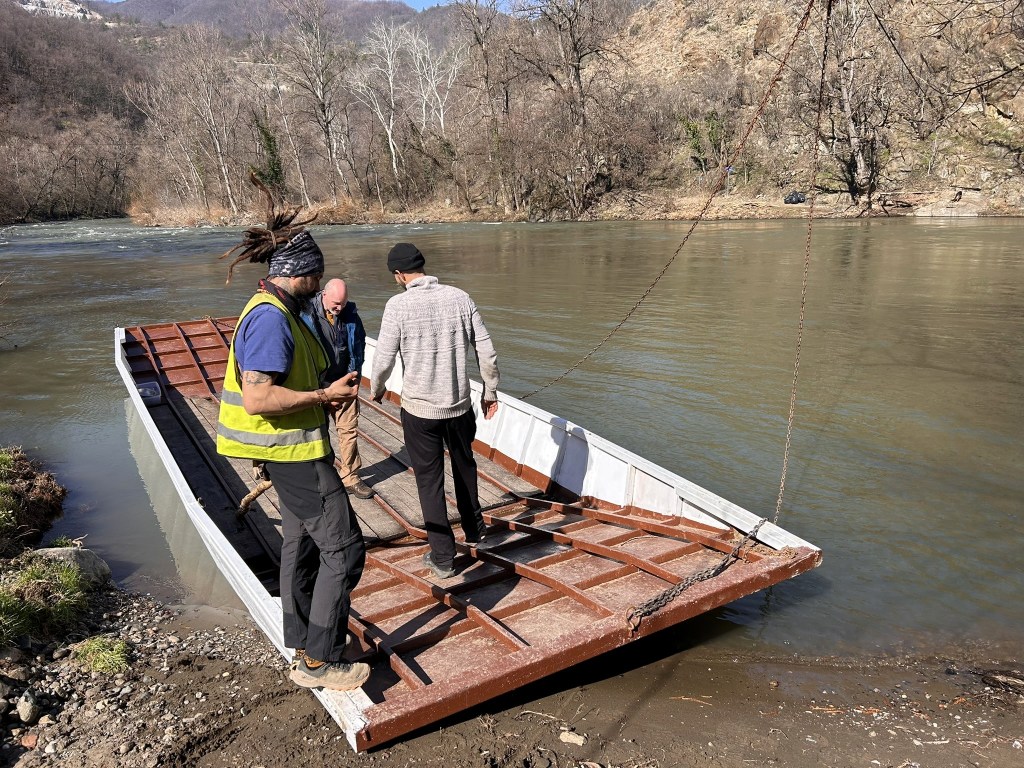
We had to cross the river by ferry to get to it, powered by the hands of volunteers
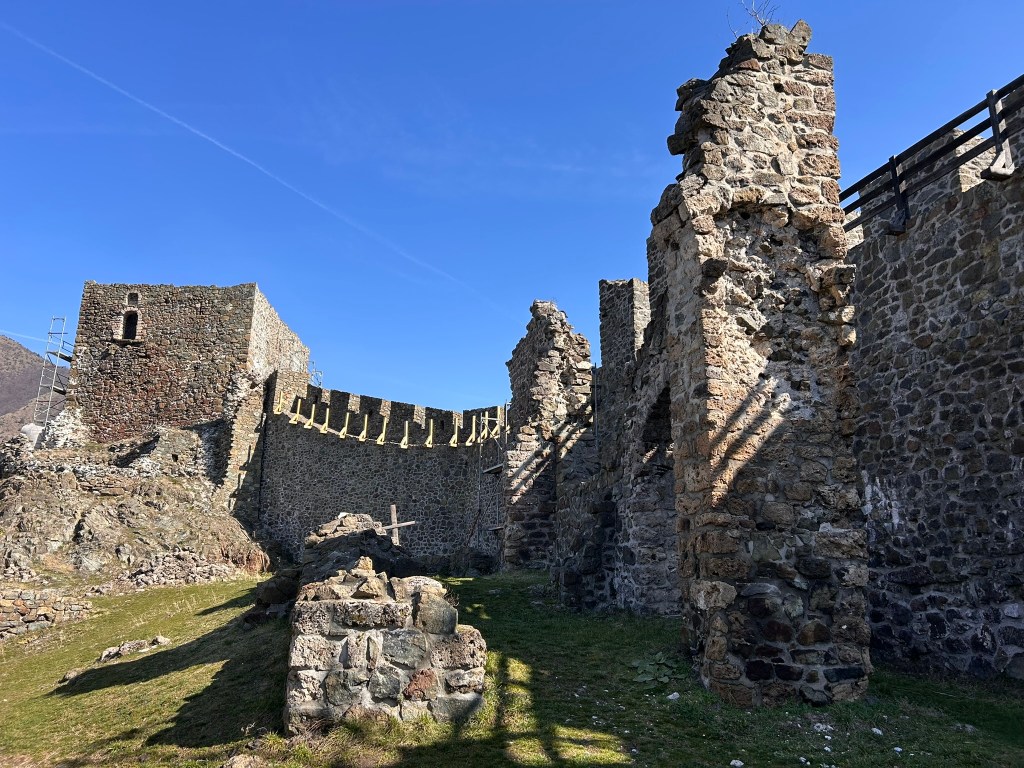
The castle had been neglected for many years until this group bought the land at the foot of the hill and started cleaning the place up. The government paid them no attention so they carried on, repairing some of the walls and building a new path. The government then started taking credit for the improvements so the volunteers expanded their activities. It turned into a positive feedback loop where everyone was happy and the castle benefitted.
We chatted to the founder of the charity and he was fascinating. He told us that he used to want to leave Serbia but since travelling abroad he now appreciates just how good it is back home. He said that the Serbian people believe in self-sufficiency and if anyone tries to tie them down with taxes or oppression they just move further into the mountains where they can’t be controlled.
He also told us that he had tried to study for a PhD in Canada but, despite meeting all the criteria, he was refused a student visa. Similarly in America and the UK. He shrugged it off saying no-one likes Serbia and they just have to live with it. Maybe those people ought to come to Serbia, it might change their minds!
We walked up the steep, newly built path to the café run by the group
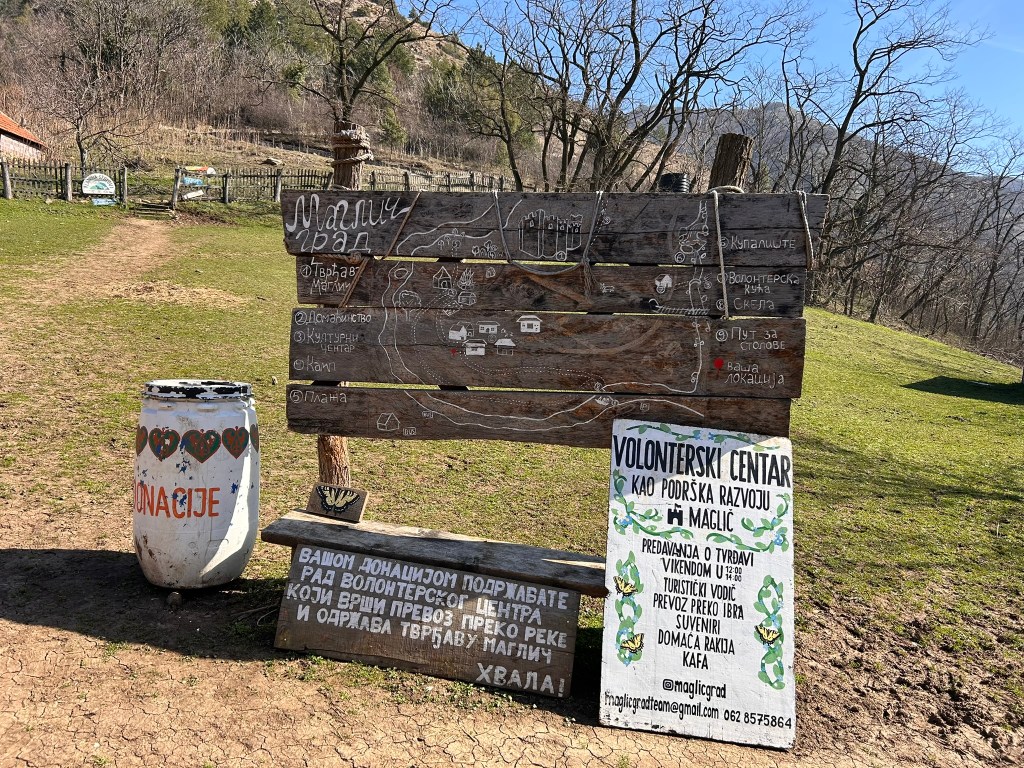
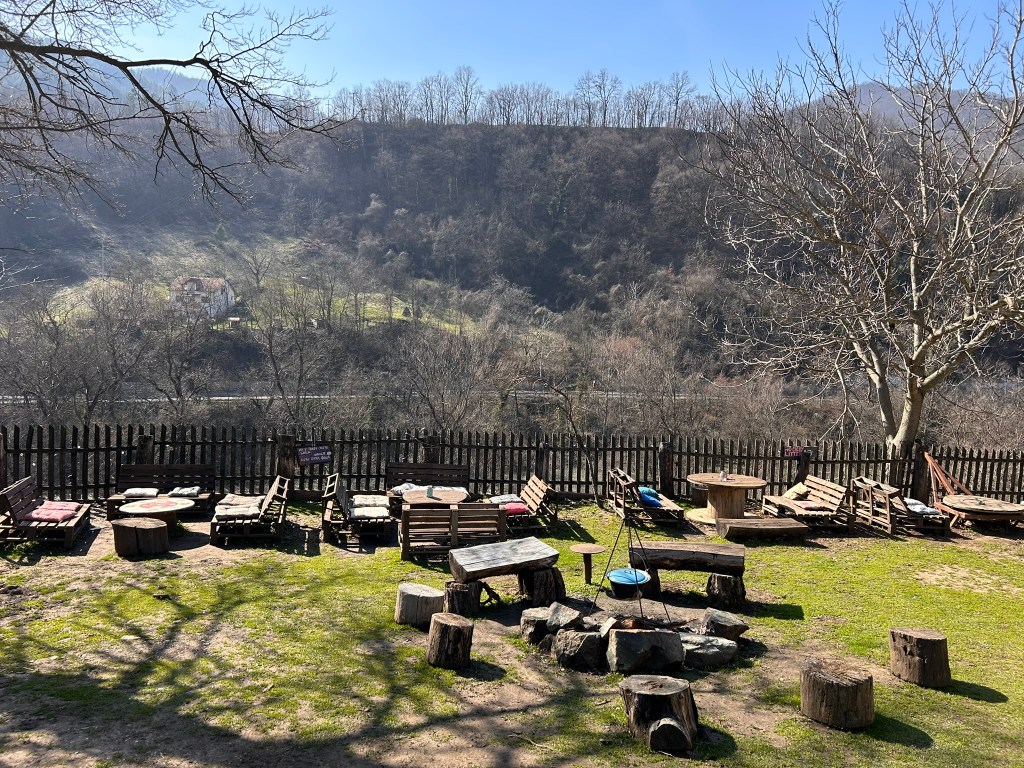
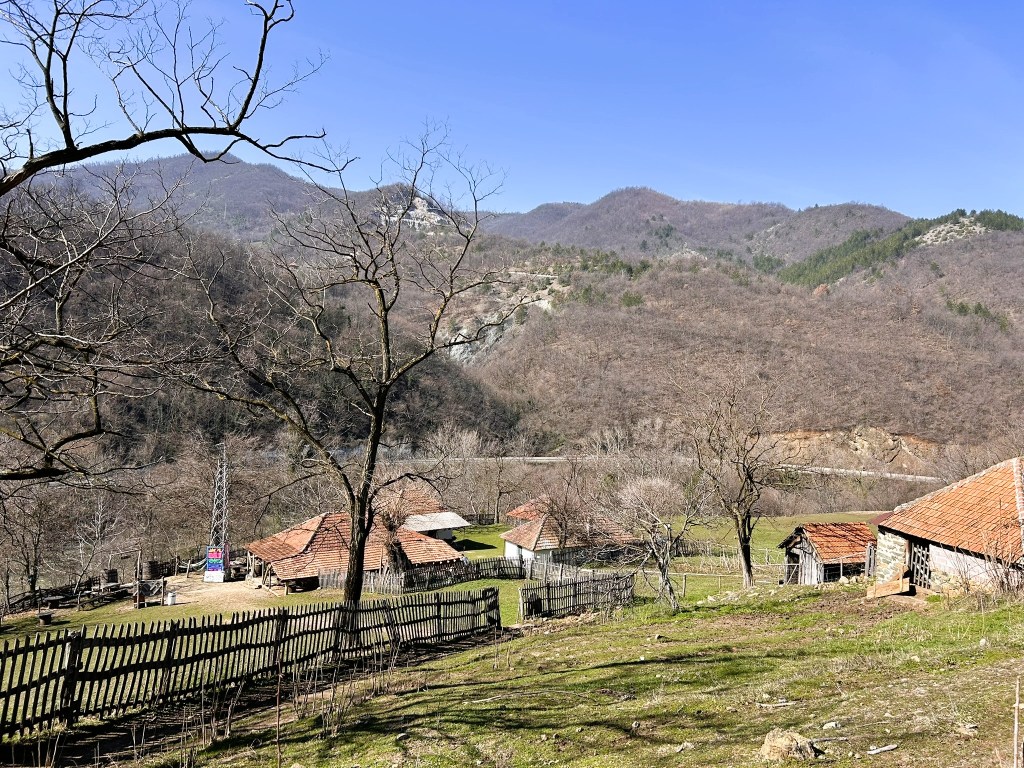
And from there we hiked up to the castle itself
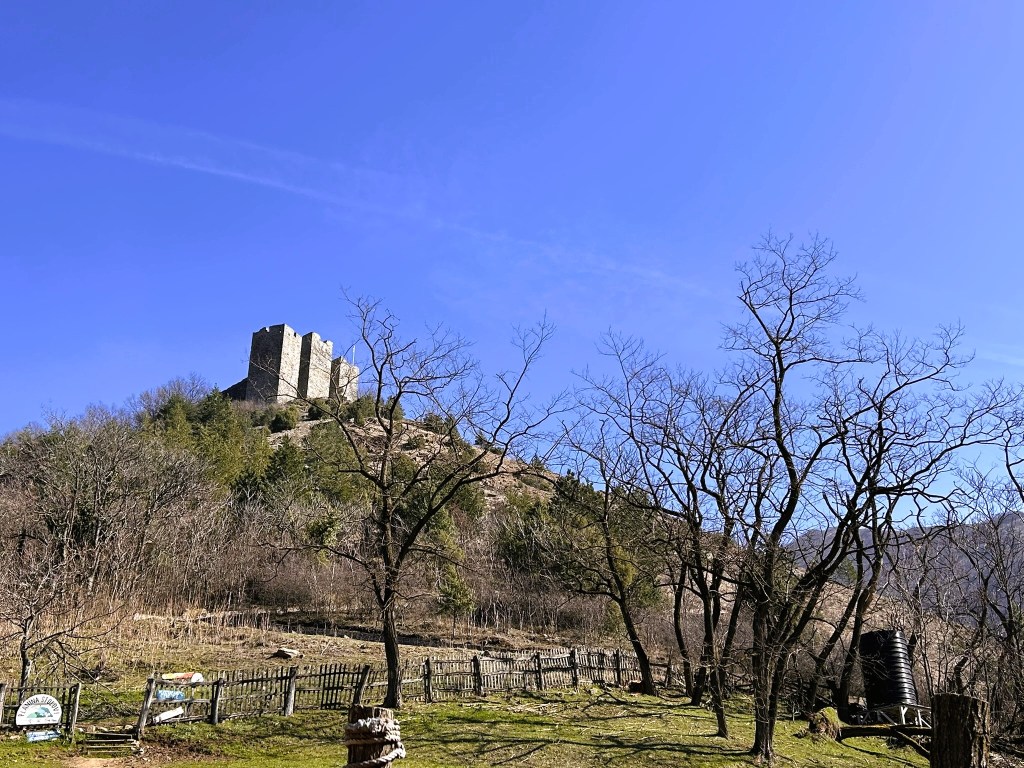
It was huge
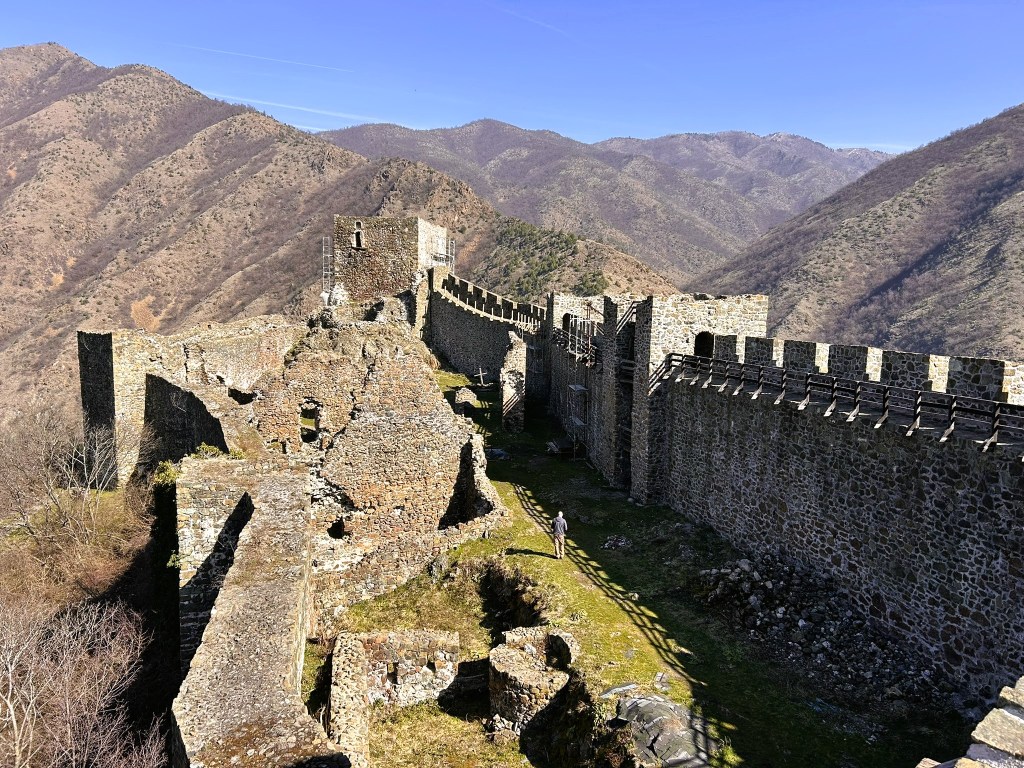
With far reaching views over the mountains and river
The team are clearly doing a fantastic job of looking after it
We carried on down the other side of the hill and across a railway line
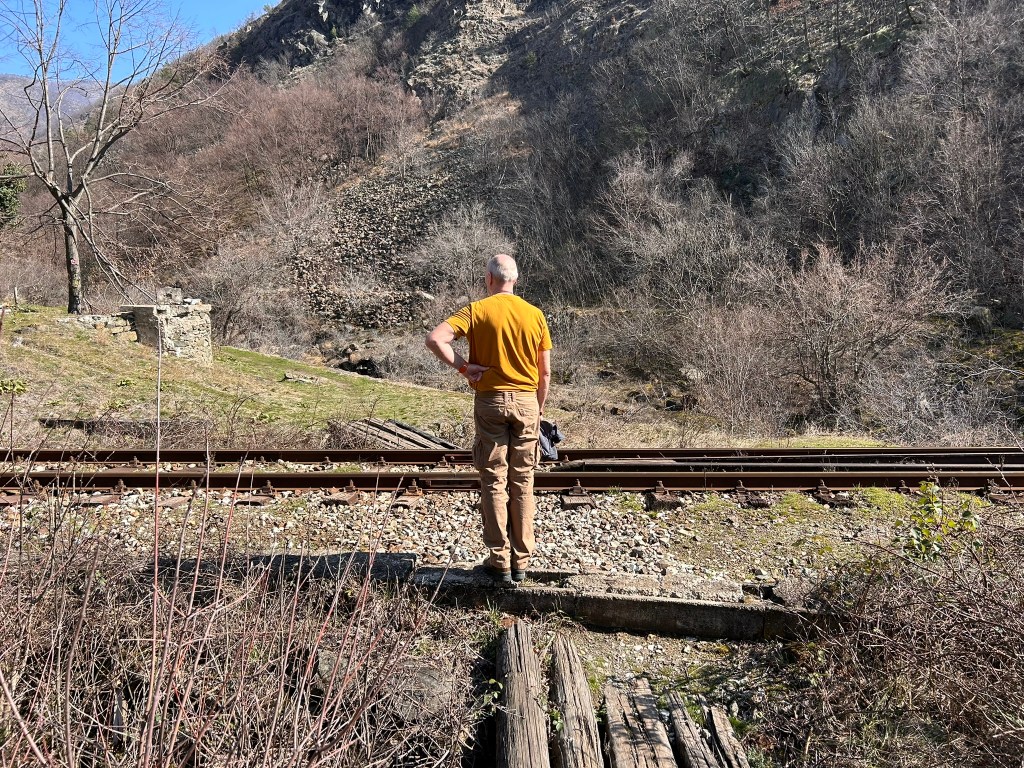
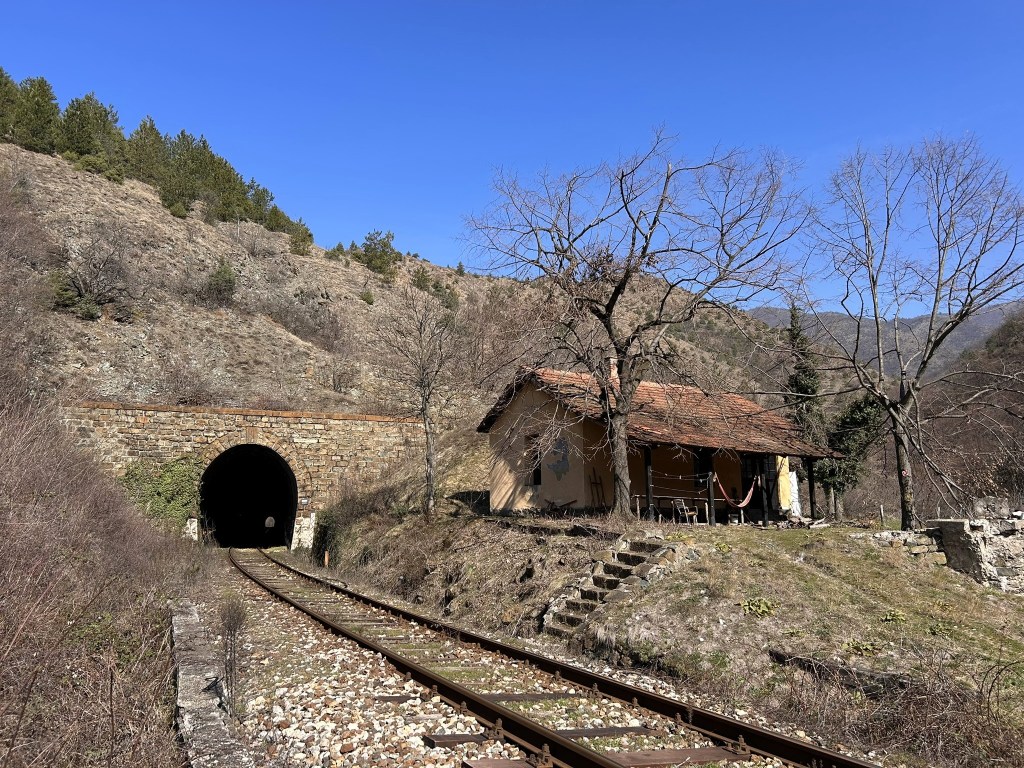
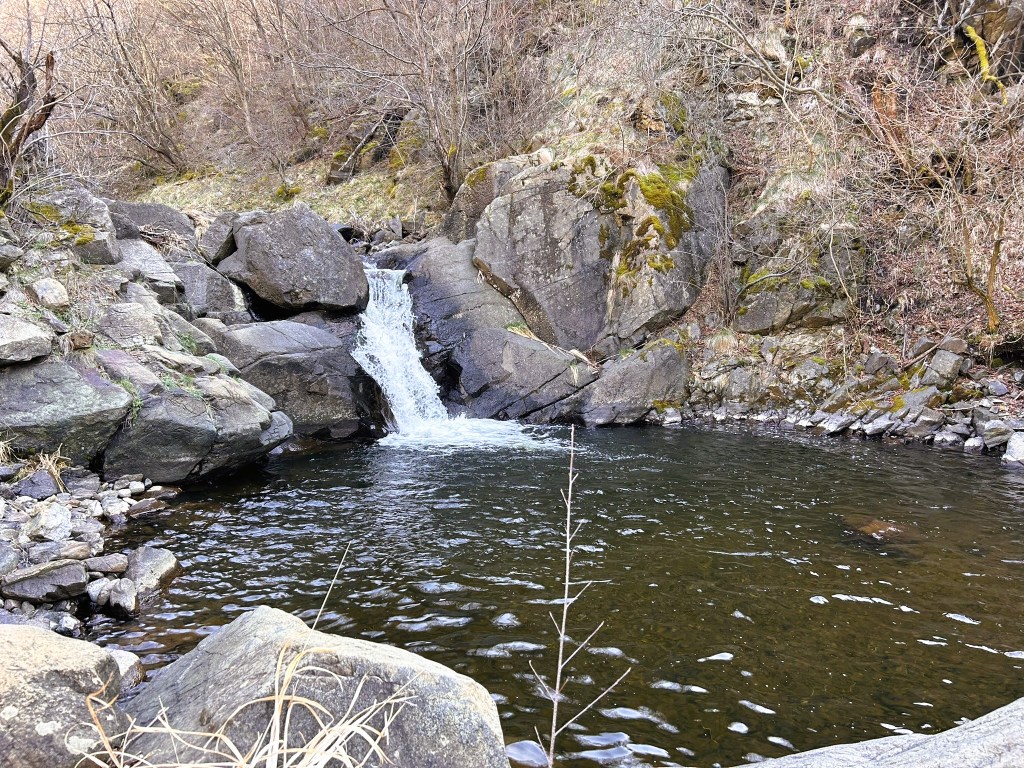
Until we reached a small waterfall
We actually got too hot walking back, something we hadn’t experienced for many months. So we treated ourselves to fresh apple juice back at the little café before saying our goodbyes and leaving the wonderful group of castle-saviours behind
After a very nice lunch at a local restaurant we were ready to set off for Zica Monastery. It was only 20km up the road and should have taken us less than half an hour. But we had a problem – milk.
The price of milk in Serbia had been going down and down until it got to the point where the farmers could no longer make a living. The farmers were angry and they were protesting. Roads were being blockaded all over the country – including the road through the town of Konarevo which stood between us and Zica.
Our friends at the castle had told us of a cut-through along back roads but there was a bridge in the way that was too narrow for BigMog to cross.
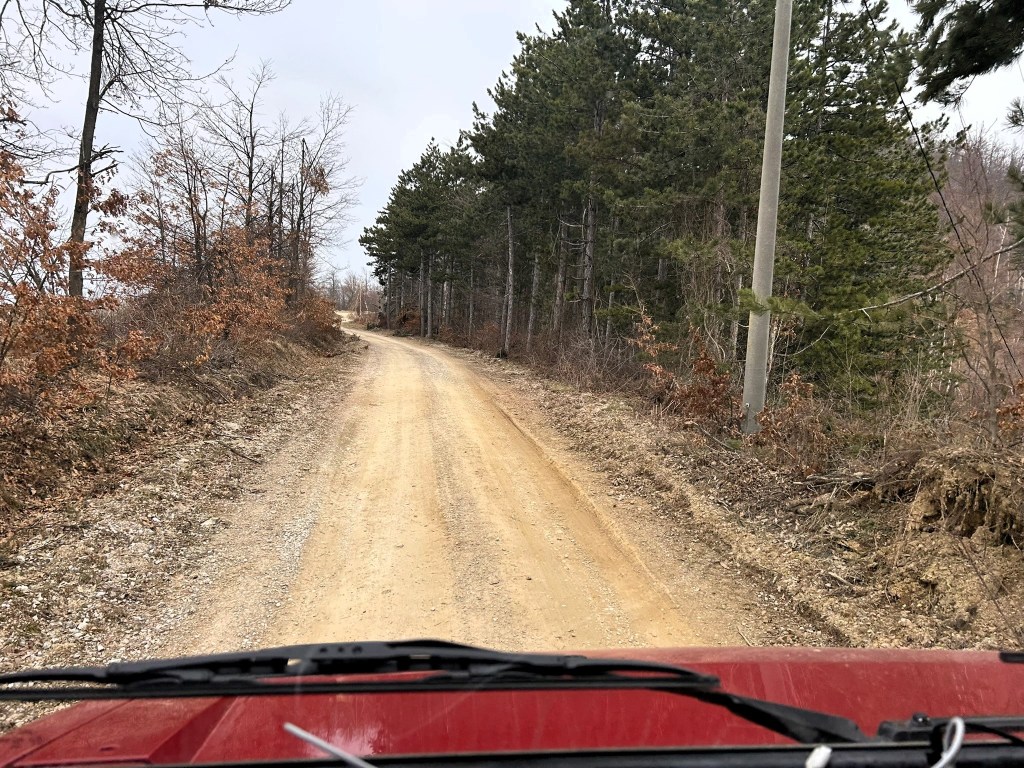
So instead of a 20km drive, we took a huge detour of 150km which would bring us to Zica from the opposite direction.
Fortunately the roads were lovely and we slowly meandered our way around, enjoying the views and not minding in the least that we were seeing more of Serbia and enjoying the countryside
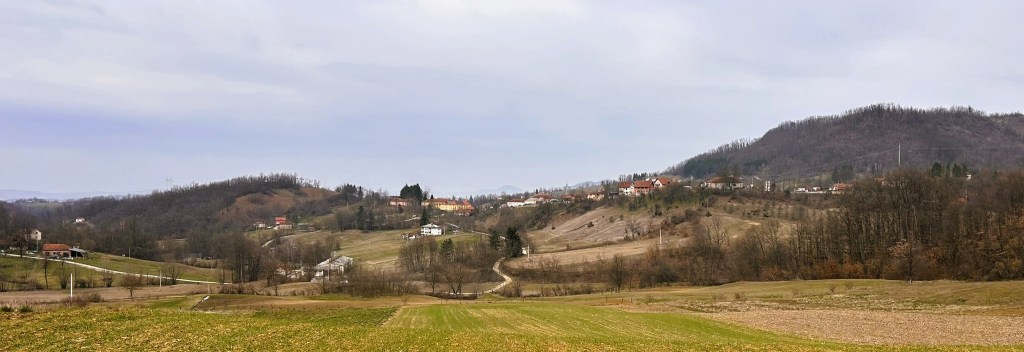
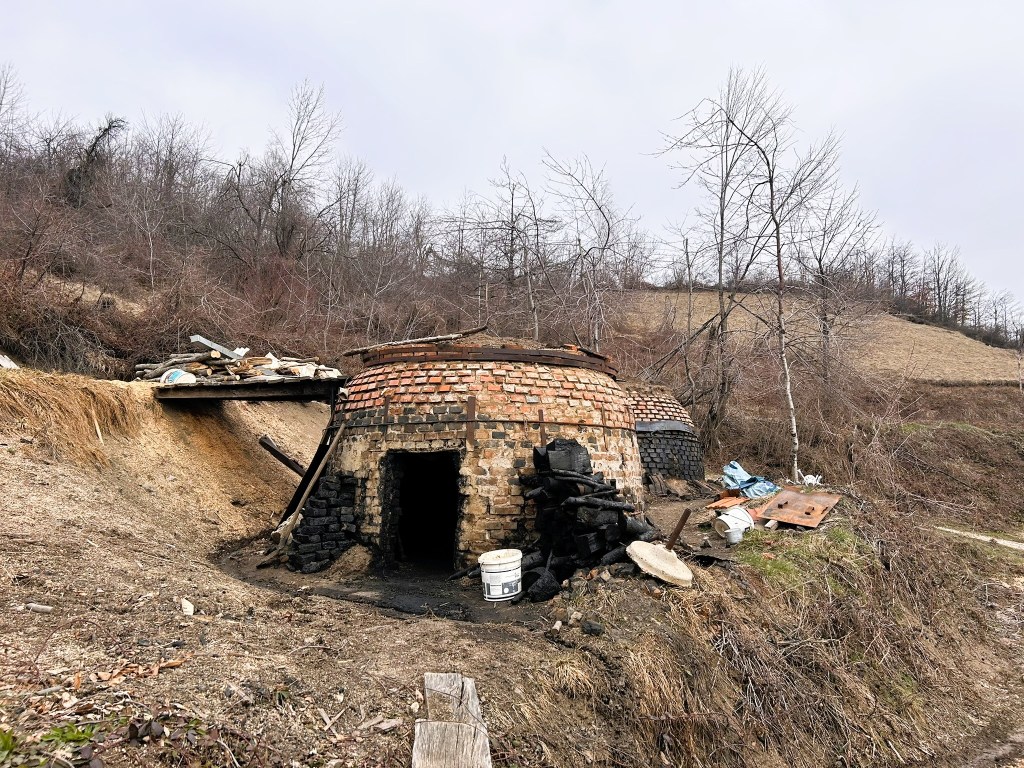
There are many things that stand out when you drive through Serbia’s rural areas. You see charcoal burning everywhere you go
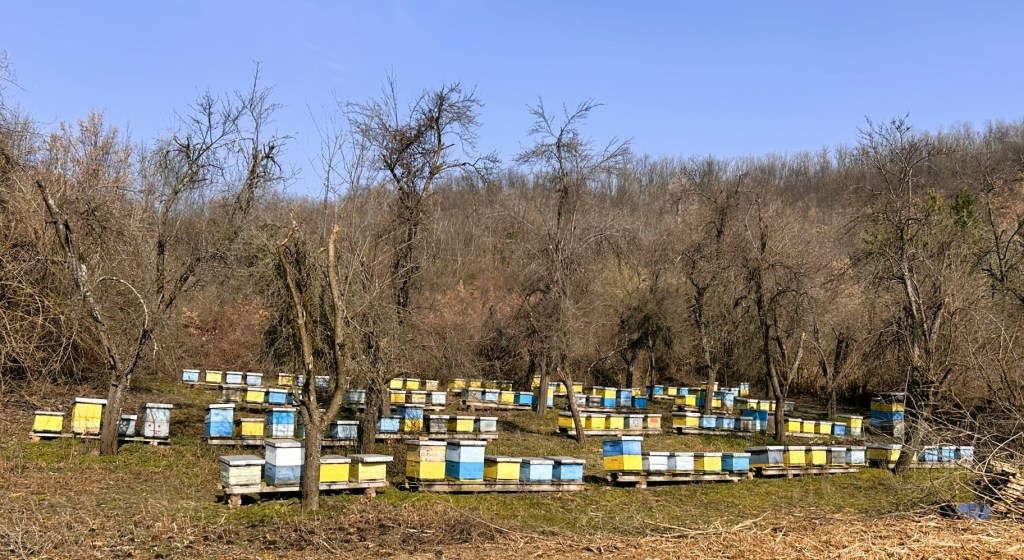
As well as the ubiquitous bee hives – it seems as though almost every family has some and much larger communities are a common site across the region
We found a picnic spot about half way round that looked ideal to stay the night. We were over 1,000m up in the mountains now so the ground was covered in snow
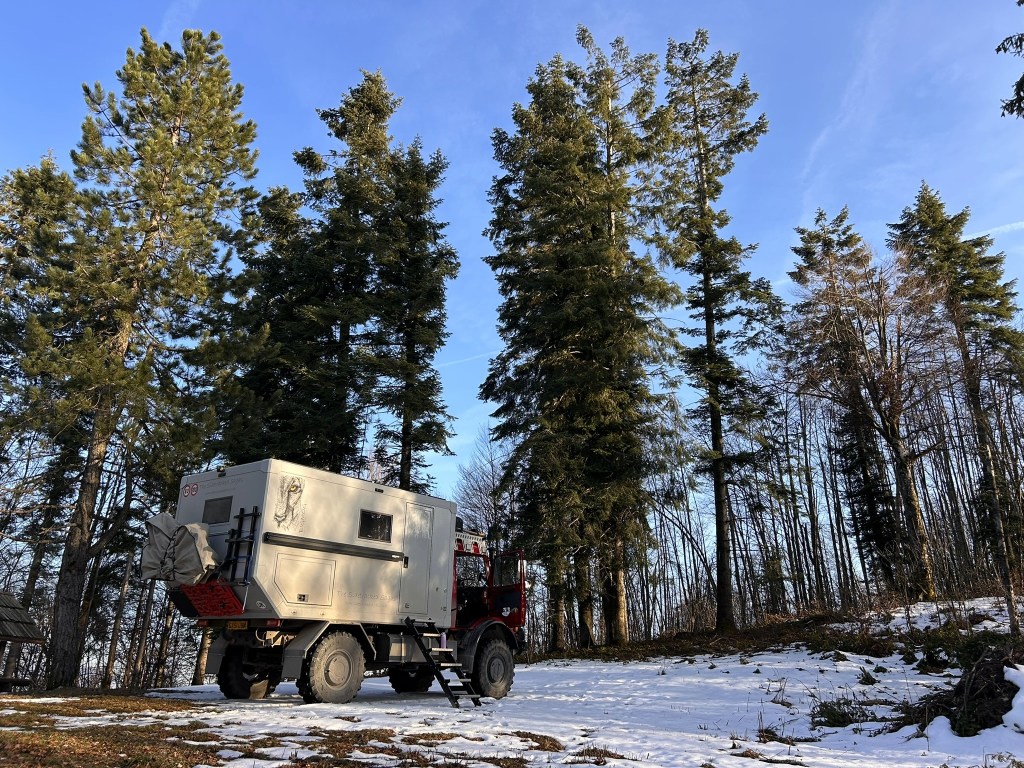
But it was still 17 degrees outside so it didn’t seem to matter that much – there may have been other things to worry about…
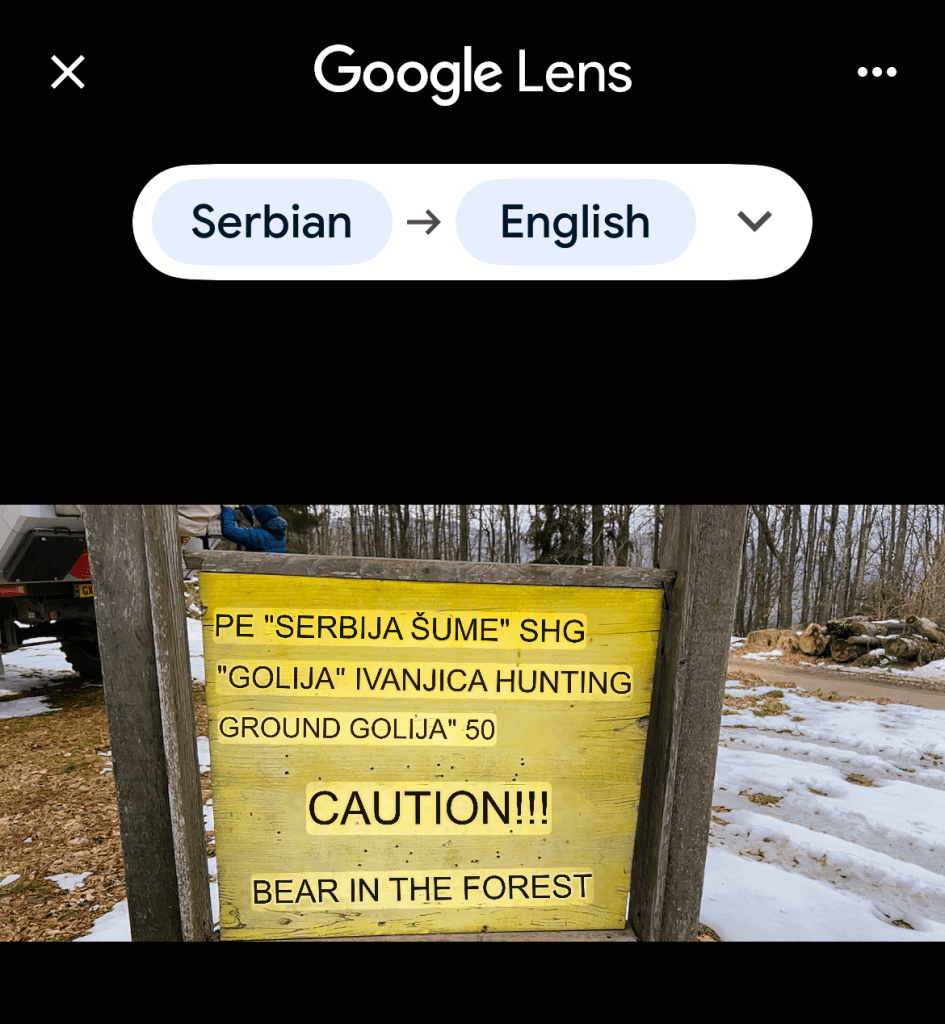
In the morning a group of park rangers arrived and got their breakfast out on the picnic benches. They invited us to join them so James went over for a chat and was force-fed bread, cheese and bacon.
We eventually made it to Zica at midday, but our detour had not brought us quite far enough through the town. We were stopped by the police and steered down some very narrow back streets to get around the last of the blockade.
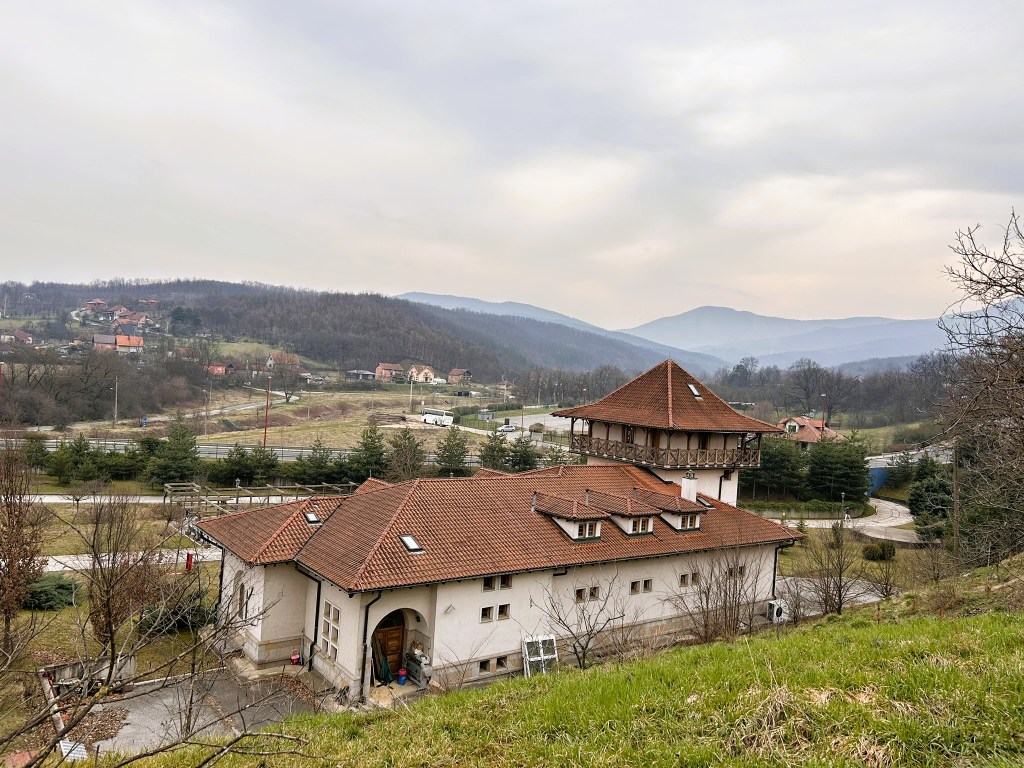
When we finally arrived at the monastery we were relieved to find a huge and almost empty car park – a welcome site after such a long journey.
Zica is a large and very important monastery, founded by Saint Sava of whom we heard a great deal everywhere we went
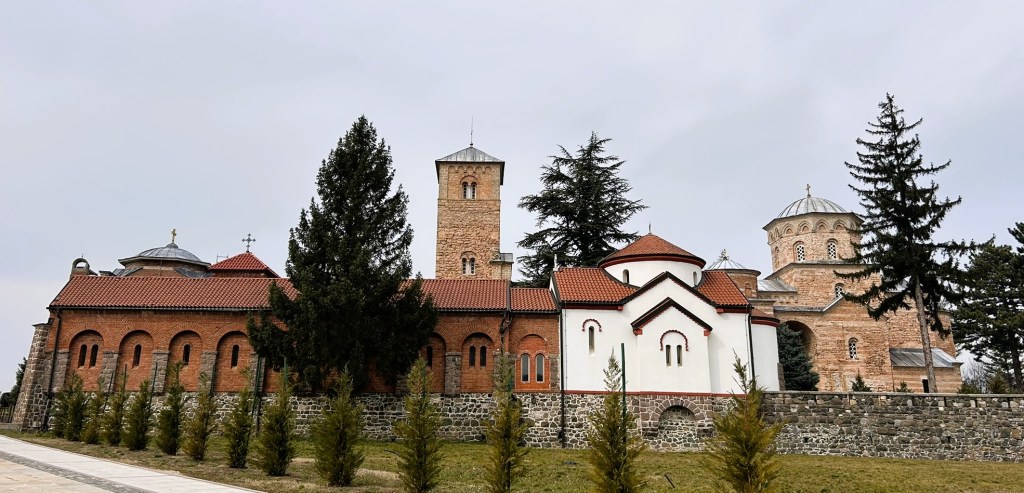
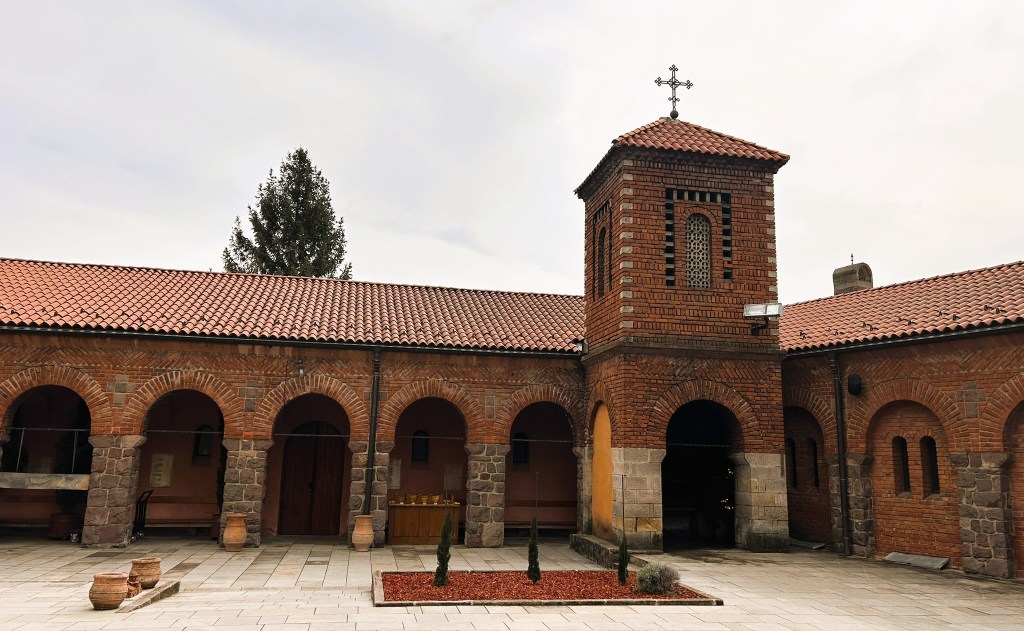
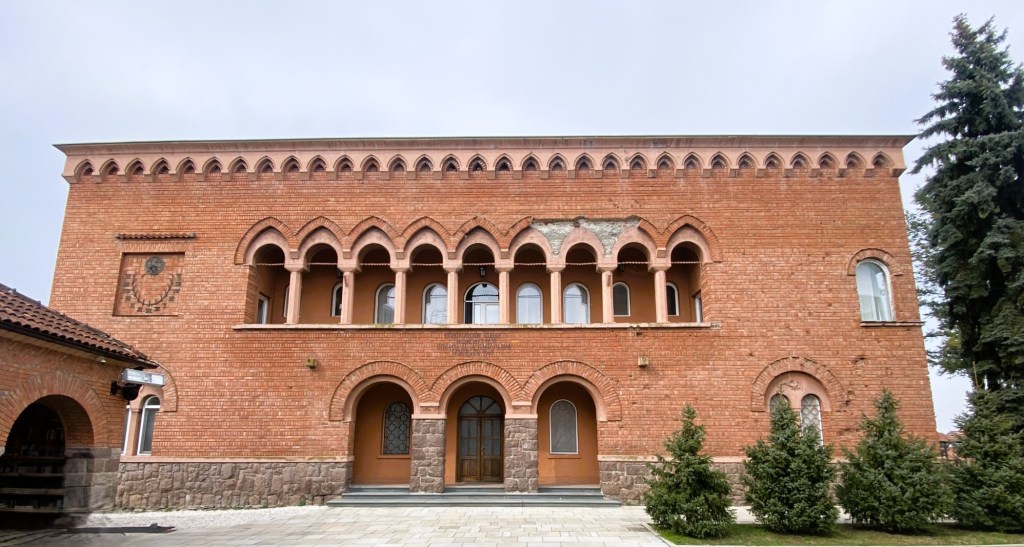
Serbian Kings were crowned here back in the 13th Century and it is a place of great pride to the people
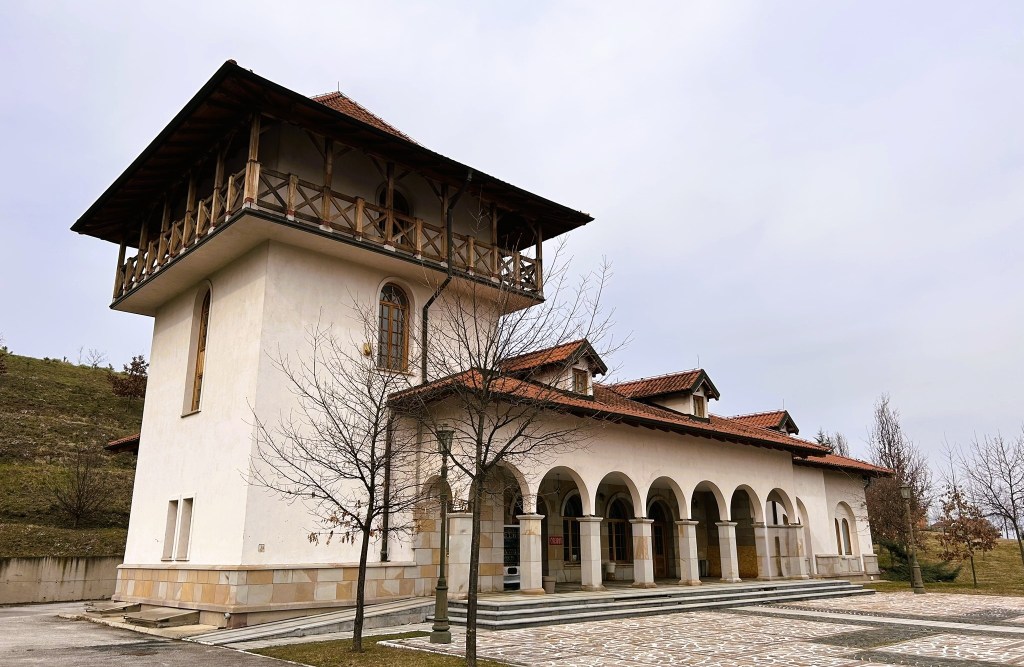
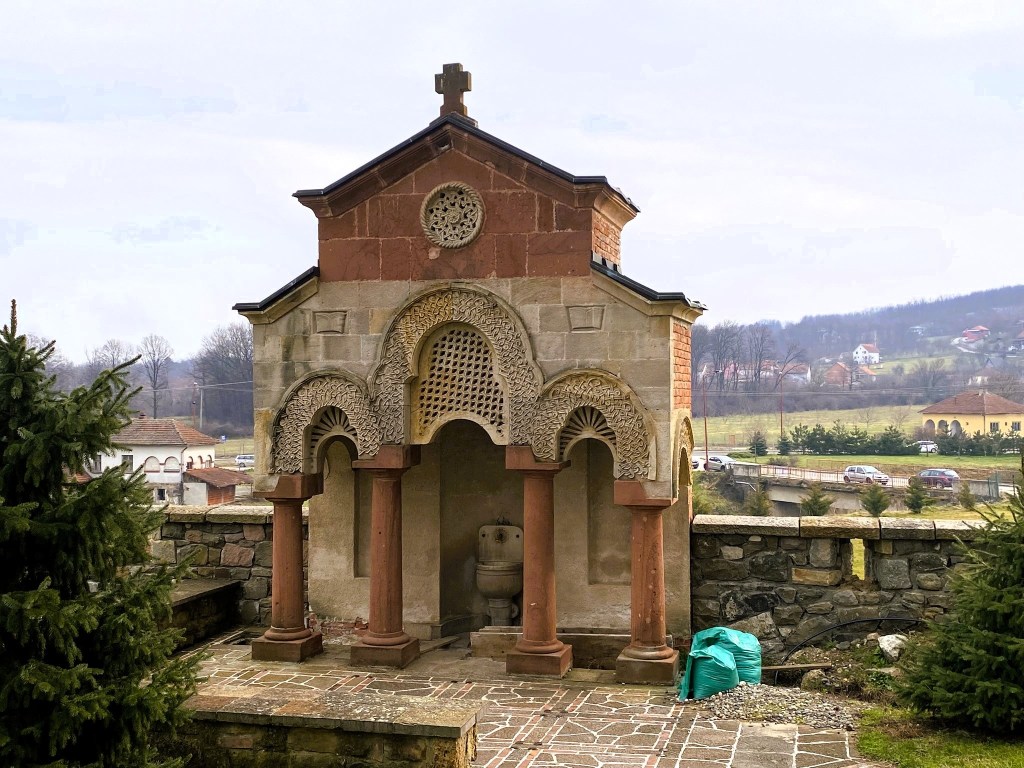
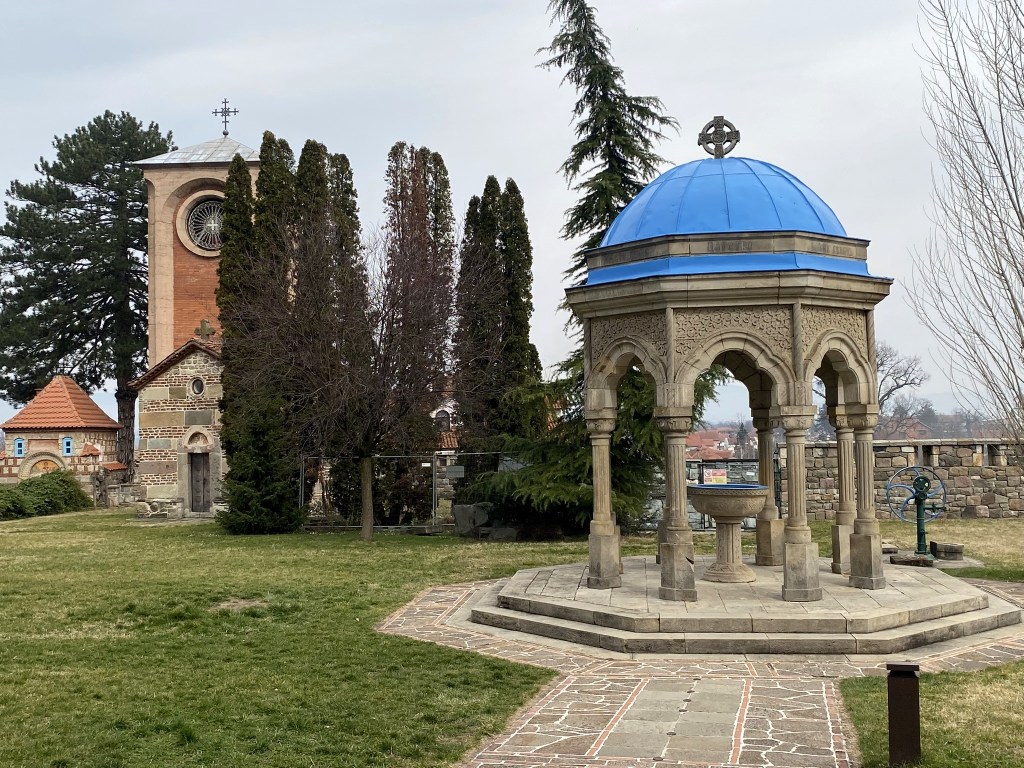
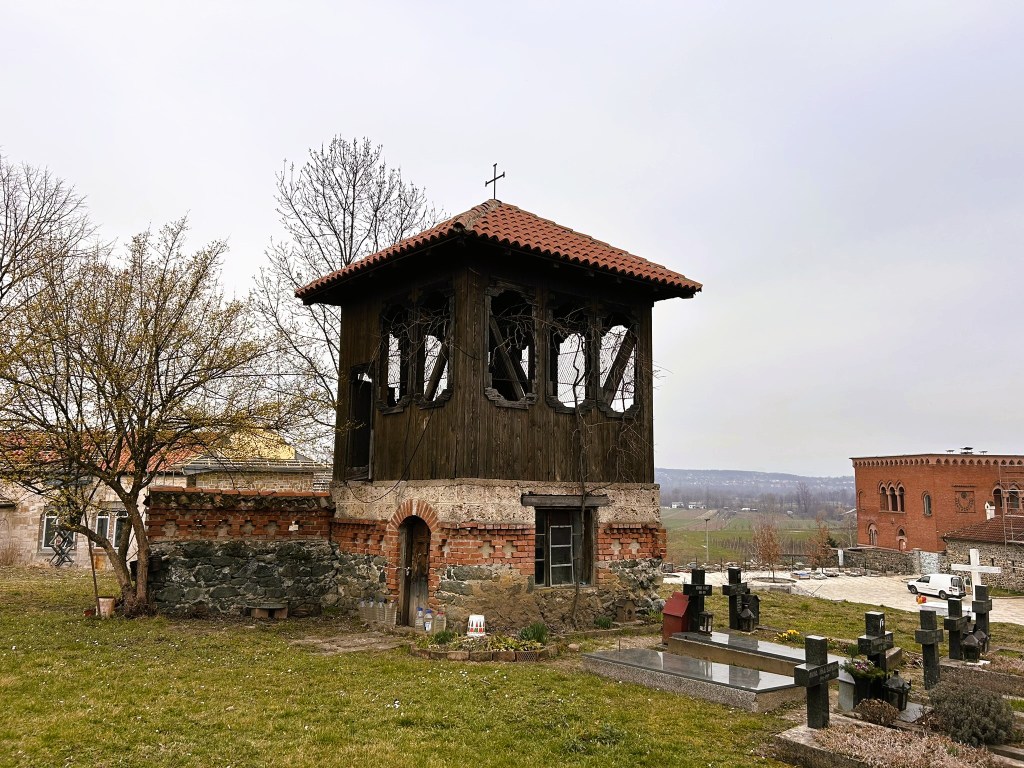
It was indeed impressive
With the church itself built out of beautiful pink brick
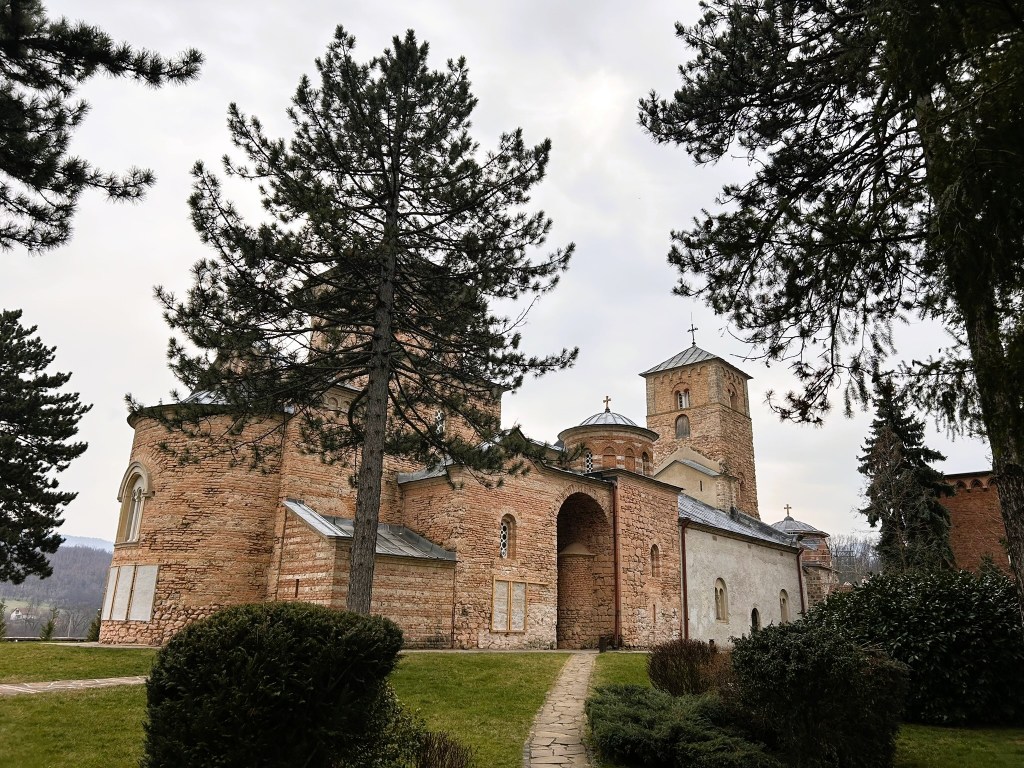
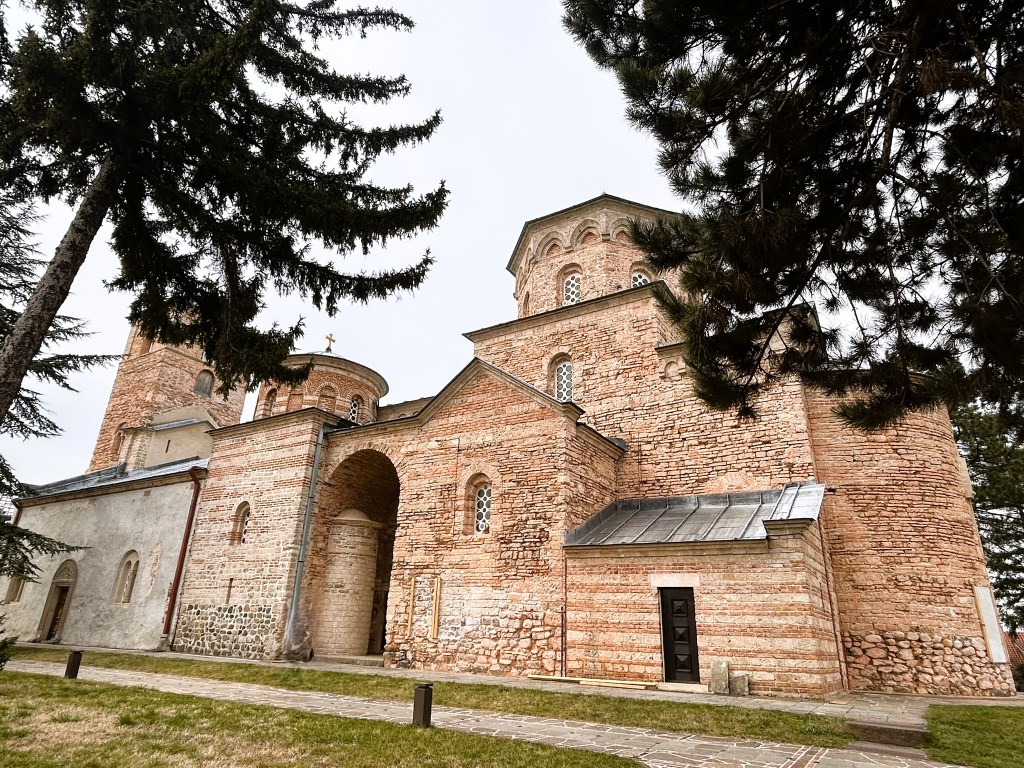
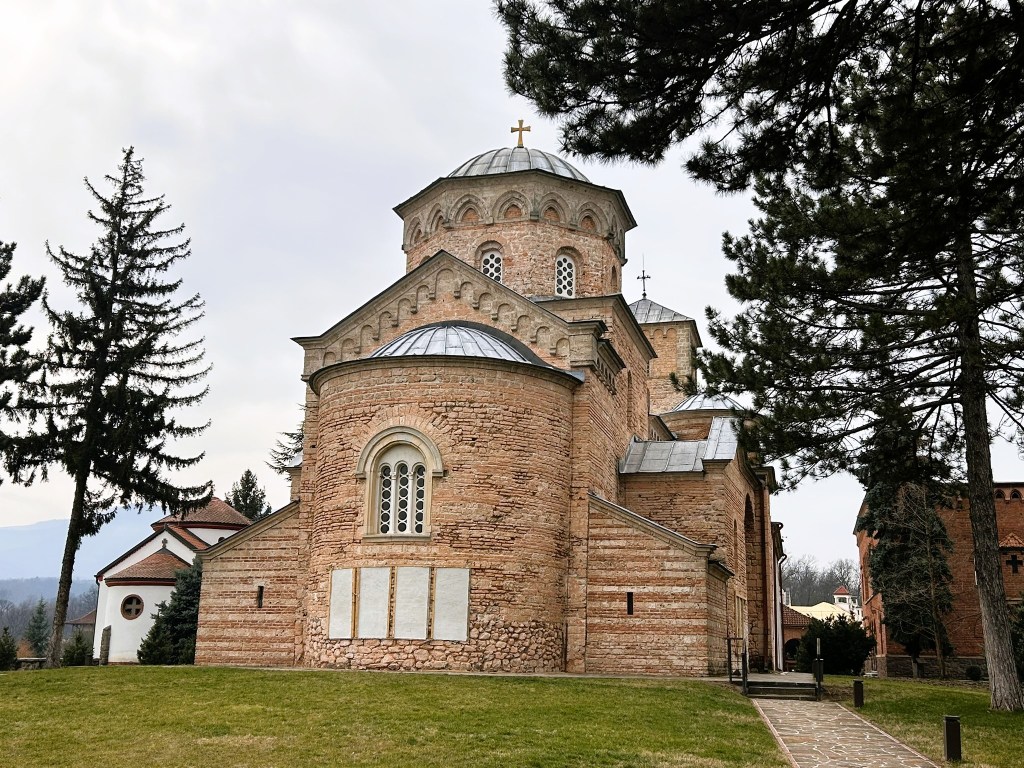
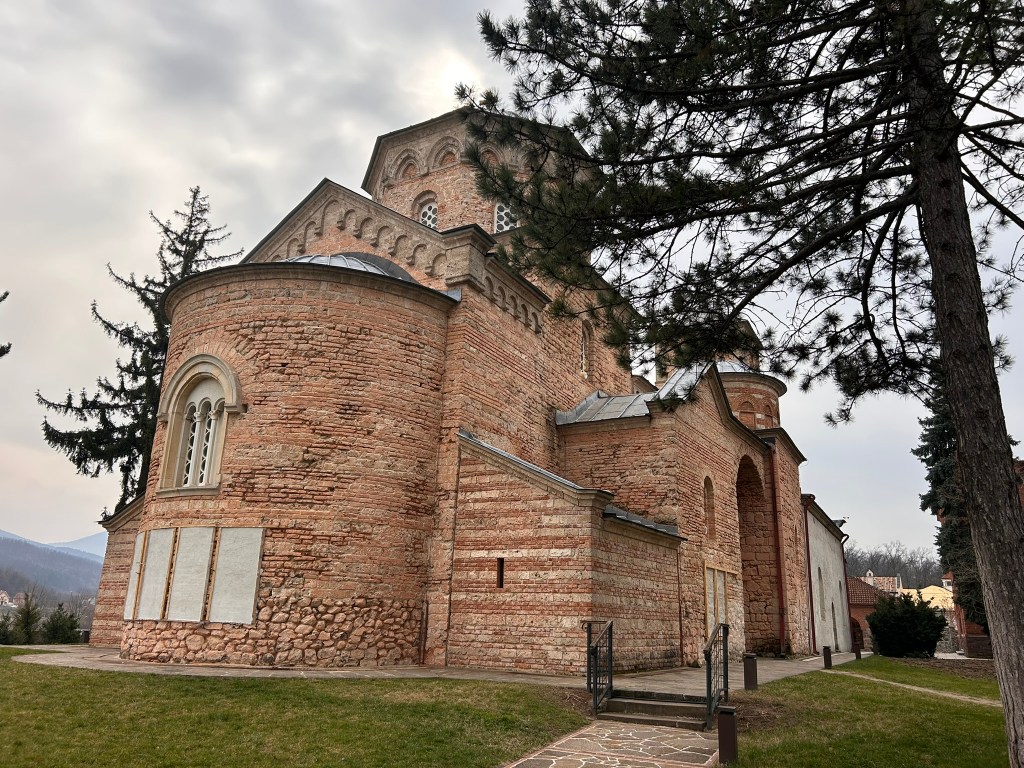
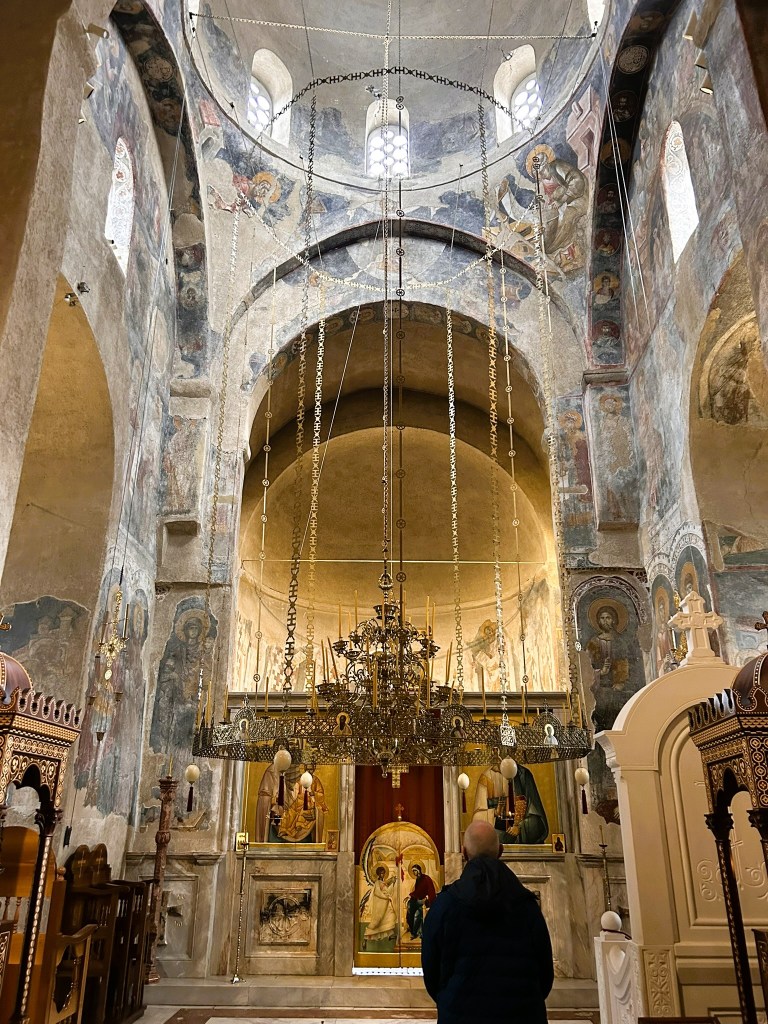
But as with all monasteries, you can’t spend long looking around before you’ve done everything you’re allowed to do
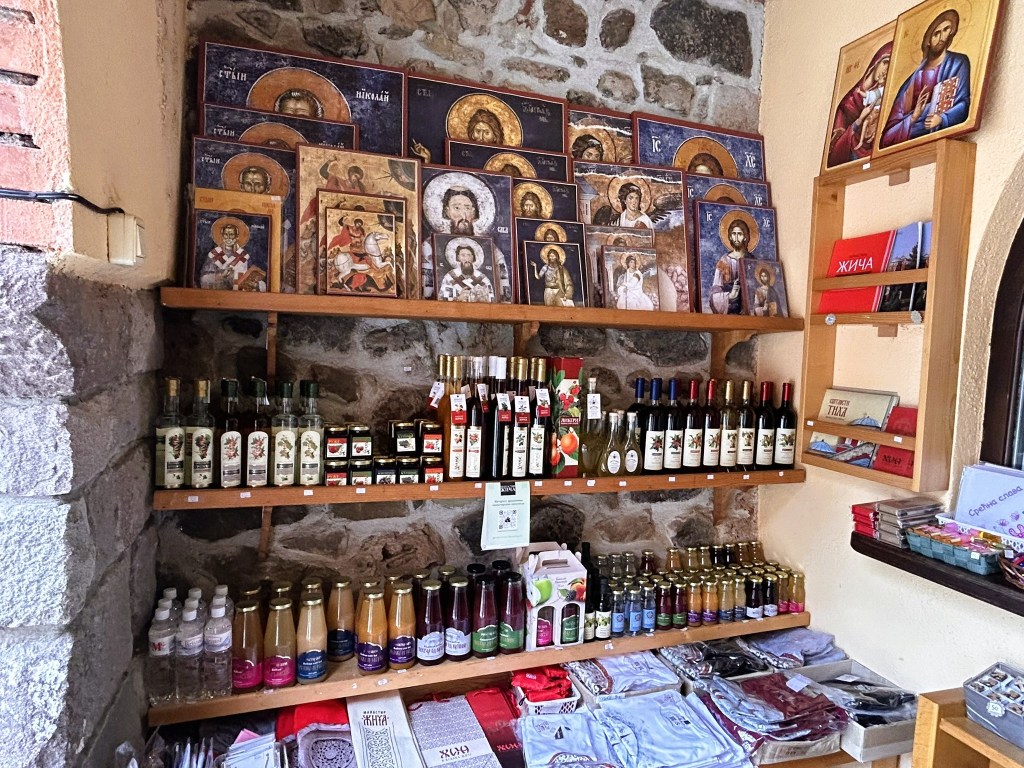
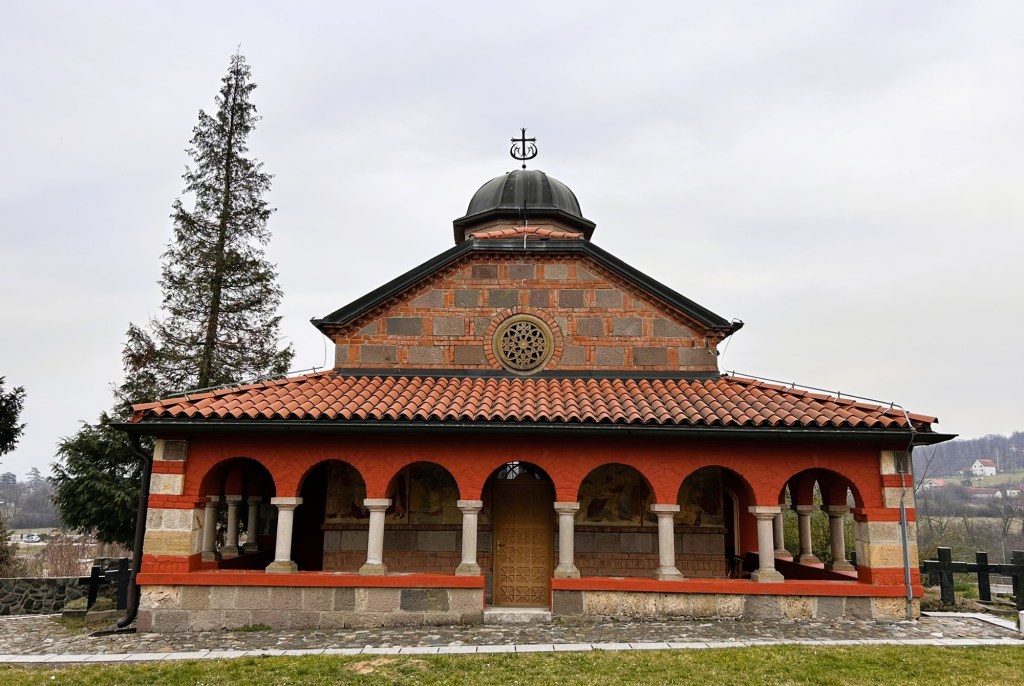
So eventually we headed off to find the Popina Memorial.
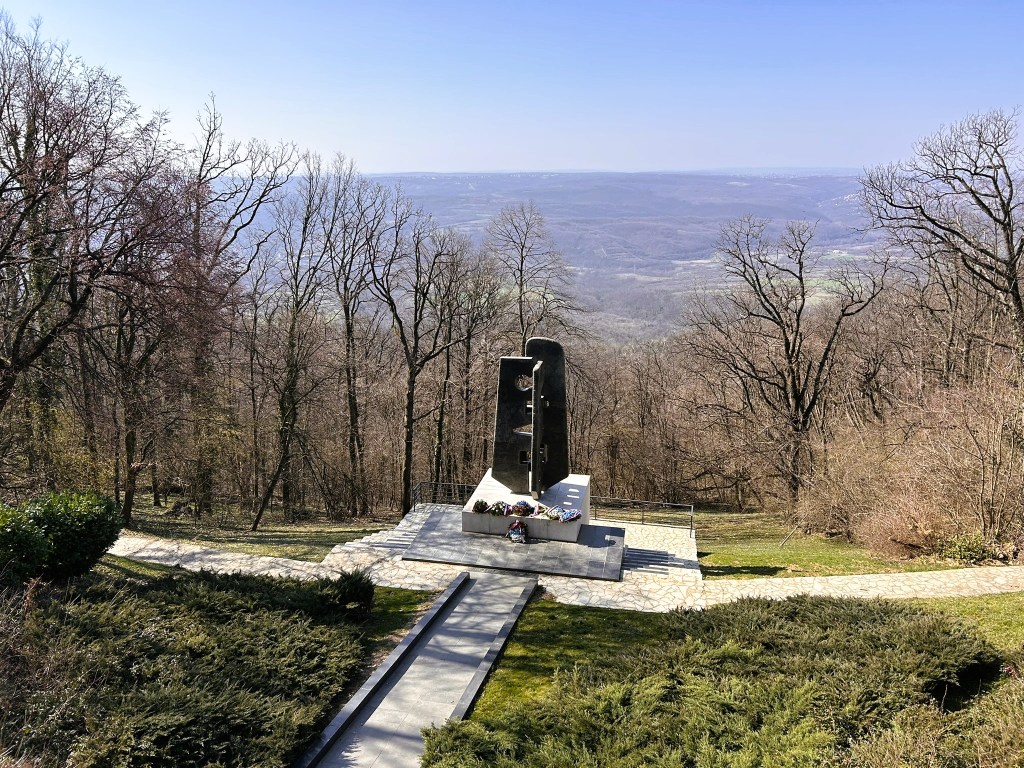
The old Yugoslavian state was into memorials in a big way. Tito had them built across the country commemorating various national heroes. They were beautiful, quirky or brutal but always impressive and always designed with subtle symbolism and deep, if often hidden, meaning. But after the collapse of Yugoslavia and the economic and social turmoil that followed, few of them were cared for and most of them disappeared from the collective mind.
Popina is one of the most extreme examples of this – designed by the acclaimed architect Bogdan Bogdanovic in the late 1970s to honour the soldiers of Uzice, it was intended as a 100m gunsight aimed into infinity and aligned with the sun symbolising life, death and sacrifice. It was a thoughtful and much-loved piece but is now forgotten, hidden in the hills outside a small village.
So hidden in fact that we couldn’t find it. We drove to where our sat nav said it was but saw nothing. There was nowhere to park and we ended up doing another tight u-turn to get back to the main road.
Frustrated by having to throw BigMog around the tiny roads, we gave up and headed for a nearby park-up place outside another monastery – not one we intended to go into, there are only so many monasteries you can see!
After a good night’s sleep, and some careful scouring of the satellite images on Google Maps, we tried again. This time we were successful. We pulled into a small layby and found a sign marking the start of the trail up to the memorial.
Our guide was waiting for us – the cutest little puppy dog you can imagine
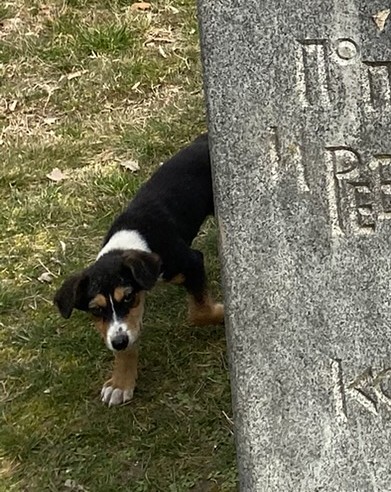
Dogs are a huge part of Serbian life, you can’t go anywhere without them being around. Most, like this one, appear to be feral but some are family pets allowed to roam free during the day. They hang around in small groups, generally looking happy and healthy, and all – without exception – gentle and friendly and keen for a fuzz behind the ears.
This one looked very skinny but had plenty of energy and was thrilled to see us. He walked us all the way up to the memorial and back down again as if it was his job. He wanted lots of fuss but once we were back at the truck he vanished before we could get our dog food out to feed him – no doubt onto the next tour!
It was a steep walk up to the memorial but it was worth it
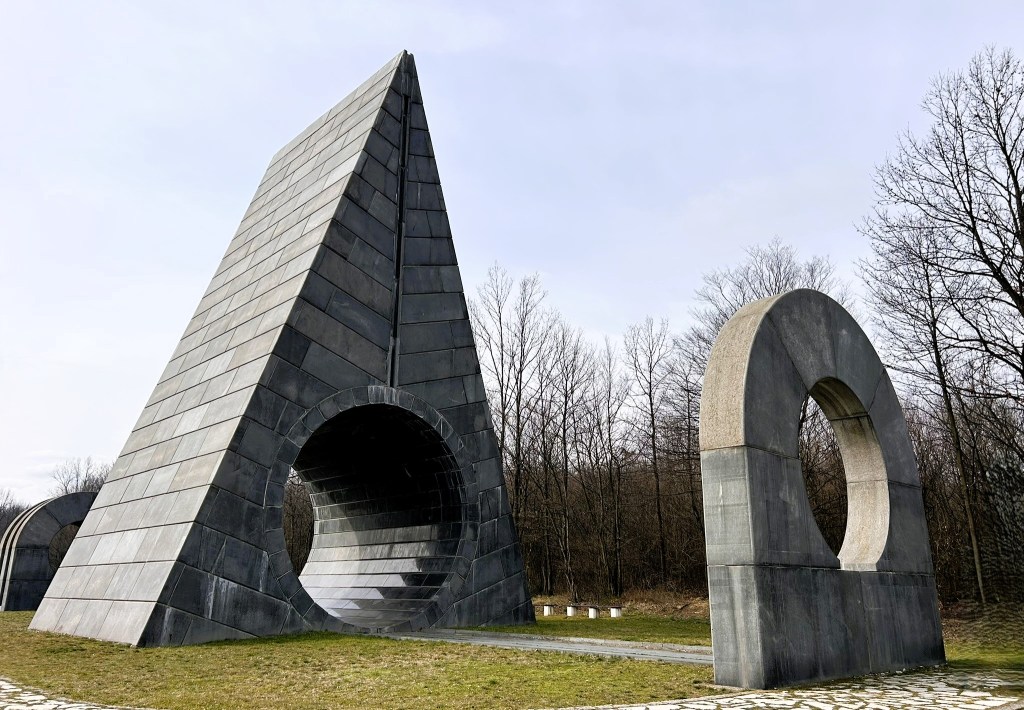
Beautifully designed and executed
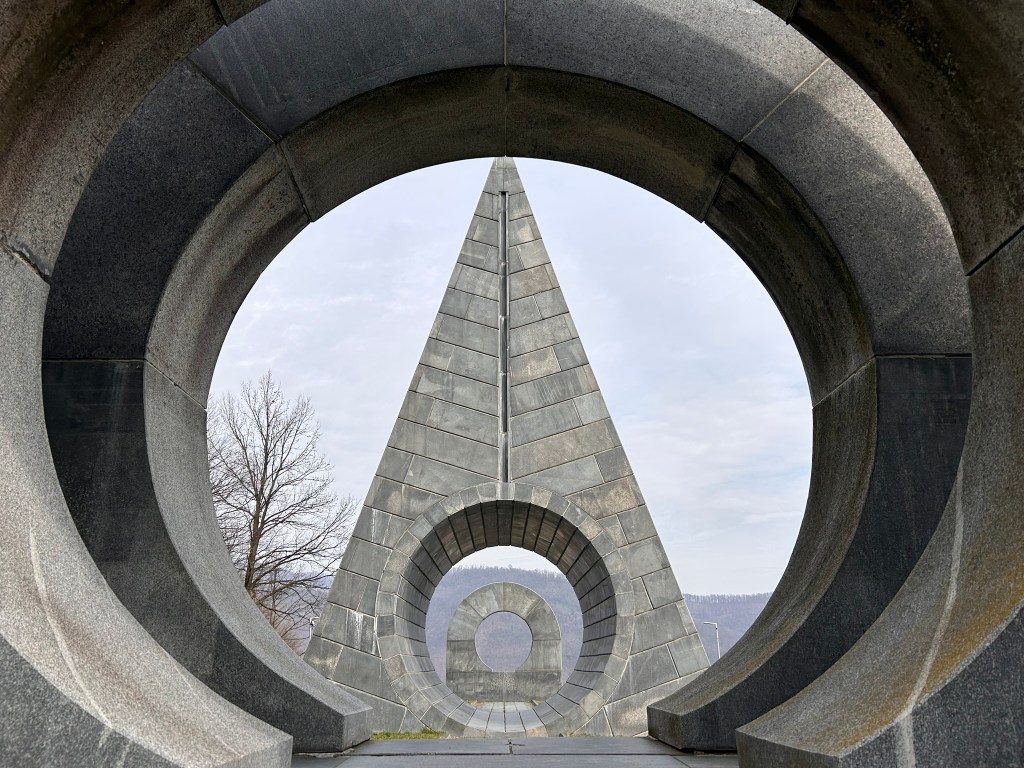
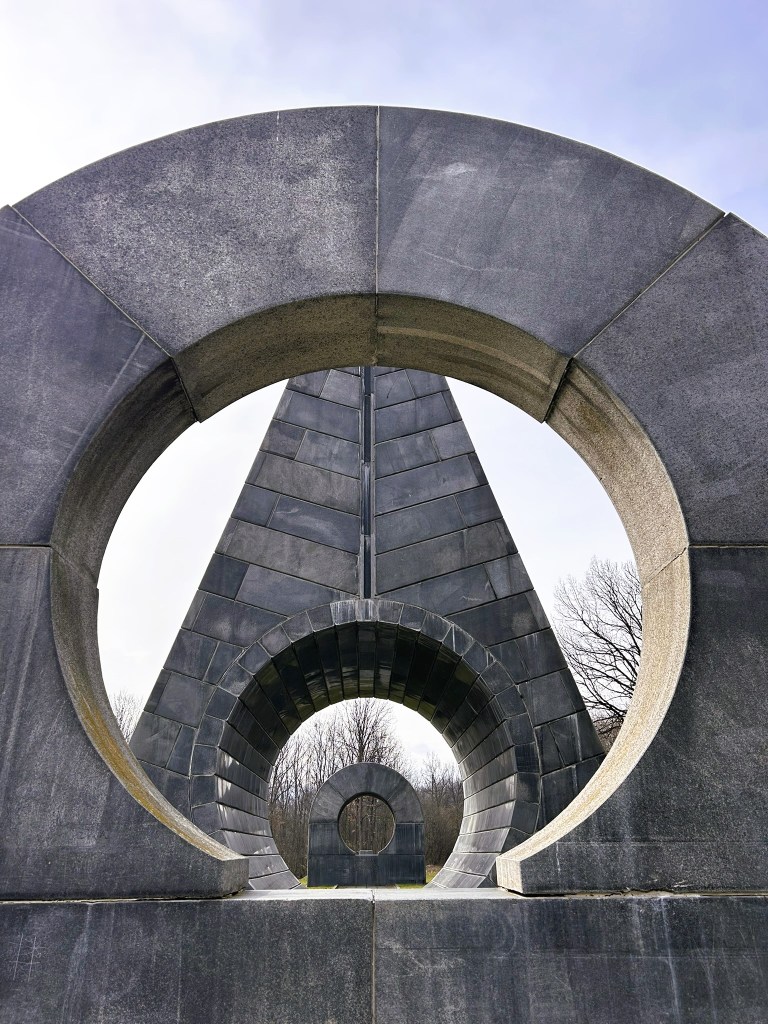
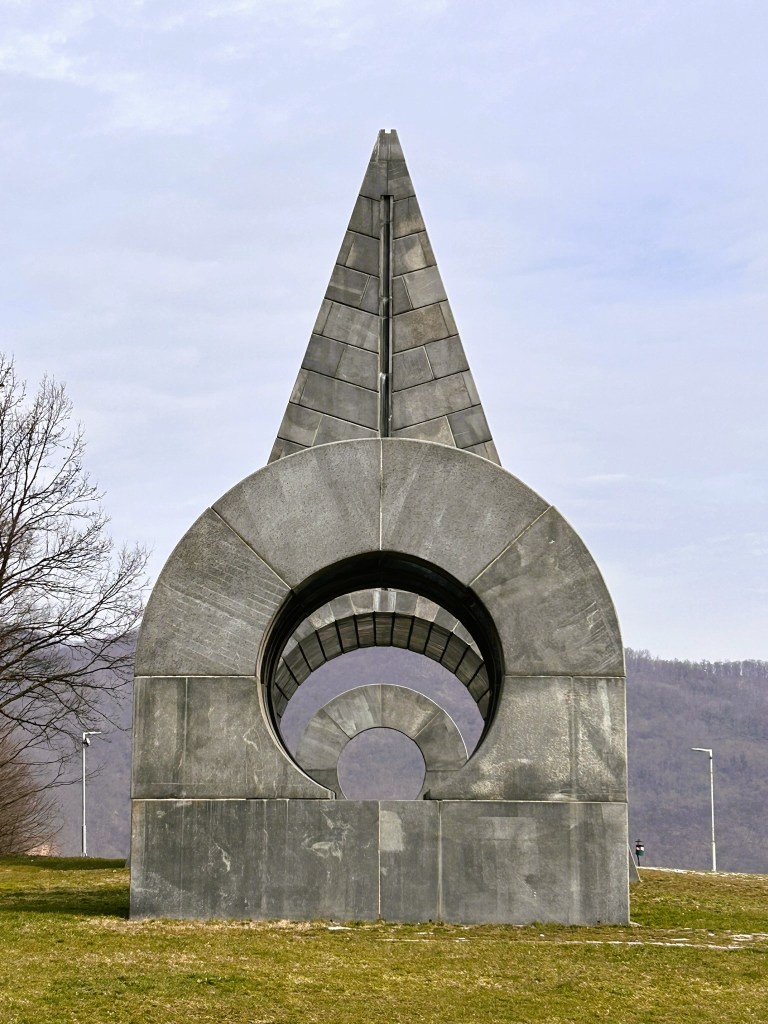
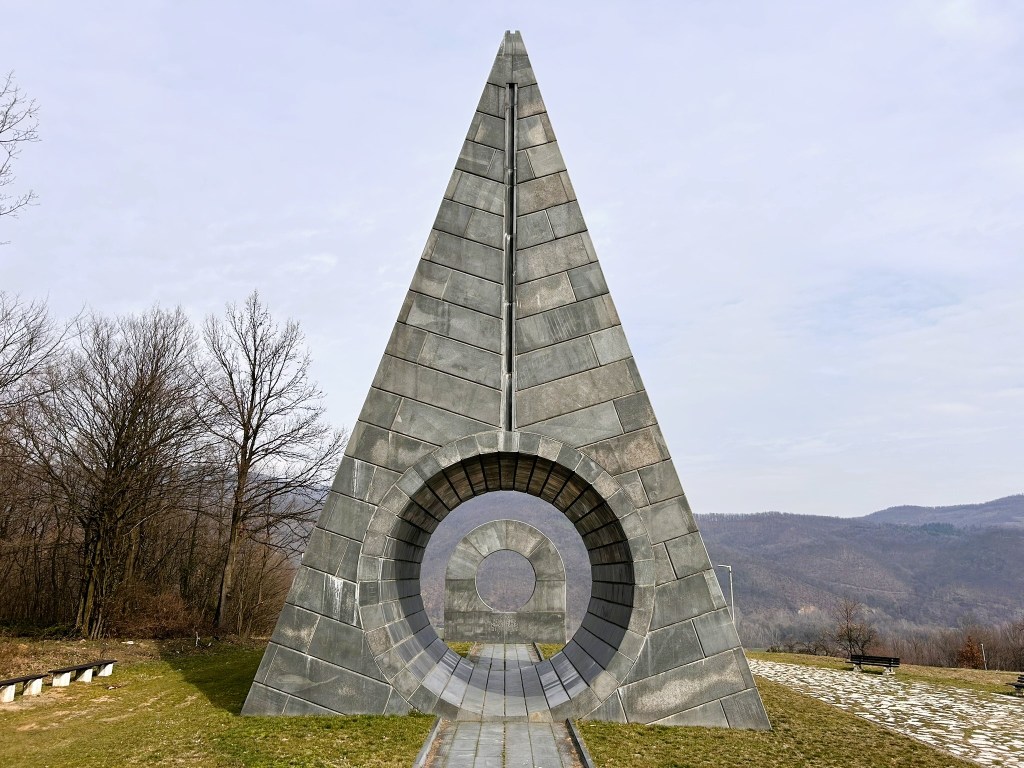
And someone was obviously looking after it as the grass around it was recently mown
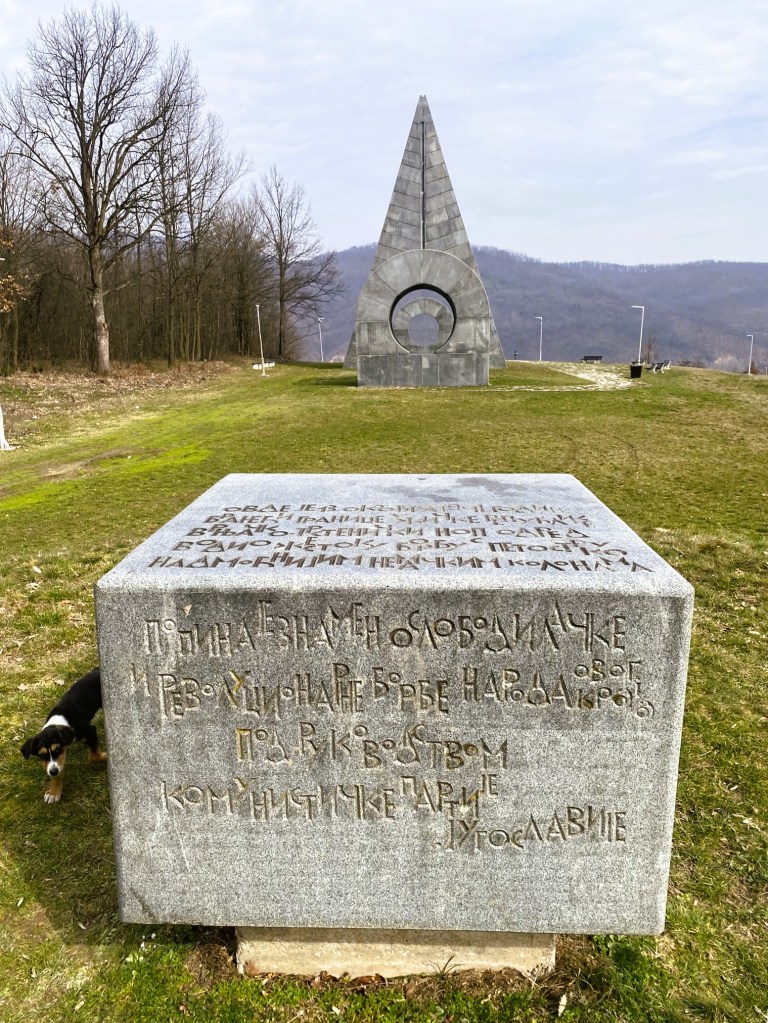
Apparently the architect was never happier than when people played on his sculptures as he believed life was for having fun. So have fun we did
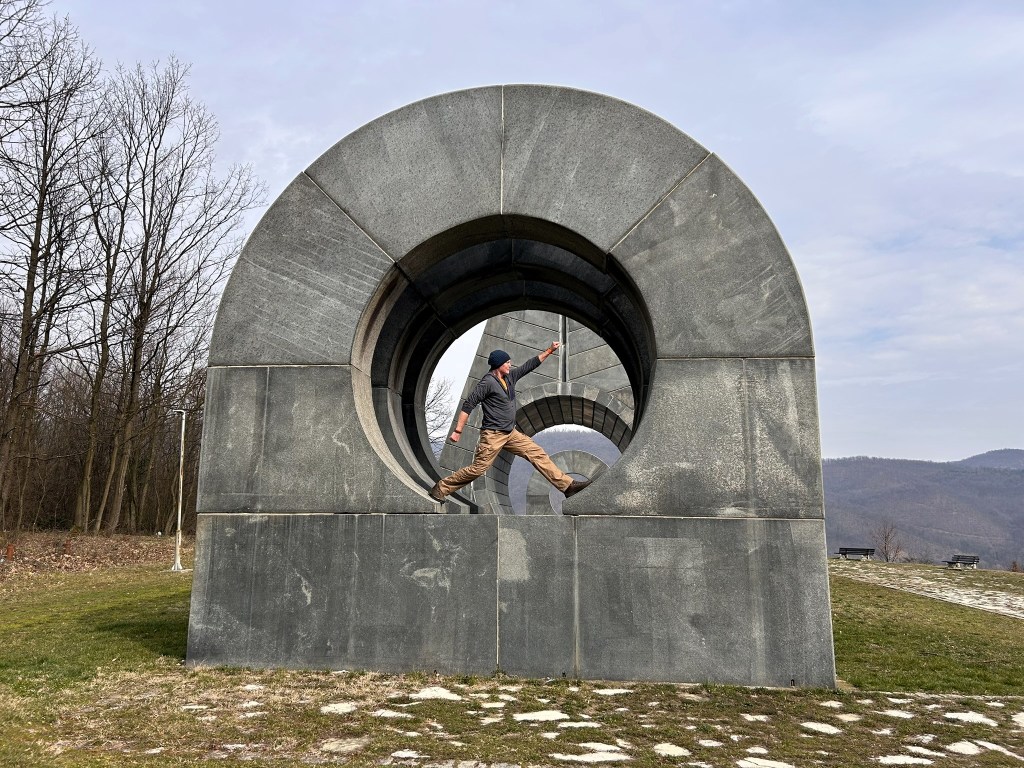
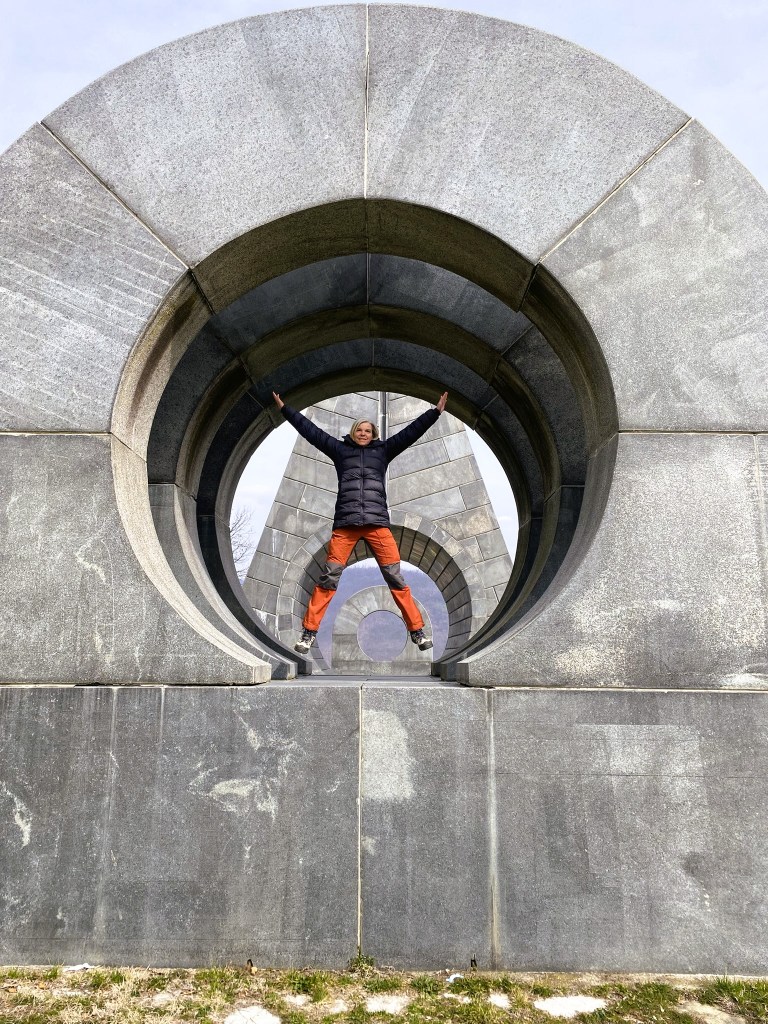
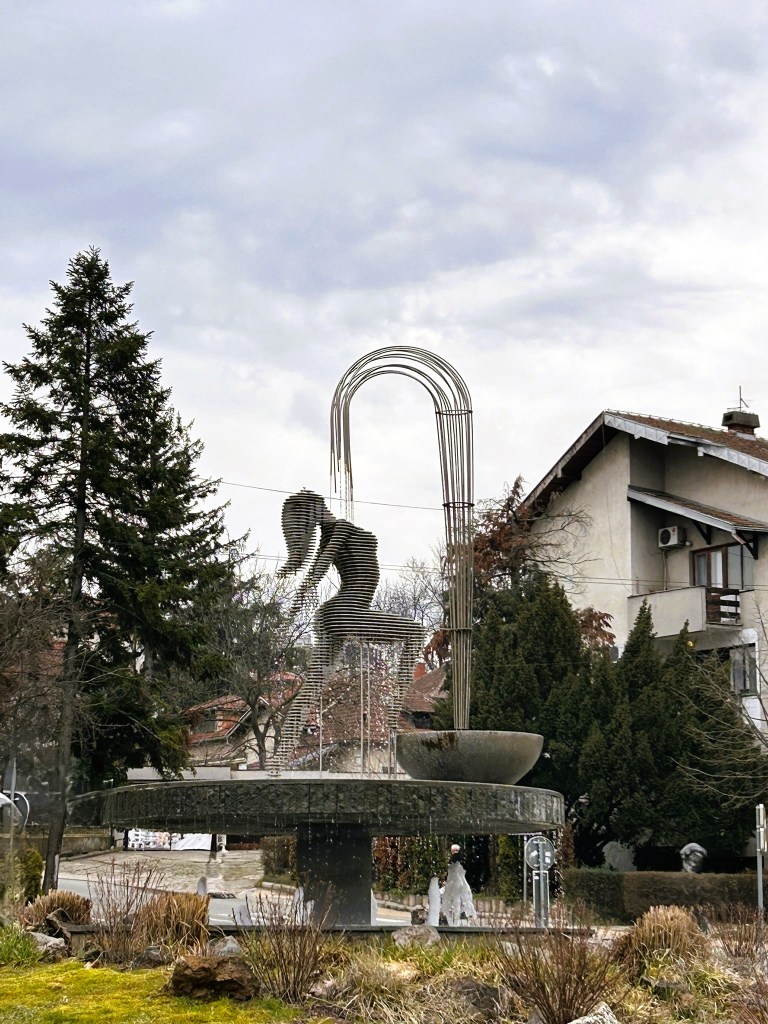
Our next stop was the second of Serbia’s spa towns – Vrnjacka Banja. This one has a very different character to Sokobanja. Apparently the elite of society have visited here since Roman times and it is still popular today. Not being into touristy places, we hadn’t expected much from it but it turned out to be very pretty
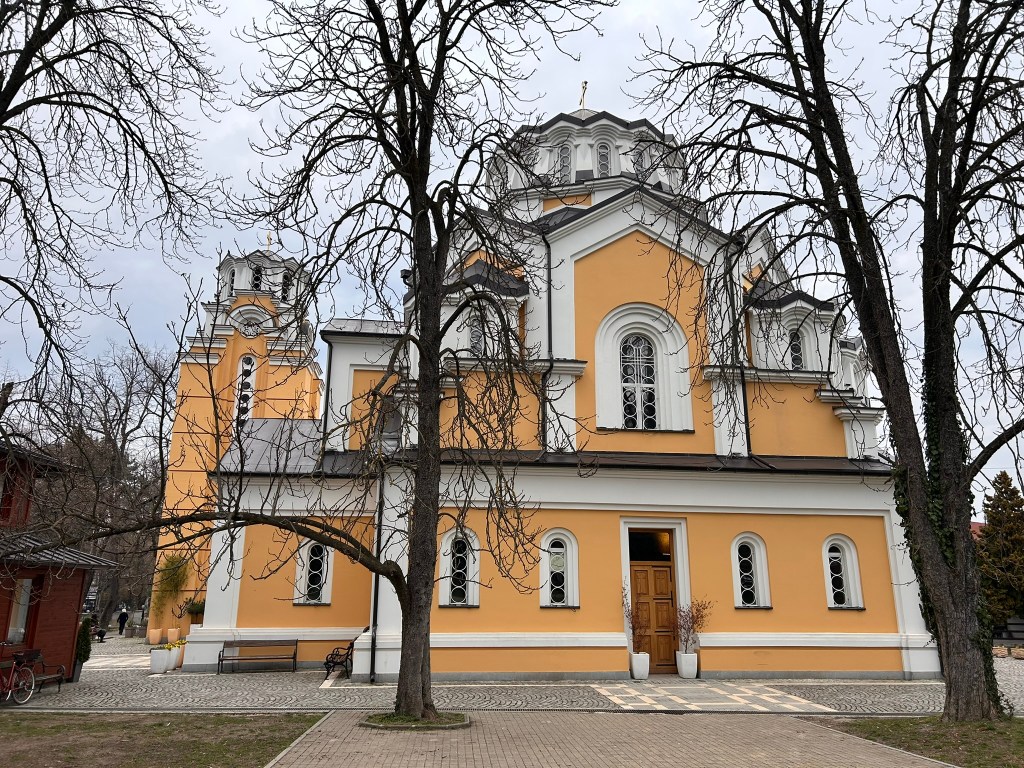
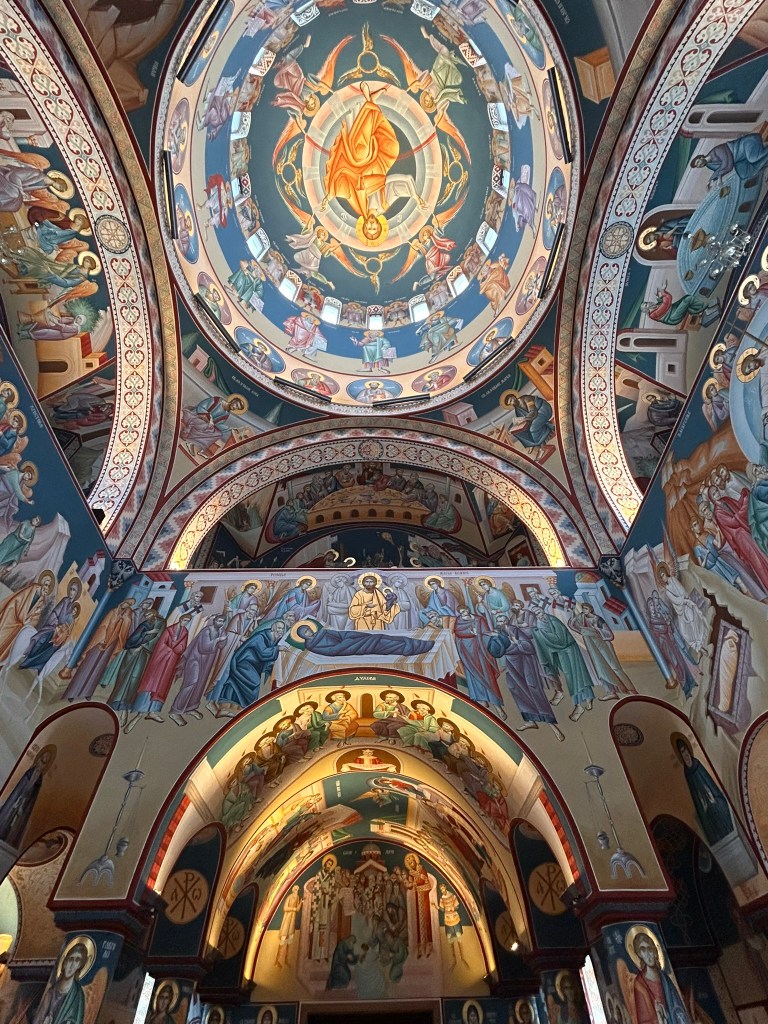
Our first find was the Orthodox Church
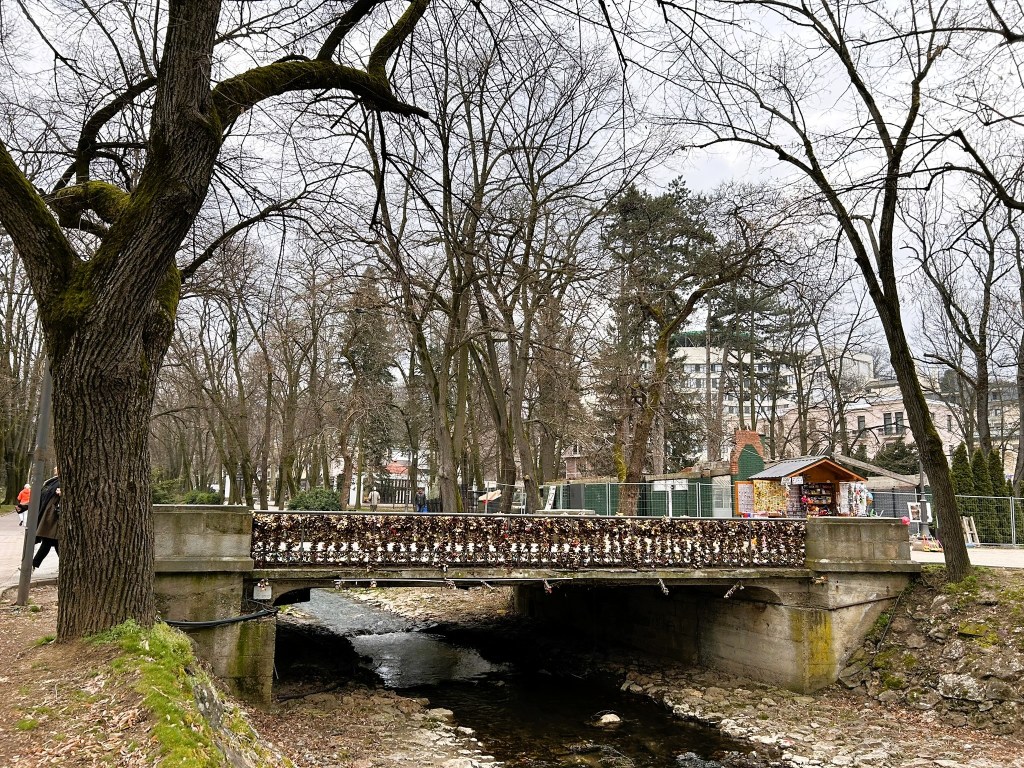
Then the Bridge of Love where a young couple swore their love to each other over 100 years ago only for the man to go to war and fall in love with someone else. The woman died of heartbreak and couples now leave padlocks on the bridge to bind their love for eternity
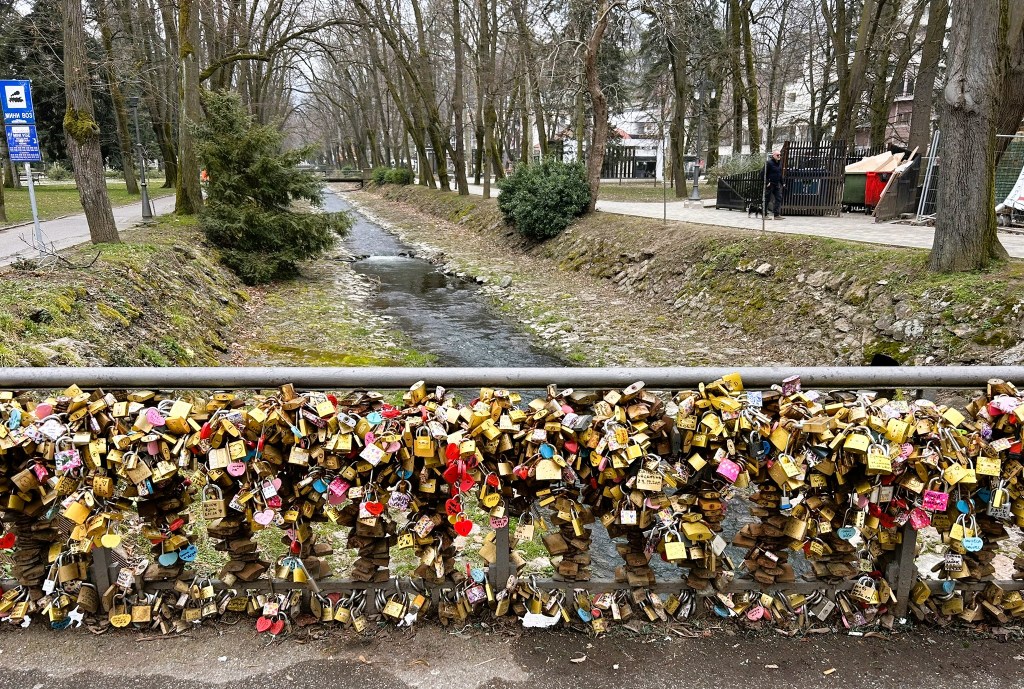
There were a lot of padlocks
The next quirky thing on the list was a statue of a bird
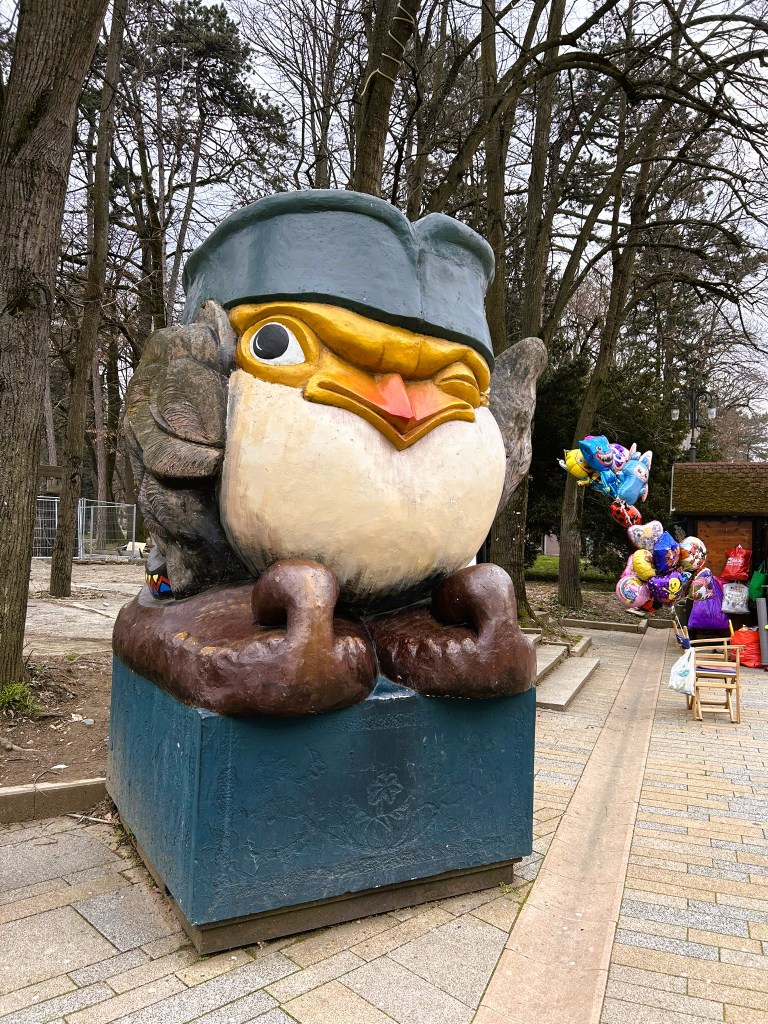
This is Gocko the Sparrow who became the mascot of the town after it hosted the popular television game show Games Without Borders – we’ve obviously been missing out on something!
But for us the best part was simply how green it all was with a lovely park
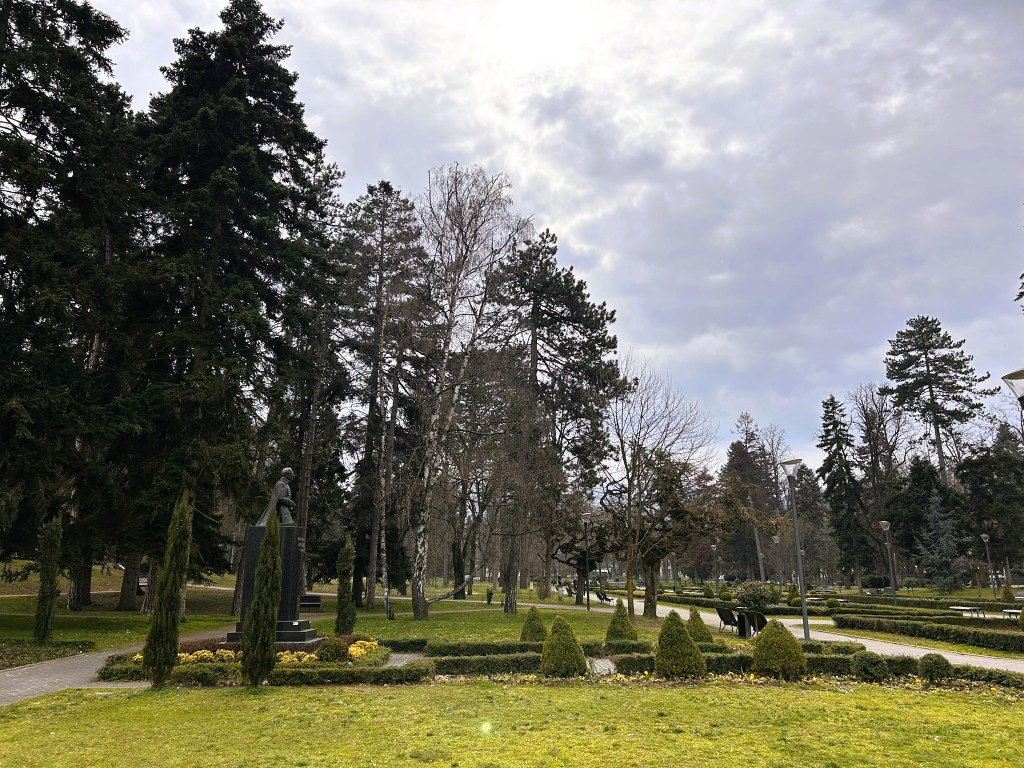
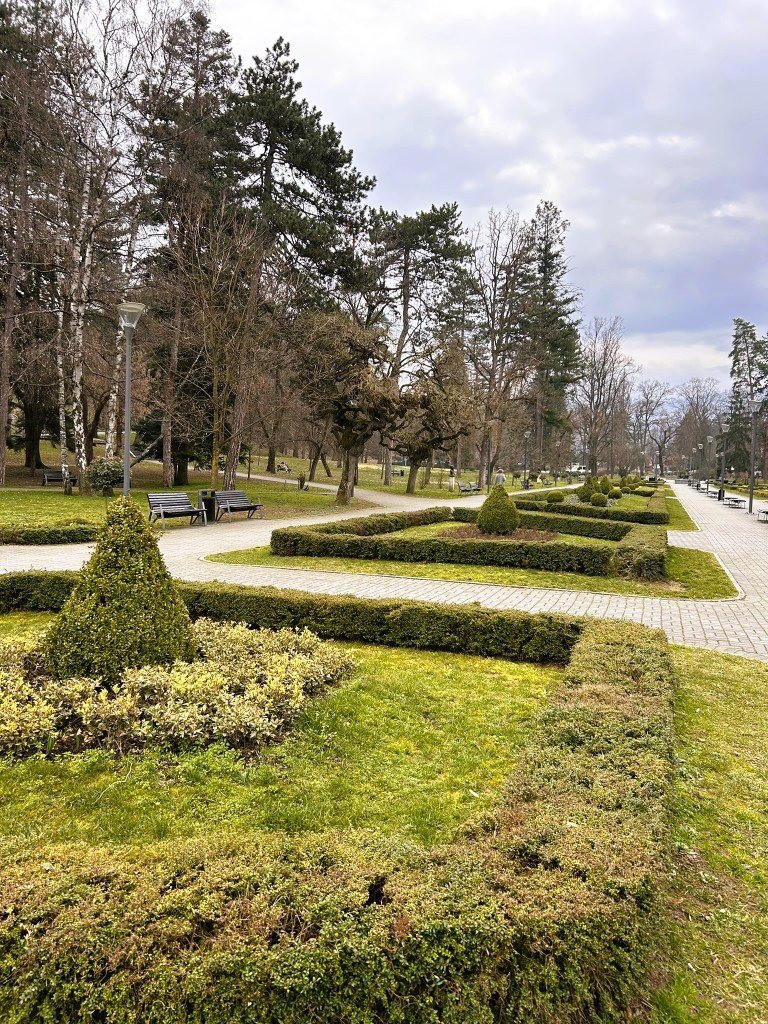
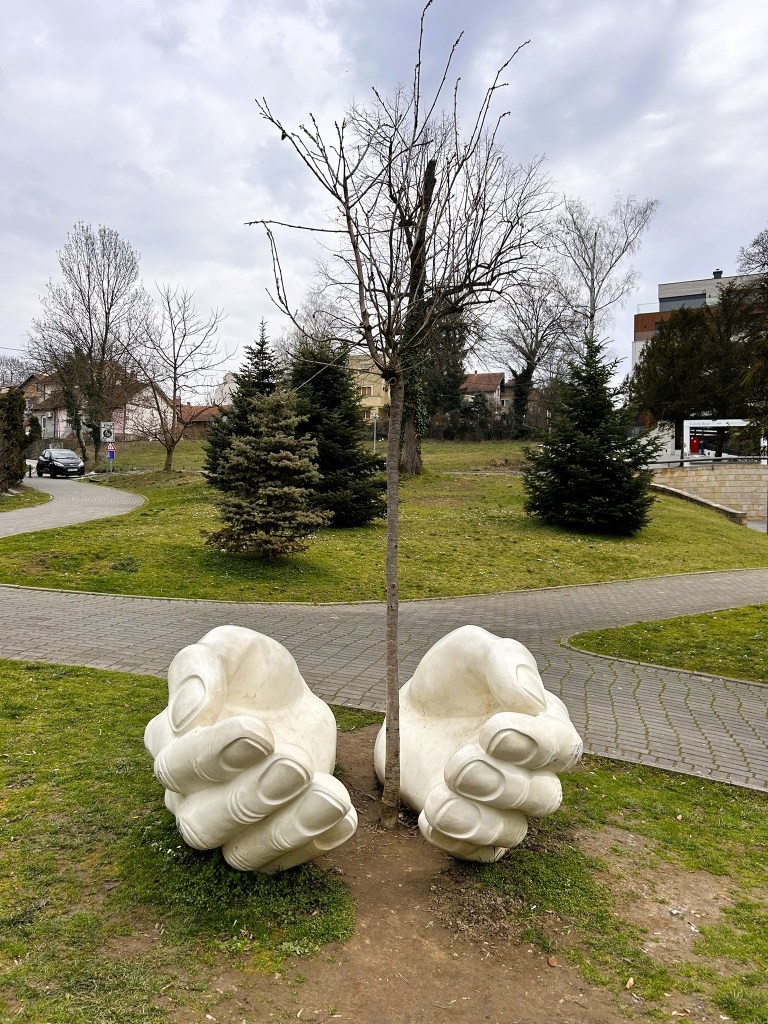
And a wide public piazza with a fountain
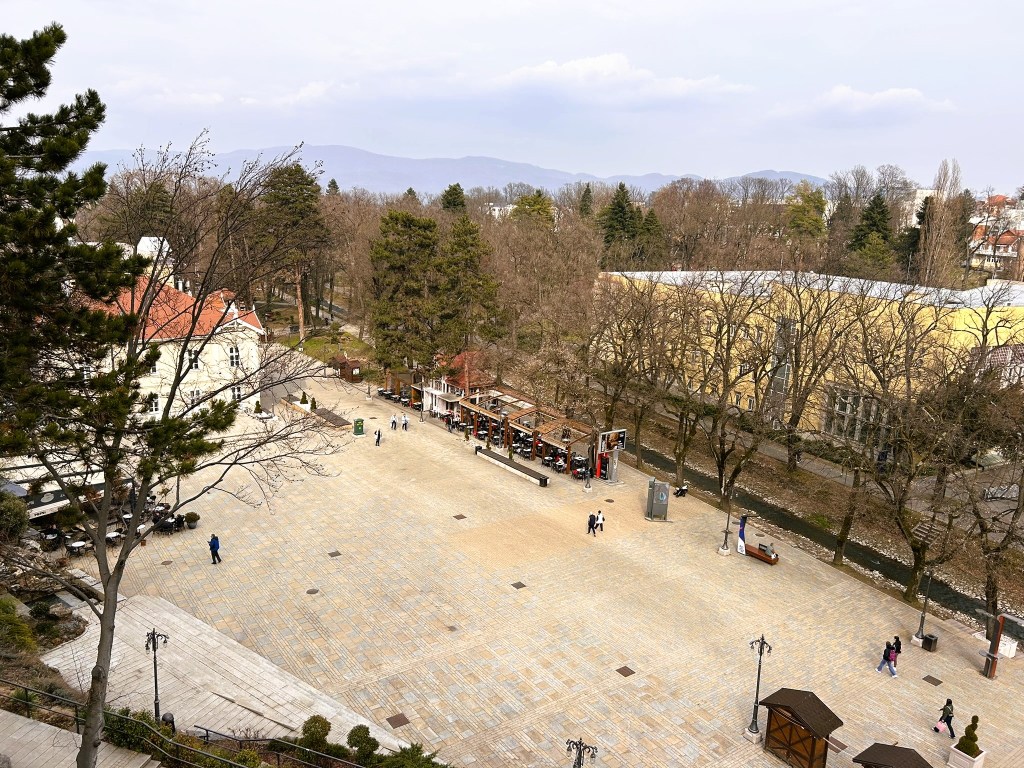
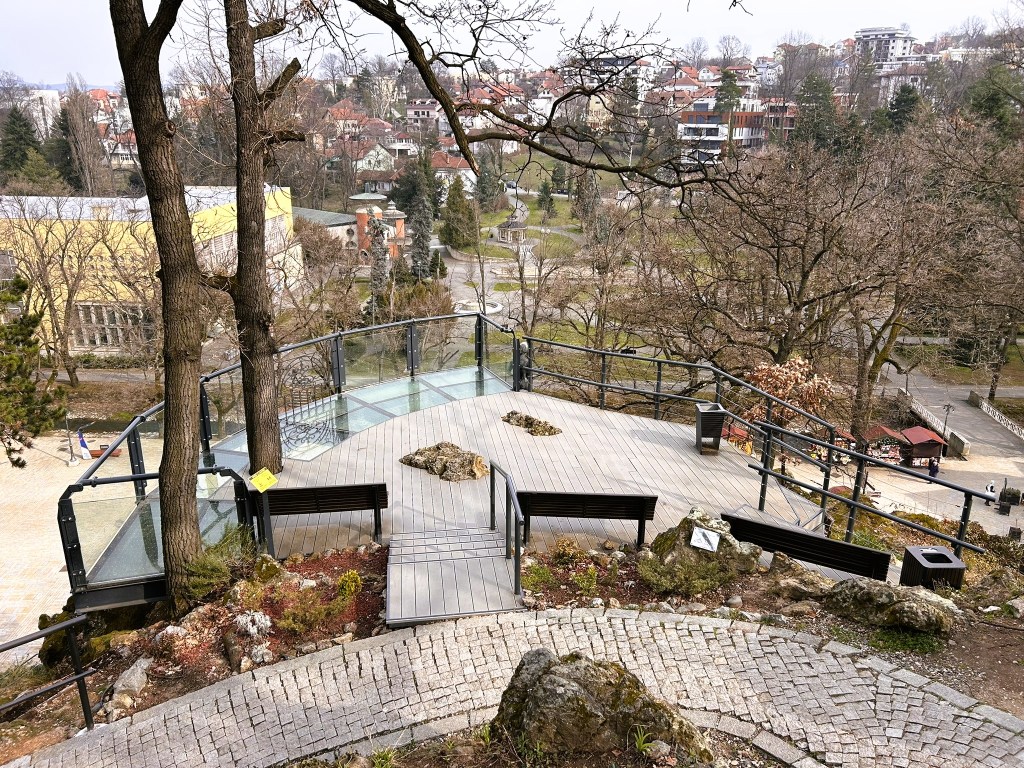
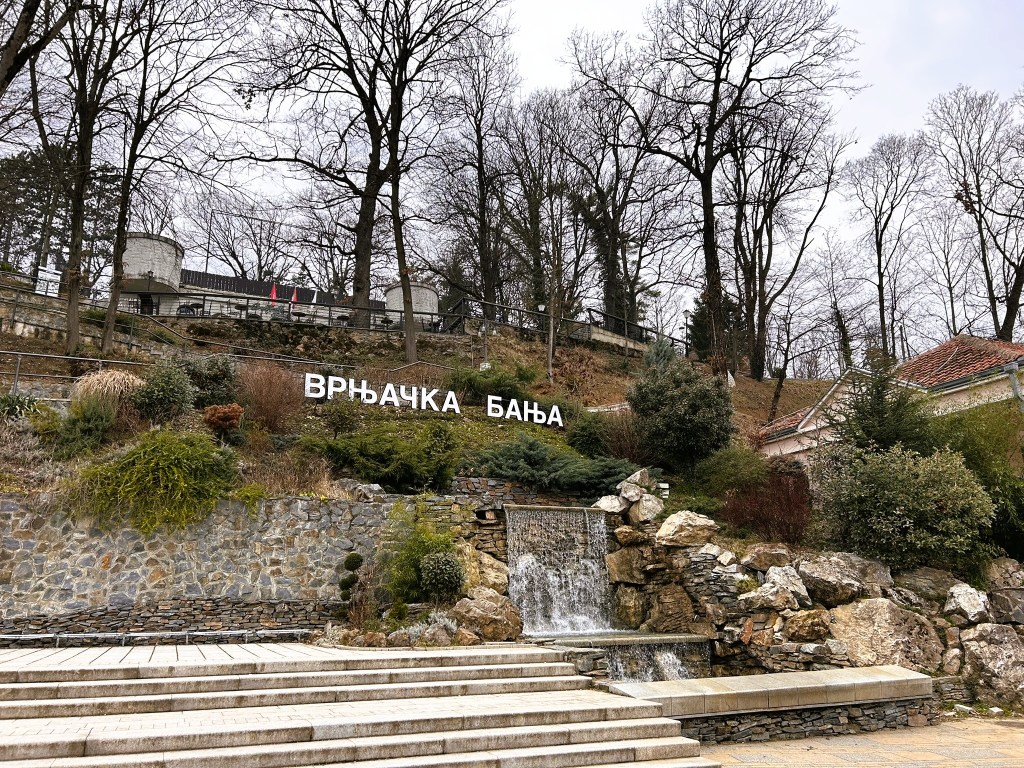
The thermal springs themselves were just modern buildings with a price list and a bookings schedule – although there were fountains in the foyer which were free to use but the water tasted of sulphur.
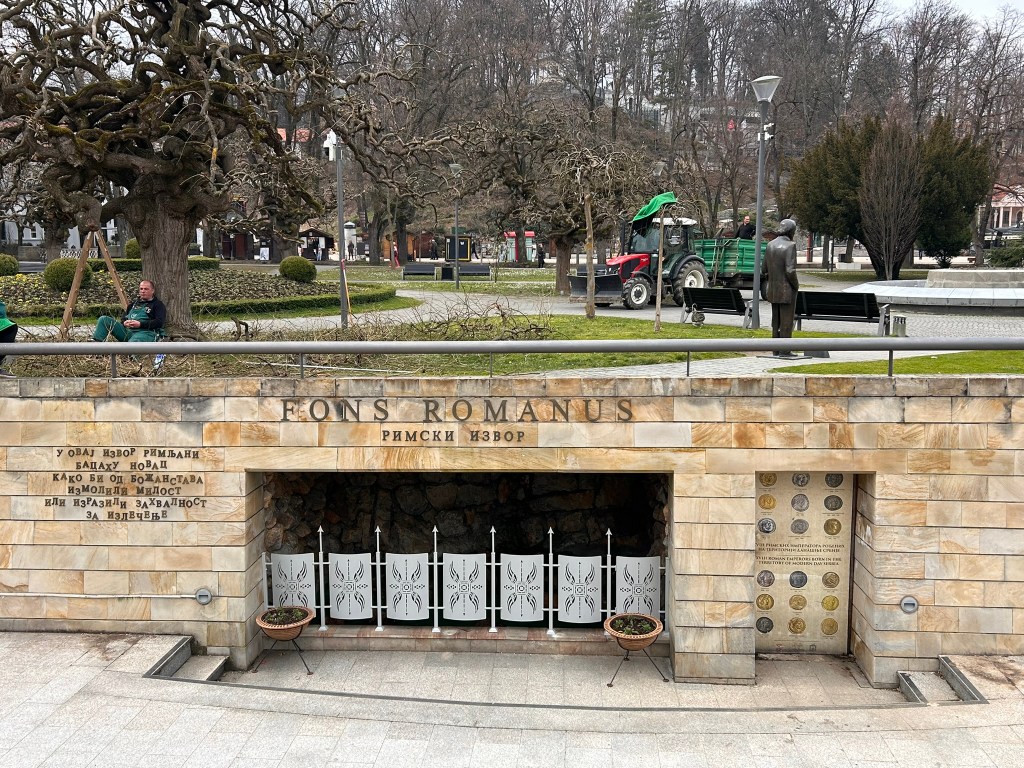
The old Roman baths were no longer in use
But the Japanese Garden was an unusual twist
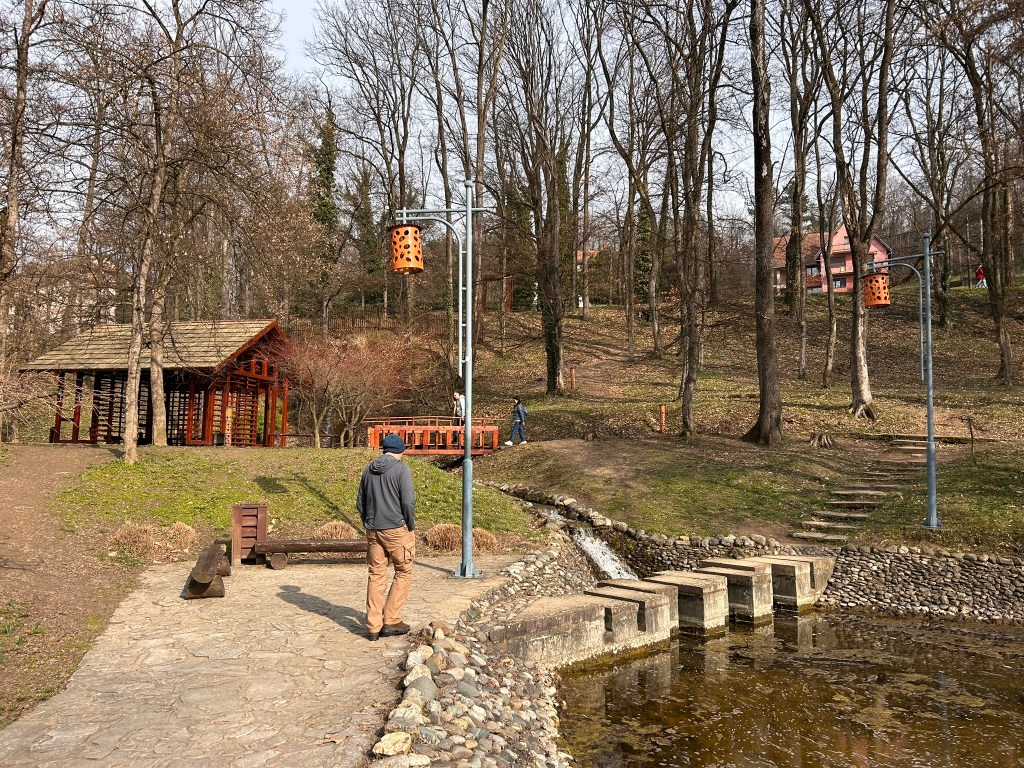
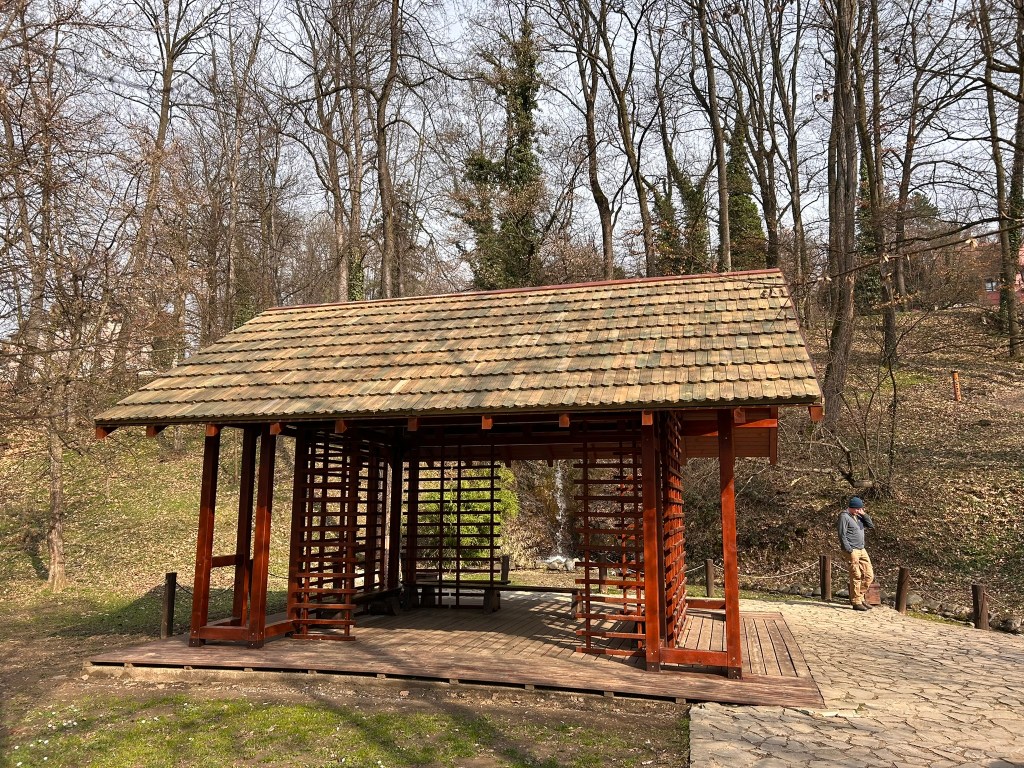
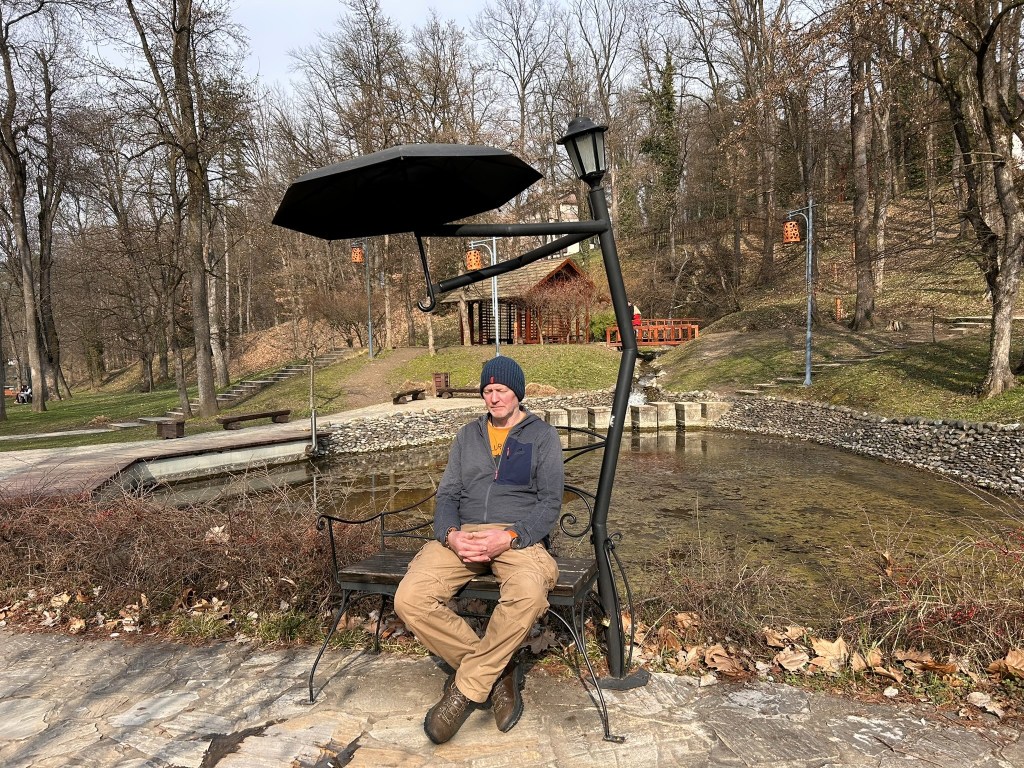
Including the bench with a very helpful stick man holding an umbrella over you
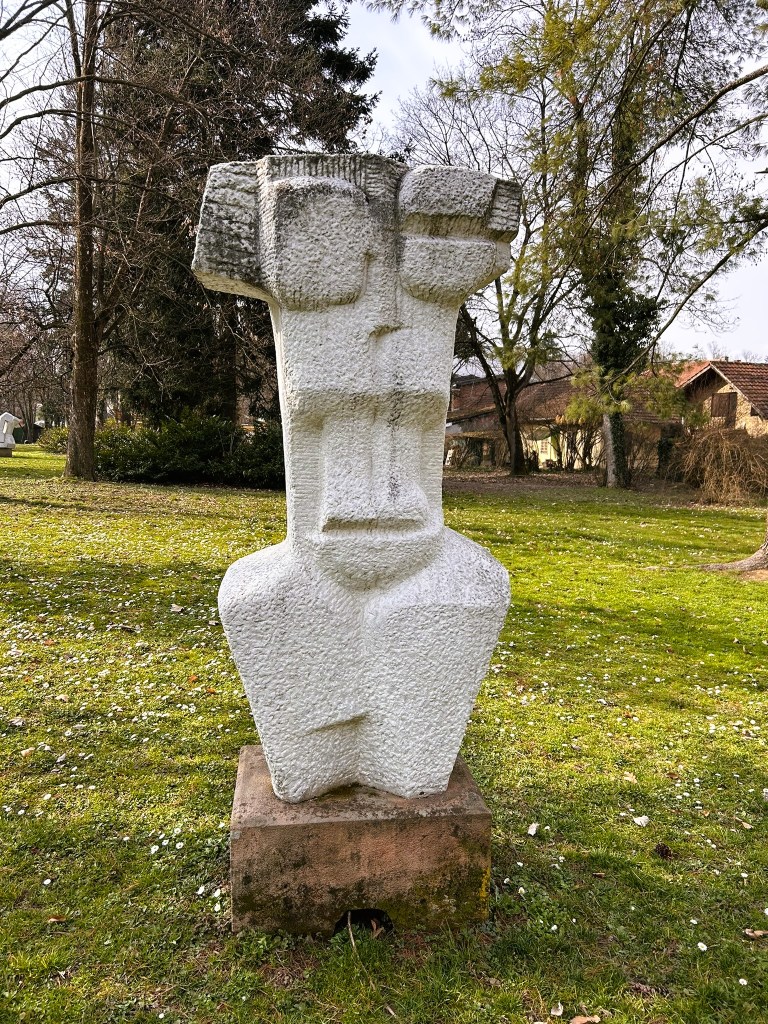
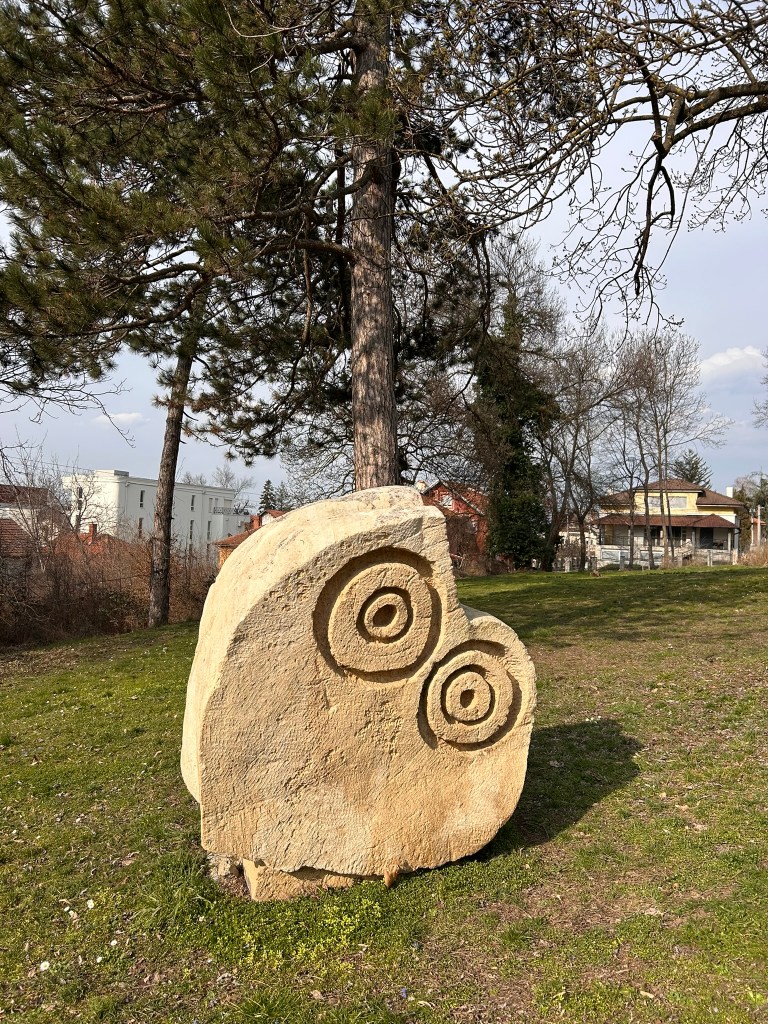
We stopped for a lovely pizza at a nearby restaurant and then climbed to the top of the town to see the Belimarkovich Castle, sadly closed for construction
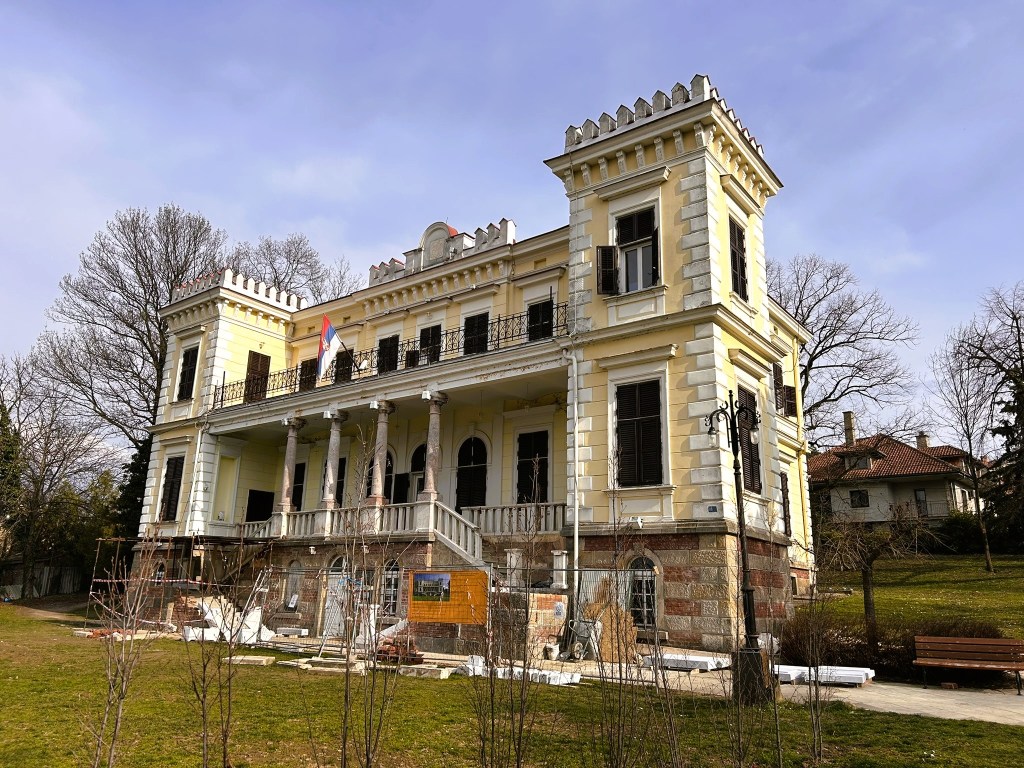
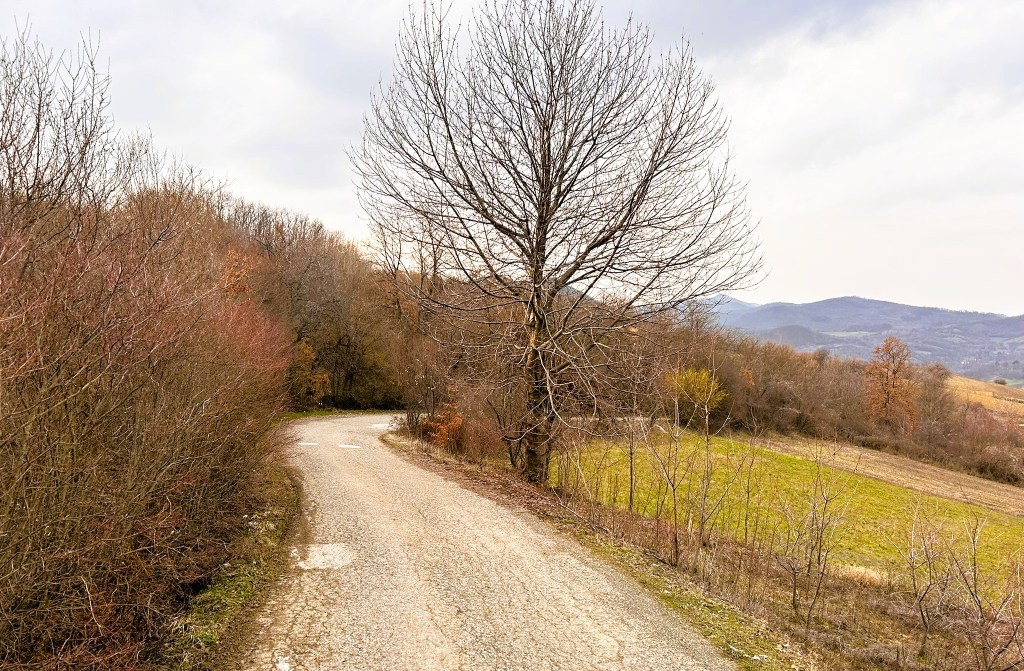
We were heading north again and our next destination was to be the large town of Kragujavac. We drove yet more beautiful roads
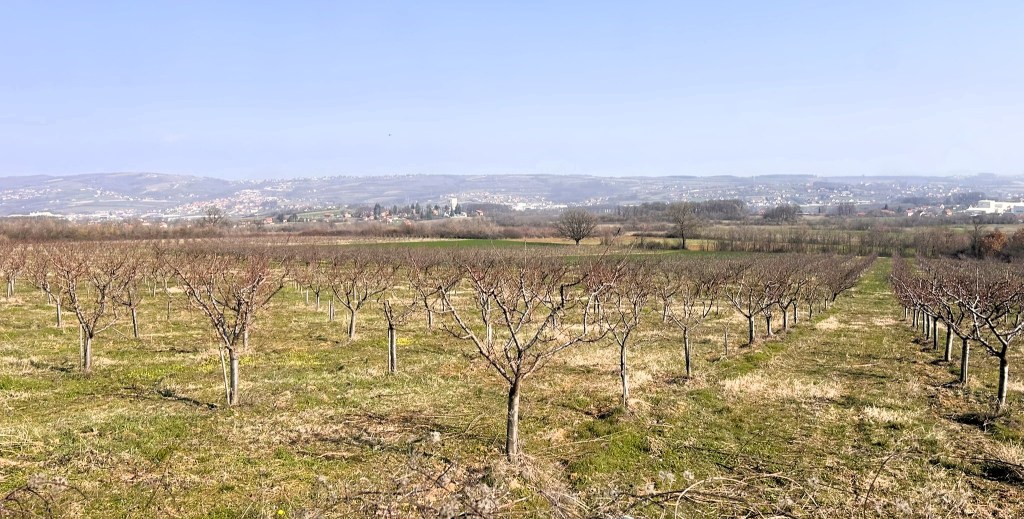
With fruit trees planted everywhere
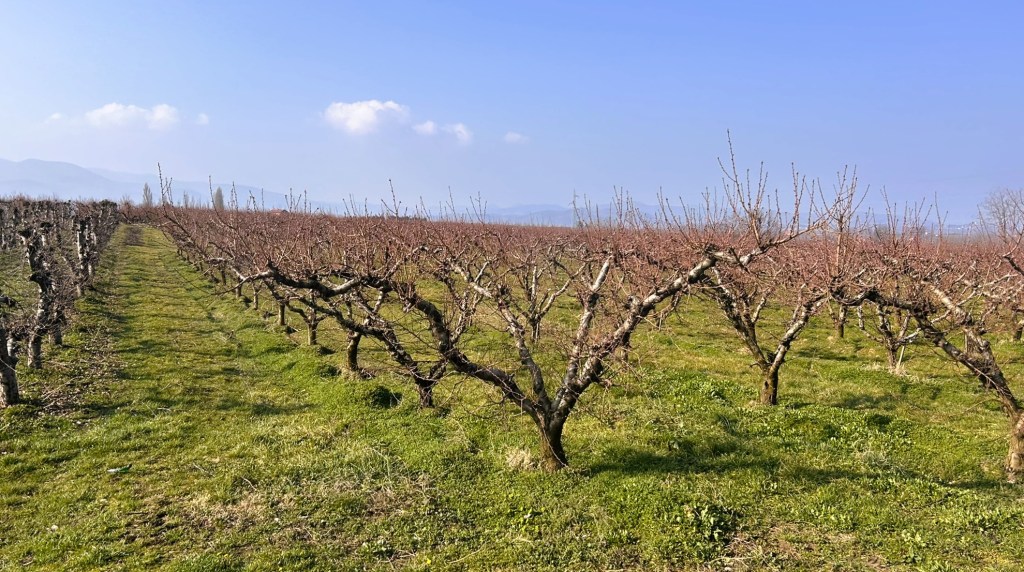
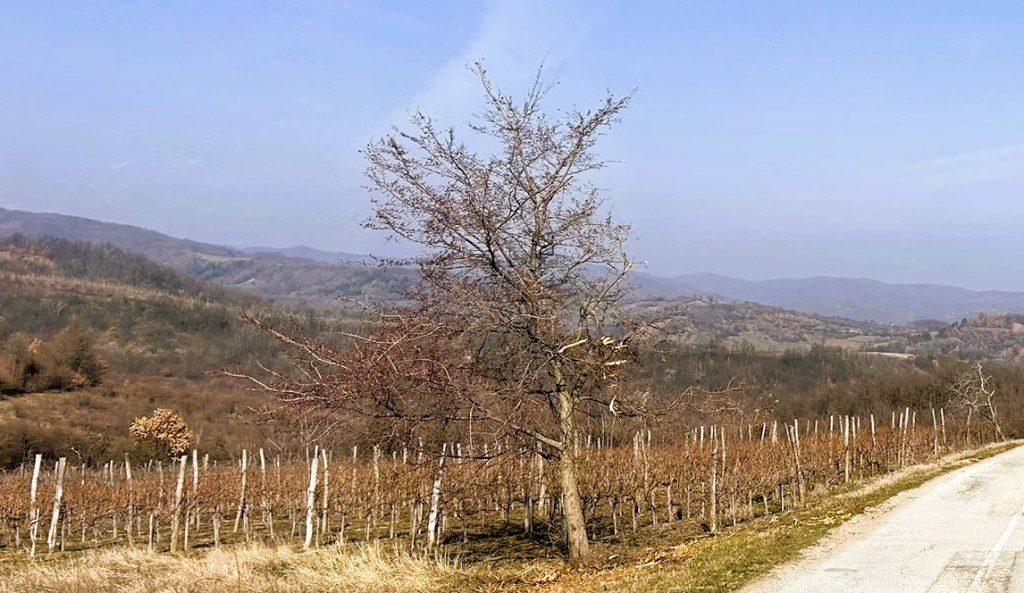
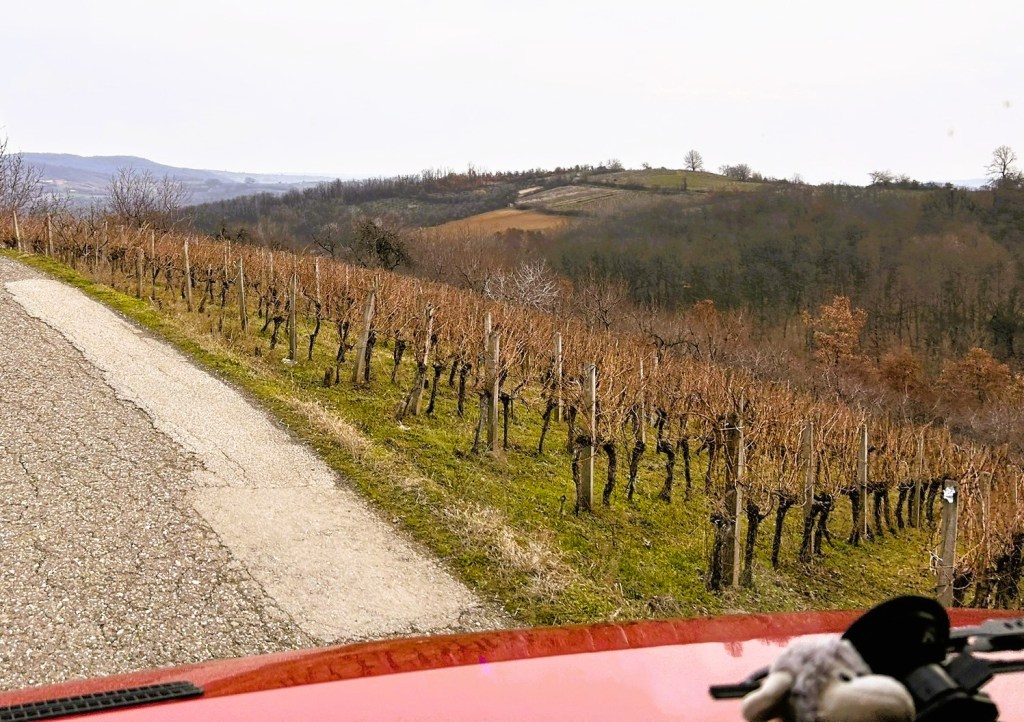
As well as thousands of vineyards – even small gardens had a few vines squeezed in, a good sign for us!
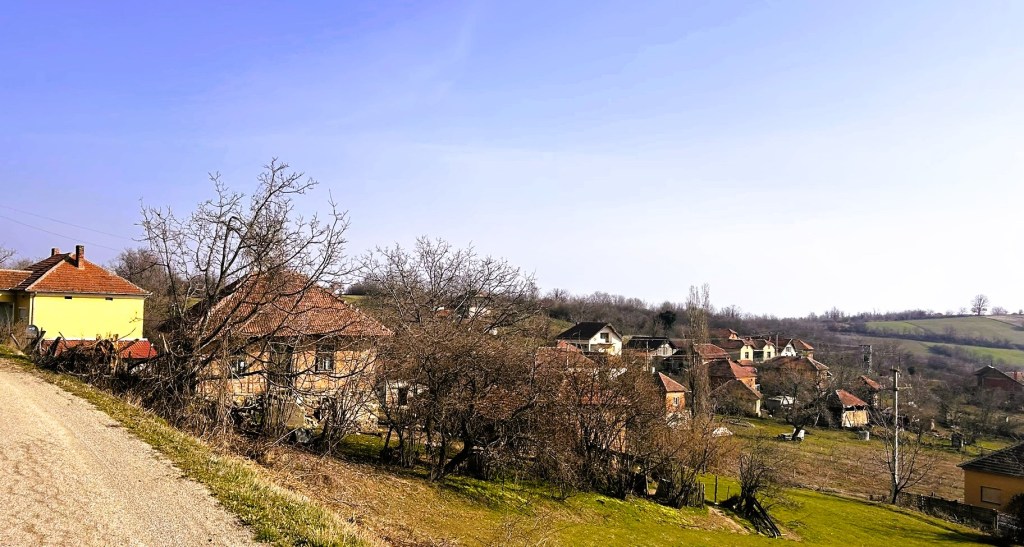
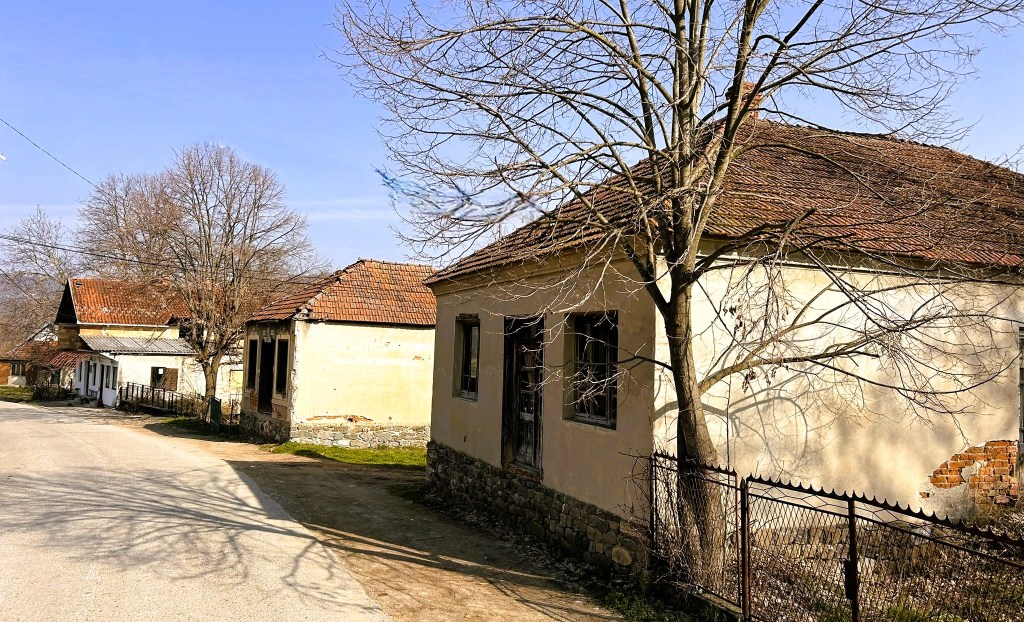
It was also very noticeable just how many homes were very run down, some so dilapidated that you wonder how the people manage to live there
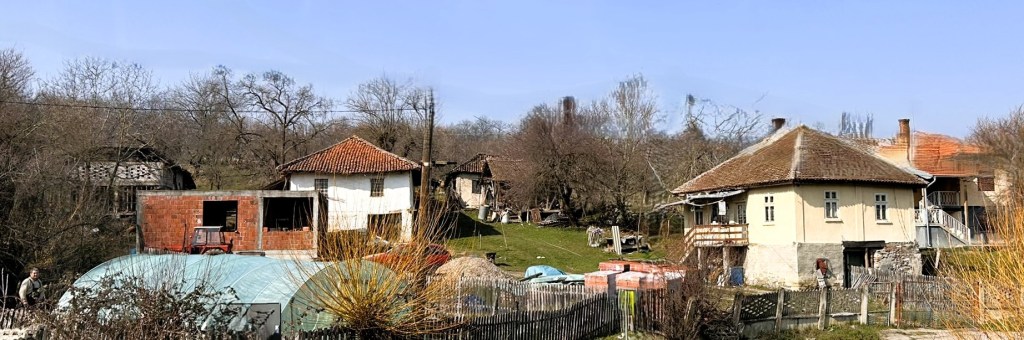
It is a common site to see a large house under construction but seemingly abandoned, sometimes for what looks like years
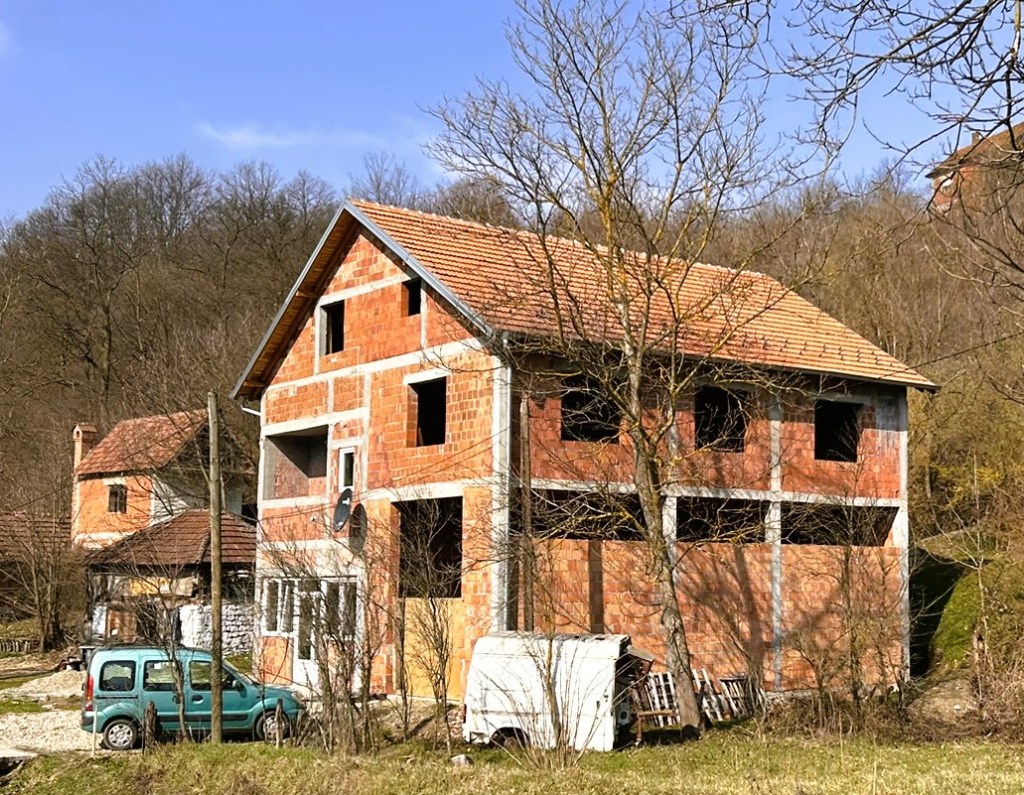
This one seemed quite new and may still have been actively worked on but most were not. We could only assume that people had had great plans but funds ran out as the economy nose-dived after the breakup of Yugoslavia.
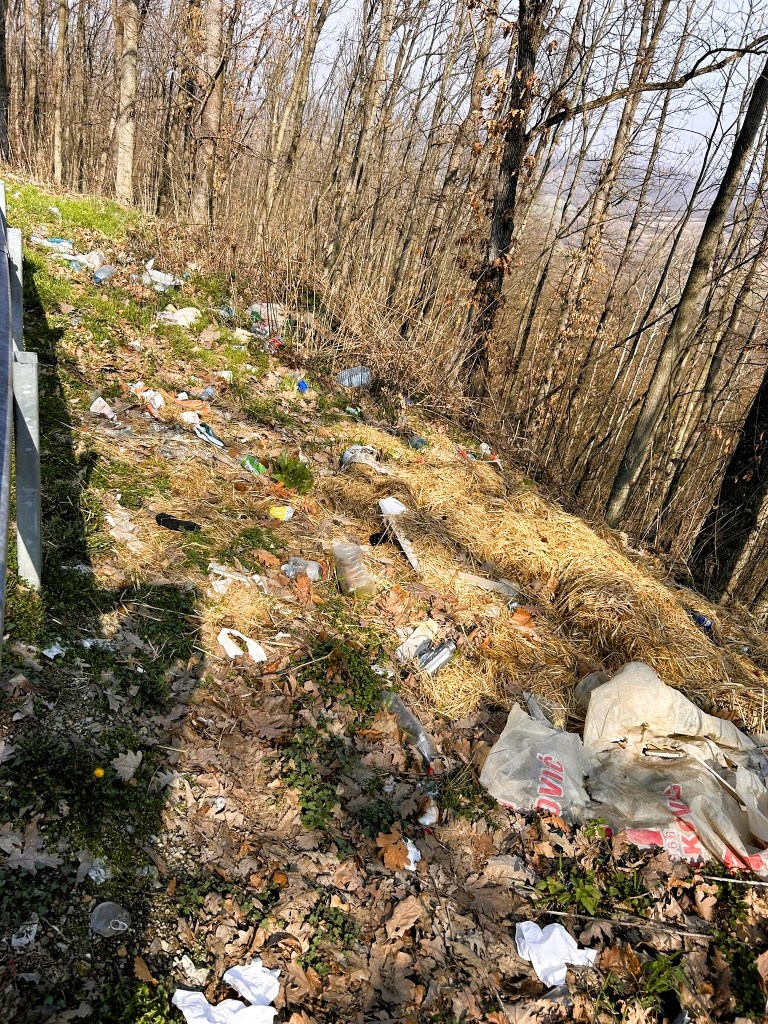
And the litter problem just gets worse and worse wherever you go across the Balkans
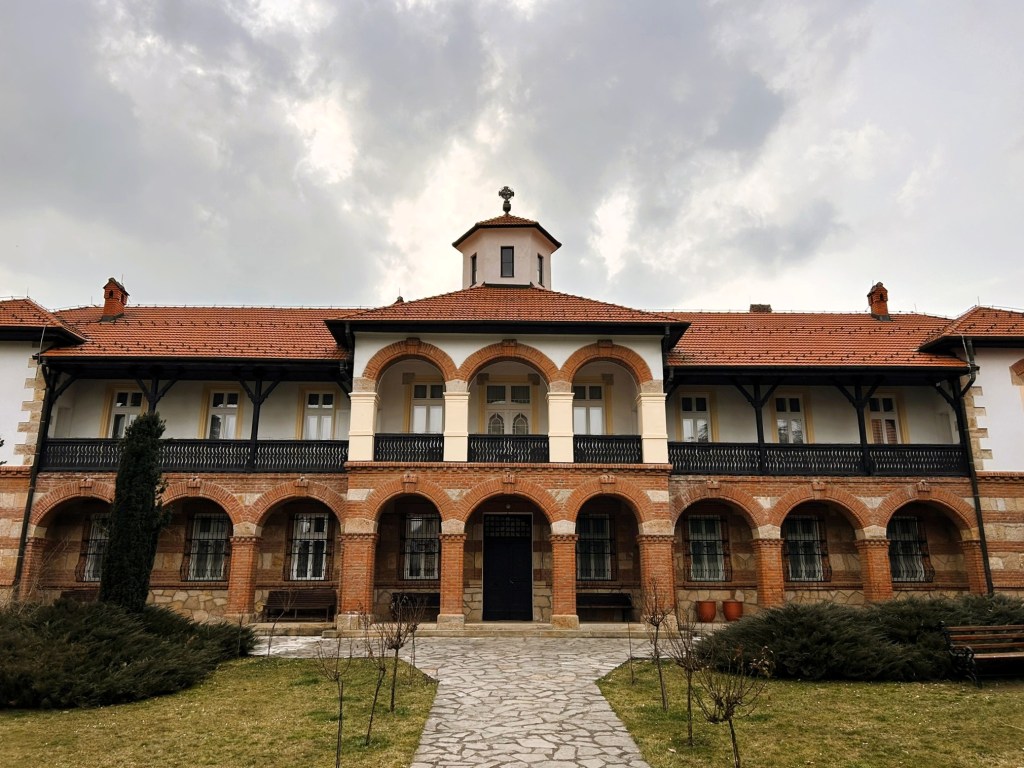
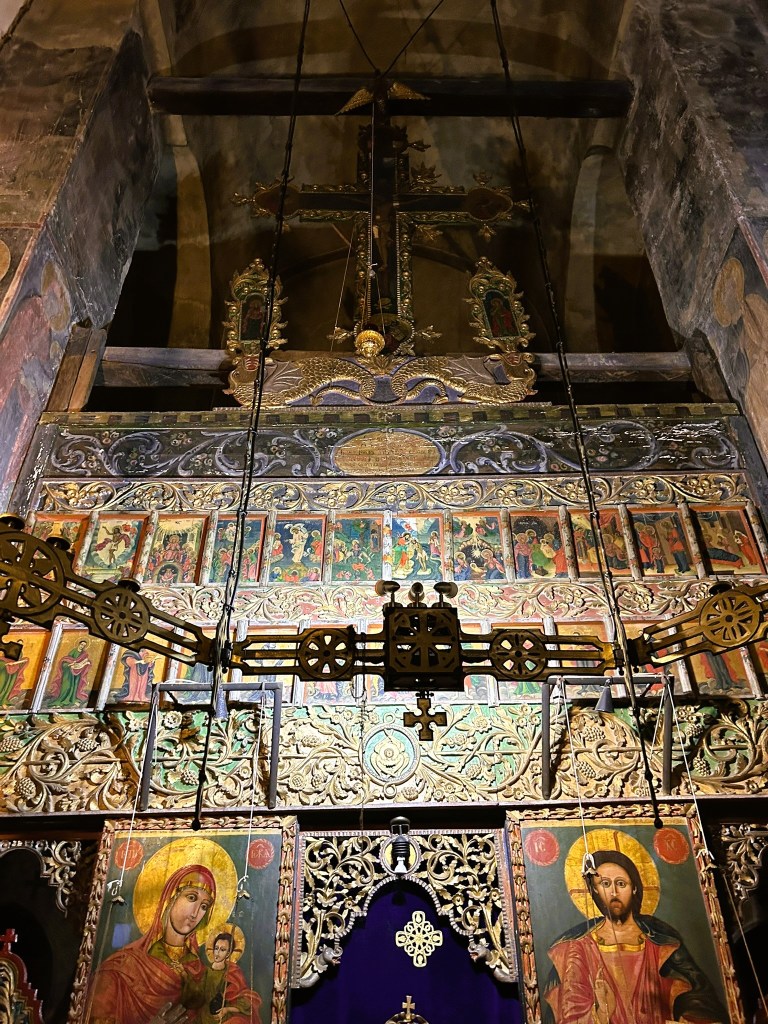
Enroute we found Kalenic monastery and decided to park-up for the night. I had a quick wander around the church – it was pretty, but the nuns weren’t very friendly so I didn’t stay long
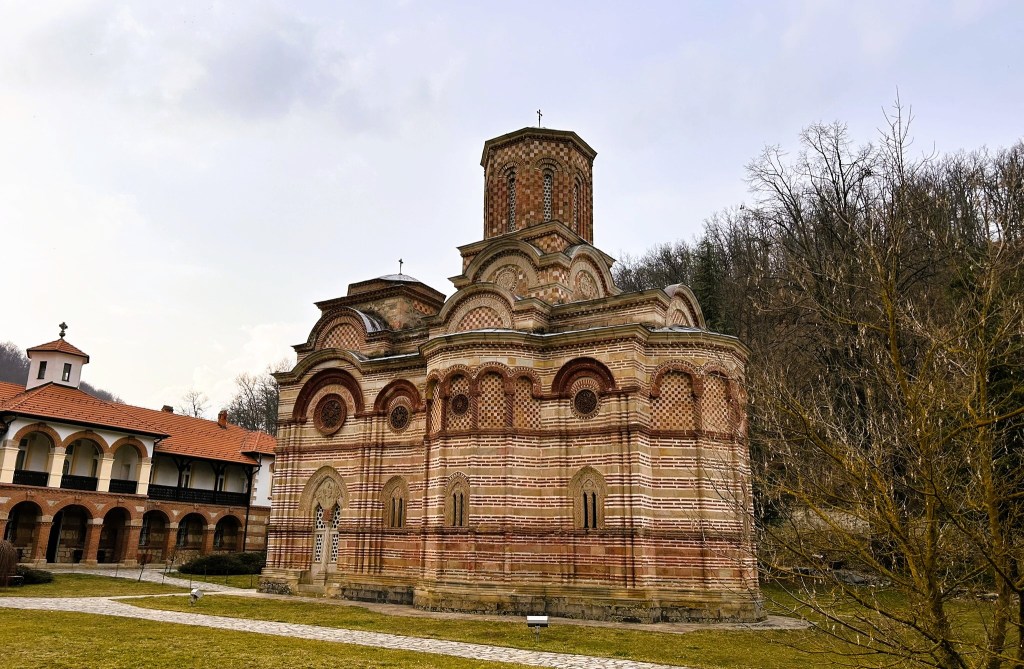
We arrived in Kragujavac the next morning, a busy and crowded town, not well suited to a UniMog. We stopped at a Lidl needing to do some food shopping but also hoping to leave BigMog in their car park for the day. But we found there was a strict 90 minute limit with barriers and tickets – most unlike Serbia.
The next car park we tried was small and full and we had to reverse back out of the road. With our stress levels rising, we tried another one by a lake but that was also full so in desperation we parked on the grass verge only to be hailed by two locals telling us we would be fined if we stayed there – another first in Serbia.
However these same gentleman then moved their cars around to make room for us in the car park and saved the day – the kindness of strangers.
One of the main reasons to come to this town was to visit its enormous cemetery that was reputed to be full of tombstones carved in the shape of Zastava cars – the main Zastava factory having been located here for many years.
But we were disappointed, after an hour of looking in every nook and cranny we found not one single car.
To cheer ourselves up we walked to a rare thing indeed in Serbia – an Indian restaurant. There was no-one else in and the waiter looked quite surprised to see us, but the food was amazing.
From there we walked 2km to the 20Cola Pop Culture museum, found that it didn’t open until 5pm, walked 2km back to the truck to wait for 1.5 hours then walked 2km back to the museum.
James was distinctly not sure the walk or the wait would be worth it but our persistence paid off, it was wonderful
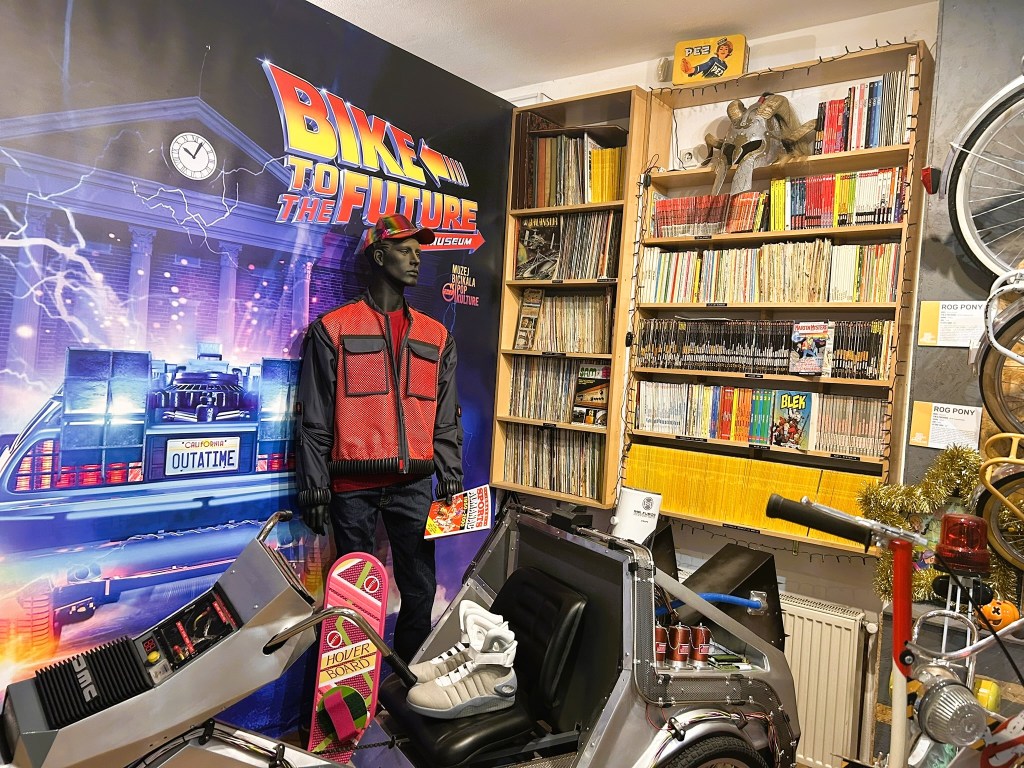
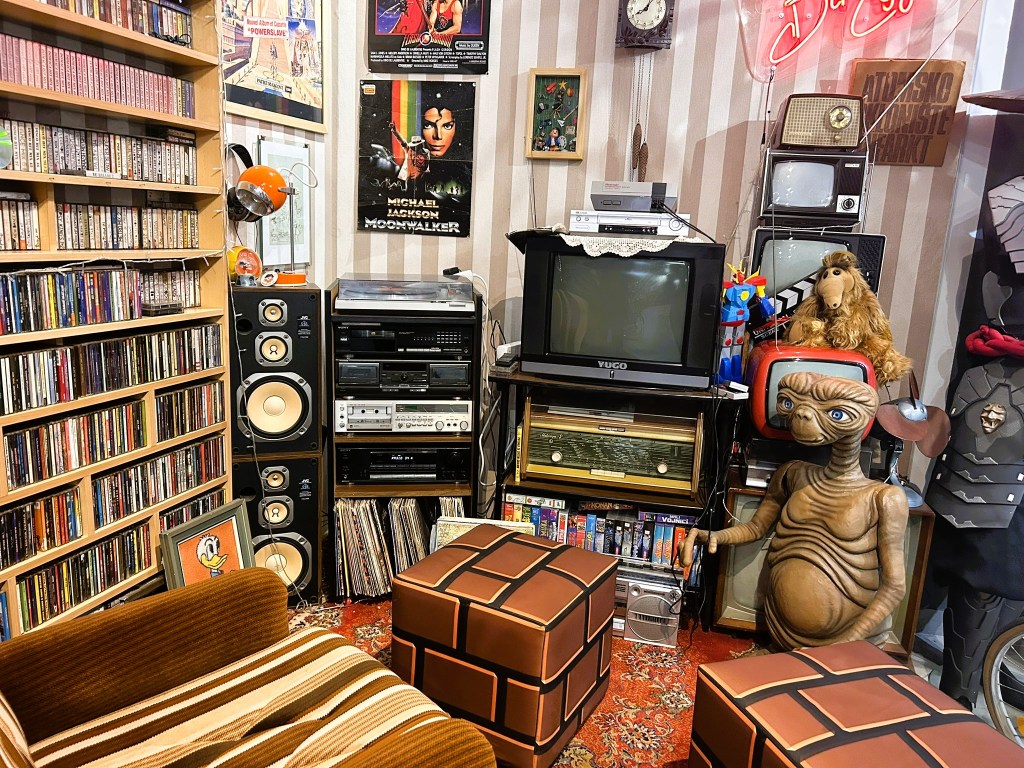
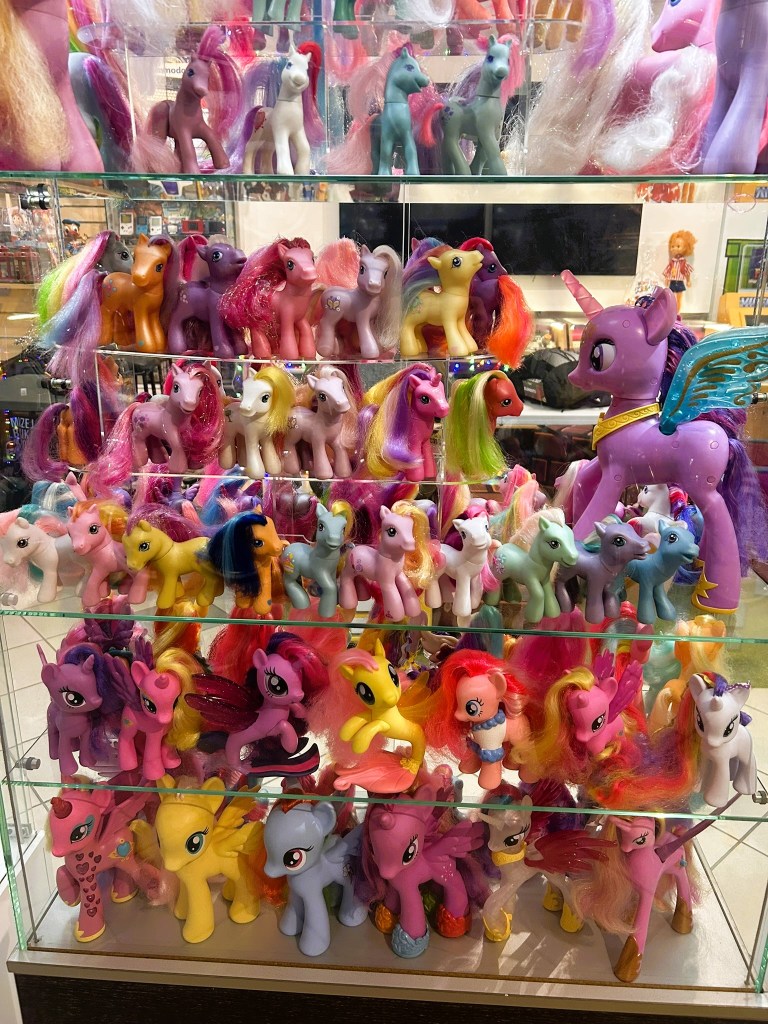
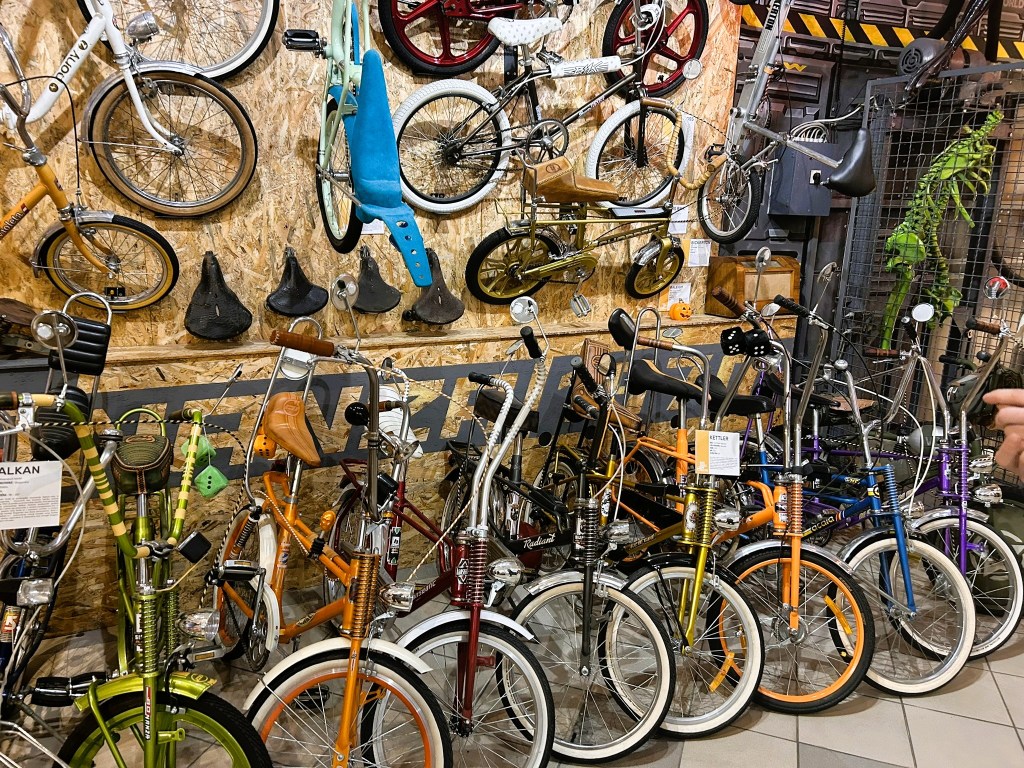
The owner was a very enthusiastic young man who had a love of everything related to the 1980s
From Barbie and My Little Pony
To Back to the Future, ET and Chopper Bikes
As well as a whole host of American, Chinese, Japanese and home-grown dolls, games and toys.
But the highlight of the visit was seeing a ZX Spectrum which propelled me right back to my youth
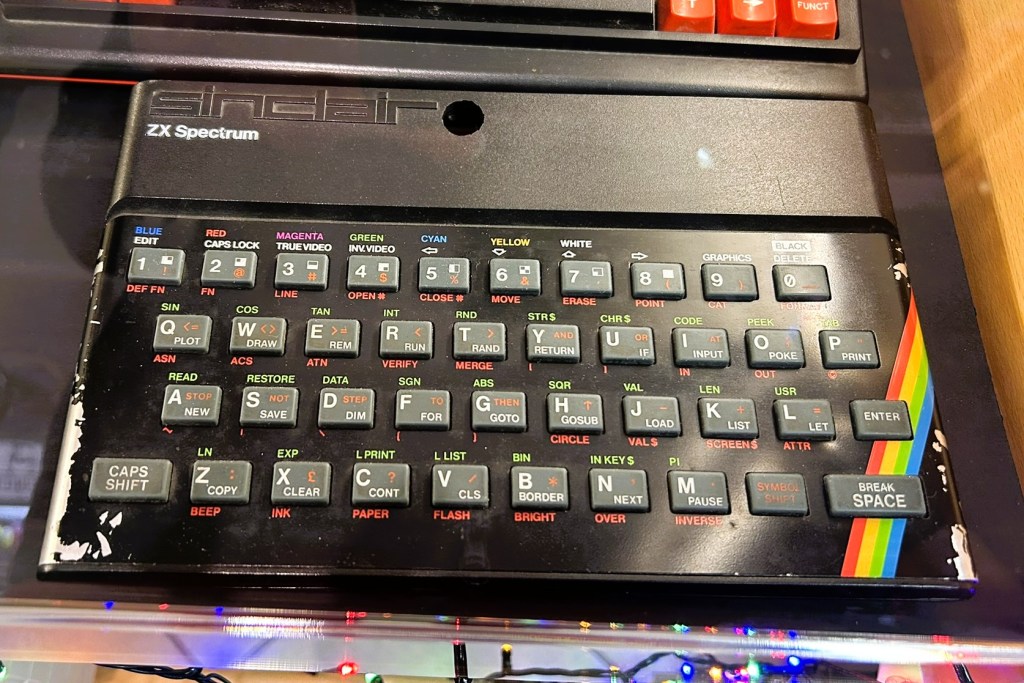
And playing on some very old skool video games
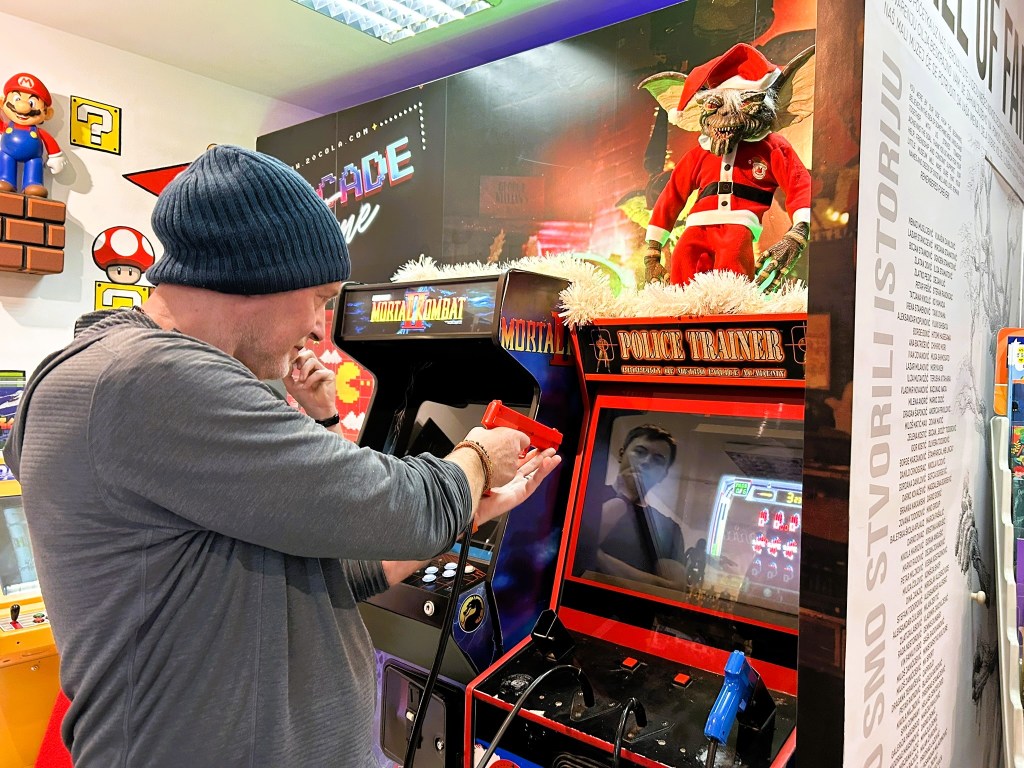
We moved the truck to a larger car park on the outskirts of town for the night and slept soundly with old skool smiles on our faces.
The next day we headed away from the hustle and bustle of the city to the small town of Topola – right in the heart of the wine region.
It is also home to one of Serbia’s most important buildings – the Holy Martyr George mausoleum, otherwise known as Oplenac. This is where the tombs of the old ruling family are held – the royal house of Karađorđević.
But first we had to organise wine.
We started at the Royal Winery – still owned by the royal family. When we arrived the helpful lady on reception said we could do tastings whenever we wanted and it was free, so we arranged to go back at 2pm.
Our next stop was the Aleksandrovic winery which was very posh. The staff offered us a 6 course meal with 8 wines along with permission to stay in their car park overnight. It all sounded amazing but the price was higher than we would normally consider. In the end we decided to splash out as it was James’ birthday soon and we had spent practically nothing so far in Serbia.
They could only squeeze us in at 2pm which left little time to see Oplenac and get back to the Royal Winery, but we were up for the challenge.
We dashed to Oplenac and were immediately struck by its grandeur. Built by King Peter I in 1912, it is a huge and magnificent thing
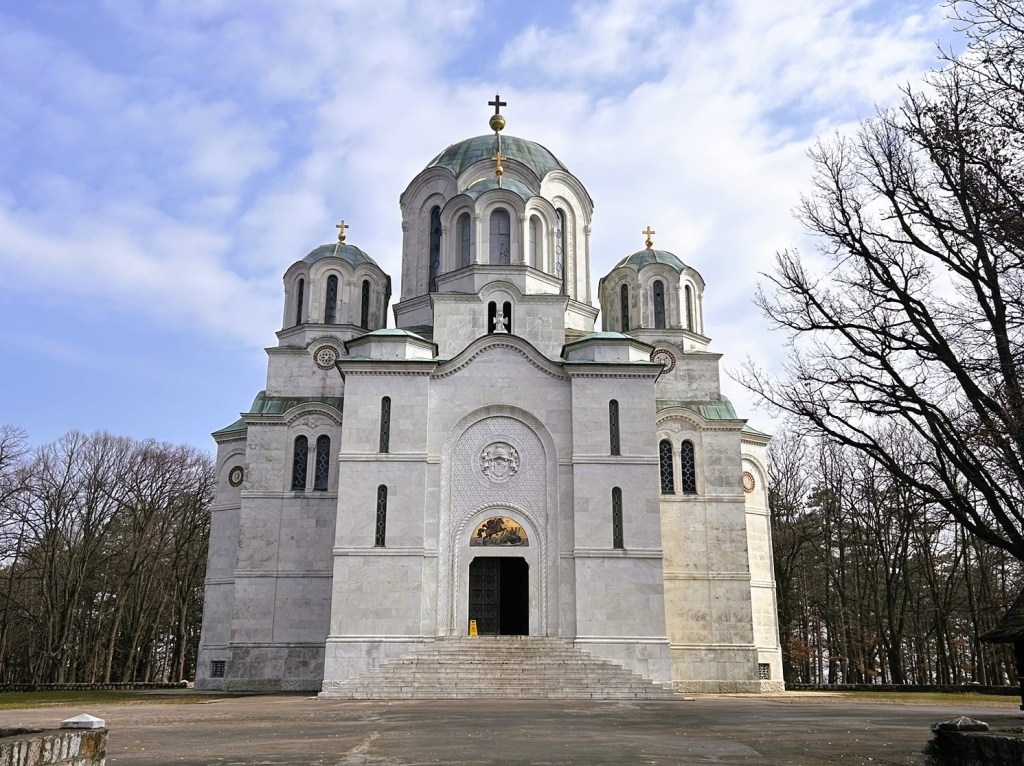
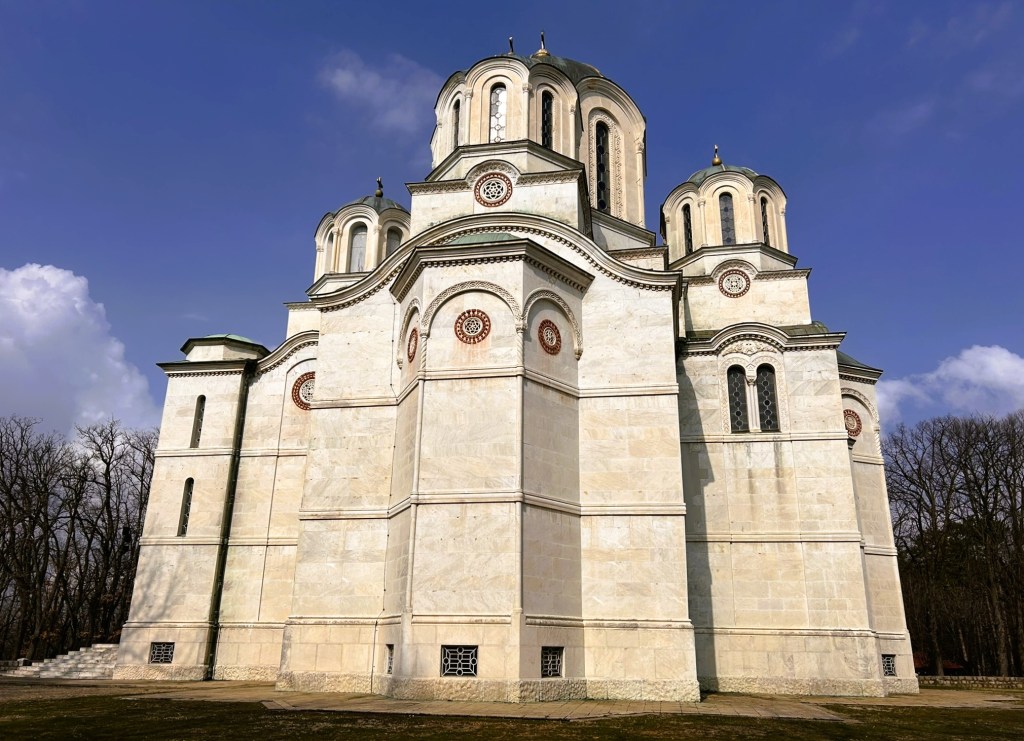
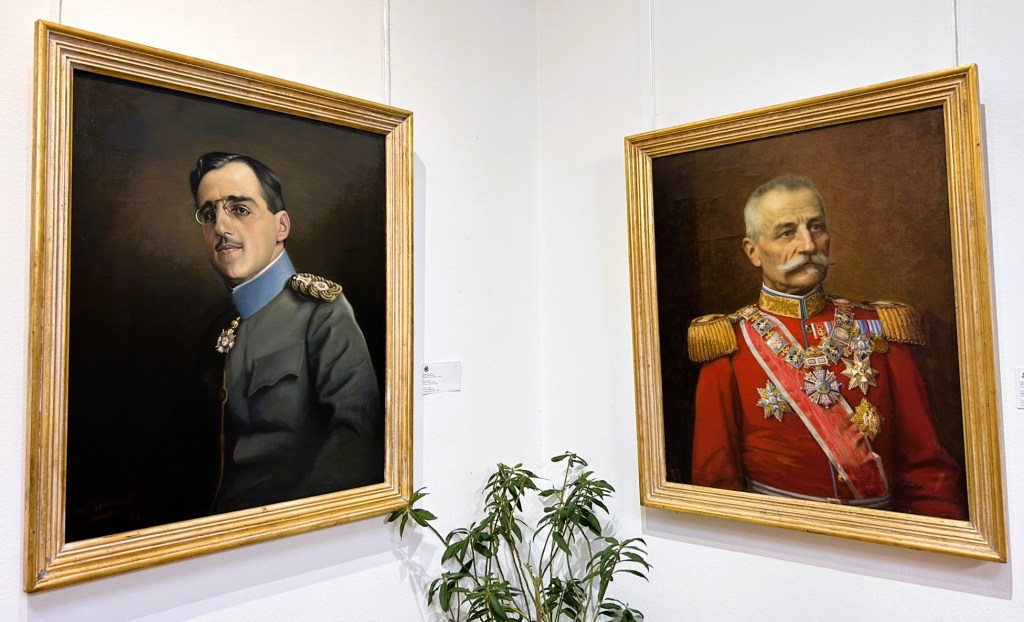
A small museum housed all sorts of personal items belonging to the royal family as well as portraits of the great kings and queens
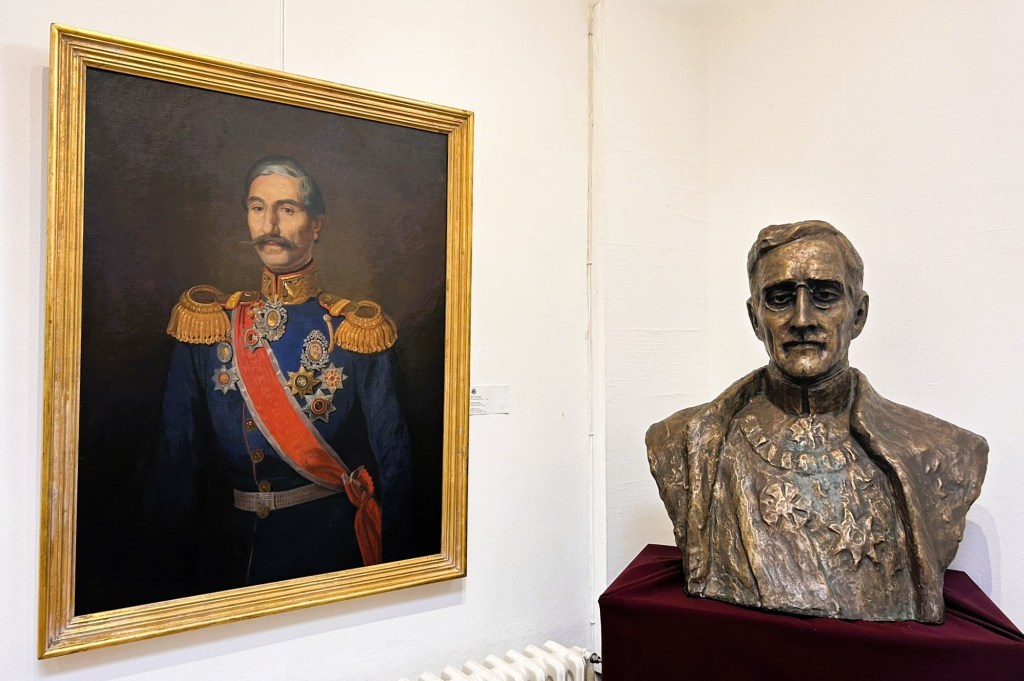
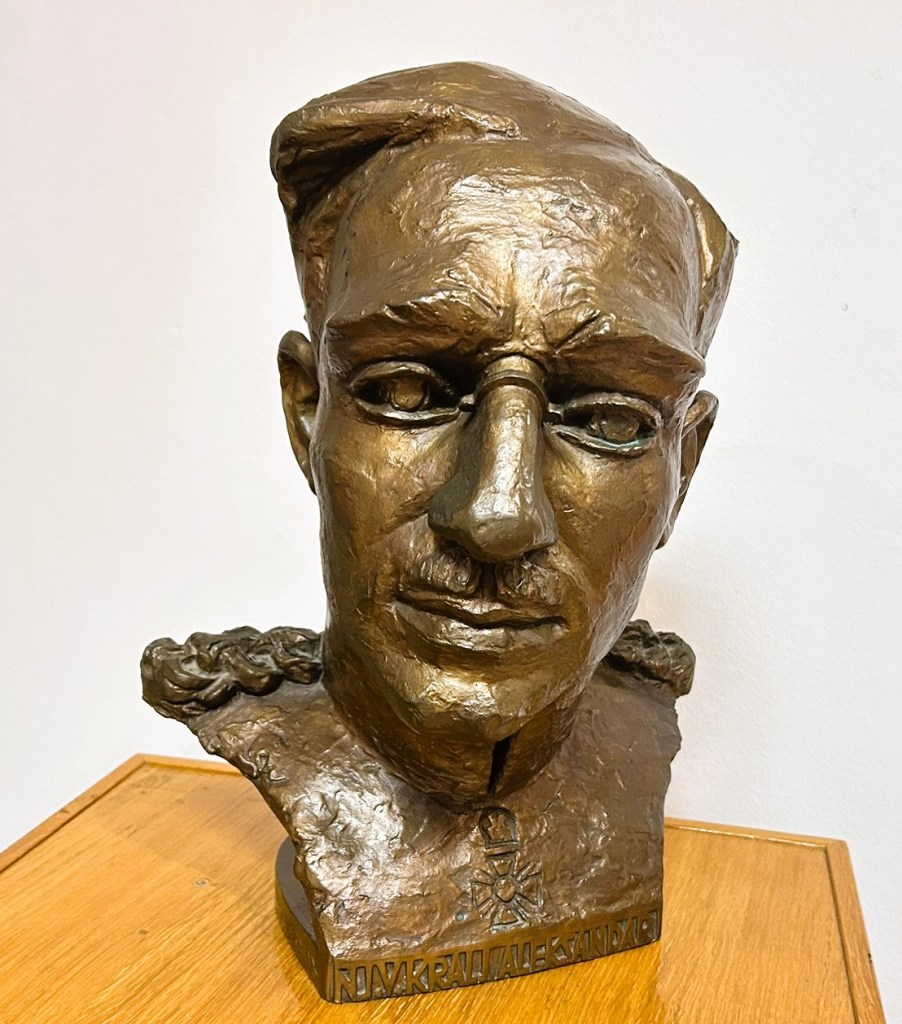
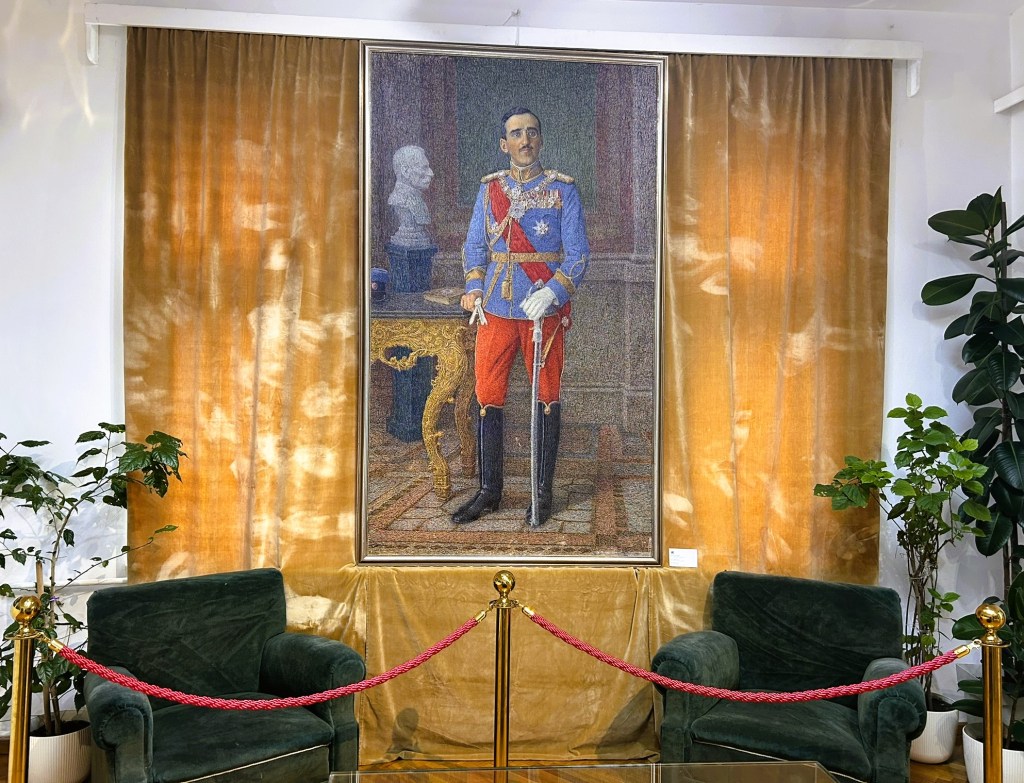
Along with an incredible, historic document – the Austro-Hungarian declaration of war on Serbia in 1914, the start of the First World War
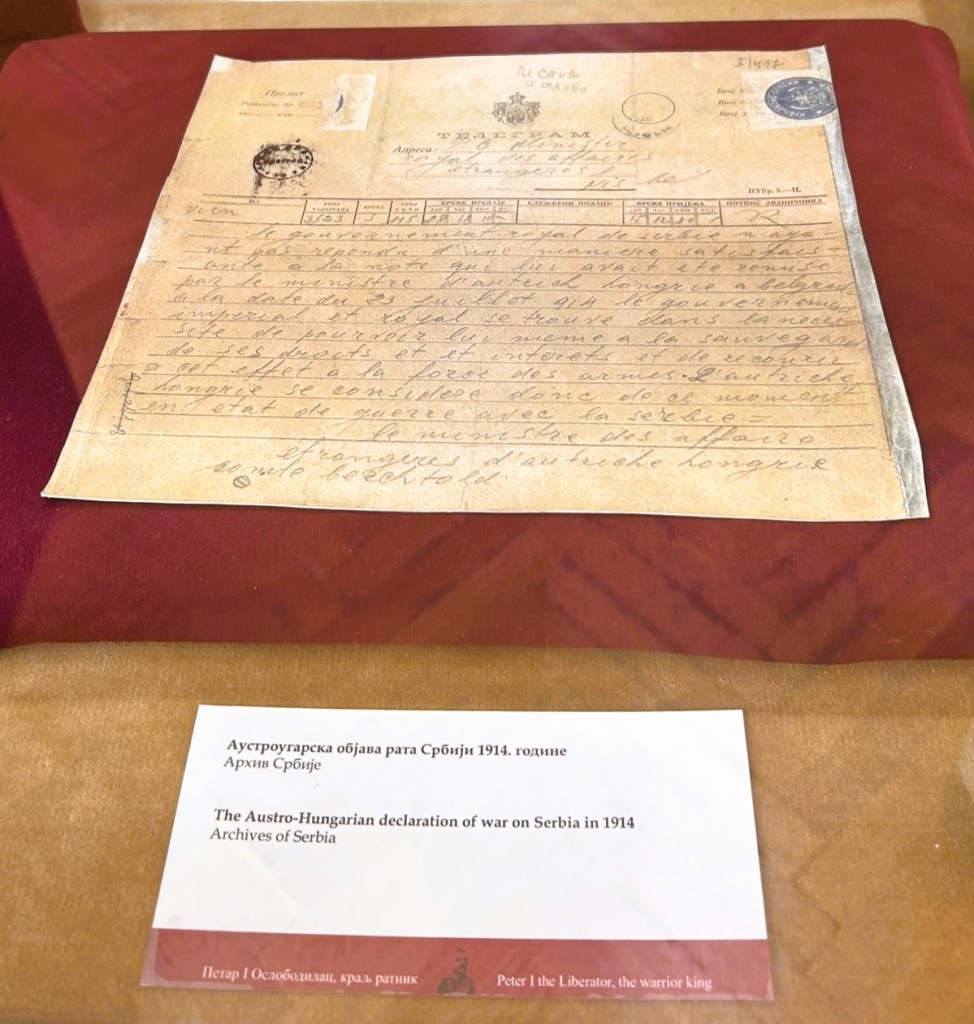
I stared at it for a long time thinking just how monumental this small piece of paper was to world history.
The mausoleum itself was monumental
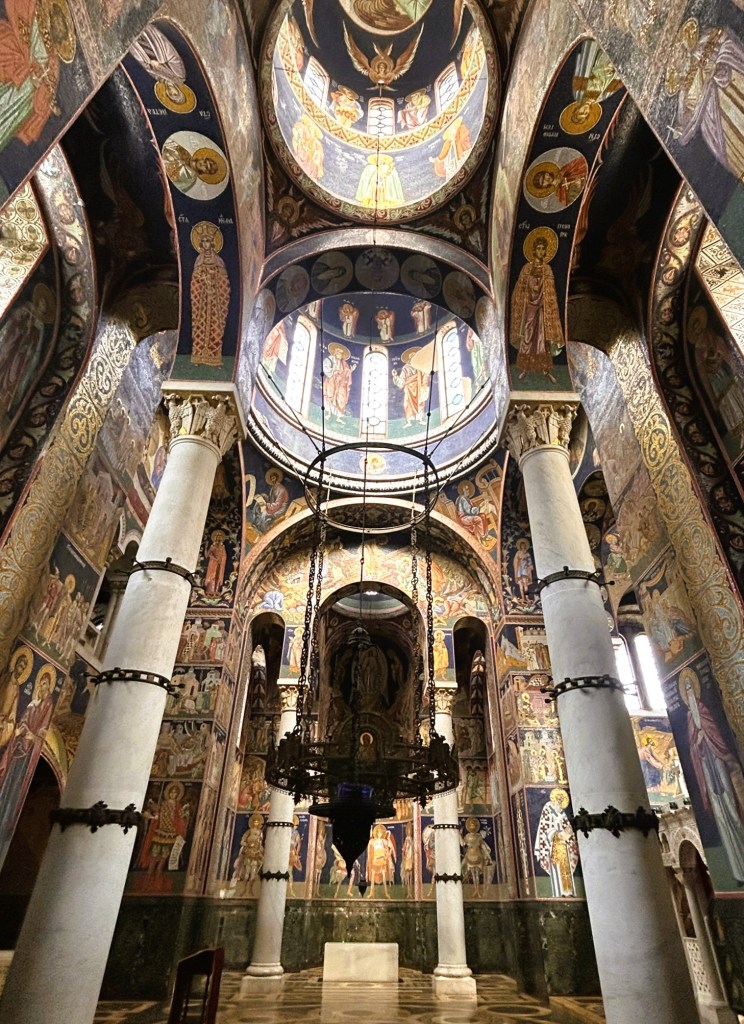
The walls and ceilings were covered in mosaics made from 40 million individual piece of glass
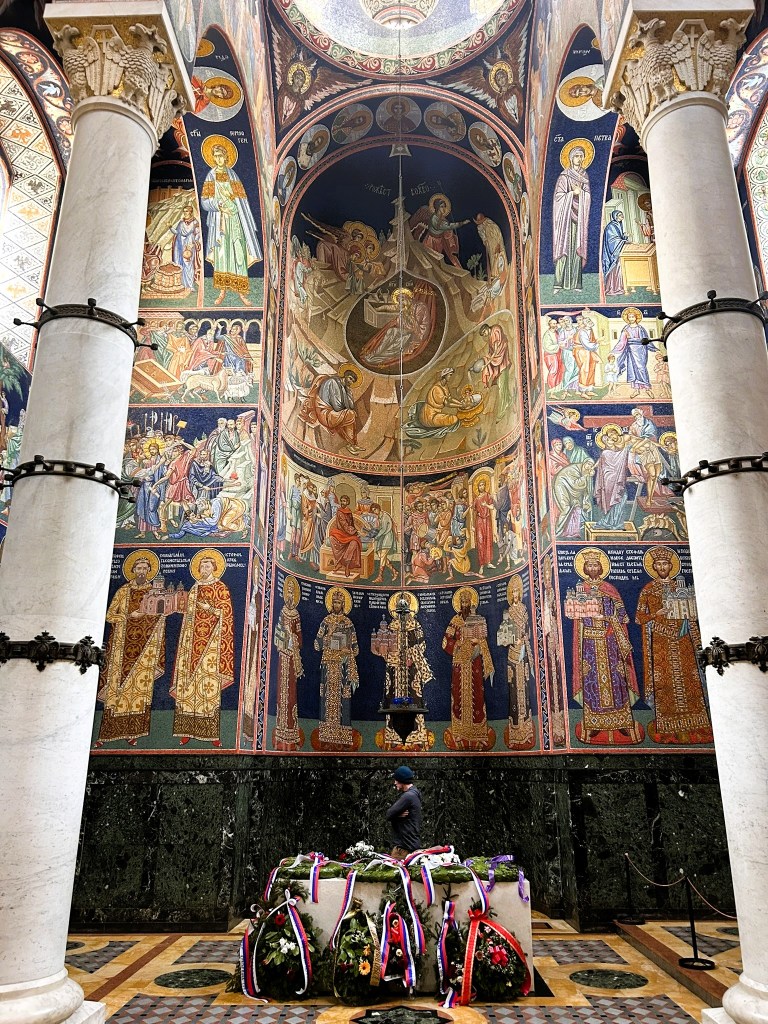
It was breathtaking.
Underneath were the equally ornate crypts
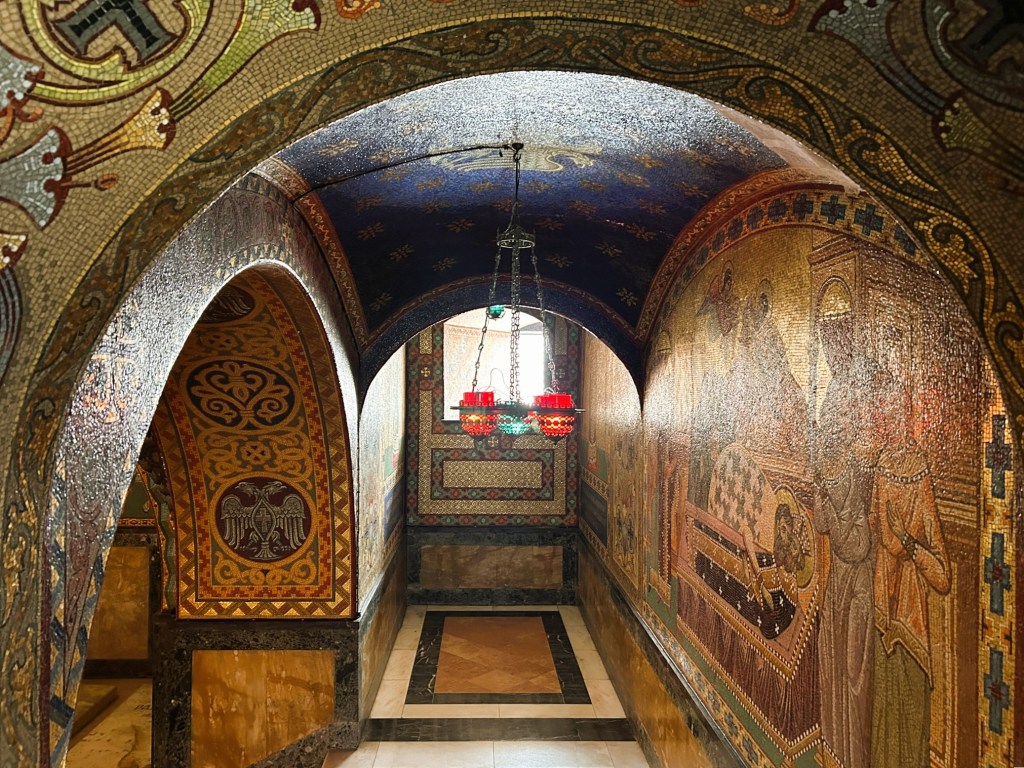
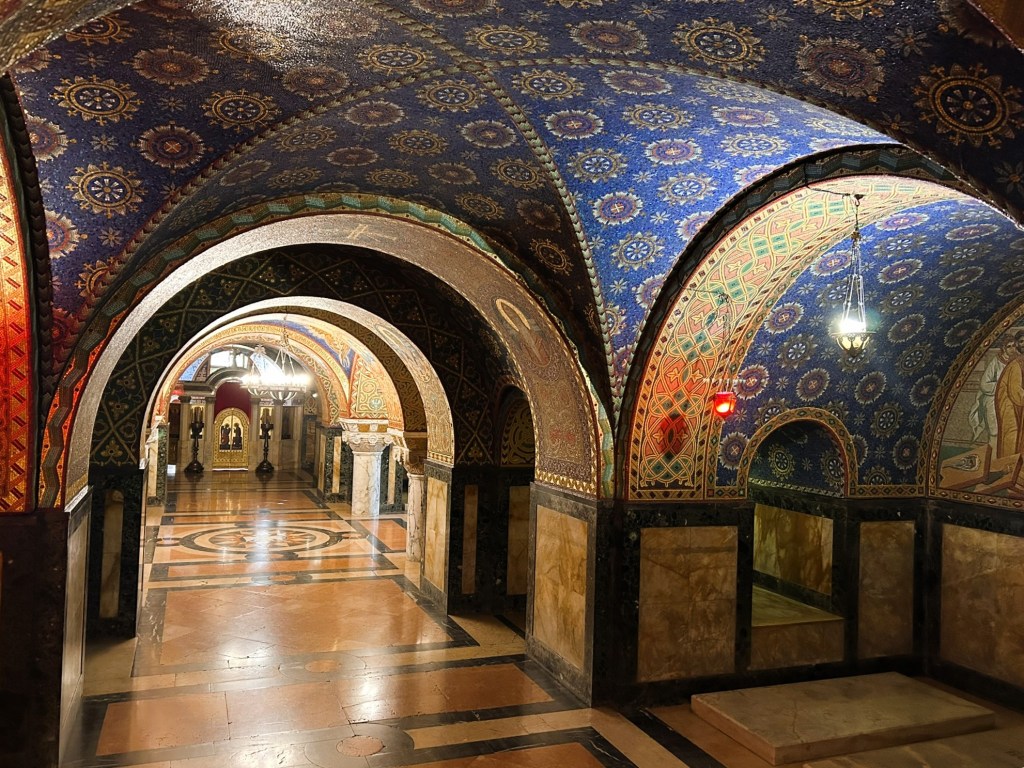
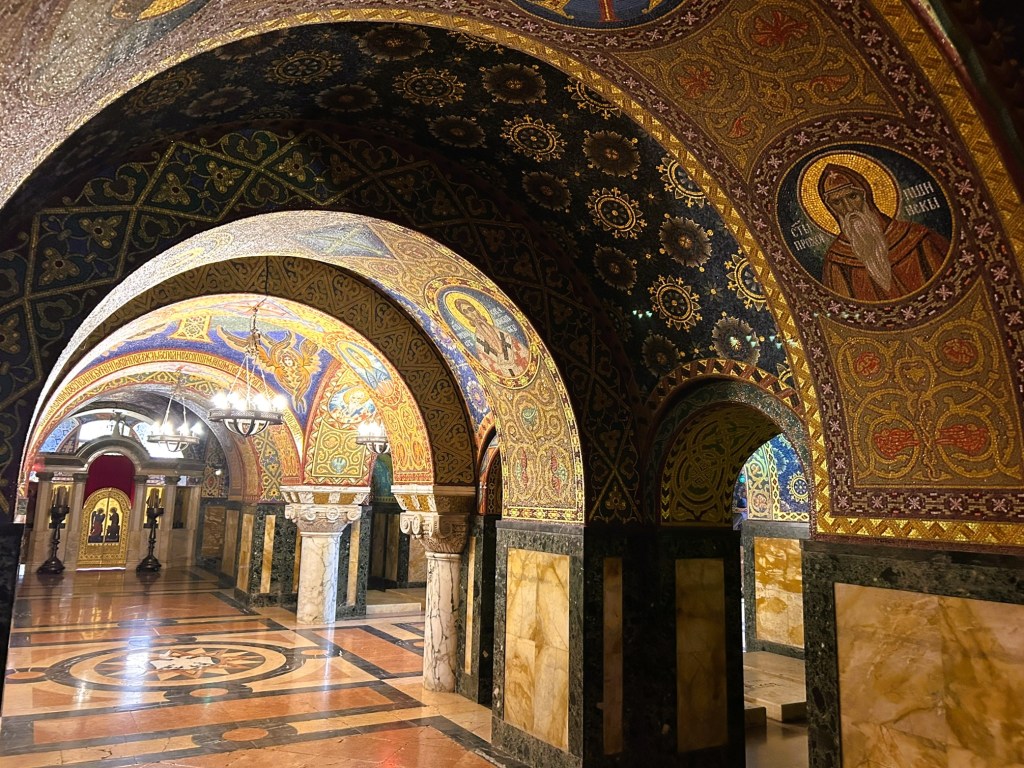
Along with 39 royal tombs
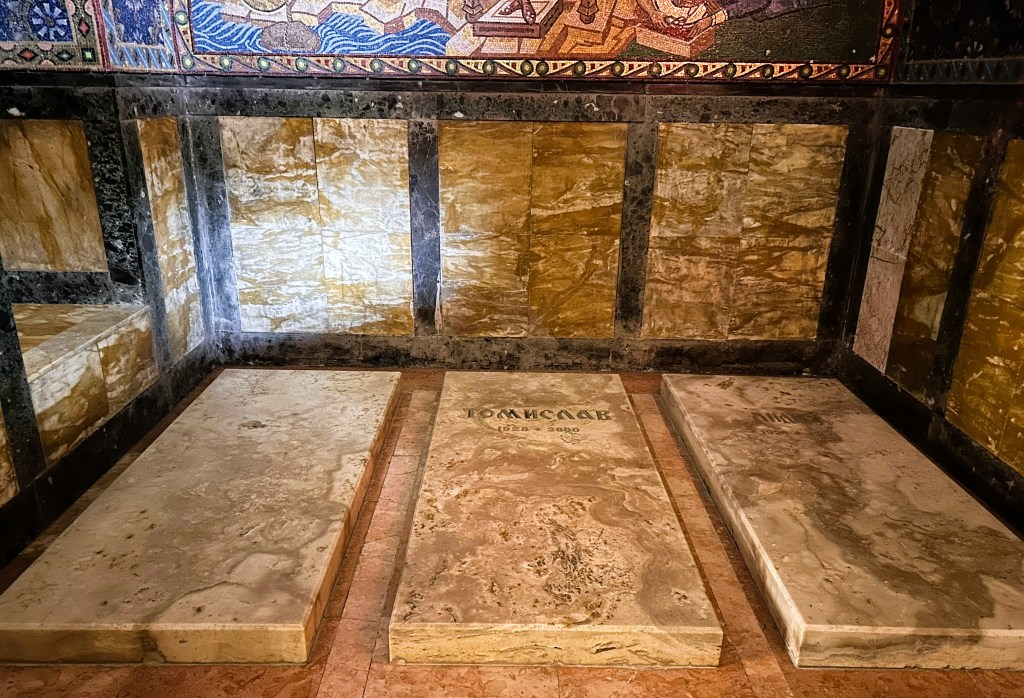
Including King Peter I himself
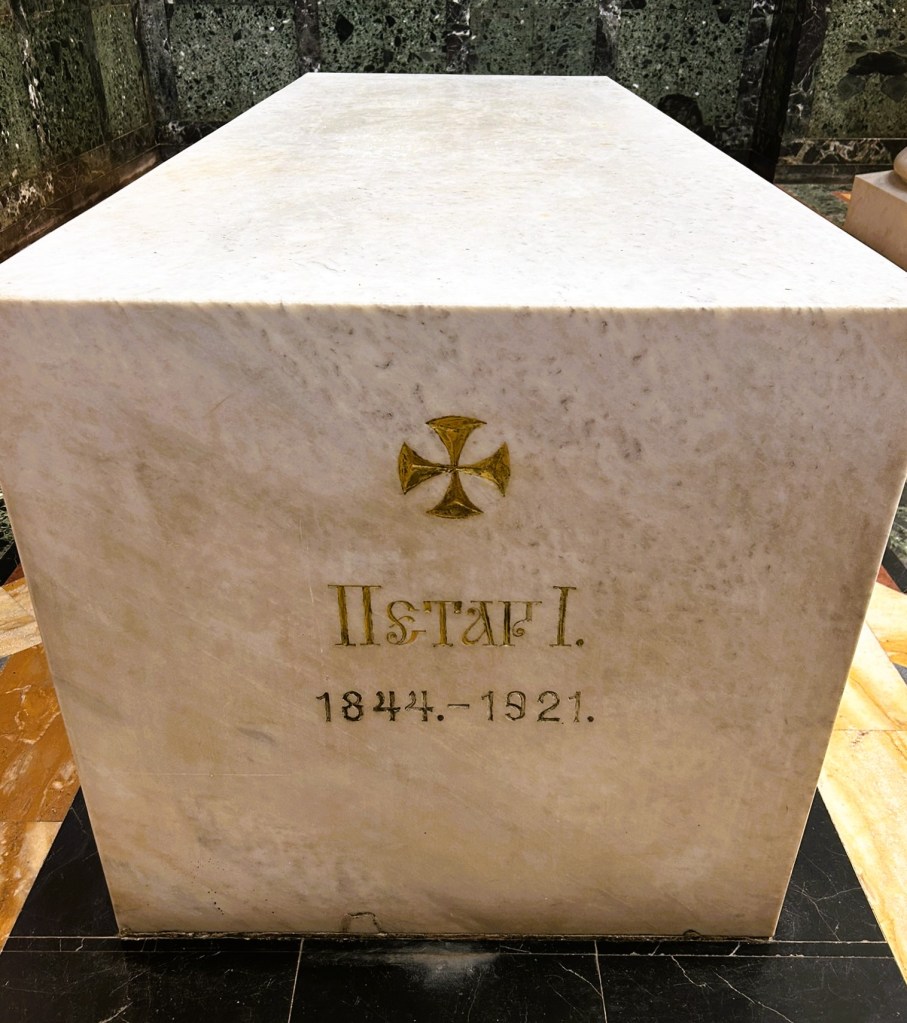
Suitably impressed, we left Oplenac and drove back to the Royal Winery.
We were taken down into the cellars to see the old grape press
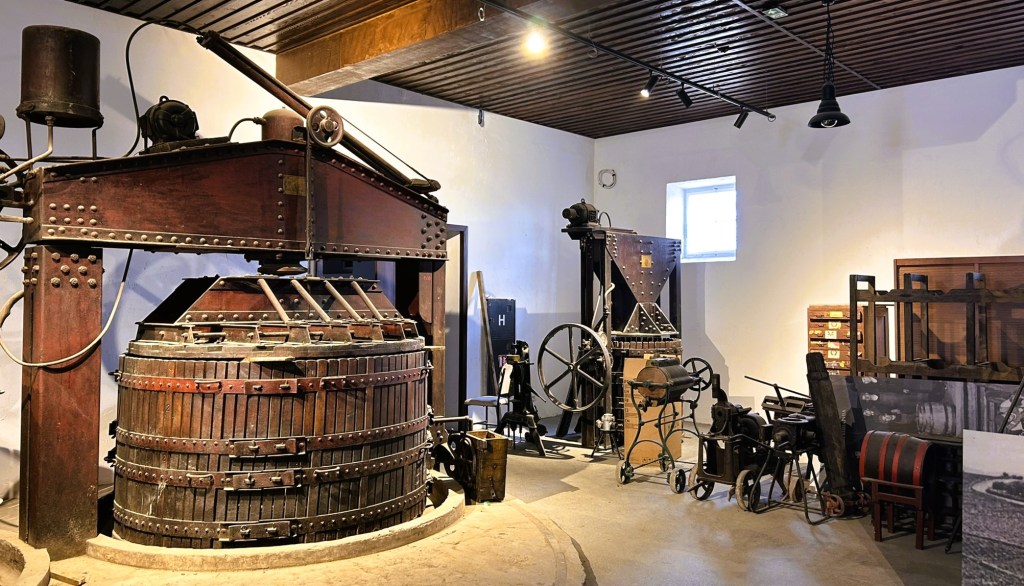
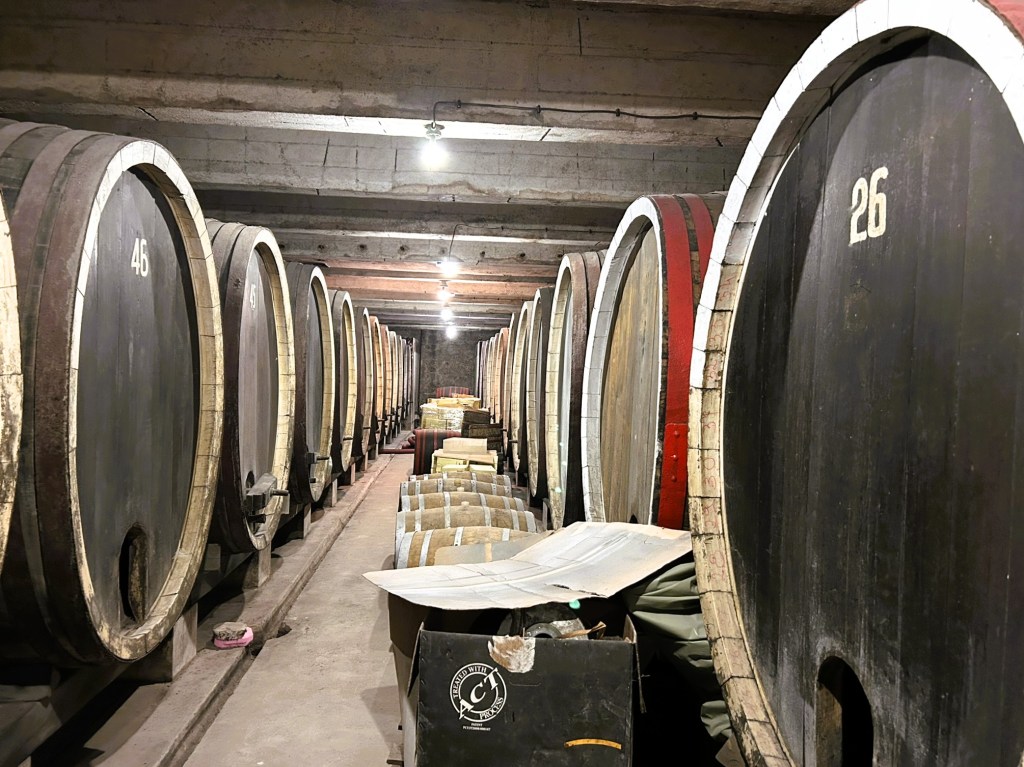
And the barrels
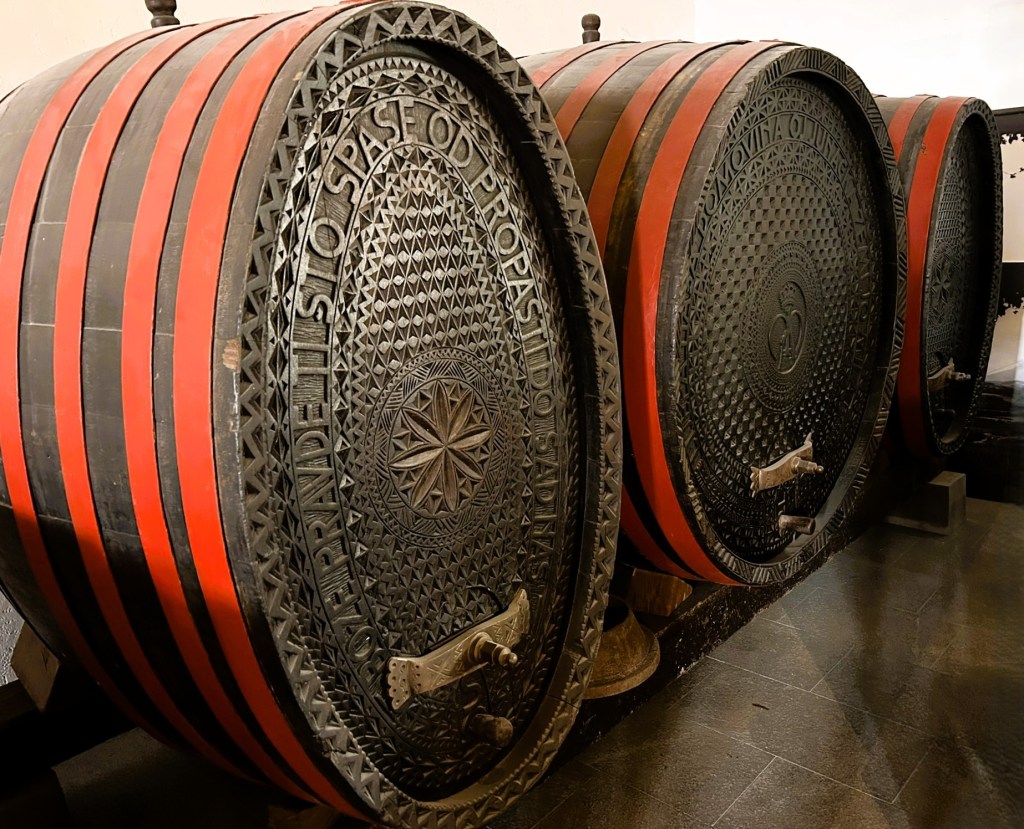
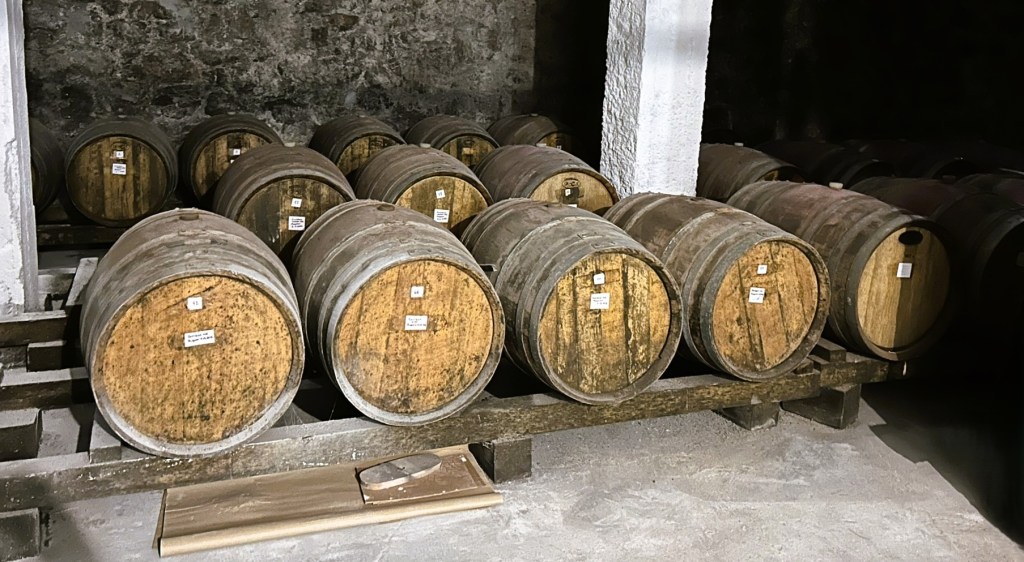
Including Barrel 26 where the old king used to hide as a child and where many of their best wines were hidden when the communists confiscated all the royal assets
These bottles are decades old
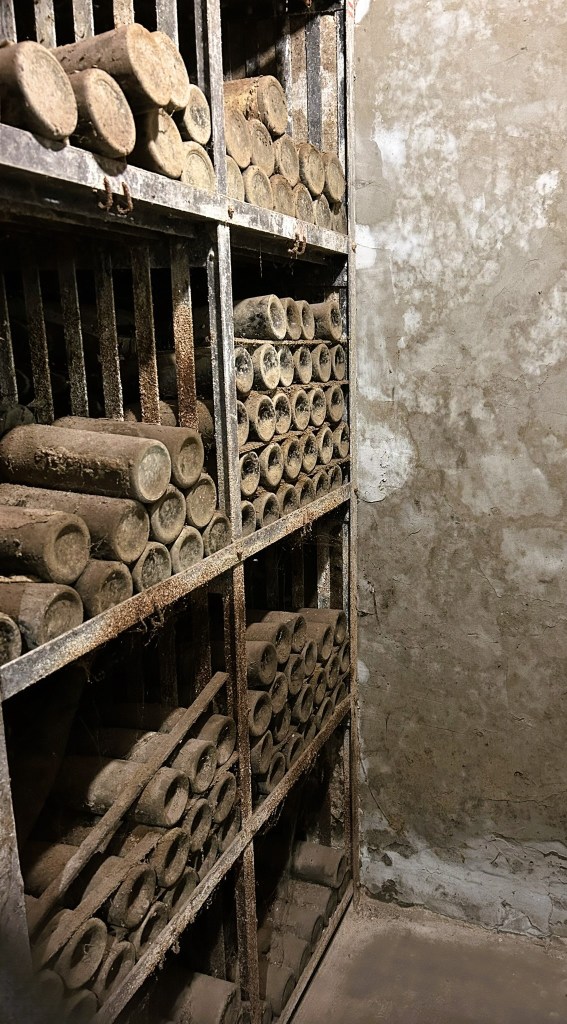
They don’t sell them, they just drink them with friends!
We then tried four small glasses of their wines and bought three of them
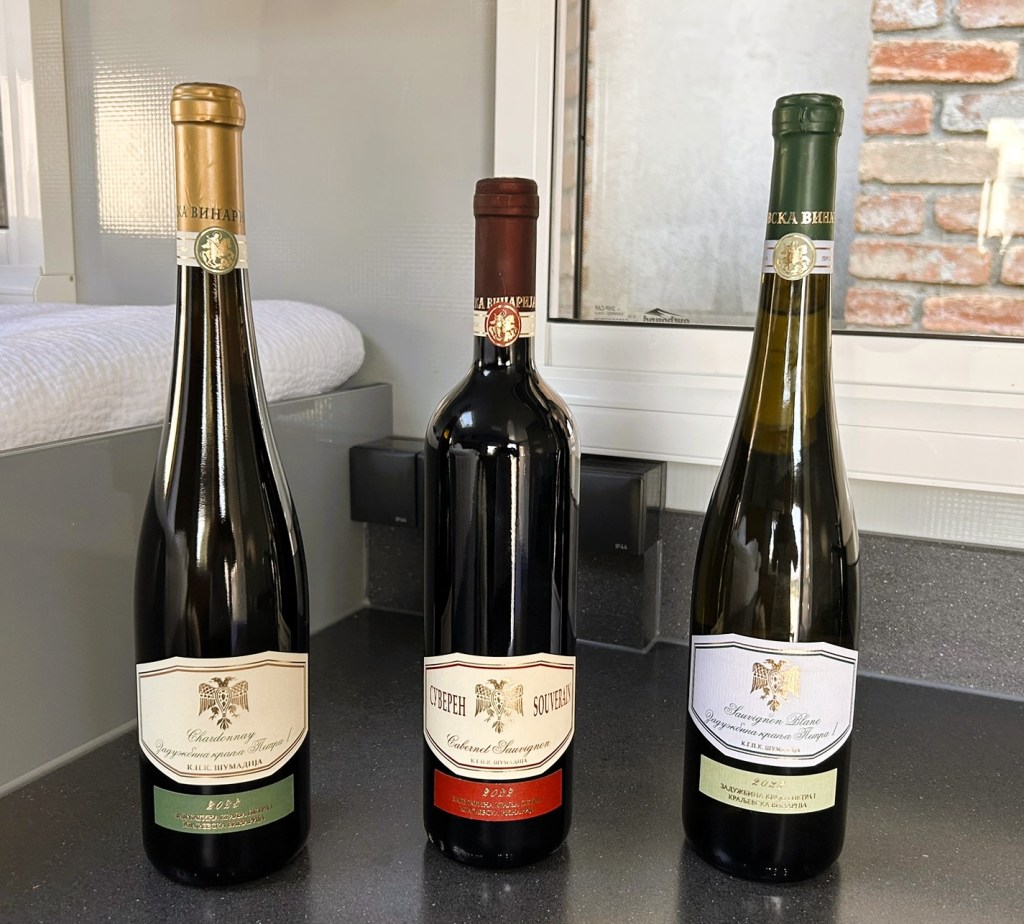
Before heading for our dinner date at Aleksandrovic where we tucked BigMog up in a corner of the car park
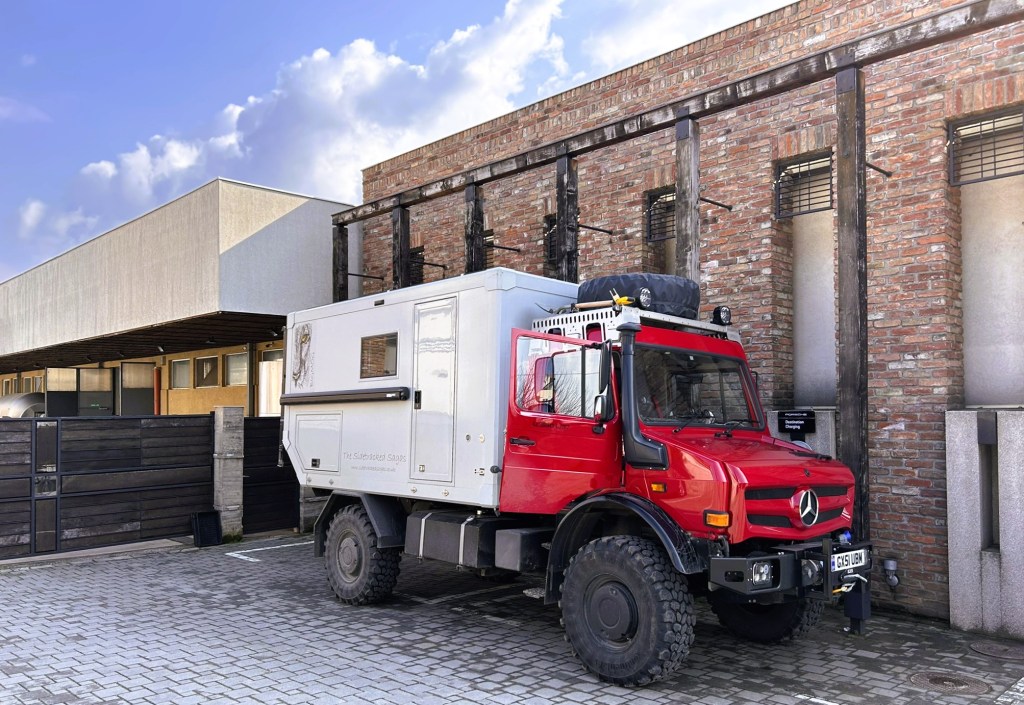
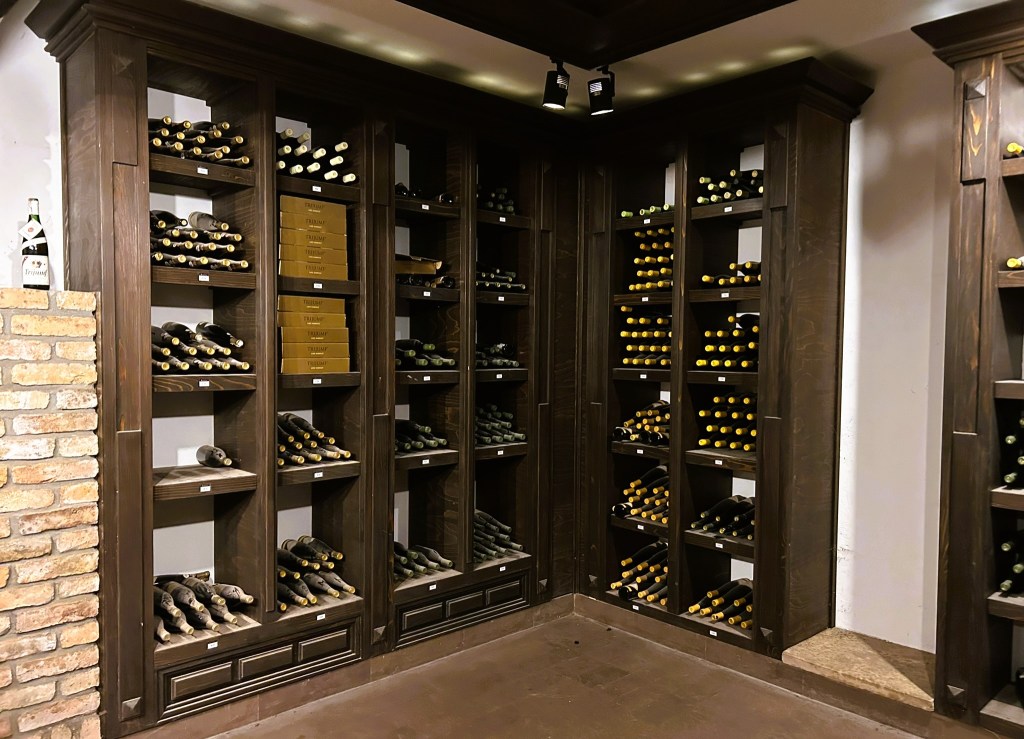
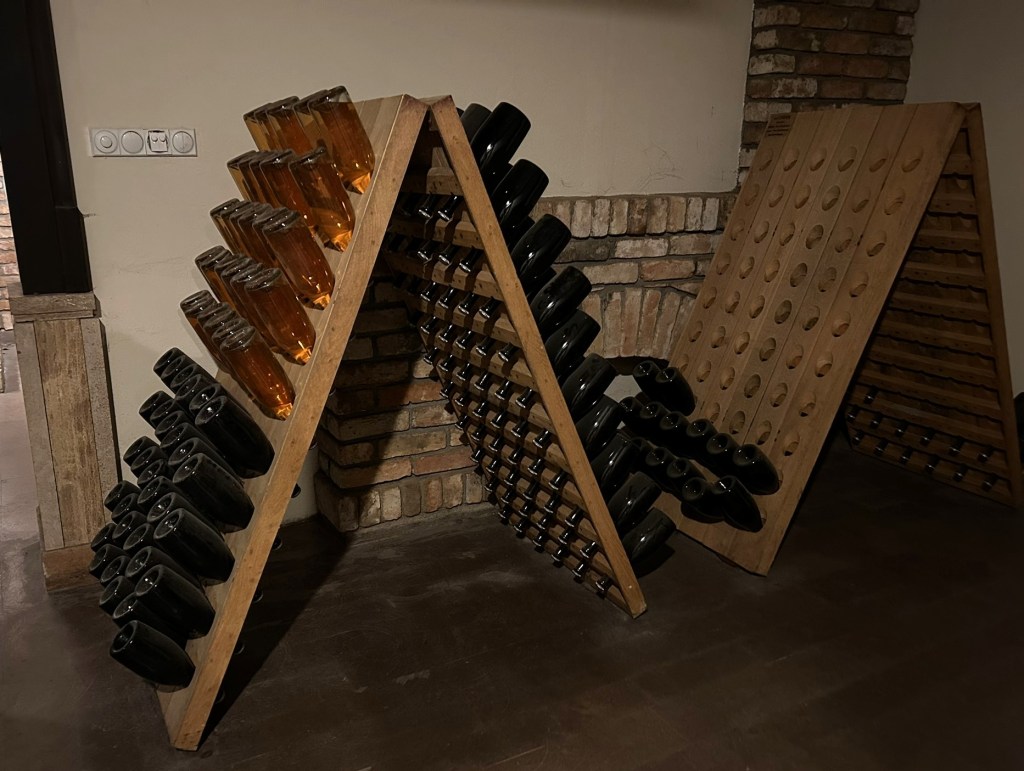
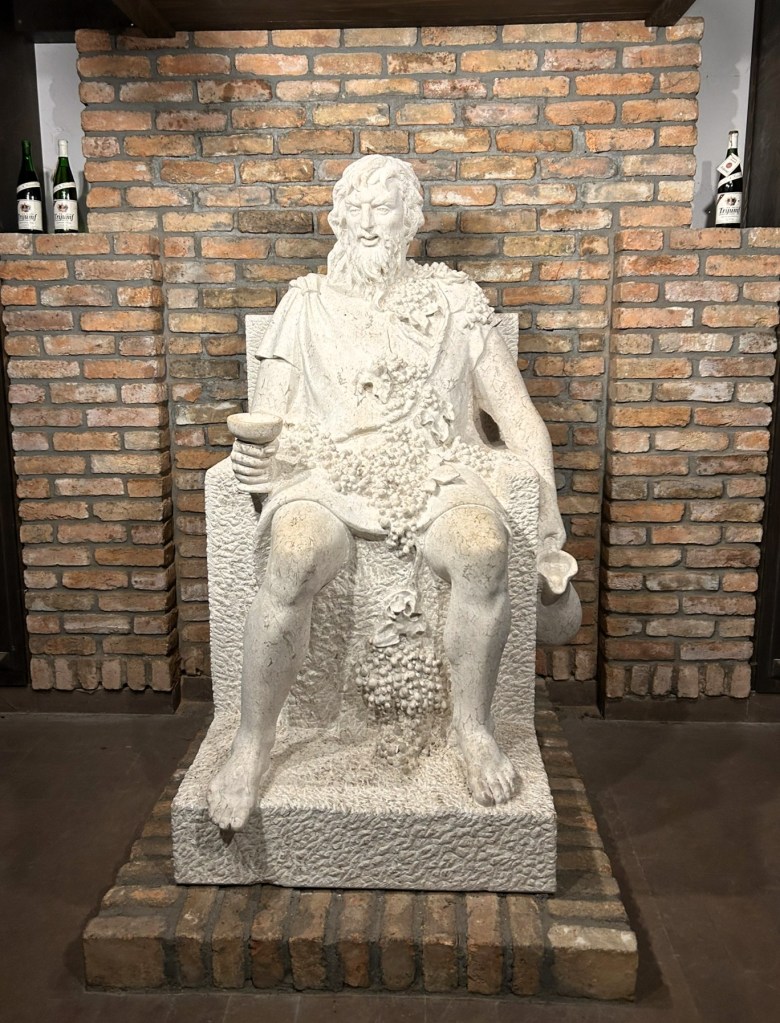
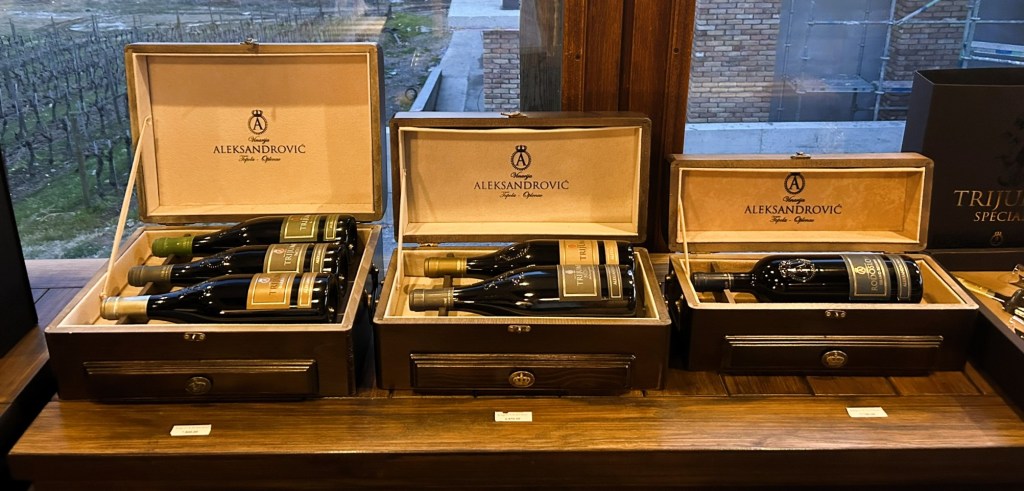
We started with another cellar tour, this one on a completely different scale
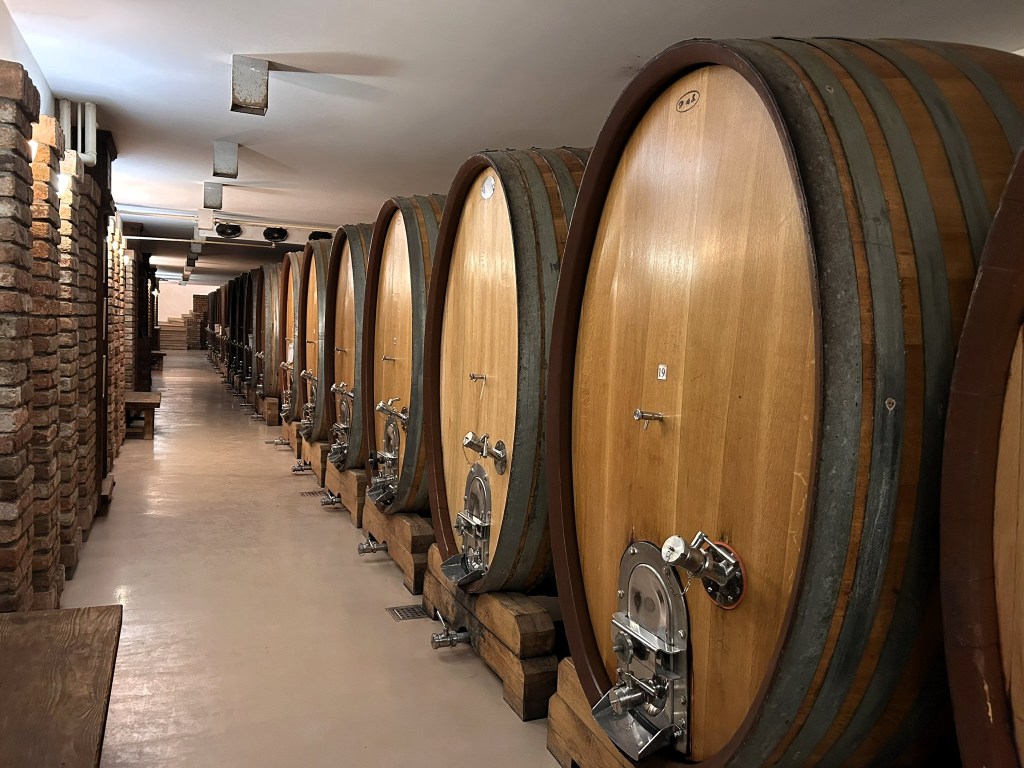
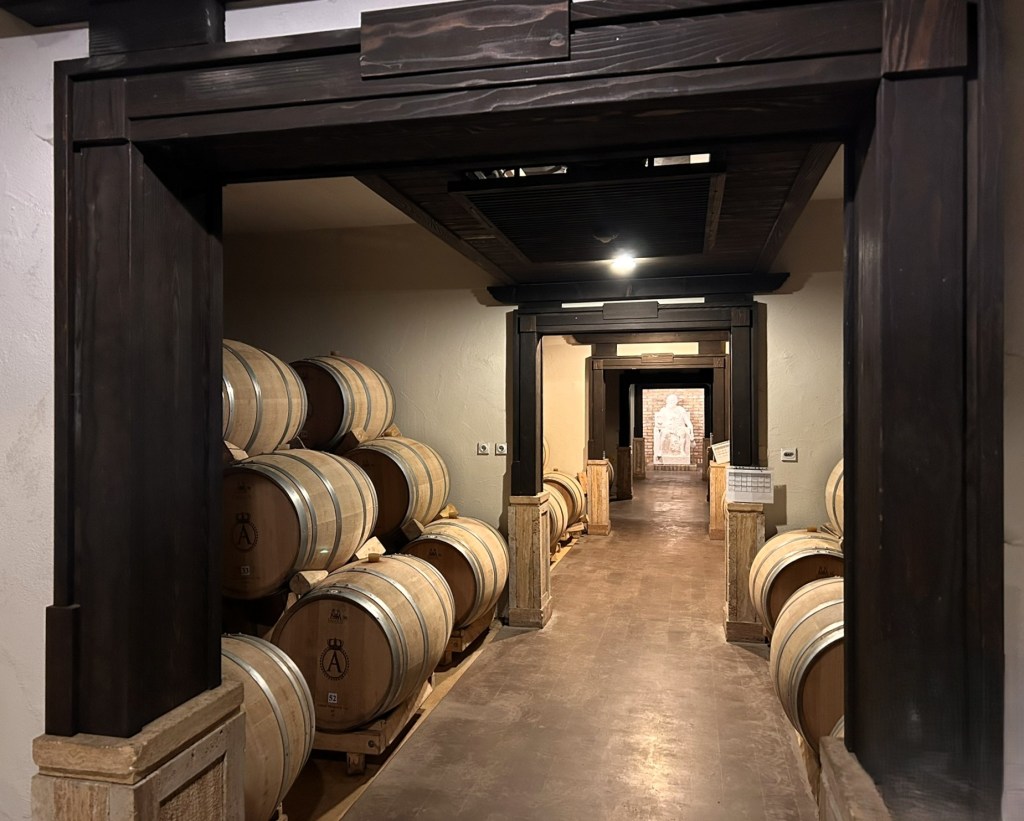
With a statue of Bacchus, the God of wine
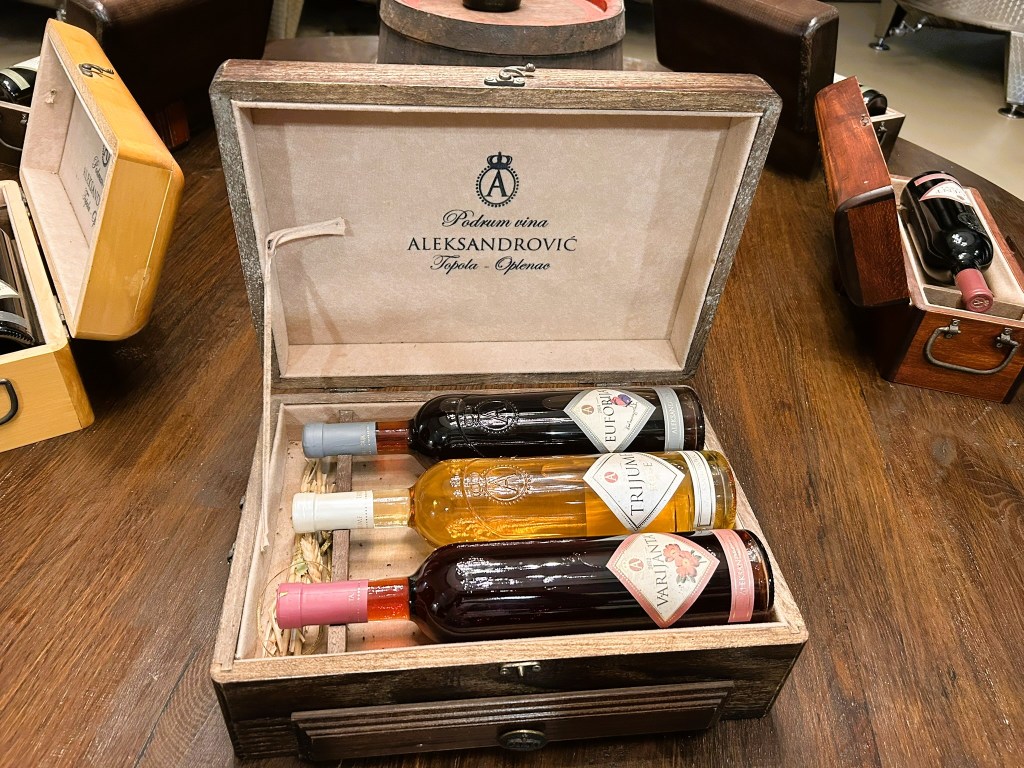
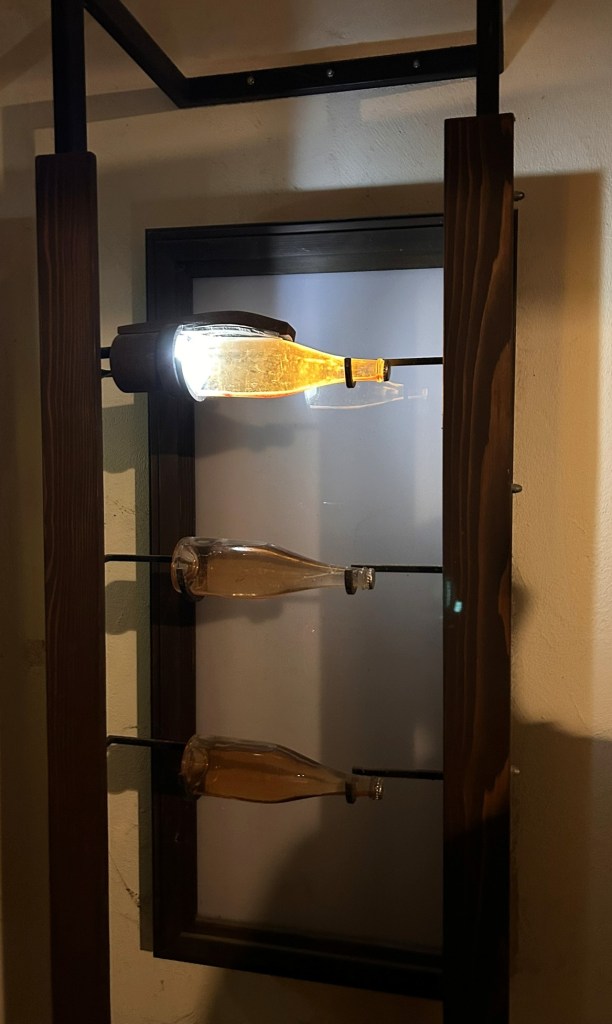
And many of their premium bottles beautifully displayed
These ones are being aged and are turned every two months
We headed for the restaurant to start our tastings, it was beautiful
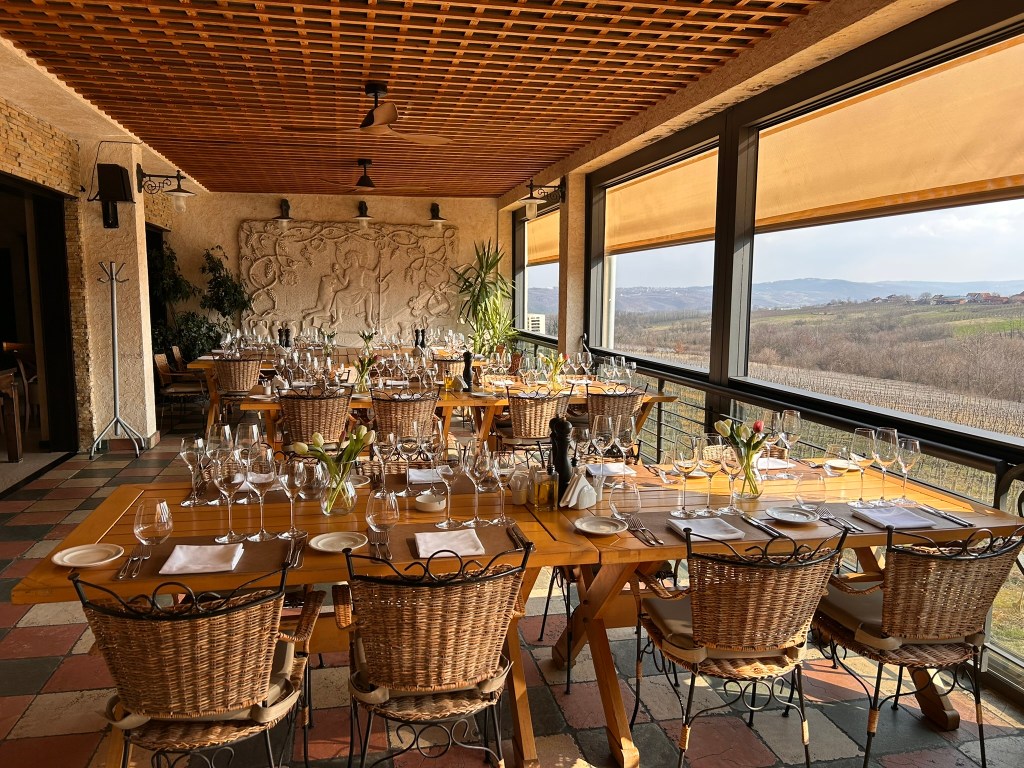
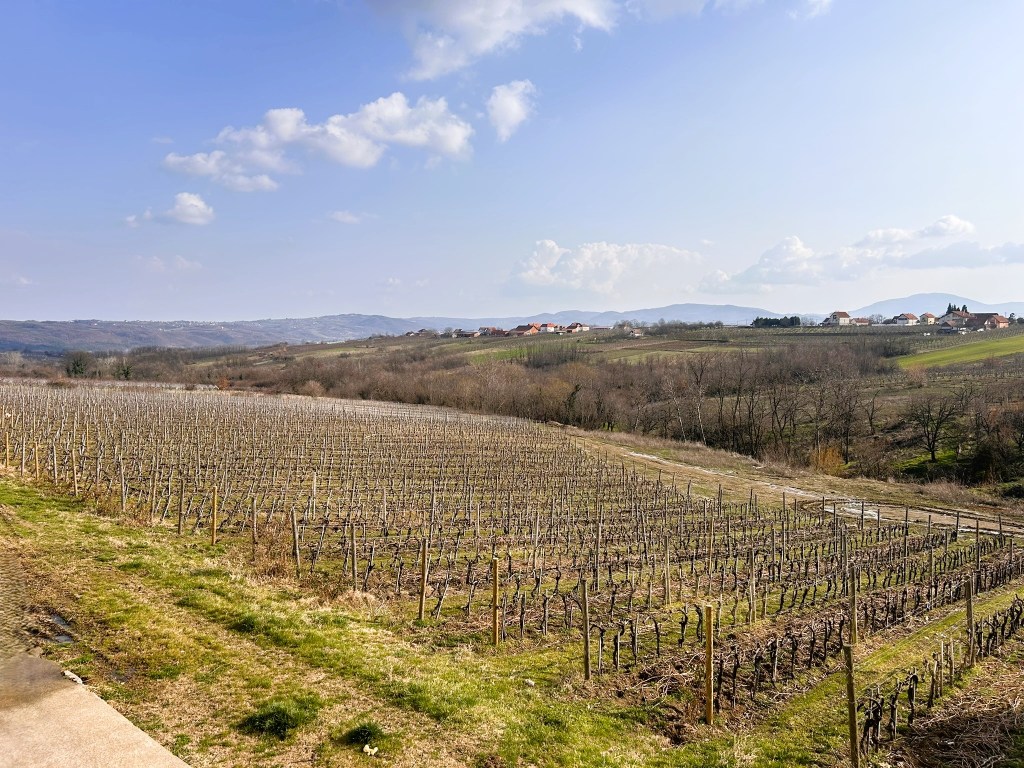
With a lovely view over the vineyards
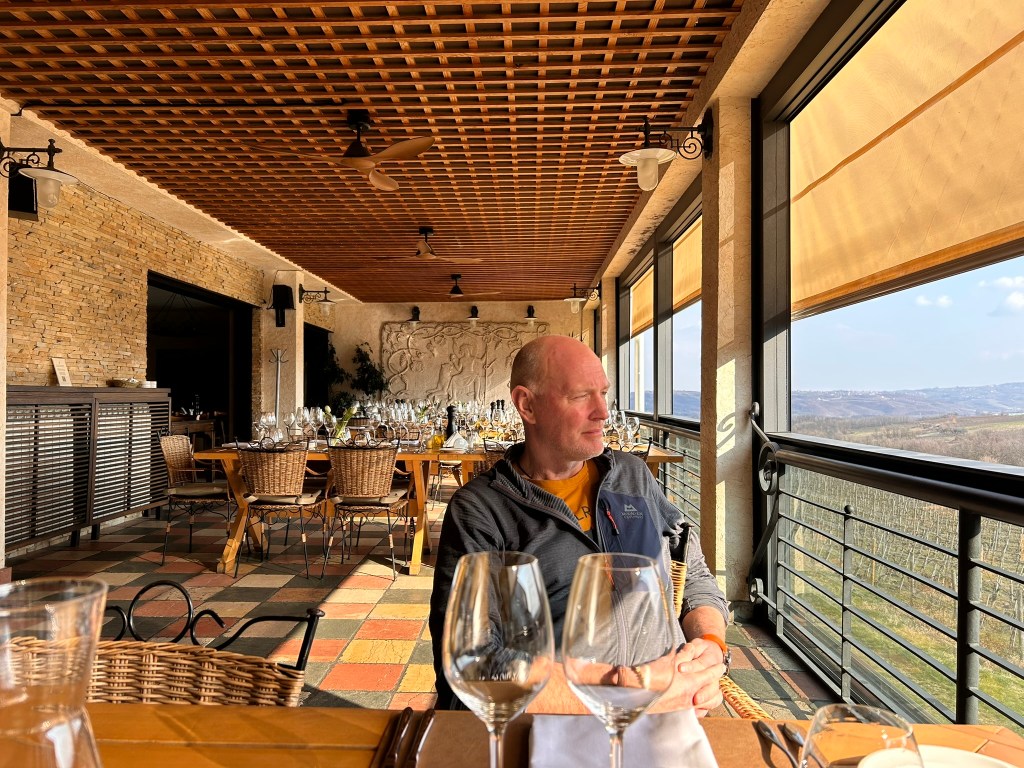
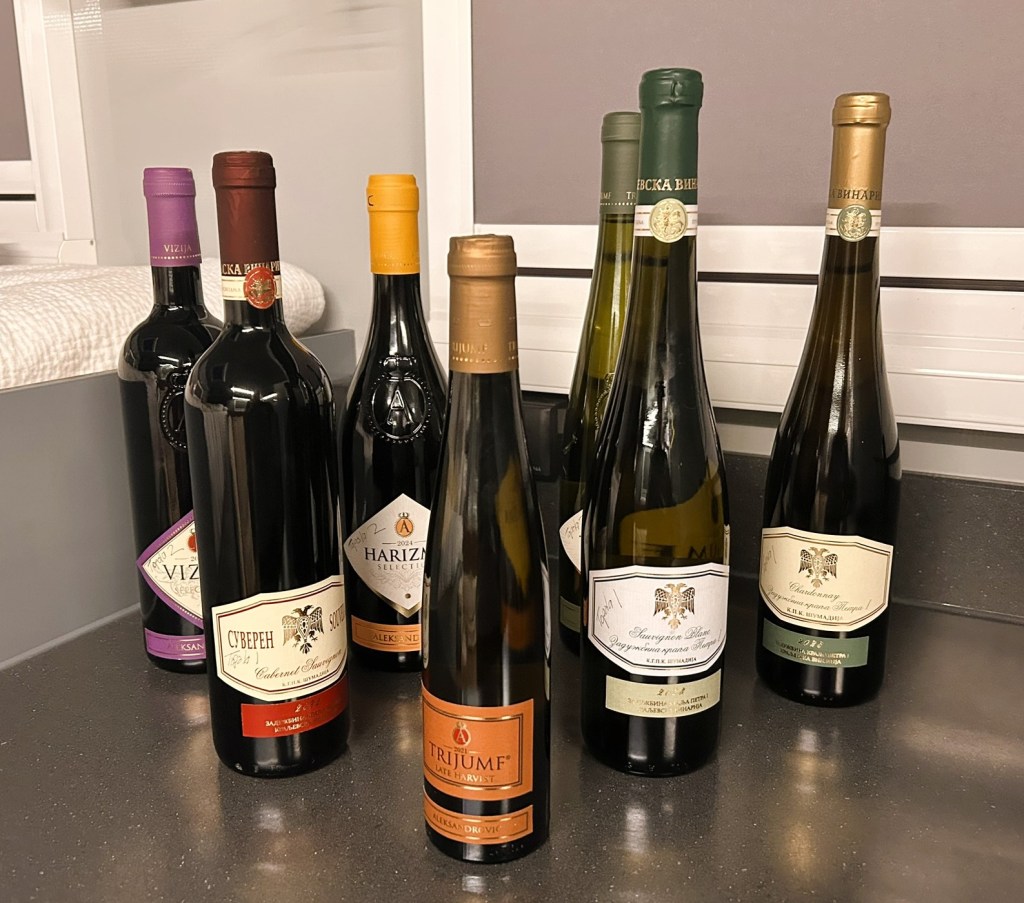
And the food was fabulous. I tried to take some photos of each course but sadly the wine was also very good and had some strange effect on my ability to focus!
We bought another four bottles of wine and went back to the truck happy but feeling a little worse for wear. I’m beginning to think I may be allergic to something in wine…
After going to bed at 8pm and having a restless night, we woke up feeling surprisingly good. We were heading for a mountain but had a few stops to make on the way.
Our first were the ruins of Dvorine, a 14th-century medieval church and necropolis
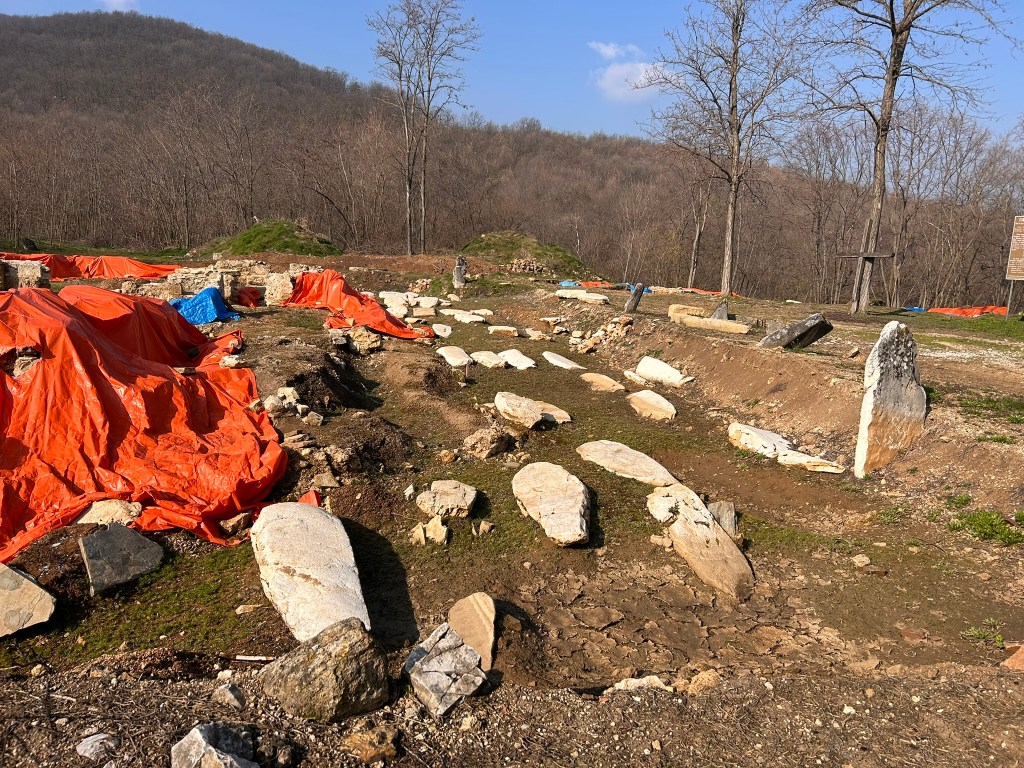
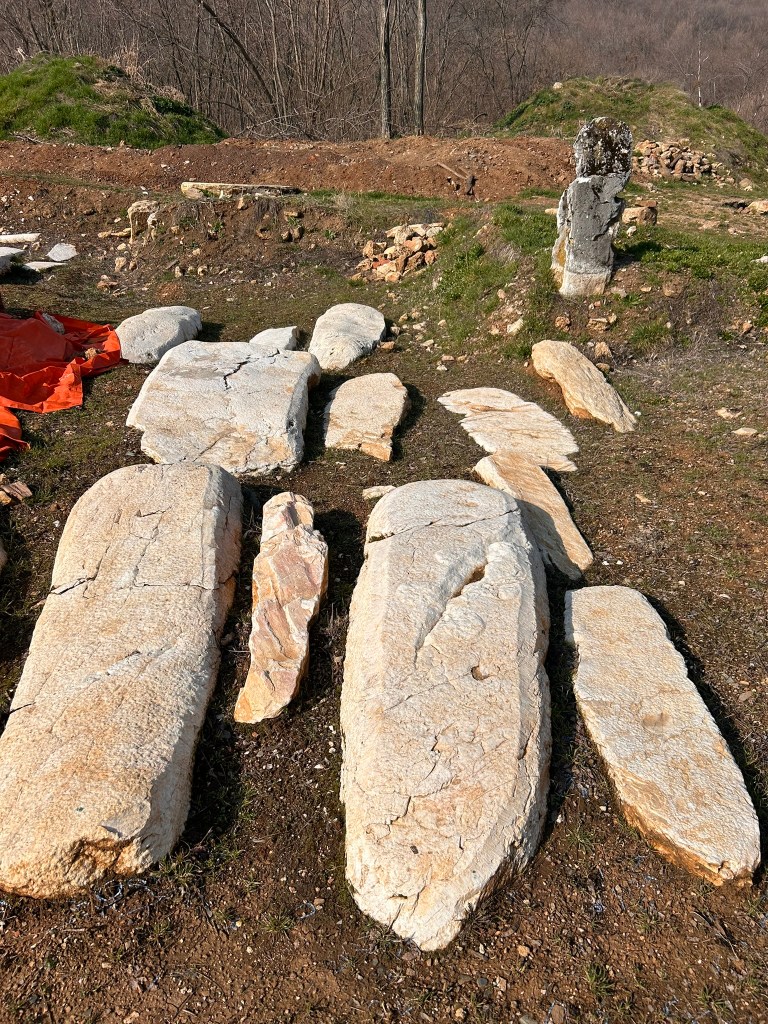
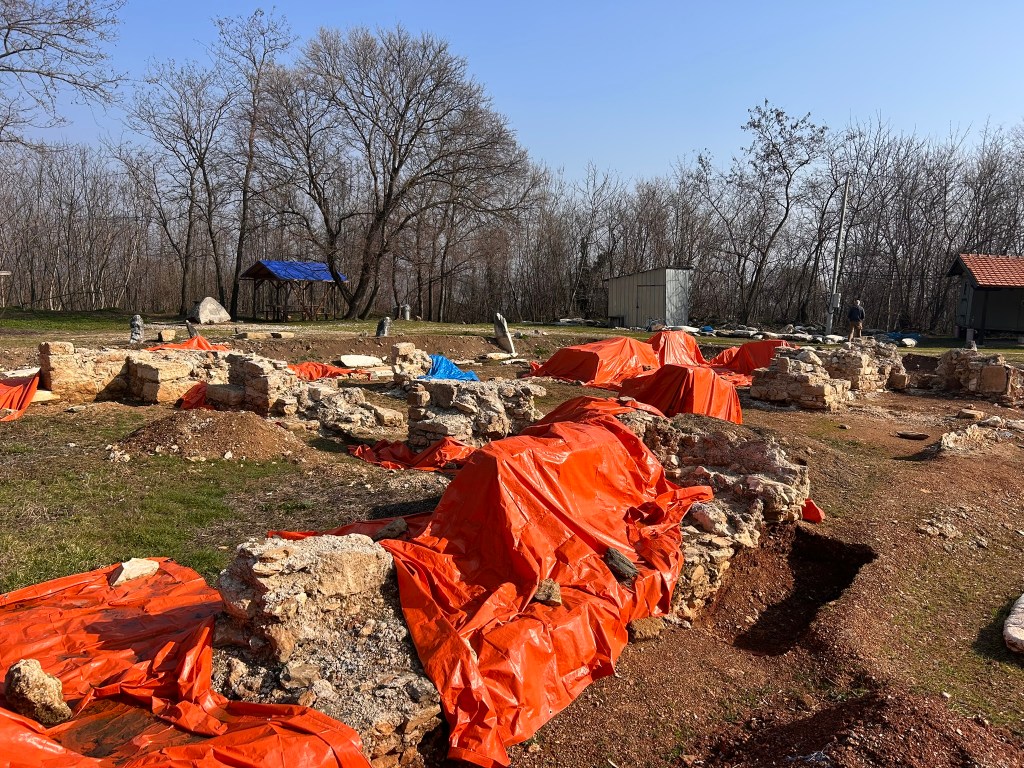
But we were disappointed to find that it was still just a dig site with not much to see.
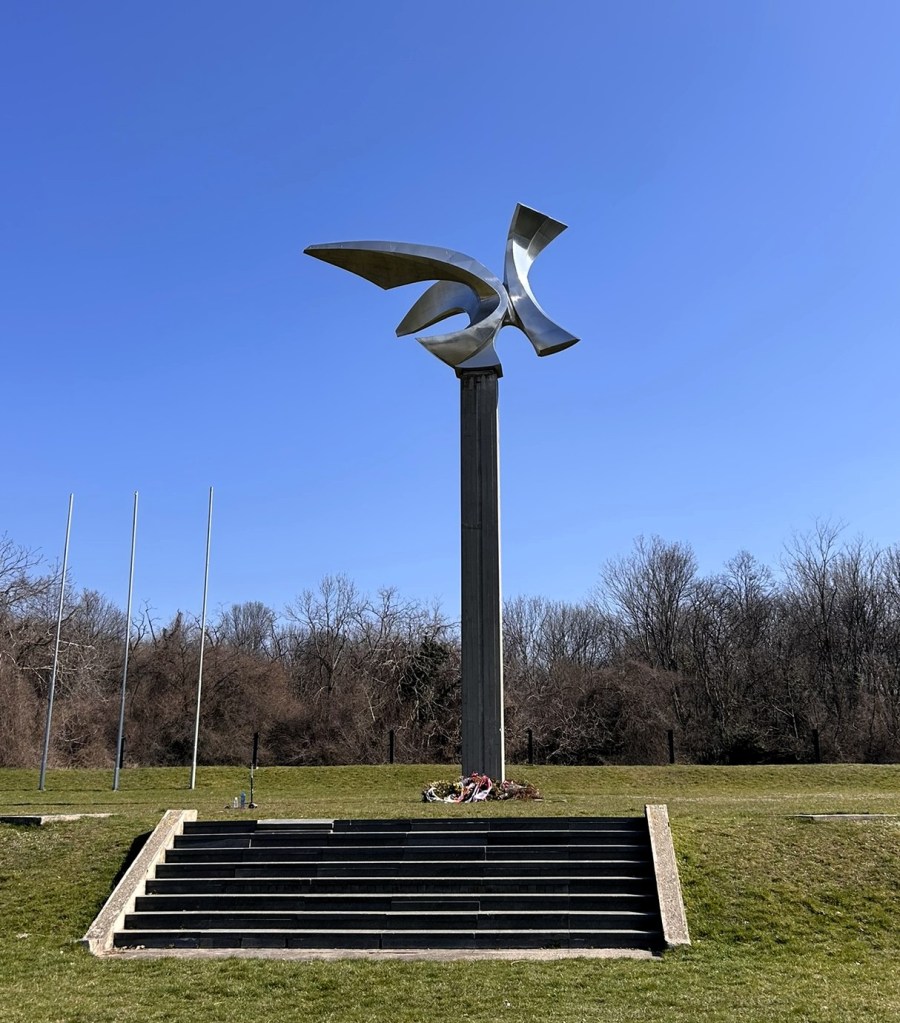
So we carried on to the Kosmaj memorial. It was a lovely, warm day so we parked at the foot of the stairs and walked up
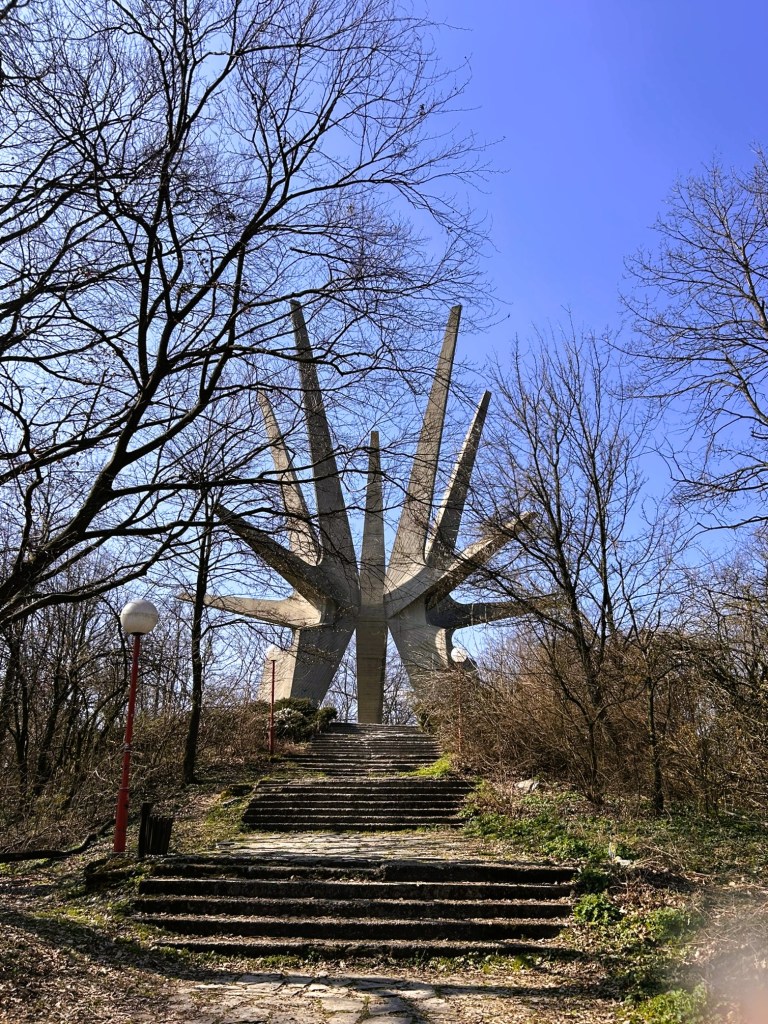
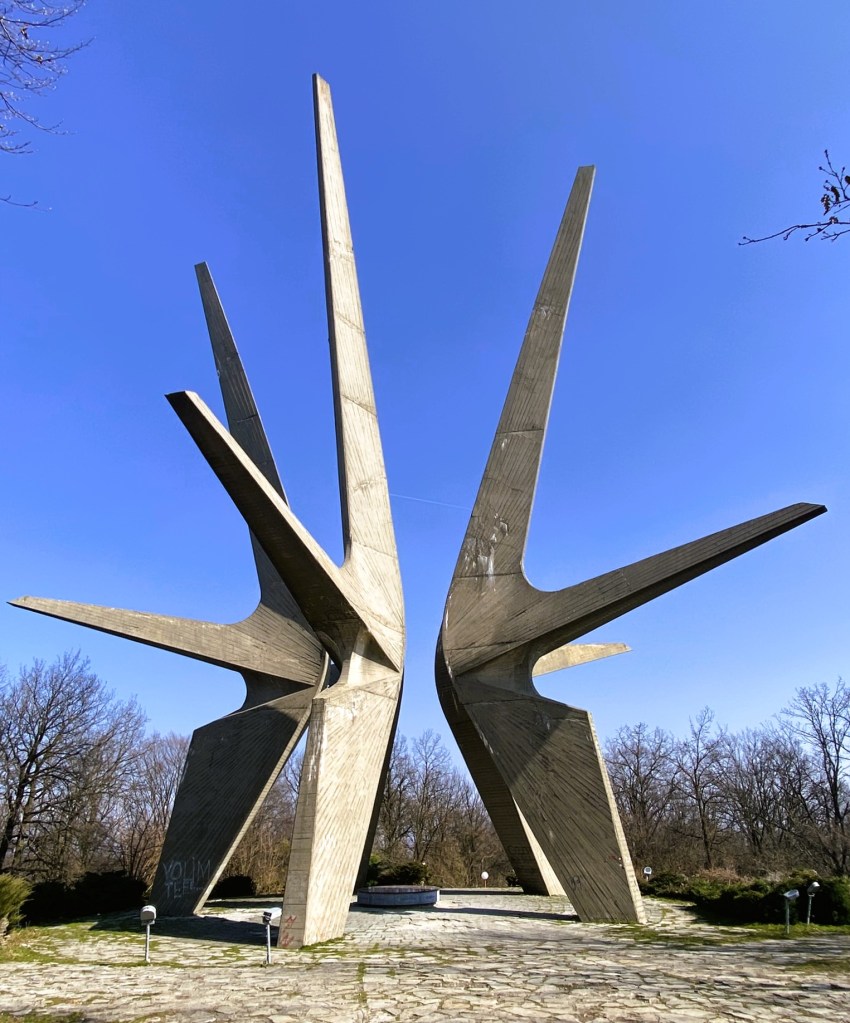
Then carried on to a monument to the soldiers who died in WWI defending Belgrade
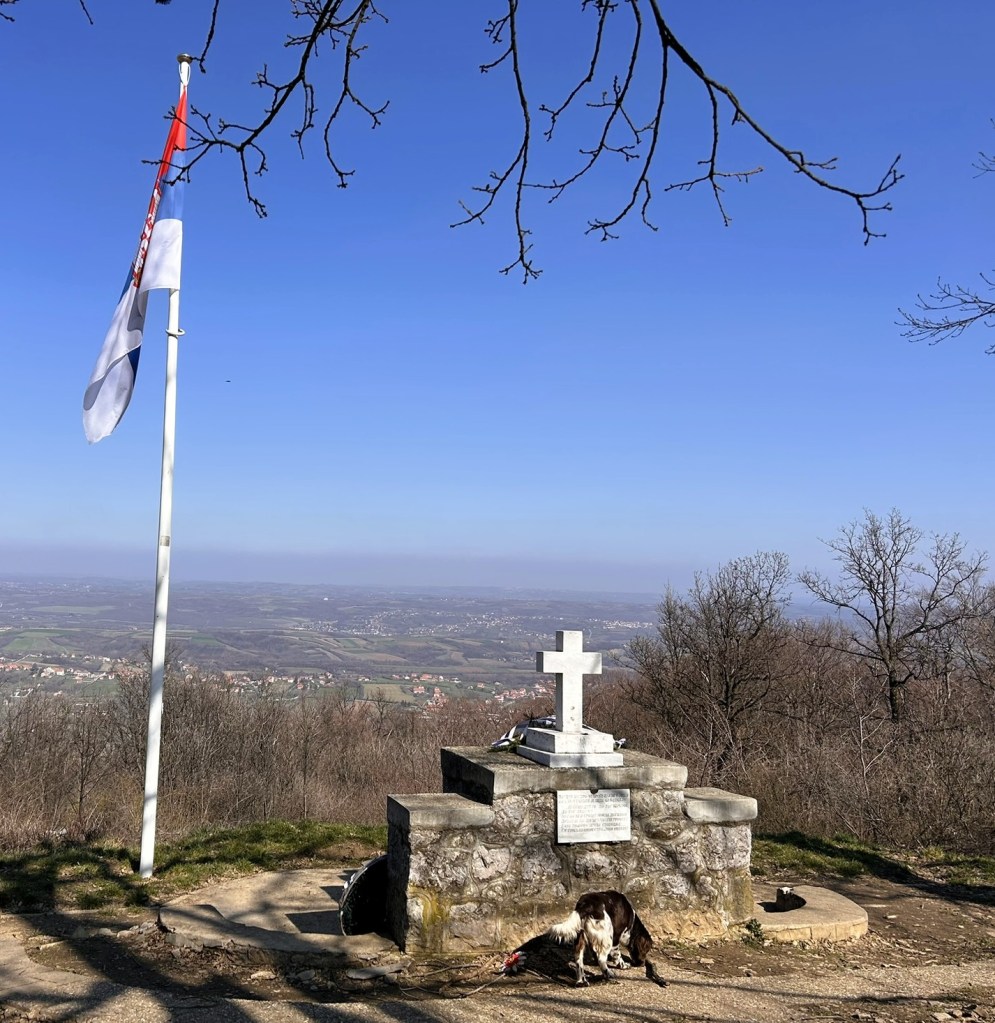
As usual, we had a local guide who walked us all the way there, waited patiently whilst we admired the view, and walked us back again!
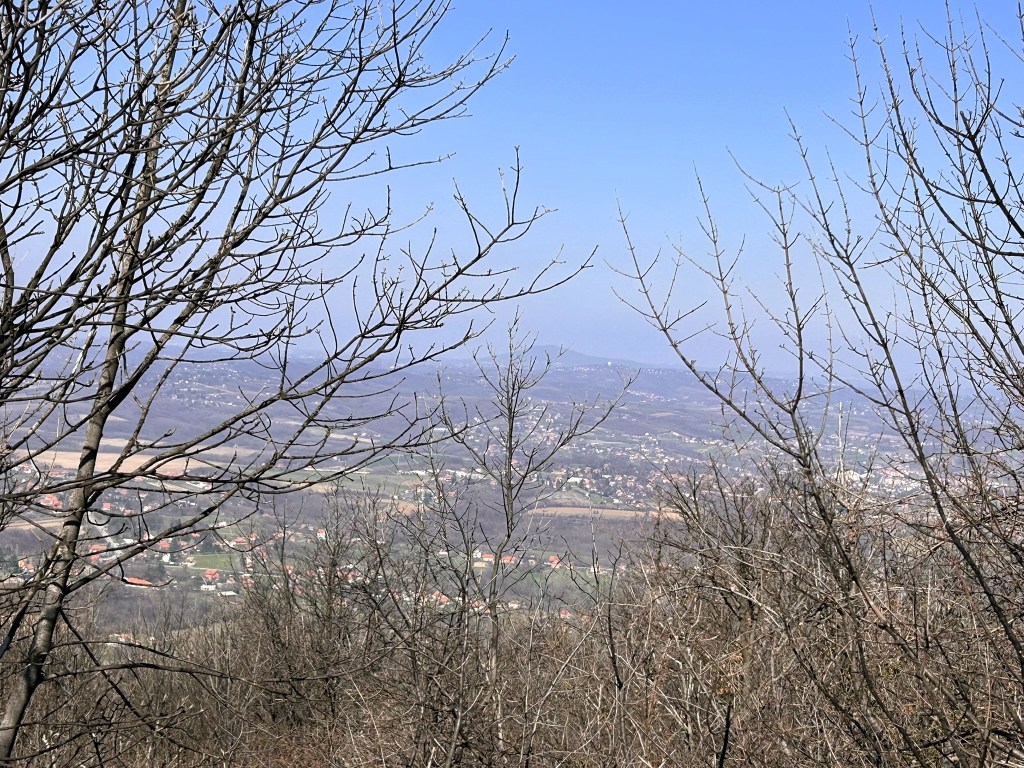
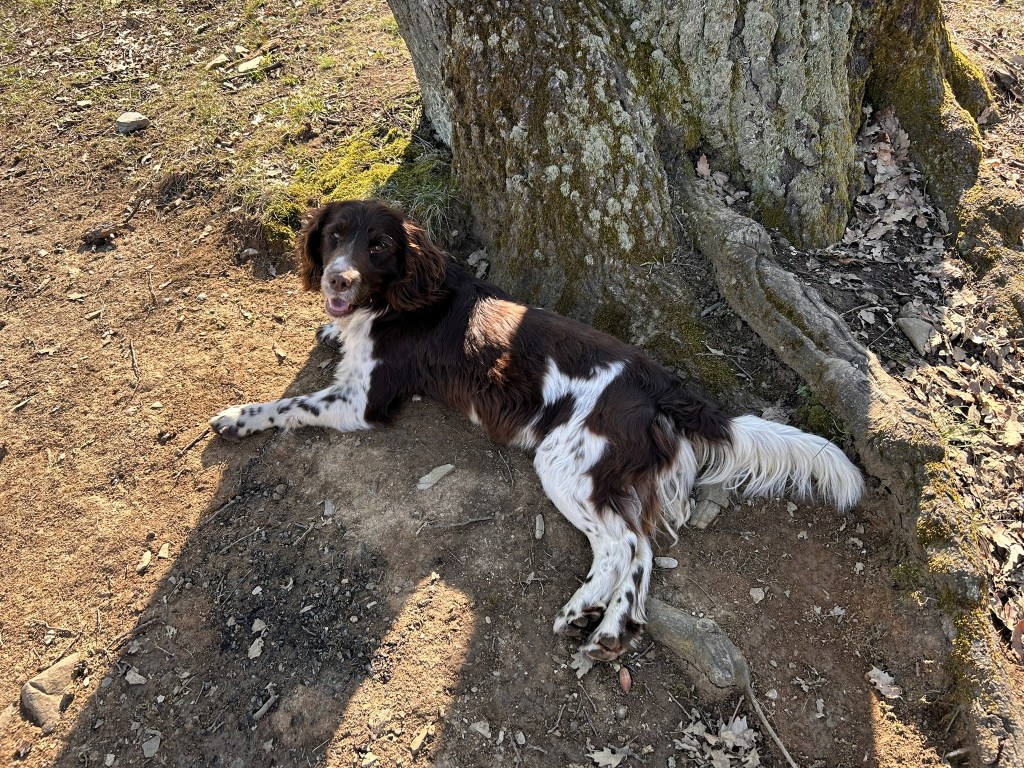
The walk back had been uphill all the way so we sat outside having lunch then decided to rest for the afternoon and press on to the mountain tomorrow.
The mountain we were heading towards was Mount Avala – just 511m high but with lovely views over the capital city, Belgrade.
We had been studiously avoiding Belgrade for weeks, completely re-writing our original itinerary to keep away from it. But we had run out of excuses and it was beginning to loom large on our horizon.
Avala itself still feels very much in the countryside and it was lovely – this is the place where people from Belgrade go to get some fresh air and peace
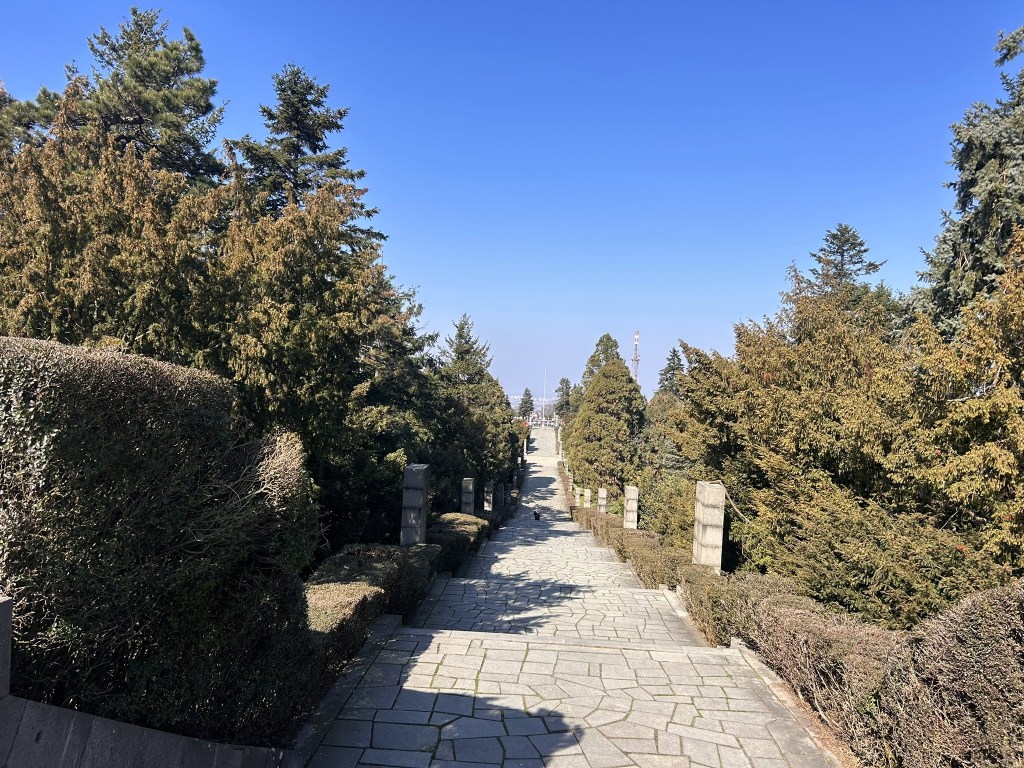
We walked to the first square where we found an usual ceremony going on
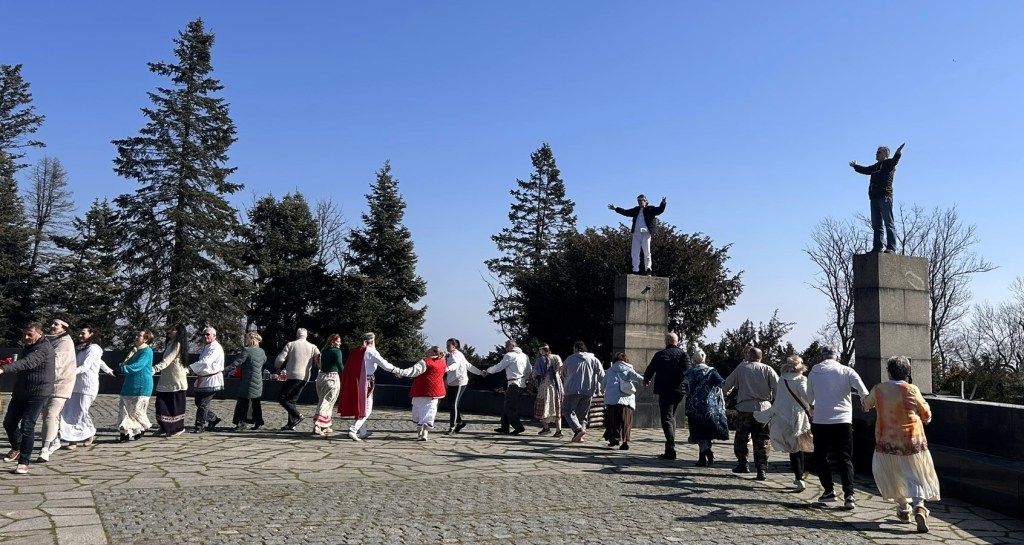
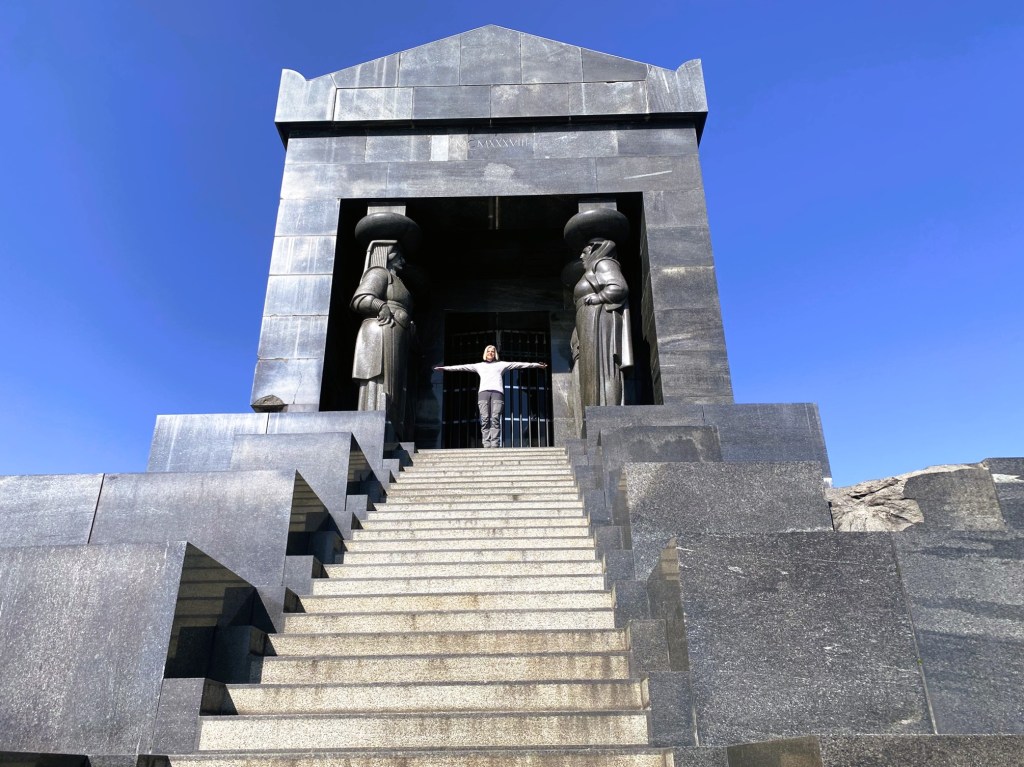
A little perturbed, we left them to it and carried on up to the impressive Monument to the Unknown Hero – built in 1938 to honour all Serbian soldiers who fought in WWI
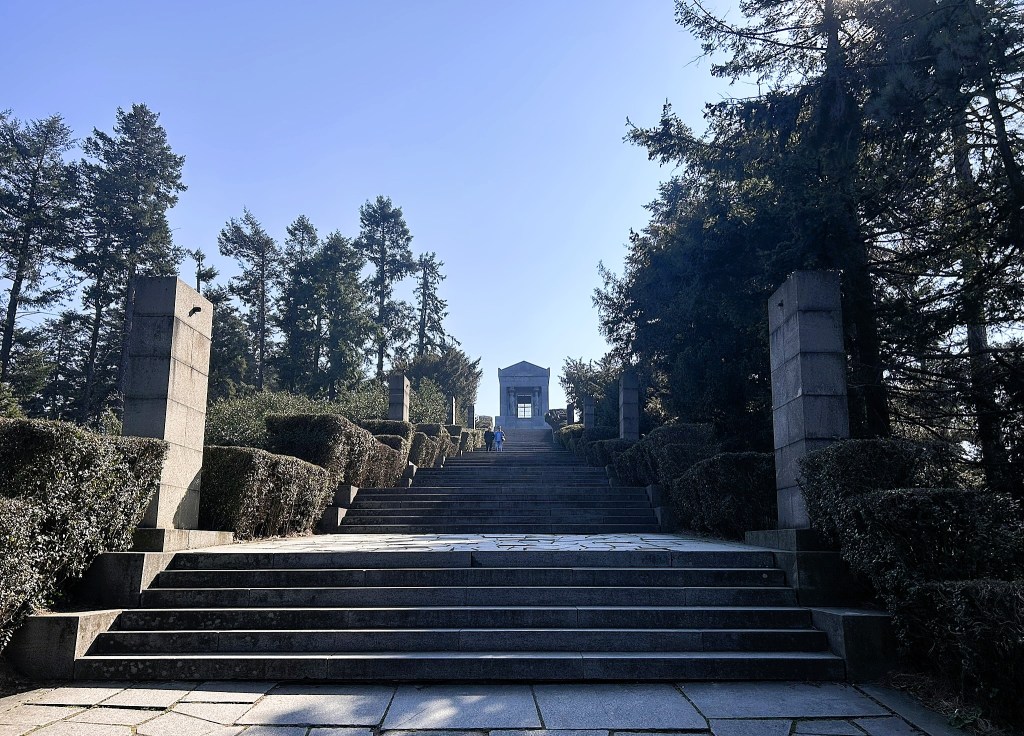
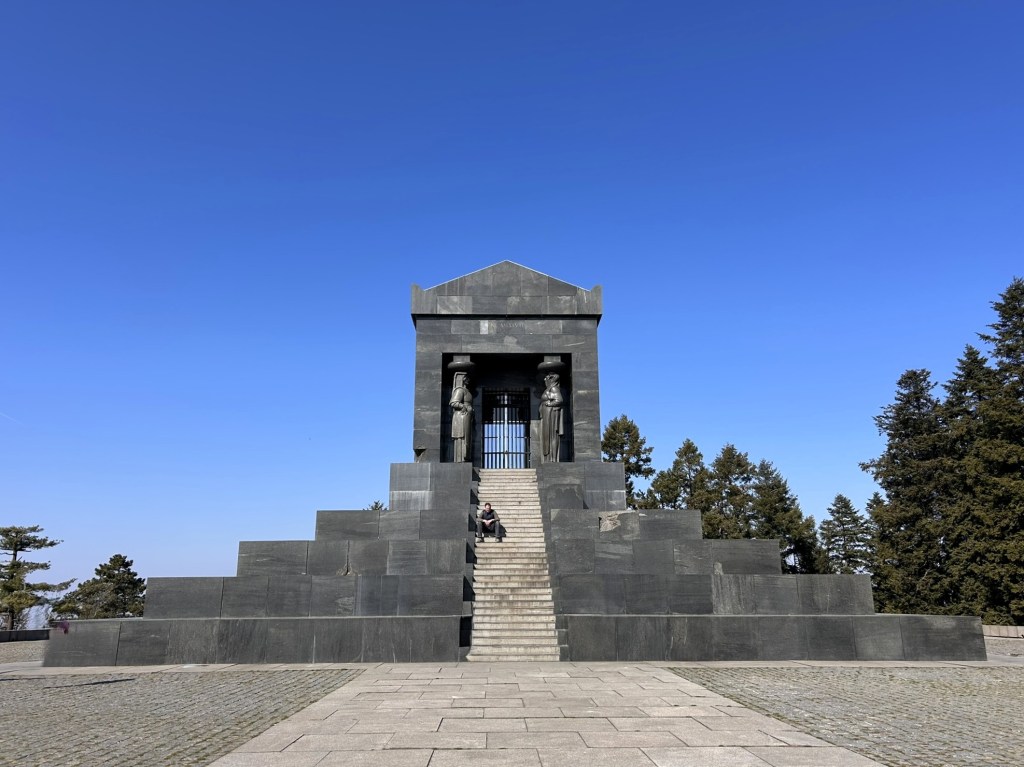
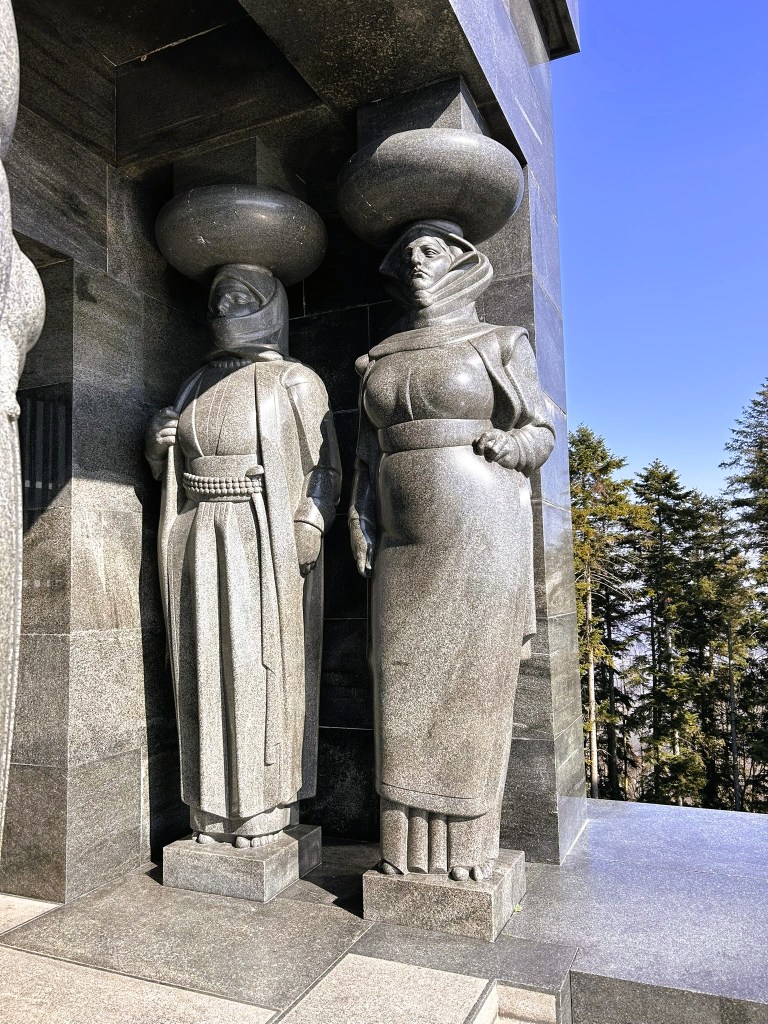
The sun was out, the air was fresh, it was lovely
We found another monument nearby, this time to a group of Russian war veterans whose plane crashed into the mountain and killed them all
We wandered around the mountain for the rest of the morning then headed closer into the city, stopping for lunch at Jasinski Park
There wasn’t much to see there so, with a distinct feeling of trepidation, we went closer still.
As we drove towards the looming presence of the large, sprawling capital city, I was surprised to find that we were still surrounded by green space. In fact, the whole area seemed quite nice and not particularly busy.
There is a Vespa Museum on the outskirts of the city which we really wanted to see. We parked up near the Rakovica monastery which was about as close as BigMog was going to get to the narrow, hillside streets where the museum was located.
It was a long, steep uphill walk but we were getting used to that by now. I had spoken to the owner of the museum on the telephone earlier in the day and when we arrived he greeted us warmly with a beaming smile.
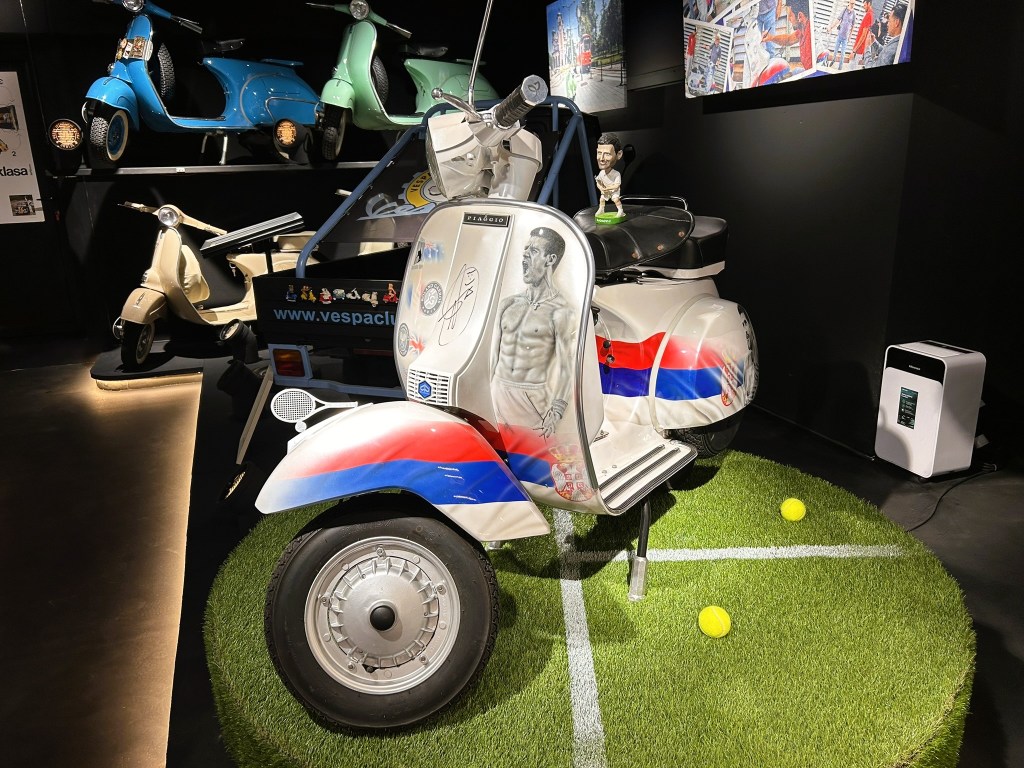
We have rarely met anyone so enthusiastic about their subject as Vladan was about his scooters. His private collection includes 40 restored Vespas in completely original and running condition, from a 1949 model right the way through to the last model ever made
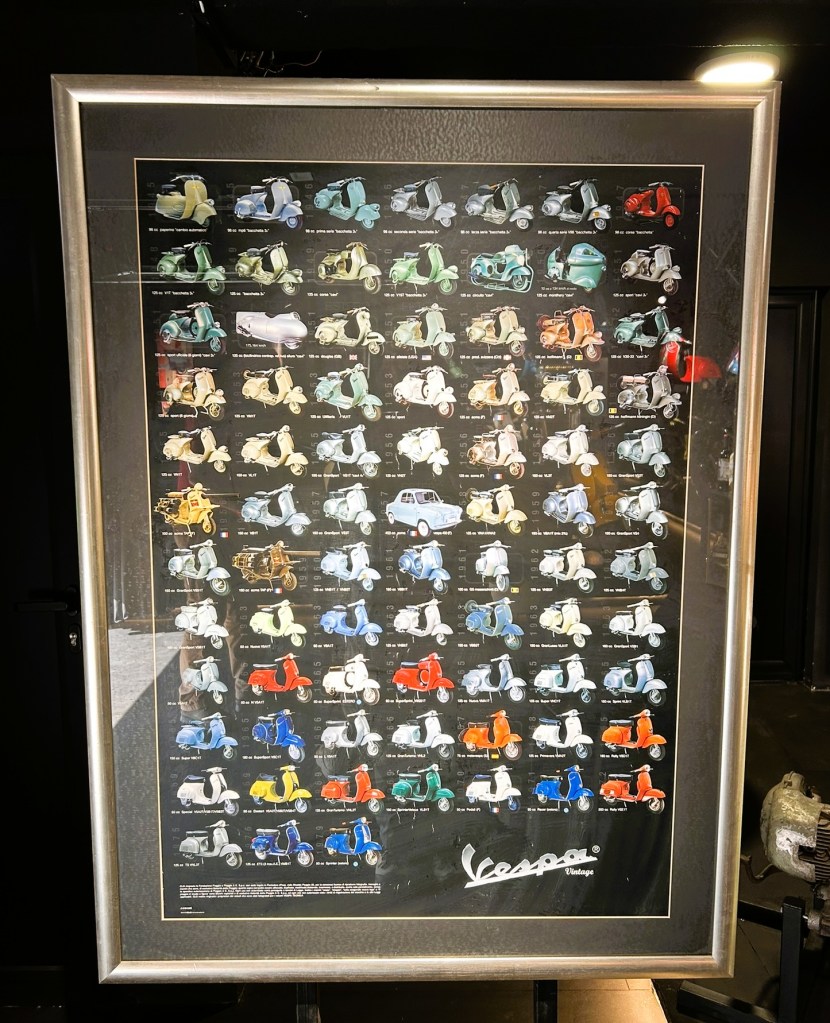
He started the visit by showing us a film chronicling his life and works and then showed us around each scooter
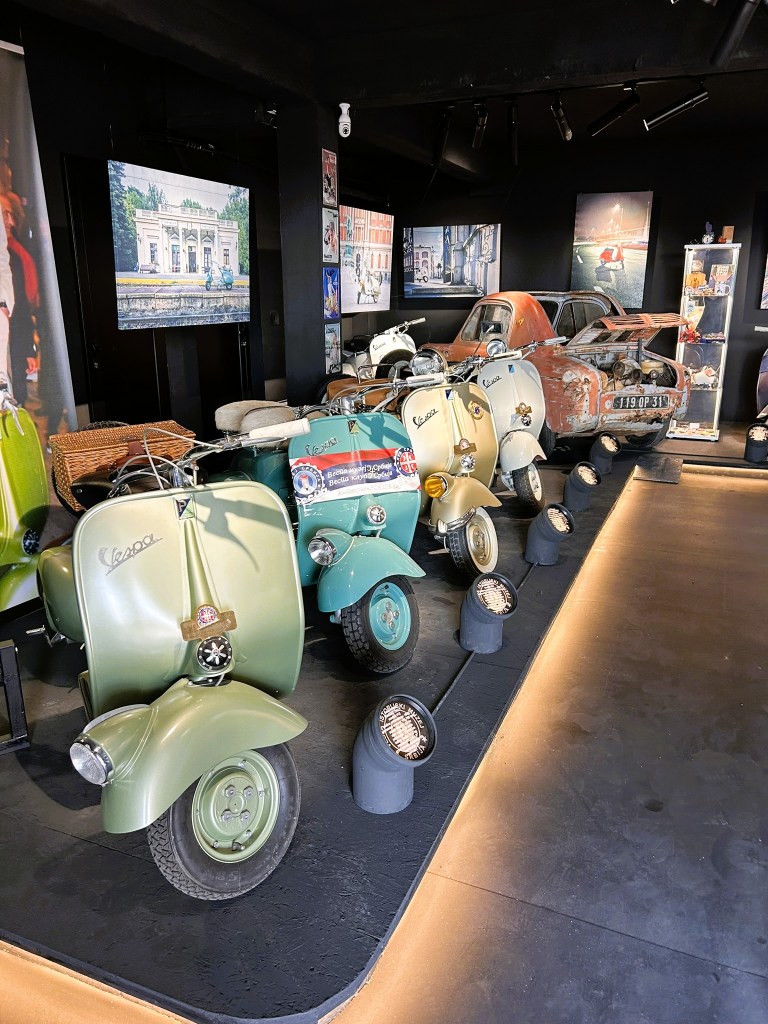
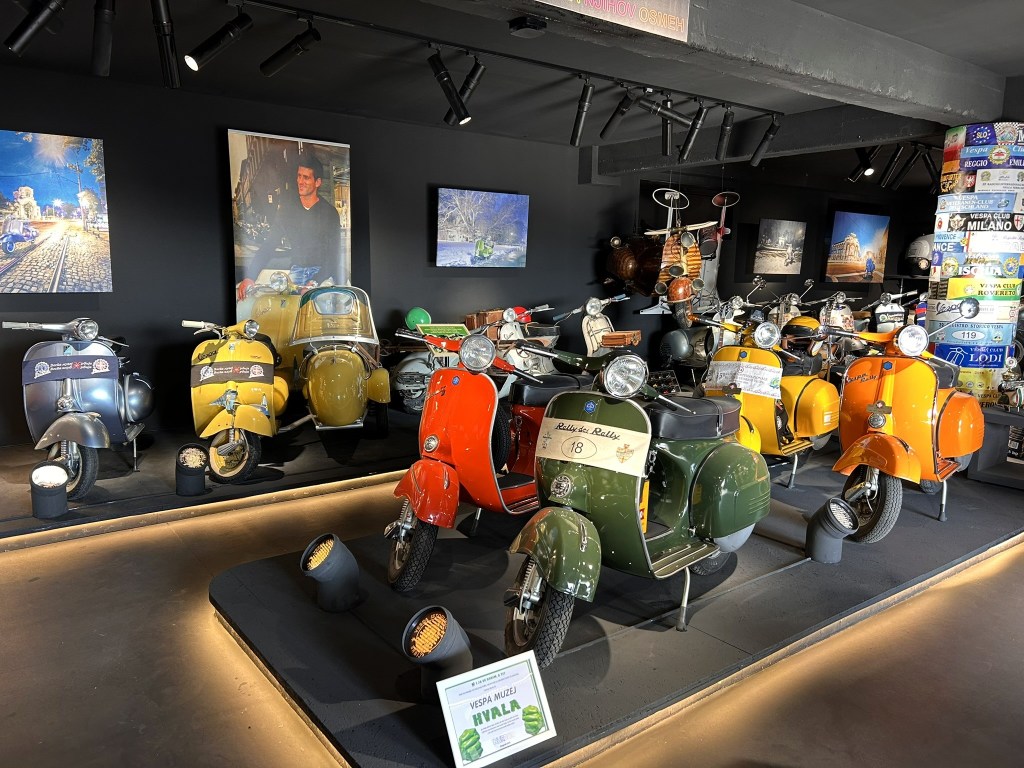
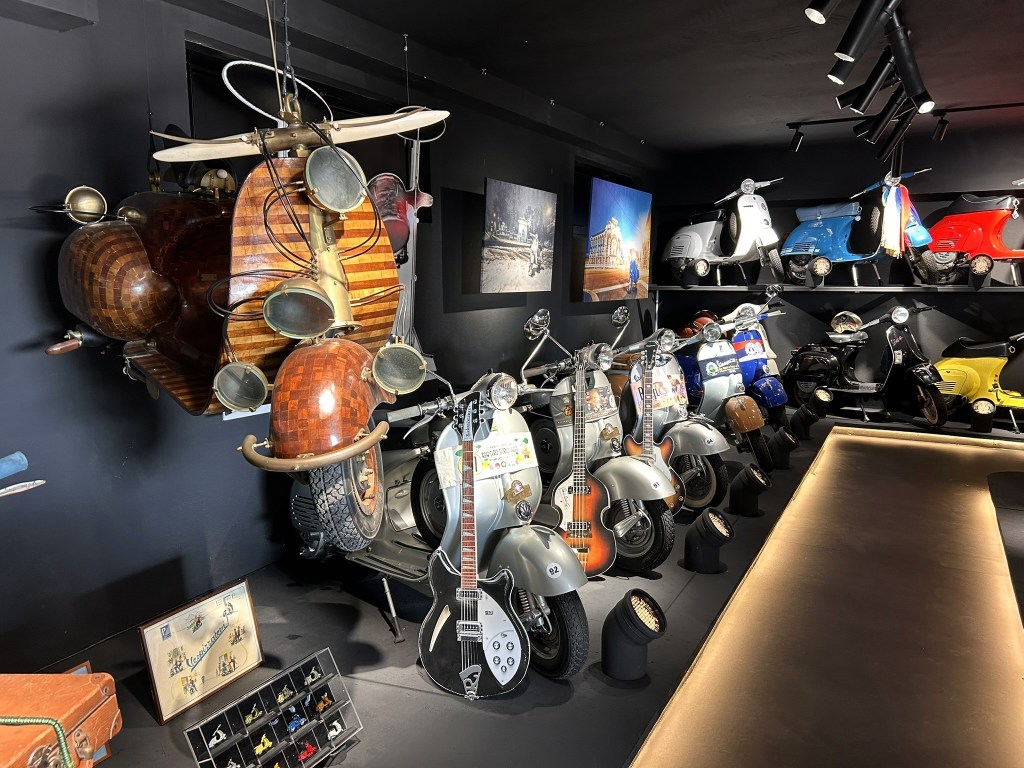
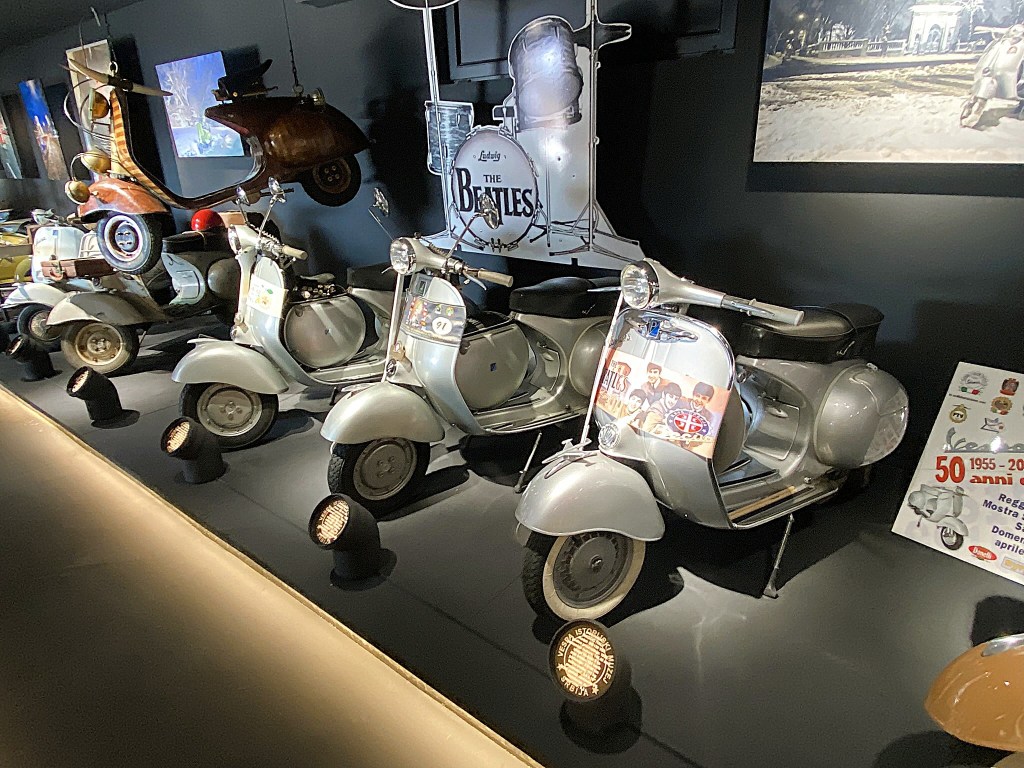
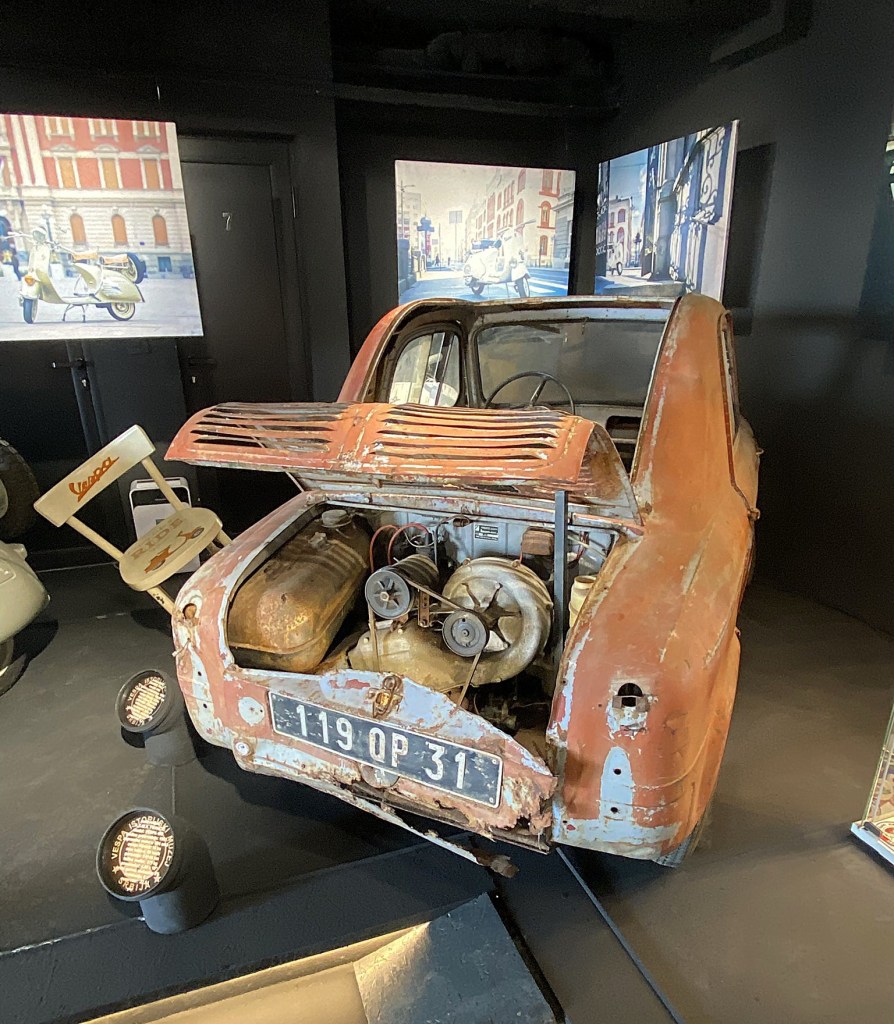
Including this one which belonged to Novak Djokovic who gifted it to the museum
We chatted to him and his friend for ages and even learnt how to better pronounce Serbian words – including the fact that a ‘j’ is always pronounced as a ‘y’ which certainly helps with some of the place names.
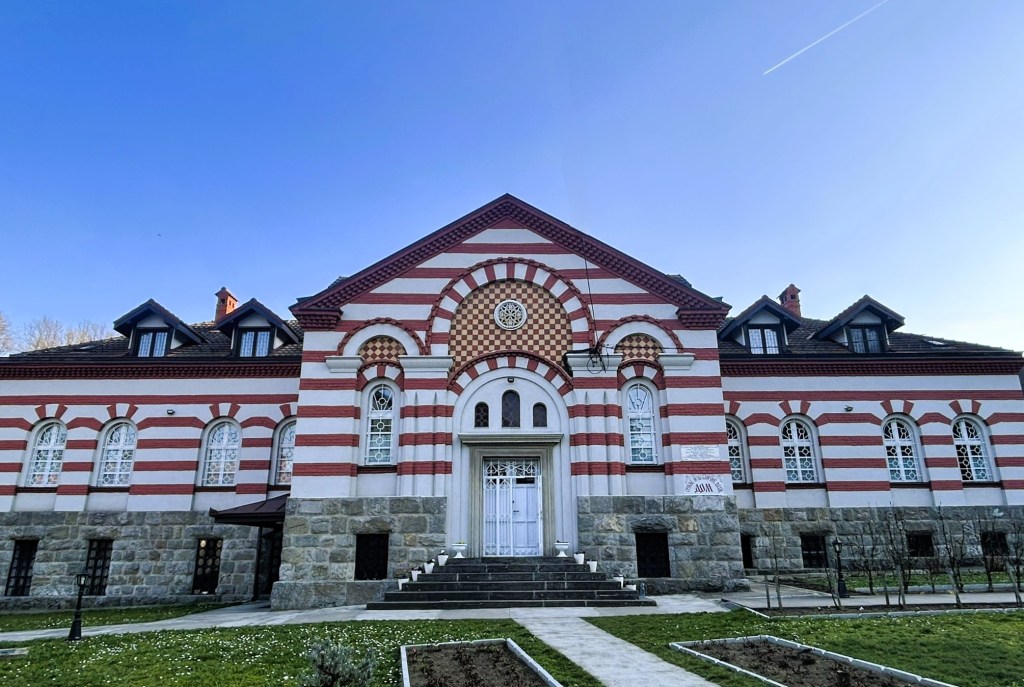
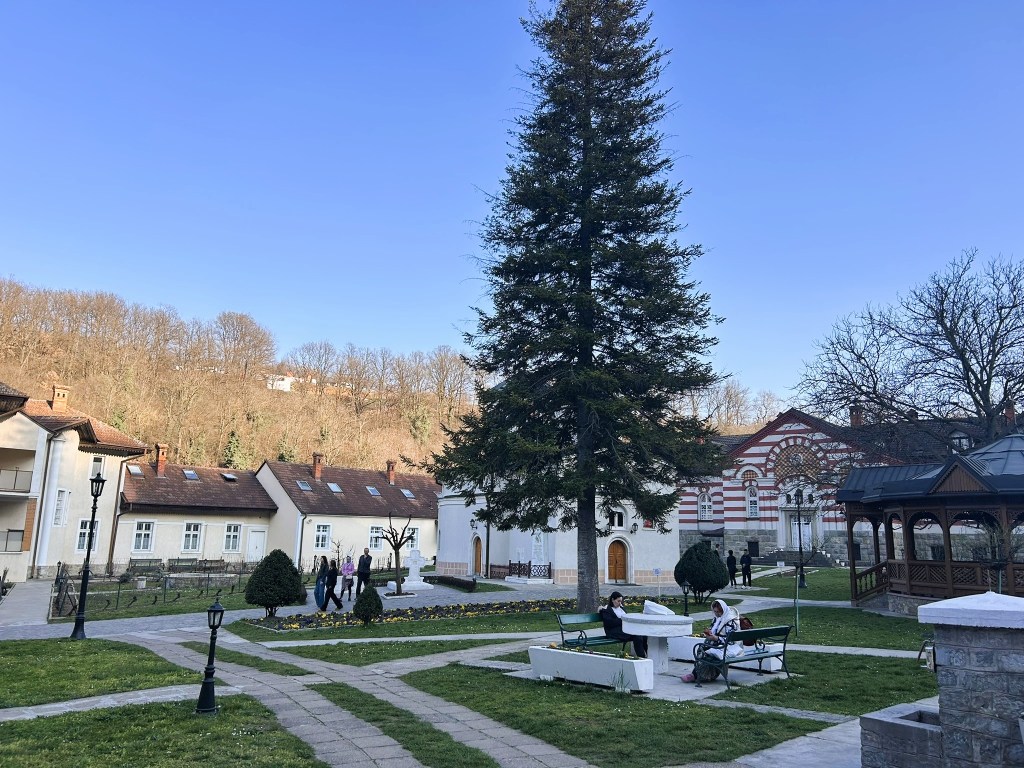
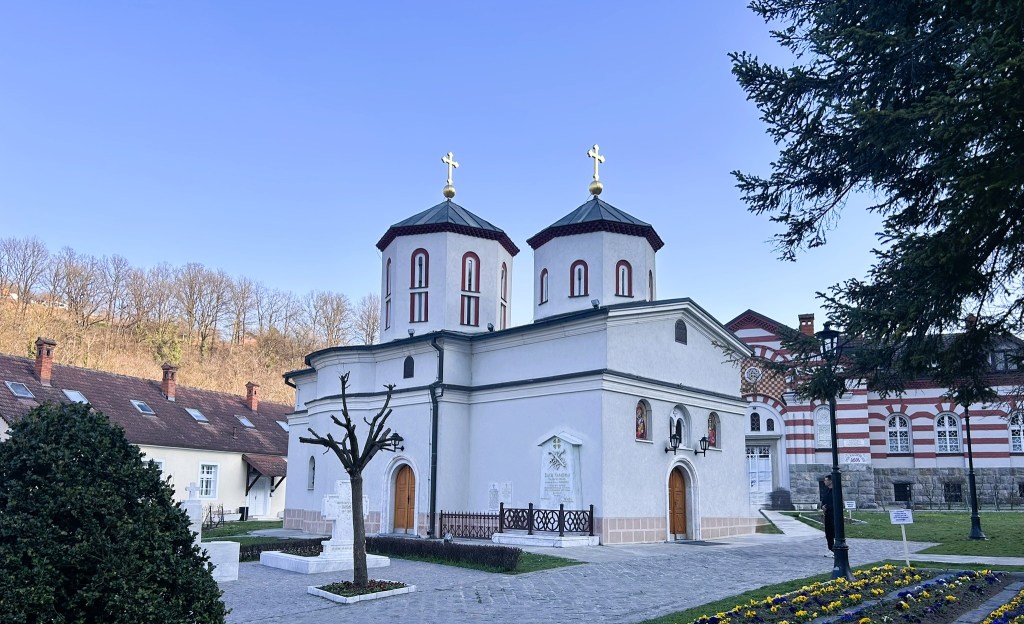
The walk back down was much easier. We popped into the monastery where we had parked
Then decided to go back to Jasinski Park for the night.
When we arrived there were two puppies sitting huddled together in the car park looking terrified. There were a few locals around them, most trying to feed them
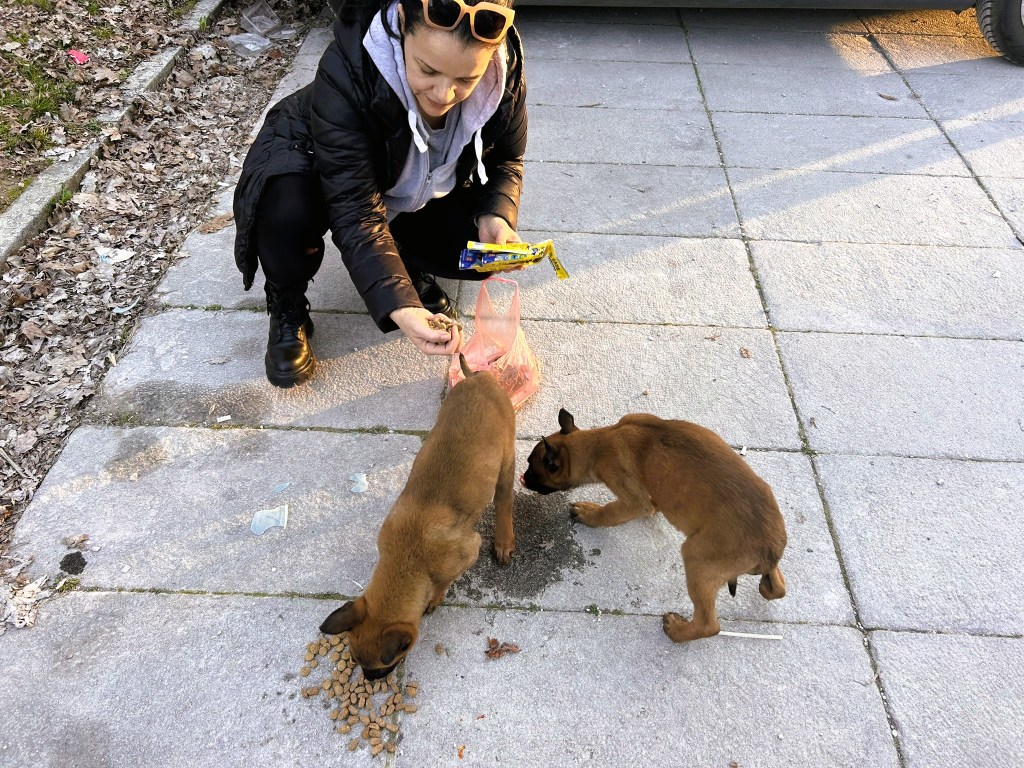
I chatted to this lady who said that someone had abandoned them in the park and it was a great shame – she said it happens all too often in Serbia.
Everyone seemed very upset about them and a few even tried to persuade us to take them in.
The next morning was James’ birthday and he had a lovely start to the day – a local man came over to say hello and told us that the puppies had been adopted by someone who lived nearby.
We had been putting the ‘big city’ off for long enough, we couldn’t hang about on the outskirts any longer. So we took a deep breath and dived in.
I have rarely researched a city that has so much to see and do as Belgrade. Part of the reason why I felt so daunted by it was because it seemed so big and so busy. We could spend weeks there and still not see everything.
I had split it up into sections and tried to find park-up places in each section from where we could get buses to the places we wanted to go.
We had chosen a football stadium as our base for the southern part. When we arrived there was plenty of space and it was surprisingly quiet for a city centre stadium. It seemed we had made a good choice.
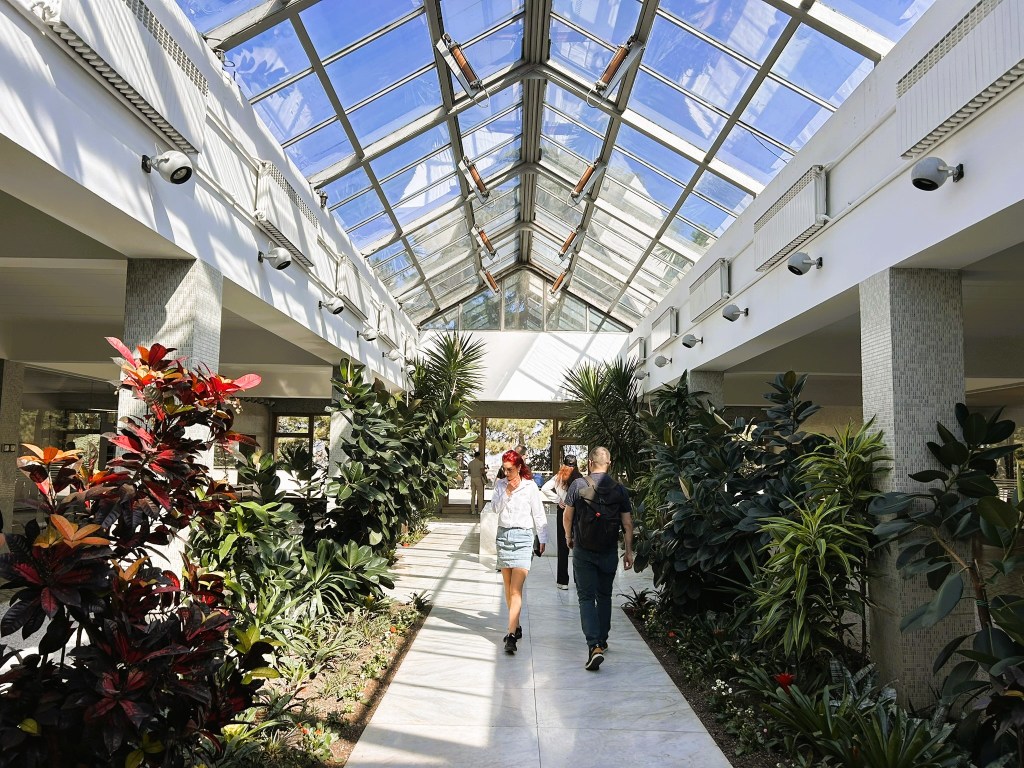
It was a short walk to our first site – the Museum of Yugoslavia and Tito’s Mausoleum
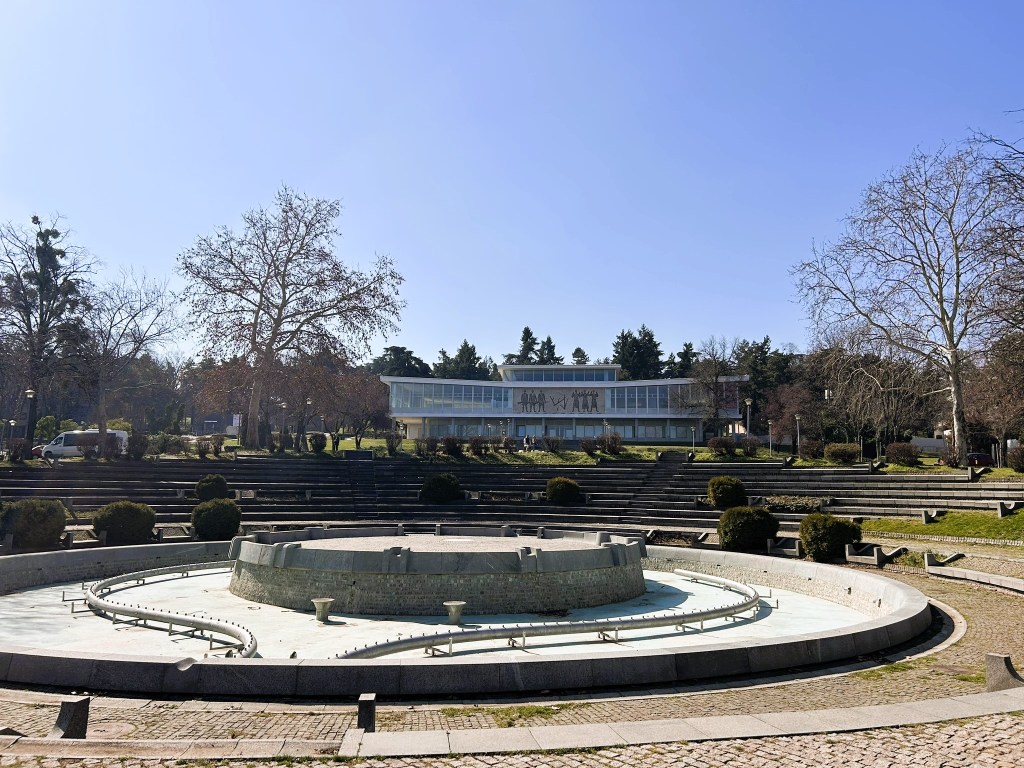
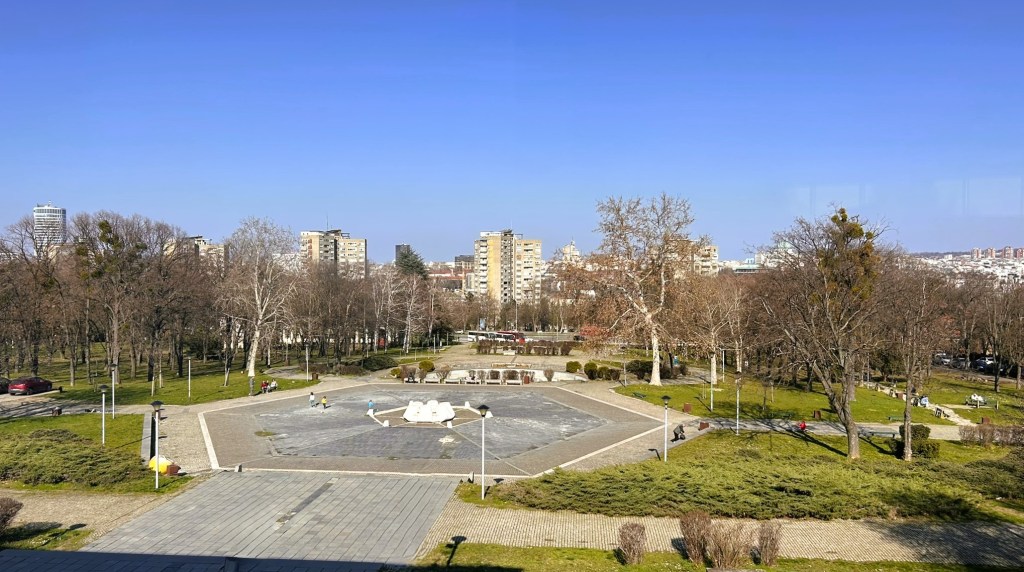
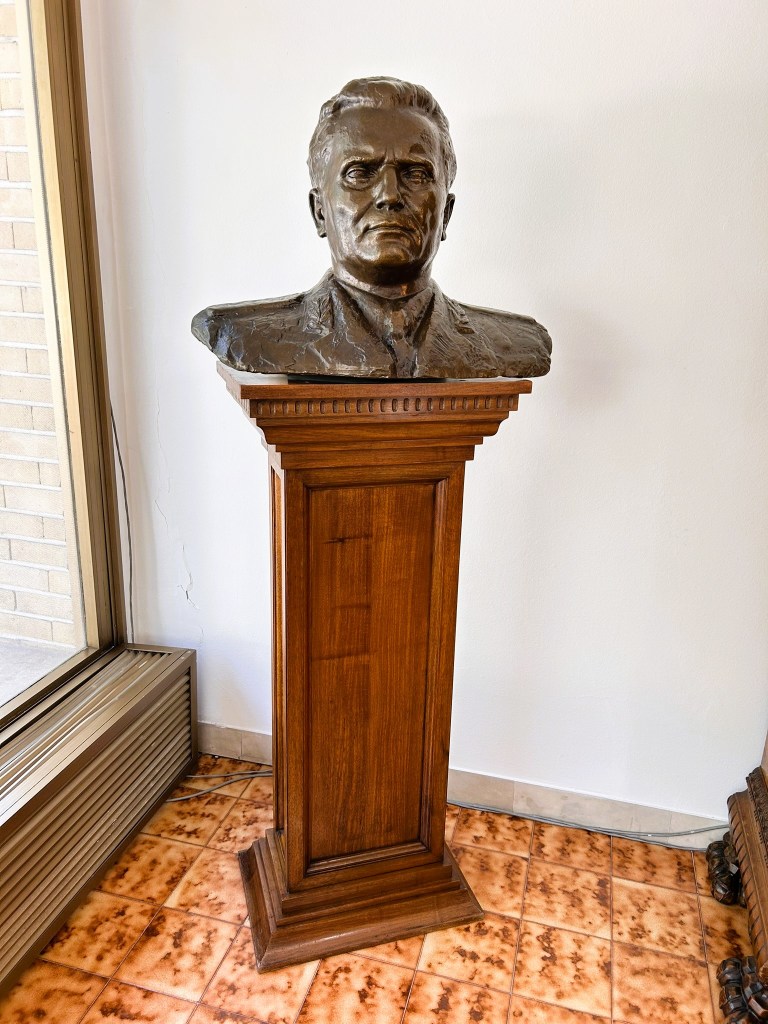
The mausoleum housed Tito’s tomb in what is known as The House of Flowers
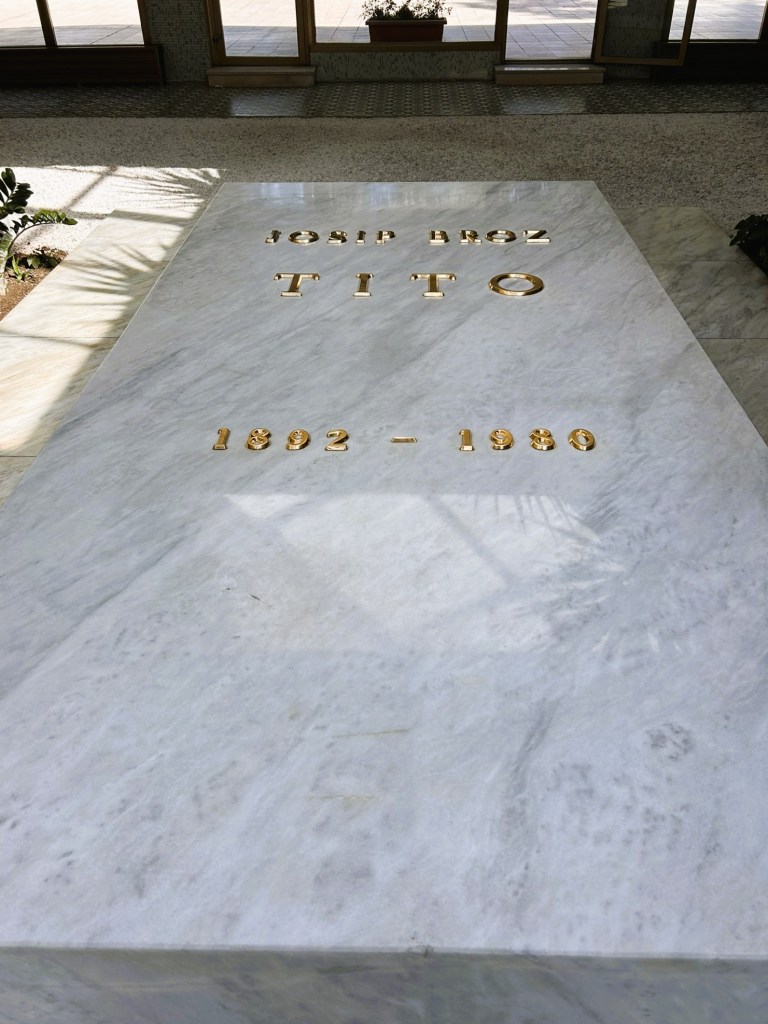
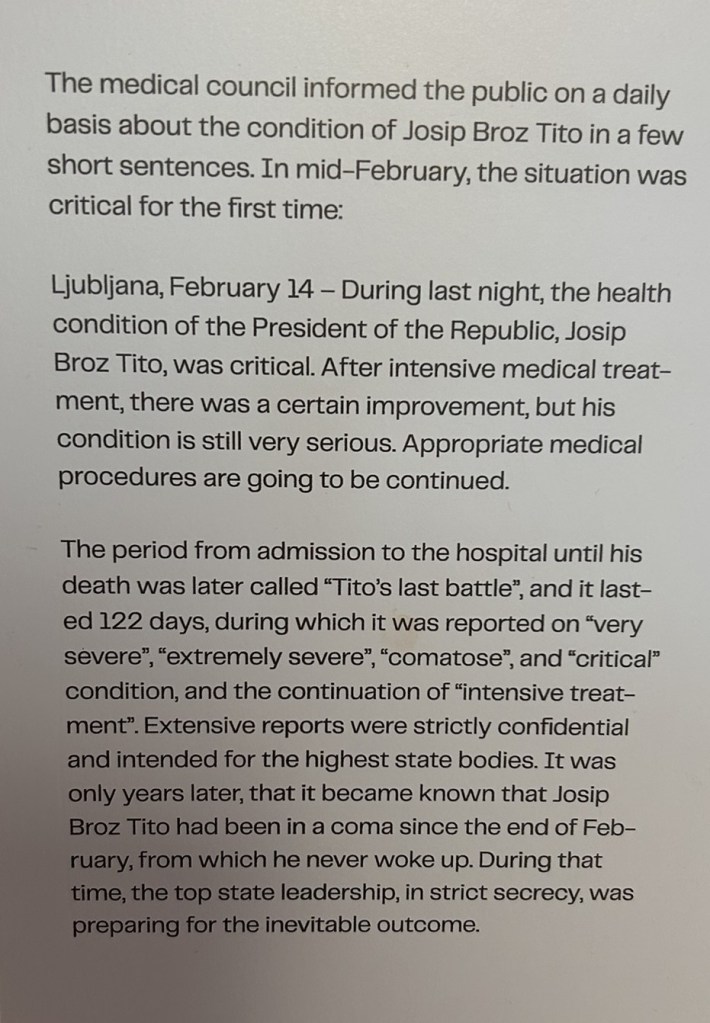
As well as a fascinating exhibition about his death and funeral
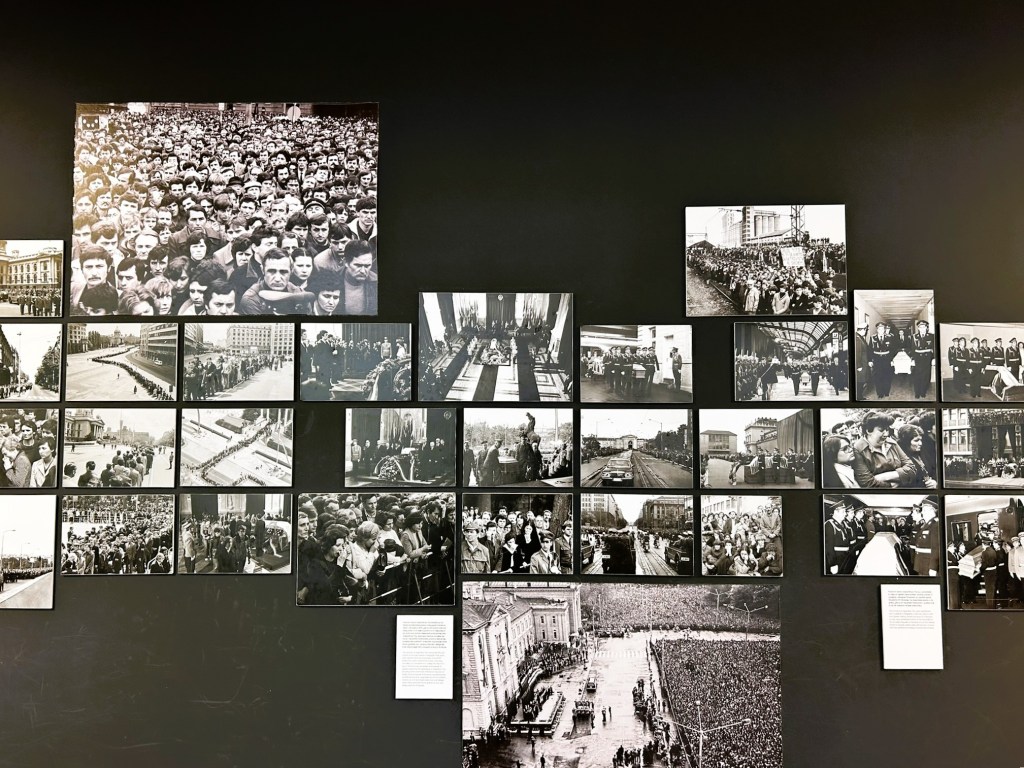
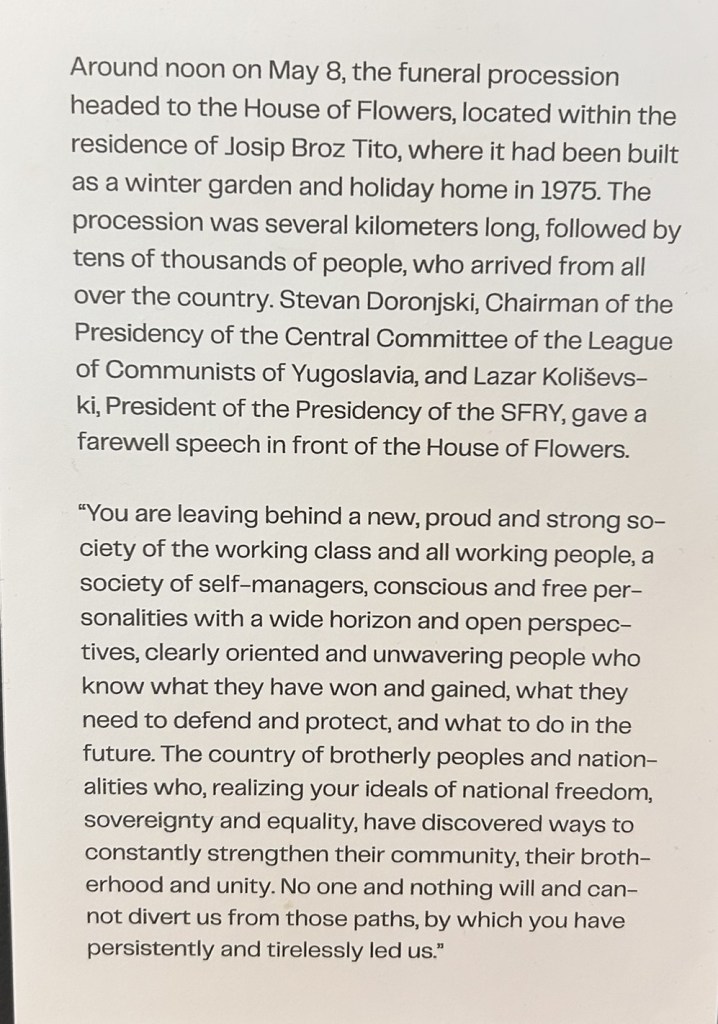
Leaders from across the world attended
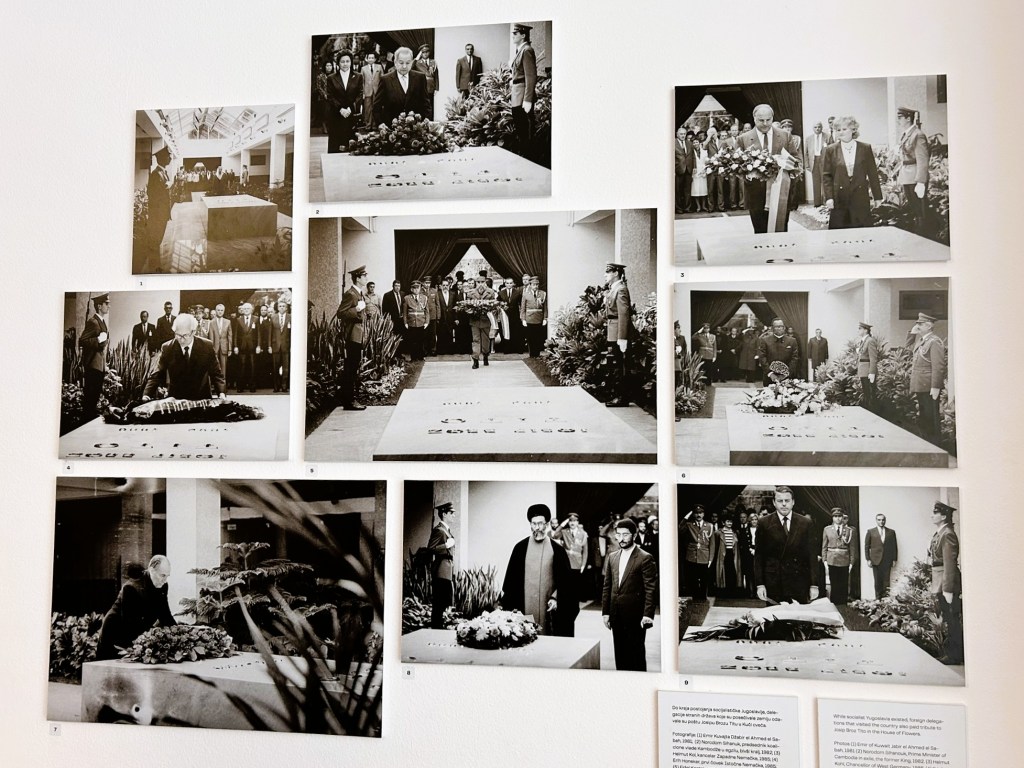
Including the British Prime Minister
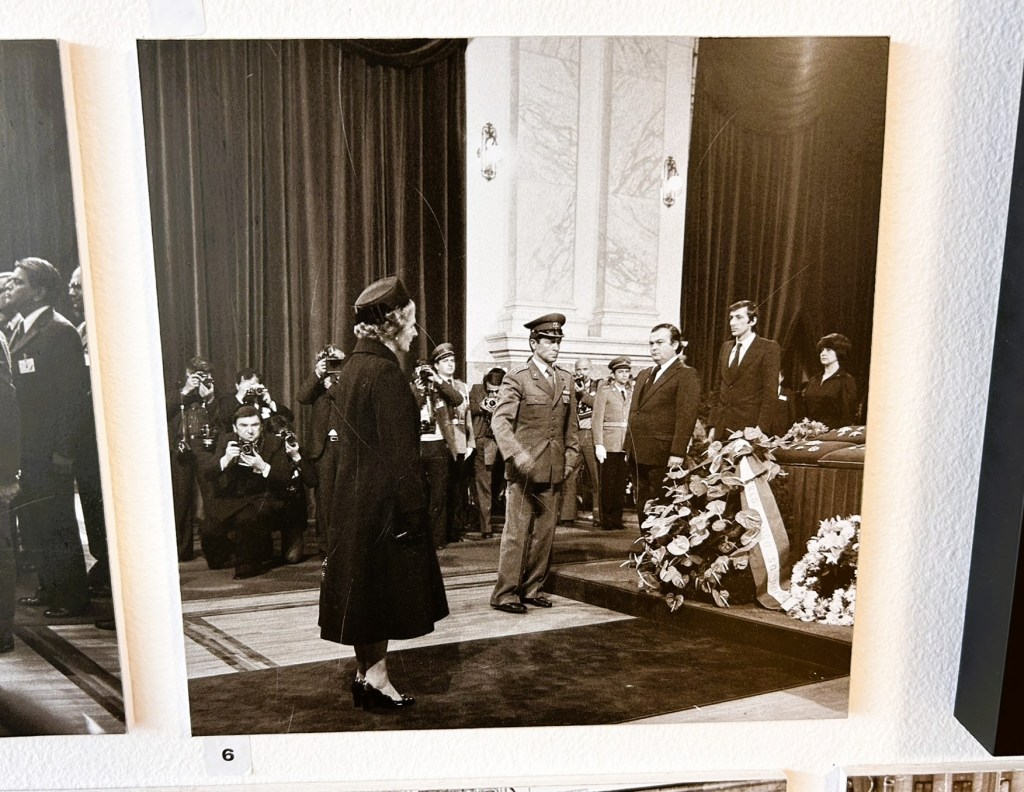
It can be hard in Serbia to unpick reality from propaganda and we are still unsure whether Tito was a ruthless, oppressive dictator or a broadly decent leader who made Yugoslavia strong and successful but made a few mistakes.
I have my suspicions but he appeared to be genuinely mourned by the population and seems to have been supported and admired by politicians across the globe
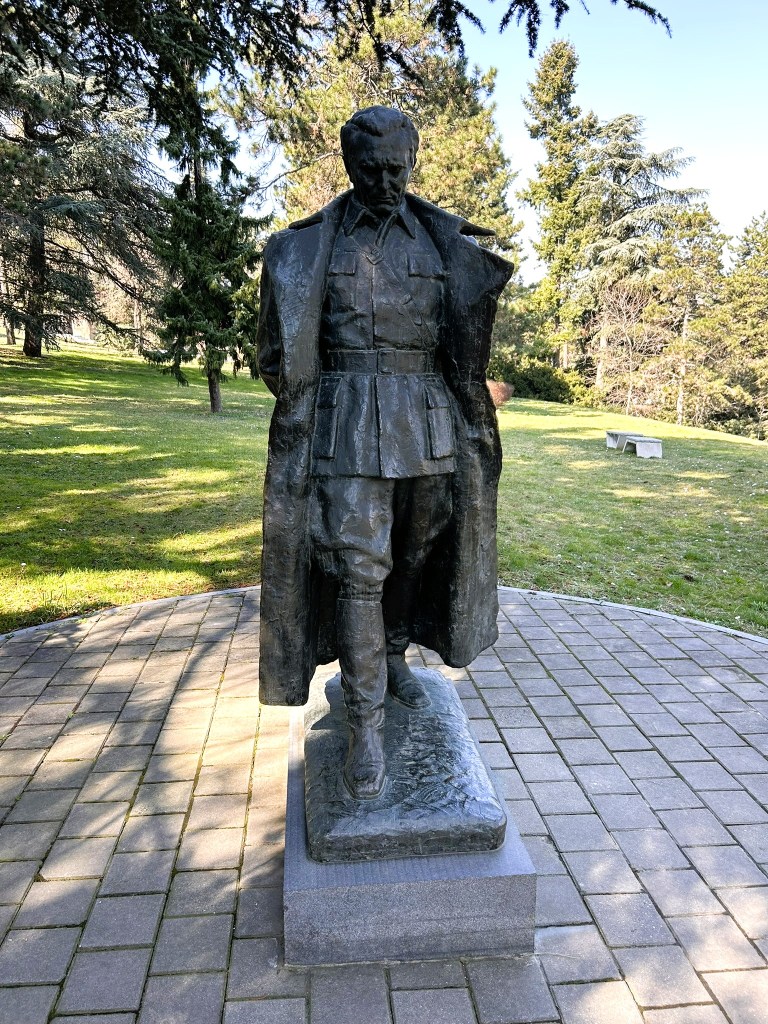
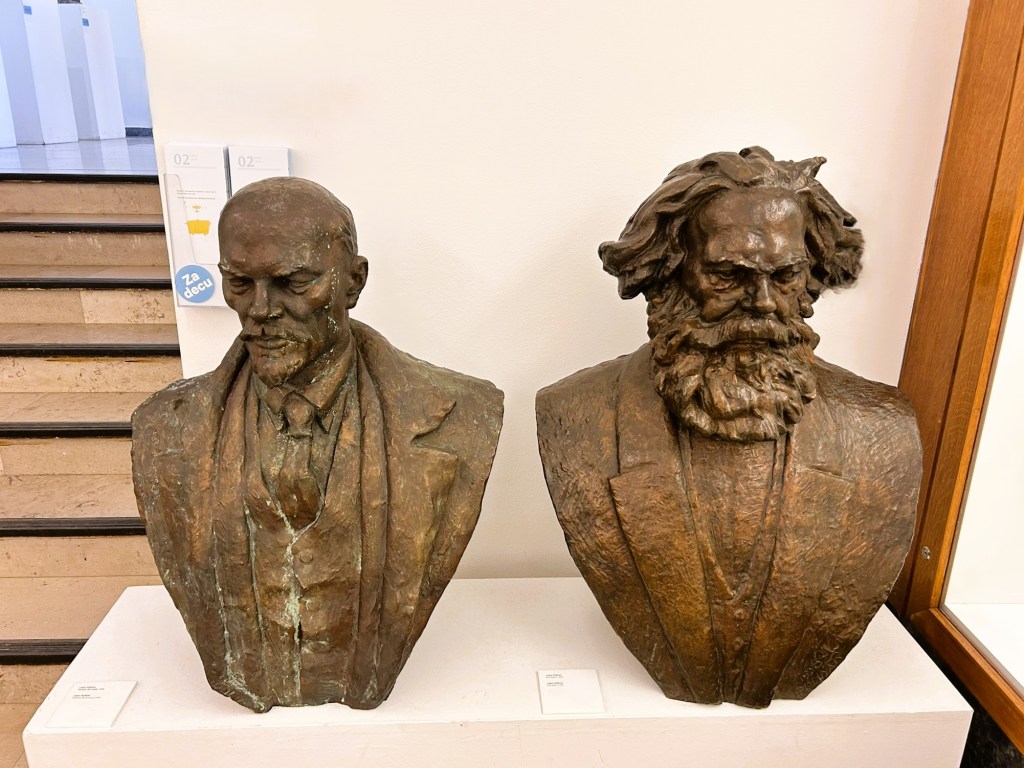
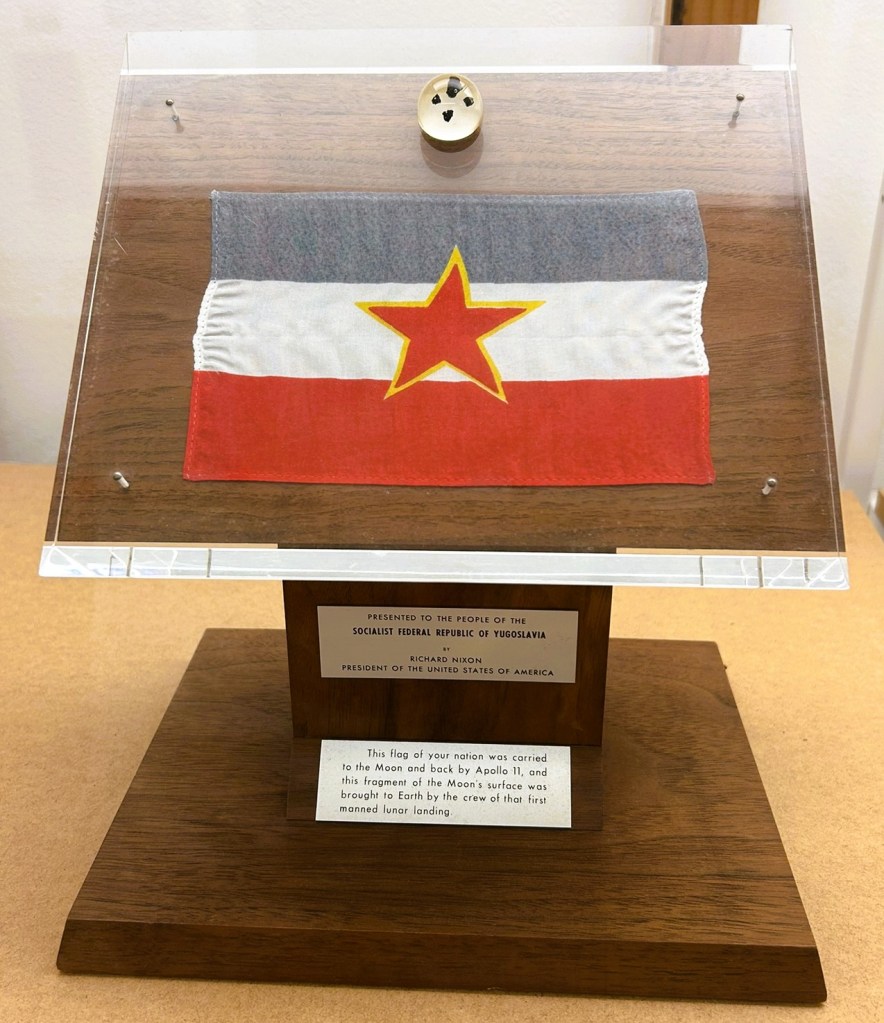
The museum housed an eclectic array of personal items from Tito’s household, the most fascinating of which were the many gifts that had been given to him by other countries
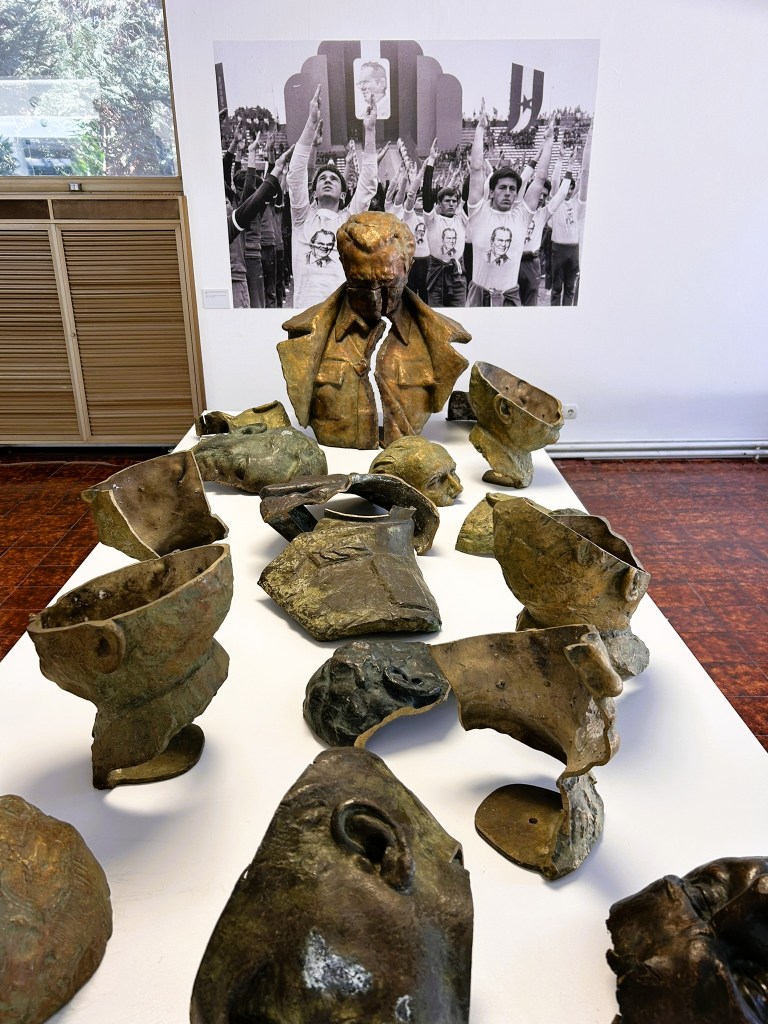
This one made me smile – how many people have a piece of the moon, and how many countries had their flags taken there?
After an absorbing visit getting to grips with the political history of the country, we went for a birthday lunch at a very interesting restaurant
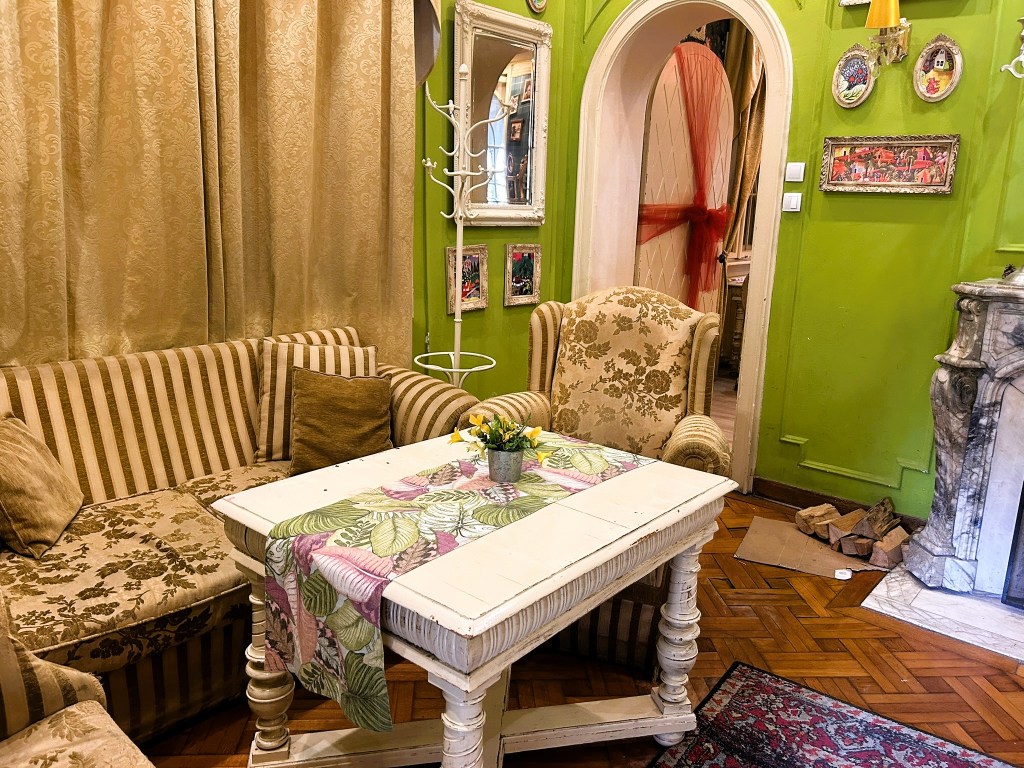
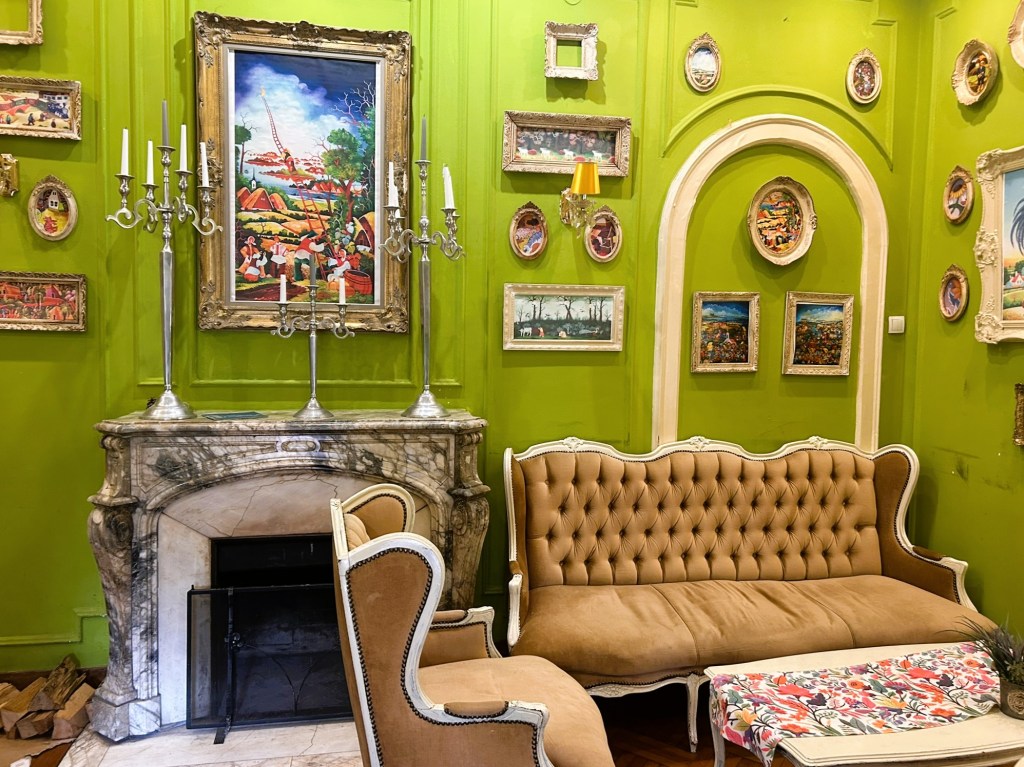
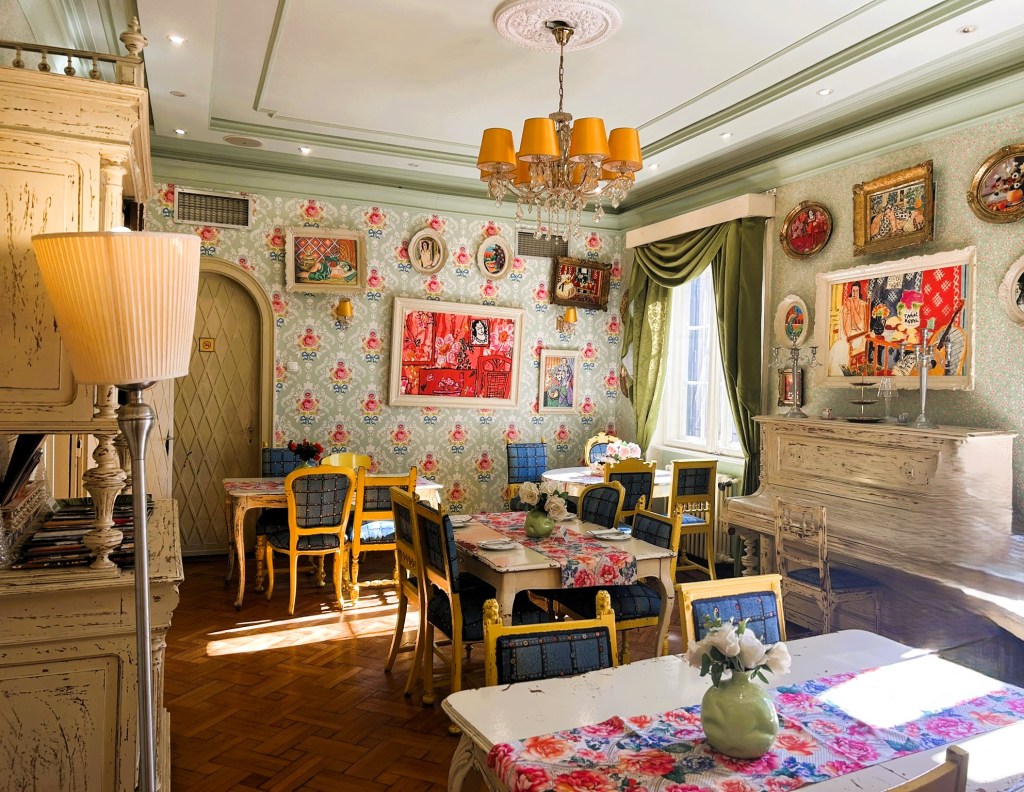
Whether the decor was quite to James’ tastes is another matter but the food was good!
From there we went to another museum, this time possibly not quite so relevant to our current country
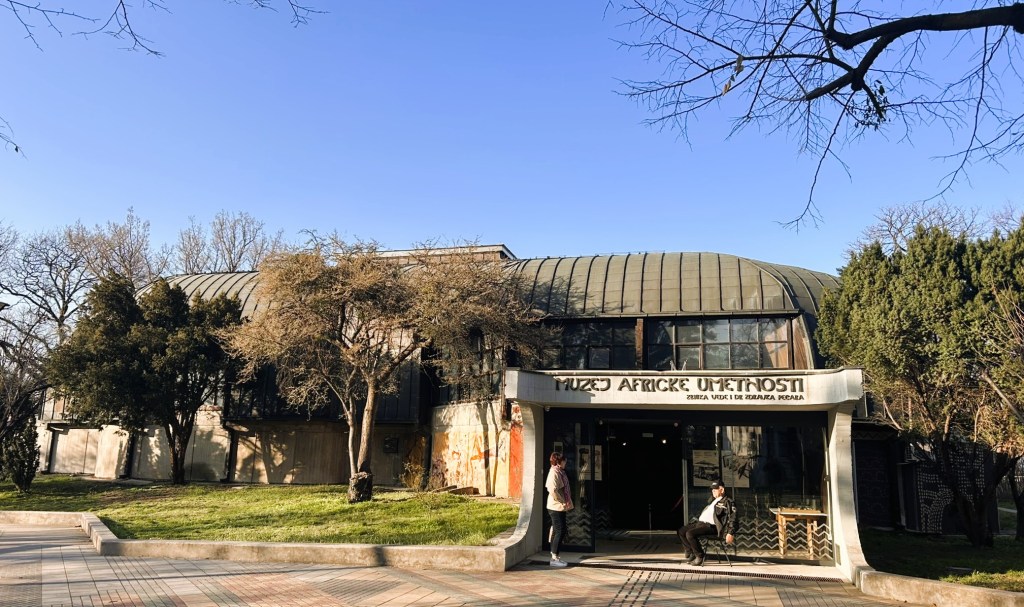
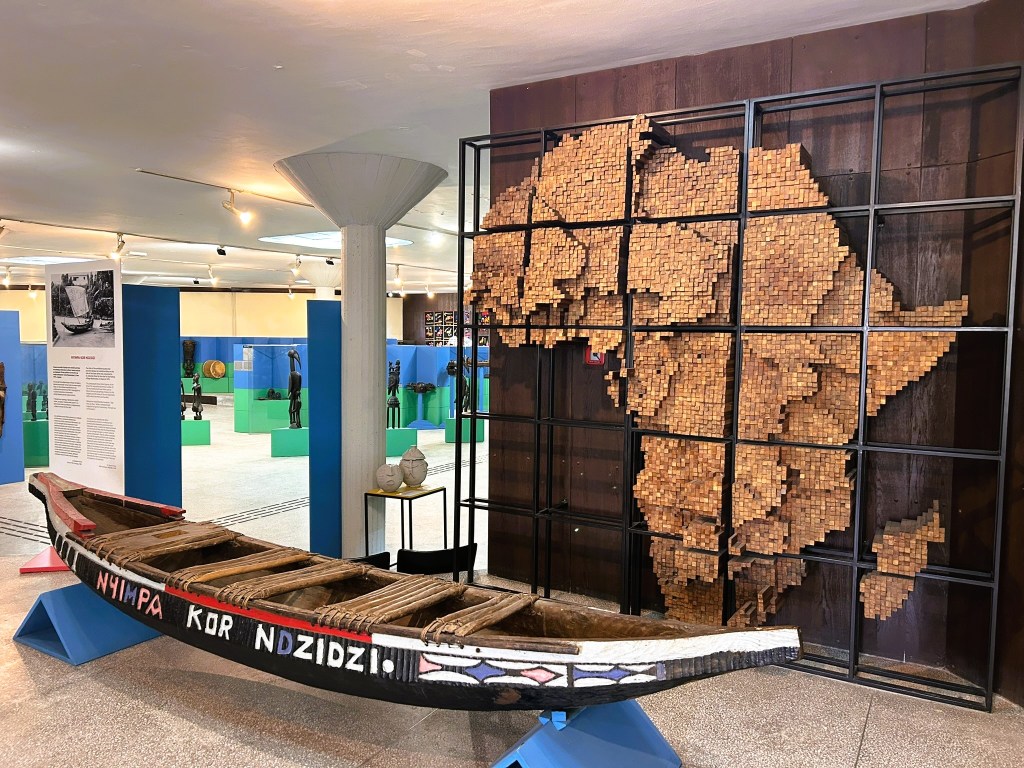
The Museum of African Art – wherever we are in the world you can guarantee we’ll find something African to visit
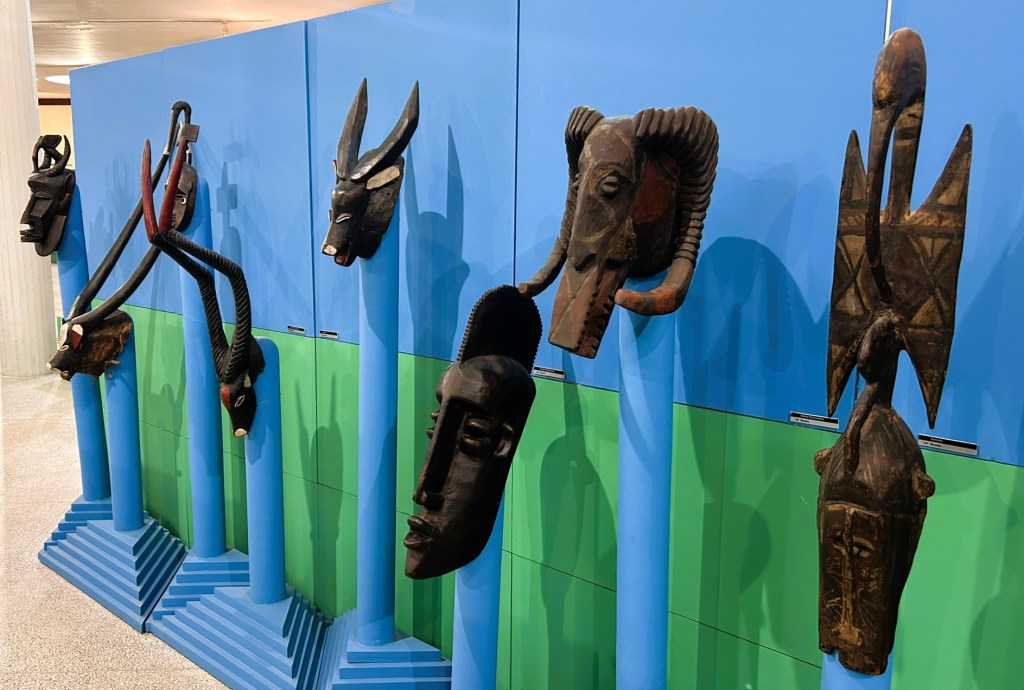
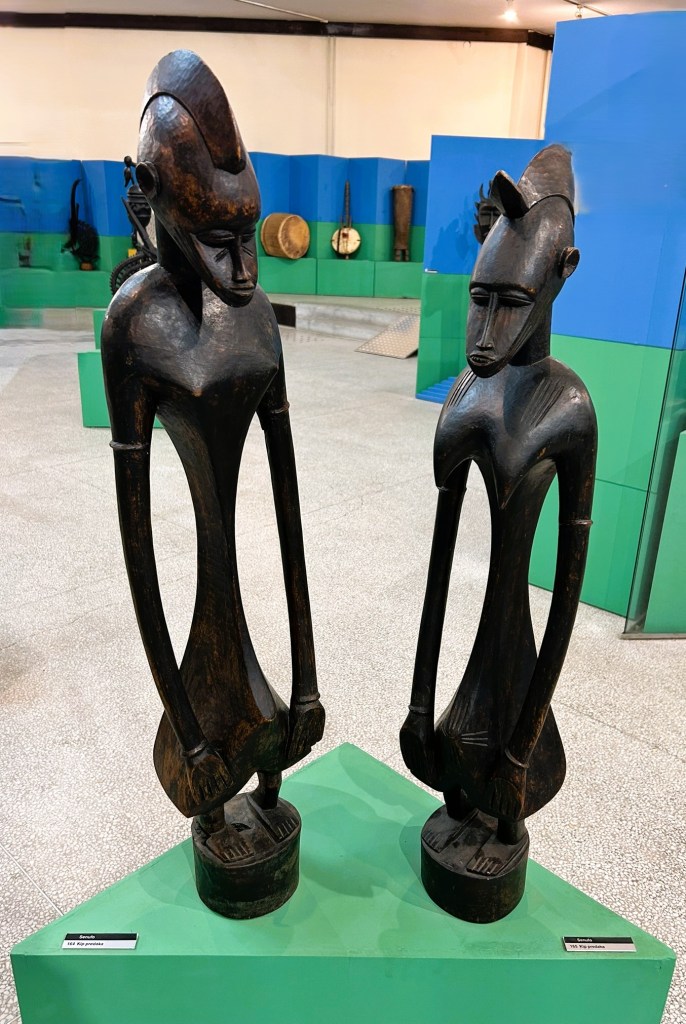
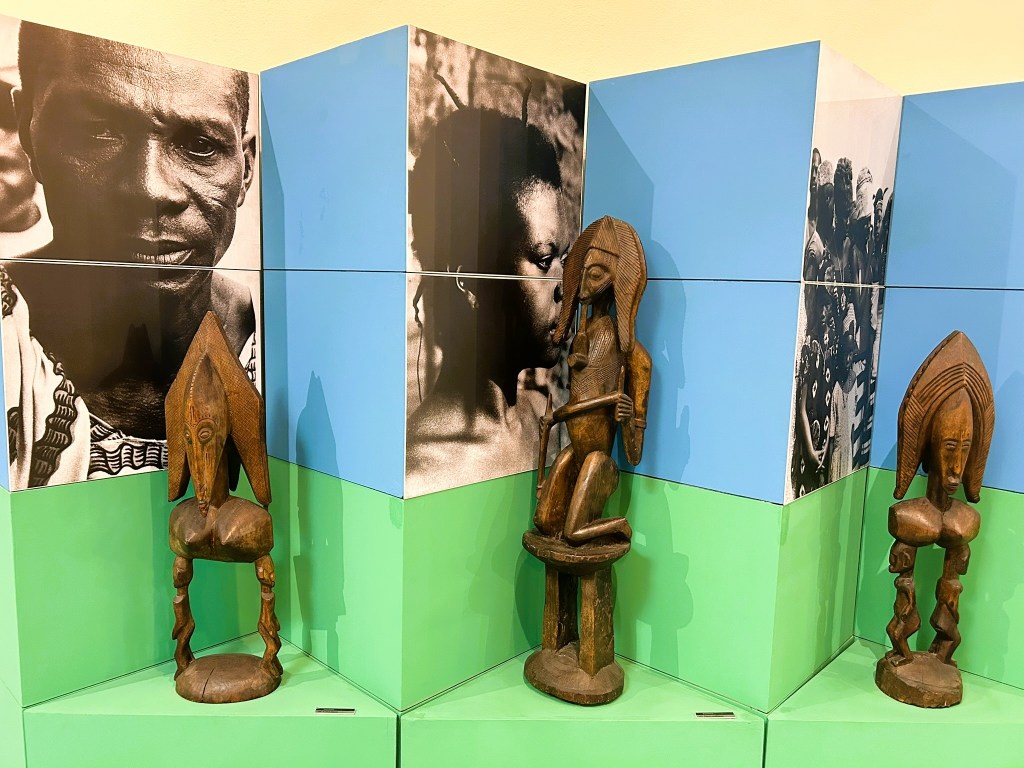
We were in the posh bit of Belgrade where the wealthy build extravagant houses
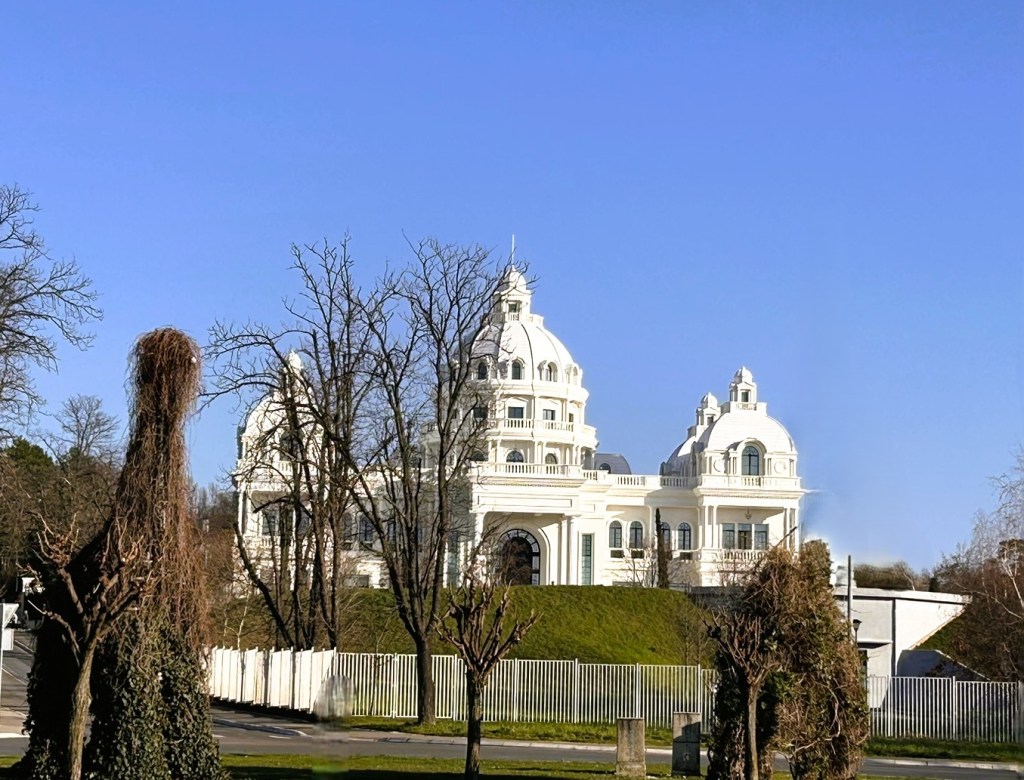
And many embassies hide behind high walls
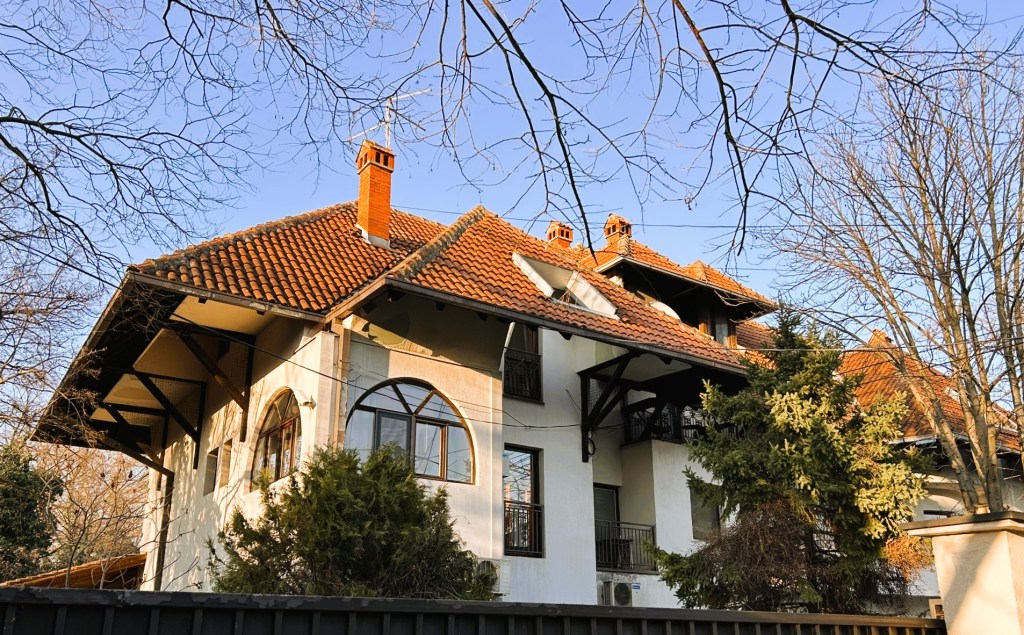
But this was the house we wanted to buy
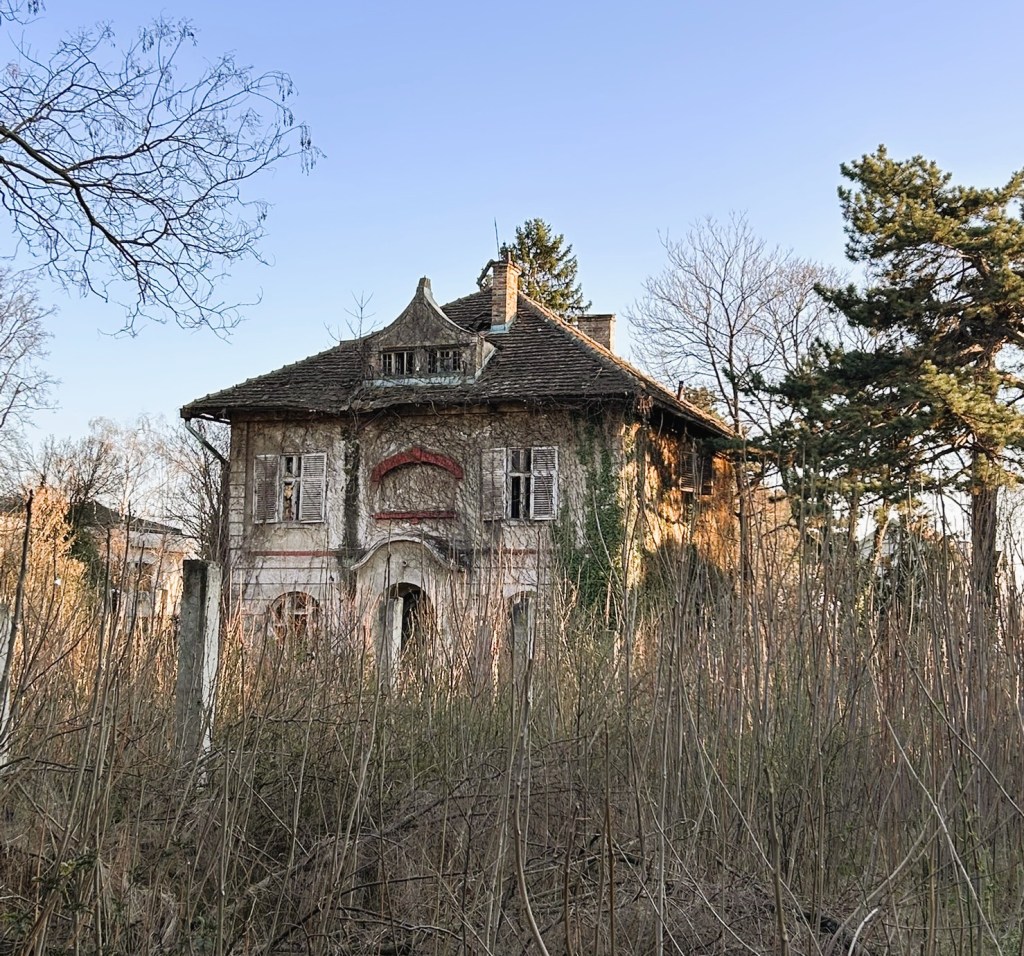
What a fabulous project that would be!
So far, the dread we had been feeling about coming to another large city – especially one supposedly so brutal – had not matched with what we had found at all.
In fact, we were actually enjoying Belgrade and finding it rather calm and green.
Surely, as we delved deeper into the city this would all change. We had images of it as an ugly, sprawling, communist-era metropolis and it had sent fear into our hearts. As we made our way back to the truck we had the feeling that we had seen the best of the city and that stress, noise and frustration would dominate the next week of our lives.
But Serbia had yet more surprises in store for us….
 The Sidetracked Sagas
One response to “Warmth, Wine and the Road to Belgrade”
We saw many homes partially built in Bulgaria. Some used the upper floors for hanging laundry to dry. Economics certainly were involved, but we also considered that multigenerations lived together and it was “planning for the future”.
LikeLike